When I was a senior in high school I was co-captain of our baseball team (this may seem like bragging, but it’s not. We were terrible and that year, so was I) we had a routine to start practice. The players would head out about 5 minutes before the coach, and we would talk and mess around. When our coach came out, he would whistle and circle his hand in the air. This was the signal for us to start our warm up run, which was about a mile loop around the school. One day before the coach had come out, my co-captain and I looked at the sky and saw dark clouds looming. We talked to the team and said that we should start running now. It was going to rain, and we wanted to get in as much practice time as we could.
It seemed like a good idea to us, but no one else thought so. We argued a bit, but the team stood firm. “We start running when Coach comes out and whistles.”
Well, having stuck our necks out, three seniors (we roped our friend into it as well) started running, and we figured the team would follow.
But . . . we looked back after a few minutes and no one had budged. The coach came out and the rest of the team started running. He waited and when the three of us reached him, he pulled us aside and asked us what we were doing. We explained, and he said, “I get the idea–it was a fine idea. But remember this, if no one is following, you aren’t leading.”
This happened about 35 years ago but his comment has always stuck in my mind, and from time to time I wrestle with whether or not I agree. Is leadership about people following, or setting the right example? Well, maybe the answer is “yes.” It’s true that leaders need followers. But we want followers to be on the right path, giving themselves to a proper goal. That requires people setting the right example.
I told the class this story and I did get them to agree that it involves both, but there can be (and was) lots of disagreement as to the percentages for each part of leadership. Some declared that setting the right example was more important, and others the opposite.
Where we land on this question will greatly impact how we view the reign of Charles I. Events during his time in power would greatly impact the future of English governance, the American Revolution, and our concept of rights. We will probably naturally lean towards supporting those who opposed Charles, but we should check ourselves before diving in, and think about how much of proper leadership means setting a good example, and how much it means getting others to follow. Another way to set the terms of this question . . . how much of leadership is directed “upwards” towards God and how much is directed “outwards” towards the people.
In terms of setting an example, Charles scored high marks. He was a genuine Christian and a devoted father. He and his wife genuinely cared for one another. He lived much more righteously than Henry VIII, and to a lesser degree, both Elizabeth I and his own father James I. He devoted him to his duties. He lived conscientiously.
Alas for Charles, such care in some ways only alienated him from many in Parliament. For example, his wife was Catholic. Like most every royal person in his era, Charles’ marriage was arranged. He had religious differences with his wife, but accommodated her as best as he knew how, building a private chapel for her and allowing her to have her French confessor present at court. What could have been viewed as kindness was seen as weakness and pandering to many.
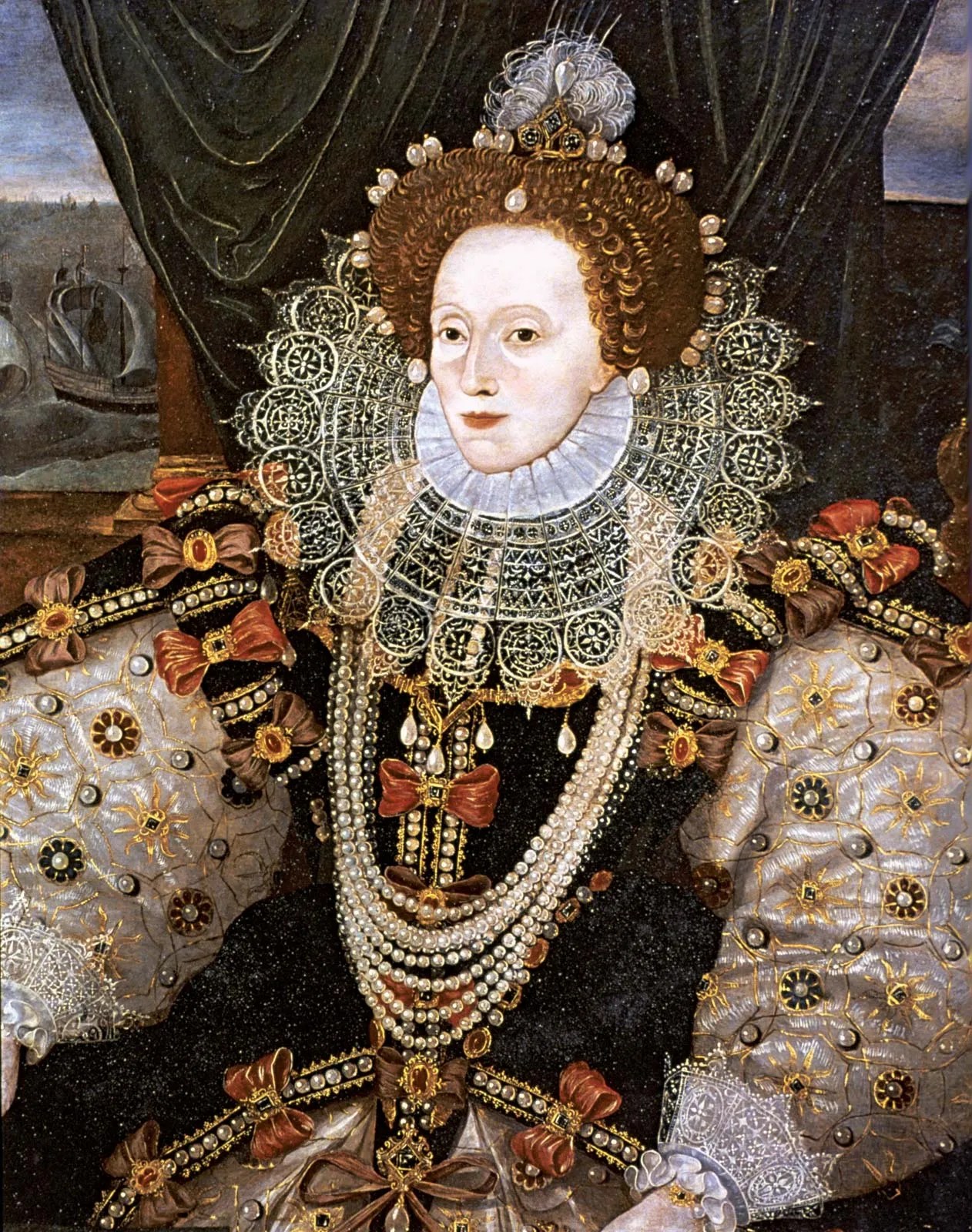
When we look at Elizabeth, we see someone fully confident in her role and identity as king. She projects “outwards” toward us. We feel her presence.
With Charles, we see the opposite. He seems concerned, unsure, and turned almost entirely inward to himself.
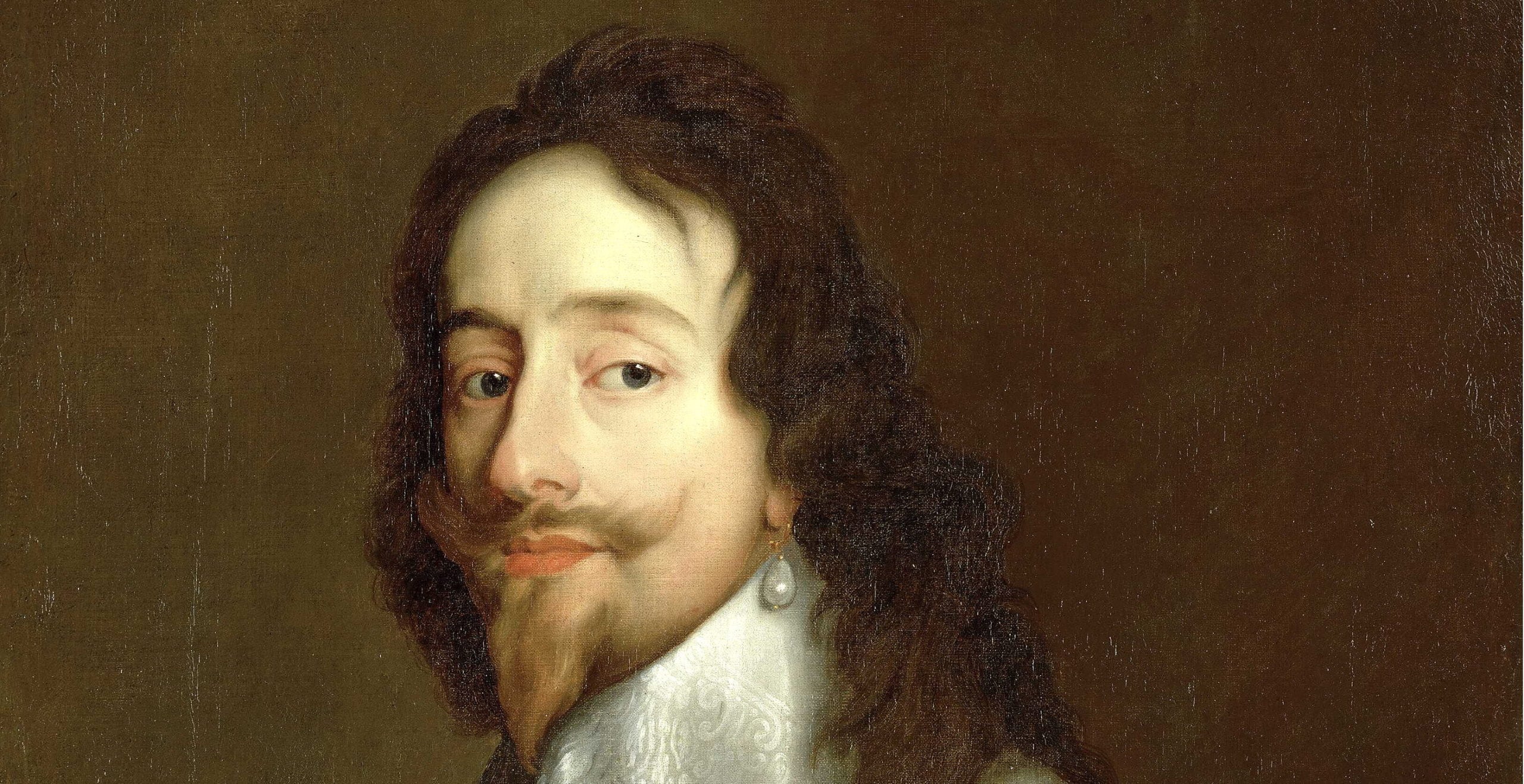

In an abstractly moral sense, Elizabeth is not better than Charles. Personality differences are not moral differences. In a political sense, she succeeds at a far greater level.
Charles, like many introverts, had strong convictions but weak people skills with those he did not know personally or trust. This led him to make decisions that backed his friends, rather than decisions in line with proper procedure. Indeed, throughout his reign Charles had difficulty with standard trappings of the procedure and protocol of kingship, even in celebratory contexts. We see this with his coronation. Elizabeth’s coronation was both enormously expensive and a smashing success. At the end of her procession she spoke to the crowd, saying,
I thank my Lord Mayor, his brethren, and you all. And whereas your request is that I should continue your good lady and queen, be ye ensured that I will be as good unto you as ever any queen unto her people. No will in me can lack, neither do I trust that I lack any power. And persuade yourselves, that for the safety and quietness of you all, I will not spare, if need be, to spend my blood, God thank you all.
It was a wild success, and established the basis of her rule for the next few decades. Charles canceled his own coronation procession, preferring something much cheaper but also much more private. He had an emissary deliver the following letter to Mayor of London:
Whereas your lordship and the rest of that Court now formerly directed by letters from the right honourable Earl Marshall, to prepare and erect in several places within the city various and sundry pageants for the fuller and more significant expression of your joys upon his Majesty, and his royal consorts intended entrance through your fair city: His Majesty having now allowed his said purpose, and given me Command to signify such to you, it may please your Lordship to take notice thereof by these, as also remove the said Pageants, which besides the particular charge they accrue, do choke and hinder the passage of such as in coaches or carriages that have occasion to go up and down.
If Charles thought this was the right thing to do, he was unfortunately mistaken. People saw someone denying them a festival, denying them a chance to see their king in glory, for if the King is England, then the king is all of them at once.
Another crucial issue surrounding Charles’ leadership involved the issue of the spirit and letter of the law. As a society we want both templates operating. For example,
- We want the spirit of the law to determine what “speeding” means. We do not give tickets for going 56 in a 55 zone. In the same way, jaywalking in Manhatten is one thing, and jaywalking on a quiet suburban street another.
- We want the letter of the law to determine what a bank robbery is. If you walk into a bank, wave gun, and walk out with 50k, you’re punishment will be substantively the same if you wave a gun and somehow walk out with $10.
Charles’ political instincts misfired with this dichotomy with the issue of taxes. English law forbade the king from issuing any new taxes without the consent of Parliament. Charles wanted taxes raised for a war with the Scots, a war that Parliament would not support, and so they denied Charles the right to impose a new tax. Charles accepted this, but then reinstated a tax used under Elizabeth I to raise money to prepare for the invasion of the Spanish Armada. Technically, of course, this was not a “new tax.” Charles was within the letter of the law. But certainly he sidestepped its spirit. England’s taxation laws were designed to prevent a king from waging war without Parliamentary consent, which Charles found a way to conveniently sidestep.
No one doubts that Charles failed at ruling in an effective manner. Everyone agrees that he was a good man, if awkward and politically frustrating at times. Many in England disagreed with his political views regarding kingship. The question everyone would eventually be faced with was, “Should one attempt to overthrown Charles? Has he lost the right to rule?”
This question would divide the people of England, and likely divide our own class as well. We’ll examine this question next week.
Many thanks,
Dave

