12th Grade: The Assassination of Anwar al-Awaki

Greetings,

One of my main goals for our first few weeks was to try and see how our current ‘War on Terror’ raises difficult questions and puts great stress on key democratic values and practices.

As an example of the kinds of questions and dilemmas we face as a nation we spent some time discussing the drone attack/assassination of Anwar Al-Waki.  No one doubts that he was a “bad guy” whose English ability made him a unique voice for terrorists.  He likely had an indirect hand in the Fort Hood shootings, as well as the failed Times Square bombing.  Here is a Youtube of his last video message before his assassination:

What makes his death especially debatable is that he was an American citizen.  Should we be allowed to, in effect, execute citizens without a trial?

There are different sides on this issue.

In favor of the action, we might say that:

  • He was a known enemy who fled the country and who advocated and perhaps facilitated attacks upon us.  This is the very definition of treason.
  • We had no access to arrest him.  In taking refuge in Yemen, he put us in an extremely awkward position. Yemen’s unique political and social dynamic make it a kind of no-man’s land.  If he wants to go into a ‘no-man’s land’ where normal political rules don’t apply, then he forfeited his right to a trial.

Against it we could say that:

  • Civilization as a whole, and our legal system in particular, is inconvenient and creates inefficient burdens to us that we simply have to abide by in order to have civilization at all. Citizens must be dealt with through the legal process, no matter the person or circumstance.
  • Do we want to give the president the power to execute citizens without trial?  Would this not continue the disturbing trend of increased presidential power that we have seen since World War II, and that has only accelerated after 9/11?
  • If we want a government to deal with all evil under the sun, we ask for an omnipotent state.  Such a state would give its citizens no liberty.  We must simply tolerate some evil (and evil people) for the sake of liberty.

Two articles about the incident can be found here and here.

In the broader context, I hope students saw this as another instance of our theme for this first unit, how the “War on Terror” does not just put stress on our security, but on our democratic system as a whole, our values, and so on.

Last week in the update I mentioned that we discussed the nature of our values as a country, and whether or not these values helped or hindered the war against terrorism.  Students disagreed on this question, with most believing that our values hamper us, or leave open the possibility that we will be taken advantage of because of our values.

What we as a people think of this question will have a significant impact on how we deal with enemies abroad and at home.  One student mentioned the famous account of a Navy SEAL mission in Afghanistan in book called Lone Survivor.  The book details “Operation Redwing,” in which a small team was charged with killing a dangerous bomb-maker behind enemy lines.  Unfortunately a few random shepherds discover the SEAL team in the early stages of their mission, and the soldiers must decide what to do.  Some on the team advocated killing the shepherds to prevent them from possibly giving away their position.  Others wanted to let them go, seeing as how they were civilians.  In the end the team leader let them go.  The Taliban discovered their position (likely because of the shepherds told others about what they saw), and only one member of the team made it out alive.

Upon reflection, the book’s author wishes he had killed the shepherds instead of letting them go, and most of the students agreed with him.  The mission, and the perceived “greater good” of the mission, took precedence over the lives of the shepherds.

This specific mission touches on the broader ethical questions we face as a nation in general, and as a democracy in particular.  If we believe in equality, that all lives have equal value, does that apply on the battlefield?  Do we believe in “innocent until proven guilty” for others?  Do these values apply in wartime?  If we fight consistently or inconsistently with them, what are the consequences for our society?  Students that advocated for letting the shepherds go argued that 1) Killing them would be a direct evil balanced out only against a possible, indeterminate good, and 2) Killing them would be an explicit admission that American lives were more valuable than the lives of Afghanis.

This decision also forces us back to the tensions in any democratic nation, for as we discussed in the first week, the natural community for democracies is “everybody.”  We preach a universal ethic rooted universal values.  Can we maintain our identity if we fail to act consistently with this?  But how can we outside our borders?

There exists another possibility. . .

Perhaps it is when we fight in such a way that prioritizes our lives over others that we in fact, fight according to our values and not vice-versa.  After all (say some), we have a “me-first” culture.  Of course, human nature has always been “me-first,” but our culture at the moments seems particularly geared in this direction.  Maybe this, and not “equality,” truly governs our actions today.

Whatever we think about these difficult questions, we must choose, and take responsibility for that choice.

Thanks once again,

Mr. Mathwin
12th Grade: The Head and the Heart

Greetings,

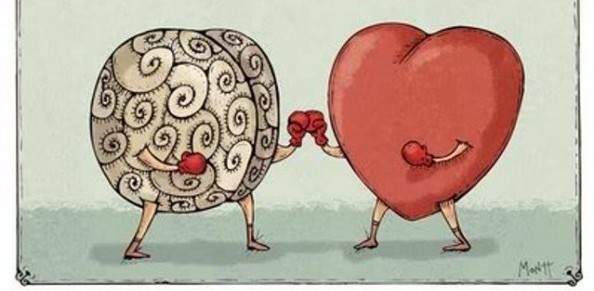
This week we wrapped up one unit and began another.  On Tuesday the students turned in their responses from the reading of Euripides’ The Bacchae.  As I mentioned previously, the plays deals with the conflict between head and heart in governing the state.  Of course Euripides remains open to interpretation and the students had different perspectives.  The plot turns when Pentheus, the ruler of Thebes, bans the Dionysian cult from his territory.  Dionysian worship had a fundamentally irrational side, with ‘worship’ involving shrieking, wild dancing, women leaving their homes, and a general disruption of normal, rational society.  Eventually, however, his banning of the cult led to Dionysian worshipers seeking revenge, and they destroy Pentheus and his whole family.

To start our discussion I gave the students two choices:

Was Pentheus right to ban the cult, given the general disruption they wreaked upon society?  Or did his actions in fact lead to an intensification of what he most feared?  If they had been tolerated, they would have been more moderate, etc.

In other words, how much was Pentheus to blame for his own destruction?

We can relate this to other areas.

  • Did the election of Hamas vindicate Israel’s policy towards the West Bank?   Did the Palestinians show their true colors in choosing Hamas to represent them?
  • Or, did Israel create the enemy they most feared through their policies the past 10-15 years?

Those in the D.C. area know the new toll commuter lane on I-495.

  • The ‘head’ says that this lane will reduce traffic for everyone, though some of course benefit more than others.  Still, everyone benefits.
  • The heart might counter with the fact that the imbalance of benefits will cause more resentment than relief.  Those not in the pricey commuter lane will not focus on how they get home 10 minutes faster because of those that pay to drive on the special lane.  They will  focus on the fact that those richer than they get home 45 minutes faster.

So — will the toll lane primarily reduce traffic, or increase class resentment?

Some economists see the same dynamic at play in globalization.  Globalization seems to have raised the standard of living across social classes.  But a small minority experience the vast majority of the benefits.  Thus, people are not poorer, but probably feel poorer than they used to.

If true, to what degree should these realities influence our policy?

In a democracy, how do we want our representatives to act?  Do we want them to be rational calculators, because we, the electorate, cannot be?  Or do we want them to have their finger on the pulse of the nation?  This aspect of leadership goes beyond ideology.  How much of governance involves connecting on an emotional level with people?  We can think of presidents who did this very effectively, like Reagan and Clinton recently, and FDR, Lincoln, and perhaps Andrew Jackson in the past.  Internationally, Winston Churchill comes to mind.  I do not think that either Bush made or Obama now makes that connection, and it remains to be seen if a leader on either side can galvanize the electorate in our fractured political landscape.

Many thanks,

Dave Mathwin

Liberty and Regulation

DownloadedFileIt’s easy to see why John Kenneth Galbraith’s The Great Crash has a high place in the pantheon of mainstream economics books.  His narrative moves crisply, and he does not get bogged down in the details.  The economic information he shares must not be too difficult, for I have very little knowledge of economics and only failed to understand some of the book.

However, while the narrative moves along well, Galbraith sacrifices much to achieve this.  He admits that the reasons for the Crash and the resulting depression are legion and difficult to know precisely, but he backs off any kind of in-depth treatment.  At times he throws out lines about the need for regulation that I assume he agrees with, but he never develops this idea or the rationale for government regulation.  I finished the book feeling like he had no interest in resolving or even tackling the main question his book raises.

The main question, I think, is this:

  • Is liberty an absolute concept and therefore an absolute good?  If so, any restrictions placed upon it done (if done at all) would be done only for emergencies, and then only temporarily.
  • Or, is liberty in the end a relative concept, one that has meaning only within a given context.  If so, societies should feel free to tinker with it, restricting it here and there, to achieve optimal balance.  For example, inoculations make us healthier by giving us a small dose of disease.

Perhaps Galbraith avoids the question out of modesty, or out of fear of ruffling feathers.  In his book The Servile DownloadedFile-1State, Hillaire Belloc (who loved ruffling feathers and had no modesty) jumps right in.  Liberty, he argues, like our appetites, must be kept in check if we are to have freedom in the end.  Just as alcoholics lose their right to drink, so too abusers of liberty will be left with none of it.  Like any admirer of medieval times, Belloc argues for a careful, measured approach, one that in the end values stability over wide-ranging opportunity.

He traces the development of capitalism not from the Industrial Revolution but from Henry VIII dissolution of the monasteries, allying his government with the wealthy class by distributing the land among them.  What looked to be a bold move to secure his own power, Henry in fact only made his power subservient to the elite.  This is not freedom for the state or freedom for the individual.  

But he goes a bit further.  Since full-boar capitalism produces instability in the end, the people will reject it, and swing the other way to a “servile-economy.”  In this new economy they will have guarantees but much less freedom than before.  They will in fact, be made to work as the government becomes more and more allied with businesses — a form of slavery.  Belloc did not foresee the welfare-state, where it could become actually cheaper for some not to work at all, but this too would be a form of slavery for Belloc.

I believe that a free people should attempt to use government to help achieved legitimate societal ends, and in that way I have at least some sympathy with Galbraith and Belloc.  The problem is, what should we regulate and how much? The article below from Matt Yglesias (thanks to a link from Marginal Revolution) exposes some of the problems when talking about regulation.  Do we have the kind of society, and the kind of political environment we need, to successfully and appropriately regulate ourselves?  We shall see.

I did a piece about how annoying the paperwork for getting even the simplest small-business license is, which prompted a lot of weird reactions from conservative readers, like “Obama lapdog Matt Yglesias has epiphany: Gee, it’s hard to start a small business in D.C.!” and various comments about how I’m reaping what I sow, and now I should understand why lots of people vote Republican.

This is something I think I actually understand very well. I voted for Republican Patrick Mara the last time he was on the ballot for a D.C. Council at-large seat, and I’ll probably vote for him again. I voted for Mitt Romney for governor in 2002. I would have voted for Michael Bloomberg in the 2005 or 2009 New York City mayoral races, and in general I think the conservative critique of municipal government in the United States has a lot of merit. Republicans might be interested in why someone like me—someone who sympathizes with many of their economic policy views—still hesitates to vote for their candidates for national office. One reason is that I tend to think conservatives place much too little emphasis on the rights and interests of religious and ethnic minority groups, gay people, and the like. Another reason is that conservatives have much too much affection for state-sponsored violence. In terms of economic policy, Republicans tend to deride the hugely successful practice of taking money from the rich and giving it to the poor. But even on the regulatory front, there are real shortcomings to the Republican approach.


The way I would put this is that the American economy is simultaneously overregulated and underregulated. It is much too difficult to get business and occupational licenses; there are excessive restrictions on the wholesaling and retailing of alcoholic beverages; exclusionary zoning codes cripple the economy; and I’m sure there are more problems than I’m even aware of.


At the same time, it continues to be the case that even if you ignore climate change, there are huge problematic environmental externalities involved in the energy production and industrial sectors of the economy. And you shouldn’t ignore climate change! We are much too lax about what firms are allowed to dump into the air. On the financial side, too, it’s become clear that there are really big problems with bank supervision. The existence of bad rent-seeking rules around who’s allowed to cut hair is not a good justification for the absence of rules around banks’ ability to issue no-doc liar’s loans. The fact that it’s too much of a pain in the ass to get a building permit is not a good justification for making it easier to poison children’s brains with mercury. Now obviously all these rules are incredibly annoying. I am really glad, personally, that I don’t need to take any time or effort to comply with the Environmental Protection Agency’s new mercury emissions rules. But at the same time, it ought to be a pain in the ass to put extra mercury into the air. We don’t want too much mercury! We don’t want too much bank leverage!

Business licensing is different. “This city has too many restaurants to choose from” is not a real public policy problem—it’s only a problem for incumbent restaurateurs who don’t want to face competition. But in other fields of endeavor—telecommunications, say—the absence of regulations can lead to an uncompetitive outcome. Partisan politics is pretty simple, since there are only two parties to choose from. But the underlying structure of reality is quite complicated, and it’s worth your time to try to understand the issues.

12th Grade: Is it Better to be Loved or Feared?

Greetings,

We continued with the Peloponnesian War this week.

What happens to a war without precise, achievable objectives?  Might we expect it to teeter back and forth, with varying actions and motives as time goes by?  And how might this strategic instability impact Athens politically? Can its government remain stable if they fight a war rife with murky waters?

Perhaps because the war lacked clear goals, it began to take on a life of its own.  Without a precise, achievable objective we might surmise that both sides got imaginative with their tactics.  So we see the Athenians utilize light infantry, and the Spartans take drastic measures at sea with Athenian allies.  As the tactics changed, so too did the targets, and eventually civilians inevitably got drawn into the conflict.

Quite possibly the changing tactics changed the war aims for both sides. What began apparently as a war over a fairly innocent political dispute become a war of annihilation.    If neither side would ever back down, the war could end in only one way.

On Thursday we had a good discussion that grew out of out of our look at the rebellion against Athens in Mytilene.  After crushing the uprising, the Athenians debated what to do with the city.  Should they,

  • Kill/enslave all of them — have it cease to exist.  Mytilene was one of the privileged members of the Athenian alliance.  They had their own navy, for example.  Their rebellion threatened Athens’s whole system.  If the ones you treat nicely rebel, what about the others?  Furthermore, is this how they repay our kindness to them?

We cannot risk, argued Cleon, that this rebellion spreads.  Mytilene controls the island of Lesbos, and most of the rest of the island stayed loyal to us.  We must protect the innocent on the rest of the island by making sure we get all of the guilty.

  • Kill only the leaders, argued Diodotus.  Our prudence and clemency will pay dividends down the road.  If we face another rebellion, after killing all in Mytilene, the ‘innocent’ will have choice but to join it, since if the rebellion failed, they would killed anyway.  This will more, not less resistance to us in the future.

I think the divergent points of view boiled down to the question of the role of power and a good image in achieving security.  Is power or a good reputation a better guarantee of security?  In our discussion most everyone agreed that both play a role, but many differed on the priority each element should take.

In the end, the Athenians voted for Diodotus’s point of view.  But they still executed about 1000 people without any legal proceeding whatever.  We may cheer that the Athenians chose the “right” path, before we realize that they never considered other potentially more humane options, or at least more “legal” options.  The temptation to abandon such things when fighting for your life would be tremendous.  But it was an ominous sign of things to come.  In the midst of our current conflict in the “War on Terror,” we too have to decide to what degree our system of checks and balances is non-negotiable, and if we can let certain things slide, when and under what conditions?

The title of this update refers to a famous chapter in Machiavelli’s The Prince.  Machiavelli asks the question, and while he agrees that ideally a ruler can be both loved and feared, he understands that this can rarely happen.  If you have to choose between the two, one should choose fear.  Love is simply to fickle.

In many ways, I think Athens would have agreed.

Blessings,

Dave Mathwin

12th Grade: Foreign Policy in a Foreign Land

Greetings,

This week the seniors participated in a week-long game which also involved grades 7-11.  The situation was this:

  • We pretended that the upper school was a foreign country with generally pro-western leadership, but with a population where the United States was viewed less favorably than the country’s leadership viewed them.  Maybe a modern-day Jordan, Bahrain, or Kazakhstan.  Grades 7-11 played as civilians in this hypothetical country.
  • We surmised that that country’s leadership, having credible information that a terror-cell operated within their borders, invited a CIA “action-team” into their country to prevent the attack and dismantle the terrorist network.  This meant that the seniors had certain police powers at their disposal to arrest, detain, and send those they suspected off to Guantanamo.
  • The “bad guys” had to do all of their communicating between 7:30-3:00 on school days only.  Thus, all of their actions could hypothetically be observed by someone and reported to the seniors.
  • We allowed for a “Third Party” option to develop as well, a grass-roots party that wanted to eliminate terrorist presence from their country, but didn’t want the CIA/America to get credit for it.  This group would be more nationalistic, craving their own identity apart from both the U.S. and radical Moslem world.

To win the game, the seniors needed to

  • Dismantle the terror network and stop the impending attack
  • Try and win the local population over to their side and try and encourage them to adopt more western customs.

In the days leading up to last week I discussed the game with the seniors.  What I hoped they would realize was. . .

  • Finding the bad guys should not be their primary goal.  If they spent time building up their relationships with the students, building trust, and rapport (as well as greasing the skids with appropriate gifts and bribes) the intelligence they needed would come to them from the other students.
  • According to the rules of the game, mistakes the seniors make hurt them more than their successes help them.  So, for example, if they falsely detain an innocent person this costs them more than when they get it right and detain a terrorist.  This bears out true in real life as well.  Our mistakes get magnified much more than our good deeds.  We may lament this, but it is a fact of life.  If the Yankees, for example, lose a playoff series, the story is not what the other team did well but what the Yankees did wrong.
  • So — they would need to use their “police-power” judiciously.  They could not “shoot their way out” of their difficulties.

At one point during the week some of the problems related to their task dawned on them.  One senior said, “It’s not fair for us, because [during the election] they can either vote for us or themselves, and they’re going to vote for themselves.”

I thought this a very perceptive comment, and it illustrates perfectly much of our predicament abroad. Overcoming this requires a lot of careful effort and patience.  We also have to realize that these anti-American/pro-independence movements may not necessarily be our enemy.  We may not want to overcome it at all, but find a way to work with that attitude.

The seniors soon found themselves opposed at least in part by the PLA, the “People’s Liberation Army.”  This group ended up having a strong following among some high school boys, but they failed to extend their support beyond their original following.  The terror cell also had their network dismantled, so they could not win either, even though their bomb attack went off as planned.  In the end, the game finished as a Shakespearean tragedy — nobody won!

My thanks to all the students who participated in some way and helped make the game a success.

Blessings,

Dave

“Into the Quagmire”

Most of us have some familiarity with the fact that we failed in Vietnam, though many might debate the reasons for this failure.  Some see the fight as essentially hopeless, from an American point of view.  When General Petraeus asked historian Stanley Karnow (author of Vietnam, a History) for advice about fighting in Iraq based off of his knowledge of Vietnam, Karnow responded that the biggest lesson was that we should not have been there in the first place.

Perhaps true, but not very helpful to Petraeus.

Others, like Max Boot, argue that had we fought the war in a different way — as a small, counterinsurgency war, we could have drastically lowered the financial and human cost of the war, maintaining political will at home while fighting more effectively abroad.  Others, like General Westmoreland himself, argued that had the “gloves come off” and we bombed more heavily and used more troops, we would have had success.

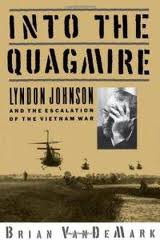
Given this, I wasn’t sure what Brian Van DeMark could offer in his book, Into the Quagmire, but I found myself pleasantly surprised.  Van DeMark concentrates not so much on the military side, but the political side of South Vietnam, and the internal debates within the Johnson administration over what to do about the eroding South Vietnamese government.  What surprised me was that almost no one in Johnson’s circle of advisors had any real optimism that military action would work to achieve their objectives. Johnson and others astutely recognized that the chaos of South Vietnam’s political situation stood as their main problem.  Military action in defense of a an unstable government would almost certainly do nothing to stabilize the regime.

Some argued that our presence would only destabilize them, doing their “dirty work” for them while at the same time making them look weak in the eyes of the South-Vietnamese themselves.  Dean Rusk had more optimism than most, but even he realized that our military action had a limited chance.  McGeorge Bundy thought success, “unlikely despite our best ideas and efforts,” and believed that the U.S. plan of action was, “likely to stretch out and be subject to major pressures both within the U.S. and internationally.”  Johnson saw, “no point in hitting the North if the South is not together.”  Ambassador Maxwell Taylor told Johnson that “intervention with ground combat forces would at best only buy time and would lead to an ever increasing commitments, until, like the French, we would be occupying an essentially foreign country.”  Johnson’s  friend Senator Mike Mansfield wrote him that,

Under present conditions [the U.S. sticking to bombing exclusively] Hanoi has no effective way of retaliating against the air-attacks.  But if we have large numbers of troops in Vietnam, the Communists would meaningful U.S. targets against which to launch their principal strength, [infantry].  Hanoi could strike back at us by sending main forces into the South.

And so on, and so on.

So why did Johnson end up committing more than 1/2 million men into a war that few believed we could really win?

Part of the logic came from Ass’t Secretary of Defense John McNaughton, who argued that South Vietnam’s dire condition required dramatic, “life-saving” intervention that might possibly give them a chance to live.  It probably wouldn’t work but was, “worth a shot.”  Along with this, ancillary concerns about China and the Domino Theory had their place.  But Van DeMark’s narrative shows that Johnson’s concerns about the domestic politics drove much of his Vietnam policy.  This makes sense, for Johnson shone on the domestic scene, and this is where his strengths lay.  It makes sense that he put his energies here.

Johnson wanted desperately to pass his “Great Society” legislation, and needed broad congressional support to do so.  He feared that inaction in Vietnam would provide enough ammunition to his critics to derail his domestic agenda.  Taking action, any action, would show his “tough” stance on communism and rob the right-wing of political leverage against him.  As Bundy said,

In terms of domestic politics, which is better: to ‘lose’ now or to ‘lose’ after committing 100,000 men?  The latter, [f]or if we visibly do enough in the South, any failure will be, in that moment, beyond our control.

And beyond political reproach from the right.

I can sympathize with Johnson in many ways regarding Vietnam.  He inherited a very sticky situation that he had no part of creating.  The loss of China, Johnson knew, helped lead to the rise of McCarthy.  With Cuba going communist and opportunities lost in North Korea, something it seemed, “had to be done.”  In the end, our failure in Vietnam involved poor judgment and bad choices from many different people besides Johnson.  In the end, no one’s perfect.

But you can’t stop there.  As Polybius stated,

I find it the mark of good [leaders] not only to know when they are victorious, but also to know when they are beaten.

Johnson does deserve a great deal of criticism for using real troops who would both inflict and suffer real death to prop up his domestic agenda.  Politics, after all, involves a kind of unreality where crafted image only sometimes leads to substance.  To use real lives to bolster an image is in my mind, to commit a definite evil in hopes of an imagined, or possible good.  It’s a poor foundation on which to build, and often does not even accomplish what you hope for, since one builds upon image, upon sand.

There also seemed to be a blind “hope against hope” mentality that reasoned, “Failure is quite likely, but we have to do it, so therefore it can work.  This sense of feeling trapped, of having ultimately no choice in the matter, strikes me as succumbing to fate, a moral laziness that leads to willful blindness.  As Toynbee wrote,

. . . the prospects of man in Process of Civilization depend above all on his ability to recover a lost control of the pitch.

In Johnson’s case, he did get his Great Society legislation passed, but almost certainly would have anyway with or without Vietnam.  Our troubles in Vietnam surely helped contribute to Nixon’s election in ’68 (though to be fair, Nixon was not nearly the conservative that Goldwater was, with his overtures to the Soviets, China, the creation of the EPA, etc.).   Johnson lost his presidency, and Democrats lost the White House.  This seems to me like reality asserting itself, a natural result of an unnatural policy.

One sees a similar principle at work with rookie NFL quarterbacks.  Many think that what rookie qb’s need is a an effective running game to take the pressure off the need to pass, to avoid “third and long” situations.  I agree with commentator Mike Lombardi, however, who said that rookie quarterbacks don’t need a running game so much as they need a good defense.  A good defense will always keep games close, which allows the offense to avoid the need to throw all the time, and force the issue to get big plays and catch up.


“Armies of the Raj,” and the Psychology of Empires

I picked up Byron Farwell’s Armies of the Raj on a whim, and was very pleasantly surprised.  From the title one might think this book has a very narrow focus, but this is not so.  Farwell uses the army as a springboard into England itself and the whole Victorian era.  Cultures come in many parts, but each diffracted part contains the whole, like light through a prism. So, while this book is military history, it is really cultural history disguised as military history, which I appreciate.

Many have made the point that Victorian era nations really worshipped themselves, and one certainly sees this confirmed by Farwell.  Part of this might have resulted from those India being away from the home country.  Perhaps they felt the need to overcompensate and out-English those in England itself.  I suppose this ‘diaspora’ psychology is not common to the English.  David Hackett-Fischer touched on this same psychology in his wonderful examination of New Zealand and America, both settled by Brits. This might not have been a problem, were it not for the over-inflated view of themselves the Victorians possessed. Toynbee comments,

The estrangement between India and a western world which, for India, has been represented by Great Britain, goes back behind the beginning of the Indian movement for independence in the eighteen- nineties, and behind the tragic conflict in 1857. It goes back to the reforms in the British administration in India that were started in the seventeen-eighties. This birth of estrangement from reform in the relations between Indians and English people is one of the ironies of history; and yet there is a genuine inner connection between the two events. In the eighteenth century the then newly installed British rulers of India were free and easy with their newly acquired Indian subjects in two senses. They were unscrupulous in using their political power to fleece and oppress them, and at the same time they were uninhibited in their social relations with them. They hob-nobbed with their Indian subjects off duty, besides meeting them at work on less agreeable terms. The more intellectual Englishmen in India in the eighteenth century enjoyed the game of capping Persian verses with Indian colleagues; the more lively Indians enjoyed being initiated into English sports. Look at Zoffany’s picture ‘Colonel Mordaunt’s Cock Match at Lucknow’, painted in 1786. . .

It tells you at a glance that, at that date, Indians and Englishmen could be hail-fellow-well met with one another. The British rulers of India in the first generation behaved, in fact, very much as their Hindu and Moslem predecessors had behaved. They were humanly corrupt and therefore not inhumanly aloof; and the British reformers of British rule, who were rightly determined to stamp out the corruption and who were notably successful in this difficult undertaking, deliberately stamped out the familiarity as well, because they held that the British could not be induced to be superhumanly upright and just in their dealings with their Indian subjects without being made to feel and behave as if they were tin gods set on pedestals high and dry above those Indian human beings down below.

Exhibit B for Toynbee’s analysis might be this painting done of Queen Victoria’s visit to the “Jewel in the Crown”. . .

What can account for this shift, and how did it express itself?

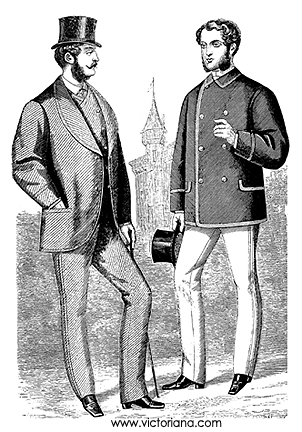
One obvious reason was the Suez Canal, which made transportation to India quicker and safer.  This opened up the possibility of women and families traveling to India, which meant the end of India as a playground for English businessmen, and the arrival of more civilizing influences.  But if one looks at how Victorians dressed, one sees that their version of a “civilized” world was in effect a closed system.  They would not be able to fully reach out to Indians.  Even their clothes seem to send a message of, “Back!  Back, I say!”

Before slamming the British completely, Farwell argues (and I agree) that many if not most British had a sincere desire to do good in India.  And they did in fact accomplish a variety of good things.  As to whether or not the good outweighed the bad in the end, Farwell doesn’t say, and I would think it’s too soon to tell for sure.  He puts his focus on how  the British reformed the military after the Sepoy Rebellion of 1857, and how their innate prejudice kept getting in the way in a few key areas:

  • The British wanted to integrate Indian troops more into the regular army, but no Indian was ever allowed to command a British soldier
  • Indian officers never had the social privileges that British officers had
  • The British recruited troops very successfully in certain provinces, but never even tried to recruit in other areas of India, believing the people there to be less martial in temperment.  Indians in the British army could never really claim to represent India as a whole, and this had a terrible impact when India did gain its independence.

As time went on the British changed some of their attitudes and tried harder to treat Indians equally. Yet rarely could they go all they way.  Some officers clubs for example, came to allow Indian officers to the bar and billiard room, but not the “swimming bath,” as they called it (though some British officers refused to allow their troops to join if their Indian officers were not granted full membership).  When W.W. II came the British worked hard to recruit all the Indians they could, and the army served to break down a variety of social barriers between British and Indians, and between Indians themselves.  Yet when it came to actually declaring war, the British government announced that India was at war with Germany without even consulting the Indian National Congress, a foolish act that led to much violence and a tragic split between Moslems and Hindu’s within the Congress itself.  General Auchinleck commented in 1940 that,

In my opinion we have been playing a losing hand from the start in this matter of “Indianization.”  The Indian has always thought, rightly or wrongly, that we never intended this scheme to succeed and expected it to fail.  Colour was lent to this view by the way in which each new step had to be wrested from us, instead of being freely given.  Now that we have given a lot we get no credit because there was little grace in our giving.

In their foibles, the British are hardly alone.  Empires find it very difficult psychologically to fully open up themselves.  They tend to believe that the locals should be thankful, first and foremost, for the blessings they bring.  They want to be seen as benefactors.  At their worst, they insist that those they rule thank them for their kindness, and get angry if others fail to do so. . .

The book is another confirmation about how nations cannot do things halfway.  You cannot bring part of your civilization and trust that it will satisfy.  If you rule on the basis of the superiority of your civilization and claim to bring its blessings, you have to bring them all.  England could claim that they brought more economic opportunity to India, as well as modernization.  These are features of western culture.  But many of the Indians the British generously sent to Oxford and Cambridge (like Ghandi and Nehru) learned that there was more to western culture than railroads.  Others principles, like equality under the law and self-determination will be evident in a western education.  That the British did not see this coming testifies to their short sight, but again, their problems were human problems, and hardly uniquely their own.  In a fallen world, we often don’t recognize what’s best for ourselves, let alone others.

“The Military Institutions of the Romans,” by Flavius Renatus Vegetius

Sometime in the early 5th century Vegetius wrote this simple and straightforward work, both a manual for a successful military and a plea for Rome to return to the values of an earlier time.

I am not a military man, but much of the advice Vegetius meets out concerns basic common sense, i.e. make sure your troops are well-fed, pay attention to terrain, make sure you have a reserve force, and so on.  What interested me as I read is what the book might reveal about the late Roman empire, and why the work had a huge following the Middle Ages.

Vegetius does not bellow, shout, or stamp in his writing, and yet underneath I think we can see a quiet desperation.  It seems like every ancient and medieval historian must as a matter of course talk about the past as a beacon of light, and how decrepit the present had become (does this not change until the Enlightenment?).  In Vegetius’ case, however, his attitude may have had more connection with reality, as the Empire seemed less and less able to exert control over its borders (Hillaire Belloc disagrees with this standard interpretation in his Europe and the Faith).  We do know that Rome had a harder time recruiting for its army in its later phase, and one of the great ironies of this book is that Vegetius, though wishing for a time when all men were strong and all the children good-looking, had no military experience himself.

The book touches on many things, but at the core Vegetius pushes discipline, discipline, and still more discipline.  Who can doubt that an army needs discipline?  Nothing remarkable about that.  Still, as this Youtube shows, Rome rode a few basic military moves and formations to world dominance.  Nobody plays the hero.  Stay in formation. Crouch, block, thrust, and move on to the next enemy (warning: a bit bloody).

What I did find revealing, however, is what is not there, much like the dog in Conan Doyle’s “The Adventures of Silver Blaze.”  Nowhere does Vegetius mention anything about armies needing morale, a cause, a belief to fight for.  Napoleon for one gave it great store.  His famous quote that,

In war, the moral is to the physical as three is to one.

comes to mind.  Why does Vegetius not mention the morale, or motivating cause, of an army?

I wonder if Vegetius does not include it because the army had no possibility of fighting for a cause in the late empire.  Rome had power and wealth even in the late 4th century but had lost any real reason for its existence long before. Vegetius wouldn’t mention it not because he judged it of little value but because he never would have thought of it in the first place, like a fish failing to extol the virtues of living on dry land.

Against my interpretation, however, is Vegetius’ own claim that nothing that he says comes from his own pen.  He claimed only to be copying, collecting and transmitting much older sources.  Some of those sources, like Cato, predate him by hundreds of years, when Rome had more internal health.  Did Rome never concern itself with morale in their military treatises?  One could imagine a stereotypical Roman thinking it a bit girly to think too much.  Leave that sort of thing to the French.

Or perhaps by coincidence the sources he uses don’t mention morale, so he doesn’t either.  But if so, he also chose not to add it.  Or maybe they did include it, but Vegetius did not work with their complete full text, or perhaps he deliberately left those parts out because they made no sense to him and would make no sense to others in his day.

Since the original date of this post I had some wonderful feedback from a friend who had the following idea.  His thoughts ran in a different course, which I paraphrase in the next two paragraphs below:

Vegetius may not have included the morale section for the reason that morale for the Roman armies was never the problem.  If anything, they needed at times an check on their desire to fight, hence the strong emphasis on discipline.  We see a few examples of this, first from the Gallic Wars, when Caesar wrote,

On the next day, Caesar, having called a meeting, censured the rashness and avarice of his soldiers, “In that they had judged for themselves how far they ought to proceed, or what they ought to do, and could not be kept back by the tribunes of the soldiers and the lieutenants;” and stated, “what the disadvantage of the ground could effect, what opinion he himself had entertained at Avaricum, when having surprised the enemy without either general or cavalry, he had given up a certain victory, lest even a trifling loss should occur in the contest owing to the disadvantage of position. That as much as he admired the greatness of their courage, since neither the fortifications of the camp, nor the height of the mountain, nor the wall of the town could retard them; in the same degree he censured their licentiousness and arrogance, because they thought that they knew more than their general concerning victory, and the issue of actions: and that he required in his soldiers forbearance and self-command, not less than valor and magnanimity.

My friend continues,

Similarly, one of the Consuls in the Macedonian wars (maybe Aemelius Paulus? I’ll have to dig out Plutarch) had terrible problems with his troops making frontal charges into Macedonian phalanxes and being annihilated. He entreated them to fight defensively and maneuver but they would have none of it.

Either way you slice it, the absence of anything resembling the morale of an army in his text says something.  Feedback like this is always very welcome, so thank you.

The book had a curious second life in the Middle Ages, where it became the standard military textbook.  I find this quite amusing.  Nearly everything except for the most basic dictums would have no application in the Middle Ages.  Many differences between the two armies/societies existed.

  • The Medievals could never have raised the large, professional forces that Rome did
  • Medieval armies did not often come together, and fought in short bursts, not extended campaigns far from home (the Crusades an exception, I grant you).
  • Medieval armies had very different people in them than Roman armies did.  An aristocratic warrior elite with a shared code of honor with their opponents would probably not go for the discipline, discipline, discipline, approach of Vegetius.

And yet the Medievals loved him.  Whatever for?

Some might call them simpletons who did not realize these differences, but I would not call a culture that produced Gothic architecture and St. Thomas Aquinas simpletons.

Some might see their possession of the manuscript of Vegetius valued like one prizes a good luck charm.  On this interpretation it’s the manuscript itself that’s valued, not the actual words.  Or perhaps in a childlike and humble way, they venerated the past and gave great store to anything from that time.

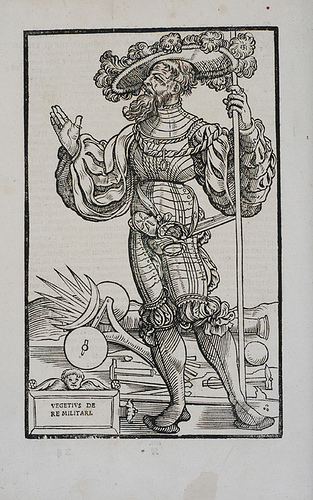
I could believe this second explanation, but I think the answer lies mostly elsewhere.  A clue might arise from a medieval portrait of Vegetius here below:

Why did the late 15th/early 16th century picture him in garb exactly like their own?  Did they really believe that the Romans wore clothes that they themselves wore in their time?  Or were they visually displaying their belief in using his work for their time?  Perhaps they had no idea what Romans wore and they felt free to invent whatever  clothes they wished?

In his great The Discarded Image C.S. Lewis speaks of the medieval imagination. . .

We have grown up with pictures that aimed at the maximum of illusion and strictly followed the laws of perspective.  . . . Medieval art was deficient in perspective [both historical and visual], and their poetry followed suit.  Nature, for Chaucer, is all foreground.  We never get a landscape.

Historically, as well as cosmically, medieval man stood at the foot of a stairway; looking up, he felt delight.  The backward, like the upward, glance exhilarated him, and humility was rewarded with the pleasures of admiration.  Thanks to his deficiency in the sense of period, that packed and gorgeous past was far more immediate to him than the dark and bestial past could ever be. . . .  It differed from the present only in being better.

The Middle Ages are unrivalled, until we reach quite modern times, in the sheer foreground fact, the ‘close-up.’    . . . Two negative conditions made this possible: their freedom both from the psuedo-classical standard of decorum, and from the sense of period.  But the efficient cause surely was their devout attention to their matter and their confidence in it.  They are not trying to heighten or transform it.  It possesses them wholly.  Their eyes and ears are steadily fixed upon it . . .

This lack of “background” in their art and thought might lead them to ignore Vegetius’ context.  We do this too.  Who among us does not think that Ben Franklin’s idea of making the turkey our national bird ridiculous?  We know that Bald Eagles may not be the nicest of birds, but that’s not the point.  We are interested in the immediate image the eagle projects, not its actual reality.

But I think there is more to than that, something distinctly medieval about Vegetius’ image. Medievals developed the habit of looking so closely they missed the forest for the trees.  With Vegetius, we might surmise that all details beyond the immediate text were entirely superfluous, which made those details, in a sense, entirely in the now.  This attitude could be akin to the scientist absorbed so much in trying to clone DNA that he takes no notice of the larger consequences of his actions.

Cheap histories of the Middle Ages talk of the period’s ignorance, darkness, etc.  In reality it appears they had quite a scientific bent, with a love of classification and minutiae.  The quote, “Nothing is known perfectly which has not been masticated by the teeth of disputation,” on my homepage from Robert of Sorbone, dates from the 13th century, and not the 17th.  Vegetius’ portrait may not speak many words about him, but does speak volumes about those that created it.


Hillaire Belloc’s “Waterloo”

Usually I like Hillaire Belloc, and this book was no exception.  Still, Belloc needs approached with caution.  His marvelous intelligence and delight in iconoclasm sometimes led him astray.  Thankfully, this short book, while not spectacular, highlights hints of Belloc at his best.

His best observations center on the political aspects of the struggle, and not the battle itself.  He asks two pertinent questions:

1. How significant was the Battle of Waterloo?

Sir Edward Creasy ranked Waterloo as one of the 15 most decisive battles in the history of the world.  Others wouldn’t go that far, but argue that a victory for Napoleon at Waterloo would have established him securely in France and perhaps led to a fatal fissure in the alliance against him.

Belloc disagreed.  Had Napoleon won, he would still have had to face many more armies, who could ultimately outnumber him by a factor of five.  England, Austria, Prussia, and Russia had staked their entire identity on stopping him and would not be deterred by one loss, just as they did not back down despite many defeats from 1801-1809.  However romantic Napoleon’s comeback seems, it had no chance.  Napoleon sealed his fate in Russia, not Belgium.  Two can play the iconoclasm game, so I’ll and suggest that maybe Napoleon sealed his fate in Spain in 1808-9.  His ruthless policy of repression there destroyed his image and came back to bite him terribly.

Belloc probably has a better argument, one that today, further removed from Napoleon, is not even particularly controversial.

2. Did Napoleon Lose the Battle, but Win the War?

The other major European powers lined up against Napoleon and France.  They feared all that the French Revolution represented, partly out of fear for the social disruption it brought, partly out of self-interest.  Napoleon had little to recommend him as an individual.  As a symbol and lawgiver, he brought death to the old feudal era whose political institutions no longer had mass appeal.  This other heads of state instinctively knew and feared.  They opposed him.

Napoleon’s favored target was the well-ordered, precisely drilled Enlightenment style armies of balance and proportion.  He knew just what made them tic and how to exploit their weaknesses.  His conquests destroyed the armies of the old order, but his impatience and pride led him to establish puppet regimes that could never gain the loyalty of those he ruled.  Thus, in destroying the armies of Europe he created the same kind of national identity that fueled his own rise to power.  This new national identity created new armies, mirror images of Napoleon’s own.

Belloc asserts that the Napoleonic struggle went on for too long after the creation of these new armies for the kings of Europe to avoid the consequences of creating these new armies.  By 1848, many countries had, via revolutions of their own, adopted many provisions of Napoleonic law.

Who had the last laugh?

Belloc has a similar to point to Toynbee, who explored similar ripple effects in his  magisterial work on Hannibal and the 2nd Punic War.  Was the 2nd Punic War really just a battle, and not the war itself?  Was the same true for the years 1797-1815 in Europe?

The Blessings of Impractical Civilizations

(What follows was originally written in 2012) . . .

Ad Fontes is located in Centreville, which puts us within spitting distance of Dulles Airport.  That meant that we had a wonderful view of the space shuttle Discovery as it piggybacked its way to the Udvar-Hazy Center for display.  The students admired the sight (and enjoyed getting out of class), but in discussions I had with them no one seemed particularly chagrined that the shuttle program had ended.  “Why should we bother with space exploration,” many argued, “when we have so many other problems?”  To them space exploration has no point to it, “unless we know that something valuable is out there.” This argument is hardly unusual.

In 9th grade we just finished looking at the incredible boom of exploration during the early years of the Renaissance, ca. 1450-1500.  Historians have speculated on the reasons for this sudden jump, and many suppose that the answer must be “technology.”  I agree with Felipe Fernandez-Armesto who argues in his book Pathfinders that the exploration boom happened not because of any particular technological advance, but because they simply wanted to go.  Sailing technology did not measurably increase for about 300 years after the 15th century boom, when we discovered how to measure longitude, yet that their relative lack of technology did not deter them.  Given the great dangers of sailing in those early days, one cannot say that exploration was a particularly practical activity, though certain voyages did generate large profits. Despite this, people continued to travel, and most historians agree that exploration helped define and benefit Renaissance civilization in important ways.

Other civilizations did this too.  What could be more impractical than a massive cathedral?  And yet cathedrals popped up throughout northern France and England in the 12th century, then spread throughout western Europe.  Some historians talk about the economic benefits of cathedrals, as it drew visitors and trade and so on.  However true this may be, cathedrals cost tons of money and took decades to build.  I don’t think the medievals built them to create trade, and yet clearly the Gothic cathedral defined and shaped an era.

As far as glorious impracticality goes, its hard to top the Celtic monks who illumined so many manuscripts in the 5th-10th centuries.  In the midst of the Dark Ages, when civilization itself needed rebuilt, you had some of the best educated men playfully “wasting their time” drawing monsters on the pages of St. Matthew when they could have been about so much more!  And yet many historians credit this process with helping revive civilization after Rome’s fall.

Other civilization have been “impractical” in different ways.  The Age of Reason had opera, which as Kenneth Clark notes in this brief clip, has nothing rational about it.  And yet, Mozart left part of his greatest legacy in opera, and there can be little doubt of its impact on opera’s cultural impact from the mid-1700’s up until the 20th century.

This brief survey makes me wonder in what sense our civilization is wonderfully impractical, and I don’t think the question merely frivolous.  Much of what we appreciate about civilization has little direct practical value.  Take education, for example.  If we decided that a good education consisted merely in technical training human society would collapse shortly thereafter.   We could build better dams than beavers, but the difference between man and beast would be one of degree and not kind.  Thankfully, students rarely ask, “When will I need to use this in real life?” when reading Shakespeare (though they ask it all the time in math, which should clue us in that something is wrong about how we teach it).

Of course, we don’t have to pick the space shuttle program as our cultural fancy.   We can choose something else.  And, given the diversity of our culture (which has much to commend it), its unlikely that we’ll land on one thing like cathedrals or sailing.  Still, nothing prevents us as from changing civilization by starting with ourselves.  History speaks and says, “Be impractical.”

The best reason for a revival of philosophy is that unless a man has a philosophy certain horrible things will happen to him. He will be practical; he will be progressive; he will cultivate efficiency; he will trust in evolution; he will do the work that lies nearest; he will devote himself to deeds, not words. Thus struck down by blow after blow of blind stupidity and random fate, he will stagger on to a miserable death with no comfort but a series of catchwords; such as those which I have catalogued above.  . . .The idea of being “practical”, standing all by itself, is all that remains of a Pragmatism that cannot stand at all. It is impossible to be practical without a Pragma. And what would happen if you went up to the next practical man you met and said to the poor dear old duffer, “Where is your Pragma?” Doing the work that is nearest is obvious nonsense; yet it has been repeated in many albums. In nine cases out of ten it would mean doing the work that we are least fitted to do, such as cleaning the windows or clouting the policeman over the head. “Deeds, not words” is itself an excellent example of “Words, not thoughts”. It is a deed to throw a pebble into a pond and a word that sends a prisoner to the gallows. But there are certainly very futile words; and this sort of journalistic philosophy and popular science almost entirely consists of them.

From G.K. Chesterton’s “The Revival of Philosophy”

12th Grade: Hayek’s Retort

Greetings,

We wrapped up our unit on economic theory over the past two weeks and began our economic activity game.  With the field trip last week, field day this week, and senior thesis preparations under way, we did not make much progress, but I wanted to let you know about our examination of theories of F.A. Hayek.  At various times throughout the 20th century, either Keynes or Hayek has been in fashion.  In the Great Depression it was Keynes, then in the mid-late 70’s Hayek began his run, and recently Keynes has made a comeback.

Keynes and Hayek differ philosophically in a few key ways.  Keynes sees economics working like Legos.  While certain laws govern economic activity, these laws depend more on human activity in particular contexts, especially spending.  We can manipulate economies, like legos, in ways to fit our particular needs at the time.  When Keynes said, “In the long run we’re all dead,” he did not mean to lay out a pessimistic philosophy of life.  Rather, he argued that economics does not exist in the realm of absolutes.  It is a human creation that exists for human needs.  We do what we can in the moment.  Bailouts are not wrong, anymore than having a cup of coffee in the afternoon to get you through the day is not wrong.  Ideally we do neither, but neither are either of them wrong in the strict moral sense.

Hayek did not disagree with everything Keynes taught, but he did part ways with him in at least two key areas.  First, he argued that economies function well when they reflect real value.  He did not think that if you gazed into the heavens long enough you would discover that a candy bar should cost $1.  Candy bars do not have an inherent value in themselves, but the market gives it a “real” value in its particular time and place.  If merchants can freely sell, and customers freely buy, then the price of the item will reflect its “real” value in that time and place.  The item’s price has been arrived at through a silent, though nonetheless democratic process.  If the price is too high, not enough will buy it.  Too low, and he won’t profit and stay in business.

We understand in general the concept that proper functionality depends on the extent to which you allow things to work as intended.  Market manipulation, by government, by collusion, or other such means will create an artificial barrier between merchants and customers.  An imposition has come between the people and the price.  What we pay no longer reflects its real market value, but an artificial one.

This process of messing with prices distances economies from reality, and hurting the economy will hurt other areas of society.  When we no longer deal in reality, we deal in fantasy, and every fantasy must end sooner or later.  What will reality be like after our flight from it?

Hayek would not panic with society using a cup of coffee every so often to get through the day, but he would worry about where that cup of coffee might lead.  Soon would we need it?  Would we then need more than one cup?  What other stimulants might we try?  Would we then need depressants to sleep?  In time we might be living only through constant manipulation of our moods and energy, but this would not truly be living at all.  Likewise, a manipulated economy is not a real economy, and cannot reflect real value.

In his famous The Road to Serfdom Hayek felt that a process of manipulating the economy would lead to dependance on someone to deliver us from reality, a process by which we abandon our freedom and liberty.  That is of course the worst-case scenario.  But Hayek would add that every market manipulation messes with the people’s ability to freely negotiate prices with producers.  It sets up a collusive, oligarchical barrier to democracy.  And how will this price be set?  Will bureaucrats know more than the aggregate wisdom of the people?  Likely not, and so again, the market, and the people, will suffer.

I really enjoyed our discussions in class on these issues, and gladly saw students take both sides.  Some pointed out that Hayek’s “dependance” analogy can go too far.  When we are sick, we take medicine to restore normalcy, not flee from it.  Of course, we could get addicted to medicines, but that doesn’t stop us from using them when we need it.

Below I include two You Tubes, both of which are admittedly a bit cheesy.   All cards on the table — they are also pro-Hayek in their interpretation.  But agree or not, this was a creative way to communicate the ideas!

12th Grade: Does Capitalism need a Socialist Inoculation?

Greetings,

This week we continued our tour through prominent economic thinkers throughout history, and we began with Adam Smith.

Smith wrote in the heyday of mercantilist economic policy in the late 1700’s.  Mercantilism functioned along the following lines:

  • Each nation sought to promote complete economic self-sufficiency.
  • To accomplish this, local economic industries needed protection against foreign competitors, which often meant high tariffs on imports.
  • The great fear in this era was having an imbalance of exports and imports — a trade defecit
  • A country’s money supply needed protected

Smith thought that such a system would in fact impoverish a country, and his response to mercantilism laid the foundations for free-market capitalism ever since.  He revolutionized economic thinking in a variety of ways:

Money and Trade Deficits

Building off of William Petty, Smith argued that money has no value unless its used.  Money is just worthless paper under our mattress.  So we should have no qualms about spending money on things we need or want.  For example, when we go the grocery story we do not walk out thinking, “Hey I gave them my money and all I have to show for it is this bread, milk, eggs, and cereal.”  No one likes to spend money if they don’t have to, but in general we are happy to give the grocery story money rather than make our own milk, cereal, and so on.  We make the exchange because it benefits us.

In the same way, we should be happy to import the goods we need to help make us productive.  Just as we don’t think in terms of the massive “trade deficit” we personally have with Costco, so too we need not worry about how our nation has exchanged money for goods overseas.

Specialization

However nice ad idea self-sufficiency may be, Smith points out that it’s inefficient.  We need only to think of our own talents, and how much better we do in areas of strength.  Wealth should not be measured by how much money we have but the purchasing power of that money.  If your economy operates more efficiently, goods become cheaper.  You may still have just $1, but that $1 can buy more than it used to.  You are wealthier under those circumstances.  This is one way in which a more free market can increase the wealth of a nation.

The “Invisible Hand” vs. Regulation

A free market self-regulates, and the regulating is done by consumers themselves.   If a company charges prices that are too high, people won’t pay it.  No company can profit if it fails to sell its products or services.  Ultimately, people decide the prices of the goods they buy, according to Smith.  This is the market’s “invisible hand.”

The alternatives to a free market is a regulated one.  And who shall make the regulations?  What person has the knowledge and omniscience to set fair prices?  No one does, and woe to those who imagine that they do.  All regulations of the market will hinder the economy and rob people of the freedom to decide what they think is a fair price.  Smith would continue and argue that economic freedom helps foster political freedom.

Smith does have his detractors, or at least, those that want to modify his ideas.  Do we really want the free market to decide everything?  Certainly very few of us would want the market to decide who got liver transplants, for example.  If it did, the wealthy would always get preferential treatment.  Would we accept a completely unregulated meat or medicine market?

Free market ideas along with technological advancements swept across Europe and helped create the Industrial Revolution, and this world gave rise to the next thinker we studied,

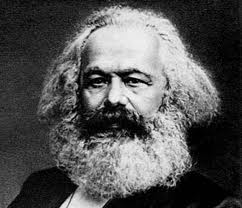
Karl Marx

Marx wrote during the heyday of the Industrial Revolution.  Production had increased dramatically, and more products were available to more people more cheaply than ever before in human history.  At the same time, the Industrial Revolution seemed to create a huge gap between the rich and poor, and this helped form the basis of Marx’s thought.

We need to approach Marx with an open mind.  We know that Marxism, as practiced by socialists, did not work. But Marx himself said that would not call himself a “Marxist” as he saw it practiced in his day, and in any case, no one is wrong about everything.  Marx argued the following

The End of Economic Freedom

The I.R. had its origins in economic freedom, but Marx saw it eroding freedom in the end.  What would even Adam Smith think about a nation of small-farmers and independent shop keepers being put out of business.  They end up as “wage-slaves” working for “the man.”  Thomas Jefferson too felt that political freedom had its roots in independent landowning.  Those who have freedom in their private lives will naturally want to have freedom politically.  But could democracy continue if we all answer to the big boss man?  Marx saw no point in pining away for bygone days or halting technological progress.  Rather, as technology changes we need to find new ways to put the means of production back into the hands of ordinary people, the way it was before the I.R.

Herein lies one of Marx’s major concepts: each economic system (including free market capitalism) has an internal logic to it that eventually exhausts itself.  As Marx saw it, capitalism would soon do the same.

Why?

Well, you can make good refrigerators and sell them to lots of people.  But what happens when everyone has a refrigerator?  What happens when the railroad company has no more land to build track on?  At this point, capitalism (according to Marx) either collapses, or buys itself time.

Capitalism can buy itself time only by encouraging wasteful consumption.  You can either a) invent pointless new products and try to fool people into buying them, or b) make your products worse so people will have to buy them more often.  But either option will rob people of freedom, making them stooges of corporations.

All this is the gospel according to Marx.  He had many things wrong.  He put too much stock in the “labor theory of value.”  Capitalism has also found new ways to reinvent itself.  Instead of railroads we came up with cars and planes.  Companies can also find profit in ways besides simple expansion.  Marx also did not see how the market could improve standard of living for those at the bottom of the economic ladder.  For example, think of the vastly improved quality of even entry-level cars today compared to 20-30 years ago.  Or we can recall how quickly and steeply the price of dvd players fell in the span of a few short years.

But does Madison Avenue ever attempt to create needs that are not there?  Does our society encourage pointless consumption — and can capitalism survive if this kind of consumption forms its foundation?

In our discussion we pondered some of the historical reasons why capitalism did not collapse when Marx assumed it would.  Some suggested that beginning in Teddy Roosevelt’s presidency, we abandoned a more pure liberty/untethered market approach and began to sprinkle in a dash of equality and fairness.  We began to regulate businesses in certain ways.  Organized labor became more prominent.  Did this switch either ..

  • Inoculate capitalism from the full blown socialist disease?  In this view, we prevented the rise of socialism entirely by giving ourselves a small dose of it, to allow the capitalist “body” to produce the necessary resistant to socialism.

OR

  • Put on us on the road to socialism at some point in the future.  Will this be a virus that keeps growing  and slowly learn to take over the system.

Part of the nature of the debate has to do with the ever-present tension between liberty and equality in any democratic system, which can take us back to De-Tocqueville.

Many thanks,

Dave M

12th Grade: The Mystery of Capital

Greetings,

This week we began our look at economic theorists throughout history and some basic principles surrounding economics in general.  This will culminate when the students form rival companies and compete with each other, with the rest of the school as customers.

We spent most of our time trying to understand exactly what money really is, and how it functions.  The title of this post is taken from a book by the famous economist Hernando de Soto, but it also describes my own personal feelings.  Money has a fungible, mysterious identity, but hopefully we reached common ground on a few key ideas.

We often make the mistake of thinking that money is a “real” thing, that it has a natural and inherent value to it.  Rather, money symbolizes or signifies some agreed upon purchasing power.  A strict barter economy makes much more sense after all. If two people exchange a bushel of wheat for a barrel of apples, we immediately see how both sides get value from the transaction.  Although even the wheat and apples do not have absolute fixed values.  If you hate apples, they would not be worth much to you.  If the wheat harvest failed it would have greater value than in previous years.  Still, the transaction seems rooted in understandable reality.

But, I wonder, who was the first person who decided to trade away something tangible and useful, such as bread or animal skins, for shiny rocks?

Of course money  has many advantages to barter economies.  They function much more efficiently, for one.  Shopping is much easier with a pocketful of coins, as opposed to a wagon load of things to trade.  However, a money economy depends on shared societal belief to a much greater degree than barter.  Society must take a collective leap of sorts, for what would happen to our economy if one day the managers of grocery stores said, “Why should I give you this bread and milk?  All you’re giving me in return are these small pieces of paper!”

So, the value of money depends at least in part on a shared, created belief.  But this does not mean that money can simply be invented out of thin air.  Money may not be fully real, but it must be based on something real, be it labor, a product — something.

After laying that groundwork we began our quick look at economic theorists throughout history.  We started with a brief comparison between the Dutch and Spain around the turn of the 17th century.  Spain had an overseas empire that allowed them to bring piles of silver into the country.  The Dutch too, had some overseas trade, but they helped pioneer the idea of the corporation and the stock market.  At first glance, we might expect a mountain of silver to defeat a nascent stock market, but in fact the reverse happened.  How could this be?

When the Bush and Obama administrations gave bailout packages to various financial industries, many commented something along the lines of, “If the government is going to give out all that money, they could just give it to families, and each would receive $35,000.”  Would this have worked?  I asserted that if this had been done, everyone would have more money, but no one would be any richer.  If everyone is special, no one is.  Prices would likely rise, and inflation would kick in.

This happened in Spain.  The supply of silver increased significantly, but prices even more so.  Part of this had to do with how the Spanish used their silver, but the basic principle still holds.  Their silver created no wealth.  In contrast, the Dutch stock market created a system whereby the flow of capital could be constant, and that money would be used to further develop companies.  Thus, the stock market would have a better chance of reflecting “real” value than a pile of silver.  Of course, this serves as only a cursory explanation.

John Law had a checkered career as a financial advisor, but he came up with a couple financial innovations that have done much to influence modern finance.

  • Credit is Money

Money’s value comes from the fact that people trust it.  Without trust, money could not function.  Thus, trust forms the basis of all purchasing power.  Suppose you had no actual money to your name, but did possess a notarized I.O.U. from Bill Gates for $1 million, payable by the end of next week.  We surmised that you could use that credit as money, or at least to secure a loan.

When we use credit cards, for example, no money changes hands at that moment.  The store trusts the credit companies to pay them, the credit companies trust us to pay our bill.  Credit would not work without trust, but we can take it one step further.  Trust can function like money.

  • Credit and Governments

Law argued that since governments have the power to tax, they can issue money against themselves in a crisis.  Borrowing against yourself would force governments, he argued, to pay it back.  To not recollect the money would de-legitimize their whole standing with the people and destroy their currency. If the people don’t trust the government to pay it back, then you have bigger problems than mere financial difficulties.  The government itself would collapse.  Given that this option comes with more pain than repaying the loan, Law thought, governments would choose to recollect in the form of taxes later.

Governments certainly have used this idea numerous times, sometimes with great success, other times it has led to disaster.  But that is part of Law’s point.  Governments risk a lot through this mechanism, and if they’re not “good for it” than they don’t deserve to govern.

In his book, The Cash Nexushistorian Niall Ferguson speculated that one reason why democratic countries have more financial success than other forms of government is the flexibility given through governing by consent.   Since governance through consent has more stability, these governments have more trust in the international community.  This trust leads to more purchasing power.

Next week we’ll look at Adam Smith, Karl Marx, Keynes, and Hayek.  Have a great weekend.

Dave Mathwin

Michael Knox Beran’s “Forge of Empires”

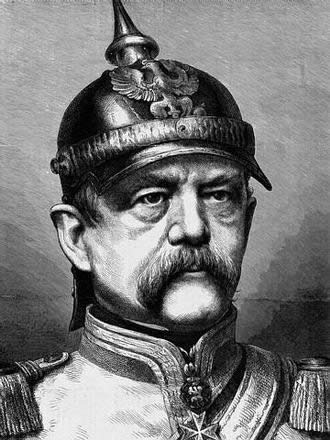
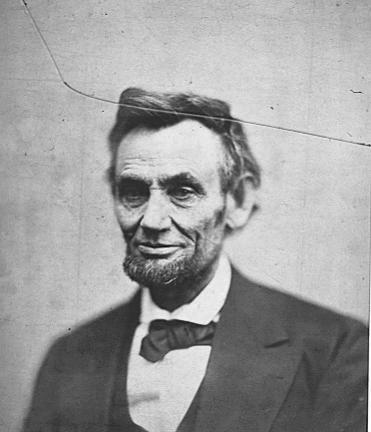
Beran’s book looks at Abraham Lincoln, Otto von Bismarck, and Alexander II, three contemporary heads of state who remade their respective countries.  Beran attaches the word “revolutionaries” to each of these rulers, though not all revolutionaries are created equal.

One can read this book even if you’re only interested in one or two of the people, as I was.  I thought his comparison of Bismarck and Lincoln refreshing.  Historian James McPherson called the Civil War a “Second American Revolution,” and I think Beran would agree.  If we think about the Civil War like this it puts a new perspective on Lincoln’s presidency.

To my mind the Confederacy acted much like the British did in the late 18th century.  I think the British had technical legality on their side, but to focus on that alone missed the most important details.  They were right, for example, to insist that the colonies never had a separate existence apart from England, like say, Ireland did until it was incorporated into the British empire.  But though correct in the barest factual sense, England overlooked the reality that American had de facto operated independently in almost every way since the 17th century.  While some townships in England had no direct Parliamentary representative (and so the colonists shouldn’t feel it their absolute right to have one), England ignored the great differences between an English township and colonies across the ocean.

So too the Confederacy may have been technically correct about federal power as it related to the slavery question.  But as one student of mine said, “It’s slavery, who cares about the Constitution.”  Anti-slavery advocates called for the country to be guided by a “higher law” than the Constitution.  When the southern states objected to this idea, they immediately lost the real argument.  They put the Constitution itself, which they claimed to follow, in the perilous ground of complete irrelevancy.  If it could not solve the slavery issue, what good was it?

By 1861 the Constitution had proved inadequate to deal with fundamental questions of human existence.  So yes, Lincoln did skirt some constitutional guidelines.  But he must be understood in a revolutionary context.  Revolutions happen in part because the current system fails to deal with reality.  Revolutionaries often find themselves cast off from traditional moorings because the tradition’s failure led to the revolution in the first place.  Revolutionary movements therefore have great opportunity and immense danger inherent in them.  So yes, Lincoln did play fast and loose with certain constitutional provisions (as did Jefferson Davis in the South).  But we should marvel at how much he preserved, rather than what he bent or broke.  The Civil War did change America, but I would argue that it was Lincoln’s moral sense, and a Christian moral sense from around 1862 on, that preserved much of the best of what the founders bequeathed.

Bismarck, like Lincoln, was a brilliant politician who forged a nation from a confederacy of provinces.  But that is where the similarities end.   He manipulated other countries and even his own king.  He cared enough about democracy and constitutionalism to use it when it suited him, but he always came back to force, his weapon of choice.  Bismarck was in certain key ways a friend of the Jews, and so I very much want to believe he would have hated Nazi rhetoric.  But his insistence on using force to bypass the democratic process bore terrible fruit generations later.

Most of their portraits reveal this basic difference.  Bismarck, for example often posed in military garb, which suits his whole political philosophy.

On the left, realpolitik with a heart, on the right, realpolitik with nothing but politics.  It sounds sentimental and mushy, but it takes a gentle hand and mercy to make sure that revolutions do not become tyrannies.

11th Grade: Market Psychology

Greetings,


This week we looked at the Stock Market Crash of 1929 and how it happened.   Not all Stock Market crashes cause deep depressions or recessions, and in fact, many now argue that the Great Depression had many other factors besides the ’29 crash.  For example, only about 3% of Americans owned any stock at all in 1929.  But I do think that the crash both revealed and foreshadowed deep problems within the economy as a whole, and so I still thought it worthwhile to examine.  At the very time, for example, when the stock market rose dramatically, key industries like agriculture and construction showed major signs of weakness.
Not only that, it gave us a great platform to discuss the bursting of the dot-com bubble in 2000, which did not bring about substantial economic harm, and the crash of 2008 recently which did.  What were the differences in the two, and which was 1929 more like?  It seems that the 2000 dip revealed a weird anomaly in the economy, whereas in 2008, the problems lay much more at its heart, with our financial system in general.  Here are a few different graphs that show similar drops in the market, but each had its own particular effect on the economy:
This graph suggests that maybe market ‘crashes’ are simply ‘corrections.”
We spent two days this week on our own’Stock Market of the  1920’s’ activity.   My main purpose was not recreate  entirely how stocks are actually sold and have value.  I wanted the students to focus on understanding the psychological aspect of not only stock value, but the  value of anything at all.  After all, what makes our paper money  valuable in itself?  Only that we have all agreed as a society that it  does carry value.  If we lost that belief, the economy would collapse  shortly.  
In our game the four teams quickly got a handle on how they could disrupt other teams.  Each began with a diversified portfolio, but watchful eyes soon noted who had accumulated the most amount of a certain stock.  Other teams would then work hard to devalue that stock, trying to sell it to others at ridiculously low prices, with the some teams countering by buying it way too high.  
This instability made the market wobbly, whereby the ‘government’ (myself) stepped in to buy shares at market prices.  Unfortunately, this strategy left the government holding a great deal of unpredictable stock.  Luckily for all, one investor decided to buy back from the government at slightly higher than market rate, which boosted market confidence in general.  That move propelled them to a narrow victory.
I hope the students had fun, as I did watching their not very subtle machinations against one another.
Blessings,
Dave Mathwin