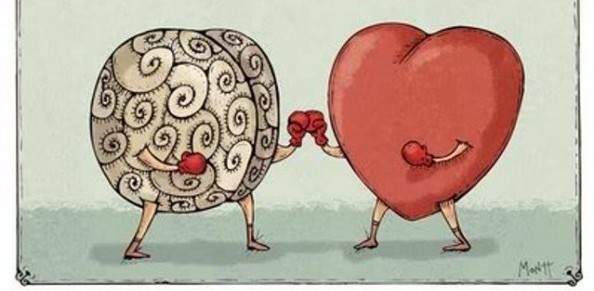
12th Grade: “Acts of Violence don’t win Wars.”

Greetings,

This week we spent part of the time trying to apply some lessons from the past to our current conflicts in Iraq and Afghanistan.  Central to our discussion was the following idea:

Acts of violence do not win wars.

This was a quote from the FLN leader Ben ‘Hidi in the movie, “The Battle of Algiers.”  We discussed what it is exactly that does win wars, and what happens when you make military action your strategy, rather than a tactic.

Everything needs a context that gives it meaning.  For example if a random person came up to you on the street and declared, “I love you!” the words would have no real meaning to you.  The words fit into no known context.  The person is not nice but weird.  His words would not have the desired effect.

In the same way, the violence of wars needs a proper context.  It must proceed from a defined moral and political reality.  Furthermore, the violence used must make sense within that defined reality for it to have real effectiveness.

For example, I think it no coincidence that the Union army fought much better after they had the liberating mission proclaimed by the Emancipation Proclamation.  No longer did they fight for the political abstraction of “Union” but the definite moral aim of freeing slaves.

In our discussion of the movie we focused on the question of torture and the question of French identity in particular, and democratic identity in general.

For homework recently I had the students look at various internal memos related to our use of “enhanced interrogation” tactics with enemy suspects (I’ll include what the students read at the end of the update).  Next week we will discuss John Yoo’s famous/infamous memo and in large part our reactions should center around two questions:

  • To what extent should American values be used as a “weapon” in the War on Terror?  What is our greatest asset in the war, and how can we use it?
  • Can torture be a tactic in fighting a “just war?”  If so, how, and if not, can we ever use it?

We used some of these questions to look at the war in Iraq from 2003-2009.

When we went into Iraq initially, we had fairly narrow military goals.  We planned the military campaign to make it as easy as possible for our troops to overthrow Saddam.  This meant focusing on the destruction of Iraq’s infrastructure (i.e. power, communications, etc.) among other things.  In a narrow military sense, we had quick and stunning success, but almost immediately afterwards, the situation deteriorated.  We faced grave problems of violence and unrest, some of them of our own making.  After all, the destruction of infrastructure itself created by the war made their lives more tenuous and unpredictable.

Iraqi’s also faced the question of the rule of law, or more pointedly, its absence.  A few years ago I had a chance to talk to an army major who was in Baghdad just after Saddam’s regime collapsed.  A respected local elder came up to him and said,

Thank you for removing Saddam.  But now we are confused.  What law do we follow?  Are we still under Saddam’s law?  Or is it the martial law of the U.S. military?  Or is it local tribal law?  Or is it Sharia law?

I remember the captain telling me that,

When I had no idea what the answer was, I realized we were in trouble.

In other words, our violence effectively removed the regime, but did not have any discernible meaning — it had no larger moral and political context that the Iraqi people could latch onto.  Thus we should not be surprised that chaos and confusion reigned in the aftermath.  Violence alone failed to come even close to achieving our objectives.

At first we used our military in Iraq to ‘kill the bad guys’ rapidly making headway amidst the chaos. We holed up in the Green Zone, rode out in armored vehicles, and retreated back.  By 2006/7 the situation looked bleak. General Petraeus had a different concept of what the war was about and changed everything.  The goal was no longer to kill bad guys but to protect Iraqi citizens.  To even find the bad guys, we needed better intelligence, and we were only going to get that from the people themselves.  Petraeus was right to surmise that the Iraqi’s didn’t want Al Queda as part of Iraq, but also realized that no one was really sharing in their struggle.  He took troops out of the Green Zone and embedded squads in local Iraqi neighborhoods.  As much as possible, soldiers were to appear without helmets and weapons — things average Iraqi’s did not have.

While the final chapters of Iraq’s transformation have not been written, no one can doubt the progress made since this change of strategy.  Perhaps this gives insight also as to how our values might be a weapon, and how a military can be used to combat an idea.  He strongly emphasized the idea that “We should be first with the truth, even on bad days.”  When senior administration officials urged him to change his message to reflect a more positive image of the war, he argued that, “We don’t have an image problem.  We have a results problem.”

If you are curious, this site communicates in visuals some of what Petraeus hoped to and did accomplish.  The visual below shows the extent to which he broadened our field of vision as to how we fought the war.

Many believe that “The Surge” and this change in strategy helped to transform Iraq, though the final chapters of this tale will not be finished for many years.  Of course, Petraeus has his critics, and one of them writes here, if you are interested.

I wanted the students to think about the extent to which we believe that our democratic values are an asset or a hindrance in the War on Terror, a decision that reveals much of what we really think of democracy in general.  Generally two main schools of thought exist:

  • Our values/freedoms are the essential foundation of who we are, not a mere add-on when things go well.  Therefore the wars we fight, and the way we fight them, must reflect those values, lest we lose our identity.
  • As valuable as our values/freedoms are, they only exist because of the foundation built by security. Without security as the proper soil, freedoms cannot exist.  Therefore in war, we fight to protect our values by making sure we have adequate security.

This debate has great relevance for how we think of torture.  Some see it as necessary to preserve freedom, others see it as a betrayal of our identity, and therefore off-limits to us.  Students felt the tension between our responsibility to protect the innocent and also protect who we are as a people.  Both sides have costs.  To not torture might cost lives.  To do so might cost us something different — our image, identity, our reason for being a nation in the first place.

I hope you enjoy the weekend.  Voices on both sides of the torture debate follow, if you have interest.

Blessings,

Dave

DEPARTMENT OF THE AIR FORCE, OFFICE OF THE JUDGE ADVOCATE GENERAL,

Washington, DC, February 5, 2003. 

Subject: Final Report and Recommendations of the Working Group to Assess the

Legal, Policy and Operational Issues Relating to Interrogation of Detainees

Held by the U.S. Armed Forces in the War on Terrorism (U)

1. (U) In drafting the subject report and recommendations, the legal opinions of the Department of Justice, Office of Legal Counsel (DoJ/OLC), were relied on almost exclusively. Although the opinions of DoJ/OLC are to be given a great deal of weight within the Executive Branch, their positions on several of the Working Group’s issues are contentious. As our discussion demonstrate, others within and outside the Executive Branch are likely to disagree. The report and recommendations caveat that it only applies to “strategic interrogations” of “unlawful combatants” at locations outside the United States. Although worded to permit maximum flexibility and legal interpretation, I believe other factors need to be provided to the DoD/GC before he makes a final recommendation to the Secretary of Defense.

2. (U) Several of the more extreme interrogation techniques, on their face, amount to violations of domestic criminal law and the UCMJ (e.g., assault). Applying the more extreme techniques during the interrogation of detainees places the interrogators and the chain of command at risk of criminal accusations domestically. Although a wide range of defenses to these accusations theoretically apply, it is impossible to be certain that any defense will be successful at trial; our domestic courts may well disagree with DoJ/OLC’s interpretation of the law. Further, while the current administration is not likely to pursue prosecution, it is impossible to predict how future administrations will view the use of such techniques.

3. (U) Additionally, other nations are unlikely to agree with DoJ/OLC’s interpretation of the law in some instances. Other nations may disagree with the President’s status determination regarding the Operation ENDURING FREEDOM (OEF) detainees; they may conclude that the detainees are POWs entitled to all of the protections of the Geneva Conventions. Treating OEF detainees inconsistently with the Conventions arguably “lowers the bar” for the treatment of U.S. POWs in future conflicts. Even where nations agree with the President’s status determination, many would view the more extreme interrogation techniques as violative of other international law (other treaties or customary international law) and perhaps violative of their own domestic law. This puts the interrogators and the chain of command at risk of criminal accusations abroad, either in foreign domestic courts or in international fora, to include the ICC.

4. (U) Should any information regarding the use of the more extreme interrogation techniques become public, it is likely to be exaggerated/distorted in both the U.S. and international media. This could have a negative impact on international, and perhaps even domestic, support for the war on terrorism. Moreover, it could have a negative impact on public perception of the U.S. military in general.

5. (U) Finally, the use of the more extreme interrogation techniques simply is not how the U.S. armed forces have operated in recent history. We have taken the legal and moral “high-road” in the conduct of our military operations regardless of how others may operate. Our forces are trained in this legal and moral mindset beginning the day they enter active duty. It should be noted that law of armed conflict and code of conduct training have been mandated by Congress and emphasized since the Viet Nam conflict when our POWs were subjected to torture by their captors. We need to consider the overall impact of approving extreme interrogation techniques as giving official approval and legal sanction to the application of interrogation techniques that U.S. forces have consistently been trained are unlawful.

JACK L. RIVES,

Major General, USAF,

Deputy Judge Advocate General.

DEPARTMENT OF THE NAVY, OFFICE OF THE JUDGE ADVOCATE GENERAL,

Washington, DC, February 6, 2003. 

Subj: Working Group recommendations relating to interrogation of detainees.

1. Earlier today I provided to you a number of suggested changes, additions, and deletions to the subject document.

2. I would like to further recommend that the document make very clear to decision-makers that its legal conclusions are limited to arguably unique circumstances of this group of detainees, i.e., unlawful combatants held ” outside” the United States. Because of these unique circumstances, the U.S. Torture Statute, the Constitution, the Geneva Conventions and customary international law do not apply, thereby affording policy latitude that likely does not exist in almost any other circumstance. (The UCMJ, however, does apply to U.S. personnel conducting the interrogations.)

3. Given this unique set of circumstances, I believe policy considerations continue to loom very large. Should service personnel be conducting the interrogations? How will this affect their treatment when incarcerated abroad and our ability to call others to account for their treatment? More broadly, while we may have found a unique situation in GTMO where the protections of the Geneva Conventions, U.S. statutes, and even the Constitution do not apply, will the American people find we have missed the forest for the trees by condoning practices that, while technically legal, are inconsistent with our most fundamental values? How would such perceptions affect our ability to prosecute the Global War on Terrorism?

4. I accept the premise that this group of detainees is different, and that lawyers should identify legal distinctions where they exist. It must be conceded, however, that we are preparing to treat these detainees very differently than we treat any other group, and differently than we permit our own people to be treated either at home or abroad. At a minimum, I recommend that decision-makers be made fully aware of the very narrow set of circumstances-factually and legally-upon which the policy rests. Moreover, I recommend that we consider asking decision-makers directly: is this the “right thing” for U.S. military personnel?

MICHAEL F. LOHR,

Rear Admiral, JAGC, U.S. Navy,

Judge Advocaate General.

Charles Krauthammer, columnist, writing for National Review online:

I don’t see [the release of Bush administration memos on interrogation techniques] as a dark chapter in our history at all.

You look at some of these techniques — holding the head, a face slap, or deprivation of sleep. If that is torture, the word has no meaning.

I would concede that one technique, simulated drowning, you could call torture, even though the memos imply that legally it didn’t meet that definition. I’m agnostic on the legalism….

But let’s concede that it’s a form of torture. I think it’s perfectly reasonable to use it in two cases, that the ticking time bomb, if an innocent is at risk and you’ve got a terrorist that has information that would save that innocent and isn’t speaking. That’s an open and shut easy case.

A second case is a high-level Al Qaeda operative, a terrorist, who knows names and places and numbers and plans and safe houses and all that, and by using techniques to get information, you’re saving lives.

If I have to weigh on the one hand the numberless and nameless lives saved in America by the use of these techniques, and we had a CIA director who told us that these techniques on these high-level terrorists was extremely effective in giving us information.

If you have to weigh on one hand that the numberless and nameless lives saved, against the 30 seconds or so of terror in the eyes of a terrorist who is suffering this technique, I think the moral choice is easy.

It’s not a dark chapter in our history. It is a successful one. We have not had a second attack, and largely because of this.”


Liberty: The God that Failed

My wife and I both love Garrison’s Keillor’s Lake Wobegon Days for its humor and insight into small-town life.  It often resides near our bedside table, so it is with great frustration that I cannot find a particular passage that immediately resonated with me years ago.  Keillor writes about the vapid predictability of his elementary school history lessons about George Washington (and his best friend Abraham Lincoln) and fantasizes about shaking things up just to relieve the boredom.  “I imagined,” Keillor writes (but here I am working from memory and not quoting directly), “fighting for the British, and calling Washington a traitor. Yes, a traitor!  There I would be, scouting the woods, finding the rebels, taking potshots at the great general.  Firing on the Father of our Country?  Why not — yes!.”

It was in this spirit that I initially approached Christopher Ferrara’s Liberty: The God that Failed.  Ah ha!  Here is something different, clearly written from a very defined point of view in a polemical spirit.  Liberty, that treasured American possession, will get exposed as a nothing, or less than nothing!  It sounded like great fun regardless of whether or not it persuaded me.

But something more meaningful also encouraged me to read this, for the author pledged to critique both the modern liberal and conservative/libertarian approaches to liberty.  The problems with modern America lie not so much with Republicans or Democrats, or any particular president, or era in our history, but instead within our very DNA as a Nation — Garrison Keillor’s daydream made real.

Before delving into the book’s arguments, I can say that it lives up to its promise.  He writes crisply, and the arguments roll like a freight train.  At 650 pages it’s a surprisingly quick read.  He has a voluminous bibliography.  But Ferrara tries to shoot everything and demolish every sacred cow, and thus sets the bar perhaps a bit too high for himself.  In the first half of the book I recognized many reputable sources from authors like Gordon Wood, Bernard Bailyn, and Joseph Ellis.  By the book’s end he repeats himself, and his discipline seems to crack (I noticed a couple “.com” footnotes later in the work, inappropriate for a book of this weight).  Still, though perhaps about 200 pages too long, Ferrara gives the reader much to ponder.

The book begins with brief summary of the heritage of Greek philosophy after the Peloponnesian War (431-404 B.C.). After the idolatrous parochial worship of their own political communities (see Appendix below) that started that devastating conflict, Plato and Aristotle saw that the state needed a foundation beyond itself.  Neither of them conceived of the state in Christian terms, but both saw that when the state merely served as a mirror for the populace, disaster resulted.  The state should aid in the living of the good life, which is the life of virtue.  The state should have no other legitimate purpose.  In other words, do we want the state to enable injustice and destroyed lives?  In the wake of Rome’s fall, medieval Europe picked up on this idea, and struck a new course.  They would have agreed with Jacques Maritain, who wrote in the mid 20th century that,

We must affirm as a truth . . . the Church’s supremacy . . . over all terrestrial powers.  On the pain of radical [earthly] disorder, she must guide the people towards the last end of human life, which is also that of states.

Without rendering justice to God, we cannot practice justice to others.

Of course the medievals did nothing new in this regard.  Every civilization that has ever existed before the Enlightenment linked the public recognition and worship of God/gods and politics.  Certainly most of the Reformers thought likewise, as Calvin’s Geneva or Puritan New England attest, among other examples.  Only since the Enlightenment has western man tried the novel experiment of severing themselves from looking at anything but themselves to guide their politics.

Ferrara continues with a brief defense of Christendom itself, which we can pass over quickly.  He notes that contrary to received myths with Enlightenment origins that continue to this day, Christendom had

  • Great cultural achievements (Gothic cathedrals, Sistine Chapel, etc.) that can only come with true artistic freedom
  • Economic freedom
  • Limited government, and therefore
  • Limited wars and violence

Ferrara recognizes wisely that defending Christendom stands outside the scope of his thesis, so he moves on from this quickly — perhaps it could have been left out, for it raises many unanswered questions.

By chapter four, he begins to lower the boom.

John Locke had a enormous influence over the founders.  Locke himself may have been either a deist or a Christian, but that, for Ferrara is beside the point (Thomas Hobbes also gets attention, but Locke had far more influence over our founders).  Locke’s “blank slate” metaphysics undermined much of the foundation for mankind knowing eternal ideas “in a state of nature,” contra Romans 1.  Since man has no shared foundation in the eternal, mankind must root government in the consent of the governed.  This is such a truism for us that we hardly give it a passing thought, but this means that “every man has the executive power of the law of nature (Locke, “Two Treatises on Government).”  Locke later states that “Virtue and vice are names pretended” based on the conventions of the day, and all this follows naturally on Locke’s view of the world.  All this forms Locke’s view of sovereignty as essentially a tautology referencing nothing but “the consent of the governed” to determine its will.

Certain places in colonial America based their societies on something like an idea of a Civitas Dei, i.e. the New England Puritans.  But with Locke the emphasis had changed, and America the nation, founded on Locke’s principles could never be a “Christian nation” and doomed itself to moral chaos.  Though other thinkers besides Locke had their role to play, most, like Montesquieu and Bayle drank deeply from Enlightenment thought.  Thus, the myth of an essentially conservative American Revolution designed to protect an already existing social order has no foundation.  The founders were revolutionaries in every sense of the word, and radically reoriented the basis of their society (I like Edmund Burke and his view of the problems between England and America, which Ferrara challenges.  This needs further consideration for me).  Ample citations show that men like Madison, Adams, Jefferson, and Washington saw themselves in this way.

The main problem with the American Revolution as Ferrara sees it, is not the concept of liberty in itself, but how our founders defined the concept.  Borrowing from Locke and others, liberty got defined either as . . .

  • A mere “freedom from” constraint from others, where, to quote Locke, “individual consent is the only proper basis for all man’s organizations, civil or ecclesiastical,” and,
  • The freedom for a people to define one’s own community, one’s own laws.  But the only possible basis for this under Enlightenment thought is “the consent of the governed,” or — “the opinion of most people.”

The end result of this ideology would make “Liberty” into a form of Power, the power to rule others, make laws, on the fly, with no reference to any eternal truth.  This proposition forms Ferrara’s central thesis.

Did the American Revolution play out this way?  At the crucial point of our history, did we turn towards a Civitas Dei or make Liberty our God, and thus make it a demon?

The book goes into some detail to show that many Founders had membership as Masons, and that Masons, by “faith,” were dedicated to deism.  The book references early modern and medieval constitutions that had explicit foundations in Christian belief and practice.  The Enlightenment changed this to “Great Architect of the Universe,” or other such vague references to a distant God.  This means that the so called “moderate Enlightenment” actually brought radical change to how our founders saw the world.  Again, ample evidence exists of this, i.e. Madison’s quote in “Federalist 14” that “our revolution has no parallel in the annals of human history.”  Gordon Wood also comments that the revolution, “fundamentally altered the character of human society.”  So the Revolution happened not to preserve an existing order, but create a new one.

We see the revolutionaries, just before and after the Revolution itself, impose their will to change society.  The Boston Tea Party is a good example.  Rather than let the “market”/people decide whether or not to buy the tea, the Sons of Liberty destroyed it (which happened after they failed to persuade the populace not to buy it, at least in Ferrara’s interpretation).  Liberty meant power over others, and it the revolutionary view of Liberty had pagan roots.  Ferrara perhaps goes a bit too far here, but does cite numerous examples of totems such as the Liberty Tree and Liberty Pole, and the resurrection of the Roman goddess Libertas, “invoked far more often than the Judeo-Christian god.”  This may seem too much for some, but Ferrara cites several 18th century sources, including the widely read and hugely popular Thomas Paine, to show that Liberty became a worshipped idol, and like all paganism, a source of power and manipulation.

The Sons of Liberty used this power to control the press during the Revolution, and tax and sometimes even arrest Tories for their support of England.  Jefferson, famed for his defense of freedom, made loyalty oaths compulsory while serving as Governor of Virginia.  Americans love to believe in the benign nature of their revolution compared to France, but our revolution produced 24 political exiles per thousand, while at the height of the Jacobin terror, France only had 5 refugees per thousand.^   Ferrara cites Murray Rothbard, a great admirer of the Revolution, who writes, “The revolutionaries moved to suppress crucial liberties of their opposition–an ironic but not surprising illustration of the conflict between Liberty and Power.”  “Jefferson,” Ferrara writes, “venerated as an icon by so many libertarians, was really just another statist.”  Maybe Rothbard is wrong.  Maybe no conflict really exists between American “Liberty” and power.

Liberty as Power continued after the revolution, where in Shay’s Rebellion the offenders had no right of habeus corpus.  Many were hung, and we see the “statist” power of Liberty on the rise.  By contrast George III never so much as arrested any revolutionary before the war.  Big government began right after the war’s conclusion with increased taxes and an army of public servants.  Could personal rights exist apart from the declared sovereign power of the people?

Deism, Ferrara argues, forms the natural religion of state grounded in Liberty.  It allows for God to create, and then nicely removes Him to the sidelines. So we have the Treaty of Tripoli (1797) unanimously approved by the Senate, which included Article XI:

As the Government of the United States of America is not, in any sense, founded on the Christian religion; as it has in itself no character of enmity against the laws, religion, or tranquility of [Moslems] . . . it is declared by the parties, that no pretext arising from religious opinions shall ever produce an interruption of the harmony existing between the two countries.

As John Adams later wrote, “[our government] was contrived merely by the use of reason and the senses.”

Ferrara continues on. . .

Liberty as Power had perfect expression in chattel slavery.  Many slave owners, in fact, explicitly defined liberty in terms of slavery.  They used the, “you can’t tell me what to do,” defense, but also went further and claimed that their personal exercise of liberty required slavery, i.e. more slavery = more freedom/more ability for me to live as I like. We rightly cringe at this today, but in fact the founders had no logic within their framework to contradict them, and slavery not only remained, but expanded.  Ferrara wants us to harbor no illusions — America from the American Revolution onwards was in no way a Christian country.  Nowhere does the Constitution recognize God as such, nowhere is any particular religious belief required.  We openly allowed for the oppression of blacks, and violated all laws and treaties to oppress the Indians as well under the same logic that allowed for slavery.  In other words, we had no law but the law of self, the idolatry of the self, or the consent based parochial community.  “We said it, it must be true.”

By this point the reader may grow faint, but not Ferrara.  Looking for a good guy in the Civil War?  Don’t bother.  Southern romantic myths about “genteel society,” whatever truth lay in them, rest on the foundation of slavery.  He exposes Southern myths about their so-called recovery of limited government.  The Southern constitution replicated the North’s almost exactly.  It formally recognized no Christian God (and if they had it would have been blasphemous anyway).  What about the North?  Nope — Lincoln expanded his power in ways George III never dreamed of, such as the draft, suspension of habeus corpus, and the like.  The North had the greater amount of power, so they won, and we in turn went to worship at Nebuchadnezzar’s statue.

Ferrara continues on, but I can’t.  Suffice to say, the growth of liberty as a means of power over our fellow man continues as his theme. His writing grows more scattershot, his sources get weaker.  But he does close on a fascinating and revealing note by examining Justice Kennedy’s “heart of liberty” section from his majority opinion in “Planned Parenthood v. Casey,” which overturned Pennsylvania’s abortion laws.  Kennedy wrote,

At the heart of liberty is the right to define one’s own concept of existence, of meaning, of the universe, and of the mystery of human life.  Beliefs about these matters could not define the attributes of personhood were they formed under compulsion of the state.

Many “conservatives” cried “foul” to Kennedy’s ruling, yet it bears remarkable resemblance Locke’s reasoning in his enormously influential Essay Concerning Human Understanding.  In his dissent, the “conservative” Justice Scalia argued that the decisions on these questions belonged to the state legislatures, to persuasion and the counting of votes — not judges.  Though seemingly on opposite sides, both Scalia and Kennedy drank from the same Enlightenment source, which is the essence of American political conservatism.  For both, it is consent, be it from an individual or group, that determines justice. Thus, no real barrier exists to things like pornography, abortion, homosexual marriage, and the like, provided the votes are there.  America’s very DNA means that we float along with whatever wind comes about by “consent.”  Our Constitution, far from constructing a limited government,** created a structure that would allow for this very thing.  Why would it not?  We should expect the Constitution to reflect Locke’s (and Montesquieu’s, and Bayle’s) views because our founders believed him.  Capitalism in this environment would only contribute to the growth of power, both in terms of big corporations, and in enabling whatever immoral choices we wish to make.

Well, what shall we say about Ferrara’s thesis?

I am a fan of some of John Le Carre’s earlier spy fiction, especially Tinker, Tailor, Soldier, Spy.   I remember reading a review of the book from an actual spy.  He praised it, but cautioned against anyone thinking that “this is what the world of spies really looks like.”  If as much backbiting and infighting existed as Le Carre depicts, no spy program would ever have any success.  

Part of me feels this way about this book.  America surely has had some success and done some good, right?  And the good we have done must have some good roots?  Must we burn every single thing down?*

I think Ferrara would counter that yes, we have done good at times, but that good is only the result of our consent based society sometimes aligning itself with eternal truth.  When we do so, however, we get “lucky,” and should not assume “that’s America.” This may be a fair riposte.  I will reserve final judgment for now.  But all in all, I found him persuasive on the inheritance of Western-based consent societies, especially when we remember the Napoleonic Wars, the Civil War, W.W I, II, and the fact that Nazi Germany, Maoist China, and Soviet Russia were essentially western rooted societies that acted for “the people.”

Part of the validity of his thesis can never have the requisite proof.  What would have become of medieval kingdoms and principalities with modern technology?  Would their wars have been as bloody?  Would certain kings have abused their power like a Stalin even with the more direct presence of Christianity?

We can guess, but never know.  The book also avoids certain key questions.  Would a Christian Commonwealth that Ferrara hopes for allow for freedom of speech, press, etc.?  If yes, what would be dimensions of those freedoms, and if no, would the cure be worse than the disease?  Or is “free speech” yet another idol of Liberty?  He never considers such things.  To be fair, I already stated that the book is too long, and his purpose in writing was to critique American foundations, not put up something definite in its place.  Still, we must face these questions to fully understand the implications of his thesis.

Some may object that even if Ferrara’s is correct, his point has no relevance.  Returning to the Civitas Dei will absolutely never happen now.  Yes — but  this doesn’t mean we should seek to understand exactly what we’re dealing with.  We should call spades spades.

While his ideas may lack immediate political relevance, they have great relevance for education.  So much of how we teach American history assumes significant possible divergence for various “hinge points” in our history with the War of 1812, Civil War, or with this president or that.  Ferrara tells us that many of the choices we think significant are only different shades of the same color.  The real path, the real decisions, got made in the 1760’s.  It’s almost as if we need to tell the story twice to do justice to both Ferrara’s ideas and the traditional approach.

This book should also speak to the Church.  Again, assuming he’s correct, the Church will not influence American politics directly without playing the “power” game.  If our system operates not by virtue but by votes, we may have to appeal to principles we really don’t believe in to accomplish our will.  Ferrara certainly does not believe we have any genuine Christian roots to which we can direct an appeal.

But the greatest value in Ferrara’s exciting, intriguing, but probably too ambitious work lies in how he gets us to rethink the concept of Liberty.  “Individual liberty is individual power.”  So said John Quincy Adams.   Isaiah Berlin gave the classic dilemma of negative (freedom from constraint) or positive liberty (freedom towards an end).  It appears that in the modern framework, negative liberty becomes an idol to self, positive liberty extended creates totalitarianism.  Ferrara splits the horns of the dilemma by reformulating the concept.  Liberty should mean freedom to do as we ought, not as we want, and without this understanding, our nation will float rudderless.

^We should consider, however, that in the “height of the Jacobin Terror” Robespierre’s government seemed much more concerned with executions than forcible exile.  Thus, while the American Revolution had its political compulsion, they preferred exile to execution.

*Perhaps ironically, part of Ferrara’s (a staunch Catholic classicist) work coincides nicely with Howard Zinn’s “radical” and “leftist” interpretation of American history.   Zinn is cited at least once, and probably more, in the footnotes.  In the review above I never delve into Ferrara’s critique of “Liberty” based capitalism, which he argues fosters immorality and at times, oppression and exploitation.  On the “oppression/exploitation” (one that admittedly Ferrara hardly develops) point we see another connection with Zinn.

**Ferrara briefly looks at the 10th Amendment, on which many proponents of limited government pin their hopes.  Ferrara argues that the 10th Amendment is a mere sop and has no actual teeth, not in practice, but in reality.  Those that designed the Amendment had no real belief in limited government in the first place.

Appendix: A.J. Toynbee, “The Idolization of the Parochial Community”

Unhappily, Polytheism begins to produce new and pernicious social effects when its domain is extended from the realm of Nature-worship to a province of the realm of Man-worship in which the object of worship is parochial collective human power. Local worships of deified parochial communities inevitably drive their respective devotees into war with one another. Whereas Demeter our common Mother Earth is the same goddess in Attica and in Laconia, the Athene Polias of Athens and the Athana Chalcioecus of Sparta, who are the respective deifications of these two parochial communities, are bound to be rival goddesses in spite of their bearing the same name. The worship of Nature tends to unite the members of different communities because it is not self-centred; it is the worship of a power in whose presence all human beings have the identical experience of being made aware of their own human weakness. On the other hand the worship of parochial communities tends to set their respective members at variance because this religion is an expression of self-centredness; because self-centredness is the source of all strife; and because the collective ego is a more dangerous object of worship than the individual ego is.

The collective ego is more dangerous because it is more powerful, more demonic, and less patently unworthy of devotion. The collective ego combines the puny individual power of each of its devotees into the collective power of Leviathan. This collective power is at the mercy of subconscious passions because it escapes the control of the Intellect and Will that put some restraint on the individual ego. And bad behaviour that would be condemned unhesitatingly by the conscience in an individual culprit is apt to be condoned when it is perpetrated by Leviathan, under the illusion that the first person is absolved from self-centredness by being transposed from the singular number into the plural. This is, however, just the opposite of the truth; for, when an individual projects his self-centredness on to a community, he is able, with less sense of sin, to carry his egotism to greater lengths of enormity. ‘Patriotism is the last refuge of a scoundrel’;5 and the callousness of committees testifies still more eloquently than the fury of mobs that, in collective action, the ego is capable of descending to depths to which it does not fall when it is acting on its individual responsibility.

The warfare to which parochial-community-worship leads is apt to rankle, sooner or later, into war to the death; and this self-inflicted doom is insidious, because the ultimately fatal effects of this religion are slow to reveal themselves and do not become unmistakably clear till the mischief has become mortally grave.

In its first phase the warfare between deified parochial states is usually waged in a temperate spirit and is confined within moderate limits. In this first phase the worshippers of each parochial god recognize in some degree that each neighbour parochial god is the legitimate sovereign in his own territory. Each local god will be deemed to have both the right and the power to punish alien human trespassers on his domain who commit a grievous wrong against him by committing it against his people; and this consideration counsels caution and restraint in waging war on foreign soil. It tends to prevent war from becoming total. The bashful invader will refrain, not only from desecrating the enemy’s temples, but from poisoning his wells and from cutting down his fruit trees. The Romans, when they had made up their minds to go to all lengths in warring down an enemy community, used to take the preliminary precautions of inviting the enemy gods to evacuate the doomed city and of tempting them to change sides by offering them, in exchange, honourable places in the Roman pantheon. When a local community has been exterminated or deported in defiance of the local divinity and without regard to his sovereign prerogatives, the outraged parochial god may bring the usurpers of his domain and scorners of his majesty to heel by making the place too hot to hold them except on his terms. The colonists planted by the Assyrian Government on territory that had been cleared of its previous human occupants by the deportation of the Children of Israel soon found, to their cost, that Israel’s undeported god Yahweh had lost none of his local potency; and they had no peace till they took to worshipping this very present local god instead of the gods that they had brought with them from their homelands.

Thus the conduct of war between parochial states is kept within bounds, at the start, by a common belief in the equality of sovereign parochial gods, each within his own domain. But this belief is apt to break down, and, with it, the restraint that is imposed by it. They break down because the self-worship of a parochial community is essentially incompatible with the moderation commended in such maxims as ‘Live and let live’ and ‘Do as you would be done by’. Every form of Man-worship is a religious expression of self-centredness, and is consequently infected with the intellectual mistake and the moral sin of treating a part of the Universe as if it were the whole—of trying to wrest the Universe round into centering on something in it that is not and ought not to be anything more than a subordinate part of it. Since self-centeredness is innate in every living creature, it wins allegiance for any religion that ministers to it. It also inhibits any living creature that fails to break away from it from loving its neighbor as itself, and a total failure to achieve this arduous moral feat has a disastrous effect on social relations.

A further reason why it is difficult to keep the warfare between parochial states at a low psychological temperature is because parochial-community-worship wins devotion not only by ministering disastrously to self-centredness. It wins it also by giving a beneficent stimulus to Man’s nobler activities in the first chapter of the story. In the histories of most civilizations in their first chapters, parochial states have done more to enrich their members’ lives by fostering the arts than they have done to impoverish them by taking a toll of blood and treasure. For example, the rise of the Athenian city-state made life richer for its citizens by creating the Attic drama out of a primitive fertility-ritual before life was made intolerable for them by a series of ever more devastating wars between Athens and her rivals. The earlier Athens that had been ‘the education of Hellas’ won and held the allegiance of Athenian men and women, over whom she had cast her spell, for the benefit of the later Athens that was ‘a tyrant power’; and, though these two arrogant phrases were coined to describe Athens’ effect on the lives of the citizens of other Hellenic city-states, they describe her effect on the lives of her own citizens no less aptly. This is the tragic theme of Thucydides’ history of the Great Atheno-Peloponnesian War, and there have been many other performances of the same tragedy that have not found their Thucydides.

The strength of the devotion that parochial-community-worship thus evokes holds its devotees in bondage to it even when it is carrying them to self-destruction; and so the warfare between contending parochial states tends to grow more intense and more devastating in a crescendo movement. Respect for one’s neighbours’ gods and consideration for these alien gods’ human proteges are wasting assets. All parochial-community-worship ends in a worship of Moloch, and this ‘horrid king’ exacts more cruel sacrifices than the Golden Calf. War to the death between parochial states has been the immediate external cause of the breakdowns and disintegrations of almost all, if not all, the civilizations that have committed suicide up to date. The decline and fall of the First Mayan Civilization is perhaps the only doubtful case.

The devotion to the worship of Moloch is apt to persist until it is too late to save the life of the civilization that is being destroyed by it. It does break down at last, but not until a stage of social disintegration has been reached at which the blood-tax exacted by the waging of ever more intensive, ferocious, and devastating warfare has come palpably to outweigh any cultural and spiritual benefits that the contending parochial states may once have conferred on their citizens. . .


12th Grade: The Justice in Due Process

Greetings,

For our final unit we have been looking at tort law, which deals with civil damages and penalties from companies to individuals.  This gives us a chance to examine some fun and controversial cases, but it also gives insight into how one applies basic democratic concepts of fairness.

We looked at the McDonald’s “Hot Coffee” case last week, where many of the students decried the verdict where a jury awarded Mrs. Leibeck more than 2 million dollars.  Many students applauded the fact that a judge lowered the damage amount to around $450,000, which in their eyes seemed more reasonable, though still excessive.

This week we looked at the case of “State Farm v. Campbell,” decided in 2003.  The case had its origins in an accident caused by Campbell.  Over a period of years, State Farm hung Campbell out to dry, which was bad enough.  Subsequent investigations showed, however, that State Farm had a nationwide policy of targeting lower income, lower education clients for systematic fraud.  Their reasoning appeared to be that they would not fight back.  So incensed were juries in this case that juries assessed State Farm with a $145 million in punitive damages.  Most students agreed that though the amount was large, the verdict seemed fair given the egregious nature of their conduct and the fact that it proceeded from explicit policy within State Farm on a national level.

By 2003 the Supreme Court got involved, however, and overturned lower court verdicts, putting certain rules in place that cap the amount of damages courts can award.  Consumer advocacy groups cried foul, business interests cheered, and some wondered what exactly the Supreme Court was doing by hearing the case in the first place.

As to last issue, the Supreme Court intervened on the basis of the Constitutional guarantee of “due process of law.”  But this begs the questions, “What is due process?”

Two basic views exist on this subject:

  • The more “conservative” view holds that “due process,” means you get a fair “process,” in your case.  Did you get a lawyer?  Did the judge act appropriately?  Was the jury properly empaneled?  If you have these elements in place, you received your guarantee of “due process.”
  • The more “liberal” view believes that “due process” goes beyond the process itself to a basic concept of general fairness.  Specifically in the State Farm case, State Farm argued that it cannot receive due process if it has no way of anticipating what its punishment might be.  A defendant on trial for robbery has a reasonable idea of his sentence might be if convicted.  But in tort law cases companies subjected themselves to the “whims” of the jury with any possible outcome.  They argued that the Court should devise clear rules for juries in the awarding of punitive damages.

By a 6-3 vote, the Supreme Court agreed with State Farm.  Interestingly, the three dissents came from opposite ends of what we usually consider to to be the political spectrum, as “Conservative” justices Scalia and Thomas joined “liberal” Justice Ginsburg in stating that, 1) The Supreme Court had no real jurisdiction in this case, and 2) Even if they did, a belief that the fine was too high is no compelling reason existed to overturn the jury’s verdict.  Ginsburg, I believe, made the “conservative” argument that if Utah (where the case originated) wanted to put a cap on damages they could do so through their legislature.

One reason why I like looking at these two cases is that they often produce a healthy tension, especially for more conservatively minded students.  Most in class argued that the McDonald’s case shows that Americans are too litigious, irresponsible, etc., but many of these same students also decry “judicial activism.”  Well, “judicial activism” of a kind changed the verdict of the jury in both the McDonald’s and State Farm cases.

Also, Conservatives generally tend toward the “pro-business” side of questions, but in these cases supporting juries meant supporting the “little guy” and not “big business.”

And this raises another broader question.

Juries, like any other institution, have a mixed history.  But practices such as trial by jury have long been considered pillars of free societies.  But the power of juries also hints at the fears of some of the founders on the role of the “common man” with difficult questions.  Many at the Constitutional Convention sought to isolate federal government from the vagaries of the “mob.”  LIkewise, do we believe that juries, rather than judges, are the surest guarantee of liberty?

This raises a still broader question, one that has lurked in the background of the entirety of this whole year:  Is democracy best thought of as a process, or as a result?  How we answer that question might depend on the circumstances.  Most would not call a people “democratic” if 51% of them voted to remove freedom of speech.  But many also do not like the idea of unelected, appointed officials overriding “popular” legislatures, such as when a Virginia judge recently overturned Virginia’s “marriage amendment” passed through its legislature.  Our own system of government was set up precisely to provide this kind of give-and-take, but the emphasis must be in one direction or the other, and we must choose.

This will be the last update of the year, and I want to take this space to say a huge thank you to all the students, all of whom I have taught for at least two years, and some for five.  I’ve had a wonderful time and learned so much from them.  Thank you also to all the parents who have offered so much support to their children and the school.  Many blessings to all,

Dave


12th Grade: Plato’s Philosophy and Constitutional Interpretation

Greetings,

This week we looked at the philosophy of Plato as it relates to our study of government, and ultimately I want the students to relate what we examine with Plato and Aristotle to their understanding of our own constitutional convention activity that we will begin next week.

Plato and Aristotle in some ways, represent two different approaches to government.  Plato (on the left) stressed the eternal, and spirit as opposed to matter.  Aristotle (on the right) focused on the observable, experience, and “nature” as a fixed point.

Detail from "The School of Athens

As for Plato. . .

  • Plato and Truth
For Plato, truth is not to be found in our experience in creation.  Creation itself is at best a mistake, at worst an evil act.  Creation is the “Fall” for Plato.  Truth, therefore, resides “up there” in the world of perfect form and function, the world of ultimate truth and beauty.  This truth is fixed, eternal, and unchanging.
  • Plato & People

Plato believed that most people were guided primarily not by their intellect, but by their appetites.  We should not restrict this idea of “appetites” to  food — it involves all things that we want.  We want to “feed” the self, based on the whims of the moment.  Only a few, according to Plato, let themselves be guided by  their perception of the truth.

  • Plato and the State

We put our focus here.  Since only a few had the intellect and the will to escape the material and physical and be guided by ultimate truth, democracy was a foolish path to disaster.  Plato uses a few important analgies to help make his point.  A ship at sea, for example, does not take advice on how to sail from the crew.  Why then, should the state take advice from the majority, who are guided by their appetites.  The state needed guidance from ‘philosopher kings’ who had the ability of true perception.

This sounds harsh, but wise decisions benefit all.  We think we would be happier following our whims, but in reality, we would be better off as a part of a well-run state, at least according to Plato.

Many things, however, stood in the way of achieving this, among them the institution of the family, which only serves to perpetuate ignorance.  All kinds of culture and context needed swept away to achieve this ideal state.  Of course this ‘context in creation’ had no value anyway because creation itself led us into error.

There is much good and bad to say about Plato.

On the plus side:

  • Plato put great emphasis on seeking ultimate, eternal, and absolute truth.  He believed that the state needed this fixed guidance, and that leaders needed a firm and clear vision of what they wanted to achieve in society.

On the negative side:

  • Plato’s lack of respect for creation led him to treat individuals as cogs in the machine of the state.  Very few have rights, freedoms, or choices in Plato’s ideal Republic.
  • Plato’s extreme emphasis on the intellect meant that music, poetry, and other such things had to be removed as, in Plato’s view, they obscured rather than revealed the truth. The same holds for the emotions.  For Christians, Plato’s gnostic influence led to the introduction of a variety of Christian heresies denigrating creation and the Incarnation.

On Thursday I plan on listening to 9780815722120legal scholar and author Jeffrey Rosen, who has written extensively on technological change and the constitution.  While this was a detour of sorts, our discussion of Plato does relate.  Do we see the Constitution as an absolute, fixed, standard, no matter what changes around it?  Or, do we see the Constitution having certain key principles, that apply differently given the context of the times?  The first view obviously would have more in common with Plato, the second has more of an Aristotelian influence.  Plato, of course, would not want “Truth” to be influenced by context, as that would mean that truth had to be bound up in “matter,” which had inherent inferiority to “spirit.”

I hope the students saw the importance of the issues Rosen raised, among them. . .

  • How ‘private’ are public spaces?  We understand that when we walk down the street, someone could look at us and observe us, and this does not violate our privacy.  What if a person filmed us walking down the street, uploaded it on YouTube set to a techno song.  Would that violate our privacy?
  • Most of us are probably fine with surveillance cameras in stores.  Perhaps fewer or us (I’m guessing) are alright with traffic cameras at dangerous intersections.  Would we be comfortable with cameras monitoring dangerous neighborhoods?
  • The 4th Amendment prohibits government from violating our privacy.  Now, however, digital cameras and other such technology are readily available to the public, or at least private companies.  Does the 4th Amendment protect us from Facebook violating our privacy?  Or what about Google and its roving band of cameras?  Can private entities violate the 4th Amendment?  Do we need to add an such protection into the Constitution?

Next we will look at Aristotle, a pupil of Plato’s.  While in some ways his vision is complimentary to Plato’s, for the most part he takes an entirely different approach to truth, human nature, and government, and I will update you on him next week.

Many thanks for all your support,

Dave Mathwin

12th Grade: Democracies and Radicalism

NGreetings,

After 8 sessions, this week we wrapped up our own in class Peloponnesian War Game, which the seniors do every year with this unit.  We divided the class into five different teams:

– Athens           – Chios (Athenian Ally)

– Sparta             – Corinth (Spartan Ally)

– Persia, the Wild Card

Each of the years this game has been played I have seen slightly different outcomes each time.  A usual pattern, however, has Athens try and keep a tight leash on Chios to prevent them from rebelling (which Chios, if it wants to win big, must do).  Persia usually wants to sponsor Chian independence and use their military for themselves.  Thus, Athens becomes Persia’s clear enemy.

This year Persia ended up as probably the biggest winner, with Chios and Corinth scoring victories as well, albeit lesser ones.  Both Athens and Sparta ended up destroyed.

In our debrief of our game, we touched on a few key concepts. . .

  • I admitted to the class that Athens has the hardest job of any of the combatants.  At the start of the game no one likes them and their ally has a strong incentive to rebel.  With all of the power and money, they are vulnerable. The only way Athens can win big is through ruthlessness.  If they wish to ‘guarantee’ survival, their only other option is “repentance” and generosity right from the start.
  • Most Athenian teams don’t realize this at the start of the game, however, and initially pursued a “strong” course of action.  Then later they attempted to be nice to their ally, but by then it was too late.  A middle course of action usually ends up in defeat for Athens.
  • Sparta too had the dilemma of how to utilize its ally.  In the end they trusted them too much and paid for it dearly.  How one can deal with allies that don’t like you is something we discussed, and something that faces us know in the mid-east.

The outcome of our own war-game resembled the actual war in a variety of ways.  Though Sparta won the actual conflict, their victory doomed them to eventual defeat as the war both exhausted them and stretched them too thin in victory.

In the end, I hope the students had fun, and I hope they saw the connections between economics, diplomacy, and fighting

Last week we had a discussion on the idea of fringe opinions and whether or not they benefit democracy. This question came from their homework on Thucydides’s famous passage on the revolution in Corcyra during the Peloponnesian War.  Among some of the ideas usually put forth are:

1. Fringe opinions are generally bad, but inevitable if you want to have a democracy.

2. Fringe opinions are not bad or good because they have no impact.  The vast meat-grinder that is American society softens whatever fringe opinion comes along before it goes mainstream.

3. Fringe opinions are bad, because those who hold then generally are not open to debate, dialogue, and compromise, all of which are essential to a democracy.

4. Radical fringes usually harm no one but a select few and pose no real threat normally.  But in times of great national stress or emergency, they become much more dangerous, as their appeal grows exponentially.

We also discussed what we meant by “fringe opinion.”  Is what makes an opinion “radical” the idea itself, or the number of people who espouse it?  Can the majority hold a “fringe” opinion?

Should any safeguards be taken against fringe opinions?  Many European nations ban the Nazi party, for example, but not the United States.

Obviously we do not face a civil war to the death in our midst, and are nowhere close to the polarization Greece experienced during the Peloponnesian War.  But do have any reason for concern?  These graphs might give us pause.  The first shows the increase of straight party voting over the years, that is, the increase of Democrats only voting with Democrats and Republicans with Republicans.

The second shows the ideological distance between the parties. . .

And finally, the rise of presidential Executive Orders.  If Congress stops working the rise of executive power seems inevitable. . .

Many thanks!

Dave Mathwin

Here is the text the students worked through:

The following is from Thucydides, who comments on the revolution in Corcyra in Book 3, chapter 8

For not long afterwards nearly the whole Hellenic world was in commotion; in every city the chiefs of the democracy and of the oligarchy were struggling, the one to bring in the Athenians, the other the Spartans. Now in time of peace, men would have had no excuse for introducing either, and no desire to do so; but, when they were at war, the introduction of a foreign alliance on one side or the other to the hurt of their enemies and the advantage of themselves was easily effected by the dissatisfied party.

71 And revolution brought upon the cities of Greece many terrible calamities, such as have been and always will be while human nature remains the same, but which are more or less aggravated and differ in character with every new combination of circumstances. In peace and prosperity both states and individuals are actuated by higher motives, because they do not fall under the dominion of imperious necessities; but war, which takes away the comfortable provision of daily life, is a hard master and tends to assimilate men’s characters to their conditions.

When troubles had once begun in the cities, those who followed carried the revolutionary spirit further and further, and determined to outdo the report of all who had preceded them by the ingenuity of their enterprises and the atrocity of their revenges. The meaning of words had no longer the same relation to things, but was changed by them as they thought proper. Reckless daring was held to be loyal courage; prudent delay was the excuse of a coward; moderation was the disguise of unmanly weakness; to know everything was to do nothing. Frantic energy was the true quality of a man. A conspirator who wanted to be safe was a recreant in disguise. The lover of violence was always trusted, and his opponent suspected. He who succeeded in a plot was deemed knowing, but a still greater master in craft was he who detected one. On the other hand, he who plotted from the first to have nothing to do with plots was a breaker up of parties and a poltroon who was afraid of the enemy. In a word, he who could outstrip another in a bad action was applauded, and so was he who encouraged to evil one who had no idea of it. The tie of party was stronger than the tie of blood, because a partisan was more ready to dare without asking why. (For party associations are not based upon any established law, nor do they seek the public good; they are formed in defiance of the laws and from self-interest.) The seal of good faith was not divine law, but fellowship in crime. If an enemy when he was in the ascendant offered fair words, the opposite party received them not in a generous spirit, but by a jealous watchfulness of his actions.72 Revenge was dearer than self-preservation. Any agreements sworn to by either party, when they could do nothing else, were binding as long as both were powerless. But he who on a favourable opportunity first took courage, and struck at his enemy when he saw him off his guard, had greater pleasure in a perfidious than he would have had in an open act of revenge; he congratulated himself that he had taken the safer course, and also that he had overreached his enemy and gained the prize of superior ability. In general the dishonest more easily gain credit for cleverness than the simple for goodness; men take a pride in the one, but are ashamed of the other.

The cause of all these evils was the love of power, originating in avarice and ambition, and the party-spirit which is engendered by them when men are fairly embarked in a contest. For the leaders on either side used specious names, the one party professing to uphold the constitutional equality of the many, the other the wisdom of an aristocracy, while they made the public interests, to which in name they were devoted, in reality their prize. Striving in every way to overcome each other, they committed the most monstrous crimes; yet even these were surpassed by the magnitude of their revenges which they pursued to the very utmost,73 neither party observing any definite limits either of justice or public expediency, but both alike making the caprice of the moment their law. Either by the help of an unrighteous sentence, or grasping power with the strong hand, they were eager to satiate the impatience of party-spirit. Neither faction cared for religion; but any fair pretence which succeeded in effecting some odious purpose was greatly lauded. And the citizens who were of neither party fell a prey to both; either they were disliked because they held aloof, or men were jealous of their surviving.

Thus revolution gave birth to every form of wickedness in Greece. The simplicity which is so large an element in a noble nature was laughed to scorn and disappeared. An attitude of perfidious antagonism everywhere prevailed; for there was no word binding enough, nor oath terrible enough to reconcile enemies. Each man was strong only in the conviction that nothing was secure; he must look to his own safety, and could not afford to trust others. Inferior intellects generally succeeded best. For, aware of their own deficiencies, and fearing the capacity of their opponents, for whom they were no match in powers of speech, and whose subtle wits were likely to anticipate them in contriving evil, they struck boldly and at once. But the cleverer sort, presuming in their arrogance that they would be aware in time, and disdaining to act when they could think, were taken off their guard and easily destroyed.

Now in Corcyra most of these deeds were perpetrated, and for the first time. There was every crime which men could commit in revenge who had been governed not wisely, but tyrannically, and now had the oppressor at their mercy. There were the dishonest designs of others who were longing to be relieved from their habitual poverty, and were naturally animated by a passionate desire for their neighbour’s goods; and there were crimes of another class which men commit, not from covetousness, but from the enmity which equals foster towards one another until they are carried away by their blind rage into the extremes of pitiless cruelty. At such a time the life of the city was all in disorder, and human nature, which is always ready to transgress the laws, having now trampled them underfoot, delighted to show that her passions were ungovernable, that she was stronger than justice, and the enemy of everything above her. If malignity had not exercised a fatal power, how could any one have preferred revenge to piety, and gain to innocence? But, when men are retaliating upon others, they are reckless of the future, and do not hesitate to annul those common laws of humanity to which every individual trusts for his own hope of deliverance should he ever be overtaken by calamity; they forget that in their own hour of need they will look for them in vain.

12th Grade: Security Paradigms for a New World

Greetings,

This week we continued building towards our mid-term project by looking at three different paradigms of how security is best achieved.

1. The ‘Zero-Sum Game’ or ‘Mercantile’ Paradigm

The Mercantile approach to security will tend to see the strength of other nations as our weakness.  There is an inverse relationship between our power and those of others.  Thus, this approach will see the rise of China as an overall threat to the relative power we hold, for example.  If others ‘stay down’ we by definition remain ‘on top.’

Mercantilists tend to value ‘defense’ over ‘engagement.’  Most would probably seek to pull back from our involvement in the world.  Some might stress an ‘America First’ mentality.  Thus, there could be a curious union between, say Libertarian Conservatives like Ron Paul who want to pull back America’s military, and unions, usually associated with liberal politics, who want to “keep jobs in America.”

2. The “Rising Tide Raises all Ships”  or “Entrepreneurial” Paradigm

Just as a business wants economic growth for all, so too might a nation want general international growth.  The better off other nations are, the better off all of us can be.  Stronger nations, for example, might lead to stronger governments, which could in turn lead to less terrorism. Greater economic ties and synergy would profit us, and even greater military power could lead to sharing security burdens.  This approach, for example, would see a growing China as an opportunity rather than a threat.

Perhaps the strongest exemplar of this school of thought would be Thomas Barnett, who wrote the famous The Pentagon’s New Map back in 2003.  Among his more controversial assertions, he argued that,

  • The Department of Homeland Security was a disastrous idea, taking tons of resources and using it to ‘build a wall around America.’  He wanted those resources used to further our engagement/aid in the developing world.
  • Let Iran have nukes, because a) We won’t go to war to stop them from getting it, so we might as well give it to them rather than them ‘taking it’ from us, and b) Countries with nukes inevitably have to join a club of nations like the U.S., England, India, France, China.  In other words, it would force Iran to be dragged into the “modern world.” The more engagement Iran has with us, the better.
  • With rogue nations like North Korea, the worst thing possible is to impose sanctions and further isolate them.  North Korea’s government stays in power, according to this school of thought, only because they can garner up enough “us vs. them” in the country to detract from their woeful performance in other areas.  A good punishment for North Korea would be not sanctions, but more aid, an air-drop of computers with internet, cell-phones, or something along those lines (if this is even possible).

Obviously there is a lot of difference between the Mercantile and Entrepreneurial schools of thought.  But curiously, they both agree on not being big fans of international institutions.  For the ‘Mercantilist’ these would diminish national sovereignty and for the ‘Entrepreneur’ they are too slow and inefficient.  To understand this attitude we only need to think of business’s aversion to government regulation.

3. Or perhaps you want to try and take the ‘Managerial Approach.’

In some ways this stakes out middle ground between the previous two models.   The strength of some, be it regions or nations, you see as a benefit, as is the weakness of others.  Maybe you want to weaken Asia but strengthen the Middle East, for example.

What managers love is process and rules, and so the ‘Managers’ stake their claim apart from the other paradigms by liking international institutions, be it the UN or World Bank.  They argue that such processes inevitably ‘cool our jets’ and force us to work together.  Yes, it is more cumbersome, but we will in the end have more allies that mean more to us through this process.  They see themselves as the tortoise, while the ‘Entrepreneurs’ are the hare, with the ‘Mercantilists’ being in their view, an ostrich with its head in the sand.

Of course we do not search for magic bullets.  Very few of us would want to take either of these views as far as they could possibly go.  But we have to plan and prioritize.  We should try to aid in establishing an environment where we think the most good can flourish.  As St. Augustine once said, “It is mournful work, sustaining relative good in the face of greater evil,” and this is what I want the students to consider.

On Thursday we saw’Frontline’ episode on the revolution in Egypt two years ago.  The intersection of Islam, democracy, and technology pose difficult questions for the future of our mid-east policy.  Will the ‘Arab Spring’ spread democratic ideals or give opportunities for radicals to take control?  Is the future likely bright or grim for Egypt?  We may not have the luxury of waiting and seeing.  We may need to make our best guess and act accordingly.

We see some of these tensions embedded right within Egypt’s provisional constitution.  They proclaim many things that any “western” nation would agree with, but at the same time seek to have Islam as the foundation of the state (see for example, articles 1 and 6).  This raises important questions, not only as to whether or not Islam and democracy can co-exist, but to what degree religion and democracy can co-exist.  Could a democracy also be a “Christian State.”  I include several of their constitutional articles below if you want to read for yourself and consider the issues.

Blessings,

Dave

Egypt’s Provisional Constitution, 2011

Article 1:

The Arab Republic of Egypt is a democratic state based on citizenship. The Egyptian people are part of the Arab nation and work for the realization of its comprehensive unity.

Article 2:

Islam is the religion of the state and the Arabic language is its official language. Principles of Islamic law (Shari’a) are the principal source of legislation.

Article 3:

Sovereignty is for the people alone and they are the source of authority. The people shall exercise and protect this sovereignty, and safeguard the national unity.

Article 4:

Citizens have the right to establish associations, syndicates, federations, and parties according to the law. It is forbidden to form associations whose activities are opposed to the order of society or secret or of militaristic nature. No political activity shall be exercised nor political parties established on a religious referential authority, on a religious basis or on discrimination on grounds of gender or origin.

Article 5:

Public property is protected, and its defense and support is a duty incumbent on every citizen, according to the law. Private property is safeguard, and it is not permitted to impose guardianship over it expect through means stated in law and by court ruling. Property cannot be seized expect for the public benefit and in exchange for compensation according to the law, and the right inheritance is guaranteed.

Article 6:

Law applies equally to all citizens, and they are equal in rights and general duties. They may not be discriminated against due to race, origin, language, religion, or creed.

Article 7:

Personal freedom is an natural right, safeguarded and inviolable, and except in the case of being caught in the act of violation, it is not permitted for anyone to be detained or searched or to be freedom restricted, or movement prevented, except by a warrant order compelling the necessity of investigation or to safeguard the security of society. This warrant order shall be issued by a specialized judge or the general prosecutor, according to the law. The law also determines the period for which one may be detained.

Article 8:

Every citizen who is arrested or detained must be treated in a way that preserves his/her human dignity. It is forbidden to be abused psychically or morally, and forbidden to be detained in places outside of those designated by the prisons law. Any statement proven to be extracted from a citizen under threat will not be counted.

Article 9:

Homes are protected and it is not permitted to enter or search them without a warrant according to the law.

Article 10:

The life of citizens has special sanctity protected by law, as do messages sent by post, fax, telephone, or other means of communications, where secrecy is guaranteed. It is not permitted to confiscate, read or censor them, except by court ruling and for a limited time, according to the law.

Article 11:

The state guarantees the freedom of creed, and practicing religious rites.

Article 12:

Freedom of opinion is guaranteed, and every person has the right to express his opinion and publish it spoken, written, photographed, or other form of expression within the law. Personal criticism and constructive criticism are a guarantee for the safety of the national development.

Article 13:

Freedom of the press, printing, publication and media are guaranteed, and censorship is forbidden, as are giving ultimatums and stopping or canceling publication from an administrative channel. Exception my be made in the case of emergency or time of war, allowing limited censorship of newspapers, publication and media on matters related to general safety or the purposes of national security, all according to law.

Article 14:

It is not permitted for any citizen to be denied residence in a particular area, nor requiring him to reside in a particular place, except in cases designated by law.

Article 15:

It is not permitted to expel a citizen from the country or forbid him from returning, or to give up political refugees.

Article 16:

Citizens have the right or private assembly in peace without bearing arms or need for prior notice. It is not permitted for security forces to attend these private meetings. Public meetings, processions and gatherings are permitted within confines of the law.

Article 17:

Any attack on the personal freedom or sanctity of life of citizens or other rights and general freedom guaranteed by the constitution and law is a crime, which will be followed by a criminal or civil suit according to the statute of limitations. The state guarantees fair compensation for whoever experiences such an aggression.

Article 18:

Public taxes will instituted and their amendment or cancellation will take place by law. No one will be excluded from taxation except in cases stated in law. It is not permitted for anyone to charge another pay taxes or fees except within the bounds of law.

Article 19:

Personal penalty. There will be no crime or penalty except according to the law. Punishment will not take place except by judicial ruling, nor will punishment occur for acts that take place before enactment of the relevant law.

Article 20:

The accused is innocent until proven guilty in a court of law that guarantees for him defense. Every accused in a crime is required to have an attorney to defend him.

12th Grade: The High School Insurgency Battle

Greetings,

My thanks to all who helped make our activity last Thursday possible, and my congratulations to the students who played an excellent game.  From all accounts, it appears that our senior insurgency was victorious.  The seniors can feel especially proud of this, as we intentionally made the rules harder for the seniors this year than it had been for the past two senior classes.  Their victory was well earned.  I am also glad to report that

In our planning phase I wanted to stress to the students that. . .

  • Wars are not won by acts of violence.  Don’t focus on hunting down the enemy.  Make them react in the way you want them to.  Or as Clauswitz might have put it, find their ‘center of gravity’ and seek to undermine it.

and, as Sun Tzu stated

  • Don’t begin the battle until it is already decided.  In other words, focus on creating the conditions for success, then it will come to you easily.  If we could make them bored, impatient, undisciplined, etc. we would have little problem earning the points we sought.

Finally. . .

  • Let the bad apples spoil the barrel.  Many of our opponents would stay focused, and disciplined — but we could count on the fact that not all would.  A large amount of our points came against a minority of students — students who had a habit of congregating together (creating an inviting target) or being quick to shoot first and ask questions later.  This required patience and careful observation  on the seniors part, but once armed with the appropriate information, we could take decisive action.

After stating these general truths we broke up into squads and started planning Monday and Tuesday.  Nearly all of the ideas came from the students.  I stressed that plans and squads should be flexible.  For us to have a legitimate chance to win, the students would have to cooperate with each on the fly, and expect to do so with different people as the game went on.  I am proud to say that I saw a lot of this during the game.

I’m also proud of how the 9-11 graders conducted themselves.  All the students and teachers I have talked to commented that this year the game was more fun and fair than previous years, and that’s a testimony especially to the students.  My many thanks goes to them.

Please do ask your children about their experiences.  I’m sure they had fun, and I think they learned something in the process not just about planning and coordination, but also about the particular challenges our country faces when fighting an insurgency.

Many thanks,

Dave Mathwin

12th Grade: Do Power and Security have an Inverse Relationship?

Greetings,

This week we continued with our unit on “The Changing State of Nations.”

1. As we discussed last week, terrorism arises as a kind of heresy against the prevailing orthodoxy of how states are constituted and distribute power.  Their basic goals are the same, but as the rationale and goal of the state changes, so too do their methods and targets.  So, for example, a ‘Nation-State’ terror group like IRA would be quite unlikely to want to use WMD’s against England/N. Ireland.  The IRA was trying to create a national state for themselves, and it would not be in their interests to harm the territory they want for themselves to create their own national state.  Unfortunately, modern terror groups like Al-Queda would seek them and use them, as they have global goals and are not interested in national territory per se.

The targets too changed.  The ‘State-Nation’ (1776-1914), for example, ordered itself along a ruling elite ‘fit’ to rule on behalf of the people.  George Washington used  this patrician attitude towards government generally for good, and Robespierre used a similar rationale to inflict the Reign of Terror on France.  The State-Nation anarchists targeted the leaders of governments.  This made sense for in the “State-Nation,” the leaders gave the identity to the nation.

2. U.S. strategy in the Cold War attempted for the most part to separate the domestic environment from our conflict abroad.  That is, we believed that part of the key to winning the war would be to not substantially alter our normal lives.  Throughout this unit we have been guided by the thoughts and categories of historian Philip Bobbitt, who controversially asserts that we may not be able to do this in the ‘War on Terror,’ in which our national territory can be easily infiltrated and made part of the battlefield.  Is he right?  Should we adjust our concept of privacy and the powers of government as part as a ‘weapon’ against terror?  This is one his more controversial assertions that can certainly be debated.

Another controversial assertion Bobbitt makes is that we should not see the powers of government and the rights of people as always operating in an inverse relationship.  Rather, he believes they can, under the right circumstances, work together.  Think of environments like the old west.  People got there ahead of law, and the result was that many had to wear guns and could be intimidated through force.  The fastest, most aggressive gun had the chance to hold a lot power.  We would not call this freedom in the fullest sense.  As law moved west, more freedom came with increased security and rule of law.

His use of the western frontier does support his argument, but does this equation apply in every case?  Would the increase of governmental powers always lead to more rights?  If not, under what conditions would it do so?

In his ‘Discourses on Livy,’ Machiavelli praises the provision for a dictator in times of emergency for Rome.  He writes,

. . .it is the magistracies and powers created by illegitimate means which harm a republic, and not those appointed in the regular way, as was the case of Rome, where no Dictator ever failed to be beneficial to the Republic.

In the same vein, Bobbitt urges us to consider that just as we stockpile food, vaccines, etc. for emergencies, so too we should stockpile laws.

Just as the weaponry changes from the Nation-State of the 20th century to the Market-State of the 21st, so too will the tactics and targets of terrorists change.  Now

But next week we will prepare for our CIA v. Terror Cell game, which I hope they will enjoy.  The goals of the activity are to…

  • Try and mirror some of the basic tactical problems of fighting a networked terror organization, and
  • Try and mirror some of the basic strategic issues — the political and moral side of the war on terror.  How much of their success will be dependent on the good will they build up among the other students?  If they randomly detain, torture, etc. with no thought to broader consequences they may catch the bad guys but lose the people they seek to protect.

Blessings,

Dave Mathwin

Detachment and Exploitation

When we attempt to define civilization we might be tempted to think of things like refinement and gentility, but this is not quite right.  As Kenneth Clark stated, “such things may be the agreeable results of civilization, but they are not what makes a civilization.”  In fact, believing that “refinement” will heighten your civilization may lead to barbarism.

In the modern age perhaps the ultimate example of refinement goes to Louis XIV Versailles.  I can think of no other place dedicated to symmetry, luxury, and delicacy.  Yet at root Versailles existed due to heavy taxation and in some ways, exploitation.  With its maze of manners and ridiculous customs, one could argue that Versailles exploited even those who lived there and “enjoyed” its opulence.  I can’t imagine any sane person wanting to go back in time to take part in the massive charade.  To me Versailles has little real beauty, and suffers from an excess of refinement.  I think the links between Versailles and the terror and barbarism of the French Revolution can be overstated, but surely, some connection exists.

Palace_of_Versailles1

In The Birds by the great Greek playwright Aristophanes, a character named Meton says that,

With the straight ruler I set to work to inscribe a square within a circle; in this center will be the marketplace, into which all straight streets will lead, converging into the center like a star, which . . . sends forth its rays in a straight line on all sides.

It sounds heroic, clean, and noble,  but then we remember that Aristophanes wrote comedies, and Meton is a figure of fun, a puffed-up fool.

The story of Athens is the story of Narcissus.

Their democracy under Pericles (ca. 450 B.C.) had its roots in the reforms of Solon (590-570 B.C.).  Certain privileges still resided in the upper classes after Solon’s time in power, but clearly Solon broadened the political class and narrowed the social gap between rich and poor.  Among his reforms. . .

  • All Athenian citizens received admission to the Areopagus
  • Foreign tradesmen were encouraged to settle in Athens and received citizenship if they brought their families
  • Any citizen could take legal action against another
  • Prohibition against a debtor’s person used as security for a loan.

The lock-step nature of Athenian society under Draco received a welcome outside stimulus.  Athenians started trusting one another, and their economy grew.  Plutarch writes that, “In Solon’s time, no trade was despised.”  The exalted Agora in fact served as a market and a general festival area.  Different people mixed together from different trades and classes.

Though no one believes that this sculpture of Solon was done anywhere near his lifetime, it reveals something of the common wisdom and concern that seems out of place with his upper-class roots:

Solon

If we go forward in time another 100+ years, we come to this bust of the Athenian statesmen Pericles.

Pericles had many successes and we can admire much of his statesmanship, but his face betrays him.  We do not see what we see in Solon.  With Pericles we have the smugness, arrogance, and touch of detachment for which the Athenians became notorious by 431 B.C.  If Pericles gets his share of credit for the brilliant culture of 5th century Athens, he shares in the blame of how far they had slipped since Solon’s time.   For example, under Pericles one could not marry foreigners, and foreigners in general had no hope of participating in Athenian political life.

Like Meton, the Athenians came to crave elegant simplicity and clarity.  They obsessed over the ideal.  The brilliant pythagoreans, who believed that all of life could be reduced to simple ratio, actually killed a member of their school who divulged the existence of irrational numbers.  They murdered to stay detached from reality.  Nothing should be allowed to end their beautiful dream.

This attitude bore bad fruit in more general ways.  Athenians still benefitted greatly from foreign trade.  In fact they depended on it, and Pericles’ initial strategy for the Peloponnesian war put absolute reliance on the availability of foreign goods.  But the tradesman and the merchant now had no social standing, whatever their political rights might have been.  The aristocratic ideal of refinement and detachment had taken firm root among the Athenian elite.  If we take Aristophanes as a reliable source, in Pericles’ day the upper-classes avoided the Agora and hung out by the gymnasium with their own more leisured companions.  Athens’ contempt for the artisan and merchant destroyed them.  Trade depends on good relationships and good faith, the same qualities needed to hold together their empire.  If Athens neglected their tradesman they would soon neglect their empire, and treat them as second class citizens.

As Lewis Mumford notes in his excellent The City in History, they did just that.  Their platonic sense of detachment led to Athens exploiting its tributary states, once allies.  This detachment and exploitation reached its peak in the Parthenon (funded by money taken under false pretense from their allies)  which doubles as an insanely impressive technical achievement and a hymn to self-worship unequaled except by the pyramids and Nebuchadnezzar’s statue.

A “schism in the soul” of Athens had arrived, an imbalance that gave the life of the leisured mind precedence over the life of the laborer.  Whereas before Solon gave economic incentive towards developing a trade, now tradesmen sat on the outside looking in.  Plato later took the aristocratic idea to its fullest extent and enshrined philosophers as kings, strictly dividing the people based on their innate functionality.  None could accuse Plato of loving democracy, but ironically, he is in many ways Pericles’ heir.

When looking at the Civil War modern history textbooks do a great deal of damage by glossing over the virtues of the South.  Many in the North had no love for blacks, and the industrial system exploited people in ways not terribly different than slavery.  Some southerners treated their slaves well (relatively speaking), some in the south spoke against slavery, etc., etc.  The ante-bellum South was no monolith.

But in the end even the Southern romantic must see that large aspects of the refinement and gentility that the South possessed came from their aristocratic detachment, made possible by wholesale exploitation of blacks.  Will Durant wrote that all cultural achievements have roots somewhere in exploitation of some kind.  I disagree.  But some cultural achievements do have rotten roots.  Some of what makes the ante-bellum south appealing (i.e. the “Gone With the Wind” culture)  had its roots in arrogance, but also in aristocratic detachment from the “vulgar’ aspects of life.  Let others get their hands dirty.  One southern newspaper wrote just before the war,

Free society!  We sicken at the name.  What is it but a conglomeration of greasy mechanics, filthy operatives, and moon struck theorists?  They are hardly fit for association with any Southern gentlemen’s body servant.

Those “hardly fit” would soon bring judgment upon Southern society, much as all the merchants, farmers, and craftsmen scattered across the Aegean dealt a mortal blow to Athens by the end of the Peloponnesian War in 404 B.C.

Cannae, Carrhae, Adrianople

Every good teacher will seek different ways to communicate effectively, and over the years much has been written about how teachers can adapt to the different learning styles of the students.  Much of this information should be used as best we can but in the end, I think too much is made of it.  After all, it is impossible for teachers to adjust individually to each of his/her students, and much easier for students to adjust to the teacher.

So much of how one teaches comes from who one is as a person.  Teachers must be “on display” for much of the day, and so perhaps more than most professions, the strengths and weaknesses of teachers as people reveal themselves in the classroom.  Since this cannot be avoided, it might as well be embraced.  We have to play to our strengths and let the chips fall.  This is inevitable and in one sense, appropriate.  We are finite, limited, and are most effective when in a community of other teachers with different strengths.  This way, in the end, it all balances out.  Teachers can be blamed for a variety of things, but not our certain failure to be all things to all students.

One of my favorite sections of Toynbee’s A Study of History comes in volume four when he examines the subtle idolatries that infect civilizations — idolatries of the past, of institutions, or techniques.  Toynbee applies this latter lens to the Roman army from its disaster at Cannae in 216 B.C. to its decimation at Adrianople in 378 A.D.

After Cannae Scipio helped bring about several reforms in the Roman infantry, making it more flexible and mobile.  But it was Hannibal’s cavalry that had really done Rome in at Cannae, and Rome’s reforms in this area were not nearly as significant.

Fast forward 150 years and Crassus leads his army into Parthia.  Once again, the Romans lose decisively, and once again, the cause is the Parthians heavy cavalry deployed in a wide open area.

Carrhaie56

Historian William Tarn commented that, “Carrhae ought to have revolutionized the world’s warfare,” but Rome ignored the evidence, or perhaps has no possibility of changing anything at the time.  The Republic was collapsing all around them, and Caesar fought illegally in Gaul more or less simultaneously.  In any case, Surena, the victor at Carrhae, was executed shortly after the battle and his magnificent cavalry broken up.

By 378 A.D. the empire totters on the verge of collapse, and the Goths deal a decisive defeat to Rome at Adrianople, with cavalry again the mainspring of this final disaster.

Toynbee argues that Rome idolized its infantry technique to the point where they never could adapt their cavalry, and this failure, among many others, helped end their empire.

One of Toynbee’s great strength is his search for spiritual roots to what seem like physical problems.  Rarely do I disagree with how he applies this methodology, but I think I may in this instance.

The adaptations made by Scipio allowed Rome to conquer much of the Mediterranean within two generations, so their attachment to the technique/institution seems understandable, and if they “idolized” it that might be expected.  This picture could fit Toynbee’s theory, but perhaps they didn’t “idolize” the technique, perhaps they simply had a finite army, just like every other civilization.  Rome could never be all things to all men, and neither could their army.

Even during their declining “Empire” phase Rome continued to adapt their military, using auxiliaries from different provinces to fight alongside the standard infantry.  So we cannot say that Rome had frozen itself in time from Scipio onwards.  Their cavalry improved enough to help defeat Hannibal at Zama, and Caesar’s cavalry helped him defeat the Gauls — no small achievement.

Maybe we can say that Rome was a great teacher, and could reach many different students, but would always have a problem with students of certain type.  To be limited is not the same as being idolatrous.  To ask them to act differently is to ask them not to be Rome.

And, we have to admit, Rome had a very successful military for whatever shortcomings they possessed.

The issue Toynbee raises, however, still has value.  Why did Rome improve in many ways at many levels, yet never develop an ‘A’ level cavalry?

I don’t know, but I would guess that. . .

  • Great cavalries usually develop in wide open geographies.  Italy did not possess the typical geography that usually developed cavalries
  • But the geographic argument can be overstated, because medieval Europe was a “cavalry” culture, and European geography has little in common with Eurasian steppes or desert flatlands. The roots of the knight-errant lie in the social-political structure of feudal Europe.  So. . . .
  • Rome inherited the Mediterranean city-state legacy, with its emphasis on a land owning infantry that fought and armed themselves to defend the city. Rome’s military was certainly an offensive machine, but they always fought best when they could, a la Henry V at Agincourt, advance to provoke an attack, then fight defensively.  Cavalry strikes me as a distinctivly offensive weapon.
  • Even when the patricians governed Rome, they always thought of themselves as a nation of simple farmers (Toynbee could charge Rome justly with another one of his idolatries, the “idolization of the ephemeral self”).  Romans, like farmers, were practical at heart, and probably had little time for the horse, a “useless” animal on the farm.  Without a real love for horses, one could never develop a great cavalry.

I would curious for any other thoughts on this question.

12th Grade: The Assassination of Anwar al-Awaki

Greetings,

One of my main goals for our first few weeks was to try and see how our current ‘War on Terror’ raises difficult questions and puts great stress on key democratic values and practices.

As an example of the kinds of questions and dilemmas we face as a nation we spent some time discussing the drone attack/assassination of Anwar Al-Waki.  No one doubts that he was a “bad guy” whose English ability made him a unique voice for terrorists.  He likely had an indirect hand in the Fort Hood shootings, as well as the failed Times Square bombing.  Here is a Youtube of his last video message before his assassination:

What makes his death especially debatable is that he was an American citizen.  Should we be allowed to, in effect, execute citizens without a trial?

There are different sides on this issue.

In favor of the action, we might say that:

  • He was a known enemy who fled the country and who advocated and perhaps facilitated attacks upon us.  This is the very definition of treason.
  • We had no access to arrest him.  In taking refuge in Yemen, he put us in an extremely awkward position. Yemen’s unique political and social dynamic make it a kind of no-man’s land.  If he wants to go into a ‘no-man’s land’ where normal political rules don’t apply, then he forfeited his right to a trial.

Against it we could say that:

  • Civilization as a whole, and our legal system in particular, is inconvenient and creates inefficient burdens to us that we simply have to abide by in order to have civilization at all. Citizens must be dealt with through the legal process, no matter the person or circumstance.
  • Do we want to give the president the power to execute citizens without trial?  Would this not continue the disturbing trend of increased presidential power that we have seen since World War II, and that has only accelerated after 9/11?
  • If we want a government to deal with all evil under the sun, we ask for an omnipotent state.  Such a state would give its citizens no liberty.  We must simply tolerate some evil (and evil people) for the sake of liberty.

Two articles about the incident can be found here and here.

In the broader context, I hope students saw this as another instance of our theme for this first unit, how the “War on Terror” does not just put stress on our security, but on our democratic system as a whole, our values, and so on.

Last week in the update I mentioned that we discussed the nature of our values as a country, and whether or not these values helped or hindered the war against terrorism.  Students disagreed on this question, with most believing that our values hamper us, or leave open the possibility that we will be taken advantage of because of our values.

What we as a people think of this question will have a significant impact on how we deal with enemies abroad and at home.  One student mentioned the famous account of a Navy SEAL mission in Afghanistan in book called Lone Survivor.  The book details “Operation Redwing,” in which a small team was charged with killing a dangerous bomb-maker behind enemy lines.  Unfortunately a few random shepherds discover the SEAL team in the early stages of their mission, and the soldiers must decide what to do.  Some on the team advocated killing the shepherds to prevent them from possibly giving away their position.  Others wanted to let them go, seeing as how they were civilians.  In the end the team leader let them go.  The Taliban discovered their position (likely because of the shepherds told others about what they saw), and only one member of the team made it out alive.

Upon reflection, the book’s author wishes he had killed the shepherds instead of letting them go, and most of the students agreed with him.  The mission, and the perceived “greater good” of the mission, took precedence over the lives of the shepherds.

This specific mission touches on the broader ethical questions we face as a nation in general, and as a democracy in particular.  If we believe in equality, that all lives have equal value, does that apply on the battlefield?  Do we believe in “innocent until proven guilty” for others?  Do these values apply in wartime?  If we fight consistently or inconsistently with them, what are the consequences for our society?  Students that advocated for letting the shepherds go argued that 1) Killing them would be a direct evil balanced out only against a possible, indeterminate good, and 2) Killing them would be an explicit admission that American lives were more valuable than the lives of Afghanis.

This decision also forces us back to the tensions in any democratic nation, for as we discussed in the first week, the natural community for democracies is “everybody.”  We preach a universal ethic rooted universal values.  Can we maintain our identity if we fail to act consistently with this?  But how can we outside our borders?

There exists another possibility. . .

Perhaps it is when we fight in such a way that prioritizes our lives over others that we in fact, fight according to our values and not vice-versa.  After all (say some), we have a “me-first” culture.  Of course, human nature has always been “me-first,” but our culture at the moments seems particularly geared in this direction.  Maybe this, and not “equality,” truly governs our actions today.

Whatever we think about these difficult questions, we must choose, and take responsibility for that choice.

Thanks once again,

Mr. Mathwin

12th Grade: The Head and the Heart

Greetings,

This week we wrapped up one unit and began another.  On Tuesday the students turned in their responses from the reading of Euripides’ The Bacchae.  As I mentioned previously, the plays deals with the conflict between head and heart in governing the state.  Of course Euripides remains open to interpretation and the students had different perspectives.  The plot turns when Pentheus, the ruler of Thebes, bans the Dionysian cult from his territory.  Dionysian worship had a fundamentally irrational side, with ‘worship’ involving shrieking, wild dancing, women leaving their homes, and a general disruption of normal, rational society.  Eventually, however, his banning of the cult led to Dionysian worshipers seeking revenge, and they destroy Pentheus and his whole family.

To start our discussion I gave the students two choices:

Was Pentheus right to ban the cult, given the general disruption they wreaked upon society?  Or did his actions in fact lead to an intensification of what he most feared?  If they had been tolerated, they would have been more moderate, etc.

In other words, how much was Pentheus to blame for his own destruction?

We can relate this to other areas.

  • Did the election of Hamas vindicate Israel’s policy towards the West Bank?   Did the Palestinians show their true colors in choosing Hamas to represent them?
  • Or, did Israel create the enemy they most feared through their policies the past 10-15 years?

Those in the D.C. area know the new toll commuter lane on I-495.

  • The ‘head’ says that this lane will reduce traffic for everyone, though some of course benefit more than others.  Still, everyone benefits.
  • The heart might counter with the fact that the imbalance of benefits will cause more resentment than relief.  Those not in the pricey commuter lane will not focus on how they get home 10 minutes faster because of those that pay to drive on the special lane.  They will  focus on the fact that those richer than they get home 45 minutes faster.

So — will the toll lane primarily reduce traffic, or increase class resentment?

Some economists see the same dynamic at play in globalization.  Globalization seems to have raised the standard of living across social classes.  But a small minority experience the vast majority of the benefits.  Thus, people are not poorer, but probably feel poorer than they used to.

If true, to what degree should these realities influence our policy?

In a democracy, how do we want our representatives to act?  Do we want them to be rational calculators, because we, the electorate, cannot be?  Or do we want them to have their finger on the pulse of the nation?  This aspect of leadership goes beyond ideology.  How much of governance involves connecting on an emotional level with people?  We can think of presidents who did this very effectively, like Reagan and Clinton recently, and FDR, Lincoln, and perhaps Andrew Jackson in the past.  Internationally, Winston Churchill comes to mind.  I do not think that either Bush made or Obama now makes that connection, and it remains to be seen if a leader on either side can galvanize the electorate in our fractured political landscape.

Many thanks,

Dave Mathwin

12th Grade: Is it Better to be Loved or Feared?

Greetings,

We continued with the Peloponnesian War this week.

What happens to a war without precise, achievable objectives?  Might we expect it to teeter back and forth, with varying actions and motives as time goes by?  And how might this strategic instability impact Athens politically? Can its government remain stable if they fight a war rife with murky waters?

Perhaps because the war lacked clear goals, it began to take on a life of its own.  Without a precise, achievable objective we might surmise that both sides got imaginative with their tactics.  So we see the Athenians utilize light infantry, and the Spartans take drastic measures at sea with Athenian allies.  As the tactics changed, so too did the targets, and eventually civilians inevitably got drawn into the conflict.

Quite possibly the changing tactics changed the war aims for both sides. What began apparently as a war over a fairly innocent political dispute become a war of annihilation.    If neither side would ever back down, the war could end in only one way.

On Thursday we had a good discussion that grew out of out of our look at the rebellion against Athens in Mytilene.  After crushing the uprising, the Athenians debated what to do with the city.  Should they,

  • Kill/enslave all of them — have it cease to exist.  Mytilene was one of the privileged members of the Athenian alliance.  They had their own navy, for example.  Their rebellion threatened Athens’s whole system.  If the ones you treat nicely rebel, what about the others?  Furthermore, is this how they repay our kindness to them?

We cannot risk, argued Cleon, that this rebellion spreads.  Mytilene controls the island of Lesbos, and most of the rest of the island stayed loyal to us.  We must protect the innocent on the rest of the island by making sure we get all of the guilty.

  • Kill only the leaders, argued Diodotus.  Our prudence and clemency will pay dividends down the road.  If we face another rebellion, after killing all in Mytilene, the ‘innocent’ will have choice but to join it, since if the rebellion failed, they would killed anyway.  This will more, not less resistance to us in the future.

I think the divergent points of view boiled down to the question of the role of power and a good image in achieving security.  Is power or a good reputation a better guarantee of security?  In our discussion most everyone agreed that both play a role, but many differed on the priority each element should take.

In the end, the Athenians voted for Diodotus’s point of view.  But they still executed about 1000 people without any legal proceeding whatever.  We may cheer that the Athenians chose the “right” path, before we realize that they never considered other potentially more humane options, or at least more “legal” options.  The temptation to abandon such things when fighting for your life would be tremendous.  But it was an ominous sign of things to come.  In the midst of our current conflict in the “War on Terror,” we too have to decide to what degree our system of checks and balances is non-negotiable, and if we can let certain things slide, when and under what conditions?

The title of this update refers to a famous chapter in Machiavelli’s The Prince.  Machiavelli asks the question, and while he agrees that ideally a ruler can be both loved and feared, he understands that this can rarely happen.  If you have to choose between the two, one should choose fear.  Love is simply to fickle.

In many ways, I think Athens would have agreed.

Blessings,

Dave Mathwin

12th Grade: Foreign Policy in a Foreign Land

Greetings,

This week the seniors participated in a week-long game which also involved grades 7-11.  The situation was this:

  • We pretended that the upper school was a foreign country with generally pro-western leadership, but with a population where the United States was viewed less favorably than the country’s leadership viewed them.  Maybe a modern-day Jordan, Bahrain, or Kazakhstan.  Grades 7-11 played as civilians in this hypothetical country.
  • We surmised that that country’s leadership, having credible information that a terror-cell operated within their borders, invited a CIA “action-team” into their country to prevent the attack and dismantle the terrorist network.  This meant that the seniors had certain police powers at their disposal to arrest, detain, and send those they suspected off to Guantanamo.
  • The “bad guys” had to do all of their communicating between 7:30-3:00 on school days only.  Thus, all of their actions could hypothetically be observed by someone and reported to the seniors.
  • We allowed for a “Third Party” option to develop as well, a grass-roots party that wanted to eliminate terrorist presence from their country, but didn’t want the CIA/America to get credit for it.  This group would be more nationalistic, craving their own identity apart from both the U.S. and radical Moslem world.

To win the game, the seniors needed to

  • Dismantle the terror network and stop the impending attack
  • Try and win the local population over to their side and try and encourage them to adopt more western customs.

In the days leading up to last week I discussed the game with the seniors.  What I hoped they would realize was. . .

  • Finding the bad guys should not be their primary goal.  If they spent time building up their relationships with the students, building trust, and rapport (as well as greasing the skids with appropriate gifts and bribes) the intelligence they needed would come to them from the other students.
  • According to the rules of the game, mistakes the seniors make hurt them more than their successes help them.  So, for example, if they falsely detain an innocent person this costs them more than when they get it right and detain a terrorist.  This bears out true in real life as well.  Our mistakes get magnified much more than our good deeds.  We may lament this, but it is a fact of life.  If the Yankees, for example, lose a playoff series, the story is not what the other team did well but what the Yankees did wrong.
  • So — they would need to use their “police-power” judiciously.  They could not “shoot their way out” of their difficulties.

At one point during the week some of the problems related to their task dawned on them.  One senior said, “It’s not fair for us, because [during the election] they can either vote for us or themselves, and they’re going to vote for themselves.”

I thought this a very perceptive comment, and it illustrates perfectly much of our predicament abroad. Overcoming this requires a lot of careful effort and patience.  We also have to realize that these anti-American/pro-independence movements may not necessarily be our enemy.  We may not want to overcome it at all, but find a way to work with that attitude.

The seniors soon found themselves opposed at least in part by the PLA, the “People’s Liberation Army.”  This group ended up having a strong following among some high school boys, but they failed to extend their support beyond their original following.  The terror cell also had their network dismantled, so they could not win either, even though their bomb attack went off as planned.  In the end, the game finished as a Shakespearean tragedy — nobody won!

My thanks to all the students who participated in some way and helped make the game a success.

Blessings,

Dave

The Blessings of Impractical Civilizations

(What follows was originally written in 2012) . . .

Ad Fontes is located in Centreville, which puts us within spitting distance of Dulles Airport.  That meant that we had a wonderful view of the space shuttle Discovery as it piggybacked its way to the Udvar-Hazy Center for display.  The students admired the sight (and enjoyed getting out of class), but in discussions I had with them no one seemed particularly chagrined that the shuttle program had ended.  “Why should we bother with space exploration,” many argued, “when we have so many other problems?”  To them space exploration has no point to it, “unless we know that something valuable is out there.” This argument is hardly unusual.

In 9th grade we just finished looking at the incredible boom of exploration during the early years of the Renaissance, ca. 1450-1500.  Historians have speculated on the reasons for this sudden jump, and many suppose that the answer must be “technology.”  I agree with Felipe Fernandez-Armesto who argues in his book Pathfinders that the exploration boom happened not because of any particular technological advance, but because they simply wanted to go.  Sailing technology did not measurably increase for about 300 years after the 15th century boom, when we discovered how to measure longitude, yet that their relative lack of technology did not deter them.  Given the great dangers of sailing in those early days, one cannot say that exploration was a particularly practical activity, though certain voyages did generate large profits. Despite this, people continued to travel, and most historians agree that exploration helped define and benefit Renaissance civilization in important ways.

Other civilizations did this too.  What could be more impractical than a massive cathedral?  And yet cathedrals popped up throughout northern France and England in the 12th century, then spread throughout western Europe.  Some historians talk about the economic benefits of cathedrals, as it drew visitors and trade and so on.  However true this may be, cathedrals cost tons of money and took decades to build.  I don’t think the medievals built them to create trade, and yet clearly the Gothic cathedral defined and shaped an era.

As far as glorious impracticality goes, its hard to top the Celtic monks who illumined so many manuscripts in the 5th-10th centuries.  In the midst of the Dark Ages, when civilization itself needed rebuilt, you had some of the best educated men playfully “wasting their time” drawing monsters on the pages of St. Matthew when they could have been about so much more!  And yet many historians credit this process with helping revive civilization after Rome’s fall.

Other civilization have been “impractical” in different ways.  The Age of Reason had opera, which as Kenneth Clark notes in this brief clip, has nothing rational about it.  And yet, Mozart left part of his greatest legacy in opera, and there can be little doubt of its impact on opera’s cultural impact from the mid-1700’s up until the 20th century.

This brief survey makes me wonder in what sense our civilization is wonderfully impractical, and I don’t think the question merely frivolous.  Much of what we appreciate about civilization has little direct practical value.  Take education, for example.  If we decided that a good education consisted merely in technical training human society would collapse shortly thereafter.   We could build better dams than beavers, but the difference between man and beast would be one of degree and not kind.  Thankfully, students rarely ask, “When will I need to use this in real life?” when reading Shakespeare (though they ask it all the time in math, which should clue us in that something is wrong about how we teach it).

Of course, we don’t have to pick the space shuttle program as our cultural fancy.   We can choose something else.  And, given the diversity of our culture (which has much to commend it), its unlikely that we’ll land on one thing like cathedrals or sailing.  Still, nothing prevents us as from changing civilization by starting with ourselves.  History speaks and says, “Be impractical.”

The best reason for a revival of philosophy is that unless a man has a philosophy certain horrible things will happen to him. He will be practical; he will be progressive; he will cultivate efficiency; he will trust in evolution; he will do the work that lies nearest; he will devote himself to deeds, not words. Thus struck down by blow after blow of blind stupidity and random fate, he will stagger on to a miserable death with no comfort but a series of catchwords; such as those which I have catalogued above.  . . .The idea of being “practical”, standing all by itself, is all that remains of a Pragmatism that cannot stand at all. It is impossible to be practical without a Pragma. And what would happen if you went up to the next practical man you met and said to the poor dear old duffer, “Where is your Pragma?” Doing the work that is nearest is obvious nonsense; yet it has been repeated in many albums. In nine cases out of ten it would mean doing the work that we are least fitted to do, such as cleaning the windows or clouting the policeman over the head. “Deeds, not words” is itself an excellent example of “Words, not thoughts”. It is a deed to throw a pebble into a pond and a word that sends a prisoner to the gallows. But there are certainly very futile words; and this sort of journalistic philosophy and popular science almost entirely consists of them.

From G.K. Chesterton’s “The Revival of Philosophy”