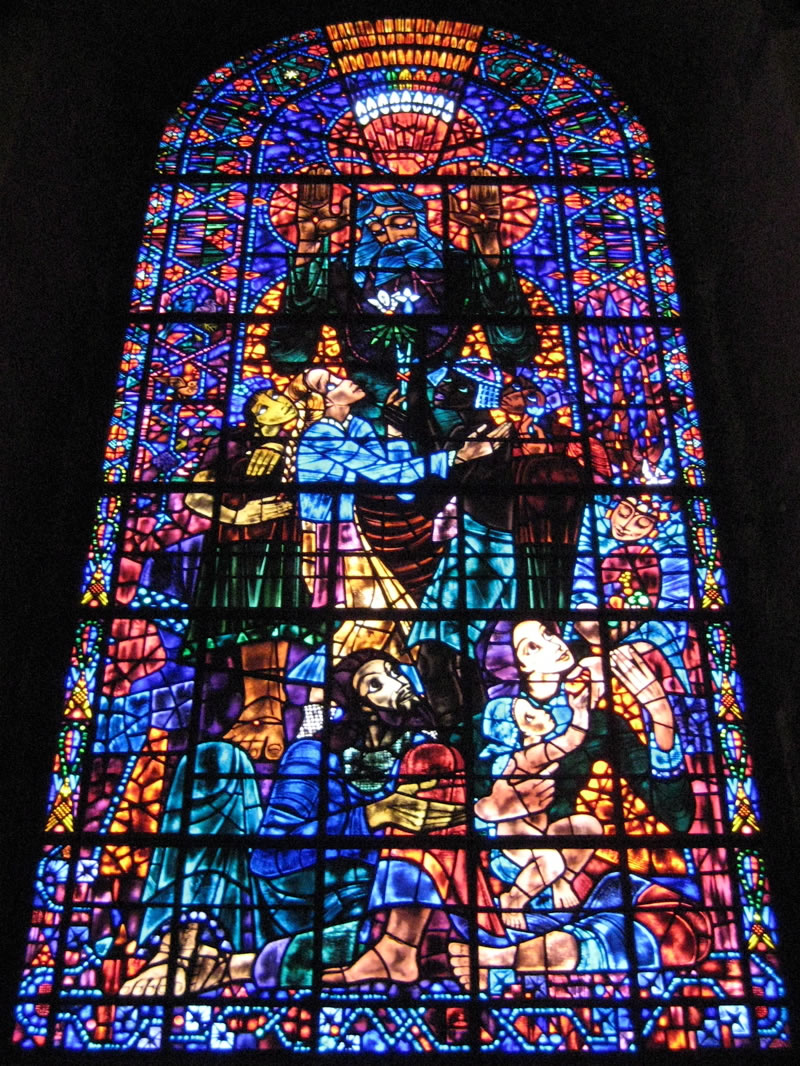
Boise St., Live at Fillmore East, 1970

I like some jazz music, but have always regretted not appreciating the so called golden era of jazz from the late 50’s – early 60’s.  The prevalent pattern of 1) Introduce idea/theme, then 2) Long solos from every member of the group, and 3) Resolution with reprise of theme never grabbed me.  I prefer a more melodic approach, and a more band/team oriented approach.  No doubt much exists in the music that I do not understand, but there you go.

My favorite “all-time jazz great” has always been Miles Davis*, but his music sometimes fell into the above mentioned pattern.  Then I heard this:

Wow.  The first time I heard the music, I was so blown away I didn’t notice that the song is still basically, theme/solos/theme. After I noticed, I didn’t care.  The song is so fun, funky, jazzy, so “everything” I no longer thought about structure at all.  It takes us beyond structure and into play, into freedom.**

At about the same time I heard this song I read Michael Weinreb’s thoughtful and entertaining defense of college football, A Season of Saturdays.   In one section of the book he discusses the fact that “free-spirited” play calling tends to work much more effectively in college than in the pros.  You can have a wishbone offense, a spread offense, a pistol offense, and so on.  You can have coaches that take a more laid-back approach to the game with great success, i.e. Steve Spurrier, or “gambling” coaches like Les Miles. But . . . these coaches don’t succeed in the NFL.

When thinking about the possible surprise elation inherent within college football, one has to think of Boise-State vs. Oklahoma in the Fiesta Bowl a few years ago.  First the 4th and 18 play for to tie the game:

And to win the game, the most old-fashioned of crazy trick plays . . .

I realized the possible connection between Miles Davis and these Boise State plays when I had the same reaction as the announcer of the hook and ladder at the .07 mark as I did to “Directions” at about the 6:05 mark.  Both moments take you out of yourself entirely.  And while certainly pro football can have those moments, I agree with Weinreb (with no empirical backing, just an impression) that they happen more often in college football.  Going from 300 or so Division I programs down to 32 NFL teams narrows the field of talent to such a degree that so much depends on meticulous execution over crazy inspiration. Perhaps these kinds of wild, unexpected moments link together jazz and college football, two quintessential American creations.

The question I asked myself as I read was whether ultimately I agreed with his premise that college football should stick around and continue to have its place in the American consciousness.  Weinreb writes well, and I especially appreciated his soft touch — he doesn’t force his point.  But in the end, disagree.  College football can exist, sure, but needs scaled back drastically.  One caveat is that I fall into a demographic that Weinreb admits will probably not understand his book.  I grew up in an area dominated by professional sports, and I attended a Division III liberal arts college where maybe 500 people showed up for football games on Saturdays.

But still . . .

Wienreb focuses on his strongest argument, how college sports in particular bring us together in unexpected ways, and this gives college football (more than college basketball, I would agree) a kind of transcendence.  I don’t deny this — rather, it’s because I do agree agree with Weinreb on this point that I think we should try and bring college football back to earth.  One of the great aspects of music is that it can serve as a vehicle for transcendence, but music appreciation never (or hardly ever) devolves into tribalism.  Something always goes a little bit wonky when music gets involved with competitiveness, but college football can’t exist without it.  The rivalries can in certain places define one’s whole existence (Auburn-Alabama, Ohio St.-Michigan, etc.).  Such tribalism usually has a detrimental impact on us, giving us real animosity based on purely invented and artificial reality — i.e — there is no real reason for students at Notre Dame to hate USC.***  This transcendent tribalism leads to a kind of worship.  Weinreb attended Penn St., and in one chapter recalls a time when after a dramatic football win on the road, students stormed the stadium, took down a goal post, paraded to Joe Paterno’s house, and deposited it on his front lawn. Weinreb uses this story to support his argument, but I think it supports mine.  This presentation of the “sacrifice” on the “altar” looks a lot like worship of a false god to me.

The partial unreality of college life as a whole gets magnified exponentially in “big-time” college football.   Many of the best players on many of the best teams do not really attend the university.  Their classes, living situations, facilities, their treatment in general on campus gives them a life totally apart from other students.  The logic works like this:

  • We must have football because it creates such wonderful communal moments
  • But these communal moments are predicated on ultimately on winning
  • So — we must attract the best players to win
  • So — we have to create an additional unreal world apart from the actual campus community to attract players — some of whom don’t really belong at the university academically anyway — in order to foster this communal experience.
  • We then give ourselves to this imagined community, which involves imagined hatreds

The academic scandals involving fake classes, fake grades, and so on should not shock us in the least. After all, in some places college football is a god, and gods need appeased.  Plenty of evidence, anecdotal and otherwise, exist to show how athletics tilt and twist universities in weird, unnatural ways.

I’m certainly not against sports in general.  God made our bodies to do wonderful things.  And, as our bodies are a form of revelation, the exuberant moments we experience in athletics are genuine, true pointers to Ultimate Reality.  I also don’t blame people desiring such communal transcendence and their willingness to sacrifice for it.  Again, we were made for such things.

The more we strip everyday life overtly of the sacred, the more we will seek to find it in other, perhaps less obvious ways. But seeking it in college football, as Weinreb admits we do, will in the end not give us answers, but instead, much to answer for.****  We will defend and sacrifice for the tribe to achieve it, making idols of our parochial communities.

Dave

*Miles Davis must surely rank as one of the great, if not the greatest bandleader of all time.  Of course he was a legend, but he helped turn countless sidemen into legends, like Ron Carter, John Coltrane, Tony Williams, Jack DeJohnette, John McLaughlin, Herbie Hancock, Chick Corea, Keith Jarrett — this astounding list goes on and on.

**Being beyond structure doesn’t mean that one is anti-structure, anymore than being beyond rationality means being anti-reason.  Of course the song has a structure and abides by certain rules of music, but one is not conscious of the pattern — therein lies self-forgetfulness.

***I loved my college experience as have many others, but I think one reason for the appeal of college is its fantasy-like existence.  In some ways our K-12 years have many more roots to “reality,” with family, age diverse community, and so on.

****I.e., the Penn St. scandals

Toynbee, “The Idolization of the Parochial Community”

Unhappily, Polytheism begins to produce new and pernicious social effects when its domain is extended from the realm of Nature-worship to a province of the realm of Man-worship in which the object of worship is parochial collective human power. Local worships of deified parochial communities inevitably drive their respective devotees into war with one another. Whereas Demeter our common Mother Earth is the same goddess in Attica and in Laconia, the Athene Polias of Athens and the Athana Chalcioecus of Sparta, who are the respective deifications of these two parochial communities, are bound to be rival goddesses in spite of their bearing the same name. The worship of Nature tends to unite the members of different communities because it is not self-centred; it is the worship of a power in whose presence all human beings have the identical experience of being made aware of their own human weakness. On the other hand the worship of parochial communities tends to set their respective members at variance because this religion is an expression of self-centredness; because self-centredness is the source of all strife; and because the collective ego is a more dangerous object of worship than the individual ego is.

The collective ego is more dangerous because it is more powerful, more demonic, and less patently unworthy of devotion. The collective ego combines the puny individual power of each of its devotees into the collective power of Leviathan. This collective power is at the mercy of subconscious passions because it escapes the control of the Intellect and Will that put some restraint on the individual ego. And bad behaviour that would be condemned unhesitatingly by the conscience in an individual culprit is apt to be condoned when it is perpetrated by Leviathan, under the illusion that the first person is absolved from self-centredness by being transposed from the singular number into the plural. This is, however, just the opposite of the truth; for, when an individual projects his self-centredness on to a community, he is able, with less sense of sin, to carry his egotism to greater lengths of enormity. ‘Patriotism is the last refuge of a scoundrel’;5 and the callousness of committees testifies still more eloquently than the fury of mobs that, in collective action, the ego is capable of descending to depths to which it does not fall when it is acting on its individual responsibility.

The warfare to which parochial-community-worship leads is apt to rankle, sooner or later, into war to the death; and this self-inflicted doom is insidious, because the ultimately fatal effects of this religion are slow to reveal themselves and do not become unmistakably clear till the mischief has become mortally grave.

In its first phase the warfare between deified parochial states is usually waged in a temperate spirit and is confined within moderate limits. In this first phase the worshippers of each parochial god recognize in some degree that each neighbour parochial god is the legitimate sovereign in his own territory. Each local god will be deemed to have both the right and the power to punish alien human trespassers on his domain who commit a grievous wrong against him by committing it against his people; and this consideration counsels caution and restraint in waging war on foreign soil. It tends to prevent war from becoming total. The bashful invader will refrain, not only from desecrating the enemy’s temples, but from poisoning his wells and from cutting down his fruit trees. The Romans, when they had made up their minds to go to all lengths in warring down an enemy community, used to take the preliminary precautions of inviting the enemy gods to evacuate the doomed city and of tempting them to change sides by offering them, in exchange, honourable places in the Roman pantheon. When a local community has been exterminated or deported in defiance of the local divinity and without regard to his sovereign prerogatives, the outraged parochial god may bring the usurpers of his domain and scorners of his majesty to heel by making the place too hot to hold them except on his terms. The colonists planted by the Assyrian Government on territory that had been cleared of its previous human occupants by the deportation of the Children of Israel soon found, to their cost, that Israel’s undeported god Yahweh had lost none of his local potency; and they had no peace till they took to worshipping this very present local god instead of the gods that they had brought with them from their homelands.

Thus the conduct of war between parochial states is kept within bounds, at the start, by a common belief in the equality of sovereign parochial gods, each within his own domain. But this belief is apt to break down, and, with it, the restraint that is imposed by it. They break down because the self-worship of a parochial community is essentially incompatible with the moderation commended in such maxims as ‘Live and let live’ and ‘Do as you would be done by’. Every form of Man-worship is a religious expression of self-centredness, and is consequently infected with the intellectual mistake and the moral sin of treating a part of the Universe as if it were the whole—of trying to wrest the Universe round into centering on something in it that is not and ought not to be anything more than a subordinate part of it. Since self-centeredness is innate in every living creature, it wins allegiance for any religion that ministers to it. It also inhibits any living creature that fails to break away from it from loving its neighbor as itself, and a total failure to achieve this arduous moral feat has a disastrous effect on social relations.

A further reason why it is difficult to keep the warfare between parochial states at a low psychological temperature is because parochial-community-worship wins devotion not only by ministering disastrously to self-centredness. It wins it also by giving a beneficent stimulus to Man’s nobler activities in the first chapter of the story. In the histories of most civilizations in their first chapters, parochial states have done more to enrich their members’ lives by fostering the arts than they have done to impoverish them by taking a toll of blood and treasure. For example, the rise of the Athenian city-state made life richer for its citizens by creating the Attic drama out of a primitive fertility-ritual before life was made intolerable for them by a series of ever more devastating wars between Athens and her rivals. The earlier Athens that had been ‘the education of Hellas’ won and held the allegiance of Athenian men and women, over whom she had cast her spell, for the benefit of the later Athens that was ‘a tyrant power’; and, though these two arrogant phrases were coined to describe Athens’ effect on the lives of the citizens of other Hellenic city-states, they describe her effect on the lives of her own citizens no less aptly. This is the tragic theme of Thucydides’ history of the Great Atheno-Peloponnesian War, and there have been many other performances of the same tragedy that have not found their Thucydides.

The strength of the devotion that parochial-community-worship thus evokes holds its devotees in bondage to it even when it is carrying them to self-destruction; and so the warfare between contending parochial states tends to grow more intense and more devastating in a crescendo movement. Respect for one’s neighbours’ gods and consideration for these alien gods’ human proteges are wasting assets. All parochial-community-worship ends in a worship of Moloch, and this ‘horrid king’ exacts more cruel sacrifices than the Golden Calf. War to the death between parochial states has been the immediate external cause of the breakdowns and disintegrations of almost all, if not all, the civilizations that have committed suicide up to date. The decline and fall of the First Mayan Civilization is perhaps the only doubtful case.

The devotion to the worship of Moloch is apt to persist until it is too late to save the life of the civilization that is being destroyed by it. It does break down at last, but not until a stage of social disintegration has been reached at which the blood-tax exacted by the waging of ever more intensive, ferocious, and devastating warfare has come palpably to outweigh any cultural and spiritual benefits that the contending parochial states may once have conferred on their citizens. . . 
“Through the Eye of the Needle”

Peter Brown is one of a few scholars for which one must simply stand back and let them pass.  Decades ago he published a seminal biography of St. Augustine that made his name in the field of late antiquity.  Since then he has done nothing flashy, contenting himself with “staying in his lane” and doing what he loves.  He keeps churning out new and interesting things about the transition from Rome to the medieval period, and his latest book, Through the Eye of the Needle is no exception. I did not read anywhere close to all of the book’s 600 pages, but found what I managed to take in eye-opening.

The title references the famous verse in Matthew 19:24, and the subtitle of the book indicates Brown’s purpose of showing how the Church dealt with the idea of wealth. His chosen dates of focus (350 – 550 AD) foreshadow a surprising assertion.  Most understandings of the early church take one of two paths:

  • The growth of the church within Roman society happened primarily in 2nd and 3rd centuries AD as a result of persecution.  Constantine’s “Edict of Milan” granting toleration and preference to Christianity did not create something new so much as confirm an already existing reality.

Or . . .

  • The “Edict of Milan” represents a key and decisive turning point in the history of the Church.  The growth of the Church as a “power” and distinct social force begins because of Constantine.

With this standard dilemma,  Brown both “splits the horns” and creates a new way of understanding the growth of the Church.

Obviously the church grew significantly from its roots in Palestine in the century following Pentacost. But at the time of Constantine Christianity still occupied fringe status in Rome, perhaps akin to Moslems in America today.  This means that, among other things, we cannot chalk Constantine’s adoption of Christianity to political reasons.   Something dramatic really happened in Constantine’s life that led him to shock his contemporaries and side with a distinctly minority faith. Just imagine the reaction the country might have if a newly elected president suddenly declared he was Buddhist.  But the church remained a side-note within the empire.  However the church prospered between the years of 312 – ca. 370, they had little impact on the wider Roman culture.  This may have been because the era of Constantine and his successors was the “era of gold.”  The stability Constantine brought returned economic prosperity to Rome in general and might have reinvigorated faith in Roman civilization.  As time marched on, however, the wealth remained even as Rome began to lose its grip.  When the wealthy began to enter the Church.  The Church needed to decide what to do with “real money” for perhaps the first time in its history.

If we think about money we need to consider it with a wide lens.

Genesis 1 shows us God creating all things good as a gift of His love.  God meant for Adam and Eve to enjoy the world he made.  As Alexander Schememann commented,

Man must eat in order to live.  He must take the world into his body and transform it into himself, into flesh and blood.  He is indeed that which he eats. and the whole world is presented as one all-embracing banquet throughout the whole Bible, the central image of life.

Just as God created man soul and body, so too there need be no conflict between the physical and the spiritual.  We shouldn’t even have the categories in the first place.

An ancillary question might be, “Does money aid in our enjoyment of creation?”

In early Biblical history we might see a link between physical wealth and spiritual well-being.  We see this with Job, with Abraham, and with Jacob.  As the nation of Israel forms and grows roots, we certainly see it in the life of Solomon.  But after the division of the kingdom between the northern and southern kingdoms we have the age of the prophets, when God sought to “afflict the comfortable.” Now physical blessings come particularly to those outside Israel’s physical and ethnic boundaries, like the widow of Zarephath (Luke 4).

Jesus talks a great deal about money in the gospels, but never with one absolute message.  At Cana He blessed marriage, wine, and a general sense of “a good time had by all.”  He urges the rich young ruler to sell everything.  Zaccheus shows his repentance by giving away half of his fortune.  The rich will have difficulty entering the kingdom (the “through the eye of the needle” passage), but His “render unto Caesar” may indicate a laissez-faire approach to money in general.  Clearly Jesus Himself had little money, but Matthew may have been wealthy.  We are told in no uncertain terms that, “the love of money is the root of all evil,” and this might make us think of Ananias and Saphira.  But in the epistles we have the encouragement/command to generosity of giving, but not the abandonment of wealth.

Many writers accuse the Church of abandoning gospel simplicity in favor of “worldliness” in the late 4th century, but Brown rightly critiques these voices.  The Biblical evidence presents a complex picture, and ignores the Roman cultural environment in which the Church worked.

The Romans built their civilization around the idea of civic love.  One could say that they worshipped the idea of Rome, or the actual city/cities of Rome, as their true gods.  The patrons of Rome were in fact the “patricians,” the aristocracy.  The patronized Rome with their service to the state, and with their money.  Spending large sums came with the territory, and it could take the form of buildings, religious festivals, and the like.  St. Cyprian in the 3rd century takes this idea and transmutes it.  All Christians, but especially wealthy Christians, should patronize the City of God.  This took the form of providing for the poor (especially or sometimes exclusively to the Christian poor), building churches, and providing for religious feasts.  These were Christian “civic” projects.  In contrast to the “earthly” giving of those in the City of Man, money given to eternal purposes got redeemed, in a sense.

This approach helped give direction to the giving of the wealthy and helped build a distinct physical identity for Christians apart from the Roman monolith.  Christians have a home “not of this world.”  The approach of the early Church, however, gave Christians a physical manifestation of the heavenly city.*  Augustine would use this line of thought to develop his monumental City of God, and he proved pivotal in changing the Church’s attitude toward wealth.

The presence of wealth in the Church for the first time in large numbers brought up the question of the place of wealth.  Wealth may present temptations and problems, but is it evil?  Some believed that no one could claim both wealth and the gospel.  Pelagius, who heretically affirmed the near absolute autonomy of the will, thought that only a grand gesture of giving away everything at once could give proof of true faith.  Augustine disagreed.  He believed foremost in the need for the unity of God’s people.  The rich should receive the same welcome as the poor.  Pride, not wealth, posed the real problem for the Christian.  Naturally Augustine pushed the need for generosity.  Unlike Pelagius, he thought with a longer lens.  Wealth need not be given dramatically all at once, but steadily over time and with a distinct purpose. Their giving should seek to help build another kingdom, the “alternate reality” of the City of God.

With this line of reasoning, the Church could possess wealth, but not individual clergy.  Clergy could use wealth for the Church, but never own it directly.  The line would inevitably be gray and abuses came and went over time, but the principle remained the same.

We think of Augustine as a Platonist, and certainly he had more Platonism in his thought than St. Thomas Aquinas centuries later.  But his ideas gave the Church an idea of a concrete, visible community on Earth.  The idea of making the Kingdom of God manifest in the here and now, comes from Augustine — who may not have been quite the Platonist that we might imagine.**

The concept of using wealth to redeem our experience of creation and to create a “City of God” has many possible consequences and gray areas up for debate.  I thought of Brown’s thesis when thinking about the late Renaissance and the monk Savanarola, who railed against what he saw as the frivolous use and abuse of art, jewelry, makeup, and so on.  That conflict did not end well for anyone or for the city of Florence.  We can begin by stating the obvious — too much attention to adornment risks skewing our priorities, while no attention to at all to appearance honors neither the image of God (in the sense of honoring maleness or femininity) or one another.   The question arises, then — is some degree of focus on our appearance our Christian duty, or perhaps our Christian privilege?  It can be fun to look nice, after all.  And if we should adorn ourselves to some degree, should we not adorn our churches, our “cities of God?”

From this line of thought we can see why priests, bishops, and so on would also want adorned.  If king’s and their counsellors wear finery to show forth the glory of England or France, should not God’s representatives and ambassadors also have a chance to show the glory of their city?  Some would argue that doing this  would mean merely mimicking the world.  But one could flip this — maybe the world has in fact mimicked what the Church should be.

Sometimes I think modern Christians are uncomfortable with such baubles for the right reasons, such as avoiding waste and maintaining proper priorities.  But I wonder if we might also fear creating truly separate identities for ourselves within the Church.  Sometimes I if we fear creation itself.

Dave

**Brown points out that St. Augustine did not invent the idea of a “City of God” entirely on his own.  It had roots in African Christianity going back to at least St. Cyprian in the 3rd century.  But St. Augustine does give the concept its fullest expression.

9th Grade: Art, Myth, and Truth

Greetings,

This week we continued our look at Renaissance art through two main lenses and questions.

As Umberto Eco once argued that the Renaissance was a society made by merchants, made by money.  The influx of money into Italy would surely change society in many ways.  Fashion changed, art certainly changed, customs and mores changed, and morality changed.  You cannot have one without the other.

How should Christians react to this, and how did they?

Of course many Christians went along happily with the changes, some of them quietly resisted them in their own ways.  Few had stronger criticisms that the famous/infamous monk Savanarola.  Some see him as a saint, a man of the people, a forerunner of the Reformation.  Others saw him as a man filled with anger and bitterness, a man far from God, who, if not a heretic, certainly was a model for no one. Artists of his time had the very same differing opinions.

Savanarola

For him, we can say the following:

  • He was a strong opponent of the D’Medici family, who had transformed Florence from a republic to an unofficial dictatorship by the eminent Lorenzo D’ Medici.
  • He took an uncompromising stand against the incessant corruption within the Church, and fearlessly took on all comers, even the Pope himself.

Against him, we note that

  • His sermons seemed to consist of diatribes and anger.  He judged, condemned, and warned from the pulpit.  But rarely did he show compassion or sympathy, rarely did he speak of grace.
  • He believed that God spoke to him directly, which may or may not have been true.  But this sense of divine guidance led him to drift into occasional self-righteousness.

Savanarola, Florentine Portrait

He is perhaps best known for the “Bonfire of the Vanities,” when he encouraged many of society’s elite to burn their dresses, jewlery, and yes, much art deemed “unholy.”  Renaissance art not only involved nudes, but also used subject matter from mythology, which many felt betrayed art’s true purpose of glorifying God.  This led to a discussion on the question, “What makes art Christian?”

Let us take a famous Renaissance work by Botticell, The Birth of Venus, as an example:

One can argue that this is not a Christian work because it portrays a scene from pagan mythology.  We know that Venus does not and did not exist, so how can the art declare truth?  At best, it’s a meaningless diversion, at worst, a seductive lie.

The other side could argue that the painting does proclaim a Christian message through myth.  Botticelli does not make Venus an object of lust.  Rather, Venus, sees her inadequacy — she covers herself and is about to be covered more fully.  The myth’s meaning gets transformed into the message that for lust to be love it must be conquered with virtue and modesty.

Another aspect of this discussion is the role of myth itself.  Are pagan myths lies in the sense that declaring the sky to be green is a lie?  While Christians disagree on this, I would not agree with this.  I think J.R.R. Tolkien’s view of myth deserves consideration.  As C.S. Lewis neared conversion to Christianity, he had a crucial conversation with his friend Tolkien about the nature of myth. . .

Myths, Lewis told Tolkien, were “lies and therefore worthless, even though breathed through silver.”

“No,” Tolkien replied. “They are not lies.” Far from being lies they were the best way — sometimes the only way — of conveying truths that would otherwise remain inexpressible. We have come from God, Tolkien argued, and inevitably the myths woven by us, though they contain error, reflect a splintered fragment of the true light, the eternal truth that is with God. Myths may be misguided, but they steer however shakily toward the true harbor, whereas materialistic “progress” leads only to the abyss and the power of evil.

“In expounding this belief in the inherent truth of mythology,” wrote Tolkien’s biographer, Humphrey Carpenter, “Tolkien had laid bare the center of his philosophy as a writer, the creed that is at the heart of The Silmarillion.” It is also the creed at the heart of all his other work. His short novel, Tree and Leaf, is essentially an allegory on the concept of true myth, and his poem, “Mythopoeia,” is an exposition in verse of the same concept.

Building on this philosophy of myth, Tolkien explained to Lewis that the story of Christ was the true myth at the very heart of history and at the very root of reality. Whereas the pagan myths were manifestations of God expressing Himself through the minds of poets, using the images of their “mythopoeia” to reveal fragments of His eternal truth, the true myth of Christ was a manifestation of God expressing Himself through Himself, with Himself, and in Himself. God, in the Incarnation, had revealed Himself as the ultimate poet who was creating reality, the true poem or true myth, in His own image. Thus, in a divinely inspired paradox, myth was revealed as the ultimate realism.


So — does the painting convey a Christian message or not?  Is art “Christian” if it conveys truth about ourselves, the world, or God?  Then certainly non-Christians could create Christian art, just as non-Christians can know true things.  Some students felt that this mean that any art could qualify as “Christian.”  Surely, they felt, we must have another standard, but if we do, what should it be?

Or — let’s say that we agree with Tolkien.  We may say that this gives Christians great inspiration to continue to create great stories, like The Chronicles of Narnia, The Lord of the Rings, and so on.  Does that mean, however, that we should use pre-Christian myths as a reference point now that “the truth has come?”  Or now do we have all the more reason to use those myths as they can be truly understood even more in the light of Christ.  Renaissance art gives us much to consider.

The issues go beyond art to the idea of Truth itself.  What makes something true?  If we say that 1 + 1 = 2 for reasons that do not involve God, then we assume that a realm of Truth exists that exists apart from God’s existence.  If Jesus is the Way, the Truth, and the Life then all thing cohere in Him, even 1 + 1 = 2, or the meaning inherent in a photograph of a tree.

But back to the Renaissance. . .

I have always believed that one of the best ways to know a culture is through its artistic expression, whether that be in painting, sculpture, architecture, music, and so on.  How we look interpret Renaissance art will determine a lot of what we  think of the Renaissance itself.

One school of thought sees the Renaissance as glorifying mankind, of making man the center of all things.  Scholars like Francis Schaeffer see mankind portrayed in outsized, godlike fashion, with no sense of sin or humility left.  He pointed to the outsized hands on Michelangelo’s “David” as exhibit “A” for his argument:

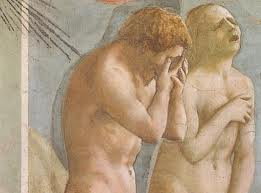
Others see it differently.  Some see the Renaissance making man aware and responsible for his time in creation.  Art now places humanity in a real context, with real consequences, as opposed to what some might call the “over-spiritualization” of man in the Middle Ages.  They point to the Brannacci Chapel, and the painting of Adam and Eve.  Here we have feet planted firmly on the ground, and real people in a real world.  Having a portrayed them in reality, they have to do deal with the consequences of their sin. The skeletal nature of Eve’s face foreshadows her death and ours as well. One commentator suggested that the angel does not drive out Adam and Eve so much as their sense of sin and shame motivates them to drive themselves out of the garden.

These two competing views of the Renaissance might each have their place — the Renaissance was multifaceted.  But in the end the students will need to choose what they see as the dominant spirit of the time, and what primary influence the Renaissance will pass onto the era that follows.

Finally, we looked at this magnificent 3-D image of the Sistine Chapel, surely one of the greatest artistic creations of the last 500 years.  Use the cursor and fly around it, and try and not make yourself dizzy, as I did to the students!

Here is the link:

http://www.vatican.va/various/cappelle/sistina_vr/index.html

Have a good weekend,

Dave

Flotsam from “The Palace of Reason”

Like most great artists, Johann Sebastian Bach created his immortal works amidst uncertain times and an unusual amount of philosophical and cultural upheaval.  One could sense a perceptible shift away from theology as “queen of the sciences” towards the dominance of abstract reason and scientific methodology.  James Gaines chronicles one particular episode in Bach’s life representative of this shift in his Evening in the Palace of Reason.  Bach, the great Baroque composer, received an invitation to visit Frederick the Great of Prussia, the great Enlightment monarch.  Their brief meeting led to Bach composing “A Musical Offering,” considered by some to be his greatest instrumental work, and a definitive statement of his theological and musical convictions.

Gaines’ book is serviceable, if unremarkable.  It certainly is more accessible than other works on Bach I’ve attempted.  On the other hand, Gaines’ background is in magazine editing, so as one might expect, the books lacks expertise and depth. Life presents us with many such trade-offs.

Reading the work did spur on a few thoughts and questions in my mind . . .

To best understand Bach and the shift in the sciences taking place during his life, Gaines briefly describes the cosmological beliefs Bach inherited from his contemporaries.  Gaines has a difficult job with this material.  On the one hand, his book seeks a more conventional and conversational tone and such information bogs down modern readers in a mass of unfamiliar material.  But Gaines needs to cover the material to properly understand Bach. Unfortunately Gaines gives a dismissive rendering of the information, interspersed with parenthetical comments such as, “This will be over soon,” and “There will not a quiz on the forgoing.”  Gaines seems to find the pre-modern scientific beliefs absurd and embarrassing, despite his frank admission that such beliefs had a direct connection to music of the period. As one contemporary of Bach commented, “. . . an individual is both inwardly and outwardly, spiritually and physically, a divinely created harmonic being,” (emphasis mine) reflecting the divine harmony of the cosmos itself.

Some regard Bach as perhaps the greatest composer Western civilization has produced. Everyone agrees that at bare minimum he’s one of the all-time greats.  Is it possible then, that such great music could come from theological and scientific foundations (in Bach’s day these two naturally went together) utterly removed from the truth? Bad trees produce bad fruit, but the scientific tree of the Baroque era gave us something else entirely (for an extended look at the transition between Galileo and the past, please enjoy my friend Bill Carey’s post here).

Asking this question leads one into the deep waters of the nature of scientific truth, waters too deep for me. The real problem, I think, is that the modern view of truth (in science or elsewhere, but perhaps especially in science) has very little to do with poetry. Or to take a different approach, the scientific tree of the baroque period produced fantastic music, but less than able surgeons. Can science do both equally at once?  This is a question science must answer.

With the transition to the Enlightenment, Bach’s music and convictions fell out of favor. People no longer sought complex harmony, they wanted more “pleasing” — and easier — melodies.  The purpose of music and art shifted from lifting us up to the divine to meeting our needs here and now.  This was not merely a matter of taste. These different ideas about music arose from a shift in cosmology and theology.

When we think of the solar system, we probably think in a horizontal rather than vertical fashion.  We also likely think of each planet “doing it’s own thing” floating around in space.  Space between planets is empty and cold. In the medieval conception of the universe the planets descended hierarchically, with the movement between the planets forming a glorious celestial harmony — the “music of the spheres” — which in turn reflected the eternal “perichoresis” (the Greek word used by early church fathers meaning “circle dance”) of the Trinity.

Whichever we prefer, we should note that modern and medieval choices in regard to the cosmos are theological and poetic in nature, not strictly scientific.

This theological and poetic shift impacted musical opinions of Bach’s later years.  His critics believed that emphasizing harmony (as Bach did) made the music too difficult.  What’s more, harmony itself was “artificial” and “unnatural.”  Music should instead focus on singable, “natural” melodies, which we can “perform” as individuals.

Baroque harmony and counterpoint, then, came from a theological perspective that emphasized the importance of the trinitarian community, and scientific perspective that emphasized the “community” of planets.  So we might only think of harmony as “artificial” if we believe that either

  • The spheres have no music, or
  • If they did, it would be irrelevant as it would not be part of our daily experience.

Of course the medievals believed both that the spheres make music, and that their motion had an impact, however indirect, on our lives.  Thus, celestial harmony for them occupied a very real place in creation and could hardly be called artificial.

So once again we see the intersection of science, poetry and theology in musical theory, and we see the stark difference the Enlightenment brought to many aspects of our life and thought.  The legion of trickle-down effects on poetry, music, church architecture and like are everywhere present.


Dave

Grade 12: Hot Coffee

Greetings,

This week we began looking at tort law and its relation to the democratic process and democratic values.  As the year winds down and the seniors focus on their thesis presentations, I think this unit works well at dealing with some interesting concepts in a lighter and more relaxed classroom atmosphere.

Tort law deals with the realm of damages and liability in civil courts.  No one goes to jail in tort law cases, but they can still generate a great deal of controversy.  Many of us may have some familiarity with tort law through the famous (or infamous) McDonald’s “Hot Coffee” case from 1992, when 79 year old Stella Leibeck spilled coffee on herself and eventually had a jury award her about $175,000, though the actual settlement amount remains  unknown.

The actual facts got lost in the hype surrounding the case, and the internet does a good job of giving us the story we Hot-Coffee-DVD-Fmay not be aware of.  On the one hand, it seems ridiculous that McDonald’s should be responsible for a customer spilling coffee on themselves.  But on the other hand. . . .

  • By company mandate, McDonald’s kept its coffee at around 185-190 degrees, about 50 degrees hotter than coffee is normally served.  At this temperature, serious burns can result within 2-7 seconds on continued skin contact.
  • Over period of several years, McDonald’s had received several hundred complaints from customers stating that they had been burned by their coffee.
  • Mrs. Leibeck’s burns were extensive.  She required a long hospital stay that involved skin grafts over a large area (the internet has pictures of the burns, and they are extensive).

The case ended up being the subject of a documentary, and spurred on debates surrounding tort reform in various law schools.

The multiple layers of issues make these cases intriguing.

Product Liability

If a product injures you, company liability depends on how you used the product.  If you are mowing the lawn with your lawn-mower in a normal fashion and it blows up and injures you, the company has liability.  If it blows up while you try and use the lawn-mower to chop down a tree, the company has no liability.

In this case, jurors believed that Mrs. Leibeck used the coffee as McDonald’s intended it to be used.  Nothing strange or out of the ordinary happened.

Knowledge

If a product injured someone due to a flaw in the design and the company had no prior knowledge or suspicions, the company will have less liability than if they knew everything and covered it up.  Of course all kinds of grey area exists in between these extremes.  On the one hand, 700 complaints about burns is a large number.  On the other hand, 700 complaints represents about .0001% of all the coffee they sold during that time.  How we see the 700 previous complaints will be crucial for how we assess fault in the case.

Time

In a grocery store, if an employee drops a few bananas by mistake and five seconds later and breaks a hip, would the store be liable?  Perhaps, but that liability would increase dramatically if it had been on the floor for an hour, with customers complaining about them, and the store doing nothing about it.  We had a good discussion over whether or not the number of complaints over time increased or lessened McDonald’s liability.

If a court finds a company liable a jury assesses damages, which come in two forms.

Compensatory damages literally compensate the victim for whatever they lost.  Some aspects of this kind of penalty are easy to assess, like doctor’s bills, time missed from work, and so on.  Here the wealth of the person injured is not a factor.  Just as we return stolen property from mansions, so a wealthy person deserves just compensation.

But very quickly compensatory damages enters murky waters.  If one is physically scarred from an accident due to negligence, how much is that worth?  Would it depend on where the scar was?  Would we compensate a woman more for a scar than a man?  What about emotional scars?  What about lost opportunity?  The subjective nature of these judgments can result in very different jury verdicts (Mrs. Mathwin has a friend who served on a jury in a liability case a few years ago. The jurors disagreed wildly, with some wanting to award the plaintiff a few hundred thousand and others nothing.  Eventually they simply took the average of what each of the 12 jurors thought the plantiff should receive, and that dollar amount — about $25,000 — became their ruling).

Punitive damages punish the company for their wrongdoing, and should deter the company from acting in a similar fashion in the future.  Here the wealth of the company does need to be a factor, for hypothetically if the company had enough resources, the fine might be so small that it would be more profitable for them to continue the negligent behavior.  This is part of the reason why punitive damages can far exceed compensatory damages.


Many thanks,

Dave

Pope John Paul II and the Body in Art

We live in a deeply confused age regarding sexuality and the body.  We can understand Justice Potter Stewart’s “I know it when I see it,” concept regarding pornography in terms of necessary legalese, but especially in this day and age, Christians (and the world) need more specific guidance.  How are we to understand how the body can be used in art?

I wish I had the time and theological understanding to devote to John Paul II monumental Man and Woman man-and-woman-he-created-them_3He Created Them, where he developed a full-fledged “theology of the body.”  Though I read only very small portions of the text, those few parts have made a huge impression on me.

First, he makes the observation that nakedness is mentioned in a spousal connection, which means that nakedness is a kind of gift of one to the other — a revelation, in fact.  For this can rightly be called a gift because it involves a kind of mutual possession of one another — “I am yours and you are mine.”

These ideas of possession and gift lead to another truth, that the body itself is a form of revelation.  I had never realized this before, but of course it makes perfect sense.  We talk often of how the beauty of flowers, or the variety of the birds, or the majesty of mountains, reveal something about God Himself.  But we (or perhaps just I) forget that the body of course is part of that same creation that will reveal something of the Creator.  And perhaps the body may reveal more than mountains or flowers, as He made humanity of all creation in His image.

These truths deserve more contemplation than I can give them.  But I do think that John Paul’s wisdom can give us profound guidance on the nature of the body and how the body can or should be used in a “public” way.  He writes,

Artistic objectification of the human body in its male and female nakedness for the sake of making of it first a model and then a subject of a work of art is always a certain transfer outside this configuration of interpersonal gift that belongs originally and specifically to the body.  It constitutes in some way an uprooting of the human body from the configuration and a transfer of it to the dimensions of artistic objectification specific to the work of art or the reproduction typical of the works of film and photographic technologies of our time.

In each of these dimensions, and in each of them in a different way, the human body loses that deeply subjective meaning of the gift and becomes an object destined for the knowledge of many, by which those who look will assimilate or even take possession of something that evidently exists (or should exist) by its very essence on the level of gift–or gift by the person to the person, no longer of course in the image, but in the living man.  To tell the truth, this act of “taking possession” happens already on another level, that is, on the level of artistic transfiguration or reproduction.  It is, however, impossible not to realize that from the point of view of the ethos of the body, understood deeply, a problem arises here.  It is a very delicate problem that has various levels of intensity depending on various motives and circumstances, both on the side of artistic activity and on the side of knowledge of the work of art or its reproduction.  From the fact that this issue arises, it does not at all follow that that human body in its nakedness cannot be the subject of works of art, only that this issue is neither merely aesthetic, nor morally indifferent.

This, I think, trumps “I know it when I see it.”

The Shadow of Arginusae

Towards the end of the Peloponnesian War Athens had to fight for its very life.  Their catastrophic defeat in Sicily in 411 B.C. meant that their survival depended on maintaining their lifeline of supplies from allies in the eastern Aegean Sea.  This meant in turn that Athens would have to win virtually every naval battle to stay afloat.

At the battle of Arginusae in 406 B.C. the Athenians got a decisive victory over the Spartan League.  Athenian custom and religion dictated bringing home the bodies of the slain to give them proper burial.  Unfortunately a storm arose in the aftermath of the victory, and in the ensuing confusion the Athenians retrieved just a fraction of their dead.

You might think that the Athenians would rejoice in the victory and shrug off the failure to retrieve the dead.  After all, they might not have survived as a city-state had they lost.  Instead, (due in part to a confluence of unusual circumstances described expertly by Donald Kagan in The Fall of the Athenian Empire) they put the eight victorious generals on trial for impiety and dereliction of duty.  They found all eight guilty, and executed all eight that same day.

A few days later the Athenians lamented their actions and believed they had committed an injustice.  Such an injustice needed rectified, so they put the prosecutor on trial for inciting them to murder.  He was found guilty, and he too was put to death.

This unfortunate incident no doubt deeply impacted Socrates, and in turn Plato, and from there the whole attitude of western political thinkers toward democracy.  In the modern era, ardent defenders of democracy like I.F. Stone argue that such ancient and early-modern critics cherry-picked their objections to democracy and took certain incidents out of proportion.  I wonder, however, whether or not the above incident isn’t symptomatic of democracies in general, and if the essential critique offered by Plato and his followers might have merit.

I thought of the Battle of Arginusae when a friend sent me a fascinating graph of the speed of social change in America in the 20th century.  With the Supreme Court hearing arguments on the constitutionality of gay marriage it seems appropriate to consider our history of seismic shifts [note to the reader–this post was written originally a couple of months before the courts made gay marriage the law of the land.  We have seen since then how fast it has gained traction, and how quickly the marriage issue has spilled over into transgender issues.  The speed of the change is all the more remarkable considering that in 2004 many states voted to try and prevent gay marriage from becoming law, and in 2008 President Obama supported what I believe he called “traditional marriage”].

Of course the ability to change quickly is in itself neither good or bad, as with speed we can adopt either good or bad courses of action.  What we should consider, however, is what this means for us as a democracy, and where this puts us relative to other democracies at other times.

Change began to accelerate in the 20th century, and this coincides with two other shifts in American life.  The first was the rise of the prominence of the U.S. internationally, and along with that the inevitable rise of executive power. With a few exceptions, the 19th century saw congressional dominance, the 20th executive dominance.  No one president or party can be blamed for this, if blame is what you seek.  As with Rome, the growth of power inevitably centralizes power.  Add to that, the Constitution puts foreign policy mostly in the hands of the executive.  The centralization of power in the executive makes change come more quickly, if for no other reason than efficiency.

But this in itself can’t explain the radical leaps noted above in the graph, because changes in Civil Rights and gay marriage have not come primarily from executives, but from the courts, which are supposed to be more immune to the whims of the people, be those whims good or bad.

We might also recall that De Tocqueville astutely predicted that modern democracies could create an unstoppable force when the idea of equality joined with the idea of majority power.  This force, when mobilized, created magnificent massed armies (think Generals Sherman, and Patton).  But this same power could apply to our social lives and our moral compass.  Democracies, De Tocqueville argued, would not create tyrants in the traditional sense.  They would leave the body alone. Rather, they can at times kill the soul through enormous and unseen social pressures.  So just as our military efforts could go from nothing in December 1941 to significant victory in June of 1942 ( the Battle of Midway), so too we can move with the same speed and power socially.  This power would be great enough to steamroll even the supposedly resistant-to-change court system.

But this won’t work entirely either, for it presumes that the courts were the last domino to fall during these seismic social changes, whereas with abortion, civil rights, and gay marriage, they have spearheaded change.*

With this realization we get pressed beyond typical right/left categories and our modern, narrow vision, beyond arguments about activist courts and the like. This should let us know that we may be nearing our prey.

I have two possible explanations to suggest:

The first deals with the fact the courts interpret the Constitution.  While the founders no doubt positioned the courts as above the political process to make them slower, this very position in many ways allows them to move faster. They have no Congress to lobby.  But I still think this fact leaves out part of the explanation.  If the founders set up the Constitution to greatly reduce the power of mass democracy (and the fear of “mob rule” runs throughout the Constitutional Convention debates as recorded by Madison) then we might wonder whether or not we live under a different Constitution altogether.  Of course the words remain the same, but how we interpret and stretch it (note how the commerce clause experienced this in the 20th century) changed over time.  The founders hoped for the Senate to dominate our government.  Now we have powerful courts, an extremely powerful executive, and an almost exclusively reactive legislature that asserts itself only when it stands in the way of what the executive wants to do

Thus, when the courts interpret the Constitution today, they in fact interpret a different constitution then the one the founders set up.  That explains the significant and rapid social changes.

The second hypothesis . . .

I think that the Constitution sought to create a senatorial democratic-infused oligarchy based on the Roman Senate of old.**  If true, at first glance we obviously have a different constitution than the founders envisioned. But a second glance might suggest that not a great deal has changed.  If polling data that suggests most Americans are pro-life and not in favor of gay marriage is correct, then we still can say that an oligarchy rules us.  This oligarchy no longer resides in the senate, however, but in other places, be it media, the courts, and so on.  If correct, then at least some of the fundamental guiding principles of the Constitution have not changed, but how we apply them has.

Finally, we have the idea proposed by Christopher Ferrara in his thought provoking book Liberty: The God that Failed.  Ferrara suggests that for Americans, the idea of liberty never had connections to tradition, religion, community, and so on but always stood for individuals defining themselves against them.  Liberty means power, power to do as one wishes, whether that be to own slaves or change the definition of marriage.  As to the good Americans have done (civil rights and racial equality, a relatively open immigration policy, etc.), one could argue that we often do these things irrespective of law, or stretch existing laws beyond recognition to justify them.  Good laws, bad laws, traditions, all become very inconvenient and discarded in a pinch when we decide we want something else.  Historically we have remarkable consistency on this score, whether Washington bypassed Pennsylvania’s laws on slavery, or Andrew Jackson ignored the Supreme Court against the Cherokees, or the modern explosion of executive orders from both parties, and so on, and so on.  Washington the Federalist is supposed to be the conservative, while historians speak of the “Jacksonian Revolution.”  But perhaps they had a lot more in common than we might suppose.

I still think the first possibility  above the likeliest by a slight margin, but I waffle, and like many of us, I am confused, overwhelmed, and ultimately not quite sure what’s going on.

But those really in the know have another theory . . .

Dave

*Incidentally, one look at the graph shows that there must be a strong connection between women voting, prohibition, and equality.  I think we can tie prohibition to the idea of equality in ways akin to laws about motorcycle helmets and seat-belts, i.e. we’ll all be safe and healthy together — instead of liberty (I’ll smoke and drink and ruin my life if I want to — it’s my life after all — and you can’t tell me otherwise).

**Before we pass judgment, consider that the Roman Republic must surely rank as one of the most successful governments of all time by most measurements.  They had roughly 350 years of relatively problem-free yearly elections and created an empire rooted in concepts of law that last to this day.  So strong were Rome’s institutions and ethos that they still held it together long into its “empire” phase, despite some ridiculously bad emperors along the way.

Mixed Messages

At this point in the school year different classes I teach touch on a similar theme . . .

Why did the French Revolution happen to such a nice guy as Louis XVI?

Obviously answering this question involves many factors, but one clearly is the problem of the mixed message and the tension that creates.  Louis worked hard to reform much of France.  He spent less money, he spent less time at Versailles, he believed in the power of science to transform the country, etc. etc.  In his excellent Citizens, Simon Schama points out that Louis’ scientific passions helped undo his regime.  He uses the example of ballooning.  Louis invited many not in the nobility to come to Versailles to witness some of the first hot air balloon experiments.  Again, we see Louis the nice, modernizing king at work. But as Schama points out, ballooning meant

  • The presence of “commoners” at Versailles, previously the exclusive stomping grounds of the nobility
  • The mingling of commoners and nobility
  • The commoners traipsing over the hallowed Versailles grounds to follow the balloon, ignoring traditional boundaries in the immaculately kept gardens
  • Absorption in the “boundary-free” nature of flight itself (this last one might be a stretch, but perhaps he’s onto something).

A few years later when the Estates General wanted to “modernize” and merge the three estates into one “National Assembly” dominated not by the nobility, but by the “everybody else,” Louis protested.  “That’s not how we do things.  We should preserve the ancient and inviolable traditions of France.”  One problem Louis had, however, was that he had been subtly changing those inviolable traditions.  He could not ride the tiger of the changes he helped bring about, and it cost him (and France) dearly.

A less overt, but no less impacting tension of “mixed messages” got introduced into Rome’s Republic ca. 200 B.C.  One can’t help admire the stability and effectiveness of Rome’s government from the founding of the Republic ca. 508 B.C. through the 2nd Punic War.  They had new elections every year, with new people in new offices most every year, and they thrived.  Part of the reason for this lay in the conservative nature of its society.  A society of farmers values stability and cohesion.  You see this cohesion demonstrated in this brief clip of how they fought.  In Rome’s prime, no barbarian horde of individual warriors ever stood a chance against a disciplined Roman maniple.

Naturally such a well-run state would have success and expand.  This expansion, however, threatened the very social cohesion that made them great in the first place.  The governing structure of Republican Rome had no idea how to navigate the dramatic change from its agricultural rustic roots to its “Mediterranean Empire” status, and even if they did, the Republic was built largely to prevent change. Rome grew great by preserving its identity through preserving their traditions.  This tension between Rome’s success and Rome’s identity helped lead to a century of intermittent civil war and the eventual collapse of the Republic between 44 and 27 B.C.

I have always enjoyed college basketball, and the men’s “March Madness” tournament is usually my favorite sporting event of the year.  I did not pay as much attention this year, partially due to business, and partially because watching college basketball has become much more a chore than I remember.  The pace of the game gets mangled by constant fouling (the Kentucky v. West Virginia game averaged more than 1 foul per minute of play), and constant timeouts (in televised games coaches get five timeouts plus eight mandatory tv timeouts).  While one might expect that constant fouling would mean more easy points in the form of free throws, in fact scoring is down across the board, no doubt due in part to the fact that no offense can ever establish a rhythm with continual game stoppages.

If this were professional basketball the solution would be relatively easy in the form of rule changes to make the game more entertaining.  But there lies the rub for the NCAA, because their sports don’t exist, in theory at least, for entertainment. The players are “student-athletes.”  They play the game to learn (hence, a mountain of opportunities for coaches to pound whiteboards and teach during timeouts), not entertain.  Charles Pierce lays some of this out expertly in his recent Grantland column here.  Pierce writes,

What’s fascinating to me, though, is not how to fix the problem [of scoring]; it’s how the problem doubles as the perfect expression of the current state of the NCAA and the amateur model itself. Because neither of college basketball’s twin personalities came into being spontaneously. They both exist by design, and whether the outcomes of that design are deliberate or not, the principles underlying it are deeply bound up with the contradiction at the heart of the NCAA’s idea of itself.

Here’s what I mean by that. Men’s college basketball has to be entertaining, because the NCAA, which derives most of its annual revenue from the tournament, wants it to make a lot of money. But men’s college basketball can’t prioritize entertainment too openly, because then the commercial motive would be obvious and would threaten the NCAA’s supposed reason for being.3 “We refuse to admit that we are selling it,” as Bilas recently said. This is how it’s possible to devote a tournament engineered for maximum fun to a style of basketball that elevates pseudo-moral qualities like instruction, teamwork, and sacrifice over carnal indulgences like, I don’t know, jumping, or the ball occasionally going into the basket.

The tension between basketball as revenue stream and the student-athlete model have been stretched to the breaking point.  The NCAA will have to make a difficult choice, and have boxed themselves in.  They can choose between . . .

  • Basketball is primarily entertainment/revenue driven and so we make rule changes based on that principle, which sacrifices the student-athlete principle, or
  • Basketball is about being a student-athlete and not money, and so changes will only be made that enhance the “student” aspect of the athletes.  Time-outs will stay, and money will disappear.

I suppose a third option exists, one the NCAA will likely take.  They will make rule changes, but under the cloak of improving the student-athlete experience.  They may believe this story.  Whether they believe it or not, they will increase the volume of their mixed message much further that I would think possible.  The NCAA as we know will be living on borrowed time.

One can say many things about Kentucky’s John Calipari, but his message is perfectly clear.

9th/10th Grade: Chivalry, Violence, and the Role of Women

Greetings,

This week we looked at the motives and methods of chivalry in the medieval period.  As a high ideal, medievals never really lived up to it, but such is the case with all high ideals.  While they fell short of the standard they set for themselves, the ideal at least set the bar high and gave them something to aim at.  Chivalry’s heart still beats faintly in much of the modern conception of manners, so all in all I think we can say it’s had a good run.

Chivalry has many origins, but one of them surely comes from the medieval Church’s practical realism.  Man will not attain perfection.  War will always be with us.  But that did not mean that civilization could not seek to limit the effects of war.  Limiting war’s collateral damage meant among other things, strict rules governing how and when people could fight.

To perhaps better understand we need only to imagine another kind of contest, like a basketball game.  We know when the game is over, and we know who has won.  We know this for more reasons than the score.  Both sides have agreed on the rules beforehand.  A clock tells you when time expires.  Referees stand ready to enforce rules that help make the contest fair.  No one likes losing, but when you lose according to the rules, you can accept it, and stop playing.  The ‘war’ is over.

Suppose the final horn sounds, and team ‘A’ is ahead 50-48.  But what if to score the last basket and pull ahead, the point guard of team ‘A’ punched a guy in the stomach to get a clear lane to the hoop?  If noticed by the ref, the basket would not count.  It’s not just the score that determines the winner.

Suppose now that the ref did not see the punch, and therefore the basket counts.  Will team ‘B’ accept the result?  Would the game be over for them?  Ask the USA basketball team from the 1972  Olympics if they think they lost the gold medal game. . .

Imagine if no rules governed how people played basketball.  At first, an someone would throw an elbow, then a punch.  Maybe someone brings brass knuckles onto the court.  A player might run out of bounds but now no out of bounds exists.  What would happen would quickly cease to resemble anything like basketball.  The contest would not test basketball skill but instead, each sides cunning use of violence.

The medievals believed that while war would involve killing, it should not be about killing.  War needed to serve something higher than mere accretion of power. This meant that

  • War needed to have a definite defensive purpose.  They justified fighting when done only for those that could not fight themselves.
  • The limited when they could fight.  No fighting on Sundays.  Or Fridays.  Or during Lent, Advent, Easter, Christmas, Pentecost, feast days, and so on.
  • They limited who could fight, which was both by accident and design.  Learning how to fight on horseback with armor took a lot of training.  Thus, only those who had the time to train would fight, which restricted it to the special class of nobles.

The idea of showing deference to women inspired a whole new set of manners, poetry, literature, and so on.  I can’t think of any other civilization that exalted the feminine ideal to such a degree.  A quick comparison of ancient and medieval art reveals this.

For civilization to survive, we need people willing and able to defend it.  We do a fearful thing during war when we hand over the fate of our civilization to men practiced in the arts of violence.  Killing machines like Achilles will defend us, but then drag us down with them in a spiral of violence.  After the Trojan War, Greece descended into a Dark Age.  After Rome’s victory over Carthage, their Republic flew apart at the seams in an intermittent civil war that lasted for a century.  Chivalry sought to stop the cycle of violence and allow civilization to return after the fighting stops.

Women today have many more rights, and have much more equality with men than they used to.  But modern women face a dilemma.  Can chivalry and equality co-exist, or do they cancel each other out?  If so which ideal should we prefer?  If they can co-exist, how would they do so?  We had an interesting discussion about holding doors open.  All the girls agreed that they liked it when guys hold the door for them, at least under most circumstances.  But guys almost universally agreed that they did not like it when girls held door open for them.  Why might this be?  Is it sexist for the guys to think this, or are they onto some fundamental truth about the nature of male and female?

I asked the students whether or not any objected to having a girl’s soccer team, and no one did.  But just about everyone agreed that a girl’s wrestling team wouldn’t just be weird, it would be “wrong.”  And yet, 100 years ago many would have thought that women wearing pants was fundamentally wrong (i.e. women shouldn’t wear men’s clothing/cross-dressing), whereas today we don’t give it a second thought. How can we know the difference?  Knowing where to draw the line between relative cultural difference and eternal principle requires a great deal of discernment.

In the end, medieval people believed that the presence of male and female in creation revealed certain truths about God Himself. These truths should be “acted out” in our daily lives so that we might better know God.  So for medievals, the confusion of genders not only denigrated God’s creation but obscured God’s revelation.

This idea makes more sense if we think of life as a kind of play.  The playwright has a particular message to get across to his audience.  That messages requires each of the performers to know their role, and to know their lines.  Forgetting ones lines wouldn’t be a sin, but it would obscure the play’s message for the audience.  In this analogy, the “audience” would be those all around us everyday.  We all have the responsibility and privilege of imaging God to others all the time. The diversity of creation reveals the “diversity” of God.  Both the male and female “principles” reveal something about God, and again, we should not obscure the revelation God means to give through us.

To cap off our discussion of chivalry we will look at the life and ministry of St. Francis.  I wanted to focus on his famous “Canticle of the Sun.”  It reads,

Most high, all powerful, all good Lord! All praise is yours, all glory, all honor, and all blessing. To you, alone, Most High, do they belong. No mortal lips are worthy to pronounce your name.

Be praised, my Lord, through all your creatures, especially through my lord Brother Sun, who brings the day; and you give light through him. And he is beautiful and radiant in all his splendor! Of you, Most High, he bears the likeness.

Be praised, my Lord, through Sister Moon and the stars; in the heavens you have made them, precious and beautiful.

Be praised, my Lord, through Brothers Wind and Air, and clouds and storms, and all the weather, through which you give your creatures sustenance.

Be praised, My Lord, through Sister Water; she is very useful, and humble, and precious, and pure.

Be praised, my Lord, through Brother Fire, through whom you brighten the night. He is beautiful and cheerful, and powerful and strong.

Be praised, my Lord, through our sister Mother Earth, who feeds us and rules us, and produces various fruits with colored flowers and herbs.

Be praised, my Lord, through those who forgive for love of you; through those who endure sickness and trial. Happy those who endure in peace, for by you, Most High, they will be crowned.

Be praised, my Lord, through our Sister Bodily Death, from whose embrace no living person can escape. Woe to those who die in mortal sin! Happy those she finds doing your most holy will. The second death can do no harm to them.

Praise and bless my Lord, and give thanks, and serve him with great humility.

We looked at how St. Francis personified creation and even assigned various roles, or genders, to different parts of creation.  The ‘male’ aspects are active, the female more humble and nurturing.  Despite this strong distinction, no one would call St. Francis a chauvinist.

Lest we think this a complete relic of our past, why does some much love poetry involve the moon and not the sun?  Why do we give our ships feminine names?  Are we living in the past or recognizing in some way a fundamental truth about reality?  Peter Kreeft discusses this in his wonderful “Love Sees with New Eyes” essay, which can be found here.

For those who may be interested, C.S. Lewis excellent (and short) essay entitled “The Necessity of Chivalry is here.  He writes, “The ideal embodied [in chivalry] is escapism in the sense never dreamed of by those who usually use the word; it offers the only possible escape between wolves who do not understand, and sheep who cannot defend, the things which make life desirable.”

Many thanks,

Dave Mathwin

Ages of Refinement

I admit that the museum’s in D.C. are generally all great, even though despite living within striking distance I rarely visit them.  Recently, however, I got a chance to visit Manhattan and the Metropolitan Museum of Art — an experience on a whole different level.  One couldn’t possibly see everything, but I spent some time in their extensive Egyptian wing and a thought struck me.

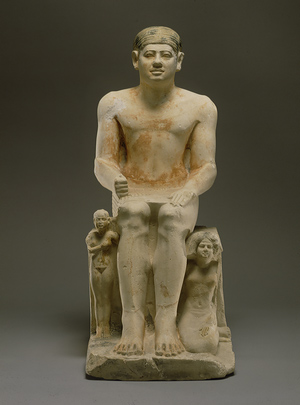
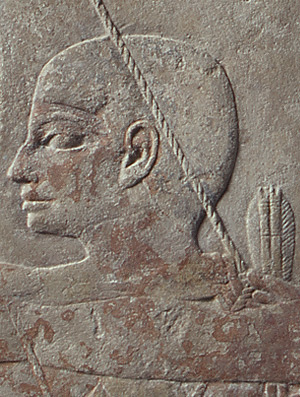
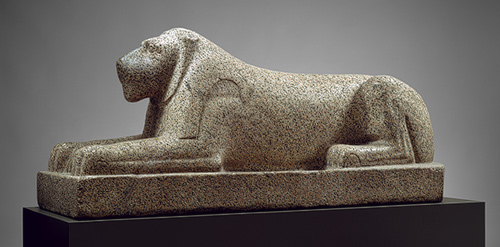
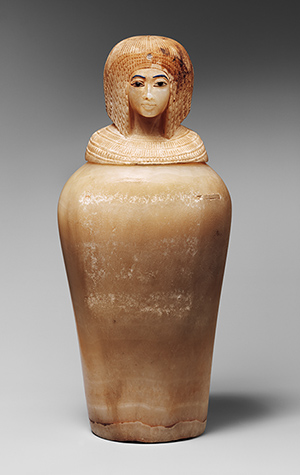
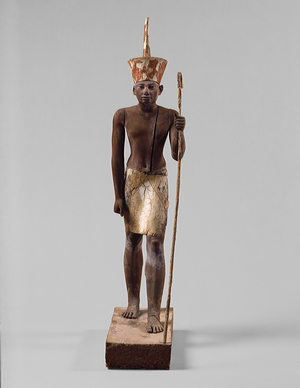
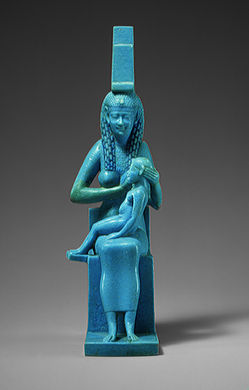
The museum laid out the pieces chronologically, not topically, and this gives one a chance to see the development of Egyptian style and technique over millennia.  Now, very little changed over time — as a culture Egypt had a very strong identity and they did not necessarily value originality — but I had a flight of fancy that subtle differences emerge upon close inspection.

Below is some work from Egypt’s “Old Kingdom” ca. 2500 B.C.

Old

Old Kingdom

Old Kingdom

Next, examples from their “Middle Kingdom” ca. 1400 B.C.

Middle Kingdom

Middle Kingdom


And finally, work from the “Late Kingdom” ca. 700 B.C.

Late Kingdom

Late Kingdom

Egypt Late Kingdom

No civilization lives out its time as a perfect bell-curve of steady rise, peak, and smooth decline.  Ebbs and flows interject themselves.  But we can safely say that Egypt as a “power” was on the rise early, perhaps peaked during the reign of Thutmose III in the Middle Kingdom period, and certainly continually waned after around 1100 B.C. and into the Late Kingdom.

But the artistic quality does not follow this bell curve.  In general their art evidences a steady increase at least in technical skill down through the Late Kingdom well past their political decline.  One could argue, however, that we see the most latent spiritual power in their earliest art.  The somewhat stoic solidity of their craft in the Old Kingdom seems to be bursting with energy just waiting to get released. Might we say then, that the increase in technical skill not only does not mirror an increase in the overall health of their civilization, it might even be evidence for their decline?

We see something similar in the history of Rome.  Here, for example is a bust of the hero of the 2nd Punic War, Scipio Africanus ca. 200 B.C.

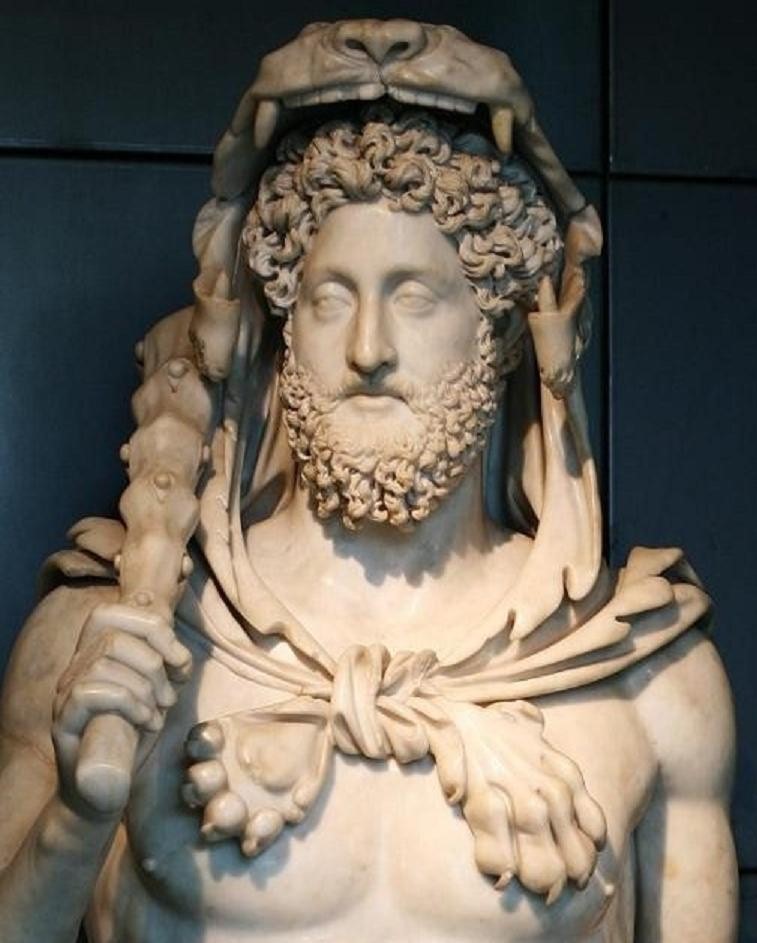
Fast-forward about 400 years and we find ourselves in the reign of the Emperor Commodus.  At this point Rome controlled more territory than at any point in its history, but no one would suggest that Rome stood taller and healthier in 180 A.D. than at 200 B.C.  And yet,

once again we see that technical skill in the arts has increased, and again we can draw similar conclusions about this increase as we can in Egypt.  Rome has declined, but technical skill has gone up.* We can also see a great deal more “spiritual” strength in Scipio than we can in Commodus, again similar to Egypt.

All this should be taken in the spirit of this blog as a whole.  I am a rank amateur making a guess. But if my guess be correct, why might it be so?

We can understand why a civilization might lack technical refinement in its earlier stages.  It has little to do with intelligence, I’m sure, and perhaps more to do with not having developed a clear style or sense of themselves.  But if the early stages show some of the clumsiness of youth, it also displays some of the (irrational) confidence of adolescence as well.

For convenience I label the later stages — like those that produce the Commodus bust — as ages of “refinement.”  I don’t think that “refinement” means an inward turn — inward turns of a civilization can bring great spiritual insights (this post here discusses this possibility in Byzantine civilization), and I don’t think either the Egyptian or Roman art shows that.  Rather, the refinement in the above art appears excessively “outward” to me, a decoration, perhaps even a covering over, of an inward reality.  In the case of Commodus, for example, his desire to show himself, a Roman emperor, in the guise of the Greek Hercules, bodes ill for himself and Rome. “Refinement” then represents a stage occupied not with deeper spiritual things but with “protesting too much.”

We can see this in Rococo art, for example, and the resulting storm that followed.  One can see the French Revolution of 1789 as the fall of one type of European Civilization.  It’s nice to celebrate simple happiness — nothing wrong with that.  But for my money Rococo (mid-late 1700’s) goes too far . . .

Schloss Ludwigsburg

The monstrous retribution that fell upon that civilization both in terms of the French Revolution specifically, and the Napoleonic Wars generally, has its harbinger with the drastic change in art represented by Jacques-Louis David.  All sense of “refinement” gets sacrificed to stark reality, in this case, the consul Brutus receiving back the bodies of his sons he ordered executed for treason to the Republic.

Returning to Egypt, while the architectural and sculptural achievements of the era of the late kingdom Pharaoh Ramses II impress in terms of scale, we do not see the same spiritual depth as in Akhenaton a century before him,

Ramses II

or the stark humanity of the much earlier Pharaoh Djoser (perhaps akin in style to bust of Scipio above, which might place their respective civilizations in the same spiritual framework).

Djoser - statue en calcaire

If this is a good/correct guess for these civilizations, we can ask whether or not it appears to be a law of civilizations generally, but   We may wonder too where our civilization fits in this suggested interpretative framework.  I think it obvious that many of our cultural creations do not evince the clumsy confidence of adolescence.  I’m tempted to say that we focus on ways to multiply purely external pleasure, which might put us in an “Age of Refinement.”  But if I say these things I will be following the pattern of every ancient historian in my, “Kids these days,” attitude, as well as most men generally past 40.  I don’t know if I’m quite ready to embrace that just yet.


*There may be another parallel between Rome and Egypt — we might say that Thutmose III (ca. 1450 B.C.) and Marcus Aurelius (ca. 160 A.D.) represent similar places in the respective histories of Egypt and Rome.  Both perhaps represent an “Indian Summer,” — a brief but ultimately failed rally against the tide.

9th Grade: Medieval and Modern Leeches

Greetings,

Most of us would shudder at the thought of visiting a medieval doctor.  After all, they bled people to make them well and actually used leeches for treatment of wounds (doctors were actually called ‘leeches’ in the common tongue).  This general aversion offers a great opportunity to get a fresh look at medieval people and see what they valued.  How they thought about health reflected their deeper beliefs about humanity and the world around them.  Hopefully by looking at a very different approach to health we can see the nose in front of our own face, and more accurately understand our own culture.

I remember a conversation I had just after college.  A woman asked me what I thought of  Eastern medicine, and I replied that I didn’t know much about it, but was wary of the possible non-Christian foundations of eastern approaches.  She asked me, “Are you so sure that western medicine has a Christian foundation?”  I was struck speechless (a rare occurrence, unfortunately).  I had to admit that I had never thought about it before, never seen the nose on my face, so to speak.

In that spirit, I wanted the students to approach the subject with an open mind.

What did they believe?

Just as the medievals based (consciously or no) their society on their perception of the order in the cosmos, so too they thought of health vis a vis man’s place in the universe.  It was “holistic” healing in the widest possible sense.  Originally, man stood in harmony with the rest of creation, just as Earth did with the rest of the cosmos.  Man in harmony with creation meant man in harmony with himself, with his various internal elements of earth, air, water, and blood in harmony.

The Fall disrupted this harmony, and so medicine should seek to restore it, to put the elements back in their right place.  This concept of balance, so important in medieval politics, shows itself in medicine as well.  Today we have various medical supplements that allow us to go beyond what is natural but for medievals the key was not fighting nature but restoring harmony with it.

Internal harmony had its reflection again in the relationship between the physical and spiritual in our lives.  Some mock medieval medicine by arguing that they thought every disease had its cure in prayer.  That is not true, but they did believe that one’s mental and spiritual well-being impacted our physical state, and vice-versa.

Their emphasis on the planets probably stands as one of their more perplexing beliefs, and for that reason perhaps most instructive for us.

First, we note that the medievals saw the cosmos as interconnected like a spider web, not one of free-floating entities.  Movement in one area effected other areas.  Motion in cosmos impacts motion on Earth, which impacts us.

This does not mean that they believed that planetary motion could cause actions on earth.  Rather, planetary motion was considered part of the environment in which man operated, and had to account for.  Here is Aquinas, for example, on the motion of the heavenly bodies and the limits of its impact. . .

Summa Theologica, Do Planets cause human action?

Objection 1: It would seem that the human will is moved by a heavenly body. For all various and multiform movements are reduced, as to their cause, to a uniform movement which is that of the heavens, as is proved in Phys. viii, 9. But human movements are various and multiform, since they begin to be, whereas previously they were not. Therefore they are reduced, as to their cause, to the movement of the heavens, which is uniform according to its nature.

Objection 2: Further, according to Augustine (De Trin. iii, 4) “the lower bodies are moved by the higher.” But the movements of the human body, which are caused by the will, could not be reduced to the movement of the heavens, as to their cause, unless the will too were moved by the heavens. Therefore the heavens move the human will.

Objection 3: Further, by observing the heavenly bodies astrologers foretell the truth about future human acts, which are caused by the will. But this would not be so, if the heavenly bodies could not move man’s will. Therefore the human will is moved by a heavenly body.

On the contrary, Damascene says (De Fide Orth. ii, 7) that “the heavenly bodies are not the causes of our acts.” But they would be, if the will, which is the principle of human acts, were moved by the heavenly bodies. Therefore the will is not moved by the heavenly bodies.

I answer that, It is evident that the will can be moved by the heavenly bodies in the same way as it is moved by its object; that is to say, in so far as exterior bodies, which move the will, through being offered to the senses, and also the organs themselves of the sensitive powers, are subject to the movements of the heavenly bodies.

But some have maintained that heavenly bodies have an influence on the human will, in the same way as some exterior agent moves the will, as to the exercise of its act. But this is impossible. For the “will,” as stated in De Anima iii, 9, “is in the reason.” Now the reason is a power of the soul, not bound to a bodily organ: wherefore it follows that the will is a power absolutely incorporeal and immaterial. But it is evident that no body can act on what is incorporeal, but rather the reverse: because things incorporeal and immaterial have a power more formal and more universal than any corporeal things whatever. Therefore it is impossible for a heavenly body to act directly on the intellect or will. For this reason Aristotle (De Anima iii, 3) ascribed to those who held that intellect differs not from sense, the theory that “such is the will of men, as is the day which the father of men and of gods bring on” [*Odyssey xviii. 135] (referring to Jupiter, by whom they understand the entire heavens). For all the sensitive powers, since they are acts of bodily organs, can be moved accidentally, by the heavenly bodies, i.e. through those bodies being moved, whose acts they are.

But since it has been stated (A[2]) that the intellectual appetite is moved, in a fashion, by the sensitive appetite, the movements of the heavenly bodies have an indirect bearing on the will; in so far as the will happens to be moved by the passions of the sensitive appetite.

Reply to Objection 1: The multiform movements of the human will are reduced to some uniform cause, which, however, is above the intellect and will. This can be said, not of any body, but of some superior immaterial substance. Therefore there is no need for the movement of the will to be referred to the movement of the heavens, as to its cause.

Reply to Objection 2: The movements of the human body are reduced, as to their cause, to the movement of a heavenly body, in so far as the disposition suitable to a particular movement, is somewhat due to the influence of heavenly bodies; also, in so far as the sensitive appetite is stirred by the influence of heavenly bodies; and again, in so far as exterior bodies are moved in accordance with the movement of heavenly bodies, at whose presence, the will begins to will or not to will something; for instance, when the body is chilled, we begin to wish to make the fire. But this movement of the will is on the part of the object offered from without: not on the part of an inward instigation.

Reply to Objection 3: As stated above (Cf. FP, Q[84], AA[6],7) the sensitive appetite is the act of a bodily organ. Wherefore there is no reason why man should not be prone to anger or concupiscence, or some like passion, by reason of the influence of heavenly bodies, just as by reason of his natural complexion. But the majority of men are led by the passions, which the wise alone resist. Consequently, in the majority of cases predictions about human acts, gathered from the observation of heavenly bodies, are fulfilled. Nevertheless, as Ptolemy says (Centiloquium v), “the wise man governs the stars”; which is a though to say that by resisting his passions, he opposes his will, which is free and nowise subject to the movement of the heavens, to such like effects of the heavenly bodies.

Or, as Augustine says (Gen. ad lit. ii, 15): “We must confess that when the truth is foretold by astrologers, this is due to some most hidden inspiration, to which the human mind is subject without knowing it. And since this is done in order to deceive man, it must be the work of the lying spirits.”

For them, paying attention to planetary motion might be akin to us today paying heed to a weather pattern off the coast of Japan.  But again, Aquinas hints at something more than this, something with more weight behind it.  C.S. Lewis, a professor of Medieval & Renaissance Literature, used these ideas in his Chronicles of Narnia series, as well as books like Perelandra  and That Hideous Strength.

Different planets had different impacts.  Of course the planets outside of earth had no sin, so the influence of some was not bad in itself, but often became so when interacting with our own fallen environment.

Saturn — The Infortuna Major

Saturn’s influence tends to make people introspective, moody, and inwardly focused.  This makes sense when we realize that the Greek name for Saturn is Cronos, where we get our language for time.  The idea here is of one who broods, who navel gazes.  Saturn is associated with the “melancholy” personality type. Melancholies can achieve great heights in artistic, intellectual, and spiritual endeavors.  Many of our great geniuses likely had this personality.  But the danger comes when they live too much inside their own head, isolate themselves, and subject themselves to psychological debilitations like depression.

Jupiter — The Fortuna Major

Jupiter received its name from Jove, the Roman name for Zeus.  Hence, Jupiter brings kingly joy.  When the king is happy the people feast.  People come together and sing, dance, eat, etc.  This concept of communal joy was the highest good for medievals, which they associated with the “Sanguine” personality type.

Mars — The Infortuna Minor

Mars of course brings war.  The “red planet” is associated with anger, and thus its earthly mirrors can be found in strong ‘Type A’ personalities.  What should strike us about Mars being the “Infortuna Minor” is that the medievals did not think war as bad as a nation of isolated brooders.  War brings many evils, but a silver lining can be that it does bring people together — and here we see again the medieval “community” emphasis.

Venus — The Fortuna Minor

Venus brings love, and is often linked with romantic love between a man and woman.  Again, we have an interesting contrast between their world and ours.  For us, nothing can be greater than experiencing romantic love, but for them, nothing was great than “joviality.”  Again, we see the community emphasis, and when we step back from romantic love, we see that while it does bring two people together, it also can isolate those two from others around them.  Isolated joy between two people cannot match communal joy for the medievals.

The composer Gustav Holst used the medieval ideas about the planets to write a series of compositions.  As is appropriate, the best one is “Jupiter.”

All in all, we have more of the medieval world with us than we might realize.

  • Some hospitals actually use leeches!
  • The current emphasis on a holistic approach to health comes directly from the medieval period
  • The focus on health care trying to keep you healthy comes directly from the Middle Ages
  • The use of dietary changes as part of health care has ancient and medieval roots

I hoped the students enjoyed our short detour into an odd corner of the medieval world.

Blessings,

Dave

9th Grade: A Medieval Cold War turns Hot

Greetings,

Henry IIThis week we wrapped up the 12th century by looking at Henry II, king of England from 1154-1179.

Henry had many great leadership qualities, as even his enemies attested to.  Tall, handsome, bold, decisive, charismatic — the list could go on.  Feudal society, however, seemed arranged specifically to prevent strong ‘type A’ personalities like Henry’s from exercising their full potential.  Past updates discussed the various ‘spheres’ of influence, local distinctions, and tangled allegiances that prevented any centralization of power in the medieval world.

All of this sort of thing no doubt maddened Henry, just as it would frustrate anyone who liked efficiency, action, and “getting things done,” not to mention power.  Henry did his best, however, and had a great deal of success.  One of his final frontiers remained the creation of universal law throughout England, and here he met the staunch opposition of the Church, in the person of his one time friend Thomas Becket, a man to whom he had personally shown enormous favor, raising him from his “common” birth to the heights of power.  Henry also wanted the power to appoint bishops to vacant sees, and to try monks and clergy who had committed crimes.  Becket didn’t mind the first so much, acquiesced on the last, and ended up dying for his opposition to Henry’s claim to control the clergy.

The medievals inherited one of their dominant theological motifs from St. Augustine’s “City of God.”  In his treatise Augustine outlined the existence of two cities on Earth, the “City of Man,” and the “City of God.”  The City of Man has its manifestation in the use of power to maintain order — the State.  The state has legitimacy in the eyes of God. It performs crucial functions for our well being.  But don’t kid yourself into thinking that the City of Man has any redemptive qualities or possibilities.  It performs purely ‘negative’ functions.  It restrains evil but cannot serve as a conduit for redemption.

The City of God, on the other hand, looks beyond the maintaining of power to redemption.  It focuses on love, forgiveness, and grace.  The City of God, therefore, must not be ‘infected’ by the City of Man.  The two are ultimately incompatible not because the City of Man is inherently bad but because they have different goals.  For many medievals, the political and legal independence of the Church helped maintain the Kingdom of God on Earth.

The feud between Henry and Beckett likely had its personal undertones, but at its heart, Beckett believed he stood for the independence of the Church.  Henry’s claim to appoint bishops and discipline clergy to Beckett looked like the City of Man trying to control the City of God.  If the City of Man got its clutches on the Church, the Kingdom of God would suffer, the light of Christ would dim.

Becket and Henry

Becket’s opposition to Henry seems arcane to us.  But to keep its independence, the Church believed that it needed to maintain both its territorial and legal separation from the state.  For his part, Henry felt that he could not tolerate a de facto “state within a state” while he reigned.  In the end, four of Henry’s knights killed Becket, though perhaps not on Henry’s direct order.  Nevertheless, Henry ‘lost,’ for the people blamed him for Becket’s death, and he had to publicly do penance.  At the end of the post I include one medieval contemporary’s admiring evaluation of Henry II.  He had many strengths, but some of these strengths could turn to weaknesses in the wrong context.

Previously we examined aspects of the medieval “guild” system.  Guilds had three basic functions:

  • To provide a means to train new workers
  • To enforce a uniform standard of quality
  • To protect its members

But beyond these basic functions, guilds, whether consciously or not, reinforced basic values of medieval society, which valued community and stability over competition and change.  I assume they would look at modern day America and shake their heads.  So much turmoil, so much of the “rat-race” mentality, so much cut-throat competition.  Why not all agree to scale back and relax a little?  Why make the middle-class dad have to stay open later to stay ahead of the competition just to keep up with competitors and miss his son’s soccer game?  In the end, it’s not worth it.

Guilds also provided another check and balance, or block of power and influence in the medieval stew.  They further prevented any kind of concentration of power.  Understanding the guild system can help us understand why Henry II actions brought so much controversy.

But, as students noted, the guild system geared itself towards stability and community, not innovation.  In America, for example, we do not shed a tear if Hechingers Hardware loses to Home Depot, so long as we get a better deal (does anyone else remember Hechingers?).  We understand that competition benefits consumers, and we accept the occasional disruption and instability that brings to the economy.  The medievals, on the other hand, made a different choice, thinking more of the immediate local community and less of the amorphous general public.

Many thanks,

Dave

Here is the “friendly” source on Henry II

To Walter, by the grace of God archbishop of Palermo, once associate, now lord and dearest friend in Christ, Peter of Blois sends greeting and wished continual success of your desires.

The blessed Lord God of Israel, who visited and made his mercy upon you, raised you up in need from the dust, so that you may sit with kings and princes and may hold the throne of glory. Terrible is the Lord in his judgments, and great in his compassion, very worthy of praise, for “His compassion is over all that he made.” [Psalm 145:9] Therefore of his compassion, which he has magnified in you, you have continual and steadfast memory, nor is that Judaic reproach seen in you: “They are not mindful of His benefits and of his wonders which he has shown to them.” [Psalm 77:11] There is nothing like ingratitude to provoke the indignation of the Most High: the very provocation of evils, deprivation of benefits, extermination of merits. On account of reverence for that one, who delivered you from contemptible poverty, may you exhibit most fully the office of humanity to the Cisalpine poor; truly those who go to, or return from the land in which walked the feet of our Lord, you could strike down in many ways, but you must fulfill their needs with the solace of more humane grace, just as your predecessors in office. You will recognize that the Father is himself Father of orphans and paupers, who exalts the humble, and humiliates the proud: for which on behalf of his poor pilgrims he will uncover you, so that they may find among you aid of customary goodness. And therefore let it frighten you, lest their clamor and complaint ascend to the ears of that one, who is terrible among the kings of the earth, who judges the case of the poor, and accuses on behalf of the meek of the earth.

For the golden sash and silken girdle, and samite, and other exotic goods, which through the bearer of gifts from your largess I receive not as much as I wish, but as much as I deserve, I give back thanks. Truly from this the ancient integrity of your liberality is clear, which neither intervening time nor distance of places, nor assumption of honor, nor other things destructive to friendship were able to undo.

Since however you have demanded from me with all insistence that I should send to you the shape and habits of the lord king of England in an accurate description – which exceeds my faculties, and for which indeed the vein of Mantuan genius would seem insufficient enough – I nevertheless will communicate to you what I know without envy and detraction. About David it was said [I Kings 16] to the commendation of his beauty, that he was red-haired; however you will know that the lord king has been red-haired so far, except that the coming of old age and gray hair has altered that color somewhat. His height is medium, so that neither does he appear great among the small, nor yet does he seem small among the great. His head is round, just as if the seat of great wisdom, and specially a shrine of lofty counsel. Such is the size of his head, that so it matches with his neck and with the whole body in proportionate moderation. His eyes are round, and white and plain, while he is of calm spirit; but in anger and disorder of heart they shine like fire and flash in fury. His hair is not in fear of the losses of baldness, nevertheless on top there is a tonsure of hairs; his leonine face is rather square. The eminence of his nose is weighed to the beauty of the whole body with natural moderation; curved legs, a horseman’s shins, broad chest, and a boxer’s arms all announce him as a man strong, agile and bold; nevertheless, in a certain joint of his foot the part of the toenail is grown into the flesh of his foot, to the vehement outrage of the whole foot. His hands testify grossly to the same neglect of his men; truly he neglects their care all the time; nor at any time, unless carrying birds, does he use gloves. Daily in mass, in counsels and in other public doings of the realm always from morning until vespers he stands on his feet. And, he never sits, unless riding a horse or eating, although he has shins greatly wounded and bruised with frequent blows of horses’ hooves. In a single day, if necessary, he can run through four or five day-marches and, thus foiling the plots of his enemies, frequently mocks their plots with surprise sudden arrivals; he wears boots without a fold, caps without decoration, light apparel. He is a passionate lover of woods; while not engaged in battles, he occupies himself with birds and dogs. For in fact his flesh would weigh him down enormously with a great burden of fat, if he did not subdue the insolence of his belly with fasts and exercise; and also in getting onto a horse, preserving the lightness of youth, he fatigues almost every day the most powerful for the labor. Truly he does not, like other kings, linger in his palace, but traveling through the provinces he investigates the doings of all, judging powerfully those whom he has made judges of others. No one is more cunning in counsel, more fiery in speech, more secure in the midst of dangers, more cautious in fortune, more constant in adversity. Whom once he has esteemed, with difficulty he unloves them; whom once he has hated, with difficulty he receives into the grace of his familiarity. Always are in his hands bow, sword, spear and arrow, unless he be in council or in books. As often as he is able to rest from cares and anxieties, he occupies himself by reading alone, or in a crowd of clerics he labors to untangle some knot of inquiry. For while your king knows his letters well, our king is more literate by far. Truly I have judged the abilities of both in learned matters. You know that the king of Sicily was my student for a year, and had had from you the basic arts of versification and literature; he obtained more benefit of knowledge through my industry and solicitude. However as soon as I had departed the kingdom, that one turned himself over to abject books in imperial leisure. But yet in the household of the lord king of the English every day is school, in the constant conversation of the most literate and discussion of questions. No one is more honest in speech than our king, more polite in eating, more moderate in drinking; no one is more magnificent in gift-giving, no one more munificent in alms-giving: and therefore his name is like poured oil, and the entire church of saints describes the alms of such a one. Our king is peaceable, victorious in war, glorious in peace: he is zealous for the things to be desired in this world and he procures peace for his people. He considers whatever pertains to the peace of the people, in whatever he speaks, in whatever he does; so that his people may rest, he incessantly takes on troubled and enormous labors. It aims to the peace of his people that he calls councils, that he makes laws, that he makes friendships, that he brings low the proud, that he threatens battles, that he launches terror to the princes. Also that immensity of money aims at the peace of his people, which he gives out, which he receives, which he gathers, which he disperses. In walls, in ramparts, in fortifications, in ditches, in enclosures of wild beasts and fish, and in palaces there is no one more subtle, and no one more magnificent to be found.

His most powerful and most noble father the count [of Anjou] extended his borders greatly; but the king added to his paternal lands with abundance in his strong hands the duchy of Normandy, the duchy of Brittany, the kingdom of England, the kingdom of Scotland, the kingdom of Ireland, the kingdom of Wales; he increased inestimably the titles of his magnificent inheritance. No one is more mild to the afflicted, no one more friendly to the poor, no one more unbearable to the proud; he always strives to oppress the proud with the semblance of divinity, to raise up the oppressed, and to stir up against swelling of pride continual persecutions and deadly troubles. When however he may according to the custom of the kingdom have had roles in making elections of most important and most powerful, he nevertheless always had his hands pure and free from all venality. I merely touch upon, I will not describe these and other endowments of soul as much as body, with which nature has marked him out before others; truly I confess my insufficiency and would believe that Cicero and Virgil themselves would sweat under such a labor. I have briefly tasted this little morsel of his appearance and habits at your request; truly I shall seem either to have undertaken an unbearable work, or to have cut back much about the magnificence of so great a man through jealousy. Nevertheless I, serving your charity, do what I can do, and what I know without envy and without detraction, I communicate with most prompt good will, and also among other great men, who write in praise of my lord, I put my might of devotion in a treasure chest along with the poor widow.

We Still Consult our Oracles

This post has had a few different lives.  It was one of the first posts on the blog years ago, but occasionally I come across a bit of information that might confirm what is a favorite and wild theory of mine.  I cannot prove the assertions I make, but I “feel” it to be true.  Below is the original post. . .

******

For some time I have had a pet theory that I am far too proud of.

When we look at the ancient past we sometimes see law in the hands of the priesthood, or at least understanding of the law in their hands.  When civilizations are at this stage it is not uncommon to see people spend a lot of time going to oracles to help interpret law, make sense of their surroundings, and so on.

When we see this historians and archaeologists immediately think, “This civilization is in its early, pre-sophisticated stage.”  We assume that the obfuscation of law and the concentration of those who interpret in the hands of a select few must mean that their society has yet to come to intellectual maturity.

But then, look at us today.  What layman can understand our laws?  Who can fathom the depths of the health-care bill?  Who can actually read it, let alone make sense of it?

Only a special class of people, our priests, whom we call “lawyers.”

Not having understanding, the layman seek out their oracles to bring clarity to the foggy mysteries of law.  Some go to FOX, CNN, Stephen Colbert, Rush Limbaugh, or NPR.  They interpret for us. They become our ‘mediums’ to give us access to the secret knowledge.  But notice, we never interact with the law itself.  Nor do we interact with the ‘holy’ priesthood of lawyers.

And yet no one would say we are an unsophisticated civilization in its “early stages.”  If anything we are far too sophisticated.  But this sophistication may really be a form of regression, albeit a regression that cleverly hides behind advancing technology.

So, when we look at the past and see priests and oracles playing a large role maybe we should not think, “New, unsophisticated civilization,” but ponder the possibility that instead we see, “Old, over-complicated, tired civilization,” one with possibly a more vibrant and clearer past.

********

That was the original post of a couple years ago, but recently I came across somethings else that made me think of the topic again.

UnknownIn Toynbee’s Cities on the Move he makes a fascinating observation to begin his examination of the city throughout history.  He begins by looking at the nomadic character of early civilizations, where those who kept flocks had to keep their livestock moving to find land to graze.  He also cites the “slash & burn” agricultural practices of the earliest civilizations.  He then writes,

Our pre-nineteenth-century ancestors would have been surprised but perturbed if they could have seen present-day descendants of theirs who had seceded from the sedentary way of life as the pastoral nomads had seceded from it three or four thousand years earlier.  They would have hardly believed that any human being who once lived in a fixed house would prefer life in a traveling car.  The trailer towns in present-day Florida would have reminded our forefathers of the pastoral nomads of huts or tents.  The daily orbit of the present day commuter would have recalled the annual orbit of the nomad or shepherd; and it would have seemed appalling that ‘civilized’ sedentary populations should have been driven by economic necessity once again to become peripatetic.   . . . It is a spiritual misfortune for a worker to be alienated emotionally from the place where he has done his work and earned his living. . .

This modern sense of rootlessness manifests itself in our lack of connection with where we work and where we live.  So many notables of past eras, be they Thucydides, Socrates, Cicero, Dante, Machiavelli, or Browning all professed a great love for their respective cities.  We may pine for our homes, but I doubt that anyone pines for Centreville or any of the other random suburbs throughout America, which exist mostly as the equivalent of bus stations to take people somewhere else.

The most recent update to this post comes in the form of . . .

UPS drivers now use a system called “Orion” to guide their routes, and nearly all do not like it.  The formula they use makes no sense to the drivers, leading to what Alex Tabborok called “Opaque Intelligence.”  He writes,

I put this slightly differently, the problem isn’t artificial intelligence but opaque intelligence. Algorithms have now become so sophisticated that we human’s can’t really understand why they are telling us what they are telling us. The WSJ writes about driver’s using UPS’s super algorithm, Orion, to plan their delivery route:

Driver reaction to Orion is mixed. The experience can be frustrating for some who might not want to give up a degree of autonomy, or who might not follow Orion’s logic. For example, some drivers don’t understand why it makes sense to deliver a package in one neighborhood in the morning, and come back to the same area later in the day for another delivery. But Orion often can see a payoff, measured in small amounts of time and money that the average person might not see.

One driver, who declined to speak for attribution, said he has been on Orion since mid-2014 and dislikes it, because it strikes him as illogical.

He continues with what I think is the key point, “Human drivers think Orion is illogical because they can’t grok Orion’s super-logic. Perhaps any sufficiently advanced logic is indistinguishable from stupidity.”

I’ve always thought Chesterton’s The Everlasting Man an underrated work.  Here he attempted to reframe the typical evolutionary way of viewing history made popular especially by H.G. Wells’ Outline of History.  He may cinch the argument with his opening lines in the chapter “The Antiquity of Civilization:”

The modern man looking for ancient origins has been like a man watching for daybreak in a strange land and expecting to see that dawn breaking behind bare uplands or solitary peaks.  But the dawn is breaking behind the black bulk of great cities long built and lost to us in the original night; colossal cities like the houses of giants, in which even the carved ornamental animals stand taller than the palm trees. . .  The dawn of history reveals a humanity already civilized [i.e. see how quickly “civilization” develops in the early chapters of Genesis].  Perhaps it reveals a civilization already old.  And among other important things, it reveals the folly of most of the generalizations about the previous and unknown period when it was really young.
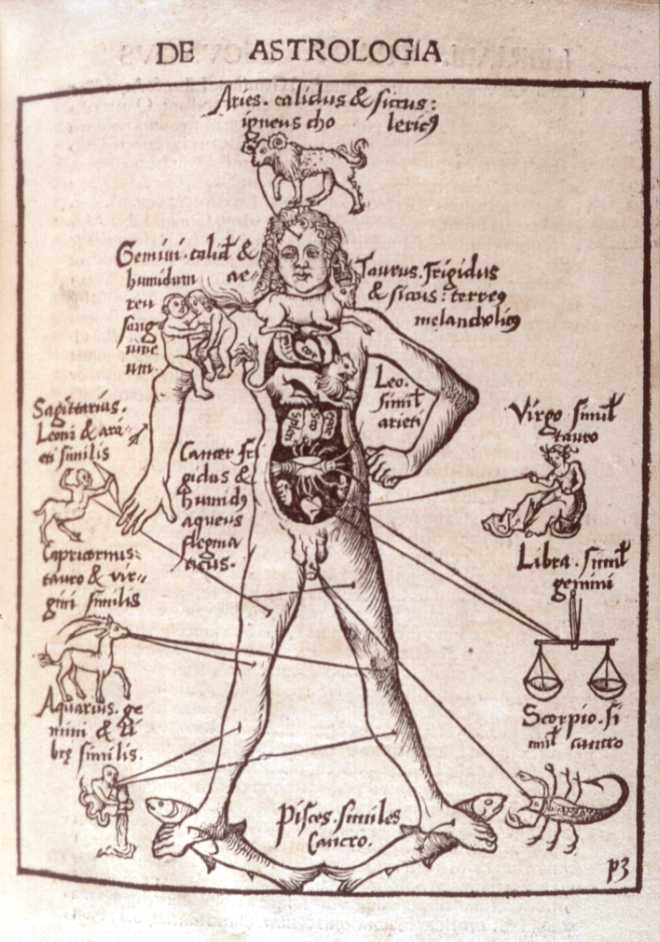
9th/10th Grade: High Society

Greetings,

Next week we will look at medieval cathedrals.

We discussed what architecture reveals about a civilization,  and how specific buildings and designs reflect certain ideas and theological leanings.  In discussing cathedrals, I first wanted the  students to discuss their own churches.  Some observations we made were:

  • One church had sanctuary that used folding chairs and doubled as a  multi-purpose room.  The church had an informal worship service, with  a pastor that was generally laid back and easy going.  At the center of the stage lies the pulpit, and as we might expect, the sermon occupies the central place in their worship service.
  • Another met in a room for worship with movie theater style seats, with screens occupying a prominent  place on the wall.  This church, we discovered, puts a premium on  cultural relevance and an interactive experience for the worshippers.
  • One church met in a building similar to an office building complex.  One key idea of the church seemed to be not to intimidate anyone with “church.”  The sanctuary design and flow of the service had what could be described as a “familiar” feel.
  • Another church was designed in the traditional way, but with a higher ceiling.  They had an altar rail in front, with a choir in robes, a processional with the cross, acolytes, etc.  The pulpit is placed off to the side, and true to form, the sermon is not the centerpiece of the service.  Instead, with the communion altar at the center, the celebration of the eucharist takes the bulk of the service time each week.
I shared my experience worshipping in an Eastern Orthodox Church some years ago.  When you enter, the church immediately had a “this is different” feel.  The colors, smells, and chanting all told the attendee, “You are in a different place, you have left “the world” and are now surrounded by a great cloud of witnesses, somewhere between Heaven and Earth.  Instead of sitting, you spent most of the time standing or kneeling.  The point was not to make you comfortable, but to take you out of yourself and your daily surroundings.  They might also add that one should not sit in the presence of God.
Each of these designs reflect different philosophies on worship, and  their architecture reflects that.  While it was certainly not my purpose to  say that one is better than another, it is important that we  tried to understand that theology will be reflected in architectural style.
Willow Creek, Chicago
From a cosmological and societal perspective, height had great  importance to the medievals.  When I look at the intricate design and  strange creatures that adorn many cathedrals, I get the sense that  they were enjoying themselves.  Cathedrals took at least 30 years and often more than 50 to  build.  What does this say about them?  What church today could sell a  building program that would take at least 30 years to complete?   What does that say about us?  Were the medievals wasteful and foolish, or  is it us who have made worship a humdrum bare bones experience?  Do cathedrals, as Abbott Suger said, serve to ‘urge us onwards from the material to the immaterial?’
When we looked at images of a cathedral, their height immediately struck most of the students:
Santiago-de-Compostela-Cathedral
 Most likely, our involuntary reaction to these buildings would be to look up and feel small, and that indeed is part of the point.  They felt it important that you lose yourself in the face of immensity.  Clearly, this kind of architecture stressed the “otherness,” holiness, and transcendence of God.  Conversely, it does not emphasize the “nearness” of God.  But we must not have the idea that Gothic meant “dark, heavy, and foreboding.”  Rather, the medievals came up with their architectural advances specifically to let in more light.  They do not press us down to the ground (like pyramids, for example) but take us “upwards” to heaven.
Christ in Glory, Canterbury Cathedral
Their architecture takes us back to their cosmology, which also emphasized height, as we saw last week.
Finally, we noted how it reflects the Medieval linking of the physical and spiritual.  They did this even with the location of their buildings, most especially in the Mont St. Michael Cathedral in Normandy, France.
Mont. St. Michael
The cathedral is dedicated to St. Michael the Archangel, who fights the Dragon in the book of Revelation.  They built it in the furthest point possible out into the sea, in itself a testimony and prayer that God and His angels are their first line of defense.  Mt. St. Michael perfectly illustrates what medievals believed not only about church, but about how physical things reflect spiritual reality.

The Half-Hearted Return of Thor

I find the trend in modern history books to use BCE (Before Common Era) and CE (Common Era) quite amusing.  Clearly as a culture we have a profound unease with the Christian roots of our civilization.  Naturally, then, many take issue with dividing time around the Incarnation.  Obviously I disagree with such a stance, but it makes sense that people would want to order their world around their beliefs.  And yet, using BCE/CE seems such a laughable attempt at “kicking against the goads.”  “When is the ‘Common Era?'” one might ask.  “After the coming of Jesus,” is the only response. “What makes that era ‘Common?'” as opposed to other eras?”  I can’t fathom anything other than a shrug at that point.  One archaeologist stated, “Before the Common Era (B.C.E.) and the Common Era (C.E.), are exactly the same as B.C. and A.D. but have nothing to do with Christianity.”

No . . . certainly not!

If you’re going to abandon a Christian understanding of time, abandon it already.  It will make things clearer in the culture and one’s own mind as well.

That’s why part of me applauded when I read this article  which tells us that devotees to 1000paganism in Iceland are building a temple to Thor.  For many decades now Christian understandings of nature, the human person, of sexuality, etc., etc. have steadily eroded, and been replaced in some ways by a neo-pagan revival.   If you actually build a temple, it communicates the reality that we are really worshipping something and calling a spade a spade.  Again, Jesus tells us that He prefers hot or cold people.  It’s all the lukewarm mush in our culture that makes things so difficult.

As I read a bit more, however, I discovered that they’re not going to sacrifice animals. Of course in many ways this is good news because, after all, no one wants to see animals sacrificed.  But in other ways . . .  the concept of sacrifice and propitiation, so crucial to Christianity, if taken seriously can lead one back to Christianity.  It is an example of the benefits of clarity.
And then Hilmar Örn Hilmarsson, high priest of Ásatrúarfélagiðadded, added, “I don’t believe anyone believes in a one-eyed man who is riding about on a horse with eight feet.  We see the stories as poetic metaphors and a manifestation of the forces of nature and human psychology.”

Ugh.  More mush, then.  Thor, I think, would not be pleased.