This week we looked at the aftermath of Nero’s suicide in 68 A.D. Having no heirs, Nero did not establish any process for a succession. Three generals, Galba, Otho, and Vitellius ended up holding power alternately before the last, Vespasian, remained standing and took up Imperium himself and stability returned.
The Civil Wars did not last long and probably did not impact the common people very much, but this “Year of 3 Emperors,” portended ill for Rome.
It showed that in the absence of any family successor, power could simply go to the strongest
The system Augustus established at least maintained a fictional role for the Senate. Some emperors (like Claudius) used the Senate to a moderate degree. Now however, the Senate lost all role in who governed Rome. The mask was off the pig. Power belonged to the army, not to any of the pre-existing public institutions.
Vespasian looks like a solid sort, and he ruled well by most standards. He eliminated a massive debt (largely through raising taxes). He had no obvious vices to bring himself or Rome down. He began the project that turned the land that housed Nero’s ridiculous private palace into a large public building for all people, known then as the Flavian Amphitheater (after his family name), known to us as the Colosseum.
One of the main functions of this intricately engineered building was to house the gladiator contests, that by Vespasian’s time, became more and central to Rome’s way of life. What began as a holdover from old Etruscan funeral rite ca. 600 B.C. then became ad hoc neighborhood entertainment by 50 B.C., and finally turned into a horrendous spectacle where criminals (and Christians) were tortured and killed for amusement by 100 A.D. When we realize that Rome financed much of the construction from looting the Temple in Jerusalem, and that thousands of Jewish slaves built it, we see that even when Rome tried to go “good” it brought about a terrible evil. We discussed how this could happen. . .
1. Among other things, the Romans demonstrated what happens to addicts. More and more is needed as the ‘drug’ gives less and less back, but it becomes so much a part of you that stopping is near impossible, at least humanly speaking. Along those lines we discussed how in Scripture sin is described as a ‘power,’ a kind of black hole like vortex. We delude ourselves when we think that we can easily jump back and forth between sinning and not sinning. Quicksand doesn’t work that way.
2. The games satisfied Rome’s need for glory and courage. Rome believed that they were still Rome, but very few citizens fought anymore. Cicero, among others, thought the games served the purpose of ‘toughening’ the citizens. The Pax Romana created a breathing space for Rome that they could have used to transform themselves to some degree. However, the very foundation of the Augustus’s principate system was built on the idea that Rome had not changed. The games allowed the Romans to imagine that they were just like their ancestors, tough and able to deal with violence.
3. The games were also related to Rome’s broken political system. Like the Wizard of Oz, Rome’s emperors could ill afford the citizens a look behind the curtain. The games proved a marvelous distraction for the populace. Also, since all power became centralized with the emperor, he needed to appear all powerful. The bigger the spectacle, the better it tended to reflect on the emperor.
But the political problem had broader foundations than this. With the rise of wealthy landowners gobbling up the small farms, thousands ended up flocking to the cities to find work, especially Rome. What could be done with these people? Ultimately. . .
4. The games also show Rome’s continual band-aid approach to its problems. They were not good at making hard choices about who they were at this point in their history. The games distracted people and bought the short term favor of the lower classes, but it produced nothing for their society. Whole armies of soldiers, slaves, and animals perished, countless money was spent, merely to enhance the image of the emperor and entertain the people. But no creative or productive activity flowed from the games. It was all ‘sunk costs.’
5. The Romans viewed the games as a means of displaying their power, in at least two ways. First, it meant that Romans could say something to the effect of, “Look at what we can make people do for us!” Perhaps this was more subconsciously believed than stated. But the variety of people and the different fighting styles they employed did serve as a visual reminder of the scope of their power.
Had Rome been more productive or creative economically, this population influx might have led to a economic revolution of sorts for Rome, if we imagine the mid-late 19th century Industrial Revolution on a smaller, less technical scale. However, being economically creative can’t just happen when you want it to. It takes a foundation in education and attitude that Rome did not have.
Thus, the games reveal not only Rome’s moral bankruptcy, but its political and economic stagnation.
7. Finally, the games reflect Rome’s social and cultural climate “gone bad.”
When thinking of how the empire functioned we cannot lose hold of the context of Rome’s past Republican history. Rome’s revolution in 508 B.C. created some measure of what we would call democracy, but it mainly gave the aristocracy/patricians more direct control over policy. Americans view aristocracy as a dirty word, but Rome’s Republic functioned very well for many centuries. One reason for this is that Rome’s aristocracy usually considered themselves patrons and acted as “patrons of Rome” without being overly “patronizing.” The “patrons” sought to look after the lower classes, to provide for them, give them gifts, and sometimes be the stern father figure. In fact, the patrons of Rome came from the “patrician” class, i.e. the “fathers.”
Good Roman fathers have many roles. They lead worship. They provide law. They provide continuance of the family line. Sometimes, too, they give gifts. “Here’s 20 bucks, go have a good time at the movies with your friends,” and so on. Emperors served as Rome’s ultimate patrons. The Civil Wars of 133-31 B.C. decimated Rome’s aristocracy and left the Senate impotent. Thus, whereas before Rome had many “fathers,” now for the most part, they have just one, the Emperor.
We understand Roman reaction to their emperors better if we view it through this lens.
Augustus cast the perfect balance between stern, reliable Roman father upholding the morals of Rome, with a sprinkling of gifts (of money, bread, etc.) and indulgence.
Tiberius was a great manager of money, but viewed as a miser. He never threw a party, never gave gifts, etc. He had no “heart.”
Caligula was a disaster — completely unreliable, giving no family stability
Claudius didn’t look the part, which was a drawback. He had some problems with women — also a drawback. But in the main he followed Augustus’ model.
Nero was the dad in perpetual mid-life crisis, who spent your inheritance and that of his brothers. He steals from other families when that runs dry. He quits his job to become a very unsuccessful opera-singer and provides no leadership, no example, for his children.
Roman fathers had to show that they identified with their children’s interests. The Roman Games were one big party, given as a gift. Of course because Rome’s political system meant that they had just one father, the party had to be huge to cover the whole population. The expense, the expectation, and the length of the games (by the 2nd century the games might last 4-5 months) all grew as each emperor tried to establish his credentials as a proper Roman father.*
All of this is bound to catch up with them at some point. This week we will take a look at Rome’s decline through the lens of economics and architecture, and begin to find our way towards the coming of Constantine.
Dave
*We want dads to provide the party for his teenage children, but not really to join in the party. That would be weird and off-putting, most “un-fatherly” conduct. Hence, the Romans did not like it when Emperor Commodus “joined the party” by participating personally in the gladiatorial games.
The phenomena of Roman gladiators has gotten lots of attention over the years, and that’s no surprise. One way of quickly getting a sense of an ancient people is to seek what details stand out and makes them look odd, impressive, or otherwise shocking to modern eyes. The gladiatorial games, like human sacrifices for the Aztecs, Egyptian tombs, or medieval cathedrals all fit the bill.
We usually see the gladiatorial contests as evidence of Rome’s decline. Rome got wealthy, Rome got bored and decadent, and so it needed the bread and circuses to maintain order in a tumultuous political climate. “How sad,” some say, “and how dramatic a change from Rome’s hard and flinty past! But, when a big empire goes south, it will go south on a grand and terrible scale.”
So the story goes. But, what if, like Tweedle-Dee and Tweedle-Dum, we had it contrariwise? What if the Rome of the gladiatorial games is simply the Rome that always was, and money and power just gave them more opportunities to expand their sense of themselves? Such are the implications of Carlin Barton’s eye-opening The Sorrows of the Ancient Romans: The Gladiator and the Monster. Barton wants to show us that our modern categories of thought and experience will not work for Rome. We cannot say, “Well, we like football so we’re just like the Romans.” This shallow method will not cut it for Barton. She asks us to go deeper and to notice the Romans on their own terms, and gives us plenty of food for thought to reconsider the meaning of Rome, and what it means that Rome was a “religious” society.
Barton examines the gladiatorial games, one of the more sensational aspects of Rome’s past. The title focuses on the concept of “sorrow,” but Barton tries to examine the games through a lens of the tension between asceticism, discipline, glory, indulgence, and exaltation. We might think of the Romans as orderly people who lived in the middle of the road. If true, Barton suggests that they could do so only by holding opposites in constant tension.
For an example we have the Roman triumph. Anyone familiar with Roman lore and tradition knows that Rome itself, not a particular individual, occupies the heroic position. They wove their fear of too much individualism into their laws and customs. They valued communal fraternity so much that one of their laws states that,
If any person has sung or composed against another person a song such as was causing slander or insult…. he shall be clubbed to death,+
and they valued order and gravitas to the extent that they banned excessive mourning at funerals.
But at the same time they gave massive official “Triumphs” to certain generals on occasion, where the whole city came out to shower the victor with praise. But as the victor processed, his soldiers could–and perhaps should?–sing bawdy or insulting songs about their general in direct violation of law, while a slave rode with him as well to remind him of his mortality.*
Barton tries to explore this at least seeming tension through the lens of the so-called “circuses” of Rome, which Barton writes were a, “Powerful opera of emotions in which the gladiator was the star.”
Most people, most of the time, imagine themselves doing good more often than not, and suppose that others will naturally share the assumptions they make about themselves. The same holds true for countries and perhaps especially for imperial powers, who tell themselves that they come with blessings for all, and get a shock when they find themselves not always as appreciated as they feel they deserve.** So too with gladiators and the games, the Romans saw themselves as benefactors. Barton pushes back on the modern notion that they served as mere entertainment for a swelling populace that needed distracted.
The Romans saw themselves as giving gladiators a chance to redeem their low-estate, even to become something more than a mere man–an act of generosity. The crowd attends to cooperate and encourage this transformation, not so much to gratify idle curiosity but rather to partake in a kind of religious apotheosis. To begin, the military oath had a great deal of similarity to the gladiatorial oath. Seneca wrote,
You have enlisted under oath. If any man say that this is a soft or easy form of soldiering they will only wish to mock you. But be not deceived: the words of this most honorable of compacts are the very same as those of the most foulest [i.e., the gladiator’s oath]: to be burned, to be bound, to be slain by the sword. You must die erect and invincible. What difference will it make if you gain a few more days or years? We are born into a world in which no quarter is given.
Thus, Barton comments, the gladiator became a kind of soldier/philosopher, one who lives between life and death, understands both, and can mock at both. This in turn gave him license to become a new man. If the emperor claimed his life, one might see it as akin to a god claiming his own. His death, then, was not necessarily a cause for sorrow.
This gives us a new image of the crowd’s role at the games. The crowd does not so much cheer for life, or death, but for a communal religious right. Seneca again comments,
I judge you wretched because you have never been wretched yourself. You have passed through life without an adversary. No one will know what you are capable of, not even you yourself will know. And so there are men of their own accord [i.e. gladiators] come forward to challenge reluctant misfortune, and sought an opportunity to blazon forth their worth when it was about to pass into obscurity. Great men glory in adversity, as do brave men in battle.
The injuries inflicted by the powerful must be borne, not just patiently, but with a glad countenance. At the table of a king every meal is a delight. So must they drink, so must they respond, so must the laugh at the funerals of their loved ones.
To glory in suffering is to become glorious. So even in death, the gladiator wins. He shows his exalted status by despising life. As one commented on D. Junius Brutus: “He behaved so basely that he deserved to live.” The crowd could occasionally assume risk as well, flocking to rickety theaters that could collapse or catch fire at any time. They cheer on the gladiator toward his glorious suffering just as they–albeit in a more limited fashion–participate in that same suffering, that same embrace and defiance of death.
With this in place we can view the decadence of the Romans in new light. Gladiators lived beyond normal life, so they could indulge themselves freely, embracing the extremes of life and death. St. Augustine commented that the life of the gladiator involved licenstious cruelty, an excess of indulgence in everything. And yet at the same time, they functioned as Rome’s ascetics, able to abandon their very lives to the people of Rome. Their lives do not belong to them and in so doing their lives can belong to all. They simultaneously embraced both extremes, the demi-gods of Rome who lived beyond the lot of mortals.
This is why the crowd could cheer even the losers in combat, for in their death they display their superiority to death, unblinking, and unafraid. It was only when the combatants shrank from death that crowd turned on them, and then with stern vengeance. Showing fear of death made them normal once again, and once they became “normal” they turned the games into something shameful and cruel, rather than something “exalted.” A gladiator’s fear of death ended the crowd’s participation in the ritual and suddenly transformed the event to a mere butchery. Who wants to see that?
This is why Rome embraced fleshly decadence as a kind of asceticism. In Rome one must learn to endure all things and keep going. A Roman can embrace everything and maintain his dignity. He can die, and he can eat, vomit it all up, and eat some more. He can endure death and every form of excess life throws at him and “triumph.” It is hard to say whether the banquets and excess of late-Republican Rome derived from gladiator culture or vice-versa, but I suspect the former. J.E. Lendon at the University of Virginia seems to suggest in his Soldiers and Ghosts that the Romans had an extraordinary ability to do almost anything to avoid shame. That ability could include
A strong aversion to any kind of trickery in warfare. The only honorable way to fight was to march straight into the enemy and smash them in the mouth.
A strong aversion to a fear of death and ready acceptance of suicide as superior to even small personal or political failures among the political elite, and
As Barton points out, a refusal to accept any limits not just on pains^ but even on the pleasures that one could endure, such as eating six meat pies, spewing it out, and still look forward to eating the seventh. We know that no matter how much one loves pizza, for example, there comes a point after eating too many slices that one starts to despise pizza. For the Romans, the man who lost the ability to desire had lost something of himself.
One might see the how these practices could stray into some rather bizarre sexual realms. Clearly gladiators enjoyed status as sexual objects, and Barton is hardly the first to discuss this. But she did, if it be possible, help me understand Caligula, at least indirectly. Of course no one can possibly excuse Caligula via “understanding!” But in Caligula we see the same kind of excess of cruelty, physical and sexual indulgence, along with religious ecstasy as we see in gladiators. Caligula claimed a kind of deity for himself. Perhaps this was insanity, but perhaps he was simply following the gladiator ethic of testing himself, pushing himself, to extremes of vice and religious glorification, courting disaster but not shirking from the challenge.
Maybe.
I found Barton’s book in turns fascinating and perplexing. I don’t know what it means for understanding the breadth of Rome’s existence from start to finish. In the preface to his history, Livy wrote that, “Of late wealth has brought us avarice, and abundant pleasures, yearning–amidst both excess and the desire to perish and destroy all things.” It is a familiar trope of ancient historians, but that has no particular bearing on the accuracy of his interpretation. Still, I tend to see what happened with gladiators not as a weird appendage of the late-Republic/Empire, but as an integral part of Rome that lay under the surface initially, and grew in prominence over time.
For example, the Romans established the office of aedile very early in their history in the 5th century B.C. Most aspects of how they functioned look very Roman in our usual sense of the word, as they maintained buildings, streets, laws, etc. But, they also had charge of public entertainments or other public events, such as large funerals. Aedlies were expected to fund these out of their own pocket, and many could easily go bankrupt during their time in office.
But the Romans saw the role of aedile as a crucial stepping stone to higher office, where the opportunities for glory and riches increased. Caesar risked everything and beggared himself to win the election of pontiff, then used the office for fabulous gain. This pattern was established long before him, however, this yo-yo between poverty and wealth, despair and exaltation.
It seems fitting to give the last word here to an important critic of all of this mess, St. Cyprian of Carthage, who wrote,
Man is killed for the pleasure of man, and to be able to kill is a skill, an employment, an art. He undergoes discipline in order to kill, and when he does kill, it is a glory. What is this, I ask you, of what nature is it, where those offer themselves to wild beasts, whom no one has condemned, in the prime of life, of comely appearance, in costly garments? While alive they adorn themselves for voluntary death and miserable as they are, they even glory in their sufferings
Dave
+It seems particularly Roman to me that their wouldn’t say, “shall be executed,” but rather the more stark, “shall be clubbed to death.”
*Some might say that these exceptions have much in common with medieval carnivals or days of “misrule.” I disagree, and I assume Barton would as well. The medieval carnival temporarily suspended normal reality to a) reset/refresh the existing order, and b) demonstrate the reality of a world beyond our own. The Romans seemed to live in perpetual earthly tension within one plane of existence.
**I do not mean for this to serve as an all-encompassing statement on the question of how empires do or do not benefit those under their control. The question is complicated and perhaps no one good general answer exists. All I mean to assert here is that imperial powers assume that they are helping and not hurting.
^If we look at the 2nd Punic War, one can imagine almost any civilization surrendering in 216 B.C. after Cannae. Poylbius points out the political structure of Rome as one of the keys to their ultimate victory and ability to persevere. Certainly that helped. I think the real key, however, was Rome’s culture/religion that told them to suffer–to embrace suffering. This should tell us that:
Indeed, what we saw with gladiators was present earlier in Rome’s history (in a more noble form).
Culture and religion trump politics. One can see a parallel in W.W. II where Germany inflicted unimaginable losses against the Soviets in the first few months their attacks. Any rational man would assume a surrender would be forthcoming. Yet, somehow, the Soviets kept going and eventually destroyed the Nazi’s. The Soviets and the Romans had very different political systems, but both drew from religions that taught them how to suffer–albeit in different ways for different reasons (in the case of the Soviets it was Orthodox Christianity, which made a significant unofficial comeback during the war).
Given that I was 17 when Nirvana released Nevermind, the album obviously completely blew me away. For some time the subversive nature of the lyrics eluded me, lost as I was in the joy of our culture granting new-found permission to wear flannel shirts untucked. But then, one notices their audience mockery, suchas in “In Bloom”–“He’s the one who likes all our pretty songs, and he likes to sing along, but he knows not what it means.”
I confess to feeling a bit guilty for thinking of this song in reference to the monumental achievement of J.M.C Toynbee and her book Animals in Roman Life and Art (yes, she was the sister of that Toynbee). I have no wish to mock as did Kurt Cobain, but I confess frustration with the traditional British historian. The British, like all cultures, should own and even celebrate their quirks. And perhaps nothing quite says “British” like the charming codger who has spent his entire life curating a particular old building, and can tell you everything that has ever happened to every plank of wood. This same trait gets passed on to many of their historians, our esteemed author included. In her day she stood as a substantial authority on Roman art in general, and perhaps the authority for the Romans and animals–no small achievement.
But she takes all of that knowledge and . . . writes a reference book. She fails to make her facts into a poem, to make her knowledge sing. Knowing everything, she “knows not what it means.”
I will make a meager attempt to do so.
But first, some of the fascinating facts about Romans and their relationship to animals.
Some years ago I saw a documentary on gladiators, and the video mentioned the “ecological disaster” inflicted upon wildlife. Surely, I thought this must be overdramatized. Apparently not! The numbers are numbing:
Some 9000 animals were killed at the inaugeration of the Colosseum, many of them “ordinary” animals which were not ferocious, such as foxes. Women killed some of these animals.
Trajan killed 11,000 to celebrate his Dacian Triumph
In one show, Nero’s bodyguard brought down 400 lions and 300 bears
Having beasts fight each other formed part of the spectacle as well.
From the late Republic on, having thousands of animals killed (most of them threatening) for a particular “celebration” was rather ordinary–the examples are too numerous to list to here, though Toynbee lays them out nicely.
All in all, some estimate that as many as 1,000,000 animals died in the arena (not to mention 400,000 humans), and it does indeed appear that certain species disappeared from certain regions of the globe due to this.
Some other more “tame”(zing!) factoids:
Elephants may have become a symbol of divinization for the Romans by the time of Emperor Tiberius. In addition, the Romans appear to have been able to train elephants to do unusual tricks, including walk a tightrope.
Aelian noted that he had seen a monkey trained to drive a chariot.
Lions were frequently featured on tombs by the age of Augustus, and dogs also were symbols of death.
On rare occasions, they kept bears as private pets.
In contrast to Judeo-Christian civilizations (and most others), the Romans regarded snakes as beneficial creatures.
The Romans had little regard for the tortoise, but the term they used for their interlocking shields was “testudo,” obviously borrowed from turtles. Turtle shells were also prized as baths for infants.
And so on. The book has hundreds of observations akin to these. So far, so good–she brings forward a variety of interesting facts. She helpfully reminds us that in a civilization that Rome’s relationship to its animals would have been much closer than ours. They relied on animals for farming, transport, and the like far more than we, and perhaps more than other contemporary civilizations (given their size, road structure, mobility of their army, etc.). But the data points never take us anywhere. Some might find this a humble attitude. I do not. Certainly there are plenty of times when one should keep their mouth shut, but I think Chesterton’s quote applies here:
What we suffer from today is humility in the wrong place. Modesty has moved from the organ of ambition and settled upon the organ of conviction, where it was never meant to be. A man was meant to be doubtful about himself, but undoubting about the truth; this has been exactly reversed. We are on the road to producing a race of men too mentally modest to believe in the multiplication table
If you are the world’s foremost authority on animals in Roman art, surely you can risk some of your accumulated capital and venture some highly educated guesses. Alas that she does not.
Two points in particular raised eyebrows with me that might shed a more general light on Roman civilization.
One is from page 68, where she writes,
[Here] two mosaic panels show a well-maned lion devouring a dark grey fawn. . . . The lions are arena beasts . . . [Another example] shows a lion holding in its maw the head of an antlered stag, which drips abundantly with blood. Lively amphitheater scenes are indeed, not uncommon on the floors of well-mannered houses.
Later, on page 83, she writes about leopards and describes another mosaic:
Above the three are dying leopards, each transfixed murderously by a barbed spear, writhing in agony, one rolled over on its back. Below, two venatores, one labeled MELITTO, are each driving a spear into the leopard’s chest, from which gush streams of blood. A dying leopard, also speared, lies in the background. . . . the realism with which they are portrayed is excruciating; and this picture raises in a most acute form the problem of how householders could wish to perpetuate such scenes of carnage on the floors of their home.
Though the problem be “acute,” she says not one word about it!
In a few other instances, usually involving lions or elephants, Toynbee tells of written texts that speak of people starting to sympathize with animals in the arena, even coming to root for them against their human counterparts, with thousands in the crowd weeping as they were killed. One might expect that such instances would serve as a spark for moral revolution, but this never came close to happening. Objections to the practice in any written record can be listed easily on one hand over a period that spans many centuries.
Can we put these curiosities together?
On one hand we have the “modern” answer to the problem which would run like so:
The Romans were a calloused, bored, and violent people. Such people would go to the games, cheer the games, and celebrate the games. The fact that they decorate their floors with scenes from the games is not much different than us putting up posters of our sports heroes in action.
Yes, they did lament the cruelty of the games at times. But again, when a player gets badly injured we too get quiet. If the injury is particularly bad players and fans might cry. But though the injury may cause us pause, this will not stop us from watching the next game or even the next play.
This explanation might be true, but I doubt it is. It seems too neat, too comfortable to the modern mind, to fit an ancient civilization.
We can start an alternate inquiry by asking what purpose the games served in Rome. Based on Carlin Barton’s wonderful insights, we can say that the games did not serve strictly as entertainment, but rather as an extension of their religious belief. Moderns like to separate religion from other aspects of life, the ancients would not have understood this distinction.
Most know that the Romans saw themselves as “tough” and “hard,” so we naturally assume that their drunken revels were a departure from that, a sign of decadence. But the Romans saw these seemingly disparate aspects as part of the same cloth. We are hard on ourselves in the army–we are hard on ourselves at parties too. We will eat until we cannot eat, then vomit, and eat some more–and still strive to enjoy it all. We push ourselves to endure both pain and pleasure in its maximum degree. Moderation?–not a thing in Rome.
My guess, then, with the animals and the arena, is that they could weep for them not so much because they felt sorry for them, but because they saw them as partners in the struggle of life. They weep for them falling as they would lament the deaths of their soldiers. Toynbee points out the close and varied relationship Rome had with animals, so this might fit with her work. So too, they have mosaics of dying animals in their homes not to revel in their destruction, but to honor them as fellow participants in the “Roman way,” just as we have posters of our sports heroes to honor their achievements.
So too, seeing lions and elephants as symbols of death and divinization might explain why they participated in the arena. Just as a Roman could be “divinized” by transcending normal human attributes such as fear of death, so too the animals could achieve this same level, in a sense. The title of this post recalls Milton’s poem, “Samson Agonistes.” Milton portrays Samson as a great champion,, but one imprisoned also by his “inner struggle” (a rough translation of “agonistes”)–and perhaps glorified by this same struggle? The Romans may have thought they were being generous in sharing their glory by sharing their struggle with the animals.
I may be wrong, but I do feel that ancient civilizations are generally “weirder” than we usually expect, and taking this approach will eventually lead to the right answer. Given how many unusual observations Toynbee made, it grieves me that she failed to use her enormous gifts to attempt a synthesis.
This week we looked at Emperors Claudius and Nero and the problems he caused Rome.
Claudius had his good points. He was intelligent and hard working. Some of his legislative and judicial reforms improved things in Rome. His bust tells us that he was a “normal” guy, and he did not demonstrate any of the insanely cruel tendencies of Caligula.
But generally he is known for three things:
1. The conquest of Britain
What Julius Caesar began in the most tentative way, Claudius finished. Ostensibly, Rome did this because Gaul may have been receiving aid from across the channel. To me at least, however, this conquest served no real purpose for Rome accept to continue to delude itself that it was still strong as ever. Some conquests could potentially make geographical sense even if based on shaky moral grounds. It’s hard to see how the conquest of Britain fits into any category except that of Claudius’s ego. But it may simply been a way to solidify his legitimacy as emperor. In other words, Claudius (a scholar, a man with a speech impediment and slightly deformed shoulder — not things Romans would have valued) may have thought that some kind of conquest was necessary to prove himself as a Roman leader.
Claudius may have further justified the action as ‘for the good of Rome,’ because if his regime faltered civil war might result, and Rome as a whole would suffer. If we accept this line of reasoning we see how Rome’s system of government may have worked against the chances of Rome’s success.
We talked of how empire expansion can in some ways, resemble acquisitions done by companies. I I listened months ago to an interview with the CEO of Ebay, who mentioned that the company’s mission was to “connect buyers and sellers.” Previously Ebay bought Skype, and then under his tenure, sold it off again. I asked the students if they had ever used Skype to call a business or seller, or if they had ever received a business call on Skype. No one had, and this was Ebay’s CEO main point. However neat Skype may be, it did not fit within their company mission. Dumping even a “neat” product made their company healthier.
So too, territorial acquisitions have to make some sense, have to fit within the “mission” of the conqueror for it to have any hope of benefitting them (I realize that for the moment, I am not directly considering the moral issue of conquest). I can’t see how Britain’s conquest could possibly fit within Rome’ s interests, though one student suggested that it fit perfectly well — Rome only cared about being bigger than before.
2. The expansion of the civil service
Claudius can be admired for having a soft spot for recently freed slaves who showed intelligence. But, being clever, he used them to expand his own power. The civil service was in many ways necessary, but it was also a tool to bypass whatever vestiges remained of Republican government in the Senate and other elected officers. The Senate did little to object. Some have commented that our own predilection for appointing ‘Czars’ (“Education Czar,” “Drug Czar,” over the last 20-25 years for the war on drugs, the economy, trade, etc. does the same thing, putting more and more in the hands of the executive branch.
3. His taste in women
For all his intelligence, Claudius had a blind spot when it came to women. His first wife was named Urganulilla (enough said there), who may have murdered his sister. Some suggest he divorced his second wife for emotional abuse. His third wife had numerous affairs and probably involved herself in a plot to overthrow him. Grudgingly, he executed her for treason. His fourth wife probably instigated his death via poisoned mushrooms. Well, no one’s perfect!
Claudius seemed to have a thing for women stronger in personality than him, and maybe was a glutton for punishment. Perhaps a connection exists between his taste in women and his love for the gladitorial games, which he frequented.
Nero’s reign, like that of Caligula and other bad emperors, raises a question: Can anyone be, in historian Will Durant’s words, “both omnipotent and sane?” Nero was not on the scale of say, Caligula, but clearly he distanced himself from reality.
He had a passion for the arts. He spent much of his time devoted to singing. He held concerts, where attendance was unofficially mandatory for Rome’s political class. The Roman historian Seutonius writes that some feigned death or heart attack in hopes of being carried out of these concerts early. No doubt many volunteers rushed to the scene to “help” if they could. Nero appears not to have noticed.
Nero’s passion surely must have struck the Romans as bizarre. Imagine a campaign ad for a president that showed him, not shaking hands or looking smart at a desk, but taking lessons in how to sing an opera aria.
Nero attended the Greek Olympics in AD 68, giving many concerts to “wild applause.” Nero also entered the chariot race, but alas, his chariot broke during the competition and he did not finish. Nevertheless the Greeks awarded Nero first prize, and gave him their most distinguished award for excellence in competition. Any normal person should have seen right through this, but Nero appears to have missed what the Greeks were trying to accomplish. He proclaimed that the Greeks recognized “true greatness” and in appreciation removed Greece from the list of provinces that paid annual tributes to Rome.
Whatever their faults, no one ever said the Greeks were idiots.
I find something almost childlike about Nero’s utter lack of self-awareness. But as we have said in previous updates, distancing oneself from reality to such a degree, combined with great power, would inevitably lead to disaster. Nero’s self-delusion manifested itself in other ways. He may have murdered his mother to obtain the divorce and remarriage he sought. He may have had a hand in the great fire of 64 AD that burned much of Rome. Nero had always talked of redesigning Rome on more aesthetic lines, and now with much of the city destroyed he could (Christians became a convenient scapegoat). He almost certainly did not really “fiddle while Rome burned,” but the story points to a truth about his character.
When he died by suicide, he is reported to have lamented, “What a great artist dies with me!” delusional to the bitter end. Few of us will always like the limits imposed on us by law, custom, circumstance, and conscience, but maybe these are some of the things God uses to keep us from being enslaved to our own self, and trapped in our own view of reality.
The aftermath of Nero’s death removed all traces of what remained of the Republic. While under Augustus, the Senate at least served as a rubber stamp, now the position of emperor simply went to the general who could control Rome.
The Romans were glad enough to get rid of Nero, but eliminating him meant the end of the Julio-Claudian dynasty and a power vacuum that needed filled. Rome burned in A.D. 64, but Rome itself played with fire with a political system bound to rupture at some point.
Historians are people too, and they need jobs just like everyone else. One way some seek to perpetuate their role in society is by coming up with new and different perspectives on the past. I am all for reexamining things and keeping them fresh, but . . . recently I have noticed a few attempts to redeem Rome’s most notorious Emperors, Nero and Caligula, and I wonder if this carries things a bit too far.* Still, despite my concerns that this represents something “weird for the sake of being weird,” we must contend, for example, with the fact that Nero had a great deal of popularity with the masses in general. We need not assume that Tacitus and Suetonius deliberately lied and distorted things to wonder if they failed to give us the full picture.
Aloys Winterling recently published a well-received biography of Caligula. Some reviews got my ire up with the word “rehabilitation,” but upon further examination, Winterling seeks to condemn Caligula in a different way, and not “rehabilitate” him. Winterling allows us to understand Rome and his reign in a different light. Traditionally most assume that Caligula’s actions had their roots in some type of madness, and this allows for us to excuse them in some ways, obscuring Caligula’s true motives.**
The Augustan synthesis fixed the bleeding in Rome after a century of intermittent civil war, but at a price of the straightforward approach Rome prided itself on. Augustus may have “pretended” not to want power and the Senate likely “pretended” to rule. But in the end, Augustus had the power and the senate didn’t. Augustus performed an intricate kibuki dance of sorts that allowed everyone to assume, if they wished, that Rome was still Rome, after all.
Caligula wanted to end this charade, Winterling argues, by carrying its logic as far it went. He deliberately sought to expose the hypocrisy involved amongst Roman elite. So, he made his horse a senator and consul as a deliberate insult, as a joke, not because he was “crazy.” Nero had a thing for the stage and part of me wonders if we might not see Caligula’s time in power as something akin to Andy Kauffman as Emperor, where all masks come off because all masks are on, and things are funny because they are . . . not really that funny. His goal seemed to be make people feel uncomfortable, something slightly akin to an act of social ‘violence,’^ which of course would presage the very real violence that characterized Caligula’s reign.
In attempting to strip off masks by putting on masks–such as “pretending” to be a god (though he might really have believed it? Anything is possible). Many other examples exist of this. When Caligula fell ill one Senator prayed for his recovery and, in an act of great ‘devotion,’ pledged his life for the health of the emperor. When he recovered, Caligula made him go through with his pledge and end his life. No more masks, no more empty words. Caligula sought to break everything down and rule by himself with no need for social niceties. One might think of Caligula’s reign as a 3 1/2 year stage act of a much more evil version of Andy Kauffman.
Diplomacy (and most aspects ofpolitics, I suppose) involves masks, and wearing such things must get tiresome. One has to say things indirectly, if at all. One says things with posture, and what one eats. The job grants one high status and honor, yet it often requires a self-effacing temperment that often will not mesh with such requirements. To say what one wants, to be an authentic man, such is the dream of every romantic. It is this same romantic who no doubt envisions that his bracing personality is just what the world has been waiting for.
Liuprand of Cremona came from northern Italy as an ambassador for Emperor Otto in the middle of the 10th century A.D. Otto sent him to Constantinople in hopes of arranging a royal marriage. Liuprand’s life as a churchman gave him an excellent education, and he had a reputation as a fine speaker. He seemed the best possible candidate to navigate the highly developed and occasionally strange world of Byzantium.
Liuprand wrote Otto an account of all of his exploits, and what makes his work so enjoyable is that he thinks he’s doing a great job. He’s “telling it like it is,” not giving the Byzantines an inch! He fights a valiant war of words on behalf of his emperor, of whom he seems to forget . . . wants a marriage into the Byzantine royal family.
One exchange, involving precedence and the tension between eastern and western churches, got a bit testy. The Byzantines speak first (Liuprand writes in the first person) . . .
“But he will do that,” said Basil, the head of the imperial bedchamber, “when he makes Rome and the Roman church obedient to his nod.”
Then I said, “A certain fellow, having suffered much harm from another, approached God and said, “Lord, avenge me of my enemy!” God answered him, “I will do it, on the day on which I will give each according to his deeds.”
But to this Basil relpied, “How late!” [this exchange weaves together quotes from Ps. 61:13, Lk 18:3].
Then they all left the disputation shaking with laughter . . .
Liuprand walks away angry, but doesn’t seem to recognize the light-hearted touch from the Byzantines throughout this conversation, obvious in their laughter over his theological “zinger.”
In another instance, Liuprand grows incensed at the “masks” of the Byzantines, as they honored the emperor’s father, with the traditional song, “God grant you many years,” often sung in Orthodox churches even today. We enter his narrative moments after he has been chastised by the emperor for finding their food too dainty and smelly.
[The Emperor] did not permit me a reply to his words, but instead ordered me back to the table. Then his father entered and sat down, a man, it seemed, born 150 years before. In their praises, or rather, their venting, the Greeks sang out, asking God to multiply his years.
From this we can discern just how ignorant and greedy the Greeks are, and how enamored they are of their own glory. They wish upon an old man, indeed–a walking corpse–what they certainly know nature will not allow, and the walking corpse wishes that which he knows will never happen, which he knows God will not do, and would not even be good for him if He did do it, but bad.
Liuprand is just the man to set them straight, if only they would listen! How greedy the Greeks are, indeed!
As one might surmise, Liuprand failed to secure a royal bride for Otto. He has no capability to see his role in this disaster, or perhaps thinks it just as well. How awful, he must have thought, to think of his leige Otto allying himself with these fish-eating onion lovers. Early during his visit he had been allowed to purchase some costly robes (though LIuprand seemed to despise all he saw and met, he did like their robes), but now the Emperor asked for them back.
When this was done, they took from me five very precious purple robes, judging that you [that is, Otto] and all the Italians, Saxons, Franks, Bavarians, Swabians, indeed all the nations, are unworthy to go about decked in cloth of that quality. But how unsuitable and how insulting it is that soft, effeminate, long-sleeved, tiara wearing, hooded, lying, unsexed, idle people strut about in purple, while heroes, that is, strong men, who know war, full of faith and charity, in submission to God, full of virtues, do not! What an insult, if that is not!” [he does add, we should note, that they reimbursed him for the price of the robes].
Thus ended his hilariously inept diplomatic career.
I know that many noble and worthy souls love the poem “Invictus,” by William Ernst Henley, but I have never liked a thing about it. The bald pagan statements in the poem always seemed to me a bit ridiculous and silly coming from the pen of a Victorian Brit. I won’t argue the point too strongly, but I think we can at least say this, that when diplomats and politicians in sticky situations attempt to be “captains of their souls” and give nothing to no man, they become at best failures, at worst, a horrible wreck of humanity. The final irony may be that such scrupulously confident people often end up the butt of jokes.
Dave
*Most academics, especially in the humanities, tend to lean left politically. I wonder then, if we should be encouraged or worried that a variety of them seem to be trying to redeem, or perhaps lean towards “explaining away,” autocratic emperors.
**We should not call Hitler, Stalin, Pol Pot, etc., “mad” unless we do wish to excuse them in some way.
^For any who might not know, Tony Clifton is Andy Kaufmann. I am one of those who (his Might Mouse routine aside), do not find him all that funny. In my defense, reading the entire Great Gatsby on stage as his ‘act’ might be audacious (he actually did this at least once), but is it funny? You might laugh at hearing about it, but would you pay to see it?
This week we continued our look at the early Roman emperors. After the death of Augustus came the reign of Emperor Tiberius.
There is good evidence that suggests that Tiberius never wanted to be emperor at all. Duty bound, he did not shrink from service. In many key ways, Tiberius was a good emperor (generally just, sound money manager, no foolish military adventures), but his introverted personality distanced him from the population and the ruling elite. His bust shows him at least at a young age to be a decent, unassuming man. As time went on, he grew more bitter, more distant.
His time in power raises a few questions:
As the Republic faded and Augustus’s system took over, was it possible for the emperor to be a simple civil servant? Did the principate system of Augustus require a more dynamic kind of leadership than Tiberius could muster? I recently heard an interview with an actor who had senators John McCain and Diane Feinstein guest-star on the sitcom he is a part of. He mentioned how naturally acting came to the politicians. It initially surprised him at first, but then he thought that in fact, politicians play a role all the time.
Some decry this situation, while others accept it passively. But we should wonder if our system of government and our society do not almost require our leaders to be at least part image. They need to represent something abstract beyond themselves in order to appeal to a broad enough cross-section of people to get elected.
Tiberius’s reaction to his unpopularity exacerbated the problem. Tiberius took his unpopularity personally. He grew distant and sullen. The distance eventually became physical as well as social, as he withdrew from Rome and ruled from the island of Capri. His isolation forced him to trust a select few. When one of them named Sejanus betrayed him, Tiberius went off the rails. Now no one was trustworthy, and many were arrested on flimsy treason charges. Once he could take refuge in the good work he did for Rome, but now he spent much of his time trying to find “traitors.” Whereas before people may have grudgingly respected him without liking him, now he had the hatred of most of the political class in Rome.
So strong was their dislike of Tiberius, the Romans rejoiced at his murder in favor of Emperor Gaius, known to us and his contemporaries as Caligula. With Caligula, the pendulum swung in the opposite direction. Here was a man of some charm, but almost no real care for the actual demands of office.
Unlike Tiberius, he actually had a sense of humor — but this often had a cruel edge to it even when expressed in its most benign forms. Growing as the mascot of the army in Germany, the son of the beloved but murdered General Germanicus, Caligula never had any check on his whims. In normal society he would have been an annoying brat. Unfortunately for Rome, his birth and connections made him emperor of the most powerful empire in the western world.
As his reign progressed, he grew more and proud and insane with power.
Caligula may never have been “normal,” but he wasn’t always insane (however unnerving this most famous bust of him might be, with that smirk and those distant eyes). We call those insane who cannot cope with reality, and pride and delusions of omnipotence certainly distance us from reality. This distance can lead to paranoia and erratic behavior, perhaps out of fear. A paranoid and erratic emperor would spell disaster for Rome’s political class.
Can a person make oneself insane through their actions? We can consider Daniel 4 and the story of Nebuchadnezzar, where his pride led to his insanity. The same might be said of Caligula.
Next week, we examine the reign of Claudius and Nero.
As I mentioned at Orientation, the class this years is entitled, “American History” even though we will not spend the entirety of our time studying America particularly. Still, 19th and 20th century America will receive special focus. In light of this, I introduced a few key questions that will form the backdrop of our study this year:
What does it mean to be an American?
Is America unique? If so, in what way? Our founders indeed believed that America did represent something unique in its time, but our way of life has influenced others over time. If we are no longer unique, how has that impacted our sense of identity?
Many have commented that America gets birthed from an idea, rather than “within history.” What advantages and disadvantages does this bring, and how has this impacted us?
Hopefully students will enjoy grappling with these difficult questions.
We began the year looking quickly at the early American presidents during the years 1788-1800. The founders did much to lay down on paper a workable outline of government in the Constitution. But the Constitution could not answer every question or foresee every circumstance that would arise. How would the principles laid down in the Constitution work themselves out in real life? Nowhere does the Consitution explicitly guarantee the right to privacy, for example, but does that mean we don’t have that right? Does the Constitution forbid what it does not explicitly allow, or does it allow what it does not explicitly forbid? The founders themselves did not agree on this question, and the Constitution does not say one way or the other.
We looked at the transformation of American democracy under Andrew Jackson, and this ultimately led to discussions on the following topics:
1. Do we elect our representatives because of their wisdom, experience, etc. (the attitude of George Washington), or to simply be ‘the voice of the people (more of Andrew Jackson’s idea)? Do we want our representatives to follow their own ideas and convictions, or to follow the opinion polls?
2. In some ways, Jackson was our first “American” president. Washington, Jefferson, Monroe — all of them had an essentially European style upbringing and education. Jackson grew up on the frontier without the formal training. Previously, government was for the “best” men to rule on the people’s behalf. Jackson believed that if he could be president, certainly anyone could be Secretary of State. He began the so-called “Spoils System” by rewarding his political friends with government posts. However distasteful this might be, it had its roots in a passionate belief in equality, that no one should be thought of as “elite.” His inaugural celebration had a much more loose and informal feel than that of his predecessors.
3. Just at the end of class Friday I introduced political philosopher Isaiah Berlin’s formulation of ‘Negative’ and ‘Positive’ liberty. Does liberty mean freedom from outside constraint, or are we not truly free unless directed toward a greater good, as the Puritans might have argued? Do restaurants rob smokers of their liberty by banning them, or does that ban in fact enhance the freedom of non-smokers not to inhale second-hand smoke? Non-smokers are certainly in the majority, but every democracy must protect minority rights to be considered a democracy at all. How much, and what kind, of protection should minorities receive? This becomes all the more problematic when extending rights to the minority means the minority inconveniences the majority.
The interesting and problematic part of this debate is that both sides believe they are enhancing liberty. The restaurant that allows smoking everywhere believes that they are simply letting people do what they choose to do, even if the choice is a bad one. What business is it of theirs what people do with their lives? Who are they to make choices for others? On the other side, some would say that such ‘liberty’ is in fact liberty only for the minority to do as they please. The ‘liberty’ of some is ‘oppression’ for others forced to breathe in the smoke. With everyone smoking in restaurants, the freedom of non-smokers to eat where they please has significant limits.
Many of our political debates, I feel, may have something to do with these different definitions of liberty.
Of course this discussion of liberty cannot divorced in our context from a discussion of slavery, and may help us understand why many came to defend slavery in the name of liberty. To help us understand slavery in America we will look briefly at the history of slavery at some point next week. Why did it disappear in the Middle Ages? Why did it start to return in the Renaissance? Was indentured servitude slavery? Why did slavery linger in the South? Why did we not ‘solve’ the slavery question with the Declaration of Independence or the Constitution? Below I include the brief reading selections I gave the students on the issue of “Negative” and “Positive” liberty if you would like to read yourself.
Next week we will look at the expansion of America to the west and south in the 1840’s, and what impact this had on the political climate of the period. I look forward to a wonderful year.
Dave Mathwin
Negative and Positive Conceptions of Liberty
Negative Liberty
Philosophers such as Locke or Adam Smith or, in some moods, Mill, believed that social harmony and progress were compatible with reserving a large area for private life over which neither the State nor any other authority must be allowed to trespass. Hobbes, and those who agreed with him, especially conservative or reactionary thinkers, argued that if men were to be prevented from destroying one another and making social life a jungle or a wilderness, greater safeguards must be instituted to keep them in their places; he wished correspondingly to increase the area of centralised control and decrease that of the individual. But both sides agreed that some portion of human existence must remain independent of the sphere of social control. To invade that preserve, however small, would be despotism. The most eloquent of all defenders of freedom and privacy, Benjamin Constant, who had not forgotten the Jacobin dictatorship, declared that at the very least the liberty of religion, opinion, expression, property must be guaranteed against arbitrary invasion. Jefferson, Burke, Paine, Mill compiled different catalogues of individual liberties, but the argument for keeping authority at bay is always substantially the same. We must preserve a minimum area of personal freedom if we are not to ‘degrade or deny our nature’. We cannot remain absolutely free, and must give up some of our liberty to preserve the rest. But total self-surrender is self-defeating.
What then must the minimum be? That which a man cannot give up without offending against the essence of his human nature. What is this essence? What are the standards which it entails? This has been, and perhaps always will be, a matter of infinite debate. But whatever the principle in terms of which the area of non-interference is to be drawn, whether it is that of natural law or natural rights, or of utility, or the pronouncements of a categorical imperative, or the sanctity of the social contract, or any other concept with which men have sought to clarify and justify their ‘convictions, liberty in this sense means liberty from, absence of interference beyond the shifting, but always recognisable, frontier. ‘The only freedom which deserves the name, is that of pursuing our own good in our own way’, said the most celebrated of its champions.If this is so, is compulsion ever justified? Mill had no doubt that it was. Since justice demands that all individuals be entitled to a minimum of freedom, all other individuals were of necessity to be restrained, if need be by force, from depriving anyone of it. Indeed, the whole function of law was the prevention I of just such collisions: the State was reduced to what Lassalle contemptuously described as the functions of a night-watchman or traffic policeman. What made the protection of individual liberty so sacred to Mill? In his famous essay he declares that, unless the individual is left to live as he wishes in ‘the part [of his conduct] which merely concerns himself’, civilisation cannot advance; the truth will not, for lack of a free market in ideas, come to light; there will be no scope for spontaneity, originality, genius, for mental energy, for moral courage. Society will be crushed by the weight of ‘collective mediocrity’.
Whatever is rich and diversified will be crushed by the weight of custom, by men’s constant tendency to conformity, which breeds only ‘withered’ capacities, ‘pinched and hidebound’, ‘cramped and dwarfed’ human beings. ‘Pagan self-assertion’ is as worthy as ‘Christian self-denial’. ‘All errors which [a man] is likely to commit against advice and warning, are far outweighed by the evil of allowing others to constrain him to what they deem his good.’The defence of liberty consists in the ‘negative’ goal of warding off interference. To threaten a man with persecution unless he submits to a life in which he exercises no choices of his goals; to block before him every door but one, no matter how noble the prospect upon which it opens, or how benevolent the motives of those who arrange this, is to sin against the truth that he is a man, a being with a life of his own to live. This is liberty as it has been conceived by liberals in the modern world from the days of Erasmus (some would say of Occam) to our own. Every plea for civil liberties and individual rights, every protest against exploitation and humiliation, against the encroachment of public authority, or the mass hypnosis of custom or organised propaganda, springs from this individualistic, and much disputed, conception of man.
Positive Liberty
One way of making this clear is in terms of the independent momentum which the, initially perhaps quite harmless, metaphor of self-mastery acquired. ‘I am my own master’; ‘I am slave to no man’; but may I not (as Platonists or Hegelians tend to say) be a slave to nature? Or to my own ‘unbridled’ passions? Are these not so many species of the identical genus ‘slave’ – some political or legal, others moral or spiritual? Have not men had the experience of liberating themselves from spiritual slavery, or slavery to nature, and do they not in the course of it become aware, on the one hand, of a self which dominates, and, on the other, of something in them which is brought to heel? This dominant self is then variously identified with reason, with my ‘higher nature’, with the self which calculates and aims at what will satisfy it in the long run, with my ‘real’, or ‘ideal’, or with my self at its best.
Dominion and rationality necessarily presuppose freedom. Moreover,freedom is a necessary condition of morality and love, love cannot be coerced. Man’s freedom and will is at the very heart of man made in God’s image. But as we will see man’s freedom is complex. Freedom has two stages, the first stage of freedom is an imperfect freedom which if used properly leads to perfect freedom. The first stage of freedom is the condition man is in at his creation, it is freedom to choose, I will have the pear and not the banana, I will not eat from the tree of the knowledge of good and evil, I will obey God, I will ignore God.This kind of simple choice is not perfect and true freedom but only the means by which we achieve true freedom. Perfect freedom in the fullest sense is not about choice. This is the lie of the Devil, we believe that freedom means being free to do what one wants, free to choose for oneself. But true freedom is achieved when man simply becomes, when he comes to the place in his being thathe is free from the possibility of choosing the bad.St. Augustine distinguishes between “the first freedom of the will, the ability not to sin” and “the final freedom… the inability to sin.”St. Augustine writes in The City of God,
Nay rather, it will be more truly free, when set free from the delight of sinning to enjoy the steadfast delight of not sinning.. . . This new freedom will be the more powerful just because it will not have the power to sin; and this, not by its unaided natural ability, but by the gift of God has received from him the inability to sin . . . It surely cannot be said that God Himself has not freedom, because he is unable to sin?
Our era eschews compromise–it seems almost a dirty word to some. We prefer purity. Of course, neither compromise or purity describes a something morally good or bad. Too much purity and you have the desert. Life cannot exist without proper mixing. But . . . too much improper mixing and coherence breaks down and chaos follows soon after. Life cannot exist amidst the flood.
Purity seems simpler than compromise, but purity too has its twists and turns. With COVID, for example, you have the ‘anti-vax’ group, who refuse to ‘contaminate’ themselves (either medically, religiously, or politically) by taking the vaccine. This seems the very definition of purity. But then, this group mixes with much greater ease with the general population. Then you have the incongruous practice of requiring the “purity” of having the vaccine/boosters to “mix” (or compromise, in a sense) with others. Usually, purity involves the absence of something rather than the addition of something. But, this same group shows much more hesitancy actually mixing with others. So, which group should have the higher rank on the purity scale?
The ascendancy of purity signals that for reasons good or otherwise, for many mixing even of a moderate kind (socially, politically, etc.) means “the flood.” We can take the recent Supreme Court abortion decision as an example. In the Clinton era, “safe, legal, and rare,” were the watchwords. But as opposition to Roe v. Wade continued, the position hardened. Now, many encourage pro-choice proponents to Shout Your Abortion. They require affirmation–tolerance will not suffice any longer. Purity (which again, may be good or bad, depending) requires absolutes. The recent decision overturning Roe did not ban abortion, but rather, put the question to the states, requiring pro-choice and pro-life states to mix with each other, which many on the pro-choice side lament.
Something similar happened with the slavery issue in America. I realize the two issues have differences, but their trajectory in American political life looks quite alike up to a point. With the Declaration of Independence and the Constitution, the country had a chance to deal with the slavery issue with one blow. We failed, partly for good reasons, such as the need for unity, and partly for bad ones, such as the usual human problems of power, greed, and fear. But part of this failure lay in the near universal consensus that
Slavery was foisted on us by the British, and with them gone, slavery would fade away.
Slavery was an evil, though for a time a necessary evil. Straight out emancipation immediately could be dangerous.
Slavery would certainly fade away within a generation or so–no need to stir up a dying hornet’s nest.
When slavery in fact started to grow rather than fade, slave states changed their tune. Slavery grew from a necessary evil, to an entrenched political right inherent in our system, and finally to a positive blessing for one in all. Robert Forbes’ excellent The Missouri Compromise and its Aftermath picks up the national dialogue at the “entrenched political right” stage. Forbes sees 1820 as the year that the nation shifted the dialogue on slavery, where the fragile unspoken consensus which allowed for political cooperation between slave and free states started eroding. The new narrative that emerged would put the country on a potential collision course.
Forbes has a a difficult task. Writing about the political machinations surrounding slavery requires a degree of detachment, which can come across as cold. Secondly, slavery is one of the few moral questions where we have more clarity now than in the past, and this brings a temptation of judging people in the past only according to their vices and not their virtues. Despite the fact that Forbes writes nearly entirely about the politicians and not the actual slaves, he steadfastly avoids the first pitfall. The second task is harder, and he mostly succeeds there as well.
Before diving in, a few preliminaries . . .
Many who claimed anti-slavery beliefs compromised with others to keep slavery around. Some pro-slavery advocates talked of the issue more in terms of state’s rights vis a vis federal power, and not in terms of race, humans as property, and so forth. What should an historian make of this?
The first question involves sources–do we believe what people say? Barring something unusual, an historian has to trust what people say, and avoid playing armchair psychologist to those who lived 100 or 1000 years ago. This might change when confronted with a difference in personal v. public actions, or a comparison of public and private statements. In other words, we should need solid evidence not to take what people say at face value. Possibly, this means that when people say that they are against slavery in principle, but believe that we have to tolerate it for a time, that we in turn believe them.
The second relates to the first–should we have an optimistic outlook on our country’s history and give it the benefit of the doubt? Evidence exists for both the narrative that a) slavery was essentially an aberration on the American project, and b) that, while slavery may not have been the raison d’ etre of America (a la 1619 Project, a framework which I believe has no real support in evidence), nevertheless, it was inextricably woven into the American fabric and our concept of liberty from the start.
Starting by thinking of a country involves too much abstraction. We can start instead with a family. I think it important, for example, for parents to give their kids the benefit of the doubt with their actions and choices (kids should do the same for parents–a novel concept!). It should take a lot for you to have the a priori assumption that your child is lying and up to no good–though possibly you need to get there.
The state is not your family, but . . . it bears some resemblance. We owe the state less than we owe our family (or friends), perhaps much less, but we do owe it something. Do we owe it the benefit of the doubt? I will put my cards out there and say, “Very slightly,” and this colors my interpretation of the events as follows. Though certainly, this tenuous “benefit of the doubt” for American history should get strongly challenged by the persistence of slavery.
Forbes begins sketching national attitudes towards slavery at the turn of the 19th century. In the late 18th century, America had two chances to decisively deal with slavery, first with the Declaration, then with the Constitution. In both cases, one could argue that the need for unity trumped the consequence of the “United States” never coming into existence. Politically, this unity was made possible in large measure because of an alliance between slave states and some northern farmers, many of them in Pennsylvania. This may surprise us, for PA had a high concentration of Quakers, who had strong anti-slavery sentiments. Quakers, and others, however, made the following calculation:
Slavery (as everyone agreed at the time) will disappear within a generation. So, while it is odious, it is not a threat to Republican liberty
Northeastern merchants back the expansion of Federal power, through the ‘Federalist’ party. As everyone knows, power, once granted, only tends to grow. In other words, slavery will go away, but checking federal power requires constant vigilance.
Federalists strongly opposed America’s war with England in 1812. Had the war ended differently, their political fortunes might have waxed, but Andrew Jackson’s victory at the Battle of New Orleans (which took place after the war was technically over) gave the Americans a sense of overall triumph. This finished the Federalists, which in turn, ended the alliance between northern farmers and southern states. Suddenly, the growth of federal power seemed much less of a threat, and, oh by the way, slavery seemed not to be going away any time soon. Now without direct political allies, and the slavery issue under more exposure, southern states banded together. Now too, cross-sectional political alliances dissipated, opening the door for more direct north-south tension.
Much of the north already distrusted the south. The north saw no possibility of pleasing them. Seven of the first eight presidents came from the south, yet they remained cantankerous and loved to play the victim. For their part, much of the south had for some time distrusted the north. Most every great political thinker associated liberty with agriculture and warned of the dangers of excess commerce. The north’s love of trade would inevitably bring in a greater Federal presence. Manufacturing interests would demand tariffs and other protections for their goods, and this meant a growth of national power.
Many supporters of the south today claim that support for slavery involved not supporting slavery as such, but a certain idea of freedom and belief in limited government that inevitably had consequences others might not like. Still, one must safeguard this freedom. So, we can draw a comparison between, say, the presence of pornography and the presence of slavery. No one should question the evils of pornography and its negative effects on women and men both. But, we might tolerate that evil to get the greater good of government not deciding what “speech” to restrict . . . or so the argument goes. I think this argument might have merit for a period of time. It reminds me of a professor of mine in college who told all of us pro-life advocates that
She and many others like had no love for abortion as such, but
We needed to appreciate the attendant opportunities that came for women in the aftermath of Roe, a point hard to deny historically.*
In her mind and those of others, then, abortion served as a kind of symbolic stand-in for something much larger, i.e., equality and the rights of women.
Again, however, the abortion dialogue, like the slavery issue, morphed into abortion for its own sake. And now with the internet, pornography can have a ubiquitous presence in people’s lives.
President James Monroe took office amidst the collapsing consensus around slavery and its future, but had the “good feelings” of the aftermath of the war of 1812. Churchill famously commented of Monroe that, “He was a humble man, with much to be humble about,” but Forbes sees Monroe as a man of clear vision, even if attaining it involved a difficult tightrope walk. Monroe came from the Virginia school of thought, which stressed limited government. But Forbes sees him leaning anti-slavery in ways that blended with a soft nationalism. Monroe saw slavery as a divisive factional wedge that would split the country. Connecting states through commerce, he believed, would help smooth the rough edges and induce dependency and cooperation. He shied away from tackling the slave issue directly as this would inflame sectional tensions. One problem with this . . . does increased trade in one’s property mean increased trade in slaves? Monroe hoped not, but the logic of slavery eventually worked against him. Slavery proved something of black hole for our politics.
Many southerners stood against even Monroe’s plans, foreseeing that an expanding national economy meant expanding federal power. And if federal power expanded, the government could claim the right to eliminate slavery all together. If Monroe sought to thread the needle, many pro-slavery advocates sought to go through its eye. They wanted to expand commerce in slaves, but have no attendant increase of federal power. They wanted to block construction of the Erie Canal on the one handand allow more freedom of movement in the slave trade.
Around this time we see the first serious growth of the movement to send slaves back to Africa–the colonization movement. However distasteful such an idea seems to us, and however distasteful it became in later decades, Forbes shows great fairness to the idea’s early advocates, a mark of a good historian. He points out that the movement initially came from those most anti-slavery, those who made real sacrifices to try and aid the cause of slaves.
To understand this, we need familiarity with classical political theory on democracies, which ran thusly:
Democracies need to be small in size to allow for everyone to know each other. With our size, we had already blown this criteria.
One reason for the small size was the need for trust, and shared religious and cultural heritage.
In other words, since democracies are built on the premise of disagreement and conflict, they need a firm, wide base of agreement to make sure our disagreements center on the color of paint on the walls, and not on ultimate questions.
Colonization advocates saw such great cultural differences between Africans and Europeans that they surmised that neither group could exercise self-government amongst the other. Returning slaves to Africa allowed them as well as us to pursue our own political destinies.**
All of this brings us to 1820 and the Missouri Compromise. Forbes gives us a high volume of precise detail about the how the deal went down. To get a compromise, one must brand the outliers on both sides as extremists. From our vantage point, we can easily do this to the ‘anti-restrictionists,’ who wanted to take the twisted logic of slavery to its conclusion, i.e., the national government has no power to restrict slavery anywhere.^
Looking back, we can see the Missouri Compromise as fatally flawed, not only because of the evil of slavery itself, but also because it opened to the door to the expansion of slavery. At the time, however, many of those against slavery felt content. A look at the map showed a legislative future that looked to bend in the right direction.
My reason for slight optimism regarding our history referenced above . . . even with 9/10 of future territory destined to exclude slavery, many Americans (as opposed to the politicians) hated that the compromise meant any expansion for slavery at all. Many politicians in free states that voted for the compromise saw their political careers finished.
And yet, we know that slavery continued, and in fact grew over the next few decades. One could argue that this is what you deserve if you compromise with slavery. One could also reasonably assume that the slavery question would have peacefully resolved itself if it had not been for the Mexican-American war, which opened up vast swaths of land eligible for slavery under the 1820 agreement.
I have great sympathy for those that voted for the compromise. As an overall optimist for America, I can see myself believing that north and south could eventually get along, because eventually what kept us apart would no longer be around. But had I lived long enough after, that vote would have haunted me.
Thomas Jefferson lived to see the Compromise vote. He saw abolitionists, and even strong restrictionists, (those that wanted to restrict slavery to where it currently existed and have it go no further) on the wrong side. In a letter to a friend he wrote that
The Missouri controversy, is a question of having just enough of the semblance of morality to throw dust into the eyes of people, and to fanaticize them; while with the knowing ones it is simply a question of power. . .. Real morality is on the [anti-restrictionist] side. The spreading of slaves over a larger surface adds to their happiness and renders their future emancipation more practicable.
Jefferson had a brilliant and incisive mind, but here he is not just dead wrong morally, but his great learning has made him insane. To honestly think that spreading slavery further throughout the country would more speedily bring emancipation boggles my mind. It would, however, make it harder for slaves to revolt.
Perhaps Jefferson’s quote illumines the tragedy of slavery. His belief here seems genuine to me. The only conclusion to draw is that his sins regarding slavery, and the sins of the nation, have warped his sense of reality. When that happens, we cannot expect to have the wisdom to seek the right kind of compromises.
Dave
*The question then might be–was this worth the cost?
**I have very limited knowledge, but I think it fair to say that later advocates of colonization likely based their reasons more on the “inferiority” of blacks, and not merely their cultural differences, though some early advocates no doubt shared this conviction.
^Such a demand comes across as morally repugnant, of course. Forbes shows, however, that this claim also made hash of the Constitution and of our history. We established the Northwest Territories explicitly as free states at the time of the Constitution’s ratification. To deny the government this power was tantamount to denying almost any power to government.
This week we continued our look at the formation of the Empire under Augustus Caesar. His leadership gave Rome peace and stability, but this came at a price. Augustus solved some of the decayed Republic, but his solution created other problems.
Decades of civil war faced Rome with the need for change. Rome’s society, however, was built on tradition. Augustus carried himself as a leader in the old tradition, but in reality eroded all of the old checks and balances of the Republic. He was much more careful than his uncle Julius, who made no secret of his power. In reality, however, Augustus had just as much, if not more power than Julius ever did. He certainly understood the power inherent in manipulating his image. . .
The problem may not have been the power itself, but the fact that it was done more or less secretly, and so did not encourage Rome to face reality. We talked of how Rome was in a sense, ‘pretending’ — living in a fantasy land that told them that Rome was still Rome, after all. This pretending, however, can be dangerous for a civilization, because the tension between your imagination and reality can grow over time.
In their “Res Getae” assignment the students got an idea of the subtlety with which Augustus worked. He saw what happened to his uncle Julius, and modified his actions accordingly. He never (or hardly ever) took power, he waited to receive it from others. He rejected the title of Dictator which would have brought odium upon himself, but he took bits and pieces of other offices that added up to total control in the end, a kind of “majority ownership” of Rome.
Next week we will see that one problem Augustus faced was the German frontier along the Rhine and Danube river. He was right to recognize its weaknesses. This map shows the wedge into Roman territory created by the meeting of the Rhine and Danube river.
Do rivers make for good frontiers? We might think so, for rivers are not easy for armies to cross. But when compared with mountains or deserts we see that rivers can be quite porous. Neither side, after all, has a barrier to using the river on their side of territory. Furthermore, most people use rivers for fishing, travel, and commerce. Thus, rivers often act to bring people together rather than separate them. The MD/D.C./No. VA area is a good example of this. Augustus needed a new frontier, a more secure border.
Prudence might dictate falling back to something more secure. But Augustus built his power in part on the fantasy that Rome had not changed. Rome never falls back! He tried to push forward further into Germany to the more advantageous Elbe/Danube frontier, seen here below. . .
and picked the arrogant Varus to command. Varus fell for Arminius’s trap and led his army to disaster at the Battle of Tuetonburg Forest. We will discuss how Augustus was right about his frontier being vulnerable, but was he right in his solution?
We shall see that their are limits to what the military can accomplish when the situation requires a political solution While Rome would win battles against Germans in the future, they could never end their power of resistance.
Next week we will do an activity where I want the students to rethink the Roman frontier. In the ideal world Rome could have pulled back a great deal. But of course that would completely ignore political realities. If he withdrew in one place, would he have to advance in another? If so, where? I hope the students enjoyed this change of pace and the chance to view the problem in a different way.
Here is a map of the Empire from a topographical perspective:
Where could Rome get an ‘easy’ victory to allow them to withdraw on the German border? Where should troops be concentrated?
When we wrap up Augustus we will discuss various aspects of his reign. He ended a century of civil war and brought peace throughout the Roman empire. Under his leadership the economy and culture of Rome revived. The system he established did give Rome stability long after he departed, and as far as masterful politicians go, I would rank Augustus as one of the all-time greats. On the other hand, while Augustus was very effective, he had to curtail civil liberties to achieve his goals. He never sought to make Rome face reality, to take them from their current perception of reality at point ‘A’ and bring them to the necessary point ‘B.’ In this way, Augustus lacked true leadership greatness.
After Augustus we will see how the system he established fared under different emperors. Tiberius and Caligula will get our attention next week.
It’s always exciting to begin a new year, and I have enjoyed the students and our interactions. I trust that we will have a great year together.
We begin the year resuming the story of Rome in 44 B.C., after the death of Julius Caesar. I am aware that for new students, it is not easy to pick up the story in the middle. We have reviewed the context of Caesar’s assassination, but I would urge all students (and parents if you wish) to read this and this — both will hopefully help provide some additional insight into the background from Rome’s transition from Republic to Empire. I would also suggest a review the Five Elements of Civilization that formed the backbone of the 8th Grade Ancient History class. If anyone wishes to review that (especially new students), look here.
To get new students up to speed, we went quickly through the first two of Rome’s three stages. The first stage was the monarchy phase (753-508 B.C.), the second the Republic (508-44 B.C.). Whatever their differences, both phases showed forth Rome’s main characteristics:
An emphasis on tradition. Rome looked back to the past for guidance, not forward to the future. They valued stability over change.
Rome began as an agrarian oriented society, which usually goes hand-in-hand with tradition oriented societies. Though Rome began to develop a wealthy merchant class around 100 B.C., the ruling elite always thought of themselves as farmers.
In the Republic phase, they shared and divided power amongst different people and institutions, though usually monopolized by the nobility. They feared that a concentration of power, especially in executive offices, would bring about a tyrannical government.
We spent this week reviewing the decline of the Roman Republic, setting the stage for our look at the Roman Empire and Augustus next week. I wanted to with a few main themes:
1. Don’t Pretend
We reviewed the basics of the structure of the Republic, and how this helped form Rome’s identity, along with their self-image. In Rome’s eyes, they were, and had always been, a nation of self reliant farmers. But Rome changed over time, and because of Rome’s strong (at least stated) belief in tradition, Rome never felt the need to change. When they did change, they usually pretended that they were, in fact, not changing at all.
Next week we will discuss how potentially dangerous this attitude can be. For example, a couple years ago during the summer I got a minor shoulder injury at the beach. Thinking myself to be 24 instead of the 38 I was at the time, after a few days I used the muscles much too soon and tweaked it all over again. I need to realize that things take longer to heal at 38 than they did at 24, however sad a realization this might be! This is all the more true for me at 41. If I were to continue to pretend to be 24 the damage and bodily dysfunction would grow worse. Imagine if a whole civilization did this, and what consequences would be in store for people that did so.
As the Republic collapsed, the distance between Rome’s self-image and reality grew wider and wider. Will Augustus help solve the problem, or will he exacerbate it?
2. The Power and Vulnerability of Tradition
Most of us have probably experienced the positive power of tradition. It provides structure, and sometimes comfort to our lives. Many families have holiday traditions that add depth and meaning to the occasion. Tradition seems to have a magical power of sorts — we do something because that’s what we do, and it works. In this way, tradition can be stronger than law. It has a power all its own.
But the spell of tradition can be easily broken. There is nothing, for example, to stop you from violating tradition. Once you stop, the genie cannot be put back in the bottle. Tradition’s power can be broken in a moment, whereas law takes much longer to whittle away. Rome prided itself on being guided by the past, of “not departing from the ways of their fathers.” Yet a century of civil war eroded most, if not all of those “old ways.”
Did they perceive this truth? Can a tradition oriented society make necessary adaptations? It’s safe to say that nearly every civilization would likely collapse after so much inner conflict and turmoil. Rome will survive under Augustus, but they will pay a steep price to do so, as we shall see.
Next week we will look at some of the dilemmas facing Augustus as he ruled Rome, and see how the dynamic of ‘pretending’ likely pushed him into the disastrous Battle of Tuetonborg Forest. We will also ask the question, “Should you ever trade liberty for security?”
The Bill of Rights occupies a cherished place within American life and jurisprudence, so it comes as a surprise to many (as it did to me back in high school) that the founders added the Bill of Rights only reluctantly to get the Constitution ratified by enough states. It seems that the framers found such cherished guarantees as essentially unnecessary, and so adding them could only create confusion.
But they did add them, likely thinking that, “We think such things are not needed. Obviously, the federal government has no power to regulate speech, assembly, etc. But if you would like it made crystal-clear to alleviate anxiety, fine–here you go.”
The idea of “freedom of religion” in America comes in part from our history and our ideology. In a legal sense, it arises from the 1st Amendment, which reads,
Congress shall make no law respecting an establishment of religion, or prohibiting the free exercise thereof.
What once seemed solid now melts into the ether, as many today question proper limits for freedom of speech and religion. The Religious Freedom Restoration Act (RFRA) passed through Congress in near unanimous fashion back in 1993 (97-3 in the Senate) but might not pass through Congress today. No one has yet made a direct attack against freedom of religion, but recent controversies about sexuality have led to many now sniping at the edges.
As a conservative of some kind, part of me feels the obligation to defend religious liberty and our past traditions. But Steven K. Smith’s book, Foreordained Failure: The Quest for a Principle of Religious Freedom made me rethink everything. His 2018 book Pagans and Christians in the Cityis bar-none the best book on the legal problem of religion and sexual ethics. This work details how legally and logically, the idea of everyone having complete “freedom of religion” was never attainable and should not be attempted. What I find most impressive is that Smith saw our modern problem coming back in 1993 when he wrote Foreordained Failure, a time when it seemed when America had re-enshrined religious liberty for all time with RFRA. Reading Smith is akin to cold water on your face in the morning–startling, but in the end, you draw a breath and see more clearly.
Onto Smith’s argument . . .
First, we should not see the Establishment Clause as an attempt to formulate a grand principle that could be used to adjudicate the future of the United States. Great differences existed among the states that ratified the Constitution, for example:
Relatively liberal Pennsylvania had blasphemy laws on the books well into the 19th century.
In New York, though they had no explicit laws, we find prosecutions for blasphemy into the 19th century as well.
Many states had Sabbath observance laws, the range of which differed widely. Virginia’s law (proposed by Madison the same day he proposed a religious freedom bill) prohibited disruption of services and unnecessary labor on Sundays. Many New England states went much further.
Many objected to these laws–John Adams thought blasphemy proscriptions inappropriate, for example. Still, while some questioned the laws’ morality or efficacy, none challenged the state’s legal right to have such laws.
The Establishment Clause could never have proclaimed a tight-knit principle about religion for the country because no national consensus existed. Rather, it proclaimed what everyone more or less agreed with–that the federal government could not make laws respecting religion, however much the states could do so.
Even the intellectual founders of the Liberal Order cannot accurately guide us. Smith looks at John Locke, whose A Letter Concerning Toleration outlines much of the modern ideology concerning religious freedom. Locke writes,
The care of souls cannot belong to a civil magistrate, because his power consists in outward force: but true and saving religion consists in inward persuasion of mind, without which nothing can be acceptable to God. And such is the nature of the understanding, that it cannot be compelled to the belief of anything by force.
In this sense, Locke’s influence shines clearly–the government cannot regulate religion because it has no power to do so, and whatever power it hopes to exercise will have no real effect anyway. Church and commonwealth are “perfectly distinct, infinitely different from one another.”
To some this could seem like the absolute principle we need for modern times, but Locke also seemingly contradicts himself. For one, he admits that morality comes under the purview of the state, and that morality and religion share beds. Thus, Locke will not tolerate atheists, because their denial of the existence of God undermines public faith and morality, and he denies toleration to Moslems, whose potential loyalty to foreign sultans make them suspect.
The second dilemma . . . Locke’s theory of toleration depends on a view of religion not shared by many religious people (Smith impresses me again and again in this book by catching what many often miss). Locke assumes that:
Saving faith is a purely voluntary act
The church’s only business is that of ‘saving souls.’
He has no concept of the importance of ritual or outward observance or “show.”
For Locke, truth is where we arrive through independent and careful consideration of evidence, not through our communities, our rituals, etc. These inner beliefs can resist any outside coercion.
Even many secular Americans today would question at least one of these premises–probably #2. Most would criticize a church that sought to have no broader impact on the community. In America’s history we have numerous examples of churches seeking political and social goals that many would approve of, such as the Social Gospel movement in the early 20th century, and the support given to the Civil Rights movement by many churches in the 1960’s. Smith writes,
The object of this discussion is not to determine whether either Locke’s premises or conclusion are sound or not. The point is that Locke’s account of toleration is dependent upon background beliefs about religion, government, society, and human psychology [that many will not agree with].
Whatever practices and precedents we set, we will have to favor a particular set of assumptions. We will have to discriminate, in a sense, as every law discriminates by declaring some things ok and some things not. The problem is that we
Believe that we are not discriminating, and that we can arrive a place of “neutrality” where all can agree, and we
Believe that we can find a universal principle to guide us in all circumstances
Smith thinks otherwise. At least in the 18th-19th centuries we left religion to the particular variances of the states, and so avoided our modern problem.
“Religious freedom,” then, will inevitably contain high levels of relativity.
Smith gives an example of a community with four hypothetically different perspectives:
Religious Voluntarists (traditional Baptists, non-denominationalists, etc.)
Religious Behaviorists (Catholics, Orthodox, some Lutherans and Presbyterians, perhaps Jews and Moslems as well)
Secular Optimists–those in favor of the idea of public good and collective action (progressives?)
Secular Pessimists–those opposed to collective action and the concept of public goods (libertarians).
Imagine a man named John wants to marry 3 wives, believing sincerely that this will aid in the salvation of his soul, and that of his family.
The religious voluntarist would grudgingly support his claim. Nothing should stand between a man and his conscience. The religious behaviorist would deny it–we cannot allow people to willfully harm their souls in such an overtly blatant fashion. The secular optimist might also deny it, based on a belief that polygamy hurts women, but the secular pessimist would likely allow it out of fear of too much state power.
Whatever the decision about John’s desire, some kind of religious belief must be preferred, and others discriminated against. We cannot avoid it, as it is the very essence of law itself to “discriminate.”
As an example, Smith takes the case of Epperson v. Arkansas, which overturned a law which forbade the teaching of evolution in public schools. The court understood that the law had at its root religious objections to evolution, but “the state may not adopt programs which aid or oppose any religion. This prohibition is absolute.” Smith finds the Court’s (basically unanimous) line of reasoning faulty.
First, it creates a syllogistic reasoning that could favor either side. If we cannot aid or oppose any religion, then the law in place aids some religious believers and opposes others. But the same happens if you strike down the law. Either way we must “aid” or “oppose” certain beliefs.
Second, those that favored banning evolution from schools did so not because six day creation was a religious idea, but because they thought six day creation true and evolution false. Many other religious ideas lend support to evolutionary theory. The plaintiffs had no interest in generically “religious” teaching, but in “true” teaching.
Smith pushes against this false idea of neutrality with a quick examination of Grove v. Mead School District, in which the plaintiff objected to the book The Learning Tree in her daughter’s public school curriculum along religious grounds. Judge Canby sided with Mead. He admitted that The Learning Tree challenges certain religious dogmas. But he took pains to point out that a variety of Christian thinkers, among them Paul Tillich, Hans Kung, and Karl Barth, all argue that “honest, and even agonizing doubt, is not incompatible with Christian theism.”
Whatever one thinks of the above quote, those who object to The Learning Tree on religious grounds would likely not respect Tillich and Kung as authorities on the question. Again, the issue is truth, not religion. Grove felt that the inclusion of the book was wrong, not anti-religious. Grove might not have minded a book her daughter had to read that criticized Buddhism or Greek paganism. Judge Canby favored one religion over another–and would have done so no matter how he ruled.
Smith also dismantles the idea of a “common denominator,” a frequent and comfortable refuge for the centrist American. The argument runs, “Some favor religion ‘X,’ some religion ‘Y,’ some favor no religion at all. But we can base jurisprudence on what all sides have “in common.” Smith writes,
In more familiar contexts we would immediately spot the common denominator strategy as fraudulent. Suppose Dad and his daughter have a disagreement about dinner. Daughter proposes: “Let’s just have desert.” Dad suggests it would be better to have a full meal . . . then desert. Daughter reponds: “Dad, we have some disagreements. But there is something we both agree on; we both want desert. Clearly . . . the “neutral” solution is to accept what we agree on. So serve up the desert.”
Dad is not likely to be taken in by this ploy.
Again, as in other examples cited here, for both daughter and Dad, the issue is not desert itself, but the meaning of desert. For the daughter, desert is dinner. For Dad, desert has no meaning without dinner. Smith quotes Michael McConnell, who writes,
If the public school day and all its teaching is strictly secular, the child is likely to learn the lesson that religion is irrelevant to the significant things of this world, or at least that the spiritual realm is radically distinct and separate from the temporal. However intended, that is a lesson about religion. [That curriculum] is not “neutral.”
Smith asks his readers to dismantle false ideas about freedom and neutrality. Much like Patrick Deneen’s Why Liberalism Failed, he has a magnificent diagnosis of the problem. Like Deneen as well, he has no particular path forward. Liberalism–love it or not–we can’t really leave it. We have to make the best of it.
In 1993 those that disagreed with Smith could look around and see the ground holding in a general sense. Now, our religious divisions seem much more obvious. “Secularism,” as Smith points out, will not fix the problem, but probably just deepen the religious divide because it too picks a side. It appears, however, that we have gone through different dominant religions, and need to accept that at certain times, different religions take center stage and receive preference.
We might see it this way:
1776-1846 — a frontier, democratized, individualistic Protestantism
1846-1918 — a more universalized/nationalized Protestantism
1918-68 — A civic faith in work, nation, and gain
1968-2008 — Democracy as faith in self-discovery and self-expression
2008-? — Something else that has yet to be decided. Who can say, but also –who can deny we are in the midst of another religious upheaval and redefinition?
This is a rather lame attempt to trace our religious history, but I might prefer open recognition of our particular religious faith over continual confusion. As always, religious dissenters will have protections and freedom of conscience and worship. This is a great thing about America. The “losers” need not lose everything. But they will lose something, and we should be prepared.
Dave
*Writing as someone who is Orthodox, reading Locke and other Enlightenment thinkers, it now makes perfect sense to me why early America had a great suspicion of Catholics as detrimental to democracy. They–and the Orthodox–both believe that we know truth not primarily though independent and abstract investigation, but through community, tradition, participation, and ritual–in addition to some notion of “faith,” of course. As Mark Noll wrote, American democratic practice seeks to reduce truth to simple abstract propositions. Our beliefs about liberty eschew tradition and hierarchy, both crucial to Catholic & Orthodox practice.
Catholics, Orthodox, and others like them can “shoehorn” their beliefs and practice into democratic society, but they may not find it naturally compatible with their worldview.
You will notice the dated references from 2019 to the Covington kids caught on film at pro-life protest. I repost this in conjunction with the start of our American History class.
***************
I did not grow up watching a lot of TV, as my parents were (thankfully) on the stricter side of things in that regard. Yet, like most everyone else, I watched what I could when they were not around. Almost anything would do when these opportunities struck, and I distinctly remember even watching a few scattered episodes of Fantasy Island. Some of you will remember this show, in which Ricardo Montalban presided over an island resort of sorts, where people would come for vacations. But inevitably, guests would have some kind of unreal and usually traumatic experience, whereby certain unknown issues in their lives would attain resolution. The guests would leave happy, Montalban smiling benignly as they left.
Again, I watched this show even though I never particularly enjoyed it (it was on tv, and that was enough). What’s more, I could never grasp its basic premise or understand what was happening. Were the experiences of the guests real or not? They seemed unreal, but then if unreal, why did people feel so satisfied at the end? How could the island produce just what was needed for each guest (The Lost series, after an intriguing start, definitely borrowed way too much from Fantasy Island in its later seasons)? I remember no explanation, just that, “it had all worked out” somehow in a package that always seemed too neat and tidy
Again, the aggravations I had with the show didn’t prevent me from watching. In my defense, how can one look away from Ricardo Montalblan (still the best Star Trek villain to date)?
Much has been said about the dust-up over the brief video clips from the Pro-Life March involving the “clash” between Catholic high-school students and other protestors. I will say little here, except that
I was glad to see some who made ridiculous and ill-founded statements retract their comments when new, extended video evidence came to light. I wish I saw far more laments that thousands of people rushed to extreme judgment of a 17-year-old after seeing 1 minute of video–in other words, the very exercise of commenting on Twitter “in the moment” is desperately fraught with peril. It wasn’t just that people got it wrong, but that no one should have commented in the first place.*
I basically agree with David Brooks, who argued that 1) this scary and tribal rush to judgment happens on both sides** (this time the left was at fault) , and 2) the problem we have is also a byproduct a new technology (phones and social media) that we must understand more fully and use more wisely.
But as much as I appreciated Brooks’ wisdom, I think he misses something deeper and more fundamental. No one questions the impact of smart phones on how we interact with each other and the world. We should remember, however, that inventions do not simply randomly drop from the sky. They emerge within specific cultural contexts. While the phone was certainly not fated to arise in America, it makes perfect sense that it did. Apple marketed its products with the letter “i” in front, itunes, the ipod, the iMac, and of course, the iphone. Apple wanted one to think of these tools as a way to radically personalize our worlds, which fits within our cultural and political notions of individualism. It’s no surprise that their products made them billions of dollars. They did not create the need for radical personalization of our lives, they tapped into what already existed and helped us expand the horizons of our collective felt need.
I agree that we need to work as a society to understand the technologies we create, but that is just another way of saying we need to understand ourselves.
Harold Bloom’s The American Religion attempts to do just this. He argues that, as diverse as we are religiously, every culture must have some unifying belief, even if this belief remains below the level of consciousness. Bloom states that America is in fact a gnostic nation and not a Christian one, and he defines gnosticism as:
A belief that the physical world is essentially evil, and the “spiritual” is good.
That all people have a “divine spark” within them covered over by experience, culture, history, and materiality (the “all people” part of this is our particular democratization of what was an elitist religion in the ancient world).
We must find a way to liberate our true selves, this “divine spark,” from its constraints. Culture, tradition, history, etc. often stand as enemies in this effort.
Bloom postulates that this faith lies underneath other professed faiths, be they agnostic, Baptist, Jewish, or Mormon. It has invaded and colonized our institutional religions and our overall mindset. He finds it particular present in Southern Baptists of his era, but today he would likely look to the various mega-churches, which operate on the idea that Sundays should be friendly, relatable, accessible, and above all, not “boring.” Ralph Waldo Emerson no doubt helped found our particular version of gnostic faith, writing in 1838 that,
Jesus Christ belonged to the true race of prophets. He saw with open eye the mystery of the soul. Drawn by its severe harmony, ravished with its beauty, he lived in it . . . . Alone in history he estimated the greatness of man. One man was true to what is in you and me. . . . He spoke of miracles, for he felt that man’s life was a miracle, and all that man doth, and he knew that this miracle shines as the character ascends.
1838 Divinity School Address
So too William James wrote that
Religion, as I ask you take it, shall mean for us the feelings, acts, and experiences of individual men in their solitude, so far as they stand in relation to whatever they may consider the divine. . . . as I have already said, the immediate personal experiences the immediate personal experiences will amply fill our time, and we shall hardly consider theology or ecclesiasticism at all.
“The Variety of Religious Experience, 1902
We could easily sandwich Walt Whitman’s Song of Myself in between these two thinkers for the trifecta of the prophets of non-contextualized, disembodied, American hyper-individualism. This kind of individualism has as its mission liberation from other groups other entities that would seek to mold, shape, and define. And, as we look at the crumbling of institutional churches, our lack of respect for governmental instiutions, the crisis at many universities, etc. we must declare that the individualism of Emerson and Whitman has triumphed almost completely.^
I can think of few things more compatible with this faith than combining Twitter and iphones. We can both memorialize our lives (which are of course special and worthy of documentation) and express our inmost thoughts to the world at any time. Conventions of privacy, or politeness, you say? Sorry, the god of individualism is a jealous god and will brook no rivals for his throne. Do we contradict oursevles and treat others as we would rather not be treated? Well, we are large, to paraphrase Whitman, and contain multitudes. We believe firmly that our souls should have the right to break free at all times.
Thus, if Bloom is correct, if we want to avoid such miscarriages of justice in the future, we may need to do much more than get a better understanding of technology. Brooks is wrong. No quick and mysterious sitcom-like fix is in sight. We need a new religion to avoid such disasters in the future. Our nation, relatively isolated as it is, is still not an island. And, double alas, Ricardo Montalblan is not here to save us.
Dave
*I know that we need journalism, public records of public events, etc., but I will go one step farther. I don’t know why anyone was filming the students in the first place. I know this happens all the time, but it seems to me that you should go to a protest march to protest, not film others protesting. If you want to counter-protest, do so, but don’t go to film others counter-protesting. I agree with Jonathan Pageau, who argued that our incessant desire to mediate our experience through screens fits into the kind of gnosticism Bloom describes. The screen inevitably creates an abstraction, a disconnect between ourselves and reality. He writes,
It is only in the 17th century that men framed their vision with metal and glass, projecting their mind out into an artificially augmented space. Men always had artificial spaces, painting, sculpture, maps, but the telescope and microscope are self-effacing artifices, they attempt to replace the eye, to convince us that they are not artificial but are more real than the eye. It is not only the physical gesture of looking at the world through a machine that demonstrates the radical change, though this is symbolic enough, but it is the very fact that people would do that and come to the conclusion that what they saw through these machines was truer than how they experienced the world without them.
from his “Most of the Time the World is Flat,” a post for the Orthodox Arts Journal
**I am basically conservative and run mostly in conservative circles. So, while I feel that it is mostly the left that mobs people for now for breathing too loudly through their nose, I should say that the right engages in it as well. I remember some years ago glumly sitting through a presentation where a commentator dissected and destroyed the whole personality of Bill Clinton based on 6 seconds of a video clip played in slow-motion.
^Patrick Deneen has related that when he taught at Princeton, an important study came out that on the Amish that showed that more than 90% of all those who experience “rumspringa” (when as later teens they leave the community to experience the world) return back to their communities. Deneen was taken aback by how much this bothered his colleagues, who could not conceive of living a life bound by tradition and communal standards. For many of our elite Princteton dons, such a life could only be termed as oppression, and some went so far as to suggest that they should be liberated from this oppression.
This, I’m sure, backs up Bloom’s thesis all the more.
Nothing quite says “hip” like a corporate cruise ship. For those like myself whose musical tastes in the 1980’s went towards the progressive rock of the 70’s, well, one could punch no faster ticket to the top of the high school social scene than to wear a shirt from Yes’ “Tales of Topographic Oceans” tour. What if one combined these Wonder-Twin powers and had a cruise dedicated to all of the bands that broke up 30 years ago? What if one could combine a non-stop buffet with non-stop mellotrons and Moogs?
Such is the starting premise for Dave Weigel’s amusing The Show that Never Ends: The Rise and Fall of Prog Rock. Such a cruise actually happened. Weigel booked his passage, and started interviewing. His book quickly gets into the history of various bands and the genre as a whole. Weigel writes as a fan and as a journalist, so he gives the reader many nuggets of the brilliance and pretentious stupidity of most every band featured.*
The stories of King Crimson, Yes, Genesis, ELP (the bands Weigel focuses on) have their particularities of course, but the similarities of their narrative arc struck me the most. These similarities manifest themselves despite the significant differences in the music of the groups above. Basically their stories boil down to
Band creates a brilliant, groundbreaking sound that wins them critical praise and popularity.
Band then begins shortly thereafter to experience significant interpersonal tension, and often, radical turnover in its members.
Bands then get second lives of sorts by completely embracing 80’s pop conventions, entirely altering their sound (King Crimson avoided this final step probably because they had decisively broken up by the time the 80’s came).
I am not saying that any of this is “wrong,” per se. Culture changes, people change, I get it. But the changes were very stark, rapid, and essentially uniform.
Yes goes from Tales of Topographic Oceans to this.
Rush opens their Hemispheres album in 1978 with an 18 minute suite (about the conflict between reason and emotion, with the section between 1:58-2:45 among their very best vignettes), and then four years later this is their biggest hit.
An argument about whether such changes were good, bad, or indifferent has merit, but the full abandonment of one ethos for another is notable in itself.
Genesis combined significant musical change and strong commercial success in both the progressive and pop incarnations more than any other band. I had no real knowledge of their output in the 1970’s before this book. In the 1970’s Phil Collins’ drumming is magnificent–inventive, swirling, yet powerful as well, as he demonstrates on “Down and Out” from 1978.
Even in 1980 Genesis showed strong ties to the progressive scene on their opening track for Duke, “Behind the Lines.”
And, while I am scrupulously avoiding value judgments here, no one can forget the absolute horror of Invisible Touchfrom 1986. Genesis had completely transformed, leaving them with nothing left to declare, except “I Can’t Dance.”**
The band Rush created the catalog I most admired between 1975-1982. I practically made altars to them in high school, and so when I discovered their transition to pop with the mid-late 80’s releases, I had a hard time adjusting and still feel conflicted. I heard interviews from the band explaining the change and they said things like
We don’t want to do 20 minute songs in 17/16 time for the rest of our lives (wise and fair, but does that mean you want to do 4 minute songs in 4/4 time for the rest of your lives?).
We’ve never listened to the critics.
We’ll always be our own entity, marching to our own drummer
We’ll always follow our own muse, and the music we make comes from that muse within.
Ok, fine. Every band says stuff like that. But how is it then, that all these prog bands, while “listening to the muse from within” and being completely “their own individualized creative team,” all end up in the same place, chucking progressive conventions and embracing those of pop? How did it all end so quickly, and all end in the same place?
Some might say that no one could possibly recover from Spinal Tap’s unmasking of the whole progressive genre:
Others suggest that the corporatization of record companies explains the shift. In the “golden age,” bands could be signed and allowed to develop over time. Now, hits had to be churned out more regularly, and this meant the need for more immediately radio friendly material.
We can acknowledge that record companies want to sell records. This explanation might have some merit, but it ignores the fact that bands like Yes, Genesis, ELP, Jethro Tull, and so on all sold millions of albums as progressive acts in the 1970’s. “Selling records” doesn’t answer the question. Others might point to the music press, which gushed over prog rock in 1970 and uniformly despised it by 1978. Of course, all of these bands talked about following their own path, never listening to the critics. But even if they in fact tacked towards the critics, what led the critics to all suddenly change their mind?
Tocqueville has a great deal to say about the individualism in democracies, and how everyone tends think they are their own man, while at the same time following the general mass, but this cannot explain how the general mass decides to like or not like something.
Others might point to shifts in the culture that happen every 10 years or so, that everyone participates in. These shifts happen in politics, fashion, automobile design (i.e., remember SUV’s?) so they happen in music as well. This has the merit of putting music within a larger context. But at the same time, it lacks specificity. And, it still begs the question of why cultures shift so rapidly. How does that happen? If we think of prog rock as a civilization of sorts on a small scale, it would be akin to punk rockers becoming bank clerks within a few years, or if the Greeks chucked their Homer and embraced contemplative mysticism minutes of each other.
If one looks at any ancient or pre-modern civilization, one notices a clear orientation and direction that lasts for hundreds and sometimes thousands of years. Mario Baghos terms this orientation as an “Axis Mundi,” an intersectional point that encompasses death, life on earth, and heaven above. His From the Ancient Near East to Christian Byzantium: Kings, Symbols, and Cities explores the axis mundi’s of Sumeria, Egypt, Babylon, Greece, Rome, and then looks at early Christian Rome and Byzantium.
Baghos’ terms, such as Axis Mundi, and “Ecosystem Agent” need some fleshing out to understand his point. We start with a pyramid text from Pharaoh Pepi I, ca. 2300 B.C.:
Look, Osiris is come as Orion, the lord wine-colored with goods. Live! Live, as the gods have commanded you, live. With Orion in the eastern arm of the sky shall you go down. Sothis is the one who will lead you in the Marsh of Reeds to the perfect paths in the sky.
In this brief vignette we have
What is above (Orion, as god and constellation–likely one and the same in their mind)
What is below (the marsh of reeds), which completes the vertical axis, and
The horizontal axis, with the reference to the path of the sun
The Greeks had similar patterns of thought, as exemplified by their writings on the oracle of Delphi, of which Strabo below is an example.
Now although the greatest share of honor was paid to theis temple because of its oracle, since of all the oracles in the world it had the repute of being the most truthful, yet the position of the place added something. For it is almost in the center of Greece as a whole, and it was also believed to be in the center of the inhabited world, and people called it the navel of the earth. In addition there is the myth, told by Pindar, the the two eagles (though some say crows) which had been set free by Zeus met there, one coming from the west, and the other from the east. There is also a kind of navel to be seen in the temple, and on it are the two likenesses of the birds of the myth.
Again, we have the idea a center point, and an intersection horizontally between east and west. Other stories have the origins of Delphi associated with Apollo becoming a dolphin and swimming to this point, which gives us a vertical axis of above (Apollo) and below (the water and sea creature), as well as a lexical history (dolphin, Delphi).
Rome focused more on earthy practicality than either Egypt or Greece, and this shows in some of their Axis Mundi descriptions. First, with Romulus and the inauguration of the Comititium:
. . . within which were deposited first fruits of all things the use of which sanctioned by custom as good and by nature as necessary; and every man brought a small portion of the soil of his native land and were cast in among the first fruits and mingled with them. They call this trench, as they do the heavens, by the name of “mundus.” Then, with this as the center, they marked out the city in a circle around it.
And–from Plutarch’s life of Numa Pompilius, regarding the Temple of Vesta:
Numa Pompilius built the temple of the Vesta where the perpetual fire was kept, of a circular form, not in imitation of the shape of the earth, believing Vesta to be the earth, but of the entire universe, at the center of which the Pythagoreans place the element of fire, and call it Vesta. And, they hold that the earth is neither motionless nor situated in the center of surrounding space, but that it revolves in a circle around the central fire . . .
Rome’s difference with previous civilizations comes out in that we see less direct reference to what is above (which we see most strongly in Egypt). But we have references to circles in both texts, the shape of eternity, and fire in the second, an “airy” substance (with the Vestal fire being possibly the most important place in Rome). We see a reference to “under the earth” with the trench and the soil as the “earth.” And though Rome undeniably thought more about earth than the heavens, we note the crucial role played by augurs–those who observed birds–in the whole of their society.
Baghos shows that early Christian culture in both and east and west grew with a similar understanding. Many medieval towns formed because of the acts of various saints in a particular place, usually involving their martyrdom. These saints descend in death, then ascend through the power of God, then descend again, by God’s leave, in the form of their relics, of which thousands of examples exist of miracles wrought through them. Churches would then get built on/near their grave, and towns would form around these churches. Each church in each locale formed its own Axis Mundi.
The concept of “Ecosystem Agent” also factors into Baghos’ analysis. An “Ecosystem Agent” functioned in many ancient civilizations as a focal point in the flesh of the civilization’s Axis Mundi. Such people were almost always kings in the ancient world. In Egypt, the Pharaoh literally was a god, in Babylon and elsewhere, the king may not have been divine himself, but functioned as the first touchpoint between the gods and his people. Numerous sources show that at the beginnings of civilizations, kingship had a priestly function, and may have even began specifically as a priestly, not a political office. Greeks of the classical era, and Romans under the Republic may not have shared entirely in this, as they had no kings. But we could say that they spread out their Ecosystem Agent functions to different offices, with the parts making a whole. During the Roman Empire, emperors served in this function, as the words of Munantius Plaucus (87-15 B.C.) show regarding Augustus:
The founding of Rome under Augustus is more honorable [than that of Romulus], inasmuch as sacred places too, and those in which anything is consecrated by augural rites are called “august” (augusta) from the increase (auctus) of dignity . . . as Ennius also shows when he writes, “After by augury august illustrious Rome had been founded.
In other words, Romulus founded the city by observing birds, and that’s great and all, but Augustus remakes Rome with his own person.
As Christian culture developed, we see both continuity and a decisive break from the past. On the one hand, Christ’s kingdom “is not of this world” and we should never try to make it so. On the other, Christ comes not just to save our souls, but our bodies, and all of creation. Everything gets eventually remade because of Him. We, as His servants, need to cooperate with this union of Heaven and Earth that He inaugurated in His Incarnation. Baghos writes,
In relation to the Logos’ transcendent governance of the cosmos, we can discern a distinct difference with ancient cultures. But the model is not rejected, but transformed and at times flipped. For example, many ancients viewed the celestial realm as immutable, and so disturbances in the heavens often heralded death for kings. This paradigm is inverted in Matthew’s gospel, in which the appearance of the strange star announces the birth of the true king.
St. Ignatius of Antioch [early 2nd century] in his Epistle to the Ephesians sees “the Church and Cosmos worshiping symphonically together. The 2nd century apologist St. Clement of Alexandria transfers the mythological metaphor of Orpheus’ songs as reshaping the cosmos, to the “celestial Logos, who sings the foundational principles throughout creation.”
St. Irenaeus [mid 2nd century] relates the content of this teaching to Christ as “the Word, the Maker of All, . . . who has manifested Himself to men, giving His gospel under four aspects, but bound together by one Spirit. He comes to this conclusion after a discussion on why there are four Gospels. Since the number four “is wholly even” and thus represents equality and stability, there can be only four gospels that mirror cosmic stability.
Here Baghos quotes Irenaeus who writes,
Since there are four zones of the world in which we live and four principal winds, while the Church is scattered throughout all the world, and the “pillar and ground” of the Church is Gospel and the spirit of life, it is fitting that she [the Church] should have four pillars, breathing out immortality on every side, and making men alive.
The spiritual and the physical connect and mirror each other at every point. But Christ Himself is the Axis Mundi, and the Ecosystem agent, though saints, kings, priests, and the ordinary man may perform some of those functions, in a limited way, as God’s viceroys.
This historical and theological event had significant implications for culture.
The older pre-Christian model had a great deal of stability, but it bound people to a kind of earthly absolutism. Christianity freed people to be anywhere, but . . . without being nowhere. The difference matters. The early Christian/medieval model meant that since Epiphany at least, the entire cosmos was sacred. But, the union of heaven and earth “needs” the participation, in a sense, of Christ’s body to make it manifest. And, since unity and diversity are present in Godhead Himself, the particularity of places and people should be preserved as well as the unity of all. Hence, the formation of lots of localisms throughout the pre-modern world, the kind of associations that Tocqueville thought essential to maintaining democracy.
The problem came between the years 1400-1700, when people decided that they could dispense with all earthly incarnations of the sacred and just look to “Providence” from above. This in turn gave rise to ideas of universality of rights, of ideas, and so on. I don’t say that this was bad in itself–it helped create America, obviously. But it means that if a thing can be everywhere it can also be nowhere. Culture will be more ubiquitous, and less stable and impactful.
All this means that Prog music, a byproduct of the cultural upheaval of the late 60’s, could not, and perhaps should not have lasted long. It used trappings of classical European culture sometimes with love, but also to subvert. Such is the nature of chaos. It comes and goes.
There are those who say that we moderns have abandoned all of that sacred stuff that ancients and medievals obsessed over, and now have built our civilization around interest, economics, and the like. Some praise such a development. Others declare secularization the source of our woes. Those like myself, however, believe that having a civilization without an Axis Mundi and Ecosystem Agents cannot really happen. We have them, of that I’m sure. As to what or where they are, the answer, my friend, may be blowing in the wind.
Dave
*My favorite such nugget may be the dispute between drummer Bill Bruford and lyricist/frontman Jon Anderson of Yes. Bruford could stand Anderson’s meandering, abstruse lyrics no more. “What is this rubbish, this ‘Total Mass Retain?’ What does it mean? How we can we put this kind of song out?” Anderson retorted that, how could he [Bruford] not understand that, “My lyrics take the form of colors, of pastiches of colors.”
I mean, really.
Bruford ended up leaving the band. The parting seemed somewhat mutual, however.
I played drums growing up so naturally my sympathies go to Bruford on this one. But my wife pointed out that Anderson may have been pompous, by Bruford was being a fool. “You say that Yes has just released what many consider to be the greatest progressive rock album ever, and Bruford is their drummer. He is living the dream, and leaves because he doesn’t understand the lyrics?”
She has a point. Ringo, after all, stuck around after “I am the Walrus.”
Such are the pitfalls of art.
**Yes, I find Invisible Touch impossible to listen to, but I do not think that prog=good, pop=bad. I would take Yes’ 90125 over their Topographic Oceans and Relayer albums every time. Genesis’ “No Reply at All,” and “Just a Job to Do,” stand far above over lots of what they did with Peter Gabriel back in the day.
As to the volatility of the membership of most all of these bands, I speculate that
A great prog song is better than a great pop song in the way that a perfectly made French pastry is better than an ordinary piece of toast with butter.
But . . . while the impact is deeper with the French pastry, the vein is narrower. It requires perfect mixing and perfect timing. Otherwise, the pastry gets ruined.
Toast, on the other hand, is always good more or less. It is easy to make–it has a very broad appeal, but obviously has much less deep penetration.
Prog bands are like French pastries, they have to be perfectly balanced to work well, and thus, can easily go wrong. They are volatile constructions. The only prog band that really made it long-term was Rush, who had a perfectly balanced sound between the three, and very well defined roles for constructing the music (Peart with lyrics, Lee and Lifeson with the music).
Constitution 3.0 collects the thoughts of several prominent legal analysts and technology experts to muse on the future intersection of law, technology, privacy, and the like. Most of the time they speculate on what the future might and should look like. The authors talk of different things but all agree that we will need creative thinking to solve the coming conflicts over access, security, and privacy. The book deals with big picture questions, but I thought it missed an opportunity to discuss where such issues hit most people most often in real time. The most interesting part of the book for me, then, was one example of just this–the case of Stacey Snyder, who lost her position as a student teacher over what amounted to a particular post she made on MySpace.
The very short summary is
While student teaching she posted a picture of herself at a party holding an indeterminate beverage in a cup.
She then posted a caption at the bottom of the page which read “Drunken Pirate.”
Someone got wind of this picture, which eventually made its way to her supervisors at the school.
She then lost her teaching position and, as a result of this, failed to graduate with her teaching degree. She sued for wrongful termination.
Snyder argued that she posted the photo on a private page, and the photo showed nothing illegal. She did not share the photo with students. Her perfectly legal private life should not impact her public duties in any way.
As one might imagine, the issue gets more complicated with more facts revealed (case facts, opinion here). The administration would overlook marginally bad judgment in this case for a good teacher. But Snyder received poor evaluations in some crucial areas throughout her student-teaching, such as classroom management, and being “too familiar with students.” She also, despite warnings from her supervisors, made students aware of her MySpace page, and made thinly veiled criticisms of her teaching supervisors on this page. Finally, despite teaching English, she sometimes wrote incomprehensibly even in the most formal of settings, as some examples submitted by the school district indicated.
Snyder lost her case. From the perspective of the school district, the MySpace post was one factor among many in her dismissal from student-teaching. The judges’ opinion focused primarily on certain technical matters of whether or not the court could compel the school district to award Snyder satisfactory ratings in for her certification. The 1st Amendment issues, however, boiled down to whether or not Snyder should be considered a student while student-teaching, or a public employee, i.e., a teacher. Different protections applied depending, and the judge declared that she functioned as a teacher during the time in question.
Certainly the case is not a slam-dunk, and a judge who focused more on the privacy questions, and saw Snyder primarily functioning as a college student in her role, might have ruled in her favor. For me, it’s not the ruling, but the intersection of what is personal and the public, the technically correct and broader perception, that makes this case important. Constitution 3.0 deals with crucial questions of the role of Congress, the courts, genetic engineering, neuropsychology in interesting ways, but the Snyder case brings many of these issues down to a particular point. More focus on particular questions like this would have made the book more relatable. And, while the book ably points out many of the legal problems heading our way as digital technology expands, it fails to try and understand how such technology changes our view of personhood, and thus of the rights the book discusses.
The book basically seeks to figure out how our current technology and culture should interact with our time-honored principals of the person and privacy. I suggest that possibly that these principles will not survive, not for a lack of will or wisdom, but because these principles arose out of a completely different view of the persons relationship to society than what we have currently evolving.
In a famous interview in the late 1960’s, Marshal McLuhan, he of the famed “the medium is the message,” discussed the impact of literacy and how it shaped society. He said,
Before the invention of the phonetic alphabet, man lived in a world where all the senses were balanced, a closed world of tribal depth and resonance, an oral culture structured by a dominant sense of auditory life. [This] contributed to seamless sense of tribal kinship and interdependence . . . there was little individualism or specialization. Oral cultures act and react simultaneously , whereas the capacity to act without reacting is the special capacity of “literate” man.
McLuhan went on to explain the regimentation of the printing press, and the detachment and regimentation required to read the printed word, created most everything we know of regarding the modern state from ca. 1500-1900 A.D.
Every aspect of mechanical culture was shaped by print technology, but the modern age is the age of electric media, which forge environments and cultures antithetical to the mechanical consumer society derived from print. Print tore man out of his traditional cultural matrix while showing him how to pile individual upon individual into a massive agglomeration of national and industrial power.
. . . The electric media are the telegraph, radio, films, telephone, computer and television, all of which have not only extended a single sense of function as the old mechanical media did, i.e., the wheel as an extension of the foot, print as an extension of the eye–but have enhanced and externalized our entire central nervous system, thus transforming all aspects of our psychic existence.
For McLuhan, the transition began with the invention of the telegraph, the first significant electric media.
When asked if he “relate[d] this identity crisis to the current social unrest and violence in the United States?” he responded,
Yes, and [also] to the booming business psychiatrists are doing. All of our alienation and atomization are reflected in the crumbling of such time-honored social values as the right to privacy and the sanctity of the individual. . . . As man is tribally metamorphosed by electric media, we all become Chicken Littles, scurrying around frantically in search of our former identities
I find McLuhan’s analysis intriguing, though I am sure I fully understand it. Perhaps he overstates his case, but I am convinced that new forms of how we get information will dramatically impact how we view the self. As television attained near ubiquity in American homes, something that McLuhan classifies as a type of transformative electric media, I find it no coincidence that we see the simultaneous rise of the idea of “authenticity”–a belief that our true selves cannot lie within existing structures.
I should state from the start that I hate the idea of authenticity. It has created a great deal of bad literature, bad poetry, and it was the Achilles heel of many of the progressive rock groups I grew up liking.* Charles Taylor’s bookThe Ethics of Authenticitypoints out a lot of good and bad with “authenticity” as a way of being, Whatever we might think about it, when we combine McLuhan’s insights with Taylor’s, we see a fusion of philosophy and technology stirring up trouble in good and bad ways for modern man, creating a crisis in our legal system and our culture.
We can see this crisis more clearly when we compare today to the past. In ye olden days, ones view of self had many more limitations, but also much more clarity and solidity. The vast majority of people had their religion, geography, social connections, and job more or less handed to them at birth. People had limited power but a much more stable and coherent view of the self. Now, through a combination of religious and technological shifts, we have more power to define ourselves, but that power comes with increased fragility of the nature of the self.
Increased power always comes with increased vulnerability. Nuclear energy could cleanly power whole regions, but if something goes badly wrong, all those regions would cease to exist. If one walks across the country, one could conceivably stumble and skin their knee. If you ran instead of walked, you would travel faster, but you could fall and twist your ankle. If you drive, you’ll get there much faster than running, but if something goes substantially wrong with the car you could face serious injury or death. Flying is even faster than the car, but if something goes mildly wrong, death would be the only possible result. If one goes into space, one screw coming slightly loose might kill everyone.
We now have a great deal of power to define ourselves. All that used to be perfectly settled is up for grabs. But with that power will inevitably bring with it a much more fragile and fluid view of the self.
This bifurcation between a society constructed with the values of the printing press, and a highly interactive technology that unconsciously promotes the values of pre-literate societies, helps us understand some of the bizarre tensions we see in society today. On the one hand, we live very private lives. We do not interact with our neighbors, everyone in the family has their own Netflix profile, and so on. On the other, we share many mundane details and thoughts of our lives with the world regularly. The reason why so many get so focused on views and likes is because, like other oral cultures, we need feedback that pre-literate man received instantaneously. At the same time, we want privacy and the right to make our choices irrespective of the values of others. We want maximum power, and naturally got maximum vulnerability to accompany it.
This tension comes out in different ways in almost all of our discussions about rights.** We still grant significant protection to home surveillance, or at least, to surveillance that reveals details inside the home. But outside the home . . . most everything is now “public.” Stores, train stations, neighborhoods—we can be legally watched anywhere one can put a camera. Part of this comes from the security concerns that come with our increased power. Constitution 3.0 explores the relationship between privacy and security quite well. It fails, however, to consider the other dynamics at play. Our idea of what constitutes a person has changed a great deal since the 1780’s. We demand the power to define ourselves freely, but cannot accept the accompanying vulnerabilities such power entails. We use technologies that at least attempt to connect us in the manner of pre-literate societies. But we want none of the communal responsibilities and accountability that comes with the technology. We live between these two poles, and so our concept of rights will fluctuate a great deal until we commit to one direction or the other.
Dave
*I have enjoyed listening to Dave Weigel’s The Show That Never Ends, a history of the progressive rock scene in the late 60′ and 70’s Weigel writes as a fan, but also as the classically detached journalist, so deadpan critic and fanboy get mixed together. Time and time again, these groups would attain some kind of great success with brilliant, creative instrumentation, then the band would fracture over the various members need to express themselves. The music also quickly got burdened with lyrics that were wispy, meandering, non-sensical, but certainly “authentic.” The book’s title alludes also to the fact that the bands started writing near/actual self-parodying songs with 8 movements that went on interminably. Band members talked about how their music “requires a lot of the audience.” What it required ultimately was extreme amounts of patience as the band essentially used the stage as a therapists couch.
Weigel spends a lot of time on Yes, and with good reason. No band put together sections of instrumental brilliance quite like them. And yet, their songs often veered into what I term “elves dancing in the meadow” motifs–gibberish masquerading as poetry with no anchor to reality. Alas! “Authenticity” occasionally made even great bands like Yes unlistenable. Thankfully, bassist Chris Squire kept them in reality when he could. If one wants to see what happened when some of Yes’ old members get together without the anchoring of Squire, and to a lesser extent drummer Alan White, sample the Anderson, Bruford, Wakeman, Howe album. All I can say is, prepare yourself for a full-on “Elves Prancing in the Meadow” experience.
**For example, on the abortion question. I am pro-life. I have read some people who are also pro-life that did not think Dobbs was reasoned correctly, however much they might have liked the outcome. I have not read the opinion myself and withhold judgment. I have also read some pro-choice advocates who believed Roe was built on a legal fiction, and this I have always thought. Other than that, I have no comment on the particular legal issues at stake.
Regardless of one’s position on abortion, I find it amusing and “appropriate” (in a way) that pro-choice advocates are not comfortable with the issue being decided locally and democratically. I say “appropriate” in the sense that it fits with the pattern described above. The great power pro-choice advocates desire to determine their lives cannot be subject to the whims and fluidity of democracy. It requires stronger stuff–they need a universal law to accompany their universal “right.”
Local cultures and traditions are much more stable, though of course, more limited. New York City will not be turning Red anytime soon. The habits and the traditions there would gladly support abortions for decades to come. The rights pro-choice people desire would be more stable there. But New York is not the whole country. Stretching the “right” to an abortion across everywhere means, however, that if a few justices flip one way or the other, well, that’s that. What the court creates, the court can unmake. “If you live by the sword, you will die by the sword.”
I vaguely remember sometime in high school discovering the idea that “technology is neither good or bad in itself, but one can use technology for good or bad ends.” As a young American teen whose greatest life-changing event might have been the switch from cassettes (the sound muddied and faded so quickly!) to CD’s, that idea served as an important corrective.
But years later I distinctly remember coming across Lewis Mumford, who made the striking point that the design and use of the technology shapes us as much as we shape it. We may create a tool, but then immediately afterwards, the relationship turns symbiotic. Using a shovel all day will shape certain muscles more than others. A civilization, for example, that comes to rely on computers will inevitably prioritize certain skills and values over others.
The developed world’s response to COVID made me wonder whether or not Mumford could have gone even further. As many have noted (Paul Kingsnorth, Mary Harrington, etc.), the existence of the internet and other digital technology seemed to drive our policy, i.e., “We can work online and have food delivered, so we should do so.” The tail wagged the dog.
Some intellectual spaces, such as perhaps The World Economic Forum, believe that technology will fix all of our GDP’s everywhere, have yet to learn what I learned at 16. I have few worries about such people, because they seem fundamentally naive and out of touch. Much more interesting, and so potentially much more impactful for good or ill, is the work of someone like Kevin Kelly, as demonstrated by his two books, What Technology Wants, and The Inevitable. Kelly helped cofound Wired magazine and has a wealth of practical experience with technology and the tech world. He spent much of his youth trekking around the world technology free. He has worked extensively with conservation efforts. Kelly has his foot in many worlds, and possesses much more experience and intellect than most anyone who talks about technology. As his recent Wikipedia page picture indicates, this man has the look of a true believer–a prophet or a madman, but certainly no fool.
At the core of Kelly’s thoughts lay a few key principals:
Certain technological advances and changes are ‘inevitable’ precisely because we do not choose them. Rather, technology, which he names in corporately personal terms, “The Technetium,” functions as a living part of our environment.*
Just as we have the task of cooperating with our natural environment, so too we have the task of cooperating with the “technical” environment. But because both Nature and the Technium are alive in like ways, the process of adaptation to technology is not artificial, or anti-human, but natural and organic to human existence over time.
As he writes,
Our concern should not be about whether to embrace [the Technium]. We are beyond embrace; we are already symbiotic with it. At a macro-scale, the technium follows an inevitable progression. Yet at the microscope, volition rules. Our choice is to align ourselves with this direction, to expand choice and possibilities for everyone and everything.
Technology, he argues, wants what all life wants, which means increasing flexibility, opportunity, emergence, complexity, specialization, ubiquity, freedom, beauty, diversity, and yes, sentience. He writes elsewhere that,
Living organisms and ecosystems are characterized by a high degree of indirect collaboration, transparency of function, decentralization, flexibility, redundancy of roles, and natural efficiency; these are all traits that make biology useful to us and reasons why life can sustain its own evolution indefinitely. So the more lifelike we train our technology to be, the more convivial it becomes for us . . .
The fact that the pace of societal adaptation of new technology has dramatically increased over the last century shows us that this process of conviviality and symbiosis has also increased. Kelly want us to know that life works this way, and always has. We can try and invent better technologies as opposed to worse ones. But we cannot avoid a partnership with technology, just as we cannot avoid a partnership with Nature.
Kelly has a variety of observations to demonstrate that the development of new ideas and technology acts independently from material linear causation. Something operates outside of purely singular human volition. Among other things, he notes that successful authors/screenwriters get sued all the time for supposedly stealing ideas from other authors. Investigation then shows that such authors never came across the work of those that sue them.** We see the simultaneous development of blowgun techniques from tribes in the Amazon and in Borneo with no contact whatsoever. We see Luther and Zwingli coming up with very similar theology at the same time without ever interacting with each other. We see similar technological progression across cultures that have no contact. Some of the processes have an explanation in material causation, but others not, such as why rock art precedes sewing development almost uniformly.
Such propositions get at something transcendent, and Kelly quotes Carver Mead on this, who writes,
Moore’s Law is really about belief systems, it’s not a law of physics. After long enough, people talk about it in retrospect, and in retrospect it looks like a curve, a physical law, and people talk about it that way. But if you actually live it, as I am now, then it doesn’t feel like a physical law. It’s really a thing about human activity, it’s about vision, it’s about what you’re allowed to believe.
Kelly obviously recognizes variability. Not everything, or even most developments, end up fully entering the Technium. The question revolves more around the “wanting” of technology. He writes, “The poppy seed wants to become a plant, even though a fair amount of them end up on bagels.”
Kelly writes persuasively and uses a variety of examples and techniques to drive his points home. He avoids claiming that every technology has value. He spent a lot of time among the Amish, and praises them for how they interact with technology. Contrary to typical belief, the Amish have nothing against technology per se. But they put a tremendous amount of energy into monitoring how technology impacts their community. They make distinctions, but they base these distinctions (such as riding in cars, but not owning cars) on careful observation over long periods of time. They are not arbitrary, nor hypocritical. The point he wishes to make I think is–even with the Amish, human interaction with technology will happen, as it has always happened. Let’s work together, like the Amish, to maximize our understanding of technology and how it shapes us, while understanding that it will certainly shape us.
All of this sounds reasonable. I remember railing against email in the late 90’s, but I use it all the time now. I resisted getting a smart phone for many years, but now have one. Kelly would tell me, “There, there, it’s ok. You’re not a bad person, you haven’t betrayed any crucial moral principle. You simply are doing what humanity has always done.”
But I can’t quite accept this. Perhaps email and smart phones have a reasonable place in the world. In the end, however, the totality of Kelly’s book left me cold, though I could not put my finger on why for a few weeks . . . until I read portions of a book on medieval views of memory.
Mary Carruthers’ The Book of Memory: A Study of Memory in Medieval Culture is alas, not one that I could read cover-to-cover. Long stretches of the work delve into very technical matters that I lack the patience or interest to digest. But she makes some of her more general points with great clarity, and charitably illumines a world with different values than our own. In her introduction she cites the reflections of the contemporaries of two acknowledged great geniuses–first Einstein from our time, and then, St. Thomas Aquinas.
The greatness of Einstein lies in his tremendous imagination, in the unbelievable obstinacy with which he pursues problems. Originality is the most important factor in any scientific work. Intuition leads to unexplored regions of thought, though intuition is difficult to explain rationally.
No great scientific achievement happens without wandering in the darkness of error. The more imagination is restricted, the more work moves only along a definite track, which limits new ideas. The ground is safer here, and that means fewer mistakes. No great man is always correct. Einstein’s recent paper might be wrong, and Einstein would still be the greatest of scientists today.
The most amazing aspect of Einstein is that he directs his whole vital force to one object–original thinking. Slowly I came to realize that here his greatness lies. Nothing has the importance of physics. No personal life can match the comprehension of how God created the world. One feels that behind his external calm his brain works without interruption–nothing can stop it.
The clue to Einstein’s role in science lies in his loneliness and aloofness. In this respect he differs from other scientists. He never studied at a famous university–he worked at a patent office. The isolation served as a blessing, since it prevented his thought from wandering into already established channels. This ‘loneliness,’ this refusal to march with the crowds but looking instead to his own path, is the most essential feature of his creations.
Reflections of Leopold Infeld, who worked with Einstein at Princeton
And now, St. Thomas:
Of the brilliance of his intellect and his soundness of judgment, sufficient proof lies in his vast literary output. His memory was extremely rich and retentive: whatever he once read and grasped he never forgot; it was as if knowledge were added to his soul as one might add pages to a book.
Consider, for example, that admirable compilation of patristic commentaries on the four gospels he made for Pope Urban, and for the most part, he dictated from texts that he already had read and committed to memory while staying in various monasteries. Still stronger is the testimony of Reginald [his secretary] and of others who took dictation for him. All declare that he used to dictate to three separate secretaries at once, and occasionally four, on different subjects at the same time, completely from memory. No one could do such a thing without a special grace. Nor did he seem to search for things yet unknown to him. Rather, he simply let his memory pour out its treasures.
He never set himself to study or argue a point, without first having recourse to prayer mingled with tears. When perplexed, he would pause and pray at length, and when returning, he found his thought so clear that it seemed to show him, as in a book, the pages that he needed.
Reflections of Thomas of Celano, friend of Reginald, one of St. Thomas’ principal secretaries
On can glean a great deal from these short few paragraphs. We can start by noticing that the modern world view of genius means breaking from the past, and the older view meant connecting more firmly with it. Moreover, we see that the development of a strong memory for the medievals involved something akin to moral virtue, a “special grace.”
Memory involved reading, among other things. Carruthers shows that for the medievals, reading and memory were not for their own sakes. Rather, like the bee (the medievals viewed bees very highly for a number of reasons), they were to take the raw material of the text and turn into something “sweet,” like honey. This sounds unremarkable, but the medievals put a particularly earthy twist on how they discussed the process of reading. She writes,
The writer [of the Regula Monachorum] speaks of various stomach rumblings, belchings, and fartings that accompany the nightly gathering of monks. But, he continues, as a famous pastor has said, just as smoke drives out bees, so belching caused by indigestion drives away the Holy Spirit [i.e., improper eating, or the taking of things into the body, caused improper means of expelling things from the body].”
But this does not mean that all belches and farts were viewed negatively, per se, as it would be possible to have proper bodily “ex-takes” as you would proper bodily intake. The Regula Monachorum declares,
Wherefore, as the belch bursts forth from the stomach according to the quality of food, and the index of a fart is according to the sweetness and stench of its odor, so the cogitations of the inner man brings forth words, and “from the abundance of the heart the mouth speaks” (Lk. 6:45). The just man, eating, fills his soul. And when he is replete with sacred doctrine, from the good treasury of his memory he brings forth those things which are good.
Carruthers comments,
The notion of Spirit as breath or wind is biblical; modern scholars, accustomed to thinking of this trope as a mere figure of speech, would never make the connection with a belch or fart that the medieval writer did. Modern scholars who think they have observed class rivalries, or a “medieval unconscious” at odds with its piety in the texts that deal with memory work, would do well to consider the pervasive image of monks at prayer as spiritual flatulence. This trope was often intended to provoke laughter and humility, and we should not assume it to be impious.
Just as we might say that our Constitution, for example, functions as a kind of decision-making technology, so also medieval memory techniques functioned as a technology. But what differentiates Kelly from the older understanding is this mixing of the heavenly and the earthly, talked of so starkly by the medievals. Kelly only seems to care for what comes next, and concerns himself more or less only with how we will adapt to the Technium. As to why the medievals thought of memory as a moral quality, I assume that one must gather the past to live rightly in the present. As for the future, well, it has no reality because it has no existence. But the past, while not equal in “reality” to the present, functions differently for us. We can, and must, have a connection to it.
Kelly sees a continuing “loss of body” as humanity’s only possible future. It is “inevitable” that we fly upwards and join with all of the etherealizing tendencies of modern digital technology. Thankfully such a vision can certainly never completely come to pass. Those that want the Metaverse will still need workers to lay cable. The heavens, after all, cannot exist without Atlas holding them up.
Dave
*This post is not the place to discuss the reality of corporate identities and personalities. But John Vervake and Jonathan Pageau do a good job of trying to explain the idea here and here.
**Some of the examples he cites are weird and uncanny, like JK Rowling getting sued for stealing the idea of an author who developed a story about a wizard school, whose hero is named Larry Potter, who has a scar, etc.
 Vespasian looks like a solid sort, and he ruled well by most standards. He eliminated a
  massive debt (largely through raising taxes). He had no obvious vices to bring himself or Rome down. He began the project that turned the land that housed Nero’s ridiculous private palace into a large public building for all people, known then as the Flavian Amphitheater (after his family name), known to us as the Colosseum.
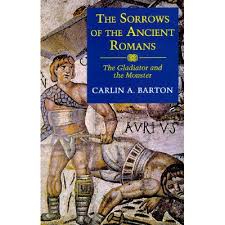


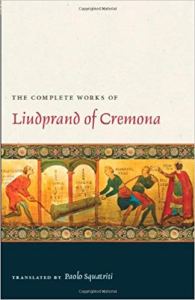


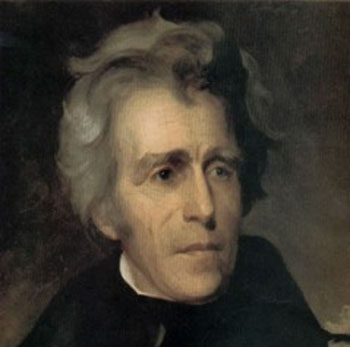



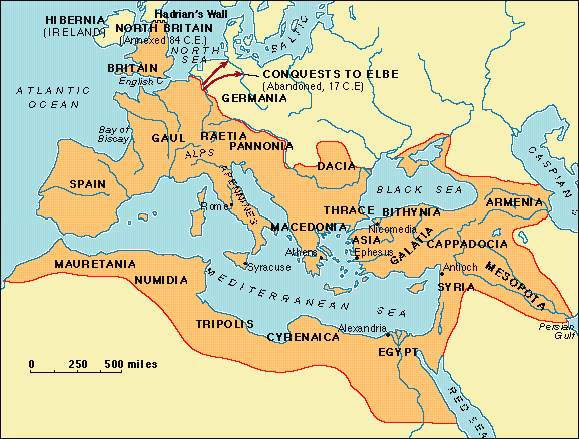
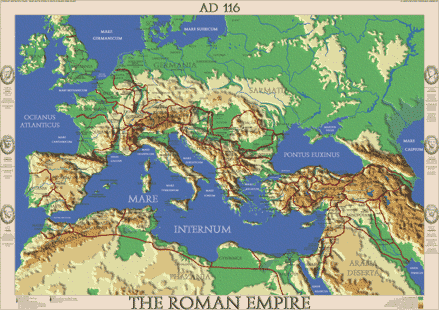





 A Stick in the Mud