This week we continued our look at the formation of the Empire under Augustus Caesar. His leadership gave Rome peace and stability, but this came at a price. Augustus solved some of the decayed Republic, but his solution created other problems.
Decades of civil war faced Rome with the need for change. Rome’s society, however, was built on tradition. Augustus carried himself as a leader in the old tradition, but in reality eroded all of the old checks and balances of the Republic. He was much more careful than his uncle Julius, who made no secret of his power. In reality, however, Augustus had just as much, if not more power than Julius ever did. He certainly understood the power inherent in manipulating his image. . .
The problem may not have been the power itself, but the fact that it was done more or less secretly, and so did not encourage Rome to face reality. We talked of how Rome was in a sense, ‘pretending’ — living in a fantasy land that told them that Rome was still Rome, after all. This pretending, however, can be dangerous for a civilization, because the tension between your imagination and reality can grow over time.
In their “Res Getae” assignment the students got an idea of the subtlety with which Augustus worked. He saw what happened to his uncle Julius, and modified his actions accordingly. He never (or hardly ever) took power, he waited to receive it from others. He rejected the title of Dictator which would have brought odium upon himself, but he took bits and pieces of other offices that added up to total control in the end, a kind of “majority ownership” of Rome.
Next week we will see that one problem Augustus faced was the German frontier along the Rhine and Danube river. He was right to recognize its weaknesses. This map shows the wedge into Roman territory created by the meeting of the Rhine and Danube river.
Do rivers make for good frontiers? We might think so, for rivers are not easy for armies to cross. But when compared with mountains or deserts we see that rivers can be quite porous. Neither side, after all, has a barrier to using the river on their side of territory. Furthermore, most people use rivers for fishing, travel, and commerce. Thus, rivers often act to bring people together rather than separate them. The MD/D.C./No. VA area is a good example of this. Augustus needed a new frontier, a more secure border.
Prudence might dictate falling back to something more secure. But Augustus built his power in part on the fantasy that Rome had not changed. Rome never falls back! He tried to push forward further into Germany to the more advantageous Elbe/Danube frontier, seen here below. . .
and picked the arrogant Varus to command. Varus fell for Arminius’s trap and led his army to disaster at the Battle of Tuetonburg Forest. We will discuss how Augustus was right about his frontier being vulnerable, but was he right in his solution?
We shall see that their are limits to what the military can accomplish when the situation requires a political solution While Rome would win battles against Germans in the future, they could never end their power of resistance.
Next week we will do an activity where I want the students to rethink the Roman frontier. In the ideal world Rome could have pulled back a great deal. But of course that would completely ignore political realities. If he withdrew in one place, would he have to advance in another? If so, where? I hope the students enjoyed this change of pace and the chance to view the problem in a different way.
Here is a map of the Empire from a topographical perspective:
Where could Rome get an ‘easy’ victory to allow them to withdraw on the German border? Where should troops be concentrated?
When we wrap up Augustus we will discuss various aspects of his reign. He ended a century of civil war and brought peace throughout the Roman empire. Under his leadership the economy and culture of Rome revived. The system he established did give Rome stability long after he departed, and as far as masterful politicians go, I would rank Augustus as one of the all-time greats. On the other hand, while Augustus was very effective, he had to curtail civil liberties to achieve his goals. He never sought to make Rome face reality, to take them from their current perception of reality at point ‘A’ and bring them to the necessary point ‘B.’ In this way, Augustus lacked true leadership greatness.
After Augustus we will see how the system he established fared under different emperors. Tiberius and Caligula will get our attention next week.
It’s always exciting to begin a new year, and I have enjoyed the students and our interactions. I trust that we will have a great year together.
We begin the year resuming the story of Rome in 44 B.C., after the death of Julius Caesar. I am aware that for new students, it is not easy to pick up the story in the middle. We have reviewed the context of Caesar’s assassination, but I would urge all students (and parents if you wish) to read this and this — both will hopefully help provide some additional insight into the background from Rome’s transition from Republic to Empire. I would also suggest a review the Five Elements of Civilization that formed the backbone of the 8th Grade Ancient History class. If anyone wishes to review that (especially new students), look here.
To get new students up to speed, we went quickly through the first two of Rome’s three stages. The first stage was the monarchy phase (753-508 B.C.), the second the Republic (508-44 B.C.). Whatever their differences, both phases showed forth Rome’s main characteristics:
An emphasis on tradition. Rome looked back to the past for guidance, not forward to the future. They valued stability over change.
Rome began as an agrarian oriented society, which usually goes hand-in-hand with tradition oriented societies. Though Rome began to develop a wealthy merchant class around 100 B.C., the ruling elite always thought of themselves as farmers.
In the Republic phase, they shared and divided power amongst different people and institutions, though usually monopolized by the nobility. They feared that a concentration of power, especially in executive offices, would bring about a tyrannical government.
We spent this week reviewing the decline of the Roman Republic, setting the stage for our look at the Roman Empire and Augustus next week. I wanted to with a few main themes:
1. Don’t Pretend
We reviewed the basics of the structure of the Republic, and how this helped form Rome’s identity, along with their self-image. In Rome’s eyes, they were, and had always been, a nation of self reliant farmers. But Rome changed over time, and because of Rome’s strong (at least stated) belief in tradition, Rome never felt the need to change. When they did change, they usually pretended that they were, in fact, not changing at all.
Next week we will discuss how potentially dangerous this attitude can be. For example, a couple years ago during the summer I got a minor shoulder injury at the beach. Thinking myself to be 24 instead of the 38 I was at the time, after a few days I used the muscles much too soon and tweaked it all over again. I need to realize that things take longer to heal at 38 than they did at 24, however sad a realization this might be! This is all the more true for me at 41. If I were to continue to pretend to be 24 the damage and bodily dysfunction would grow worse. Imagine if a whole civilization did this, and what consequences would be in store for people that did so.
As the Republic collapsed, the distance between Rome’s self-image and reality grew wider and wider. Will Augustus help solve the problem, or will he exacerbate it?
2. The Power and Vulnerability of Tradition
Most of us have probably experienced the positive power of tradition. It provides structure, and sometimes comfort to our lives. Many families have holiday traditions that add depth and meaning to the occasion. Tradition seems to have a magical power of sorts — we do something because that’s what we do, and it works. In this way, tradition can be stronger than law. It has a power all its own.
But the spell of tradition can be easily broken. There is nothing, for example, to stop you from violating tradition. Once you stop, the genie cannot be put back in the bottle. Tradition’s power can be broken in a moment, whereas law takes much longer to whittle away. Rome prided itself on being guided by the past, of “not departing from the ways of their fathers.” Yet a century of civil war eroded most, if not all of those “old ways.”
Did they perceive this truth? Can a tradition oriented society make necessary adaptations? It’s safe to say that nearly every civilization would likely collapse after so much inner conflict and turmoil. Rome will survive under Augustus, but they will pay a steep price to do so, as we shall see.
Next week we will look at some of the dilemmas facing Augustus as he ruled Rome, and see how the dynamic of ‘pretending’ likely pushed him into the disastrous Battle of Tuetonborg Forest. We will also ask the question, “Should you ever trade liberty for security?”
The Bill of Rights occupies a cherished place within American life and jurisprudence, so it comes as a surprise to many (as it did to me back in high school) that the founders added the Bill of Rights only reluctantly to get the Constitution ratified by enough states. It seems that the framers found such cherished guarantees as essentially unnecessary, and so adding them could only create confusion.
But they did add them, likely thinking that, “We think such things are not needed. Obviously, the federal government has no power to regulate speech, assembly, etc. But if you would like it made crystal-clear to alleviate anxiety, fine–here you go.”
The idea of “freedom of religion” in America comes in part from our history and our ideology. In a legal sense, it arises from the 1st Amendment, which reads,
Congress shall make no law respecting an establishment of religion, or prohibiting the free exercise thereof.
What once seemed solid now melts into the ether, as many today question proper limits for freedom of speech and religion. The Religious Freedom Restoration Act (RFRA) passed through Congress in near unanimous fashion back in 1993 (97-3 in the Senate) but might not pass through Congress today. No one has yet made a direct attack against freedom of religion, but recent controversies about sexuality have led to many now sniping at the edges.
As a conservative of some kind, part of me feels the obligation to defend religious liberty and our past traditions. But Steven K. Smith’s book, Foreordained Failure: The Quest for a Principle of Religious Freedom made me rethink everything. His 2018 book Pagans and Christians in the Cityis bar-none the best book on the legal problem of religion and sexual ethics. This work details how legally and logically, the idea of everyone having complete “freedom of religion” was never attainable and should not be attempted. What I find most impressive is that Smith saw our modern problem coming back in 1993 when he wrote Foreordained Failure, a time when it seemed when America had re-enshrined religious liberty for all time with RFRA. Reading Smith is akin to cold water on your face in the morning–startling, but in the end, you draw a breath and see more clearly.
Onto Smith’s argument . . .
First, we should not see the Establishment Clause as an attempt to formulate a grand principle that could be used to adjudicate the future of the United States. Great differences existed among the states that ratified the Constitution, for example:
Relatively liberal Pennsylvania had blasphemy laws on the books well into the 19th century.
In New York, though they had no explicit laws, we find prosecutions for blasphemy into the 19th century as well.
Many states had Sabbath observance laws, the range of which differed widely. Virginia’s law (proposed by Madison the same day he proposed a religious freedom bill) prohibited disruption of services and unnecessary labor on Sundays. Many New England states went much further.
Many objected to these laws–John Adams thought blasphemy proscriptions inappropriate, for example. Still, while some questioned the laws’ morality or efficacy, none challenged the state’s legal right to have such laws.
The Establishment Clause could never have proclaimed a tight-knit principle about religion for the country because no national consensus existed. Rather, it proclaimed what everyone more or less agreed with–that the federal government could not make laws respecting religion, however much the states could do so.
Even the intellectual founders of the Liberal Order cannot accurately guide us. Smith looks at John Locke, whose A Letter Concerning Toleration outlines much of the modern ideology concerning religious freedom. Locke writes,
The care of souls cannot belong to a civil magistrate, because his power consists in outward force: but true and saving religion consists in inward persuasion of mind, without which nothing can be acceptable to God. And such is the nature of the understanding, that it cannot be compelled to the belief of anything by force.
In this sense, Locke’s influence shines clearly–the government cannot regulate religion because it has no power to do so, and whatever power it hopes to exercise will have no real effect anyway. Church and commonwealth are “perfectly distinct, infinitely different from one another.”
To some this could seem like the absolute principle we need for modern times, but Locke also seemingly contradicts himself. For one, he admits that morality comes under the purview of the state, and that morality and religion share beds. Thus, Locke will not tolerate atheists, because their denial of the existence of God undermines public faith and morality, and he denies toleration to Moslems, whose potential loyalty to foreign sultans make them suspect.
The second dilemma . . . Locke’s theory of toleration depends on a view of religion not shared by many religious people (Smith impresses me again and again in this book by catching what many often miss). Locke assumes that:
Saving faith is a purely voluntary act
The church’s only business is that of ‘saving souls.’
He has no concept of the importance of ritual or outward observance or “show.”
For Locke, truth is where we arrive through independent and careful consideration of evidence, not through our communities, our rituals, etc. These inner beliefs can resist any outside coercion.
Even many secular Americans today would question at least one of these premises–probably #2. Most would criticize a church that sought to have no broader impact on the community. In America’s history we have numerous examples of churches seeking political and social goals that many would approve of, such as the Social Gospel movement in the early 20th century, and the support given to the Civil Rights movement by many churches in the 1960’s. Smith writes,
The object of this discussion is not to determine whether either Locke’s premises or conclusion are sound or not. The point is that Locke’s account of toleration is dependent upon background beliefs about religion, government, society, and human psychology [that many will not agree with].
Whatever practices and precedents we set, we will have to favor a particular set of assumptions. We will have to discriminate, in a sense, as every law discriminates by declaring some things ok and some things not. The problem is that we
Believe that we are not discriminating, and that we can arrive a place of “neutrality” where all can agree, and we
Believe that we can find a universal principle to guide us in all circumstances
Smith thinks otherwise. At least in the 18th-19th centuries we left religion to the particular variances of the states, and so avoided our modern problem.
“Religious freedom,” then, will inevitably contain high levels of relativity.
Smith gives an example of a community with four hypothetically different perspectives:
Religious Voluntarists (traditional Baptists, non-denominationalists, etc.)
Religious Behaviorists (Catholics, Orthodox, some Lutherans and Presbyterians, perhaps Jews and Moslems as well)
Secular Optimists–those in favor of the idea of public good and collective action (progressives?)
Secular Pessimists–those opposed to collective action and the concept of public goods (libertarians).
Imagine a man named John wants to marry 3 wives, believing sincerely that this will aid in the salvation of his soul, and that of his family.
The religious voluntarist would grudgingly support his claim. Nothing should stand between a man and his conscience. The religious behaviorist would deny it–we cannot allow people to willfully harm their souls in such an overtly blatant fashion. The secular optimist might also deny it, based on a belief that polygamy hurts women, but the secular pessimist would likely allow it out of fear of too much state power.
Whatever the decision about John’s desire, some kind of religious belief must be preferred, and others discriminated against. We cannot avoid it, as it is the very essence of law itself to “discriminate.”
As an example, Smith takes the case of Epperson v. Arkansas, which overturned a law which forbade the teaching of evolution in public schools. The court understood that the law had at its root religious objections to evolution, but “the state may not adopt programs which aid or oppose any religion. This prohibition is absolute.” Smith finds the Court’s (basically unanimous) line of reasoning faulty.
First, it creates a syllogistic reasoning that could favor either side. If we cannot aid or oppose any religion, then the law in place aids some religious believers and opposes others. But the same happens if you strike down the law. Either way we must “aid” or “oppose” certain beliefs.
Second, those that favored banning evolution from schools did so not because six day creation was a religious idea, but because they thought six day creation true and evolution false. Many other religious ideas lend support to evolutionary theory. The plaintiffs had no interest in generically “religious” teaching, but in “true” teaching.
Smith pushes against this false idea of neutrality with a quick examination of Grove v. Mead School District, in which the plaintiff objected to the book The Learning Tree in her daughter’s public school curriculum along religious grounds. Judge Canby sided with Mead. He admitted that The Learning Tree challenges certain religious dogmas. But he took pains to point out that a variety of Christian thinkers, among them Paul Tillich, Hans Kung, and Karl Barth, all argue that “honest, and even agonizing doubt, is not incompatible with Christian theism.”
Whatever one thinks of the above quote, those who object to The Learning Tree on religious grounds would likely not respect Tillich and Kung as authorities on the question. Again, the issue is truth, not religion. Grove felt that the inclusion of the book was wrong, not anti-religious. Grove might not have minded a book her daughter had to read that criticized Buddhism or Greek paganism. Judge Canby favored one religion over another–and would have done so no matter how he ruled.
Smith also dismantles the idea of a “common denominator,” a frequent and comfortable refuge for the centrist American. The argument runs, “Some favor religion ‘X,’ some religion ‘Y,’ some favor no religion at all. But we can base jurisprudence on what all sides have “in common.” Smith writes,
In more familiar contexts we would immediately spot the common denominator strategy as fraudulent. Suppose Dad and his daughter have a disagreement about dinner. Daughter proposes: “Let’s just have desert.” Dad suggests it would be better to have a full meal . . . then desert. Daughter reponds: “Dad, we have some disagreements. But there is something we both agree on; we both want desert. Clearly . . . the “neutral” solution is to accept what we agree on. So serve up the desert.”
Dad is not likely to be taken in by this ploy.
Again, as in other examples cited here, for both daughter and Dad, the issue is not desert itself, but the meaning of desert. For the daughter, desert is dinner. For Dad, desert has no meaning without dinner. Smith quotes Michael McConnell, who writes,
If the public school day and all its teaching is strictly secular, the child is likely to learn the lesson that religion is irrelevant to the significant things of this world, or at least that the spiritual realm is radically distinct and separate from the temporal. However intended, that is a lesson about religion. [That curriculum] is not “neutral.”
Smith asks his readers to dismantle false ideas about freedom and neutrality. Much like Patrick Deneen’s Why Liberalism Failed, he has a magnificent diagnosis of the problem. Like Deneen as well, he has no particular path forward. Liberalism–love it or not–we can’t really leave it. We have to make the best of it.
In 1993 those that disagreed with Smith could look around and see the ground holding in a general sense. Now, our religious divisions seem much more obvious. “Secularism,” as Smith points out, will not fix the problem, but probably just deepen the religious divide because it too picks a side. It appears, however, that we have gone through different dominant religions, and need to accept that at certain times, different religions take center stage and receive preference.
We might see it this way:
1776-1846 — a frontier, democratized, individualistic Protestantism
1846-1918 — a more universalized/nationalized Protestantism
1918-68 — A civic faith in work, nation, and gain
1968-2008 — Democracy as faith in self-discovery and self-expression
2008-? — Something else that has yet to be decided. Who can say, but also –who can deny we are in the midst of another religious upheaval and redefinition?
This is a rather lame attempt to trace our religious history, but I might prefer open recognition of our particular religious faith over continual confusion. As always, religious dissenters will have protections and freedom of conscience and worship. This is a great thing about America. The “losers” need not lose everything. But they will lose something, and we should be prepared.
Dave
*Writing as someone who is Orthodox, reading Locke and other Enlightenment thinkers, it now makes perfect sense to me why early America had a great suspicion of Catholics as detrimental to democracy. They–and the Orthodox–both believe that we know truth not primarily though independent and abstract investigation, but through community, tradition, participation, and ritual–in addition to some notion of “faith,” of course. As Mark Noll wrote, American democratic practice seeks to reduce truth to simple abstract propositions. Our beliefs about liberty eschew tradition and hierarchy, both crucial to Catholic & Orthodox practice.
Catholics, Orthodox, and others like them can “shoehorn” their beliefs and practice into democratic society, but they may not find it naturally compatible with their worldview.
You will notice the dated references from 2019 to the Covington kids caught on film at pro-life protest. I repost this in conjunction with the start of our American History class.
***************
I did not grow up watching a lot of TV, as my parents were (thankfully) on the stricter side of things in that regard. Yet, like most everyone else, I watched what I could when they were not around. Almost anything would do when these opportunities struck, and I distinctly remember even watching a few scattered episodes of Fantasy Island. Some of you will remember this show, in which Ricardo Montalban presided over an island resort of sorts, where people would come for vacations. But inevitably, guests would have some kind of unreal and usually traumatic experience, whereby certain unknown issues in their lives would attain resolution. The guests would leave happy, Montalban smiling benignly as they left.
Again, I watched this show even though I never particularly enjoyed it (it was on tv, and that was enough). What’s more, I could never grasp its basic premise or understand what was happening. Were the experiences of the guests real or not? They seemed unreal, but then if unreal, why did people feel so satisfied at the end? How could the island produce just what was needed for each guest (The Lost series, after an intriguing start, definitely borrowed way too much from Fantasy Island in its later seasons)? I remember no explanation, just that, “it had all worked out” somehow in a package that always seemed too neat and tidy
Again, the aggravations I had with the show didn’t prevent me from watching. In my defense, how can one look away from Ricardo Montalblan (still the best Star Trek villain to date)?
Much has been said about the dust-up over the brief video clips from the Pro-Life March involving the “clash” between Catholic high-school students and other protestors. I will say little here, except that
I was glad to see some who made ridiculous and ill-founded statements retract their comments when new, extended video evidence came to light. I wish I saw far more laments that thousands of people rushed to extreme judgment of a 17-year-old after seeing 1 minute of video–in other words, the very exercise of commenting on Twitter “in the moment” is desperately fraught with peril. It wasn’t just that people got it wrong, but that no one should have commented in the first place.*
I basically agree with David Brooks, who argued that 1) this scary and tribal rush to judgment happens on both sides** (this time the left was at fault) , and 2) the problem we have is also a byproduct a new technology (phones and social media) that we must understand more fully and use more wisely.
But as much as I appreciated Brooks’ wisdom, I think he misses something deeper and more fundamental. No one questions the impact of smart phones on how we interact with each other and the world. We should remember, however, that inventions do not simply randomly drop from the sky. They emerge within specific cultural contexts. While the phone was certainly not fated to arise in America, it makes perfect sense that it did. Apple marketed its products with the letter “i” in front, itunes, the ipod, the iMac, and of course, the iphone. Apple wanted one to think of these tools as a way to radically personalize our worlds, which fits within our cultural and political notions of individualism. It’s no surprise that their products made them billions of dollars. They did not create the need for radical personalization of our lives, they tapped into what already existed and helped us expand the horizons of our collective felt need.
I agree that we need to work as a society to understand the technologies we create, but that is just another way of saying we need to understand ourselves.
Harold Bloom’s The American Religion attempts to do just this. He argues that, as diverse as we are religiously, every culture must have some unifying belief, even if this belief remains below the level of consciousness. Bloom states that America is in fact a gnostic nation and not a Christian one, and he defines gnosticism as:
A belief that the physical world is essentially evil, and the “spiritual” is good.
That all people have a “divine spark” within them covered over by experience, culture, history, and materiality (the “all people” part of this is our particular democratization of what was an elitist religion in the ancient world).
We must find a way to liberate our true selves, this “divine spark,” from its constraints. Culture, tradition, history, etc. often stand as enemies in this effort.
Bloom postulates that this faith lies underneath other professed faiths, be they agnostic, Baptist, Jewish, or Mormon. It has invaded and colonized our institutional religions and our overall mindset. He finds it particular present in Southern Baptists of his era, but today he would likely look to the various mega-churches, which operate on the idea that Sundays should be friendly, relatable, accessible, and above all, not “boring.” Ralph Waldo Emerson no doubt helped found our particular version of gnostic faith, writing in 1838 that,
Jesus Christ belonged to the true race of prophets. He saw with open eye the mystery of the soul. Drawn by its severe harmony, ravished with its beauty, he lived in it . . . . Alone in history he estimated the greatness of man. One man was true to what is in you and me. . . . He spoke of miracles, for he felt that man’s life was a miracle, and all that man doth, and he knew that this miracle shines as the character ascends.
1838 Divinity School Address
So too William James wrote that
Religion, as I ask you take it, shall mean for us the feelings, acts, and experiences of individual men in their solitude, so far as they stand in relation to whatever they may consider the divine. . . . as I have already said, the immediate personal experiences the immediate personal experiences will amply fill our time, and we shall hardly consider theology or ecclesiasticism at all.
“The Variety of Religious Experience, 1902
We could easily sandwich Walt Whitman’s Song of Myself in between these two thinkers for the trifecta of the prophets of non-contextualized, disembodied, American hyper-individualism. This kind of individualism has as its mission liberation from other groups other entities that would seek to mold, shape, and define. And, as we look at the crumbling of institutional churches, our lack of respect for governmental instiutions, the crisis at many universities, etc. we must declare that the individualism of Emerson and Whitman has triumphed almost completely.^
I can think of few things more compatible with this faith than combining Twitter and iphones. We can both memorialize our lives (which are of course special and worthy of documentation) and express our inmost thoughts to the world at any time. Conventions of privacy, or politeness, you say? Sorry, the god of individualism is a jealous god and will brook no rivals for his throne. Do we contradict oursevles and treat others as we would rather not be treated? Well, we are large, to paraphrase Whitman, and contain multitudes. We believe firmly that our souls should have the right to break free at all times.
Thus, if Bloom is correct, if we want to avoid such miscarriages of justice in the future, we may need to do much more than get a better understanding of technology. Brooks is wrong. No quick and mysterious sitcom-like fix is in sight. We need a new religion to avoid such disasters in the future. Our nation, relatively isolated as it is, is still not an island. And, double alas, Ricardo Montalblan is not here to save us.
Dave
*I know that we need journalism, public records of public events, etc., but I will go one step farther. I don’t know why anyone was filming the students in the first place. I know this happens all the time, but it seems to me that you should go to a protest march to protest, not film others protesting. If you want to counter-protest, do so, but don’t go to film others counter-protesting. I agree with Jonathan Pageau, who argued that our incessant desire to mediate our experience through screens fits into the kind of gnosticism Bloom describes. The screen inevitably creates an abstraction, a disconnect between ourselves and reality. He writes,
It is only in the 17th century that men framed their vision with metal and glass, projecting their mind out into an artificially augmented space. Men always had artificial spaces, painting, sculpture, maps, but the telescope and microscope are self-effacing artifices, they attempt to replace the eye, to convince us that they are not artificial but are more real than the eye. It is not only the physical gesture of looking at the world through a machine that demonstrates the radical change, though this is symbolic enough, but it is the very fact that people would do that and come to the conclusion that what they saw through these machines was truer than how they experienced the world without them.
from his “Most of the Time the World is Flat,” a post for the Orthodox Arts Journal
**I am basically conservative and run mostly in conservative circles. So, while I feel that it is mostly the left that mobs people for now for breathing too loudly through their nose, I should say that the right engages in it as well. I remember some years ago glumly sitting through a presentation where a commentator dissected and destroyed the whole personality of Bill Clinton based on 6 seconds of a video clip played in slow-motion.
^Patrick Deneen has related that when he taught at Princeton, an important study came out that on the Amish that showed that more than 90% of all those who experience “rumspringa” (when as later teens they leave the community to experience the world) return back to their communities. Deneen was taken aback by how much this bothered his colleagues, who could not conceive of living a life bound by tradition and communal standards. For many of our elite Princteton dons, such a life could only be termed as oppression, and some went so far as to suggest that they should be liberated from this oppression.
This, I’m sure, backs up Bloom’s thesis all the more.
Nothing quite says “hip” like a corporate cruise ship. For those like myself whose musical tastes in the 1980’s went towards the progressive rock of the 70’s, well, one could punch no faster ticket to the top of the high school social scene than to wear a shirt from Yes’ “Tales of Topographic Oceans” tour. What if one combined these Wonder-Twin powers and had a cruise dedicated to all of the bands that broke up 30 years ago? What if one could combine a non-stop buffet with non-stop mellotrons and Moogs?
Such is the starting premise for Dave Weigel’s amusing The Show that Never Ends: The Rise and Fall of Prog Rock. Such a cruise actually happened. Weigel booked his passage, and started interviewing. His book quickly gets into the history of various bands and the genre as a whole. Weigel writes as a fan and as a journalist, so he gives the reader many nuggets of the brilliance and pretentious stupidity of most every band featured.*
The stories of King Crimson, Yes, Genesis, ELP (the bands Weigel focuses on) have their particularities of course, but the similarities of their narrative arc struck me the most. These similarities manifest themselves despite the significant differences in the music of the groups above. Basically their stories boil down to
Band creates a brilliant, groundbreaking sound that wins them critical praise and popularity.
Band then begins shortly thereafter to experience significant interpersonal tension, and often, radical turnover in its members.
Bands then get second lives of sorts by completely embracing 80’s pop conventions, entirely altering their sound (King Crimson avoided this final step probably because they had decisively broken up by the time the 80’s came).
I am not saying that any of this is “wrong,” per se. Culture changes, people change, I get it. But the changes were very stark, rapid, and essentially uniform.
Yes goes from Tales of Topographic Oceans to this.
Rush opens their Hemispheres album in 1978 with an 18 minute suite (about the conflict between reason and emotion, with the section between 1:58-2:45 among their very best vignettes), and then four years later this is their biggest hit.
An argument about whether such changes were good, bad, or indifferent has merit, but the full abandonment of one ethos for another is notable in itself.
Genesis combined significant musical change and strong commercial success in both the progressive and pop incarnations more than any other band. I had no real knowledge of their output in the 1970’s before this book. In the 1970’s Phil Collins’ drumming is magnificent–inventive, swirling, yet powerful as well, as he demonstrates on “Down and Out” from 1978.
Even in 1980 Genesis showed strong ties to the progressive scene on their opening track for Duke, “Behind the Lines.”
And, while I am scrupulously avoiding value judgments here, no one can forget the absolute horror of Invisible Touchfrom 1986. Genesis had completely transformed, leaving them with nothing left to declare, except “I Can’t Dance.”**
The band Rush created the catalog I most admired between 1975-1982. I practically made altars to them in high school, and so when I discovered their transition to pop with the mid-late 80’s releases, I had a hard time adjusting and still feel conflicted. I heard interviews from the band explaining the change and they said things like
We don’t want to do 20 minute songs in 17/16 time for the rest of our lives (wise and fair, but does that mean you want to do 4 minute songs in 4/4 time for the rest of your lives?).
We’ve never listened to the critics.
We’ll always be our own entity, marching to our own drummer
We’ll always follow our own muse, and the music we make comes from that muse within.
Ok, fine. Every band says stuff like that. But how is it then, that all these prog bands, while “listening to the muse from within” and being completely “their own individualized creative team,” all end up in the same place, chucking progressive conventions and embracing those of pop? How did it all end so quickly, and all end in the same place?
Some might say that no one could possibly recover from Spinal Tap’s unmasking of the whole progressive genre:
Others suggest that the corporatization of record companies explains the shift. In the “golden age,” bands could be signed and allowed to develop over time. Now, hits had to be churned out more regularly, and this meant the need for more immediately radio friendly material.
We can acknowledge that record companies want to sell records. This explanation might have some merit, but it ignores the fact that bands like Yes, Genesis, ELP, Jethro Tull, and so on all sold millions of albums as progressive acts in the 1970’s. “Selling records” doesn’t answer the question. Others might point to the music press, which gushed over prog rock in 1970 and uniformly despised it by 1978. Of course, all of these bands talked about following their own path, never listening to the critics. But even if they in fact tacked towards the critics, what led the critics to all suddenly change their mind?
Tocqueville has a great deal to say about the individualism in democracies, and how everyone tends think they are their own man, while at the same time following the general mass, but this cannot explain how the general mass decides to like or not like something.
Others might point to shifts in the culture that happen every 10 years or so, that everyone participates in. These shifts happen in politics, fashion, automobile design (i.e., remember SUV’s?) so they happen in music as well. This has the merit of putting music within a larger context. But at the same time, it lacks specificity. And, it still begs the question of why cultures shift so rapidly. How does that happen? If we think of prog rock as a civilization of sorts on a small scale, it would be akin to punk rockers becoming bank clerks within a few years, or if the Greeks chucked their Homer and embraced contemplative mysticism minutes of each other.
If one looks at any ancient or pre-modern civilization, one notices a clear orientation and direction that lasts for hundreds and sometimes thousands of years. Mario Baghos terms this orientation as an “Axis Mundi,” an intersectional point that encompasses death, life on earth, and heaven above. His From the Ancient Near East to Christian Byzantium: Kings, Symbols, and Cities explores the axis mundi’s of Sumeria, Egypt, Babylon, Greece, Rome, and then looks at early Christian Rome and Byzantium.
Baghos’ terms, such as Axis Mundi, and “Ecosystem Agent” need some fleshing out to understand his point. We start with a pyramid text from Pharaoh Pepi I, ca. 2300 B.C.:
Look, Osiris is come as Orion, the lord wine-colored with goods. Live! Live, as the gods have commanded you, live. With Orion in the eastern arm of the sky shall you go down. Sothis is the one who will lead you in the Marsh of Reeds to the perfect paths in the sky.
In this brief vignette we have
What is above (Orion, as god and constellation–likely one and the same in their mind)
What is below (the marsh of reeds), which completes the vertical axis, and
The horizontal axis, with the reference to the path of the sun
The Greeks had similar patterns of thought, as exemplified by their writings on the oracle of Delphi, of which Strabo below is an example.
Now although the greatest share of honor was paid to theis temple because of its oracle, since of all the oracles in the world it had the repute of being the most truthful, yet the position of the place added something. For it is almost in the center of Greece as a whole, and it was also believed to be in the center of the inhabited world, and people called it the navel of the earth. In addition there is the myth, told by Pindar, the the two eagles (though some say crows) which had been set free by Zeus met there, one coming from the west, and the other from the east. There is also a kind of navel to be seen in the temple, and on it are the two likenesses of the birds of the myth.
Again, we have the idea a center point, and an intersection horizontally between east and west. Other stories have the origins of Delphi associated with Apollo becoming a dolphin and swimming to this point, which gives us a vertical axis of above (Apollo) and below (the water and sea creature), as well as a lexical history (dolphin, Delphi).
Rome focused more on earthy practicality than either Egypt or Greece, and this shows in some of their Axis Mundi descriptions. First, with Romulus and the inauguration of the Comititium:
. . . within which were deposited first fruits of all things the use of which sanctioned by custom as good and by nature as necessary; and every man brought a small portion of the soil of his native land and were cast in among the first fruits and mingled with them. They call this trench, as they do the heavens, by the name of “mundus.” Then, with this as the center, they marked out the city in a circle around it.
And–from Plutarch’s life of Numa Pompilius, regarding the Temple of Vesta:
Numa Pompilius built the temple of the Vesta where the perpetual fire was kept, of a circular form, not in imitation of the shape of the earth, believing Vesta to be the earth, but of the entire universe, at the center of which the Pythagoreans place the element of fire, and call it Vesta. And, they hold that the earth is neither motionless nor situated in the center of surrounding space, but that it revolves in a circle around the central fire . . .
Rome’s difference with previous civilizations comes out in that we see less direct reference to what is above (which we see most strongly in Egypt). But we have references to circles in both texts, the shape of eternity, and fire in the second, an “airy” substance (with the Vestal fire being possibly the most important place in Rome). We see a reference to “under the earth” with the trench and the soil as the “earth.” And though Rome undeniably thought more about earth than the heavens, we note the crucial role played by augurs–those who observed birds–in the whole of their society.
Baghos shows that early Christian culture in both and east and west grew with a similar understanding. Many medieval towns formed because of the acts of various saints in a particular place, usually involving their martyrdom. These saints descend in death, then ascend through the power of God, then descend again, by God’s leave, in the form of their relics, of which thousands of examples exist of miracles wrought through them. Churches would then get built on/near their grave, and towns would form around these churches. Each church in each locale formed its own Axis Mundi.
The concept of “Ecosystem Agent” also factors into Baghos’ analysis. An “Ecosystem Agent” functioned in many ancient civilizations as a focal point in the flesh of the civilization’s Axis Mundi. Such people were almost always kings in the ancient world. In Egypt, the Pharaoh literally was a god, in Babylon and elsewhere, the king may not have been divine himself, but functioned as the first touchpoint between the gods and his people. Numerous sources show that at the beginnings of civilizations, kingship had a priestly function, and may have even began specifically as a priestly, not a political office. Greeks of the classical era, and Romans under the Republic may not have shared entirely in this, as they had no kings. But we could say that they spread out their Ecosystem Agent functions to different offices, with the parts making a whole. During the Roman Empire, emperors served in this function, as the words of Munantius Plaucus (87-15 B.C.) show regarding Augustus:
The founding of Rome under Augustus is more honorable [than that of Romulus], inasmuch as sacred places too, and those in which anything is consecrated by augural rites are called “august” (augusta) from the increase (auctus) of dignity . . . as Ennius also shows when he writes, “After by augury august illustrious Rome had been founded.
In other words, Romulus founded the city by observing birds, and that’s great and all, but Augustus remakes Rome with his own person.
As Christian culture developed, we see both continuity and a decisive break from the past. On the one hand, Christ’s kingdom “is not of this world” and we should never try to make it so. On the other, Christ comes not just to save our souls, but our bodies, and all of creation. Everything gets eventually remade because of Him. We, as His servants, need to cooperate with this union of Heaven and Earth that He inaugurated in His Incarnation. Baghos writes,
In relation to the Logos’ transcendent governance of the cosmos, we can discern a distinct difference with ancient cultures. But the model is not rejected, but transformed and at times flipped. For example, many ancients viewed the celestial realm as immutable, and so disturbances in the heavens often heralded death for kings. This paradigm is inverted in Matthew’s gospel, in which the appearance of the strange star announces the birth of the true king.
St. Ignatius of Antioch [early 2nd century] in his Epistle to the Ephesians sees “the Church and Cosmos worshiping symphonically together. The 2nd century apologist St. Clement of Alexandria transfers the mythological metaphor of Orpheus’ songs as reshaping the cosmos, to the “celestial Logos, who sings the foundational principles throughout creation.”
St. Irenaeus [mid 2nd century] relates the content of this teaching to Christ as “the Word, the Maker of All, . . . who has manifested Himself to men, giving His gospel under four aspects, but bound together by one Spirit. He comes to this conclusion after a discussion on why there are four Gospels. Since the number four “is wholly even” and thus represents equality and stability, there can be only four gospels that mirror cosmic stability.
Here Baghos quotes Irenaeus who writes,
Since there are four zones of the world in which we live and four principal winds, while the Church is scattered throughout all the world, and the “pillar and ground” of the Church is Gospel and the spirit of life, it is fitting that she [the Church] should have four pillars, breathing out immortality on every side, and making men alive.
The spiritual and the physical connect and mirror each other at every point. But Christ Himself is the Axis Mundi, and the Ecosystem agent, though saints, kings, priests, and the ordinary man may perform some of those functions, in a limited way, as God’s viceroys.
This historical and theological event had significant implications for culture.
The older pre-Christian model had a great deal of stability, but it bound people to a kind of earthly absolutism. Christianity freed people to be anywhere, but . . . without being nowhere. The difference matters. The early Christian/medieval model meant that since Epiphany at least, the entire cosmos was sacred. But, the union of heaven and earth “needs” the participation, in a sense, of Christ’s body to make it manifest. And, since unity and diversity are present in Godhead Himself, the particularity of places and people should be preserved as well as the unity of all. Hence, the formation of lots of localisms throughout the pre-modern world, the kind of associations that Tocqueville thought essential to maintaining democracy.
The problem came between the years 1400-1700, when people decided that they could dispense with all earthly incarnations of the sacred and just look to “Providence” from above. This in turn gave rise to ideas of universality of rights, of ideas, and so on. I don’t say that this was bad in itself–it helped create America, obviously. But it means that if a thing can be everywhere it can also be nowhere. Culture will be more ubiquitous, and less stable and impactful.
All this means that Prog music, a byproduct of the cultural upheaval of the late 60’s, could not, and perhaps should not have lasted long. It used trappings of classical European culture sometimes with love, but also to subvert. Such is the nature of chaos. It comes and goes.
There are those who say that we moderns have abandoned all of that sacred stuff that ancients and medievals obsessed over, and now have built our civilization around interest, economics, and the like. Some praise such a development. Others declare secularization the source of our woes. Those like myself, however, believe that having a civilization without an Axis Mundi and Ecosystem Agents cannot really happen. We have them, of that I’m sure. As to what or where they are, the answer, my friend, may be blowing in the wind.
Dave
*My favorite such nugget may be the dispute between drummer Bill Bruford and lyricist/frontman Jon Anderson of Yes. Bruford could stand Anderson’s meandering, abstruse lyrics no more. “What is this rubbish, this ‘Total Mass Retain?’ What does it mean? How we can we put this kind of song out?” Anderson retorted that, how could he [Bruford] not understand that, “My lyrics take the form of colors, of pastiches of colors.”
I mean, really.
Bruford ended up leaving the band. The parting seemed somewhat mutual, however.
I played drums growing up so naturally my sympathies go to Bruford on this one. But my wife pointed out that Anderson may have been pompous, by Bruford was being a fool. “You say that Yes has just released what many consider to be the greatest progressive rock album ever, and Bruford is their drummer. He is living the dream, and leaves because he doesn’t understand the lyrics?”
She has a point. Ringo, after all, stuck around after “I am the Walrus.”
Such are the pitfalls of art.
**Yes, I find Invisible Touch impossible to listen to, but I do not think that prog=good, pop=bad. I would take Yes’ 90125 over their Topographic Oceans and Relayer albums every time. Genesis’ “No Reply at All,” and “Just a Job to Do,” stand far above over lots of what they did with Peter Gabriel back in the day.
As to the volatility of the membership of most all of these bands, I speculate that
A great prog song is better than a great pop song in the way that a perfectly made French pastry is better than an ordinary piece of toast with butter.
But . . . while the impact is deeper with the French pastry, the vein is narrower. It requires perfect mixing and perfect timing. Otherwise, the pastry gets ruined.
Toast, on the other hand, is always good more or less. It is easy to make–it has a very broad appeal, but obviously has much less deep penetration.
Prog bands are like French pastries, they have to be perfectly balanced to work well, and thus, can easily go wrong. They are volatile constructions. The only prog band that really made it long-term was Rush, who had a perfectly balanced sound between the three, and very well defined roles for constructing the music (Peart with lyrics, Lee and Lifeson with the music).
Constitution 3.0 collects the thoughts of several prominent legal analysts and technology experts to muse on the future intersection of law, technology, privacy, and the like. Most of the time they speculate on what the future might and should look like. The authors talk of different things but all agree that we will need creative thinking to solve the coming conflicts over access, security, and privacy. The book deals with big picture questions, but I thought it missed an opportunity to discuss where such issues hit most people most often in real time. The most interesting part of the book for me, then, was one example of just this–the case of Stacey Snyder, who lost her position as a student teacher over what amounted to a particular post she made on MySpace.
The very short summary is
While student teaching she posted a picture of herself at a party holding an indeterminate beverage in a cup.
She then posted a caption at the bottom of the page which read “Drunken Pirate.”
Someone got wind of this picture, which eventually made its way to her supervisors at the school.
She then lost her teaching position and, as a result of this, failed to graduate with her teaching degree. She sued for wrongful termination.
Snyder argued that she posted the photo on a private page, and the photo showed nothing illegal. She did not share the photo with students. Her perfectly legal private life should not impact her public duties in any way.
As one might imagine, the issue gets more complicated with more facts revealed (case facts, opinion here). The administration would overlook marginally bad judgment in this case for a good teacher. But Snyder received poor evaluations in some crucial areas throughout her student-teaching, such as classroom management, and being “too familiar with students.” She also, despite warnings from her supervisors, made students aware of her MySpace page, and made thinly veiled criticisms of her teaching supervisors on this page. Finally, despite teaching English, she sometimes wrote incomprehensibly even in the most formal of settings, as some examples submitted by the school district indicated.
Snyder lost her case. From the perspective of the school district, the MySpace post was one factor among many in her dismissal from student-teaching. The judges’ opinion focused primarily on certain technical matters of whether or not the court could compel the school district to award Snyder satisfactory ratings in for her certification. The 1st Amendment issues, however, boiled down to whether or not Snyder should be considered a student while student-teaching, or a public employee, i.e., a teacher. Different protections applied depending, and the judge declared that she functioned as a teacher during the time in question.
Certainly the case is not a slam-dunk, and a judge who focused more on the privacy questions, and saw Snyder primarily functioning as a college student in her role, might have ruled in her favor. For me, it’s not the ruling, but the intersection of what is personal and the public, the technically correct and broader perception, that makes this case important. Constitution 3.0 deals with crucial questions of the role of Congress, the courts, genetic engineering, neuropsychology in interesting ways, but the Snyder case brings many of these issues down to a particular point. More focus on particular questions like this would have made the book more relatable. And, while the book ably points out many of the legal problems heading our way as digital technology expands, it fails to try and understand how such technology changes our view of personhood, and thus of the rights the book discusses.
The book basically seeks to figure out how our current technology and culture should interact with our time-honored principals of the person and privacy. I suggest that possibly that these principles will not survive, not for a lack of will or wisdom, but because these principles arose out of a completely different view of the persons relationship to society than what we have currently evolving.
In a famous interview in the late 1960’s, Marshal McLuhan, he of the famed “the medium is the message,” discussed the impact of literacy and how it shaped society. He said,
Before the invention of the phonetic alphabet, man lived in a world where all the senses were balanced, a closed world of tribal depth and resonance, an oral culture structured by a dominant sense of auditory life. [This] contributed to seamless sense of tribal kinship and interdependence . . . there was little individualism or specialization. Oral cultures act and react simultaneously , whereas the capacity to act without reacting is the special capacity of “literate” man.
McLuhan went on to explain the regimentation of the printing press, and the detachment and regimentation required to read the printed word, created most everything we know of regarding the modern state from ca. 1500-1900 A.D.
Every aspect of mechanical culture was shaped by print technology, but the modern age is the age of electric media, which forge environments and cultures antithetical to the mechanical consumer society derived from print. Print tore man out of his traditional cultural matrix while showing him how to pile individual upon individual into a massive agglomeration of national and industrial power.
. . . The electric media are the telegraph, radio, films, telephone, computer and television, all of which have not only extended a single sense of function as the old mechanical media did, i.e., the wheel as an extension of the foot, print as an extension of the eye–but have enhanced and externalized our entire central nervous system, thus transforming all aspects of our psychic existence.
For McLuhan, the transition began with the invention of the telegraph, the first significant electric media.
When asked if he “relate[d] this identity crisis to the current social unrest and violence in the United States?” he responded,
Yes, and [also] to the booming business psychiatrists are doing. All of our alienation and atomization are reflected in the crumbling of such time-honored social values as the right to privacy and the sanctity of the individual. . . . As man is tribally metamorphosed by electric media, we all become Chicken Littles, scurrying around frantically in search of our former identities
I find McLuhan’s analysis intriguing, though I am sure I fully understand it. Perhaps he overstates his case, but I am convinced that new forms of how we get information will dramatically impact how we view the self. As television attained near ubiquity in American homes, something that McLuhan classifies as a type of transformative electric media, I find it no coincidence that we see the simultaneous rise of the idea of “authenticity”–a belief that our true selves cannot lie within existing structures.
I should state from the start that I hate the idea of authenticity. It has created a great deal of bad literature, bad poetry, and it was the Achilles heel of many of the progressive rock groups I grew up liking.* Charles Taylor’s bookThe Ethics of Authenticitypoints out a lot of good and bad with “authenticity” as a way of being, Whatever we might think about it, when we combine McLuhan’s insights with Taylor’s, we see a fusion of philosophy and technology stirring up trouble in good and bad ways for modern man, creating a crisis in our legal system and our culture.
We can see this crisis more clearly when we compare today to the past. In ye olden days, ones view of self had many more limitations, but also much more clarity and solidity. The vast majority of people had their religion, geography, social connections, and job more or less handed to them at birth. People had limited power but a much more stable and coherent view of the self. Now, through a combination of religious and technological shifts, we have more power to define ourselves, but that power comes with increased fragility of the nature of the self.
Increased power always comes with increased vulnerability. Nuclear energy could cleanly power whole regions, but if something goes badly wrong, all those regions would cease to exist. If one walks across the country, one could conceivably stumble and skin their knee. If you ran instead of walked, you would travel faster, but you could fall and twist your ankle. If you drive, you’ll get there much faster than running, but if something goes substantially wrong with the car you could face serious injury or death. Flying is even faster than the car, but if something goes mildly wrong, death would be the only possible result. If one goes into space, one screw coming slightly loose might kill everyone.
We now have a great deal of power to define ourselves. All that used to be perfectly settled is up for grabs. But with that power will inevitably bring with it a much more fragile and fluid view of the self.
This bifurcation between a society constructed with the values of the printing press, and a highly interactive technology that unconsciously promotes the values of pre-literate societies, helps us understand some of the bizarre tensions we see in society today. On the one hand, we live very private lives. We do not interact with our neighbors, everyone in the family has their own Netflix profile, and so on. On the other, we share many mundane details and thoughts of our lives with the world regularly. The reason why so many get so focused on views and likes is because, like other oral cultures, we need feedback that pre-literate man received instantaneously. At the same time, we want privacy and the right to make our choices irrespective of the values of others. We want maximum power, and naturally got maximum vulnerability to accompany it.
This tension comes out in different ways in almost all of our discussions about rights.** We still grant significant protection to home surveillance, or at least, to surveillance that reveals details inside the home. But outside the home . . . most everything is now “public.” Stores, train stations, neighborhoods—we can be legally watched anywhere one can put a camera. Part of this comes from the security concerns that come with our increased power. Constitution 3.0 explores the relationship between privacy and security quite well. It fails, however, to consider the other dynamics at play. Our idea of what constitutes a person has changed a great deal since the 1780’s. We demand the power to define ourselves freely, but cannot accept the accompanying vulnerabilities such power entails. We use technologies that at least attempt to connect us in the manner of pre-literate societies. But we want none of the communal responsibilities and accountability that comes with the technology. We live between these two poles, and so our concept of rights will fluctuate a great deal until we commit to one direction or the other.
Dave
*I have enjoyed listening to Dave Weigel’s The Show That Never Ends, a history of the progressive rock scene in the late 60′ and 70’s Weigel writes as a fan, but also as the classically detached journalist, so deadpan critic and fanboy get mixed together. Time and time again, these groups would attain some kind of great success with brilliant, creative instrumentation, then the band would fracture over the various members need to express themselves. The music also quickly got burdened with lyrics that were wispy, meandering, non-sensical, but certainly “authentic.” The book’s title alludes also to the fact that the bands started writing near/actual self-parodying songs with 8 movements that went on interminably. Band members talked about how their music “requires a lot of the audience.” What it required ultimately was extreme amounts of patience as the band essentially used the stage as a therapists couch.
Weigel spends a lot of time on Yes, and with good reason. No band put together sections of instrumental brilliance quite like them. And yet, their songs often veered into what I term “elves dancing in the meadow” motifs–gibberish masquerading as poetry with no anchor to reality. Alas! “Authenticity” occasionally made even great bands like Yes unlistenable. Thankfully, bassist Chris Squire kept them in reality when he could. If one wants to see what happened when some of Yes’ old members get together without the anchoring of Squire, and to a lesser extent drummer Alan White, sample the Anderson, Bruford, Wakeman, Howe album. All I can say is, prepare yourself for a full-on “Elves Prancing in the Meadow” experience.
**For example, on the abortion question. I am pro-life. I have read some people who are also pro-life that did not think Dobbs was reasoned correctly, however much they might have liked the outcome. I have not read the opinion myself and withhold judgment. I have also read some pro-choice advocates who believed Roe was built on a legal fiction, and this I have always thought. Other than that, I have no comment on the particular legal issues at stake.
Regardless of one’s position on abortion, I find it amusing and “appropriate” (in a way) that pro-choice advocates are not comfortable with the issue being decided locally and democratically. I say “appropriate” in the sense that it fits with the pattern described above. The great power pro-choice advocates desire to determine their lives cannot be subject to the whims and fluidity of democracy. It requires stronger stuff–they need a universal law to accompany their universal “right.”
Local cultures and traditions are much more stable, though of course, more limited. New York City will not be turning Red anytime soon. The habits and the traditions there would gladly support abortions for decades to come. The rights pro-choice people desire would be more stable there. But New York is not the whole country. Stretching the “right” to an abortion across everywhere means, however, that if a few justices flip one way or the other, well, that’s that. What the court creates, the court can unmake. “If you live by the sword, you will die by the sword.”
I vaguely remember sometime in high school discovering the idea that “technology is neither good or bad in itself, but one can use technology for good or bad ends.” As a young American teen whose greatest life-changing event might have been the switch from cassettes (the sound muddied and faded so quickly!) to CD’s, that idea served as an important corrective.
But years later I distinctly remember coming across Lewis Mumford, who made the striking point that the design and use of the technology shapes us as much as we shape it. We may create a tool, but then immediately afterwards, the relationship turns symbiotic. Using a shovel all day will shape certain muscles more than others. A civilization, for example, that comes to rely on computers will inevitably prioritize certain skills and values over others.
The developed world’s response to COVID made me wonder whether or not Mumford could have gone even further. As many have noted (Paul Kingsnorth, Mary Harrington, etc.), the existence of the internet and other digital technology seemed to drive our policy, i.e., “We can work online and have food delivered, so we should do so.” The tail wagged the dog.
Some intellectual spaces, such as perhaps The World Economic Forum, believe that technology will fix all of our GDP’s everywhere, have yet to learn what I learned at 16. I have few worries about such people, because they seem fundamentally naive and out of touch. Much more interesting, and so potentially much more impactful for good or ill, is the work of someone like Kevin Kelly, as demonstrated by his two books, What Technology Wants, and The Inevitable. Kelly helped cofound Wired magazine and has a wealth of practical experience with technology and the tech world. He spent much of his youth trekking around the world technology free. He has worked extensively with conservation efforts. Kelly has his foot in many worlds, and possesses much more experience and intellect than most anyone who talks about technology. As his recent Wikipedia page picture indicates, this man has the look of a true believer–a prophet or a madman, but certainly no fool.
At the core of Kelly’s thoughts lay a few key principals:
Certain technological advances and changes are ‘inevitable’ precisely because we do not choose them. Rather, technology, which he names in corporately personal terms, “The Technetium,” functions as a living part of our environment.*
Just as we have the task of cooperating with our natural environment, so too we have the task of cooperating with the “technical” environment. But because both Nature and the Technium are alive in like ways, the process of adaptation to technology is not artificial, or anti-human, but natural and organic to human existence over time.
As he writes,
Our concern should not be about whether to embrace [the Technium]. We are beyond embrace; we are already symbiotic with it. At a macro-scale, the technium follows an inevitable progression. Yet at the microscope, volition rules. Our choice is to align ourselves with this direction, to expand choice and possibilities for everyone and everything.
Technology, he argues, wants what all life wants, which means increasing flexibility, opportunity, emergence, complexity, specialization, ubiquity, freedom, beauty, diversity, and yes, sentience. He writes elsewhere that,
Living organisms and ecosystems are characterized by a high degree of indirect collaboration, transparency of function, decentralization, flexibility, redundancy of roles, and natural efficiency; these are all traits that make biology useful to us and reasons why life can sustain its own evolution indefinitely. So the more lifelike we train our technology to be, the more convivial it becomes for us . . .
The fact that the pace of societal adaptation of new technology has dramatically increased over the last century shows us that this process of conviviality and symbiosis has also increased. Kelly want us to know that life works this way, and always has. We can try and invent better technologies as opposed to worse ones. But we cannot avoid a partnership with technology, just as we cannot avoid a partnership with Nature.
Kelly has a variety of observations to demonstrate that the development of new ideas and technology acts independently from material linear causation. Something operates outside of purely singular human volition. Among other things, he notes that successful authors/screenwriters get sued all the time for supposedly stealing ideas from other authors. Investigation then shows that such authors never came across the work of those that sue them.** We see the simultaneous development of blowgun techniques from tribes in the Amazon and in Borneo with no contact whatsoever. We see Luther and Zwingli coming up with very similar theology at the same time without ever interacting with each other. We see similar technological progression across cultures that have no contact. Some of the processes have an explanation in material causation, but others not, such as why rock art precedes sewing development almost uniformly.
Such propositions get at something transcendent, and Kelly quotes Carver Mead on this, who writes,
Moore’s Law is really about belief systems, it’s not a law of physics. After long enough, people talk about it in retrospect, and in retrospect it looks like a curve, a physical law, and people talk about it that way. But if you actually live it, as I am now, then it doesn’t feel like a physical law. It’s really a thing about human activity, it’s about vision, it’s about what you’re allowed to believe.
Kelly obviously recognizes variability. Not everything, or even most developments, end up fully entering the Technium. The question revolves more around the “wanting” of technology. He writes, “The poppy seed wants to become a plant, even though a fair amount of them end up on bagels.”
Kelly writes persuasively and uses a variety of examples and techniques to drive his points home. He avoids claiming that every technology has value. He spent a lot of time among the Amish, and praises them for how they interact with technology. Contrary to typical belief, the Amish have nothing against technology per se. But they put a tremendous amount of energy into monitoring how technology impacts their community. They make distinctions, but they base these distinctions (such as riding in cars, but not owning cars) on careful observation over long periods of time. They are not arbitrary, nor hypocritical. The point he wishes to make I think is–even with the Amish, human interaction with technology will happen, as it has always happened. Let’s work together, like the Amish, to maximize our understanding of technology and how it shapes us, while understanding that it will certainly shape us.
All of this sounds reasonable. I remember railing against email in the late 90’s, but I use it all the time now. I resisted getting a smart phone for many years, but now have one. Kelly would tell me, “There, there, it’s ok. You’re not a bad person, you haven’t betrayed any crucial moral principle. You simply are doing what humanity has always done.”
But I can’t quite accept this. Perhaps email and smart phones have a reasonable place in the world. In the end, however, the totality of Kelly’s book left me cold, though I could not put my finger on why for a few weeks . . . until I read portions of a book on medieval views of memory.
Mary Carruthers’ The Book of Memory: A Study of Memory in Medieval Culture is alas, not one that I could read cover-to-cover. Long stretches of the work delve into very technical matters that I lack the patience or interest to digest. But she makes some of her more general points with great clarity, and charitably illumines a world with different values than our own. In her introduction she cites the reflections of the contemporaries of two acknowledged great geniuses–first Einstein from our time, and then, St. Thomas Aquinas.
The greatness of Einstein lies in his tremendous imagination, in the unbelievable obstinacy with which he pursues problems. Originality is the most important factor in any scientific work. Intuition leads to unexplored regions of thought, though intuition is difficult to explain rationally.
No great scientific achievement happens without wandering in the darkness of error. The more imagination is restricted, the more work moves only along a definite track, which limits new ideas. The ground is safer here, and that means fewer mistakes. No great man is always correct. Einstein’s recent paper might be wrong, and Einstein would still be the greatest of scientists today.
The most amazing aspect of Einstein is that he directs his whole vital force to one object–original thinking. Slowly I came to realize that here his greatness lies. Nothing has the importance of physics. No personal life can match the comprehension of how God created the world. One feels that behind his external calm his brain works without interruption–nothing can stop it.
The clue to Einstein’s role in science lies in his loneliness and aloofness. In this respect he differs from other scientists. He never studied at a famous university–he worked at a patent office. The isolation served as a blessing, since it prevented his thought from wandering into already established channels. This ‘loneliness,’ this refusal to march with the crowds but looking instead to his own path, is the most essential feature of his creations.
Reflections of Leopold Infeld, who worked with Einstein at Princeton
And now, St. Thomas:
Of the brilliance of his intellect and his soundness of judgment, sufficient proof lies in his vast literary output. His memory was extremely rich and retentive: whatever he once read and grasped he never forgot; it was as if knowledge were added to his soul as one might add pages to a book.
Consider, for example, that admirable compilation of patristic commentaries on the four gospels he made for Pope Urban, and for the most part, he dictated from texts that he already had read and committed to memory while staying in various monasteries. Still stronger is the testimony of Reginald [his secretary] and of others who took dictation for him. All declare that he used to dictate to three separate secretaries at once, and occasionally four, on different subjects at the same time, completely from memory. No one could do such a thing without a special grace. Nor did he seem to search for things yet unknown to him. Rather, he simply let his memory pour out its treasures.
He never set himself to study or argue a point, without first having recourse to prayer mingled with tears. When perplexed, he would pause and pray at length, and when returning, he found his thought so clear that it seemed to show him, as in a book, the pages that he needed.
Reflections of Thomas of Celano, friend of Reginald, one of St. Thomas’ principal secretaries
On can glean a great deal from these short few paragraphs. We can start by noticing that the modern world view of genius means breaking from the past, and the older view meant connecting more firmly with it. Moreover, we see that the development of a strong memory for the medievals involved something akin to moral virtue, a “special grace.”
Memory involved reading, among other things. Carruthers shows that for the medievals, reading and memory were not for their own sakes. Rather, like the bee (the medievals viewed bees very highly for a number of reasons), they were to take the raw material of the text and turn into something “sweet,” like honey. This sounds unremarkable, but the medievals put a particularly earthy twist on how they discussed the process of reading. She writes,
The writer [of the Regula Monachorum] speaks of various stomach rumblings, belchings, and fartings that accompany the nightly gathering of monks. But, he continues, as a famous pastor has said, just as smoke drives out bees, so belching caused by indigestion drives away the Holy Spirit [i.e., improper eating, or the taking of things into the body, caused improper means of expelling things from the body].”
But this does not mean that all belches and farts were viewed negatively, per se, as it would be possible to have proper bodily “ex-takes” as you would proper bodily intake. The Regula Monachorum declares,
Wherefore, as the belch bursts forth from the stomach according to the quality of food, and the index of a fart is according to the sweetness and stench of its odor, so the cogitations of the inner man brings forth words, and “from the abundance of the heart the mouth speaks” (Lk. 6:45). The just man, eating, fills his soul. And when he is replete with sacred doctrine, from the good treasury of his memory he brings forth those things which are good.
Carruthers comments,
The notion of Spirit as breath or wind is biblical; modern scholars, accustomed to thinking of this trope as a mere figure of speech, would never make the connection with a belch or fart that the medieval writer did. Modern scholars who think they have observed class rivalries, or a “medieval unconscious” at odds with its piety in the texts that deal with memory work, would do well to consider the pervasive image of monks at prayer as spiritual flatulence. This trope was often intended to provoke laughter and humility, and we should not assume it to be impious.
Just as we might say that our Constitution, for example, functions as a kind of decision-making technology, so also medieval memory techniques functioned as a technology. But what differentiates Kelly from the older understanding is this mixing of the heavenly and the earthly, talked of so starkly by the medievals. Kelly only seems to care for what comes next, and concerns himself more or less only with how we will adapt to the Technium. As to why the medievals thought of memory as a moral quality, I assume that one must gather the past to live rightly in the present. As for the future, well, it has no reality because it has no existence. But the past, while not equal in “reality” to the present, functions differently for us. We can, and must, have a connection to it.
Kelly sees a continuing “loss of body” as humanity’s only possible future. It is “inevitable” that we fly upwards and join with all of the etherealizing tendencies of modern digital technology. Thankfully such a vision can certainly never completely come to pass. Those that want the Metaverse will still need workers to lay cable. The heavens, after all, cannot exist without Atlas holding them up.
Dave
*This post is not the place to discuss the reality of corporate identities and personalities. But John Vervake and Jonathan Pageau do a good job of trying to explain the idea here and here.
**Some of the examples he cites are weird and uncanny, like JK Rowling getting sued for stealing the idea of an author who developed a story about a wizard school, whose hero is named Larry Potter, who has a scar, etc.
History comes to us in many forms. Most historians try and make sense of their time directly, or perhaps try and understand their time through understanding the past. In his diary, Jakob Walter only seeks to relate his own experience. He doesn’t even really attempt to understand his experience in context. He has no comments on Napoleon and his policies, wars, and treaties. His field of vision concerned himself only.
This certainly does not make Walter a selfish man, or even a narrow one automatically. Walter came from Germany, an area conquered by Napoleon probably around 1807. When his army got pressed into Napoleon’s service, his main concern became hoping that he and his brother (also a soldier for Napoleon) would stay alive. He likely cared nothing for Napoleon himself or any grand moral or political scheme Napoleon may have had. It was not his war.
So his narrow focus has no moral overtones necessarily, but this narrow vision of Walter’s writing has occasional parallels in his actions. We know the invasion of Russia made for a hellish retreat for Napoleon’s army. Walter lets us know that even in the initial months of advance into Russia supplies were scanty, at least for the “allied troops” like Walter. This meant foraging, which the Russians made difficult by hiding and burning their own supplies. Walter writes,
If they had voluntarily removed the simple covers [of their storage areas] much of their household furniture would have remained unspoiled. For it was necessary to raise the floors and the beams in order to find anything, and to turn upside down anything that was covered.
Walter may have cared somewhat for Russians, but his argument boils down to, “If only they wouldn’t hide their food we wouldn’t have to destroy their homes to find it.” He doesn’t concern himself at all about the larger picture, only the practical aspects of staying alive. Limiting oneself to purely “practical” concerns will likely have moral consequences.
Most anyone with a vague familiarity of the Russian campaign will know of the terrible retreat. Walter’s details of Napoelon’s withdraw bring out the ghastly nature of his experience. All semblance of unity and order broke down in the quest to stay alive. I remember years ago reading Elie Weisel’s Night, a great book that should be read, but one I never wish to read again. What made Weisel’s experience so tragic and terrible for me was not just the inhumanity of the Nazi’s. Instead, Weisel’s descriptions of how the prisoners often turned on each other for bread or “good” jobs really devastated me. Perhaps, I thought, had the prisoners united against the Nazi’s they could have redeemed the situation to some degree, but in Weisel’s account they rarely, if ever, did this. Obviously the retreat from Russia is not the same thing, yet I was reminded of Night when reading how Napoleon’s army turned on each other, stealing food and horses from their comrades in arms with no hesitations. Hobbes might say that this is what happens to human nature when the veneer of civilization gets stripped away.
While Walter had a narrow vision some larger aspects of Napoleon’s empire reveal themselves. The FrenchRevolution proclaimed “The Rights of Man,” at least in theory. In practice it tended to mean rights for those who agreed with the Revolution’s shifting meaning of what it meant to be French particularly, not human generally. After Robespierre’s execution much of this petered out, and Napoleon helped end it. But though Napoleon was in some ways an ambassador of the French Revolution’s ideals of universal equality, the “French” emphasis made itself evident. Whatever supplies Napoleon could muster from headquarters went first to French troops (especially his Imperial Guard), then to the “Allied” troops. In the Russian campaign, supplies were scarce enough that there was never a “then” at all. The sham flimsiness of Napoleon’s alliance gets indirectly exposed in Walter’s account. That many of the “allies” Napoleon fought with in Russia in 1812 would turn on him in 1813 makes perfect sense.
So perhaps sometimes narrow keyholes can open up a vision of broader vistas.
Those who find themselves ill-disposed towards Napoleon (as I am on balance) should avoid reading the 25 page introduction of his abridged autobiography. With crackling prose Napoleon gives us
An explanation of the success of his siege of Toulon
A concise theory of his rules of war
A demonstration of how Alexander, Hannibal, Caesar Gustavus Adolphus, Frederick the Great, . . . and he himself . . . all followed these rules (he also makes sure to say how he fought in more campaigns and battles than many of those he lists).
An outline of recent French campaigns that failed to adhere to these rules and failed . . . neither of which directly involved him in any way (other generals made the mistakes).
An explanation of Charles XII failed invasion of Russia, told with no irony or self-awareness whatsoever.
A comparison of his wars and the wars of Louis XIV, in which he shows that the Sun-King’s wars did far more damage to France, and had far less legality, than his own campaigns (some estimates place French casualties in the Napoleonic Wars at around 1 million).
Such audacity and restless energy is hard to comprehend and one can’t help but admire it at least on some level. He is the consummate NYC cab driver. If this is the man in exile at the end of his life (when he wrote his memoirs, ca. 1816-17), imagine how many secretaries he drove insane in 1805. His meteoric rise to power makes perfect sense in those first 25 pages. But for those who wish to dislike Napoleon, fear not! Simply read a bit further and one grows weary of such energy, audacity, and his utter and complete moral blindness. You begin to understand not just his ascension to power, but why he alienated almost everyone close to him and why those characteristics would inevitably carry him too far.
Napoleon shows his best side when discussing practical matters of policy. In the beginning of his career at least he showed a keen political sense. He criticism of the Assembly in the days preceding the Terror ring true:
[The Assembly] committed two errors, which might have produced the total ruin of the nation. The first was to establish a Constitution at odds with the experience of all ages, whose mechanism contrived to restrict public power [during a time of uncertainty]. Great as this error was, it was less fragrant and had less deplorable consequences than the second — that or persisting in re-establishing Louis XVI on the throne after his flight to Varennes. It ought to have sent commissioners to Varennes not to bring the king back to Paris, but to clear the way for him to abdicate; to have proclaimed Louis XVII king, and to have created a regency, to a princess of the House of Conde and a regency council composed of principal members of the Assembly.
Later he shows the same clarity in his analysis of the controversy between the Jacobins and Girondins (though also a touch of ruthless practicality):
The factions of the Girondins and the Mountain [Jacobins] were too violent in their mutual animosity. Had they both continued to exist, impediments to the administration of government would have multiplied and France would not have been able to maintain her territory in the face of all Europe. The good of the country required the triumph of one of those parties. . . . Would the result have been the same had it been the Girondin party that gained the day and the Mountain sacrificed? I think not. The mountain party, although checked, would always have possessed great influence, in the popular societies and armies. There was undoubtedly more talented and better men in the Girondin, but the Girondins had more speculative men, less resolute and less decisive.
Though this kind of analysis has its darker side (many worthy Girondins lost their lives unjustly in the Terror), Napoleon at least writes convincingly in these sections. In his campaigns he insisted on a strict unity of command and clear lines of communication at all times. His armies marched with great speed and yet avoided confusion in the ranks. So too, his political analysis and his prose have the same distinguishing marks. He maintains fidelity to his emphasis on practical results and his love of the simplicity of power. He never leaves any doubt as to what he means to say. This is a man soldiers would instinctively respect, a man easy to follow. All such a man would need is an opening, and the French Revolution provided many such openings for Napoleon.
Napoleon has his charms, to be sure, and should not be regarded as a vicious monster. But his ego led him to make almost absurd claims about his career. Even a massively abridged version of his autobiography (in this case, 275 pages as compared to about 1200), even a very sympathetic editor, cannot hide this. Nothing is his fault, and everything has an explanation. The fall of Cairo goes on Kleber’s shoulders, the murder of the Duke of Engheim was England’s fault, and so on, and so on. “I never committed crimes,” he writes.
I reached the summit of greatness by direct paths, without ever having committed an act that morality could reproach. In that respect my rise is unparalleled in history — in order to reign, David destroyed the house of Saul, his benefactor;* Caesar kindled a civil war and overthrew the government of his country; Cromwell caused his master to perish on the scaffold. I was a stranger to the crimes of the Revolution.
We may assume that by “morality” he means “political morality,” and not personal morality, for which he seemingly cared nothing. But even so, what of the death of the Duke of Engheim? His murder irrevocably turned Europe’s aristocracy against him. It turned Tolstoy against him, years later. Even Napoleon’s exceedingly practical Chief of Police, Joseph Fouche, said of the Duke’s execution, “It was worse than a crime. It was a mistake.”**
Explaining away the Russian disaster no doubt called upon all of Napoleon’s skills. He first argues that, “If Moscow had not been burnt [most all agree the French army did not do this], Alexander would have been compelled to make peace.” But he offers no argument as to why, and I at least can’t see why the czar would make peace. Whatever the case, Moscow burned, and a practical man like Napoleon should cease wondering why.
The cold of the Russian winter was “premature,” leading Napoleon to admit that, ok, I “remained in Moscow four days too long.” I believe that this is the only place where Napoleon admits to a mistake. It seems unlikely that the disintegration of an army 1/2 million men strong could rest entirely on this mistake alone. And indeed,
When the army was within two days march of Vilna, and no further dangers threatened it, I conceived that the urgency of affairs required my presence in Paris — only there could I dictate to Prussia and Austria. Had I delayed the passage might have been closed against me. . . . The [Imperial] Guard was then entire and the army contained more than 80,000 combatants . . . The Russian army did not now exceed 50,000 men. [Supplies] abounded at Vilna. Considerable stores of clothing and ammunition had likewise been established. Had I remained with the army . . . it would never have retreated beyond Vilna. . . . It is from this period in particular that the great losses of the campaign may be dated. Nothing was, or could have been more totally unforeseen by me than the senseless conduct adopted at Vilna.
Again, just as in Egypt, he, being a good father, left his children with every opportunity of success. Leave it to his prodigal subordinates to ruin everything.
But still, Napoleon had and has his devotees. You can see the blinding effect of Napoleon’s ego even on the editor of this abridged version of his memoirs, Somerset de Chair. Chair writes regarding Napoleon’s recounting of the Moscow campaign,
Almost all historians have treated the Russian campaign as a unmitigated disaster. Here Napoleon sets the record straight. After defeating Russia at Borodin . . . Napoleon withdrew. He experienced devastating weather conditions, but this does not alter Napoleon’s claim to have achieved what he set out to do. [He sought] to teach Russia a lesson not to interfere in French affairs in the future when his son should become Emperor and to punish the Tsar for opening his ports to Britain. [Napoleon’s] view that he left a defeated and humiliated Russia in his wake is hard to ignore. It was, admittedly, a harassed return . . . it was not as if the French had intended to occupy Russia indefinitely. If Hitler had succeeded [in Russia], where Napoleon did not ever intend to remain, it would have been a very different story.
I think we can agree with Chair that yes, Napoleon was not as bad as Hitler. Score a point for hero-worship if you wish. But to suggest that Napoleon achieved his aims in Russia by preventing Russia from challenging his son and heir is a gross absurdity. His failure in Russia directly led to his first abdication and the impossibility of his son ever succeeding him, and led also to the rise (not humiliation) of Russia an an expansive, imperial power in the 19th century.
Napoleon’s life can be viewed as tragic even if we don’t call him a tragic hero. Many of Napoleon’s top generals abandoned him and defected to the Bourbons. This must have been a bewildering and devastating blow. But I think that such men simply learned from their master that when a situation warrants it, find a way to survive. For Napoleon, even on St. Helena, his memoirs stand as his final battle, his last attempt to conquer. For me at least, his autobiography has a minor appeal as a kind of grand, doomed adventure — like that of Waterloo. And they must fail, that Napoleon might possibly learn humility.***
Dave
*Certainly not true from any glance at 1 Samuel – 1 Kings.
**Some believe that Talleyrand said this instead. Whoever said it, the difference is the same. Both men devoted themselves to Napoleon’s practical morality and they saw the consequences of such an “ill-considered” action.
***Towards the end of the memoirs he blames the allies for violating the Treaty of Fontanblieu and sending him to St. Helena. Again, he is either joking or willfully blind. He tore up that treaty when he escaped from Elba.
Still, there is some evidence at the very end of his life he may have had a genuine religious awakening.
The statistical revolution has transformed how we watch and evaluate baseball, and has made similar inroads into basketball as well. Granted, this has its benefits, but one important downside for all of this is that it ends all of the fun arguments about who is the better player, and so on. With the advent of WAR (wins above replacement player value) we can’t even argue about what is the best statistic to use in player evaluations.
The Roman historian Livy includes a great vignette from the 2nd Punic War between Hannibal and Scipio, with Scipio beginning:
When Africanus asked who, in Hannibal’s opinion, was the greatest general, Hannibal named Alexander… as to whom he would rank second, Hannibal selected Pyrrhus…asking whom Hannibal considered third, he named himself without hesitation. Then Scipio broke into a laugh and said, “What would you say if you had defeated me?
But alas, some of these quips may no longer be possible, thanks to the statistical revolution. A brilliant fellow named Ethan Arsht has used statistics to rank many of the great generals of all-time. He admits that he intends his findings to spark fun debate and not be the final word, but it is impressive all the same. He explains his methodology, and you can check out the full interactive rankings here.
Arsht has many surprises for us, some of which confirm my own thoughts (I have always thought R.E. Lee overrated by most, and Grant underrated by most), some that dramatically challenge them (George McClellan has a higher WAR than Lee–have at it Civil War buffs). But perhaps the starkest shock to my own thoughts is that his model ranks Napoleon Bonaparte as history’s greatest general by a very, very wide margin.
This would surprise no one who lived in the 19th century or perhaps the early 20th. Recently, however, some have challenged the traditional adoration of Napoleon and focused on his debacles in Egypt and Russia, and the fact that he lost in the end. When he started to face reformed and refitted armies, and better leaders, from 1809 onward, his fortunes changed dramatically. My own bias often leans towards challenging prevailing opinion, and I ate this up. But the study has challenged me to reexamine Napoleon and perhaps discover that (horror of horrors) received opinion has always been correct about him.
For my rethinking of Napoleon I turned to Harold Parker’s Three Napoleonic Battles. His premise intrigued me in that he proposed to look at different battles at different points in Napoleon’s career and see what, if anything, changed about his abilities over time. He first shows Napoleon at the peak of his powers against a weak general at the Battle of Friedland. Then, at Aspern-Essling about two years later, his abilities seem to wane as he faces a decent opposing commander within a trickier geography. Finally, we see Napoleon defeated at Waterloo by an excellent opposing commander in Wellington.
Even for those like myself who tend not to like Napoleon, one cannot deny the dash, charm, and incisive brilliance of the man, and all this is on full display at Friedland in June of 1807. At Eylau months previously, Napoleon failed to get a decisive victory over Russia. He got it here.
The battle began and the Russian General Bennigsen noticed a seemingly somewhat isolated French corp commanded by Marshal Lannes. Likely Bennigsen never intended to engage the French, for to do so he would need to cross the river Alle. Still, it looked inviting enough for Bennigsen–he need not engage the whole of the French army, but merely wound it with a quick excursion against a weaker force.
Herein perhaps lies a lesson of leadership: great generals can make great things out of the unexpected, but average to poor leaders need to stay on script to achieve anything at all.
Lannes held remarkably well, and Benningsen, having put his hand to plow, did not want to pull back, assuming that victory was just a few more committed troops away. He pushed more troops over the Alle, but in so doing, put the Russians in a tight spot of having their backs to the river. Time, however, was not on his side. Lannes sent messengers to Napoleon asking him to come with all haste, and if French reinforcements could arrive in time–and the French marched very fast for their day–Russia’s numerical advantage would disappear.*
True to his sanguine spirit and quick mind, Napoleon minded not at all the surprise of the Russian attack, and saw great opportunity in it. He had the knack, too, for creating memorable vignettes of speech, such as the following as he rode hard to the battlefield:
Do you have a good memory?
Passable, sire.
Well, do you know what anniversary is today, June 14?
That of Marengo.
Yes, yes, that of Marengo–and I shall beat the Russians just as a I beat the Austrians.
Below is a map of the field at Friedland
Napoleon arrived on the field of battle, and my impression is that he gave the following orders after perhaps one to two hours of personal reconnaissance of the field.
Marshal Ney will take the right, from Sortlack to Posthenen, and he will bear to the present position of General Oudinot. Marshal Lannes will have the center, which will begin at the left of Marshal Ney from the village of Posthenen to Henrichsdorf.
The grenadiers of Oudinot, which at present form the right of Marshal Lannes, will by slow degrees bear to the left, in order to attract the attention of the enemy to themselves.
The left will be formed by Marshal Motlier, holding Henrichsdorff and the the road to Konigsberg, and and from there extending across the front of the Russian right wing. Marshal Mortier will never advance, the movement is to be made by our right which will pivot on our left.
The cavalry of General Espagne and the dragoons of General Grouchy, joined with the cavalry of the left wing, will maneuver to do the most harm to the enemy when the latter, pressed by the vigorous attack of our right, will find it necessary to retreat.
General Victor and the infantry and cavalry of the Imperial Guard will form the reserve and will be placed in Grunhof, Bothkeim, and behind Posthenen. I shall be with the reserve.
One should always advance by the right, and one should leave the initiative to Marshal Ney, who will await my orders to begin.
From the moment that the right advances on the enemy, all the cannon of the line must double their fire in a useful direction to protect the attack of the wing.
All of Napoleon’s brilliance is here–the energy of the prose, the clarity of the orders, and the strategic overlay of the entire battle are all present. Bennigsen and the Russians fought hard. But seeing Napoleon’s mental command of the situation in the above orders, it surprises us not that he gained a decisive victory and brought (for a time) the Russians in line with his empire as a result.
Parker then forwards to the Battle of Aspern-Essling, where Napoleon faced a better commander a few years later, in a more confusing situation. Here too, the geography was more difficult, and the river (the Danube), more formidable:
By this time Napoleon had occupied Vienna and controlled much of the Austrian empire, but still had not destroyed the Austrian army in the field. The Archduke Charles led the Austrians, and most rate him as a thorough and competent tactician not likely to make mistakes, but lacking in strategic vision. Napoleon sought to destroy the Austrians, but as you can see from the map above, a competent commander could make that difficult given that Napoleon was in enemy territory with problematic geography.
The battle was confusing and lacked the decisive clarity Napoleon so desired. He needed good bridges over the Danube to concentrate his forces in Lobau, but the Danube, and the Austrians, had no intention of making it easy on them. At Friedland Napoleon assumes the air of absolute mastery, but here he pleads with fate rather than commanding it. A sample of some of his orders:
The interruption of the bridge has prevented us from receiving supplies; at 10:00 we ran out of munitions. The enemy perceived this and has done us great damage. In this state of affairs, to repair the bridges, to send us munitions and food, to keep an eye on Vienna, is extremely important. Write to the Prince of Ponte-Corvo . . . that he may draw toward us.
Here we are far from the Napoleon of Friedland, a commander who seems helpless, who needs reinforcements, who has no direct command of the action.
The Austrians were thus able to pound some French detachments for hours with no threat of retaliation due to their lack of ammunition. Many of the French naturally wanted to withdraw. Napoleon had not badly blundered–the field was confusing, and he had been somewhat unlucky with the bridges. While he lacked tactical clarity in the battle’s first stages, he managed to demonstrate his trademark strategic clarity in his response to his men’s request for withdrawal.
“You wish,” he said to [his field marshals] “to recross the Danube! And how? Are not the bridges destroyed? Without that, would we not be united as victors? We can, it is true, have the men and horses cross on boats; but what will become of the artillery? Shall we abandon our wounded? Shall we say thus to the enemy, and to Europe, that the victors today are vanquished? And if the Archduke, more puffed up by our retreat than by his earlier, pretended success, crosses the Danube behind us at Tulln, at Krems, and Lintz . . . if he brings together his different corp . . . where shall we retire? Will it be to the positions I have intrenched on the Traun, on the Inn, or the Lech? . . . . No! we must run as far as the Rhine; for those allies which victory and fortune have given us, an apparent defeat will take from us and even turn against us. We must remain [in the Lobau]. We must threaten an enemy accustomed to fearing us and keep him before us. Before he has made up his mind, before he has begun to act, we will repair the bridges in a manner to defy all accident, the corp will be able to unite and fight on either bank. The army of Italy, followed by that of Lefebvre, will bring us aid. . . . Then we shall be masters of our operations.
It worked. Parker quotes from Marshal Massena, who commented, “That’s true, that’s right! Yes, the Danube alone has conquered us so far, and not the Archduke!” The French managed to turn the tide the next day enough to allow a complete withdrawal in greater safety for the entirety of their army. The battle belonged to the Austrians, but the Archduke–quite capable in a limited tactical situation–failed strategically in the aftermath. They did not follow-up appropriately. Given this breathing space, the French dealt more decisively with the Austrians later at Wagram.
In the quote above, Napoleon showed that
He did not foolishly underrate his opponent the Archduke
He framed the issue in larger strategic terms
He focused on the problems the river had caused, not the Austrians or their own failures.
He summed up their overall strategic situation in Europe honestly and accurately, as it related to their allies.
So, at Aspern-Essling one could say that Napoleon either bit off more than he could chew, or waded into a situation he failed to fully grasp immediately, as he did at Friedland. Still, his energy and sense of the moment remain with him.
For his third battle Parker examines Waterloo. So many have written so much about this battle that neither he or I have much to say about it. What seems clear to almost every observer is
Napoleon’s health had declined markedly and he was no longer the same in the field (though obviously still a very good general).
At Waterloo he faced a top notch opponent in Wellington, who had sound tactical and strategic sense, had defeated the French in Spain, and had superlatively defensive capability.
While Napoleon showed hints of his former self in moments, he showed little of his usual tactical brilliance, relying on frontal assaults against entrenched positions.
Sir Edward Creasy ranked Waterloo as one of the 15 decisive battles of all-time. His account of the battle is worth reading, but his sense of the importance of the battle fails to convince. Napoleon’s own words make this evident. Quoting from his comments at Aspern-Essling again,
. . . for those allies which victory and fortune have given us, an apparent defeat will take from us and even turn against us. We must remain [in the Lobau].
At Aspern-Essling his clarity about his overall grand strategical situation led to his remaining on the field. It was the right call, for he was correct about the nature of his allies. Events with Russia and Austria proved him right. I can appreciate Arsht and Parker for helping me to see Napoleon with new eyes. Napoleon was a brilliant tactician, and an excellent strategist. My push-back to Arsht would be Napoleon’s failure in grand strategy. I suppose no one can do everything. But, Napoleon’s victories never really created anything lasting for France, for it would all go away after a significant defeat, as it did after Russia in 1812, as it did after Waterloo in 1815. But even if he won at Waterloo, he would have faced similar circumstances soon thereafter, and then again, and again.
Not even the best should burden themselves with being perfect, and if they do, maybe this should be held against them.
Dave
*It seems obvious in hindsight that Bennigsen should have withdrawn back across the river when his initial attack failed. There is even the chance that he could have lured the French to counter-attack him, and he would then be in the advantageous position of defending a bridgehead. But the history of human nature shows that this is psychologically very difficult to do–akin to an act of great repentance.
President Reagan garnered political popularity and power in part by his skillful use of political theater and imagery.
But in 1985 even this great master of ritual and belief stumbled a bit with the infamous “Bitburg” affair. A New York Times article read,
It was a day Ronald Reagan had dreaded, even though it was a rite he felt bound to endure. Walking beside Chancellor Kohl amidst the German military graves of the Bitburg cemetery, he looked stiff and uncomfortable, in awkward contrast to his usual ease. While Kohl brushed aside tears, Reagan looked straight ahead, careful not to glance down at the graves less he spy the SS symbols sprinkled across the cemetery lawn. In spite of the West German’s desire to clasp hands over the graves of the war dead, the President’s arms remained resolutely at his side. Earlier in the day, at a hastily arranged ceremony at the Bergen-Belsen concentration camp, Reagan laid a wreath inscribed, “From the People of the United States.” At the cemetery, in a ceremony that he was able to limit to just eight minutes, the wreath bore a somewhat different message: “From the President of the United States.”
Reagan got himself into this mess through a series of awkward political circumstances. First, West Germany had emerged as a crucial ally in the Cold War and Reagan wanted to put a new kind of missile on West German soil. Second, Chancellor Kohl had engaged in a long campaign of rehabilitation for Germany, and argued that the German people were also the victims of the Nazi regime–a statement most found (and I find) partially true but mostly false. Still, things in West Germany had obviously changed since the 1940’s. Still, rehabilitating the Nazi regime . . . ?
Most world leaders balked at any ceremonial recognition. Reagan felt that he needed to acknowledge West Germany’s emerging role and commitment to freedom. Plus, the missiles . . . he needed enough political capital with the West Germans to install them on their soil.
So, he decided to go. He asked that the ceremony be limited in time, pomp, and circumstance. He asked his aides to pick a spot that would incur the least amount of political damage. Somehow, in a gaffe of gaffes, his aides picked a spot that included graves of SS officers! One might understand mourning the ordinary German soldier, but not even Reagan could pull this off. Still, Reagan had pledged–but he then insisted on another visit to the Bergen-Belsen concentration camp in last-ditch attempt to balance things out. Hence, his stiff posture at the Bitburg cemetery, and the different messages on the wreaths.
The amount of controversy these simple and subtle gestures caused shows us that such gestures are not that simple. Rituals reflect deeply held beliefs. More than that, rituals create beliefs that stick in the minds of men.
David Kertzer’s Ritual, Politics, and Power discusses this topic brilliantly. He writes about weighty topics like ritual, psychology, and sociology with a spring in his step, and shares numerous revealing examples across time and space. By far, his is the best book I have seen on the subject.
Some of us of a more rationalistic bent might say that rituals have no meaning in themselves. Perhaps they give outward expression to inward meaning, but certainly cannot create meaning. Meaning and ritual can easily part ways.
But how far could one take the separation of meaning and ritual? Imagine we felt respect for someone but failed to shake their hand. Would we really have this respect? Some might say, “We love each other and we don’t need the state or the church to tell us that we’re married.” But I doubt that such people would refuse the “act of marriage” that creates intimacy in the first place. “That’s ok, it’s the thought that counts” would not work as a defense. Without a physical embodiment of the thought, no evidence of the thought exists. More than that, our thoughts cannot be said to conform to reality without a physical manifestation of them. We know a tree by its fruits.
In the Socratic dialogue Phaedo, Socrates argues about the nature of reality. He comments,
Is their true nature contemplated by means of the body? Is it not rather the case that he who prepares himself most carefully to understand the true essence of each thing that he examines would come nearest to the knowledge of it?” “Would not that man do this most perfectly who approaches each thing, so far as possible, with the reason alone, not introducing sight into his reasoning nor dragging in any of the other senses along with his thinking, but who employs pure, absolute reason in his attempt to search out the pure, absolute essence of things, and who removes himself, so far as possible, from eyes and ears, and, in a word, from his whole body, because he feels that its companionship disturbs the soul and hinders it from attaining truth and wisdom? Is not this the man, Simmias, if anyone, to attain to the knowledge of reality?”
In On the Celestial Hierarchy, St. Dionysius the Areopagite acknowledges that human beings cannot immediately or directly attain to spiritual contemplation. Being flesh and blood, we require visible symbols and embodiments to know truth. Kertzer in turn acknowledges that the president mainly functions as, “the chief symbol maker of the land,” so the minute analysis of Reagan’s gestures should not surprise us.* Kertzer quotes another scholar who similarly wrote, “Most political controversy centers around which myth to apply to a particular problem.”
Kertzer generally ignores religion in his book, but the thin line between religion and politics makes itself perfectly obvious throughout his work–a huge strength in my view. It illumines the fact that our political commitments come very near, or equivalent to, our religious beliefs, consciously or otherwise. One immediately thinks of the vesting of clergy to perform religious rites. We should not be gnostics. You cannot just “think” yourself into being married. Even today we still understand that you need a rite, you need “the act of marriage” to create marriage. We know of the crown, robes, and mitres of kings. But even in our much more casual modern American democracy, we have fixed expectations of how to look presidential. To take one example, presidents give the pens they use to sign laws and treaties to favored confidantes or privileged citizens as “sacred” tokens of leadership.
Some may recall how Jimmy Carter’s popularity fell at least in part due to his failure to manage the symbolic nature of his leadership, either in his dress, relationship with Congress, or his tone of voice when speaking. To take an opposite case, Kertzer shows how Rajiv Ghandi skillfully managed the symbolism of his mother Indira’s funeral to make a political career from nothing to India’s youngest Prime Minister in a matter of months.
We will know that our country’s religion is changing when we see its basic rituals come under fire. Personally I find the singing of our national anthem at sporting events laborious and excessive. But once the toothpaste gets out of the tube . . . things get complicated. Though I find the ritual onerous and misplaced, I acknowledge the power of the rite. Objectors to singing the anthem wisely engage in a symbolic action of their own. The fact that they kneel has much more power than holding a press conference to voice their objections.
The more our country moves away from religion and its overt religious rite and symbolism, the more we will seek it elsewhere, the more important our political symbols will likely become, and the more power their proper execution will confer. Ritual, Politics, and Power makes it clear that we need symbols to make sense of reality, and will have them one way or another.
Dave
*What do our modern presidential elections decide? Given entitlement and defense spending, our federal budget has very little room to maneuver. Our system of government and regular elections keep the president more or less in check. Many believed the world would soon end after Trump’s election, but little of real substance has changed. I think Kertzer would argue that what is most often really at stake is who gets to craft our symbols. Neither candidate proposed any radical policy measure, and when Trump talked about a wall few thought it would actually happen. But . . . it symbolically meant something to talk about it. The election was bitter and contentious because of the symbolic nature of the candidates. They may not have actually done radically different things in office but they represent very different symbols of what America is or should be.
J.E. Lendon’s Song of Wrathhelped me see the early phases of the Peloponnesian War differently. From a modern perspective a stalemate between Athens and Sparta ca. 431-427 B.C. Sparta could not touch Athens’ navy, Athens could not deal with Sparta’s infantry, and so they danced. Lendon pointed out, however, that the culture of honor that permeated Greece allowed each side to declare victory–not victory over their opponents physical ability to wage war, but victory as a kind of pride of place. Confusion about what exactly constituted victory led to an expansion of the conflict.
This confusion, however, would never have happened had Athens not developed a navy, and broadened their source of strength. The growth of the navy and the growth of Athenian democracy went hand in hand. The growth of the navy meant expanding contact with others, and expanding one’s access to the material wealth of others. The growth of democracy meant more participation and involvement from more people in the daily operations of the state. Both involve movements “down the mountain” toward greater potential, but also towards more instability. This greater “diversity” in sense, would naturally bring about more confusion regarding the application of core values.
History does not always proceed in one direction, but the same patterns and connections emerge over time. “Politics flows downstream from culture,” and culture likewise with religion. This would mean, then, that Greece experienced a theological shift before its political shift. Though I believe in the theory, I am on very shaky ground in my knowledge of the history of Greek religion. But, I venture the theory that the beginnings of Athenian drama hearkened to a more “expansive” Greek religion rooted in the ecstatic reveries of Dionysius. Before, I think, they confined such “madness” to oracles located towards the periphery, and not easily accessed by the general population. Now, with the arrival of Dionysius and the dramatic arts, everyone (in theory) could taste something of such states. Significant democratic reform followed shortly thereafter.
Such is my theory, tenuous at best.
But as we move forward in time, towards epochs more easily observed, I think the connections between religion and ultimately, war itself, have more clarity. Gunther Rothenberg’s The Art of Warfare in the Age of Napoleon makes no connections to religion and culture per se, but his thorough detail and clear analysis give one a good foundation to speculate a bit here and there.
Rothenberg starts with the armies that directly preceded the French Revolution. He focuses on the particular facts “on the ground” that influenced how armies functioned. What appears strange to us about the early-mid 18th century armies is how they often sought to avoid battle, and how quickly and easily generals broke off battles when the outcome appeared even slightly in doubt. We see this with in commanders like Prussia’s Duke of Brunswick, who refused to give battle to French Revolutionary forces at Valmy. No one thought this amiss–he retained the trust of Prussia’s king, changed little, and stayed in command until 1806, when Napoleon destroyed his forces at Jena. He was hardly alone.
A variety of factors helped bring about this template:
Muskets of the time had very low accuracy, so inflicting serious harm required massing of men to fire. Of course, one’s opponent would also have to mass men to do likewise. Battles where both sides actually fought hard meant very high casualties, such Torgau (1760, 30% casualties) and Zorndorf (1758, 50% casualties).
Artillery pieces existed, but they were much heavier in 1750 than in 1800. Thus, artillery was much less mobile, meaning that battle had to happen in pre-arranged spots for them to be used, or battle would not happen.
Enlisted men had a difficult life–desertion was common. To limit this, armies moved slowly, in large formations, supported by supply lines. Foraging, after all, could lead to desertion.
We talk of bloated military budgets today, but the dawn of professional armies paired with a pre-modern state apparatus meant that the military routinely took up to 25% of annual revenue, or sometimes as much as 50%.
All this meant that many kings and commanders naturally found decisive battle elusive, and casualties enormously expensive.
These factors come from “below,” so to speak. I mean by this that the particulars of strategy and tactics seemingly get created from particular physical details, such as the accuracy of muskets. We should absolutely look at history from this perspective, but we need more. We should speculate what cultural and religious underpinnings helped create these conditions from “above.” Beliefs or ideas helped bring about such conditions, just as you need rain (from above, of course) and soil to make anything grow.
Kenneth Clark pointed out that the Enlightenment defined itself by the “Smile of Reason”–a dignified, reasonable happiness, undergirded by control. Bernard Bouvier, the long-lived French Enlightenment philosophe, remarked that he had never run, and never lost his temper. When asked if he had ever laughed, he replied, “No, I have never made Ha Ha.” The thread throughout–he maintains control over his mind and body. An era devoted to such things would never value glory, which is fundamentally irrational. Also, we cannot measure glory. In a sense, glory requires an abandonment of control. This has in its religious origins “Deism”–a God who has power to create, but a God who “controls himself,” content with the benign “smile of reason.” Deism cannot brook an upsetting of the apple cart.
The French Revolution, from a political and cultural perspective, smashed all of this to pieces, and later, Napoleon finished the job. The roots of this come not from the politics of the French Revolution, but from its antecedent theological revolution.
When Louis XVI called together the Estates General, he wanted them to deal with a specific problem of taxation and tax law. Very briefly, the Estates General was comprised of three “estates,” the Church, nobility, and the “everybody else.” Each block voted as an estate, and 2 out of 3 wins. The clergy and nobility represented perhaps 5% of the population, so the third estate naturally (on this side of the American Revolution) did not want shut out by a vast minority. They insisted that Louis disband the three estates and create a new National Assembly, which would eliminate the “Estates” and obviously give the masses much more say.
This demand makes perfect sense to us, and likely we can only interpret Louis’ initial objections to this as stick-in-the-mud obscurantism. But this request contained the kernels of much more than a political revolution. We see this by looking at the medieval view of God and political power.
We know that we exist, we know that things around us exist. But in a truer sense, only God exists. That is, only God exists in a completely self-sufficient way. We need water, food, etc., to keep our existence, among other things. More importantly, we exist only because God exists–“in Him we live and move and have our being.”
God certainly has no need of us to do anything He wants done. But He creates out of fulness, out of love, to share. God shares something of His existence as well as His power. But we cannot fully participate in God’s essence–“No one has seen God at any time.” We can however, participate in His “energies,” or–in “parts” of God doled out to us (though of course God has no “parts”). Genesis 1 shows us that we cannot take everything into ourselves “in full.”
The same holds for power. In the truest sense, only God has power to accomplish His will and purpose. But, he shares, and just as He shares with us existence, so too He grants us agency and will. But we cannot have power concentrated all together. Reality, and power, must be separated and made distinct for us to have dominion over it. The works of St. Dionysius the Areopagite, hugely influential in the medieval era, make a similar point. Heaven has a distinct hierarchy, present most particularly in the angelic hosts, that we should mimic on earth, as we pray in the Lord’s Prayer–“thy will be done, on earth as it is in Heaven.”
So, a governments separation of powers has particular theological roots, with a definite social and cultural purpose. If we think of the three “estates” in France, certainly the Church should not blend/meld with the world around it, lest it be captured by the world. An aristocracy in part provides guides for culture and taste. In theory, they elevate culture through their patronage and example. To blend them in with everyone else would eliminate their distinctiveness, and culture would descend to the lower level of pork rinds and Youtube fails.*
This religious shift away from traditional understanding gave way to a very different kind of army and different kinds of wars. For starters, the jumbling up of everything and the resulting political chaos meant that the French army under the Revolution had much fewer supplies. This in turn meant that the French armies had to forage for their food. But having no supply lines also made the army more mobile. It in turn made the army more offensively oriented. If you want to eat, win the next battle and take what you can from the enemy. Napoleon said as much to his army in Italy in 1796.
Tocqueville noted the immense potential power of democratic armies which comes from the concentration of resources. To reference the mountain pattern I mentioned earlier, the base has the most mass. This increase of power would not easily be contained. With the full embrace of the descent down the mountain in Romantic ideology came a dramatic increase in the ferocity of how the French fought. Rothenburg cites a variety of examples of this. St. Just (Robespierre’s lieutenant) declared that the army should emphasize “shock tactics.” Carnot, the premier military engineer of the Revolution told his generals that,
The general instructions are always to maneuver in mass and offensively; to maintain strict, but not overly meticulous discipline . . . and to use the bayonet on every occasion.
Both Carnot and St. Just both intuited the meaning of the religious and political changes for the tactics of the French army, and perhaps this synchronization made the army so effective. Gone were the days of elegant and precise movements of armies, enter the ferocity of the massed charge. Rothenberg also shows that the French revolutionary government proved much more effective at supplying bullets than food to its army, which fits the pattern above.
Napoleon inherited rather instigated these changes, but his keen intuitive sense and knack for precise detail gave the French army a direction and impetus it previously lacked. The religion of Romanticism had its apotheosis here. The political concentration that began with the Three Estates merging into the National Assembly eventually finds Napoleon to finish the job.
We need not debate Napoleon’s great strengths as a leader, but they came at a.price. Most militaries have different armies within their Army, i.e., First Army Group, Second Army Group, etc. But Napoleon had just one army, the “Grand Army.” Just as France was One, so too would the army function as One, with one in command of all. This extreme unity of command came from Napoleon’s large ego, but also from the Revolution’s hatred of “Federalism.” Being a “federalist,” which meant wanting a separation of powers within the state, could easily get one executed between 1792-94. Such a strong reaction to a political concept demonstrates the religious roots of the change. Desire for something other than extreme unity meant something akin to an existential threat. Rothenberg notes that when Napoleon had command of the field the French did very well. But when he could not be present, and had to delegate command, as in Spain, the French army collapsed.
This concentration of power influenced everything about Napoleon’s governance, strategy, and tactics.
Napoleon naturally wanted to screen the path of the army’s advance, so he controlled borders, controlled information, prevented foreigners from staying in the country, and so on. Such control was unheard of in his day.
Because Napoleon needed total control to accomplish his strategic design of one decisive blow, he valued commanders with physical bravery as their main (and only?) virtue. Certainly commanders need courage, but Napoleon cared very little for intelligence, creativity, initiative, etc. He wanted generals that served mainly as instruments of his will.
Napoleon’s goal to win via one decisive blow required all that has already been said, but in addition, he needed a certain type of geography, as at Friedland, for example. He needed a space where he could force, or perhaps lure, his opponents in an all or nothing contest. When his opponents could easily withdraw with depth (as in Russia, most obviously) he had real problems.
Napoleon mastered the tactics of the crushing, decisive blow, but perhaps he inherited the strategy. Robespierre wrote in 1794 that,
The two opposing spirits that have been represented in a struggle to rule nature might be said to be fighting in this great period of human history to fix irrevocably the world’s destinies, and France is the scene of this fearful combat. Without, all the tyrants encircle you; within, all tyranny’s friends conspire; they will conspire until hope is wrested from crime. We must smother the internal and external enemies of the Republic or perish with it; now in this situation, the first maxim of your policy ought to be to lead the people by reason and the people’s enemies by terror.
If the spring of popular government in time of peace is virtue, the springs of popular government in revolution are at once virtue and terror: virtue, without which terror is fatal; terror, without which virtue is powerless. Terror is nothing other than justice, prompt, severe, inflexible; it is therefore an emanation of virtue; it is not so much a special principle as it is a consequence of the general principle of democracy applied to our country’s most urgent needs.
It has been said that terror is the principle of despotic government. Does your government therefore resemble despotism? Yes, as the sword that gleams in the hands of the heroes of liberty resembles that with which the henchmen of tyranny are armed. Let the despot govern by terror his brutalized subjects; he is right, as a despot. Subdue by terror the enemies of liberty, and you will be right, as founders of the Republic.
Napoleon’s own words after his participation in the siege of Toulon in 1793 differ little from Robespierre:
Among so many conflicting ideas and so many different perspectives, the honest man is confused and distressed and the skeptic becomes wicked . . . Since one must take sides, one might as well choose the side that is victorious, the side that devastates, loots, and burns. Considering the alternative, it is better to eat than be eaten.
My point here is not to equate Robespierre with Napoleon–I would rather have neither, but would much prefer Napoleon to Robespierre–nor even to morally condemn him. Politics is a dirty but necessary business. Instead, I think we should see a connection between the religious changes brought about by Rousseau, and see how it filters down into why Napoleon’s armies smashed through Europe. At the Congress of Vienna, we can see how the extremes of unity would inevitably swing back to making borders preeminent, and then, to nationalism in the latter 19th century.
With the rise of China, crypto, the war in Ukraine, twitter, and so on, most everyone has the sense that the world is changing, and most everyone disagrees on the meaning or direction of the change. We might get more clarity if we looked at how religion has changed over the last 30 years or so, which might equip us to head some things off at the pass.
Dave
*I don’t mean to be a high-brow curmudgeon. “Low” culture can and should exist. My point here is that most of the time that we want to partake of “high” culture we have to go back to pre-democratic ages, a Michelangelo statue, a Bach cantata, etc. Democratic cultures can produce “high” culture, but I would submit that they cannot create as much and not the same enduring quality. I also acknowledge, however, that not enough time has elapsed for democratic culture to be fairly judged.
This week we looked at how Napoleon rose from literal obscurity to seize power and capture the imagination not just of France, but of all Europe as well. How and why did this happen?
Human nature can tolerate chaos and disorder for only so long. The French Revolution went through governments and constitutions at a rapid pace, never able to ultimately agree on exactly what they wanted to achieve. Just as the civil wars and political violence of the late republic in Rome (ca. 100-30 B.C.) gave rise to Emperor Augustus, so too the French Revolution opened the door for someone like Napoleon. We reflect God’s image in our need for have some kind of stability to make living truly possible, so it is natural that the French (and the Romans) would pay a high price to achieve that stability. In the case of France, the price they paid involved giving up many of the democratic ideas espoused by many revolutionaries. Was the price too high? We will discuss this in the days to come.
Napoleon’s keen political opportunism, combined with a poetic military mind, gave him an excellent chance to have a shot at power in France. The Revolution stripped the traditional ruling hierarchy in France from the 18th century bare to the bone. Forget birth, forget status — anyone who could ride the tiger of French political forces could hypothetically seize power and keep it. Napoleon had these circumstances in his favor, but Napoleon’s genius allowed him to coordinate the energy of the revolution and the culture created by the revolution and channel it into the military.
Like America, the French were inspired by a creed of universal values. They had a “Declaration of the Rights of Man,” for example., just as our Declaration of Independence declared that, “All men are created equal.” If much of the energy created by Romanticism caused destruction in France, Napoleon thought that showed the energy only needed properly harnessed. Napoleon used this political culture to create a army that could go farther and faster than any other in Europe. While other European armies still operated under the Enlightenment influence (emphasizing balance, order, proportion), Napoleon’s fashioned his army using the Romantic ideals of energy, spontaneity, and movement.
Napoleon had the insight to see that the values and culture of the French Revolution created a new kind of army for France. The Enlightenment valued order, balance, and symmetry. Enlightenment societies naturally created armies that focused on the same things. Romanticism valued energy, instinct, “the deed,” and Napoleon’s personality and style fit right in with that mentality. The French Revolution created a new society with new values, that would naturally lead to a new kind of army. Not only that, the revolutionary events dispensed with large portions of the aristocratic officer corp that made up the Enlightenment oriented army of France’s past.
Military success involves many factors, and Napoleon knew how to put them together. He often battled against superior numbers, but he knew that Enlightenment armies fear loss of equilibrium and balance above all things. Furthermore, he knew that his army thrived on aggressive action. He massed his troops at certain points on the field and made bold attacks totally out of character and practice for Enlightenment oriented forces. Once he broke through at any particular point, the enemy would collapse, not just physically, but psychologically. No one likes to face their worst nightmare. Think of the opening lines of Beethoven’s 5th symphony smashing into a well ordered Haydn quartet and you can get the idea of the devastating effect French armies had under Napoleon.
Certain aspects of Napoleon are hard to like, but his story is certainly remarkable on its face. Here we have a man from Corsica, a place no one cares about, rise up from utter obscurity to best all the big-wigs at their own game. Even today, he can inspire excitement, as this 1796 painting shows:
But that youthful energy and charm diminished over time. While the painting of him on horseback crossing the St. Bernard Pass still captures something of his dynamism, something is different.
What can account for the difference in how these two works strike us?
To my mind, Napoleon seems more remote, less human, in the second picture. The event seems staged, which makes sense when we know that Jacques Louis-David, that arch-propagandist, painted it. Napoleon did cross the alps to fight the Battle of Marengo, but he did it on a donkey, and certainly not in those clothes. The expression on his face is a mask, and thus not particularly inspiring (at least to me). Napoleon drifted into becoming more of an image and less a real person.
From the above portrait, we need just a few steps and a few years until he crowned himself emperor. His transformation from man to image seems complete.
But reality can be cheated for only so long, so there remained one final stage to complete the saga. . .
Next week we will see more of how this devolution of his person and power happened.
The modern west, and certainly the United States, has a weird relationship with sports. Many reasons exist for this, including the fact that sports involve great skill and entertain us. One key to their hold on us, however, certainly involves the fact that our culture has no communal rituals and emotions. Politics remains too divisive and negative to provide this. Democracy tends to prioritize individual vis a vis the group. Most forms of American Protestantism have no liturgies and no “physicality” to provide the necessary framework for shared experiences. Sporting events can provide this. Many fans have pre-game routines, rituals, dress–“liturgies,” in effect. These routines come with the eating of certain foods, and so on.
All this to say, sports functions much more like a religion than many of our churches–at least in terms of visible manifestations. Perhaps too, this explains the growth of round-the-clock, all year coverage of seasonal sports. Our need for communal “religious” experience overpowers even our well-founded moral concerns about certain sports such as football.
Because non-liturgical Protestants formed the ethos of America many of us have little experience with religious communal celebrations. Often they involve parades, food, music, and a physical embodiment of a particular belief or historical event. Below, for example, is footage from the festival on the Greek island of Cephalonia, where the relics of St. Gerasimos reside. On the saint’s feast day, one such embodiment happens when the body of St. Gerasimos “passes over” the town.
The French Revolution sought to transform all of French society. To do so, the revolutionary leaders recognized that they needed to eliminate Catholicism from the hearts and minds of the people–easier said then done. The church dictated the calendar and its rhythms, with a proliferation of festivals. These festivals formed the habits, which formed the hearts, of the French.
They needed new festivals to replace the traditional Catholic celebrations. Mona Azouf takes up this oft-neglected topic in her book, Festivals of the French Revolution.
I believe Jaroslav Pelikan made the observation that Christian feasts all celebrate events that happened in observable time. We celebrate the Incarnation, resurrection, and ascension of Christ. We have days for remembering the Mother of God and saints of whose lives we have a record. The only obvious exception to this is Trinity Sunday. But the Trinitarian nature of God is not an abstract concept, but the concrete–though also mysterious–reality of the Universe. Celebrations of actual things can have a “natural” atmosphere about them.
We can envision a joyous party for a team when they win the championship. But what about a team that, during the season itself, had a banquet to celebrate “Victory”? Things might get awkward quickly.
This challenge confronted France’s revolutionary leadership. If they wanted wholesale change, then everything old would have to go. They eliminated a great deal of the previous political leadership. They transformed the military. They killed or exiled many recalcitrant aristocrats. They went farther than almost any other revolutionary group I know of and literally changed the calendar. They understood that the Gregorian calendar, despite its mainly pagan roots, had been thoroughly Christianized and formed the unconscious rhythms of daily French life. Some argued that the new France needed no celebrations. Now that they had banished oppression, each day would have a moderate and joyous character. But eventually even the die-hards realized that they needed to give the people holy-days (i.e. holidays) to create a new national liturgy.
The festivals for the new calendar attempted to change the concept of time. They also attempted to alter the concept of space. Most old Catholic festivals took place in the town near the church. This meant that the majority of events happened within view of the cathedrals (always the tallest buildings) and in the town streets. Of course having the church building silently governing the festival would not do. But the narrow streets and the inevitable buying and selling of goods in the market, conjured up thoughts of secrecy, narrowness, “feudal conspiracy,” and the like. Festivals of the Revolution often took place in wide fields away from towns and cities. There they could escape the church building, and the open fields also aided their ideology of equality. In addition the French Revolution’s obsession with “Nature” had its role to play. Everything seems new and promising in a lush meadow at springtime.
So far so good. Here is one contemporary description of the “Festival of Liberty:”
The procession began late, around noon; it was not that the people were made to wait, as by despots at court festivals. The people turned up at daybreak in large numbers . . . but all waited until all had arrived. They took pleasure in each other’s company; nonetheless it was time to leave.
On the site of the Bastille an inauguration of the Statue of Liberty was held. Here more gathered, and it should be noted, they were favored with perfect weather.
There was no excess of pomp; no gold dazzled the eye or insulted the citizens’ humble and honorable poverty. No soldiers dripping with braid came to cast a condescending eye on the poorly dressed crowd as they passed. Here actors and witnesses merged, each taking part in the procession. They had little order but a good deal accord with one another. No one indulged in the vanity of the haughty gaze, no one set out to be a spectacle. Boredom, that son of uniformity, found no foothold among the various groups; at each step the scene changed–everyone wanted a part in the Festival of Liberty.
The festival banished luxury, but notable commemorative objects had their role. The procession opened with the Declaration of the Rights of Man, written on two stone tablets such as the 10 Commandments, though that is no match for the Declaration. Four citizens proudly carried this noble burden, each reading aloud those immeasurable first lines: “Men are born free and remain free and equal.”
Four busts followed in like manner. “Ah, there is Voltaire, that old rascal who made us laugh so much at the priests. That other, worried looking individual [Roussaeu] loved the nobles even less and never sought their favor. Who is the third? It is an Englishman, Sydney, who put his head on the block rather than bend a knee to a king. That old man there, we know him well. It is Franklin, who can be more rightly called the Liberator of the New World than a certain fop who lives not far from here [i.e. Louis XVI].
The two coffins that followed threw a somber coloring over events as we remembered the martyrs of the massacre at Nancy [some soldiers refused to obey their royalist leaning officers and were shot].
Preceded by their chains, suspended from trophies and born aloft by young ladies dressed in white, marched our loyal soldiers [loyal to the Revolution that is], with several regular citizen volunteers. They in turn preceded the Chariot of Liberty, which used the same wheels as the chariot that served for the enshrinement of Voltaire at the Palace of Reason. Let us not forget that philosophy gave us Liberty.
The chariot, modeled on the antique, was of imposing construction. On one side David sketched the story of Brutus the Elder of Rome, himself sentencing his royalist sons to death for their disobedience to the law. On the other he depicted William Tell, aiming a javelin, the target of which was an apple on his own son’s head. But at his feet we spy another javelin, one that gave independence to Switzerland by slaying the Governor of Austria. The Lady of Liberty rests on her throne, her hand at her side holding a club, with a gaze that would make king’s blush. We should never forget that the sceptre of liberty is a bludgeon to her enemies. It should also be said that six daggers formed the prow of the front of the chariot to threaten any despotism bold enough to impede the march of liberty.
With steady steps 20 democratic horses drew the chariot of the sovereign of the French people. Their progress had none of the insolence of those idle coursers fed at the stables in Versailles. They did not hold their heads high; their manes had no gold plait, nor were there plumes adorned. They walked rather ploddingly, but they kept a steady course.
Four hundred thousand citizens came to one spot with nary a mishap. The soldiers on foot had no need to mark the route, none had need to go before the crowds with bayonettes to make way. Words of peace contained this multitude, it fell into line at the sight of an ear of corn presented to it rather than a musket.
Even a breezy reading of this account reveals that the new foundation was not close to drying.
How do celebrate with the threat of force lingering? We know of the many imprisonments and beheadings in general, but even here, “Lady Liberty” holds a club. Brutus kills his sons. The chariot has daggers in the front, and so on. I have some sympathy . . . the only way to completely turn your country 180 degrees is by wrenching the wheel and holding on for dear life. The question, remains, however . . . how much can you celebrate when you have the sword of Damocles hanging over your head?
A big difference exists between saying, “Everybody dance now!” and, “Everybody dance now.”
No particular rhyme or reason exists for how the festival looks and proceeds. Certain decisions will have to be arbitrary on some level of course. Perhaps we understand, for example, that “democratic horses” would move “ploddingly” at a “steady” pace. But what if the choreographer had the horses hold their heads high and gallop down the causeway to show the “energy of liberty”? Would that have been “democratic”. . . or “aristocratic?”
Many such confusions and differences in perception led to imprisonments and even death during the Reign of Terror.
Ultimately Azouf argues that the festivals served not as an emblem of the Revolution’s success but it’s failure. One cannot invent out of thin air an embodiment of abstract ideals and expect everyone to go along with it. Azouf herself comments that the revolution in general, and the festivals in particular, represented France’s attempt to reject the entirety of their history–tantamount to rejection of their very selves. No one can sustain such efforts for long.
And yet . . . while the king eventually came back to France it did not take long to banish him again. The cultural victory of the French Revolution’s de-sacralization campaign (which, as Azouf points out, involved “sacralizing” different values) took a long time, but France’s subsequent history shows that the revolutionaries won the political battle.
We too have a similar inheritance as the French, having undergone our own radical break from the past at much the same time. We in time developed some national festivals (the World Series, the Super Bowl, the 4th of July, Thanksgiving, etc.). Time will tell whether or not this age of atomized individualism will wash those away. If so, Azouf’s work testifies to the fact that at our core we need such celebrations, and even atomized individuals will find a way to create new festivals.
The modern history of Israel poses many questions, their 65 years lived at breakneck speed have given us many lessons. But the questions about their state, the Palestinians, their neighbors, and so on are enormously complex. Some historians seek to tackle all aspects of the problem but books of that nature can often be too long, heavy on details, weak on conclusions, leaving readers with no clear answers and no path to discover them on their own.
With problems of this sort, I tend to think that books that focus on one particular aspect of the issues often serve readers better than all-encompassing tomes. The narrowness of focus makes no pretense to answer every question, but it can provide a clear narrative arc, and thus give definite shape to at least some of the puzzle pieces. Martin van Creveld’s The Sword and the Olive fulfills this purpose, much like Byron Farwell’s The Armies of the Raj. Creveld does not tackle the broader “should” questions (i.e. should Israel have been given ‘x’ land, should they occupy the West Bank, etc.), but traces the effects of various decisions nicely in this history of the Israeli army.
While various militarized Zionist groups long predated W.W. II, the Israeli army takes as its main starting point the formation of the state. Early on Creveld introduces one of his main themes, that the trauma of the Holocaust created a moral weight to the Jewish cause. This in turn formed a social cohesion that enabled an army to achieve near mythical status within a few short years. Creveld lives in Israel and I assume is Jewish himself, but he attempts no sugarcoating of either Jews, Palestinians, or Arabs. His seeks to show, however, that whatever the strength of Palestinian claims, the Jews simply had stronger ones in the immediate context of the post-war years. When Palestine lingered under lame-duck British authority thousands of Jewish immigrants poured illegally into Palestine and settled beyond established boundaries. These illegal settlements received protection from Jewish militias. The British discovered that sometimes the strong must suffer the actions of the weak. How could the British enforce their authority and detain/fire upon people with numbered tattoos on their arms from Auschwitz in 1947? Every British “victory” over Jewish militias only made their position more and more untenable.
The story of the “War for Independence” in 1948 had a similar theme. Palestinians outnumbered Jews but tended to spread out in rural areas, whereas Jews settled in mostly urban areas and therefore had a more formal political structure. The countries that attacked Israel shared few common goals and even had some conflicting ones. The psychological sense of mission and purpose gave Israel a great army. As Napoleon remarked, “In war the moral is to the physical as three is to one.”
Israel was a democracy in many ways, but their initial victory helped lead to some generally non-democratic ideas.
Democracies at least like to think of themselves as defensive in nature, and so did Israel. But the nature of their geography led to a sense of being continually under siege. In war, they developed a “strike-first” mentality — war must always be fought on the enemies territory. They would have ironically agreed with the Prussian Frederick the Great’s motto of “Audacity, audacity, and still more audacity!” Even more ironically, this led Israel to develop tactics that strongly resembled the blitzkrieg of 1939-41.
As Tocqueville noted, most democracies have a generally ambivalent attitude toward the army, but not Israel. After 1948, and especially after 1967, the army had near god-like status within the state. This led to a political structure where the army had very little official civilian oversight, and even less in practical terms.
The sense of unity had to do with their circumstances, but also perhaps due to the settling of Israel by many eastern-European Jews with socialist leanings. In any case, Israel quickly developed strong censorship laws with anything to do with security. They deemed this necessary given that they felt alone not only where they stood geographically, but also in the international arena. The Holocaust showed that the world would abandon Jews if it suited them. The media helped develop these laws. But democracies are also open societies, so usually censors had the job of keeping Israeli’s ignorant of what everyone else around the world knew.
Some of these contradictions would have to work themselves out at some point.
The psychological and moral factors of the post-war years created a juggernaut military with sky high morale. But Israel’s very success would help to change this dynamic. Occupying more territory meant the need to increase the size of the army. This in turn meant more recruits, and the social cohesion that once characterized the army — an army where everyone knew everyone else — began to erode. An army with a civilian-militia ethos turned professional. Israel condensed about 200 years of Roman history (ca. 202-27 B.C.) into about 20 of their own.
Israel soon developed a much stronger military than their neighbors, but they kept their siege mentality. This meant that when they engaged the PLO in the 1970’s, and especially in Lebanon in the early 1980’s, that the strong/weak dynamic that had served them so well psychologically had now flipped against them. They were now strong and secure, their enemies had “weakness” on their side. The “us against the world” attitude that served them so well now fought against them. Now Israel faced an identity crisis. What would they do with success? Bold, aggressive, and occasional “outside the lines” actions could be tolerated and even expected when “fighting for one’s life.” But they did not get the same pass under these new circumstances. No one thought that PLO hideouts within Lebanon posed anything more than a nuisance to the state. As Creveld commented, the strong should never fight the weak for very long. Lao-Tsu noted similarly that a sword thrust into sea-water turns to rust.
The unquestioning public support that the military enjoyed for so many years now eroded, and this led to erosion within the army itself. Their war in Lebanon had far fewer casualties and far less real fighting than their previous wars, but the number of psychological maladies effecting soldiers skyrocketed, as did the number of civilians who refused to serve, or found medical exemptions for their service. The power of the government to investigate the military increased, albeit only slightly. Certainly soldiers no longer wore their uniforms off-duty, as once was common.
The Israeli army today still maintains a high level of professional competence and tactical superiority over its neighbors, but they unquestionably lost something of the “soul” of their army. And because Israel made the army such a integral part of their identity, something in Israel itself has no doubt been lost as well. What Vietnam was for us, Lebanon was for them. If our experience proves any kind of mirror, they can recover some of what they lost, but Israel will not be able to go home again. The golden age of the Israeli military has come and gone.

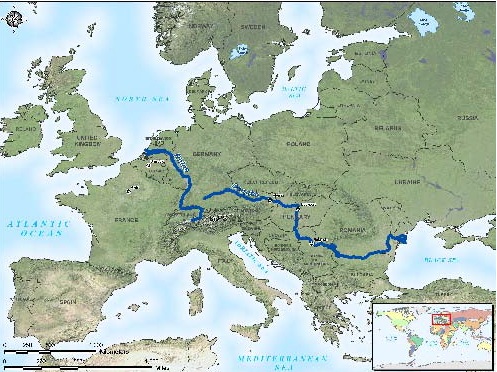
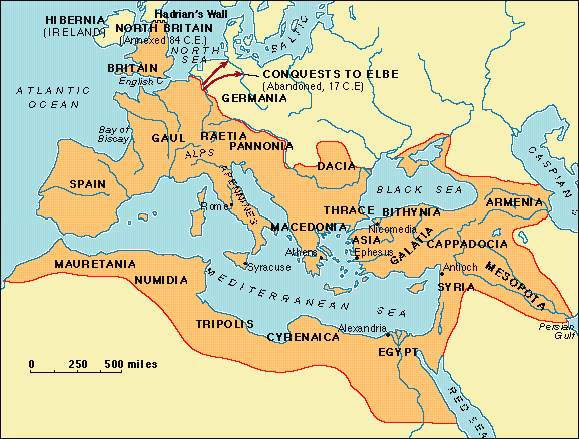
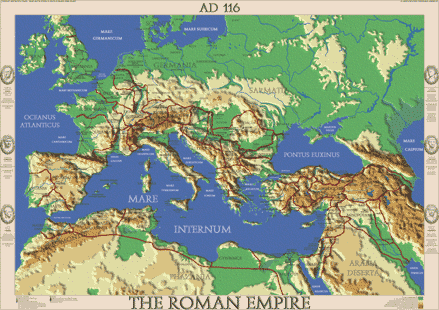




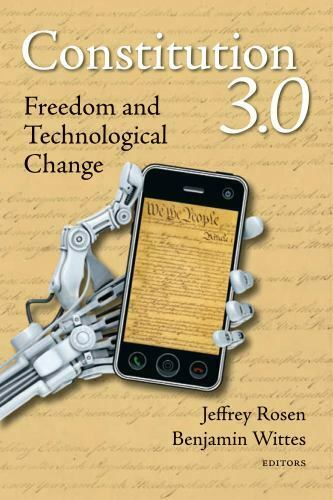
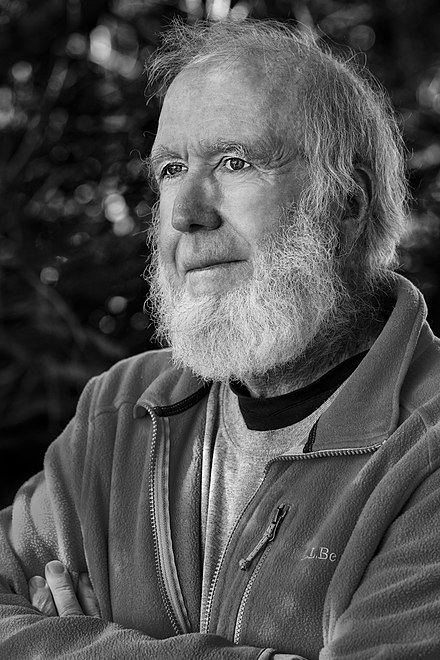
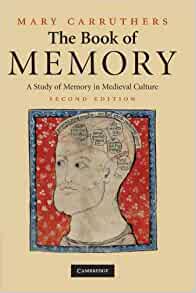







 A Stick in the Mud