This week we began looking at the Renaissance in Europe. The Renaissance can be viewed as a either a reaction to, or an extension of, the feudal period that preceded it. Whatever position one takes on that issue, no one doubts that that the Renaissance represents a new way of thinking about the world and our relationship to it.
Historians debate exactly when the Renaissance began, but most agree that the ‘Spirit of the Renaissance’ had its origin in Florence, a city in northern Italy. Why this city, previously of no real importance, should suddenly be the epicenter of a whole new way of thinking poses a question we needed to explore.
If we look at the conditions under which cultural revolutions take place throughout history, a few general trends emerge. For one, it appears that they generally arise in geographical and social frontiers, and not as we might expect, in the centers of power and influence. Thus, in the Middle Ages, we see the Gothic style originate in northern France, which saw so much conflict with England and the Vikings. On top of that, northern France had relatively less Roman influence than southern France near the Mediterranean, making them less “civilized” in the eyes of many. But the tension between “Gallic” and “Roman” may have given them the freedom to think of things in new ways.
In our own history Mark Twain invents American literature on what was for the time, the geographic and social frontier of America. Today, the mythology and folklore of the “frontier” still do much to shape the American psyche. If we think of Twain’s vocabulary and compare it to say, Hawthorne’s, we see that Twain occupied a social frontier as well as a geographic one.
Notice also, for example the incredibly dynamic & spiritual response of African-Americans to persecution from say, 1880-1964 or thereabouts. Swing, jazz, blues, motown, soul, rock and roll — all of them basically their creations, and that hardly encompasses a final account of their contributions to American life and culture. Perhaps their disadvantaged social position led them to think of creative ways to deal with that challenge, which helped them create such vibrant music.
Florence found itself on the geographic frontier of two more established civilizations, that of France and southern Italy. Divided politically (as the map below indicates) northern Italy never quite had the chance to develop its own social identity. It appears that culture arises not from comfort, but from a challenge, be that challenge physical or social.
Another common thread in cultural innovation seems to be water. The great cultural explosions, be it in Athens, Amsterdam, London, New York, or New Orleans, all have water in common. I don’t think this is a coincidence, something I take up much more fully in this post, which we discussed in class. Here is a link to a post that formed part of the basis of our discussion about water and creativity.
As we delve into the Renaissance, we face many questions:
1. Inherent in the names “Middle Ages,” and “Renaissance” (which means “rebirth”) are a lot of assumptions, namely, that the Renaissance took major leaps forward for humanity after we treaded water in the “Middle Ages” after the fall of Rome. Some historians, however, like Regine Pernoud, see the Renaissance as a step backward from what came before. Who is right?
2. Will the new view of mankind in the Renaissance be consistent with Christianity? Will it correct what some perceive to be a medieval over-spiritualization, or will it give humanity too much pride of place?
3. How will this new view of mankind spill over into the rest of Renaissance society?
The Renaissance emerged from the wreckage of the feudal system in the 14th century. The old social structure did not hold, the Church was busy shooting itself in the foot, and so on. Different ways of thinking had opportunity to emerge, and we looked at the financial innovations of the Renaissance, particularly in banking.
There exists an “old saw” approach to Christianity that runs something like this: A long time ago Christians devoted themselves to practical matters of personal morality. The early Church lived as a community of love devoted to good works. Then, along comes ________ (this “blank” takes many forms — St. Paul, St. Athanasius, St. Augustine, etc.) and Christianity forever tainted itself with “theology” and a philosophical turn of mind completely at odds with the spirit of Christ and his early followers.”
I believe firmly in the idea that every organization gets the culture they deserve. Perhaps the Church over time has contributed to the great error described above by focusing too much on morality as such and not on transformation. Perhaps Christian education has concerned itself too much at various times with mere outward good results and good looks rather than giving a firm foundation in eternal principles.
But I also think that those that attack the “philosophical” elements of Christianity have a conscious or unconscious agenda to keep religion tucked away in its own small corner. “You Christians please continue to be nice to each other and try and help others. We’ll handle the big stuff.”
In his The Spirit of Medieval Philosophy Etienne Gilson sets out to refute those who wish to keep Christian belief in a small corner. Gilson was a pre-eminent scholar and philosopher in his day, and alas for me, some of his philosophical vocabulary went over my head. But one of the great strengths of his work is its simplicity. He asks the critic to please, just actually read the Bible and Christian theologians honestly, and the idea that Christian belief was never “philosophical” melts away.
For starters we have the book of Job as a deep philosophical statement on the nature of suffering. Many Old Testament history books like the book of Judges show artful arrangement to make pointed statements about the nature of man. We have Ecclesiastes and many Psalms. Some would say Jesus said nothing “philosophical” but this can only possibly hold water if one discounts the Gospel of John entirely. Then of course we have the “dreaded” St. Paul who “intruded” with his theological cast of mind, and so on, and so on.
Gilson’s main point, however, deals with the Middle Ages. Here most critics (at least in his day) stated that whatever philosophy the medievals attempted strictly copied from the Greeks. They had no originality. Gilson’s quick retort to this deals with the nature of originality itself. In one sense, “all philosophy is a footnote to Plato,” as Alfred North Whitehead stated. Of course the medievals took some ideas from the Greeks. What philosopher would not?
Others (like Edward Gibbon) charge the medievals with dimming the light of reason with the obscurantism of faith and revelation. Gilson shows with many examples that the bulk of medieval thinkers saw reason enhanced, not diminished, by faith. He writes,
By revealing to man what he could not actually know, revelation opens up the way for the work of reason.
God’s gift of rationality now has more to chew on, and thus gets more of a workout. For the medievals revelation makes mankind more rational, not less.*
But the bulk of the book forms Gilson’s main point that the medievals creatively used and transmuted Greek philosophy rather than copied them rote. They had a strong desire to save everything they could and use it for Christian purposes. My favorite example of this comes from Boethius. Gilson writes,
Fate had weighed too heavily on men’s mind’s to be too summarily dismissed. Boethius took the trouble to put up some rather complicated architecture in order to ensure it a niche in the Christian temple. Providence is then the divine intelligence comprehending all things in the world; that is to say their natures and the laws of their development. As reunited therefore in the divine ideas the universal order is one with Providence; as particularized, broken up, and so to speak, incorporated with the the things it rules, the providential order may be called Fate. All that is subject to Fate is thus subject to Providence, since Fate depends on Providence as a consequence on its principle.
Boethius himself wrote,
For as the innermost of several circles revolving around the same center approaches the simplicity of the mid-most point . . . while the outermost, whirled in an ampler orbit takes in a wider sweep of space–even so whatever departs from the Primal mind is involved more deeply in the meshes of fate, and things are free from fate in proportion as they seek to approach the center; while if aught cleaves close to the supreme mind in absolute fixity, this too, being free from movement, rises above Necessity. Therefore as is reasoning to pure intelligence, as that which is generated to that which is, time to eternity, a circle to its center, so is the shifting series of fate to the steadfastness and simplicity of providence.
I admit I don’t fully understand it, nor might I buy what he sells. Whatever the explanation, I think it best to avoid the word “Fate” altogether. But who wouldn’t smile at Boethius’ boyish enthusiasm and deft mental gymnastics? Aquinas, to my mind a more mature and clearer thinker than Boethius, rejects this concept of Fate as well. I’m sure that Aquinas understood him, and I’ll stick with his analysis.
Of particular interest to me was Gilson’s explanation of the medieval view of history. Previous historians in the Greek and Roman tradition did brilliant work. But even the best of the ancients, i.e. Herodotus, Thucydides, and Polybius, all show the tendency toward Fate and Inevitability. For Herodotus, everyone eventually crosses the boundaries of natural law — even Cyrus — and gets crushed for it. Thucydides sees civilization doomed by the passions and fears of man that lie just below the surface. Even the more spiritually minded Polybius sees mighty Rome caught up in the grand cycle of growth, peak, and decay from which they cannot escape.
Medievals demonstrated originality in their historical vision. They saw linear progression where others saw only vicious cycle. With revelation illumining reason we can build on the past, move forward, and advance. The medievals had humility in relation to the past. They knew the Romans and Greeks had done better than they in most ways. But they never felt imprisoned by that presumption. Rather, they sought to press on and hopefully help carry mankind to a better place. In comparison to what came before, Gilson rightly claims this as an original philosophical development.
This view of history has its roots of course in theology. History is a poem, which makes sense only when we know the beginning and the end. Thanks to revelation, we know both, and can now see Christ building His kingdom on Earth, one that grows as a mustard seed. If God be true, we have the opportunity to progress in relation to the past, though of course we may reject that chance. This explains Boethius’ desire to save Fate from the chopping block — we must save everything so we can build on everything — but it also explains Aquinas refusal to yield. God binds no one by Fate. Otherwise, how can God’s kingdom advance?
The medievals, often portrayed as dour and gloomy, strike me as a hopeful people.
Dave
*Perhaps one example of this is the doctrine of the Trinity, a reality beyond the realm of reason. But after revelation announces the doctrine, reason and experience can then deepen our understanding, which seems to be the experience of the early Church.
This week we brought an end to the Medieval world by seeing its erosion in the 14th century, mostly through the decimation of the Black Plague, as well as the early hints of nationalism.
The disaster wrought by the Plague went beyond the deaths of millions of people. It also did away with an entire social and moral fabric upon which the medieval world rested.
The virulent and contagious nature of the disease created acute moral dilemmas wherever it struck. Should diseased people be quarantined? Should apparently well people be allowed to flee to other towns? They might have the disease but not yet show the symptoms. The communal spirit that medievals needed to make their society work broke down. Fear and uncertainty meant that no one could trust one another.
Imagine that you know that a couple people in a certain household have the plague. Probably their other family members have it too, but of course you can’t be sure. Should you let the apparently well people out of the house? Some towns took the step of immediately boarding up houses where even one person had the plague, which would condemn all those in the house to death. But towns that took these harsh measures had far fewer deaths overall than those who didn’t. Is this moral? It condemns a few to certain death, but it might save a number of other lives. The plague caused a great deal of tension between those who thought the greatest good lay in the safety of the community, and those who thought the priority should be treatment of the individual.
A number of contemporary chroniclers tell of the debilitating social impact of the disease. Families abandoned even the bodies of their dead for fear of catching the disease, and so many went unburied. Healthy (and usually wealthier) people abandoned towns if they could, and the mutual relationships between nobility and the “commons” eroded. The plague may have had an indirect role in the peasant uprisings, first in France in 1358, and later in England in 1381. Froissart records events in France this way. . .
Thus [the peasants] gathered together without any other counsel, and without any armour saving with staves and knives, and so went to the house of a knight dwelling thereby, and brake up his house and slew the knight and the lady and all his children great and small and brent his house. And they then went to another castle, and took the knight thereof and bound him fast to a stake, and then violated his wife and his daughter before his face and then slew the lady and his daughter and all his other children, and then slew the knight by great torment and burnt and beat down the castle. And so they did to divers other castles and good houses; and they multiplied so that they were a six thousand, and ever as they went forward they increased, for such like as they were fell ever to them, so that every gentleman fled from them and took their wives and children with them, and fled ten or twenty leagues off to be in surety, and left their house void and their goods therein. These mischievous people thus assembled without captain or armour robbed, brent and slew all gentlemen that they could lay hands on, and forced and ravished ladies and damosels, and did such shameful deeds that no human creature ought to think on any such, and he that did most mischief was most praised with them and greatest master. I dare not write the horrible deeds that they did to ladies and damosels; among other they slew a knight and after did put him on a broach and roasted him at the fire in the sight of the lady his wife and his children; and after the lady had been enforced and ravished with a ten or twelve, they made her perforce to eat of her husband and after made her to die an evil death and all her children. They made among them a king, one of Clermont in Beauvoisin: they chose him that was the most ungraciousest of all other and they called him king Jaques Goodman, and so thereby they were called companions of the jaquery. They destroyed and brent in the country of Beauvoisin about Corbie, and Amiens and Montdidier more than threescore good houses and strong castles. In like manner these unhappy people were in Brie and Artois, so that all the ladies, knights and squires of that country were fain to fly away to Meaux in Brie, as well the duchess of Normandy and the duchess of Orleans as divers other ladies and damosels, or else they had been violated and after murdered. Also there were a certain of the same ungracious people between Paris and Noyon and between Paris and Soissons, and all about in the land of Coucy, in the country of Valois, in the bishopric of Laon, Nyon and Soissons. There were brent and destroyed more than a hundred castles and good houses of knights and squires in that country.
The plague also had a catastrophic impact on the Church and its witness. Many priests demonstrated great courage in tending to the sick, and in consequence died in much higher numbers than the average population (I came across one figure that estimates that the plague may have killed 80% of the priests in Europe). This left many towns with no priest at all, while other had priests rushed into office with little to no training. This led to a poorly trained, uneducated clergy and many layman with no religious guidance at all. The Reformation 150 years later had many causes, but surely the gutting of Church leadership from 1350-1450 is one of them.
Desperate people usually seek scapegoats, and the medievals did the same. Many blamed Jews for the plague, and although the Pope declared that anyone “who believed Jews responsible for the disease is deluded by Satan,” people did not listen and Jews were unjustly attacked. A sect called The Flagellants arose, and they claimed to avert the disease through their own personal penance. Their argument seemed to go something like:
The Plague is God’s judgment upon humanity
Once the allotment of God’s wrath is poured out, the Plague will stop
If we ‘absorb’ some of God’s wrath, other people will suffer less
Therefore, we inflict punishment on ourselves to atone for the sins of others.
The Church rightly declared such people heretics. They had a faulty view of God, suffering, humanity, and the disease itself. Froissart comments again,
In the Year of Grace 1349, the penitents went about, coming first out of Germany. They were men who did public penance and scourged themselves with whips of hard knotted leather with little iron spikes. Some made themselves bleed very badly between the shoulders and some foolish women had cloths ready to catch the blood and smear it on their eyes, saying that it was miraculous blood. While they were doing penance, they sang very mournful songs about the nativity and passion of Our Lord.
The object of this penance was to entreat God to put a stop to the mortality, for in that time of death there was an epidemic of plague. People died suddenly and at least a third of all the people in the world died then. The penitents of whom I am speaking went in companies from town to town and from city to city and wore long felt hoods on their heads, each company with its own color. Their rules forbade them to sleep more than one night in each town and the length of their goings-out was fixed by the thirty-three and a half years which Jesus Christ spent on earth, as the Holy Scriptures tell us; each of their companies went about for thirty-three and a half days, and then they returned to the towns or castles from which they had come. They spent very little money on their journeys, because the good people of the towns which they visited asked them to dinner and supper. They slept only on straw, unless illness forced them to do otherwise. When they entered a house in which they were to dine or sup, they kneeled down humbly on the threshold and said three paternosters and three Ave Marias, and did the same when they left. Many reconciliations were achieved through the penitents as they went about, for instance, over killings which had taken place and about which it had so far been impossible to reach an accord; but by means of the penitents peace was made.
Their rules contained some quite reasonable and acceptable things which agreed with such natural human inclinations as to journey about and do penance, but they did not enter the Kingdom of France because Pope Innocent, who was at Avignon at that time with his cardinals, considered the practice and opposed it very strongly, declaring in condemnation of the penitents that public penance inflicted by oneself was neither right nor lawful. They were excommunicated for doing it, and especially those clergy who went with them.
But again, most did not listen, so strongly did fear grip them.
As the Church declined in prestige, the first inklings of nationalism arose. The Church opposed nationalism in the past because they did not want people to think of themselves as primarily English or French, but Christians. One goal of the medieval church was to create a unified Christendom in Europe, a Christendom that if necessary could serve as a “power” bloc to the Moslem world. To achieve this, however, the church had to minimize the role of national hero-kings. But as the war progressed both sides had their national heroes, like Henry V and Joan of Arc, and this led to the rise of an “English” and “French” spirit that helped end to the medieval dream of a unified Christendom.
I think we can point to a few possible reasons for this rise of nationalism, and while we should not confuse it with modern day nationalism, it had some similarities.
As the length of the war increased, the ‘bet’ each side made increased as well. With so much invested, no one wanted to fold. War has a logic of its own, and finds new ways to justify itself, so. . .
Nationalism would be an easy target for the war to find. The kings that began the war died. Neither side could claim the conflict as a holy crusade. If you can’t fight for Edward III, or for the Church, perhaps you could fight “for England.”
Henry V clearly capitalized on this, but so too did the more distinctly Christian Joan of Arc.
By the end of the 100 Years War in 1453 the medieval world had disappeared. Those that survived the plague found their labor in much more demand, forever altering the relationship between peasant and noble. What the Battle of Crecy began the plague finished. Western Europe would seek a new way of understanding themselves and humanity’s place in the world, which we know as the Renaissance. We turn our attention to this period at the end of next week.
I knew I would like E.M.W. Tillyard’s book The Elizabethan World Picture early on when Tillyard references Shakespeare’s famous, “What a piece of work is a man,” speech from Hamlet. He writes,
This has been taken as one of the great English versions of Renaissance humanism, an assertion of human dignity over medieval asceticism. Actually, it is within the purest medieval tradition.
Hah! Take that those who exalt the Renaissance over all else! Tillyard goes on to add how Shakespeare writes within the medieval “chain of being” tradition, which they derived from the Church fathers. He could have added something about Psalm 8, but we’ll let it slide.
Tillyard talks about how he began the book trying to get at the context of Shakespeare, but found that his subject grew on him until he found he had to continually peel back layers of the onion. It’s hard not to gain a kind of fascination and admiration for the medieval view of reality, and this is the book’s real subject.
C.S. Lewis tackled the exact same thing in his excellent The Discarded Image. Tillyard’s book lacks the depth and insight of Lewis, but his writing is also much more accessible. I wish I had started with him first. The fact that so much of the book deals with the medieval view of the world rather than strictly the Elizabethan stands as one of Tillyard’s main arguments. Yes, the Reformation broke with certain things from the past, but in the main they kept much of the medieval synthesis intact. The Scientific Revolution, not the Reformation, ended that view of the world.
The medievals borrowed from the classical tradition, Scripture, and the Church fathers to give themselves a very distinct world filled to the brim with sharp corners. Their universe had
Order and Unity: Everything had its place, everything played a part. In that sense it was crowded, with nothing out of place. But it was purposeful.
Sin and Progress: Medieval people believed in the reality of the first, but the possibility of the latter. A healthy tension resulted from a clear view of human folly on one hand, and the love of God on the other. Tillyard writes,
This is one of things that most separates the Elizabethan from the Victorian world. In the latter there was a general pressure of opinion in favour of the doctrine of progress: the pessimists were in opposition. In the Elizabethan world equal pressure existed on both sides, and the same person could be simultaneously aware of each.
In our day, we seem to believe in nothing in particular, though a belief in progress and progress alone would I’m sure be more insufferable.
Hierarchy: The “Chain of Being” meant that an infinitely long descending ladder from God down to the creatures far beneath the sea. Earth itself had a rather humble spot on this ladder. But the main feature here were the connections. Air had superiority to earth, and earth to water. Air is linked to water through earth, and so on.
The system had many advantages. Tillyard includes many quotes from the period and one immediately realizes how much authors had to work with and build upon. They could know that their audience would understand a multitude of sacred and secular references, and have a shared view of the world. Modern authors have to do so much more work for much less assumed reward. Tolkien had to create an entirely new world to write an epic.
But we should be careful not to romanticize such a world. Their cosmology did not directly conflict with Christian teaching, but neither was it inherently Christian, and as such left much to be desired. It was so crowded one did not have much space to maneuver. The only ones who seemed to have that freedom were fairies, and their role in redemptive history remained undefined — not a good place to be. Such a cosmology might easily arise in a time that begged for stability in the aftermath of the Dark Ages, and just as easily would wear out its welcome in due course, and even Shakespeare had his fun with it just as he depended upon it. Tillyard quotes from Twelfth Night in a revealing passage that links parts of the body with constellations:
Sir Toby Belch: I did think by the excellent constitution of thy leg it was formed under the star of a galliard.
Sir Andrew Aguecheek: Ay, tis’ strong, and it does indifferently well in a flame-coloured stock. Shall we set about some revels?
Sir T: What shall we do else? Were we not born under Taurus
Sir A: Taurus: that’s sides and heart.
Sir T: No, sir, it is legs and thighs.
Tillyard comments,
Characteristically both speakers are made to get the association wrong; and Shakespeare probably knew that to Taurus were assigned neck and throat. There is irony in Sir Toby being right in a way he did not mean. He meant to refer to dancing — legs and thighs — but the drinking implied by neck and throat is just as apt to the proposed revels. The present point is that the serious and ceremonious game of the Middle Ages has degenerated into farce.
This clip from the excellent Sherlock series from BBC recalls Holmes’ famous quote on his knowledge of the solar system:
Who wants to disagree with Sherlock Holmes? But he is wrong — one’s view of the solar system does matter. We have yet to find a workable replacement for Ptolemy and the medievals, and this surely has impacted our cultural life as a whole, and our individual sense of our place in the world. Like Major Tom, we float aimlessly and need to find a place to stand.
A mantra thrown around the column circuit from time to time is the idea that, back in the good old days, parents were parents and children were taught responsibility, duty, and thrift. Scenes like this no doubt abounded. . .
Embedded in this picture is the idea that adolescence as a distinct stage of life was an invention of the Victorians in the mid-19th century. This essentially artificial creation of a previously non-existent stage then created all sorts of problems that we deal with in the modern world, as our youth postpone “growing up” well beyond what is “normal,” or at least what existed before the Victorians ruined everything. Many commentators point to the laws against child-labor, and the increase of wealth during the late 19th century that allowed for children to have more leisure, and so on. The argument makes sense logically.
In her book The Life Cycle of Western Europe, ca. 1300-1500 (“Take courage,” I thought to myself as I picked it up, “The book can’t possibly be as boring as the title.”), Deborah Youngs sets out, at least in part, to debunk this modern notion. The medievals viewed life as happening in 4-5 distinct stages, with different expectations for each stage. Childhood, and yes, adolescence, has its roots far beyond the Victorians. Logical, common sense must give way to the historical record.
Youngs crafts no narrative but her book managed to hold my interest due to the surprising amount of information she gives you in a short book. Thus, while her work contains no lofty insights, it gives the reader plenty to chew on. Among some of the highlights:
The medievals in general were much less concerned with one’s actual age, however much they fixated on “stage of life.” When Henry IV of France sought an annulment of his marriage based on the fact that he was too young to give legal consent, no one could remember exactly when he was born. Opinion varied — some said he was 12 at the time of the betrothal (which would have allowed an annulment) and some said he was 15 (he would have to stay married).
Adolescents (12-18) were universally acknowledged to be in an irresponsible stage. Medieval literature expected erratic behavior from them. They simply had too much “heat” in their bodies and too little reason to control it. Many of us might have an image of an authoritarian and rigid medieval culture, but to my mind they were surprisingly tolerant. For example, boys who engaged in homosexual activity under 18 were given a “free pass” of sorts. After 18, not so much. Some might not find this “tolerant” at all. But if you account for the fact that they believed homosexual behavior to be a great sin, then by their standards they were tolerant, at least in this respect.
Some might guess that medieval culture expected all to be “saints” from the toddler years on, but again, the data confounds our expectations. The key for them was “acting your age.” Each stage came with certain expected behaviors. True, acting outside these expectations brought censure, but this held true even with “good” behavior. For example, regarding piety, they had a saying: “Young saints make old devils.” Those who have read Belloc’s The Path to Rome might recall him saying that he always felt much more comfortable when altar boys made faces at each other rather than standing with scrupulous and solemn attention to duty. If boys were boys, he took it as a sign that all was right with the world.
In this way, some medievals had more of a sense of “stages of life” than most moderns, who see human nature as more fungible than those in the past.
Youngs argues for no main thesis, but underneath her writing runs the current of the universality of human nature. We lack a sense of the past, and this opens us up to think unrealistically about the present. We exaggerate our virtues, vices, problems, and successes. Youngs reminds us that six year olds have always been noisy, and that twelve year olds have never been responsible. Parents, take heart, we are not alone.
Most of their ideas regarding “stages of life” bear a general similarity to ours, with one exception: the final stage. I think if you asked most people what kind of death they preferred they would answer, “Quick and painless.” Medievals had a different perspective. A quick death robbed one of the chance to prepare, to “pack” for the final journey. Medievals wanted the chance to reconcile with God and man, and provide a firm legal pathway for their relatives. Here I think they had an advantage over us. In general they did not ignore or flee from death, but called a spade a spade. Again we are faced with the possibility that medievals did a better job facing reality than we do currently.
This week we began looking at the aftermath of Charlemagne’s reign and his accomplishments.
Historians often focus on Charlemagne’s volatile character and his many wars, and these certainly have their place. I wanted the students also to consider the broader context of how civilizations get created.
We often take civilization for granted, but we should ask ourselves why, and even if we need civilization in the first place. Inevitably civilization will detract from some personal freedom. We will have to follow certain laws and maintain certain obligations to the larger population. At times we will have to give allegiance in some form to leaders and laws we do not like. But I believe that while civilization may not qualify as an absolute good, it remains a very strong relative good. Without civilization life often gets reduced to who has the most force. The weak would be at the mercy of the strong. Also, without civilization culture on any appreciable scale will not exist. So if nothing else, as Kenneth Clark stated, barbarism is boring.
But civilization will not build itself, nor does it arrive fully formed from the sky. Humanity must create civilization themselves, and this requires much more than merely wanting to pass a few laws. Who should make laws? Who should enforce them? Who will decide guilt or innocence when disputes arise? These difficult questions can take generations to answer.
Often the answers a particular people arrive at do not come from abstract discussion, but “on the ground realities.” Though it may sound harsh, the answers usually come from those who are most able to provide order, and this order comes from a monopoly on the use of force.
Many could argue that Charlemagne betrayed his Christian values with far too much reliance on war and unnecessary power grabs. But Charlemagne did provide the necessary unity through his conquests to end disputes. He did provide security and order, and this helped lead to what historians refer to as the “Carolingian Renaissance.” While this period cannot hold a candle to other great historical renaissances in terms of what they produced, they also started from a much different place. They developed a new style of writing, and a new architectural style. We see books written once again (though of poor quality), and a general revival of the idea of scholarship. Europe started to grow roots that would bear fruit in the centuries to come
What we often miss when examining the foundations of civilization, however, is the element of trust required. More so than laws, the daily habits and patterns of our interactions with one another form the real core of civilization. These habits have their roots in our conception of moral order, which comes directly from our religious beliefs. Christianity thus played a huge indirect role in the formation of civilization after the fall of Rome. It provided unity, yes, but it also provided a basis for common interaction. No set of laws can cover every circumstance, and in the absence of law we fall back on the trust of our fellow man. When this does not exist, when law and structure fail, civilization fails as well. One need only think of the looting and destruction that might happen if power went out in a major city, or the chaos in the aftermath of Hurricane Katrina, or the rioting in the summer of 1968. This may indicate that we rely perhaps a little too much on the force of law, and the trust and personal bonds that should unite us may not be all that strong. Without a common moral foundation we have to rely on force to keep us together, and force will fail in the long run (if not the short run).
My hope for this unit with Charlemagne is that the students considered his achievement, and the cost of his achievement. When we look at nascent civilizations we get a glimpse into nature of civilization itself, which we should then be able to apply to our own day.
This past week we wrapped up the Norman Conquest of 1066. I wanted us to see the conflict between Harold Godwinson and William of Normandy not just as battle for the throne between two rivals, but as a window into the society at large. Toward that end we focused a lot of our discussion on oaths in early Medieval Europe.
We looked at oaths because the central controversy involving the Norman Conquest involved a dispute over an oath taken by Harold. Harold apparently got blown off course one day and landed in Normandy in France. Instead of holding him for ransom, William, Duke of Normandy protected and befriended him. At the end of his visit, William asked Harold to pledge that he would not seek the throne of England after Edward the Confessor’s death.
In that oath, several questions arise:
Did Harold promise to let William have the throne?
If so, was that promise binding, i.e. was the oath a valid oath?
Did Harold really break his oath in the first place?
Oaths had crucial important for this period I think, for the following reasons:
1. Today we have extensive written contracts, police, and law courts to enforce social order and provide a platform for trust in social interaction. The world of 1066 had none of these things. So we see instead an ironclad priority placed on “keeping one’s word,” which stood in place of the modern written contract. Breaking one’s word, then, did not just damage your personal reputation, it threatened the fabric of civilization itself.
2. This can help us understand why the Church felt the need to involve itself in the oaths of great noblemen. By 1066 Europe had only recently emerged from a chaotic “dark age,” of barbarian invasions. The Church wanted peace, and so often strengthened them by adding spiritual overtones on the oaths to make them even more binding. One could argue that this would make the Church a meddler in personal affairs. I think they would respond that peace is everyone’s business.
Of course oaths could only bind under certain circumstances:
Oaths were freely taken — that is, no compulsion came with the oath.
The terms of the oath could be performed by those making the oath (one could not vow for another’s actions)
One could not vow to sin, and then sin because, “I promised I would.”
As an example, there is this text from the life of King Louis IX of France in 1248, from The Chronicle of Matthew Paris. Note how all urge him to “unbind” himself from his first oath, but then once he vows again, the matter is settled.
. . .the lord king of the French who, as was well known, had taken the cross [vowed to go on a Crusade] was severely criticized, and almost circumvented by his magnates and courtiers, because he was unwilling to redeem or commute his oath in any way, in spite of the [fact that he taken the vow when very ill]. His mother Blanche, aware of the king’s imbecility at the time [of the oath] insisted and earnestly argued with him, and the bishop addressed him as follows.
“My lord king, remember that when you took the cross, making a vow so hurriedly and without advice, you were ill and your mind wandered. The words you then uttered lacked truth and authority. The good pope will willingly grant a dispensation from the oath, knowing the critical state of your kingdom and your past infirmity.”
Then the king’s mother added her own suggestions, spoke to him with some effect. “Dearest son! Instead of resisting your own prudence, pay attention to the advice of friends. Bear in mind how pleasing it is to God to give heed to the voice of one’s mother. Stay here and the Holy Land will suffer no detriment. . . . God neither plays tricks nor does he quibble. You are sufficiently excused by your illness and the deprivation of your reason. . .”
To this the king, no little moved, replied, “. . . Lord bishop, here is the cross which I assumed; moreover, I resign it to you.” Raising his hand to his shoulder, he ripped off the cross. At this all those sitting around him expressed their intense joy, but the lord king, altering his tone, said: “My friends, certainly I am not now deprived of my reason or my senses, nor am I powerless or infirm. Now I demand back my cross. He who ignores nothing knows that nothing edible shall enter my mouth until I have signed myself with it.”
When those present saw this they recognized the hand of God here (Ex. 8:19), and that these things had been effected by a divine force from Heaven. Nor did anyone dare raise any further questions about the affair. We have recorded this business fully and exactly so that everyone appreciates the constancy of the most Christian king of the French in the service of Christ.
One of the controversies of 1066 revolved around Harold’s oath. Some argued that it was not taken freely, as Harold at the time was under William’s custody and protection. Some also argued that the oath was not Harold’s to make, as the English Witan chose kings, and Harold might feel bound by their choice. When Harold broke his vow (from William’s perspective, it set about a clash that could be solved only through battle. Harold might argue that. . .
The oath I took does not bind, for I took it under indirect compulsion, a stranger in William’s land. Besides this, I do not fight for my own personal gain, but for England.
I fight for England’s right to choose an English king. Edward the Confessor (God rest his soul) always had half of himself in Normandy. I say that England has a right to choose an English king that will look after English interests.
William might have countered with. . .
I do not fight for petty slights, nor revenge. I fight for uphold civilization itself, and the sanctity of oaths taken upon holy relics. If oaths have nothing sacred to them, we have nothing to keep us together but naked force and barbarism.
If kings do not keep their oaths, neither can we expect the common man to do so.
The pope has given me his banner, for he too recognizes the greater good at stake in this. Harold’s refusal to back down show him as an enemy of the Church and civilization.
Some sources suggest other things at stake. When he landed unexpectedly in Normandy, Harold faced potential danger, as I mentioned above. William took him under his wing, and gave him protection. But it may have been necessary, for Harold to be fully protected, for Harold to become William’s “man,” in the feudal sense. That is, Harold would agree to serve William in exchange for William’s protection. Once it was known that Harold “belonged” to William, then and only then would he have been safe.
If this happened, Harold’s actions amounted to a personal betrayal.
In the famous Battle of Hastings that ensued, both armies fought well but Harold was killed in the fighting, which left the throne open for William of Normandy, from then on known as William the Conqueror.
Many in England get tired of hearing about 1066 in much the same way that we may tire of hearing of 1492. But the Norman Conquest did change the social fabric of England, and more importantly, brought England into the fold of the European continent.
Some years after the Normans displaced the Saxons, a handful of monks wrote the “Anglo-Saxon Chronicle,” detailing life before and after William. The conclusion below, though short, provides an interesting opportunity for textual analysis. Did the Anglo-Saxon writer like William or not? Did he have to praise him because he was a Saxon and had lost, or is the praise surprising for the very same reason? Was William a good king? It depends on what you think most important about political leadership. . .
Anglo-Saxon Chronicle: Assessment of William I
If anyone would know what manner of man King William was, the glory that he obtained, and of how many lands he as lord, then will we describe him as we have known him, we who had looked upon him and who once lived at his court. This King William…was a very wise and great man, and more honored and more powerful than any of his predecessors. He was mild to those good men who loved God, but severe beyond measure to those who withstood his will. He founded a noble monastery [Battle Abbey] on the spot where God permitted him to conquer England., and he established monks in it, and he made it very rich. In his days the great monastery at Canterbury was built, and many others also throughout England; moreover, this land was filled with monks who lived after the ule of St. Benedict; and such was the state of religion in his days that all who would, might observe that which was prescribed by their respective orders.
King William was also held in much reverence. He wore his crown three times every year when he was in England: at Easter he wore it at Winchester, at Pentecost at Westminster, and at Christmas at Gloucester. And at these times all the men of England were with him, archbishops, bishops, abbots and earls, thanes and knights. So also was he a very stern and wrathful man, so that none durst do anything against his will, and he kept in prison those earls who acted against his pleasure. He removed bishops from their sees and abbots from their offices, and he imprisoned thanes, and at length he spared not his own [half-]brother Odo. This Odo was a very powerful bishop in Normandy. His see was that of Bayeux, and he was foremost to serve the king. He had an earldom in England, and when William was in Normandy he [Odo] was the first man in this country, and him did William cast into prison.
Amongst other things, the good order that William established is not to be forgotten. It was such that any man…might travel over the kingdom with a bosom full of gold unmolested; and no man durst kill another, however great the injury he might have received from him. He reigned over England, and being sharp-sighted to his own interest, he surveyed the kingdom so thoroughly that there was not a single hide of land throughtout the whole of which he knew not the possessor, and how much it was worth, and this he afterward entered in his register. The land of the Britons [Wales] was under his sway, and he built castles therein; moreover he had full dominion over the Isle of Man; Scotland was also subject to him…; the land of Normandy was his by inheritance, and he possessed the earldom of Maine, and had he lived two years longer, he would have subdued Ireland by his prowess, and that without a battle.
Truely there was much trouble in these times, and very great distress. He caused castles to be built and oppressed the poor. The king was also of great sterness, and he took from his subjects many marks of gold, and many hundred pounds of silver, and this, either with or without right, and with little need. He was given to avarice and greedily loved gain. He made large forests for the deer, and enacted laws therewith, so that whoever killed a hart or a hind should be blinded. As he forbade killing the deer, so also the boars; and he loved the tall stags as if he were their father. He also commanded concerning the hares, that they should go free. The rich complained and the poor murmured, but he was so sturdy that he took no notice of them; they must will all that the king willed, if they would live, or keep their lands,…or be maintained in their rights. Alas that any man should so exalt himself…. We have written concerning him these things, both good and bad, that virtuous men may follow after the good, and wholly avoid the evil, and may go in the way that leadeth to the kingdom of heaven.
We began the week looking at St. Augustine’s crucial work, The City of God. Augustine began writing shortly after the sack of Rome in A.D. 410, and did not finish until many years later. What he began as a response to Roman attacks on Christianity became, by the end of the work, a full-fledged outline of how History happens. His work influenced a great deal of medieval thought, though eventually not all agreed with the categories he used to formulate his vision.
Augustine saw history divided into two camps, the City of Man and the City of God. In Scripture we see Cain & Abel, Ishmael & Isaac, Esau and Jacob, and so on, each representing their respective cities. The “City of Man” has its place on earth. The state does not bear the sword for nothing. But the guiding principles of the city of man are
Power
Pride of place
Competition
Justice
Note that justice is part of the City of Man. This is the legitimate function of the state. The point Augustine wanted to make, however, is that however legitimate the City of Man may be, it cannot redeem us. It cannot exercise the fruit of the Spirit. When pronouncing a sentence, for example, a judge cannot say, “The law says you must serve at least 15 years for your crime, but I forgive you. You’re a free man!” And we would not want him to. Soldiers have the right to kill under certain circumstances, but ending life is not the best way to redeem life.
The Church represents the “City of God” which runs along different principles of love, mercy, etc. The main goal of the Church is not social order but the redemption of individual souls. We want the Church to be the place of healing, reconciliation, etc.
Where the rubber meets the road on this is how Church and State should interact. Should the two meet in some way, ignore each other, or oppose each other? We will revisit this topic at a later date.
This week we also looked at the reign of Charlemagne, probably the most important figure after Constantine in the history of the West.
In previous weeks we saw how the Church played a crucial role in setting the foundation for the rebuilding of civilization. This week we looked at a few different aspects of Charlemagne’s contribution to this project.
1. Can conversions by force be genuine?
Charlemagne conquered a great deal of territory, and as he conquered he ‘enforced’ the conversion of those he defeated. To modern minds this seems absurd and counterproductive. It may have been, but I wanted the students to think about, how in a different time, it may (I stress the word may) have been more effective than we might think.
Charlemagne ruled in a time when spiritual beliefs were worn more on one’s sleeve. Many had the sense that when a tribe fought, so too did it’s god. Charlemagne may have held a similar view. In some ways this is admirable, in other ways dangerous (cf. 1 Sam. 4-5). So, if Charlemagne beat you, you might very well think that your god had lost, and it was literally time for a new one.
Modern western democracies do not identify leadership with the nation itself. We do this in some ways with diplomats, but in Charlemagne’s time we see a sense that the king ‘was’ the tribe. If the king converted, the nation would ‘convert’ as well. A member of a tribe might do so with the same conviction with which they followed him to battle. It’s not ideal, but might God work with it?
Part of Charlemagne’s motives I think were rooted in part with his sacramental theology. I don’t think that they believed that baptism would guarantee you Heaven. But they did believe that baptism conferred God’s grace on the recipient. With this view, perhaps they thought that if one had a few embers in their hearts inclined toward God, baptism could help fan that into a flame.
How might we tell if these conversions were genuine? First off, clearly not all them were. One can see evidence of this in some gravestones with Christian and pagan symbols. Perhaps they hedged their bets. But — for the most part Christianity lasted in these conquered lands. Charlemagne’s conquests on the whole did seem to aid, rather than detract, from the growth of Christianity on the continent.
2. Is force necessary for Civilization? If you are like me, you wish that it was not so. And yet, civilization requires security and confidence to flourish. In the chaotic period of semi-nomadic barbarians that Charlemagne inhabited, war may have been required for order to be established.
Certainly not all forms of civilization are worth the price of every war. But we must keep in mind that before Charlemagne’s conquests, Europe was hardly a peaceful place. In every measurable way, the quality of life declined significantly after Rome’s fall. In the aftermath of Charlemagne’s conquests, civilization does make a comeback with the “Carolingian Renaissance.” The Carolingian Renaissance cannot hold much of a candle to Periclean Athens or Florence in the 15th century. But then again, they started from a much different place. Writing and scholarship returned to the continent. They started building with stone, showing a desire for permanence. With permanence came a stable foundation upon which they could build again.
Last week we discussed the dilemma of whether or not King Arthur existed. I think we can assume that the Arthur tales, if they had truth in them, may have grown with the telling. But the stories do not arise from nowhere. The historian Nennius, for example, writes ca. 800 A.D. that
Then Arthur fought against [the Saxons] in those days with the kings of Briton, but he himself was the leader of battles. . . . The eighth battle was in Fort Gunnion in which Arthur carried the image of St. Mary, ever virgin, on his shoulders and the pagans were turned to flight through the virtue of Our Lord Jesus Christ and Mary the Virgin, his mother. . . The twelfth battle was on Mt. Badon, in which 960 men fell in one day from one charge by Arthur, and none overthrew them but Arthur alone. And in [all 12 battles] he stood forth as victor.
Nennius writes some 300 years after Arthur existed (if he existed), whereas Bede, a more respected historian who wrote earlier than Nennius, says nothing about Arthur at all. How do we decide what source to trust, and what sources to ignore? When do we grant oral tradition weight as an historical source, and when do we discount it? I hope the students enjoyed thinking through these questions.
This week we began to put the nails in the coffin of Roman civilization in the West.
We looked at the emperor Julian the Apostate and thought about the purpose of the study of history. One would think that a leader who loved history, read extensively in history, and believed in learning from history would serve Rome well. In fact, Julian had a disastrous reign and it was his use of history that brought his reign to a swift end (361-63 A.D.).
In a sense, anyone who uses the past to inform the present is a historian, and this includes all of us. History gives us valuable lessons from the past, but it’s study should not make us seek to repeat the past. That is not History’s purpose. Someone who looked to the past only for facts about what happened would gain knowledge. But wisdom comes when we take this knowledge and learn to apply it in our current context. Julian seemed to be unable to think of history at more than a grammar level. For him, learning from the past mean repeating the past. This showed up during his brief reign in a variety of ways:
He fought Persia instead of those crossing the Northern frontier and dealing with the pressing problem of the northern barbarians. Fighting Persia meant he could follow in the footsteps of Achilles and Alexander, and replay the whole grand epic of East v. West, as well as avenge the death of Crassus and Rome’s defeat at Carrhae in 53 B.C.
To inspire his men he burned his supply ships, just like Agathon of Sicily and Alexander. But he did so apparently without realizing that those previous armies marched into fertile areas and could supply themselves from the surrounding terrain, whereas he marched into semi-arid terrain with scant supplies.
He modeled his seige of a city off of Scipio’s successful seige of Carthage, without taking into account the different design of each city, specifically the fact that his army would be more exposed than that of Scipio’s back in 146 B.C.
We refer to him as “The Apostate” because though he was raised as a Christian, he wanted Rome to return to its pagan beliefs, and he himself abandoned Christianity for paganism — again finding his anchor entirely in the past.
Julian had intelligence and ruled conscientiously. He did not live extravagantly. He was not cruel, erratic, or selfish. He had a genuine devotion to Rome and believed in the idea of Roman civilization. But he suffered from some of the same defects that plagued his contemporaries. For him, progress for Rome could only mean a return to the past. He had competent administrative capability, but he had no clear vision or purpose with what to do with that ability. As one student said last year, when all you think of is the past, it shows you don’t think much of the future. In this respect, Julian simply followed in the footsteps of emperors like Diocletian, who we looked at last week. He too could only think of the past when he conceived of Rome’s future. Rome continued along the same path in a different guise.
It seems that Julian could not synthesize and apply information — he could not think at the rhetoric stage of learning. Like Rome, he too was stuck in the grammar stage. His death on a foolish campaign into Persia seems emblematic of Rome’s demise.
Rome had been declining in many ways from the years 180-350 A.D., and one of the problems they faced was their thinning population. This could be managed if Rome pulled back from its borders and closed ranks. But Rome could not face that. To pull back would admit that the emperor had no clothes.
Rome decided to try and solve the problem by integrating barbarian soldiers into Rome. Maybe the old Roman magic would reassert itself. Barbarians would be acclimated to Rome and serve them loyally. It had worked that way in the past. But that was when Rome was healthy. Now there was little to attract them to Rome. What ended up happening was simply that they armed and trained barbarian war lords, who would not need much provocation to turn against them. Rome’s defeat at Adrianople in 378 B.C., and the sack of Rome by Alaric in 410 AD, can be directly related to this. In 476 Rome ends with a whimper, as no Roman is even able to be emperor. The title goes to the barbarian Odoacer, and Rome as we know is no more.
I include below a missive of Julian the Apostate’s thoughts on how to revive paganism in Rome. If you read, you will see that Julian was no fool. He saw that Christianity had greater vitality than paganism, and his observations can apply to any age. The mistake he makes of assuming that all religions share a common morality at the center, with rites, ceremonies differing at the fringe, seems very modern. In fact, his “modern” error has deep roots. Julian’s program for returning Rome to paganism failed in part because he lived such a short time in power (361-63 A.D.), but also because he asks pagans to act like Christians in order to return to paganism. Julian, like Rome, was tragically confused.
Blessings,
Dave
Julian the Apostate: On Paganism’s Revival
The religion of the Greeks does not yet prosper as I would wish, on account of those who profess it. But the gifts of the gods are great and splendid, better than any prayer or any hope . . . Indeed, a little while ago no one would have dared even to pray for a such change, and so complete a one in so short a space of time [i.e., the arrival of Julian himself, a reforming traditionalist, on the throne]. Why then do we think that this is sufficient and do not observe how the kindness of Christians to strangers, their care for the burial of their dead, and the sobriety of their lifestyle has done the most to advance their cause?
Each of these things, I think, ought really to be practiced by us. It is not sufficient for you alone to practice them, but so must all the priests in Galatia [in modern Turkey] without exception. Either make these men good by shaming them, persuade them to become so or fire them . . . Secondly, exhort the priests neither to approach a theater nor to drink in a tavern, nor to profess any base or infamous trade. Honor those who obey and expel those who disobey.
Erect many hostels, one in each city, in order that strangers may enjoy my kindness, not only those of our own faith but also of others whosoever is in want of money. I have just been devising a plan by which you will be able to get supplies. For I have ordered that every year throughout all Galatia 30,000 modii of grain and 60,000 pints of wine shall be provided. The fifth part of these I order to be expended on the poor who serve the priests, and the rest must be distributed from me to strangers and beggars. For it is disgraceful when no Jew is a beggar and the impious Galileans [the name given by Julian to Christians] support our poor in addition to their own; everyone is able to see that our coreligionists are in want of aid from us. Teach also those who profess the Greek religion to contribute to such services, and the villages of the Greek religion to offer the first-fruits to the gods. Accustom those of the Greek religion to such benevolence, teaching them that this has been our work from ancient times. Homer, at any rate, made Eumaeus say: “O Stranger, it is not lawful for me, even if one poorer than you should come, to dishonor a stranger. For all strangers and beggars are from Zeus. The gift is small, but it is precious.” [Julian is quoting from the Odyssey, 14-531.] Do not therefore let others outdo us in good deeds while we ourselves are disgraced by laziness; rather, let us not quite abandon our piety toward the gods . . .
While proper behavior in accordance with the laws of the city will obviously be the concern of the governors of the cities, you for your part [as a priest] must take care to encourage people not to violate the laws of the gods since they are holy . . . Above all you must exercise philanthropy. From it result many other goods, and indeed that which is the greatest blessing of all, the goodwill of the gods . . .
We ought to share our goods with all men, but most of all with the respectable, the helpless, and the poor, so that they have at least the essentials of life. I claim, even though it may seem paradoxical, that it is a holy deed to share our clothes and food with the wicked: we give, not to their moral character but to their human character. Therefore I believe that even prisoners deserve the same kind of care. This type of kindness will not interfere with the process of justice, for among the many imprisoned and awaiting trial some will be found guilty, some innocent. It would be cruel indeed if out of consideration for the innocent we should not allow some pity for the guilty, or on account of the guilty we should behave without mercy and humanity to those who have done no wrong . . . How can the man who, while worshipping Zeus the God of Companions, sees his neighbors in need and does not give them a dime–how can he think he is worshipping Zeus properly? . . .
Priests ought to make a point of not doing impure or shameful deeds or saying words or hearing talk of this type. We must therefore get rid of all offensive jokes and licentious associations. What I mean is this: no priest is to read Archilochus or Hipponax or anyone else who writes poetry as they do. They should stay away from the same kind of stuff in Old Comedy. Philosophy alone is appropriate for us priests. Of the philosophers, however, only those who put the gods before them as guides of their intellectual life are acceptable, like Pythagoras, Plato, Aristotle, and the Stoics . . . only those who make people reverent . . . not the works of Pyrrho and Epicurus . . . We ought to pray often to the gods in private and in public, about three times a day, but if not that often, at least in the morning and at night.
No priest is anywhere to attend shameful theatrical shows or to have one performed at his own house; it is in no way appropriate. Indeed, if it were possible to get rid of such shows altogether from the theater and restore the theaters, purified, to Dionysus as in the olden days, I would certainly have tried to bring this about. But since I thought that this was out of the question, and even if possible would for other reasons be inexpedient, I did not even try. But I do insist that priests stay away from the licentiousness of the theaters and leave them to the people. No priest is to enter a theater, have an actor or a chariot driver as a friend, or allow a dancer or mime into his house. I allow to attend the sacred games those who want to, that is, they may attend only those games from which women are forbidden to attend not only as participants but even as spectators.
I remember that back in my day, we had multiple sections of analogies on the SAT. I always thought they were fun, but alas, analogies are no longer part of the test. Apparently different reasons exist as to their absence, ranging from cultural bias to not wanting the test to seem too “tricky.” I care little for standardized tests so I wouldn’t argue the point too strongly, but I think any look around at our discourse, where everyone who sneezes wrongly gets compared to Hitler, shows that we need more rigorous analogical thinking in our lives.
Of course analogies can be tricky, but making sense of reality requires them, so we need good ones and we need to distinguish good ones from bad. As long as we know that using a three-leaf clover to describe the Trinity works in some ways and fails in others, we can benefit from the illustration. But using a car, a cigarette, and an oven as a replacement analogy can’t help anyone, despite the fact that all three can sometimes produce smoke.
MIT professor Vaclav Smil specializes in the study of energy, but he has a hobby of reading Roman history. In the wake of our post 9/11 military ventures, and especially after things in Iraq began to go south, we saw many academics proclaiming the demise of the American “empire,” with comparisons to the fate of Rome everywhere across the media landscape. Smil smelled a rat, and wrote Why America is not a New Rome to counter this wave. I wish he put more thought into his title, but it points to the straightforward approach of his work. He brings the discipline of a scientist to the fog of blogs and talking heads.
The question is one of analogy–how alike are the American and Roman experiences?
The comparisons should not surprise us, and have some basis in fact. Our founders modeled our constitution on Rome’s. Our early years resemble the heyday of the aristocratically oriented Roman Republic governed primarily by a strong Senate. Since the Industrial Revolution, and especially since the Great Depression, we have witnessed the continual growth of executive power until now Congress has nearly reached rubber-stamp status, akin to the senate in Rome under the emperors.
Briefly, then, the case for strong links between America and Rome:
After 1989, America had no real military or economic competitor, just as Rome had no real competition in its sphere of influence after the 2nd Punic War
America has more than 200 overseas bases and can put its military in action most anywhere in the globe much faster than anyone else, just as Rome could move with its road system throughout its empire.
The world economy is controlled through New York, and Washington sets the basic rules of this economy, just as Rome did so for centuries in its era.
At the same time, both societies experienced drains on the real power of their economy through foolish military ventures and lack of stable monetary policy.
Both societies developed professional militaries that have grown increasingly distant from the general public
Both societies exercised considerable soft power through their cultural exports
The population of both societies seemed driven by distraction and entertainment. Some point out strong connections between the gladiatorial games and our love for (American) football.
A loss of cultural glue across large geography means that trust and the ability to suffer together both decrease. Hence, both societies would “buy off” the population with bread, buyouts, stimulus packages, etc.
Some even went so far as to say that both civilizations had a, “common obsession with central heating and plumbing.”
Stated this way some connections seem strong, but Smil doesn’t buy it.
First we can consider the concept of “empire.” Some understand that if America has an empire, it is “informal,” and “an empire without an emperor.” Smil argues that some concepts of empire are so vague as to be meaningless, and pushes for a very specific definition:
Empire means political control exercised by one organized political unit over another unit separate from it and alien to it. Its essential core is political: the possession of final authority by one entity over the vital political decisions of another.
With this definition in place we should consider if America ever exercised imperial ambitions. Perhaps one could begin with the Mexican War of 1846, or perhaps earlier with the Indian wars that made the Northwest Territories into Ohio, Indiana, and Illinois. With our various conflicts on the continent we did not so much seek to control ‘alien’ peoples as much as we sought to move in and displace them. Perhaps one could argue that the Spanish-American War made us an imperial power, but even then, we gave Cuba independence immediately and the Philippines got their independence right after W.W. II. Smil spends a lot of time on this rather technical argument over what exactly constitutes an empire. He has some good points to make, but only stylistically. The real question, I think, involves how much power the U.S. has vis a vis the rest of the world.
Here Smil gets more interesting and convincing. He cites a variety of data to show that American power, or at least our relative share of power (in political, economic, and military terms), has actually declined dramatically since the end of W.W. II. Our global share of economic output has dropped by at least 1/3 since 1945, with continuing trade deficits largely due to reliance on foreign energy. We send much less of our military abroad than we used to. True, we have hundreds of military bases all over the world, but less than 20 of them have more than 1000 troops. President Eisenhower served as our top military commander in our most glorious and successful war. Yet he denounced the “Military-Industrial Complex in his farewell address. One cannot even conceive of any Roman ever doing any such thing. Empires do not act this way.
Smil agrees that we might call the U.S. a “hegemonic” power and not an empire. But . . . he argues that we are either a weak hegemon or a benign one. Castro ruled Cuba for decades and all agreed he posed a potential threat to our well being, yet we could do nothing to stop him. Similarly, we could not get rid of North Korea or beat North Vietnam. Smil continues,
Germany was defeated by the United States in a protracted war that cost more than 180,000 lives, subsequently received America’s generous financial aid to resurrect its formidable economic potential, and is home to more than 60,000 U.S. troops. Yet when its foreign minister was asked to join the Iraq War coalition, he simply told the U.S. Secretary of Defense, “Sorry, you haven’t convinced me,” and there the matter ended.
No less tellingly, the Turkish government (with NATO’s second largest standing army and after decades of a close relationship with the U.S.), forbade US forces to use its territory for the invasion of Iraq, a move that complicated the drive to Baghdad and undoubtedly prolonged the campaign. America in a time of war could not even count on two of its closer allies, but there was no retaliation, no hint of indirect punishment, such as economic sanctions or suspension of certain relations. One could cite many other such instances . . . both illustrating America’s ineffective hegemony and non-imperial behavior.
With a proliferation of graphs and paragraphs like these, Smil makes a good case that America exercises far less power than its critics at home and abroad surmise. Smil’s book is not brilliant, but he writes with a concision and clarity that cannot but convince the reader.
Or perhaps, very nearly convince. American political culture struggles for coherence at the moment, but we have experienced times in our past very much like this before. We have a disconnect between cultural elites and everyday people, but as Smil points out, this happens in almost every advanced civilization. Economic inequality is a problem, but again, Smil shows how this tends to happen in many advanced economies, and in any case, our inequality now is not nearly as great as it was in the late 19th century. By these measures we are no more an empire, or no more in decline, than other countries with power at different times. The analogy is too thin to make anything of.
But . . . perhaps the strongest point of comparison lies elsewhere. Toynbee argued that the military and economic problems Rome experienced in the 3rd and 4th centuries AD had their roots in the spiritual detachment of stoicism. In a similar vein, Eric Voegelin wrote frequently that global power and global influence (of which the U.S. certainly has in some measure) easily leads to a gnostic view of the created order, which again inspires a detachment and loss of engagement.
Perhaps this should be our biggest concern. We have recently legalized pot, the new drug of choice (in contrast to stimulants like cocaine of 30-40 years ago). The digital revolution allows us to entertain ourselves with our screens and enter fantasy lands alone in our rooms. Recently the Caspar mattress company founded a line of stores dedicated to napping as an art form. It may be a good thing not to have a political, military, or other such analogous connections to Rome. Here’s hoping that our growing sense of detachment is not in fact the strongest point of comparison between us.
Peter Brown is one of a few scholars for which one must simply stand back and let them pass. Decades ago he published a seminal biography of St. Augustine that made his name in the field of late antiquity. Since then he has done nothing flashy, contenting himself with “staying in his lane” and doing what he loves. He keeps churning out new and interesting things about the transition from Rome to the medieval period, and his latest book, Through the Eye of the Needle is no exception. I did not read anywhere close to all of the book’s 600 pages, but found what I managed to take in eye-opening.
The title references the famous verse in Matthew 19:24, and the subtitle of the book indicates Brown’s purpose of showing how the Church dealt with the idea of wealth. His chosen dates of focus (350 – 550 AD) foreshadow a surprising assertion. Most understandings of the early church take one of two paths:
The growth of the church within Roman society happened primarily in 2nd and 3rd centuries AD as a result of persecution. Constantine’s “Edict of Milan” granting toleration and preference to Christianity did not create something new so much as confirm an already existing reality.
Or . . .
The “Edict of Milan” represents a key and decisive turning point in the history of the Church. The growth of the Church as a “power” and distinct social force begins because of Constantine.
With this standard dilemma, Brown both “splits the horns” and creates a new way of understanding the growth of the Church.
Obviously the church grew significantly from its roots in Palestine in the century following Pentacost. But at the time of Constantine Christianity still occupied fringe status in Rome, perhaps akin to Moslems in America today. This means that, among other things, we cannot chalk Constantine’s adoption of Christianity to political reasons. Something dramatic really happened in Constantine’s life that led him to shock his contemporaries and side with a distinctly minority faith. Just imagine the reaction the country might have if a newly elected president suddenly declared he was Buddhist. But the church remained a side-note within the empire. However the church prospered between the years of 312 – ca. 370, they had little impact on the wider Roman culture. This may have been because the era of Constantine and his successors was the “era of gold.” The stability Constantine brought returned economic prosperity to Rome in general and might have reinvigorated faith in Roman civilization. As time marched on, however, the wealth remained even as Rome began to lose its grip. When the wealthy began to enter the Church. The Church needed to decide what to do with “real money” for perhaps the first time in its history.
If we think about money we need to consider it with a wide lens.
Genesis 1 shows us God creating all things good as a gift of His love. God meant for Adam and Eve to enjoy the world he made. As Alexander Schememann commented,
Man must eat in order to live. He must take the world into his body and transform it into himself, into flesh and blood. He is indeed that which he eats. and the whole world is presented as one all-embracing banquet throughout the whole Bible, the central image of life.
Just as God created man soul and body, so too there need be no conflict between the physical and the spiritual. We shouldn’t even have the categories in the first place.
An ancillary question might be, “Does money aid in our enjoyment of creation?”
In early Biblical history we might see a link between physical wealth and spiritual well-being. We see this with Job, with Abraham, and with Jacob. As the nation of Israel forms and grows roots, we certainly see it in the life of Solomon. But after the division of the kingdom between the northern and southern kingdoms we have the age of the prophets, when God sought to “afflict the comfortable.” Now physical blessings come particularly to those outside Israel’s physical and ethnic boundaries, like the widow of Zarephath (Luke 4).
Jesus talks a great deal about money in the gospels, but never with one absolute message. At Cana He blessed marriage, wine, and a general sense of “a good time had by all.” He urges the rich young ruler to sell everything. Zaccheus shows his repentance by giving away half of his fortune. The rich will have difficulty entering the kingdom (the “through the eye of the needle” passage), but His “render unto Caesar” may indicate a laissez-faire approach to money in general. Clearly Jesus Himself had little money, but Matthew may have been wealthy. We are told in no uncertain terms that, “the love of money is the root of all evil,” and this might make us think of Ananias and Saphira. But in the epistles we have the encouragement/command to generosity of giving, but not the abandonment of wealth.
Many writers accuse the Church of abandoning gospel simplicity in favor of “worldliness” in the late 4th century, but Brown rightly critiques these voices. The Biblical evidence presents a complex picture, and ignores the Roman cultural environment in which the Church worked.
The Romans built their civilization around the idea of civic love. One could say that they worshipped the idea of Rome, or the actual city/cities of Rome, as their true gods. The patrons of Rome were in fact the “patricians,” the aristocracy. The patronized Rome with their service to the state, and with their money. Spending large sums came with the territory, and it could take the form of buildings, religious festivals, and the like. St. Cyprian in the 3rd century takes this idea and transmutes it. All Christians, but especially wealthy Christians, should patronize the City of God. This took the form of providing for the poor (especially or sometimes exclusively to the Christian poor), building churches, and providing for religious feasts. These were Christian “civic” projects. In contrast to the “earthly” giving of those in the City of Man, money given to eternal purposes got redeemed, in a sense.
This approach helped give direction to the giving of the wealthy and helped build a distinct physical identity for Christians apart from the Roman monolith. Christians have a home “not of this world.” The approach of the early Church, however, gave Christians a physical manifestation of the heavenly city.* Augustine would use this line of thought to develop his monumental City of God, and he proved pivotal in changing the Church’s attitude toward wealth.
The presence of wealth in the Church for the first time in large numbers brought up the question of the place of wealth. Wealth may present temptations and problems, but is it evil? Some believed that no one could claim both wealth and the gospel. Pelagius, who heretically affirmed the near absolute autonomy of the will, thought that only a grand gesture of giving away everything at once could give proof of true faith. Augustine disagreed. He believed foremost in the need for the unity of God’s people. The rich should receive the same welcome as the poor. Pride, not wealth, posed the real problem for the Christian. Naturally Augustine pushed the need for generosity. Unlike Pelagius, he thought with a longer lens. Wealth need not be given dramatically all at once, but steadily over time and with a distinct purpose. Their giving should seek to help build another kingdom, the “alternate reality” of the City of God.
With this line of reasoning, the Church could possess wealth, but not individual clergy. Clergy could use wealth for the Church, but never own it directly. The line would inevitably be gray and abuses came and went over time, but the principle remained the same.
We think of Augustine as a Platonist, and certainly he had more Platonism in his thought than St. Thomas Aquinas centuries later. But his ideas gave the Church an idea of a concrete, visible community on Earth. The idea of making the Kingdom of God manifest in the here and now, comes from Augustine — who may not have been quite the Platonist that we might imagine.**
The concept of using wealth to redeem our experience of creation and to create a “City of God” has many possible consequences and gray areas up for debate. I thought of Brown’s thesis when thinking about the late Renaissance and the monk Savanarola, who railed against what he saw as the frivolous use and abuse of art, jewelry, makeup, and so on. That conflict did not end well for anyone or for the city of Florence. We can begin by stating the obvious — too much attention to adornment risks skewing our priorities, while no attention to at all to appearance honors neither the image of God (in the sense of honoring maleness or femininity) or one another. The question arises, then — is some degree of focus on our appearance our Christian duty, or perhaps our Christian privilege? It can be fun to look nice, after all. And if we should adorn ourselves to some degree, should we not adorn our churches, our “cities of God?”
From this line of thought we can see why priests, bishops, and so on would also want adorned. If king’s and their counsellors wear finery to show forth the glory of England or France, should not God’s representatives and ambassadors also have a chance to show the glory of their city? Some would argue that doing this would mean merely mimicking the world. But one could flip this — maybe the world has in fact mimicked what the Church should be.
Sometimes I think modern Christians are uncomfortable with such baubles for the right reasons, such as avoiding waste and maintaining proper priorities. But I wonder if we might also fear creating truly separate identities for ourselves within the Church. Sometimes I if we fear creation itself.
Dave
**Brown points out that St. Augustine did not invent the idea of a “City of God” entirely on his own. It had roots in African Christianity going back to at least St. Cyprian in the 3rd century. But St. Augustine does give the concept its fullest expression.
This week we continued our look at Renaissance art through two main lenses and questions.
As Umberto Eco once argued that the Renaissance was a society made by merchants, made by money. The influx of money into Italy would surely change society in many ways. Fashion changed, art certainly changed, customs and mores changed, and morality changed. You cannot have one without the other.
How should Christians react to this, and how did they?
Of course many Christians went along happily with the changes, some of them quietly resisted them in their own ways. Few had stronger criticisms that the famous/infamous monk Savanarola. Some see him as a saint, a man of the people, a forerunner of the Reformation. Others saw him as a man filled with anger and bitterness, a man far from God, who, if not a heretic, certainly was a model for no one. Artists of his time had the very same differing opinions.
For him, we can say the following:
He was a strong opponent of the D’Medici family, who had transformed Florence from a republic to an unofficial dictatorship by the eminent Lorenzo D’ Medici.
He took an uncompromising stand against the incessant corruption within the Church, and fearlessly took on all comers, even the Pope himself.
Against him, we note that
His sermons seemed to consist of diatribes and anger. He judged, condemned, and warned from the pulpit. But rarely did he show compassion or sympathy, rarely did he speak of grace.
He believed that God spoke to him directly, which may or may not have been true. But this sense of divine guidance led him to drift into occasional self-righteousness.
He is perhaps best known for the “Bonfire of the Vanities,” when he encouraged many of society’s elite to burn their dresses, jewlery, and yes, much art deemed “unholy.” Renaissance art not only involved nudes, but also used subject matter from mythology, which many felt betrayed art’s true purpose of glorifying God. This led to a discussion on the question, “What makes art Christian?”
Let us take a famous Renaissance work by Botticell, The Birth of Venus, as an example:
One can argue that this is not a Christian work because it portrays a scene from pagan mythology. We know that Venus does not and did not exist, so how can the art declare truth? At best, it’s a meaningless diversion, at worst, a seductive lie.
The other side could argue that the painting does proclaim a Christian message through myth. Botticelli does not make Venus an object of lust. Rather, Venus, sees her inadequacy — she covers herself and is about to be covered more fully. The myth’s meaning gets transformed into the message that for lust to be love it must be conquered with virtue and modesty.
Another aspect of this discussion is the role of myth itself. Are pagan myths lies in the sense that declaring the sky to be green is a lie? While Christians disagree on this, I would not agree with this. I think J.R.R. Tolkien’s view of myth deserves consideration. As C.S. Lewis neared conversion to Christianity, he had a crucial conversation with his friend Tolkien about the nature of myth. . .
Myths, Lewis told Tolkien, were “lies and therefore worthless, even though breathed through silver.”
“No,” Tolkien replied. “They are not lies.” Far from being lies they were the best way — sometimes the only way — of conveying truths that would otherwise remain inexpressible. We have come from God, Tolkien argued, and inevitably the myths woven by us, though they contain error, reflect a splintered fragment of the true light, the eternal truth that is with God. Myths may be misguided, but they steer however shakily toward the true harbor, whereas materialistic “progress” leads only to the abyss and the power of evil.
“In expounding this belief in the inherent truth of mythology,” wrote Tolkien’s biographer, Humphrey Carpenter, “Tolkien had laid bare the center of his philosophy as a writer, the creed that is at the heart of The Silmarillion.” It is also the creed at the heart of all his other work. His short novel, Tree and Leaf, is essentially an allegory on the concept of true myth, and his poem, “Mythopoeia,” is an exposition in verse of the same concept.
Building on this philosophy of myth, Tolkien explained to Lewis that the story of Christ was the true myth at the very heart of history and at the very root of reality. Whereas the pagan myths were manifestations of God expressing Himself through the minds of poets, using the images of their “mythopoeia” to reveal fragments of His eternal truth, the true myth of Christ was a manifestation of God expressing Himself through Himself, with Himself, and in Himself. God, in the Incarnation, had revealed Himself as the ultimate poet who was creating reality, the true poem or true myth, in His own image. Thus, in a divinely inspired paradox, myth was revealed as the ultimate realism.
So — does the painting convey a Christian message or not? Is art “Christian” if it conveys truth about ourselves, the world, or God? Then certainly non-Christians could create Christian art, just as non-Christians can know true things. Some students felt that this mean that any art could qualify as “Christian.” Surely, they felt, we must have another standard, but if we do, what should it be?
Or — let’s say that we agree with Tolkien. We may say that this gives Christians great inspiration to continue to create great stories, like The Chronicles of Narnia, The Lord of the Rings, and so on. Does that mean, however, that we should use pre-Christian myths as a reference point now that “the truth has come?” Or now do we have all the more reason to use those myths as they can be truly understood even more in the light of Christ. Renaissance art gives us much to consider.
The issues go beyond art to the idea of Truth itself. What makes something true? If we say that 1 + 1 = 2 for reasons that do not involve God, then we assume that a realm of Truth exists that exists apart from God’s existence. If Jesus is the Way, the Truth, and the Life then all thing cohere in Him, even 1 + 1 = 2, or the meaning inherent in a photograph of a tree.
But back to the Renaissance. . .
I have always believed that one of the best ways to know a culture is through its artistic expression, whether that be in painting, sculpture, architecture, music, and so on. How we look interpret Renaissance art will determine a lot of what we think of the Renaissance itself.
One school of thought sees the Renaissance as glorifying mankind, of making man the center of all things. Scholars like Francis Schaeffer see mankind portrayed in outsized, godlike fashion, with no sense of sin or humility left. He pointed to the outsized hands on Michelangelo’s “David” as exhibit “A” for his argument:
Others see it differently. Some see the Renaissance making man aware and responsible for his time in creation. Art now places humanity in a real context, with real consequences, as opposed to what some might call the “over-spiritualization” of man in the Middle Ages. They point to the Brannacci Chapel, and the painting of Adam and Eve. Here we have feet planted firmly on the ground, and real people in a real world. Having a portrayed them in reality, they have to do deal with the consequences of their sin. The skeletal nature of Eve’s face foreshadows her death and ours as well. One commentator suggested that the angel does not drive out Adam and Eve so much as their sense of sin and shame motivates them to drive themselves out of the garden.
These two competing views of the Renaissance might each have their place — the Renaissance was multifaceted. But in the end the students will need to choose what they see as the dominant spirit of the time, and what primary influence the Renaissance will pass onto the era that follows.
Finally, we looked at this magnificent 3-D image of the Sistine Chapel, surely one of the greatest artistic creations of the last 500 years. Use the cursor and fly around it, and try and not make yourself dizzy, as I did to the students!
We live in a deeply confused age regarding sexuality and the body. We can understand Justice Potter Stewart’s “I know it when I see it,” concept regarding pornography in terms of necessary legalese, but especially in this day and age, Christians (and the world) need more specific guidance. How are we to understand how the body can be used in art?
I wish I had the time and theological understanding to devote to John Paul II monumental Man and Woman He Created Them, where he developed a full-fledged “theology of the body.” Though I read only very small portions of the text, those few parts have made a huge impression on me.
First, he makes the observation that nakedness is mentioned in a spousal connection, which means that nakedness is a kind of gift of one to the other — a revelation, in fact. For this can rightly be called a gift because it involves a kind of mutual possession of one another — “I am yours and you are mine.”
These ideas of possession and gift lead to another truth, that the body itself is a form of revelation. I had never realized this before, but of course it makes perfect sense. We talk often of how the beauty of flowers, or the variety of the birds, or the majesty of mountains, reveal something about God Himself. But we (or perhaps just I) forget that the body of course is part of that same creation that will reveal something of the Creator. And perhaps the body may reveal more than mountains or flowers, as He made humanity of all creation in His image.
These truths deserve more contemplation than I can give them. But I do think that John Paul’s wisdom can give us profound guidance on the nature of the body and how the body can or should be used in a “public” way. He writes,
Artistic objectification of the human body in its male and female nakedness for the sake of making of it first a model and then a subject of a work of art is always a certain transfer outside this configuration of interpersonal gift that belongs originally and specifically to the body. It constitutes in some way an uprooting of the human body from the configuration and a transfer of it to the dimensions of artistic objectification specific to the work of art or the reproduction typical of the works of film and photographic technologies of our time.
In each of these dimensions, and in each of them in a different way, the human body loses that deeply subjective meaning of the gift and becomes an object destined for the knowledge of many, by which those who look will assimilate or even take possession of something that evidently exists (or should exist) by its very essence on the level of gift–or gift by the person to the person, no longer of course in the image, but in the living man. To tell the truth, this act of “taking possession” happens already on another level, that is, on the level of artistic transfiguration or reproduction. It is, however, impossible not to realize that from the point of view of the ethos of the body, understood deeply, a problem arises here. It is a very delicate problem that has various levels of intensity depending on various motives and circumstances, both on the side of artistic activity and on the side of knowledge of the work of art or its reproduction. From the fact that this issue arises, it does not at all follow that that human body in its nakedness cannot be the subject of works of art, only that this issue is neither merely aesthetic, nor morally indifferent.
This week we looked at the motives and methods of chivalry in the medieval period. As a high ideal, medievals never really lived up to it, but such is the case with all high ideals. While they fell short of the standard they set for themselves, the ideal at least set the bar high and gave them something to aim at. Chivalry’s heart still beats faintly in much of the modern conception of manners, so all in all I think we can say it’s had a good run.
Chivalry has many origins, but one of them surely comes from the medieval Church’s practical realism. Man will not attain perfection. War will always be with us. But that did not mean that civilization could not seek to limit the effects of war. Limiting war’s collateral damage meant among other things, strict rules governing how and when people could fight.
To perhaps better understand we need only to imagine another kind of contest, like a basketball game. We know when the game is over, and we know who has won. We know this for more reasons than the score. Both sides have agreed on the rules beforehand. A clock tells you when time expires. Referees stand ready to enforce rules that help make the contest fair. No one likes losing, but when you lose according to the rules, you can accept it, and stop playing. The ‘war’ is over.
Suppose the final horn sounds, and team ‘A’ is ahead 50-48. But what if to score the last basket and pull ahead, the point guard of team ‘A’ punched a guy in the stomach to get a clear lane to the hoop? If noticed by the ref, the basket would not count. It’s not just the score that determines the winner.
Suppose now that the ref did not see the punch, and therefore the basket counts. Will team ‘B’ accept the result? Would the game be over for them? Ask the USA basketball team from the 1972 Olympics if they think they lost the gold medal game. . .
Imagine if no rules governed how people played basketball. At first, an someone would throw an elbow, then a punch. Maybe someone brings brass knuckles onto the court. A player might run out of bounds but now no out of bounds exists. What would happen would quickly cease to resemble anything like basketball. The contest would not test basketball skill but instead, each sides cunning use of violence.
The medievals believed that while war would involve killing, it should not be about killing. War needed to serve something higher than mere accretion of power. This meant that
War needed to have a definite defensive purpose. They justified fighting when done only for those that could not fight themselves.
The limited when they could fight. No fighting on Sundays. Or Fridays. Or during Lent, Advent, Easter, Christmas, Pentecost, feast days, and so on.
They limited who could fight, which was both by accident and design. Learning how to fight on horseback with armor took a lot of training. Thus, only those who had the time to train would fight, which restricted it to the special class of nobles.
The idea of showing deference to women inspired a whole new set of manners, poetry, literature, and so on. I can’t think of any other civilization that exalted the feminine ideal to such a degree. A quick comparison of ancient and medieval art reveals this.
For civilization to survive, we need people willing and able to defend it. We do a fearful thing during war when we hand over the fate of our civilization to men practiced in the arts of violence. Killing machines like Achilles will defend us, but then drag us down with them in a spiral of violence. After the Trojan War, Greece descended into a Dark Age. After Rome’s victory over Carthage, their Republic flew apart at the seams in an intermittent civil war that lasted for a century. Chivalry sought to stop the cycle of violence and allow civilization to return after the fighting stops.
Women today have many more rights, and have much more equality with men than they used to. But modern women face a dilemma. Can chivalry and equality co-exist, or do they cancel each other out? If so which ideal should we prefer? If they can co-exist, how would they do so? We had an interesting discussion about holding doors open. All the girls agreed that they liked it when guys hold the door for them, at least under most circumstances. But guys almost universally agreed that they did not like it when girls held door open for them. Why might this be? Is it sexist for the guys to think this, or are they onto some fundamental truth about the nature of male and female?
I asked the students whether or not any objected to having a girl’s soccer team, and no one did. But just about everyone agreed that a girl’s wrestling team wouldn’t just be weird, it would be “wrong.” And yet, 100 years ago many would have thought that women wearing pants was fundamentally wrong (i.e. women shouldn’t wear men’s clothing/cross-dressing), whereas today we don’t give it a second thought. How can we know the difference? Knowing where to draw the line between relative cultural difference and eternal principle requires a great deal of discernment.
In the end, medieval people believed that the presence of male and female in creation revealed certain truths about God Himself. These truths should be “acted out” in our daily lives so that we might better know God. So for medievals, the confusion of genders not only denigrated God’s creation but obscured God’s revelation.
This idea makes more sense if we think of life as a kind of play. The playwright has a particular message to get across to his audience. That messages requires each of the performers to know their role, and to know their lines. Forgetting ones lines wouldn’t be a sin, but it would obscure the play’s message for the audience. In this analogy, the “audience” would be those all around us everyday. We all have the responsibility and privilege of imaging God to others all the time. The diversity of creation reveals the “diversity” of God. Both the male and female “principles” reveal something about God, and again, we should not obscure the revelation God means to give through us.
To cap off our discussion of chivalry we will look at the life and ministry of St. Francis. I wanted to focus on his famous “Canticle of the Sun.” It reads,
Most high, all powerful, all good Lord! All praise is yours, all glory, all honor, and all blessing. To you, alone, Most High, do they belong. No mortal lips are worthy to pronounce your name.
Be praised, my Lord, through all your creatures, especially through my lord Brother Sun, who brings the day; and you give light through him. And he is beautiful and radiant in all his splendor! Of you, Most High, he bears the likeness.
Be praised, my Lord, through Sister Moon and the stars; in the heavens you have made them, precious and beautiful.
Be praised, my Lord, through Brothers Wind and Air, and clouds and storms, and all the weather, through which you give your creatures sustenance.
Be praised, My Lord, through Sister Water; she is very useful, and humble, and precious, and pure.
Be praised, my Lord, through Brother Fire, through whom you brighten the night. He is beautiful and cheerful, and powerful and strong.
Be praised, my Lord, through our sister Mother Earth, who feeds us and rules us, and produces various fruits with colored flowers and herbs.
Be praised, my Lord, through those who forgive for love of you; through those who endure sickness and trial. Happy those who endure in peace, for by you, Most High, they will be crowned.
Be praised, my Lord, through our Sister Bodily Death, from whose embrace no living person can escape. Woe to those who die in mortal sin! Happy those she finds doing your most holy will. The second death can do no harm to them.
Praise and bless my Lord, and give thanks, and serve him with great humility.
We looked at how St. Francis personified creation and even assigned various roles, or genders, to different parts of creation. The ‘male’ aspects are active, the female more humble and nurturing. Despite this strong distinction, no one would call St. Francis a chauvinist.
Lest we think this a complete relic of our past, why does some much love poetry involve the moon and not the sun? Why do we give our ships feminine names? Are we living in the past or recognizing in some way a fundamental truth about reality? Peter Kreeft discusses this in his wonderful “Love Sees with New Eyes” essay, which can be found here.
For those who may be interested, C.S. Lewis excellent (and short) essay entitled “The Necessity of Chivalry is here. He writes, “The ideal embodied [in chivalry] is escapism in the sense never dreamed of by those who usually use the word; it offers the only possible escape between wolves who do not understand, and sheep who cannot defend, the things which make life desirable.”
I admit that the museum’s in D.C. are generally all great, even though despite living within striking distance I rarely visit them. Recently, however, I got a chance to visit Manhattan and the Metropolitan Museum of Art — an experience on a whole different level. One couldn’t possibly see everything, but I spent some time in their extensive Egyptian wing and a thought struck me.
The museum laid out the pieces chronologically, not topically, and this gives one a chance to see the development of Egyptian style and technique over millennia. Now, very little changed over time — as a culture Egypt had a very strong identity and they did not necessarily value originality — but I had a flight of fancy that subtle differences emerge upon close inspection.
Below is some work from Egypt’s “Old Kingdom” ca. 2500 B.C.
Next, examples from their “Middle Kingdom” ca. 1400 B.C.
And finally, work from the “Late Kingdom” ca. 700 B.C.
No civilization lives out its time as a perfect bell-curve of steady rise, peak, and smooth decline. Ebbs and flows interject themselves. But we can safely say that Egypt as a “power” was on the rise early, perhaps peaked during the reign of Thutmose III in the Middle Kingdom period, and certainly continually waned after around 1100 B.C. and into the Late Kingdom.
But the artistic quality does not follow this bell curve. In general their art evidences a steady increase at least in technical skill down through the Late Kingdom well past their political decline. One could argue, however, that we see the most latent spiritual power in their earliest art. The somewhat stoic solidity of their craft in the Old Kingdom seems to be bursting with energy just waiting to get released. Might we say then, that the increase in technical skill not only does not mirror an increase in the overall health of their civilization, it might even be evidence for their decline?
We see something similar in the history of Rome. Here, for example is a bust of the hero of the 2nd Punic War, Scipio Africanus ca. 200 B.C.
Fast-forward about 400 years and we find ourselves in the reign of the Emperor Commodus. At this point Rome controlled more territory than at any point in its history, but no one would suggest that Rome stood taller and healthier in 180 A.D. than at 200 B.C. And yet,
once again we see that technical skill in the arts has increased, and again we can draw similar conclusions about this increase as we can in Egypt. Rome has declined, but technical skill has gone up.* We can also see a great deal more “spiritual” strength in Scipio than we can in Commodus, again similar to Egypt.
All this should be taken in the spirit of this blog as a whole. I am a rank amateur making a guess. But if my guess be correct, why might it be so?
We can understand why a civilization might lack technical refinement in its earlier stages. It has little to do with intelligence, I’m sure, and perhaps more to do with not having developed a clear style or sense of themselves. But if the early stages show some of the clumsiness of youth, it also displays some of the (irrational) confidence of adolescence as well.
For convenience I label the later stages — like those that produce the Commodus bust — as ages of “refinement.” I don’t think that “refinement” means an inward turn — inward turns of a civilization can bring great spiritual insights (this post here discusses this possibility in Byzantine civilization), and I don’t think either the Egyptian or Roman art shows that. Rather, the refinement in the above art appears excessively “outward” to me, a decoration, perhaps even a covering over, of an inward reality. In the case of Commodus, for example, his desire to show himself, a Roman emperor, in the guise of the Greek Hercules, bodes ill for himself and Rome. “Refinement” then represents a stage occupied not with deeper spiritual things but with “protesting too much.”
We can see this in Rococo art, for example, and the resulting storm that followed. One can see the French Revolution of 1789 as the fall of one type of European Civilization. It’s nice to celebrate simple happiness — nothing wrong with that. But for my money Rococo (mid-late 1700’s) goes too far . . .
The monstrous retribution that fell upon that civilization both in terms of the French Revolution specifically, and the Napoleonic Wars generally, has its harbinger with the drastic change in art represented by Jacques-Louis David. All sense of “refinement” gets sacrificed to stark reality, in this case, the consul Brutus receiving back the bodies of his sons he ordered executed for treason to the Republic.
Returning to Egypt, while the architectural and sculptural achievements of the era of the late kingdom Pharaoh Ramses II impress in terms of scale, we do not see the same spiritual depth as in Akhenaton a century before him,
or the stark humanity of the much earlier Pharaoh Djoser (perhaps akin in style to bust of Scipio above, which might place their respective civilizations in the same spiritual framework).
If this is a good/correct guess for these civilizations, we can ask whether or not it appears to be a law of civilizations generally, but We may wonder too where our civilization fits in this suggested interpretative framework. I think it obvious that many of our cultural creations do not evince the clumsy confidence of adolescence. I’m tempted to say that we focus on ways to multiply purely external pleasure, which might put us in an “Age of Refinement.” But if I say these things I will be following the pattern of every ancient historian in my, “Kids these days,” attitude, as well as most men generally past 40. I don’t know if I’m quite ready to embrace that just yet.
*There may be another parallel between Rome and Egypt — we might say that Thutmose III (ca. 1450 B.C.) and Marcus Aurelius (ca. 160 A.D.) represent similar places in the respective histories of Egypt and Rome. Both perhaps represent an “Indian Summer,” — a brief but ultimately failed rally against the tide.
 In our own history Mark Twain invents American literature on what was for the time, the geographic and social frontier of America. Today, the mythology and folklore of the “frontier” still do much to shape the American psyche. If we think of Twain’s vocabulary and compare it to say, Hawthorne’s, we see that Twain occupied a social frontier as well as a geographic one.
 motown, soul, rock and roll — all of them basically their creations, and that hardly encompasses a final account of their contributions to American life and culture. Perhaps their disadvantaged social position led them to think of creative ways to deal with that challenge, which helped them create such vibrant music.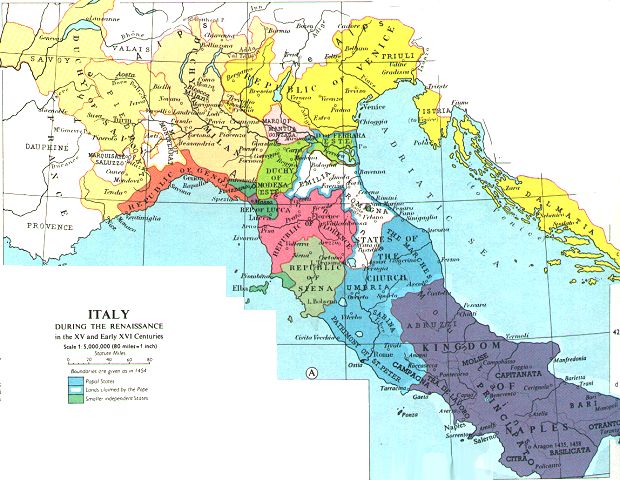


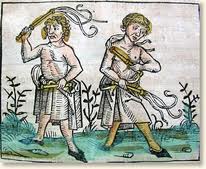







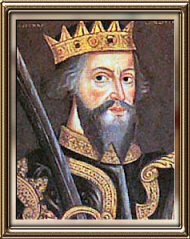


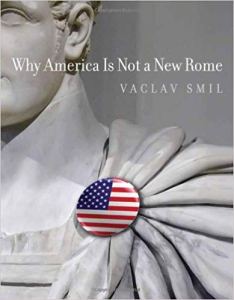

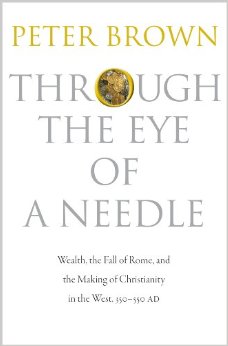


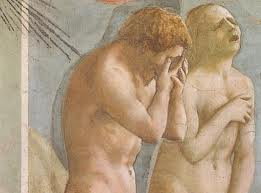


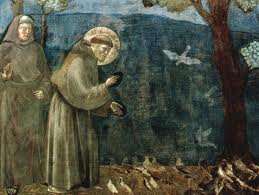






 A Stick in the Mud