“Into the Quagmire”

Most of us have some familiarity with the fact that we failed in Vietnam, though many might debate the reasons for this failure.  Some see the fight as essentially hopeless, from an American point of view.  When General Petraeus asked historian Stanley Karnow (author of Vietnam, a History) for advice about fighting in Iraq based off of his knowledge of Vietnam, Karnow responded that the biggest lesson was that we should not have been there in the first place.

Perhaps true, but not very helpful to Petraeus.

Others, like Max Boot, argue that had we fought the war in a different way — as a small, counterinsurgency war, we could have drastically lowered the financial and human cost of the war, maintaining political will at home while fighting more effectively abroad.  Others, like General Westmoreland himself, argued that had the “gloves come off” and we bombed more heavily and used more troops, we would have had success.

Given this, I wasn’t sure what Brian Van DeMark could offer in his book, Into the Quagmire, but I found myself pleasantly surprised.  Van DeMark concentrates not so much on the military side, but the political side of South Vietnam, and the internal debates within the Johnson administration over what to do about the eroding South Vietnamese government.  What surprised me was that almost no one in Johnson’s circle of advisors had any real optimism that military action would work to achieve their objectives. Johnson and others astutely recognized that the chaos of South Vietnam’s political situation stood as their main problem.  Military action in defense of a an unstable government would almost certainly do nothing to stabilize the regime.
Some argued that our presence would only destabilize them, doing their “dirty work” for them while at the same time making them look weak in the eyes of the South-Vietnamese themselves.  Dean Rusk had more optimism than most, but even he realized that our military action had a limited chance.  McGeorge Bundy thought success, “unlikely despite our best ideas and efforts,” and believed that the U.S. plan of action was, “likely to stretch out and be subject to major pressures both within the U.S. and internationally.”  Johnson saw, “no point in hitting the North if the South is not together.”  Ambassador Maxwell Taylor told Johnson that “intervention with ground combat forces would at best only buy time and would lead to an ever increasing commitments, until, like the French, we would be occupying an essentially foreign country.”  Johnson’s  friend Senator Mike Mansfield wrote him that,

Under present conditions [the U.S. sticking to bombing exclusively] Hanoi has no effective way of retaliating against the air-attacks.  But if we have large numbers of troops in Vietnam, the Communists would meaningful U.S. targets against which to launch their principal strength, [infantry].  Hanoi could strike back at us by sending main forces into the South.

And so on, and so on.

So why did Johnson end up committing more than 1/2 million men into a war that few believed we could really win?

Part of the logic came from Ass’t Secretary of Defense John McNaughton, who argued that South Vietnam’s dire condition required dramatic, “life-saving” intervention that might possibly give them a chance to live.  It probably wouldn’t work but was, “worth a shot.”  Along with this, ancillary concerns about China and the Domino Theory had their place.  But Van DeMark’s narrative shows that Johnson’s concerns about the domestic politics drove much of his Vietnam policy.  This makes sense, for Johnson shone on the domestic scene, and this is where his strengths lay.  It makes sense that he put his energies here.

Johnson wanted desperately to pass his “Great Society” legislation, and needed broad congressional support to do so.  He feared that inaction in Vietnam would provide enough ammunition to his critics to derail his domestic agenda.  Taking action, any action, would show his “tough” stance on communism and rob the right-wing of political leverage against him.  As Bundy said,

In terms of domestic politics, which is better: to ‘lose’ now or to ‘lose’ after committing 100,000 men?  The latter, [f]or if we visibly do enough in the South, any failure will be, in that moment, beyond our control.

And beyond political reproach from the right.

I can sympathize with Johnson in many ways regarding Vietnam.  He inherited a very sticky situation that he had no part of creating.  The loss of China, Johnson knew, helped lead to the rise of McCarthy.  With Cuba going communist and opportunities lost in North Korea, something it seemed, “had to be done.”  In the end, our failure in Vietnam involved poor judgment and bad choices from many different people besides Johnson.  In the end, no one’s perfect.

But you can’t stop there.  As Polybius stated,

I find it the mark of good [leaders] not only to know when they are victorious, but also to know when they are beaten.

Johnson does deserve a great deal of criticism for using real troops who would both inflict and suffer real death to prop up his domestic agenda.  Politics, after all, involves a kind of unreality where crafted image only sometimes leads to substance.  To use real lives to bolster an image is in my mind, to commit a definite evil in hopes of an imagined, or possible good.  It’s a poor foundation on which to build, and often does not even accomplish what you hope for, since one builds upon image, upon sand.

There also seemed to be a blind “hope against hope” mentality that reasoned, “Failure is quite likely, but we have to do it, so therefore it can work.  This sense of feeling trapped, of having ultimately no choice in the matter, strikes me as succumbing to fate, a moral laziness that leads to willful blindness.  As Toynbee wrote,

. . . the prospects of man in Process of Civilization depend above all on his ability to recover a lost control of the pitch.

In Johnson’s case, he did get his Great Society legislation passed, but almost certainly would have anyway with or without Vietnam.  Our troubles in Vietnam surely helped contribute to Nixon’s election in ’68 (though to be fair, Nixon was not nearly the conservative that Goldwater was, with his overtures to the Soviets, China, the creation of the EPA, etc.).   Johnson lost his presidency, and Democrats lost the White House.  This seems to me like reality asserting itself, a natural result of an unnatural policy.

One sees a similar principle at work with rookie NFL quarterbacks.  Many think that what rookie qb’s need is a an effective running game to take the pressure off the need to pass, to avoid “third and long” situations.  I agree with commentator Mike Lombardi, however, who said that rookie quarterbacks don’t need a running game so much as they need a good defense.  A good defense will always keep games close, which allows the offense to avoid the need to throw all the time, and force the issue to get big plays and catch up.


“Armies of the Raj,” and the Psychology of Empires

I picked up Byron Farwell’s Armies of the Raj on a whim, and was very pleasantly surprised.  From the title one might think this book has a very narrow focus, but this is not so.  Farwell uses the army as a springboard into England itself and the whole Victorian era.  Cultures come in many parts, but each diffracted part contains the whole, like light through a prism. So, while this book is military history, it is really cultural history disguised as military history, which I appreciate.

Many have made the point that Victorian era nations really worshipped themselves, and one certainly sees this confirmed by Farwell.  Part of this might have resulted from those India being away from the home country.  Perhaps they felt the need to overcompensate and out-English those in England itself.  I suppose this ‘diaspora’ psychology is not common to the English.  David Hackett-Fischer touched on this same psychology in his wonderful examination of New Zealand and America, both settled by Brits. This might not have been a problem, were it not for the over-inflated view of themselves the Victorians possessed. Toynbee comments,

The estrangement between India and a western world which, for India, has been represented by Great Britain, goes back behind the beginning of the Indian movement for independence in the eighteen- nineties, and behind the tragic conflict in 1857. It goes back to the reforms in the British administration in India that were started in the seventeen-eighties. This birth of estrangement from reform in the relations between Indians and English people is one of the ironies of history; and yet there is a genuine inner connection between the two events. In the eighteenth century the then newly installed British rulers of India were free and easy with their newly acquired Indian subjects in two senses. They were unscrupulous in using their political power to fleece and oppress them, and at the same time they were uninhibited in their social relations with them. They hob-nobbed with their Indian subjects off duty, besides meeting them at work on less agreeable terms. The more intellectual Englishmen in India in the eighteenth century enjoyed the game of capping Persian verses with Indian colleagues; the more lively Indians enjoyed being initiated into English sports. Look at Zoffany’s picture ‘Colonel Mordaunt’s Cock Match at Lucknow’, painted in 1786. . .

It tells you at a glance that, at that date, Indians and Englishmen could be hail-fellow-well met with one another. The British rulers of India in the first generation behaved, in fact, very much as their Hindu and Moslem predecessors had behaved. They were humanly corrupt and therefore not inhumanly aloof; and the British reformers of British rule, who were rightly determined to stamp out the corruption and who were notably successful in this difficult undertaking, deliberately stamped out the familiarity as well, because they held that the British could not be induced to be superhumanly upright and just in their dealings with their Indian subjects without being made to feel and behave as if they were tin gods set on pedestals high and dry above those Indian human beings down below.

Exhibit B for Toynbee’s analysis might be this painting done of Queen Victoria’s visit to the “Jewel in the Crown”. . .

What can account for this shift, and how did it express itself?

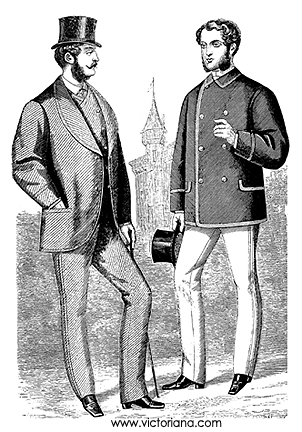
One obvious reason was the Suez Canal, which made transportation to India quicker and safer.  This opened up the possibility of women and families traveling to India, which meant the end of India as a playground for English businessmen, and the arrival of more civilizing influences.  But if one looks at how Victorians dressed, one sees that their version of a “civilized” world was in effect a closed system.  They would not be able to fully reach out to Indians.  Even their clothes seem to send a message of, “Back!  Back, I say!”

Before slamming the British completely, Farwell argues (and I agree) that many if not most British had a sincere desire to do good in India.  And they did in fact accomplish a variety of good things.  As to whether or not the good outweighed the bad in the end, Farwell doesn’t say, and I would think it’s too soon to tell for sure.  He puts his focus on how  the British reformed the military after the Sepoy Rebellion of 1857, and how their innate prejudice kept getting in the way in a few key areas:

  • The British wanted to integrate Indian troops more into the regular army, but no Indian was ever allowed to command a British soldier
  • Indian officers never had the social privileges that British officers had
  • The British recruited troops very successfully in certain provinces, but never even tried to recruit in other areas of India, believing the people there to be less martial in temperment.  Indians in the British army could never really claim to represent India as a whole, and this had a terrible impact when India did gain its independence.

As time went on the British changed some of their attitudes and tried harder to treat Indians equally. Yet rarely could they go all they way.  Some officers clubs for example, came to allow Indian officers to the bar and billiard room, but not the “swimming bath,” as they called it (though some British officers refused to allow their troops to join if their Indian officers were not granted full membership).  When W.W. II came the British worked hard to recruit all the Indians they could, and the army served to break down a variety of social barriers between British and Indians, and between Indians themselves.  Yet when it came to actually declaring war, the British government announced that India was at war with Germany without even consulting the Indian National Congress, a foolish act that led to much violence and a tragic split between Moslems and Hindu’s within the Congress itself.  General Auchinleck commented in 1940 that,

In my opinion we have been playing a losing hand from the start in this matter of “Indianization.”  The Indian has always thought, rightly or wrongly, that we never intended this scheme to succeed and expected it to fail.  Colour was lent to this view by the way in which each new step had to be wrested from us, instead of being freely given.  Now that we have given a lot we get no credit because there was little grace in our giving.

In their foibles, the British are hardly alone.  Empires find it very difficult psychologically to fully open up themselves.  They tend to believe that the locals should be thankful, first and foremost, for the blessings they bring.  They want to be seen as benefactors.  At their worst, they insist that those they rule thank them for their kindness, and get angry if others fail to do so. . .

The book is another confirmation about how nations cannot do things halfway.  You cannot bring part of your civilization and trust that it will satisfy.  If you rule on the basis of the superiority of your civilization and claim to bring its blessings, you have to bring them all.  England could claim that they brought more economic opportunity to India, as well as modernization.  These are features of western culture.  But many of the Indians the British generously sent to Oxford and Cambridge (like Ghandi and Nehru) learned that there was more to western culture than railroads.  Others principles, like equality under the law and self-determination will be evident in a western education.  That the British did not see this coming testifies to their short sight, but again, their problems were human problems, and hardly uniquely their own.  In a fallen world, we often don’t recognize what’s best for ourselves, let alone others.

Michael Knox Beran’s “Forge of Empires”

Beran’s book looks at Abraham Lincoln, Otto von Bismarck, and Alexander II, three contemporary heads of state who remade their respective countries.  Beran attaches the word “revolutionaries” to each of these rulers, though not all revolutionaries are created equal.

One can read this book even if you’re only interested in one or two of the people, as I was.  I thought his comparison of Bismarck and Lincoln refreshing.  Historian James McPherson called the Civil War a “Second American Revolution,” and I think Beran would agree.  If we think about the Civil War like this it puts a new perspective on Lincoln’s presidency.

To my mind the Confederacy acted much like the British did in the late 18th century.  I think the British had technical legality on their side, but to focus on that alone missed the most important details.  They were right, for example, to insist that the colonies never had a separate existence apart from England, like say, Ireland did until it was incorporated into the British empire.  But though correct in the barest factual sense, England overlooked the reality that American had de facto operated independently in almost every way since the 17th century.  While some townships in England had no direct Parliamentary representative (and so the colonists shouldn’t feel it their absolute right to have one), England ignored the great differences between an English township and colonies across the ocean.

So too the Confederacy may have been technically correct about federal power as it related to the slavery question.  But as one student of mine said, “It’s slavery, who cares about the Constitution.”  Anti-slavery advocates called for the country to be guided by a “higher law” than the Constitution.  When the southern states objected to this idea, they immediately lost the real argument.  They put the Constitution itself, which they claimed to follow, in the perilous ground of complete irrelevancy.  If it could not solve the slavery issue, what good was it?

By 1861 the Constitution had proved inadequate to deal with fundamental questions of human existence.  So yes, Lincoln did skirt some constitutional guidelines.  But he must be understood in a revolutionary context.  Revolutions happen in part because the current system fails to deal with reality.  Revolutionaries often find themselves cast off from traditional moorings because the tradition’s failure led to the revolution in the first place.  Revolutionary movements therefore have great opportunity and immense danger inherent in them.  So yes, Lincoln did play fast and loose with certain constitutional provisions (as did Jefferson Davis in the South).  But we should marvel at how much he preserved, rather than what he bent or broke.  The Civil War did change America, but I would argue that it was Lincoln’s moral sense, and a Christian moral sense from around 1862 on, that preserved much of the best of what the founders bequeathed.

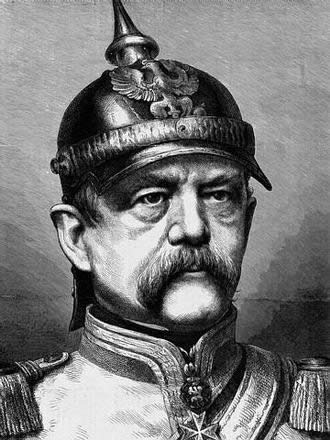
Bismarck, like Lincoln, was a brilliant politician who forged a nation from a confederacy of provinces.  But that is where the similarities end.   He manipulated other countries and even his own king.  He cared enough about democracy and constitutionalism to use it when it suited him, but he always came back to force, his weapon of choice.  Bismarck was in certain key ways a friend of the Jews, and so I very much want to believe he would have hated Nazi rhetoric.  But his insistence on using force to bypass the democratic process bore terrible fruit generations later.

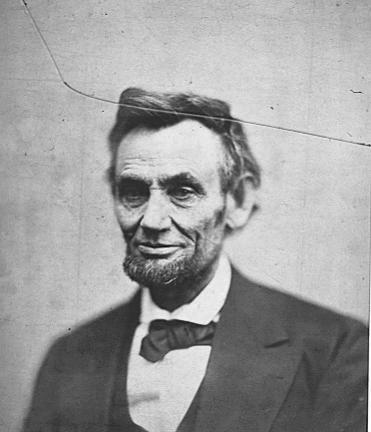
Most of their portraits reveal this basic difference.  Bismarck, for example often posed in military garb, which suits his whole political philosophy.

On the left, realpolitik with a heart, on the right, realpolitik with nothing but politics.  It sounds sentimental and mushy, but it takes a gentle hand and mercy to make sure that revolutions do not become tyrannies.

11th Grade: Market Psychology

Greetings,


This week we looked at the Stock Market Crash of 1929 and how it happened.   Not all Stock Market crashes cause deep depressions or recessions, and in fact, many now argue that the Great Depression had many other factors besides the ’29 crash.  For example, only about 3% of Americans owned any stock at all in 1929.  But I do think that the crash both revealed and foreshadowed deep problems within the economy as a whole, and so I still thought it worthwhile to examine.  At the very time, for example, when the stock market rose dramatically, key industries like agriculture and construction showed major signs of weakness.
Not only that, it gave us a great platform to discuss the bursting of the dot-com bubble in 2000, which did not bring about substantial economic harm, and the crash of 2008 recently which did.  What were the differences in the two, and which was 1929 more like?  It seems that the 2000 dip revealed a weird anomaly in the economy, whereas in 2008, the problems lay much more at its heart, with our financial system in general.  Here are a few different graphs that show similar drops in the market, but each had its own particular effect on the economy:
This graph suggests that maybe market ‘crashes’ are simply ‘corrections.”
We spent two days this week on our own’Stock Market of the  1920’s’ activity.   My main purpose was not recreate  entirely how stocks are actually sold and have value.  I wanted the students to focus on understanding the psychological aspect of not only stock value, but the  value of anything at all.  After all, what makes our paper money  valuable in itself?  Only that we have all agreed as a society that it  does carry value.  If we lost that belief, the economy would collapse  shortly.  
In our game the four teams quickly got a handle on how they could disrupt other teams.  Each began with a diversified portfolio, but watchful eyes soon noted who had accumulated the most amount of a certain stock.  Other teams would then work hard to devalue that stock, trying to sell it to others at ridiculously low prices, with the some teams countering by buying it way too high.  
This instability made the market wobbly, whereby the ‘government’ (myself) stepped in to buy shares at market prices.  Unfortunately, this strategy left the government holding a great deal of unpredictable stock.  Luckily for all, one investor decided to buy back from the government at slightly higher than market rate, which boosted market confidence in general.  That move propelled them to a narrow victory.
I hope the students had fun, as I did watching their not very subtle machinations against one another.
Blessings,
Dave Mathwin

A Word on Methodology and the Purpose of History

On the first day of school in 8th grade Ancient History (which is the first time I will have taught any of the students in that class), I begin class with the premise that I am wasting their time.

History, after all, (I argue) has no real bearing on your life.  We study some names and dates from the past, a few battles here and there.  Sometimes it might have entertainment value but will never really impact you in any way.  Whatever Cyrus the Great did, be it good or bad, won’t impact on you today.  The past has no present.

Depending on their personality and previous experience students either get very excited or troubled by the prospect that we can blow off the year.  Yes, eventually we get around to reasons why hopefully I will not waste their time, but we should not sweep the arguments against History under the rug too quickly.  Before we bother with History in the first place, we should know what we are doing and why.

Some students respond by stating that history offers us lessons.  When people do bad things, we can learn to avoid them, when they do good we can emulate them.

This is a very common answer, with some truth in it, but I refuse the premise on which it’s based.  Reducing history to didactic lessons runs akin to telling people that Christianity is about adhering to a superior morality.  Whatever truth lies in that statement, Christianity really is not about “morality” at all, or at least, the moral component makes no sense without a much larger context.

In the same way, History does not begin and end with proverbs and moral lessons.  It should be about encounter.  It should be about transformation.

History is often and easily abused.  One common form of abuse is using History as a vehicle for proving a pet theory, something all of us can be guilty of at times. Such an approach is both dangerous and uncharitable.  Uncharitable, because History has no room to speak for itself when we insist it conform to us.  We stop listening and lose the possibility of empathy and understanding.  Dangerous, because manipulating the past puts us in a position of great power.  We erect a wall between ourselves (the “good,” or those with knowledge and understanding) and others, those who “should know better.”  If we do this, we cannot learn, cannot be challenged, and cannot grow.

Finitude will always limit our experience, but we need confronted with “the other” to get shaken out of our narrow field of vision.  Historians can often make the mistake of viewing the past in terms of the present, but this robs the power of the past to really do its work.  Seeing through different eyes pushes us beyond ourselves.  In writing about great books, C.S. Lewis said,

. . . in reading great literature I become a thousand men and yet remain myself. Like the night sky in the Greek poem, I see with a myriad eyes, but it is still I who see. Here, as in worship, in love, in moral action, and in knowing, I transcend myself; and am never more myself than when I do.

This is how History (like all our endeavors) should prepare us for the Beatific Vision.  The “otherness” of different cultures and people can by grace train our hearts for the “otherness” of God’s Kingdom.  Other times and places should also make us humble and charitable.  Hindsight is a great luxury, but we must avoid “finger-wagging.”  We must honor the past by viewing it as they saw it, not as we see it now.  We too act in a fallen context without omniscience.  Those in the past lived under the same constraints.  What kind of decisions would we make in their place?

Bringing it to the present, how do we act morally and justly with the information we have?  How do we make decisions in a fallen world?   We must take responsibility for these decisions, and the difficulties we face should make us rely on God’s grace and wisdom.  Our own sin should make us slow to judge those in the past that struggled with many of the same things as ourselves.  Are we so sure that we would do better?  When we, with proper conviction, call out the past for its mistakes we likely will need the humility to call ourselves and our own society to account.

I am not interested so much in changing the opinion of any student about, say, Napoleon or the Industrial Revolution.  But I am very much interested in 1) Each student coming to a greater understanding of their view of the world, and the extent to which that view can be supported by Christian belief, ethics, etc., and 2) Each student more fully understanding the implications of their decisions in the short and long term for themselves and others.

Mark Twain once said that history does not repeat itself, but it does rhyme.  As we see connections and patterns, we learn more about humanity.  But humanity does not exist in a vacuum.  As in all disciplines, the study of History involves an attempt to understand Reality, imbued with God’s presence.  As Francis Schaeffer said, “He is there and He is not Silent.”

11th Grade: The Bible, the Constitution and Slavery

This was in response to a parent question about the Constitution and slavery.  A difficult and debated question to be sure.  What follows is my two cents, but I would be curious for anyone else’s thoughts. . . 

As to why the Constitution did not forbid slavery, my guess is that:

– The disagreement on slavery could not be solved either at the time of the Declaration (Jefferson’s original draft had an anti-slavery section in it) or the Constitution because it was too much a part of enough of the states at the time.  It had become a part of everyday life.  Slavery was considered to be worth having to get (at least in their minds) the greater good of unity.  If you look at the Convention debates, there is some doubt whether or not states like South Carolina would have signed onto the Constitution if it banned slavery.  Whether they were right about the ultimate benefits of that trade-off . . . I’m not sure.  But personally it would seem to me that history says ‘no.’  We don’t know what would have happened had the anti-slavery faction left some states out of the Union.  But it’s hard to imagine it being worse than a Civil War that claimed 600,000 lives and divided the country for another 100 year afterwards, with segregation, etc.

Of course one could argue that there was nothing in the Constitution that made the continuation and expansion of slavery inevitable, and I would agree.  But the Constitution did not really provide a physical or moral framework for deciding this question either, aside from the difficult amendment process.  The southern states only accepted the 13th-14th Amendments when they were totally broken and had no recourse to object.

– I also think that many believed that, while slavery was bad, it should go away of its own accord rather than government action.  This has a lot to do with many people’s view of ‘liberty’ at that time.  “I don’t like what you’re doing, but I suppose it’s not my business,” etc.  It might be similar to someone today on the abortion question.  “I don’t approve of abortion, but I don’t think government should be telling people what to do with their bodies, their families, etc.  Those are private, not public matters.”

As to the Bible and slavery, this too is a tough, slippery question.  I tend to think that while the Bible does not speak directly against it, the entire tenor and ‘atmosphere’ of the New Testament speaks against it indirectly.  This is in part why when the Christian Middle Ages come, slavery disappears almost entirely for the first time in human history.  When the Church begins to falter badly in the Renaissance, slavery returns.  Though I realize there were other factors, such as exploration, for one.

The concept of free individuals is also relatively new.  Aristotle, for example, was a progressive thinker in many ways.  But he defended certain kinds of slavery because he believed some were nothing more than slaves by nature.  Though some slave owners claimed him as an authority, they should have been more careful.  Aristotle did not think anyone should be a slave by race, or merely because they were captured in war.

What do you think?