I find the trend in modern history books to use BCE (Before Common Era) and CE (Common Era) quite amusing. Clearly as a culture we have a profound unease with the Christian roots of our civilization. Naturally, then, many take issue with dividing time around the Incarnation. Obviously I disagree with such a stance, but it makes sense that people would want to order their world around their beliefs. And yet, using BCE/CE seems such a laughable attempt at “kicking against the goads.” “When is the ‘Common Era?'” one might ask. “After the coming of Jesus,” is the only response. “What makes that era ‘Common?'” as opposed to other eras?” I can’t fathom anything other than a shrug at that point. One archaeologist stated, “Before the Common Era (B.C.E.) and the Common Era (C.E.), are exactly the same as B.C. and A.D. but have nothing to do with Christianity.”
No . . . certainly not!
If you’re going to abandon a Christian understanding of time, abandon it already. It will make things clearer in the culture and one’s own mind as well.
That’s why part of me applauded when I read this article which tells us that devotees to paganism in Iceland are building a temple to Thor. For many decades now Christian understandings of nature, the human person, of sexuality, etc., etc. have steadily eroded, and been replaced in some ways by a neo-pagan revival. If you actually build a temple, it communicates the reality that we are really worshipping something and calling a spade a spade. Again, Jesus tells us that He prefers hot or cold people. It’s all the lukewarm mush in our culture that makes things so difficult.
As I read a bit more, however, I discovered that they’re not going to sacrifice animals. Of course in many ways this is good news because, after all, no one wants to see animals sacrificed. But in other ways . . . the concept of sacrifice and propitiation, so crucial to Christianity, if taken seriously can lead one back to Christianity. It is an example of the benefits of clarity.
And then Hilmar Örn Hilmarsson, high priest of Ásatrúarfélagiðadded, added, “I don’t believe anyone believes in a one-eyed man who is riding about on a horse with eight feet. We see the stories as poetic metaphors and a manifestation of the forces of nature and human psychology.”
Ugh. More mush, then. Thor, I think, would not be pleased.
It’s not easy to get students to see outside themselves and the culture they inhabit. Our experience conditions us to love what who we are. This is natural, and even Biblical to some extent. But of course many other great cultures exist/ed and studying History can shake us up and force us to confront ourselves anew.
That’s why I treasured the comment of one student years ago when we looked at the work of the Renaissance genius Brunelleschi, who advanced the science of perspective,
built the first dome in the western world since the Pantheon . . .
and entered the sculpture/engraving contest for the doors of the Florence baptistry . ..
among other things. After taking all this in, one student remarked, “Boy, we suck,” which delighted my ears to no end. He understood that in many ways, our civilization has a long way to go. I don’t love Renaissance culture, but clearly they had enormous achievements in important areas, and we justly remember them for it. They put their time and money into innovating things beautiful and useful, things that have blessed succeeding generations for more than half a millennium.
What about us today?
I came across this Marginal Revolution post from a few weeks ago, where Tyler Cowen makes the point that India’s latest Mars mission cost less than Gravity, Hollywood’s latest space movie. At various points in the history of the west different inspirations have taken hold. At one point we built cathedrals, at other times we sailed the seven seas, or all wanted to speak French. We had inspiration and aspirations. This is where we spent our time, energy, and money.
The world will little remember Transformers: Age of Extinction, or Pirates of the Caribbean: On Stranger Tides despite the fact that they cost $325 and $378 million respectively. On balance it appears we put our money, our dreams, into merely entertaining ourselves. We’re not, praise God, quite at “bread and circuses” yet, but the trend should concern us.
And given what I witnessed Sunday, we can’t even make good Super Bowl commercials anymore. I miss the good ol’ days (exhibit ‘A’ below).
I realize it won’t shock anyone to say that Paul McCartney in his heyday was a great songwriter. But listening to a few different songs recently made me realize that McCartney fails to get credit for his skill with the bass guitar. The Beatles could write songs, yes, and they could sing. But they wouldn’t have earned their reputation as one of the great all-time bands if they lacked genuine skill on their instruments, and McCartney is no exception.
McCartney’s father had a musical career largely playing show tunes and bouncy, playful big-band numbers, and McCartney has this sunny whimsy in his personality. I think Lennon grew to resent this side of McCartney — the side that led him to write songs like, “When I’m 64,” and “Penny Lane.” Lennon wanted “to rock” and saw songs like this as wimpy, soft, and (heaven forbid) “square.” Lennon of course had a playful side too (i.e., “I am the Walrus”) but used it to destroy conventionality (“I am the Walrus”), not to write fun sing-along numbers. Lennon loved to destroy — not always a bad thing.
But I’m convinced that McCartney’s whimsical side led him to take some risks with his bass playing at crucial moments. First off, we can note that he could play a generally solid and fluid bass line, with “Hey Jude” as a good example. You can actually hear the bass line in the version of the song on the Love album — listen around the 3:06 mark:
But I have two examples of his playful side coming out in his bass playing:
Here is “Dear Prudence,” where the bass carries the song, especially from the 1:04 mark onwards:
While The Social Network I got re-exposed to “Baby You’re a Rich Man” (the song gets used expertly right at the end of the movie). Especially in the chorus’ from about the half-way point of the song onwards, McCartney really unwinds the bass and spices up the song beautifully
The lesson perhaps for the Lennon’s of the world (more absolutist than most) is not to throw the baby out with the bathwater. Perhaps we could also say that certain skills or tendencies that annoy us in one way might have unexpected benefits in other ways.
When I first heard Stravinsky’s The Rite of Spring I failed to be impressed. I knew something of what I thought Stravinsky tried to accomplish, to make something “primal,” but felt that the orchestra may not have been the best tool for that purpose. Besides, I tended to hear jumbled nonsense. Years later I thought again about the piece and admired it a bit more (but not that much more) when I perhaps gained greater understanding of what Stravinsky might have intended in relation to the end of the Victorian era (something I speculate on in this post).
When The Bad Plus, a jazz-rock piano trio and probably my favorite musical group, decided to play the piece I raised an eyebrow. True, they had covered other 20th century classical pieces to great effect, but I didn’t really like the “Rite of Spring” all that much. It didn’t seem like a piece open to reinterpretation or rearranging, and if they did not do this I feared that they would simply play the score rote with a drum beat over top. Add to that, what ultimate spiritual significance could the piece have? If Stravinsky hearkens back to a pagan past, could it be considered a historical reflection? Or if he meant to contemporize the concept, to what extent could I “buy in” with a pagan message?
Thinking about this I recalled a story of G.K. Chesterton in his “Father Brown” stories (I cannot remember which one) where one of the characters has a spiritual transformation by witnessing a person devote themselves to an umbrella (I think) on a ship lost at sea. He realized that such a person, though crazy, had more spiritual insight about God than his own vague vanilla theism, for the crazy man at least understood the nature of devotion and sacrifice.
The law clearly serves as a preparation for the gospel (Gal. 3:24), but we can wonder to what extent certain elements of pagan religion had their roots in anything beyond the revelation of creation (Rom 1:21). The Egyptians, the Greeks, and the Norse all have myths about a dying and rising god. Nearly all pagan religions involved notions of propitiation. Perhaps this is one reason why Gentiles can directly bypass Judaism and go straight to Christ. They too had a tutor. Some early church fathers, notably, Eusebius, wrote about how paganism could be a praeparatio evangelica — a fancy word for “preparation for the gospel.”
Stravinsky’s own walk of faith had its ups and downs. Raised in the church, he walked away from the faith in his later teens, returning to Christianity for good only in his early 40’s. He wrote the “Rite” during his sojourning period. But during this period he apparently did not slip into vaguely religious cant. With the “Rite” he stayed connected to the crucial truths about death and life. Perhaps the “Rite” served as his own praeparatio evangelica
On Paul’s missionary journeys we generally see three classes of people: 1) “Ensconced” Jews, 2) “God-fearers,” or Gentiles who had converted to some kind of Judaism, and 3) Standard pagans. The “God-fearers” responded the best of these three, but the pagans responded better than the lifelong Jews. No doubt many reasons exist for this, but one simply might have been complacency. Perhaps living far away from the temple might have distanced them from the notion of sacrifice, of the need for life to come from death. For all its faults the pagans still believed enough to offer sacrifices, and perhaps this opened them up to the truth of the gospel.*
So, back to the Bad Plus.
This is a great recording. The fact that we have just two instrumentalists, and one of them a bassist, gives the music a more spare and earthy feel. Dave King’s drumming roots the music far more to the ground than and orchestra could. For me, this is a recording of the “Rite” that makes the music make sense and gives it the power Stravinsky no doubt intended, and for me at least, never achieved. Here below is an excerpt of the last movement (Bad Plus fans will note their own personal exclamation point in the form of the end of their own song “Physical Cities”). Normally I hate it when people say, “You have to listen to the whole album to get the full effect.” In this case I think it true, but this gives one a good entry point.
Having experienced the prelude, we can now experience an “A.D.” reality, with a conductor who marvelously looks like he might have just arrived from a sacrificial dance (try pausing it right at .06 to see some wild hair). A Merry Christmas to all . . .
*In his essay, “Christianity and Civilization,” historian Arnold Toynbee makes this very point. I include a portion of it here . . .
. . . In this Catholic form of the Church, I see two fundamental institutions, the Sacrifice of the Mass and the Hierarchy, which are indissolubly welded together by the fact that the priest, by definition, is the person with the power to perform the rite. If, in speaking of the Mass, one may speak, without offence, with the tongues of the historian and the anthropologist, then, using this language, one may describe the Sacrifice of the Mass as the mature form of a most ancient religious rite of which the rudiments can be traced back to the worship of the fertility of the Earth and her fruits by the earliest tillers of the soil. (I am speaking here merely of the mundane origin of the rite.) as for the hierarchy of the Church in its traditional form, this, as one knows, is modelled on a more recent and less awe-inspiring yet nevertheless most potent institution, the imperial civil service of the Roman Empire. The Church in its traditional form thus stands forth armed with the spear of the Mass, the shield of the Hierarchy, and the helmet of the Papacy; and perhaps the subconscious purpose –or the divine intention, if you prefer that language– of this heavy panoply of institutions in which the Church has clad herself is the very practical one of outlasting the toughest of the secular institutions of this world, including all the civilizations. If we survey all the institutions of which we have knowledge in the present and in the past, I think that the institutions created, or adopted and adapted, by Christianity are the toughest and the most enduring of any that we know and are therefore the most likely to last –and outlast all the rest. The history of Protestantism would seem to indicate that the Protestant act of casting off this armour four hundred years ago was premature; but that would not necessarily mean that this step would always be a mistake; and , however that may be, the institutional element in the traditional Catholic form of the Church Militant on Earth, even if it proves to be an invaluable and indispensable means of survival, is all the same a mundane feature which makes the Church Militant’s life different from that of the Kingdom of Heaven, in which they neither marry nor are given in marriage but are as the angels of God, and in which each individual soul catches the spirit of God from direct communion with Him –‘like light caught from a leaping flame,’ as Plato puts it in his Seventh Letter. Thus, even if the Church had won a fully world-wide allegiance and had entered into the inheritance of the last of the civilizations and of all the other higher religions, the Church on Earth would not be a perfect embodiment here on Earth of the Kingdom of Heaven. The Church on Earth would still have sin and sorrow to contend with as well as to profit by as a means of grace on the principle of ?Ueae iUeio, and she would still have to wear for a long time to come a panoply of institutions to give her the massive social solidity that she needs in the mundane struggle for survival, but this at the inevitable price of spirituality weighing her down, On this showing, the victorious Church Militant on Earth will be a province of the Kingdom of God, but a province in which the citizens of the heavenly commonwealth have to live and breathe and labour in an atmosphere that is not their native element.
The position in which the Church would then find herself is well conveyed in Plato’s conceit, in the Phaedo, of the true surface of the Earth. We live, Plato suggests, in a large but local hollow, and what we take to be the air is really a sediment of fog. If one day we could make our way to the upper levels of the surface of the Earth, we should there breathe the pure ether and should see the light of the Sun and stars direct; and then we should realize how dim and blurred had been our vision down in the hollow, where we see the heavenly bodies, through the murky atmosphere in which we breathe, as imperfectly as the fishes see them through the water in which they swim. This Platonic conceit is a good simile for the life of the Church Militant on Earth; but the truth cannot be put better than it has been by Saint Augustine.
“It is written of Cain that he founded a commonwealth; but Abel –true to the type of the pilgrim and sojourner that he was– did not do the like. For the Commonwealth of the Saints is not of this world, though it does give birth to citizens here in whose persons it performs its pilgrimage until the time of its kingdom shall come–the time when it will gather them all together.”
This brings me in conclusion to the last of the topics on which I am going to touch, that of the relation between Christianity and progress.
If it is true, as I think it is, that the Church on Earth will never be a perfect embodiment of the Kingdom of Heaven, in what sense can we say the words of the Lord’s Prayer: ‘Thy Kingdom come, Thy will be done in Earth as it is in Heaven’? Have we been right, after all, in coming to the conclusion that –in contrast to the cyclic movement of the rises and falls of civilizations– the history of religion on Earth is a movement in a single continuous upward line? What are the matters in which there has been, in historical times, a continuous religious advance? And have we any reason to think that this advance will continue without end? Even if the species of societies called civilizations does give way to a historically younger and perhaps spiritually higher species embodied in a single world-wide and enduring representative in the shape of the Christian Church, may there not come a time when the tug of war between Christianity and original sin will settle down to a static balance of spiritual forces?
Let me put forward one or two considerations in reply to these questions.
In the first place, religious progress means spiritual progress, and spirit means personality. Therefore religious progress must take place in the spiritual lives of personalities –it must show itself in their rising to a spiritually higher state and achieving a spiritually finer activity.
Now, in assuming that this individual progress is what spiritual progress means, are we after all admitting Frazer’s thesis that the higher religions are essentially and incurably anti-social? Does a shift of human interests and energy from trying to create the values aimed at in the civilizations to trying to create the values aimed at in the higher religions mean that the values for which the civilizations stand are bound to suffer? Are spiritual and social values antithetical and inimical to each other? Is it true that the fabric of civilization is undermined if the salvation of the individual soul is taken as being the supreme aim of life?
Frazer answers these questions in the affirmative. If his answer were right it would mean that human life was a tragedy without a catharsis. But I personally believe that Frazer’s answer is not right, because I think it is based on a fundamental misconception of what the nature of souls or personalities is. Personalities are inconceivable except as agents of spiritual activity; and the only conceivable scope for spiritual activity lies in relations between spirit and spirit. It is because spirit implies spiritual relations that Christian theology has completed the Jewish doctrine of the Unity of God with the Christian doctrine of the Trinity. The doctrine of the Trinity is the theological way of expressing the revelation that God is a spirit; the doctrine of the Redemption is the theological way of expressing the revelation that God is Love. If man has been created in the likeness of God, and if the tue end of man is to make this likeness ever more and more like, then Aristotle’s saying that ‘man is social animal’ applies to man’s highest potentiality and aim –that of trying to get into ever closer communion with God. Seeking God is itself a social act. And if God’s love has gone into action in this world in the Redemption of mankind by Christ, then man’s efforts to make itself liker to God must include efforts to follow Christ’s example in sacrificing himself for the redemption of his fellow men. Seeking and following God in this way, that is God’s way, is the only true way for a human soul on Earth to seek salvation. The antithesis between trying to save one’s own soul by seeking and following God and trying to do one’s duty to one’s neighbour is therefore wholly false. The two activities are indissoluble. The human soul that is truly seeking to save itself is as fully social a being as the ant-like Spartan or the bee-like Communist. Only, the Christian soul on Earth is a member of a very different society from Sparta or Leviathan. He is a citizen of the Kingdom of God, and therefore his paramount and all-embracing aim is to attain the highest degree of communion with, and likeness to, God Himself; his relations with his fellow men are consequences of, and corollaries to, his relations with God; and his way of loving his neighbour as himself will be to try to help his neighbour to win what he is seeking for himself –that is, to come into closer communion with God and to become more godlike.
If this is a soul’s recognized aim for itself and for its fellow souls in the Christian Church Militant on Earth, then it is obvious that under a Christian dispensation God’s will will be done in Earth as it is in Heaven to an immeasurably greater degree than in a secular mundane society. It is also evident that, in the Church Militant on Earth, the good social aims of the mundane societies will incidentally be achieved very much more successfully than they ever have been or can be achieved in a mundane society which aims at these objects direct, and at nothing higher. In other words, the spiritual progress of individual souls in this life will in fact bring with it much more social progress than could be attained in any other way. It is a paradoxical but profoundly true and important principle of life that the most likely way to reach a goal is to be aiming not at that goal itself but at some more ambitious goal beyond it. This is the meaning of the fable in the Old Testament of Solomon’s Choice and of the saying in the New Testament about losing one’s life and saving it.
Therefore, while the replacement of the mundane civilizations by the world-wide and enduring reign of the Church Militant on Earth would certainly produce what to-day would seem a miraculous improvement in those mundane social conditions which the civilizations have been seeking to improve during the last six thousand years, the aim, and test, of progress under a truly Christian dispensation on Earth would not lie in the field of mundane social life; the field would be the spiritual life of individual souls in their passages through this earthly life from birth into this world to death out of it.
But if spiritual progress in time in this world means progress achieved by individual human souls during their passages through this world to the other world, in what sense can there be any spiritual progress over a time-span far longer than that of individual lives on Earth, and running into thousands of years, such as that of the historical development of the higher religions from the rise of Tammuz-worship and the generation of Abraham to the Christian era?
I have already confessed my own adherence to the traditional Christian view that there is no reason to expect any change in unredeemed human nature while human life on Earth goes on. Till this Earth ceases to be physically habitable by man, we may expect that the endowments of individual human beings with original sin and with natural goodness will be about the same, on the average, as they always have been as far as our knowledge goes. the most primitive societies known to us in the life or by report provide examples of as great natural goodness as, and no lesser wickedness than, the highest civilizations or religious societies that have yet come into existence. There has been no perceptible variation in the average sample of human nature in the past; there is no ground, in the evidence afforded by History, to expect any great variation in the future either for better or for worse.
The matter in which there might be spiritual progress in time on a time-span extending over many successive generations of life on Earth is not the unregenerate nature of man, but the opportunity open to souls, by way of the learning that comes through suffering, for getting into closer communion with God, and becoming less unlike Him, during their passage through this world.
What Christ, with the Prophets before Him and the Saints after Him, has bequeathed to the Church, and what the Church, by virtue of having been fashioned into an incomparably effective institution, succeeds in accumulating, preserving, and communicating to successive generations of Christians, is a growing fund of illumination and of grace-meaning by ‘illumination’ the discovery of revelation or revealed discovery of the true nature of God and the true end of man here and hereafter, and by ‘grace,’ the will or inspiration or inspired will to aim at getting into Him. In this matter of increasing spiritual opportunity for souls in their passages through life on Earth, there is assuredly an inexhaustible possibility of progress in this world.
Is the spiritual opportunity given by Christianity, or by one or other of the higher religions that have been forerunners of Christianity and have partially anticipated Christianity’s gifts of illumination and grace to men on Earth, an indispensable condition for salvation –meaning by ‘salvation’ the spiritual effect on a soul of feeling after God and finding Him in its passage through life on Earth?
If this were so, then the innumerable generations of men who never had the chance of receiving the illumination and grace conveyed by Christianity and the other higher religions would have been born and have died without a chance of the salvation which is the true end of man and the true purpose of life on Earth. This might be conceivable, though still repugnant, if we believed that the true purpose of life on Earth was not the preparation of souls for another life, but the establishment of the best possible human society in this world, which in the Christian belief is not the true purpose, though it is an almost certain by-product of a pursuit of the true purpose. If progress is taken as being the social of Leviathan and not the spiritual progress of individual souls, then it would perhaps be conceivable that, for the gain and glory of the body social, innumerable earlier generations should have been doomed to live a lower social life in order that a higher social life might eventually be lived by successors who had entered into their labours. This would be conceivable on the hypothesis that individual human souls existed for the sake of society, and not for their own sakes or for God’s.But this belief is not only repugnant but is also inconceivable when we are dealing with the history of religion, where the progress of individual souls through this world towards God, and not the progress of society in this world, is the end on which the supreme value is set. We cannot believe that the historically incontestable fact that illumination and grace have been imparted to men on Earth in successive installments, beginning quite recently in the history of the human race on Earth, and even then coming gradually in the course of generations, can have entailed the consequence that the vast majority of souls born into the world up to date, who have had no share in this spiritual opportunity, have, as a result, been spiritually lost. We must believe that the possibilities, provided by God, of learning through suffering in this world have always afforded a sufficient means of salvation to every soul that has made the best of the spiritual opportunity offered to it here, however small that opportunity may have been.
But, if men on Earth have not had to wait for the advent of the higher religions, culminating in Christianity, in order to qualify, in their life on Earth, for eventually attaining, after death, the state of eternal felicity in the other world, then what difference has the advent on Earth of the higher religions, and of Christianity itself, really made? The difference, I should say, is this, that, under the Christian dispensation, a soul which does make the best of its spiritual opportunities will, in qualifying for salvation, be advancing farther towards communion with God and towards likeness to God under the conditions of life on Earth, before death, than has been possible for souls that have not been illuminated, during their pilgrimage on Earth, by the light of the higher religions. A pagan soul, no less than a Christian soul, has ultimate salvation with its reach; but a soul which has been offered, and has opened itself to, the illumination and the grace that Christianity conveys, will, while still in this world, of the narrower opportunity here open to it. The Christian soul can attain, while still on Earth, a greater measure of man’s greatest good than can be attained by any pagan soul in this earthly stage of its existence.
Thus the historical progress of religion in this world, as represented by the rise of the higher religions and by their culmination in Christianity, may, and almost certainly will, bring with it, incidentally, an immeasurable improvement in the conditions of human social life on Earth; but its direct effect and its deliberate aim and its true test is the opportunity which it brings to individual souls for spiritual progress in this world during the passage from birth to death. It is this individual spiritual progress in this world for which we pray when we say ‘Thy will be done in Earth as it is in Heaven.’ It is for the salvation that is open to all men of good will –pagan as well as Christian, primitive as well as civilized– who make the most of their spiritual opportunities on Earth, however narrow these opportunities may be, that we pray when we say ‘Thy Kingdom come.’
A 9th grader recently asked a great question as we recently wrapped up our study of the Roman empire. “Suppose that we could freeze Augustus (a great political genius) at the peak of his abilities and power and have him live forever. Would Rome still have eventually collapsed?” The question immediately grabbed me, for it touches not just on Augustus, not just on Rome itself, but on the idea of decline and death in general.
We can look at this question in a number of ways:
We can imagine Augustus as a hypothetically perfect ruler who never makes mistakes. But other Roman mortals would make mistakes, and these would eventually bring Rome down.
Or we can see neither Augustus or his fellow Romans as perfect. But led continually by Augustus at his peak, the Romans would always be able, at minimum, to tread water and never sink, despite whatever mistakes and sins they commit.
Or we can see the question as a musing on the whether or not decline has any purpose in a grand theological sense. Supposing the near-perfection of Augustus and his fellow Romans, would God still “want” Rome’s decline?
I will speculate on this third option in hopes that it will cover the first two.
When we speak of God “wanting” something we immediately enter the delicate waters of His sovereignty and our free will. Without commenting on this too much, we can safely say that God uses sin and evil to accomplish His purposes — and His main purpose is to save mankind at all times and places from their sins. Many, for example, turn to God in the midst of suffering. Does this mean that God wants us to suffer? Again, it depends — He could prevent it, but often chooses not to because He knows suffering is always a key ingredient in Christian discipleship. The suffering we experience may be a direct result of our sin, the sins of others, or perhaps have no direct connection to sin at all (i.e. the Book of Job). In this latter case, God asks that we submit to a mystery we cannot understand. The history of God’s people gives volumes of evidence for all of these. Might we say the same holds true, then, of nations and empires?
In the Greek world there existed Nemesis, who punished pride, and Tyche, who distributed blessings and “misfortune” throughout for purposes unknown to men. In other words, suffering in the Greek cosmos might result from sin and it might not. The Medievals pick up on this notion and see “Lady Fortune” as one of God’s agents in the world to work His purposes. A person’s rise and fall might have something to do with their virtues or sins respectively, and thus teach him some lesson. Or it might have another, unseen purpose, and the “lesson” from these events may or may not have anything to do with a person’s sin at all. Perhaps a person’s rise and fall was just something they, or the people as a whole, needed to experience, either to prevent them from falling into pride (God disperses the people at the Tower of Babel not so much because of their existing pride but to prevent their future pride — the division of languages is a mercy), or for some other unknown reason.
Nebuchadnezzar’s famous dream in Daniel 2 touches on the same question. God gives Nebuchadnezzar a vision of the rise of fall of many kingdoms, and Daniel tells us that,
“Your Majesty looked, and there before you stood a large statue—an enormous, dazzling statue,awesome in appearance.The head of the statue was made of pure gold, its chest and arms of silver, its belly and thighs of bronze,its legs of iron, its feet partly of iron and partly of baked clay.While you were watching, a rock was cut out, but not by human hands. It struck the statue on its feet of iron and clay and smashed them.Then the iron, the clay, the bronze, the silver and the gold were all broken to pieces and became like chaff on a threshing floor in the summer. The wind swept them away without leaving a trace. But the rock that struck the statue became a huge mountain and filled the whole earth.”
This dream strikes me not as one of judgment (unlike in Daniel 4), nor one of warning (as was the dream Joseph interpreted for Pharaoh). Rather, Daniel just describes simply the way things will be. And the purpose of this rising and falling is not so much to judge sin, but to shine the proper attention on the everlasting kingdom to come. Babylon’s fall is simply part of God’s plan to redeem mankind, and one not connected directly to their sin. Can we extrapolate this idea to other nations not mentioned? Indeed, surely any nation or kingdom could be judged at any time for their sins, but such is not God’s way, it seems. We must be careful in wishing too much for God’s justice, lest we get it. Perhaps the mystery of His sovereignty is a safer place to reside.
Regarding the student’s question then, I think we can answer in the negative. Even if Augustus ruled perfectly and Romans lived more or less righteous lives, God works in ways to prevent us from getting too attached to any particular earthly order. Understanding the redemptive power and purpose of suffering then, forms a necessary foundation for understanding History itself.
When we lose this perspective on life death becomes something to cheat — death grows more menacing than even God intended, for He means suffering and death prepare us for new and fuller life, not as a mere termination of life itself. But this truth stands in jeopardy today. We see young people delaying marriage, we see abortion perhaps largely because of fears and suffering that come with raising a child,* and we see the expansion of legal suicide — death without suffering. Refusal to accept our finitude, then, brings more death, not less.
Such are the lessons of Nebuchadnezzar’s dream.
Dave
*The traditional marriage ceremony clearly stands as a death-new life ritual, especially for the bride. She, the spotless sacrifice (she wears white) gets led to the altar. She walks down the aisle, led by the father, to the altar. “Mary Smith” is “sacrificed,” but she arises again to new life as “Mary Jones.” The Christological implications of His Church as the bride are obvious. We too must die so that we can become new creations, and we too receive a new name. “I will also give that person a white stone with a new name written on it, known only to the one who receives it,” (Rev. 2:17).
Similarly, anyone who has been a parent can testify to the death of an old way of life that arrives with our bundles of joy. And of course, it is the woman again who images for us most profoundly the death-new life ritual as she gives of her body for her children.
Gender roles are not absolute in every sense. But when we alter the genders involved in marriage we obscure a gift of revelation from God, we destroy an image of salvation. Perhaps too, not having this truth as the foundation for marriage has led to the rise of divorces. Modern notions of marriage make it about personal fulfillment — the marriage will enhance and fulfill you as the individual. But in reality marriage is instead about imaging and living death-new life in Christ. Marriage involves a kind of death to an old way of life (for both husband and wife), which leads to new life and new creation. But unless a seed dies, it cannot bear fruit. Again, it should not surprise us if failure to understand what God’s purpose for us in marriage leads to failure and frustration in marriages everywhere. Marriage should kill part of our old lives, and we should not panic when we see this taking place.
This is one Belloc’s most famous works, and should be read by students of Medieval history, though it is far too polemical to serve as ‘the’ text for the period.
To understand the book we should understand a bit about Belloc himself. Born of an English mother and a French father, Belloc moved easily in both societies but perhaps felt at home in neither. He served in the French army, but got his education in England. His strong and unwavering Catholicism definitely made him enemies, especially in England. He may have felt some alienation, but he loved good fights, and had no trouble finding them.
One must also glimpse the context of when he wrote this book for it to make sense. I have not read a lot of his histories but he seemed to me have an eternal hatred against 1) The prevailing Whig interpretation of history, which saw history as one long climb out of the darkness in the wake of Rome towards the glorious & inevitable light of Victorian English society, and 2) The then-current Darwin influenced racial interpretations of European history, which saw all things good in Europe, from its “energy,” to its representative governments coming from the all-holy Nordic-Teutonic racial stock. When he published this book W.W. I had done much to undermine the first premise, but tragically the second was still gaining steam (Belloc gets high marks for his early and strident criticism of Nazi ideology even before they came into power).
The book makes several different arguments, all around a central theme, that of the essential unity of Europe.
He first mentions that one cannot understand European history without understanding the importance of Christian belief and the theology and history of the Church. He takes as a type the example of the encounter between Henry II and St. Thomas Beckett. To one outside this understanding Beckett’s attempt to try and stop Henry II from having legal jurisdiction over priests seems obstructionist and archaic at best. Those inside see that Beckett may not have chosen the best issue to plant his flag, but he fought ultimately for the freedom and independence of the Church from the state. Without a free Church, no people can be free in a spiritual or political sense. If you miss this, you cannot make heads or tails of Beckett or Henry II.
Europe’s history begins, not with Rome’s fall, but from the Roman conquest of Gaul. Nearly every historian will claim that Europe grew from seeds planted by Rome. Belloc goes much further and argues for a great deal of continuity between the late Empire and the early Middle Ages. And this is no mere difference of degree, but of overall perspective and purpose. He argues that the pseudo-racial theory of hardy German barbarians sweeping down from the north to end Rome has no basis in fact whatsoever. In denying a cataclysmic end to Rome from without, we can find more Roman, and not barbarian influence, in the society that succeeded Rome, and thus more continuity in the European experience.
True, Rome incorporated barbarians into their army, and towards the end accelerated their progressivism and made many with barbarian ancestry high ranking officials and generals. Alaric of the famous 410 sack of Rome was one such man. He did not come to destroy Rome so much as claim his rightful place in it. The Battle of Adrianople in 378 stands as another such case. Many different types of Alaric’s throughout the waning phase of Rome fought each other, but for supremacy to rule what they held dear. None of them dreamt of destroying the empire’s unity, otherwise what would they rule over?
Radagaisus’ invasion, contemporary with Alaric’s turn on Rome, helps Belloc’s point as well. For here we have a large truly barbarian force decisively beaten by the Roman army at a time when Romans were supposed to be “soft” and “decadent.” Rome did not fall due to barbarian invasions.
This early section is the clearest and perhaps strongest of the book, but then I think he goes too far. Perhaps carried away by the fight and the truths he latches onto, he buys into the idea that we cannot really speak of a decisive “fall” of Rome at all. Instead we should envision and steady, gradual transition from one way of life to another, like easing into a hot-tub. His theory couldn’t have credence if it had no truth to it, and Belloc cites some linguistic and administrative evidence to back it up. But to my mind he goes too far, for a great deal of different evidence shows a large drop off in other kinds of measures of health and well-being, like travel, trade, navigation, writing, etc. We need not conclude that if Rome did not fall to barbarians, that it had no fall at all.
Belloc then moves on to discuss certain key aspects of the medieval church, specifically their fight against central authority. They sought spiritual unity, not political unity, for no man can serve two masters. He also points out that the Christianity developed in such a way to become to very essence of Europe. We might speak of Stoicism, but not Christism. Christianity for medievals formed not “a way of life,” but the essence of life, with the Church’s life inseparable from that of any individual.
Belloc never lived to see Vatican II, and that may have been a blessing. He was an old-school absolute Catholic in every respect, so he had no love for the Reformation, which he holds responsible for destroying the 1500 year unity of the continent.
First, his argument:
1. The medieval synthesis faced enormous challenges from within and without. From without, the Black Plague, the march of Islam, etc. all put enormous pressure upon society. From within, the natural waxing and waning of any civilization’s ethos was in a waning period, and thus medieval society found itself unable to deal with these challenges. Belloc writes, “The spiritual hunger of the time was not fed. [Society’s] extravagance was not exposed to solvent of laughter or the flame of sufficient indignation.”
Belloc admits that the 15th century had many problems, and many from different quarters talked of the need for reform.
2. But he believes that the Reformation had nothing particularly positive to offer. Protestantism had an essentially negative and narrowing character, as each sect picked its pet doctrines and blew them out of their natural proportion.
3. The Reformation would have petered out had it not been for England. Before England, nearly everywhere the Reformation took hold stool outside the old Roman empire (Germany, Scandinavia, Switzerland), and thus outside the essential Roman unity of Europe, which the Reformation could not challenge. England’s defection not only meant that a powerful independent country could lend support to the cause, but most crucially, it broke the pattern of those within Rome’s ancient reach maintaining fidelity to unity, which gave legitimacy to the Reformation as a whole. Again, without this, he believes the Reformation would have gone the way of Arianism.
4. The Reformation sprang from some noble motives, but ended up severing the soul of Europe. In breaking the spiritual unity, they altered the place of the individual, with terrible results. Belloc writes,
The grand effect of the Reformation was isolation of the soul. This was its fruit. In the first place and underlying all, the isolation of the soul releases in society a furious new accession of force. The breakup of any stable system in physics, as in society, makes actual a prodigious reserve of potential energy.
This isolation produced a society that swayed from one desperate void-filling attempt to another. They went from
Worship of absolute civil governments, which began in Protestant areas and found its way into France
A desperate pursuit of knowledge (i.e. Scientific Revolution)
A flight first to reason (Englightenment), then to emotion (Romanticism), which having exhausted itself, left us only to pursue money and material gain (unbridled capitalism in the Industrial Revolution, which Belloc regards as a great evil).
What can we make of Belloc’s arguments?
Belloc has much to praise about the Renaissance, stating that the era continued much of the great things medievals started. But during the Renaissance many of the things Belloc deplores had their origin, like the banking empire of the Catholic (nominally?) D’Medici’s, or the exaltation of the political sphere in Machiavelli.
Surely also the Church’s political maneuvering during the Middle Ages contributed to the problem of spiritual sterility in the 15th century. They played a tight game of fostering political disunity while trying to enhance overall spiritual unity. But this put them in the position of helping to create the monster that destroyed them, for in the end the political disunity they fostered became a tool for the Reformation to use to their advantage. It also made the Catholic Church part of the troubled system. Not standing outside it, they could offer no solution.
He asserts that the Reformation had an almost exclusively negative character, but misses the positive aspects of some reformers, notably Luther. Clearly the Reformation also produced some great culture, Bach, Rembrandt, etc.
To accept a Refomation = Bad, Renaissance = Good argument, one must believe in the basic continuity between the Medieval & Renaissance eras. But I think that more discontinuity presents itself, that the Renaissance began at least the aesthetic narrowing of Europe that the early Reformation built upon.
To his great credit, Belloc admits the ultimate spiritual sterility of even the greatest Catholic humanist voices, like that of Erasmus. Whether justified or no, the Reformation filled a spiritual vacuum that the Catholic church could not fill in the state it was in.
Finally, the Catholic church did its fair share of pushing Luther out of the fold. They helped create the Reformation. One could go farther and claim that the Reformation gave the Church a needed kick in the seat of their pants to get their own house in order. The Catholic revival of the mid-late 16th century (which produced such great witnesses as St. John of the Cross and St. Francis de Sales, among others) might not have happened without the Reformation.
So all in all, I do not believe that the Reformation deserves the treatment Belloc gives it. But I agree with him that the Reformation exacerbated some key negative trends within Europe at the time, and that the lasting fruit of the Reformation is a mixed bag. It did not heal Europe’s wounds — in some cases it opened them further, and did contribute (without being the only contributor) to many of our modern problems. One can assert the necessity of the Reformation, but I would not want to make it into a golden age that “rescued” the Church and Europe. Also, when thinking about Europe Belloc leaves the East out of the discussion entirely, and so gives no credence at all to the possibility of a third path in Eastern Orthodoxy.
Fast forward to today, and I can’t help wondering what Belloc would think of the European Union. Would he applaud it as the beginning of the healing of the harms began (in his view) during the Reformation? I think not, and I imagine his reaction going something like,
Europe has recognized what Napoleon also saw, that every war in Europe had the quality of a civil war. So, kudos to them for seeing the problem.
But — they look for a cure in all the wrong places. First, they have tried to impose unity in an administrative, “top-down” style where the people have little direct say in important policies. Such an approach is bound to fail.
Second, they fail to recognize that from ca. 500 AD on, Europe had spiritual unity but never administrative and political unity. Thus, they try to give Europe what it never had at the expense of what held them together in the first place. Their focus almost exclusively on trade, currency, monetary policy, etc. shows their blindness to the true problems they face.
Belloc states in his famous conclusion to the book,
As I mentioned here, I believe that art reveals a great deal about a civilization. This is decidedly not a radical concept, but I always enjoy coming across things that confirm that premise in one way or another.
We can trace Rome’s decline, I think in the sculptured busts over the centuries. The faces say it all.
First, the hard-bitten men of the Republic, Cato the Elder, and Scipio Africanus Major, ca. 200 B.C. You may not have liked them, but you would have respected them:
Then, Julius Caesar, ca. 50 B.C. — the expression, the eyes, are different — hungrier. He seems part machine, part man, a shark on the prowl. The basic humanity of Rome’s leaders begins to fade here.
Then Augustus, ca. 10 B.C. — we see a clean break with the past. He is an image, not a man. Unlike his uncle, Augustus was hardly the military type, yet here he poses in military garb. On the right is the soft Emperor Domitian, ca. A.D. 90:
Fast forward and we get the pompous, detached Marcus Aurelius (ca. AD 165, below left), and his son Commodus (ca. AD 190, below right) who went native. Aurelius’s stoic philosophy of detachment comes through every pore, and his admiration for the Greek style in his facial hair may signal that his mind lay elsewhere. Commodus, dressed as Hercules, also gets caught up in this Greek sense of unreality. Like father, like son.
The Emperor Philip, ca. AD 250.
Here we have a relatable man again for the first time in centuries, but we, and Philip too, know it’s too late.
The smug, satisfied look of Marcus Aurelius has got to be the worst of them all. Similar perhaps to this guy?
Yes, I know that Robespierre was really wicked while Aurelius was merely insufferable. But still. . .
Measuring religious decline is a tricky business. How can we measure abstract ideas, principles, and so on? Well, one helpful guide is to try and see if anything makes a move to displace an idea.
Some interesting but disheartening stuff from Marginal Revolution confirms that politics may be so divisive because politics is becoming a new religion. By that I mean, politics is becoming the bell-weather by which many make their most important decisions.
In 1960, 5 percent of Republicans and 4 percent of Democrats said that they would feel “displeased” if their son or daughter married outside their political party. By 2010, those numbers had reached 49 percent and 33 percent. Republicans have been found to like Democrats less than they like people on welfare or gays and lesbians. Democrats dislike Republicans more than they dislike big business.
To test for political prejudice, Shanto Iyengar and Sean Westwood, political scientists at Stanford University, conducted a large-scale implicit association test with 2,000 adults. They found people’s political bias to be much larger than their racial bias. When Democrats see “joy,” it’s much easier for them to click on a corner that says “Democratic” and “good” than on one that says “Republican” and “good.”
To find out whether such attitudes predict behavior, Iyengar and Westwood undertook a follow-up study. They asked more than 1,000 people to look at the resumes of several high-school seniors and say which ones should be awarded a scholarship. Some of these resumes contained racial cues (“president of the African American Student Association”) while others had political ones (“president of the Young Republicans”).
Race mattered. African-American participants preferred the African-American candidates 73 percent to 27 percent. Whites showed a modest preference for African-American candidates, as well, though by a significantly smaller margin. But partisanship made a much bigger difference. Both Democrats and Republicans selected their in-party candidate about 80 percent of the time.
These findings remind of Toynbee’s words,
A crushing victory of Science over Religion would be a disaster, for if Science succeeded in expelling the Higher Religions from the human heart, she would not be able to prevent the lower religions from taking their place (Matt. 12:43-45).
We need not call politics part of the “victory of Science” per se to see the similarities.
If we continue the trends outlined in the study above, politics will become almost tribal, and little will then separate us from barbarism. De Tocqueville’s fears about the tyranny of the majority may then come fully home to roost.
The two greatest (in my opinion) theologians of the Church, St. Augustine and St. Thomas Aquinas, had different visions of political life for Christians. Augustine believed the “City of God” operated along different lines than the “City of Man.” While Christians can potentially live at peace with the City of Man, the two really have nothing to do with each other. Christians should not fool themselves into thinking that they can accomplish meaningful redemptive acts operating within the City of Man. He writes,
When these two cities began to run their course by a series of deaths and births, the citizen of this world was the first-born, and after him the stranger in this world . . .
Accordingly, it is recorded of Cain that he built a city, (Genesis 4:17) but Abel, being a sojourner, built none. For the city of the saints is above, although here below it begets citizens, in whom it sojourns till the time of its reign arrives . . .
And again,
. . . it has come to pass that the two cities could not have common laws of religion, and that the heavenly city has been compelled in this matter to dissent, and to become obnoxious to those who think differently, and to stand the brunt of their anger and hatred and persecutions, except in so far as the minds of their enemies have been alarmed by the multitude of the Christians and quelled by the manifest protection of God accorded to them. This heavenly city, then, while it sojourns on earth, calls citizens out of all nations, and gathers together a society of pilgrims of all languages, not scrupling about diversities in the manners, laws, and institutions whereby earthly peace is secured and maintained, but recognizing that, however various these are, they all tend to one and the same end of earthly peace. It therefore is so far from rescinding and abolishing these diversities, that it even preserves and adopts them, so long only as no hindrance to the worship of the one supreme and true God is thus introduced. Even the heavenly city, therefore, while in its state of pilgrimage, avails itself of the peace of earth, and, so far as it can without injuring faith and godliness, desires and maintains a common agreement among men regarding the acquisition of the necessaries of life, and makes this earthly peace bear upon the peace of heaven; for this alone can be truly called and esteemed the peace of the reasonable creatures, consisting as it does in the perfectly ordered and harmonious enjoyment of God and of one another in God.
Aquinas saw more hope for integration of the Christian and political life. With Aristotle, he saw governments as natural to life together. We would still have something akin to government even if we lived without sin, for government is mainly about rightly ordering our life together, just as God rightly orders the orbits of planets.
Aquinas and Augustine complement each other in some parts and appear exclusive in others. Their visions of government differ fundamentally, but the Church can take counsel from both. Perhaps the model we adopt should depend on the context. Augustine wrote in the waning days of the Roman Empire when a stark contrast between pagan and Christian could easily be seen. Official power in Rome came with all the necessary attendant pagan trappings. Rome dedicated itself to earthly glory. In this environment more spiritual and even physical separation of Christians from government might be warranted.
Aquinas wrote in a much different time, when the overwhelming majority of people accepted key Christian doctrines and exceptions. Some kings and nobles may not have been Christians themselves, but the hypothetical possibility of applying Christian principles to governance existed. Thus, Christians could “use” the state more effectively and with less spiritual risk in his day.
We should ask which of these two contexts most fits our current situation.*
I recently attempted to read Gregory of Tours’ History of the Franks. After Book III or thereabouts I put in down in frustration. I just could not keep up with all of the Hingest’s killing the Umvold’s marrying the Griselda’s. I got lost in the maze. I mentioned my frustration to a colleague and superior medievalist. He replied along the lines of, “Of course those parts are confusing — Gregory doesn’t care about politics. He’s really interested in what’s happening with the Church. That’s where he focuses his attention and does his best writing.” With this insight I plan on trying Gregory again sometime.
The time may have arrived for the American Church to follow Gregory’s lead, not just for our sake, but for the sake of those around us.
*We should think that Augustine preached a withdrawal from civic life altogether, or that he advocated for Christian “holy huddles.” Rather, I see Augustine advocating an approach that would help the Church maintain its salty taste. We shouldn’t enter games where the rules are by design stacked against the God’s command to love one another, to consider others better than ourselves. Every Congressman, Senator, and President must think primarily of their base. Every negotiation, every law (so it appears) is formed not from trust but from negotiating partners that start with an untenable position and then give grudgingly.
Looking back on my childhood, it appears I grew up in the golden age of Redskins fandom. From 1981-1992 we won 3 Super Bowls, played in another, and had many other playoff runs. But that whole period seems to be not just a golden era for me and my team but the entire NFL. During that time (especially if we extend it a bit deeper into Paul Tagliabue’s term as commissioner) the NFL rose from second fiddle to domination of the sports landscape. But these days I’m nowhere near the rabid fan I used to be, and I’m sure many factors contribute to this. I know I’m not the only one. Grantland’s Bill Simmons wrote a strange article calling the NFL all kinds of evil and comparing it at one point to slavery. But then he also expends thousands of words and numerous podcast hours discussing, analyzing, and enjoying the game.^ We seem to occupy an uncertain place. What exactly do we think the NFL is? What do we want it to be? I thought about this from a perspective of Greek and Roman historians and wondered if we might find some parallels.
We can start classical historiography in some ways with Aeschylus. He wrote no histories, but his plays interpreted the history of Athens and gave them a mental framework for them to view their place in the world. I have not read many but it appears that they all celebrate the glory that is Athens. His work has all the admirable confidence/lack of perspective of a 20 year old ready to tackle the world.
By Aeschylus’ death ca. 445 B.C. we have the Father of History, Herodotus, on the scene. His curiosity leads him to travel far and wide. He too praises Athens, but it comes within a more muted, almost ecumenical context. Amongst all the different people Herodotus sees hubris always lurking, even for Athens itself. By the time Thucydides writes (ca. 410 B.C.?) he openly questions the whole Athenian project. Xenophon, though a lesser writer than anyone aforementioned, continues that demolition process in his work after the Peloponnesian War (404 B.C.).
Roman historians have similar patterns. Polybius writes his histories ca. 140(?) B.C. and most everything in his work highlights Rome’s meteoric rise and superiority between 264-146 B.C. But even he hints at the potentially inevitable cycle of change within civilizations may catch up to Rome at some point. Livy comes next, and the glory of Rome dominates his work. But for him Rome’s greatness lay in the past, not the future. Tacitus (ca. 90 A.D.) gives Rome some tough questions in his “Annals” and other works. Then Appian (ca. 130? A.D.) looks back at Rome’s past not as a golden age but as an era prone to violence and greed. Perhaps some might have called him a “revisionist” historian in his day. By the time we get to Ammelianus (ca. 375 A.D.) no one buys into Rome anymore.
I think the NFL may reside somewhere in the Polybius/Livy period. Most commentators have an uneasy sense that a cold wind blows, but others still talk of football as “America’s game, a man’s game,” and so on. Others might put it in the Tacitus/Appian phase, where perhaps primarily because of concussions we call our whole past into question. Our confusion over football might mirror our confusion evidenced in other aspects of our culture. In many action movies either a) our own government (or some part of it), or b) one of our corporations is the main enemy. Strategically, Obama perfectly typifies our confusion about our role internationally that persists long after Bush era.
Once we figure out football, will other political and cultural questions will fall into place? Most likely not, but one can hope.
Dave
^In this article Simmons (whom I usually like) displays a common lazy habit of mind we often apply to major powers. We exaggerate their reach and blame them for everything, assuming that they can fix anything they wish. We see some other countries having this attitude towards the U.S. The powerful only have to will it, and it is so. Some feel that having power magically absolves anyone of human finitude, human folly, and so on. I call this habit lazy because it prevents us from looking at other causes — it’s too easy, and it often absolves us of personal responsibility. So Simmons blames Goodell for a gaffe made by one announcer regarding a sponsor. Simmons naturally assumes that Goodell must not have been clear enough to the announcers in his instructions. Is it possible that he did communicate clearly and someone either forgot or paid no attention? I don’t like Goodell either but this goes too far. He can’t be blamed for everything.
I’m glad I don’t teach American Literature for many reasons, one of which is that I never have to teach Hawthorne’s Scarlet Letter. I have no problem going on record stating that the book is not great literature. I would go so far as to say in fact that it is bad literature. I suppose some might argue that we should teach it nevertheless in order to get a flavor of the time-period. Now, I am no literature teacher, but as I say on occasion, ignorance of subject is no excuse for not having an opinion about it. So I’ll make another hapless decree and say that if you want to get a flavor of the times, many better ways exist than to waste your time reading bad literature.
For the Scarlet Letter Hawthorne picked a theme and perhaps even a plot worthy of great literature. But his overblown style and the obsessive introspection of his narration make the reading laborious. Different folks have different strokes, but I would have hard time relating to someone “who just loved the Scarlet Letter.” As my wife stated, who also teaches literature, “Hawthorne writes with a hammer, not a pen,” and, “He writes like a lawyer, not a novelist.” As with Oswald Spengler, I did the “random page” experiment and found this at the beginning of chapter six:
Governor Bellingham, in a loose gown and easy cap,–such as elderly gentlemen love to indue themselves with, in their domestic privacy,–walked foremost, and appeared to be showing off his estate, and extirpating on his projected improvements. . . . The impression made by his aspect, so rigid and severe, and frost-bitten with more than autumnal age, was hardly in keeping with the appliances of worldly enjoyment wherewith he had evidently done his utmost to surround himself. But is an error to suppose that our grave forefathers–though accustomed to speak and think of human existence as merely of trial and warfare, and though unfeignedly prepared to sacrifice goods and life and the behest of duty–made it a matter of conscience to reject such means of comfort or even luxury, as lay fairly within their grasp.
I hope you are not as tired reading it as I am typing it. One critic wrote that, “If the reader isn’t careful, a character can be changed dramatically in two or three pages . . .” and I don’t think she meant it as a compliment.
I recently read Aeschylus’ Oresteia trilogy and found myself struck by some similar feelings as when reading the Scarlet Letter. Especially in “The Agamemnon” (the first part of the trilogy) we have the same somewhat restless overdone style. For example . . .
Oh welcome, you blaze in the night, a light as if of day, you harbinger of many a choral dance in Argos in thanksgiving for this glad event! What ho! What ho! To Agamemnon’s queen I thus cry aloud the signal to rise from her bed, and as quickly as she can to lift up her palace halls a shout of joy in welcome of this fire. And I will make an overture to with a dance upon my own account; for my lord’s lucky roll I shall count to my own score, now that this beacon has thrown me triple six.
So yes, perhaps he adds too much mustard, but the language has something spirited about it (instead of Hawthorne’s superior snootiness), and I can’t help but smile at the translator’s great “triple six” phrase. But then later the language still remains the same no matter who talks, no matter the reason . . .
Loud rang the battle-cry they uttered in their rage, just as eagles scream which, in lonely grief for their brood, rowing with the oars of their wings, wheel high over their bed, because they have lost the toil of guarding their nursling’s nest.
And so on, throughout the whole play. The language stirs the blood at first, and then the blood begs to rest a while.
Just as Hawthorne wrote at a time when the concept of “American Literature” just was taking shape, Aeschylus wrote at a time when Greek drama had just began in any formal sense, and this may account for some of their similarities. Aeschylus’ continuous use of the heroic style may rob his characters of depth, but at least he enjoys his craft and his story. Many vastly superior Greek dramas exist, but I suppose one must start somewhere.
Perhaps when a person starts out, one can’t help but exaggerate for effect. And perhaps the same holds true for literature as well. But Hawthorne had plenty of other examples of great writers at his fingertips, whereas Aeschylus pioneered new ground. If we considered no other reason, this makes the Oresteia a much greater work than The Scarlet Letter. I easily forgive and even applaud Aeschylus, but even after all these years I can’t say the same about Hawthorne.
For possible similar themes in Chinese films, see here.
I am reposting the original post on traffic cameras from several months ago based on events in Ferguson. But one does not have to agree with the violence to understand that what happened has a deep context. I do think that Alex Tabbarrok of Marginal Revolution is on to something when he links the uprising in Ferguson in part with the problem of ciies using criminal activity to fund their budgets.
He writes,
Ferguson is a city located in northern St. Louis County with 21,203 residents living in 8,192 households. The majority (67%) of residents are African-American…22% of residents live below the poverty level.
…Despite Ferguson’s relative poverty, fines and court fees comprise the second largest source of revenue for the city, a total of $2,635,400. In 2013, the Ferguson Municipal Court disposed of 24,532 warrants and 12,018 cases, or about 3 warrants and 1.5 cases per household.
As Tabarrok comments,
You get numbers like this from %$!@ arrests for jaywalking and constant “low level harassment involving traffic stops, court appearances, high fines, and the threat of jail for failure to pay.”
The full post is here, and worth 3 minutes of your time. I think the link between traffic cameras and Ferguson are the inherent problems embedded within governments seeking to profit from crime. It opens the door to a whirlwind of abuses and unintended consequences.
And now, the original traffic camera post . . .
I have never been a fan of traffic cameras. I suppose that they might hypothetically serve a good purpose at a very limited number of places, such as schools and dangerous intersections. Maybe. Hypothetically.
But I find their proliferation, along with the growth of the security-through-technology trend, disturbing for a variety of reasons.
Many hope and believe that the cameras will make our roads safer, but we should realize that the stated purpose may also involve raising revenue. While I have no love for D.C. Mayor Vincent Gray’s assertion that he would like to see many more cameras in D.C., he at least had the openness to admit that the traffic cameras would go a long way towards balancing the budget.
There is a baseness, a dullness (for lack of a better word), and a real potential for the state to become the ultimate prig* when it uses people’s misdeeds to raise money. Can we not create or build anything anymore? Granted, this argument is in the end an “aesthetic” one and can’t be measured. You feel it or you don’t. But there are some parallels in other areas of life. We know that lotteries tend to work against the poor, but states use them to raise money for schools or other social programs. The state must ask itself, “Do we want people to play the lottery or not?”
We know the detrimental impact of institutionalized gambling but many states use slot machines to raise revenue. I remember visiting a casino years ago, and there are few sights more depressing in my memory than seeing the blank faces of the “slot jockeys” mechanically pulling the lever time after time. Maybe the state shouldn’t ban such behavior, but I am not comfortable with them profiting from it either.
The whole idea of a “vice tax” is a very old one, but seems to cut against the very idea of civil government’s purpose in creating a social order that discourages bad behavior. Perhaps there is some room for a detterence role in these kinds of taxes. Yet there is the very real possibility that states who rely on such things to raise money and actually balance budgets may want people to engage in those behaviors.
If counties want to use traffic cameras to help their budgets, do they want motorists to speed or not? Do they, in fact, need motorists to speed to balance the books? If we answer “yes,” then we only have a small leap to envision the state manipulating speed limits, roads, intersections, etc. to make sure they meet their quota.
But many will say that these arguments reside in the pure hypothetical and will want more concrete objections.
The ACLU has a good and brief piece here detailing their objections to speed cameras, arguing among other things that they violate the principle of “innocent until proven guilty.” Traffic cameras automatically suppose that the owner of the car is driving the car, a reasonable though not absolute assumption. But it you are not driving the car the burden is upon you to prove your innocence. This burden would be quite unjust especially for someone from out of town. If the fine was, say, $60 it would cost much more than that for the car owner from another locale to come to court and prove he was not driving. He will simply pay the fine. We understand that no perfect criminal justice system exists, and that some innocent people will be convicted unjustly. But we should not set up a system where an unjust result is practically guaranteed on occasion.
Debate also exists as to how much safer traffic cameras actually make roads. Wired Magazine cites this study showing how cameras at intersections have actually increased accidents. Others counter that we can accept an increase of “fender-benders” to decrease fatalities. I agree, but that that assumes a false dilemma. Increasing the length of time for yellow lights, for example, might accomplish the same purpose, and while a reckless drunk driver might not heed a longer yellow, neither would they heed traffic cameras. Marginal Revolution
I trust I am no conspiracy theorist, but my final objection does involve the slippery-slope. The Washington Post’s Michael Rosenwald wrote a piece about Prince George’s County response to vandalism of its cameras:
They put up a cameras to monitor the camera.
And from Marginal Revolution, this recent piece tells of some places shortening yellow lights for cash.
For the cost of the cameras the county could have instead hired a police officers to monitor the intersections instead. And this gets to my final objection. We should have no interest in contracting out our security to machines. One can appeal to a police officer, and police often come from the communities in which they work. Their judgments are fallible, yes, but when they make poor judgments they can be held accountable, unlike machines.
Thus ends my mild attack. But maybe both sides are wrong when it comes to solving traffic problems. Maybe we need an entirely new approach. . .
*Some years ago a friend of mine was driving south on Rt. 29 at night in a county that will remain nameless. He received a citation for “Failure to Dim” (!) his headlights. Of course the ticket itself was about $30, but add a $55 processing fee, and you have a very expensive “Failure to Dim.”
It turns out that this county raises a good portion of its revenue through traffic citations. Considering that he was driving a rental car (he lives in the mid-west) and would certainly not return to challenge the citation in court, well, things begin to add up.
The new James Brown biopic debuted recently. I don’t have much interest in the movie, as on the surface it looks a lot like Ray and Walk the Line. Steven Hyden encapsulated my thoughts when he wrote,
Like all biopics, Get on Up inserts the idea of a famous icon into a classic melodrama story line. It’s like making Terms of Endearmentabout Batman. It never really works, but Hollywood never tires of trying anyway, in part because audiences always seem to show up, in spite of already having seen this movie many, many times.
My interest in James Brown got renewed, though not so much by the movie itself, but a particular review I read.
I usually like what Grantland’s Wesley Morris has to say about film, but not this time. In reviewing the film Morris reduces Brown’s music and stage act to, “the sex, basically.” Now I won’t deny that an artist who had a hit album/song called “Sex Machine” wasn’t talking about sex in his songs. But I strongly object to reducing his music to sex, even the song “Sex Machine.”
I can easily forgive Morris’ mistake because it’s so common to our culture. We have elevated the physical experience of sex as the proper “end” of human experience, and this has cast us adrift on a host of issues plaguing our society. We miss the transcendent pointers in sex when we make it our stopping point. N.T. Wright put it succinctly when he wrote about sex and marriage (frequent readers will note I quote this in another post — forgive me),
It’s all about God making complementary pairs which are meant to work together. The last scene in the Bible is the new heaven and the new earth, and the symbol for that is the marriage of Christ and his church. It’s not just one or two verses here and there which say this or that. It’s an entire narrative which works with this complementarity so that a male-plus-female marriage is a signpost or a signal about the goodness of the original creation and God’s intention for the eventual new heavens and new earth.
Back to James Brown (almost) . . .
I remember hearing an interview with pianist Jeremy Denk some years ago when he recorded his album of pieces by Ligeti and Beethoven. Denk talked about the repetitive nature of the pieces from both composers on the album. But he didn’t see monotony, he saw Beethoven and Ligeti both grasping at the reaches of space and eternity. They strove for transcendence. Denk commented,
“The last Beethoven sonata seems to me [to be] one of the most profound musical journeys to infinity ever made,” he says. “The whole piece seems to want to bring us from a present moment into this timeless space where everything is continuous and endless.”
But of course Beethoven and Ligeti are classical musicians and we expect them to think about these things. We don’t naturally assume the same of James Brown,* though perhaps we should.
Most pop/soul/rock/swing music emphasizes the “2” and often the “4” of a four-beat phrase. On multiple occasions Brown talked about how his shift of emphasis to the downbeat, the “1” of a musical phrase, permanently changed his music. Instead of, for example, “Gonna’ HAVE a funky-GOOD time,” he sang, “GONNA have a funky-good time.” This “cleared the decks” for Brown’s musical phrasing in the rest of the measure/multi-measure phrase — it gave him a lot more room to maneuver — a kind of “timeless space,” to quote Denk.
We can hear this in one my favorite Brown songs, “Mother Popcorn.” Listen for a start to the rhythm like, “and-ONE-and.” By the time we get to the “and” of beat four we have lingered so long in the space Brown creates that it hits us like a coiled spring. Because the song gets built around a two measure phrase, after the “and” of beat four we have a whole measure of “space” until the downbeat comes again.
A lot of Brown’s music in the late 60’s/early 70’s (my favorite era of his) devolves into rhythm almost exclusively, and his downbeat emphasis allowed for extended rhythmic exploration. Brown discovered he had no real need for melody. This meant that the songs had a repetitiveness to them, but it also meant that Brown could then make his bid for something in the great beyond. He was free to “explore the space” unfettered by beats two and four.
Brown had a string of failed marriages. His friend Rev. Al Sharpton described him as a lonely person with few real friends. This should not surprise us, considering that both of his parents abandoned Brown as a child. Given the facts about his life and music, are his songs really just about sex, or even primarily about sex? It can’t be. What was “The Hardest Working Man in Show Business” working for? When we listen to “Cold Sweat” we have other things to contemplate besides sex.
His dancing adds to the transcendence. Watching him I can’t help but laugh in amazement.
The quality of my laughter is easily placed. It is, to borrow a song title from Over the Rhine, a “Laugh of Recognition.”
Every night we always
Led the pack
There and back
And we never could do anything half
Oh you have to laugh
You just gotta laugh . . .
It’s called the laugh of recognition
When you laugh but you feel like dyin’
You’re not the first one to start again
Come on now friends
There is something to be said for tenacity
To quote the late, great, Mr. James Brown, “Ain’t it Funky?”
Or perhaps we should say, “AIN’T it funky?” (go to ca. 4:30-5:30 mark for some fun).
Dave
*In comparing these three I don’t mean to assert their musical equality. For the record, I’ll take Beethoven over Brown by a long shot. But I’m guessing many of you will join me in taking Brown over Ligeti in a rout.
I enjoyed thumbing through Leonard Mlodinow’s Euclid’s Window, a book about the development of math and science from ancient to present times. Mlodinow praises the discoveries of the Egyptians and Babylonians, but focuses on the significant advances of the Greeks from Thales down to Pythagoras and Euclid. Their key discovery, their “leap of consciousness,” was abstract thought. Previously civilizations saw only isolated parts or formulas. They knew certain things worked but had no idea of the connections between different ideas. After the Greeks, we gained the ability to make generalizations, to group similar ideas under larger ones, and create systems.
Good stuff to be sure, but I hoped Mlodinow would offer speculation on how this happened. Why did abstract thought begin with the Greeks and not the Babylonians? Did abstract thought in general (rather than just in math) come from the Greeks? He did not touch on the question.
This frustrated me, so what follows is my own speculation.
Abstraction requires a certain view of creation itself. Logically one must see order and pattern in creation before one could see it in math, for example.
Initially I thought that it makes sense that abstract thought did not show itself first in either Babylon or Egypt. Babylon’s creation account reveals a haphazard universe. Creation happens due to conflict between the gods. Sorcery and power determine the winner. We don’t see principle, justice, and so on. In such a theological environment we would not expect them to think of general governing principles of thought. At the the time of Thales, for example, Babylonians obsessed over the minutiae of dream interpretations.
The Egyptian creation account bears more similarity to Genesis 1-3, which should have given them an advantage in the “race” to abstraction. However magic also plays a strong role in Egyptian society and myth. It seems that in a society where nature can be manipulated on a whim one would not learn to see the forest for the trees.
So far so good. In this triumphal ascent we should then see how Greek creation accounts most resemble Genesis and how this helped them. But . . . Greek creation accounts might resemble the Babylonians more than the Egyptians. True, magic doesn’t really have the role in Greek myth and folklore that it did in Egypt, but we do see the occasional frustrating randomness of the gods’ actions. Perhaps Zeus and the others sometimes act in accord with “Fate” and a larger plan, but Fate remains mysterious and inaccessible to both gods and men. There appears little in Greek religion on which to build the foundation of abstract thought.
Indeed, how did abstract thought arise in a polytheistic culture at all? We might guess at some special revelation of God, perhaps. What source did Thales and others draw on to develop it? I am at a loss for ideas. Perhaps this is why those who really took abstract thought seriously (like Pythagoras and Plato) end up breaking from Greek religion and starting “heretical” faiths. Standard Greek religion had no category for such things.
I also wonder why the Greeks beat out the Israelites. The Israelites had all the advantages in place.
As I mentioned, Genesis gives all the foundation for abstract thought one needs. God creates everything, and does so in an orderly and purposeful way. Yes, in the Old Testament as a whole God shows his omnipotence, love, and justice, by intervening in miraculous ways at times. But in stark contrast to other contemporary faiths, the Old Testament has none of the fanciful/whimsically “miraculous” about it. Throughout Scripture in fact, miracles get concentrated at key points in redemptive history (i.e. the founding of Israel, the beginning of the prophetic era with Elijah/Elisha, with Jesus Himself, and the beginning of the apostles’ ministry). Today missionaries report miracles in areas where the gospel first gets introduced. When looking at other ancient religions we may understand more why Jesus showed reluctance at times to effect miracles. Reliance on them at our whims hinders the development of wisdom.*
We can say that the Israelites did develop, or we should say, had revealed to them, the “abstract” reality of God’s creation of all things, and His rule over and care for all things. Certainly this is a far more important truth to have then imaginary parallel lines. Though Biblical critics of the modern school say that Jewish belief in God’s universal dominion comes only with the later prophets (and then they often date them much later than most orthodox commentators) you have it “early” in Jewish history not just in Genesis, but in 1 Samuel 5, Psalm 19, Psalm 82, and so on. The term “abstract” in this context has its problems, however. We define abstract as “existing in thought but not having a concrete or physical existence.” God exists in more than just thought. He is real reality.
But the Greeks limitations in theology should not diminish their mathematical achievement. Nor does it explain why the Israelites apparently did not take the general truths about God and the universe and apply them in other areas besides theology and ethics. Nor again, does it explain how the Greeks developed their abstract mathematical ideas within their own context.
I intrigued, and I am stumped.
*All this to say — God forbid we start thinking along the lines of, “God, please do no miracles and keep to yourself, as your involvement will hinder the development of abstract thought!”
Every so often I enjoy switching gears with my reading, and I found my reading of Leonard Mlodinow’s Feynman’s Rainbow quite pleasant. I got introduced to a few scientific ideas, and some interesting insights into the brilliance and insecurities of the top physicist’s in the world.
Among other things, Mlodinow delves into the rivalry between Richard Feynmann and Murray Gell-Mann, each brilliant in his own way, each a Nobel Prize Winner, and each with a very different approach to physics. Gell-Man represented what Mlodinow called the “Greek” school of physics, Feynmann the “Babylonian.”
He describes them this way:
The Babylonians made western civilization’s first great strides in understanding numbers and equations, and in geometry. Yet it was the later Greeks–in particular Thales, Pythagoras, and Euclid–whom we credit inventing mathematics. This is because Babylonians cared only whether or not a method of calculation worked–that is, adequately described a real physical phenomena–and not whether or not it was exact, or fit into any logical system. . . . To put it simply, the Babylonians focused on the phenomena, the Greeks on the underlying order.
Both approaches can be powerful. [“Greek”] physicists are guided by the mathematical beauty of their theories, and it has led to many beautiful applications of mathematics. The Babylonian approach lends itself to a certain freedom of imagination, and allows you to follow your “gut feeling” about nature, without worrying about rigor and justification. In fact, physicists employing this kind of thinking sometimes violate the formal rules of math, or make up a strange new (and unproven) math of their own based on their understanding of experimental data.
In the book, Feynmann occupies our attention and captivates it. Gell-Mann’s extraordinary demand for rigor makes him a bit socially awkward, among other things (today would we consider him autistic?). But which is the right approach? I can’t say much about either approach in science, but historians come in Babylonians and Greek forms as well. Herodotus, the “Father of History” was “Greek,” but subtley so. Thucydides would have been “Greek.” Other “Greeks” might include Polybius, St. Augustine, Gibbon, H.G. Wells, Spengler, and Toynbee. But most modern historians react strongly against the “Greeks.” I strongly dislike some of the “Greeks” I mentioned (Gibbon for one) and love others. Where to take a stand?
Well, the issue needs settled, and I thought I would write a Socratic dialogue to hash it out, with apologies to Plato.
Greek and Babylonian Views of History
Babylonian (B): Before we discuss historical knowledge, I suggest that first we discuss the foundation of all knowledge, the knowledge of God.
Greek (G): Agreed! An order of operations! How very Greek of you to suggest it.
B: I concede the point, but we’re just getting started. You haven’t won yet. I argue that God cannot be systematized, and so knowledge of God will also lack a system.
G: Yes, God cannot be “put in a box,” as you say. I agree that God is beyond a system. He is of course, Personal (and Beyond Personality), and so an approach to God that attempts to dissect via a formula will fail.
B: Well if knowledge of the Highest is attained without a system, it follows that knowledge of lesser things, i.e. mankind itself, should also avoid systems. So “systematic” historians like Toynbee err in their approach. Ha!
G: Another great example of Greek logic! I’ll have you yet. You would agree, I’m sure that reason has its place in life?
B: Yes.
G: No doubt you would also say that knowing God means going beyond our reason.
B: I couldn’t have put it better myself. Now you’ve conceded the victory to me!
G: Not yet . . . Knowledge of God is beyond our reason but is not against our reason. In the same way, God stands above our finite human capacity to fully know everything, but we do know some things.
B: Yes – we know some things. But we have only a few pieces of the puzzle. We’re not God, you know, and so can’t create the rest of the puzzle out of nothing.
G: Yes, but we’re not making it out of nothing. God has given us some things for us to know, and more than “some things.” He has given us knowledge of Himself! And He calls us to make sense of what we know.
B: Agreed, but He calls us first to humility. Let us not overreach, let us appreciate the mystery.
G: Let us also not be lazy. How can we make sense of what we know if we don’t give it some kind of order in our minds. You would have it so we know nothing besides isolated facts. And if all we know is isolated facts, then we really know nothing, for nothing can be known without context. But always in Scripture the authors draw conclusions based on what they know. One thing leads to another.
B: And what are these conclusions? Are they a system? You said that “we give it some kind of order.” Just because “we” give it order doesn’t make it true.
G: Ok . . . new approach. I say we have a template for knowing God in Jesus Himself. “He who has seen me has seen the Father.”
B: Jesus shows us the Father, yes. But the picture He gave on Earth was not the full picture. He Himself admitted to not knowing the date of His return. And surely, Jesus hid things as well. He did not tell even His disciples everything He thought and felt at every moment. I love Chesterton’s comment at the end of his Orthodoxy: “There was something that He hid from all men when He went up a mountain to pray. There was something that He covered constantly by abrupt silence or impetuous isolation. There was some one thing that was too great for God to show us when He walked upon our earth; and I have sometimes fancied that it was His mirth.”
G: Ok, Mr. Babylonian, what can we know, then? Out with it!
B: God reveals enough for us not to fall afoul — we have markers and signposts. We can know that we are in the right ocean. But we do not have enough eternal perspective to make systems of the signposts. We can’t know where we are in the vast ocean.
G: But God’s commands surely make sense! Do not murder, for example. And Jesus “spoke plainly.” I once had a professor say that, “Scripture is shallow enough so a baby can wade and deep enough so an elephant to swim.” I grant you the elephant, but you throw the baby out. You think, Babylonian, that you’re all open and mystical for your approach. But actually, you’re more closed than I. I love the part in Chesterton’s Orthodoxy (which you know so well), where he describes how fences give us more, not less freedom.
B: Do you suppose there will be such fences in Heaven? They are temporary expedients for finite creatures. The key word there is expedients. They are temporary, not eternal, and thus, not rooted in Truth.
G: You see again that you cannot avoid an order of thinking. You will admit defeat soon, I hope. But if you wish to talk of finite creatures, let us do so, for History is primarily a study of mankind and only indirectly a study of God.
B: Yes, for it here that you will meet your match.
G: Oh? Let us leave aside to what extent God can be known for the moment. But you and I are both men. And we know each other. Finite man can know something about himself, surely?
B: Oh yes, he can know something. He can know enough to know He is a mystery. All this modern talk of “looking within yourself” has given us not just terrible Disney movies, but also a terribly confused generation of people.
G: Don’t you try and link me to those wretched movies! But yes, man too is a mystery. But imagine a man driving down the road. He reaches a fork and can turn right or left. He can know why he turns one way or the other, and he can communicate that to us.
B: No — not even he would know all the reasons for his choice. He might delude himself into thinking one thing and it’s really another. And if he can’t really be sure, what can he tell us? If he can’t tell us, how can we know?
G: You confuse the issue again. In a purely individual and isolated case you may be right. But the “Greek” historian never deals with such isolated moments in time in a vacuum. He has a whole field of action at His disposal. Like in physics, each atom has lots of empty space and unpredictability, but if you put a bunch of them together, you can build bridges. Because you can build bridges doesn’t mean you know everything about matter, but you enough to consistently build bridges. So too with people. Yes, mystery exists in humanity. But we know something of what it means to be made in His image. We know something of what it means to sin and fall short of the glory of God. We can observe thousands of years of human activity and see that we tend to act in certain ways in certain times.
B: Yes, but you, “Mr. Look at me I’m so Open to Everything,” are closing God out of the picture. Supposing God steps in to change something? That alters your equation. And God may intervene and we would not know if He did or not. So how can we really predict? How can we create any system at all with an actual “God in the machine?” What we can do is stand back and admire the mystery.
G: Well how does God work then? His intervention does not make men non-men. God is always there — “in Him we live and move and have our being.” But He does not take one thing and make it another. So we are still studying “mankind,” in every case, when looking at History. Look at Pharaoh. Yes, God hardened his heart, but He did not fundamentally alter Pharaoh’s character.
B: “He does not take one thing and make it another?” How about changing water into wine? How about making a dead man come alive again?
G: Well, water is a vital part of wine. And in raising Lazarus, he raised Lazarus, not some new and different man. The Church rejected gospels where Jesus’ miracles seemed random or non-sensical. God gave us brains to use them. If He directly intervenes He will do so to enhance our understanding, not confuse it. This is why we need “Greek” historians.
B: But Greek historians are always wrong at least in part. Toynbee’s last volume of A Study of History retracted and corrected parts of his earlier work. You can say, “No one is perfect,” but that’s the point. No system works perfectly because no man works perfectly. If we know it contains errors, what value can it have as a system?
G: Toynbee showed the very humility you seek in his retractions. But I won’t argue for any particular system. Instead I’ll claim victory on your own turf by looking at any individual man. In truth, we all practice a form of “Greek” history all the time in our daily lives. We interpret and synthesize from our experience. We must, for we cannot view life as random and seemingly meaningless. Without this continual synthesis, no one would gain any wisdom. And you must concede God calls us to gain wisdom?
B: But wisdom is not a system.
G: Agreed, but . . . it is a form of synthesized and applied general knowledge, and that, my friend, clinches it.
B: And so this means that I’ve lost?
G: Yes, but you lost right away, as I told you, when you rightly imposed an order of how to think about the question.
B: Phooey.
G: Victory! I am so smart!
What about Babylonian and Greek science? Shall we debate that?
No. I would look even more silly than usual.
But if I wrote it I would give the victory to the Babylonian, or at least for the moment. Do we even know what matter is? Are we even sure that matter, if we define matter as an irreducibly small and purely physical entity, even exists? Here the Christian may have more caution in imposing a system, at least for now when our knowledge remains quite incomplete about the most basic things. Perhaps I should slightly temper my affection for the “Greek” historian. But in the end, I will side with Herodotus, Thucydides, Polybius, St. Augustine, and the like even if it means inviting Gibbon to the party.
It seems like the battle over same-sex marriage is nearly over in the culture-at-large. How the edifice of marriage in the West fell so swiftly deserves fuller treatment at some point by someone. Though I grieve for the culture, my main concerns now lie with the Church, that She will maintain a firm witness that can one day draw the world back. One mistake we perhaps made was getting drawn into a “proof-texting” debate. Freed from larger context, critics could manipulate certain passages at will and inject their own meaning.
For this reason I rejoiced to see N.T. Wright give a succinct resetting of the issue in a recent First Things interview. When asked about the crisis surrounding marriage, Wright commented,
With Christian or Jewish presuppositions, or indeed Muslim, then if you believe in what it says in Genesis 1 about God making heaven and earth—and the binaries in Genesis are so important—that heaven and earth, and sea and dry land, and so on and so on, and you end up with male and female. It’s all about God making complementary pairs which are meant to work together. The last scene in the Bible is the new heaven and the new earth, and the symbol for that is the marriage of Christ and his church. It’s not just one or two verses here and there which say this or that. It’s an entire narrative which works with this complementarity so that a male-plus-female marriage is a signpost or a signal about the goodness of the original creation and God’s intention for the eventual new heavens and new earth.
If you say that marriage now means something which would allow other such configurations, what you’re saying is actually that when we marry a man and a woman we’re not actually doing any of that stuff. This is just a convenient social arrangement and sexual arrangement and there it is . . . get on with it. It isn’t that that is the downgrading of marriage, it’s something that clearly has gone on for some time which is now poking it’s head above the parapet. If that’s what you thought marriage meant, then clearly we haven’t done a very good job in society as a whole and in the church in particular in teaching about just what a wonderful mystery marriage is supposed to be. Simply at that level, I think it’s a nonsense. It’s like a government voting that black should be white. Sorry, you can vote that if you like, you can pass it by a total majority, but it isn’t actually going to change the reality.
The full article is here, and worthwhile for those interested.
I recently also purchased Jeremy’s Denk’s recording of Bach’s Goldberg Variations and now glimpse why it has the reputation for being one of the great keyboard works of all time. With the music Denk includes several videos of him playing and explaining elements of the piece, which made the decision to buy easy. I always love seeing musicians talking as they play. I know little about classical music, but after listening, and especially hearing Denk explaining certain elements of it, Bach clearly had this concept of “binaries in Genesis” and their ultimate unity understood, and employed that understanding often in his work. Here is Denk . . .
Wright speaks truly that our confusion on marriage has roots in the Church’s failure to fully live out what marriage means. We should see that the current marriage debate goes beyond homosexuality, beyond marriage, and into our understanding of creation itself. If we abandon the “binary” witness of marriage, this will spill over into our ideas about Creation in general. Will then our ability to create anything at all start to diminish?
 paganism in Iceland are building a temple to Thor. For many decades now Christian understandings of nature, the human person, of sexuality, etc., etc. have steadily eroded, and been replaced in some ways by a neo-pagan revival. If you actually build a temple, it communicates the reality that we are really worshipping something and calling a spade a spade. Again, Jesus tells us that He prefers hot or cold people. It’s all the lukewarm mush in our culture that makes things so difficult.
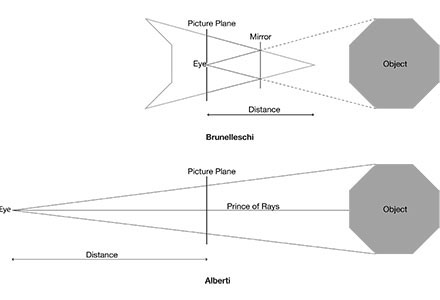
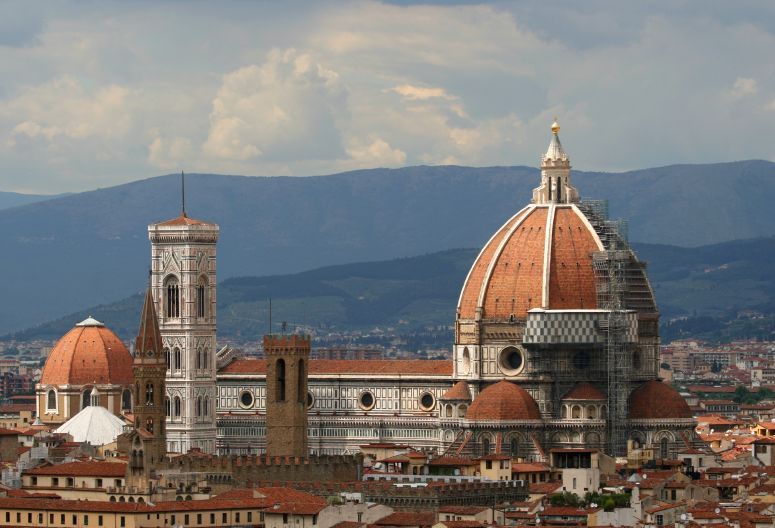


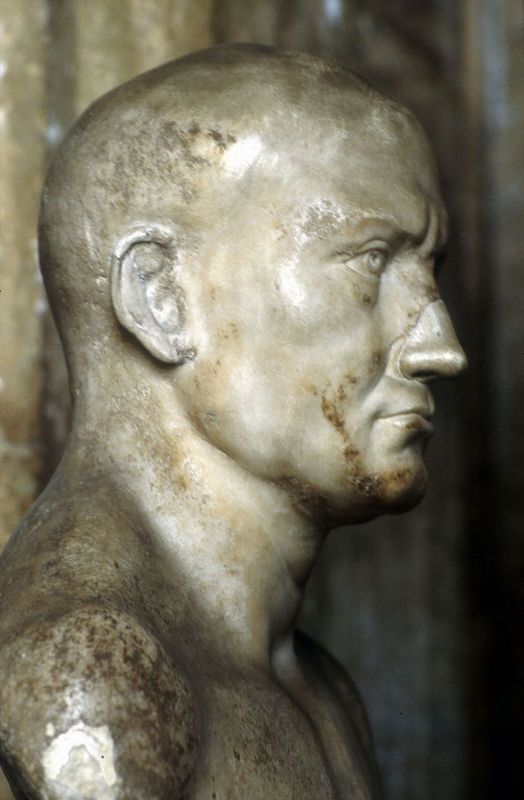

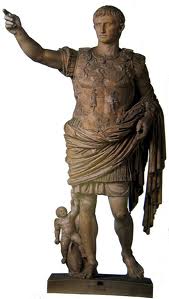
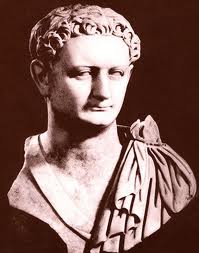
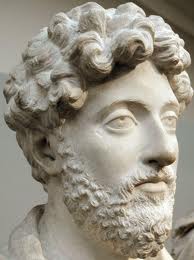
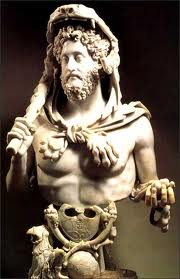
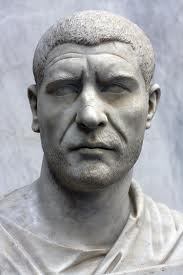
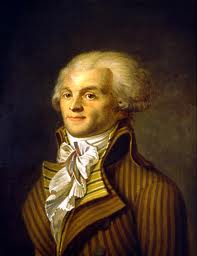


 A Stick in the Mud