“. . . silly imprisonments and silly damages . . .”

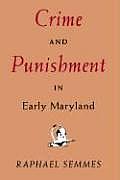
Books like Crime and Punishment in Early Maryland can tend to have a gawking quality.  “Would you look at that!  They branded someone for 9780801854248stealing a pig!   Hey, look, they talk different from us!  Aren’t they funny?”
Now there are certain pleasures in gawking, and some things in history call for it.  But I confess a natural suspicion of such books, and I feel authors miss a great opportunity when they employ this approach.  Yes, look at the “accident” on the side of the road if you want to call it that, but also see why the accident happened.   Such an attitude also smacks of superiority, and no one likes to hear a smug person talk for 350 pages or so.

This book usually avoids the smug attitude, but leaves other stones unturned.  Not every book has to do everything, but it seems to me that anyone can compile a list of laws and punishments.  We ask our authors to do more, to be artists, to spur on our imaginations, and so on, and this author Raphael Semmes fails to do.  Still, the book raises some interesting questions and presents a vision of colonial America that may be hard to swallow for some.

The books starts out with a chapter on the “majesty of the law” to set the tone of the book.  Those that criticized local judges or magistrates with “bad language” would routinely face fines or corporal punishment.  Of course nothing like this would ever happen today, and I’m guessing Semmes starts this way to startle the reader and get us to gawk a little bit.  As to why colonial Maryland did this, Semmes hints at the likely reasons (without exploring them) by titling his chapter, “The Majesty of the Law.”  Maybe the colonists rendered these verdicts to protect the idea of community itself.  Their legal representatives embodied themselves. So maybe the magistrates were not starchy shirts but protective of the people’s law. I stress “maybe” because I lack knowledge in this area, and Semmes could help me out by offering a thesis of his own.  Maybe I would have disagreed with his thesis, but at least I would have something to chew on.

Again, the overall tone Semmes creates is one of undue harshness.  If I’m right about this, I think he misses the bigger picture.  At times he thinks verdicts were too harsh, but at other times he frowns on the court’s clemency, i.e., “If ever a man deserved the death penalty, surely it was Jacob Smith, but the court instead granted mercy, etc.”  The most fascinating sidelight for me was Maryland’s practice of “claiming benefit of clergy.”  Basically, back in the old country, clergy could be tried for crimes but claim his priestly status as a protection against the death penalty.  Maryland allowed even layman to make this same petition, which struck me as odd especially for the most Catholic of the early colonies.  Apparently as the printing press came into greater use in the days of Henry VII more people could read, and so more people knew about and claimed this “benefit.”  Those that asked for this special exemption would receive a branding on their hand to indicate the mercy shown, and also a mark in a ledger, for one could claim the exemption once and once only.  While I’m glad that Semmes mentions the many examples when this happened, he treats the background and rationale in one paragraph, which strikes me as an significantly missed opportunity to explore something totally foreign to modern readers.

Semmes also mentions many cases where an apology changes everything.  One example had a man about to receive a heavy fine and imprisonment for cursing out a judge.  After the verdict was rendered, he apologized, stating that, “I must have been drunk at the time!”  The judge then reduced the penalty drastically with an “aw, shucks” shrug and sent him on his way.

I think Semmes seeks what most of us moderns would, a code where law, inflexible law, reigns supreme over the context and personality over those involved.  We want our Justice blind.  But when we see a law code that at times seems too harsh and at others to lenient, we know we are seeing law enacted where personal bond and communal accountability trump the exactness and blunt instrumentality of law.

The system Semmes describes has real disadvantages.  It has more inherent possibility of favoritism, corruption, and so on.  But this informal approach to law also has advantages, on which Semmes entertains no speculations, no lofty thoughts.  Think, for example, about parents with their children, where their knowledge of their personalities, the context, and other factors can lead to more nuanced judgments.  Could this work in the state?

For that I call to witness G.K. Chesterton.

The Club of Queer Trades is far from Chesterton’s greatest work, but perhaps his most entertaining.  One of the main characters is Basil Grant, a retired judge who “went mad” on the bench.  Chesterton writes,

He accused criminals from the bench, no so much of their obvious legal crimes, but of things that had never been heard of in a court of justice, [such as] mostrous egoism, lack of humour, morbidity deliberately encouraged. . . . He said to a man convicted of a crime of passion, ‘I sentence you to three years imprisonment, under the firm and God-given conviction that what you require is three months at the sea-side.’

Screen-shot-2009-09-14-at-15.31.27-278x300Towards the end of the book Basil expounds his philosophy:

Years ago, gentlemen, I was a judge; I did my best in that capacity to do justice and to administer the law.  But it gradually dawned on me that in my work, as it was, I was not touching even the fringe of justice.  I was seated with the mighty, I was robed in scarlet and ermine; nevertheless, I held a small and futile post.  I had to go by as mean a rule as the postman, and my red and gold worth no more than his.  Daily there passed before me taut and passionate problems, the stringency of which I pretended to relieve by silly imprisonments and silly damages, while I knew all the time that they would have been better relieved by a kiss, or a thrashing, or a few words of explanation, or a duel, or a tour of the West Highlands.

To my great delight, there is such a thing as the Basil Grant Society.  Score one for the internet.


Seeing the Nose on Our Face

Many Americans feel that our golden age has passed, and that our decline will come sooner or later.  Or perhaps it’s already here?  “We’ve had a good run, ” a friend of mine recently commented.   I agree that we have our problems, but given that so much talk about America tends toward either pessimism or meaningless flag-waving, I found it fascinating to read the thoughts of a French scholastic philosopher (i.e. careful, methodical, sober) who loved America and was not ashamed to admit it.

Jacques Maritain came to the U.S. in the 1930’s and stayed for part of W.W. II.  We made such a favorable impressionmYjg8Sm9DO9Q1lGkOxmb2cg on him that he returned several times and ultimately wrote “Reflections on America.”  He defended us against various charges, and spent most of the book praising our virtues.  Considering he wrote in 1953, we may ask whether or not his analysis still holds in what seems for many to be the winter of our discontent.

America often gets accused of materialism, but Maritain disagrees.  Americans simply know what money is for, and neither mystify nor disdain it.  Using money to better the condition of life should have no shame attached.  What other purpose does money have?

I think that America has been more “materialistic” in general than our European counterparts.  But this must be seen in context.  In aristocratic societies the rich serve as patrons for the poor.  One can think of the Jane Austen stories where Miss Bates gets invited to parties and will receive a basket every so often.  In some ways, self interest made the aristocrat pay attention to the condition of the lower class tenants.  Their poor condition might reflect poorly on him.  With no aristocracy and a greater sense of individualism in America, people could not depend on their social circle to look after them.  Money, not “society” might be their only refuge.

With the death of the aristocracy in Europe, I wonder if they will start to resemble our approach to money.  As for today, I think many places in South-East Asia pursue materialism far more eagerly than most Americans.  Thus, Europe’s 19th century critique of America may have had merit in its day.  But if we were more materialistic 100 years ago, it may have been not an American fault, but a predictable fault that comes with certain stages of economic and political development.  Maritain does have, however, a pertinent parting comment on this issue when he writes,

As a matter of fact, it is not money, it is work which holds sway over American civilization.

Spot on.  I agree that Americans often don’t know what to do with leisure time, myself included.

Maritain agrees that Americans often seem a bit eager to have their country admired by others.  Perhaps we are still adolescents at heart.  But as C.S. Lewis and others have said, at least vanity has a kernel of humility to it.  Perhaps we really are insecure.  This sense of insecurity and earnestness leads to an unusual attitude towards criticism.  He writes,

American people are anxious to have their country loved. (You will never find such need in an Englishman.  As to Frenchmen, they are so sure in advance that everybody loves them that they don’t feel any particular anxiety about the matter).  . . . The writer who criticizes America is listened to with special care and sorrowful appreciation.  The writer who admires and praises this country is considered a nice friend . . . but softhearted.  Americans love for their country is not indulgent, it is an exacting and chastising love.

In reading that quote I had to laugh, for after reading praise after praise, and defense after defense of America, I kept thinking, “C’mon Jacques, take the gloves off.  We can handle it.  You’re being too nice!”  Maritain may not have spent a great of time in America, but he stayed long enough to nail his audience.

But even a great admirer of America knew our faults.  Our troubled history with race is obvious, but his comments about sex and sex education struck me most forcefully.  We have made great progress on racial issues in the last 60 years, but our sexual mores have plummeted since then, and our beliefs about sex have grown more distorted.  Maritain dismisses “foolish sexual sentimentalism” in advertising as the root of the problem.  The most significant thing, he writes,

is the impact, of the . . . idea that everything, and especially human relations, is on the one hand matter for teaching and on the other matter for shallow explanation . . . where all that counts is that which can be measured and figured out.  Hence a general tendency to think of all human love in simple terms of sex, and the tendency to dismiss subjecting sexual life to supra-biological or supra-sociological standards.  . . . an artlessly serious-minded quest for good.

Vices are never so potent as when they attach themselves to virtues.  I wonder if it is our general earnestness to “do good,” and our practical and adaptable approach to problems that has led to such deep confusion regarding sex.  Perhaps too our disdain for aristocracy meant that we would also disdain ideas, and turn to measurable sciences to deal with a powerful, yet mysterious area of our lives.  Maritain accurately comments that people, “[exclusively] learn through biology and psychology how to be happy in the sexual life.”

Ironically, part of how we dealt with our crisis about race has led us down a path of deepening our crisis about sex.  Equality among races has translated to equality of ideas, and equality in self-expression.  Sex has been tied to the general focus on equality and self-expression over the last 50 years or so, and this has in part led to the current rise of homosexuality.  But the “heterosexual issues” of divorce, the “hookup culture,” delayed marriage, etc. are fruit from the same poisonous tree.  As long as we make moral decisions purely based on biological and psychological considerations, we will have problems.

Foreign observers of one’s own culture often see things that we cannot see.  Maritain’s wise commentary on America has not dulled with age, and helped me see things about us freshly.  His praise and admiration for America make his criticisms all the more valid.  There I go again, typical American, focusing on our faults . . . Maritain would have something to say about that. . .


Fra Angelico

One of the common pitfalls of adolescence is the idea that if you like something, everyone must like it.  Conversely, if you don’t happen to like something, it must be unworthy of being liked by anyone.*  Who cares if the artist/the work has a great reputation?  They must have earned it because people in the past had bad taste.  Too bad you/I wasn’t there at the time to set things right and prevent a great injustice.

I remember at 16 arguing with my friend over the superiority of Rush (my choice) to Depeche Mode.  Looking back I can see how the discussion might have been enjoyable in theory, but at 16 proved only frustrating.  I think he argued that Rush stank because you couldn’t dance to their music (very true, with rare exceptions).  I shot back that Depeche Mode had zero value because they never had any chord changes in their songs, which is very obviously false (I think I meant to argue “key changes,” but that also must be false).  In retrospect then, I must cede victory to him for at least stating something mostly correct.

Sometimes such attitudes can persist past adolescence, and I confess that I never bothered to understand the merits of the Renaissance painter Fra Angelico.  Many years ago I  saw one of his early paintings of an angel and I immediately thought, “Boring!”

Perhaps the large wings turned me against him.  Angels, beings who inspire fear every time (I think) in Scripture, seemed flat and contrived in his work.  Those who admired him must be wrong, perhaps succumbing to an unhealthy desire for sentimentality.  Now of course it’s fine not to like things, but then to think that others who like them must be inferior to you is nothing less than arrogant stupidity.  Again, however, such attitudes are quite common among adolescents, and we must go gingerly on them.  Those in the Renaissance would have said that the average teenager has too much heat and moisture in their bodies to listen to the cooler voice of reason.

I shudder to think back on my judgmental attitudes, and can give thanks for coming across Reconstructing the Renaissance, a book largely about giving Fra Angelico (literally, Brother Angelico — he was a monk) a rightful place among Renaissance masters.  To call this post a “Book Review” will stretch your credulity, for the text of the book itself meant little to me, and much I could not really understand.  The author takes up his pen largely (so it seems) to argue for the authenticity of some paintings, and the proper chronology of some of the works.   This latter point may seem silly, but I suppose that a proper chronology would ensure something of Angelico’s proper influence upon later painters.  What really grabbed me, however, were the wonderful, high quality pictures throughout the book that allowed Angelico’s great gifts to shine forth.

Unfortunately web images cannot do justice to the wonderful presentation of the paintings found in the book.  High quality paper and vivid background color make looking at the numerous included works a real delight.  Below are some of my favorites. . .

“The Virgin Annunciate”

Virgin Annunciate (Fra Angelico)

“The Deposition”

The Deposition

“The Naming of St. John the Baptist”

Angelico’s work consistently uses color magnificently, and his subjects always have a serene dignity that no doubt the artist himself possessed.  One enters a different place in his world.  One wishes for the peace his subjects have.  The title of the book comes from a painting of St. James freeing Hermogenes, who earlier had persecuted the apostle.  Again, his same qualities shine through, though lest anyone think Angelico could paint only “pretty” things, the devils in the background show his versatility.

St. James Freeing Hermogenes

I do not recommend this book to read, though I I do think that if you can find it cheap (as I did at a used book store) do go ahead and take the plunge.  Look at the pictures and feel all the stormy “heat” of adolescence melting away.   I will leave it lying around my house, in hopes that he and my other children might pick it up one day.  Perhaps then, they may avert the follies of their father’s youth.

*Some adults appear to go in the opposite direction by claiming that nothing has objective value, in apparent rejection of the foolishness of youth.  I say “appears” because I think a lot of similarity exists between the overcommitted teen and cynical adult.  Both reduce everything to their own personal point of view, a purely subjective standard.

“Liberty . . . skulking in dusty Corners. . .”

As a juior-high and high school student I had always enjoyed history.  But by the time I attended college I had developed an exhaustion with the American story.  How this happened I don’t really remember, but I assume it had to do with a constant repetition of familiar themes.  In college my European/World History teacher had a more dynamic and engaging lecture style than my American History teacher, and he found me perfectly willing to focus on something else, anything else, other than  yet another rehash of the American Revolution and the Civil War.

Some years ago I realized my need to get reintroduced to our own tradition and have been very glad to find authors like James McPherson and Bernard Bailyn.  Neither are “revisionist” in their approach, but both give a freshness to familiar ground that has made American History intriguing for me again.

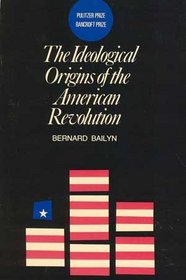
Bailyn’s The Ideological Origins of the American Revolution is his most famous work, and justly so.  Most treatments of this period focus on the legal case for and against the colonists, but Bailyn focuses on the psychological as well as the ideological aspects of the revolutionary’s thought.  I thought his keenest insight revolved around the psychological perceptions of the colonists. Revolutionary pamphlets focus far more on the state of liberty in general, rather than the particular musings of say, John Locke.  In short, the colonists believed that “Liberty” itself was in danger, and that given England’s failings, it had fallen to them alone to defend it.  This helps us understand why the Declaration of Independence did not focus on “American” or “British” rights, but “self-evident” human rights.

“Liberty” for the colonists was inherently passive, in need of a defender.  Hence the moniker, “Lady Liberty.”   Liberty needed careful cultivation, whereas power grew naturally like a weed.  “Power” had an inherent aggressiveness for the colonists that needed constant vigilance to hold at bay.  This attitude of the colonists made them inherently suspicious of the British, who seemed far too cavalier in their approach to liberty.  This alarmed many colonists, for Britain alone in the world seemed to stand for liberty.  As one colonist wrote in a charged tract, liberty had been reduced in the world to “skulking in dusty corners,” and would cease to exist at all if the colonists did nothing.  Bailyn believes that this attitude, more than Locke or Montesquieu, had the most influence in bringing about the Revolution.  This belief sounds a bit paranoid today, but outside of England no democratic state existed in Europe.  And with George III’s desire to make his stamp on England, even the stalwart British parliament seemed to suffer.  Observers of the political scene from America also had the same reaction as the British painter Hogarth, who lambasted the politics of his age.  Frontier American idealists could never stomach the crassness of an older, more cynical and tired political machine.

Hogarth: "Canvassing for Votes"

I do wonder what I would have thought had I lived in those times.  I believe the colonists were technically correct about the immediate questions of taxation and self-government that divided them and the British, and assume I would have thought so then.  But the British could hardly be described as cruel oppressors or outrageous occupiers.  I can see myself not understanding why legal trump cards warranted a bloody and uncertain war.  Maybe sharing their belief about the imperiled state of liberty might have changed my mind, but I have my doubts.

You need such passion to make revolutions, but this passion is also the Catch-22 of nearly every change of government.  That the American revolution stabilized itself relatively quickly with only  (relatively) minor political fall-out still distinguishes it from the French, Russian, and most every other revolution.  James Madison’s notes on the Constitutional Convention give us one key to why this happened.  In the tense and uncertain aftermath of their independence they managed to fairly discuss big and small picture questions with insight and humor.  Some of this “fairness” led to the tragic “3/5 Compromise” and doomed us to deal with the slavery issue at much greater cost later.  But all in all, it makes for instructive and even entertaining reading today.

The Federalist Papers have the good sense and clarity of the Convention debates, but not the entertainment value.  What makes the Anti-Federalist papers more enjoyable than their counterparts is that their objections to the Constitution reveal a keen understanding of the consequences of the Constitution for the country, which we take for granted living 200 years on the other side of their decisions.  They could see, for example, that the Constitution would mean an increased federal government and a diminished role for the states.  They accurately prophesied the results of giving the president full powers as commander-in-chief.  I don’t think we should view the Federalists as “right” and the Anti-Federalists as “wrong” or vice-versa.  Both sides were “right” in the sense that they had an accurate appraisal of the impact of accepting the Constitution. Both sides viewed liberty in much the same way, but Federalists saw a stronger national government built on the foundation of “the people” as bulwark to liberty, and the Anti-Federalists disagreed.

So why did the “Anti-Federalists” fail?  Among other things, they lacked the clarity and focus of Madison and Hamilton’s writing. But this may have been inevitable because they never had time to organize or communicate as the Federalists did.   No doubt this caused resentment and frustration.  Not all issues got perfectly resolved, and this must have impacted the causes of the Civil War.  With prescience, some Anti-Federalists strongly objected to the allowances for slavery made by the Constitution, and believed that the presence of slavery would doom the cause of liberty and the new Republic.  But on the flip side, wouldn’t we need a strong national government to remove slavery in the various states?

If nothing else, it is refreshing to see that the dilemma’s we face today have a precedent in our past.  To paraphrase Jacques Maritain, we must know our tradition that we might fight against it, and thereby renew it for each subsequent generation.

“Reason and Revelation in the Middle Ages”

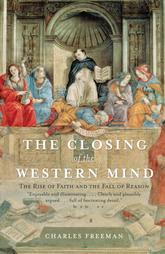
I sometimes wince at my facile attempts to appear the scholar, both on this blog and in other areas of life.  My small comfort amidst these failures comes only in that I usually know more than most 16 year olds (. . . usually).  But even I, a pretend scholar, know enough to dismiss  a book like The Closing of the Western Mindwhere the author asserts that 138929the concept of “Faith” destroyed the venerable goddess “Reason” in the medieval era.  Such a perspective can only come with willful ignorance of the most obvious facts about medieval life, and blatant misunderstanding of men like Thomas Aquinas, Duns Scotus, and a host of others.  It assumes that we moderns are smart, those in the past, dumb.

But I also abhor the opposite fault, though it only appears to be its opposite.  This approach seeks to prove desperately that, “The medievals were much like us, they used reason too, see, see, see!”  But this attitude pays no compliment to the medievals, for once again the modern world forms the foundation of all his cares.  I have commented on this attitude in reference to Herbert Butterfield’s  The Whig Interpretation of History, so I will not belabor that again here.

61lL5hzAdeLIn rides Etienne Gilson to split the horns of this dilemma with his eminently accessible Reason and Revelation in the Middle Ages.  Gilson outlines three distinct approaches the medievals took to the dilemma of reconciling faith and reason, and the strengths of each.  He does not favor one over the other (overtly at least) so much as provide a framework to view each more or less objectively.

Gilson begins with what he calls the Augustinian approach, whereby we “believe, that we might understand.”  This approach put heavy emphasis on “faith,” but “reason” for Augustinians could ride comfortably in the backseat with faith at the helm — hence Augustine’s healthy admiration for Plato.  But Augustinians had their subtle differences, which Gilson summarizes masterfully by writing,

In short, all the Augustinians agree that unless we believe we shall not understand; and all them agree as to what we should believe, but they do not always agree as to what it is to understand.

No better summation of the Augustinian school of thought exists.

Another school of thought put reason in the driver’s seat, and surprisingly, most proponents of this approach were Moslems, especially Averroes.  This did not really catch on in the Christian west, with a few possible exceptions (maybe Abelard).  Gilson avoids commenting on why, but I will speculate that this approach failed in the West because

  • The Christian west understood that this relationship between faith and reason had no real Biblical foundation, and . . .
  • This approach might have much more appeal to Moslems because one could describe Islam as Christianity dumped of all its mystery (The Trinity, incarnation, crucifixion, resurrection, etc.).  These core Christian doctrines should not be viewed as irrational but supra-rational.

Most interesting to me was Gilson’s explanation of the third Medieval way, typified by St. Thomas Aquinas.  For Aquinas, faith and reason co-existed peacefully because they lived in separate houses, whereas Augustine had them in the same house but on different floors.  For Aquinas, God granted reason its own kingdom apart from faith, though its domain had less value and less magnificence than faith.  Therefore, we don’t have to worry about the relationship between faith and reason because they have no real relationship, though both have their place.

I think I fall in the Augustinian category, but Gilson’s firm command of the material and easy and natural writing style will make me return at some point to consider Aquinas’ alternative.

“A History of Future Cities”

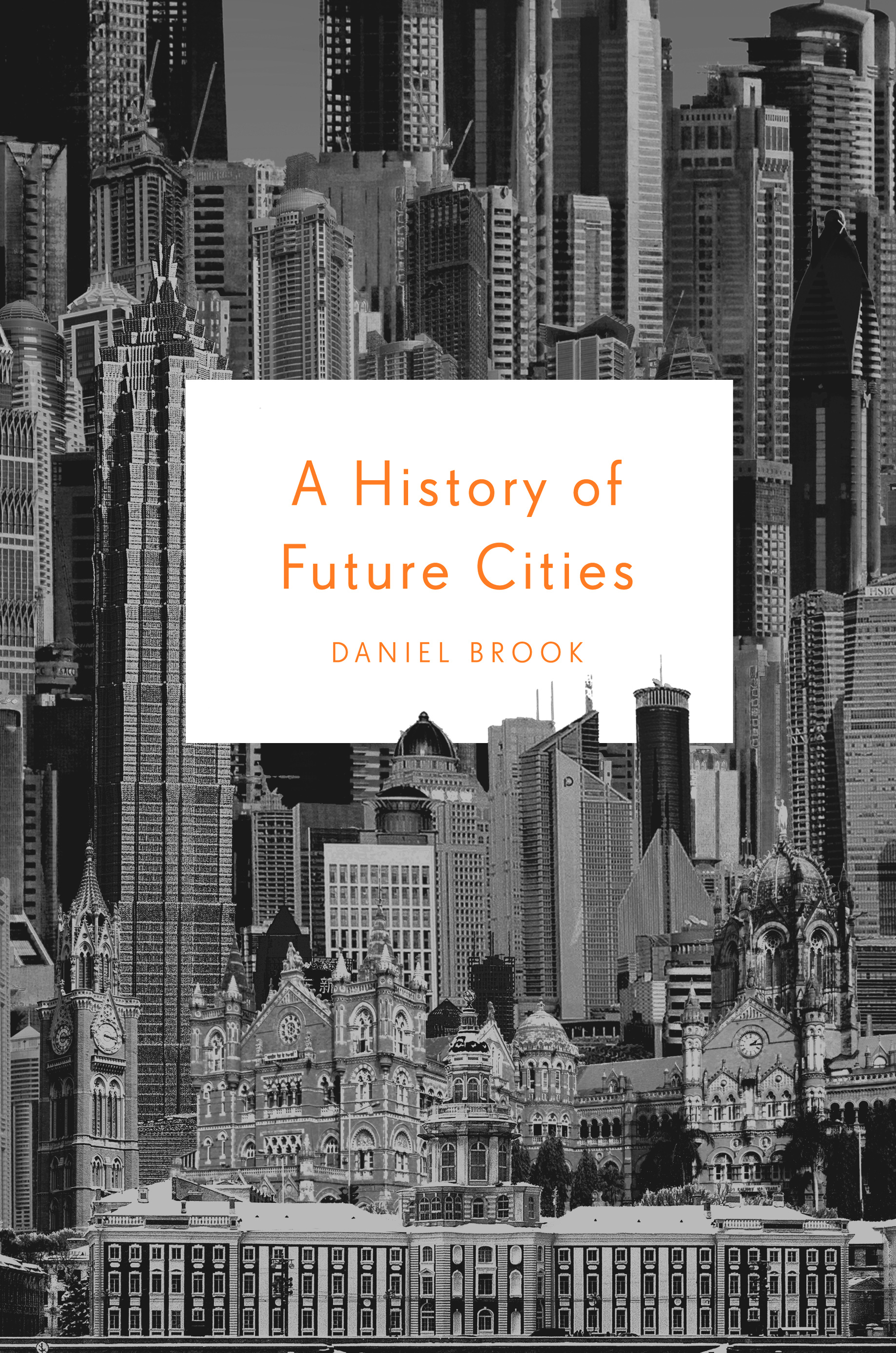
I couldn’t help but be impressed by the clever title of this book.  I judged it initially by its cover, and it mostly did not disappoint.

Author Daniel Brook looks at four different cities, St. Petersburg, Shanghai, Mumbai (Bombay), and Dubai.  Though they span a few centuries each city has some core traits in common with the other.

  • Each city arose directly from either contact with foreign populations (Shanghai, Mumbai), or was specifically designed to open the world to the world at large (St. Petersburg, Dubai).
  • Because of this, each city has a somewhat artificial character.  Neither can claim to be created from within history.  Rather, they stand as attempts to impose history on the country itself.
  • Each city has a distinct cosmopolitan flair (Arabs in Dubai, for example, comprise only about 10% of the population, depending on how you measure), and a somewhat freewheeling ethos.

The title hints at a number of themes for this book.

While I don’t think that Russia will play a significant role in shaping the 21st century, I agree that the cities of the near future will resemble St. Petersburg.  These cities will be “global” cities oriented towards those outside rather than inside them.  Peter the Great built his city to force a kind of westernization/globalization upon Russia, which resembles the motives of Dubai  today.  This fits with globalization in general.

The other three cities represent the possible impact that China, India, and the Mid-East will have on the world.  While the Mideast cannot equal them in terms of population, they can in terms of opportunity.  Much of this region has no access to markets, yet with oil the region has no shortage of cash.  The possibilities for future growth for the Mideast remain high.  Everyone knows of China’s rise, and India’s surge as the next big economic powerhouse always seems just around the corner.

Brook does a good job dealing with the energy and potential in each of these cities.  But big questions about the limits of these kinds of cities remain, and while Brook deals with the problems as well as the promise, I would have preferred more treatment of the negative side of the coin.

Because of the artificiality of these cities, neither has an authentic culture to call its own.  And because each of these cities run only skin-deep, the impact on their surrounding regions may be minimal.  Many feel that the more open and cosmopolitan the Mideast becomes, the better off the world will be.  But how impressed will the average Arab be with a city bought with Arab money but made by foreigners?  How impressed should they be?  We have already seen the minimal impact of  St. Petersburg on Russia. Three centuries later the country still has strong authoritarian roots.  Moscow, not St. Petersburg, moves Russia.  Mumbai impresses many at first glance, but tourists then and now use the city as a gateway to the “real” India.

At a deeper level the question about whether we can impose our will upon history remains.  Personally, I doubt whether we can do this.  These cities seem dedicated to the belief that markets will bring fundamental change, but the truly lasting things happen in an organic way with deep roots.  Something of our humanity as “made in the image of God” will eventually shine through and prove that we are motivated by more than mere economics, that we are more than merely acquisitive animals.*  And when this happens, the impact these cities have and the role they play in their respective countries will get diminished.

In raising these questions, Brook calls into question the whole project of the 21st century market state.  Will our modern project bring real change or be nothing more than a curious historical side-show?  Perhaps A History of Future Cities can give us a clue.

*Marxists and pure free market capitalists on the surface are mortal enemies, but if one probes a bit, we see that both share the common trait of giving absolute value to economics — one to the fatalism of class warfare, the other to what some might call the fatalism of the invisible hand of the market.

“. . . but in the western world today the number of souls who testify by their actions to a conscious or unconscious conviction that Economic Necessity is Queen of All is vastly greater than the number of professing Marxians, and would be found in fact to include a phalanx of arch-capitalists who would repudiate with horror and indignation any suggestion that they were fundamentally at one, in the faith by which they lived, with the prophet of Communism.” — Arnold Toynbee

Jacques Maritain on Democratic Education

I am grateful for the thousands of public educators who work very hard on behalf of their students.  One can always hear horror stories in the news about disaffected and bored teachers, but the overwhelming majority of those I’ve met have cared deeply about their students and do their best in the classroom.

I also see some signs of hope in what seems to be a general backlash against standardized testing brewing amidst some of our best educators.  But even so, teachers in the current bureaucratic environment cannot help but be impacted by the mentality of standardization.  I know of students who received A’s on assignments for having “great facts!” though these facts gave no overall understanding to the period studied.  Another assignment I know of requires students to photograph themselves involved in a variety of environmentally beneficial activities, be it recycling, picking up litter, or not clubbing baby seals.

Decades ago Jacques Maritain prophesied this in his thoughts on democratic education.  Maritain had a long and maritain_jacquesdistinguished career as a theologian, philosopher, and social critic.  Even in the 1950’s Maritain astutely observed the shift occurring in education as it related to the rest of society.

Society’s trend toward specialization bothered Maritain, and he predicted two adverse effects this would bring to education.  Our concept of “knowledge” would be the first casualty.  He wrote,

If we are concerned with the future of civilization, we must be concerned primarily with a genuine understanding of what knowledge is: its values, its degrees, and how it can foster the inner unity of the human being.

Restricting knowledge to isolated facts loses the unity, that is, the narrative unity, of whatever we may study.  This is why we cannot reduce westward expansion to a few bullet point facts about railroads and farming.  Complete specialization in general cuts us off from part of our humanity.  We lose the essential symmetry of our personhood.  Related to this, Maritain commented on the second casualty,

If we remember that the animal is a specialist . . . an educational program that aimed only at forming specialists . . . would lead indeed to a progressive animalization of the human mind and life.

Maritain continues, observing and predicting that specialization will lead to lack of freedom, which leads to lack of moral formation.  Educational authorities will then need to undertake “educating the will,” “formation of character,” or “education of feeling” to fill the gap created by a multiplicity of cultural ills.  With this mindset schools feel the need to correct all of society’s problems, or at least the current ones.  He writes,

The state would summon education to make up for all that is lacking in the surrounding order in the matter of common inspiration, stable customs and traditions, common inherited standards, and unanimity.  It would urge education to perform an immediate political task and, in order to compensate for all the deficiencies in civil society, to turn out in a hurry the type of person fitted to meet the immediate needs of the political power.

This approach also takes freedom and inspiration away from teachers, who then assume the role of mere functionaries.  Truth needs freedom to have its full effect.  Teachers need to personalize their classroom experience in some way to give truth a living context, rather than rote formulas imposed from above and without.  This is why, Maritain argues, the ambitious plan of “educating character” in this lock-step fashion will almost surely fail.  The seeds teachers scatter will find only rocky ground.

A final quote from Maritain:

What I mean is that it is not enough to define a democratic society by its legal structure.  Another element plays also a basic part — namely, the dynamic leaven or energy that fosters political movement, and which cannot be inscribed in any constitution or embodied in any institution, since it is both personal and contingent in nature, and rooted in free initiative.  I should like to call the existential factor the prophetic factor.  Democracy cannot do without it.  The people need prophets.

Writing from Outside and Inside a Tradition

Ernest Hemingway once commented that American literature did not really begin until Twain’s Huckleberry Finn.  Anyone who has suffered through Cooper and the wearisome Hawthorne in an American Literature class knows that making it to Twain means finding cool water in a desert.  

As you can see, I don’t like early American literature, but in truth those authors had little chance of success.  Coming to a new place with a new population meant developing a new language and a new sensibility.  Without a defined context, and without feeling comfortable in the language, awkward first steps cannot be avoided in such situations.

I thought of Hemingway’s insight when I dipped into Adventures at Sea in the Great Age of Sail, a collection of firsthand accounts from sailors in the early 19th century.  An American named Charles Barnard starts the book off.  He had extraordinary experiences, which involved him rescuing sailors, being abandoned, and then later getting rescued himself.  But for some reason he begins his amazing story this way:

The brig Nanina, of one hundred and thirty two tons burthen, Charles H. Barnard, master, sailed from New York the 6th of April, 1812 on a sailing voyage to the Falkland Islands.  She was owned by John B. Murray & Son of New York and was completely fitted and also carried the frame of a shallop of twenty tons intended for use among the islands.

Barnard means well, and writes with all the earnestness of the young American republic.  Alas, the heavy, clumsy style betrays a man without a fully formed country and heritage.  This lack of style makes his incredible story somehow boring.

The second narrative came direct from the pen of Scotsman John Nicol.  The physical details of his life can’t equal Barnard’s, but Nicol writes with the ease of someone who has long lived within a language.  He opens with,

Having reached the age of 67 years, when I can no longer sail upon discovery, and weak and stiff, can only send my prayers with the tight ship and her merry hearts, at the earnest solicitation of friends I have here set down an account of my life at sea.  Twice I circumnavigated the globe; three times I was in China; twice in Egypt; and more than once sailed along the whole land-board of America, from Nootka Sound to Cape Horn and twice I doubled it.

I don’t blame Barnard.  We often don’t realize how long it takes not just for a culture to form, but for a people to feel comfortable enough within it to develop their own literary style.

Death and Dominion

Back in college I had a conversation with a friend who had recently graduated.  He was a solid guy, and a good bass player.  He seemed the perfect catch for some young Christian woman.  When I asked about his dating life he opened up a bit and told me that he had made some mistakes in years past, and now felt he should not date anyone.  He needed to get proper distance from his past to feel ready to have a genuine relationship.  A few years later, he ended up happily married.

Many other Christians have similar stories.  For me it was music.  After becoming a Christian early in college I felt that I had to purge myself of some of the music I owned, especially of the band I devoted myself to in high school.  I know now that this process is not unusual for new Christians, though it seemed so at the time.

I never really understood this process and resented it in many ways.  I had no joy in throwing away those cd’s.  But this summer I found myself involved in a conversation with Andrew Kern who pointed out that I purged myself of certain things in pursuit of proper dominion.  The music might have been perfectly legitimate, but in my non-Christian past I did not integrate the music into its proper place, and in this sense the music gained a kind of power over me.  I needed to hit the reset button, and cast my bread upon the waters so I might receive it back again, all towards the end of proper enjoyment.  Though I had no real idea why I did what I did, good came from it.  In this sense a Christian might very well listen to AC/DC and appreciate the guitar, drums, etc. without in the least feeling the need to run off and live the lifestyle described in the songs.  Such people have dominion over AC/DC.  The music has no control over them.  Rather, they use it for their own good purposes.

Phillipe Aries’ short but incisive book, Western Attitudes toward Death from the Middle Ages to the Present describes just what the title indicates.  Aries’ economical style and droll French wit make this book enjoyable to read, even given the subject matter.  I don’t know where Aries’ came from theologically, but “dominion” forms the subtext of his work, which asks the question, “Is it possible for individuals and a society at large to have dominion over death?”

His first chapter, “Tamed Death,” peeled scales off my eyes.  He begins with the early medieval period and shows how these people neither ignored or feared death.  They accepted it, and, in a sense, gained dominion over it.  “Death was a ritual organized by the dying person himself, who presided over it and knew its protocol” (emphasis mine).  Of course one could never particularly determine the time of death, but through the simplicity of certain postures, and liturgies of prayer and forgiveness, one might rob death of at least some of its power.  Aries quotes Solzhenitsyn’s Cancer Ward to describe the medieval attitude:

The old folk, who never made it to town, they were scared, while Yefrem rode horses and fired pistols at 13 . . . . But now . . .  he remembered how the old folk used to die back home on the Kama-Russians, Tartars, Votyaks, or whatever they were.  They didn’t puff themselves up or fight against it and brag that they weren’t going to die–they took death calmly [author’s italics].  They didn’t stall squaring things away, they prepared themselves quietly and in good time. . . .  And they departed easily, as if they were moving into a new house.

I have never liked the phrase, “Death gives meaning to life.”  It is an absurd sentiment.  Had Adam not fallen his life still would have had meaning, just as Enoch’s and Elijah’s life had meaning.  That attitude also gives Death a kind of power, for now we must struggle to find “meaning” in life, and without an eternal perspective this will be very difficult to do.  The medieval approach strikes me as far superior.

Aries shows that this sense of dominion man had over death disappeared over time.  The shift began in the latter Middle Ages/Renaissance/Reformation (Aries blends them together) when death came with a sense of final reckoning, a summation of life itself.  This may have had a salutary effect of bracing mankind for final judgment, but in the end it added a great deal of weight, burden, and expectation to death.  We no longer “presided” over death, rather, death came with a long list of duties and expectations.  Western man began to lose dominion.

As the Enlightenment dawned and science and “understanding” gained preeminence, health concerns began to separate people from death, both in terms of being with the dying or being around dead bodies, especially the presence of cemeteries and churches.   A secularization of last will and testaments followed.  Without the attendance of family and friends at death, documents disclosed the intentions of the dying instead of the actual dying person.

The Enlightenment in turn called forth a counter-reaction in Romanticism, where death got elevated to “sublime” status.  At first glance the Romantics appeared to bring death back into the human fold by doing so, but Aries points out that Romantics did not counter the Enlightenment as much as they supposed.  By making death a profound “experience” they put man on foreign footing in his relation to death. Under the Romantics the burden of death continued to increase, as did its power over us.

The modern age continued this trajectory, which culminated in a cult of the dead in the aftermath of World War I.  Yes, honoring the past and those gone has its place.  But Aries argues that Europe continued the dominion of death by excessive and repetitive attempts to memorialize the war-dead.  This had the same effect as before–the dead, and death itself, had power over the living.

In the Victorian era official mourning might continue for many months after the death of a loved one.  In the modern age, a modern industry has arisen to get rid of death as fast as possible.  Now,

“too evident sorrow does not inspire pity, but repugnance, it is the sign of . . . bad manners: it is morbid.  Within the family circle one also hesitates to let oneself go for fear of upsetting the children.  One only has the right to cry if no one else can hear.”

The hidden nature of death in the modern west, like the Enlightenment, Romanticism, and post-war period, adds to death’s hold over us.  It’s hiddenness shrouds it in mystery, making it seem omnipotent.  “But really, at heart we feel we are non-mortals,” Aries writes,  “And surprise!  Our life is not as a result gladdened!”

Through all this I felt that Aries perhaps gave a tad too much credence to the early medieval view.  Death is a curse, and in that sense not a natural part of life at all.  Thus, there should be something foreign and mysterious to it.  But Aries never talks about how the medievals arrived at their view, the book’s one weakness.  Perhaps we can assume that in recognizing this from Scripture and church tradition, they gained dominion precisely by naming death correctly, just as Adam gained dominion (however briefly) by naming the animals.

Once we have dominion, death might even be transformed from curse to friend.  We may remember St. Francis’ last stanza of his marvelous “Canticle of the Sun,”

Be praised, my Lord, through our sister Bodily Death,
from whose embrace no living person can escape.
Woe to those who die in mortal sin!
Happy those she finds doing Your most holy will.
The second death can do no harm to them.

Inflationary Goodwill

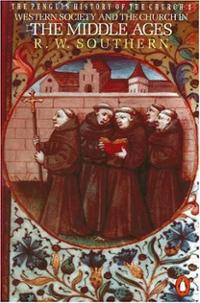
R.W. Southern’s book Western Society and the Church in the Middle Ages won’t change the discipline of medieval studies, but his work succeeds fundamentally in avoiding two key errors historians often make about the past.

The first error makes the present great, and the past barbaric and backward, an object of amusement.  This view was far more prevalent in the 18th and the 19th centuries than today.

The second error is more subtle.  Seeking to correct the first error, they explain the value of the past by showing how it led the world we have today.  “If it wasn’t for Albert the Great, we wouldn’t have light bulbs,” or something to that effect.

More truth resides in the second error than the first, but both paths share the same pitfall.  They both view the past only in terms of the present, and both assume of course that history would obviously want to lead to ourselves.  The first falls prey to chronological snobbery, the second to the “Whig” fallacy.

Happily Southern avoids both.  He seeks to evaluate the medieval church on its own merits, in its own context.  The medieval system had strengths and weaknesses that we do not.  His book essentially tells the story of how a dynamic church that saved the west from barbarism after Rome’s fall resembled a stagnant hulk by the end of the 15th century.  For Southern the church’s triumph set the stage for its demise.  In this respect, the medieval church is no different from any other organization.   Every system has a potential Achilles heel.

The peak of the medieval period had a lot going for it.  Gothic cathedrals and St. Thomas Aquinas both brought weight and meaning, combined with a feathery touch and sense of play.  Aquinas writings’ have a great deal of intricacy, but they do not form a system.  He was at heart a mystical theologian.  Holding this tension in place requires a high level of spiritual wisdom, which Aquinas possessed.  Those that came after him found it much easier to focus on the logical intricacy than the demanding spiritual wisdom and playfulness that accompanied it.  The “problem” of Aquinas is the problem of medieval civilization.  At some point it became akin to an Italian sports car — powerful, beautiful, and likely to break down in a such a way that you’ll have no idea how to fix it.

imagesJocelin of Brakelond’s Chronicle of the Abbey of Bury St. Edmonds, which details events at the abbey in the 12th century, show this same trend.  I expected some stories of bad monks or various squabbles here and there.  What I did not expect was the overwhelming political focus of Brakelond’s narrative.  Time and time again he discusses disputes over this or that property, arguments about this prerogative, this privilege of hunting or taxes, or whatever.  There was a method to this seeming madness, as the heart of the disputes involved the independence of the Church.  But one can’t locate the spiritual center of the abbey.  The emphasis has shifted too much in a dangerous direction toward power and “worldly” concerns.

One of the more interesting parts of Southern’s work is his section on indulgences.  His sympathetic eye led to some insights I had not considered before.  He argues that there is something almost childlike about how indulgences started and how they originally applied in the life of the Church (I am not Catholic and make no attempt here to understand the doctrine, but New Advent always gives good information on such things).  Those familiar with Daniel Pinkwater’s The Last Guru may recall the scene when the young protagonist Harold, having no idea what to do with his sudden immense fortune, asks if he can just give it away.  Not possible, his money-man tells him.  Billions and billions of dollars flooding the economy at once would create economic chaos.  Harold would have to think of something else.

Southern looks at the problem of indulgences as a problem of inflation.  The initial “gifts” might have been well-meaning and had a nice “impact” (if such things can be measured).  But if the supply never ran out, and the gifts kept coming, they would eventually lose their value and their meaning.  One would have to invent creative applications to keep up appearances, hence the arrival of what Southern terms the “Lawyer Popes” of the late 13th-early 14th century.  I do not think Southern was Catholic, and I can appreciate that while his particular perspective on indulgences does not attempt to be the whole truth on the matter, it can function nicely as part of the truth.

My one problem with Southern is the basic problem of the British specialist school of historical writing.  For them the past has innate value in itself, and should be understood on its own terms.  So far, I concur.  But unfortunately, that’s where the British specialist stops.  In his mind (so it seems to me) the historian’s job goes no further than telling you what happened.  I disagree, and think that history only becomes “History” when it has meaning and application for how we live today.

But while this defect prevents the book from being great, it does not stop it from being a worthwhile look at medieval times.

“One of these real toffs . . .”

My favorite chapter in C.S. Lewis’ That Hideous Strength is “Banquet at Belbury,” when God removes the gift of language from N.I.C.E. and it immediately hurtles towards catastrophe.  Lewis writes on Wither’s reflections during the banquet,

“We shall not,” Jules was saying, “we shall not till we secure the erebation of all prostundiary initems.”  Little as he cared for Jules, a sudden shock of alarm pierced him.  He looked around again.  Obviously it was not he who was mad–they had all heard the gibberish.  Except possibly the tramp, who looked as solemn as a judge.  He had never heard a speech before from one of these real toffs and would have been disappointed if he could understand it.

I very much identified with the tramp as I read Oswald Spengler’s The Decline of the West.  Here I was, tackling one of the great historical tomes of the 20th century.  Here I was, understanding very little of it.  Both things were as they should be.

Spengler makes me nervous, partly because he is leagues smarter than I, partly because I often don’t understand him, partly because of the occasional racial undertones of his work (thankfully not much in evidence in this book, I don’t think, though certainly present in others).

But I confess a certain sympathy for Spengler.  I think of Longstreet’s comment in Gettysburg, “We Southerners like our generals religious and a little bit mad.”  My favorite historians have a touch of madness about them.  They try to have a grand unified theory.  They try to make history matter.  Today, for example, I picked up a thick book on the Plantagenets that looks promising in its details.  The preface shows that the author has a good idea of cause and effect within a certain time frame, but in the end, one thing just leads to another.  And if that’s all you have — in the end, who cares?

Still, I would have liked to have understood Spengler more.  Large chunks of this work remain unintelligible to me.  Apparently he was a recluse, and I have the impression that he wrote for himself more than the public.  I open at random (honestly) and see this sentence:

In both cases we have in reality an outbreak of deep-seated discordances in the culture, which physiognomically dominates a whole epoch of its history and especially of its artistic world — in other words, a stand the soul attempts to make against the Destiny that it at last comprehends.

He writes like one of those German operas where something is always burning and people are always dying (taking quite a bit of time doing so to boot).  For me, it’s just too much.

But this should not deter anyone.   Despite his eccentricity, real gold can be gleaned (all I say next has the caveat, “if I understand him correctly”).

Spengler challenged received opinion magnificently.  For him, Egypt was superior to Greece, and Renaissance art can’t equal either the Gothic or the Baroque.  Rome’s empire came much more easily for them than for others.

Most challenging for our time, he viewed the health of a culture by its inner life.  So things such as technological innovation and expansion have no real bearing on the health of a civilization.  Both constant innovation and physical expansion for Spengler probably serve as hints of decay.  It is the bored civilization, he writes, that thinks primarily in terms of economics.

He has moments of great precise insight.  For example — we automatically think of the Greeks as the founders of history as a discipline.  But he argues convincingly that the Greeks lacked an historical mind.  He cites a few details to support this but the crux of the argument comes from Greek funerary practices.  They cremated, while Egypt embalmed.  The Egyptians knew everything about at least their official past, but the Greeks focused too much on absolutes to care about particulars.  They loved Homer, but never bothered to dig at Mycenae as Schliemman did 3000 years later.  They never bothered with the notion of Agamemnon as fact.  Myth mattered to the Greeks, but little else.  When we see this, so much of their literature, architecture, and even politics makes more sense.

Throughout Spengler urges us to see civilizations as a whole.  We can’t take Roman sculpture and separate its time and place.  Therefore we should approach mimicry of the past with fear and trembling, as we may get more than we bargained for.  Along those same lines, culture can’t create out of a vacuum. We have no Beethoven now because our culture couldn’t possibly make one.  But that’s not our “fault” anymore than we should blame 19th century Germany for not having a John Coltrane.

This is enough to encourage me to read again in the future.  For now, if anyone understands the chapter on the meaning of numbers, or the physiognomic, or many other such parts of this book, please let me know.

“The Whig Interpretation of History”

Most of us, I hope, like living in the present, in the time into which we have been born.  Part of this affinity has something to do with familiarity.  Those of us relatively comfortable with computers, cars, and indoor plumbing naturally have great reluctance to give them up, and so account them as great and noble goods.

When we take this attitude and apply it to the past, we may often tend to justify and praise whatever we imagine helped lead to our current happy state.  This optimistic and somewhat childlike attitude has something praiseworthy about it.  It has the appearance of making history and  cause and effect have importance.  Unfortunately, this common approach to the past rarely has anything to do with the past at all.  What looks like “History” really a glorifies the present.

In his book, The Whig Interpretation of History Herbert Butterfield sets out to counter the “Whig” school of thought that sought to

. . . praise revolutions provided that they have been successful. . .

. . . emphasize certain principles of progress. . .

. . . divide the world into friends and enemies of progress.

“Whigs” have no monopoly on this sort of problem, but we gain insight by looking at The “Whig” methodology that flourished in the mid-late 19th century through World War I.  They stressed a few key themes:

  • The Reformation as a vehicle for political and religious liberty
  • The Scientific Revolution as a victory of knowledge over ignorance
  • The secularization and urbanization of the modern state as the apotheosis of history itself

As Butterfield points out, the Whig interpreter makes a number of key errors.

History has its place in the human desire for classification and order.  Just as God brought order out of chaos, so we too seek the same with our past.  But if one’s real point of reference is the past and not the present, the ‘Whigs’ will inevitably shoehorn people and events to fit the present.  Thus, Thomas Jefferson must be “good,” and George III must be “bad.”  Or Martin Luther = “good,” Pope Leo X = “bad” when we look at the Reformation.  In other words, we look to the past merely to confirm our present perspective.

But by ignoring complexity in people and events, and hinders our charity.  Leo X, for example, does not have to be a good pope to still come out ahead of Luther in areas like tolerance toward the Jews.  We can find many things to like about him.  Conversely, we can certainly claim Martin Luther as one of our heroes if we wish, but we will not understand those who disagree with us if we refuse to see his flaws.  We can love others better by seeing them as they really are.

In this way the Whig approach takes us away from reality.  History can aid us well in our knowledge of God and our worship of Him, provided that it presents the past in the right spirit.  Ideally of course, we draw correct conclusions about the past, but the right answer for the wrong reasons will only make us prideful.  An approach to history that enlarges our hearts may will not guarantee that we draw the right conclusions, but it will help lead us down paths of justice and mercy.

Butterfield rightly emphasizes that history can and should confront us with the “other.”  We need shaken from our complacency.  When we have confrontations with the “other” (fiction can also do this), we open ourselves to the possibility of transformation.  C.S. Lewis famously wrote,

The man who is contented to be only himself, and therefore less a self, is in prison. My own eyes are not enough for me, I will see through those of others. Reality, even seen through the eyes of many, is not enough. I will see what others have invented. Even the eyes of all humanity are not enough. I regret that the brutes cannot write books. Very gladly would I learn what face things present to a mouse or a bee; more gladly still would I perceive the olfactory world charged with all the information and emotion it carries for a dog. Literary experience heals the wound, without undermining the privilege, of individuality… in reading great literature I become a thousand men and yet remain myself. Like the night sky in the Greek poem, I see with a myriad of eyes, but it is still I who see. Here, as in worship, in love, in moral action, and in knowing, I transcend myself; and am never more myself than when I do.

Paradoxically, the study of history may benefit us most when it most resembles great fiction.

The Inspiration of Amateur Historians

Though Toynbee included 12 volumes in him monumental “A Study of History” panorama, in many ways it was volume 10 that should serve as a fitting conclusion.  It only has about 150 pages of straight text with a few appendices and a long and needed index to the previous nine volumes, but these few pages reveal a lot about Toynbee personally, as well as his philosophy of history.

If I said that this volume serves as a “defense” of his ideas that might give the impression that the book has a didactic tone.  Part of the charm of this volume for me, however, is that here Toynbee “let’s himself go” and speaks with passion from “the heart.”  But rest assured the book contains Toynbee’s patented magic, as even in the first few pages we see him seamlessly weave in his grand view of history with personal recollections and observations about changes in women’s headgear in Victorian England and its similarities to fashion in Turkey during the 1920’s.

I can understand people disagreeing with aspects of Toynbee’s system.  But forget his system — doesn’t this sound like fun?

His main arguments. . .

  • A historian’s proper vocation (as is the case in other vocations) is to receive and act on a call from God, to “feel after Him and find Him” (Acts 17:27).  There are as many “angles of vision” as exist proper vocations.  Historians have no monopoly on this vocation, nor any greater vision per se.  But, he has a task nonetheless.
  • Given that each historian should have a spiritual calling, a good historian is accountable in his studies to God and His mission.  Since God aims to unite all of humanity under Him, the historian should attempt to unite various fields of inquiry and present them to the public.
  • This leads to Toynbee explaining his dislike of the historian as professional specialist.  The “professional specialist” spends his time in one small corner of inquiry.  He pursues not true knowledge but an impossible omniscience, and whatever knowledge he gains will not have life and can never become wisdom.  The professional disdains “popular” action in the world, and this pose wears a humble mask.  In fact, Toynbee asserts, this mask hides “the three deadly sins of Satanic pride, negligence, and sloth.”  No historian will attain perfection or omniscience, but our “best guesses” still have value whatever errors persist in them.  As a pastor once told me, “A moving car is easier to steer than one standing still.”
  • The specialist’s field of inquiry has value, but it is the historian’s calling to put his gains into the broader stream of human knowledge.  He must give life to dead facts by interpreting them in a larger context, for knowledge is never knowledge for its own sake.  The “muse” that calls us to investigation in the first place also calls us to use our knowledge to put humanity in a better position to know God.

DownloadedFileHis admiration for Heinrich Schliemann sticks out noticeably here.  Of all the historians Toynbee admires here (Polybius, Herodotus, and St. Augustine, among them) none of them could be called “professionals.”  But he devotes the most ink to Schliemann, the ultimate amateur.  The reasons for this seeming curiosity point to Toynbee’s larger theory about the nature of history.

Toynbee uses the word “muse” here, but not quite in in a colloquial way, but in fact, in a near literal sense.  For him, the historian’s primary impulse is ultimately spiritual.  He follows the Muse, the Spirit, as He/It leads.  The muses, of course, did not deal with scribes recording tax records, but for those who wrote poetry.  True historical awareness will therefore take poetic form.  Just as love poetry gives expression beyond words, so historians should give expression to reality beyond the mere recording of facts.

Surely in Schliemann then, we find a man “inspired.”  He can truly claim to have founded the modern discipline of archeology.  He discovered Troy (with a great deal of uncredited help from Frank Calvert) and Mycenae, and the professionals who followed him almost to a man disdained his work.  Toynbee neglects to deal with Schliemann’s checkered personal life or his professional errors, but this makes sense.  For Toynbee, what really counts with Schliemann is his inspiration to make the past come alive.

Finally, towards the end of the book Toynbee sheds light on his religious views.  He does the same thing in a more straightforward and polemical way in Experiences, which he wrote about a decade after this, and his views did not change from this volume until then.  I do not agree with his final conclusion in either book, but here his views make more sense to me in the context offered.  That is, I can see how much his “heart” was in his views.

There is much the Christian can affirm along with Toynbee, who argued that

  • Human nature has uniformity throughout history, and this fact must be accepted if history has any meaning.
  • Ultimate reality is spiritual reality, and that spiritual reality is Love.
  • Love expresses itself not in formulas or syllogisms, but in action, hence the historian’s call to action.

So far so good, but alas, he takes these truths and misapplies them.  He rejects all religious dogma, for dogma has nothing of “action” in it (according to him).  Creedal statements for Toynbee smack of the professional, ivory tower scribbler.  But the common man, the man of action knows that God exists, knows that he is loving, and knows that this is all anyone needs.  Any claim to truth beyond this is a claim of omniscience, an attempt to divide rather than unite mankind.

Toynbee’s argument here is hardly new, but he states it with clarity and passion.  He was no cynic,  He did not seek to attack religion, but to promote something “higher.”  It grieves me to disagree so profoundly with someone I greatly admire, but Toynbee here should have brought his brain to accompany his heart.  As Chesterton once said, “You cannot make a success of anything, even loving, without thinking.”  He wrote in Orthodoxy,

The things said most confidently by advanced persons to crowded audiences are generally those quite opposite to the fact; it is actually our truisms that are untrue. Here is a case. There is a phrase of facile liberality uttered again and again at ethical societies and parliaments of religion: “the religions of the earth differ in rites and forms, but they are the same in what they teach.” It is false; it is the opposite of the fact. The religions of the earth do not greatly differ in rites and forms; they do greatly differ in what they teach. It is as if a man were to say, “Do not be misled by the fact that the Church Times and the Freethinker look utterly different, that one is painted on vellum and the other carved on marble, that one is triangular and the other hectagonal; read them and you will see that they say the same thing.” The truth is, of course, that they are alike in everything except in the fact that they don’t say the same thing. An atheist stockbroker in Surbiton looks exactly like a Swedenborgian stockbroker in Wimbledon. You may walk round and round them and subject them to the most personal and offensive study without seeing anything Swedenborgian in the hat or anything particularly godless in the umbrella. It is exactly in their souls that they are divided. So the truth is that the difficulty of all the creeds of the earth is not as alleged in this cheap maxim: that they agree in meaning, but differ in machinery. It is exactly the opposite. They agree in machinery; almost every great religion on earth works with the same external methods, with priests, scriptures, altars, sworn brotherhoods, special feasts. They agree in the mode of teaching; what they differ about is the thing to be taught. Pagan optimists and Eastern pessimists would both have temples, just as Liberals and Tories would both have newspapers. Creeds that exist to destroy each other both have scriptures, just as armies that exist to destroy each other both have guns.

Chesterton is mostly, though not absolutely correct in this.  I would add what C.S. Lewis said, that he would not have believed in Christianity unless it professed some similarities with other religions.  As he came to see it, given the world that God made, how could one not find something true?  But Chesterton’s point has validity when it comes to Toynbee.  I would have loved to ask him a few questions (actually, if I ever had the chance I would probably have been scared silly to ask Toynbee questions, but I will nonetheless live out my fantasy here).
  • You rightly state, Honorable Professor, that love is not love unless directed towards a certain end, unless it has action.  What then, is the action of the love of God that you speak of?  It must have a context, something definite in mind to which it is directed.
  • If love needs action, the action must take a definite form.  It cannot remain platonically amorphous in the ether.
  • Would this not then result in the need for “dogma?”  Dogma then would serve love, or at least make love possible, instead of detracting from it.  This path would, of course, end of giving a a more pointed particularity to the truth you seek.

Despite the disagreement, I’m still charmed by this work, for it serves as a mighty sword thrust for making historians accountable to something larger than themselves and their narrow disciplines.

Liberty and Regulation

DownloadedFileIt’s easy to see why John Kenneth Galbraith’s The Great Crash has a high place in the pantheon of mainstream economics books.  His narrative moves crisply, and he does not get bogged down in the details.  The economic information he shares must not be too difficult, for I have very little knowledge of economics and only failed to understand some of the book.

However, while the narrative moves along well, Galbraith sacrifices much to achieve this.  He admits that the reasons for the Crash and the resulting depression are legion and difficult to know precisely, but he backs off any kind of in-depth treatment.  At times he throws out lines about the need for regulation that I assume he agrees with, but he never develops this idea or the rationale for government regulation.  I finished the book feeling like he had no interest in resolving or even tackling the main question his book raises.

The main question, I think, is this:

  • Is liberty an absolute concept and therefore an absolute good?  If so, any restrictions placed upon it done (if done at all) would be done only for emergencies, and then only temporarily.
  • Or, is liberty in the end a relative concept, one that has meaning only within a given context.  If so, societies should feel free to tinker with it, restricting it here and there, to achieve optimal balance.  For example, inoculations make us healthier by giving us a small dose of disease.

Perhaps Galbraith avoids the question out of modesty, or out of fear of ruffling feathers.  In his book The Servile DownloadedFile-1State, Hillaire Belloc (who loved ruffling feathers and had no modesty) jumps right in.  Liberty, he argues, like our appetites, must be kept in check if we are to have freedom in the end.  Just as alcoholics lose their right to drink, so too abusers of liberty will be left with none of it.  Like any admirer of medieval times, Belloc argues for a careful, measured approach, one that in the end values stability over wide-ranging opportunity.

He traces the development of capitalism not from the Industrial Revolution but from Henry VIII dissolution of the monasteries, allying his government with the wealthy class by distributing the land among them.  What looked to be a bold move to secure his own power, Henry in fact only made his power subservient to the elite.  This is not freedom for the state or freedom for the individual.  

But he goes a bit further.  Since full-boar capitalism produces instability in the end, the people will reject it, and swing the other way to a “servile-economy.”  In this new economy they will have guarantees but much less freedom than before.  They will in fact, be made to work as the government becomes more and more allied with businesses — a form of slavery.  Belloc did not foresee the welfare-state, where it could become actually cheaper for some not to work at all, but this too would be a form of slavery for Belloc.

I believe that a free people should attempt to use government to help achieved legitimate societal ends, and in that way I have at least some sympathy with Galbraith and Belloc.  The problem is, what should we regulate and how much? The article below from Matt Yglesias (thanks to a link from Marginal Revolution) exposes some of the problems when talking about regulation.  Do we have the kind of society, and the kind of political environment we need, to successfully and appropriately regulate ourselves?  We shall see.

I did a piece about how annoying the paperwork for getting even the simplest small-business license is, which prompted a lot of weird reactions from conservative readers, like “Obama lapdog Matt Yglesias has epiphany: Gee, it’s hard to start a small business in D.C.!” and various comments about how I’m reaping what I sow, and now I should understand why lots of people vote Republican.

This is something I think I actually understand very well. I voted for Republican Patrick Mara the last time he was on the ballot for a D.C. Council at-large seat, and I’ll probably vote for him again. I voted for Mitt Romney for governor in 2002. I would have voted for Michael Bloomberg in the 2005 or 2009 New York City mayoral races, and in general I think the conservative critique of municipal government in the United States has a lot of merit. Republicans might be interested in why someone like me—someone who sympathizes with many of their economic policy views—still hesitates to vote for their candidates for national office. One reason is that I tend to think conservatives place much too little emphasis on the rights and interests of religious and ethnic minority groups, gay people, and the like. Another reason is that conservatives have much too much affection for state-sponsored violence. In terms of economic policy, Republicans tend to deride the hugely successful practice of taking money from the rich and giving it to the poor. But even on the regulatory front, there are real shortcomings to the Republican approach.


The way I would put this is that the American economy is simultaneously overregulated and underregulated. It is much too difficult to get business and occupational licenses; there are excessive restrictions on the wholesaling and retailing of alcoholic beverages; exclusionary zoning codes cripple the economy; and I’m sure there are more problems than I’m even aware of.


At the same time, it continues to be the case that even if you ignore climate change, there are huge problematic environmental externalities involved in the energy production and industrial sectors of the economy. And you shouldn’t ignore climate change! We are much too lax about what firms are allowed to dump into the air. On the financial side, too, it’s become clear that there are really big problems with bank supervision. The existence of bad rent-seeking rules around who’s allowed to cut hair is not a good justification for the absence of rules around banks’ ability to issue no-doc liar’s loans. The fact that it’s too much of a pain in the ass to get a building permit is not a good justification for making it easier to poison children’s brains with mercury. Now obviously all these rules are incredibly annoying. I am really glad, personally, that I don’t need to take any time or effort to comply with the Environmental Protection Agency’s new mercury emissions rules. But at the same time, it ought to be a pain in the ass to put extra mercury into the air. We don’t want too much mercury! We don’t want too much bank leverage!

Business licensing is different. “This city has too many restaurants to choose from” is not a real public policy problem—it’s only a problem for incumbent restaurateurs who don’t want to face competition. But in other fields of endeavor—telecommunications, say—the absence of regulations can lead to an uncompetitive outcome. Partisan politics is pretty simple, since there are only two parties to choose from. But the underlying structure of reality is quite complicated, and it’s worth your time to try to understand the issues.

Fun with Food

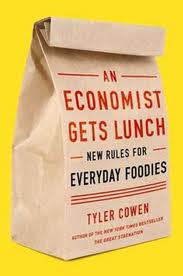
Tyler Cowen’s Marginal Revolution deserves all the praise his blog receives.  Somehow in the space of a paragraph or two he manages to convey something of substance about a whole range of issues. His links are always interesting.  Those familiar with his blog know that he loves food, and his recent book, An Economist Gets Lunch has generated a lot praise, again deservedly so.

The book is enormous, anecdotal fun, filled with good stories, good advice, and counter-intuitive thinking.  Without spoiling everything, some of my favorites were:

  • The best barbecue is always in rural areas, but the best of all is in central Mexico, because of their tradition of pottery making.
  • The best French dining experience is to be found in Japan, where the service will be much better, and the food cheaper, then in France.  If nothing else, Japanese do brilliant copy work, so the recipes will be exactly what they would be in France.
  • When dining expensively, order what seems least appetizing to you.  It must be good, while the roast chicken probably is nothing special.
  • If you are a real foodie yourself, don’t look for a restaurant where people are smiling, talking, etc.   Look for a place where people are silent, serious about what they are eating.  It’s a real bonus if you find people arguing with each other or the wait staff.  It shows that they are regulars, comfortable with the place.  By all means enter, you’ve hit the jackpot.

Many more such tidbits exist, all of them intriguing in their own way, such as why you should look for Thai food inside of hotels, or why you should avoid dining establishments in strip malls that have a Target or Wall-Mart.

Cowen also has some “serious” chapters on more substantive policy matters like agribusinesses and genetically modified foods.  I found myself agreeing with him about these areas, but did not like them in this book.  He shoots for too much, the styles don’t mix.  To really convince us that agribusiness is actually better overall for the environment than “locally grown” (a proposition I’m certainly willing to entertain) he needs to cite more statistics, studies, and so on.  But if he did this, it would alter the tone of the rest of the book.  His section on why genetically modified foods not only pose no threat, but can benefit us greatly, persuades, but to really hit a home run he would need to do more.

Though the text bogs down in these “heavier” parts, at least they serve as a good introduction to the issues.  Cowen stays full of surprises throughout.  For example, he advocates lower tax rates on corporations, which you would expect from a libertarian leaning economist.  But, surprise, surprise, he also  urges a “carbon-tax” on corporations as well.   It’s twists and turns like this that will keep you reading An Economist Gets Lunch.