I believe that government has a legitimate role in any society, and a believe that most people in government want to use their position for good. I do think, however, that in general, less government is better than more government. I tend to shy away from the “more government” approach because
More government usually means more standardization, and I agree with Toynbee that standardization presages decline, for it robs a society of flexibility and nimbleness of mind.
More government can lead to a creeping “Can’t Someone Else Do It?” approach to life whereby we abdicate responsibility for our lives to others, hardly congenial to a democracy.
I realize this very brief defense of a big idea hardly suffices, but I mention it only to say that someone who wants to be consistent on this position will find significant problems with both presidential candidates. Since its hardly sporting to lob grenades at an obvious opponent, I will instead focus on Romney and Ryan’s hearty support for “E-Verify,” a program that would create another massive government database, and give significant power to the government for determining who can and cannot work.
Dan Griswold does a great job of showing the program’s flaws in this article, with this excerpt getting to the rub,
The system also exposes too many legal workers to the risk of being falsely denied permission to work. As my Cato Institute colleague Jim Harper concluded in a study of the program, “It would deny a sizable percentage of law-abiding American citizens the ability to work legally. Deemed ineligible by a database, millions each year would go pleading to the Department of Homeland Security and the Social Security Administration for the right to work.
Cato’s full study on the negative impact of Arizona’s immigration laws is here.
Conservatives often accuse liberals of promoting the “soft tyranny” of the “nanny state,” but at the same time, some of these same conservatives lay a potential foundation for the “hard tyranny” of the “security state.”
Case in point — this week my wife and I received a mailing from an organization called “Americans for Limited Government,” an organization that, based on its name, I may have inclination to support. The mailing encouraged us to go vote November 6, and to add extra spice to their encouragement, they listed the fact that we had voted in the previous three presidential elections. This seemed odd, but they also told us whether or not four of our neighbors had voted in these same elections and compared our voting attendance record to theirs. To top it off, they promised that,
As a further service we will be updating our records after the expected high turnout for the [election]. We will then send an updated vote history audit to you and your neighbors with the results.
Gee, thanks.
This, from “Americans for Limited Government,” who somehow believe its their business and mine to know if my neighbors vote or not, and somehow believe that this has something to do with “limited government.”
Articles on this monstrosity abound, one of them being here.
The information age presents many temptations for those in the know, whether they be liberals or conservatives.
Most of us have some familiarity with the fact that we failed in Vietnam, though many might debate the reasons for this failure. Some see the fight as essentially hopeless, from an American point of view. When General Petraeus asked historian Stanley Karnow (author of Vietnam, a History) for advice about fighting in Iraq based off of his knowledge of Vietnam, Karnow responded that the biggest lesson was that we should not have been there in the first place.
Perhaps true, but not very helpful to Petraeus.
Others, like Max Boot, argue that had we fought the war in a different way — as a small, counterinsurgency war, we could have drastically lowered the financial and human cost of the war, maintaining political will at home while fighting more effectively abroad. Others, like General Westmoreland himself, argued that had the “gloves come off” and we bombed more heavily and used more troops, we would have had success.
Given this, I wasn’t sure what Brian Van DeMark could offer in his book, Into the Quagmire, but I found myself pleasantly surprised. Van DeMark concentrates not so much on the military side, but the political side of South Vietnam, and the internal debates within the Johnson administration over what to do about the eroding South Vietnamese government. What surprised me was that almost no one in Johnson’s circle of advisors had any real optimism that military action would work to achieve their objectives. Johnson and others astutely recognized that the chaos of South Vietnam’s political situation stood as their main problem. Military action in defense of a an unstable government would almost certainly do nothing to stabilize the regime.
Some argued that our presence would only destabilize them, doing their “dirty work” for them while at the same time making them look weak in the eyes of the South-Vietnamese themselves. Dean Rusk had more optimism than most, but even he realized that our military action had a limited chance. McGeorge Bundy thought success, “unlikely despite our best ideas and efforts,” and believed that the U.S. plan of action was, “likely to stretch out and be subject to major pressures both within the U.S. and internationally.” Johnson saw, “no point in hitting the North if the South is not together.” Ambassador Maxwell Taylor told Johnson that “intervention with ground combat forces would at best only buy time and would lead to an ever increasing commitments, until, like the French, we would be occupying an essentially foreign country.” Johnson’s friend Senator Mike Mansfield wrote him that,
Under present conditions [the U.S. sticking to bombing exclusively] Hanoi has no effective way of retaliating against the air-attacks. But if we have large numbers of troops in Vietnam, the Communists would meaningful U.S. targets against which to launch their principal strength, [infantry]. Hanoi could strike back at us by sending main forces into the South.
And so on, and so on.
So why did Johnson end up committing more than 1/2 million men into a war that few believed we could really win?
Part of the logic came from Ass’t Secretary of Defense John McNaughton, who argued that South Vietnam’s dire condition required dramatic, “life-saving” intervention that might possibly give them a chance to live. It probably wouldn’t work but was, “worth a shot.” Along with this, ancillary concerns about China and the Domino Theory had their place. But Van DeMark’s narrative shows that Johnson’s concerns about the domestic politics drove much of his Vietnam policy. This makes sense, for Johnson shone on the domestic scene, and this is where his strengths lay. It makes sense that he put his energies here.
Johnson wanted desperately to pass his “Great Society” legislation, and needed broad congressional support to do so. He feared that inaction in Vietnam would provide enough ammunition to his critics to derail his domestic agenda. Taking action, any action, would show his “tough” stance on communism and rob the right-wing of political leverage against him. As Bundy said,
In terms of domestic politics, which is better: to ‘lose’ now or to ‘lose’ after committing 100,000 men? The latter, [f]or if we visibly do enough in the South, any failure will be, in that moment, beyond our control.
And beyond political reproach from the right.
I can sympathize with Johnson in many ways regarding Vietnam. He inherited a very sticky situation that he had no part of creating. The loss of China, Johnson knew, helped lead to the rise of McCarthy. With Cuba going communist and opportunities lost in North Korea, something it seemed, “had to be done.” In the end, our failure in Vietnam involved poor judgment and bad choices from many different people besides Johnson. In the end, no one’s perfect.
But you can’t stop there. As Polybius stated,
I find it the mark of good [leaders] not only to know when they are victorious, but also to know when they are beaten.
Johnson does deserve a great deal of criticism for using real troops who would both inflict and suffer real death to prop up his domestic agenda. Politics, after all, involves a kind of unreality where crafted image only sometimes leads to substance. To use real lives to bolster an image is in my mind, to commit a definite evil in hopes of an imagined, or possible good. It’s a poor foundation on which to build, and often does not even accomplish what you hope for, since one builds upon image, upon sand.
There also seemed to be a blind “hope against hope” mentality that reasoned, “Failure is quite likely, but we have to do it, so therefore it can work. This sense of feeling trapped, of having ultimately no choice in the matter, strikes me as succumbing to fate, a moral laziness that leads to willful blindness. As Toynbee wrote,
. . . the prospects of man in Process of Civilization depend above all on his ability to recover a lost control of the pitch.
In Johnson’s case, he did get his Great Society legislation passed, but almost certainly would have anyway with or without Vietnam. Our troubles in Vietnam surely helped contribute to Nixon’s election in ’68 (though to be fair, Nixon was not nearly the conservative that Goldwater was, with his overtures to the Soviets, China, the creation of the EPA, etc.). Johnson lost his presidency, and Democrats lost the White House. This seems to me like reality asserting itself, a natural result of an unnatural policy.
One sees a similar principle at work with rookie NFL quarterbacks. Many think that what rookie qb’s need is a an effective running game to take the pressure off the need to pass, to avoid “third and long” situations. I agree with commentator Mike Lombardi, however, who said that rookie quarterbacks don’t need a running game so much as they need a good defense. A good defense will always keep games close, which allows the offense to avoid the need to throw all the time, and force the issue to get big plays and catch up.
Finding new authors is akin to finding new friends, and I recently read with great delight Herbert Butterfiled’s Christianity and History. I will need to read more of him.
One his great observations dealt with Old Testament prophetic literature. He writes,
What was unique about the ancient Hebrews was their historiography rather than their history. . . Their historiography was unique also in that it ascribed the success of Israel not to their virtues but the favor of God; and instead of narrating the glories or demonstrating the righteousness of the nation, like our modern patriotic histories, [they] denounced the infidelity of the people, denounced it not as an occasional thing, but as the constant feature of the nation’s conduct throughout the centuries; even proclaiming at times that the sins of Israel were worse, and their hearts more hardened by the light, than those of the other nations around them.
He goes on to say that, in contrast to pagan societies around them, the prophets blamed Israel’s troubles not on the “Gentiles” or the “unrighteous,” and not on “God’s deaf ears,” but on themselves. “The beds you lie in, O Israel, are the beds you made.”
This might explain the prophets’ lack of popularity.
I always get wearied during elections not because the issues lack importance, but because of how much posturing and blame both sides throw around. It’s always “the liberal media,” or “the right-wing conspiracy,” or, “We are the 99%,” or, “The Makers vs. The Takers.” No one wants to risk losing 51% of the vote to say, “It’s our fault,” preferring rather to carve up the carcass of the American body politic and divide us into “us” and “them.” Until someone speaks as a prophet might speak, and until we hear them, I don’t see much changing.
I wrote recently about The Story of Rome, and, while not a big fan of the book, I did find a few insightful tidbits. Among them, the book discussed how modern historians view the problems of Rome’s empire, and how different the views of the Romans themselves were from modern thinkers. We often say the problems revolved around economics, or incongruous geographical frontiers, or barbarian migrations, or political centralization, or some other such measurable factors.
The Romans never saw things this way. For them, it came to virtue, plain and simple. When they practiced virtue, they succeeded, and when they lacked it, troubles came their way.
Not quite equal to prophetic genius, perhaps (especially considering what the Romans meant by virtue), but as foreign as the words sound to our ears, perhaps we should hear them. Take their “Social War,” of 91-88 B.C., for example. Before the 2nd Punic War Rome treated its allies well, but the rebellion of some of their so-called friends during Hannibal’s invasion left a deep scar on their psyche (much as 9-11 has on us — Toynbee masterfully outlines the consequences in his book on the late Republic). They treated their Italian allies afterwards as second class citizens and after 100 years of such treatment, it came back to bite them terribly (the aforementioned “Social War’) in a conflict with an estimated 300,000 casualties on both sides. Rome survived only by making concessions at the very end.
The prophets, the presidential campaign, and Rome ran around my head when I think of the great current stain on American morality, our drone campaign in the mid-east. A recent NYU/Stanford University study, if true, indicts us of great evil. This article in the U.K.’s Guardian highlights many of our atrocities. We have attacked and killed (unintentionally let us pray, but still) civilians many times over. Our administration hides the facts and our watchdog media has played right along, always calling the dead “enemy combatants.” An excerpt reads of the study reads,
But Republicans, get off your high horse. Romney has said nothing to indicate that he would do things any differently. Other prominent conservatives, like Newt Gingrich, have praised Obama’s assassination program. In fact the only candidate who has said publicly that he would end the drone strikes is the Libertarian Party’s Gary Johnson.
But “We the People” cannot blame the politicians. We’re all guilty of preferring our immediate safety to the welfare of others (myself included). For the drones, Pakistani civilians are guilty until proven innocent, which would be bad enough, but drones offer no court of appeal.
Most of us understand the posturing and policies that come with a nation at war. But if we want to claim any kind of identification with the “righteous” side in the “War on Terror,” we have to consider whether we have the willingness to consider other lives more worthy than our own, to think of others as better than ourselves.
Paul Thomas Anderson’s The Master has garnered much acclaim for the acting jobs of its lead characters. Most also appear to appreciate the fact that the narrative leaves many holes and unresolved questions. My thanks to a former student who passed me this more critical review from Stephen Farber. He writes,
. . .enthusiastic critics have described the film as “elusive,” “enigmatic” and “confounding.” One glowing review rhapsodizes that the movie “defies understanding.”
If these seem like strange words of praise, you may need a crash course in new critical and directorial fashions. “The Master” epitomizes the rise of a new school of enigmatic movies, which parallels similar post-modern developments in literature and music. “The Master” aims to join this company, but its release only proves to me that the cult of incoherence is beginning to pall. Too many movies, novels and even TV series dispense with all sense of logic; they revel in unintelligibility and dare audiences to enter their tangled web.
I haven’t seen the movie, but if the above comments ring true, I would likely agree with his assessment. Good stories should involve us in multiple perspectives, but these perspectives need a narrative center, and perspectives need resolution. Creators who ask others to enter the world they create owe this to their audiences. Perhaps there can be exceptions to this, as Farber continues. . .
It is probably easier to accept these films if they announce from the outset that they are working in a more impressionistic vein. Although I was not a fan of “The Tree of Life,” I understood that Malick never intended to spin a Hollywood-style narrative. He was aiming for something closer to a lyric poem or an atonal symphony than a traditional drama. The problem with “The Master” is that it does not really present itself as this kind of experimental effort. It starts out telling a straightforward story but then veers into murkier terrain without ever establishing a clear set of ground rules.
Unless one wants to write a reference book, non-fiction authors should deal with the same narrative constraints. Alas, often historical writers get bogged down in details and forget that what makes History come alive is the story. The story doesn’t even have to involve people. One could weave a narrative about geological time, I’m sure. Using multiple perspectives aid stories, but they are not the story.
So it was with great hope that I picked off the shelves Greg Woolf’s Rome, An Empire’s Story. Like books on any other historical subject, works on Rome often drag their feet talking about the details, and lose sight of the where they’re going. But the word “Story” in the title got me excited. “Here, I thought, “is a valiant champion to right all past wrongs!”
The early chapters did little to encourage this hope, and then I got to page 52, where he writes,
Each invention was based on a combination of crops–cultigens–that could together supply the carbohydrate needs of humans, and some of their protein.
My heart sank. I knew that when he called crops “cultigens,” and he referred to “humans,” that I was certainly not involved in a “story.”
The eminent Adrian Goldsworthy praises Woolf on the book jacket, stating,
…[Woolf] offers no simplistic answers, but instead well considered discussion of the evidence and how we try and understand it.
Far too often I see this imagined dichotomy. Since no one wants simplistic answers, we offer no answer at all and instead play ping-pong with the facts. The best historical writing offers answers without stooping to oversimplification, without fear of what the facts might actually mean. No one should make blind dogmatic assertions that have no room for evidence. But we want our experts in the field to make their best guesses, if for no other reason than it’s fun to make such guesses, and it’s good to see people enjoying themselves.
To Woolf’s credit, at the close of each chapter he has a marvelous and brief discussion on the best sources for the issues at hand. Here he reveals his true calling – a collector of valuable factoids that he shares gleefully and humbly with whoever is interested. Looking at his picture, I knew he had to be a nice guy after all.
David Halberstam’s The Breaks of the Game surely must hold the title of “Greatest Sports Book Ever.” I can’t imagine anything else comes close. I really enjoyed John Fienstein’s A Season on the Brink, and his Next Man Up is also excellent. But Halberstam somehow made me care deeply about the NBA and the Portland Trail Blazers 1979-80 season, though I usually care very little for either.
Throughout the book Halberstam deals with several different characters, from the owner down to the team’s medical staff. Each time he manages to reveal a new perspective. At first one has sympathy for person ‘x,’ but then 50 pages later you get the other side of the story. Everyone gets a sympathetic treatment, everyone has their turn. Halberstam shows remarkable restraint and the characters get to tell the story.
The narrative’s broad field of vision is another reason for the book’s success. Halberstam wrote just as the merger of sports and tv started to look like something that we might recognize today. So tv executives get their say as well, and the marketing of the game shows up as a supporting actor in the drama that unfolds.
It’s easy to see how tv helped the NBA. Exposure went up, so money went up for owners and players. Fans get to see more games. But Halberstam masterfully shows the other side of the coin. The size of the tv contract came to determine much of the revenue for the league, so the league positioned itself around tv, leading to odd travel schedules and quirky playing times for games. Owners no longer had to sell tickets to make money, so certain teams made no real effort to compete. The best players, after all, were now much more expensive, and tv money usually guaranteed owners a profit. With the league more profitable wealthy businessmen wanted to buy into the league, so we had expansion. But expansion increased travel time as well as watered down the competition, and so on, and so on. “One thing leads to another.”
A quiet desperation seeps through the pages of the text, the feeling that, “this cannot go on.” Reading this, you get the sense that the NBA, and sports in general, is due for a “market correction.” The tensions between money, the “purity” of the game, athletes well-being, and so on, surely cannot last forever. And yet they have. Halberstam may have been a subtle prophet of doom, but apparently not imminent doom. If anything, all of the factors that created the tension in the game have increased exponentially — more money, more tv, more exposure, more games (i.e. the expansion of the playoffs in all major sports), more everything! How can this continue?
As best as I understand, I do not think I am a Keynesian in my economic philosophy. But his quote,
Markets can remain irrational longer than you can remain solvent
seems to bear out in experience. Betting against the future of sports in America seems like a sure winner, if only it will pay off before you go bust.
From almost the beginning of his administration, I have not been a fan of NFL Commissioner Roger Goddell. I certainly hope that he is a good and decent man, and I believe that he works hard and sincerely believes in the work he does.
The NFL reigns atop the sports world in particular and the tv ratings in general. One might hope that they would enjoy the fruits of their spoils. After all, no one lives forever. But this is not happening, and that should not surprise us.
Dominant empires often become more touchy, not less, more antsy to defend its territory, less able to enjoy what they have. Athens dominated the Mediterranean, but could not bend even a smidge after they put Sparta in a tough spot prior to the Peloponnesian War. In a memorable passage from Thucydides, Pericles states,
I would have none of you imagine that he will be fighting for a small matter if we refuse to annul the Megarian decree, of which they make so much, telling us that its revocation would prevent the war. You should have no lingering uneasiness about this; you are not really going to war for a trifle. For in the seeming trifle is involved the trial and confirmation of your whole purpose. If you yield to them in a small matter, they will think that you are afraid, and will immediately dictate some more oppressive condition; but if you are firm, you will prove to them that they must treat you as their equals.
Sometimes, this “firmness” leads to “disaster,” as it did for Athens, as it did to Rome with Hannibal over Saguntum, as it did with Napoleon and Russia, and so on. The great power and wealth empires accumulate seems, by evil magic, to force them to believe that any concession on anything will make them lose all. Pericles demonstrated this very attitude. He told Athens,
Nor is it any longer possible for you to give up this empire … Your empire is now like a tyranny: it may have been wrong to take it; it is certainly dangerous to let it go.
Thus, their power traps them into rigidity, which in time, brings them down. They think in one direction. The cry is always “onward,” which bloats them unnecessarily. The NFL parodies such empires with their recent move to Thursday night games all season long. Imperial overstretch might be just around the corner.
Alas for NFL fans, Roger Goddell shows some of the same symptoms that afflicted Pericles and other leaders of dominant empires. The NFL Players Association did not help matters by signing away tremendous power to him in the recent collective bargaining agreement, and with this power he has become quite touchy. The exhibits, please. . .
The Replacement Refs — Despite all the talk of player safety, Goddell has decided to use inexperienced referees rather than pony up a few million. It’s not as if the regular referees are holding the league hostage to unreasonable demands. The substance of their complaint seems entirely reasonable, as they just want to keep their previously existing pensions recently eliminated by the NFL.
The arbitrary punishments of players with no due process. Thankfully, some of the punishments of Saints players has recently been overturned.
Goddell is not the first sports commissioner to face the perils of unchallenged power. Years ago baseball stood atop the American sports landscape in a more dominant position than football is today, though admittedly it was not as lucrative. When baseball faced the “Black Sox Scandal” after the 1919 World Series, they hired the iron-willed federal judge Kensaw Mountain Landis. Almost all agree that Landis helped drastically curtail gambling in baseball, restoring its image. Almost all also agree that Landis went too far in his ban of Shoeless Joe Jackson, a classic and expected overreaching of power to make a “point.”
After the Sox scandal settled, Landis continued to overreach and attempted to ban players from barnstorming in the off-season. But he had the good sense to know when he was beaten. Babe Ruth challenged the ban and played in off-season games (famously quipping that, “the old man can go jump in a lake”). But Landis backed down in the end of his own accord. He recognized that there were certain crusades he could not fight.
We shall see if Goodell has it in him to do the same thing. He has put a great deal of focus on the league’s image regarding player safety. The problems with the replacement refs, however, are multiplying quickly, and soon the games themselves will become meaningless. If a handful of league stars would strike in the interest of player safety, the lockout would be settled in short order.
I am pulling for Goodell and the owners to transform themselves, to put substance before image. The well being of the NFL Empire may depend on it.
I am no authority on science-fiction, but I do partake occasionally. Recently I devoured Christian Cantrell’s Containment, and while most of the characters are a bit flat, Cantrell fascinated me with the political and scientific problems his characters face.
The book’s cover has a blurb that hints at one of its main themes, saying, “The colony on Venus was not built because the destruction of Earth was possible, but because it was inevitable…”
Throughout Containment the older generation advocates for realpolitik. Arik, born and raised on Venus and trained to think “outside the box” to solve the problems inherent in the thin margins of existence in an inhospitable world, wants alternative solutions. One of their arguments turns on Venus’ relationship with Earth. Arik urges that they put more resources into strengthening ties between Earth and Venus. The leaders disagree. “Every colony inevitably separates from the mother country,” they argue, so why put resources into a sinking relationship?
That got me to thinking, and I could not remember a colony that had not at some point separated and sometimes turned against their homeland. In the post-colonial 20th century, the list is enormous. But the ancient world has its own list. Carthage came to overshadow Phoenicia. Syracuse overshadowed Corinth. Egyptian colonies in Canaan often had to be reclaimed. Thera founded Cyrene in North Africa, which quickly established its own identity. And so on, and so on. . . .
We can go beyond the idea of colonies separating from motherlands. Containment does in part raise the question as to whether or not “Laws of Nature” govern human affairs. Many would argue yes, that “there is no armor against fate.” History is rife with systematic patterns that, while not perfect, still show very strong tendencies. For example, the idea of a “balance of power” between several states in a region appeals innately to our sense of fairness and proportion. No one has too much, and each state has to rely on each other to maintain peace. But, however noble the idea, can it last?
If we take Europe as an example, it seems not. Before W.W. I England, France, Germany, Russia, Austria-Hungary, and even Italy to some extent all played a part in keeping the peace. But with so many participants, too many possible variable were in play. Combine these variables with human sinfulness, and you have W.W. I, which eliminated Austria-Hungary. Twenty years later W.W. II eliminated all of them except Russia, who stood toe-to-toe with the United States, until we have the current situation where we have only one global superpower.
Earlier European history show this same tendency. Around 1500 you have France, the Holy Roman Empire, the Hapsburgs, and to some extent, England. The wars of Charles V finish the Holy Roman Empire. Then you had England and France both take successful shots at the Hapsburgs, which left France and England remaining. They seesawed back and forth until Waterloo, after which England stood more or less alone until 1871.
In the ancient world similar patterns show up. Greece for a time stood balanced precariously on the backs of Sparta, Athens, Thebes, Corinth, and Argos. After the Persian wars only Athens and Sparta stood. After the Peloponnesian War, a weakened Sparta held sway for a time before falling to Thebes, which then itself fell to Macedon. Macedon alone held the torch in Greece until Rome ended all pan-Mediterranean balance by defeating both Carthage and Macedon from ca. 230-146 B.C.
Systems have the advantage of abstract elegance, but who wants fate to rule? Many notable scholars use this fact to abandon Christian concepts of humanity. After all, without some semblance of control, humanity gets absolved of responsibility. If we have absolution from responsibility we have no ability to choose. Our DNA does that for us. The “I” disappears. Why anyone would seek to destroy even their own identity with their theories is beyond me. But the evidence does strongly suggests that patterns assert themselves in human affairs. Do we have any hope of avoiding them?
We don’t need to deny the evidence, but instead see that it points in another direction. Maybe systems assert themselves not because of fate, but because of the uniformity of human nature, a Christian truth. Maybe we’re not enslaved to patterns, but instead enslave ourselves. If that were true than we might expect that the spread of Christianity, which frees us from slavery to ourselves, would shatter the patterns. If we believe that “service to God is perfect freedom,” Christians and Christian epochs should give evidence of the ability to escape destructive patterns. Do the Middle Ages, for example exhibit a freedom from such “inevitable cycles” of behavior?
It may hold up. After Charlemagne and the evangelization of the European continent, Europe has no significant, balance altering conflict until the 100 Years War in the 14th century. Maybe Christianity did make a difference. Critics, however, would probably say that
(1) The Crusades should count as a major conflict, and the only reason the Europeans didn’t fight each other is because the Church exported all its violent members overseas.
(2) The major conflict never took place because they lacked the resources and the political structure to fight major wars. Once they had those (ca. 1500), then they did begin to fall into similar patterns as others nations in other eras.
Alas, I must confess, these are good counters to my proposal. But on the other hand, regarding the Crusades, one could also argue that the Church also shipped society’s leaders overseas, which could opened up significant power vacuums in Europe, which usually lead to general wars. Europe did not experience significant this during the Crusades.
Regarding point #2, they may have avoided centralized political systems (systems which could concentrate enough resources to wage a long, destructive war) during the Christian era precisely because they saw them as a threat. Only when the moral power of the Church eroded in the 14-15th centuries do we see the state start to take over, a role it has not yet had to relinquish some 500 years later.
The evidence may be inconclusive, but I agree with Toynbee when he wrote,
. . . the prospects of man in Process of Civilization depend above all on his ability to recover a lost control of the pitch, it is evident that this issue [is to be] decided by the course of Man’s relations, not just with his fellow men and with himself, but above all, with God his Saviour.
In his overlooked Letters to Malcolm, C.S. Lewis quotes his friend Charles Williamsin a memorable passage that has always fascinated me. He writes,
It is no good angling for the rich moments. God sometimes seems to speak to us most intimately when he catches us, as it were, off our guard. Doesn’t Charles Williams say somewhere that ‘The altar must often be built in one place in order that the fire from heaven may descend somewhere else?'” [Find this in chapter XXI]
Spiritually, this idea seems incredibly rich with possibilities, but I confess to recalling this quote when my daughter decided to buy this song for our trip to the beach:
I had heard that the Black Key’s Dan Auerbach produced the album this song comes from, apparently from a desire to help more bands reflect the raw, “real” sound the Black Keys love. Indeed, some songs on this album do reflect Auerbach’s influence. But “Hypnotic Winter” is (at least on itunes) the most popular of the tracks, and in my opinion the best. And yet, it has a pop flavored slickness and happy bounciness that is nowhere near the ethos of the blues-drenched Black Keys.
This doesn’t mean that Auerbach had no influence on “Hypnotic Winter.” Rather, his best influence on the band may have been an indirect one, when he stopped trying too hard to make converts.
One of my sons has developed a recent interest in Phil Collins and Genesis. I’ve always thought that pre-1986, Phil Collins demonstrated great prowess as a progressively influence rock drummer. But I’ve always thought that his best drum work, came in this song with Philip Bailey, a song he produced, helped sing, and horrifyingly, attempts to dance to (2:36 ff.)
The video always bugged me, because Collins’ open-tom sound and off-beat fills give the song just enough edge, a perfect amount of spice, and yet nowhere are drums even seen in the video. Collins makes his bid for pop-stardom instead. This certainly boded ill for Collins’ long-term future as a drummer with a distinctive voice. But perhaps in the immediate short-term his focus on singing and dancing sub-consciously freed him to deliver a fabulous drumming performance.
I would love suggestions on how this principle can apply to teaching and life in general. Bill Carey’s post on law and gospel in teaching may have something to contribute.
An American named Sherwood Wirt spoke with C.S. Lewis in 1963 in what ended up as Lewis’ last interview before his death. I include a few excerpts here, as they touch on the subject at hand.
Wirt: A light touch has been characteristic of your writings, even when you are dealing with heavy theological themes. Would you say there is a key to the cultivation of such an attitude?
Lewis: “I believe this is a matter of temperament. However, I was helped in achieving this attitude by my studies of the literary men of the Middle Ages, and by the writings of G.K. Chesterton. Chesterton, for example, was not afraid to combine serious Christian themes with buffoonery. In the same way the miracle plays of the Middle Ages would deal with a sacred subject such as the nativity of Christ, yet would combine it with a farce.”
Wirt: Should Christian writers, then, in your opinion, attempt to be funny?
Lewis: “No. I think that forced jocularities on spiritual subjects are an abomination, and the attempts of some religious writers to be humorous are simply appalling. Some people write heavily, some write lightly. I prefer the light approach because I believe there is a great deal of false reverence about. There is too much solemnity and intensity in dealing with sacred matters; too much speaking in holy tones.”
Wirt: But is not solemnity proper and conducive to a sacred atmosphere?
Lewis: “Yes and no. There is a difference between a private devotional life and a corporate one. Solemnity is proper in church, but things that are proper in church are not necessarily proper outside, and vice versa. For example, I can say a prayer while washing my teeth, but that does not mean I should wash my teeth in church.”
The interview concludes with these words. . .
“There is a character in one of my children’s stories named Aslan, who says, ‘I never tell anyone any story except his own.’ I cannot speak for the way God deals with others; I only know how he deals with me personally. Of course, we are to pray for spiritual awakening, and in various ways we can do something toward it. But we must remember that neither Paul nor Apollos gives the increase. As Charles Williams once said, ‘The altar must often be built in one place so that the fire may come down in another place.’”
Some time ago I wrote about the problems of “Renaissances” and the use of the past. In Toynbee’s book, (reviewed in that post) he stated that if we are not careful when we recall the ‘ghosts’ of the past, we may get more than we bargained for. This ghost, once recalled, can come to exercise a fascination that leads to domination. With the correct spiritual attitude the past can buoy and strenghten us, like Antaeus rebounding with strength after contact with the Earth. If our relation to the past is particularly close — a relationship of family or personal affinity — chances are it will burden us when we recall its ghost, and we will find ourselves like Atlas, trapped by its weight. No one stands immune to this predicament.
This seeming law of human experience confronted me again as I read the blog of Ethan Iverson, pianist for the jazz trio “The Bad Plus.” Iverson and his band mates have done much to revitalize jazz for the modern era, freeing it from stale allegiance to previous forms. All three have done much to advocate for more recognition of newer and more innovative jazz artists. They made their name by creatively reinterpreting classics of the 20th century cannon, from Abba to Nirvana to Stravinsky. I used The Bad Plus to illustrate how the past can work for us, rather than against, when we apply Toynbee’s theory to music. Insight into their powers can be seen in their cover of “Iron Man,” perhaps even heavier than the original. . .
But even Iverson, when it comes to Thelonius Monk (one of his favorite artists, and thus, a powerful and potentially dangerous ‘ghost’ for him) can’t help but assume the position of Atlas. A reinterpretation of Monk’s music from one of his students elicited this response on his blog (my apologies to those, who like me, don’t understand some of the musical terminology),
The excellent pianist David Rysphan came by last week, and wrote about it on his blog. I had met David but it had been a few years and in another country. He was a familiar face, though, so after he played a solid version of “I Mean You” I asked him, “Haven’t you been here before? Don’t you know better than to play Monk in my class?”
I am a hardline conservative when it comes to Monk’s music. My standard yowl of pain is, “Would you change the notes to a Mozart sonata? So why do you change the harmony to a Monk song?”
David, bless his heart, was playing G minor in bar five under the melody. I hasten to add, this is also how Kenny Barron and McCoy Tyner and a host of worthy others play it as well! But it’s 2012: in my opinion it is time to start treating Monk’s texts with fidelity (emphasis mine).
Alas, another creative mind bites the dust when confronted with a particularly important and personal ghost. He obviously (and thankfully) does not have that same attitude to the other artists The Bad Plus has covered.
I think that many classical educators face some of the same challenges and temptations. We look to the past for guidance, and rightly so. Our disenchantment with the present state of education makes the past all the more attractive to us. But this past upon which we place so much hope will be nothing but dead weight if we fail to treat the past as prologue–living and active in our midst. For the past to give us life for today we must interject our own life into it. Without this, our attempts at educational change will have a short, truncated life of its own as we collapse under a burden we cannot bear.
A variety of recent authors have re-examined the “Good War” approach to World War II. I don’t think this trend is mere cynical debunking. I applaud it. World War II killed a much higher percentage of the world population than any other conflict by far. That fact must forever remain a stain on the war, and we need not stoop to moral equivication to think carefully about why it happened.
Ronald Schaffer’s Wings of Judgment: American Bombing in W.W. II is a book in this vein. He does not try cheap arguments that paint American bombings as ‘genocide,’ but certain facts stare one in the face. America dropped far more bombs on civilians than the German army did, and Shaffer dispassionately wants to know why, albeit a bit too dispassionately.
He writes carefully, suggesting but never advancing a few theories here and there. He is at his best when describing the tug-of-war between different camps within the Air Force and government as it related to bombing civilians. We learn a lot about the views of many generals and politicians. We get an insightful look into the history of attitudes to bombing before World War II. But we do not get a good answer as to why we dropped so many bombs on so many people. The question of civilian bombing comes into sharp focus especially in Nazi occupied areas (at least 12,000 dead from our bombs in places like France), not just Germany and Japan proper. His only real answer is the oft-heard ideas of the “pressures of the moment,” “group think,” and “the protection of American lives.” These explanations have their place, but I think a better answer exists–closer to the root cause–one that Shaffer himself mentions but does not explore: the idea that war is of necessity evil.
Of course the idea that war is by its nature evil seems to make perfect sense. The idea that “war is hell” resonates with anyone, and given that war means the deaths of so many, it seems hard to argue the point. But, appealing as this position seems at first glance, it puts the Christian in a difficult spot. At times God orders wars to take place. Can we say that God ordered an evil thing, and that He can therefore do evil? Secondly, the idea of war= evil has not been the view of the Church historically.
I did not read his book, but very much enjoyed Ken Myers’ interview with Daniel Bell, author of Just War as Christian Discipleship: Re-centering the Tradition in the Church Rather than the State. The book has received favorable reviews from pacifists and military chaplains alike, which must mean something good. Bell believes in “Just War Theory” but argues that over time it has lost its true value, because it has been used outside its true purpose. Politicians use the ideas as a mere checklist, that once fulfilled, grants one a blank check to fight. Bell argues instead that “just war” didn’t stop when conditions for fighting resolved, but continued into the fighting itself. To fight to relieve the oppression of others could be a positive, but fighting the oppressors was also, in St. Augustine’s view, good for the oppressors as well. Stopping their ability to oppress spared them piling up judgment upon themselves, or might help them see the evil of their ways. For Augustine, if one could not fight an enemy out of love for that enemy, and even potentially kill that enemy out of love for that person, one could not claim to be fighting a “just war.” War could be a means of sanctification just as any other legitimate activity in life. Neither the Old or New Testaments speak against being a soldier.
If abused, this idea could to disaster. Aim high, and you have far to fall if you miss the mark. One could imagine a deluded commander perverting this high calling into something monstrous, like the massacre of innocents in Jerusalem during the First Crusade.
But Wings of Judgment shows in some ways that far worse things can happen on a regular basis if governments and armies reject this view. If war is evil, then once fighting begins nothing can be redeemed. If one is already a lawbreaker, the checks on behavior disappear. Though certain aspects of bombing got hotly debated, almost all agreed that since war was evil, we needed to end it as soon as possible. Debates centered more on the tactics and efficacy of bombing than its strategic or moral value. We dropped thousands of tons of bombs, with hundreds of thousands killed, in the name of war as a necessary evil.
Bell argues that if we are serious about just war, we need to accept the following:
When we fight, we cannot place the highest priority on sparing our own lives or the lives of our soldiers. Love gives, love thinks of others, but to think of ourselves first denies the Golden Rule.
We cannot place the highest priority on speed. Just war means taking time and great care to avoid any unnecessary loss of life, and we must regard the taking of innocent civilian life not as “collateral damage” but at best manslaughter, especially when done out of moral laziness or impatience.
Strange as it may seem, victory cannot be our supreme hope in “just wars.” Our main goal should the increase of holiness, greater progress in sanctification. Victory may come with such an approach, but we should fight because it’s the “right thing to do” in the “right way,” to increase in our capacity for love and holiness.
For many Christians these ideas will seem absurd, and for this, Bell indicts the Church. We have forgotten our past and abdicated much of how we live and think to the state over the past few centuries. Our current “War on Terror” will test us severely. Predator drones, for example spare many American lives and allow us to go places people cannot. But several such attacks have resulted in many civilian deaths. The destruction is not wholesale, but still part of the same thinking that led to the destruction of Caen, Dresden, and Tokyo. If mistakes like this are in some ways inevitable, should we use them at all? Torture may get us valuable information, but such terrible acts degrade nations who practice them. Will we forego the information to save our souls? Will we forego the information if not getting it puts our friends, neighbors, and children, at greater risk?
I agree with Bell, and if he’s right we must ask ourselves if we really want to fight a just war.
Thus ends the original post. I had a conversation with a Marine friend of mine and he agreed with Bell in part. He commented that one might love a society and be at war with a society at the same time. One could theoretically, “punish” a disobedient society, and just like a parent who never disciplined children, failure to “punish” would be a form of moral laziness.
But he disagreed that one could kill a particular person and still love them. It may be permissible, but one cannot love another and kill him at the same time. The soldier at that point is irrevocably intertwined with the “City of Man.” I suggested that if he was right, Bell’s thesis breaks down entirely, but he thought it could partially survive.
I picked up Byron Farwell’s Armies of the Raj on a whim, and was very pleasantly surprised. From the title one might think this book has a very narrow focus, but this is not so. Farwell uses the army as a springboard into England itself and the whole Victorian era. Cultures come in many parts, but each diffracted part contains the whole, like light through a prism. So, while this book is military history, it is really cultural history disguised as military history, which I appreciate.
Many have made the point that Victorian era nations really worshipped themselves, and one certainly sees this confirmed by Farwell. Part of this might have resulted from those India being away from the home country. Perhaps they felt the need to overcompensate and out-English those in England itself. I suppose this ‘diaspora’ psychology is not common to the English. David Hackett-Fischer touched on this same psychology in his wonderful examination of New Zealand and America, both settled by Brits. This might not have been a problem, were it not for the over-inflated view of themselves the Victorians possessed. Toynbee comments,
The estrangement between India and a western world which, for India, has been represented by Great Britain, goes back behind the beginning of the Indian movement for independence in the eighteen- nineties, and behind the tragic conflict in 1857. It goes back to the reforms in the British administration in India that were started in the seventeen-eighties. This birth of estrangement from reform in the relations between Indians and English people is one of the ironies of history; and yet there is a genuine inner connection between the two events. In the eighteenth century the then newly installed British rulers of India were free and easy with their newly acquired Indian subjects in two senses. They were unscrupulous in using their political power to fleece and oppress them, and at the same time they were uninhibited in their social relations with them. They hob-nobbed with their Indian subjects off duty, besides meeting them at work on less agreeable terms. The more intellectual Englishmen in India in the eighteenth century enjoyed the game of capping Persian verses with Indian colleagues; the more lively Indians enjoyed being initiated into English sports. Look at Zoffany’s picture ‘Colonel Mordaunt’s Cock Match at Lucknow’, painted in 1786. . .
It tells you at a glance that, at that date, Indians and Englishmen could be hail-fellow-well met with one another. The British rulers of India in the first generation behaved, in fact, very much as their Hindu and Moslem predecessors had behaved. They were humanly corrupt and therefore not inhumanly aloof; and the British reformers of British rule, who were rightly determined to stamp out the corruption and who were notably successful in this difficult undertaking, deliberately stamped out the familiarity as well, because they held that the British could not be induced to be superhumanly upright and just in their dealings with their Indian subjects without being made to feel and behave as if they were tin gods set on pedestals high and dry above those Indian human beings down below.
Exhibit B for Toynbee’s analysis might be this painting done of Queen Victoria’s visit to the “Jewel in the Crown”. . .
What can account for this shift, and how did it express itself?
One obvious reason was the Suez Canal, which made transportation to India quicker and safer. This opened up the possibility of women and families traveling to India, which meant the end of India as a playground for English businessmen, and the arrival of more civilizing influences. But if one looks at how Victorians dressed, one sees that their version of a “civilized” world was in effect a closed system. They would not be able to fully reach out to Indians. Even their clothes seem to send a message of, “Back! Back, I say!”
Before slamming the British completely, Farwell argues (and I agree) that many if not most British had a sincere desire to do good in India. And they did in fact accomplish a variety of good things. As to whether or not the good outweighed the bad in the end, Farwell doesn’t say, and I would think it’s too soon to tell for sure. He puts his focus on how the British reformed the military after the Sepoy Rebellion of 1857, and how their innate prejudice kept getting in the way in a few key areas:
The British wanted to integrate Indian troops more into the regular army, but no Indian was ever allowed to command a British soldier
Indian officers never had the social privileges that British officers had
The British recruited troops very successfully in certain provinces, but never even tried to recruit in other areas of India, believing the people there to be less martial in temperment. Indians in the British army could never really claim to represent India as a whole, and this had a terrible impact when India did gain its independence.
As time went on the British changed some of their attitudes and tried harder to treat Indians equally. Yet rarely could they go all they way. Some officers clubs for example, came to allow Indian officers to the bar and billiard room, but not the “swimming bath,” as they called it (though some British officers refused to allow their troops to join if their Indian officers were not granted full membership). When W.W. II came the British worked hard to recruit all the Indians they could, and the army served to break down a variety of social barriers between British and Indians, and between Indians themselves. Yet when it came to actually declaring war, the British government announced that India was at war with Germany without even consulting the Indian National Congress, a foolish act that led to much violence and a tragic split between Moslems and Hindu’s within the Congress itself. General Auchinleck commented in 1940 that,
In my opinion we have been playing a losing hand from the start in this matter of “Indianization.” The Indian has always thought, rightly or wrongly, that we never intended this scheme to succeed and expected it to fail. Colour was lent to this view by the way in which each new step had to be wrested from us, instead of being freely given. Now that we have given a lot we get no credit because there was little grace in our giving.
In their foibles, the British are hardly alone. Empires find it very difficult psychologically to fully open up themselves. They tend to believe that the locals should be thankful, first and foremost, for the blessings they bring. They want to be seen as benefactors. At their worst, they insist that those they rule thank them for their kindness, and get angry if others fail to do so. . .
The book is another confirmation about how nations cannot do things halfway. You cannot bring part of your civilization and trust that it will satisfy. If you rule on the basis of the superiority of your civilization and claim to bring its blessings, you have to bring them all. England could claim that they brought more economic opportunity to India, as well as modernization. These are features of western culture. But many of the Indians the British generously sent to Oxford and Cambridge (like Ghandi and Nehru) learned that there was more to western culture than railroads. Others principles, like equality under the law and self-determination will be evident in a western education. That the British did not see this coming testifies to their short sight, but again, their problems were human problems, and hardly uniquely their own. In a fallen world, we often don’t recognize what’s best for ourselves, let alone others.
I discovered last summer when I read Isaac Asimov’s Foundation that he makes great summer reading. I mean this in the highest respect. To create bad summer fiction might be easy, but to keep it light, entertaining, but thought provoking enough to prevent the reader from feeling like a total sellout — that requires a graceful touch.
His I, Robot achieves this same delicate balance. The book has a remarkable coherence for the fact that he culled it together from several short stories written over a period of about 15 years. Like the best science fiction, it seems to grow only more relevant as time marches on. As a special bonus, he anticipates the rise of Asia and the decline of Europe. But nothing he wrote could top those sideburns.
Asimov muddies the waters well and creates complex questions, but comes down on the side that robots benefit mankind. I remain unconvinced, though more for gut level reactions than anything absolute. As technology progresses in the stories, robots become superior to humans in many ways. They are faster, stronger, more durable, and more efficient than humans. To help reinforce their control and perception of robots, humans build into their programming that robots call humans “master,” while many of the male characters call robots, “boy,” which Asimov surely knows conjures up connotations of slavery. Perhaps we should not think so much about robots rising up and taking over. Perhaps we should think what damage we would do to our own souls if we created servants to do our every bidding.
But if we treat robots with deference and respect, would that make them our equals, and essentially human? Not necessarily — we can treat trees with respect. But treating trees or even dogs with respect does not threaten us because such interactions do not threaten our sense of humanity. The likely proliferation of walking, talking robots within the next few decades raises even the question over the tone of how we address them. As Brian Christian noted, part of the confusion regarding our humanity may lie not just in the increase of technology, but in the fact that we are worse at being human than previously.
Asimov also makes us realize that the very terms we use make a difference in our perceptions. Is a robot essentially a computer? If so, then are computers robots? Very few of us, I think, would be comfortable with this. I use a computer, not a robot, thank you very much.
As time marches on within I, Robot, the machines get more advanced and more integrated into society. Eventually they come to direct the world’s economy and much of governance itself. If the first law of robotics entails that robots may not harm humans, or allow humans to come to harm, then why fear anything they do? For Asimov, with robots in charge the world unites, war stops, and people get more productive.
At the very end, Asimov tips his hand as to why he believes robots will be beneficial for us. According to him, much of the misery mankind has suffered has resulted from impersonal factors like geographic resource distribution and macro-economics, rather than personal choice by individuals. He asserts that mankind has always been at the mercy of forces beyond his control. Forces beyond our comprehension drive us at times to try and destroy each other. Well, robots/computers, with their vastly more efficient brains, can manage those things for us. Factors that brought conflict in the past get effectively managed by robotic brains.
This is the root of why I fear the possible coming of increased computer/robotic domination. Abdication of responsibility to robots means a denial of part of our humanity. If we put a robot in charge of our economy, it would be akin to moral and intellectual laziness–a denial of part of the image of God within us. I find views of history that make us passive dangerous. Should we reduce ourselves to, “Can’t somebody else do it?”
Of course, I’m probably overreacting and blind to the ways in which I rely on computers/robots all the time. But still, Asimov tips the scales towards something problematic.
Another issue: why was Asimov so high on science in the direct aftermath of the atomic bomb, but today we seem to be much warier? Movies like Terminator and Matrix series, Blade Runner, the new Battlestar Galactica all proclaim doom for the future because of our continuing dependence on technology. Even the recent Will Smith version of I, Robot strongly modifies Asimov’s original message in a more negative direction (while also strongly changing elements of the story, as you might expect).
But even an edgy show like The Outer Limits 50 years ago goes even further than Asimov in proclaiming the “robots = good,” message. The prosecutor and sheriff represent pure ignorant anti-science sentiment in this episode. . .
We use computers much more than they did 50 years ago. Why do we proclaim our fear out of one side of our mouths, while rejoicing in the latest gadget with the other? How can we make sense of this? Why did an era that lived within the shadow of nuclear annihilation to a much greater degree than us believe much more in robots? Many have claimed that Hiroshima marked the high-water mark of the scientific worldview in the west. Is this true, or do we still live within an era dominated by an Enlightenment oriented scientific era?
I, for one, do not have the answers, but would be curious for any feedback.
I have enjoyed Steve Gadd’s drumming for years, but recently listened again to Paul Simon’s “50 Ways to Leave Your Lover,” where Gadd created a classic, universally admired beat for the song. If you have not heard it before, you can below in a live performance. .
So many with much more knowledge than I have commented on this beat, but one thing that strikes me is how well Gadd gives the song a massaging of the shoulders feel, like being out on a slightly choppy lake in a small sailboat where your body can pleasantly roll from side to side. He avoids giving the beat too heavy a feel by only lightly accenting beat 4 at the end of the two measure phrase on the low tom-tom. Most drummers (myself included) would drag the song down unnecessarily by doing precisely what Gadd avoids and give a big “thud” at the end of the phrase. Gadd keeps it light.
While watching Gadd perform the beat by himself, a friend noted how Gadd’s neck moves while he plays:
So, no, he does not actually play with his neck, but the way he moves it reflects the tremendous feel he gives the song. From a purely technical standpoint, playing the beat is not very difficult. But as the following shows, how one plays the beat makes a tremendous difference.
Perhaps the instructor needs to bob his neck more.
Gadd’s abilities start not with his wrists/fingers but somewhere inside him. Some might call it Gadd’s “Zen” approach, but I hate that word because it implies disengagement. I don’t think Gadd is disengaged at all, rather he engages in a different way than most drummers. He’s after overall feel, not technique. He stands inside, not outside the pattern. In the following clip, Dave Weckl and Vinnie Colaiuta outclass him technically, but which of the three’s playing most impresses? Look for Gadd’s neck to start doing its thing at the 3:27 mark, and yours may join him!
Our culture talks a lot about innovation, creativity, and the like, and we rightly recognize the importance of such things. Unfortunately much of our approach to education will not produce it. It will give us the same kind of result that we saw in the drum “lesson” on Gadd’s beat above, which robs all the life from Gadd’s creation. Our standardized, rote-fact approach to education will never allow us to get inside History, Science, Math, etc. in the way that Gadd gets inside the beat in Simon’s song. Creativity will not come from outward mastery of exteriors, but from cultivating a love and engagement with the subject from the inside out.
The master, one more time, giving his neck a wonderful workout. . .
Sometime in the early 5th century Vegetius wrote this simple and straightforward work, both a manual for a successful military and a plea for Rome to return to the values of an earlier time.
I am not a military man, but much of the advice Vegetius meets out concerns basic common sense, i.e. make sure your troops are well-fed, pay attention to terrain, make sure you have a reserve force, and so on. What interested me as I read is what the book might reveal about the late Roman empire, and why the work had a huge following the Middle Ages.
Vegetius does not bellow, shout, or stamp in his writing, and yet underneath I think we can see a quiet desperation. It seems like every ancient and medieval historian must as a matter of course talk about the past as a beacon of light, and how decrepit the present had become (does this not change until the Enlightenment?). In Vegetius’ case, however, his attitude may have had more connection with reality, as the Empire seemed less and less able to exert control over its borders (Hillaire Belloc disagrees with this standard interpretation in his Europe and the Faith). We do know that Rome had a harder time recruiting for its army in its later phase, and one of the great ironies of this book is that Vegetius, though wishing for a time when all men were strong and all the children good-looking, had no military experience himself.
The book touches on many things, but at the core Vegetius pushes discipline, discipline, and still more discipline. Who can doubt that an army needs discipline? Nothing remarkable about that. Still, as this Youtube shows, Rome rode a few basic military moves and formations to world dominance. Nobody plays the hero. Stay in formation. Crouch, block, thrust, and move on to the next enemy (warning: a bit bloody).
What I did find revealing, however, is what is not there, much like the dog in Conan Doyle’s “The Adventures of Silver Blaze.” Nowhere does Vegetius mention anything about armies needing morale, a cause, a belief to fight for. Napoleon for one gave it great store. His famous quote that,
In war, the moral is to the physical as three is to one.
comes to mind. Why does Vegetius not mention the morale, or motivating cause, of an army?
I wonder if Vegetius does not include it because the army had no possibility of fighting for a cause in the late empire. Rome had power and wealth even in the late 4th century but had lost any real reason for its existence long before. Vegetius wouldn’t mention it not because he judged it of little value but because he never would have thought of it in the first place, like a fish failing to extol the virtues of living on dry land.
Against my interpretation, however, is Vegetius’ own claim that nothing that he says comes from his own pen. He claimed only to be copying, collecting and transmitting much older sources. Some of those sources, like Cato, predate him by hundreds of years, when Rome had more internal health. Did Rome never concern itself with morale in their military treatises? One could imagine a stereotypical Roman thinking it a bit girly to think too much. Leave that sort of thing to the French.
Or perhaps by coincidence the sources he uses don’t mention morale, so he doesn’t either. But if so, he also chose not to add it. Or maybe they did include it, but Vegetius did not work with their complete full text, or perhaps he deliberately left those parts out because they made no sense to him and would make no sense to others in his day.
Since the original date of this post I had some wonderful feedback from a friend who had the following idea. His thoughts ran in a different course, which I paraphrase in the next two paragraphs below:
Vegetius may not have included the morale section for the reason that morale for the Roman armies was never the problem. If anything, they needed at times an check on their desire to fight, hence the strong emphasis on discipline. We see a few examples of this, first from the Gallic Wars, when Caesar wrote,
On the next day, Caesar, having called a meeting, censured the rashness and avarice of his soldiers, “In that they had judged for themselves how far they ought to proceed, or what they ought to do, and could not be kept back by the tribunes of the soldiers and the lieutenants;” and stated, “what the disadvantage of the ground could effect, what opinion he himself had entertained at Avaricum, when having surprised the enemy without either general or cavalry, he had given up a certain victory, lest even a trifling loss should occur in the contest owing to the disadvantage of position. That as much as he admired the greatness of their courage, since neither the fortifications of the camp, nor the height of the mountain, nor the wall of the town could retard them; in the same degree he censured their licentiousness and arrogance, because they thought that they knew more than their general concerning victory, and the issue of actions: and that he required in his soldiers forbearance and self-command, not less than valor and magnanimity.
My friend continues,
Similarly, one of the Consuls in the Macedonian wars (maybe Aemelius Paulus? I’ll have to dig out Plutarch) had terrible problems with his troops making frontal charges into Macedonian phalanxes and being annihilated. He entreated them to fight defensively and maneuver but they would have none of it.
Either way you slice it, the absence of anything resembling the morale of an army in his text says something. Feedback like this is always very welcome, so thank you.
The book had a curious second life in the Middle Ages, where it became the standard military textbook. I find this quite amusing. Nearly everything except for the most basic dictums would have no application in the Middle Ages. Many differences between the two armies/societies existed.
The Medievals could never have raised the large, professional forces that Rome did
Medieval armies did not often come together, and fought in short bursts, not extended campaigns far from home (the Crusades an exception, I grant you).
Medieval armies had very different people in them than Roman armies did. An aristocratic warrior elite with a shared code of honor with their opponents would probably not go for the discipline, discipline, discipline, approach of Vegetius.
And yet the Medievals loved him. Whatever for?
Some might call them simpletons who did not realize these differences, but I would not call a culture that produced Gothic architecture and St. Thomas Aquinas simpletons.
Some might see their possession of the manuscript of Vegetius valued like one prizes a good luck charm. On this interpretation it’s the manuscript itself that’s valued, not the actual words. Or perhaps in a childlike and humble way, they venerated the past and gave great store to anything from that time.
I could believe this second explanation, but I think the answer lies mostly elsewhere. A clue might arise from a medieval portrait of Vegetius here below:
Why did the late 15th/early 16th century picture him in garb exactly like their own? Did they really believe that the Romans wore clothes that they themselves wore in their time? Or were they visually displaying their belief in using his work for their time? Perhaps they had no idea what Romans wore and they felt free to invent whatever clothes they wished?
In his great The Discarded Image C.S. Lewis speaks of the medieval imagination. . .
We have grown up with pictures that aimed at the maximum of illusion and strictly followed the laws of perspective. . . . Medieval art was deficient in perspective [both historical and visual], and their poetry followed suit. Nature, for Chaucer, is all foreground. We never get a landscape.
Historically, as well as cosmically, medieval man stood at the foot of a stairway; looking up, he felt delight. The backward, like the upward, glance exhilarated him, and humility was rewarded with the pleasures of admiration. Thanks to his deficiency in the sense of period, that packed and gorgeous past was far more immediate to him than the dark and bestial past could ever be. . . . It differed from the present only in being better.
The Middle Ages are unrivalled, until we reach quite modern times, in the sheer foreground fact, the ‘close-up.’ . . . Two negative conditions made this possible: their freedom both from the psuedo-classical standard of decorum, and from the sense of period. But the efficient cause surely was their devout attention to their matter and their confidence in it. They are not trying to heighten or transform it. It possesses them wholly. Their eyes and ears are steadily fixed upon it . . .
This lack of “background” in their art and thought might lead them to ignore Vegetius’ context. We do this too. Who among us does not think that Ben Franklin’s idea of making the turkey our national bird ridiculous? We know that Bald Eagles may not be the nicest of birds, but that’s not the point. We are interested in the immediate image the eagle projects, not its actual reality.
But I think there is more to than that, something distinctly medieval about Vegetius’ image. Medievals developed the habit of looking so closely they missed the forest for the trees. With Vegetius, we might surmise that all details beyond the immediate text were entirely superfluous, which made those details, in a sense, entirely in the now. This attitude could be akin to the scientist absorbed so much in trying to clone DNA that he takes no notice of the larger consequences of his actions.
Cheap histories of the Middle Ages talk of the period’s ignorance, darkness, etc. In reality it appears they had quite a scientific bent, with a love of classification and minutiae. The quote, “Nothing is known perfectly which has not been masticated by the teeth of disputation,” on my homepage from Robert of Sorbone, dates from the 13th century, and not the 17th. Vegetius’ portrait may not speak many words about him, but does speak volumes about those that created it.
The explosion of interest in the ancient near east, and the rise of archaeology and anthropology in the late 19th-early 20th centuries stands as one of the great eras of historical research. It added a great deal to our understanding of so much of the past related to the Old Testament.
Unfortunately these discoveries came at a time when Darwinism, Victorian conceit, unbelief, and the Whig interpretation of history all coincided to help radically misinterpret much of what they found, and nowhere is this more evident than in their commentary on Sumerian mythology.
In Donald MaKenzie’s Myths of Babylonia and Assyria he mentions in the preface how scholars believe that Egyptian and Sumerian mythology had a common, ancient, as yet undiscovered source. At this the Christian might raise an eyebrow of amusement and hopeful anticipation that Mr. Alexander might say something profound.
But no, because from there he quotes approvingly from Joseph Frazer who believed that this “homogeneity of belief” came from a “homogeneity of race” *(see below). From the muddling use of big words he continues to slide down the slope . . .
In Sumerian mythology we do not deal with symbolized ideas but simple folk beliefs enlarged into greater stories.
Babylonian creation myths can be traced back to a story of some tribal hero who liberated the people from some oppressive neighboring tribe.
Sumerian dragon stories show disunity more than anything else, for some have the dragon bringing drought and others flood. Translation: Those silly Sumerians!
It seems to me that this dissection, done with intent to kill, misses the overall point. Myths, in their view, “evolved” from stories with “different local color, and different local geographies,” into a grand story that explained the origins of everything. But as Chesterton said in The Everlasting Man,
We cannot say that religion arose out of religious forms, because that is only another way of saying that it only arose when it existed already.
Somehow, according to the MacKenzie/Frazer school, the Sumerians had the audacious intelligence to found civilization itself, yet persisted in the Victorian-imposed imbecility of supposing that their view of the creation of the cosmos had its origins from some local chieftan hailing from some “local geography.” But even if you want to suppose some gradual ascent, that still does not solve the problem. How to explain the spiritual underpinnings of the stories? Chesterton again writes,
An event is not more intrinsically intelligible because of the pace at which it moves. The medieval wizard may have flown through the air to the top of a tower. But to see an old gentlemen walking through the air in a leisurely manner would still seem to call for some explanation. Yet there runs through all the rationalistic treatment of history this curious and confused idea that difficulty is avoided, or mystery eliminated, by dwelling on mere delay . . .
Art is the signature of man. That is the sort of simple truth with which a story of the beginnings ought really to begin. The evolutionist stands staring in the painted cavern at the things that are too large to be seen and too simple to be understood. He tries to deduce all sorts of other indirect and doubtful things from the details of the pictures, because he cannot see the primary significance of the whole; thin and theoretical deductions about the absence of religion or the presence of superstition; about tribal government and hunting and human sacrifice and heaven knows what.
Greek mythology has just as much strangeness and murkiness to it as Sumerian mythology, with violence and capricious gods doing as they please. And yet, western Europe never subjected Greek myths to the same kind of psuedo-scientific dissection and subtle derision. Why might this be?
One reason could be that western Europe knew of Greek/Roman mythologies for many many centuries prior to the late 19th. Having been known in a more sensible age, Greek myths could be taken in the more proper literary sense than their ancient near-eastern counterparts. Another could be that their assault on Sumerian mythology helped train their guns, a kind of test run, for their assault on the Old Testament.
But I think a truer reason might be that Victorian Europe, and especially England (from whence so much of that nobly minded scholarship came) saw themselves as the inheritors of the Greek legacy. Surely then, Greekfoundation myths had some nobler origin than their Sumerian counterparts.
The Toynbee Convector has a great anecdote from Toynbee related to England’s patterning themselves after the Greeks, especially their “idolization of the parochial state,” (i.e. idolatrous nationalism) which I quote in full.
At some date during the latter part of the breathing-space between the general wars of A.D. 1914-18 and A.D. 1939-45, the writer of this Study heard the presiding officer of one of the livery companies of the City of London bear testimony which was convincing, because it was unselfconscious, to the primacy, in his Weltanschauung, of one of these tribe-worships. The occasion was a dinner at which the company was entertaining the delegates to an international congress that was in session in London at the time, and the presiding officer had risen to propose the toast “Church and King”. Having it on his mind that a majority of his guests were foreigners who would not be familiar with an English tribal custom, the president prefaced the toast with an apology and an explanation. No doubt, he said, the order in which he had rehearsed the two institutions that were to be honoured conjointly in the toast that he was about to propose might seem to a foreigner not only quaint but perhaps even positively unseemly. He apologized for abiding, nevertheless, by the traditional order, and explained that he did so because it was the pride of the city companies to be meticulous in preserving antique usages, even when these had become so anachronistic as to be open to misconstruction by the uninitiated. — from A Study of History, Vol. IX
The tragic irony of all these brilliant and inquisitive men like Mr. MacKenzie and Mr. Frazer ascribing real spiritual hunger to “homogenous local ethnographies” is that they reduced themselves to tribal worship of their local community, and suffered the cataclysmic fate that the Greeks suffered from 431 B.C. – 338 B.C during the years 1914-1945.
*On the love of long words, Chesterton again is spot-on:
One of my first journalistic adventures, or misadventures, concerned a comment on Grant Allen, who had written a book about the Evolution of the Idea of God. I happened to remark that it would be much more interesting if God wrote a book about the evolution of the idea of Grant Allen. And I remember that the editor objected to my remark on the ground that it was blasphemous; which naturally amused me not a little. For the joke of it was, of course, that it never occurred to him to notice the title of the book itself, which really was blasphemous; for it was, when translated into English, ‘I will show you how this nonsensical notion that there is a God grew up among men.’ My remark was strictly pious and proper; confessing the divine purpose even in its most seemingly dark or meaningless manifestations. In that hour I learned many things, including the fact that there is something purely acoustic in much of that agnostic sort of reverence. The editor had not seen the point, because in the title of the book the long word came at the beginning and the short word at the end; whereas in my comment the short word came at the beginning and gave him a sort of shock. I have noticed that if you put a word like God into the same sentence with a word like dog, these abrupt and angular words affect people like pistol-shots. Whether you say that God made the dog or the dog made God does not seem to matter; that is only one of the sterile disputations of the too subtle theologians. But so long as you begin with a long word like evolution the rest will roll harmlessly past; very probably the editor had not read the whole of the title, for it is rather a long title and he was rather a busy man.
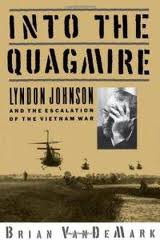






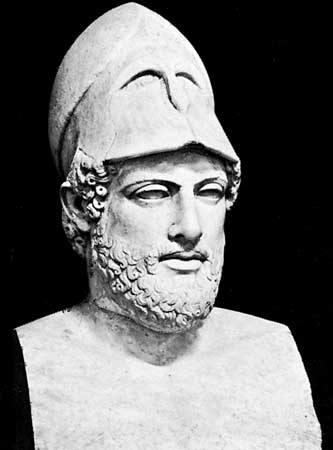


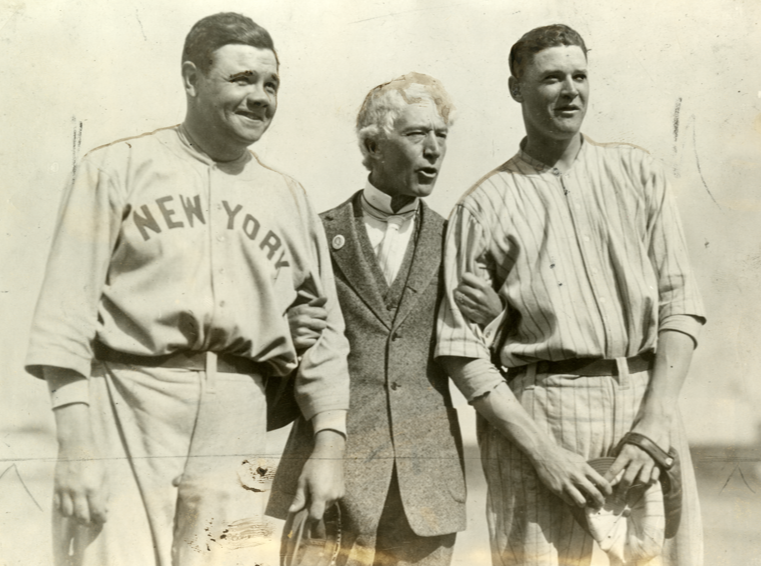


 Lewis: “Yes and no. There is a difference between a private devotional life and a corporate one. Solemnity is proper in church, but things that are proper in church are not necessarily proper outside, and vice versa. For example, I can say a prayer while washing my teeth, but that does not mean I should wash my teeth in church.”



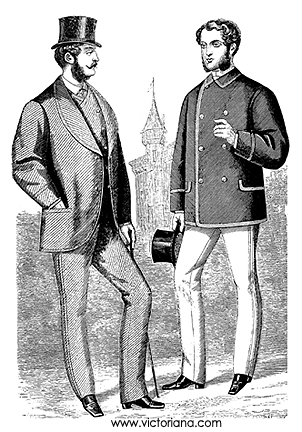


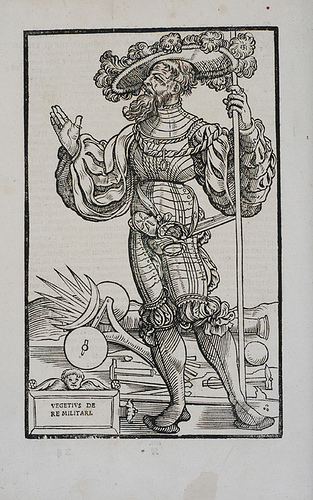


 A Stick in the Mud