“One of these real toffs . . .”

My favorite chapter in C.S. Lewis’ That Hideous Strength is “Banquet at Belbury,” when God removes the gift of language from N.I.C.E. and it immediately hurtles towards catastrophe.  Lewis writes on Wither’s reflections during the banquet,

“We shall not,” Jules was saying, “we shall not till we secure the erebation of all prostundiary initems.”  Little as he cared for Jules, a sudden shock of alarm pierced him.  He looked around again.  Obviously it was not he who was mad–they had all heard the gibberish.  Except possibly the tramp, who looked as solemn as a judge.  He had never heard a speech before from one of these real toffs and would have been disappointed if he could understand it.

I very much identified with the tramp as I read Oswald Spengler’s The Decline of the West.  Here I was, tackling one of the great historical tomes of the 20th century.  Here I was, understanding very little of it.  Both things were as they should be.

Spengler makes me nervous, partly because he is leagues smarter than I, partly because I often don’t understand him, partly because of the occasional racial undertones of his work (thankfully not much in evidence in this book, I don’t think, though certainly present in others).

But I confess a certain sympathy for Spengler.  I think of Longstreet’s comment in Gettysburg, “We Southerners like our generals religious and a little bit mad.”  My favorite historians have a touch of madness about them.  They try to have a grand unified theory.  They try to make history matter.  Today, for example, I picked up a thick book on the Plantagenets that looks promising in its details.  The preface shows that the author has a good idea of cause and effect within a certain time frame, but in the end, one thing just leads to another.  And if that’s all you have — in the end, who cares?

Still, I would have liked to have understood Spengler more.  Large chunks of this work remain unintelligible to me.  Apparently he was a recluse, and I have the impression that he wrote for himself more than the public.  I open at random (honestly) and see this sentence:

In both cases we have in reality an outbreak of deep-seated discordances in the culture, which physiognomically dominates a whole epoch of its history and especially of its artistic world — in other words, a stand the soul attempts to make against the Destiny that it at last comprehends.

He writes like one of those German operas where something is always burning and people are always dying (taking quite a bit of time doing so to boot).  For me, it’s just too much.

But this should not deter anyone.   Despite his eccentricity, real gold can be gleaned (all I say next has the caveat, “if I understand him correctly”).

Spengler challenged received opinion magnificently.  For him, Egypt was superior to Greece, and Renaissance art can’t equal either the Gothic or the Baroque.  Rome’s empire came much more easily for them than for others.

Most challenging for our time, he viewed the health of a culture by its inner life.  So things such as technological innovation and expansion have no real bearing on the health of a civilization.  Both constant innovation and physical expansion for Spengler probably serve as hints of decay.  It is the bored civilization, he writes, that thinks primarily in terms of economics.

He has moments of great precise insight.  For example — we automatically think of the Greeks as the founders of history as a discipline.  But he argues convincingly that the Greeks lacked an historical mind.  He cites a few details to support this but the crux of the argument comes from Greek funerary practices.  They cremated, while Egypt embalmed.  The Egyptians knew everything about at least their official past, but the Greeks focused too much on absolutes to care about particulars.  They loved Homer, but never bothered to dig at Mycenae as Schliemman did 3000 years later.  They never bothered with the notion of Agamemnon as fact.  Myth mattered to the Greeks, but little else.  When we see this, so much of their literature, architecture, and even politics makes more sense.

Throughout Spengler urges us to see civilizations as a whole.  We can’t take Roman sculpture and separate its time and place.  Therefore we should approach mimicry of the past with fear and trembling, as we may get more than we bargained for.  Along those same lines, culture can’t create out of a vacuum. We have no Beethoven now because our culture couldn’t possibly make one.  But that’s not our “fault” anymore than we should blame 19th century Germany for not having a John Coltrane.

This is enough to encourage me to read again in the future.  For now, if anyone understands the chapter on the meaning of numbers, or the physiognomic, or many other such parts of this book, please let me know.

“The Whig Interpretation of History”

Most of us, I hope, like living in the present, in the time into which we have been born.  Part of this affinity has something to do with familiarity.  Those of us relatively comfortable with computers, cars, and indoor plumbing naturally have great reluctance to give them up, and so account them as great and noble goods.

When we take this attitude and apply it to the past, we may often tend to justify and praise whatever we imagine helped lead to our current happy state.  This optimistic and somewhat childlike attitude has something praiseworthy about it.  It has the appearance of making history and  cause and effect have importance.  Unfortunately, this common approach to the past rarely has anything to do with the past at all.  What looks like “History” really a glorifies the present.

In his book, The Whig Interpretation of History Herbert Butterfield sets out to counter the “Whig” school of thought that sought to

. . . praise revolutions provided that they have been successful. . .

. . . emphasize certain principles of progress. . .

. . . divide the world into friends and enemies of progress.

“Whigs” have no monopoly on this sort of problem, but we gain insight by looking at The “Whig” methodology that flourished in the mid-late 19th century through World War I.  They stressed a few key themes:

  • The Reformation as a vehicle for political and religious liberty
  • The Scientific Revolution as a victory of knowledge over ignorance
  • The secularization and urbanization of the modern state as the apotheosis of history itself

As Butterfield points out, the Whig interpreter makes a number of key errors.

History has its place in the human desire for classification and order.  Just as God brought order out of chaos, so we too seek the same with our past.  But if one’s real point of reference is the past and not the present, the ‘Whigs’ will inevitably shoehorn people and events to fit the present.  Thus, Thomas Jefferson must be “good,” and George III must be “bad.”  Or Martin Luther = “good,” Pope Leo X = “bad” when we look at the Reformation.  In other words, we look to the past merely to confirm our present perspective.

But by ignoring complexity in people and events, and hinders our charity.  Leo X, for example, does not have to be a good pope to still come out ahead of Luther in areas like tolerance toward the Jews.  We can find many things to like about him.  Conversely, we can certainly claim Martin Luther as one of our heroes if we wish, but we will not understand those who disagree with us if we refuse to see his flaws.  We can love others better by seeing them as they really are.

In this way the Whig approach takes us away from reality.  History can aid us well in our knowledge of God and our worship of Him, provided that it presents the past in the right spirit.  Ideally of course, we draw correct conclusions about the past, but the right answer for the wrong reasons will only make us prideful.  An approach to history that enlarges our hearts may will not guarantee that we draw the right conclusions, but it will help lead us down paths of justice and mercy.

Butterfield rightly emphasizes that history can and should confront us with the “other.”  We need shaken from our complacency.  When we have confrontations with the “other” (fiction can also do this), we open ourselves to the possibility of transformation.  C.S. Lewis famously wrote,

The man who is contented to be only himself, and therefore less a self, is in prison. My own eyes are not enough for me, I will see through those of others. Reality, even seen through the eyes of many, is not enough. I will see what others have invented. Even the eyes of all humanity are not enough. I regret that the brutes cannot write books. Very gladly would I learn what face things present to a mouse or a bee; more gladly still would I perceive the olfactory world charged with all the information and emotion it carries for a dog. Literary experience heals the wound, without undermining the privilege, of individuality… in reading great literature I become a thousand men and yet remain myself. Like the night sky in the Greek poem, I see with a myriad of eyes, but it is still I who see. Here, as in worship, in love, in moral action, and in knowing, I transcend myself; and am never more myself than when I do.

Paradoxically, the study of history may benefit us most when it most resembles great fiction.

Standardization Is Decline

While browsing lazily through some assorted links, I came upon this head-scratcher from The Guardian.  The jist of it is that

[the EU proposed a law banning] jugs and dishes of olive oil in restaurants. From January next year, dishes of oil are to be replaced by bottles, which must be presented, claret-like, at the table with a tamper-proof nozzle and EU-approved labeling.

The law intended to “protect customers and improve hygiene,” which seems strange, as the article notes.  Few of us imagine that we need protection from olive oil on plates.  Thanks to the internet generating massive blowback, the EU withdrew the law.  What bothered me about their withdrawl, however, was that they did not seem to think that the idea itself was bad, merely their technique of presenting it.  Agricultural Commissioner Dacian Ciolos commented that, “the law was not formulated in a way designed to draw widespread support.”  I suppose they may try again another time.

Many of the objections to the law centered around the burden it placed on smaller independent producers and smaller cafe’s and restaurants.  Progressives like to use government to  aid the “little guy,” but some regulation does the opposite.  Big companies can much more easily absorb the costs of regulation than smaller ones.

Some regulation serves a public good.  I do not believe that the “invisible hand of the market” should determine all things.  As Philip Bobbitt argued in Tragic Choices, a purely unregulated market is another way of saying, “We take no responsibility as a society for our actions.”  Pure capitalism can descend into a kind of fatalism.

That said, I do think that regulation can easily damage society in subtle and hidden ways.  When regulation goes too far it limits freedom, and in this way, too much government can bring down a civilization.

Of course we need some government action to have any freedom at all.  An anarchic state enslaves everyone to the power of the strongest.  We romanticize the wild West, but who wants to have to carry around a gun to ensure our own personal security?  Government needs to have a near monopoly on the use of force so that we can all go about our business in peace.

One particular objector to the EU’s Olive Oil proposal, though, hit the nail on the head of the true problem of over-regulation with this comment:

“What’s next? I really don’t see the rationale. The whole contract between restaurant and customer is based on trust. If someone’s going to break it, they’re going to break it. No one says you need to show the pack of flour that the bread came from, so why the oil?” (emphasis mine).

In his Civilisation series Kenneth Clark developed the idea that “confidence” formed the basis for the success of any civilization.  In referring to the fall of the Roman Empire he asked,

“What happened?

It took Gibbon six volumes to describe the decline and fall of the Roman Empire, so I shan’t embark on that. But thinking about this almost incredible episode does tell one something about the nature of civilisation.

It shows that however complex and solid it seems, it is actually quite fragile. It can be destroyed.

What are its enemies?

Well, first of all fear — fear of war, fear of invasion, fear of plague and famine, that make it simply not worthwhile constructing things, or planting trees or even planning next year’s crops. And fear of the supernatural, which means that you daren’t question anything or change anything.

The late antique world was full of meaningless rituals and mystery religions, that destroyed self-confidence. And then exhaustion, the feeling of hopelessness which can overtake people even with a high degree of material prosperity. 

There is a poem by the modern Greek poet, Cavafy, in which he imagines the people of an antique town like Alexandria waiting every day for the barbarians to come and sack the city. Finally the barbarians move off somewhere else and the city is saved; but the people are disappointed — it would have been better than nothing.

Of course, civilisation requires a modicum of material prosperity. What civilization really needs [is] confidence in the society in which one lives, belief in its philosophy, belief in its laws, and confidence in one’s own mental powers. The way in which the stones of the Pont du Gard are laid is not only a triumph of technical skill, but shows a vigorous belief in law and discipline.

Vigour, energy, vitality: all the civilisations—or civilising epochs—have had a weight of energy behind them.

People sometimes think that civilisation consists in fine sensibilities and good conversations and all that. These can be among the agreeable results of civilisation, but they are not what make a civilisation, and a society can have these amenities and yet be dead and rigid.”

The Pont du Gard

The presence of “mystery religions” might seem far removed from over-regulation, but both have a “this is pointless, absurd, disconnected from real life” quality to them, and both can confuse and exhaust those subject to them.  Silly regulations reduce trust in our institutions.  This sense of confusion and despair produces a lethargy that saps a civilization of creative freedom.

Though I have not read even half of the volumes of Toynbee’s A Study of History, so far Volume 5 ranks highest in mind.  Within the first few pages Toynbee describes on the main themes of the book when he writes,

In a previous part of this study we have seen that in the process of growth the several growing civilizations become differentiated from one another.  We shall now find that, conversely, the qualitative effect of the standardization process is decline.

He goes on to argue that standardization makes society rigid, and in so doing, prevents creative responses to challenges we face.  The “Dominant Minorities” that do so much damage can take the form of snobby aristocrats, or even wide-eyed, well intentioned bureaucrats.

Civilization needs some kind of standardization to allow for people to interact productively with others both within and without their respective civilizations.  Some degree of unity, then, helps civilization to flourish.  But it becomes all too easy to run too far with that impulse, and at some point the line gets crossed.  Standardization eliminates individual or local initiative.  I have heard from public school teachers, for example, who argue that the rise of standardized testing has not only proscribed what to teach, but how to teach.

Busy governments can fool themselves into thinking that because things may be orderly, that things are well.  They may forget that civilizations are not sustained primarily through government action, but through the connections made by people in their communities — connections with their neighbors, their schools, etc.  Foolish regulation puts up barriers to the trust that is essential between people.  We no longer directly trust our doctor, we trust the program.  This “top-down” approach to governance creates whitewashed tombs that can collapse almost instantaneously under the right conditions, a la Soviet Russia.  Governments can, as C.S. Lewis points out, easily get confused.

It is easy to think the State has a lot of different objects — military, political, economic, and what not.  But in a way things are much simpler than that.  The State exists simply to promote and to protect the ordinary happiness of human beings in this life.  A husband and wife chatting over a fire, a couple of friends having a game of darts in a pub, a man reading a book in his own room or digging in his own garden — that is what the State is there for. And unless they are helping to increase and prolong and protect such moments, all the laws, parliaments, armies, courts, police, economics, etc., are simply a waste of time.

Many conservatives often state that government programs threaten freedom.  As a blanket statement, this makes no sense.  Think of how our system of roads, and their regular maintenance, enhance our freedom of movement.  But as a general rule it has a kernel of truth, at least in our day.  The impact of improper regulation will not be direct or immediately felt, but in working against freedom of initiative and bonds of trust, it erodes civilizations from the inside out.

These concepts do not tell us exactly what to do in every case, but I do think that if we agree with Clark, Toynbee and the restaurant owner, we should have a “presumed guilty” bias against regulation in developed societies.  Some regulations will and should pass the test of examination, but many others should not.

I think Joseph Tainter would have agreed with Clark and Toynbee as well.


The Inspiration of Amateur Historians

Though Toynbee included 12 volumes in him monumental “A Study of History” panorama, in many ways it was volume 10 that should serve as a fitting conclusion.  It only has about 150 pages of straight text with a few appendices and a long and needed index to the previous nine volumes, but these few pages reveal a lot about Toynbee personally, as well as his philosophy of history.

If I said that this volume serves as a “defense” of his ideas that might give the impression that the book has a didactic tone.  Part of the charm of this volume for me, however, is that here Toynbee “let’s himself go” and speaks with passion from “the heart.”  But rest assured the book contains Toynbee’s patented magic, as even in the first few pages we see him seamlessly weave in his grand view of history with personal recollections and observations about changes in women’s headgear in Victorian England and its similarities to fashion in Turkey during the 1920’s.

I can understand people disagreeing with aspects of Toynbee’s system.  But forget his system — doesn’t this sound like fun?

His main arguments. . .

  • A historian’s proper vocation (as is the case in other vocations) is to receive and act on a call from God, to “feel after Him and find Him” (Acts 17:27).  There are as many “angles of vision” as exist proper vocations.  Historians have no monopoly on this vocation, nor any greater vision per se.  But, he has a task nonetheless.
  • Given that each historian should have a spiritual calling, a good historian is accountable in his studies to God and His mission.  Since God aims to unite all of humanity under Him, the historian should attempt to unite various fields of inquiry and present them to the public.
  • This leads to Toynbee explaining his dislike of the historian as professional specialist.  The “professional specialist” spends his time in one small corner of inquiry.  He pursues not true knowledge but an impossible omniscience, and whatever knowledge he gains will not have life and can never become wisdom.  The professional disdains “popular” action in the world, and this pose wears a humble mask.  In fact, Toynbee asserts, this mask hides “the three deadly sins of Satanic pride, negligence, and sloth.”  No historian will attain perfection or omniscience, but our “best guesses” still have value whatever errors persist in them.  As a pastor once told me, “A moving car is easier to steer than one standing still.”
  • The specialist’s field of inquiry has value, but it is the historian’s calling to put his gains into the broader stream of human knowledge.  He must give life to dead facts by interpreting them in a larger context, for knowledge is never knowledge for its own sake.  The “muse” that calls us to investigation in the first place also calls us to use our knowledge to put humanity in a better position to know God.

DownloadedFileHis admiration for Heinrich Schliemann sticks out noticeably here.  Of all the historians Toynbee admires here (Polybius, Herodotus, and St. Augustine, among them) none of them could be called “professionals.”  But he devotes the most ink to Schliemann, the ultimate amateur.  The reasons for this seeming curiosity point to Toynbee’s larger theory about the nature of history.

Toynbee uses the word “muse” here, but not quite in in a colloquial way, but in fact, in a near literal sense.  For him, the historian’s primary impulse is ultimately spiritual.  He follows the Muse, the Spirit, as He/It leads.  The muses, of course, did not deal with scribes recording tax records, but for those who wrote poetry.  True historical awareness will therefore take poetic form.  Just as love poetry gives expression beyond words, so historians should give expression to reality beyond the mere recording of facts.

Surely in Schliemann then, we find a man “inspired.”  He can truly claim to have founded the modern discipline of archeology.  He discovered Troy (with a great deal of uncredited help from Frank Calvert) and Mycenae, and the professionals who followed him almost to a man disdained his work.  Toynbee neglects to deal with Schliemann’s checkered personal life or his professional errors, but this makes sense.  For Toynbee, what really counts with Schliemann is his inspiration to make the past come alive.

Finally, towards the end of the book Toynbee sheds light on his religious views.  He does the same thing in a more straightforward and polemical way in Experiences, which he wrote about a decade after this, and his views did not change from this volume until then.  I do not agree with his final conclusion in either book, but here his views make more sense to me in the context offered.  That is, I can see how much his “heart” was in his views.

There is much the Christian can affirm along with Toynbee, who argued that

  • Human nature has uniformity throughout history, and this fact must be accepted if history has any meaning.
  • Ultimate reality is spiritual reality, and that spiritual reality is Love.
  • Love expresses itself not in formulas or syllogisms, but in action, hence the historian’s call to action.

So far so good, but alas, he takes these truths and misapplies them.  He rejects all religious dogma, for dogma has nothing of “action” in it (according to him).  Creedal statements for Toynbee smack of the professional, ivory tower scribbler.  But the common man, the man of action knows that God exists, knows that he is loving, and knows that this is all anyone needs.  Any claim to truth beyond this is a claim of omniscience, an attempt to divide rather than unite mankind.

Toynbee’s argument here is hardly new, but he states it with clarity and passion.  He was no cynic,  He did not seek to attack religion, but to promote something “higher.”  It grieves me to disagree so profoundly with someone I greatly admire, but Toynbee here should have brought his brain to accompany his heart.  As Chesterton once said, “You cannot make a success of anything, even loving, without thinking.”  He wrote in Orthodoxy,

The things said most confidently by advanced persons to crowded audiences are generally those quite opposite to the fact; it is actually our truisms that are untrue. Here is a case. There is a phrase of facile liberality uttered again and again at ethical societies and parliaments of religion: “the religions of the earth differ in rites and forms, but they are the same in what they teach.” It is false; it is the opposite of the fact. The religions of the earth do not greatly differ in rites and forms; they do greatly differ in what they teach. It is as if a man were to say, “Do not be misled by the fact that the Church Times and the Freethinker look utterly different, that one is painted on vellum and the other carved on marble, that one is triangular and the other hectagonal; read them and you will see that they say the same thing.” The truth is, of course, that they are alike in everything except in the fact that they don’t say the same thing. An atheist stockbroker in Surbiton looks exactly like a Swedenborgian stockbroker in Wimbledon. You may walk round and round them and subject them to the most personal and offensive study without seeing anything Swedenborgian in the hat or anything particularly godless in the umbrella. It is exactly in their souls that they are divided. So the truth is that the difficulty of all the creeds of the earth is not as alleged in this cheap maxim: that they agree in meaning, but differ in machinery. It is exactly the opposite. They agree in machinery; almost every great religion on earth works with the same external methods, with priests, scriptures, altars, sworn brotherhoods, special feasts. They agree in the mode of teaching; what they differ about is the thing to be taught. Pagan optimists and Eastern pessimists would both have temples, just as Liberals and Tories would both have newspapers. Creeds that exist to destroy each other both have scriptures, just as armies that exist to destroy each other both have guns.

Chesterton is mostly, though not absolutely correct in this.  I would add what C.S. Lewis said, that he would not have believed in Christianity unless it professed some similarities with other religions.  As he came to see it, given the world that God made, how could one not find something true?  But Chesterton’s point has validity when it comes to Toynbee.  I would have loved to ask him a few questions (actually, if I ever had the chance I would probably have been scared silly to ask Toynbee questions, but I will nonetheless live out my fantasy here).
  • You rightly state, Honorable Professor, that love is not love unless directed towards a certain end, unless it has action.  What then, is the action of the love of God that you speak of?  It must have a context, something definite in mind to which it is directed.
  • If love needs action, the action must take a definite form.  It cannot remain platonically amorphous in the ether.
  • Would this not then result in the need for “dogma?”  Dogma then would serve love, or at least make love possible, instead of detracting from it.  This path would, of course, end of giving a a more pointed particularity to the truth you seek.

Despite the disagreement, I’m still charmed by this work, for it serves as a mighty sword thrust for making historians accountable to something larger than themselves and their narrow disciplines.

An Alternate Take on the Korean Crisis

I never quite understood the only book I ever tried to read by acclaimed security expert Edward Luttwak, but I found his take on the improbable survival of the North Korean regime enlightening.  For those who want the short version, he argues that the root of the problem has a lot to do with South Korea acting as an enabler of the North.  Among his points. . .

  • North Korea could never survive on its own, so its survival can only come by acting as a parasite
  • The South has acted as a primary enabler, through payoffs, work programs, etc.
  • The South enables the North also through a failure to realistically face the North militarily.

Basically, if the South can change its behavior, Luttwak argues, the North cannot sustain itself for much longer.  But the South fails to live up to strategic realities.  He writes,

Meanwhile, South Korea has matched the North’s bellicosity with its own strategic perversity: It remains obsessed with an utterly unthreatening Japan and has been purchasing air power to contend with imagined threats from Tokyo as opposed to the real ones just north of the demilitarized zone. Seoul is simply unwilling to acquire military strength to match its vastly superior economy. Instead, it spends billions of dollars to develop its proudly “indigenous” T-50 jet fighters, Surion helicopters, and coastal defense frigates — alternatives for which could be much better, and cheaper, imported from the United States. Meanwhile, gaping holes remain in South Korean defenses (and thus we see the ridiculous spectacle of last-minute scrambling for missing equipment and munitions in the present crisis). And the cycle continues: Because the South allows itself to remain so vulnerable, it cannot react effectively against North Korea’s perpetual threats and periodic attacks. Instead, Seoul checks its bank account and gets ready for the next payoff.

Luttwak’s article illumines a great deal of the reality of the North Korean situation, and provides insight that we did not hear during the heat of the crisis.  The idea of Japan still looming large in South Korea’s mindset testifies to the longevity and power of cultural memory.  It made me wonder, however, if one piece remains missing.  If Luttwak is right, we still have to ask the question why South Korea continues to keep North Korea on life support.  We might arrive if we think of North and South Korea not as two separate nation-states, but as two brothers of the same family.

Families are meant to stay together, and the unnatural separation of North and South Korea after World War II traumatized both sides.  But they coped with this situation differently, and South Korea, obviously, is the brother that made good.  With their newfound and perhaps unexpected success, the South Koreans would inevitably feel twinges of survivor’s guilt.  So, while others just see dangerous choices that need to run its course, South Korea remembers the way it used to be, back before things went awry.  They give into the North’s demands maybe because they truly believe North Korea’s reformation is surely just right around the corner.  This time, they’ll be good for it, if just for old times sake.

Cousin EddieI feel for the South, and if I’m right about this sibling analogy, they have my sympathy.  But I doubt that, whatever their good intentions, that their actions will pay off.  Cousin Eddie, after all, stayed Cousin Eddie no matter how many vacations the Griswold’s took.


The Pre-Raphaelites and the Botswanan Metal Scene

The National Gallery of Art is currently running an exhibit of Pre-Raphaelite art.   The pre-Raphaelites came into existence in 1848, just at the beginning of the Victorian period.  They opposed what they believed to be excessive classicism in art and design, and hoped to revive an appreciation for the Gothic style supplanted by the Renaissance in general, and, according to them, Raphael in particular.

I can admire the pre-Raphaelites  to an extent.  I too believe that the modern west has greatly undervalued the medieval period, including Gothic art.  One can better appreciate the era when we realize that the Gothic style was the first time the west departed from the “Classical” style since ca. 500 B.C.  The Church developed something distinct and original with Gothic art, which had a playful extravagance and boyish charm.  We don’t often think about “playfulness” when we think of a medieval cathedral, but I submit that, for example, the location of Mt. St. Michael’s Cathedral out on the farthest reach of the Norman Coast has a glorious “why not?” quality.

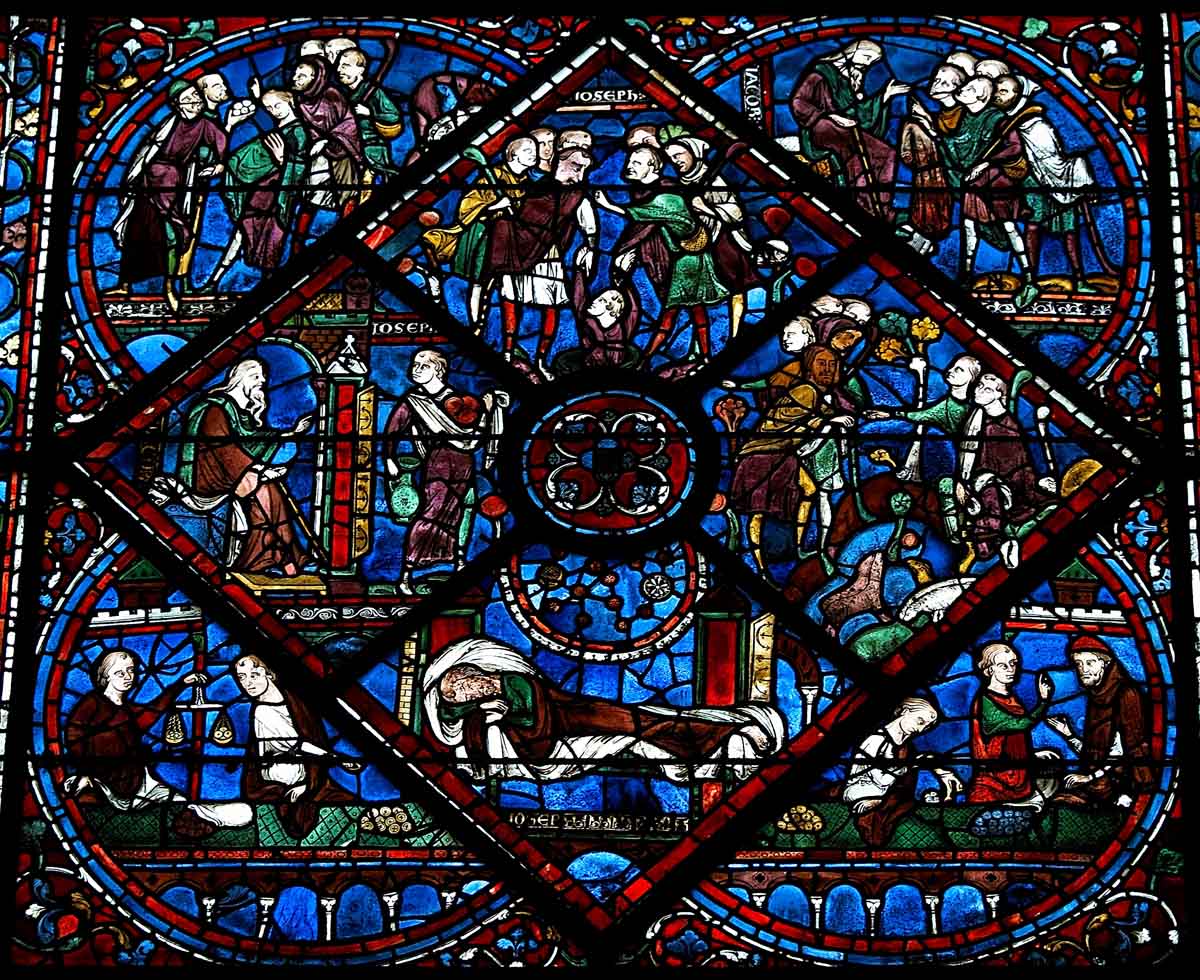
The stained glass celebrated not just an unusual variety of people, shapes, and Biblical themes, but also an extravagant variety of color.

Chartres Stained Glass

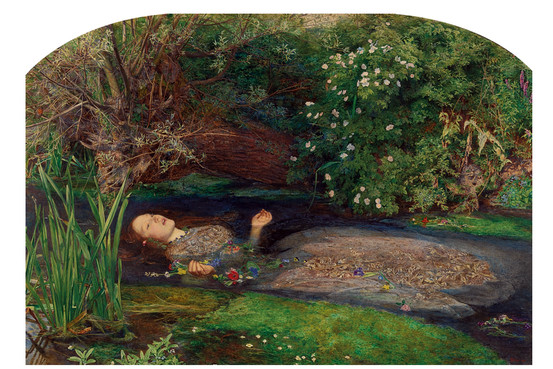
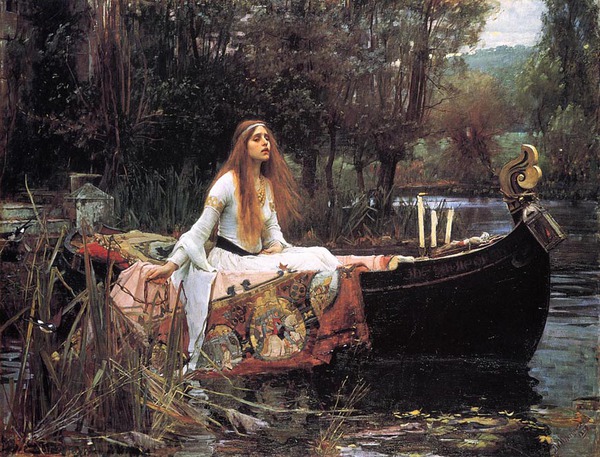
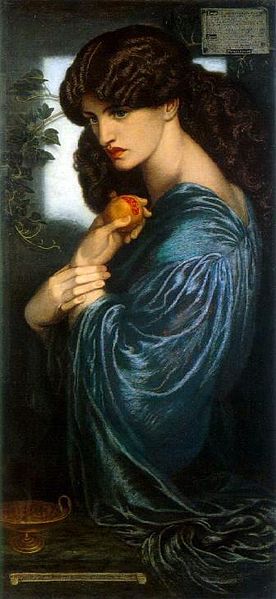
It seems that it was primarily this use of bold color that attracted the Pre-Raphaelites.  So much then, for the background information. What about the art itself?  Does it succeed?

600_198067602

276px-Dante_Gabriel_Rossetti_-_Proserpine

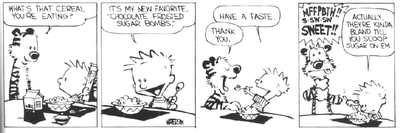
Aye caramba!  This is just awful stuff, an overdose of schmaltz and sentiment on an unusual scale.

chocolate frosted sugar bombs calvin and hobbes

What went wrong?

Some might argue that their art failed because they were not good artists, but this simply begs the question as to why they lacked talent.  They obviously had certain technical skills necessary to create good art.  Some might point to the problems within the Victorian era itself, but this would exclude the possibility of any great art in the Victorian era, and Dickens, Van Gogh, and Stravinsky (among others) put that theory to rest.

I think the problem is not their mission, but their method.  Some months ago I discussed Toynbee’s theory of “Renaissances” and how they operate in history (my review of his book is here, and some thoughts on its application to music are here).  In summary, Toynbee believes that

  • Borrowing from a “living” (i.e. currently existing) civilization, artist, or art form will usually lead to beneficial new creation, but
  • Borrowing from a “dead” form (i.e. civilization, artist, etc.) will mean the calling up of a ghost, which will lead to a sterile act of creation, a stillborn attempt at achieving meaning.

The pre-Raphaelites show all of the characteristics of reviving a dead ghost of a long forgotten form.  The “ghost” constricts them, and so they try too hard, and end up producing sterile art that cannot move us in any way.

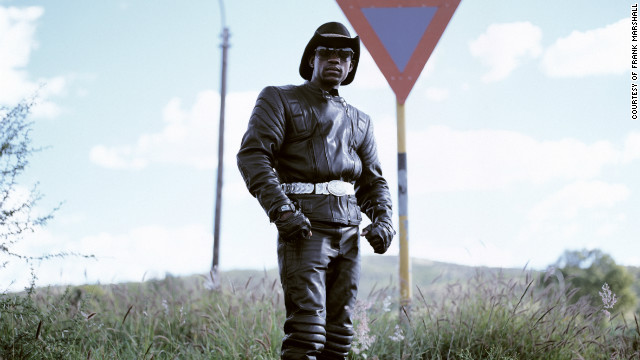
Strange as it may sound, I thought about Toynbee’s theory again when a friend sent me an article about the burgeoning heavy metal scene in, of all places, Botswana.  Here we have an example of one people group attempting a birth of something new in their nation not from a dead past, but from a living present.  While I have yet to hear any music, these pictures may give us a clue as to whether or not they will succeed.

Ok, perhaps we see a bit of rote copying in terms of the motorcycle and the leather, but still, who wouldn’t want to be that guy?

Again, the leather is “pretty standard,” but the cowboy hat is very cool, and he pulls it off.

No way western metal heroes like James Hetfield or Bruce Dickinson could ever pull off such a graceful yet arresting pose.

I look at this guy and think “Super-Hero,” and again, I love the hat.

Without hearing any music, I am encouraged and intrigued by the possibilities in Botswana.  Sure, they borrow some metal conventions from the west, but they also seem to be putting a distinctly African stamp at least upon their image.  One senses vibrancy here, whereas all the color in the world cannot take away the dead feeling I get while looking at the pre-Raphaelites.

All this proves once again, beware of the influence of a dead past.

Blessings,

Dave

Helvetica

On Netflix “View Instantly” one can watch one of their patented atypical documentaries about the font Helvetica.

One might think that a documentary about a font wouldn’t have much legs, but it held my attention throughout.  Whenever you have some people only half-jokingly blaming Helvetica for both the Vietnam and Iraqi wars, and others praising the font as one of the best forums for spreading equality and democracy everywhere, and you have a good subject for a documentary.  You will likely not see the world quite in the same way after viewing this film.

I don’t like Helvetica, but can appreciate its effectiveness.  In extended text, Helvetica leaves me cold, or perhaps more accurately, leaves me standing still.  I don’t feel any sense of life or motion in Helvetica.  Reading a paragraph in Helvetica can be exhausting.  But one can understand why it has such wide usage for signs and advertisements.  I find that it does have the effect of rooting someone to the ground, making them stand still, and read.

I gained a further appreciation for Helvetica by realizing that even fonts have a historical context, as this clip from film makes clear:

To learn about Helvetica is also to understand the debate surrounding Apple as well.  Helvetica, with its minimalism, modernism, and “accessibility” conveys the exact “brand” Apple seeks.  Apple products are simple, easy to use, and designed with a minimalist aesthetic, just like Helvetica.  So it makes perfect sense that Helvetica would be the default for their “Pages” program.  But Helvetica has no motion in it.  And like Apple, one could describe the font as a “closed,” or “immobile” system.  What would Lewis Mumford think of Helvetica?

In another example of how art imitates life, Microsoft developed the font “Arial” to compete with Helvetica, with almost every graphic designer agreeing that Arial cannot hold a candle to Helvetica. This diagram may not show that very effectively, but look at the difference, for example, on the capital “Q’s” (the stem is too long in Arial) and the capital “R’s” (Arial’s “R” looks awkward and stiff).

Arial v. Helvetica

All in all, there is certainly more to fonts than we might suppose.  They work their white/black magic upon us without us really being aware of exactly how its done.

12th Grade: The Head and the Heart

Greetings,

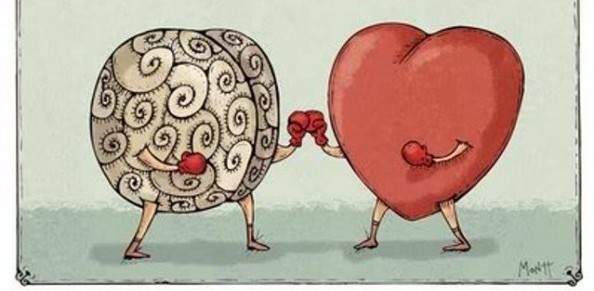
This week we wrapped up one unit and began another.  On Tuesday the students turned in their responses from the reading of Euripides’ The Bacchae.  As I mentioned previously, the plays deals with the conflict between head and heart in governing the state.  Of course Euripides remains open to interpretation and the students had different perspectives.  The plot turns when Pentheus, the ruler of Thebes, bans the Dionysian cult from his territory.  Dionysian worship had a fundamentally irrational side, with ‘worship’ involving shrieking, wild dancing, women leaving their homes, and a general disruption of normal, rational society.  Eventually, however, his banning of the cult led to Dionysian worshipers seeking revenge, and they destroy Pentheus and his whole family.

To start our discussion I gave the students two choices:

Was Pentheus right to ban the cult, given the general disruption they wreaked upon society?  Or did his actions in fact lead to an intensification of what he most feared?  If they had been tolerated, they would have been more moderate, etc.

In other words, how much was Pentheus to blame for his own destruction?

We can relate this to other areas.

  • Did the election of Hamas vindicate Israel’s policy towards the West Bank?   Did the Palestinians show their true colors in choosing Hamas to represent them?
  • Or, did Israel create the enemy they most feared through their policies the past 10-15 years?

Those in the D.C. area know the new toll commuter lane on I-495.

  • The ‘head’ says that this lane will reduce traffic for everyone, though some of course benefit more than others.  Still, everyone benefits.
  • The heart might counter with the fact that the imbalance of benefits will cause more resentment than relief.  Those not in the pricey commuter lane will not focus on how they get home 10 minutes faster because of those that pay to drive on the special lane.  They will  focus on the fact that those richer than they get home 45 minutes faster.

So — will the toll lane primarily reduce traffic, or increase class resentment?

Some economists see the same dynamic at play in globalization.  Globalization seems to have raised the standard of living across social classes.  But a small minority experience the vast majority of the benefits.  Thus, people are not poorer, but probably feel poorer than they used to.

If true, to what degree should these realities influence our policy?

In a democracy, how do we want our representatives to act?  Do we want them to be rational calculators, because we, the electorate, cannot be?  Or do we want them to have their finger on the pulse of the nation?  This aspect of leadership goes beyond ideology.  How much of governance involves connecting on an emotional level with people?  We can think of presidents who did this very effectively, like Reagan and Clinton recently, and FDR, Lincoln, and perhaps Andrew Jackson in the past.  Internationally, Winston Churchill comes to mind.  I do not think that either Bush made or Obama now makes that connection, and it remains to be seen if a leader on either side can galvanize the electorate in our fractured political landscape.

Many thanks,

Dave Mathwin

Liberty and Regulation

DownloadedFileIt’s easy to see why John Kenneth Galbraith’s The Great Crash has a high place in the pantheon of mainstream economics books.  His narrative moves crisply, and he does not get bogged down in the details.  The economic information he shares must not be too difficult, for I have very little knowledge of economics and only failed to understand some of the book.

However, while the narrative moves along well, Galbraith sacrifices much to achieve this.  He admits that the reasons for the Crash and the resulting depression are legion and difficult to know precisely, but he backs off any kind of in-depth treatment.  At times he throws out lines about the need for regulation that I assume he agrees with, but he never develops this idea or the rationale for government regulation.  I finished the book feeling like he had no interest in resolving or even tackling the main question his book raises.

The main question, I think, is this:

  • Is liberty an absolute concept and therefore an absolute good?  If so, any restrictions placed upon it done (if done at all) would be done only for emergencies, and then only temporarily.
  • Or, is liberty in the end a relative concept, one that has meaning only within a given context.  If so, societies should feel free to tinker with it, restricting it here and there, to achieve optimal balance.  For example, inoculations make us healthier by giving us a small dose of disease.

Perhaps Galbraith avoids the question out of modesty, or out of fear of ruffling feathers.  In his book The Servile DownloadedFile-1State, Hillaire Belloc (who loved ruffling feathers and had no modesty) jumps right in.  Liberty, he argues, like our appetites, must be kept in check if we are to have freedom in the end.  Just as alcoholics lose their right to drink, so too abusers of liberty will be left with none of it.  Like any admirer of medieval times, Belloc argues for a careful, measured approach, one that in the end values stability over wide-ranging opportunity.

He traces the development of capitalism not from the Industrial Revolution but from Henry VIII dissolution of the monasteries, allying his government with the wealthy class by distributing the land among them.  What looked to be a bold move to secure his own power, Henry in fact only made his power subservient to the elite.  This is not freedom for the state or freedom for the individual.  

But he goes a bit further.  Since full-boar capitalism produces instability in the end, the people will reject it, and swing the other way to a “servile-economy.”  In this new economy they will have guarantees but much less freedom than before.  They will in fact, be made to work as the government becomes more and more allied with businesses — a form of slavery.  Belloc did not foresee the welfare-state, where it could become actually cheaper for some not to work at all, but this too would be a form of slavery for Belloc.

I believe that a free people should attempt to use government to help achieved legitimate societal ends, and in that way I have at least some sympathy with Galbraith and Belloc.  The problem is, what should we regulate and how much? The article below from Matt Yglesias (thanks to a link from Marginal Revolution) exposes some of the problems when talking about regulation.  Do we have the kind of society, and the kind of political environment we need, to successfully and appropriately regulate ourselves?  We shall see.

I did a piece about how annoying the paperwork for getting even the simplest small-business license is, which prompted a lot of weird reactions from conservative readers, like “Obama lapdog Matt Yglesias has epiphany: Gee, it’s hard to start a small business in D.C.!” and various comments about how I’m reaping what I sow, and now I should understand why lots of people vote Republican.

This is something I think I actually understand very well. I voted for Republican Patrick Mara the last time he was on the ballot for a D.C. Council at-large seat, and I’ll probably vote for him again. I voted for Mitt Romney for governor in 2002. I would have voted for Michael Bloomberg in the 2005 or 2009 New York City mayoral races, and in general I think the conservative critique of municipal government in the United States has a lot of merit. Republicans might be interested in why someone like me—someone who sympathizes with many of their economic policy views—still hesitates to vote for their candidates for national office. One reason is that I tend to think conservatives place much too little emphasis on the rights and interests of religious and ethnic minority groups, gay people, and the like. Another reason is that conservatives have much too much affection for state-sponsored violence. In terms of economic policy, Republicans tend to deride the hugely successful practice of taking money from the rich and giving it to the poor. But even on the regulatory front, there are real shortcomings to the Republican approach.


The way I would put this is that the American economy is simultaneously overregulated and underregulated. It is much too difficult to get business and occupational licenses; there are excessive restrictions on the wholesaling and retailing of alcoholic beverages; exclusionary zoning codes cripple the economy; and I’m sure there are more problems than I’m even aware of.


At the same time, it continues to be the case that even if you ignore climate change, there are huge problematic environmental externalities involved in the energy production and industrial sectors of the economy. And you shouldn’t ignore climate change! We are much too lax about what firms are allowed to dump into the air. On the financial side, too, it’s become clear that there are really big problems with bank supervision. The existence of bad rent-seeking rules around who’s allowed to cut hair is not a good justification for the absence of rules around banks’ ability to issue no-doc liar’s loans. The fact that it’s too much of a pain in the ass to get a building permit is not a good justification for making it easier to poison children’s brains with mercury. Now obviously all these rules are incredibly annoying. I am really glad, personally, that I don’t need to take any time or effort to comply with the Environmental Protection Agency’s new mercury emissions rules. But at the same time, it ought to be a pain in the ass to put extra mercury into the air. We don’t want too much mercury! We don’t want too much bank leverage!

Business licensing is different. “This city has too many restaurants to choose from” is not a real public policy problem—it’s only a problem for incumbent restaurateurs who don’t want to face competition. But in other fields of endeavor—telecommunications, say—the absence of regulations can lead to an uncompetitive outcome. Partisan politics is pretty simple, since there are only two parties to choose from. But the underlying structure of reality is quite complicated, and it’s worth your time to try to understand the issues.

12th Grade: Is it Better to be Loved or Feared?

Greetings,

We continued with the Peloponnesian War this week.

What happens to a war without precise, achievable objectives?  Might we expect it to teeter back and forth, with varying actions and motives as time goes by?  And how might this strategic instability impact Athens politically? Can its government remain stable if they fight a war rife with murky waters?

Perhaps because the war lacked clear goals, it began to take on a life of its own.  Without a precise, achievable objective we might surmise that both sides got imaginative with their tactics.  So we see the Athenians utilize light infantry, and the Spartans take drastic measures at sea with Athenian allies.  As the tactics changed, so too did the targets, and eventually civilians inevitably got drawn into the conflict.

Quite possibly the changing tactics changed the war aims for both sides. What began apparently as a war over a fairly innocent political dispute become a war of annihilation.    If neither side would ever back down, the war could end in only one way.

On Thursday we had a good discussion that grew out of out of our look at the rebellion against Athens in Mytilene.  After crushing the uprising, the Athenians debated what to do with the city.  Should they,

  • Kill/enslave all of them — have it cease to exist.  Mytilene was one of the privileged members of the Athenian alliance.  They had their own navy, for example.  Their rebellion threatened Athens’s whole system.  If the ones you treat nicely rebel, what about the others?  Furthermore, is this how they repay our kindness to them?

We cannot risk, argued Cleon, that this rebellion spreads.  Mytilene controls the island of Lesbos, and most of the rest of the island stayed loyal to us.  We must protect the innocent on the rest of the island by making sure we get all of the guilty.

  • Kill only the leaders, argued Diodotus.  Our prudence and clemency will pay dividends down the road.  If we face another rebellion, after killing all in Mytilene, the ‘innocent’ will have choice but to join it, since if the rebellion failed, they would killed anyway.  This will more, not less resistance to us in the future.

I think the divergent points of view boiled down to the question of the role of power and a good image in achieving security.  Is power or a good reputation a better guarantee of security?  In our discussion most everyone agreed that both play a role, but many differed on the priority each element should take.

In the end, the Athenians voted for Diodotus’s point of view.  But they still executed about 1000 people without any legal proceeding whatever.  We may cheer that the Athenians chose the “right” path, before we realize that they never considered other potentially more humane options, or at least more “legal” options.  The temptation to abandon such things when fighting for your life would be tremendous.  But it was an ominous sign of things to come.  In the midst of our current conflict in the “War on Terror,” we too have to decide to what degree our system of checks and balances is non-negotiable, and if we can let certain things slide, when and under what conditions?

The title of this update refers to a famous chapter in Machiavelli’s The Prince.  Machiavelli asks the question, and while he agrees that ideally a ruler can be both loved and feared, he understands that this can rarely happen.  If you have to choose between the two, one should choose fear.  Love is simply to fickle.

In many ways, I think Athens would have agreed.

Blessings,

Dave Mathwin

We’ll See. . .

They are not getting much press, but events in Egypt recently have me strangely fixated.  At the time of the overthrow of  Mubarik in the spring of 2010, many hailed the event as a great leap forward for democracy in the Middle East.  Then people held their breath as the observed some of the conflicts within the provisional constitution, as articles 1-6 attest.

Article 1:

The Arab Republic of Egypt is a democratic state based on citizenship. The Egyptian people are part of the Arab nation and work for the realization of its comprehensive unity.

Article 2:

Islam is the religion of the state and the Arabic language is its official language. Principles of Islamic law (Shari’a) are the principal source of legislation.

Article 3:

Sovereignty is for the people alone and they are the source of authority. The people shall exercise and protect this sovereignty, and safeguard the national unity.

Article 4:

Citizens have the right to establish associations, syndicates, federations, and parties according to the law. It is forbidden to form associations whose activities are opposed to the order of society or secret or of militaristic nature. No political activity shall be exercised nor political parties established on a religious referential authority, on a religious basis or on discrimination on grounds of gender or origin.

Article 5:

Public property is protected, and its defense and support is a duty incumbent on every citizen, according to the law. Private property is safeguard, and it is not permitted to impose guardianship over it except through means stated in law and by court ruling. Property cannot be seized except for the public benefit and in exchange for compensation according to the law, and the right of inheritance is guaranteed.

Article 6:

Law applies equally to all citizens, and they are equal in rights and general duties. They may not be discriminated against due to race, origin, language, religion, or creed.

It looked as if those more skeptical of democracy’s future in Egypt had prophetic foresight when the Moslem Brotherhood made itself more prominent and Mohammed Morsi assumed the presidency.  Then the tables turned again, with angry demonstrations against some of the more Islamist-leaning elements of the government, leading to Morsi’s recent statement that the disagreements were a “healthy phenomena” of their new democracy.

I am reminded of a famous scene from Charlie Wilson’s War. . .

I do not mean to conflate the two issues, but I am thinking about Egypt after the Redskins loss yesterday.  Last spring I strongly criticized the trade to bring R.G. III to Washington.  Basically, I argued that we paid far too high a price for such an uncertain future.

Then RG III set the NFL world on fire and lead the Redskins to their first divisional title since 1999.  Fellow Skins fans have urged me to recant and say I was wrong.  The price was worth it, R.G. III is one of a kind, etc. etc.  So far I have resisted recanting even as I have enjoyed the team’s remarkable run.   Certainly a large part of the reason involves my reluctance to admit I was wrong.  But another part of my refusal is that it’s too early to tell.

We can now say that the issue does not center around his abilities.  When healthy, he can be one of the most dynamic players in the league.  But, how often will he be “healthy” and what happens when he is not in top form?  He has shown a propensity for leg injuries dating back to college, and his style of play will not minimize that risk in the future.

As I watched RG III play horribly after the first quarter yesterday and continue to remain in the game despite being obviously limited, another shiver went down my spine.  What if no one checks his competitive spirit?  What if he has no internal brakes?  It appears that Shannahan has obfuscated the whole issue surrounding RG III’s knee and allowed him to play against doctor’s advice.  Should we beware of an old man in a hurry?

If the Skins had simply drafted him with the #2 pick, then no one could dispute the choice.  But given that we mortgaged so much of our future for him, we can’t make a blanket statement that the trade has already proved its worth.  If he blows out his knee next fall, we’ll be left holding the bag.  Esteemed muscle expert Dr. Ali Mohamdi (also a Redskins fan) commented recently that,

Recovery from combined ACL and LCL tears is a grueling and time-consuming process, and when you’re dealing with a patient like Griffin with a prior history of an ACL reconstruction on the same knee, even more so. The progression to physical activity is very slow to ensure that the grafts are sufficiently strong to endure motion and weightbearing. Typically, patients remain in a brace for at least 6 weeks, during which time they are advised not to fully bear weight on the affected leg and aren’t allowed to fully bend the leg. Strength training and range of motion exercises progress slowly to a point where the patient has built up enough mobility and regained muscle to begin running, usually at 6 months after surgery. For most athletes, notwithstanding Adrian Peterson’s amazing full recovery from ACL and MCL tears in about 9 months, many experts will tell you that it can take a full year for an athlete to feel like he or she is back to 100 percent function.

The added factor for Griffin is that he has a prior history of ACL reconstruction. For an athlete with no prior history of an ACL tear, the recovery is a daunting process to begin with and usually takes longer than for other knee ligaments. Studies show that while the risk of re-injury is about 5% among patients who have had ACL reconstruction, the risk for failure doubles after a second ACL repair, and this study didn’t just look at athletes who endure the wear and tear that football players do. It doesn’t mean Griffin shouldn’t be able to play — and play well — after a second ACL reconstruction, but it does add a level of concern over the possibility that it could happen yet again.

It’s worth noting that Seahawks quarterback Russell Wilson did a marvelous RG III impersonation yesterday, and he was taken in the 3rd round of last year’s draft.  We know that Griffin ran track at Baylor, and before his injury his speed took our breath away.  It may be however, that he has a track star’s body.  I still think it reasonable to say, “We’ll see,” as we evaluate the merits of the RG III trade.

De Tocqueville Weighs In. . .

In a previous post I speculated on the connection between oligarchic-democracies and territorial expansion.  While I acknowledge that the connection between the two is not absolute, I do think it exists to some degree.  As to why, I’m not sure.

But leave it to De Toqueville to provide some assistance.  He is quoted and praised so often, that one almost wants to find a weakness, a point where we can call him out for the mere fun of it.

Not in this case.

In his chapter “Why Americans are More Addicted to Practical Rather than Theoretical Science,” De Tocqueville points out a contrast between democracies and aristocratic science.  He writes,

Nothing is more necessary to the culture of the higher sciences, or the more elevated departments of science, than meditation; and nothing is less suited to meditation than the structure of democratic society. We do not find there, as amongst an aristocratic people, once class which keeps in repose because it is well off; and another, which does not venture to stir because it despairs of improving its condition. . . .  Men who live in democratic societies not only seldom indulge in meditation, but they naturally entertain very little esteem for it.

He goes on to comment that great and grand ideas will not take root in democratic societies, and consequently, democratic societies will be less revolutionary than aristocratic ones.

The link between aristocratic-democracies and imperialism would break down if we think of imperialism on this side of the more democratic divide.  It is natural for us to assume that European nations engaged in imperialism for “practical” reasons, i.e. money or resources.  Granted, imperial expansion had many motives, but I don’t think money was the main one.

One quick snapshot of British Nigeria shows that profit came quite irregularly to the British,

Year          Revenue          Expense

1922-23    5,505,465       5,410,983

1923-24    6,260,561       5,501,242

1924-25    6,944,220       5,768,715

1925-26    8,268,928      6,583,167

1926-27    7,734,429       7,584,692

1927-28   6,304,636       6,733,715

1928-29   5,894,658      6,861,099

1929-30   6,045,359      6,289,901

1930-31   5,622,200      6,329, 688

1931-32   4,857,612        6,188,301

1932-33   4,984,505       4,983,739

1933-34   4,889,152       5,035,562

1934-35   4,960,765       4,836.666

1935-36   5,995,921        5,757,180

1936-37   6,259,547       6,061,348

1937-38  7,342,450       7,375,570

1938-39  5,811,088      6,867,408

1939-40  6,113,126       6,498, 566

1940-41   7,273,157      7,254,325

1941-42   7,975,054      7,026,894

1942-43   9,034,000    8,999,000

1943-44  10,913,000   9,977,000

1944-45  11,445,000   10,133,000

If we believe that as Kipling stated, imperialism was “white man’s burden,” than the the thought of the grand idea of bringing civilization to Africa, too impractical for democratic minds, would have fired more aristocratic ones.  And before we dismiss the idea entirely, we should realize that evidence existed to fire this idea.  Even “pro-African” Englishman like Livingstone admitted to cannibalism in certain African tribes.  Both Burton and Speke, who searched for the source of the Nile, record dreadful acts where despotic tribal kings execute men and women (usually women) on mere whims.  None of this excuses the Europeans for their own abuses, but I mention it to point out the issue is not as black and white as either the 19th century or our own make it out to be.

The Need for Words, not Deeds

When something needs to be said, one can usually rely on Hillaire Belloc to say it.  Part of understanding the value of his famous Europe and the Faith is to know the context from which it arose.

The turn of the 20th century spawned a host of historiography centered around the notion of “deeds, not words,” a near worship of activity itself.  One sees this in Rafael Sabatini’s famous Life of Cesare Borgia (1912), the man whom Machiavelli supposedly modeled many of his thoughts in his The Prince.  Concerning Rodrigo, Ceseare’s notorious father, he writes,

Say of him that he was ambitious, greedy, and prey to carnal lusts.  . . . But do not let it be said that he was wanting either in energy or in will, for he was energy and will incarnate.

One gets the sense that Sabatini almost wants to excuse Borgia for the sake of his “energy” and “will.”

Later when contrasting the papal reigns of Sixtus IV and Innocent VIII, Sabatini seems to partially excuse the wars and murders of Sixtus for the sake of his “energy,” while condemning Innocent for merely doddering on his throne, attempting only to give church offices to his sons.  I mean no defense of Innocent VIII, but the principle of deeds, deeds, and still more deeds needs questioning.  We want bad people to be lazy.  Deeds have no meaning merely for being “deeds.”  Teddy Roosevelt, of this same era, said that,

In any moment of decision, the best thing you can do is the right thing, the next best thing is the wrong thing, and the worst thing you can do is nothing.

but I’m not sure I agree with him.  If one stood near a precipice in a blinding fog, the best thing would be to walk away from the precipice, the next best would be do nothing and wait for the fog to clear.  The worst thing would be to make the wrong decision and plunge to your death.  Chesterton mimicked  the “success” ideology well when he parodied the early-20th century style, writing in 1908,

In playing cards it is very necessary to avoid the mistake (commonly made by maudlin humanitarians) of permitting your opponent to win the game.  You must have grit and snap and go in to win.  The days of idealism are over.  . . . It has now been definitely proved that in any game when two are playing, IF ONE DOES NOT WIN THE OTHER WILL.

He too was wary of “deeds for deeds sake.  In his essay, “The Fallacy of Success,” he points out that success comes really only in two ways.  One, you become really good at something.  Two, you cheat.  Mere activity itself gets one nowhere.

Belloc seeks to counter the “success” narrative that arose in the Victorian era concerning the fall of Rome.  According to this narrative, Rome fell by getting lazy, by losing its “grit and snap.”  At their point of low ebb, down came the hardy, “energetic” German barbarians from the north to sweep it all away.  It was these “energetic” types that brought back civilization after Rome’s fall.

Bilge, from stem to stern, Belloc argues.  For his day (1920) Belloc makes the radical claim that in the later empire, many barbarians were Romans, and many Romans barbarians.  Thus, what brought Rome down was civil war, not an invasion.  In this respect, Belloc has been echoed recently by the eminent late antiquity scholar Peter Brown, among others.  It had nothing to do at all with northern “energy” and southern “ennui.”

But ideas have consequences, and Belloc, one of the earliest and most strident critics of Fascism, could see buried beneath this “energy” thesis a grim racial specter.  The idea of a pure and energetic northern stock that periodically descended upon Europe to revive civilization (this theory has them doing it again during the Reformation) had already taken root in 1920 in Germany and would spread.  Bad ideas have bad consequences, especially in the lives of bad people.

I cannot improve on Chesterton, who writes in his essay, “The Unpractical Man,”

There is a popular philosophical joke intended to typify the endless and useless arguments of philosophers; I mean the joke about which came first, the chicken or the egg? I am not sure that properly understood, it is so futile an inquiry after all. I am not concerned here to enter on those deep metaphysical and theological differences of which the chicken and egg debate is a frivolous, but a very felicitous, type. The evolutionary materialists are appropriately enough represented in the vision of all things coming from an egg, a dim and monstrous oval germ that had laid itself by accident. That other supernatural school of thought (to which I personally adhere) would be not unworthily typified in the fancy that this round world of ours is but an egg brooded upon by a sacred unbegotten bird; the mystic dove of the prophets. But it is to much humbler functions that I here call the awful power of such a distinction.

Whether or no the living bird is at the beginning of our mental chain, it is absolutely necessary that it should be at the end of our mental chain. The bird is the thing to be aimed at–not with a gun, but a life-bestowing wand. What is essential to our right thinking is this: that the egg and the bird must not be thought of as equal cosmic occurrences recurring alternatively forever. They must not become a mere egg and bird pattern, like the egg and dart pattern. One is a means and the other an end; they are in different mental worlds. Leaving the complications of the human breakfast-table out of account, in an elemental sense, the egg only exists to produce the chicken. But the chicken does not exist only in order to produce another egg. He may also exist to amuse himself, to praise God, and even to suggest ideas to a French dramatist. Being a conscious life, he is, or may be, valuable in himself. Now our modern politics are full of a noisy forgetfulness; forgetfulness that the production of this happy and conscious life is after all the aim of all complexities and compromises. We talk of nothing but useful men and working institutions; that is, we only think of the chickens as things that will lay more eggs. Instead of seeking to breed our ideal bird, the eagle of Zeus or the Swan of Avon, or whatever we happen to want, we talk entirely in terms of the process and the embryo. The process itself, divorced from its divine object, becomes doubtful and even morbid; poison enters the embryo of everything; and our politics are rotten eggs.

Idealism is only considering everything in its practical essence. Idealism only means that we should consider a poker in reference to poking before we discuss its suitability for wife-beating; that we should ask if an egg is good enough for practical poultry-rearing before we decide that the egg is bad enough for practical politics. But I know that this primary pursuit of the theory (which is but pursuit of the aim) exposes one to the cheap charge of fiddling while Rome is burning. A school, of which Lord Rosebery is representative, has endeavored to substitute for the moral or social ideals which have hitherto been the motive of politics a general coherency or completeness in the social system which has gained the nick-name of “efficiency.” I am not very certain of the secret doctrine of this sect in the matter. But, as far as I can make out, “efficiency” means that we ought to discover everything about a machine except what it is for. There has arisen in our time a most singular fancy: the fancy that when things go very wrong we need a practical man. It would be far truer to say, that when things go very wrong we need an unpractical man. Certainly, at least, we need a theorist. A practical man means a man accustomed to mere daily practice, to the way things commonly work. When things will not work, you must have the thinker, the man who has some doctrine about why they work at all. It is wrong to fiddle while Rome is burning; but it is quite right to study the theory of hydraulics while Rome is burning.

It is then necessary to drop one’s daily agnosticism and attempt rerum cognoscere causas. If your aeroplane has a slight indisposition, a handy man may mend it. But, if it is seriously ill, it is all the more likely that some absent-minded old professor with wild white hair will have to be dragged out of a college or laboratory to analyze the evil. The more complicated the smash, the whiter-haired and more absent-minded will be the theorist who is needed to deal with it; and in some extreme cases, no one but the man (probably insane) who invented your flying-ship could possibly say what was the matter with it.


12th Grade: Foreign Policy in a Foreign Land

Greetings,

This week the seniors participated in a week-long game which also involved grades 7-11.  The situation was this:

  • We pretended that the upper school was a foreign country with generally pro-western leadership, but with a population where the United States was viewed less favorably than the country’s leadership viewed them.  Maybe a modern-day Jordan, Bahrain, or Kazakhstan.  Grades 7-11 played as civilians in this hypothetical country.
  • We surmised that that country’s leadership, having credible information that a terror-cell operated within their borders, invited a CIA “action-team” into their country to prevent the attack and dismantle the terrorist network.  This meant that the seniors had certain police powers at their disposal to arrest, detain, and send those they suspected off to Guantanamo.
  • The “bad guys” had to do all of their communicating between 7:30-3:00 on school days only.  Thus, all of their actions could hypothetically be observed by someone and reported to the seniors.
  • We allowed for a “Third Party” option to develop as well, a grass-roots party that wanted to eliminate terrorist presence from their country, but didn’t want the CIA/America to get credit for it.  This group would be more nationalistic, craving their own identity apart from both the U.S. and radical Moslem world.

To win the game, the seniors needed to

  • Dismantle the terror network and stop the impending attack
  • Try and win the local population over to their side and try and encourage them to adopt more western customs.

In the days leading up to last week I discussed the game with the seniors.  What I hoped they would realize was. . .

  • Finding the bad guys should not be their primary goal.  If they spent time building up their relationships with the students, building trust, and rapport (as well as greasing the skids with appropriate gifts and bribes) the intelligence they needed would come to them from the other students.
  • According to the rules of the game, mistakes the seniors make hurt them more than their successes help them.  So, for example, if they falsely detain an innocent person this costs them more than when they get it right and detain a terrorist.  This bears out true in real life as well.  Our mistakes get magnified much more than our good deeds.  We may lament this, but it is a fact of life.  If the Yankees, for example, lose a playoff series, the story is not what the other team did well but what the Yankees did wrong.
  • So — they would need to use their “police-power” judiciously.  They could not “shoot their way out” of their difficulties.

At one point during the week some of the problems related to their task dawned on them.  One senior said, “It’s not fair for us, because [during the election] they can either vote for us or themselves, and they’re going to vote for themselves.”

I thought this a very perceptive comment, and it illustrates perfectly much of our predicament abroad. Overcoming this requires a lot of careful effort and patience.  We also have to realize that these anti-American/pro-independence movements may not necessarily be our enemy.  We may not want to overcome it at all, but find a way to work with that attitude.

The seniors soon found themselves opposed at least in part by the PLA, the “People’s Liberation Army.”  This group ended up having a strong following among some high school boys, but they failed to extend their support beyond their original following.  The terror cell also had their network dismantled, so they could not win either, even though their bomb attack went off as planned.  In the end, the game finished as a Shakespearean tragedy — nobody won!

My thanks to all the students who participated in some way and helped make the game a success.

Blessings,

Dave

Fun with Food

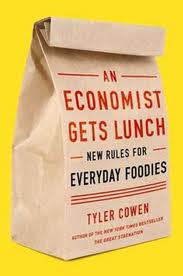
Tyler Cowen’s Marginal Revolution deserves all the praise his blog receives.  Somehow in the space of a paragraph or two he manages to convey something of substance about a whole range of issues. His links are always interesting.  Those familiar with his blog know that he loves food, and his recent book, An Economist Gets Lunch has generated a lot praise, again deservedly so.

The book is enormous, anecdotal fun, filled with good stories, good advice, and counter-intuitive thinking.  Without spoiling everything, some of my favorites were:

  • The best barbecue is always in rural areas, but the best of all is in central Mexico, because of their tradition of pottery making.
  • The best French dining experience is to be found in Japan, where the service will be much better, and the food cheaper, then in France.  If nothing else, Japanese do brilliant copy work, so the recipes will be exactly what they would be in France.
  • When dining expensively, order what seems least appetizing to you.  It must be good, while the roast chicken probably is nothing special.
  • If you are a real foodie yourself, don’t look for a restaurant where people are smiling, talking, etc.   Look for a place where people are silent, serious about what they are eating.  It’s a real bonus if you find people arguing with each other or the wait staff.  It shows that they are regulars, comfortable with the place.  By all means enter, you’ve hit the jackpot.

Many more such tidbits exist, all of them intriguing in their own way, such as why you should look for Thai food inside of hotels, or why you should avoid dining establishments in strip malls that have a Target or Wall-Mart.

Cowen also has some “serious” chapters on more substantive policy matters like agribusinesses and genetically modified foods.  I found myself agreeing with him about these areas, but did not like them in this book.  He shoots for too much, the styles don’t mix.  To really convince us that agribusiness is actually better overall for the environment than “locally grown” (a proposition I’m certainly willing to entertain) he needs to cite more statistics, studies, and so on.  But if he did this, it would alter the tone of the rest of the book.  His section on why genetically modified foods not only pose no threat, but can benefit us greatly, persuades, but to really hit a home run he would need to do more.

Though the text bogs down in these “heavier” parts, at least they serve as a good introduction to the issues.  Cowen stays full of surprises throughout.  For example, he advocates lower tax rates on corporations, which you would expect from a libertarian leaning economist.  But, surprise, surprise, he also  urges a “carbon-tax” on corporations as well.   It’s twists and turns like this that will keep you reading An Economist Gets Lunch.