“. . . And in the End”

My dad has a large record collection, and growing up I heard a lot of different music. One of my earliest memories involves me asking him to, “Put the Apple record on,” by which I meant, “Put on Abbey Road by the Beatles, side two, “The End.” There I would hear the vastly underrated (by the general public) Ringo Starr play his one and only drum solo. I grabbed Tinker Toys, made two mallets, and attempted to play along with the music on the sofa.

Years later when I started playing the drums myself, I sometimes tried to replicate the sound Starr got out of his kit on that album, with no success. Reading And in the End: The Last Days of the Beatles, I discovered the secret–a new way of mic’ing the drums was employed, but the real trick may have been his switch to calfskin drum heads on his tom-toms. Ringo loved the new sound and feel, and credited the heads for giving him some newfound excitement on the kit. With the drum heads sounding so good, it inspired him to integrate his toms more than he had on previous albums–the result can be heard especially on “Come Together,” and “Something,” to say nothing of his famous aforementioned solo.

This little nugget may not be of much interest to anyone but myself, but And in the End gives everyone lots to chew on about the decline and final fall of the Beatles. I have skimmed through biographies of Lennon and McCartney and seen a few documentaries about them, which prepped me for this book. Author Ken McNab gives little background information, which suited me just fine. For anyone with an interest in The Beatles and a passing familiarity with their dynamics, this book will do nicely in filling out some unexplored corners of Beatles lore.

Most of us know about Lennon and McCartney’s personality feuds, the presence of Yoko Ono, and Harrison’s rise in prominence. And in the End mentions this but knows that we have heard about it before. Instead McNab spends a lot of time talking about the business side of The Beatles and how that, perhaps even more than personality differences, contributed heavily to their demise as a group.

The Beatles faced in formidable challenges to their cohesion in 1969:

  • John married Yoko, and Paul married Linda. Again, we are aware of the challenges Yoko brought to the table. Many have well documented the unnerving effects of her awkward presence during rehearsals. But McNab puts a different focus on Paul’s marriage to Linda Eastman as a major contributor to the widening John-Paul divide. Eastman came from New York high society money. Paul’s marriage, then, confirmed and deepened every suspicion John had about Paul–his social striving, his “bourgeoise” aspirations, etc.
  • At the same time, George Harrison began to assert himself much more aggressively in the group. John and Paul had previously worked out truces and trades in sharing the spotlight and wrote “together” at least officially. Now they would have share even more than they had before at a time of much higher tension.
  • At the same time, the “Apple” company they founded floundered badly, obviously bleeding cash. Their image and their pocketbooks would take a big wallop.
  • At the same time, The Beatles attempted to rework their financial arrangements, with John, George, and Ringo favoring one company, and Paul favoring another company–which happened to be run by his new brother-in-law (this did not go over well with the other three. John especially tore into the fact that the Eastman’s had changed their name from Epstein to Eastman, a sign of “inauthenticity”).
  • At the same time, Lennon–who had smoked plenty of weed and experimented with psychedelics in the past, now began a much more problematic heroin habit.

In other words, to paraphrase Fletch in his visit to Dr. Dolan, the Beatles may have been dying for years, but the end was very sudden.

A few bands have lasted more than a few decades, and fewer still have stayed productive during their span instead of merely rehashing older hits on tour. So on the one hand, the demise of The Beatles should not surprise anyone. But McNab’s treatment of the band’s final year made me realize that the main failure of the Beatles involved their failure to “institutionalize” themselves in some respect–a failure to scale up their issues to a point where the issues were “solved” by the institution known as “The Beatles.”

I can think of only two other bands that managed to last long and stay reasonably productive: Kiss and Rush (who actually toured together in 1975). In the case of Rush, they perhaps solved their problem by always having two guys write the songs and one guy write the lyrics. Harmony could be maintained as long as they stuck with this formula, and they did so right until the end. This very stark division of labor will be exceedingly rare in any collaborative group.

The more typical path is that of KISS, who had two strong frontmen with strong personalities. Paul Stanley and Gene Simmons certainly feuded over the years. But the outfits–Starman, Catman, Spaceman, etc.–gave them an identity outside themselves. This allowed them to replace particular musicians when needed (such as Peter Criss, Ace Frehly) while still maintaining their individual identity. They could do a solo album or a solo project as “Paul Stanley”–who is not KISS, then put on the makeup and become KISS again.

Not having Rush’s division of labor, the Beatles needed something of the KISS formula to work, but they could not create it in time. Given the challenges they faced along with their particular personalities, this was not likely to happen, but perhaps the possibility existed.

As I finished the book it appeared that Trump will not have a second term, and this spurred some reflection on the purpose of institutions, and their role in our culture at the moment.

In the Democratic primaries many lamented that anti-establishment figures like Tulsi Gabbard and Andrew Yang got the freeze-out from mainstream media and the party establishment. In the end, the Democratic base chose the most “establishment” figure possible in Biden. On the one hand, Trump vs. Biden at first glance appears to boil down to “Anti-Establishment v. Establishment. That is short-sighted view of the situation–just as seeing the Beatles conflict as purely Lennon v. McCartney–Anti-Establishment v. Establishment–also interprets a lot of the signal as noise.

First we can see Trump akin to John Lennon. Both despised or could not work within institutions. Both always had/have the most gravity in the room. Those freed from an institutional ‘gloss’ or ‘crust’ can shine forth with a particularly concentrated vitality. Lennon would at times impress everyone with his clarity and intelligence, and at other times embarrass everyone with his rash anger and insane narcissism. His partnership with McCartney worked so well because he needed someone to ground him, someone to “land” his ideas, which Paul did with some of John’s best songs*

The Trump-Lennon connection is easy . . . making McCartney into Biden stretches things a bit. Well–it works in some ways. Lennon always hated the “grandma” tunes that McCartney loved, the sweetly melodic semi-vaudeville stuff that Paul dipped into now and then. Paul always believed that the Beatles had to be a “band,” which meant recording and then touring. “Back to basics,” and so on. So we can see the election of Biden as a vindication of our institutions, and at least the perception of “normalcy.”

Certainly Trump is “anti-establishment”–but particularly in his personal behavior. He cared nothing for the niceties, decorum, and customs of acting “presidential.” Some of his political agenda, however, had roots in old Pat Buchanan Republicanism. He had broad support for his judicial nominees and support for pro-life policies, all of which would fit within the Reagan heyday.

Biden on the one hand is quintessential “Establishment,” having served in the Senate for who knows how long. He is nothing if not boring in his personal behavior–which at times can be a strength. He will uphold presidential cultural and political norms.

But he also brings with him a long trail of supporters who also wish to dismantle certain aspects of the Establishment and its norms. It wasn’t too long ago that we heard chants of “Defund the Police.” Biden’s supporters have already created an “enemies list” of Trump staffers and “enablers” that may be used to exclude them from various aspects of public life. No such acts have ever been perpetrated so openly before, at least that I am aware of.** We shall see to what degree Biden takes the Democratic party into more anti-institutional waters. Note that some Democratic supporters have called for the abolition of the Electoral College, a dismantling of certain powers of the Senate, and so on. To alter the Constitution is to dismantle the American institution.

But just as Biden may have a slightly jaded take on institutions, so perhaps did McCartney.

As mentioned above, the problems faced by The Beatles were legion–too much to handle all at once. But–had it boiled down to Lennon’s ‘anti-establishment’ and Paul’s ‘establishment’ they could have compromised here and there, just as they did with their songwriting. In reality, they represented two different mixes of both ‘establishment’ and ‘anti-establishment,’ the combinations of which could not compromise.

John as “Anti-Establishment” (this is rather obvious)

  • The drugs, the weird behavior, founding “Bagism,” the marriage to an avant-garde artist who would lay down inside a bag and scream during performances
  • Etc.

Paul as “Anti-Establishment”

  • Paul was a rock star who did not fit a conventional rock star mold. He was much more fruitfully experimental than John
  • Paul utilized orchestras, audio experimenting, etc.
  • He did the India thing just as the others did

John as “Establishment”

  • The counter-culture is admittedly not the Culture, but the counterculture had enormous power in the late 60’s and John was at the crest of that wave.
  • John wanted to be seen as a rock star who played rock music, and who at times loathed Paul’s “sissified” experimentation.

Paul as “Establishment”

  • He marries into wealthy NYC society
  • He appeals to a much broader cross section of the population than John. He is “the cute one”–certainly much “safer” than John.

A big part of the problem for the Beatles lay here–two different blends of establishment/anti-establishment that allowed both to call the other “squares” on the one hand and feel good personally about stretching boundaries on the other. This dynamic makes compromise a lot harder, because you see the other side as lacking everything while you already “have it all.” When at their best, for example, Paul saw that he needed John to get him to take more risks, and John saw that he needed Paul to “ground him” and give his ideas shape. But as they both grew, Paul found a way to experiment without John, and John found a “grounding” in the counter-culture. Then–they perceived no need for each other.

The right and the left in the U.S. have good and bad things about them and always have. When both sides can even just occasionally see how they need each other, our democracy will be healthy. But now that both sides have both Anti-Institutional and Institutional impulses within them, they will feel this need for each other much less. This, perhaps more than any particular policy change, may be our most significant political challenge.

Dave

*If anyone argues that “Imagine” or “Instant Karma” is as good as “In My Life,” or even “Come Together,” they are just being plain silly or purely ideological. Neither Lennon or McCartney ever topped solo what they did with each other.

**Trump said dangerous things like, “Lock her up,” but never acted on anything. Again–he had a hard time acting on his various statements (look at how little he accomplished when Republicans controlled House and Senate from 2016-18) which we can be thankful for in part.

The ideological left, on the other hand, is much more connected to institutions in media, academia, and increasingly, in the corporate world as well. We shall see whether or not this threat of a “list” becomes reality.
American History: The Civil War: Causes and Conclusion

For the coming test I want the students to think about the following question: ‘How did the causes of the war impact  how the war was fought, and how did these factors help lead to the ultimate victory of Union forces?’

The first thing they need to do is to discern what they believe to be the root cause of the war.  The three main options are:

1. Some say that slavery is the root cause of the war.  While slavery was not a direct issue in 1861, it influenced all the political controversies of the time, and all the previous political controversies, going back to the Declaration of Independence itself (where a section condemning slavery was removed from the original text).

2. Some say that the root cause of the war was growth of federal power that came to erode a proper constitutional balance between state and national government.  This theory sees the Confederacy not as radicals but as preservers of a truly American vision.

3. Both of the previous theories have good guys and bad guys (in the first, the South is the bad guy, in the second, the North), but there is another approach to the war that does not see good guys v. bad guys, what I will call ‘The Cultural Opposition Theory’ of the conflict’s origin (if nothing else, the name makes me sound smarter than I really am :).

This theory sees both sides drawing upon the founders vision.  We tend to think of the founders in 1787 having one coherent vision for the country, but this was not so.  The North latches on more to Alexander Hamilton’s idea of the U.S. having a strong national government with a manufacturing base.   The South adopts Jefferson’s vision of limited national power with an agricultural base.  Thus, both sides were right in a sense in claiming to be the inheritors of what it meant to be “American.”  These different ideas produce different societies that have different values, practices, and cultures.  These opposing cultures each have their merits, their strong and weak points.  But — they would inevitably come to blows at some point.  In this view the war doesn’t have a good guy or bad guy.  The conflict started because one of these visions had to win out in the end, though neither vision was “right” or “wrong” per se.

To the best of my knowledge these are the theories with the most prominence among historians.  There are a few others, such as those that historically see conflict inevitably associated with territorial expansion (in this case, the Civil War had its roots in the huge expansion after the Louisiana Purchase and the Mexican-American War) or those that use economics as the key to explaining human behavior.  If students are not satisfied with any of the suggestions I offered, they are welcome to come up with their own.

After making a case for the war, students then need to link the cause with how the war was fought, and then link again the fighting to the eventual Union victory.  This means that they have to synthesize what they know from 1800-1865 and create a unified narrative.  This is a challenge, but I hope that students will enjoy that challenge and rise to the occasion.

As always, students are welcome to show me any rough draft or outline of their thoughts before the test.

Dave Mathwin

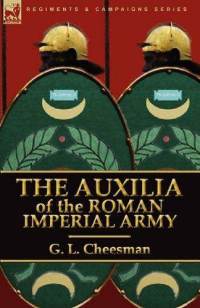
G.L. Cheesman: “The Auxilia of the Roman Imperial Army”

The author knows he is writing about something arcane and of little general interest. He does little to spruce up the writing — he at times seems to wallow in the details, perhaps getting a secret laugh out of boring his readers. My eyes glazed over more than once.

The book is thorough, but still brief enough for someone with just enough interest to glean some tidbits. I am far, far from having any comprehensive knowledge about Rome, but I wanted to read this to test a theory. Gibbon puts the fall of Rome essentially beginning after Marcus Aurelius. Others, like Toynbee put it far earlier. I tend to see it happening sometime after the 2nd and before the 3rd Punic War, and I wanted to see what Cheesman analysis of the Roman army had to contribute to this debate.

Early on Cheesman makes some interesting observations, namely that the imperial army was more versatile and specialized than any army of the Republic. This probably has do with the fact that they encountered different cultures and fighting styles as they expanded. They added cavalry (one may recall the serious weakness of the Roman cavalry when they faced Hannibal), usually getting them from far flung conquered provinces.  But no one would think that the Imperial armies were superior to say, those under Scipio Africanus ca. 210 BC. In other words, increasing complexity and specialization may not have been a sign of strength, but subtle weakness.  The increased specialization shows they had too many burdens in too many places around the globe to maintain a coherent fighting force with a fixed identity.

Also, Cheesman points out that many of the recruited ‘auxilia’ (auxiliary troops attached to the legions, recruited from conquered provinces) often rebelled against their new masters when stationed near their home territory. This could be fixed by shipping them elsewhere, but this created awkward burdens and costs involving transport.  Surely it also lessened the effectiveness of these auxiliaries, as they had to fight far from familiar territory.

The fact that Rome faced so many rebellions within its ranks tells me that Rome lost its mojo long before Marcus Aurelius, contra Gibbon. These rebellions came despite the fact that some emperors fast-tracked the path to rights and citizenship for many auxiliary regiments. They were being more ‘progressive’ in a sense, but it made no difference — things were not working as they used to for Rome. One need only recall the general solidity of their alliance system during the much greater stress of the 2nd Punic War to see this happening.

With more knowledge of Imperial Rome, more patience, and more military background I might have gleaned more from this work.  Still, one always likes their theories backed by neutral observers! So, my gratitude to G.L. Cheesman for his somewhat tedious, partially sleep inducing, yet still occasionally quite insightful book.

Dave

Every Sacrifice Needs a Witness

You will notice some dated references, as this post was originally written in the fall of 2020. The original is below . . .

****************************

I enjoy athletics, but since the lockdown last March I have watched zero hours of live sports. One might think that televised sports would act as a lifeline for people like me during these strained times, but my interest has markedly declined. But it’s not just me, apparently. Ratings have plummeted for live sports across the board. Here are some statistics:

  • US Open (golf) final round: down 56%
  • US Open (tennis) was down 45% and the French open is down 57%
  • Kentucky Derby: down 43%
  • Indy 500: down 32%
  • Through four weeks, NFL viewership is down approximately 10%
  • NHL Playoffs were down 39% (Pre Stanley Cup playoffs was down 28% while the Stanley Cup was down 61%).
  • NBA finals are down 45% (so far). Conference finals were down 35%, while the first round was 27% down. To match the viewership, activity on the NBA reddit fan community is also down 50% from the NBA finals last year.

So it’s not just the woke politics in some of our major sports that are driving people away. The above statistics are from blogger Daniel Frank. He suggests a variety of reasons for this decline, including the rise in mental health issues and political uncertainties that eliminate our bandwidth for consuming sports. He has other reasons, all of them thoughtful and possibly true, but I think he misses the heart of the matter.

My thoughts below should be, as Tyler Cowen states, filed under “speculative.”

Sports occupies a very large place in our civilizations bandwidth. The growth of the importance of sports, and the money associated with sports, accelerated on a national scale as a few different things happened over the last 50 years:

  • Growth of technology allowed people across the country to discover sports hero’s from other locales.
  • Beginning around the 1960’s a dramatic moral shift happened that eroded certain key foundations Tocqueville and others cite as necessary to support democracy, such as shared trust and a robust family structure.
  • Perhaps we can also cite the growth of suburbia as a factor eroding another key facet of healthy democratic life cited by Tocqueville–local neighborhoods and local institutions and customs.

So as things start to erode on a local and particular level, they homogenized on a national level. Sports benefitted from this, but its growth was necessary, in a sense, to account for the above trends. We lacked local means of conflict mediation on front porches, coffee shops, etc. Sports stepped into that void. Fundamentally, we can understand sports as a highly ritualized, liturgical, and controlled means of combat. For those two hours we can “hate” the team wearing the other jersey, but we know that we don’t really hate them. The liturgy of competition creates a parallel world where we can control conflict. We have all played games against friends–for a time they function as the “enemy,” then real life resumes. Bad sportsmanship means in part the inability to come back to the real world from the parallel world. Whether at cards, basketball, or the like–our competition serves as a way to mediate/navigate our relationships.

Without shared trust, without real communities, we need sports now more than we did 50-100 years ago.

But then–why did the ratings plummet for sports at a time when a need for controlled conflict mediation seems quite high?

If sports serve as a parallel liturgy of rivalry, we can see that this “conflict” gets resolved via sacrifice. Athletes, then, function in certain ways as priests of this liturgy. We expect them to “sacrifice” for the team, their time, their bodies, etc. Thus, they serve as “victims” in some ways of the liturgy. But in addition, at least our star athletes also control the liturgical space. They ask us to cheer, we cheer. When they complain to the ref, we join in with them–the ref’s call was obviously wrong–and so forth.

If a tree falls in the forest and no one hears it, does it make a sound? If you have a materialist-leaning view of the universe, the answer is an obvious ‘yes.’ You can ‘prove’ your point by recording the event with no one around, and then listening to the recording. You hear the tree falling and presto, you have your answer. But if you have something of an ‘idealist’ view of the world, as did Bishop Berkeley,* you answer in the negative. Is there “sound” on that recording? Can you carry around “sound” that you do not hear? It seems to me that for reality to be Real it requires perception.

This idea closely relates to the dictum in both Catholic and Orthodox churches (and perhaps others) that no priest can celebrate the sacrifice of the mass alone–though of course certain unusual exceptions allow for it. Many reasons exist for this restriction, but briefly:

  • The sacrifice of the mass is always for the people–the body of Christ, and not merely the priest.
  • The priest, representing Christ, cannot be the sole ‘beneficiary’ of the mass, just as Christ did not “benefit” from His own death (of course He does “benefit” in the end, but I trust all take my meaning).
  • The “power” of the sacrifice has to “land” to take form and reality. Without this “landing” the sacrifice has no power and no life to give.
  • The Head (Christ) must nourish the body. Just as we take in physical nourishment through our mouths, so too–what is the point of the sacrifice of food (for all food was once alive and now has died that we might have life) if we have no body? The food–which has already undergone death, will not be transformed into life for us, but rather, stay “dead” as it falls out of our throats onto the floor. Or to put it another way, maybe Berkeley was right about trees falling in forests all by their lonesome.

All well and good, but this fancy talk, some might say, forgets that the televised sporting events do have witnesses, both in person and at home. Most watched at home anyway in the first place before the virus hit. Very little has changed about how the vast majority of us consume sports now except the immediate social factors Frank listed above.

Well, I concede partially. But just as virtual church is not church, and a virtual concert is no real concert–a virtual sporting event is not a real sporting event. Anyone who has watched on tv senses this. The viewers themselves sense it, which is why teams pipe in crowd noise. It is a trick meant to fool those watching at home more than the players, I think. The “sacrifice” of sports needs a place to land within the “church”/arena. If it disappears into the ether, its power disperses with it.**

The ratings decline in sports confuse us only if we fail to see connections between liturgical worship and sports.

Dave

*I do not claim to understand more than the bare outline of Berkeley’s premises, and could not defend his general philosophy even if I wanted to.

**We can also consider the sudden collapse of Rome’s gladiatorial games in the mid-4th century. No question–one main factor had to be the rise of the Christian ethic. But the growth of the games themselves also had something to do with it. When one man fought one man in front of 50,000, whatever took place would be witnessed and participated in by all. But as the games grew in importance they grew in scope, and the cruelty of the games grew more random and bizarre. As the games (unknowingly) neared the precipice, dozens of men fought other dozens of others more or less randomly.

At that point, if you were a gladiator you could not be sure that anything that happened would be directly seen by anyone. One could kill or die with honor and dignity and who knows who witnessed it? If nothing is affirmed, nothing glorified, then why fight at all? With no glory possible, only chaotic death remains. Why would a Roman citizen want to witness a “nothing?”

To the Victor go Some of the Spoils

Many often declare that since, “To the victor go the spoils,” so too, that, “Victors write the history books.”  This pithy phrase assumes that historical narratives boil down to power, a concession to postmodern theory that I am loathe to make.  Aside from the debate over the theory, however, history itself will not confirm the statement.  Several examples exist to prove this point:

  • The Athenians exiled Thucydides but we read of the war that helped bring about his exile almost exclusively through him.
  • Athenian Democracy “won” by executing Socrates, but subsequent generations of readers learned Athenian democracy primarily through Plato’s eyes.
  • The triumph of the “imperial” system over the Republic in Rome became a fact of life after Augustus, but we think of that triumph foremost through the writings of Tacitus, a significant critic of most of the emperors.
  • The North won the American Civil War, but the Confederacy had a variety of champions shortly after the war and a variety of sympathizers today,

and so on.

As Tocqueville noted, mere physical force can control the body but often has the opposite impact on the soul.  The examples above demonstrate also that, contra the mundane postmodernist, shaping how we see the world has much more to do with our imagination that rote political force.

Jaroslav Pelikan’s The Excellent Empire disappointed me overall.  He is likely one of the few who could have possibly made a history of Christian doctrine an exciting read, and he did just that in his four volume work The Christian Tradition.  In The Excellent Empire he flashes his ability to deftly dance from text to text, but seems to get trapped into the detached tone of his main subject, Edward Gibbon, whose The Decline and Fall of the Roman Empire forms the backdrop of this book.

I give Gibbon much credit for his labors, his erudition, and for having a defined point of view.  Alas, he writes like a know-it-all, and I cannot buy into how he frames his narrative.  Pelikan seems to accept Gibbon’s perspective (or–is just playing a scholarly game, or am I too dense to notice something else?), and discusses how GIbbon’s perspective relates to Christian thoughts at the time from Sts. Jerome and Augustine, as well as a touch of Salvian and Orosius.

Gibbon’s work is an interesting examination of who gets the last laugh.

Roman contemporary critics of Christians viewed them as a drain on the Roman state, and in many ways enemies of the Roman state.  Jerome saw the collapse of Rome in the most starkly apocalyptic terms, and in the most anguished.  He compared Rome’s end to various passages from Revelation.  He saw Rome as ripe for judgement.  Yet, he grieved over their fall, seeing their end as the end of all things as he knew them.  Augustine took a more cerebral approach, which gained him some more penetrating insights.  He conceived of a Rome built upon shaky foundations from the start.  In one brilliant passage from Book 3 of The City of God he writes,

First, then, why was Troy or Ilium, the cradle of the Roman people (for I must not overlook nor disguise what I touched upon in the first book(2)), conquered, taken and destroyed by the Greeks, though it esteemed and worshipped the same gods as they? Priam, some answer, paid the penalty of the perjury of his father Laomedon.(3) Then it is true that Laomedon hired Apollo and Neptune as his workmen. For the story goes that he promised them wages, and then broke his bargain. I wonder that famous diviner Apollo toiled at so huge a work, and never suspected Laomedon was going to cheat him of his pay. And Neptune too, his uncle, brother of Jupiter, king of the sea, it really was not seemly that he should be ignorant of what was to happen. For he is introduced by Homer(4) (who lived and wrote before the building of Rome) as predicting something great of the posterity of AEneas, who in fact founded Rome. And as Homer says, Neptune also rescued AEneas in a cloud from the wrath of Achilles, though (according to Virgil (1))

“All his will was to destroy
His own creation, perjured Troy.”

Gods, then, so great as Apollo and Neptune, in ignorance of the cheat that was to defraud them of their wages, built the walls of Troy for nothing but thanks and thankless people.(2) There may be some doubt whether it is not a worse crime to believe such persons to be gods, than to cheat such gods. Even Homer himself did not give full credence to the story for while he represents Neptune, indeed, as hostile to the Trojans, he introduces Apollo as their champion, though the story implies that both were offended by that fraud. If, therefore, they believe their fables, let them blush to worship such gods; if they discredit the fables, let no more be said of the “Trojan perjury;” or let them explain how the gods hated Trojan, but loved Roman perjury. For how did the conspiracy of Catiline, even in so large and corrupt a city, find so abundant a supply of men whose hands and tongues found them a living by perjury and civic broils? What else but perjury corrupted the judgments pronounced by so many of the senators? What else corrupted the people’s votes and decisions of all causes tried before them? For it seems that the ancient practice of taking oaths has been preserved even in the midst of the greatest corruption, not for the sake of restraining wickedness by religious fear, but to complete the tale of crimes by adding that of perjury.

Such analysis gave medieval Europe a whole new foundation of political and religious ideology on which to proceed.

Rome attacked Christians for not giving themselves fully to the well-being of the state.  For the Romans, this might have taken the form of not giving due sacrifices to the emperor, or not joining the army.  Gibbon pointed out as well that the best men in the Church gave themselves to the Church, and not Rome.  Imagine a Rome where Athanasius, Jerome, Augustine, Ambrose, etc.–with all of their energy and intelligence–served as provincial governors instead of bishops.

Jerome and Augustine responded variously with how Rome had doomed itself to destruction via its sins, or how Christians were in fact the best citizens of Rome.  Their analysis won the day.  Monastics, for example, appear on the surface at least, to not contribute anything to the well-being of civilization.  But monastics would be honored in the west for the next 1000 years.  Their presence made no sense to either the Romans or to Gibbon.  The “social triumph of the church,” as Pelikan calls it, gave the Church the power of interpreting Rome’s history.  But I gathered that Pelikan thought Augustine and Jerome thieves, to a certain extent.*  Perhaps for Pelikan, Gibbon restored Rome’s vision of itself back to the stream of history.

Augustine and Jerome appeared to be the victors in the 5th century A.D. and beyond, as the Church had a strong hand on shaping the next millennium.  But historical spoils can be slippery things.  In an irony that perhaps not even Gibbon might have foreseen, today’s Christians, having abandoned much of the otherworldliness of the Church of the 5th century, may find more congeniality with Gibbon’s interpretation as opposed to Augustine’s.  What modern mega-church leader, for example, would tell anyone to become a monk?  We have our eyes set on this world and have no concept of how to patttern ourselves after the heavenly realms.  Some may applaud this.  But without the worldview of Augustine and Jerome we may find ourselves wishing, along with Gibbon, that St. Augustine had served as proconsul of Alexandria.

DM

*I could be totally wrong here.  Part of the difficulty I had with this book was I felt that I was reading a different Pelikan than the one I encountered in The Christian Tradition.  I had assumed that The Excellent Empire was written before this series, because its tone seemed more distant to me, less committed to the idea of truth than The Christian Tradition.  I knew that Pelikan had converted to Orthodox Christianity in 1998.  But I had somehow thought (how I thought this I’m not sure) that The Christian Tradition was written during/after his conversion, when in reality the early volumes stretch back to 1973, and the last volume predates his official reception into the Church by eight years.

This could mean that

  • I have misread Pelikan entirely in The Excellent Empire
  • Pelikan is deft at hiding his particular point of view from the reader and is simply examining certain points of view in a more detached way.
  • He does admire Gibbon (which is understandable) and agrees with Gibbon that Christians really did bring down Rome from the inside out.  This stance is not Augustine’s or Jerome’s, but it is certainly not an anti-Christian idea in itself.  Nebuchadnezzar’s first dream may hint at this (Daniel 2).  Perhaps I am too ingrained in my distaste for Gibbon’s pompous Enlightenment attitude to see that, despite this weakness, he may have been right after all about the Church’s relationship to Rome.


11th Grade: “Fire all of Your Guns at Once”

Greetings to all,

This week we began the actual battles of the Civil War.  In previous years we tended to look at battles as isolated incidents unto themselves.  Last year, I wanted to begin to broaden their understanding of conflict at a deeper level.  We started to do this somewhat when we looked at Napoleon towards the end of last year, and we continue to deepen our understanding as they go farther in the rhetoric stage of learning.

I wanted the students to consider the following:

Who had the most important advantages in the conflict?  The traditional view usually argues that the North, with its larger population, established economy, and industrial might had the edge.  The picture below, for example, shows the differences in respective railway capacity:

Recently, however,  scholarship has tended to see the South as having the strategic edge.  After all, they merely had to ‘not-lose.’  The Union not only had to win, but win to such an extent that the South would not consider secession again.  The South also had a huge amount of territory, along with the psychological edge of defending their ‘homeland.’  A quick glance shows us that the Civil War had some of the same dynamics as the Revolutionary War, with the Americans playing the role of the Confederacy (to some extent) and using their advantages to victory in that conflict.  The North certainly had its hands full.

These respective advantages did not come about via magic, but by the accumulation of various conscious and unconscious choices made by each society.  The South, for example lacked industrial capacity in part because they wanted to avoid the inevitable cultural and political changes that come with industry.

Related to the idea of cultures, I wanted the students understand a few of the dynamics present in the conflict.

For the South:
We discussed that the South’s main advantage was that it could play on the defensive, play up their psychological ‘home field advantage,’ and merely, ‘not lose’ the war.  They would also have to be careful with resources.  They would not want to cede ground in this area to the North, as the North could easily overmatch their industrial production.

So far, so good.  But one of the tensions in this conflict would be how this strategy would fit with the notions of honor usually prevalent in more aristocratic, honor oriented societies.  De Tocqueville reported a conversation that surprised him in his travels in the South in the late 1830’s.  Even for a Frenchmen, the sense of honor he encountered surprised him.  While on a train, he asked the following of a gentlemen next to him. . .

Q. Is it true, then that people in Alabama are as accustomed violence as is said?

A. Yes, there is no one here who doesn’t carry weapons under his clothes.  At the slightest quarrel he’ll have a knife or pistol in his hand.  These things happen constantly, the state of society is half-barbarous.

Q. But when a man kills another like that, isn’t he punished?

A. He’s always brought to trial, and the jury always acquits.  I don’t remember a single man who was at all well-known to have to pay for his life for such a crime.  Besides, I’m no better.  Look at all these wounds [showed the traces of 4-5 deep scars].

Q. But surely you lodged a complaint?

A. My God, no!  I tried to give back as good as I got!

For the North:
No one doubts that there immense advantages of men and material, coupled with the need not just to win but really pulverize the South, should have committed them to a long term ‘anaconda’ like strategy.

But Lincoln, initially at least, eschewed this path, largely because of how he saw secession.  He believed that secession resulted from the manipulation of a wealthy elite — that the average southerner wanted back in the Union, but had been temporarily deluded.  He felt, therefore, that he needed a quick and dramatic victory to prevent the concrete of secession from settling, so to speak.  This victory would also serve as a kind of smelling salt to wake up the south, and bring them back into the fold.

Union General Irwin McDowell told Lincoln that the army stood nowhere near ready for offensive operations, but Lincoln’s political beliefs pushed McDowell to go for a quick victory.  “If you are green, so are they,” he reportedly told McDowell.  But of course, offensive maneuvers are always much more difficult than defensive ones, and the disaster of the Battle of Bull Run ensued, when the Union forces crumbled into nothingness.

Lincoln misjudged the South badly here.  Secession, as we saw last week, was supported by most Southerners, and one victory would not have swung the tide in any case.  Victory, if it came, would have to mean a longer, more rigorous, and grinding conflict.

Bull Run shows that the outcome of battles almost always has deeper roots than the fighting itself, and I hope the students saw this in class.

The President of the Confederacy, Jefferson Davis, also wanted compromise at the beginning of the war.  For example, he offered mid-western farmers the use of the Mississippi and pledged them access to New Orleans.  He, like Lincoln, figured that the Union did not really want to go through the trouble of war, and one quick victory would show them the folly of their ways.

But Davis, like Lincoln, misjudged his opponent.  For many in the North the issue went beyond economics or jilted pique.  Many felt at the time that democracy itself would be considered an international and historical failure if secession worked.  If Constitutional democracy meant one leaves the moment things don’t go your way, democracy had no future.  Secession would only serve as the first step in a broader conflict that would only serve, in time, to make America just like Europe, where wars broke out at regular intervals.  The misperceptions of both sides meant in part that the early phase of the war had little overall strategic effect.

When we remember that both the Puritan revolutionaries in England, and the more Enlightenment oriented philosophes in France, both entirely failed to bring about constitutional democracy, this attitude makes more sense.  In 1861 only England, of all European nations could claim some kind of viable democracy.

From the beginning then, Lincoln had a “cause,” or a grand ideal to fight for, but it was abstract.  In time, he would seek to transform the war even more, turning the nation’s eyes toward the slavery question.  This will give the North something more tangible to fight over.  Next week we will examine this as well as Lincoln’s attitude towards the Constitution.

Many blessings,

Dave Mathwin

The Augurs of the Temple

In my 8th grade ancient history class one of the great questions of the year involves whether or not one believes that Greece or Rome was the superior civilization.  The students usually get into heated discussions on the issue and seem quite excited by the question–until they discover that they have to write a long essay about it for the final exam.  Somehow, this dampens their ardor.

Comparisons between Greece and Rome can always yield fruit.  Each civilization has significant primary source documentation.  Their development overlaps and departs at points like a figure eight.  Both civilizations had similar climates, were right near the Mediterranean, with mountains forming a large part of the topography.  Both civilizations started out a city-states and transitioned from kings/tyrants (in the technical sense of the word) to a republic/democracy at almost exactly the same time.

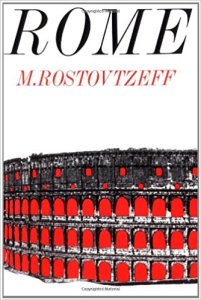
But despite these similarities, Rome grew into one of the largest global empires of all time and Greece stayed within its narrow confines for the vast majority of its history and never expanded as Rome did.  I thought of this question recently because Michael Rostovtzeff raised it in the early pages of his book on Rome.*  He saw more similarity between Greece and Rome than others, and so had to account for the differences in their historical development in ways that those who see more difference between the two could ignore.

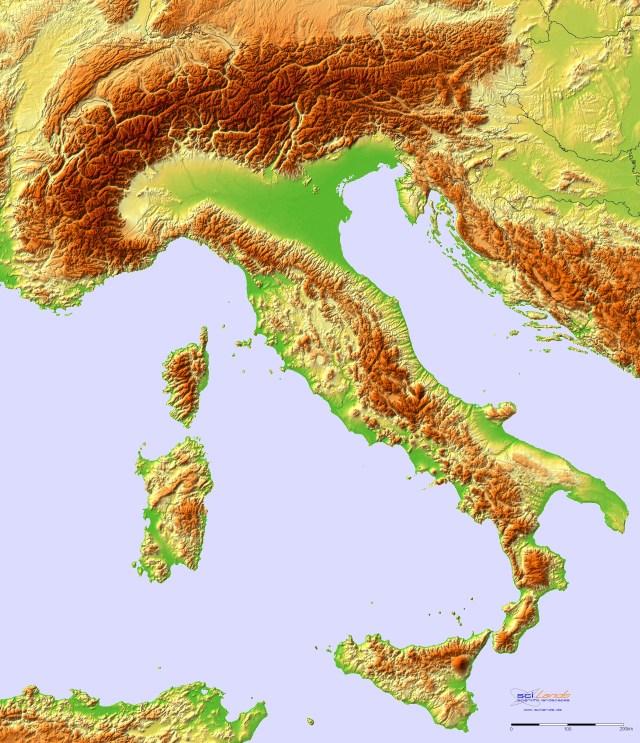
I agree with Rostovtzeff’s rejection of purely mechanical or physical explanations.  Some argue that geography can explain the difference.  Greece’s geography hemmed them in and forced the creation of independent city-states, whereas Italy’s geography allowed for more expansion.  But Rostovtzeff points out that both areas had relatively the same interaction with mountains and the Mediterranean.  Italy’s soil had an advantage, but not a great enough advantage to explain Rome’s expansion.  And while Greece’s topography had more mountains to contend with, occasionally certain city-states built empires, showing that geography itself cannot explain the difference.

He then goes on to assert that we can explain Rome’s expansion, and Greece’s relative lack of territorial expansion, to the following:

  • Rome had a better political structure, which allowed for more effective and consistent mobilization of the population, and
  • Rome’s political changes came slowly, which prevented shocks to the system that would inevitably derail or delay a civilization’s growth.  Such shocks could be compared to long bouts of illness in an individual.

I certainly prefer these explanations to geographical explanations, but I feel one needs to go deeper.  Politics flows downstream from culture, and culture from religion, and it is here that I feel the answer must lie.  To get at religious differences we need to look not at particular beliefs or religious rites, but what those beliefs and rites point to.  To get at that question, we need to examine their mythologies, for if nothing else, it shows us how they perceived themselves and gets at their motivations.

On the surface of things Greece and Rome look much alike, but their myths tell a different story.  The story of Pygmalion and Galatea, for example, reveals the Greek passion for perfection.  Pygmalion eschews women because none he sees truly merit his affection.  He carves his thoughts into a perfect stone sculpture, and Aphrodite rewards him for his devotion by having the statue come to life, and they live happily ever after.  We see this pursuit of perfection in other areas of Greek life, in the Parthenon, in their mathematical idealism, and so on.

When Livy writes of Rome’s early days he recounts how Romulus and the early founders of Rome–all men–needed women. So they come up with an idea of a religious festival and invited young ladies from the Sabines. When they came they abducted and forcibly marry them.

When the hour for the games had come, and their eyes and minds were alike riveted on the spectacle before them, the preconcerted signal was given and the Roman youth dashed in all directions to carry off the maidens who were present. The larger part were carried off indiscriminately, but some particularly beautiful girls who had been marked out for the leading patricians were carried to their houses by plebeians told off for the task. One, conspicuous amongst them all for grace and beauty, is reported to have been carried off by a group led by a certain Talassius, and to the many inquiries as to whom she was intended for, the invariable answer was given, “For Talassius.” Hence the use of this word in the marriage rites. Alarm and consternation broke up the games, and the parents of the maidens fled, distracted with grief, uttering bitter reproaches on the violators of the laws of hospitality and appealing to the god to whose solemn games they had come, only to be the victims of impious perfidy.

The abducted maidens were quite as despondent and indignant. Romulus, however, went round in person, and pointed out to them that it was all owing to the pride of their parents in denying right of intermarriage to their neighbours. They would live in honourable wedlock, and share all their property and civil rights, and – dearest of all to human nature – would be the mothers of freemen. He begged them to lay aside their feelings of resentment and give their affections to those whom fortune had made masters of their persons. An injury had often led to reconciliation and love; they would find their husbands all the more affectionate, because each would do his utmost, so far as in him lay, to make up for the loss of parents and country. These arguments were reinforced by the endearments of their husbands, who excused their conduct by pleading the irresistible force of their passion – a plea effective beyond all others in appealing to a woman’s nature.

The tenor of this story fits well within the framework of the rest of Livy’s work.  The story of Romulus and Remus, for example, has some of the same heroic qualities as in the founding myths of other civilizations.  But the story have Romulus kill his brother Remus in a fit of temper for a minor dispute, and the tale takes little pains to justify the deed.

I think that Livy has more actual history in him than others might, but even I would not say that Livy writes history as Thucydides wrote history.  So we must consider why Rome’s foundational stories have this different feel and emphasis.  Two possibilities present themselves:

  • The key to Rome’s greatness comes from the fact that they did not whitewash things.  They called a spade a spade.  They did not hide the truth about themselves, and so they were much better equipped to deal with reality than those around them
  • The key to Rome’s greatness comes from the fact that, not only did they not hide their warts, they reveled in them.  In fact, stories like the Romulus/Remus story would not have been viewed as a black spot on their past, but rather, a positive good.  Of all the soft civilizations that surrounded them, Rome and Rome only did what needed to be done.  Rome understood, just as Machiavelli understood, that states need founded by one man, and one man only.  Either Romulus or Remus would have to go, twins or not.

I favor the second option.  If we imagine that Rome’s founding myths and folklore follow the general pattern of most every other civilization (the U.S. included), we should imagine that these stories reflect something of an idealized version of themselves.

Some years ago in our 8th grade ancient history class, a student made a striking comment as we discussed exactly what Rome “meant” by their multiple conquests.  What drove them to expand?  Rome’s religion technically forbade offensive war, and yet Rome never lacked a justification for war when they felt they needed one.  The student suggested that the Romans were not unlike the Assyrians.  The Assyrians conquered (in part at least) as an offering to Ashur, their god of war.  The Romans (though certainly not as rapacious or cruel as the Assyrians) conquered as offering to their god as well, except their god was the city of Rome itself.  Greece could occupy itself with abstractions like ideal perfection but Rome remained very physical in their orientation throughout.  Their god was literally made visible all of the time.  Thus, this physical orientation would require very tangible applications.

Perhaps the key to Rome’s expansion vis a vis Greece lies here.

Machiavelli recorded an intriguing anecdote on Roman religion:

Auguries were not only, as we have shown above, a main foundation of the old religion of the Gentiles, but were also the cause of the prosperity of the Roman commonwealth. Accordingly, the Romans gave more heed to these than to any other of their observances, in undertaking new enterprises; in calling out their armies; in going into battle; and, in short, in every business of importance, whether civil or military. Nor would they ever set forth on any warlike expedition, until they had satisfied their soldiers that the gods had promised them victory.

Among other means of declaring the auguries, they had in their armies a class of soothsayers, named by them pullarii, whom, when they desired to give battle, they would ask to take the auspices, which they did by observing the behaviour of fowls. If the fowls pecked, the engagement was begun with a favourable omen. If they refused, battle was declined. Nevertheless, when it was plain on the face of it that a certain course had to be taken, they take it at all hazards, even though the auspices were adverse; contriving, however, to manage matters so adroitly as not to appear to throw any slight on religion; as was done by the consul Papirius in the great battle he fought with the Samnites wherein that nation was finally broken and overthrown. For Papirius being encamped over against the Samnites, and perceiving that he fought, victory was certain, and consequently being eager to engage, desired the omens to be taken. The fowls refused to peck; but the chief soothsayer observing the eagerness of the soldiers to fight and the confidence felt both by them and by their captain, not to deprive the army of such an opportunity of glory, reported to the consul that the auspices were favourable. Whereupon Papirius began to array his army for battle.

But some among the soothsayers having divulged to certain of the soldiers that the fowls had not pecked, this was told to Spurius Papirius, the nephew of the consul, who reporting it to his uncle, the latter straightway bade him mind his own business, for that so far as he himself and the army were concerned, the auspices were fair; and if the soothsayer had lied, the consequences were on his head. And that the event might accord with the prognostics, he commanded his officers to place the soothsayers in front of the battle. It so chanced that as they advanced against the enemy, the chief soothsayer was killed by a spear thrown by a Roman soldier; which, the consul hearing of, said, “All goes well, and as the Gods would have it, for by the death of this liar the army is purged of blame and absolved from whatever displeasure these may have conceived against it.” And contriving, in this way to make his designs tally with the auspices, he joined battle, without the army knowing that the ordinances of religion had in any degree been disregarded.

But an opposite course was taken by Appius Pulcher, in Sicily, in the first Carthaginian war. For desiring to join battle, he bade the soothsayers take the auspices, and on their announcing that the fowls refused to feed, he answered, “Let us see, then, whether they will drink,” and, so threw them into the sea. After which he fought and was defeated. For this he was condemned at Rome, while Papirius was honoured; not so much because the one had gained while the other had lost a battle, as because in their treatment of the auspices the one had behaved discreetly, the other with rashness . . .

Machiavelli surmises that the Romans wisely manipulated their religion to serve their political or cultural needs.  I agree as far his explanation goes, but I think we can go one further.  The Romans had a conscious religion of oracles, auguries, and the like, but a deeper, perhaps even unconscious religion of worship of their city itself.  I’m not so sure that Appius would have received censure had he been victorious.

I remain grateful to this student, who years ago helped me see the history of Rome in a new light.

Dave

*Though it has little to do with the post above, I cannot resist commenting on some reviews of Rostovtzeff’s work.  He emigrated from Russia shortly after the Russian Revolution.  His experience of events in Russia certainly impacted his analysis of Rome, where he saw the decline of the Republic in terms of 1) Too much change too quickly, and 2) Given the size of Rome, too much power shifted into the hands of too many (he felt that democracies needed to be small in size to work well).

Some dismiss him out of hand, because, obviously, his experience in Russia strongly colored his analysis of Roman politics.  Well, ok.  But a man is surely more than his influences.  What of the merits of Rostovtzeff’s analysis?  It can be debated, but his interpretations is hardly crazy, or such an obvious byproduct of personal experience that it has nothing to do with the evidence.  These same reviewers, I’m sure, would not want their own work subjected to the tests they used for Rostovtzeff.

Though C.S. Lewis’ original discussion of the “personal heresy” applied directly to poetry, I think it applies also to works of history as well, which are acts of creation somewhat akin to poetry.


11th Grade: Lord Grantham vs. the 49ers

Greetings,

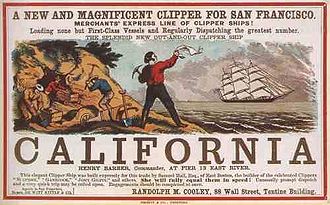
This week we looked briefly at the California Gold Rush of 1848-49, where I want to touch on a few different issues:

1. The link with land and opportunity

Americans since early colonization often associated this country with opportunity – be it economic or religious in nature.  The Gold Rush did not present the lure of an easy life with easy riches.  Travel was long and dangerous, finding gold was not guaranteed, nor could you be sure to protect your claim.  Still, the possibility of changing your circumstance, of making something for yourself, proved irresistible to thousands.  The idea of opportunity has always been powerful for Americans. Often this idea of opportunity was linked with land.  We talked last year about how absurd the Americans must have seemed to the British with our near obsession for land.  After all, even before the Louisiana Purchase we far exceeded England in terms of size.  Today we still link home ownership, for example, with independence.

We can trace part of the difference in our approach to land in the different cultures.  In England many lived and worked due to the patronage of a benefactor, usually someone in the aristocracy.  In America the idea of patronage ran counter to our “do it yourself” mindset of personal independence.  There is a lot to say for our attitudes.

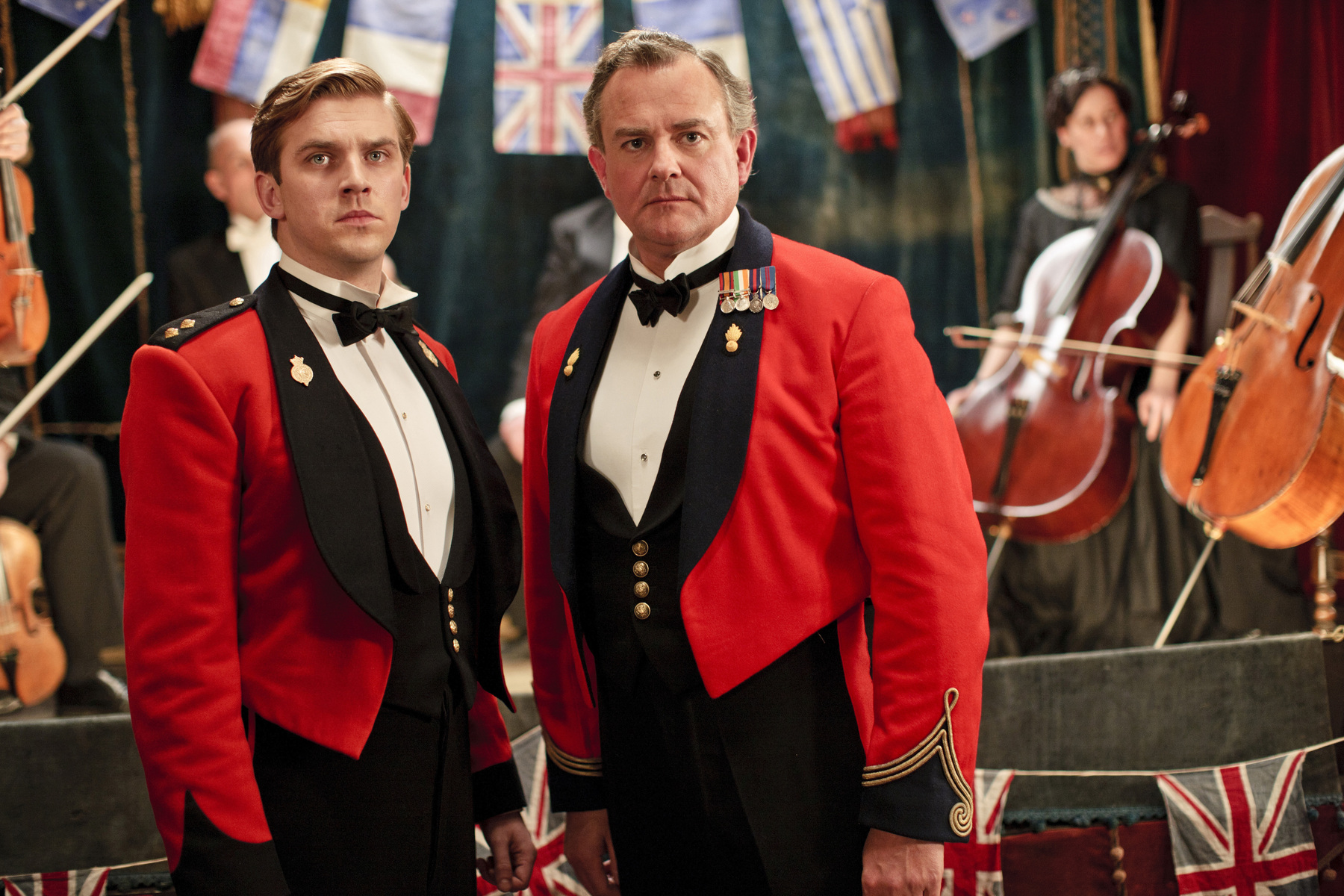
But we should not view this European mindset as mere laziness.  Many felt that if one had the means to hire a maid and a gardener, you had a duty to hire them and provide jobs.  It could be considered part of the duties of one’s “station in life.”  At its best, this mindset produced a sense of community and mutual responsibility. Mrs. Mathwin was a big fan of Downton Abbey, and I saw one scene where Matthew (who feels that all the servants are waste of time and money) is upbraided by Lord Grantham, who asks Matthew to think about where the butler will go if he had no job at Downton.  The best aristocratic tradition saw having servants as a means to provide for others.  But without a “benefactor class” in America, individuals had to make their own way, and land always played a key role in making that happen.

It is this belief in independence and opportunity that led many to oppose slavery who were not necessarily generous in their attitude to blacks.  This attitude can be just as puzzling to us today as those who favored slavery in the name of liberty.  But many Californians opposed slavery because slavery represented being rich enough to hire someone else to do your dirty work.  In this line of thinking, slavery stood against the “do it yourself” ethic inherent in the 49ers, and so stood against the idea of independence and liberty.  But we should be careful of thinking too highly of their motives.  Again, many of them had no love for blacks per se, however much they opposed slavery.  Others in the North shared this same attitude.  Unfortunately, strict abolitionists were a distinct minority.

2. Institutions Travel

It is probable that many of the 49er’s simply thought of themselves as seeking their fortune.  But institutions and economies would inevitably travel with them.  With money came the need to protect it, and for that you ultimately need political institutions (unless you would prefer lawlessness and spoils going to the strongest).  In our own Gold Rush Game played this week, students probably let the ‘individualism’ of the game go too far, and their hesitancy to form towns led to many of them being ‘killed’ by a rich outlaw.  The game will have to be tweaked a bit more next year to give more incentive to the formation of banks and towns.

3. Cultures Linger

As a curious side note, the names of the towns created by the Gold Rush reveals a lot about the people there.  In contrast to much of the rest of the county that named towns with European associations (i.e. New York), Biblical references (i.e. Providence, Rhode Island), virtues (Philadelphia) or a virtuous past (i.e. Cincinatti for the Roman Cincinattus, and Columbus, Ohio).  Gold Rush towns had very different names like Devil’s Thumb, Rough and Ready, Hangtown, etc.  Clearly, many came to California with entirely different goals and outlook than those that settled North America initially in the 17th and early 18th centuries.  There are those that say that California today marches to a different drummer than other parts of the country, and clearly this has its roots dating to the Gold Rush. The culture of a particular place will often have deeper roots than we think, and our actions have longer ripple effects than we usually imagine.

I will look forward to updating you next week, when we delve deeper in the slavery question and other issues that began to split the country in the 1850’s.

Dave Mathwin

Liberty and Coercion

Almost every political philosopher I am aware of from Aristotle down through Montesquieu believed that a democracy/republic had to be small in size.  Self-government required, among other things:

  • A population where people know each other enough to trust each other to some degree.
  • A population where people can have enough land to support themselves, but a geography that does not allow any one particular faction to have too much land, thus gaining too much of an advantage over their fellows.
  • A relatively culturally homogeneous population that shares core values

The American experiment is unique in many ways, one of which being that Jefferson and Madison attempted to turn this reasoning on its head.  They argued that

  • Democracies/Republics floundered because of too much population concentration, not too little.
  • These population concentrations gave way to passions and factionalism that could easily destroy liberty by trampling on the minority (cf. Madison’s brilliant Federalist #10).
  • Hence, what Democracies/Republics need is not a small geography, but a large one.  People need to spread out so that 1) All will be sure to have land, and 2) No one particular faction could concentrate its power enough to override the rights of minorities (hence, Jefferson’s impetus for his semi-Constitutional Louisiana Purchase).

Maybe necessity helped them invent these ideas, maybe it sprung direct out of their heads.  Either way, with this reasoning Madison and Jefferson show their genius, confidence, and perhaps, their arrogance.  I have wondered if one might not view the whole of American history through the lens of this question: Were Jefferson and Madison right or wrong?*

I expected Gary Gerstle’s Liberty and Coercion to take on the grand question of the thorny question of the interaction between liberty and power, and how sometimes “liberty” for oneself means power over others.  Instead, he narrowed his focus and proceeded in a methodical way to show how over time the “police power” of the federal government grew.  Gerstle disappointed me by never exploring the relationship of our founding ideals to this question.  But at times his narrower focus allows him to make some incisive observations.

For example . .  .

Many presidents and perhaps many Americans had a desire to act in some measure of good faith with Native Americans, but things never went right.  Some might explain this via a grand clash of civilizations.  Gerstle looks instead at the inherent dilemmas posed by our philosophic commitments.  Our commitment to self-government limited the scope of federal government.  No one, whether a Federalist, Anti-Federalist, Democratic/Republican or the like, believed that a large professional army went well with liberty.  But with no money and no political will to even create agencies to establish firm borders and grant land titles, let alone enforce such borders militarily, various presidents found themselves giving in to the settlers “squatters rights.”  We wanted to prevent the national government from having too much power to coerce, but without this power, settlers had the liberty and the power to coerce others.

Time and time again, our sheer size made the relationship between governmental power and self-government difficult.

A similar line of reasoning happened with non-WASP immigrants, be they Catholics from Ireland/southern Europe or Asians settling in the west.  They did not have the same rights as others, but how could they?  For communal self-government relied on shared religious and cultural beliefs and habits.  If these immigrants did have these same values, they could possibly participate in the democracy.  Gerstle shared Teddy Roosevelt’s fury and frustration with the treatment of Japanese migrants in the U.S. just as he was negotiating sensitive deals with Japan.  But he had no ability to force local governments to do as he wished.

Here Gerstle misses an opportunity to connect our dilemmas with our founding ideology.  American colonization began with the idea of transplanting certain distinct communities intact.  But by the later 18th century Enlightenment ideas led to the bold “All men are created equal” mindset of the Declaration.  Simultaneously, America had no real justification to exclude anyone from its shores, but neither could they practice local, autonomous, self-government if they did.

The history of political philosophy has its revenge–or at least makes itself known.

Of course slavery is the preeminent manifestation of this dilemma.  On the one hand, I think most of the founders knew that slavery ran against their moral principles as a nation.  But their political principle of limiting the power of national government meant granting a lot of autonomy to the states.  The clash of these two propositions embedded the possibility of civil war into the fabric of our origins.

Gerstle cites one illuminating aspect of this problem that I had not heard of before.  After Nat Turner’s rebellion many abolitionist presses mailed anti-slavery publications “free of charge” to the South.  This infuriated President Jackson, who believed that such publications only sought to stir up more trouble.  He asked for Congress to ban their mailing.

But southerner John C. Calhoun recognized that such a ban would not serve southern interests.  They would gain in the short term but give away one of their core principles–the right of states to decide such questions.  He advocated against the ban.  But many states arrived at a solution by instructing local postal workers to simply not deliver this mail.  This at best awkward compromise could only last so long, however much it tried to resolve federal and state issues.**

States were seen early on as the means by which well-ordered communities could be established.  Thus, they had broad ranging police power.  The constitution reflects this by enumerating the powers of the federal government and giving everything else to the states.  Today the power of states is much weaker relative to even just a few generations ago.

This changed in stages.

The Industrial Revolution may have done more damage to the vision of the founders than any president or political party.  It broke down local rural life and lumped most people together in the cities as one amorphous mass.  Such conditions created a national state. Without any direct power to act, the government outsourced, deputizing local civic groups to undertake tasks related to civil order.

Whatever the successes such organizations had, they were destined for embarrassing failures.  They discriminated against blacks and immigrants.  They imprisoned without fair trials, and so on, all in the name of the Justice Department.  They needed stopped, but the only way to do so involved finding a way to increase the power of the national government.

Over time the national government used various legal strategies mostly related to the 14th amendment and the commerce clause to achieve their aims.  Perhaps the Industrial Revolution destroyed the possibility of self-government that our constitution depends on.  Rather than create a new constitution, we sought to stretch certain enumerated powers far beyond their original purpose.  Much hay has been made of the commerce clause, for example, which many conservatives lament.  However, our military and national defense (an issue dear to many conservatives) has also assumed a shape utterly unrecognizable to anyone who lived before W.W. II.  The size and cost of our military has in turn stretched the power of the presidency far beyond the vision of the constitution.  Gerstle cites many examples of how our military ballooned in size and then rapidly decreased when conflicts ceased.  Of course we can cite the strategic dilemmas faced by the U.S. after W.W. II as a justification for maintaining a large military.  In a very real sense, W.W. II did not end until 1989.

Strategic considerations aside, we should speculate if any other forces influenced this shift.

Eighteenth-century theorists drew upon the “citizen-soldiers” of times past.  Greece and Rome both provided examples of this.  On the one hand, we cannot have a militarized state, which would jeopardize our liberty.  On the other hand, we need national defense.  A nation of property owners motivated by legitimate self-interest would certainly rally to defend their land, their communities, if need be.  The first 175 years (give or take) of our history demonstrated this.  Right up through the end of W.W. I we demonstrated the ability to dramatically expand and contract the size of our military.

Perhaps our strategic situation changed so dramatically in 1945 that it necessitated the rise of a “military-industrial complex.” Or perhaps it was we ourselves that changed.  Gerstle does not speculate.

Embedded in this question is the relationship between liberty and order.  We have always recognized the need for someone to have the final say, and the need for people to “pursue happiness” in the way they see fit.  This has always meant tolerating things one may disagree with.  Should we ban pornography or not?  Do we grant the freedom of some to own slaves?  Do we grant the freedom of some to oppose same-sex marriages?  Who gets to decide?

Gerstle’s book rather prosaically shows how this power to decide has transferred over time from the states to the federal government.  This happened mainly under Democratic leadership.  But conservatives also played a role at crucial times with their traditional issues of national defense/military.  By “prosaically” I don’t mean that it was easy or unconvincing.  He has extensive research and uses a methodical style that makes him quite convincing.  But he leaves us with some unexplored questions and neglects to swing for the fences.

He makes clear the fact that ideas of liberty and coercion have always existed.  All we have done over time is basically transferred the power of coercion from the state to the national government.  As to whether representative government can exist in the post-industrial era, as to whether or not Jefferson was right or wrong, these grand questions go largely untouched.  I for one can’t help but admire the brilliance and confident boldness of Jefferson’s vision–though I think I disagree.  I wish Gerstle had done a bit more to inspire me one way or another, and done a bit more to help answer the perplexing question of the nature of America’s idea of liberty.

Dave

*Another possible historical lens would be the “wheel of fortune”–the idea that every civilization (and every ruler?) will experience a kind of boom/bust cycle.  The medievals would argue, I think, that this cycle was meant to teach us about redemption.  This lens would argue that some choices could delay the progress of the cycle perhaps even for a long time, but that “nothing lasts forever” and that some kind of decline remains inevitable.

Again, this idea had a historically long run, from the ancients down through Machiavelli at least.  Our founders, many of them heirs to the Enlightenment, would not have accepted this idea.

**The same held true for the Fugitive Slave Act.  Most pro-slavery advocates rejoiced at the new provisions of the law, but others saw that to achieve this they abandoned a key principle of keeping the federal government away from the slavery issue.

Without question slavery is a terrible moral evil.  We must realize that the issue had other dimensions to understand the colonial and ante-bellum period.  We may deplore the actions of another country or culture.  When should we use force to change them?  By what authority?

The Emperor Might Need New Clothes

Some years ago my students and I came across a remarkable passage in Madison’s notes on the Constitutional Convention.  The delegates debated some issue about term limits or representation, when one of the lesser known men commented that, in effect, “this constitution will last us about 75 years, after which we will have to make a new one.”*

This comment passed apparently without much notice or fuss at the Convention in Philadelphia.  Perhaps it was a generally assumed idea, or perhaps they simply had enough trouble in the moment to worry about arguing whether or not their document would last past their grandchildren.

This shocked everyone in class because we think of America like any other country, a more or less solid oak in the earth.  Of course, we have also been brought up with political rhetoric from both parties that venerates the constitution (though perhaps different parts of it).   Because Americans share little besides some form of faith in the Constitution, if that shakes, we all fall down.

Because American history has many unique aspects, I find getting an interpretive handle on our past very difficult.  I have taught American History for about 15 years and have only some educated and less than educated guesses.  Clearly, however, politically and culturally we are currently shifting in some direction or another at the moment.  How should we make sense of it?

One of the more remarkable periods of positive dynamic change occurred in Greece between the years ca. 800-500 B.C.  We know about the Bronze Age, but sometime after the Trojan War Greece descended into a dark age about which we know very little.  Perhaps Homer was the beginning of the rebirth.  Early on in his The Economic and Social Growth of Early Greece: 800-500 B.C. Chester Starr makes an interesting point.  Definite ideas or concepts like “equality” or “rights” did not guide the Greeks ca. 800 B.C.  Rather, the concept of eunomia, or “traditional right” formed the basis of Greek social and political interaction.  Sometimes they invoked eunomia against abuse of power by tyrants or aristocrats, at other times aristocrats invoked it rightly against the “mob.”  This flexibility surely gave them good ground on which to innovate.

This stands in contrast to our history.  We founded America on ideas, whether because we thought that the best way to go, or because we had no other choice.  We often agreed on the results we wanted, but rarely on the “why” of that result.  Even early colonial America had a great deal of cultural diversity, at least by 17th century measurements.  We have never really had a shared culture to build upon, except perhaps for a vague sense of Protestantism.

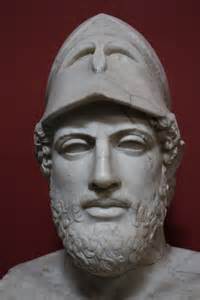
Starr goes to demonstrate that the creation of the much admired political unit of the city-state had at least part of its origins in the desire of the aristocracy to concentrate its power.  Later, asPericles of Athens we know, democracy arose in many Greek city-states, a tribute to the aforementioned flexibility.  But many Greek democracies still had their aristocratic imprint.  The outstanding reformer Pericles made Athens more democratic while definitely living and fashioning himself as an aristocrat, and not as a “man of the people.” His bust makes this clear.

All good things come to end, and the Greek system had played itself out by the time of Alexander, who had little trouble putting it to rest.  Still, all in all, a good run by any measure, one too that makes sense in some clearly defined stages.

In light of Greek history and our own, I offer some some highly speculative thoughts . . .

Theory 1

Since early colonization America has gone through several iterations:

  • Colonial America – 1600-1756
  • Revolutionary America – 1756-1828
  • Jacksonian America – 1828-1860
  • Progressive America – 1860-1929
  • New Deal America – 1929-1965
  • Global Power America – 1965-2001
  • ???

Obviously some of these dates can be disputed and overlap.  Basically, Theory 1 asserts that because America has been rooted in ideas and not culture/tradition, we subject ourselves to significant shifts every 2-3 generations (the first phase doesn’t really count, as we had no concept of an American “nation” until the mid 1700’s).  We can reinterpret our common language on the fly and create “new Americas” every so often–though of course each era has some connections to past eras.  This ability has its strengths and weaknesses.

This theory, if true, may comfort us now because the the shifting ground beneath our feet will settle again as it has for previous generations.  We’ve done this before, we can do it again.

Theory 2 . . .

proposes more unity for the majority of American history.  Yes, some cultural and political shifts happened over time.  But we consistently maintained faith in the democratic process, and in our reason for being.  Even in the Civil War, the Confederacy broke away not out of a rejection of the American ideal, but out of a belief that they represented the true America.  We had “confidence,” that crucial element of any civilization, even in the midst of our most profound domestic crisis.

But something significant happened in 1965.**  In this year we passed the Voting Rights Act, which could be viewed as the apotheosis of what America was supposed to be.  In this year also we dramatically increased our involvement in Vietnam, again, in some ways I think, out of a belief that this was what we were “supposed” to do.  We increased our troop presence initially at least with the general backing of Congress and the population at large.

However, almost immediately after we passed the Voting Rights Act the riots in America’s cities began.  Rioting continued sporadically in many major cities for the next few years.  Perhaps this was pure coincidence, but I think not, though I would not claim to really understand the reasons for the violence.  But I think that part of the reason might be an intuition that we had “done all we could do,” but that it wasn’t enough.  The supreme confidence we had in our democratic way of life taught us that things would always improve, but now we knew better.  Shortly after our troop surge in Vietnam waves of self-doubt began surging through the country.

The two phenomena are likely connected, though I’m not sure how.

Along with this, the counter-culture “hippie” movement went mainstream into popular culture and eventually most of academia.  Western icons like the Beatles went to India to learn see the world in a non-western way.  We lost confidence in our own culture, and we have not regained it.    We had never agreed fully on the why we did what we did, but we had agreed on what we did.  After this era we could no longer claim this for ourselves, and this makes the modern shift much different than others in our history.  The lack of political flexibility may have hastened the at least seeming collapse of the principles that guided us.  Some of the “vomiting up” of our past in some areas of our culture seems willfully self-induced.^

Recently The Guardian ran a great article about Tory MP Rory Stewart.  Stewart got a great education and attempted on two occasions to serve in difficult postings in Iraq and Afghanistan.  His comments say much about the state of the western world:

Ten years ago he would have listed 10 things Afghanistan needed to build a new state: rule of law, financial administration, civil administration and so on. “And, then you would say, well, how do you do that? Well, I’d say, by a mapping of internal and external stakeholders, definition of critical tasks – all this jargon talk. And I’ve only now just begun to realise these words are nonsense words. I mean, they have no content at all. We should be ashamed to even use them.”

They are nothing more, Stewart now acknowledges, than tautologies. “They pretend to be a plan, but they’re actually just a description of an absence. Saying ‘What we need is security, and what we need to do is eliminate corruption’ is just another way of saying: ‘It’s really dangerous and corrupt.’ None of that actually tells you how it’s done.”

And later,

In some sense I’m a romantic. I like the idea of organic history and tradition. But I think Britain is such a different place now, and changing so quickly, that I’m coming slowly, painfully, to accept that we need to start again.

I emphasize that these comments come not from a reactionary revisionist Liberal, but a member of England’s conservative party.

If we agree that we need to “start again,” in some way, will we agree on where to start from, and where we wish to go?

Dave

For anyone interested in further thoughts on America’s political culture, check out The Grumpy Old Man podcast with Audrey and Emily here.

*My apologies, I have looked back and forth for this comment and cannot find it again to save my life.

**A possible counter-date might be the end of W.W. II.  As Arnold Toynbee regretfully admitted, democracies are not well-equipped to handle something like nuclear weapons, though, so far no horrifying apocalypse.

^Trump gets rightly accused for excessive negativity, but why does no one focus on the obvious negativity from the Left?  Here is Clive Crook, via Marginal Revolution . . . 

Trump’s critics complain about his relentless invoking of crisis — despite agreeing with him that the system is collapsing. Conservatives keep telling us that the American project is in mortal danger, that liberty itself is at stake. Liberals keep telling us that global capitalism is wrecking everything that’s decent in society, that the U.S. is institutionally racist, and America’s traditional values are so much hypocrisy. I think back to the rapturous reception accorded by the left in 2014 to Thomas Piketty’s “Capital,” which argued, you may recall, that capitalism is an engine of injustice, headed for self-destruction; progressives everywhere nodded wisely in agreement. Here’s what puzzles many of them today: Why does Trump have to be so negative?

Entourage Trauma

In his wonderful book, Lost in the Cosmos Walker Percy guides his readers into uncomfortable (but also funny) questions about the human condition. In one scenario, he asks us to imagine a famous movie star stopping in a small town local grocery store. On the one hand, there is the prospect that he will be recognized and fawned over. He will have to take selfies, make witty remarks, give autographs, and so on. He will have to assume something of a mask. On the other hand–what if, having prepped himself for this eventuality, no one recognized him at all? Which is the worse fate?

Thinking about this dilemma made more sympathetic for athletes who bring entourages with them wherever they go. I used to see this phenomena motivated purely by ego and money. Now it looks like a coping mechanism for an entirely weird situation. Back in my father’s day athletes often had off-season jobs and lived in neighborhoods with other middle class families. Some had great renown but to see them you usually had to go in person. No highlight reels existed, so slow-motion footage, to make them seem super-human. How does a 23 year-old deal with extreme fame and fortune for having the talent of pretending to be someone else or putting a ball in a round cylinder? Such success could be traumatic, and the entourage a means of dealing with the world at a distance.

We can make similar diagnoses of cultures in general.

Historical comparisons of one era to another are no doubt tricky. We assume that anyone can easily make one thing look like another by selective choosing of our material. I admit that this was my first reaction to Kirby Farrell’s Post Traumatic Culture: Injury and Interpretation in the 90’s. Farrell attempts to link the 1890’s and the 1990’s examining its culture (books and movies) through the tense of personal and cultural trauma. The neat 100 year gap seems all too convenient at first glance.

I have mixed feelings about the book, which I experienced as a combination of excellent insights and thoughts that Farrell wielded the hammer of psychoanalysis and saw everything as a nail. It is possible, for example, that if a character in a story drinks a cup of coffee, it may be a simple background detail and not meant to conjure the idea of fetishizing the exotic, or some other such trope. And, while he cites a variety of examples of similar themes in the two decades, he never seeks to prove that the 1890’s/1990’s had more focus on his themes than other decades. Granted–proving this would involve a different kind of writing and research, but its lack allows for doubt about his thesis.

This premise nonetheless intrigued me. Certain things about the 1990’s in retrospect appear strange. I distinctly remember fearing nuclear war in the early 1980’s. But we first win the Cold War, and then the first Persian Gulf war in overwhelming fashion my senior year of high school. I remember thinking that a burden had lifted, that skies had cleared. The 1990’s–good times, right?

And yet, in looking back . . .

If we take music, for example, we see that in the 1980’s, songs about fun, love, and pastel colors routinely topped the charts in a time when many had real fears of nuclear annihilation. But almost immediately after the Cold War, grunge music dominated the airwaves. Bands like Nirvana, Pearl Jam, Rage Against the Machine, Soundgarden, etc. celebrated anger, alienation, confusion, and disillusionment. Fashion changed from accentuating and celebrating oneself with shoulder pads and coifed hair to wallowing in degradation with greasy hair, ripped jeans, and heroin chic.

None of this seemed odd at the time to me–it just was. I suppose some might tell me to get over myself, that culture changed because it changed, with no reason behind it. But if that’s true than there are no reasons for anything. Three explanations, then, present themselves to me:

  • People are by nature self-indulgent, and having no crises to validate us, we invented crisis to grant ourselves legitimacy.
  • Democracies especially need an outside enemy to maintain social cohesion and a sense of purpose–recall what happened to Rome’s republic after they conquered Carthage and Greece. Rome turned on itself as a body politic. But being less communally oriented than the ancient Romans, who destroyed their public institutions, we turned to destroy ourselves as individuals (i.e., heroin chic and ripped jeans)
  • We faced a (clinically) real sense of psychological trauma that fits a ‘normal’ pattern of human experience. Our cultural obsessions of the 1990’s could be termed not “self indulgent,” or ” typical of democracies,” but typical of modern man in general. The two decades had western man face a similar kind of challenge that evoked a similar response.

This last premise forms the basis of Farrell’s book.

He asserts that the 1890’s and the 1990’s shared important things in common:

  • The 1890’s saw the closing of the frontier for America and western Europe. As Cecil Rhodes remarked, “The world is all carved up now.” The idea of the problem of “no frontier” would be taken up as a major theme in American history, beginning with Frederick Jackson Turner.
  • In the 1990’s we had the sense of the “End of History,” with no enemies on the horizon, and nothing to do with ourselves.
  • The 1890’s had the sense that they had gone so far, that good times could not last. The encounter with the ‘other’ overseas would surely rebound and perhaps destroy them. They felt their culture endangered.
  • Our efforts to win the Cold War took into Asia, Africa, and South America. Our contact with the ‘other’ brought on the infamous ‘Culture Wars’ of the 1990’s–the sense with many that the key aspects of our identity faced grave threats.
  • Many accounts exist of people describing dread in confronting the enormous scale of life introduced by the Industrial Revolution. Yes, by the 1890’s people had lived with this change for nearly a generation. But the 1890’s saw the application of electricity to society begin, just as the 1990’s saw the internet begin to become part of the everyday. Both inventions dramatically altered our experience of creation, eradicating natural boundaries and expanding the scope of life unnaturally.

All of these factors combined gave us a real sense of dislocation, as we had lost our bearings and become unmoored. The man of internet lives everywhere and nowhere. The similarities asserted between the decades, which seemed arbitrary to me at first, make more sense upon reflection.

Farrell’s best insights come when he discusses the concept of the prosthetic, by which he means what we add to ourselves in attempt to make ourselves whole. An athlete’s entourage, for example, can be seen as a prosthetic, an artificially constructed way to deal with the world, to make us whole. In Schindler’s List, for example, Schindler creates much of his cache with Nazi elites through providing more and more extreme forms of entertainment. “Those who live by the sword, die by the sword.” The trauma that the Nazi’s inflicted on others cannot help but rebound back at them. To cope with this and to create something of an internal balance, or something of an escape, they douse themselves with physical pleasures–they escape their misery through a kind of “beserking.”* He cites numerous examples of how various forms of culture in the 1990’s manifested something similar–grunge music among them.

I remember reading parts of Barbara Tuchman’s The Proud Tower, her examination of life in Europe before W.W. I. In the preface, she mentioned that she thought to find a calm and tranquil world shaken out of a slumber of sorts by the war. Instead, she saw a world even in the 1890’s on the edge of its seat psychologically, and to a lesser extent, politically. Like 1990’s America, 1890’s western Europe stood atop the world, seemingly having it all. And yet–that fact seemingly hurt them more than it helped.

Farrell cites the novels of H.G. Wells from this period, almost all of them having an apocalyptic subtext. Conan Doyle based Sherlock Holmes’ whole existence on trauma–unable to handle real life, Holmes must live through the prosthetic of the trauma of others. The art of the briefly dominant pre-Raphaelite school focused so often on Arthurian themes of the end of a golden age, of mourning and loss. This style appears just as out of place as the dominance of Nirvana and Pearl Jam right after winning the Cold War. It would seem as if the golden age should be beginning, not ending. Farrell suggests that we could not handle the scale of life, and the power it conferred–“winning” as a kind of trauma. Oscar Wilde, the man of the 1890’s, seemed unable to function without masks–and in fact he celebrated the very idea of people masking themselves to others. As he wrote about in A Picture of Dorian Gray, however, those masks hid deeper and darker realities.

All in all, Farrell had too much of psychoanalytic lens on his subject to completely convince me of the connection between the 1890’s and the 1990’s. Not everything comes from trauma. But–he got a lot farther than I thought he would.

Dave

*With this term Farrell references the Viking warriors, who would put themselves into a frenzied state before going into battle, no doubt to disassociate themselves in some ways from the death they inflicted.

Malleus Maleficarum

Heinrich Kramer and James Sprenger’s Malleus Maleficarum (translation–possibly, “The Hammer for Devils/Witches/, i.e., “Malefactors”) ranks way up there among the more strange historical documents I have read. Published in 1484, this tome tells one all about witches and other sundry works of the devil. It deals with the reality of the supernatural quite openly and frankly, and in this way strikes us as “pre-modern.” And yet, the “hammer” the title alludes to appears to strike hardest through the use of the farthest reaches of the logic parsing of the scholastic method. Those familiar with the Summa Theologica (dating more than two centuries prior to the Malleus) can testify to Thomas Aquinas’ clarity and brevity, even if he relies possibly too much on Aristotelian logic. Aquinas leaves a certain amount of space and room to breathe in his work. It is that mystical fringe that exists in Aquinas’ best writing that gives it its staying power.

Not so Kramer and Sprenger. Though grudgingly–I have to admire their ability to go on for pages on end, giving all counterarguments incredible deference and losing the reader in a labyrinth, before finally turning the battleship slowly round towards their correct conclusion. I firmly believe that Christians should take the supernatural seriously–much more so than many do today. However, one must wonder of the efficacy of extended discussion on “Whether Witches may work some Prestidigitatory Illusion so that the Male Organ appears to be Entirely Removed from the Body”–which is only Question IX of Part One, of the First Part, or what final precautions should be observed in the trial of a witch in the eleventh action of the second examination (3rd Part, 2nd Head, q. 16).

At least one does get the sense that Kramer and Sprenger enjoy their work. Here is a very mild excerpt . . .

If it be accordance with the Catholic faith to maintain that in order to bring about some effect of magic, the devil must intimately cooperate with some witch, or whether, one without the other, that is to say, the devil without the witch, or conversely, could produce the same effect.

And the first argument is this, that the Devil can bring about an effect of magic without the help of any witch.  So St. Augustine holds . . . and we learn from Holy Scripture of the disasters which fell upon Job, . . . which the Devil himself was able to bring about, with God’s permission.  What a superior power has within itself to do, it may do without reference to a lesser power.

So too, an inferior power may work within its “sphere” to produce effects without reference to a power greater than itself.  For Blessed Albertus Magnus says in his treatise De Pasionibus Aeris that rotten sage, if used according to certain specifications and thrown into running water, will arouse fearful tempests and storms.  

Moreover it may be said that the devil makes use of the witch not because he has any need of her agency, but because he seeks the damnation of the witch.  We may refer to what Aristotle says in the 3rd book of his Ethics, where Evil is a voluntary act . . . 

But an opposite opinion holds, that the Devil, being unlike man, cannot readily do harm to man without the effect of material agency, such as the instrumentality of witches. For every act, some kind of contact must be established.  And many hold this to be proven by the text of St. Paul to the Galatians, where the gloss on the text who have singular, and fiery eyes, who by a mere look can harm others.  And Avicenna [Abn Ibn Sina] also bears this out, in Naturalism book 3, “Very often the soul may have an impact on the body of another, for such is the influence of the eyes.”  And the same opinion by Ali Ghaza in the fifth book of his Physics  . . .   St. Thomas too speaks of this in the Summa, part I, q. 117, whereupon he states that the influence of the soul may be concentrated in the eyes. 

Without any mental powers insensible bodies may produce effects, and so a living man, if he pass near the corpse of a murdered man, is often seized with fear though unaware of the dead body.  Moreover, it would seem that most extraordinary and miraculous events come to passby thte workings of the power of nature, and St. Gregory points out in his Second Dialogue. The saints perform miracles, sometimes by prayer, sometimes by their power alone.  St. Peter prayed and Tabitha was restored to life.  By rebuking Ananias and Saphira who told a lie, he slew them without any prayer.  Therefore a man by his mental influence can change the condition of another material body.*  

Can any doubt that a man with courage will warm his body, and a man with fear will cool and enfeeble his body?

St. Isidore in Etymologies calls witches guilty of greater sin, for they stir up and confound the elements with the aid of the Devil, and bring about terrible storms and tempests.  And Vincent of Beauvais, quoting many learned authorities in his Speculum Historiale, says that he who first practiced magical arts was Zoroaster, in the line of Ham, son of Noah, and according to St. Augustine in the City of God, Ham laughed aloud when he was born, showing that he would give service to the Devil.

When comparing Aquinas and these authors, I reminded of analogy used I believe by both Toynbee and C.S. Lewis–that bacon and eggs smells so much better when hungry at 9 am, as opposed to when satiated later in the day. Even in the text above, though I largely agree with the conclusion, the method conjures up the smell of bacon and eggs after one has eaten. The scholastic method has run its course.

That late-medievals thought seriously about witches should surprise no one. But to many moderns, the breadth of discussion, the familiarity with many texts both within and without the Christian tradition, will surprise many. When we disagree fundamentally with others, we assume that they do not have actual reasons for their belief. We assume their ignorance, selfishness, or some other such flaw. About 150 years later, an Ambrosian monk named Francesco Guazzo published a companion volume, the Compendium Maleficarum. In Book I, Chapter III he writes,

Any man who maintained that all effects of magic were true, or who believed that they were all illusions, would be a radish rather than a man.

This spirit of balance characterizes the work, which a modern must acknowledge even if one believed that witches and demons did not exist.

Of course the Devil works in various ways, both through physical and spiritual/mental means. I have no thoughts on the exact nature of the Devil’s work regarding COVID-19. What we can say in general is that the Devil always seeks to sow confusion, doubt, and fear. He is the accuser, the divider of the brethren. Just as he seeks to divide us from God, so too he brings death–a literal decomposition of soul from body, and of the various connections in our physical form. He seeks to “decompose” meaning as well, and we have certainly seen this in our society the last few months.

The uncertain nature of the disease relates strongly to this decomposition of meaning. But I feel sure that others factors must be at play, and I wonder at the manifestation of this confusion as it relates to masks. Some people, given their circumstances, probably should wear masks, but I am curious about the vast majority of us who have options and feel the tension between wearing/not wearing them. What motivates our choices, and why do those choices often divide along political lines? Liberals want more mask wearing, conservatives seem to wear them less–although the terms “liberal” and “conservative” lack a defined meeting. We should approach the subject with the method of the Malleus in mind, aware that not everyone who believes in wearing masks is a coward or out to control everyone, and those who eschew masks may not always be selfish jerks, or ignorant of “Science.”

I am sure that something else is going on, but not sure exactly what. Consider what follows speculative, and certainly incomplete . . .

Perhaps the most obvious connection might relate to debates over the last few years around free speech. Progressives want to limit certain kinds of speech in certain places to protect the “vulnerable” minority. Conservatives push against this. So progressives stress protection from the disease, even if this protection should extend far beyond those directly at risk. Conservatives who favor a more rough and tumble approach to speech might then favor the same approach to the disease. We should be tough, have thick skins, and so on.

Perhaps this might go some way to explaining the difference with mask attitudes now. But just 50 years ago, liberals championed free speech, not conservatives. And–liberals tend to prefer longer shut-downs of the economy, even though the shut-down obviously hurts the poor far more than the rich. Restrictions on the economy–favored more by progressives–also will hurt illegal immigrants–another progressive issue.** It makes sense that conservatives want order, sanctity, protection, and liberals would want freedom, and the knocking down of boundaries. But part of the confusion the world experiences lies in the lack of coherent meaning in our political designations.

With rates of abuse, depression, suicide, time on screens, opioid and alcohol use, etc. all going way up during the quarantine, we must realize that the temptation to go a bit nuts will significantly increase. And when our visible structures of decision-making and common institutions fail us–as they largely have during our various recent crises, we will revert to archetypal symbolic modes of being. When the visible symbols of unity fails us, we will retreat inward even subconsciously to find meaning and direction.

These subconscious symbolic actions make themselves perhaps most evident with masks. I have no solid thoughts here as to why they have caused such disagreement among good people. I think we have to go beyond politics (i.e., does the government have the right to order this or not?). And–let us borrow from the Malleus and assume that the Devil would like nothing better than to tear us apart. And to borrow again from Sprenger and Kraemer–no doubt both sides have good arguments that could fill many pages. I shudder to think how many the two of them could find to apply to the mask argument.^

When we think of masks, we should think of the use of veils, for masks function much like a veil. Veils have very little role in our society today. Even in weddings, very few brides today would consider wearing a veil. But most ancient societies used veils (or something like them) in many religious settings, and certainly for weddings. In the ancient world veils would be used to cordon off portions of a temple, for example. You would use veils as means of

  • Protecting the people from the power/holiness of what lay behind the veil, or
  • Protecting what was special/holy from intrusion by the people.

We live in a society that builds on a foundation of “openness”–trade with others, traveling from place to place with few barriers, free speech, etc. and so the notion of veils initially strikes us as odd. This “open” view of life is certainly part of existence. We cannot sustain our own lives. Whenever we eat anything, we take the life of something else into our bodies and incorporate into our own lives–this holds true for plants just as it does for pigs and cows. We do not generate life for ourselves. We must be filled from outside ourselves and ultimately, “In Him we live and move and have our being” (Acts 17:28).

But . . . we must be “closed” to some things in order to survive. We cannot play in traffic, swim with sharks, or take candy from strangers. And other things are so powerful that we can only have a little bit of at a time lest it destroy us, like whiskey, for example. In ancient Israel the high priest went into the Holy of Holies only once a year, alone, with a rope tied around his leg to remove him in case he died from the experience.

As to veils for brides, both of the above purposes could fit. On the one hand, the bride is the most precious “item” of the day, and she is meant for her husband only. Thus she should not be “revealed” until the ceremony is completed. So too, to veil the bride is to honor her beauty and to protect us from it. This may not make sense historically or scientifically, but certainly it does mythologically–recall “the face that launched 1000 ships,” or Lucy’s desire in The Dawn Treader to say a spell that would make her “beautiful beyond the lot of mortals,” and have men and nations fight over her. In the medieval Marian office of “None” (the ninth hour) the antiphon before the psalms hearkens to the power of the beauty of the feminine:

Thou art fair and comely, O daughter of Jerusalem, terrible as an army set in array.

Song of Solomon 6:4

To wear masks in public places may be entirely appropriate and necessary, but we should understand what it means. It means, in certain respects, that we cannot act as a community of trust that mutually shares life together. And this is not necessarily our fault, as the insidious nature of the virus means that one can have it and spread it without any knowledge. But neither is it a trifling thing. To “veil” ourselves means that we set ourselves apart from society. One cannot have a conversation with a mask on–one cannot really share life with another with a mask on. It is terribly ironic that we have to “come together” in such polarized times to essentially isolate ourselves socially from each other. As Jean-Claude Larchet writes,

Through our body we reach out and communicate with others–by exchanging glances, smiles, handshakes, and so on.  It is through our body that others gain their first impressions of us–our character, or our mood at the time.  Our body both reveals and hides us from others . . . 

I believe this accounts for much of the confusion about masks. Larchet rightly suggests that even small physical gestures of communication that we normally make at the grocery store become impossible with masks. Circumstances ask us to hold an impossible tension in our minds and we can’t quite do it. Telling the difference won’t always be easy.

In such times we may want to reach out and look for solutions and healing in what is distant from us–in our political leadership. These days we will not find it there, and likely were never meant to. We should return to our immediate center–our churches, families, and friends–a Malleus Malleficarum for our times

Dave

*I think Jonathan Pageau makes some good points here about the validity of the so-called “Evil Eye,” tradition, derided by some materialists.

**I have heard some suggest that those out of work should get checks from the rich/the government, and so what’s the problem? This strikes me as not ‘progressive’ in any sense. What about the ‘dignity of labor’ so hallowed by the Marxist tradition? I find the ‘just give them a check and they should be happy’ mentality degrading and paternalistic. Perhaps it is necessary–but don’t dismiss the cost to the soul.

^A brief parody of Kraemer and Sprenger (with all references entirely made up)

There are many who say that we should not wear masks in public. For has not Aristotle said in his Physic that, “to one is one thing, and another, like unto it, has the same properties” (B.V-8.12). So we see that all things “come unto all other things” (Averroes, De Civitate, Q. 12, p.4, S.4), so then it follows naturally that we follow The Almagest and declare that we maintain the motion of the “heavenly spheres,” which in this case means, our bodies. For Ptolemy has said much that many of the wise would hardly dare to gainsay.

And should not our bodies be compared to the heavenly spheres? For Plotinus has called us all a microcosm of the worthy cosmos, as have many holy men, though others have not agreed (Quintus, et al, Deus Mirabilius, Book II, p. 8). And is not the face the “bearer of all things” (Isocrates, Etymologies Part II, 6.7.8)? We bear with one another, then, for how else shall we live if we bear not with another, as Ulfin stated in Amor Arondus Ibid (Bk. II, p. 5)?

But others deny it, stating along with Avicenna that, “As things move, so they are distinct, for not all motion is equal (Figures, Book V.3-1).” Now if motion is not equal, than it means that motion must be set in a hierarchy, and to appear contrarian is not in the habit of the scholar, who seeks to have “all put in its proper place (Fabius, Magnus Opus, Bk. 1.3).” . . .

8th Grade: “In your anger, do not sin.”

Greetings,

This week we looked at the crucial decisions of the 2nd Punic War, and how Hannibal won very dramatic battles, but ultimately could not defeat Rome.

Tradition tells us that Hannibal’s father from an early age made his son swear a sacred oath to hate Rome forever and do all he could do bring about its destruction.  We saw last week how Rome’s policy toward Carthage after the 1st Punic War was at best foolish, at worst deliberately provocative.  With control of the army in Spain and war with Rome declared, Hannibal determined to make the most of his opportunity.

Given that the controversy that started the war involved Spain, I think Rome assumed that the war would be decided in Spain itself. But Hannibal had other plans.  He did not want to secure Spain, or even regain control of territory Carthage lost after the 1st Punic War.  Hannibal wanted to reverse time, and create the geopolitical situation that existed in the mid-5th century B.C., when Carthage dominated the Mediterranean and Rome was little more than a minor city-state in Italy.

I don’t care much for the romanticizing of losers that historians often engage in (i.e. Napoleon, R.E. Lee, etc.).   But it may be true to say that Hannibal did invent the art of strategy in war.  The idea of “strategy” in battle was an entirely foreign concept in the ancient world, much like the idea of strategy in handshake might be foreign to us.  We think of a handshake as a handshake.  For the ancients, battle was battle.  Armies marched into a field and squared off.  May the best man win.  For the Romans especially, the idea of strategy smacked of dishonor, of cheating.

Perhaps necessity was the mother of invention for Hannibal.  Or perhaps the fact that he essentially grew up with his father away from Carthage meant that he had no particular attachment to any cause or code, just victory.  The Romans may not have praised Hannibal for the practice of his art, but they did learn from him nonetheless.

Hannibal’s army did not nearly equal Rome’s in size, so he concocted a bold strategy to attempt to achieve his aims.  He knew that to “reverse time” he would have to beat Rome in Italy itself.  Without control of the sea, however, that meat that Hannibal had to get there by land, which meant crossing the Alps.

Once in Italy, Hannibal hoped that some big military victories would inspire those that Rome had conquered and incorporated into their federation to switch sides.  Hannibal believed he had a strategy to provoke Rome into big enough battles that would allow him a chance to impress his potential Italian allies.

Hannibal went back and forth through central Italy, burning towns and farms.  Naturally the Romans grew furious and rushed headlong to attack him, and what luck!  Hannibal had foolishly placed himself between a lake to his south and some hills to his north, making retreat difficult.  The Romans felt they had him dead to rights.

Except Hannibal hid good portions of his best troops behind those hills, and when Rome rushed in, Hannibal sprung the trap, driving thousands of Romans into the lake and splitting Roman lines.  He inflicted perhaps 20.000 casualties on Rome.

The Roman dictator Fabius concocted a bold strategy designed to starve Hannibal of both food and battles.  Fabius saw that Hannibal needed to win allies to his cause to succeed, and therefore needed to impress others.  If he denied him a chance at glory, Fabius reasoned, he would help prevent Roman allies from feeling tempted to flee.  If he denied Hannibal food, he would force Hannibal to get food from the very people he claimed to try and liberate, the very people he needed to have as friends.

Fabius’ strategy had many merits, but it proved very difficult to maintain politically.  People had to watch the Roman army snipe at Hannibal’s heels while their farms went up in smoke.  Additionally, Fabius did not appeal to the Roman sense of glory, the Roman sense of their own greatness.  They could not not stomach for long the idea that they simply could not defeat Hannibal head-on.  Alas for Rome, Hannibal thrived on this very sense of Roman superiority.

Hannibal then went to south-east Italy, where once again he feigned weakness.  He arrayed his army in an open area, which would allow Rome to use its superior numbers.  He even camped out in front of a river, which made retreat almost impossible for him.  All this looked just too inviting for Rome, who took the bait once again and plunged into the attack in the famous Battle of Cannae.  This visual shows the results:

Once enveloped by Hannibal, Rome’s superior numbers meant next to nothing.  In what was one of the bloodiest battles of all time, Rome suffered perhaps as many as 70,000 casualties.

In three battles, Hannibal inflicted at least 100,000 casualties, and yet Rome fought on, and eventually won the war.  With Scipio Africanus in command, Rome shifted its strategy, fighting in Spain and Africa to eventually force Hannibal to leave Italy.  Once in Africa, Scipio needed just one battle at Zama to force Carthage to surrender.

How and why did Hannibal lose?  He won the biggest set-piece battles, save the last, but this could not translate into victory.  Some point to the fact that Hannibal asked for reinforcements from Carthage, and Carthage refused.  Was Hannibal then, let down by his home country, and can we attribute his failure to this?

I am already on record as rarely liking the “doomed/betrayed romantic hero” interpretation of history, and Hannibal is no exception.  I think Hannibal failed for reasons of his own making:

  • Hannibal chose an all or nothing strategy of his own devising.  He chose a strategy that would isolate him from supply lines or the possibility of quick and easy reinforcement.  The fact that Carthage denied him extra troops should not, therefore, surprise us.  Where would they come from? Rome had already begun to attack overseas and Carthage had every reason for concern regarding their territory in Spain.
  • Hannibal needed victories to win allies.  To beat Rome with a smaller army, he needed to draw Rome out and make them angry.  To make them angry he resorted to devastating local towns and farms.  But these were the same people he wanted to “liberate” from Rome.  How could he make friends with them by burning down their towns?
  • Hannibal did not understand the nature of Rome’s alliance system.  One reason for Rome’s success was their general clemency with people they conquered.  Those incorporated into Rome owed them only taxes and military service.  Hannibal did get a few provinces/towns to leave Rome, but to help encourage them, he had to offer more than Rome did for an alliance.  For example, Hannibal got the key port city of Capua to come to his side, but only by exempting them from military service altogether.  So even when Hannibal gained allies they did not help him very much.

Few could equal Hannibal on the battlefield, but Hannibal could not make political use of his victories.

It’s a difficult concept to grasp, but I do hope that the students saw that the result on the battlefield is not the only thing that matters in determining who wins wars.  One only has to think of the Alamo, Thermopylae, or the Charge of the Light Brigade to see how battlefield defeats can become political victories, and this Rome managed to do.  For example, they publicly rewarded Varro, the general who led Rome to disaster at Cannae.  He was transformed into a hero of Rome’s resistance to Carthage.  Machiavelli, commenting on this seeming peculiarity, wrote in his Discourses,

As regards [Roman attitudes towards] faults committed from ignorance, there is not a more striking example than Varro, whose temerity caused the defeat of the Romans by Hannibal at Cannae, which exposed the republic to the loss of her liberty.  Nevertheless . . .they not only did not punish him, but actually rendered him honors; and on his return, the whole order of the Senate went to meet him, and, unable to congratulate him on the result of the battle, they thanked him for having returned to Rome, and for not having despaired of the cause of the republic.

Before sharing this with the students, I asked what they would do with Varro in the Senate’s place.  Most of them said that they would have Varro killed, or at least banished.  But then I asked them,

  • Did Varro break any laws?
  • Was Varro derelict in his duty as commander?
  • Did Varro own up to his mistake?
  • Did he show courage in returning to Rome?

In the end, despite his colossal blunder, Varro trusted in the laws and institutions of Rome, and this attitude, shared by most Romans, would be one of the main keys to Rome’s eventual victory.  It is worth noting that after the Carthage’s defeat in the Battle of Ecnomus at sea during the 1st Punic War (256 B.C.) the Carthaginians executed their admiral Hanno in humiliating fashion.

The war contains other lessons, especially if we accept the truth of the traditional story of Hamilcar teaching his son to hate.  The strategy Hannibal employed does bear the marks of someone unleashing years of pent of fury.  Anger can drive one to do much in a short time, but it also carries you beyond normal limits, beyond proper bounds.  Did Hannibal find himself in such a position, even after Cannae?  Did he lose energy and drive after this battle because, having exhausted his anger, he had nothing left?

We can make some comparisons to Nazi Germany, where Hitler stoked rage and anger for Germany’s supposed humiliation after W.W. I.  In 1939 they unleashed that fury in what became 2 1/2 years of blitzkrieg that gave them almost all of Europe.  But when they paused and looked around, they had bitten off more than they could chew, adding the Soviets and Americans to their list of enemies, to say nothing of their already existing enemy England.  The defeat they suffered as a result in 1945 was far worse than the one they endured in 1918.

“In your anger, do not sin” (Eph. 4:26).

10th Grade: The Feeding Frenzy

Greetings,

This week we came close to wrapping up the events of the Reign of Terror.  During the terrible years of 1793-94 somewhere between 15-40 thousand people died and some 300,000 were imprisoned.  How did a Republic dedicated to “Liberty, Equality, and Fraternity” descend into this barbaric nightmare.  Many theories exist, and here I would like to highlight a few we will discuss in class.

David Andress – The Terror & Outside Pressure

Historian David Andress wants us to consider what happened inside France in light of events outside of France.  England, Austria, and Prussia all tried militarily to oppose France, and all looked for the the fledgling republic to collapse.  The stress of war on an already fragile government heightened the stakes inside France, and they cracked under the pressure.

Edmund Burke – The Abandonment of Tradition

A contemporary of the Revolution, Burke warned back in 1790 that France would pay a terrible price for putting people in power who had no idea how to use it.  Having no political experience, France’s leaders would quickly grow frustrated, and then lash out in the most basic way possible: violence.  Burke would prove a prophet.

Burke may seem stodgy at fist glance, because of his strong emphasis on tradition and habit.  But in a paradoxical way, he believed that habits were the only sure foundation for progress in the world.  We make thousands upon thousands of decisions in a given day, and Burke sees these these habits as a path to freedom, giving us time to pursue new things rather than have to “rationally” whether or not to eat breakfast first or get dressed first.

In a terrible irony Burke predicted, those fired by the Enlightenment idea to apply the strong light of reason to all things would end up erasing habit and thereby condemn us to starting all over again, setting us back to a barbarian past.  The Revolution saw multiple constitutions over a short period of time, a change of calendar, a change of morals.  No one could be sure of anything, and in this environment, fear and violence would likely take over.

Burke applied the same thought process to the exercise of power.  We often make two mistakes regarding political power:

  • We assume that it is a kind of magic, reserved only for society’s wizards.
  • We assume that anyone can do it.

Burke believed that good use of political power functioned like many other things in life, as a matter of experience and training — a matter of habit.  Certainly we want intelligent people to hold office, but this intelligence needed training like anything else in life.  The problem with the revolutionary leaders was not their lack of intelligence.  It was not their wicked designs (we can grant that some of them, at least, meant well).  The main problem lie in the fact that no one really knew what they were doing, and so fell back on force as a last resort.

Simon Schama – Dangers of Ideology

In his great work Citizens, Schama took another approach.  He focused how the French defined what it meant to be a citizen of their country. Increasingly they defined citizenship in moral and ideological and not legal terms.  Frenchmen had rights, but only those truly “virtuous,” or dedicated to the Revolution were truly French.  Those not revolutionary enough could not be French, and so they had no rights.  They functioned as a cancerous tumor, foreign to the national body, and had to be excised.

All three of these eminent thinkers emphasize important aspects of the political context. But all three I think leave out some fundamental aspects of human nature.  I think this image of Robespierre, the head of the ironically named “Committee of Public Safety,”  speaks volumes.  Here we have a man who believed in his own virtue, and had a passion for enforcing his rules on others.  Imagine the ultimate HOA Board Member on steroids.

Robespierre believed in perfection and insisted upon it.  Unfortunately he more or less thought he had achieved it himself.  People called Robespierre the “Incorruptible.”  In all his dealings, Robespierre appears to have been that rare politician who truly did not take bribes or show favoritism.  It would have been better for France (and Robespierre).  Perhaps then he would not have been able to maintain his furious streak of self-righteousness, which led to so many deaths (perhaps thinking of Robespierre might help us to understand Martin Luther’s oft misunderstood “Sin boldly.  God can only forgive a hearty sinner,” line to his quibbling friend Melancthon).

A passion for moral and political purity destroyed France. One can think of a potter attempting to make the perfect circle.  It wouldn’t be perfect at first, and one would have to shave off bits of clay continually to get it just right.  Eventually, however, you would not have any clay left.  While they said they cared for liberty, they did not realize that the amount of liberty one can enjoy is the amount you are willing to have abused.  France found that it could tolerate no abuse of liberty, so in the end they had none at all.  As the Terror increased, even the Committee of Public Safety members turned on each other and many of them faced the guillotine.

The guillotine itself represents part of the tragedy of the Revolution.  Dr. Guillotin invented the instrument to make executions more humane.  In the past, death by beheading was actually a privilege reserved for the nobility.  Those of more “common” lineage might face execution through hanging, disembowling, or even being drawn and quartered.

The guillotine meant now that everyone would have the “right” to death by beheading, and the mechanism meant now that no executioner might potentially botch the job.  Instead, in an almost bizarre parody, the mechanical nature of the machine gave the state power to execute more people more quickly, and now indeed “the people” could all face death equally.

Emmett Kennedy, author of A Cultural History of the French Revolution makes a great observation about French Romanticism and its relation to violence.  If man is naturally good, he suggests, than grace becomes irrelevant.  But what can take the place of grace as a proper inducement to virtue?  St. Just, Robespierre’s lieutenant, had the answer.  Kennedy writes,

Sensibilite (right sentiments, for lack of a better word) impels a man toward virtue, it affirms his natural goodness; it does for him what grace does for Christians.  If “sentiments”  do not produce virtue, then [St. Just argues] terror must take its place (emphasis mine).

In a round-about way Kennedy hits at a central truth.  The doctrine of the Fall of Man leads us not towards cruelty but mercy.  The Revolution denied mankind’s nature, but this “liberation” from sin could only lead them to destroy one another in blind and merciless search for perfection.

12th Grade: Israel, Palestine, and Solutions Beyond Governments

Greetings,

This week and last we looked at Israeli democracy, and tried to understand the dilemma they face regarding Palestinian statehood.  I hope we gained sympathy for both sides of this question.  Through this lens I wanted the students to understand one of the Catch-22’s that many democratic states face.

Democracies appeal to us largely because of their high ideals and goals, not just for the state itself, but for the individual.  But human nature almost guarantees that we will not attain these goals, and so democratic states are much more prone to hypocrisy and blind spots than authoritarian dictatorships, for example.  This should not make us abandon democracy.   As Chesterton and others have said, if you aim at nothing you’re sure to hit it.  But I do hope it will give us greater understanding of democracy’s Achilles heel.  The “processes” of democracy, like voting, representation, etc. have no real meaning unless they have roots in specific values.  If values make a democracy, then one must lead with those values.

The idea of a Jewish state predated World War II to the 1890’s.  The western world in general experienced an intensification of nationalism and heightened awareness of ethnic identity, which bore such horrific fruit in the 20th century.  Many Jews, having been scattered throughout Europe for centuries, began to resettle in Palestine, which the Ottomans then administered.  By the 1920’s Jewish settlement in Palestine looked something like this (darker areas indicate Jewish presence), though I should add that almost every map related to the Israel/Palestine question is polemical and controversial in one way or another.

After World War I, the British administered the area, but could no longer do so after World War II.  At that point England wanted to jettison nearly all of its colonial empire, and so they handed the question of Palestine over to the United Nations.  After the Holocaust the world had to answer the question as to whether or not there should be a specific Jewish state, and if so, where it should be.

Although people debated various sites, including Madagascar, they eventually settled on Palestine, which made sense in relation to Jewish history and the recent Zionist movement. No place would be without controversy, but choosing Palestine came with problems.  During World War I many Arabs fought with the British against the Turks, and the British in turn pledged to grant Arabs independence.  Instead they reneged on the deal and added Palestine to its colonial holdings.

Actions have consequences, even if sometimes those consequences take years to make themselves known.

From the Israeli’s perspective, owning a small sliver of land that did not even include Jerusalem, was the least the world could do.  Europe had persecuted the Jews on and off since the Crusades.  The latent, on again off again anti-Semitism that simmered for centuries metastasized into a horrifically clinical attempt to wipe them out entirely with the Nazi domination of Europe.  The world had shown that the Jews must have a safe haven, and giving them back a small part of their ancestral land made  political and ethical sense.

The Palestinians saw it differently and many continue to do so.

While the Palestinians were not the Jews number one fan, the Holocaust happened in Europe. It was not their doing, either directly or indirectly.  If the Jews need a homeland, and Europeans need to give them one to assuage their consciences, fine.  How about taking some European territory?  How about part of Germany?

Instead, what the Palestinians feel happened is what they felt always happens with the West. The Palestinians felt stomped on by one colonial power or another for centuries, and now it looked like deja vu  all over again.  This time, the guise took the form of the United Nations, but the result is the same:  someone took our land without our consent.  Rest assured, the Palestinians did not vote at the U.N. to cede part of Palestine for a Jewish state.  Thus, the very existence of the Jewish state is another form of colonial imperialism in Palestinian eyes.  The Jews invaded, in a sense, under U.S. and European flags.  In their mind Israel has no legitimacy because they are no better than other colonial occupiers.  When some critics of Israel, be they Palestinian or not, talk of Israel as a state founded on thievery, they have these associations in mind.

Most argue that the wars fought between Israel and her neighbors in 1948, 1967, and 1973 were started by Israel’s Moslem neighbors (though some might dispute ’67, where Israel launched the first physical attacks).  Not so, say the Arabs.  Israel started them all simply by being there.

Time has not favored the Palestinian cause, as the map below indicates:

Upon its creation, Israel had to make some crucial choices about its future.  It chose a Parliamentary style democracy, which did not surprise many.  But what to do with Palestinians living within their territory?  In 1948, Palestinians formed a distinct minority within Israel, but they were protected and given citizenship.  A British parliamentary style usually has less federation and more majority rule.  But that was ok, because Jews had the clear majority.  Still, it stood as a statement that Israel need not be for Jews only, and in the wake of the Holocaust, this was a powerful statement.

But what to do with Palestinians in the territory Israel acquired in 1948 and 1967?  Should they be citizens too?

This dilemma pierced the heart of the whole purpose for Israel’s existence.  They no longer could be both a Jewish ethnic state and a fully functioning democracy.  In other words, they could either

  • Give every Palestinian full citizenship rights, and risk that Jews would no longer be the majority in Israel.
  • Give them no rights and treat them as an occupied people
  • Give them some rights and not others, but this middle ground would probably not make legal or moral sense, something akin to the 3/5 Compromise in the Constitution, which made slaves count as 3/5 of a person.  How can one be 3/5 of a person?

In other words, Israel could be an ethnic state or a full fledged democracy.  The two could no longer go together.  They would have to give up something.  I have enormous sympathy for Israel here.  The whole purpose of Israel was to create a refuge for Jews and create a state run by Jews. To attain peace they would need to give up something of their identity.  For a generation that saw and survived the Holocaust, this would have been a near supernatural act, and it is not my place to judge.  Palestinian Christians have the only solution, but tragically, some of Israel’s policies, at times supported by the West, and at times supported by some Christian denominations, have deeply eroded and marginalized the Palestinian Christian community.

The middle course Israel chose gave Palestinians in newly acquired land some economic opportunities but not political representation.  Such mixed messages are usually deadly for democracies, and in time those contradictions often assert themselves with a vengeance.  One only needs to think of what happened when our own country sent blaring mixed messages for the first 80-90 years of our existence. In essence, the Palestinians got invited to the party, but then got told to eat with the servants in the basement.

Eventually, security concerns led Israel to build a wall between themselves and certain occupied areas.  But this seems all wrong.  We are familiar with walls — the Berlin Wall, the Iron Curtain, and so on.  Democracies are not supposed to do this.  But Israel felt that they could not be secure without it.   Some supporters of the wall might argue that it sends a signal, like the Emperor Hadrian’s wall in the north of England, of an end point to expansion in the occupied territories.  In other words, it should comfort the Palestinians. But this is not how Palestinians, or the world-wide community, has interpreted the wall.   Some have called it “the most religious place on Earth.”  The images are powerful:

I think Israel’s history comes with many lessons for democracies, including the need for consistency, and the need to lead with cultural values over strict security concerns.  Ultimately, however, we see the need for something greater than what governments can give.

Many thanks,

Dave M