I have written before that I think the best historians are always part-time philosophers and theologians. For events to have meaning, they can’t just “be,” they need a context. If we have no interpretive framework, we have no meaning.
Eric Voegelin may not be a historian by some definitions, but he certainly qualifies as a philosopher/theologian. His short pamphlet Science, Politics, and Gnosticism gives the reader a lot to digest, and provides a framework for understanding modern political movements.
First he gives his working definition of “Gnosticism.” At root, gnostics believe that “God,” the “Demiurge,” or whatever goodness that exists had nothing to do with the creation of the physical world. The world in fact separates us from true goodness, and to “get back” to our original, pure, and spiritual state we must somehow escape creation and its ill effects. Of course, only a select few will have the will, but most importantly, the knowledge, (or the “gnosis”) to do this. “Salvation” comes only for the “inner man.”
Every political philosopher must decide what to do with creation. Should we seek to accommodate ourselves to it, have dominion over it, or seek to transcend or abolish it altogether? While these choices may not always come directly from our conscious selves, we make these choices in one way or another. Voegelin shows that even so-called “materialistic” ideologies like Marxism and Nazism have strong gnostic roots.
On the surface at least, Marxism appears to be all about this world. It has a “materialistic” cause for the changes in history (economics and class struggle). It argues for an abolition of traditional religion. It seems to preach an earthly utopia of sorts. Nazism also focused on racial purity. Hitler wanted a 1000 year Reich on earth. He wanted to transform the world politically and aesthetically. But Voegelin helps us look behind the mask.
To take an “anti-science” stance is to take a stand fundamentally against the created order. Part of our humanity is the desire to grow in wisdom and understanding, to seek, to knock. (Lk. 2:52, Mt. 7:7). Science itself demands a continual re-evaluation of even its basic principles. But Marxism, along with all totalitarian societies, demands an end to questioning. Voegelin quotes Marx,
When you inquire about the nature of creation and man, you abstract nature and man. Give up your abstraction and you will give up your questions along with it. For socialist man, [such a question] becomes a practical impossibility.
Thus, in denying the right to questions, the supposedly scientific basis of Marxism breaks down.
Many focus on Marx’s view of class warfare and an oppressive industrial capitalism–more “material” factors. He and other devotees expected the Revolution to start in England or Germany, where such political and economic systems had developed farthest. But the fact that it started in Russia, the most religious country in Europe at the time, strongly testifies to the religious roots of communist ideology. “History” for Marx was nothing but a mistake. Humanity’s experience in and with creation offered nothing but a universal negative of oppression. Again we see this desire to break free from the created order, to transcend it, rather than transform it.
Gnosticism had appeal mainly to the intellectual elite of late antiquity, possibly because it told the elite what they wanted to hear. “This knowledge is not available to all, or easy to see or understand. How clever of you to have found it!” Gnostic religions create a distance between the elite and the rest of humanity, with the “knowledgeable” able to dictate to the rest of us. However much Marx may have hoped for a people’s dictatorship, the movement never got past the party-elite enjoying privileges they specifically denied the people themselves. If Voegelin is right, communists movements never could have advanced beyond this because of their essential gnostic roots.
For Nazism (Communism and Nazism formed the immediate context of Voegelin’s writing in the early 1950’s) some of the same truths emerge. They claimed a “scientific” basis for much of their theories involving race. But in the end their totalitarian society naturally denied individual freedoms, but also desired escape from creation through death. Whether through Hitler’s obsession with Wagner, the killing-squads of the SS, or blitzkrieg, itself, I think more than enough evidence exists to see the Nazi hatred for creation. For them as well, redemption can only come via escape from creation.
All this offers more evidence for the historian to see economics, politics, etc. as downstream from religious ideology.
On the Symbolic World website Cormac Jones recently published an article of immense depth on the concept of the “Chiasmus,” the cross or “Chi” literary structure found in many older texts. The concept gets its name from the Greek letter “Chi” which is written in the form of an “X.” Jones makes many startling observations about the biblical texts, noting that chiastic structure runs rampant throughout the Bible. He gives numerous examples, among them, this one from Matthew 7:4-5
Or here in Matthew 13
As Jones points out, the word “parable” has geometric implications–the parabolic arc bends up or down and then returns on its former path, so it makes sense that a parable would do likewise. We must not assume it mere coincidence that Jesus’ used the parable as His primary method of teaching. As St. Nikolai Velimirović noted,
The whole world is one long parable, made up of innumerable parables. This world and all that is in it is as ephemeral as a tale that is told. But the spiritual kernel that is hidden within the layers of every parable is enduring and does not decay. Those who nourish only their eyes and ears by these parables remain spiritually hungry, for the spirit is nourished by the kernel of these parables, and they are not capable of penetrating to this kernel. An unspiritual, sensual man feeds on the green leaves of many parables, and remains always hungry and restless from this hunger. A spiritual man seeks the kernel of these manifold parables and, feeding on it, becomes satisfied and filled with peace. All things that exist are parables, for they are all, like green leaves or layers, wrapped round the hidden kernel. All that happens is the stuff of parable, for it is the clothing for the spiritual content, kernel, and nourishment.
Placed in this world, man is as though encompassed by a sea of God’s wisdom expressed in parables. But he who looks on this wisdom only with his eyes sees nothing but the vesture in which this wisdom is clothed; he looks, and sees the vesture of nature, but does not see its spirit and kernel; he listens, and hears nature, but he hears only empty voices, not understanding their meaning. The eye is not given to see nature’s kernel, nor the ear given to hear its meaning. Spirit finds spirit; meaning looks to meaning; understanding meets understanding; love senses love.
All spiritual truth is from the other world — the spiritual, heavenly world — and it can be perceived and grasped only with spiritual sight, hearing, and understanding. But these spiritual truths are set forth in this world under the form of things and incidents. Many have lost the sight, hearing, and understanding of spiritual truths. Many only see the form, and only listen to the outward voice, and understand only the outward content, form, and nature of things and incidents. This is bodily sight, bodily hearing, and bodily understanding. The Lord Jesus knew men’s blindness and therefore, as a most wise Teacher, led men from bodily subjects to spiritual, and from physical facts to spiritual. He therefore spoke to them in parables — in a form that was able to be grasped by their sight, hearing, and understanding.
Jones continues to point out the chiastic structure not just of certain biblical passages, but whole books of the Bible (you can find such outlines and commentary on his website), and why the chiastic structure is ideally five-fold, rooted in St. Maximus’ concept of being, well-being, and eternal being:
. . . that there are three modes, inasmuch as the total principle of the whole coming into being of rational substances is seen to have mode of being, of well-being, and eternal-being; and that of being is first given to beings by essence; that of well-being is granted to them second, by their power to choose, inasmuch as they are self-moved; and that of eternal-being is lavished on them third, by grace. And the first contains potential, the second activity, and the third, rest from activity
St. Maximus the Confessor, Ambigum 65
He gives a quick outline of this as
He then goes on to argue that chiasm ideally functions in a five fold manner, writing,
So when the B in the A-B-A’ itself expands to a-b-a’ you end up with something fivefold, something expressible as A-B-C-B’-A’. You could acknowledge this basic form as the result of the threefold chiastic minimum combined with the most basic fractal understanding, or you could see in the expansion from three to five the wedding between man and God — between God’s agency and man’s agency. That’s the cosmic story. It can be expressed in simplest terms thus:
More specifically:
Which also has expression as a parabola [i.e., a “parable,”] or cosmic mountain:
I will spare the reader an entire recapitulation of his excellent article, but it is this space in the middle, the center of the ‘X,’ that allows the “division” between the A and B elements of chiasms to have resolution.
Coincidentally, the number 5 has a long history of importance within the Christian tradition. This may have its origin in the symbolic role of the hand itself as what orients, directs, and confers power and blessing. The Church developed this further with the five wounds of Christ, the five joys of Mary, and other emblems around the number five.
Sympathy stands as one mark of the best historians, and that quality shines out in Ernst Kantorowicz’s classic The King’s Two Bodies, which examines medieval political theology. He begins his study by looking at Edmund Plowden’s Reports, which date from the 16th century. The issue involved whether or not King Edward VI could dispense with property he held privately, though he was legally underage to do so? Plowden writes,
By the Common Law no Act which the King does as King shall be defeated by his Nonage [i.e., being underage]. For the King has in him two Bodies, a body natural and a Body politic. His Body natural, if it be considered in itself, is a Body mortal, subject to all infirmities that come by Nature or Accident . . . . But his Body politic is a Body that cannot be seen or handled, consisting of Policy and Government, and constituted for the direction of the People and the management of the Public weal. This body is utterly void of infancy, and of old age, and other natural defects which the Body natural is subject to. For this cause, what the king does in his Body politic cannot be frustrated by any disability in his natural Body.
Therefore, when the two Bodies are become as one Body, to which no Body is equal, this double Body, whereof the Body politic is greater, cannot hold in jointure with any single one.
Yet, despite the unity of the two Bodies, his capacity to take in the Body natural is not confounded by the Body politic, but remains still.
Notwithstanding that these two Bodies are at one Time conjoined together, yet the Capacity of of the one does not confound the other, but they remain distinct Capacities.
Ergo, the Body natural and the Body politic are not distinct, but united as one Body.
Another earlier commentator known only as the “Norman Anonymous” wrote in a similar vein,
We thus have to recognize in the king a twin person, one descended from nature, the other from grace . . One through which, through nature, he shares with other men: another through which . . . he excels all others. Concerning one, he was by nature, an individual man: concerning his other personality, he was, by grace, a Christus.
To the modern eye, raised on Occam’s Razor, this sounds at best convoluted, and perhaps even ridiculous–“byzantine” in its overwrought complexity. But Kantorowicz rightly points out that, while medievals viewed there theories as complex, they had an internal logic to them. Medievals took seriously the strange mystical nature of leadership, and applied their theology directly to difficulty political questions. Some may note the connection above with Trinitarian and Christological doctrines developed in the early church. Christianity is neither monistic or polytheistic–we have one God in three Persons. But more particularly, the theory of two bodies for the king has roots in the Council of Chalcedon (AD 451), which affirmed that:
We, then, following the holy Fathers, all with one consent, teach people to confess one and the same Son, our Lord Jesus Christ, the same perfect in Godhead and also perfect in manhood; truly God and truly man, of a reasonable [rational] soul and body; consubstantial [co-essential] with the Father according to the Godhead, and consubstantial with us according to the Manhood; in all things like unto us, without sin; begotten before all ages of the Father according to the Godhead, and in these latter days, for us and for our salvation, born of the Virgin Mary, the Mother of God, according to the Manhood; one and the same Christ, Son, Lord, only begotten, to be acknowledged in two natures, inconfusedly, unchangeably, indivisibly, inseparably; (ἐν δύο φύσεσιν ἀσυγχύτως, ἀτρέπτως, ἀδιαιρέτως, ἀχωρίστως – in duabus naturis inconfuse, immutabiliter, indivise, inseparabiliter) the distinction of natures being by no means taken away by the union, but rather the property of each nature being preserved, and concurring in one Person (prosopon) and one Subsistence (hypostasis), not parted or divided into two persons, but one and the same Son, and only begotten God (μονογενῆ Θεόν), the Word, the Lord Jesus Christ; as the prophets from the beginning [have declared] concerning Him, and the Lord Jesus Christ Himself has taught us, and the Creed of the holy Fathers has handed down to us.
In other words, Christ is one person, with two natures, and these two natures exist in concert with each other. The king reigns as an icon of Christ, and this means that he must show forth not just his power but his humility as well. Kantorowicz points out that for the first several centuries, Christian kingship had strong liturgical connections, especially related to Christ’s offering of Himself not just on the cross but continually in the eucharist, as Gregory of Bergamo explained,
One is the body which is the sacrament, another the body of which it is the sacrament . . . . One body of Christ which is he himself, and another body of which he is the head.
Kantorowicz asserts that problems with monarchy in the 17th century developed perhaps only when western civilization abandoned this theological tension. He quotes from the Puritans who remarked regarding Charles I along the lines of, “We fight the king to save the King,” as indicative of straying near the Monophysite heresy. Monophysites denied the Chalcedonian symbol, arguing that Christ essentially had only one divine nature, reducing his humanity to an outer shell. With this theological shift de-emphasizing Christ’s incarnation, the use of Christ as a model for kingship went out of fashion. Instead, Kantorowicz argues, God, or perhaps God the Father, became the image of earthly kingship. With the liturgical connection of descent, sacrifice, ascent then lost, the legal powers of kingship increased, and kingship became more absolute. This so-called growth of the power of the king actually foreshadowed its demise. Monarchy grew severed from its proper source, and came ripe for a fall.
The King’s Two Bodies has a great deal of thought provoking detail, tracing the development of the “two bodies” idea thoroughly. I thought Kantorowicz missed something in his analysis, however, something akin to the missing center of the chiasm when it has only an oppositional structure. Something must hold it together beyond merely the distinction between the two bodies, just as Christ is one person with two natures. Kantorowicz describes some of the historical mechanics of monarchy admirably but misses some of the real point of the main question: Why has monarchy been the historical, traditional “go-to” form of government?
This question Jean Hani gets at more directly in Sacred Royalty: From the Pharaoh to the Most Christian King. Hani understands that the modern man has no real understanding of monarchy. Some might even favor monarchy, but see it only as a convenient way to concentrate power, such as Adolphe Thiers, who commented in 1871 that, “the monarchy is at root a republic, a republic with a hereditary president.” Others perhaps might wish to say more, and allow that kingship has roots in nature, or in fatherhood. The philosophy Denis Diderot notes, however, that “nature gives no one the right to rule others,” and that the power of paternity recedes as the children grow up. Diderot’s implication, of course, was that France, and the world, had reached such an age.
Hani concedes that any genuine idea of monarchy must have roots beyond efficiency, practicality, and hereditary. It must be, “a paternity raised to the second power, sacred by nature, but whose sacredness is conferred by means of rites”–that is, by what is above.
Any full unpacking of Hani’s work exceeds my capacity here. What I found most illuminating, however, is that Hani discovers the secret to kingship through the mystery of chiasm, though he never sought to attempt any such thing (as far as I know).
First, Hani notes that mankind, in Jewish, Christian, Chinese, and other religious traditions, occupies a central place in the cosmos, one that lies at the midpoint between heaven and earth. “True Man,” he states, “is a synthesis of the Universe,” an idea echoed in St. Maximos, among others. As one Chinese sage put it,
The square pertains to Earth, and the circle pertains to Heaven. Heaven is a circle, and Earth is a square.
Zhou Bi Suan
As the Taoist Change-Tzu stated,
The emperor concentrates on non-action, which is the Way of Heaven . . . . The ancient rulers abstained from acting on their own, allowing Heaven to govern through them . . . . At the summit of the Universe, the Principle unites Heaven and Earth, which transmits its influence to all beings, and which, entering the world of men, becomes good government.
But this “heaven” must touch earth to receive body and enactment in the world. Hani includes several pictures of the layout of ancient cities which symbolically represent this in their circular design, first with ancient Mansura:
and with the Viking fortress of Trelleborg:
and Firuzabad:
and Darabgerd:
This “squaring the circle” motif (with the earth upon which the city rests being the “square”) brings Heaven to Earth, in a sense. Even the Assyrians, depicting something as prosaic as a military camp, understood this.
What surrounded the king had this same pattern, such as the chariots of China and yes, also Assyria (not noted as a civilization that always appreciated the finer things):
The key element here is the square bottom and circular top–Earth connecting with Heaven:
For China, at least, Hani shows how this all comes together even in their language, writing,
But the most profound symbolism of the imperial residence was the central edifice, the Ming-tang, or “Temple of Light . . . this building had a square base and a round roof; the same structure governed the chariot of the emperor . . . . Thus, dress, chariot, and palace, by their fundamental structure, analogous to the character “wang,” expressed the nature of the sovereign as incarnating the function of “True Man,” or “Transcendent Man,” fixed in the “Invariable Middle” (symbolized by the central cross of the character “wang”) and ultimately identified with the Axis of the World.
Here is the Chinese character for “king.”*
This brings us back to the five-fold chiasm.
Cormac Jones writes,
Have you ever considered it odd that Man, . . . is not given his own day on which to be made? He rather shares the sixth day with all the beasts of the field and creeping things of the earth. . . . what this grouping seems to suggest is that–not only are humans of like essence with the animals according to their bodies, symmetrical to the [angels] according to their spirits–but also the featured creation of the sixth day is specifically the five senses, which men and animals share alike. First you have all material creation made in a symbolic five days, then you have the five senses which circumscribe them by their powers of perception made on the sixth day.
And St. Maximos writes,
Manifold is the relation between intellects and what they perceive and between the senses and what they experience. . . . So it is in two parts divided between these things, and it draws these things through their own parts into itself in unity.
Here we have our window through which to understand kingship, at least in the ancient and medieval world. We as humans must square the circle in some place, and since, (as St. Maximos and others have stated) man is a macrocosmos, it must come to a point not in some place, but first in the Man by nature, and then in a man through grace. Other cultures intuited many important aspects of this truth, as we see above. Christianity’s crucial, seminal contribution is to put this power of Heaven and Earth on a cross, to fix our five fold nature into both sorrow and joy. It is one of the paradoxes of the Faith that the way Up involves going down.
Dave
*The Chinese Lo Shu number square, rooted in the origin myth of 9 rivers, 9 mountains, and the 9 provinces of China looks like
and not coincidentally, has the number 5 in the middle as the midpoint of 9, as what holds together the four cardinal directions. This surely has something to do with the designation of China as the “Middle Kingdom.”
This is a short, very dense, sometimes erratic, but mostly very insightful book on a topic that has a lot of heavy hitters in the field.
Briefly, the negatives:
I agree that imperialism had mostly negative effects for all concerned, but I don’t agree that it was 100% negative in every way. Arendt mentions nothing positive. To be fair, she did not set out to write the definitive treatment of the subject.
She strongly links the rise of imperialism with the political rise of the middle and upper-middle class early in the book. Both happened at the same time, but it seemed to me to assume the cause and effect link rather than prove it. I am definitely intrigued by the argument, but must have missed something.
Her strengths far outweigh the negatives. Among her arguments:
Imperialism (which does not involve consent) by governments based on consent of the governed is bound to result in disaster.
The contradictions and hypocrisy will force governments into a quandary. To maintain control, they must employ people who have no real respect for the political process. Power, and ‘the Game’ become the only justifying forces. Thus, abuses of power would be very likely, which make control over the areas all the more difficult.
If you don’t want to go this route, than you have to go the route of the non-sensical double standard. So, the French called the Algerians “Brothers and Subjects.” So. . . which is it?
Imagine never knowing about a great party going on somewhere. You don’t miss it because you didn’t even know about it, and even if you did, you never have any inkling of attending. But now imagine being invited to this party. How exciting! Except when you get there you discover that various rooms, foods, and activities are all off limits to you, while available for others.
Which is worse? To my mind, the answer is the latter, and this was and is the central problem of imperialism.
Her basic theme through the book is that imperialism quickly became a ‘this is going to hurt me more than you’ venture for Europe in the late 19th century. It created a split personality for involved nations, and it led to ideologies of expansion, with power at its root. So it is no coincidence that the all-encompassing theories of Social-Darwinism, Communism, Neitzche, Anarchism make their mark during this time. Arendt argues that imperialism did benefit Europe economically. But even this, she argues, is dangerous. Economic power, like tyranny, has no real limitations. So–it is fools gold, for without limits a things cannot have definition, and without some kind of definition, it can have no real meaning. Some recent scholarship argues it was worse than that -imperialism did not profit even the dominant countries, however much certain individuals (like Cecil Rhodes) benefitted.
This focus on power and expansion would naturally lead to a clash and mutual destruction, i.e. the two World Wars.
Imperialism heightened focus on race, and a focus on race would inevitably destroy the concept of nations and human rights. There is no ‘humanity’ in racial ideology. With race such a vague concept, groups dominated by racial thinking will inevitably be rootless and continually need more ‘living space.’
I think her overall theme is that imperialism separated Europe (and America to a lesser extent) from the confines of reality. The natural limitations of creation prevent us from allowing our bad tendencies to have too much free reign.
On page 89 she has great quote, one that I don’t fully grasp but would like to one day:
“Legends [rooted in facts, which give us a sense of responsibility] attract the very best of our times, just as ideologies attract the average, and the whispered tales of gruesome secret powers behind the scenes attract the very worst.”
In October 1867 various Indians tribes gathered with U.S. army officers in an attempt to reach a formal peace in what became known as the Medicine Lodge Peace Commission. Most of the Cheyennes arrived fashionably late. One Cheyenne chief named Black Kettle assured General Harney that the Cheyennes had a traditional greeting that differed from other tribes, and he should not worry.
When they arrived, they put their horses into four columns on the other side of a creek. A bugle sounded, and the Cheyennes charged across the creek one column after another, roding hard straight towards General Harney, shooting in the air and hollering.
Harney received assurances. Stand still. Everything is fine.
Still, they galloped on towards him. Harney clearly had his doubts but remained unmoved. Other Comanche Indians already present clearly had misgivings and grabbed their own weapons.
Just a few feet in front of the general and the Comanche’s, the Cheyenne horses roared to a halt and bent low in one fluid motion as the Cheyenne warriors dismounted. They broke out laughing and started shaking hands with all present.
Among the hundreds of anecdotes from Peter Cozzen’s excellent The Earth is Weeping, this one stands out for me as most emblematic. When different cultures came together–and not just white and Indian cultures but differing Indian cultures–conflict can seem almost inevitable. The slightest error would mean violence and further mistrust, even if neither side necessarily wanted violence. Here, some patience and personal risk on the side of General Harney and the Comanche’s paid off, but we should not kid ourselves and say that such an outcome was easily obtained or even likely to occur.
Alas, after this auspicious beginning, the conference itself completely failed to produce anything like peace.
For much of our nation’s past we believed in our history. That is, our textbooks taught us that, while we were not perfect as a nation, we were on the right side of history. Older westerns may have shown “good” Indians, but consistently sided with the whites. But with the publication of Bury My Heart at Wounded Knee, and the movie Little Big Man, the narrative pivoted almost entirely. Now, just as in Dances with Wolves, the army was the bad guys and the Indians were the good guys. The story we once told about our past no longer convinced us.
Cozzens attempts to redress the imbalance and provide a much more complex view. When one’s work receives positive reviews from National Review and The New York Times, you have probably hit upon something we need for our understanding of this period, if not for our whole culture. One reviewer labeled his work “quietly subversive,” which I think apt. Cozzens will not let us rest with easy categories. I would not call him as attempting to reverse the narrative by saying, “All those bad things you’ve heard that whites did to Indians? Not true!” While he mentions a variety of Indian atrocities against whites and each other, for the most part he blames Americans for the failure to achieve peace.
He takes care to show a murky tapestry and blurred lines. He shows us generals and Indians who respected each other and sought friendship, and those on both sides who hated each other and wanted war. And–we have to find a place for the African-American “Buffalo Soldiers” in the narrative. Some tribes turned against other tribes and showed no mercy, and Cozzens admits that the Indians’ version of total war against each other had much more brutality than ours did against them. Some Indian agents had great ideas as well as good intent, others tried to implement grand visions that made no sense and would surely only lead to violence through unrealistic expectations–as some generals took pains to explain. Instead of race vs. race, The Earth is Weeping shows us a web of confusing and shifting alliances. In the end, the main problem seemed to rest not in our official policy, but in that we had no coherent peace policy or any means of enforcing one, which left events at the mercy of violence on both sides.
Thus, Cozzens’ account takes on elements of Shakespearean tragedy, where certain key individuals take action that creates terrible situations. But aspects of Greek tragedy present themselves as well, where it seems almost inevitable that gigantic, unseen forces would certainly frustrate those with goodwill on both sides.
Surely the Indian wars of the West shared in some ways with wars that others have fought across time, but we should seek for what made this conflict unique to our context. Many of the tribes Cozzens writes about had a warrior culture. To earn status in the tribe, a young man had to show bravery and fight. No other path to status existed. Younger braves would surely resent their elders who told them not to fight–easy for them to say, who already had status and power. Of course, various tribes never sought peace at all. Many Indians knew that they had little chance against the army, but . . . better to go down remaining true to your identity.
But, as Tocqueville pointed out, America lacks a warrior elite mentality. Democracies he believed, naturally seek to avoid war, though they become quite formidable if united to actually fight. In time a united democratic force, he believed, would destroy an aristocratic warrior-elite society. But America had no unity on this issue, with political divisions on Indian questions as deep as exist today on other matters, and this begs the question–how then was our victory over the Indians so decisive?
Our political divisions can be separated broadly into “conservatives,” and “liberals.”
Conservatives tend to believe in a limited government that allows its citizens the broadest possible latitude. Self-government means that culture should have pride of place, not law–which comes in only at the margins. Liberals can look at the Indian wars and say, “This is the fault of conservatives. With a bigger and more powerful government we could have had a more coherent policy that we could enforce. If only we had the power to curtail our liberty of movement and actually enforce various laws (with the attendant higher taxes to increase revenue) and treaties, we could have averted the tragedy of the Indian wars.” Gary Gerstle makes this very argument in his Liberty and Coercion.
Liberals tend to believe in bigger government, but what purpose does this bigger government serve? For those on the left, the government exists to protect the right of individuals to do what they want. So conservatives can level a charge akin to, “You liberals care nothing for Law. If you want abortion, you override all law and custom to get it. If you want gay marriage, you will have it. You care little for the boundaries of code or culture–you simply want the government big enough so that no one can stop you from doing what you want to do.” Liberals tend to have a special focus on aiding those perceived to occupy the margins of society. Well, those who moved west certainly were not wealthy, elite, industrialists, the “one percenters.”
What Americans “wanted” in the latter half of the 19th century was the unencumbered ability to move west. No prominent leader of either side questioned this basic premise.
Tentatively, I suggest that herein lies the root of U.S. unity in the Indian wars, and perhaps our unity as a culture at large. We believe that we should have what we want. With this unity, our democratic society would surely defeat the more “aristocratic” Indian tribes.* Perhaps unity was subconscious then, and perhaps it is subconscious now, but both liberals and conservatives seem to want the same thing–doing what we want–via different means. Thus, neither a large government or a small one, neither a conservative or liberal policy, would have made much difference. If Americans wanted to move west, and if they believed that they should have the freedom to move west, it was bound to happen.
Perhaps this is the Greek element of this part of our history.
For the Shakespearean, I offer a variety of quotes below from The Earth is Weeping.
Dave
*We tend to think of the Indian tribes monolithically, but Cozzens shows that no real unified sense of “Indianness” existed among the tribes until the very end of the conflict–when it was far too late. This lack of unity among the tribes (perhaps common among other warrior-elite societies, like ancient Greece?), must also be a factor in this war.
We have heard much talk of the treachery of the Indian. In treachery, broken pledges on the part of high officials, lies, thievery, slaughter of defenseless women and children . . . the Indian was a mere amatuer in comparison to the “noble white man.”
Lt. Britton Davis, US Army
******
I knew that the white man was coming to fight us and take away our land, and I thought it was not right. We are humans too and God created us all alike, and I was going to do the best I could to defend our nation. So I started on the warpath when I was 16 years old.
Fire Thunder, Cheyenne Warrior
******
If the lands of the white man are taken, civilization justifies him in resisting the invader. Civilization does more than this: it brands him a coward and a slave if he submits to the wrong. If the savage resists civilization, with the 10 Commandments in one hand and the sword in the other, demands his immediate extermination.
Report of the Indian Peace Commission, 1868
******
You have asked for my advice . . . I can say that I can see no way in which your race can become as numerous and prosperous as the white race except if you live by the cultivation of the soil [instead of roaming and hunting]. It is the object of this government to be at peace with all our red brethren, and if our children should sometimes behave badly and violate treaties, it is against our wish. You know, it is not always possible for a father to have his children behave precisely as he might wish.
Abraham Lincoln, 1863
*******
I do not wonder, and you will not either, that when the Indians see their game driven away and their people starve, their source of supplies cut off . . . that they go to war. They are surrounded on all sides, and they can only fight while they can. Our treatment of the Indian is an outrage.
General George Crook
*******
An army officer once asked a Cheyenne chief why his tribe made war on the neighboring Crow tribe. He responded, “We stole land from the Crow because they had the best hunting ground. We wanted more room for ourselves.”
******
The savage requires a greater extent of territory to sustain themselves than is compatible with progress and the just claims of civilized life, and must yield to those claims.
President James Monroe, 1817
******
I feel pity for the poor devil who naturally wriggles against his doom, and I have seen whites who would kill Indians just as they would bears, all for gold, and care nothing for it. Such men have no regard for treaties. But the savage is slothful, and is in need of discipline.
Gen. Wiiliam T. Sherman, 1866
******
The Great White Father sends us presents and wants us to sell him the road. But the White Chief goes with soldiers on the road before we say Yes or No.
Red Cloud, 1868
******
Disease, drink, intertribal warfare, the aggression of lawless whites, and the steady and restless emigration into Indian hunting lands–all of these factors endanger the very existence of the Plains Indians.
The Senate’s “Doolittle Commission,” 1867
******
The Indian is the best rough rider, the best soldier, and certainly the best natural horseman in the world [white scalps counted for little in Indian villages, as little honor was to be had from killing whites, viewed as inferior opponents].
Col. Richard Dodge, 1869
*******
When Congress offered to build homes for the Indians upon reasonably good land where they would stay, Cheyenne warrior Satanta replied,
“This building of homes for us is nonsense. We don’t want you to build homes for us. We would all die. My country is small enough already. If you build us houses, I know that our land would be smaller. Why do you insist on this?
Medicine Lodge Peace Commission (MLPC) talks
**********
I was born on the prairies, where the wind blew free and there was nothing to break the light of the sun. i live like my fathers before me, and like them, I live happy.
Comanche Chief Ten Bears, MLPC — this speech did not please those from other tribes, however, as they accused Ten Bears for his “womanly manner” of “talking of everything to death.”
***********
You think you are doing a great deal for us by giving us these presents, yet if you gave all the goods you could give, still we would prefer our own life. You give us presents, then take our lands. That produces war. I have said all there is to say.
Cheyenne Chief Buffalo Chip
********** At the conclusion of the MLPC meeting, there was this exchange between General Sheridan and a Congressional Indian Agent:
Agent:When the guns arrive [guns were promised to the Indians as part of the peace negotiations] may i distribute them to the Indians?
Sheridan: Yes, give them arms, and if they go to war with us, the soldiers will kill them honorably.
Buffalo Chip: Let your soldiers grow long hair, so that we may have some honor in killing them.
*********
The more I see of these Indians, the more I become convinced that they all have to be killed or maintained as a species of paupers. Their attempts at civilization are simply ridiculous.
General Sherman, said after continuing incursions by Arapaho and Cheyenne on the “Smoky Hill” region left 79 dead civilians, 13 women raped, and thousands of livestock destroyed or scattered
******
The white man never lived who truly loved the Indian, and no true Indian ever lived that did not hate the white man.
Lakota chief Sitting Bull
*******
When Cheyenne “Dog Soldiers” raided white settlements (including kidnapping and execution of white women), Sheridan used Pawnee warriors to help track them down. They caught them at a place called Seven Springs, and the Pawnee killed the Cheyenne indiscriminately without mercy. One Cheyenne survivor of the raid said, “I do not blame the Pawnee for killing our women and children. As far back as I remember the Cheyenne and Sioux slaughtered every male, female, and child we found of the Pawnee. Each hated the other with savage hearts that know only total war.
******
Modoc Indian raiders were captured. Some Modocs went on the “warpath” after some Oregonian settlers had killed defenseless Modoc villagers. When arrested, the leader of the band, “Captain Jack,” said, “If the white men that killed our villagers had been tried and punished, I would submit to you much more willingly. Do we Indians stand any show for justice with you white people, with your own laws? I say no. I know it. You people can shoot any Indian any time you want whether we are at war or peace. I charge the white people with wholesale murder.
A good education should expose people to “otherness,” but our current discourse gives far too narrow a definition of “otherness.” We tend to focus on ethnicity or gender differences, and not necessarily other ways of perceiving the world. I believe the best form of “otherness” comes through exposure to other worldviews, other ways of thinking, and this can come in the most unlikely of places.
Many generally assume that we share much in common with medieval Europeans, and perhaps this accounts for our striking reaction when we find profound differences. We can judge them quite harshly when they do not match our expectations. But if we started from a different mindset we might see them more clearly as fundamentally different from us. This, in turn, would help us actually learn more from them.
No scholarly consensus exists that I am aware of on the identity of St. Dionysius the Areopagite, except that he was not the Dionysius encountered by St. Paul in Athens. Perhaps “St. Dionysius” wrote in the tradition developed by this same Dionysius. Whoever he was, his writings had enormous influence over the medieval world, as C.S. Lewis points out in his great work The Discarded Image. In one section he writes,
In my opinion a hierarchy is a sacred order, a state of understanding, and an activity approximating, as closely as possible to the divine . . . The goal of hierarchy, then, is to enable beings to be as like unto God as possible and to be at one with Him. Hierarchy causes its members to be images of God in all respects, to be clear and spotless mirrors of reflecting the glow of primordial light and indeed of God Himself. It ensures that when its members have received this full and divine splendor they can then pass on this light generously and in accordance with God’s will to those members further down the scale.
We might expect St. Dionysius to praise hierarchy as a form of divine order on earth, and indeed he does just this. What might surprise us, however, is how he uses the term “generous” in regards to hierarchy, and how communally oriented his hierarchical vision is.
Author Andrew Louth comments on this passage that,
What St. Denys means, is that hierarchy is a radiant display that reaches out from God throughout the whole created order and draws it back into union with Him. Whereas hierarchies to modern ears evoke separation, exclusion, [and perhaps exploitation], for St. Denys it connotes inclusion and union.
How far back in time should our concept of “western civilization” go? Lots of possible answers exist, but most would probably include the Middle Ages. Yet, St. Dionysius had a significant impact on the life and culture of the medievals, and in this passage he entirely runs against the grain of one of our major assumptions today regarding hierarchies. For St. Dionysius, it seems that hierarchies include rather than exclude because it ensures that everyone has a place, and that everyone has responsibility for someone else. The coherence of the world inhabited by St. Dionysius also allowed for everyone to know their place and, in theory, navigate it successfully.
St. Dionysius’ passage calls to mind an observation by Tocqueville, who warned at the potential downsides of democratic individualism. In a a guest post on the U.S. Intellectual History blog Jordan Heykoop commented that,
Americans are lonely. “Americanization”–understood by European intellectuals and political leaders in the twentieth century as an export of American products and values, an investment strategy to control the economies of other countries, an attempt to educate foreigners in the superiority of American institutions, or a process of modernization, all in the name of the free market–was in some sense an export of glorified loneliness.
A democratic and capitalist spirit cultivated this loneliness in America. Alexis de Tocqueville observed that aristocracy made “of all citizens a long chain that went up from the peasant to the king. Democracy, on the other hand, “breaks the chain and sets each link apart” as it constantly draws each individual “back towards himself alone and threatens finally to confine him wholly to the solitude of his own heart.” People in a democratic era are no longer bound through loyalty and obligation, values which are far-reaching and stable, but through common interest, which is malleable and subjective. Individuals gather to negotiate and calculate their interests, then disband. This sense of equality breaks social and communal links and leaves the individual looking inward for identity, place, and meaning.[
For Max Weber, a Protestant society, free from the structure and liturgy of the Catholic [or Orthodox] Church, cultivated a deep inner loneliness in which individuals worked desperately to discern signs of God’s favor. This discipline and sense of calling in a worldly vocation created the foundation for a capitalist spirit–the conditions under which a free market economy could thrive. America is the paragon of these processes. Late capitalism had become a “monstrous cosmos,” a world where the values of hard work and the sense of inner loneliness remained entrenched, but was completely unhinged from any religious foundation or teleological connection.
Even supposing that you agree with Haykoop, we cannot snap our fingers, import the distant past, and make everyone feel comfortable again.* We are a democracy and cannot invent or import a hierarchy wholesale from nothing.
Perhaps the greatest expounder of St. Dionysius’ ideas was St. Maximus the Confessor. The back cover of Andrew Louth’s book on St. Maximus encourages us with the statement that St. Maximus is the theologian for a world in crisis. Indeed, St. Maximus shows us how practical theology can be.
Monistic religions leave no room to breathe, no room for distinctions, and thus create tyrannies. For example, though officially an atheistic state, the “party” represented a monistic tyranny in Soviet Russia. By definition, the “Party” was always correct, and all outside it cannot belong to the body politic. Such outsiders needed dealt with. Polytheistic religions might give more freedom in theory, but lack any point of unity. So these societies tend to succumb to (in Toynbee’s phrase) “the idolization of the parochial community.” Wars of all against all arise, like the Peloponnesian War in Greece at the end of the 5th century B.C.
By the 7th century A.D., the Church had worked out the doctrine of the Trinity (more or less), but had yet to fully develop the doctrine of Christ and the relationship between His deity and humanity. One key issue involved whether or not Christ had one divine will, or two wills in one person, a human and divine will. Maximus asserted that Christ had to have a human will to be fully human. In addition, it is the submission of Christ’s human will to His divine will that makes a pathway for us to become more like Christ and thereby “participate in the divine nature.”
Perhaps St. Maximus is best known for his development of the cosmic nature of redemption, and Christ’s fulfillment of various patterns within redemptive history.As one example of this, we can examine the Christ’s entering into the pattern of the right and left hand, and simultaneously affirming and transforming that pattern.
The idea of a “righteous” right hand and sinister “left-hand” go far back into history–at least the to Egyptians–but other ancient cultures used it as well. Even so-called “rational” cultures like the Greeks used such categories frequently. Indeed, while many today will mock such as ideas as superstitious, unless we want to fully embrace chronological snobbery, we must assume a universal truth to this pattern and category even if we fail to understand it.
Christ used such imagery when speaking of the last judgment in Matthew 25, and icons of this event depict this consistently.
Perhaps the most famous icon of Christ is the “Pantocrater” image, with Christ blessing all with his right hand, and holding the Scriptures (which also represents separation, categorization, and therefore some sense of judgment), with his left.
But we should hold back if we assume that Christ categorizes His creation merely terms of right and left imagery. Two of the greatest saints of the Church are of course Mary His Mother and St. John the Baptist. Mary bears God within her womb, and spent her formative years in the temple in Jersusalem–right at the very center of God’s presence. John the Baptist, on other hand (a phrase that indicates that we too still use something of the right/left imagery) wears odd clothing, eats odd food, and resides in the wilderness outside the city, in the realm of chaos. So, the Church depicts Mary on the right of Christ, and St. John on the left to indicate a hierarchical difference between them
Yet obviously the “left-handedness” of St. John does nothing to diminish his status per se in the kingdom. Christ calls him “the greatest among men.”
We see the same treatment of the two great apostles of the Church, Saints Peter and Paul. St. Paul comes later, he’s younger, and he actively persecuted the church. He comes as one “unnaturally born,” to use his own words. St. Peter was one of the original twelve, the “rock,” a witness to the resurrection, and the preacher at Pentecost. Peter will therefore be shown on the right of Christ, Paul on the left.
Yet we remember too Peter also denied Christ, and Paul rebuked him for embracing the teaching of the Judaizers in the book of Galatians. The right hand has its faults just as the left hand. The hierarchy can be both affirmed and transcended at the same time.
We need a St. Maximus’ today, or at least we need to heed his wisdom. On the right of the political spectrum we have those that affirm the values of order and unity at the “center.” They are wary of the fringe’s of society, and this can make for rigid authoritarianism. The far left exalts the fringe above the center, idealizing the exception rather than the rule.** But if the falcon’s widening gyre leaves no center at all, we will have chaos. Or rather, we will have a hierarchy, but one that will invert basic reality and create a purposeless and powerless structure, with the “oppression olympics” and the race not towards strength, purpose, and so on, but towards impotent victimhood as one example of this.
Christ shows us that submission of the human to the divine does not debase the human, but exalts it. Rather than set the right hand against the left He affirms both without denying the place of either. In fact, for the right and left to work properly, they need each other. His hierarchy includes rather than excludes. This, our only viable political path forward, gives witness to deep theological truths. Of course, St. Maximus suffered for these truths and for this way of life,^ and perhaps we may need to as well.
St. Peter on the right (of Christ that is, imagining Him at the center), St. Paul on the left
*The medieval period had its share of rebellions, violence, etc. I am not trying to glorify the past so much as point out the difference in how they saw their place in the world, and to attempt to put a finger on our current malaise.
**We should ask the question whether or not we have a genuine “right hand” in America. The left is socially liberal but wants more government control over the market. The right tends towards more social conservatism but wants the market to operate without restrictions to maximize efficiency, not seeing how the market easily disrupts traditional communities and economies (for example, when Wal-Mart comes to a small town, say goodbye to Main Street). In the end, libertarians embrace both “left-handed” sides of things.
As Patrick Deneen has commented, we have solid anti-authoritarian safeguards built into our national DNA, but it appears that we lack an antidote for excessive individualism. Of course, both sides have elements of the excessive fringe and the excessive center embedded within them. For the right, the excessive center manifests itself in dangerous forms of nationalism, but their fringe enters with its exaltation of individual rights. The left praises every form of fringe behavior as liberation from group consensus, but their “center” manifestation that all must adhere to proper speech guidelines, for example (note the various numbers of people banned from Twitter, for example, who do not conform to proper speech as defined by the socially powerful).
What we witness now, in fact, is what happens when we lose sight of Christ, the Son of Man, and the Son of God.
^As an old man the theological and political tide turned against St. Maximus, and he had his tongue and right hand cut off. He died without seeing any earthly vindication of his theological vision.
David F. Noble’s The Religion of Technology starts with an intriguing premise. Many, he argues, assume that religion and technology have a long standing enmity with each other. This narrative, bolstered by the urban legend of the church’s opposition to Columbus, and a misunderstanding of what happened with Galileo, runs deep in our cultural mindset. The triumph of Enlightenment thinking for some seals the deal in religion’s ultimate defeat by the march of progress and reason. Noble’s book sets out to show the opposite, that the creation of technology has always stemmed from a religious impulse, and that many of the world’s great technological pioneers created with a distinctly religious aim in mind.
Noble makes a few interesting claims. On the one hand, he points out that the church sponsored, or helped create certain technologies, such as the heavy plow in the Frankish empire, and a variety of other things. He also attempts to show such sponsorship meant a departure from established Orthodoxy, assuming that such ‘orthodoxy’ stood against technical development, and then traces this religious impulse down to the modern day. I can appreciate any attempt to help understand and heal the divide between religion and science, and Noble’s work accomplishes this to a slight degree. His problems stem from his lack of understanding of the meaning of technology, and the Scriptural tradition related to the topic. He misses crucial nuance and context.*
For starters, how anti-technology can Christian orthodoxy be if
The Old Testament has a variety of sections in which craftsmen are praised, especially those who build the temple.
Adam was told to tend and develop the garden. One might suppose that he would do so with more than just his hands.
Jesus was the (earthly) son of a carpenter
But Noble rightly points out ambiguity in the text and tradition, for we also see
That Cain’s line was the first to develop technology
That the early chapters of Genesis show that those that develop technology use it first for bad ends
That cities get a bad rap in OT at least, with Cain, Babel, Sodom, Egypt, and the like.
Noble makes no attempt to resolve these seeming contradictions and place technology in its proper context.
First we need to understand the meaning of mankind in creation, and why Cain developed tools and cities.
One can read Genesis 1 in a variety of ways. I think it best read as, at its core, an explication of the meaning of creation. Mankind comes last, but throughout the process of creation we see continual duality, first cosmically between light and dark, and then later between sea and dry land, fishes and birds, plants and animals, and so on. This dualities get closer together until we get the creation of man and woman. Mankind has the role of mediating between heaven and earth, of being the center point of the ladder of meaning that travels between what lies above and below.
The picture deepens when we see the Garden in Genesis residing on a mountain. The idea of a mountain bursting with life–this kind of paradox permeates the Christian faith, a paradox that we need to understand to interpret technologies role correctly. When Adam and Eve leave the garden, they descend down the mountain, a descent away from heaven toward earth, from meaning to fact. This “fall” downwards also gives one more earthly power, which makes sense as a kind of parody of heavenly wisdom.
In the Old Testament, as well as in other mythic traditions, the problem with technology comes not with the thing itself, but mankind receiving or grasping it before the proper time. We see this in the myth of Prometheus, for example. In the Garden, the tree of the knowledge of good and evil was declared “good” along with the rest of creation. To help destroy man the snake tempts them to take it before the proper time.** Cain’s subsequent wandering takes him down under the mountain, in fact. He begins to look not up to heaven but under the earth. He and his descendants build cities, tools, and even musical instruments. All of this has its roots in death–even the earliest instruments came from the horns or skins of dead animals. Naturally, actual physical death comes right on the heels of these technologies (Gen. 4:23-24).
Alienated from God, mankind no longer can properly unite heaven and earth. Many have speculated on the proper interpretation of Genesis 6:1-4. The early church saw these verses as the Book of Enoch interprets them. Fallen angels have, likely through demonic possession of some sort, join with women and their offspring become the Nephilim, a race of giants. Others see it in simpler terms, with the godly line of Seth intermarrying with the ungodly line of Cain. I prefer the former option, but either way, we see again the same problem, that of improper mixing, and mankind failing to properly mediate between heaven and earth. Once again, this results in violence and the flood. The flood represents chaos and a return to a formless void, but it only mirror the chaos already introduced by mankind who fell to the temptations of technology.
Science participates in the same pattern of uniting heaven and earth as other areas of life. No contradiction should exist between science and religion. Scientists take an idea, a hypothesis, and try and coherently unite that idea (what is ‘above’) to observable phenomena (what is ‘below’). One might argue that the power Science grants has a kinship with the power of words properly structured in a great speech. But, science seems to operate on a different scale. We many not initially see that the increase of power granted by technology serves in turn to make us more vulnerable. This shows itself in any number of ways in our experience. For example, if in traveling from New York to California we
walked, it would take us a long time, but the worst that could happen more or less is that we would sprain our ankle, or
ran, we could go a bit faster, but in falling, with the extra momentum, we could do more damage to our legs and feet, or
drove, we would get there faster still, but if something went wrong with the car we could get badly hurt in an accident, or
flew in a plane, we would go fastest of all, but if even a small thing goes wrong with the craft, death would be the likely outcome.
This quick sketch no doubt leaves many unanswered questions, but hopefully this shows that reticence the Church expresses about technology has nothing to do with fear of change, or control, but in something far deeper and more important. However, the biblical narrative develops another parallel track regarding the use of technology that begins just as the detrimental effects of the Fall take root. With Adam and Eve now naked and ashamed, God makes them a “garment of skin,” a covering, that allows them to encounter the world and each other. Such garments come from the death of animals, and we can see them as the first “technology.” This technology allows mankind to interact with the world. The garments come from death and are a concession to death, but serve a good purpose.
This turning of death into life also forms part of the pattern of creation, for “Christ was slain from the foundation of the world.” For, while the OT shows us the problem of cities within the patterns, the NT shows us that even the idea of the city becomes part of the glorification of all things (Rev. 20-21). We see hints of this in the OT as well, with the construction of the Tabernacle, which can be seen as a “covering,” a means for us to encounter God, since seeing Him directly would destroy us. The Temple later serves something of the the same purpose, but interestingly, many of the materials and craftsmen for the Temple came from foreign nations. such as Tyre and Lebanon, which allows to see two things simultaneously:
A foreshadowing of the gathering in of all nations to under the coming Messiah, of God reconciling all things to Himself in Christ, and
That these coverings come from Outside, they are not quite part of the “core” of kingdom culture, that the Temple is “tainted” in some way.
Noble makes the great point that our technological impulse is essentially religious. Done rightly, it can manifest our calling to unite Heaven and Earth properly. But a wrong application leads toward a potentially demonic path, where our worst impulses to make ourselves into one of the old gods. Noble fails to see this pattern and so he cannot coherently organize his thoughts to make a point beyond mere observations of particulars. To say that technological development cuts against “religious orthodoxy” is too strong a claim. To say that Church tradition has usually expressed a wariness with new inventions puts us nearer the truth. We need such caution on today’s rapidly expanding digital technology to give us a chance to navigate it rightly, and give us the best chance avoiding violence and destabilization.
In War and Civilization, a short work compiling Arnold Toynbee’s thoughts on the relationship between war and society, Arnold Toynbee quotes from a prominent biologist that,
One seductive and ultimately fatal path [of Evolution] has been the development of protective armor. An organism can protect itself by concealment, by swiftness in flight, by counter-attack, by uniting for counter-attack by others of his species and also by encasing itself within bony plates and spines. The last course was adopted by ganoid fishes of the Devonian with their shining armor. Some of the great lizards of the later Mesozoic were elaborately encased. Always the experiment of armor failed. Creatures adopting it tended to become unwieldy. They had to move relatively slowly. Hence they were forced to live on vegetative matter compared to living on more “profitable” animal food. The repeated failure of armor shows that, even a somewhat low evolutionary level, mind triumphed over mere matter. It is this sort of triumph which has been supremely exemplified in Man.
Toynbee used this analogy of armor as a reference point to the David and Goliath story. David’s rejection of armor gave him more than a potential tactical advantage over Goliath. We can see David refusing armor as a putting off of the Garments of Skin, as a return to something like the Garden. Jesus cursing the fig tree accomplishes much the same thing, which we can see as Christ reversing the fall–fig leaves formed the first covering for man (Gen. 3:7). And, when Jesus tells us that “the Son of Man has no place to lay his head,” He refers directly to the humility of His poverty. But he also hearkens back to the fact that He has no covering, that He shed his garments, so to speak.
With his commitment to seeing history through a spiritual lens, Toynbee arrived, perhaps unwittingly, had some of these same hesitations regarding power–another “covering” akin to the Garments in Genesis. He writes about the Roman Empire:
In the downward course of a civilization there is truth in the saying of the philosopher Heraclitus: “War is the father of all things.” The sinister concentration of the resources of a civilization upon the business of fratricidal warfare may generate a military prowess that will place their neighbors at their mercy, may create a military technique that may grant them a far reaching technical mastery over the merely “Material World.”
Since it is common to reckon success primarily by power and wealth, the opening chapters in the decline of a civilization will be hailed as times of blessing and growth, and this misconception can persist even for centuries. Sooner or later, however, disillusionment is bound to follow, for a society that is hopelessly divided against itself is almost certain to try and double down on military might, for that is what seemed to work initially.
For example, we see the money-power and man-power won for Greek society by Alexander the Great, and these same vast resources used to intensify the civil wars between Alexander’s successors. This same power swept into Roman hands through the meteoric rise in Rome’s land and wealth ca. 241-146 B.C. was just as quickly spent in the various civil wars that wracked Rome before the rise of Augustus and the Pax Romana. For Spain, the treasure gained in the new world and the free labor of the essentially enslaved native populations was the food for their wars in Europe during the late 16th and early 17th centuries–the same wars that brought them into second-rate power status in Europe.
Thus the increasing command over the environment gained is apt to bestow upon a society a disintegration that puts a greater driving power into the suicidally demented society’s chosen work of self-destruction; and that story turns out to be a simple illustration of the theme that, “The wages of sin is death” (Rom. 6:23). And again, the empires of industrialized Europe in the late 19th century gained the material resources to nearly destroy European civilization in our great Western civil war of 1914-18.
War and Civilization centers around Toynbee’s examination of Assyrian civilization. Assyria stands as the poster child of how a quick, massive expansion of power actually can bring about a swift ruin and complete dissipation of that power. Such near instant bursts of physical growth bring with them commensurate problems, hence Toynbee’s chapter entitled, “The Burden of Nineveh.” With this in mind, we have a possible lens through which we can know whether or not we choose our garments well or poorly. We can begin by realizing that whatever coverings we put on will not actually solve our psychological, spiritual, or physical longings, though they can deceive us not thinking so. Sometimes these coverings hinder and obscure the best parts of us. But at times they are a necessary expedient to cope with challenges we face. Different people, and different civilizations might need to choose differently depending on circumstance. We should walk these paths with caution. The only way to avoid the deception of our garments of skin is to wear them with humility.
Dave
*Noble annoyed me early on by quoting with approval Max Weber’s idea that Christianity revived Roman polytheism. I can appreciate that Christianity is not strictly monistic as is Islam and perhaps Judaism, but Noble should know better. I suppose he left it in for supposed shock value, since it adds nothing to his thesis.
**We can see this same element in human sexuality. It is good, created by God. Only when we are properly prepared, in the right context (marriage between a man and a woman) can this “power” be wielded in a good and proper manner.
Ostensibly, this post discusses Michael Oriard’s fine book, Brand NFL, which I enjoyed. This post also serves as a companion piece to another post from about a year ago, “Every Sacrifice Needs a Witness.” I will try not to repeat points I have already made. I mention both of these things because I am starting in what will seem like an unrelated place for a book largely about football marketing and labor relations.
First, there exists a theory about sportscaster Gus Johnson. articulated by Bill Simmons:
One might perform some kind of statistical analysis of Johnson’s games, and perhaps discover that indeed there are more big moments, more exciting comebacks, than for other announcers. One could come up with any number of plausible materialistic explanations for this, i.e., Johnson is the best announcer, so they put him on the best games. Possibly, one might grant some kind of psychological reason–the players know that Johnson is announcing and that if they make a great play they will attain youtube immortality with the Gus Johnson call in accompaniment.
But . . .maybe there exists some kind of transformation of reality when Gus Johnson announces a game. Perhaps at times he is not merely a sportscaster, but a ringmaster. Otherwise, how could Vermont possibly beat Syracuse? I mean, Vermont?
Secondly, why do so many athletes pray before and during a game? On the one hand, it seems so silly. Surely God cares nothing for a mere game, and surely . . . athletes know this? Yet the behavior persists. Growing up I played baseball in high school, and we prayed the Lord’s Prayer before games, though my coach seemed indifferent to religion. I confess that praying before a baseball game seemed a bit off to me then and now, but football . . . that’s different. Though I never played high school football, I never experienced a combination of more fear and elation than in 10th grade, when catching a pass in a playground game with friends, I juked John–a merciless tackler now embarrassed and enraged–and then had to outrun him for 40 yards. Never again would I run as fast as I did that day, and strange (and sad) as it may seem, I still remember the exact words of praise I received from one friend after that run.
Aside from the “foolishness” of associating prayer with sports, many would object to differentiating between sports and the “appropriateness” of prayer at such events. If prayer “works” with one sport, it should work with another. But I would rank the major sports from Most to Least appropriate to associate with prayer thusly:
Football
Hockey
Basketball
Baseball
My explanation . . .
Football involves the highest levels of 1) Danger/”sacrifice” and 2) Communal action. Baseball involves some danger (batters facing a 95 mph fastball, pitchers dodging a comeback line drive), but that danger is limited to just a few people at a particular moment. Baseball might have more danger than basketball, but much less communal action. One could stand out in right field all day and have literally zero impact on the game. In basketball everyone on the court can rebound, pass, etc. and will have to do so at some point. During football games, almost anyone can get injured on almost any play, and, in contrast to baseball (but not hockey or basketball quite as much) everyone on the offense or defense has to move together, i.e., “communal action.”* It is in “communal action” that sports mimic religion, and that added element of danger and drama provide catharsis to players and fans alike. Just as every Sunday, in liturgical worship, worshippers go through the journey of death and resurrection.
As good as Oriard’s book is, it never even broaches subjects like this, and so his analysis comes up a bit thin at times.
Oriard played NFL football for Kansas City, and he combines his personal experience with good writing and insightful analysis in certain parts. I loved his take on the relationship between the changing passing rules and the increasing size of lineman, a nice compliment to Michael Lewis’ The Blind Side. Though he has an obvious bias in his discussions of the labor issues that beset the NFL between 1974-1987, I found it hard to disagree with him, or to dispute his claim that labor peace contributed significantly to the NFL’s rise to prominence in the 1990’s.
At times, however, Oriard wants it both ways. He laments the “paternalism” of the NFL’s in the 1950’s and 60’s with its coaches treating players like a strong, willful, caring, but occasionally crazy father. But when that era ended and players got more power, they also seemed to get into more trouble. Or–more likely, became bigger targets for journalists in the post-Watergate era, trained to always look for what lay behind the curtain. So, when players started to get exposed for taking drugs, did that primarily implicate the league, the player, or the fan who looked the other way so long as the players performed on the field?
Oriard’s method of laying out the issues, is quite familiar to us, and helpful in a way. We have our tradition of two political parties, prosecution and defense, etc. But we have no way to “break through” the common divides over such questions with the lens Oriard gives us. Another example—Oriard professes confusion as to why the public tended to side with the owners in the strikes during the 70’s and 80’s. Most of the time, people side with workers against “the man,” but not when it came to athletes striking. Oriard offers the possibility that the public wanted nothing to do with a dispute between billionaires and millionaires as an explanation. But that would only work if the public blamed each side equally. Besides, players did not really become “millionaires” until the late 1980’s at the earliest. Oriard frames the issues well, but his frame needs enlarged.
That fans tended to side with owners in labor disputes has its true explanation in the fact that elite athletes exist outside normal categories. Obviously they have outsized physical gifts, but I mean something more: their participation in liturgized communal danger “transforms” them into something more than a regular person. They morph into priests of ritualized conflict. We, the fans, acknowledge this, but perhaps only semi-consciously. Players may not be as rich as owners, but we do not watch highlights of owner’s meetings, we do not put owners on the covers of magazines, and we do not dream of being an owner–we dream of being Lebron, Tom Brady, Messi, and so on. Money is nothing compared to one’s ability to break tackles and run for 80 yards. When the chance to participate, however indirectly, in such a transformation gets “taken away,” we naturally focus on those to whom we give glory.** Mary Renault’s imagining of Theseus at Crete with the bull dancers in her The King Must Die give us perhaps a more accurate picture than Oriard. For Renault, the bull-dancers were pampered, feted, praised, glorified . . . and not expected to live long. No one cared about those that owned the bull-dancers one way or another.
As Oriard notes, when people dislike baseball they call it boring, but when they dislike football they find football “inhuman.” Not having the religious lens, again Oriard can’t quite see why this might be, beyond the violence of football. But both criticisms are correct. Baseball between two bad teams in August can personify boredom. The ritualized violence of football indeed both degrades and transcends normal human life. The ancients that went into battle understood this, the Greeks, the Vikings, and so on. This should give us additional perspective on the goal and achievement of medieval chivalry. To go into battle and remain something akin to a normal human being–neither a beast nor a dark god–stands as a tremendous achievement for a civilization. To reject Achilles and Alexander the Great as models for war, you need a strong, real, and powerful replacement.
I thought Oriard spot-on when discussing the narrative of domestic abuse and violence off the field. He showed decisively that players do not commit more crimes than the average person, and are not more violent than the average citizen. But in his discussion of drug-use, Oriard misses the religious side of the question. To share another brief personal example . . . very few fans ever came to our high school baseball games. But one day we played our arch rival. Late in the game, I came up with the bases loaded, down a run. I hit a line-drive over the 3rd baseman’s head, and I as I ran to first, I heard the roar of the crowd. Alas–it went foul by an inch or so–had it been fair at least 2 runs score, maybe we win, and maybe I’m the hero. When it might have gone fair, running down to first, hearing the crowd . . . I experienced something akin to transcendence. As it turned out, a couple of pitches later I grounded into a double-play–inning over. We ended up losing. Anyone who has played organized sports can relate to this experience. What one might feel in front of 50,000 instead of 150 I can only guess. That one might try and artificially recreate that feeling of transformation makes perfect sense, though a losing proposition from the start.
Of course I think religion important and often neglected as a subject, but I don’t praise every religion, any more that I applaud football’s connection to religion. In fact, football’s strong religious associations make it a viable competitor to the “higher” religion of Christianity. In addition to labor peace, football’s rise might also have something to do with the decline of institutional religion in America. Indeed, love it or not, football seems the quintessential sport for a civilization founded at the edge of the world, a place where utopia mingles easily with violence.
Dave
*One can apply this lens to other sports . . . soccer, large amount of communal action, but little danger (despite the writhing of various soccer players), bullfighting and bullriding, with its high levels of danger with almost no communal action related to that danger, and Formula 1, with its high level of danger, and high levels of communal action–but only behind the scenes, and the drivers being the only ones subject to great risk.
**One simple test for the religious nature of the sport and how much it draws in fans to the ritual participation is–do fans storm the field/court? They do so in football, and basketball too. But . . . not baseball.
I have written on a few occasions that those who write history books can fall into one of two errors:
Over-emphasizing the differences between things, which means that nothing can be compared to anything with any confidence, and
Over-emphasizing the similarities between things, which these days means that everyone is either Hitler or Stalin.
The best historians combine factual mastery with poetic gifts. They see rhyme and rhythm, but they never force it, letting the “occasional” square pegs stand aside from the round holes when appropriate.*
The first error (the “differences” error) is more useful. If you over-emphasize particular facts at the expense of synthesis, you have hopefully uncovered many useful pieces of information. But these kinds of historians are in my view not really historians, but researchers. They have definite skills, but play too close to the vest. Without extending themselves and taking a risk, they limit their impact.
The second error involves more chutzpah and dash, and so I tend to be more forgiving to those who synthesize too much. Toynbee, one of my great heroes, conflated Greek and Roman civilizations to such a degree that he claimed that Rome began its decline in 431 B.C., the year the Peloponnesian War started in Greece. Such an assertion perhaps has some grandeur in its theatricality. But no one could claim that this whopper arose from intellectual laziness on his part.
Other times, however, errors of the second kind can only arise from a combination of laziness and willful blindness. These types of errors of the “Over-emphasizing similarities” school are more dangerous than the “differences” school. When you aim higher, you fall farther.
One “similarities” error that has lingered on in the scholarship of late antiquity, and subsequently in the public consciousness, involves the interplay between Christianity post-Constantine and the older paganism. Sir Geoffrey Elton–a knight no less!–expresses this basic idea concisely, writing,
. . . religions organized in powerful churches and in command of the field persecute as a matter of course and tend to regard toleration as a sign of weakness or even wickedness towards whatever deity they worship. Among the religious, toleration is demanded by the persecuted who need it if they are to be triumphant, when, all too often, they then persecute in their turn. . . . To say this is not cynicism but sobriety of judgment.
Ugh–one can just imagine Sir Geoffrey Elton saying this with some British smugness. Intolerable, I say! It just won’t do!
So, Elton, followed by Peter Garnsey, and Francois Paschoud on the French side–and a host of others–mash everything up and declare that basically no difference existed between the intolerance of Rome towards Christians, and intolerance of Christians towards Roman pagans.
But even a brief look at this assertion shows its utter fatuity.
How did Rome persecute Christians? Over a span of 250 years (though not continuous over that period, but sporadic in its intensity) Rome imprisoned, tortured and killed thousands and thousands of Christians. Many died in a gruesome manner, as even Roman sources hostile to Christians attest. By the late empire, feeding Christians to lions in the arena was old hat. Even mild, tolerant, and “good” emperors like Trajan admitted that, yes, if push came to shove, Pliny should arrest and even execute Christians.
How did Christians persecute pagan Romans once in “command of the field?” They closed and sometimes destroyed temples. They refused to give state funding for pagan rites. They closed the Academy of Athens. Some sporadic–and important to note–non-state sponsored violence probably happened in some instances. One can cite the era of Theodosius I, from AD 379-395, where
hands and feet . . . were broken; their faces and genitals smashed . . .
But this violence was not directed at people but at the statues of gods and goddesses. However “purposeful” and “vindictive” (as one historian terms it) such actions may have been, it is not quite the same thing as watching people eaten alive for entertainment.**
Enter historian Peter Brown to set the record partially aright. Alas, I have only slight exposure to Brown, an acknowledged master of late Roman antiquity. My first impressions peg him tending towards the “differences” error, but this might suit him well to clean up the typical sludge created by Elton et. al. on this issue. He entitled chapter 1 of his work Authority and the Sacred: Aspects of the Christianization of the Roman World, “Christianization: Narratives and Processes,” which can only elicit one response:
But chapter two deals with the question of religious toleration in a much more promising manner.
Brown points out a few helpful counterpoints to Elton and his crew.
Most every ruler’s first priority involves money, which comes mostly through taxation. Any ruler of moderate ability understands the tricky nature of taxation, and how it relies upon a network of trust and compliance that is not easily enforced. Brown comments,
It is easy to assume that a tax system . . . so successful, indicated the indomitable will of the emperors to control the souls of their subjects as surely as they had come to control their wealth. In fact, the exact opposite may be the case. In most areas, the system of negotiated consensus was usually stretched to its limits by the task of exacting taxes. It had little energy left to give ‘bite’ to intolerant policies in matters of religion. It is no surprise that many sources indicate a clear relation between taxation and toleration. Faced by demands of Porphyry of Gaza for permission to destroy the temples of the city, supposedly in 400, the emperor Arcadius is presented as having said: ‘I know the city is full of idols, but it shows “devotio” in paying taxes and contributes much to the treasury. If we suddenly terrorize these people, they will run away, and we lose considerable revenues.”
Brown also stresses that late imperial Rome even in the Christian era involved shared power among elites. And these elites had strong common bonds between them that crossed religious lines. Brown writes again,
As far as the formation of the new governing class of the post-Constantinian empire was concerned, the fourth century was very definitely not a century overshadowed by [religious conflict]. Nothing could have been more distressing to the Roman upper-classes than the suggestion that ‘Pagan’ and ‘Christian’ were overriding designations in their style of life and choice of friends and allies. . . . Rather . . . studied ambiguity and strong loyalty to common symbolic forms . . . prevailed at this time.
Pagan and Jewish religious leaders, Brown notes, received not just toleration, but sometimes even support from the empire.
It would be wrong to imply, as Menachem Stern has done, that [Libanius and the rabbi Hillel] . . . found themselves drawn together “under the yoke of Christian emperors.” They were drawn together by common enjoyment of an imperial system that conferred high status on them both. . . . Both enjoyed high honorary rank, conferred by imperial codicilli–those precious purple letters of personal esteem signed by Theodosius in his own hand.
Theodosius, it bears mentioning, is often thought of as one of the great “intolerant” emperors.
So far, well and good. Brown, with his eye for detail and his great reluctance to generalize, gives an admirable riposte to the traditional academic narrative. But something still needs addressed. Brown blocks effectively, but asserts little beyond, “It wasn’t as clear cut as many think,” he seems to say. But everything is complicated. The historian should at least offer a way to make the complicated intelligible.
Alas, the elephant is still in the room, in the form of two important questions for scholars like Elton and Garnsey–questions that Brown fails to ask:
The first: toleration may be a good thing, but what are its limits? One can praise the virtue of getting along despite differences. Everyone knows this already, however. It’s not a hard thing to say. The hard thing means saying when the differences have become so great that co-existence no longer works, when the house divided cannot stand.
Drawing this line ultimately comes down to values, and values come from religious beliefs. My second question to Elton, etc. would be, “What is your religion? You seem to be neither pagan, nor Christian–and that’s fine. But what or who is your God/god? And what does He/She/It not like? What do you not tolerate? Surely He/She/It can’t like everything.
Brown avoids such questions, and that’s too bad. He has my respect, and a historian of his heft should apply his knowledge to this problem. As for our own situation in our own time, such questions have unfortunately become more than just theoretical. I believe that the media accentuates the differences between Americans for profit. Also, professional tweeters are more divided than average Americans. But a breaking point lies out there somewhere for all of us. We must acknowledge this, and at the same time, hope that we never find it.
Dave
*This observation might seem quite obvious, and so it is. But it is rooted in the profound truth of the nature of the Trinity–unity and diversity at the root of all being.
**I admit this is not the whole truth of all of Christian history. There were times and places where it got worse than this in the next 1000 years. But though it did at times get worse than what I describe above, it never equaled what Rome did.
In Ezra Klein’s podcast with Rod Dreher, the subject of media and culture was front and center. They conversed at length with each person making important points, and I commend them both. Klein brought up what is a fairly standard critique of conservative Christians, that is (in sum), “Why so much focus on gay and transgender issues when there are many poor and suffering people in the world? Surely the Bible says at least as much about the poor as it does about sexuality?”
Dreher had a fine response, and no doubt the format might have limited his remarks. But I think Klein, and possibly Dreher to a lesser extent, fail to take into account the strong symbolic role sexuality has played in most every culture, and the role of the body as one of the primary means of communication.
Dreher linked to a post of Scott Alexander at Slate Star Codex who speculates that the Pride/LGBT etc. movement may become the new civil religion in America. Alexander–who I believe writes as a supporter of his proposed theory, comments,
Am I saying that gay pride has replaced the American civil religion?
Maybe not just because it had a cool parade. But put it in the context of everything else going on, and it seems plausible. “Social justice is a religion” is hardly a novel take. A thousand tradcon articles make the same case. But a lot of them use an impoverished definition of religion, something like “false belief that stupid people hold on faith, turning them into hateful fanatics” – which is a weird mistake for tradcons to make.
There’s another aspect of religion. The one that inspired the Guatemala Easter parade. The group-building aspect. The one that answers the questions inherent in any group more tightly bound than atomic individuals acting in their self-interest:
What is our group? We’re the people who believe in pride and equality and diversity and love always winning.
Why is our group better than other groups? Because those other groups are bigots who are motivated by hate.
What gives our social system legitimacy? Because all those beautiful people in fancy cars, Governor Gavin Newsom and Mayor London Breed and all the rest, are fighting for equality and trying to dismantle racism.
Again, based on Smith’s book discussed below, if it happens it should not surprise us, given the strong symbolic role that body has in our existence.
In the letters of the Roman magistrate Pliny to the emperor Trajan, Pliny asks him about the official policy towards Christians. Christians have been brought before him, and he has condemned them to execution, but such matters are not trivial, and he wanted to make sure he followed the letter and spirit of the law.
Trajan wrote back and declared that, yes, if Christians appear before him, who will not recant, then such people should be executed. Trajan agreed with Pliny that Christians generally had nothing else against them other than that they professed the Christian faith, so, no need to seek them out. But Pliny should continue to follow the law. Christians continued to face death for being Christians.
But Trajan never addressed Pliny’s second question, which was (in sum), “Why, if Christians are generally good citizens who do not disturb the peace, do we need to punish them in the first place?” Many rank Trajan as one of Rome’s best emperors, but Rome loved practicality and viewed the Greeks as sissified for all of their reflective philosophizing. My guess–Trajan probably regarded the question with slight derision and, being a nice guy, politely ignored it. The law is law, end of story.
Steven D. Smith begins his insightful work Pagans and Christians in the City: Culture Wars from the Tiber to the Potomac with this historical nugget, for he wants to attempt to answer Pliny’s unanswered question of “why?” Christian luminaries such as Tertullian, Athenagoras, and St. Augustine all pointed out the utter folly and injustice of Rome’s actions. In persecuting Christians, they argued, Rome removed its best citizens. Without discounting the truth of Rome’s cruelty, Smith considers if the Romans may actually been right in their instinct (without articulating it coherently) that Christianity truly posed a threat to their way of life. Gibbon, Pelikan, and many others point out that the Church did triumph over Rome, and that the Church, while able to reside peacefully within Rome, truly meant to end Rome’s way of life.
Recently we have witnessed a variety of almost entirely symbolic prosecutions and attacks of bakers, florists, and pizza joints who do not join in with the prevailing sexual orthodoxy. In a series of articles, Libertarian UVA Law professor Douglas Laycock bemoans the attitudes of those on the left. Plenty of options exist for gay couples for all marriage-related services. Why ferret out those who do nothing to stop you but simply disagree with your choices? Such people do nothing to impinge the freedom of homosexuals. In the same vein, why do conservatives attempt to stop people from engaging in sexual practices they object to, but have no impact on the lives of those who object? Both sides strive for the same symbolic but essentially “meaningless” victory, and it ruins our political discourse.
Laycock sounds quite reasonable, but Smith points out that these “victories” for which different sides strive have a great deal of symbolic value attached to them. Though symbols may not fit into a strictly rational worldview, Smith concludes that, “we live by symbols” and can derive meaning only from symbols.* Furthermore, religious belief always demands communal expression, and symbols shape and embody that expression. From this point, Smith’s book explores what the modern culture wars are all about through the lens of Christianity’s first conflict with imperial Rome.
Many today will likely admire the Romans for their tolerance, and wonder why Christians could not accommodate themselves to Rome. Rome, after all, found a way to accommodate a great many different religions into their empire. But no society can tolerate everything. And we, too, have “zero-tolerance” policies for what we truly deem important, such as drugs or sexual harassment, and so on. With the example of offering incense to the emperor, which many Christians refused to do, we can invent the following conversation:
Roman: You Christians are impossible. We let you hold your bizarre religious gatherings–albeit outside the city–but we let you hold them. We let you believe whatever you want to believe. We give you the benefits of the greatest empire the world has ever known, and you enjoy those benefits. We do so much for you, and we ask but very little, that you acknowledge the blessings of the authority under which you live. If you live among us we must know that you will follow our laws, and this is how you pledge yourself to that. You are disobedient. You are uncharitable–you take from us and give nothing back. And so . . . we cannot trust you, and how could we do so, after giving so much and receiving back so little?
Christian: We should be grateful for all that Rome does for us, and indeed, we pray for those in authority during every liturgy. In our sojourn here on Earth we can partake of much the world has to offer, and justice demands that we give honor where it is rightly due. But your policy asks us to accommodate our monotheism to your polytheism. You suppose that sacrifices to the emperor are a small accommodation, but you ask us to abandon monotheism and accept polytheism. You ask us to change our religious beliefs, which is surely the most significant accommodation you could possibly ask.
Striking parallels exist between imperial Rome and our own day, and the conflicts engendered between Christians and pagans. One such area involved creation and the natural world. For the Romans, the gods infused the world around them with their presence, and every city had its sacred sites. Christians rejected this direct immanence by emphasizing the transcendent nature of God that had little to no overlap with pagan belief.
But the complexity of Christianity greatly mitigated these differences regarding creation. While God is transcendent, He is also imminent. Many scriptural passages talk of creation praising God, and God calls humanity to steward creation. Christians too had/have their sacred sites involving saints, relics, pilgrimages, and the like. So too today, while many viewed as “anti-science” come from certain segments of the evangelical community, Christians and “pagans” find much common ground with moderate environmentalists, though will eventually part ways over certain particulars.
A much more significant divide came with sexuality, where the Roman approach to sexual ethics looks strikingly modern (what follows applied almost entirely to men in the ancient world, not women):
Sexual behavior was entirely natural, and few restrictions should be placed upon it.
Sex was “healthy,” and self-denial in regard to sex was considered mildly dangerous and “anti-human.”
Sex brings us closer to the divine, for all the stories of the gods (goddesses, not as much) have them cavorting with various women.
Use of the male sexual organ had a halo of sacredness surrounding it, but how one used it had very few restrictions. One could “sleep with” slaves, prostitutes, or even other men or boys, provided that one was never the “female” in such a relationship.
I am not the person and this is not the format to give a full treatment of the traditional Christian view of sexuality. But in brief:
The Fathers of the church quickly realized the Scriptural hints about the sacred nature of sexual behavior, and its connections to our life in God. But . . . sex serves at most as a pointer to a more fuller, transcendent reality that will be present only when the Kingdom of God is fully present. It is not an end in itself.
Many Christians believed in the sanctity of sexuality in some way, but the sanctity of sex is the reason for the various restrictions Christians placed on sexual behavior. To protect its meaning and purpose, sex needs strong fences, such as limiting it within marriage between a man and woman
Living fully as human beings meant taming and restricting our “appetites,” for the ability to do separates us from the beasts. So, while the Romans thought that the more or less indiscriminate indulgence in sex made us more human, Christians believed it made us sub-human–just as over indulgence in eating would do the same, i.e., a dogs will eat anything put before them, as much as they are given.
How deep these differences really go, Smith asserts, comes down not to logic and private self-interest, but the more nebulous (but simultaneously more real) world of symbol. Symbols cannot be fully explained, but have to be experienced–one knows it when we live it. I lament the effect the culture wars have had on eroding our social fabric and institutions. But though Smith never quite explicitly states it (that I found), he strongly hints that such wars will inevitably be fought. For our culture to have cohesion it must have meaning, and this meaning can only come from a common communal understanding. Symbols work only in this way.
Clearly, for us today as the Romans then, sexual behavior occupies a crucial space within our culture. We may not believe sex to have the sacredness that it did for the Romans, at least in an overtly conscious sense. We likely relate sex in America to our deep beliefs about personal expression and the self. What unifies modern and ancients on both sides, Smith suggests, is the divide between the transcendent and the imminent.
For example, Smith states, no one really questions the motto, “In God we Trust” on our money, but “one nation, under God,” in the Pledge of Allegiance has received significant constitutional scrutiny. Smith finds the difference in the word “under,” which assumes a transcendent deity in ways that “In God we Trust” does not (this “God” need not be above us but exclusively “among us” for us to define and control).
If Smith is right about this in particular, so much the better, for it gives us clarity in a confusing debate. But his other assertion holds more weight. Our disagreements about sex** may very well be an unconscious proxy for our ideas about meaning and community. Perhaps Smith doesn’t excuse the culture wars, but suggests they will continue. It also suggests that our diseased political culture has not caused this divide. Rather, we might flip our normal way of discussing the culture wars on its head. Perhaps our divergent ideas about sexuality (dating back at least to Roe v. Wade and the Sexual Revolution) have fractured our idea of meaning and community, and this fracture manifests itself in various ways.^
Our founders put priority on minimizing centralized power. They knew that humans can get contentious, but sought to make lemonade out of lemons. Our propensity to conflict would create different interest groups, but in the end they would all cancel each other out, preserving liberty. Thus, the Constitution was not meant to create a tight-knit political community, but essentially sought to prevent its formation.Obviously, this experiment has worked on a number of levels. But now that most churches and other community defining organizations have declined in numbers and importance, we have lost our ability to determine meaning in any kind of public sphere. Tocqueville warned us that this might happen if our more private and local communal connections eroded. And so, here we are, seeking meaning from the only viable institutions most of us have any familiarity with–the federal government. This may be what distinguishes our current cultural problems from those we previously experienced, and why we invest so much emotional and moral weight into our politics.^^
Following Smith’s largely unspoken line of thought brings us to a sober realization. Our seemingly silly fights might actually have great importance. If we can focus on the real issue at hand, perhaps we could make progress in solving them.
Dave
*This comment may seem confusing or silly if you think of symbols as images only. If we take the older meaning of symbol and apply the term to ways of understanding beyond the literal and physical, it makes more sense. Parents of teens will surely have encountered this before. Your child asks for “reasons” and “explanations” for your various edicts, but you can’t always provide to the degree they wish. No amount of explanation suffices, for you want them how to live “into” a world, one that can’t be entirely shown them from the outside.
**This includes abortion as well. Some hard cases exist on the fringe of the issue, but at its root is the issue of human autonomy and sexual freedom. I believe it likely that most of the debate about “when life begins” for the pro-choice side is a smokescreen for the right to create a “safe space” for us to adopt a more pagan attitude towards sexual behavior.
^The rapid changes in accepted sexual morality recently may be extra evidence for Smith’s claim. He points out that Seinfeld may have been a turning point. Most every character led sexual lives that would not have fit into any previous sitcom. But to balance this, the show did not promote the main characters as morally serious in any way. From there, we had Friends, and then The Office which were still comedies but the moral seriousness of the characters increased as their sexual ethics remained much the same as in Seinfeld.
^^Perhaps the one place where people can find some semblance of community and belonging is college campuses, and perhaps this is why many students and professors have sought to make their campus into a kind of temple and dramatically infuse it with doctrinaire ideologies, sacred spaces, and taboo speech. Like Ross Douthat, I deplore a great deal about the campus protests, but I understand the impulse. While I admire efforts from a quite ideologically diverse group of people like Joe Rogan, Dave Rubin, Camille Paglia, and Candace Owens to further free-speech and open debate, we need to realize that such things in themselves will not save us.
I recently moved to a more rural area, but for most of my life lived in suburbia. Suburbia has many charms, but everyone knows that community almost never happens in such areas. Of my 40 years of suburban living, I surmise that I had only a semblance of a relationship with perhaps 6-7 families. I guess this is fairly typical.
I remember some years ago voicing an idea to my wife: What if on a corner house, someone was allowed to set up a small bar or cafe? Maybe even one for each street? My mind raced to the possibilities of front yards set up as family friendly areas with a few games and such. I thought that this could work, and communal bonds form. People generally want to get to know others, but nothing in the suburbs helps foster this in any way. In fact, everything more or less works against it.
Of course even if my idea would work in principle, it would fall afoul of zoning laws. As Jane Jacobs points out in her Dark Age Ahead, “purity” formed one of the key principles of zoning laws in the 20th century. Thou shalt not mix commercial and residential areas. One of Jacobs’ tasks in this, her final book, was to question this and other sacred cows.
In his A History of Needs (1978) Ivan Illich heavily criticized various aspects of the modern world on both the right and the left. Broadly speaking, we could group his attacks under the banner of his intolerance for what he termed “hygienic industrial ‘progess.'” Basically, whatever “made sense” in terms of measurement, neatness, and uniformity we counted as “good.” Illich thought most often the opposite would result.
Jacobs has a few main lines of attack, though she wished that readers would take Dark Age Ahead as a hopeful book in the end. I see her as essentially an heir of Illich, one who urges us to abandon our fixation with “purity” and stratification in order to achieve something more real.*
Zoning laws come under particular fire from Jacobs, though she is hardly a free-market libertarian. She writes,
Only in 1916 did zoning take appreciable hold in North American culture. The three ideas that shaped zoning were these:
High ground coverages are bad.
High densities are bad
The mingling of commercial or other work uses with residences is bad.
All three assumptions are rejections of cities and city life, devised by utopians and reformers who tried to overcome public health problems and “disorder” with these abstract, dysfunctional solutions.
Jacobs continues to argue that people object not to these particular things, but poor versions of their implementation. In theory at least, we should have the ability to legislate proper boundaries for all of the above. Jacobs hints at the real issue governments shy away from fruitful messiness–the lack of ability for them to effectively control outcomes. Organic “messiness” resists the neatness governments require, for governments these days govern mainly through data, which requires order to collect.
Jacobs sees that our “Dark Age” cometh because we rely on abstractions and theories, and refuse to properly observe. We might say that proper observation means noticing proper mixing. One of her touchstone examples involved the Chicago heat wave in the summer of 1995, where hundreds of elderly people died. One could easily observe the cascading effects, as overloaded power grids shut down, children opened hydrants, which meant no AC and no water for some poorer neighborhoods.
The CDC came in to study the problem, and Jacobs spares them not a whit. The study, conducted by nearly 100 intelligent people, found that people died because they remained in their rooms and faced heat stroke and dehydration. The study discovered what any 3rd rate medical examiner might–the medical cause of death. Congratulations.
Thankfully, another researcher named Eric Klinenberg came in and performed a far more useful task. He noticed that in some neighborhoods, the death rate was 10x that of other locales. The difference lay not in the temperature or even the direct access to AC and water, but in neighborhoods. In some boroughs, the at-risk elderly had people to check on them and give direct aid. This happened because different groups of people knew each other, and the elderly trusted those that came to check because they had seen them around. The CDC study pointed out that many who died did not follow the well publicized advice to leave apartments and go walk in the neighborhoods, go to a store with AC, etc. Klinenberg pointed out that neighborhoods with exorbitant fatalities had no place for people to walk to, no businesses to enjoy AC in, etc., because of zoning laws that do not mix the residential and commercial.
For Jacobs, such limited thinking by one of our top scientific institutions, combined with neighborhoods that do not allow for real life to take place, risks conjuring up a new Dark Age. The “high” of our institutions cannot properly assess the “low” of everyday life and appreciate what actually makes civilization possible.**
As Jane Jacobs wrote Dark Age Ahead (2005) we experienced the erosion of the situation in Iraq, and some might say, the end of American hegemony. In 2019 the Rand Corporation published a study entitled The Battle for Baghdad: Lessons Learned–and Still to be Learned. I feared that the book would have a know-it-all tone and paint everyone as idiots who should have known better. I found it fair and sympathetic to most everyone, while at the same time avoiding explaining everything away.
More than enough blame exists between civilians and the military to go around. The authors point out that some things went right–food and water distribution went according to plan. Few Iraqi’s died of starvation, malnutrition, or improper medical care. Huzzah for us, but aside from that . . . well. . .
The long list of what went wrong begins with:
The U.S. has a good record with humanitarian relief. It is one of our strengths. We spent tons of time and resources planning for such aid, but never had a chance to implement it effectively, because the war continued long past the conventional stage. We prepped for something that we never could implement.
Conversely, time and money spend prepping for humanitarian aid was not spent on preparing for the political, cultural, and asymmetrical military mess we had after we took Baghdad.
We expected that the Iraqi government would continue to function after top-level ministers and advisors (i.e. Saddam’s cronies) left office. Since Saddam’s regime depended on highly centralized decisions, we assumed that those ministries operated as effective state structures. If so, then the top leadership could be replaced without much fallout, and no large-scale reconstruction would be needed. Instead, we badly misread the nature of Saddam’s governance and Iraqi society.
The military won a brilliantly clean conventional campaign. As for what came next, as one commentator put it, “The military wanted to put a civilian face on it, while the civilians [State Department] wanted to put an Iraqi face on it, and meanwhile we had 150,000 troops on the ground, and a UN order saying that what we were doing wasn’t what we thought we were doing, which was an occupation.”
The question of looting confused many people on the ground at the time. One general talked of how he saw the looting as non-violent wealth redistribution. They expressed no hostility towards the army or each other. He saw the looting as a natural response to Saddam’s oppression, as a communally peaceful way to solve a problem, so why stop it? In hindsight of course, this “wealth redistribution” set the stage for lawlessness later.
We need to seek a path through such confusing events and attempt to find a central cause or problem.
I tentatively venture that the core problem involved just what Jacobs diagnosed stateside, a failure to embrace or even recognize beneficial messiness/appropriate mixing between agencies, peoples, and so forth. We can see this through a couple of different issues.
To start, a lack of cooperation between the Departments of Defense and State led to an elimination State’s meaningful role, for all intents and purposes. We always need unity of command, but not unity of perspective. This lack of cooperation hurt our available intellectual resources.
This lack of good internal mixing led to external problems. In a variety of instances, the authors cite the problems of our preference to tear down existing structures and build from scratch, rather than use what we found already in existence. This preference was surely easier on paper, but its application in a society with complex social dynamics proved most difficult.
Another example that fit this failure to mix pattern might be the “De-Ba’athification” of top level Ba’ath party officials close to Saddam. The authors acknowledge the deep complexity of the problem. Saddam governed Iraq as a mostly secular Sunni Moslem in a state where Shia’s and Kurds formed 80% of the population. Indeed, the removal of these generally corrupt party officials met with strong approval from this broad 80%. However, this move scarred and humiliated Sunni’s publicly. The authors strongly suggest that perhaps these officials needed removed, but not removed as a matter of public policy, which would bring public shame. Sunni insurgent groups very likely arose from this action. They felt threatened by the new order, and responded in kind.
The U.S. also usually sought to tear down existing structures of government and rebuild from scratch. Iraq had so much unexpected complexity, it made sense to seek more simplicity and clarity. However, this move also backfired. We failed to build an infrastructure for effective governance.
The theme I see often involves a strong avoidance of “mess.” Our democratic, Enlightenment inspired, science driven culture loves clarity, transparency, and simplicity. These values serve us well, up to a point. They fail us in situations akin to Iraq, where we need to ditch many of the qualities that form our society, and hence, our military as well. Among other things, our values lead us towards greater standardization and speed. These qualities will not promote the wisdom to recognize a good “mess” when we need to.
Jane Jacobs began her diagnosis of this problem with her groundbreaking The Death and Life of Great American Cities. The pristine clarity sought by developers, the separation of residential and commercial, would prevent real communities from developing like those that saved the lives of many of Chicago’s elderly in 1995. Jacobs thinks that “the people” often get betrayed, in.a sense, from on-high. Perhaps. I tend to think that democracies get the kind of culture they want, and thus, the kind they deserve. Our current cultural polarization, i.e., our failure to mix well, may not be the byproduct of the debacle in Iraq but its cause.
Dave
*For the sake of clarity, purity is not a morally bad or good thing–it is a descriptive term of something that can sometimes be good, sometimes be bad, depending.
**One can see significant similarities between the CDC’s handling of this limited incident, and their handling of COVID 25 years later.
The phenomena of Roman gladiators has gotten lots of attention over the years, and that’s no surprise. One way of quickly getting a sense of an ancient people is to seek what details stand out and makes them look odd, impressive, or otherwise shocking to modern eyes. The gladiatorial games, like human sacrifices for the Aztecs, Egyptian tombs, or medieval cathedrals all fit the bill.
We usually see the gladiatorial contests as evidence of Rome’s decline. Rome got wealthy, Rome got bored and decadent, and so it needed the bread and circuses to maintain order in a tumultuous political climate. “How sad,” some say, “and how dramatic a change from Rome’s hard and flinty past! But, when a big empire goes south, it will go south on a grand and terrible scale.”
So the story goes. But, what if, like Tweedle-Dee and Tweedle-Dum, we had it contrariwise? What if the Rome of the gladiatorial games is simply the Rome that always was, and money and power just gave them more opportunities to expand their sense of themselves? Such are the implications of Carlin Barton’s eye-opening The Sorrows of the Ancient Romans: The Gladiator and the Monster. Barton wants to show us that our modern categories of thought and experience will not work for Rome. We cannot say, “Well, we like football so we’re just like the Romans.” This shallow method will not cut it for Barton. She asks us to go deeper and to notice the Romans on their own terms, and gives us plenty of food for thought to reconsider the meaning of Rome, and what it means that Rome was a “religious” society.
Barton examines the gladiatorial games, one of the more sensational aspects of Rome’s past. The title focuses on the concept of “sorrow,” but Barton tries to examine the games through a lens of the tension between asceticism, discipline, glory, indulgence, and exaltation. We might think of the Romans as orderly people who lived in the middle of the road. If true, Barton suggests that they could do so only by holding opposites in constant tension.
For an example we have the Roman triumph. Anyone familiar with Roman lore and tradition knows that Rome itself, not a particular individual, occupies the heroic position. They wove their fear of too much individualism into their laws and customs. They valued communal fraternity so much that one of their laws states that,
If any person has sung or composed against another person a song such as was causing slander or insult…. he shall be clubbed to death,+
and they valued order and gravitas to the extent that they banned excessive mourning at funerals.
But at the same time they gave massive official “Triumphs” to certain generals on occasion, where the whole city came out to shower the victor with praise. But as the victor processed, his soldiers could–and perhaps should?–sing bawdy or insulting songs about their general in direct violation of law, while a slave rode with him as well to remind him of his mortality.*
Barton tries to explore this at least seeming tension through the lens of the so-called “circuses” of Rome, which Barton writes were a, “Powerful opera of emotions in which the gladiator was the star.”
Most people, most of the time, imagine themselves doing good more often than not, and suppose that others will naturally share the assumptions they make about themselves. The same holds true for countries and perhaps especially for imperial powers, who tell themselves that they come with blessings for all, and get a shock when they find themselves not always as appreciated as they feel they deserve.** So too with gladiators and the games, the Romans saw themselves as benefactors. Barton pushes back on the modern notion that they served as mere entertainment for a swelling populace that needed distracted.
The Romans saw themselves as giving gladiators a chance to redeem their low-estate, even to become something more than a mere man–an act of generosity. The crowd attends to cooperate and encourage this transformation, not so much to gratify idle curiosity but rather to partake in a kind of religious apotheosis. To begin, the military oath had a great deal of similarity to the gladiatorial oath. Seneca wrote,
You have enlisted under oath. If any man say that this is a soft or easy form of soldiering they will only wish to mock you. But be not deceived: the words of this most honorable of compacts are the very same as those of the most foulest [i.e., the gladiator’s oath]: to be burned, to be bound, to be slain by the sword. You must die erect and invincible. What difference will it make if you gain a few more days or years? We are born into a world in which no quarter is given.
Thus, Barton comments, the gladiator became a kind of soldier/philosopher, one who lives between life and death, understands both, and can mock at both. This in turn gave him license to become a new man. If the emperor claimed his life, one might see it as akin to a god claiming his own. His death, then, was not necessarily a cause for sorrow.
This gives us a new image of the crowd’s role at the games. The crowd does not so much cheer for life, or death, but for a communal religious right. Seneca again comments,
I judge you wretched because you have never been wretched yourself. You have passed through life without an adversary. No one will know what you are capable of, not even you yourself will know. And so there are men of their own accord [i.e. gladiators] come forward to challenge reluctant misfortune, and sought an opportunity to blazon forth their worth when it was about to pass into obscurity. Great men glory in adversity, as do brave men in battle.
The injuries inflicted by the powerful must be borne, not just patiently, but with a glad countenance. At the table of a king every meal is a delight. So must they drink, so must they respond, so must the laugh at the funerals of their loved ones.
To glory in suffering is to become glorious. So even in death, the gladiator wins. He shows his exalted status by despising life. As one commented on D. Junius Brutus: “He behaved so basely that he deserved to live.” The crowd could occasionally assume risk as well, flocking to rickety theaters that could collapse or catch fire at any time. They cheer on the gladiator toward his glorious suffering just as they–albeit in a more limited fashion–participate in that same suffering, that same embrace and defiance of death.
With this in place we can view the decadence of the Romans in new light. Gladiators lived beyond normal life, so they could indulge themselves freely, embracing the extremes of life and death. St. Augustine commented that the life of the gladiator involved licenstious cruelty, an excess of indulgence in everything. And yet at the same time, they functioned as Rome’s ascetics, able to abandon their very lives to the people of Rome. Their lives do not belong to them and in so doing their lives can belong to all. They simultaneously embraced both extremes, the demi-gods of Rome who lived beyond the lot of mortals.
This is why the crowd could cheer even the losers in combat, for in their death they display their superiority to death, unblinking, and unafraid. It was only when the combatants shrank from death that crowd turned on them, and then with stern vengeance. Showing fear of death made them normal once again, and once they became “normal” they turned the games into something shameful and cruel, rather than something “exalted.” A gladiator’s fear of death ended the crowd’s participation in the ritual and suddenly transformed the event to a mere butchery. Who wants to see that?
This is why Rome embraced fleshly decadence as a kind of asceticism. In Rome one must learn to endure all things and keep going. A Roman can embrace everything and maintain his dignity. He can die, and he can eat, vomit it all up, and eat some more. He can endure death and every form of excess life throws at him and “triumph.” It is hard to say whether the banquets and excess of late-Republican Rome derived from gladiator culture or vice-versa, but I suspect the former. J.E. Lendon at the University of Virginia seems to suggest in his Soldiers and Ghosts that the Romans had an extraordinary ability to do almost anything to avoid shame. That ability could include
A strong aversion to any kind of trickery in warfare. The only honorable way to fight was to march straight into the enemy and smash them in the mouth.
A strong aversion to a fear of death and ready acceptance of suicide as superior to even small personal or political failures among the political elite, and
As Barton points out, a refusal to accept any limits not just on pains^ but even on the pleasures that one could endure, such as eating six meat pies, spewing it out, and still look forward to eating the seventh. We know that no matter how much one loves pizza, for example, there comes a point after eating too many slices that one starts to despise pizza. For the Romans, the man who lost the ability to desire had lost something of himself.
One might see the how these practices could stray into some rather bizarre sexual realms. Clearly gladiators enjoyed status as sexual objects, and Barton is hardly the first to discuss this. But she did, if it be possible, help me understand Caligula, at least indirectly. Of course no one can possibly excuse Caligula via “understanding!” But in Caligula we see the same kind of excess of cruelty, physical and sexual indulgence, along with religious ecstasy as we see in gladiators. Caligula claimed a kind of deity for himself. Perhaps this was insanity, but perhaps he was simply following the gladiator ethic of testing himself, pushing himself, to extremes of vice and religious glorification, courting disaster but not shirking from the challenge.
Maybe.
I found Barton’s book in turns fascinating and perplexing. I don’t know what it means for understanding the breadth of Rome’s existence from start to finish. In the preface to his history, Livy wrote that, “Of late wealth has brought us avarice, and abundant pleasures, yearning–amidst both excess and the desire to perish and destroy all things.” It is a familiar trope of ancient historians, but that has no particular bearing on the accuracy of his interpretation. Still, I tend to see what happened with gladiators not as a weird appendage of the late-Republic/Empire, but as an integral part of Rome that lay under the surface initially, and grew in prominence over time.
For example, the Romans established the office of aedile very early in their history in the 5th century B.C. Most aspects of how they functioned look very Roman in our usual sense of the word, as they maintained buildings, streets, laws, etc. But, they also had charge of public entertainments or other public events, such as large funerals. Aedlies were expected to fund these out of their own pocket, and many could easily go bankrupt during their time in office.
But the Romans saw the role of aedile as a crucial stepping stone to higher office, where the opportunities for glory and riches increased. Caesar risked everything and beggared himself to win the election of pontiff, then used the office for fabulous gain. This pattern was established long before him, however, this yo-yo between poverty and wealth, despair and exaltation.
It seems fitting to give the last word here to an important critic of all of this mess, St. Cyprian of Carthage, who wrote,
Man is killed for the pleasure of man, and to be able to kill is a skill, an employment, an art. He undergoes discipline in order to kill, and when he does kill, it is a glory. What is this, I ask you, of what nature is it, where those offer themselves to wild beasts, whom no one has condemned, in the prime of life, of comely appearance, in costly garments? While alive they adorn themselves for voluntary death and miserable as they are, they even glory in their sufferings
Dave
+It seems particularly Roman to me that their wouldn’t say, “shall be executed,” but rather the more stark, “shall be clubbed to death.”
*Some might say that these exceptions have much in common with medieval carnivals or days of “misrule.” I disagree, and I assume Barton would as well. The medieval carnival temporarily suspended normal reality to a) reset/refresh the existing order, and b) demonstrate the reality of a world beyond our own. The Romans seemed to live in perpetual earthly tension within one plane of existence.
**I do not mean for this to serve as an all-encompassing statement on the question of how empires do or do not benefit those under their control. The question is complicated and perhaps no one good general answer exists. All I mean to assert here is that imperial powers assume that they are helping and not hurting.
^If we look at the 2nd Punic War, one can imagine almost any civilization surrendering in 216 B.C. after Cannae. Poylbius points out the political structure of Rome as one of the keys to their ultimate victory and ability to persevere. Certainly that helped. I think the real key, however, was Rome’s culture/religion that told them to suffer–to embrace suffering. This should tell us that:
Indeed, what we saw with gladiators was present earlier in Rome’s history (in a more noble form).
Culture and religion trump politics. One can see a parallel in W.W. II where Germany inflicted unimaginable losses against the Soviets in the first few months their attacks. Any rational man would assume a surrender would be forthcoming. Yet, somehow, the Soviets kept going and eventually destroyed the Nazi’s. The Soviets and the Romans had very different political systems, but both drew from religions that taught them how to suffer–albeit in different ways for different reasons (in the case of the Soviets it was Orthodox Christianity, which made a significant unofficial comeback during the war).
Given that I was 17 when Nirvana released Nevermind, the album obviously completely blew me away. For some time the subversive nature of the lyrics eluded me, lost as I was in the joy of our culture granting new-found permission to wear flannel shirts untucked. But then, one notices their audience mockery, suchas in “In Bloom”–“He’s the one who likes all our pretty songs, and he likes to sing along, but he knows not what it means.”
I confess to feeling a bit guilty for thinking of this song in reference to the monumental achievement of J.M.C Toynbee and her book Animals in Roman Life and Art (yes, she was the sister of that Toynbee). I have no wish to mock as did Kurt Cobain, but I confess frustration with the traditional British historian. The British, like all cultures, should own and even celebrate their quirks. And perhaps nothing quite says “British” like the charming codger who has spent his entire life curating a particular old building, and can tell you everything that has ever happened to every plank of wood. This same trait gets passed on to many of their historians, our esteemed author included. In her day she stood as a substantial authority on Roman art in general, and perhaps the authority for the Romans and animals–no small achievement.
But she takes all of that knowledge and . . . writes a reference book. She fails to make her facts into a poem, to make her knowledge sing. Knowing everything, she “knows not what it means.”
I will make a meager attempt to do so.
But first, some of the fascinating facts about Romans and their relationship to animals.
Some years ago I saw a documentary on gladiators, and the video mentioned the “ecological disaster” inflicted upon wildlife. Surely, I thought this must be overdramatized. Apparently not! The numbers are numbing:
Some 9000 animals were killed at the inaugeration of the Colosseum, many of them “ordinary” animals which were not ferocious, such as foxes. Women killed some of these animals.
Trajan killed 11,000 to celebrate his Dacian Triumph
In one show, Nero’s bodyguard brought down 400 lions and 300 bears
Having beasts fight each other formed part of the spectacle as well.
From the late Republic on, having thousands of animals killed (most of them threatening) for a particular “celebration” was rather ordinary–the examples are too numerous to list to here, though Toynbee lays them out nicely.
All in all, some estimate that as many as 1,000,000 animals died in the arena (not to mention 400,000 humans), and it does indeed appear that certain species disappeared from certain regions of the globe due to this.
Some other more “tame”(zing!) factoids:
Elephants may have become a symbol of divinization for the Romans by the time of Emperor Tiberius. In addition, the Romans appear to have been able to train elephants to do unusual tricks, including walk a tightrope.
Aelian noted that he had seen a monkey trained to drive a chariot.
Lions were frequently featured on tombs by the age of Augustus, and dogs also were symbols of death.
On rare occasions, they kept bears as private pets.
In contrast to Judeo-Christian civilizations (and most others), the Romans regarded snakes as beneficial creatures.
The Romans had little regard for the tortoise, but the term they used for their interlocking shields was “testudo,” obviously borrowed from turtles. Turtle shells were also prized as baths for infants.
And so on. The book has hundreds of observations akin to these. So far, so good–she brings forward a variety of interesting facts. She helpfully reminds us that in a civilization that Rome’s relationship to its animals would have been much closer than ours. They relied on animals for farming, transport, and the like far more than we, and perhaps more than other contemporary civilizations (given their size, road structure, mobility of their army, etc.). But the data points never take us anywhere. Some might find this a humble attitude. I do not. Certainly there are plenty of times when one should keep their mouth shut, but I think Chesterton’s quote applies here:
What we suffer from today is humility in the wrong place. Modesty has moved from the organ of ambition and settled upon the organ of conviction, where it was never meant to be. A man was meant to be doubtful about himself, but undoubting about the truth; this has been exactly reversed. We are on the road to producing a race of men too mentally modest to believe in the multiplication table
If you are the world’s foremost authority on animals in Roman art, surely you can risk some of your accumulated capital and venture some highly educated guesses. Alas that she does not.
Two points in particular raised eyebrows with me that might shed a more general light on Roman civilization.
One is from page 68, where she writes,
[Here] two mosaic panels show a well-maned lion devouring a dark grey fawn. . . . The lions are arena beasts . . . [Another example] shows a lion holding in its maw the head of an antlered stag, which drips abundantly with blood. Lively amphitheater scenes are indeed, not uncommon on the floors of well-mannered houses.
Later, on page 83, she writes about leopards and describes another mosaic:
Above the three are dying leopards, each transfixed murderously by a barbed spear, writhing in agony, one rolled over on its back. Below, two venatores, one labeled MELITTO, are each driving a spear into the leopard’s chest, from which gush streams of blood. A dying leopard, also speared, lies in the background. . . . the realism with which they are portrayed is excruciating; and this picture raises in a most acute form the problem of how householders could wish to perpetuate such scenes of carnage on the floors of their home.
Though the problem be “acute,” she says not one word about it!
In a few other instances, usually involving lions or elephants, Toynbee tells of written texts that speak of people starting to sympathize with animals in the arena, even coming to root for them against their human counterparts, with thousands in the crowd weeping as they were killed. One might expect that such instances would serve as a spark for moral revolution, but this never came close to happening. Objections to the practice in any written record can be listed easily on one hand over a period that spans many centuries.
Can we put these curiosities together?
On one hand we have the “modern” answer to the problem which would run like so:
The Romans were a calloused, bored, and violent people. Such people would go to the games, cheer the games, and celebrate the games. The fact that they decorate their floors with scenes from the games is not much different than us putting up posters of our sports heroes in action.
Yes, they did lament the cruelty of the games at times. But again, when a player gets badly injured we too get quiet. If the injury is particularly bad players and fans might cry. But though the injury may cause us pause, this will not stop us from watching the next game or even the next play.
This explanation might be true, but I doubt it is. It seems too neat, too comfortable to the modern mind, to fit an ancient civilization.
We can start an alternate inquiry by asking what purpose the games served in Rome. Based on Carlin Barton’s wonderful insights, we can say that the games did not serve strictly as entertainment, but rather as an extension of their religious belief. Moderns like to separate religion from other aspects of life, the ancients would not have understood this distinction.
Most know that the Romans saw themselves as “tough” and “hard,” so we naturally assume that their drunken revels were a departure from that, a sign of decadence. But the Romans saw these seemingly disparate aspects as part of the same cloth. We are hard on ourselves in the army–we are hard on ourselves at parties too. We will eat until we cannot eat, then vomit, and eat some more–and still strive to enjoy it all. We push ourselves to endure both pain and pleasure in its maximum degree. Moderation?–not a thing in Rome.
My guess, then, with the animals and the arena, is that they could weep for them not so much because they felt sorry for them, but because they saw them as partners in the struggle of life. They weep for them falling as they would lament the deaths of their soldiers. Toynbee points out the close and varied relationship Rome had with animals, so this might fit with her work. So too, they have mosaics of dying animals in their homes not to revel in their destruction, but to honor them as fellow participants in the “Roman way,” just as we have posters of our sports heroes to honor their achievements.
So too, seeing lions and elephants as symbols of death and divinization might explain why they participated in the arena. Just as a Roman could be “divinized” by transcending normal human attributes such as fear of death, so too the animals could achieve this same level, in a sense. The title of this post recalls Milton’s poem, “Samson Agonistes.” Milton portrays Samson as a great champion,, but one imprisoned also by his “inner struggle” (a rough translation of “agonistes”)–and perhaps glorified by this same struggle? The Romans may have thought they were being generous in sharing their glory by sharing their struggle with the animals.
I may be wrong, but I do feel that ancient civilizations are generally “weirder” than we usually expect, and taking this approach will eventually lead to the right answer. Given how many unusual observations Toynbee made, it grieves me that she failed to use her enormous gifts to attempt a synthesis.
Historians are people too, and they need jobs just like everyone else. One way some seek to perpetuate their role in society is by coming up with new and different perspectives on the past. I am all for reexamining things and keeping them fresh, but . . . recently I have noticed a few attempts to redeem Rome’s most notorious Emperors, Nero and Caligula, and I wonder if this carries things a bit too far.* Still, despite my concerns that this represents something “weird for the sake of being weird,” we must contend, for example, with the fact that Nero had a great deal of popularity with the masses in general. We need not assume that Tacitus and Suetonius deliberately lied and distorted things to wonder if they failed to give us the full picture.
Aloys Winterling recently published a well-received biography of Caligula. Some reviews got my ire up with the word “rehabilitation,” but upon further examination, Winterling seeks to condemn Caligula in a different way, and not “rehabilitate” him. Winterling allows us to understand Rome and his reign in a different light. Traditionally most assume that Caligula’s actions had their roots in some type of madness, and this allows for us to excuse them in some ways, obscuring Caligula’s true motives.**
The Augustan synthesis fixed the bleeding in Rome after a century of intermittent civil war, but at a price of the straightforward approach Rome prided itself on. Augustus may have “pretended” not to want power and the Senate likely “pretended” to rule. But in the end, Augustus had the power and the senate didn’t. Augustus performed an intricate kibuki dance of sorts that allowed everyone to assume, if they wished, that Rome was still Rome, after all.
Caligula wanted to end this charade, Winterling argues, by carrying its logic as far it went. He deliberately sought to expose the hypocrisy involved amongst Roman elite. So, he made his horse a senator and consul as a deliberate insult, as a joke, not because he was “crazy.” Nero had a thing for the stage and part of me wonders if we might not see Caligula’s time in power as something akin to Andy Kauffman as Emperor, where all masks come off because all masks are on, and things are funny because they are . . . not really that funny. His goal seemed to be make people feel uncomfortable, something slightly akin to an act of social ‘violence,’^ which of course would presage the very real violence that characterized Caligula’s reign.
In attempting to strip off masks by putting on masks–such as “pretending” to be a god (though he might really have believed it? Anything is possible). Many other examples exist of this. When Caligula fell ill one Senator prayed for his recovery and, in an act of great ‘devotion,’ pledged his life for the health of the emperor. When he recovered, Caligula made him go through with his pledge and end his life. No more masks, no more empty words. Caligula sought to break everything down and rule by himself with no need for social niceties. One might think of Caligula’s reign as a 3 1/2 year stage act of a much more evil version of Andy Kauffman.
Diplomacy (and most aspects ofpolitics, I suppose) involves masks, and wearing such things must get tiresome. One has to say things indirectly, if at all. One says things with posture, and what one eats. The job grants one high status and honor, yet it often requires a self-effacing temperment that often will not mesh with such requirements. To say what one wants, to be an authentic man, such is the dream of every romantic. It is this same romantic who no doubt envisions that his bracing personality is just what the world has been waiting for.
Liuprand of Cremona came from northern Italy as an ambassador for Emperor Otto in the middle of the 10th century A.D. Otto sent him to Constantinople in hopes of arranging a royal marriage. Liuprand’s life as a churchman gave him an excellent education, and he had a reputation as a fine speaker. He seemed the best possible candidate to navigate the highly developed and occasionally strange world of Byzantium.
Liuprand wrote Otto an account of all of his exploits, and what makes his work so enjoyable is that he thinks he’s doing a great job. He’s “telling it like it is,” not giving the Byzantines an inch! He fights a valiant war of words on behalf of his emperor, of whom he seems to forget . . . wants a marriage into the Byzantine royal family.
One exchange, involving precedence and the tension between eastern and western churches, got a bit testy. The Byzantines speak first (Liuprand writes in the first person) . . .
“But he will do that,” said Basil, the head of the imperial bedchamber, “when he makes Rome and the Roman church obedient to his nod.”
Then I said, “A certain fellow, having suffered much harm from another, approached God and said, “Lord, avenge me of my enemy!” God answered him, “I will do it, on the day on which I will give each according to his deeds.”
But to this Basil relpied, “How late!” [this exchange weaves together quotes from Ps. 61:13, Lk 18:3].
Then they all left the disputation shaking with laughter . . .
Liuprand walks away angry, but doesn’t seem to recognize the light-hearted touch from the Byzantines throughout this conversation, obvious in their laughter over his theological “zinger.”
In another instance, Liuprand grows incensed at the “masks” of the Byzantines, as they honored the emperor’s father, with the traditional song, “God grant you many years,” often sung in Orthodox churches even today. We enter his narrative moments after he has been chastised by the emperor for finding their food too dainty and smelly.
[The Emperor] did not permit me a reply to his words, but instead ordered me back to the table. Then his father entered and sat down, a man, it seemed, born 150 years before. In their praises, or rather, their venting, the Greeks sang out, asking God to multiply his years.
From this we can discern just how ignorant and greedy the Greeks are, and how enamored they are of their own glory. They wish upon an old man, indeed–a walking corpse–what they certainly know nature will not allow, and the walking corpse wishes that which he knows will never happen, which he knows God will not do, and would not even be good for him if He did do it, but bad.
Liuprand is just the man to set them straight, if only they would listen! How greedy the Greeks are, indeed!
As one might surmise, Liuprand failed to secure a royal bride for Otto. He has no capability to see his role in this disaster, or perhaps thinks it just as well. How awful, he must have thought, to think of his leige Otto allying himself with these fish-eating onion lovers. Early during his visit he had been allowed to purchase some costly robes (though LIuprand seemed to despise all he saw and met, he did like their robes), but now the Emperor asked for them back.
When this was done, they took from me five very precious purple robes, judging that you [that is, Otto] and all the Italians, Saxons, Franks, Bavarians, Swabians, indeed all the nations, are unworthy to go about decked in cloth of that quality. But how unsuitable and how insulting it is that soft, effeminate, long-sleeved, tiara wearing, hooded, lying, unsexed, idle people strut about in purple, while heroes, that is, strong men, who know war, full of faith and charity, in submission to God, full of virtues, do not! What an insult, if that is not!” [he does add, we should note, that they reimbursed him for the price of the robes].
Thus ended his hilariously inept diplomatic career.
I know that many noble and worthy souls love the poem “Invictus,” by William Ernst Henley, but I have never liked a thing about it. The bald pagan statements in the poem always seemed to me a bit ridiculous and silly coming from the pen of a Victorian Brit. I won’t argue the point too strongly, but I think we can at least say this, that when diplomats and politicians in sticky situations attempt to be “captains of their souls” and give nothing to no man, they become at best failures, at worst, a horrible wreck of humanity. The final irony may be that such scrupulously confident people often end up the butt of jokes.
Dave
*Most academics, especially in the humanities, tend to lean left politically. I wonder then, if we should be encouraged or worried that a variety of them seem to be trying to redeem, or perhaps lean towards “explaining away,” autocratic emperors.
**We should not call Hitler, Stalin, Pol Pot, etc., “mad” unless we do wish to excuse them in some way.
^For any who might not know, Tony Clifton is Andy Kaufmann. I am one of those who (his Might Mouse routine aside), do not find him all that funny. In my defense, reading the entire Great Gatsby on stage as his ‘act’ might be audacious (he actually did this at least once), but is it funny? You might laugh at hearing about it, but would you pay to see it?
Our era eschews compromise–it seems almost a dirty word to some. We prefer purity. Of course, neither compromise or purity describes a something morally good or bad. Too much purity and you have the desert. Life cannot exist without proper mixing. But . . . too much improper mixing and coherence breaks down and chaos follows soon after. Life cannot exist amidst the flood.
Purity seems simpler than compromise, but purity too has its twists and turns. With COVID, for example, you have the ‘anti-vax’ group, who refuse to ‘contaminate’ themselves (either medically, religiously, or politically) by taking the vaccine. This seems the very definition of purity. But then, this group mixes with much greater ease with the general population. Then you have the incongruous practice of requiring the “purity” of having the vaccine/boosters to “mix” (or compromise, in a sense) with others. Usually, purity involves the absence of something rather than the addition of something. But, this same group shows much more hesitancy actually mixing with others. So, which group should have the higher rank on the purity scale?
The ascendancy of purity signals that for reasons good or otherwise, for many mixing even of a moderate kind (socially, politically, etc.) means “the flood.” We can take the recent Supreme Court abortion decision as an example. In the Clinton era, “safe, legal, and rare,” were the watchwords. But as opposition to Roe v. Wade continued, the position hardened. Now, many encourage pro-choice proponents to Shout Your Abortion. They require affirmation–tolerance will not suffice any longer. Purity (which again, may be good or bad, depending) requires absolutes. The recent decision overturning Roe did not ban abortion, but rather, put the question to the states, requiring pro-choice and pro-life states to mix with each other, which many on the pro-choice side lament.
Something similar happened with the slavery issue in America. I realize the two issues have differences, but their trajectory in American political life looks quite alike up to a point. With the Declaration of Independence and the Constitution, the country had a chance to deal with the slavery issue with one blow. We failed, partly for good reasons, such as the need for unity, and partly for bad ones, such as the usual human problems of power, greed, and fear. But part of this failure lay in the near universal consensus that
Slavery was foisted on us by the British, and with them gone, slavery would fade away.
Slavery was an evil, though for a time a necessary evil. Straight out emancipation immediately could be dangerous.
Slavery would certainly fade away within a generation or so–no need to stir up a dying hornet’s nest.
When slavery in fact started to grow rather than fade, slave states changed their tune. Slavery grew from a necessary evil, to an entrenched political right inherent in our system, and finally to a positive blessing for one in all. Robert Forbes’ excellent The Missouri Compromise and its Aftermath picks up the national dialogue at the “entrenched political right” stage. Forbes sees 1820 as the year that the nation shifted the dialogue on slavery, where the fragile unspoken consensus which allowed for political cooperation between slave and free states started eroding. The new narrative that emerged would put the country on a potential collision course.
Forbes has a a difficult task. Writing about the political machinations surrounding slavery requires a degree of detachment, which can come across as cold. Secondly, slavery is one of the few moral questions where we have more clarity now than in the past, and this brings a temptation of judging people in the past only according to their vices and not their virtues. Despite the fact that Forbes writes nearly entirely about the politicians and not the actual slaves, he steadfastly avoids the first pitfall. The second task is harder, and he mostly succeeds there as well.
Before diving in, a few preliminaries . . .
Many who claimed anti-slavery beliefs compromised with others to keep slavery around. Some pro-slavery advocates talked of the issue more in terms of state’s rights vis a vis federal power, and not in terms of race, humans as property, and so forth. What should an historian make of this?
The first question involves sources–do we believe what people say? Barring something unusual, an historian has to trust what people say, and avoid playing armchair psychologist to those who lived 100 or 1000 years ago. This might change when confronted with a difference in personal v. public actions, or a comparison of public and private statements. In other words, we should need solid evidence not to take what people say at face value. Possibly, this means that when people say that they are against slavery in principle, but believe that we have to tolerate it for a time, that we in turn believe them.
The second relates to the first–should we have an optimistic outlook on our country’s history and give it the benefit of the doubt? Evidence exists for both the narrative that a) slavery was essentially an aberration on the American project, and b) that, while slavery may not have been the raison d’ etre of America (a la 1619 Project, a framework which I believe has no real support in evidence), nevertheless, it was inextricably woven into the American fabric and our concept of liberty from the start.
Starting by thinking of a country involves too much abstraction. We can start instead with a family. I think it important, for example, for parents to give their kids the benefit of the doubt with their actions and choices (kids should do the same for parents–a novel concept!). It should take a lot for you to have the a priori assumption that your child is lying and up to no good–though possibly you need to get there.
The state is not your family, but . . . it bears some resemblance. We owe the state less than we owe our family (or friends), perhaps much less, but we do owe it something. Do we owe it the benefit of the doubt? I will put my cards out there and say, “Very slightly,” and this colors my interpretation of the events as follows. Though certainly, this tenuous “benefit of the doubt” for American history should get strongly challenged by the persistence of slavery.
Forbes begins sketching national attitudes towards slavery at the turn of the 19th century. In the late 18th century, America had two chances to decisively deal with slavery, first with the Declaration, then with the Constitution. In both cases, one could argue that the need for unity trumped the consequence of the “United States” never coming into existence. Politically, this unity was made possible in large measure because of an alliance between slave states and some northern farmers, many of them in Pennsylvania. This may surprise us, for PA had a high concentration of Quakers, who had strong anti-slavery sentiments. Quakers, and others, however, made the following calculation:
Slavery (as everyone agreed at the time) will disappear within a generation. So, while it is odious, it is not a threat to Republican liberty
Northeastern merchants back the expansion of Federal power, through the ‘Federalist’ party. As everyone knows, power, once granted, only tends to grow. In other words, slavery will go away, but checking federal power requires constant vigilance.
Federalists strongly opposed America’s war with England in 1812. Had the war ended differently, their political fortunes might have waxed, but Andrew Jackson’s victory at the Battle of New Orleans (which took place after the war was technically over) gave the Americans a sense of overall triumph. This finished the Federalists, which in turn, ended the alliance between northern farmers and southern states. Suddenly, the growth of federal power seemed much less of a threat, and, oh by the way, slavery seemed not to be going away any time soon. Now without direct political allies, and the slavery issue under more exposure, southern states banded together. Now too, cross-sectional political alliances dissipated, opening the door for more direct north-south tension.
Much of the north already distrusted the south. The north saw no possibility of pleasing them. Seven of the first eight presidents came from the south, yet they remained cantankerous and loved to play the victim. For their part, much of the south had for some time distrusted the north. Most every great political thinker associated liberty with agriculture and warned of the dangers of excess commerce. The north’s love of trade would inevitably bring in a greater Federal presence. Manufacturing interests would demand tariffs and other protections for their goods, and this meant a growth of national power.
Many supporters of the south today claim that support for slavery involved not supporting slavery as such, but a certain idea of freedom and belief in limited government that inevitably had consequences others might not like. Still, one must safeguard this freedom. So, we can draw a comparison between, say, the presence of pornography and the presence of slavery. No one should question the evils of pornography and its negative effects on women and men both. But, we might tolerate that evil to get the greater good of government not deciding what “speech” to restrict . . . or so the argument goes. I think this argument might have merit for a period of time. It reminds me of a professor of mine in college who told all of us pro-life advocates that
She and many others like had no love for abortion as such, but
We needed to appreciate the attendant opportunities that came for women in the aftermath of Roe, a point hard to deny historically.*
In her mind and those of others, then, abortion served as a kind of symbolic stand-in for something much larger, i.e., equality and the rights of women.
Again, however, the abortion dialogue, like the slavery issue, morphed into abortion for its own sake. And now with the internet, pornography can have a ubiquitous presence in people’s lives.
President James Monroe took office amidst the collapsing consensus around slavery and its future, but had the “good feelings” of the aftermath of the war of 1812. Churchill famously commented of Monroe that, “He was a humble man, with much to be humble about,” but Forbes sees Monroe as a man of clear vision, even if attaining it involved a difficult tightrope walk. Monroe came from the Virginia school of thought, which stressed limited government. But Forbes sees him leaning anti-slavery in ways that blended with a soft nationalism. Monroe saw slavery as a divisive factional wedge that would split the country. Connecting states through commerce, he believed, would help smooth the rough edges and induce dependency and cooperation. He shied away from tackling the slave issue directly as this would inflame sectional tensions. One problem with this . . . does increased trade in one’s property mean increased trade in slaves? Monroe hoped not, but the logic of slavery eventually worked against him. Slavery proved something of black hole for our politics.
Many southerners stood against even Monroe’s plans, foreseeing that an expanding national economy meant expanding federal power. And if federal power expanded, the government could claim the right to eliminate slavery all together. If Monroe sought to thread the needle, many pro-slavery advocates sought to go through its eye. They wanted to expand commerce in slaves, but have no attendant increase of federal power. They wanted to block construction of the Erie Canal on the one handand allow more freedom of movement in the slave trade.
Around this time we see the first serious growth of the movement to send slaves back to Africa–the colonization movement. However distasteful such an idea seems to us, and however distasteful it became in later decades, Forbes shows great fairness to the idea’s early advocates, a mark of a good historian. He points out that the movement initially came from those most anti-slavery, those who made real sacrifices to try and aid the cause of slaves.
To understand this, we need familiarity with classical political theory on democracies, which ran thusly:
Democracies need to be small in size to allow for everyone to know each other. With our size, we had already blown this criteria.
One reason for the small size was the need for trust, and shared religious and cultural heritage.
In other words, since democracies are built on the premise of disagreement and conflict, they need a firm, wide base of agreement to make sure our disagreements center on the color of paint on the walls, and not on ultimate questions.
Colonization advocates saw such great cultural differences between Africans and Europeans that they surmised that neither group could exercise self-government amongst the other. Returning slaves to Africa allowed them as well as us to pursue our own political destinies.**
All of this brings us to 1820 and the Missouri Compromise. Forbes gives us a high volume of precise detail about the how the deal went down. To get a compromise, one must brand the outliers on both sides as extremists. From our vantage point, we can easily do this to the ‘anti-restrictionists,’ who wanted to take the twisted logic of slavery to its conclusion, i.e., the national government has no power to restrict slavery anywhere.^
Looking back, we can see the Missouri Compromise as fatally flawed, not only because of the evil of slavery itself, but also because it opened to the door to the expansion of slavery. At the time, however, many of those against slavery felt content. A look at the map showed a legislative future that looked to bend in the right direction.
My reason for slight optimism regarding our history referenced above . . . even with 9/10 of future territory destined to exclude slavery, many Americans (as opposed to the politicians) hated that the compromise meant any expansion for slavery at all. Many politicians in free states that voted for the compromise saw their political careers finished.
And yet, we know that slavery continued, and in fact grew over the next few decades. One could argue that this is what you deserve if you compromise with slavery. One could also reasonably assume that the slavery question would have peacefully resolved itself if it had not been for the Mexican-American war, which opened up vast swaths of land eligible for slavery under the 1820 agreement.
I have great sympathy for those that voted for the compromise. As an overall optimist for America, I can see myself believing that north and south could eventually get along, because eventually what kept us apart would no longer be around. But had I lived long enough after, that vote would have haunted me.
Thomas Jefferson lived to see the Compromise vote. He saw abolitionists, and even strong restrictionists, (those that wanted to restrict slavery to where it currently existed and have it go no further) on the wrong side. In a letter to a friend he wrote that
The Missouri controversy, is a question of having just enough of the semblance of morality to throw dust into the eyes of people, and to fanaticize them; while with the knowing ones it is simply a question of power. . .. Real morality is on the [anti-restrictionist] side. The spreading of slaves over a larger surface adds to their happiness and renders their future emancipation more practicable.
Jefferson had a brilliant and incisive mind, but here he is not just dead wrong morally, but his great learning has made him insane. To honestly think that spreading slavery further throughout the country would more speedily bring emancipation boggles my mind. It would, however, make it harder for slaves to revolt.
Perhaps Jefferson’s quote illumines the tragedy of slavery. His belief here seems genuine to me. The only conclusion to draw is that his sins regarding slavery, and the sins of the nation, have warped his sense of reality. When that happens, we cannot expect to have the wisdom to seek the right kind of compromises.
Dave
*The question then might be–was this worth the cost?
**I have very limited knowledge, but I think it fair to say that later advocates of colonization likely based their reasons more on the “inferiority” of blacks, and not merely their cultural differences, though some early advocates no doubt shared this conviction.
^Such a demand comes across as morally repugnant, of course. Forbes shows, however, that this claim also made hash of the Constitution and of our history. We established the Northwest Territories explicitly as free states at the time of the Constitution’s ratification. To deny the government this power was tantamount to denying almost any power to government.
The Bill of Rights occupies a cherished place within American life and jurisprudence, so it comes as a surprise to many (as it did to me back in high school) that the founders added the Bill of Rights only reluctantly to get the Constitution ratified by enough states. It seems that the framers found such cherished guarantees as essentially unnecessary, and so adding them could only create confusion.
But they did add them, likely thinking that, “We think such things are not needed. Obviously, the federal government has no power to regulate speech, assembly, etc. But if you would like it made crystal-clear to alleviate anxiety, fine–here you go.”
The idea of “freedom of religion” in America comes in part from our history and our ideology. In a legal sense, it arises from the 1st Amendment, which reads,
Congress shall make no law respecting an establishment of religion, or prohibiting the free exercise thereof.
What once seemed solid now melts into the ether, as many today question proper limits for freedom of speech and religion. The Religious Freedom Restoration Act (RFRA) passed through Congress in near unanimous fashion back in 1993 (97-3 in the Senate) but might not pass through Congress today. No one has yet made a direct attack against freedom of religion, but recent controversies about sexuality have led to many now sniping at the edges.
As a conservative of some kind, part of me feels the obligation to defend religious liberty and our past traditions. But Steven K. Smith’s book, Foreordained Failure: The Quest for a Principle of Religious Freedom made me rethink everything. His 2018 book Pagans and Christians in the Cityis bar-none the best book on the legal problem of religion and sexual ethics. This work details how legally and logically, the idea of everyone having complete “freedom of religion” was never attainable and should not be attempted. What I find most impressive is that Smith saw our modern problem coming back in 1993 when he wrote Foreordained Failure, a time when it seemed when America had re-enshrined religious liberty for all time with RFRA. Reading Smith is akin to cold water on your face in the morning–startling, but in the end, you draw a breath and see more clearly.
Onto Smith’s argument . . .
First, we should not see the Establishment Clause as an attempt to formulate a grand principle that could be used to adjudicate the future of the United States. Great differences existed among the states that ratified the Constitution, for example:
Relatively liberal Pennsylvania had blasphemy laws on the books well into the 19th century.
In New York, though they had no explicit laws, we find prosecutions for blasphemy into the 19th century as well.
Many states had Sabbath observance laws, the range of which differed widely. Virginia’s law (proposed by Madison the same day he proposed a religious freedom bill) prohibited disruption of services and unnecessary labor on Sundays. Many New England states went much further.
Many objected to these laws–John Adams thought blasphemy proscriptions inappropriate, for example. Still, while some questioned the laws’ morality or efficacy, none challenged the state’s legal right to have such laws.
The Establishment Clause could never have proclaimed a tight-knit principle about religion for the country because no national consensus existed. Rather, it proclaimed what everyone more or less agreed with–that the federal government could not make laws respecting religion, however much the states could do so.
Even the intellectual founders of the Liberal Order cannot accurately guide us. Smith looks at John Locke, whose A Letter Concerning Toleration outlines much of the modern ideology concerning religious freedom. Locke writes,
The care of souls cannot belong to a civil magistrate, because his power consists in outward force: but true and saving religion consists in inward persuasion of mind, without which nothing can be acceptable to God. And such is the nature of the understanding, that it cannot be compelled to the belief of anything by force.
In this sense, Locke’s influence shines clearly–the government cannot regulate religion because it has no power to do so, and whatever power it hopes to exercise will have no real effect anyway. Church and commonwealth are “perfectly distinct, infinitely different from one another.”
To some this could seem like the absolute principle we need for modern times, but Locke also seemingly contradicts himself. For one, he admits that morality comes under the purview of the state, and that morality and religion share beds. Thus, Locke will not tolerate atheists, because their denial of the existence of God undermines public faith and morality, and he denies toleration to Moslems, whose potential loyalty to foreign sultans make them suspect.
The second dilemma . . . Locke’s theory of toleration depends on a view of religion not shared by many religious people (Smith impresses me again and again in this book by catching what many often miss). Locke assumes that:
Saving faith is a purely voluntary act
The church’s only business is that of ‘saving souls.’
He has no concept of the importance of ritual or outward observance or “show.”
For Locke, truth is where we arrive through independent and careful consideration of evidence, not through our communities, our rituals, etc. These inner beliefs can resist any outside coercion.
Even many secular Americans today would question at least one of these premises–probably #2. Most would criticize a church that sought to have no broader impact on the community. In America’s history we have numerous examples of churches seeking political and social goals that many would approve of, such as the Social Gospel movement in the early 20th century, and the support given to the Civil Rights movement by many churches in the 1960’s. Smith writes,
The object of this discussion is not to determine whether either Locke’s premises or conclusion are sound or not. The point is that Locke’s account of toleration is dependent upon background beliefs about religion, government, society, and human psychology [that many will not agree with].
Whatever practices and precedents we set, we will have to favor a particular set of assumptions. We will have to discriminate, in a sense, as every law discriminates by declaring some things ok and some things not. The problem is that we
Believe that we are not discriminating, and that we can arrive a place of “neutrality” where all can agree, and we
Believe that we can find a universal principle to guide us in all circumstances
Smith thinks otherwise. At least in the 18th-19th centuries we left religion to the particular variances of the states, and so avoided our modern problem.
“Religious freedom,” then, will inevitably contain high levels of relativity.
Smith gives an example of a community with four hypothetically different perspectives:
Religious Voluntarists (traditional Baptists, non-denominationalists, etc.)
Religious Behaviorists (Catholics, Orthodox, some Lutherans and Presbyterians, perhaps Jews and Moslems as well)
Secular Optimists–those in favor of the idea of public good and collective action (progressives?)
Secular Pessimists–those opposed to collective action and the concept of public goods (libertarians).
Imagine a man named John wants to marry 3 wives, believing sincerely that this will aid in the salvation of his soul, and that of his family.
The religious voluntarist would grudgingly support his claim. Nothing should stand between a man and his conscience. The religious behaviorist would deny it–we cannot allow people to willfully harm their souls in such an overtly blatant fashion. The secular optimist might also deny it, based on a belief that polygamy hurts women, but the secular pessimist would likely allow it out of fear of too much state power.
Whatever the decision about John’s desire, some kind of religious belief must be preferred, and others discriminated against. We cannot avoid it, as it is the very essence of law itself to “discriminate.”
As an example, Smith takes the case of Epperson v. Arkansas, which overturned a law which forbade the teaching of evolution in public schools. The court understood that the law had at its root religious objections to evolution, but “the state may not adopt programs which aid or oppose any religion. This prohibition is absolute.” Smith finds the Court’s (basically unanimous) line of reasoning faulty.
First, it creates a syllogistic reasoning that could favor either side. If we cannot aid or oppose any religion, then the law in place aids some religious believers and opposes others. But the same happens if you strike down the law. Either way we must “aid” or “oppose” certain beliefs.
Second, those that favored banning evolution from schools did so not because six day creation was a religious idea, but because they thought six day creation true and evolution false. Many other religious ideas lend support to evolutionary theory. The plaintiffs had no interest in generically “religious” teaching, but in “true” teaching.
Smith pushes against this false idea of neutrality with a quick examination of Grove v. Mead School District, in which the plaintiff objected to the book The Learning Tree in her daughter’s public school curriculum along religious grounds. Judge Canby sided with Mead. He admitted that The Learning Tree challenges certain religious dogmas. But he took pains to point out that a variety of Christian thinkers, among them Paul Tillich, Hans Kung, and Karl Barth, all argue that “honest, and even agonizing doubt, is not incompatible with Christian theism.”
Whatever one thinks of the above quote, those who object to The Learning Tree on religious grounds would likely not respect Tillich and Kung as authorities on the question. Again, the issue is truth, not religion. Grove felt that the inclusion of the book was wrong, not anti-religious. Grove might not have minded a book her daughter had to read that criticized Buddhism or Greek paganism. Judge Canby favored one religion over another–and would have done so no matter how he ruled.
Smith also dismantles the idea of a “common denominator,” a frequent and comfortable refuge for the centrist American. The argument runs, “Some favor religion ‘X,’ some religion ‘Y,’ some favor no religion at all. But we can base jurisprudence on what all sides have “in common.” Smith writes,
In more familiar contexts we would immediately spot the common denominator strategy as fraudulent. Suppose Dad and his daughter have a disagreement about dinner. Daughter proposes: “Let’s just have desert.” Dad suggests it would be better to have a full meal . . . then desert. Daughter reponds: “Dad, we have some disagreements. But there is something we both agree on; we both want desert. Clearly . . . the “neutral” solution is to accept what we agree on. So serve up the desert.”
Dad is not likely to be taken in by this ploy.
Again, as in other examples cited here, for both daughter and Dad, the issue is not desert itself, but the meaning of desert. For the daughter, desert is dinner. For Dad, desert has no meaning without dinner. Smith quotes Michael McConnell, who writes,
If the public school day and all its teaching is strictly secular, the child is likely to learn the lesson that religion is irrelevant to the significant things of this world, or at least that the spiritual realm is radically distinct and separate from the temporal. However intended, that is a lesson about religion. [That curriculum] is not “neutral.”
Smith asks his readers to dismantle false ideas about freedom and neutrality. Much like Patrick Deneen’s Why Liberalism Failed, he has a magnificent diagnosis of the problem. Like Deneen as well, he has no particular path forward. Liberalism–love it or not–we can’t really leave it. We have to make the best of it.
In 1993 those that disagreed with Smith could look around and see the ground holding in a general sense. Now, our religious divisions seem much more obvious. “Secularism,” as Smith points out, will not fix the problem, but probably just deepen the religious divide because it too picks a side. It appears, however, that we have gone through different dominant religions, and need to accept that at certain times, different religions take center stage and receive preference.
We might see it this way:
1776-1846 — a frontier, democratized, individualistic Protestantism
1846-1918 — a more universalized/nationalized Protestantism
1918-68 — A civic faith in work, nation, and gain
1968-2008 — Democracy as faith in self-discovery and self-expression
2008-? — Something else that has yet to be decided. Who can say, but also –who can deny we are in the midst of another religious upheaval and redefinition?
This is a rather lame attempt to trace our religious history, but I might prefer open recognition of our particular religious faith over continual confusion. As always, religious dissenters will have protections and freedom of conscience and worship. This is a great thing about America. The “losers” need not lose everything. But they will lose something, and we should be prepared.
Dave
*Writing as someone who is Orthodox, reading Locke and other Enlightenment thinkers, it now makes perfect sense to me why early America had a great suspicion of Catholics as detrimental to democracy. They–and the Orthodox–both believe that we know truth not primarily though independent and abstract investigation, but through community, tradition, participation, and ritual–in addition to some notion of “faith,” of course. As Mark Noll wrote, American democratic practice seeks to reduce truth to simple abstract propositions. Our beliefs about liberty eschew tradition and hierarchy, both crucial to Catholic & Orthodox practice.
Catholics, Orthodox, and others like them can “shoehorn” their beliefs and practice into democratic society, but they may not find it naturally compatible with their worldview.
 philosopher/theologian. His short pamphlet Science, Politics, and Gnosticism gives the reader a lot to digest, and provides a framework for understanding modern political movements.


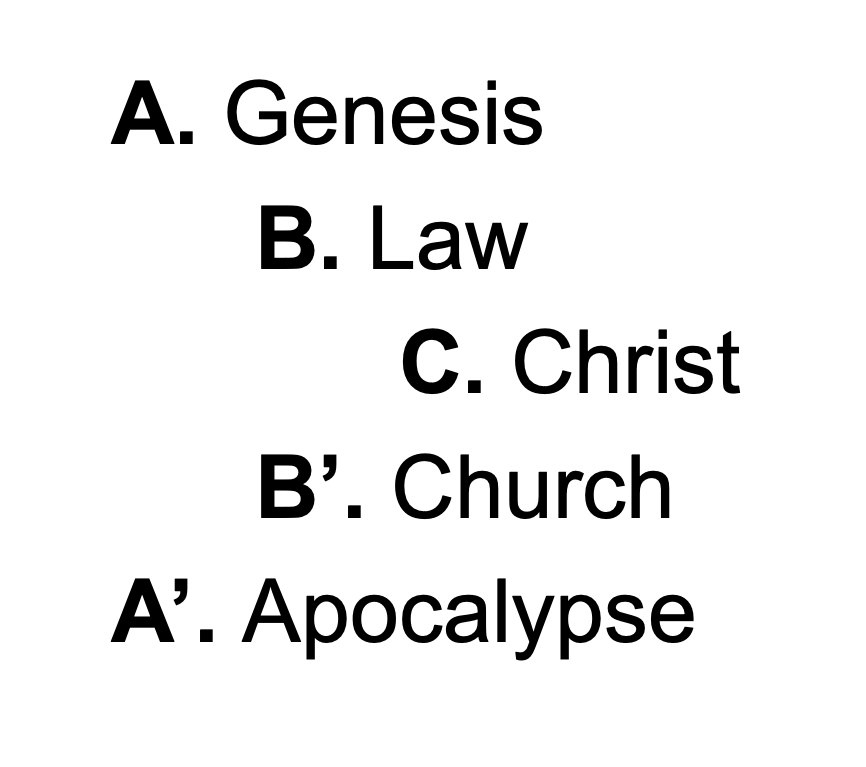
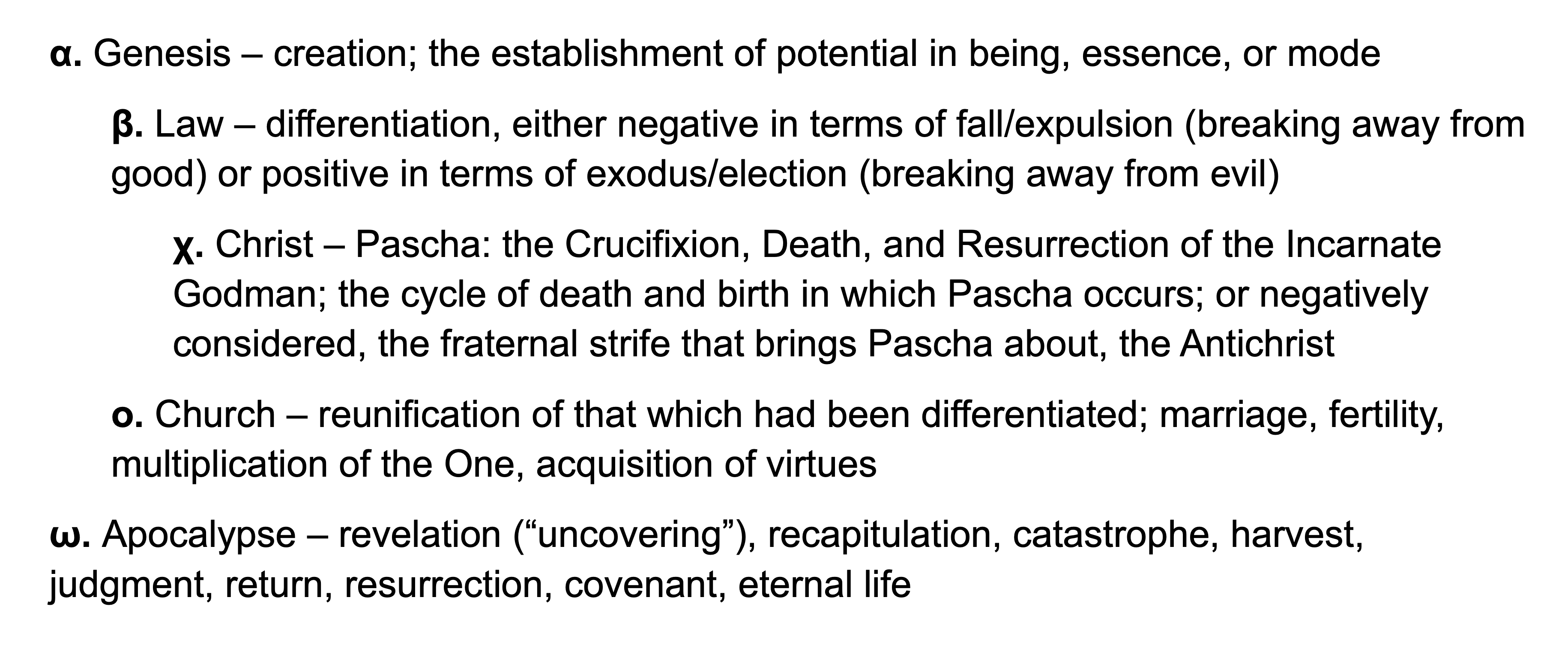




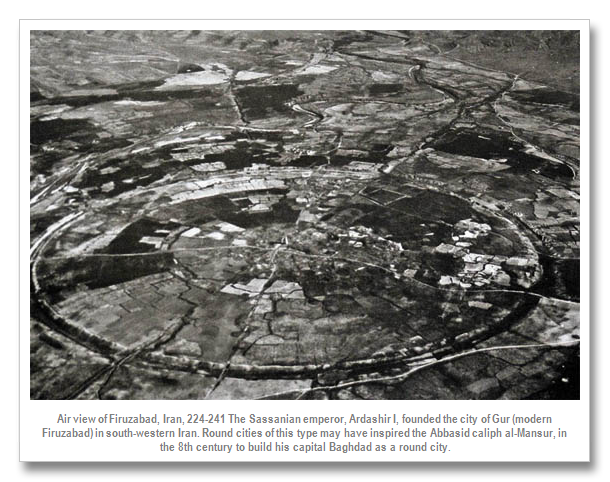


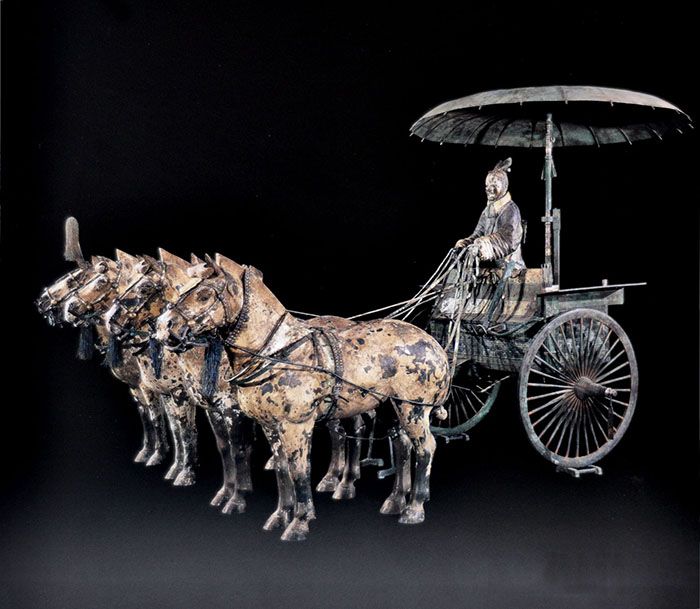
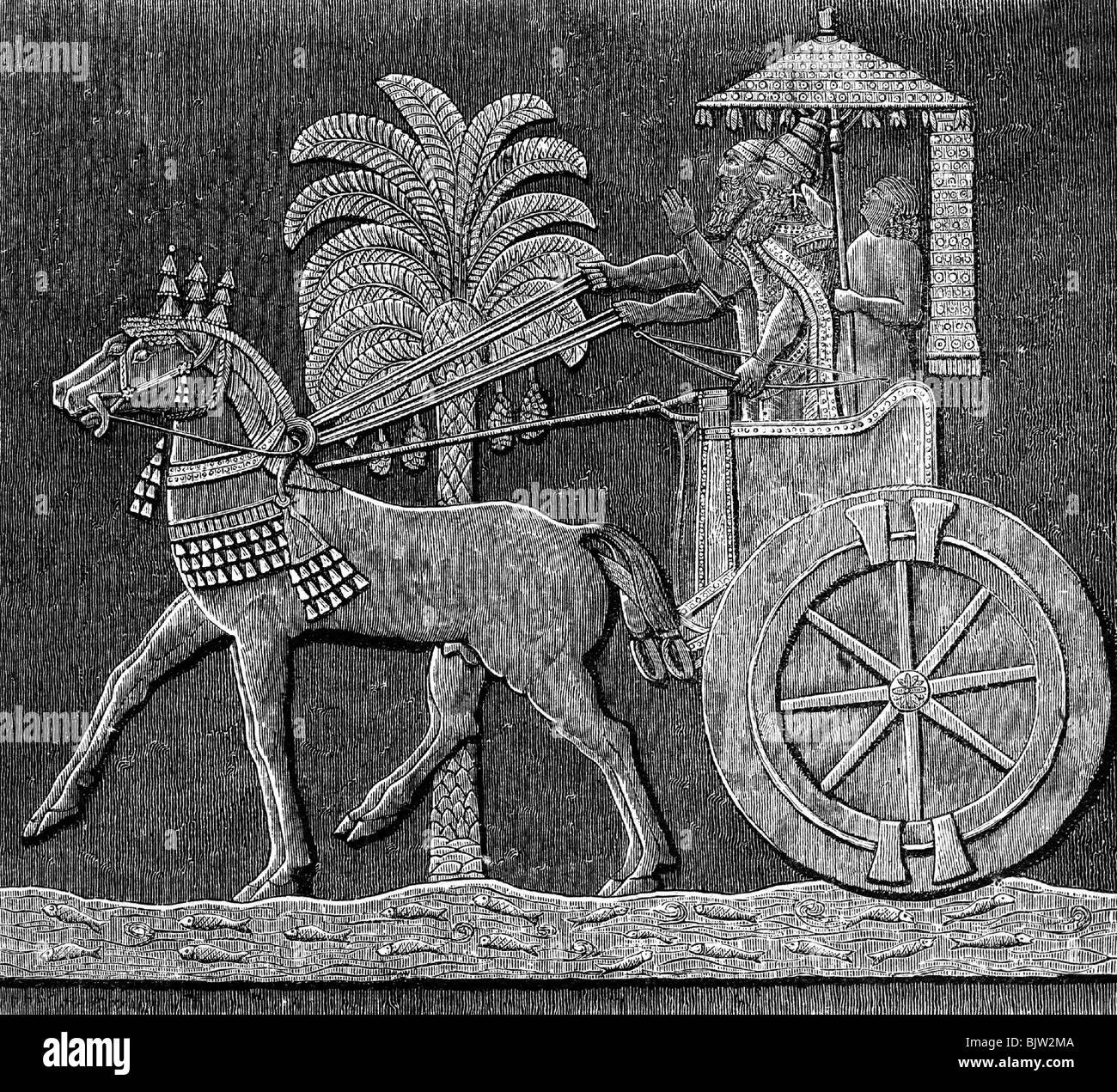






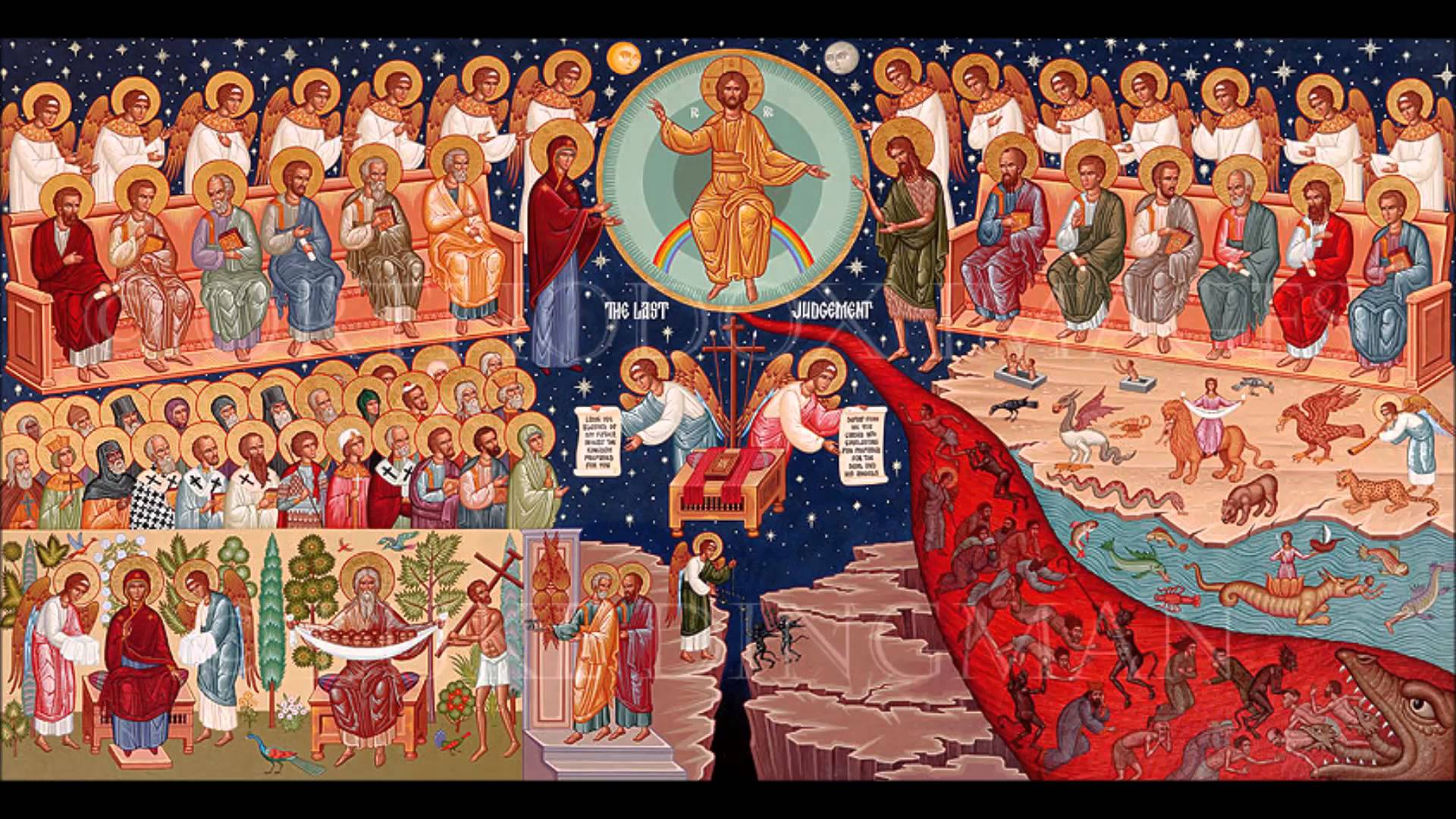











 A Stick in the Mud