Over the past week we have looked at the conflict between Rome and Carthage, beginning in the 1st Punic War starting in 264 B.C., and continuing down to the start of the 2nd Punic War in 218 B.C.
This series of conflicts would end up determining the balance of power in the Mediterranean and the destiny of each respective civilization. Win or lose, neither power would emerge the same.
One overarching concern I have the for the year is to show students that the various elements of civilization, be it economics, geography, or religion, are all part of a whole and have a symbiotic relationship to one another. The same holds true for the military. We ca easily make the mistake of viewing the military as functioning independently, but it will reflect the strengths and weaknesses from its home society.
First we looked at Rome’s values. These rural people tended to act a lot like modern farmers some of us may know — practical, persevering, plodding, disciplined in the routines of the year. The Romans made up their army not from professionals, but through a citizen militia. Their army fought in tribal/community groups in ways that did not allow individuals to stand out (which we looked at in our last update). Those who held high government offices often led in the field, which could serve to bind the average soldier not just to his fellow man, but also the government itself.
Carthage was older than Rome and different in character. They devoted their empire largely to trade, not agriculture. Nearly all their prominent citizens were merchants. Of course no moral difference exists between farmers and merchants, but they live different lives. We can imagine the majority of Carthaginians often going on the modern equivalent of business trips. If one is not around to mind the store, you have to hire someone to do it for you. Carthage’s military leaders came from a highly trained and well educated section of their population, but Carthage found it convenient and necessary to have the bulk of their forces be paid mercenary troops. This did not mean that Carthage had no military power. On the contrary they had a strong navy and a respected infantry. But their military had little to no direct connection to the society for which they fought. The diversity of their army could give them a great deal of flexibility, but it took a dynamic and forceful commander to hold such an army together.
These two titans did not clash for much of their history. Rome expanded first to the northwest, away from Carthage’s sphere of influence. But later, when Rome’s Italian empire drifted toward the south, it came close to Sicily, which Carthage relied upon for its grain. A spark in that environment could ignite a blaze, and the First Punic War resulted (264-241 B.C.). Rome showed incredible tenacity and adaptability by building a fleet and standing up to Carthage on Carthage’s turf — the sea. Setbacks did not seem to bother Rome. For example, in one 5 year stretch, Rome lost 700 ships at sea. No matter — they made more, and kept on coming.
Rome won that conflict, though narrowly, but it was how they handled that victory that helped set the stage for an even more devastating conflict, the Second Punic War (218-202 B.C.). They made several key mistakes, some of them tactical, and others moral:
After the First Punic War they offered lenient terms initially, which Carthage readily accepted. However, they then altered the terms of the peace and made it much tougher on the Carthaginians. Naturally the Carthaginians felt betrayed.
Rome’s more stringent terms may have meant that Carthage could not pay its mercenaries, who promptly revolted and spurred on a brutal civil war within Carthage.
While Carthage had its hands full internally, Rome took the opportunity to snatch a few of Carthage’s outlying provinces. In class I likened this to the foolishness of slapping a heavyweight champ while he is bound and gagged. You can get away with it, but only for so long.
In response, Carthage sought additional territory in Spain, far from Rome. Once again, Rome inserted itself and insisted on limited Carthage’s sphere of influence. Once again, Carthage agreed. But then, just as before, Rome altered the agreement and insisted on that Carthage refrain from attacking Saguntum, a key port city on the Spain’s east coast.
At this point, Carthage felt it had all it could take. Their army now had a daring commander at its head, Hannibal Barca, son of the great Hamilcar Barca, Carthage’s top general in the First Punic War. Rome could technically claim that Carthage attacked them in 218 B.C., but Rome had done much in the interval to provoke that attack. Eventually actions do have consequences. The bull usually charges when one waves the red flag.
The Second Punic War has more drama and defining moments than the first conflict. Again, however, I want the students to see the big picture, and connect smaller events to larger realities, and this will be the subject of our discussions this week.
This week we looked at rise of the Nazi’s in Germany during the 1920’s and early 1930’s.
How can we make sense of the rise of the Nazi state? While countries like Spain, Italy, the Soviet Union, Turkey, and Japan all experienced totalitarian regimes in varying degrees, none had quite the intensity and impact of Nazi Germany (though it would be fair to say that Stalin came close). What distinguished the Nazi’s from other regimes? How did a country with one of the richest cultural heritages in the world give themselves over to abject barbarism?
Naturally we think of the Nazi regime as one built on hatred and violence, and there is much truth to this. But unless we see that the strongest appeal of the Nazi’s for people was their fervent hope, hope for better Germany and a better world, we will miss the fundamental basis of their appeal.
Germany, of course, had only recently been a nation (since 1871), but before that greater ‘Germany’ had often been the stomping grounds of Europe. When the European powers wanted to fight they often came to the divided German principalities to do so, dating back to the 30 Years War in the early 1600’s. As a political and national unit, “Germany” lacked the strength to prevent it. The Versailles Treaty made the incredibly foolish blunder of humiliating Germany with its war guilt clauses. The Nazi’s vowed that they would erase the stain of humiliation the world had inflicted on Germany. If we can remember what it feels like to be humiliated, we remember too the anger and desperation we felt, and the desire to do nearly anything to rid ourselves of that wretched feeling. The Nazi’s claimed to be able to do just that.
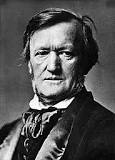
Hitler was obviously a cruel man, but he also believed that he had ‘high’ taste in art. Many in the Nazi party leadership, like Hitler himself, were either failed artists, minor poets, or small time authors of some sort or another. We saw Friday how Hitler was a big fan of opera, especially Wagner. Hitler himself said that one could not understand Nazism without understanding Wagner’s music. He filled his operas with romantic visions, grandiose themes and sets, and an idealization of antiquity. All this moved Hitler, but perhaps Wagner’s deepest appeal lie in his theme of purity and sacrifice, and escaping the bonds of this ‘sordid’ world to achieve perfection, a kind of worship of death.
In Wagner we see a link between fulfillment and extinction. In his Tristan and Isolde the two take a love potion, which also causes their death. Wagner’s mistress, Cosima von Bulow, styled their relationship as a “death-in-love.” Wagner became enamored with King Ludwig of Bavaria, and Ludwig of him. Ludwig promised Wagner, “Rest assured that I will do everything in my power to make up for what you have suffered. . . .I will procure for you the peace you desire in order that you may be free to spread the mighty wings of your genius in the pure aether of rapturous art.” Once again, we see in Wagner not only life imitating art, but the concept of art and purity. Hitler’s own death recapitulates in some ways the finale of Wagner’s Reinzi, where the hero, betrayed by those he trusted, dies as the city is engulfed in flames. So too did Hitler die, feeling ‘betrayed’ by his generals, in flames, as Berlin burned around him.
When we think of Nazi rallies, one can see links with Wagner. Many have commented on the theatrical nature of the rallies, as well as their over-the-top production. They are spectacles that seek to overwhelm and get people to lose themselves in the experience.
For the Nazi’s a great culture needed great art to embody and inspire it. They had this in the past, in the form of Bach, Mozart, Beethoven, Goethe, Schiller, and so on. They believed so strongly in this idea of a “healthy” culture that when the Nazi’s seized power, state doctors and ministers of culture often wore military uniforms. Both doctors and artists had the charge of bringing ‘health’ back to Germany, be that health racial, moral, or cultural. Doctors did not serve the individual, they served the “people,” the nation, the “race” as a whole, and this of course had horrible consequences later on.
In their eyes a ‘high’ culture would create a ‘healthy’ people, and a ‘healthy’ people would create an unbeatable army. This is why they banned ‘mongrelized’ and ‘decadent’ culture like jazz (whose biggest stars tended to be either African-American or Jewish). The Nazi’s didn’t just dislike the music, they viewed it as a threat to their national well-being. But the same horrible logic applies to the euthanization of the mentally unfit. Eventually we know that the ‘protection’ of the German nation meant the ‘protection’ of German blood. Eradicating that threat meant eradicating the Jews, who had done more than anyone else to ‘pollute’ German blood over the years. They had ‘infiltrated’ German society to a greater degree, and intermarried more than any other non-German ethnic or religious group.
Hitler, therefore, did not just promise an economic recovery, or to put people back to work. He promised a kind of spiritual redemption on a national scale, one that primarily would touch the soul of the people. Not surprisingly, he rose to power at a time when attendance in both Catholic and Protestant churches had been in decline. Spiritual power has always been more potent (for good or ill) than mere political power, and this helps us understand Hitler’s hold on Germany. We know how great art and music can move us. But when we ascend to such heights of feeling the possibility of good and evil both increase. Perhaps this is why a nation with such a rich cultural heritage could fall so far so quickly.
This has been a ‘heavy’ post so if you wish, join me and Looney Tunes in poking fun at Wagner, who certainly deserved it:
This week we wrapped up the Versailles treaty and introduced the “Roaring 20’s” in America, a time when the mood of the country shifted significantly away from the values of the Progressive Era, and what it meant to be an individual in America took on new meaning. We discussed a few different things:
1. The Automobile
We take cars so much for granted these days we might forget about how they changed so much of ordinary life when originally mass produced. How did cars change things?
They made us more personally independent and mobile in general, although in time this became especially true for youth. Cars became the equivalent of what making a name for yourself in the western frontier might have meant for generation in the 19th century. Americans love cars, and not just for convenience sake, but because cars still feed our sense of identity and independence.
The car freed people from geographical limitations. But this “freedom wasn’t free.” The increase of our geographical mobility lessened ties to our local communities and families. In an age less overtly Christian than previous ages, people would find their concept of community increasingly in the nation itself.
2. Prohibition
Prohibition failed in nearly every respect and must rank as one of our worst legal experiments. It’s genesis had to do with a weird conflagration of unusual interests. For example, the KKK backed prohibition as part of their overall anti-immigrant anti-Jewish agenda, but many women’s groups did as well. The political power of women’s movements grew in the years prior to Prohibition, which culminated in the 20th Amendment giving them the right to vote. In any case, Prohibition’s failure led to some good questions for us to discuss.
Why did it fail so badly?
Prohibition served as the last gasp of the Progressive Era, a time of energetic communal action to make things “better.” But one can wind things so tight for only so long. The war had exhausted much of that energy, and Warren G. Harding propelled himself to a landslide victory in 1920 based on his made up phrase, “A return to normalcy.” And yet we picked just this time to forbid people from doing something they had always done, a juxtoposition made all the more awkward by the increased independence given by the car and the nation’s newfound status as a global economic power.
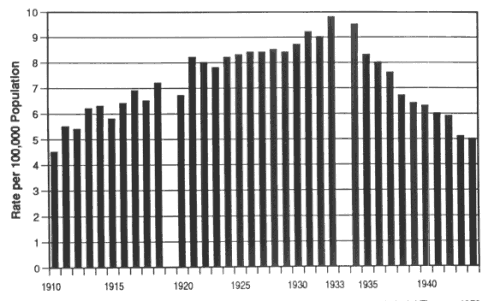
Here are a few indications of that failure, the first being crime rate:
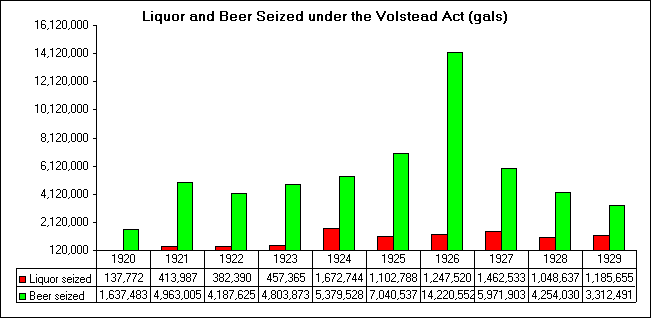
People were certainly not drinking less during Prohibition. . .
What comparisons can be made with the Drug Wars of Today?
Many have compared our current failures in the “War on Drugs” to our failure during Prohibition. Is such a comparison justified?
Despite some important similarities, alcohol has been used and abused in every age. It has formed the fabric of many religious rites and celebrations across time and space. Narcotics simply do not have the roots in human experience that alcohol does.
Another difference is that, while the vast majority use alcohol appropriately, narcotics destroy the lives of most all who use them.
This does not mean, however, that practical realities may not force our hand in some respect. Some in the class advocated strongly for much less tougher laws on even the strongest narcotics.
3. The Culture that Was the 1920’s
“Ragtime” reflected and helped fuel the image and feel of the 1920’s. Here is Scott Joplin’s “Maple Leaf Rag”
We can see how the tempo and bounciness of the song reflects the spirit of the times. But the innovation of “Stride Piano” in the later 20’s only fueled this sense of ‘movement.’ Here is James Johnson’s famous “Carolina Shout.” Note the active and “bouncy” left hand in the bass clef, and how he plays around with standard meter. The herky-jerky unpredictability of the song can be seen in sections like .49-1:12. In the topsy-turvy world of prohibition, cars, women voting, and so on, here was music to fit its time.
To see a modern stride pianist where you can visually get a sense of the movement in the left hand, see the video below (fast forward to the 2:00 mark if you get impatient:)
Most of the time the right hand leads the way in piano music, but here the left steals the show, which again makes things seem upside down. Music and society connect once more.
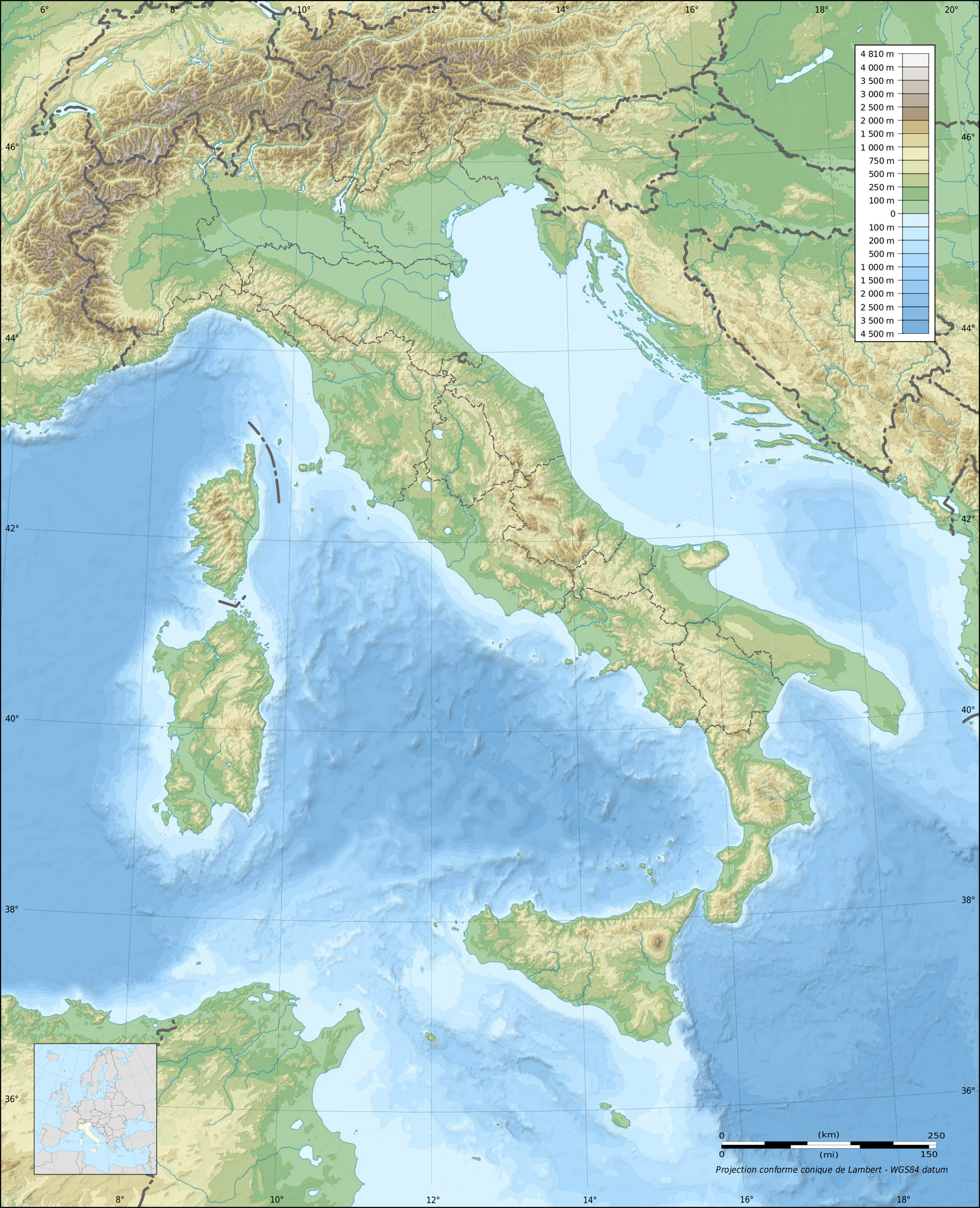
This week we started our unit on the Romans, where will remain for the rest of the year. We began by looking at Italian geography and made the following observations:
Roman civilization began not in the more fertile southeast of Italy, but in the more challenging south-central area near Rome itself. We have met the concept that civilizations flourish not in ideal circumstances, but moderately challenging ones, as in other civilizations like Egypt.
We noted that unlike Greece, Italy favored more agriculture. While Italy is a peninsula and never too far from water, it has a fairly even coastline without many ports. The best ports are in the southeast, but Rome did not get there until nearly five centuries of its history had elapsed. By that time, Rome had a thoroughly rural bent to their way of life.
If one stands in Rome, it seems the land tended to run downhill in a north-eastern direction. If true, even slightly, this may help explain why Rome’s conquests ran initially towards that direction. This in turn meant that Rome would not have any significant interaction with the naval oriented cultures of Greece and Carthage until around 300 B.C. So, while Greece and Rome would inevitably share certain similarities due in part to their common geography, Rome developed along different lines than Greece in the early part of its history.
Here is a topographical map of Italy:
This agricultural bent of Rome shaped their civilization in ways similar to other agriculturally oriented areas, like Egypt. Just like rural cultures today, Rome based much of their way of life around tradition, the past, routine, and practicality. Both urban and rural cultures have strengths, but a key question for Rome would how they would react when they did interact with the more cosmopolitan Mediterranean. When it comes, this clash will determine the fate of Rome, Greece, and Carthage. As Rome conquered others, they could not avoid confronting the possibility of changing their own identity.
We likened Rome to a young farm boy (we’ll call him ‘Jim’)who goes off to New York City for college, and postulated three different outcomes.
Benign Awkwardness — Jim doesn’t really fit in city life, and knows it. He try particularly hard to fit in either, and soon wearies of his clumsy attempts. He keeps his rural identity, plugs along more or less alone at school, goes home on weekends, and returns home after graduation.
A Happy Medium — Here Jim keeps his roots, but also approaches NYC with an open mind. He learns to see the good and bad of both city and rural life, and picks and chooses from both like a cafeteria menu. The experience changes Jim, but he learns to enjoy both environments without changing who he fundamentally is. This ideal reaction, however, is probably the least likely of the three possibilities I list here.
Drink from the Fire hose — Jim becomes completely enamored with his new surroundings. He chucks his rural identity and jumps in with both feet into city life. Tragically, he doesn’t even manage to attach an urban identity to himself. He so obviously ‘tries too hard’ that he fails to find acceptance, and this rejection only makes him try harder. His actions leave him with no identity at all.
How Rome faces this challenge will be the subject of our study in the weeks to come.
Next week we will look at Roman religion and the extreme emphasis on the practical over the theoretical. Again, it will help us if we remember that Rome was a nation of farmers, who often have little use for theory and speculation, and who focus on soil, crops, and so on.
Ancient chroniclers agree that the Romans were a religious people, unlike the Greeks. But their sense of religion was also much different than in Egypt, for example, another ancient “religious” people. In Egypt, their beliefs filtered down into the government, architecture, and where they lived. Their literature is filled with stories of the gods. They wrote psalms/hymns of praise to their gods.
We see nothing like this in Rome. The Romans had devotion to their religious duties, but they saw “religion” usually in terms of “checking off the box.” They would do what they needed to do, but rarely did their religion touch their souls, and a variety of stories from their past illustrate this.
Machiavelli recounts a story from Livy, where a Roman general wanted to attack the enemy, which I recount below. . .
The consul Papirius, in conducting a war against the Samnites, [saw a favorable moment to fight], and ordered that the priests take the auspices. The birds, however, did not eat. But the chief priest, seeing the great desire of the army to fight, and their confidence in victory, reported to the consul that the auspices were in fact favorable. But one of the assistant priests told the consul that the chief priest lied. . . . And so the consul put the Chief Priest in the front ranks of the army, and it happened by chance that a Roman arrow struck the chief priest, whereupon he died. When Papirius heard this, he declared that whatever wrath the gods felt toward them had been appeased, and thus by apparently to accommodate his designs to the auspices, Papirius gave battle without giving the appearance of neglecting his religious duty.
Was the general ‘impious?
According to the Romans, not at all. He did his duty. He took the sacrifices. A priest told him that the gods approved. And they won.
Machiavelli relates another story. . .
Appius Pulcher acted just the contrary way in Sicily during the first Punic war; for wishing to fight the Carthaginian army, he caused the priests to take the auspices, and when they reported that they did not eat, he said, “Then let us see whether or not they drink,” and threw the birds into the sea. He then went into battle and was defeated, for which he was punished in Rome.
The historian Livy goes on to say that Pulcher was not punished for losing, but for his brazen impiety. Paprius “kept up appearances,” whereas Pulcher did not. But I have doubts. If Pulcher had won the battle, would he have been punished? What these stories show, I think, is that Rome really worshipped Rome itself. All things bowed to glory of Rome. Was then their religion a mere smokescreen? We know, for example, that Roman religion technically forbade offensive war of any kind, yet they became one of the greatest conquering empires they world has ever known. Something it seems, gave at some point.
This week we wrapped up our look at ancient Greek civilization. The death of Alexander the Great allowed for the Greek city-states to try and rebel once more from Macedon. They did not have the strength to do it on their own, so they asked for help from Rome.
As the Greek’s found out, however, it’s dangerous to ask Rome over to visit. They had a knack for overstaying their welcome. From around 200-150 B.C., Greece became a satellite of the then mighty Romans. Their culture lived on in a kind of degenerated way afterwards (see Luke’s comment in Acts 17:21), but as an independent political entity, they were done.
As we leave Greece and introduce Rome I wanted the students to think about the following choice. I chose basketball because of March Madness, but one could apply the same concept to other areas of life. In class we had fun thinking about the ultimate hamburger, for example.
Choice #1
You will be given the ability to dunk, but only one time. However, this dunk can be the most spectacular dunk you can possibly imagine. You can jump from half-court, do a double summersault reverse spin, twirl, reverse jam — whatever you can think of. Furthermore, you will execute this dunk in stadium full of people, and it will immediately go viral on You Tube. The dunk will be forever known as the greatest dunk of all time.
Or
Choice #2
You will be given the ability to dunk as often as you like. You will be able to dunk in games, but the dunks will be unimpressive, and not noteworthy in any way. But it will be a dunk, and you will be able to do it whenever you wish.
This choice illustrates one of the differences between Greece and Rome. In their heyday Greece ended up bequeathing more towards the formation of the future than perhaps any other civilization. They practically invented science, literature, drama, democracy, and so on. But their run was relatively brief. They followed Neil Young’s dictum, “It’s better to burn out than fade away.” They compressed most of their brilliance into about a 100 year period of practically unmatched excellence, but the intensity of the heat may have led to their fire putting itself by devouring all the oxygen around them.
Rome will have many similarities with Greece, as we might expect from sharing the Mediterranean basin. But I think that one of their differences is that Rome would not have agreed with Neil Young. They were good, sometimes very good, at most things they tried. And they managed consistently to achieve this level of “very good” for much longer than Greece maintained their “excellent” status. But, the Romans never achieved the level of brilliance of Greece.
What kind of dunk the students choose will probably reflect what side they will defend in one of our year’s great debates on whether Greece was superior to Rome, or vice-versa.
Next we will examine Roman civilization. As usual we will begin with geography. If we look at a topographical map of Italy, how might we expect Italian geography to influence Roman civilization? How might this differ from how Greek geography influenced the Greeks?
We all know that peace treaties have a shaky track record. When wars end we hope that the suffering might mean something, that it might translate into a political order that helps ensure that history does not repeat itself. And yet, often these treaties fail. We might think of the numerous wars between France and England, for example. Various forms of “Punic Peaces” work, whether they take the form of utter destruction or sending Napoleon to St. Helena. Most agree, however, that when we think of “peace” we often have something loftier in mind.
Some treaties do work. The Civil War will not restart anytime soon. Japan and the U.S. have been friends since 1945, and the same is true of our relationship to West Germany/Germany. But many don’t work, and fewer treaties failed more spectacularly than the Treaty of Versailles after World War I.
Historians offer many theories to explain why treaties fail in general. The typical mistakes usually fall into a few categories or patterns:
1. Failure to View the War as an Organic Whole
Though it may seem artificial, I think that major events should be viewed through a narrative lens. World War I had its own prologue, beginning, middle, and end. Wars tend to take on a life of their own once they get started. As the “story” changes shape one can easily forget how it all started. But this is a mistake. A peace treaty should serve as the end of a story that had a certain beginning and middle. If the end has nothing to do with the beginning, people will hate the ending and demand a rewrite, or at least a sequel.
I think this is one key reason why many treaties end up being no more than pauses in the action. Combatants want an intermission, but don’t want the end to come just yet. For them, there remains more to the story.
I think the victors in W.W. I would be strongly tempted to forget this principle. Any analysis of the causes of the war would have to blame a variety of factors and nations. Certainly one could blame Germany mainly for the causes of the war, but other nations had their part to play as well. Yet the combatants fought the war so grimly, and the death toll rose so unimaginably, that the victors would almost certainly think only of the fighting (the middle) and forget the beginning of the story. The ending, then, would not fit within the story as a whole.
2. Failure to Look Ahead
Perhaps one can take my “story” analogy too far, because if we try and keep a war purely contained as its own entity, we miss the inevitable ripple effects that have spilled out into society because of the conflict. Thus, a peace treaty has to deal with the war behind and look ahead to the world it made. This need to “look ahead,” however, does not come easily. We rarely see the nose on our own face, and lacking omnipotence, are left somewhat in the dark.
Treaties usually handle the “physical” aspects of ending wars such as reassigning territory, reparations, etc. but rarely consider the psychological aspects. The horrors of the conflict imprint themselves on our minds, and the victors often want to “close the book” on that period as soon as possible. We want to move on, relax, be happy. The victors feel this way, at least. But often the losers don’t want to move on. They often want to dwell on the pain and humiliation they feel. They want to be heard, and will not want to “move on.” Exhaustion on the side of the victors, more than apathy or ignorance, can be society’s greatest foe at this stage.
I think a good example of this is The Congress of Vienna, which decided that shape of Europe after the Napoleonic Wars of 1797-1815. Millions died as the French Revolution convulsed the world and every monarch knew their days might be numbered. My interpretation is that the assembled powers, smarting under years of war, tried to put Pandora, i.e. the French Revolution, back in the box. They suppressed popular movements, conceptions of “rights” — anything that smacked of the Revolution, and threw the baby out with the bath water. Some might argue that the Congress of Vienna worked to keep the peace throughout the 19th century, but to my mind the Revolutions of 1848, The Crimean War, the wars of Italian and German Unification, the conflict between Turkey and Russia, and the eventual explosion that was World War I say otherwise. Pressure cookers explode sooner or later.
3. Avoid Too Many Mixed Messages
Try as we might, mixed messages can’t be avoided. As parents we give lip service to the ideal that we treat our children equally, but then reality sets in. The age, gender, and personality of our children all play a role in how we parent. We modify our expectations and begin to tailor certain things to certain children. Children pounce on these discrepancies immediately and bemoan their fate, but if parents keep their different expectations reasonable and at least mostly clear, we can keep the ship afloat.
Every peace treaty should have justice in view, but practical reality will always intervene. Even the justly victorious must account for the fallenness of the world and the messiness of reality. The vanquished will seize upon these crossed signals of justice and cry foul, but if the signal mixing is not too serious, they deal with it.
Problems come when the victors take a sanctimonious stance. The infamous “War Guilt” clauses of the Versailles Treaty did just this. Germany had to assume full blame for everything, despite the fact that no country had their hands clean during the conflict. The infamous Article 231 reads,
The Allied and Associated Governments affirm and Germany accepts the responsibility of Germany and her allies for causing all the loss and damage to which the Allied and Associated Governments and their nationals have been subjected as a consequence of the war imposed upon them by the aggression of Germany and her allies.
Versailles also tried to reorder Europe along the idea of “national self determination,” and the elimination of empires. Such was President Wilson’s grand vision for peace. So, the war’s aftermath saw the creation of Czechoslovakia, Poland, Hungary, etc. Except for Germany — Germans don’t get to be “self-determined.” Some Germans went to Czechoslovakia, others to Poland, others faced occupation by the French. We can compare the following two maps, the first showing the political divisions, the next, the ethno-linguistic ones, and the differences reveal themselves.
Overseas England and France kept their empires, however, but not Germany. Neither did the U.S. give up its interests in the Philippines. The gaps between “What we say,” and “What we do” grew very large at Versailles for the allies, and Germany noticed.
4. Don’t Kick them when They’re Down
This applies to Germany, but also Russia. The Communist Revolution threw Russia into a tumult and made them persona non grata at Versailles. They too lost big chunks of territory to Poland. Both Germany and the Soviets had little to no choice on accepting the terms given their immediate internal domestic realities . But both would seek to, in their mind, “set things to rights” as soon as they had a chance. In Europe’s case, it took about 20 years for this to happen.
This week we examined the brief and turbulent life of Alexander the Great, a man who has enthralled people for centuries. No one conquered more people quicker than he. Of course, his early death immortalized him and helps us tend to see his successes.
I offered the students four different ways of thinking about Alexander, adopted by different historians in different times and places.
Historian J.F.C. Fuller sees in Alexander one the great men of the ancient world. In him we see statesman, philosopher, and man of action all rolled into one. He at times sunk to the morals of his time, but often rose above them.
Some see Alexander as the embodiment of a romantic ideal, a young boy out to change the world, an idealist visionary. A variation of this view would be one that does not see Alexander in primarily moral terms, but views him as a “force of nature.” We do not call a tornado good or bad, but we cannot help but stand and stare, perhaps even in spite of ourselves.
Some see him as a great military leader, but a failed statesman. Great generals win battles, but great statesman get men to transform their view of the world. Regardless of how we view Alexander’s desire to unite East and West, he failed to sell this to his men and his dream collapsed.
Still others, like Victor Davis Hanson, see in Alexander a common thug, a man who lived to kill. He massacred Thebans and most in Tyre after their defeats. Like Stalin, most of those close to him ended up dead. He demanded practices like prostration, and may have believed what his mother told him, that he was the Son of Zeus. Hanson sees admiration for Alexander as dangerous, a symptom of boredom and our will to escape this boredom through death.
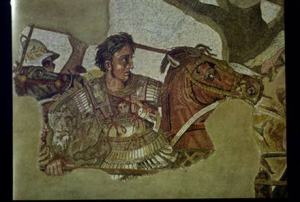
This image of Alexander, though made long after his death, captures something of his madness, focus, brilliance, and lust for conquest:
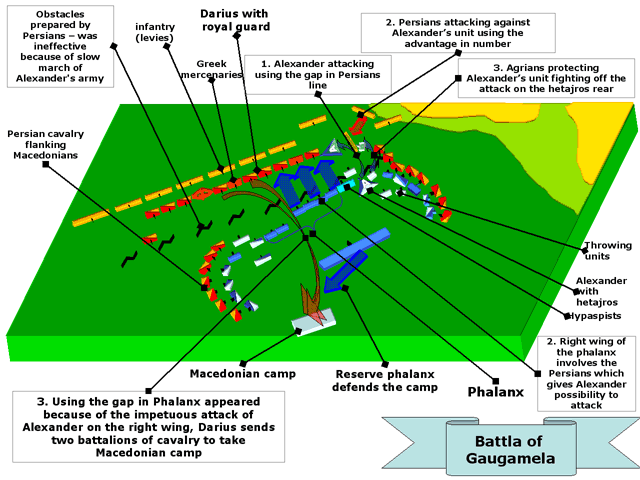
The battle that defined Alexander’s life and career was Guagemela in 331 B.C.
He had already beaten the Persians decisively twice, but this time Darius III, king of Persia, seemed to have learned his lesson. He choose a wide open plain for battle, which could maximize his numeric advantage which was probably at least 5-1. He brought with him chariots, one of the fearsome weapons of the ancient world. He gave more heavy weaponry to his infantry.
Many of Alexander’s advisors urged him to wait, to go around, or perhaps fight Darius at night. Alexander would have none of it. He would not, he argued, “steal his victory.”
How did an army of around 45,000 defeat an army at least 5x its size?
Part of understanding Alexander’s victory is to see that many problems that most generals traditionally worried about Alexander felt he could ignore. For example, most generals would take troops to protect supplies, but Alexander didn’t mind if the Persians raided his supplies. If he won the battle, he could march straight to Babylon and have all the supplies he needed.
Alexander also believed that he make up for his lack of numbers by speed. In fact, he probably hoped that the deficiency in his own numbers might provoke the Persians to over-commit themselves in a certain area, leaving a gap in their lines. By a lightning quick cavalry thrust from what may have been the best cavalry in the known world at the time, Alexander could cause panic and confusion in the ranks, and once that set in, Persia’s numbers would work against them. Imagine a horrible accident on the interstate that forces people to turn around and redirect their route. In that case, this redirection would be much more easily accomplished with fewer numbers. The large amount of cars, or people in our case at Guagemela, would make for nightmarish confusion.
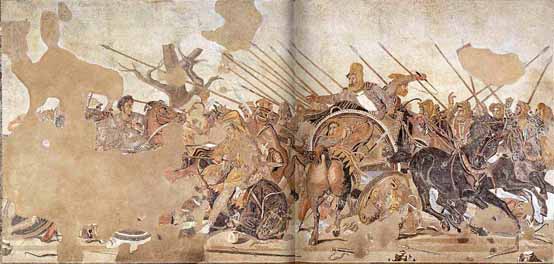
Here are a couple of depictions of how things went.
It was the gap in the Persians indicated by the map directly above, that gave Alexander the opening he needed. He plunged through and rode right at Darius, who lost his nerve and fled.
I confess that I am cheating a bit with the image above, because most think that this mosaic depicted Darius’s flight at the Battle of Issus two years earlier. But accurate or not, Darius fled the scene in both battles, and this, just as much as Alexander’s cavalry charge, cost the Persians the battle.
Guagemela stands for all time as Alexander’s most impressive victory and crowning achievement. It also may have marked a turning point in his character. Darker elements always latent in him rose to the surface much more often than before.
“Whatever we may think of Alexander–whether Great or only lucky, a civilizer or a sociopath–most people do not regard him as a religious leader. And yet religion permeated all aspects of his career.”
This opening line of the book blurb for F.S. Naiden’s Soldier, Priest, and God: A Life of Alexander the Great, sucked me right in. I too had viewed Alexander nearly solely through a narrow political and moral lens, and had never really considered his religious views and acts as central to his successes and failures. The book was too long for me. I would have preferred if he assumed reader knowledge of the standard elements of the Alexander narrative. But what Naiden draws out from his expertise in ancient religious rituals helps us see Alexander afresh in certain ways.
Historians tend to think about Alexander along three standard deviations:
Great visionary and magnificent strategist, one of the truly “Great Men” that, naturally, and tragically, few could truly follow
Fantastic military leader with flawed political skills. After Gaugemela in 331 B.C., his political skills become more necessary than his military skills, and so his fortune waned and his decisions got worse
A thug and barbarian who lived for the chase and the kill. He never really changed, or “declined,”–he always was a killer and remained so until his death.
Soldier, Priest, and God tries to bypass all of these paradigms, though touches on each in turn. Naiden’s Alexander is a man who mastered much of the trappings and theater of Greek religion, which included
The hunt
Prowess in battle
A religious bond with his “Companions,”–most of whom were in the elite cavalry units.
Responding properly to suppliants
As he entered into the western part of the Persian empire, i.e., Asia Minor, he encountered many similar kinds of religious rituals and expectations. The common bonds and expectations between he and his men could hold in Asia Minor. But the religious terrain changed as Alexander left Babylon (his experience in Egypt had already put some strain between he and his men, but it could be viewed as a “one-off” on the margins), and he had to adopt entirely new religious forms and rituals to extend his conquest.
Here, Naiden tacitly argues, we have the central reason for Alexander’s failures after the death of Darius. Some examples of Naiden’s new insights . . .
Alexander’s men did not want to follow him into India-they wanted to go home. Some view this in “great man” terms–his men could not share Alexander’s vision. Some view this in political/managerial terms–his army signed on to punish Persia for invading Greece. Having accomplished this, their desire to return was entirely natural and “contractual.” Naiden splits the horns of this dilemma, focusing on the religious aspects of their travels east.
Following Alexander into the Hindu Kush meant far fewer spoils for the men. Some see the army as purely selfish here–hadn’t Alexander already made them rich? But sharing in the spoils formed a crucial part of the bonds of the “Companions.” The Companions were not just friends, as Philip had created a religious cult of sorts of the companions. It wasn’t just that going further east would mean more glory for Alexander and no stuff for his men. It meant a breaking of fellowship and religious ritual. This, perhaps more so than the army being homesick, or tired, led to Alexander having to turn back to Babylon.
Alexander killed Philotas for allegedly taking part in a conspiracy against him. Others see this as either Alexander’s crass political calculus, or a sign of megalomania, or paranoia. Naiden sees this action in religious terms.
Philotas was a Companion. To execute him on the flimsy grounds Alexander possessed could amount to oath-breaking by Alexander, a dangerous religious precedent. “Companionship” bound the two together religiously, not just fraternally.
Philotas did not admit his guilt but presented himself as a suppliant to Alexander and asked for mercy. True–not every suppliant had their request granted, but Philotas fit the bill of one who should normally have his request met.
Killing Philotas, and subsequently Philotas’ father Parmenio (likely one of the original Companions under Philip), should be seen through a religious lens and not primarily psychologically (Alexander is going crazy) or politically (politics is a dirty business, no getting around it, etc.).
We also get additional perspective on the death of Cleitus the Black. We know that he was killed largely because of the heavy drinking engaged by all during a party. We know too that Cleitus had in some ways just received a promotion. Alexander wanted him to leave the army, stay behind and serve as a governor/satrap of some territory. Why then was Cleitus so upset? Naiden points out that Alexander had not so much promoted Cleitus, but made him a subject of himself, as well as exiling him from the other Companions. The Companions shared in the spoils equally, and addressed each other as equals. As satrap, Cleitus would have to address Alexander as king and treat him as other satraps treated the King of Persia. Hence, the taunt of Cleitus (who had saved Alexander’s life at the battle of Granicus), “this is the hand that saved you on that day!” came not just from wounded pride, but as an accusation against Alexander’s religious conversion of sorts. Alexander had abandoned the “Equality” tenet of faith central to the Companions.
We can imagine this tension if we put in modern religious terms (though the parallels do fall short):
Imagine Alexander and his men are Baptists of a particular stripe. They grew up in Sunday school, reciting the “Baptist Faith and Message.” They join Alexander to punish Moslems who had tried to hurt other Baptists.
As they conquer, they link up with other Baptists. There are Southern Baptists, Regular Baptists, Primitive Baptists, and so on. They go to worship with these people, and while it might be a bit different, it is still familiar. All is good.
Flush with success, the go further. Now they meet more varieties of Protestants–some non-denominational churches, Lutherans, Presbyterians, some Assemblies of God, etc. Ok, from a traditional Baptist perspective, it’s getting a little weird, but we are still more or less on familiar ground.
Now we go to Egypt and–what!–Alexander seems to be joining in on a Catholic service. Ok, this is bad, but at least very few in the army saw this, and we don’t have to spread the news.
Now as we get into Bactria and India Alexander seems to be converting to something unrecognizable. He seems to be breaking with the Baptist Faith and Message and repudiating his past. Or is he? He might be converting to Islam, or what else, I have no idea. We can no longer worship with him. In hindsight, his killing of Philotas was a decisive move in this “conversion.”
Naiden points out that Alexander never officially becomes king of Persia, and attributes this largely to the religious ideology behind the Persian monarchy that Alexander could not quite share or, perhaps understand. As he went into Bactria and beyond, not only had he grown religiously distant from his men, but he could no longer understand or adapt to the religions he encountered. He found himself constantly torn between acting as a king to those he conquered, and as a Companion to his army. In the end he could not reconcile the two competing claims, and perhaps no one could.
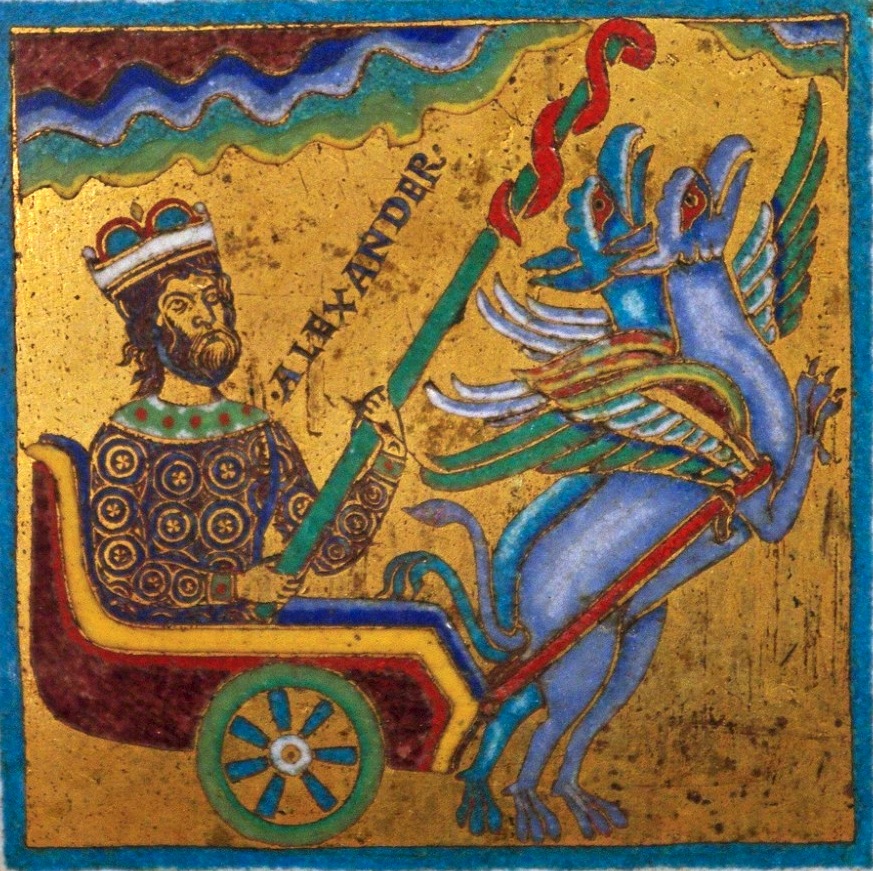
Alexander stands as perhaps the most universal figure from the ancient world. Obviously the Greeks wrote about him, as did the Romans, but stories cropped up about him in India, Egypt, Israel, Byzantium, and within Islam as well. Naiden mentions this but fails to explore its meaning. Naiden has a remarkable ability to find facts and present a different perspective. But he never explores how and why most every ancient and pre-modern culture found in Alexander something universal. Though it will strike many as strange the most common image of Alexander has him not riding into battle on his famous horse, but ascending into the heavens, holding out meat so that large birds will carry him up into the sky.
This image comes from a medieval Russian cathedral:
The story comes from the famous Alexander Romance, and runs like so:
Then I [Alexander] began to ask myself if this place was really the end of the world, where the sky touched the earth. I wanted to discover the truth, and so I gave orders to capture the two birds that we saw nearby. They were very large, white birds, very strong but tame. They did not fly away when they saw us. Some soldiers climbed on their backs, hung on, and flew off with them. The birds fed on carrion, so that they were attracted to our camp by our many dead horses.
I ordered that the birds be captured, and given no food for three days. I had for myself a yoke constructed from wood and tied this to their throats. Then I had an ox-skin made into a large bag, fixed it to the yoke, and climbed in. I held two spears, each about 10 feet long, with horse meat on their tips. At once the birds soared up to seize the meat, and I rose up with them into the air, until I thought I must be close to the sky. I shivered all over due to the extreme cold.
Soon a creature in the form of a man approached me and said, “O Alexander, you have not yet secured the whole earth, and are you now exploring the heavens? Return to earth quickly, or you will become food for these birds. Look down on earth, Alexander!” I looked down, somewhat afraid, and I saw a great snake, curled up, and in the middle of the snake a tiny circle like a threshing-floor.
Then my companion said to me, “Point your spear at the threshing-floor, for that is the world. The snake is the sea that surrounds the world.”
Admonished by Providence above, I returned to earth, landing about seven days journey from my army. I was now frozen and half-dead. Where I landed I found one of my satraps under my command; borrowing 300 horses, I returned to my camp. Now I have decided to make no more attempts at the impossible. Farewell.
Here we have the key to understanding the meaning of Alexander as the ancient world saw him.*
The person of a king becomes the focal point of “bodies.” For example, a single, jobless, man living alone in his parent’s basement has only himself as a “body.” His identity includes only himself–his identity includes nothing outside of himself. Thus, he grows stale. Now imagine said man gets a job. He adds the identity of others to his own. If he gets married, now he has bound his identity to another person. This is why marriage has always been viewed as a religious rite within almost every society past and present, Christian or otherwise. Only God/the gods can effect this kind of change in a person. Then the couple has children, and the man has added more “body” to himself. Then one day he has grandchildren and ascends to the level of “paterfamilias.” His “body” includes multiple families.
A king of Macedon has more “body” than the average Macedonian. As we have seen, Macedonian kingship didn’t function like kingship elsewhere, either politically or religiously. Still, kingship has roots in every culture. But everyone knew that this kind of adding of body involved something of a risky and religious transformation–something akin to marriage. If one goes too far you risk losing everything. We can think of Alexander as holding folded laundry in his hand. He bends down to pick up a book, and can do that, then a plate, and it works, then a cup, etc.–but eventually one reaches a limit as to what you can add to oneself, and everything falls to the floor.
I have written before about the biblical image of the mountain in Genesis. Adam and Eve seek to add something to themselves that they should not. As a result they must descend down the paradisal mountain, where more multiplicity exists, and less unity. This leads to a fracturing of their being, and ultimately violence. This is King Solomon’s story as well. He receives great wisdom–the ability to take in knowledge from multiple sources and achieve penetrating insights (many scholars have noted that the biblical books traditionally ascribed to him contain tropes and fragments from cultures outside of Israel). But he goes too far–he strives for too much multiplicity, too much “adding of body,” as is evidenced by his hundreds of marriages to “foreign women.” This brings about the dissolution of his kingdom, the same result Alexander experienced after his own death. But before Alexander lost his kingdom, many would say he lost himself, with executions, massacres, and other erratic behavior. Like Solomon, he lost his own personal center in his attempt to add body to himself ad infinitum.
The story of the Ascension of Alexander hits on these same themes. He tries to ascend to a unity of the multiplicity through the multiplicity itself (note the use of body in the form of the meat to accomplish this). But it can never work this way. When you attempt to ascend via a Tower of Babel, you get sent back down.
The universality of this problem manifests itself today in these two kinds of people:
Purists who believe that even the slightest deviation from an original aim or interpretation destroys everything. Things here get so dry and lifeless that it brings the “death” of the desert.
Compromisers who want to stretch anything and everything to fit anything and everything. No exception ever endangers the rule–everything can always be included. Here you have the flood–undifferentiated chaos with nothing holding anything together. Eventually you reach points of absurd contradiction, and then, conflict.
Alexander’s life fits this tension between purity/unity and multiplicity:
He could take in Greece
He could take in Asia Minor
Perhaps he could just barely take in Egypt
But beyond that–though he could “eat” other kingdoms further east, they certainly didn’t agree with him.
Indeed, why invoke a blessing from God on food before we eat? We ask, in fact, for a kind of miracle–that things dead might be made life-giving. We too ask for help on the potentially treacherous path of making that which is “not us” a beneficial part of our being. We cannot have real unity without multiplicity, and vice-versa. But no blessing will save us from every deliberate choice to drink from the firehose and ingest foreign gods.
Dave
*Understanding this episode in The Alexander Romance will clue us in on how to read ancient texts. We should not assume that the ancients believed that this story was true in a scientific or “literal” sense. It was true in a more profound, metaphorical, and spiritual sense.
We moved forward with W.W. I this week, and this coming week we plan to discuss trench warfare and its companion, chemical warfare.
The map below shows Germany did have Turkey and Austria as allies, but both were very weak, leaving Germany to carry the overwhelming part of the burden against England, France, and Russia. They knew they could not win a long a protracted war. Trench warfare would do nothing if not slow the war down to a grind, and Germany knew that this would work against them.
Germany came up with two tactics to try and tip the scales in their favor: Chemical and Submarine Warfare (we will discuss sub warfare next week).
Chemical weapons were made with gas heavier than air. The idea was that the gas would sink down into the trenches, killing men and perhaps, with high enough concentrations, make the trench unlivable. This would flush them out of the trench, where they were sitting ducks. Germany knew that they could not win a long war. If they wanted victory, they believed, they needed a way to break the stalemate sooner rather than later. Mustard Gas seemed like it might do the trick.
England ruled the waves, and this allowed them to continually supply their troops in France and keep their economy moving forward. Germany’s pre-war challenge to England’s naval supremacy fell short, but subs were a cheaper way to try and eliminate that lead.
Immediately the allied powers regarded both kinds of weapons as unfair and unlawful. Most nations today agree that chemical weapons should be banned, but submarine warfare stuck around and became standard practice. Why do we make this distinction? Is it justified?
In regards to chemical warfare:
It is a different form of killing, but it is a qualitatively different form? Does anything separate being killed by a bullet and killed by gas? Some argue that chemical weapons stay around and linger in the soil. But what about unexploded land mines? Should land mines also be banned? In fact many argue that international treaties should do just that.
Sub Warfare was regarded as cowardly and ‘unsporting.’ It is also was patently ‘unfair,’ as it involved hiding from the enemy giving you an unfair advantage. Thus, in the minds of many, war became murder.
At the back of all these issues is the ‘lawfulness’ of war. Just war theory as it emerged from the early and Medieval church emphasized the ‘proportionality of response.’ But — if you don’t have ships, can subs be a ‘proportional response?’ If you lack the funds to make jets with precision guided weapons, can you instead develop an anthrax bomb? Is that a proportional response? Should war be essentially an affair of honor, like dueling? Or is war really about victory, despite whatever gloss we put upon it? We can also ask if moral action would always lead to victory, and what should a commander in chief do if moral action would make their country lose and suffer? Some students countered back to the original question – ‘Why are chemical weapons less moral than artillery shells?’
By the end of World War I, the European idea of war conducted in a gentlemanly way between ‘civilized’ nations disappeared. Of course this would not be the first time in history that certain ideals about war would erode. Students who had me in the past may recall how the Peloponnesian War ended traditional ways in which the Greeks fought.
Some students thought that you could not introduce chemical weapons, but could use them if someone else did. What is the basis for this distinction, and does it work?
Some thought that Germany’s position of weakness justified their action, but this gets back to the question of whether or not some concept of right action or victory is most important in war. Of course poorer countries today may not like being in an inferior position militarily, and may say that current bans on chemical and biological weapons are simply a way for the rich countries to maintain their advantage.
Whether the aggressor or not, Gemany’s ‘hurry up and win’ tactics hurt them strategically. Their actions against Belgian civilians helped drum up political support for the war in France and especially England. Their use of the submarine would ultimately bring in an entire new country against them, the United States. It appears that for all their tactical success and ability (all agreed that Germans made the best trenches, for example), they lacked a workable long-term vision for how to win the war.
In this post I reviewed the book Just War and Christian Discipleship where author Daniel Bell makes the point that Christians need to abandon the “checklist” approach to war. This attitude argues that the dominant theme in just war theory has been based on the idea that, “Because you did ‘x,’ now I can do ‘y.’ Such an approach, Bell argues, abandons the idea of war as a distinctly Christian calling, an activity like any other, designed to bring us closer to Christ. Certainly Bell, I’m sure, would argue that chemical weapons have no place in a Christian concept of war.
This week we began looking at Macedonian civilization, and as usual we began with geography.
The map shows Macedon as a land-locked and mountainous area, and we would expect this kind of terrain to have a particular emphasis on its people. . .
Map
Mountainous areas are always difficult to control, leading to weak central governments
Usually an aristocratic warrior elite seeps into the culture, which usually divides the people into warring clans (for this and the above point, think of Afghanistan, which has a similar geography to Macedon).
With this environment, we usually see a low level of cultural output, due to their relative isolation and internal divisions (this is not the case with Scotland, but Scotland is not land-locked as Macedon is).
I was glad to see the students start to make connections between Macedon, Assyria, and Sparta. All three share a similar geography, and all three share a similar geographic position — on the periphery of their respective societies. Sparta and Assyria had stronger central governments than Macedon, but their similarities should make us realize of the power of geography to shape the course of a civilization.
As I mentioned, Macedon had little role in Greek civilization for many centuries. But as luck would have it, Macedon saw the rise of the charismatic and ruthless Phillip II just at the very moment of grave political weakness for Athens, Thebes, and Sparta. Opportunity knocked for Macedon. Phillip looked every inch the tough customer he portrayed, wearing an eye patch over his wounded eye for necessity, and probably, for effect as well. But Phillip combined his personality and appearance with a keen understanding of how to maximize the qualities of his society into a formidable military machine.
One key to the effectiveness of his military was that he matched the personality of his culture with his army. Infantrymen in other Greek city-states often came from the middle-upper classes. He owned land and had a stake in the politics and way of life of his city-state. The Athenian hoplite, for example, therefore oriented himself toward defense of what he had. He wore heavy armor and carried a large shield. This was not a mobile force, but one geared to “make a stand” to defend home turf. A standard Greek military formation might look like this:
In contrast to other city-states, Macedon had virtually no middle class. Anyone recruited for the infantry would be either poor or a mercenary. This type of man would not fight to defend anything in particular. He has no stake in the society for which he fights. Such a man might be motivated to take from others, however, and this would require shifting the balance toward an offensively minded and equipped infantry, which you see below:
In addition to the long spears you see above, their soldiers also carried a long dagger, another offensive weapon. While the image above does show the Macedonians with shields, I agree with Victor Davis Hanson (and others) that argue that Macedonian shields had no real function in battle. They were worn apparently mostly around the neck and draped to the side (as both arms would be needed to wield their spears). Some argue that the shields were used in battle, but mainly as a prop for their spears. If this is so, we see that even their shield served as a offensive weapon of sorts.
Phillip’s infantry gave them much more firepower at the point of attack. Not only did they have longer spears, but because they had to stand sideways to hold the spears, they could fit more men in each row. Some students wisely pointed out that the Macedonians would be vulnerable to a quick flanking movement, but the Greek infantry Phillip faced was “heavier” infantry, and not equipped for fast movement. They could not exploit this weakness of Phillip’s force (though a century later, the Romans would do so).
I hope that the students understood that militaries don’t, or at least should not, be created in a vacuum. They function best when they are a direct product of the civilization from which they arise. Next week we will continue by looking at the most famous Macedonian of all, Phillip’s son Alexander.
This week we examined four crisis that led to the outbreak of war in 1914. In American World War II has always gotten more attention, but in Europe “the War” is still World War I, and I think with good reason. World War II can be seen as a continuation of the first World War, and it was the first World War which ushered ended one world and brought forth another.
The outbreak of such a devastating conflict gives us a couple key points of focus:
Tension between Diplomacy and the Military — Diplomats, by their nature and job description, like to keep their options open and maintain the greatest possible flexibility. This allows for the greatest amount of possible outcomes, and in their view, a greater chance for peace.
The military of course, needs to be fully prepared to face the worse case scenario, which is war. It is wrong to view the military as always wanting war. But, it is not unusual for them to argue that, in the event of war, we must be ready. So often, political leaders will begin military preparedness in the midst of negotiations. This rush to prepare, to call up troops, amass weapons, etc. inevitably narrows the options of the diplomats negotiating for peace. If they are not careful, events will take on a life all their own. In times of crisis, the goals of the diplomat and the general can easily veer in separate directions.
One of the problems in the days leading up to World War I was that in the minds of many ‘Mobilization means war.’ Once the Russian military began it’s mobilization, for example, Germany felt it must mobilize, and other countries followed suit on down the line. It could be argued that no one really wanted war (this is debatable), but how could war be avoided if every nation acted as if war was imminent?
The Problem of Interpretation — As is often said by BIblical scholars, no one disagrees on what the Bible says (except in rare cases), they disagree on what it means. It boils down to interpretation. In the same way, does a strong military buildup send the message that 1) We are getting ready to fight you and want to be strong enough to win, or 2) We are a peaceful nation that wants a large military to deter any future attack. If we were weak, we would be vulnerable, and invite war. Thus, it is in the interest of peace that we build up our military.
The buildup of the German navy, for example, brings these issues into sharper focus. For the entirety of the 19th century, England put nearly all of its security eggs in their naval basket. They maintained one of the smallest infantries in Europe. When Germany united in 1871 they immediately had the largest and best infantry in Europe. This in itself posed no threat to England. But in the 1890’s Germany begins a significant naval buildup, and one can have two basic perspectives.
Germany is a nation like any other, and with a powerful industrialized economy will come the desire to have a powerful navy. This is only natural. Secondly, France and Russia have an alliance against them, and to prevent blockade and encirclement in the event of war, it is only fair, just, and reasonable that they have a well-equipped modern navy. Germany’s navy is rooted in self-defense, not aggression.
By building a navy, Germany did the one thing guaranteed to provoke England and turn them against themselves. Their naval buildup was not necessary, so it cannot be termed self-defense. England is their biggest trading partner and so any worries they have concerning their trade England can cover. The only reason for Germany to build a navy, therefore, must be that they want to change the status quo, which they can only do through aggressive action. The German navy means that Germany poses a distinct threat.
It is sometimes possible to enjoy a book that one cannot understand very much of, provided that
The author has a great deal of fun with the subject, and
The author clearly and deeply understands the subject, which allows him to express his ideas clearly.
I confess to knowing nothing about almost all of the authors CS Lewis discusses in his wonderful English Literature of the Sixteenth Century. Anecdotes exist that indicate Lewis felt real heaviness and irritation in cranking this one out, but this does not come across in the writing. It reads light as a feather. Lewis generously shares his opinions about literature, but mixes these opinions with a marbling of philosophy, history, and cultural analysis. All this makes Lewis’ work come alive and relevant for today. This is some of Lewis’ best writing, and his wit and humor shine on most every page.
Lewis finds this era worthy of extended examination because it stands at a nexus of a variety of momentous shifts:
The early 16th century saw the last vestiges of the medieval worldview have their final say
The early-mid 16th century saw the high water mark of Renaissance humanism and classicism
The entire 16th century saw tumultuous religious upheaval caused by the Reformation, followed on by the Counter-Reformation.
Lewis keeps his focus on the literature, as is proper, but his opening chapters also set the stage historically and culturally. For the historian, Lewis goes to great lengths to reset the balance between the Middle Ages and the Renaissance, but I have covered that topic elsewhere. His basic point for in these opening chapters involves prepping us for the fact that literature at a nexus of cultural death and rebirth tends not to be very good. Things eventually sorted themselves out with Sidney, Spenser, and Shakespeare, but the early to middle part of the century left much to be desired. The main fault of the writers of this time involved a hyper-exaggeration of a certain strengths of cultural movements, which robbed much of their writing of life and merit.
To be sure, the political, cultural and religious tumult eventually settled into a new equilibrium, and after that, writers could borrow from different literary genres much more freely and productively, but until that happened, very little of anything transcendent value got written.
This dynamic makes sense to us if we scale down this larger point to something more tangible to our own experience of, for example, adolescence. Our early teen years involve an ending of childhood and the beginning of something else, akin to a larger scale cultural breakdown and rebirth in our immediate personal experience.
I grew up playing drums and listening to a lot of my dad’s music. This was a pre-headphone era, so we all heard what he played on the living room stereo. I got a healthy dose of the Beatles, Otis Redding, Willie Nelson, and Beethoven, among others. I enjoyed almost all of it. But as a 16 year old drummer, I wanted something else (unfortunately it took a few more years before I appreciated Ringo and Al Jackson), and a way to distinguish myself. One day, my cousin’s friend played for me the opening 30 seconds of Rush’s “The Spirit of Radio,” and it was all over for me. I was enchanted. I had never heard progressive rock, so I dove in headfirst. I immediately went to Tower Records and bought Permanent Waves, Moving Pictures, and Hemispheres.* For the next year, I then decided that everything about my drumming, and many other things about my life besides, must conform to Neil Peart’s particular style.
This improved my drumming in certain small ways but ruined it in others. Things got misshapen. If one believes (as I did), that even when drumming for my high school jazz band I should act like Neil Peart, you sound like an idiot. It took hearing a recording of my playing at the county jazz festival, and the judges comments, to make me realize I needed to snap out of it. I spent the following summer listening Glenn Miller and Count Basie, and at least partially fixed things for my senior year.
This was a classic, “It’s not you, it’s me,” problem. Neil Peart has much to teach any drummer, but not if you become enslaved to his aura. In that state, one plays drums essentially to convince an audience, and you lose all sense of proportion.
Times of personal and cultural death and rebirth offer many opportunities. In separating certain aspects of life from a larger context, we can see them with more clarity, and this is exciting. I’d like to think that in college, I could throw in occasional progressive wrinkles without being bound by them. Unfortunately our internal instability in those moments of initial discovery make it very difficult for us to take fruitful advantage of whatever insights we gain. The same applies to a culture at large. In the midst of breakdown, when things come apart, we notice what we had never seen before. This is great as far it goes, but it has to kept in balance.
Lewis shows us how this dynamic plays out in the literature of the period.
Oftentimes, what seems like an era in the fullness of its strength actually ends up being something akin to “terminal lucidity,” a burst of energy many dying patients experience before passing. For example, the 1980’s seemed like the crest of a wave of American confidence. We had Reagan-era optimism. We won the Cold War. We grew economically. We wore bright colors and made our hair big. But look again, and we see that some of what we were about shows an uncomfortable exaggeration of a theme. We should never have attempted, for example, “Hands Across America.” Big hair is one thing, and glam-metal fashion ca. 1988 quite another.
This “hyper-extension” of cultural posturing naturally collapsed, leading to completely opposite atmosphere. Now we had grunge music with lyrics about how bad things were, loose clothes (anyone who tucked in their shirt at my high school in 1990 would have been hopelessly labeled as a nerd), and “heroin chic.”
In neither era do men or women look particularly normal, with both exaggerating certain ideas to a point of being ridiculous.**
I much prefer medieval literature to that of the Renaissance, but by the end of the Middle Ages, we saw the same kind of unfortunate exaggerations. Lewis suggests that Scotland’s king James IV perfectly encapsulates the problem with the period. “Peak” medieval chivalry ca. 1350 had much to commend it. It ennobled men, and greatly elevated the status of women.^ The courtly love tradition had its good parts, though the best literature of the period grappled with some of the contradictions and tensions involved in knightly service of ladies. The literary figure of Lancelot encapsulates this well.
James IV (b. 1473, d. 1513) had many good qualities. He was open hearted, high spirited, and generous in the best spirit of chivalry. He had courage, but a variety of contemporaries remarked that he had too much courage to be king. He needed more prudence and policy. Many of his contemporaries felt that James never should have fought the Battle of Flodden, where he met his death (in Henry IV, Pt. 1 Shakespeare may have had James IV as a model in mind for Hotspur). As to the service of ladies, James IV almost parodies the medieval complexity and tension by abandoning himself to countless prostitutes and fathering a variety of illegitimate children. His exaggerated chivalric ideals made chivalry itself look ridiculous.
So too, late medieval literature had little balance and often none of the sense of play of the best medieval prose from previous decades. Lewis cites the work of John Fisher, who drank heavily from the medieval moral sense, but alas, could not let an idea go once he fixed himself upon it. In his The Perfect Religion, he instructs a nun to be
Grateful for being created to live in a Christian society. As Lewis states, this is well and proper. But Fisher continues, telling the nun to be
Grateful for being created at all. This is still a good sentiment, but perhaps was already covered in the first injunction? Fisher doesn’t stop there, however, urging that she remain
Grateful that she was created as a human being, and not a toad, and tops this off with the counsel that
She be grateful that she was created instead of all the other people that might have been created instead of her.
Lewis rightly points out that by the third injunction, Fisher has descended into absurdity (“she” could never be a toad—not an option for a human being,) and by the fourth, a work intended to promote Catholic orthodoxy seems to promote a gnostic heresy of the pre-existence of souls and the separation of the body from personhood. Lewis writes, “Fisher’s sincerity is undoubted, but his intellect is not as hard at work as he supposes. We can’t hold Fisher accountable for not answering his questions, but he doesn’t seem to know that he is raising them.”
This lack of balance spilled over into the religiously polemical works of Fisher and Thomas More. Both wrote defenses of purgatory, and both in their zeal latched onto certain rogue strands of late-medieval asceticism. In Dante, the souls in Purgatory sing psalms joyfully, and their bodies suffer in service of redemption, and is in fact an integral part of their redemption. For Fisher and More, we have denigration of the body, so that the purgation is for the sake of purgation itself, and their vision of purgatory means a practically pointless circle of suffering.
We should expect this tendency to exaggeration during times of cultural fragmentation. What was once solid now moves apart. The bell curve of ABC, CBS, and NBC turns into a thousand scattered points, first with cable news, then with the internet. When this scattering happens, we naturally lose our bearings and find what we can to latch onto. What we latch onto, however, will be isolated from a larger context, and thus will lose its relationship to the broader whole.
I have mentioned two late-medieval/early modern Catholics, now for some early Reformation humanists (though it was certainly possible to be a Catholic humanist, i.e. Erasmus). John Colet wished to return to a more pure age, and thus urged a strict “anti-body,” morality upon his readers. He saw no real difference between marital union and fornication, and in fact wished that no one would get married. Marriage and the body proved to messy for his taste. He acknowledged that no marriage would mean the end of the human race on earth, but oh well, these things happen.
The humanists loved classical culture, either for its perceived purity, hardy innocence, or merely because the classical age was not feudal and medieval, the worst of all sins. This meant that he abandoned allegorical or symbolic interpretations of the Bible in search of a platonic “pure” meaning of the text. Others shared these views, but his thoughts on the subject of Latin take him into absurdity in a similar way to Fisher. On the one hand, as mentioned, he was a strict moralist with gnostic tendencies. This led to a distrust of much of pagan literature. On the other, he hated all things medieval, and that meant hating medieval church Latin, which had been “corrupted” from the past that was pure, not in morality, perhaps, but in its use of language. Lewis writes,
{For Colet] the spirit of the classical writers was to be avoided like the plague, and their form to be imposed as an indispensable law. When he founded St. Paul’s school, the boys were to be guarded from every word that did not occur in Vergil or Cicero, and equally, from every idea that did. No more deadly or irrational scheme could have been propounded. Deadly, because it cut the boys off from all the best literature in the Latin world, and irrational, because it put absurd value on certain arbitrary elements dissociated from the spirit which begot them, and for whose sake they existed. For Colet, this seemed a small price to pay for excluding all barbarism, all corruption, all “adulterated” Latin.
We noted above that when something reaches its end, it can mimic strength through one final, exaggerated effort. It might seem on the one hand that Latin had no greater champion than Colet, who sought to emphasize only the “best” Latin. But Lewis points out that all of the efforts of the Renaissance humanists to preserve the purity of latin in fact killed it. A variety of medieval people actually spoke latin (churchmen and merchants), or at least some version of latin. Only a very few scholars knew classical Latin, and fewer still spoke it, and then only in the academy. The attempt to save Latin destroyed it.
It is usually more fun to read a review where the critic pans rather than praises. I have focused on the first half of the book, where the literature, with a few exceptions, stunk. But we should remember that the century ended with some of England’s greatest writers, and with Shakespeare we have an “all-timer.” When we recall Shakespeare’s best work, we see how much more comfortable he was with tension and play than the previous generation. He incorporated medieval and modern elements without going out of his way to defend either. Stylistically, he stuck to certain meters and forms, but not all the time. He could happily dance between them. His characters are rich, both particular to his time and universal.
This can give us hope for our own future. We live in an era where many of the old categories of meaning and belonging have vanished. As a result we see the same kinds of intensification and exaggeration that beset the 16th century. But they learned, and so might we. The path forward comes from Thomas More’s most famous and least understood work, his Utopia. As mentioned previously, Lewis felt that much of More’s polemical work fell prey to the vices of the age. Those vices, he argues, cloud our perception of Utopia. Many moderns attempt to find a point to the work, obscured or otherwise, that will clue us in to More’s meaning in the text. Much of More’s other work had a definite argument. So too must Utopia, right? Was More secretly supporting communism, or was he a closet Protestant? Or perhaps he sought to make some other political point buried in code?
Lewis points out, however, that any attempt to pin the book down specifically one way or another will fail, because More writes in this text like a medieval. Given that medievalism was practically dead at this point, it is no wonder that even his contemporaries remained confused. But Lewis argues the book has no particular point. It’s meant as a romp of this and that, no more, no less. The medievals loved to bandy ideas about and put them in tension and opposition to one another. For them, this was fun–and that signifies of a more healthy age than either our own or the early 16th century. They were more interested in play, we in logical, deductive writing that makes a point and gets somewhere definite.
For us, as for the 16th century, the way out of our predicament involves not stronger arguments, but a greater sense of fun. More shows us that even politics, whatever our position may be, can bear the weight of humor in any age.
*I also bought what was at that time their most recent album, Hold Your Fire. Rush fans may relate to my utter shock, bewilderment, and even anger at going from “Red Barchetta” to “Time Stand Still” in the space of 30 seconds. To this day I still feel that Hold Your Fire is a ridiculous album. Not until Counterparts would I start to forgive them.
**At first glance no two things could seem further apart than the late 80’s and early 90’s aesthetic. But both participate in the same cultural breakdown, and are likely, therefore to share some crucial commonalities. A second glance shows that, surprise, surprise, they have androgyny in common. In glam metal, a lot of guys dressed similarly to women (tight pants, makeup, etc.) and in grunge, a lot women looked like men (short hair, lack of showering, no care for appearance, etc.) No doubt grunge devotees would have been horrified to learn that they shared a crucial similarity with hair metal, but there you go.
In one section of the book, Lewis shows that Thomas More (Catholic) and William Tyndale (Protestant), who wrote page after page attacking one another, actually had a lot in common. Both had similar economic ideas. And on Henry VIII annulment and remarriage to Anne Boleyn, the hot-button issue of the day, they were in lock-step agreement. Both seem to have missed this fact at the time.
^For an example of this, note the famous story from Froissart about how Edward III heeded his wife’s call for clemency for the population of Calais.
This week we looked at the beginnings of the Vietnam war under Kennedy and Johnson, up until the significant troop buildups of 1965.
One of my main goals with this unit is to avoid finger-pointing. Hindsight is so often 20/20. In truth the conflict in Vietnam posed questions that no one would wish to answer. Vietnam’s dilemmas give no good answers, only hopefully less bad solutions. When I think of the controversy surrounding the conflict, I am reminded of a comment of a monk named Columba Cary-Elwes, who wrote to a friend and professional historian in 1940,
I find we live in so criticizing an age that I spend my time summing people up — public figures, judging the motives of their actions and though I had the whole thing mapped out before me, as God must have, and I certainly have not. We are always being given vulgar and crude and unkind judgments of people and peoples in the newspaper, and it becomes second nature. I am going to try and not get caught up in this perfidious habit. This arose out of Fr. Dunstan’s reminder that we are “near nothing” and we ourselves must try and imitate God, who is infinitely merciful.
We ourselves bear culpability for what happened in Vietnam, but to understand this we need to understand events in Europe in the aftermath of W.W. II England led the way in divesting themselves of their colonial empire. To be fair, England emerged from the war with its reputation generally intact, whereas France humiliated itself in its capitulation to the Nazi’s. Much of our modern image of France comes from this singularity, but for the previous 1000 years, France had the pre-eminent military in Europe, with luminaries such as Charlemagne, William the Conqueror, St. Joan of Arc, and Napoleon to their credit. Their post-war agenda did not leave room for looking any weaker than they already appeared. They were keeping their empire, thank you very much. That included Indochina.
Some within Indochina looked to the U.S. for aid in their bid for independence. After all, we too rebelled at one point from a European colonial power. We declined. Truman felt it more important to appease France (who wanted very much to join NATO to keep them out of the communist fold). Unfortunately for us, (though not perhaps for the Vietnamese), this came back to bite us when France lost in Indochina and left NATO anyway. A possible golden opportunity slipped away.
Historians debate the nature of this turning point in Asia. Some assert that if FDR had lived, he would have made a different choice. There are some intriguing quotes from FDR about how Europe was basically dead and how Asia represented the future. But all we can do is speculate.
In the aftermath the U.N. created four nations, Cambodia, Laos, North and South Vietnam. The division between north and south was certainly artificial, done for political reasons and not historical or cultural ones. Was Vietnam within the purview of our strategic interests? What kind of aid should we give them?
To understand our commitment to Vietnam, we need to go back to the Korean conflict. Many believe now, and believed at the time, that our neglect to publicly proclaim our commitment to South Korea may have encouraged the North to invade. We wanted to learn from the past, and so Eisenhower made our commitment to South Vietnam plain. This, we hoped, would forestall an invasion from the north.
Well, it failed to do, which left us with a series of terrible dilemmas.
We could let South Vietnam collapse. But what about then, our pledge to defend it?
We could give aid to the South and try and “prop them up.” But how much aid should we give, and what form should it take? Moreover, would the aid we gave them really solve the problems that South Vietnam had?
Johnson and his advisors knew full well that any aid to South Vietnam might be counter-productive. We couldn’t keep them on life-support forever. But eventually a new idea emerged. Perhaps military engagement might force the South to get its act together. If that didn’t happen, our military involvement might at least slow the North down and create a level playing field between the two nations. While the South might not be better off, at least the North wouldn’t pose as much of a threat.
Such is the logic of war. What I hope the students recognize is that not every story needs a dastardly villain. Sometimes nations, as well as individuals, face only a series of bad choices, and have to make the best of it. This, however, is not to say that the U.S. did in fact make the best of a bad situation, as we shall see.
We also looked at the 1960 presidential debate between John Kennedy and Richard Nixon, important for many reasons in our political history. Most that heard the debate on the radio thought Nixon won. Those that watched on TV (the majority) believed Kennedy won. We saw a brief clip of the debate and discussed why that might be the case.
Nixon wore no makeup, while Kennedy did
Nixon looked much less comfortable on camera. He shifted his eyes and smiled awkwardly. Of course it’s not hard to miss his infamous sweating (towards the end of the clip).
Nixon wore a blase grey suit, Kennedy the classic politician dark blue.
This may also have helped originate many common tactics of candidates in debates, where candidates try to “stay on message” no matter what the question. If you watch the clip, you see this perhaps more with Kennedy than Nixon.
Many of us lament the current state of our political discourse, and nearly all would agree that our modern presidential debates hardly dignify the word. But the reality of our situation raises some interesting questions:
In the modern era, to what extent do we need presidents to be “actors,” and project a certain image? Should it be an unwritten qualification for leadership?
TV is an inherently visual medium, and thus does not do well communicating written or spoken words (this was one of Neil Postman’s point in his Amusing Ourselves to Death). Whether we like this or not, it is a reality of our culture and not likely to change soon. Do we adjust the way we think of politics because of it?
If this concern for image has at least some legitimacy, what has it cost us as a democracy?
Later we will switch gears and look at the changes in music as a mirror for the changes in culture between W.W. II – Mid – 60’s. I wanted the students to see our transition from broad based group oriented culture to a more individual/niche orientation. Think for example of Glenn Miller. He headlines, but the band is the star, and not him. The music aims for a broad acceptance of broad cross-section of the population. Culture in general happened on a big, broad scale. Think of Cecil B. DeMille movies with their grand sets and dramatic scores, or Fred Astaire pictures with their big dance numbers. Fewer African-Americans were bigger stars than Cab Calloway, but look how quickly he steps aside for the Nicholas brothers incredible dancing in this clip (certainly worth watching in its entirety — Fred Astaire himself called this the greatest dance number ever filmed):
Here is Fred Astaire himself in perhaps his most famous clip, a tribute to Bojangles.
The swing music of Glenn Miller, most popular in the 1940’s, showcased the big, broad, ensemble sound.
Overall, the theme here is akin to the summer movie blockbuster. Go big or go home.
As we move into the late 50’s this begins to change, and we see this change first beginning in jazz music. Ornette Coleman comes up with a different idea of what a musical note is. Coleman’s ensemble allowed for the musicians to each put their own individual, emotional interpretation on the music.
Thelonious Monk’s angular rhythms hit anything but the broad middle. He created a sound totally his own.
In general, we see soloists rise in prominence in music, and this will presage the rise of individuals in society as a whole. We should be careful. The difference between an ensemble based sound and a preference for solos is not a moral one, so much as a change of emphasis. We exist as members of groups and as individuals. Both have importance, and our cultural expressions reflect both of these realities. But, the change in emphasis does reflect broader changes in general.
We also saw how the niche of blues music morphs into the mainstream with rock and roll. Artists like Elvis and the Beatles obviously gained huge followings. But some of the British groups like The Who and The Kinks foreshadow disenchantment with the prevailing ethos. Listen to “Everybody’s Going to be Happy,” and you can feel the intensity. It’s not, “Everyone’s Going to be HAPPY! (YAY!) but “EVERYONE’S Going to be Happy.” The Who appear to be harbingers of zany disregard for everything. The song is called “Happy Jack,” and there are happy-sounding “la-la-la’s,” but the mood of the song gives a different message.
The music no longer aims for the broad middle. As W.B. Yeats wrote in his famous poem, “the center cannot hold.” Why did this happen, and what will be the results? We will explore these questions next week.
I have always had great sympathy for Louis XVI. As far as moral character goes, he far outstripped his two predecessors. He had a genuine Christian faith and a genuine love for his family. The first several years of his reign show a movement towards humanitarian and scientific improvements throughout the country, and he sought to limit spending and the Versailles fluffery that characterized Louis XIV-XV. It seems ironic and almost non-sensical that the French Revolution should have come for him. It makes sense, however, when one realizes that for all his virtues, Louis could not play the role of King when it counted most. He had the very common foibles of indecisiveness, and wanting to be liked a bit too much. One can easily pass over such flaws in a common person, but at the wrong place and time, those in power with such flaws receive no mercy from history.
One can see this crucial difference between the three monarchs in their portraits. First, Louis XIV, then Louis XV:
Louis XV would have washed out as anybody but a king. His flaws would have overborne him as a blacksmith, lawyer, or baker. But . . . he could fill the royal robes. Whatever one can say about him, he cared little what others thought.*
Louis XVI in the same pose
comes up short. He shows the required leg, with none of the confidence. While Louis XIV and XV seem to leap out of the frame, Louis XVI wants us to go away so he can go back to fixing his clocks. Alas that 1789 came for such a decent, normal person. Pressed in trying times to puff out his chest and stand firm, he could not. Let us not say that he lacked the courage for this, for he proved at his trial and death to have plenty of it. Rather, we might say that leopards cannot change their spots. Faced with situations entirely unsuited to his temperament, he blundered into bad move after bad move, vacillating here and there in the process.
Some years ago I came across Edward Luttwak’s Grand Strategy of the Byzantine Empire, a title that, at the time, struck me as bizarre yet intriguing on its face. I thought, like many, that the Byzantines blundered around willy-nilly for some centuries, with their hesitations and diplomatic ploys betraying a complete lack of strategy. But Luttwak masterfully pointed out that
Most wars of any people are unnecessary, and should be avoided if possible. Investing in diplomacy as the Byzantines did costs far less in cash and in human lives.
The Byzantines faced enormous problems of different kinds on. multiple fronts for centuries that called for flexible and careful thought.
Like anyone, they made mistakes, but their survival for 1000 years as essentially 1/2 of the Roman Empire shows that they had great success overall in managing their resources with accuracy and effectiveness.
Luttwak performs a similar turn with his The Grand Strategy of the Roman Empire. Emperors of varied quality came and went over the centuries. But, the Romans had a method to how they comprised and used their army. Again, having a strategy won’t always mean that one stays faithful to it, or even that they have a good strategy. But a method, unconscious or no, existed for the Roman Empire, independent of good generals and emperors.
His introduction lays out his basic approach regarding the use of force:
The superiority of the empire, and it was vast, . . . derived from the whole complex of ideas and traditions that informed the organization of Roman military force and it harnessed the power of the empire to a political purpose. The firm subordination of tactical priorities, martial ideals, and warlike instincts to political priorities was the essential condition of success. . . . In the imperial period at least, force was recognized for what it is, an essentially limited instrument of power, costly and brittle. Much better to conserve force, and use military power indirectly.
As an example . . . Romans considered the loss of a military standard something akin to a national tragedy. The Parthians captured a few such standards at Crassus’ disaster at Carrhae. Luttwak writes,
Augustus did not try and avenge the great defeat inflicted by the Parthians . . . in 53 B.C. Instead, in 20 B.C. he reached a compromise settlement under which Armenia was to be ruled by a king of the Arascid family, who would receive his investiture from Rome. Behind the neatly balanced formula there was strategy, for Parthian troops would thereby be kept out of a neutralized Armenia and far from undefended Anatolia and valuable Syria. There was also politics. The standards lost at Carrhae would be returned to Rome and received with great ceremony. Augustus issued coins falsely proclaiming the “capture” of Armenia.
Not very dramatic or inspiring, but Sun Tzu proclaimed that the best generals win without fighting.**
Luttwak organizes the book into a few different eras, i.e., the Julio-Claudians, the Flavians to the Severi, and so on. He examines the military composition at the time, what that should mean for how they used those forces, and to what degree the tactical situation on the ground matched policy in Rome. Certain eras interested me more than others, so what follows reflects that.
During the heyday of the Republic era, Rome’s legions had some variety and flexibility built within them, with light infantry (effective) and cavalry (not as much) attached to the standard Roman heavy infantry. As Rome underwent political changes, so too its army changed. During the early years of the principate they coalesced their forces to make them “heavier”–gone more or less were the javelin throwers and the horses. Exactly why this happened is hard to say, but interestingly, the centralization of political power mirrored itself in the centralization of the army.
However true this may be, it cannot explain everything–a diplomatic method existed behind it. Rome used client states to aid in their security, and used the militaries of the client states to supplement their own. So–Rome provided the main course, so to speak, and their clients the rest. Luttwak writes,
It is the absence of a perimeter defense that is the key to the entire system of Roman security during this period. There were neither border defenses nor local forces to guard against the “low intensity” threats of petty infiltration, transborder incursions, or localized attack. . . . such protection was provided, by indirect and non-military means. By virtually eliminating the burden of maintaining continuous frontier defenses, the net “disposable” military power generated by the imperial forces was maximized. . . . Thus, the empire’s potential military power could be converted into actual political control at a high rate of exchange.
Luttwak adds the following visual, which helps explain the idea of what he calls the “Hegemonic Empire.”
The weakness of such a system lies in that it requires someone with deft political skills to manage it, but Augustus possessed these in abundance. Some of his successors entirely lacked anything like it, but they ruled for a short time–i.e., Caligula. Others, like Tiberius, had sufficient ability, even if they lacked brilliance. Rome all in all prospered under this system because they had “good enough” emperors rule long enough to cover over the disasters. Rome tended to trust its clients and spent few resources watching over them. In turn, this meant that Rome made itself vulnerable to collapse if multiple clients rebelled at once. But again, the strength of the system and the overall competence of leadership made such a result quite unlikely.
In turn, the structure of the army and the attending political realities mean that,
the Roman army was clearly best equipped to serve an an instrument of warfare against enemies with fixed assets to protect–primarily cities, but also such things as arable lands or even irrigation systems. Conversely, Roman capabilities [declined] when enemies assets were not fixed, or at any rate, not concentrated.
This makes Roman disasters like Teutoburg Forest more understandable. You had Varus in command, one who lacked sufficient political ability in Germany. Perhaps more importantly, you had the Roman army far from any help from client states to supplement their ranks, and thus, able to fight well only against fixed assets. When the Germans under Arminius made his own army less “fixed” by “retreating” into the forest, the Romans got mauled. Rome won battles in subsequent years against certain German tribes, but the lack of fixed assets explains why they never could really conquer Germany, nor Parthia and the Sassanids. Grand strategic nuggets like this make Luttwak’s book a real gem.
Luttwak adds that at times the army could prevail in battle even against those lacking a majority of fixed assets. But such situations called forth the dark side of Roman power, writing that
the Romans could [not] apply their strength effectively against the widely dispersed rural base of warrior nations whose strength did not depend on the survival of city-based economic and social structure. Consequently, if the Romans persisted in their efforts, their only real alternative meant attacking the population base itself, in a war of extermination. . . . Thus at the conclusion of Domitian’s campaign against the Nasamones of North Africa, he reported to the Senate that the war had been won, and that the Nasamones has ceased to exist.
Though Luttwak’s analyzes almost everything dispassionately, one can see an example of the truth of St. Maximos’ dictum that man is a macrocosm of the universe, and that we should therefore interpret history through the lens of the human person. For example, I remember years ago when I tried my hand at fixing a plumbing problem in our house. I have no plumbing skills, but the problem seemed simple enough for me to try. Three trips to Home Depot and various tirades worthy of the dad in A Christmas Story later, I called a plumber, who humored me when he arrived by saying that he had seen worse.
My point here is that it would have been much better for me had the plumbing issue been bad enough that I never would have tried to fix it at all. Instead, it hovered in a tempting in-between space. Having waded in, I lost perspective and my cool. The same thing happened more or less to Roman armies in Parthia. And I can remember feeling akin to the Romans against the Nassamones–that if I bashed the pipes to oblivion, I could tell my wife that we had no more problem with the sink. Louis XVI had courage, and humility as well. In the case of serious invasion of France by a foreign enemy, I can imagine him deferring entirely generals while standing firm in an appropriately kingly way. In that case, the situation would have had clarity for him. When he tried to wade into managing internal social and political dynamics, he stumbled badly and tens of thousands died.
In time, Rome switched from a “Hegemonic Empire” to a “Territorial Empire,” to use Luttwak’s term. They switched from a “defense in depth” to having all the eggs in the “border security” basket. This mean that Rome either annexed, absorbed, or abandoned client states. Luttwak masterfully helps us not attach moral categories to this choice, or even to judge immediately the effectiveness of the switch. Rather, this choice involved different risks and problems.
The most common fallacy of analyses is the tendency to evaluate defensive systems in absolute terms. . . . Defensive systems should instead be evaluated in relative terms: their cost in resources should be compared to their military “output.”
Luttwak, p. 61
One can surmise that the “Territorial Empire” had the advantage of simplifying certain problems. More unity meant more control over various factors of defense. Rome need not have emperors equipped with cunning and subtlety to manage the empire effectively. A bulldog would do just fine. But–any penetration of the line brought a significant crises, and if the armies got either lazy or turned on each other–as (the latter) happened frequently in the 3rd century A.D., disaster would follow.
In my view, we should see the “Hegemonic” model of empire as a holdover from the Republic era. It’s flexible fringe with its solid core mirrors that of the structure of the Republic itself. We can see with hindsight that he principate system inaugurated by Augustus fell in between the stools of Republic and Empire, for which the Territorial model makes more sense.
For our own time . . . the NATO alliance in theory projects maximum deterrence and maximum fragility, akin to the Territorial model above. If someone does anything to any member of NATO, all in theory will respond. Possibly, the penetration of one of its members (by Russia) would rally everyone in the ranks for a defense. Possibly as well, an attack at any point might actually reveal the fragility of the system. NATO might abandon one of its own to prevent a general war, which would effectively end NATO as a viable entity.
A third possibility exists . . . one that shows that NATO in facts functions hegemonically. Perhaps the U.S, acting as NATO’s hegemon, might instead delegate defense based on complex diplomatic relationships. Such a move offers us a way out of the either/or of our current situation, and prevent a general war. But it also requires better political leadership than either or current or previous president could provide. If no one more deft arrives on the scene in 2024, we are stuck with the pro’s . . . and con’s of having all of our eggs in the “Territorial” basket.
Dave
*Incidentally, Charles II of England, a distracted (though certainly intelligent) debauchee much like Louis XV, also could transform himself. He knew how to be a king when it really counted, as this brief clip perfectly captures. If Louis XVI could have acted similarly in 1789 with the Estates General, perhaps things would have been different.
**I have nothing to add to the Russia-Ukraine situation except to say that hopefully, Ukraine can find something akin to a military standard to offer to Russia. It would have be something of little value to them, enormous value to Russia. I don’t know if anything like that exists between them.
This week we continued our look at Rome by looking at the establishment of the Republic in 508 B.C., and how that related to power sharing between Patricians and Plebians.
We can see a variety of similarities between Rome’s revolution, and our own, and this comparison surely would have pleased on our own founding fathers. But that does not necessarily mean that we should see democracy, in the technical sense of the word, in either time. The Romans came to object to their kings for the following reasons:
1. Arbitrary and Personal Power
Ultimately, Roman kings did not have to use law as the basis of their rule. They could, in the end, do as they pleased. Law had the advantages of being public and stable. Rulers could now be accountable to something outside of themselves
2. Secret Power
When kings make decisions, they often do so in secret, perhaps with a few advisors. Whether he took counsel or not, the reasons behind the decision would be unknown. The Romans wanted to create a government where decisions got made in an open forum, with open debate.
3. Concentrated Power
In the pure monarchies all power flows from one source at all times. The Romans took political power and divided it among various offices and branches. They then made sure that they always had more than one person serving in a particular office. Finally, each of their offices had only one year terms, and while they did not outright forbid serving multiple terms, they frowned sternly upon it.
The best way to think about what the Romans did is to go to the technical definition of a Republic – a “Res Publica” – a “Public Thing.” Laws, expectations, debates, all these things were out in the open for the Romans. We should not expect to see the kind of democracy that Athens practiced here, though Rome’s republic certainly had democratic elements. Their main priority lay in making sure that the government was “public” — open to debate, open to observation, etc.
This does not mean that the Romans established a democracy, though they did broaden the base of political power. Still, for the most part power stayed in the hands of the Patricians, Rome’s aristocracy. This happened not necessarily by design, but certain factors heavily contributed to it.
The Senate (comprised almost entirely of Patricians) had almost complete control of War and Peace. Rome was often at war, and often won, which naturally enhanced the prestige and power of the Senate. We have seen in our own democracy that whenever a foreign policy crisis strikes, domestic issues invariably take a back-seat. Such was the relationship between the Assembly and the Senate in Rome.
As we noted last week, Rome was strongly traditional in its cultural leanings, and the Patricians had a vested interest in maintaining tradition.
The differences in wealth between Patricians and Plebians remained modest for most of the Republic’s history. As we shall see in a few weeks, when this begins to change the Patricians faced more challenges to their power.
Finally, nothing succeeds like success. For centuries, Rome grew and prospered under the general guidance of patricians.
The argument went deeper than this, however. At root the question of, “What is Rome,” ran underneath the surface arguments. For Patricians, Rome was an idea. Rome’s ideals made Rome great, and Rome could only stay great if the people who led had dedication to those ideals. For Plebians, Rome’s people made Rome great, and so Rome’s people deserved a greater share of power. This tension would bubble beneath the surface for a long time, and how Rome eventually dealt with the problem would contribute to the unraveling of the Republic itself.
We also looked the basic grid plan of Roman cities, and discussed what they reflect about Rome.
Nothing shocks us here, but the methodical nature of the design reflects a few key Roman values, such as simplicity and unity. The design pushes people toward the center, with an emphasis on togetherness. The grid plan may also hint at the idea of equality, or at least equality under the law.
As Rome expanded they “cut and pasted” their city design into the conquered areas. Rome valued habit, tradition, and togetherness. They tended to look down on “going your own way” in general, and as we might expect, in the army as well. The key to their military success lie in the fact that everyone stayed together, everyone did what they were told.
The values that went into the formation of their government and city design also went into their army, whether consciously or not. The standard Roman military formation looks somewhat like its city design, with the men spread out in checkerboard fashion:
Rome’s design gave them more flexibility of movement in the field, but each “maniple,” or individual grouping, had a high level of discipline. This clip below, manages in 1:30 to show some of those values (warning: not bloody, but violent).
Greece, being a more individualistic society, had a long history of heroic individuals. In Roman stories, the hero is Rome itself. The clip illustrates a few key ideas along these lines:
When the whistle blows, the front lines move back, and others move up. Normally soldiers would fight in front for much longer than the clip shows, but the principle is clear: we all share the burden equally.
Roman tactics, like their other values, were simple. Block with the shield, strike with the sword around the enemy’s waist, step back into formation. With this basic move they conquered much of the world around them.
No one gets out of line. They do not tolerate even the successful “hero.” Rome itself will always get the credit. The cohesiveness of the line reflects the cohesive nature of their society. And these cohesive military formations gave them a great advantage over other less cohesive, more heroically oriented tribes surrounding them. In these kinds of circumstances, Rome simply did not lose.
Here is a clip from Stanley Kubrick’s Spartacus, where you see the Roman army advance in their maniples. The message seems to be that the city of Rome itself has come to fight as they fan out into their grid pattern.
Next week we will begin to look at Rome’s conflict with Carthage, a struggle that would define the destinies of both societies.