The recent issue of The City, a publication of Houston Baptist University, features an interview with Hoover Institute policy fellow Mary Eberstadt. In the interview she makes a striking observation. We all know, she remarks, that our society has become increasingly amoral regarding sexual activity over the last 50 or so years. But an interesting thing has happened: as we became more lax on sex, we became much more censorious and aware about food.
She does not necessarily condemn this concern about food, noting that she herself is a vegetarian. After all, we should know something about what we put in our bodies. But she feels that a connection must exist between these two phenomena, and I agree.
What is this possible connection, and how did it come about?
For starters, we have lost the sacramental nature of sexual activity, and I don’t just mean “lawful” sex between husband and wife, but of sexual activity in general. As St. Paul notes in Ephesians 5, the sexual union is itself a mystery, a clue to the keystone relationship of Creation itself, the union between Christ and His Church. In certain Old Testament passages, like the meeting of Isaac and Rebecca, the sexual union is the marriage.
But sex outside of marriage also “works” — works in the sense that it forms a spiritual union between the participants. But no man can serve two masters, and this is why those who have multiple sexual unions with many different partners might be expected to have issue that resemble those who have had multiple marriages.
To engage in the “freedom” of “free love” we have had to try and rob sex of its inherent spiritual meaning and focus on its mere physical aspects, or as a purely personal means of self-expression.
But we are a hungry people, in need of meaning. We need to replace the meaning abandoned in sex, and perhaps we have chosen food to do that.
As mentioned, the impulse to find some kind of spirituality in food is not inherently wrong. Fr. Alexander Schmemann wrote in the opening pages of his classic, For the Life of the World,
“Man is what he eats.” With this statement the German materialist philosopher Feurbach thought he had put an end to all “idealistic” speculations about human nature. In fact, however, he expressed, without knowing it, the most religious idea of man. For long before Feurbach the same definition of man was given by the Bible. In . . . the creation story man is presented . . . as a hungry being and the whole world as his food. (Gen. 1:29-30). He is indeed that which he eats, and the whole world is presented as one all-embracing banquet table for man. And this image remains throughout the whole Bible the central image of life. It is the image of life at creation and also the image of life at its fulfillment: “. . . that you eat and drink at my table in my Kingdom.”
Later he comments that the family meal is the last American sacrament left.
If we look around we can also see that emptying the sacramentality from sex has also gone in tandem with a rise in concern for the environment, which of course also goes in tandem with increased interest in food. In abandoning a spiritual perspective on sex, we have discovered something of the spirituality in creation. But tragically, much of our culture associates our newfound interest in creation with something apart from a Christian world-view, even though certain conclusions the modern environmental/food movement draws are right in line with historic Christianity. Take, for example, the interest in getting away from industrial farms and towards humane treatment of animals, which makes us think more about stewardship, and helps us realize that meat does not come from the grocery store. I grant that this can go too far. . .
. . . but this is not the problem with the Church or the world at the moment.
Let us not throw the baby out with the bath water. As Schememann and others have noted, if sacraments reveal and communicate the life of God to us, the whole of creation is sacramental in itself.
Thus ends the original post. A friend of mine forwarded me this article about the Olympic village that perhaps many of you have already seen. Sobering, to say the least. The analogy of a college frat atmosphere used by the author may be the best explanation for their behavior. But I wondered if there might be a connection to Eberstadt’s thoughts above. If they train and eat so “religiously” for so long, might that lead to emptying the mystery and sacrament out of sex?
James McPherson is my favorite Civil War historian. Those familiar with McPherson might assume the cause of my affinity lies in McPherson’s fondness for the Union cause. But to say McPherson is pro-Union is like saying St. Thomas Aquinas was pro-Catholic. Both canvass a wide field of inquiry, both speak with conviction, but conviction accompanied with a sober and careful mind. Admittedly, an ardent pro-Confederate might not be amused. But like any good scholastic, McPherson respects his opponent.
Drawn with the Sword is not one continuous book, but a collection of essays on a few different topics. The most interesting section for me dealt with the broad picture issues of whether the North won the war, or the South lost it.
McPherson points out that how we frame the question will tell a lot about our perceptions of the conflict. I have never been a fan of the view that the South lost due to the overwhelming resources of the North. In general I fear explanations that allow you to transfer blame, and I also feel we should have antennae up when people attempt to avoid reality via romantic escapism. Truly sometimes I feel that a minority of Confederate sympathizers are subconsciously glad they lost, for it allows them to dream of the “lost cause.” This romance can be preserved in part because of their defeat, because their society never really had to face reality in full.
McPherson makes it clear that the South could have won the war, and in his opinion almost did in late 1862 and again as late as the summer of 1864. Any look at a map of northern and southern territory shows that the Confederacy had certain key advantages, namely, a huge amount of territory for the North to conquer.
I have always thought that a Russian style tight-knit defense-in-depth would have served the Confederacy much better than what they actually attempted. But the whole concept of state sovereignty forced them to spread their forces out which robbed them of a key advantage. One might say the inherent logic of their system worked against them without “dooming” them.
McPherson gives at least a partial counter to this. First, he notes that, however much the South may have been forced by their cultural values to a strong border defense , this would not in itself hurt them. If the North penetrated their lines they could always let them pass through and then fall upon their rear. One might think of Marius in the battle of Aquae Sextae, or Patton’s comment about the Nazi offensive during the Battle of the Bulge, where he said that we could let the Nazi’s advance, leading them by the nose so to speak, and then turn and kick them in the rear (it was Patton, so you might guess the quote’s not exact!). So a strong border defense in his view was not foolish per se. Reasons for their defeat lie elsewhere.
Second, he argues that the South came close to winning. He defends Lee against critics that argue that his “Virginia-centrism” and his two main offensives into Northern territory cost the South the war. Virginia was an important theater, and one where the success they had almost gave them recognition from England. Furthermore, the relatively narrow confines between the two capitals minimized the territory the Confederacy had to defend, and thus minimized the North’s physical advantages. Lee, he argues, did not pursue a strategy doomed to fail. He chose a strategy that could have, and almost did work. Again, we must look elsewhere for reasons for the North’s victory, or if you prefer, the South’s defeat. McPherson quotes General Pickett, who when asked why the Confederacy lost, remarked, “Well, I always thought the Yankees had something to do with it.”
McPherson throws out his own opinions here and there, but mostly he forces his readers to follow an ever-widening game of ping-pong, where the ball bounces back and forth between different ideas and perspectives. McPherson is that rare Civil War writer that can make studying the period enjoyable, as opposed to merely emotionally draining.
Usually I like Hillaire Belloc, and this book was no exception. Still, Belloc needs approached with caution. His marvelous intelligence and delight in iconoclasm sometimes led him astray. Thankfully, this short book, while not spectacular, highlights hints of Belloc at his best.
His best observations center on the political aspects of the struggle, and not the battle itself. He asks two pertinent questions:
1. How significant was the Battle of Waterloo?
Sir Edward Creasy ranked Waterloo as one of the 15 most decisive battles in the history of the world. Others wouldn’t go that far, but argue that a victory for Napoleon at Waterloo would have established him securely in France and perhaps led to a fatal fissure in the alliance against him.
Belloc disagreed. Had Napoleon won, he would still have had to face many more armies, who could ultimately outnumber him by a factor of five. England, Austria, Prussia, and Russia had staked their entire identity on stopping him and would not be deterred by one loss, just as they did not back down despite many defeats from 1801-1809. However romantic Napoleon’s comeback seems, it had no chance. Napoleon sealed his fate in Russia, not Belgium. Two can play the iconoclasm game, so I’ll and suggest that maybe Napoleon sealed his fate in Spain in 1808-9. His ruthless policy of repression there destroyed his image and came back to bite him terribly.
Belloc probably has a better argument, one that today, further removed from Napoleon, is not even particularly controversial.
2. Did Napoleon Lose the Battle, but Win the War?
The other major European powers lined up against Napoleon and France. They feared all that the French Revolution represented, partly out of fear for the social disruption it brought, partly out of self-interest. Napoleon had little to recommend him as an individual. As a symbol and lawgiver, he brought death to the old feudal era whose political institutions no longer had mass appeal. This other heads of state instinctively knew and feared. They opposed him.
Napoleon’s favored target was the well-ordered, precisely drilled Enlightenment style armies of balance and proportion. He knew just what made them tic and how to exploit their weaknesses. His conquests destroyed the armies of the old order, but his impatience and pride led him to establish puppet regimes that could never gain the loyalty of those he ruled. Thus, in destroying the armies of Europe he created the same kind of national identity that fueled his own rise to power. This new national identity created new armies, mirror images of Napoleon’s own.
Belloc asserts that the Napoleonic struggle went on for too long after the creation of these new armies for the kings of Europe to avoid the consequences of creating these new armies. By 1848, many countries had, via revolutions of their own, adopted many provisions of Napoleonic law.
Who had the last laugh?
Belloc has a similar to point to Toynbee, who explored similar ripple effects in his magisterial work on Hannibal and the 2nd Punic War. Was the 2nd Punic War really just a battle, and not the war itself? Was the same true for the years 1797-1815 in Europe?
It’s always a blessing in disguise when you fail to turn your kids into clones of yourselves, but still, I feel a slight twinge in my gut when I realize that my children don’t love Daniel Pinkwater’s books. Yobgorgle, The Last Guru — my absolute favorite The Snarkout Boys and the Avocado of Death — all of them classics, and the list could continue.
Ethan Iverson, the pianist of the jazz trio The Bad Plus grabbed my attention with his musings on Pinkwater here. The fact that a Pinkwater fable from his book Borgel was recently included on a standardized test in New York is more than a bit ironic, as anyone familiar with his books knows. The only really evil thing in his books are the schools, and from what I recall he gave them names like “Bat Masterson Junior High,” and “Ghengis Khan High.” Pinkwater responded to the kerfuffle here for those interested.
I believe that just about everyone involved in education means well. I have some good friends who do a lot of good in the public school system. My dad devoted his life to public school education. I went to public schools, and while it could have been better, you can say that about most things in life.
I pull for public schools, in the immediate short term at least. Society asks schools to do far more than is really possible, given the circumstances. We ask them to teach huge groups of students with diverse abilities and backgrounds and make it all come out in the wash. Aside from that, feed them, tell them about drugs, sex, and provide exciting and meaningful extra-curricular activities. How does anything happen at all? Having said that, public education has serious, systemic problems, even if we don’t have any one person or group to blame.
Toynbee once declared,
In a previous part of this Study we have seen that the process of growth [leads to] civilizations becoming differentiated from one another. We shall now find that, conversely, the qualitative effect of disintegration is standardization. — “The Study of History,” vol. 5
The unintended consequences of education reform have resulted in vast increase in standardization. This mad rush to standardize cannot serve education, which should ultimately have an expansionistic and not reductionistic character. It cannot serve political freedom, for it subtly encourages everyone to think in the same way. As to why we standardize, the answers are grim:
We standardize because we lack the willpower or ability to think of more creative solutions
We standardize because we have no other choice — we are completely overwhelmed with a problem that we cannot fix.
Related to this second answer, a friend of mine who teaches 9th grade English has commented to me that of course he would like to assign more essays, but how can he grade 175 of them at a time? So, Scan-tron it is. If Toynbee is right, once standardization takes hold only a few outcomes remain:
A slow drift towards Kafka-esque absurdity, irrelevance, and disintegration, or
A reversal towards greater freedom and mobility of mind, but this can only come when the standardizing system gets forcibly dismantled. This process brings with it large amounts of pain and disruption.
The fact that an alternative to public schools, or a solution to the problem within public schools, seems impossible to fathom is an indication that we are deeply embedded into a problematic system. We have a long way to go.
I have been too gloomy for my tastes, so all who have read this far need rewarded. . .
From The Snarkout Boys and the Avocado of Death:
Everybody ate in silence until the Bullfrog Root Beer was served. Then the conversation at the table got started. Aunt Terwilliger began making a sort of speech about grand opera. She was against it. Later, Rat told us that her aunt had just about every opera recording ever made. Her aunt spent hours in her bedroom listening to them, but all the rest of her time was spent arguing that people shouldn’t listen to operas, and, above all, they shouldn’t go to see them performed. Rat said that Aunt Terwilliger makes regular appearances in Blueberry Park, where she tries to convince people to live their lives opera-free. She feels that operas take up too much time. Also, she has an idea that people who like opera will become unrealistic, and not take their everyday lives seriously. Most of all, she believes that operas are habit-forming, and once a person starts listening to them, it’s hard to stop, and one tends to listen to more and more operas until one’s life is ruined.
Aunt Terwilliger has pamphlets printed up that she hands out. Her most popular one is called “Grand Opera: an Invention of the Devil.”
The backdrop for this book is the famous Turing Test, devised decades ago by the scientist Alan Turing. Questions about AI existed from the very beginning of the invention of computers, and scientists wondered about a time when computers might possibly be able to “think” in a human-like way. Turing speculated that if a computer could successfully impersonate a human 30% of the time, we would know that the necessary threshold had been crossed.
The advent of the internet has allowed computers to amass huge amounts of data and gain proficiency at this task much faster than Turing could have imagined. And of course, technology in general improves all the time at speeds never before thought possible. But I found Christian’s central premise quite intriguing: Is it possible that computers are better at impersonating humans not just because of the growth of technology, but because we are worse at being human than we used to be?
Hidden behind this premise is to what degree we begin to act more like machines the more we interact with them. When different cultures interact each leaves an imprint, however faint, on each other. Does the same happen when we interact with machines? Will our spoken language, for example, eventually reflect the language we use in texting?
I have just a few minor quibbles with the book. He rambles a bit and wanders into other questions (though admittedly related ones) about the nature of language, the soul, and so on. Here Christian summarizes the basic ideas on these questions throughout history, and because he didn’t seem to inject much of himself into these sections, they left me flat.
Still, kudos to Christian for raising a timely and interesting question. But I wish he went further. More questions need addressed, such as, “Why are so many so interested in proving that computers are “human?” I have a few possible theories:
The people who push the limits of AI do so in a vacuum, or in their minds, “science for Science’s sake.” Science, or knowledge, is the only reward or consequence worth pursuing. Let others deal with the moral consequences, that’s not our job.
Or
Some pursue the so-called merging of man and machine because they nurse a secret, perhaps unconscious hatred of Humanity itself and seek to abolish it.
Or
They believe that the best science helps us understand ourselves. Thus, the success of computers at mimicking us will only push us to a further and more exploration of humankind. The more we understand ourselves, the better we can know God.
I would guess that all three views (and no doubt others I have not thought of) exist in the computer science camp. No doubt others do as well, so if you think of any, please let me know.
(What follows was originally written in 2012) . . .
Ad Fontes is located in Centreville, which puts us within spitting distance of Dulles Airport. That meant that we had a wonderful view of the space shuttle Discovery as it piggybacked its way to the Udvar-Hazy Center for display. The students admired the sight (and enjoyed getting out of class), but in discussions I had with them no one seemed particularly chagrined that the shuttle program had ended. “Why should we bother with space exploration,” many argued, “when we have so many other problems?” To them space exploration has no point to it, “unless we know that something valuable is out there.” This argument is hardly unusual.
In 9th grade we just finished looking at the incredible boom of exploration during the early years of the Renaissance, ca. 1450-1500. Historians have speculated on the reasons for this sudden jump, and many suppose that the answer must be “technology.” I agree with Felipe Fernandez-Armesto who argues in his book Pathfinders that the exploration boom happened not because of any particular technological advance, but because they simply wanted to go. Sailing technology did not measurably increase for about 300 years after the 15th century boom, when we discovered how to measure longitude, yet that their relative lack of technology did not deter them. Given the great dangers of sailing in those early days, one cannot say that exploration was a particularly practical activity, though certain voyages did generate large profits. Despite this, people continued to travel, and most historians agree that exploration helped define and benefit Renaissance civilization in important ways.
Other civilizations did this too. What could be more impractical than a massive cathedral? And yet cathedrals popped up throughout northern France and England in the 12th century, then spread throughout western Europe. Some historians talk about the economic benefits of cathedrals, as it drew visitors and trade and so on. However true this may be, cathedrals cost tons of money and took decades to build. I don’t think the medievals built them to create trade, and yet clearly the Gothic cathedral defined and shaped an era.
As far as glorious impracticality goes, its hard to top the Celtic monks who illumined so many manuscripts in the 5th-10th centuries. In the midst of the Dark Ages, when civilization itself needed rebuilt, you had some of the best educated men playfully “wasting their time” drawing monsters on the pages of St. Matthew when they could have been about so much more! And yet many historians credit this process with helping revive civilization after Rome’s fall.
Other civilization have been “impractical” in different ways. The Age of Reason had opera, which as Kenneth Clark notes in this brief clip, has nothing rational about it. And yet, Mozart left part of his greatest legacy in opera, and there can be little doubt of its impact on opera’s cultural impact from the mid-1700’s up until the 20th century.
This brief survey makes me wonder in what sense our civilization is wonderfully impractical, and I don’t think the question merely frivolous. Much of what we appreciate about civilization has little direct practical value. Take education, for example. If we decided that a good education consisted merely in technical training human society would collapse shortly thereafter. We could build better dams than beavers, but the difference between man and beast would be one of degree and not kind. Thankfully, students rarely ask, “When will I need to use this in real life?” when reading Shakespeare (though they ask it all the time in math, which should clue us in that something is wrong about how we teach it).
Of course, we don’t have to pick the space shuttle program as our cultural fancy. We can choose something else. And, given the diversity of our culture (which has much to commend it), its unlikely that we’ll land on one thing like cathedrals or sailing. Still, nothing prevents us as from changing civilization by starting with ourselves. History speaks and says, “Be impractical.”
The best reason for a revival of philosophy is that unless a man has a philosophy certain horrible things will happen to him. He will be practical; he will be progressive; he will cultivate efficiency; he will trust in evolution; he will do the work that lies nearest; he will devote himself to deeds, not words. Thus struck down by blow after blow of blind stupidity and random fate, he will stagger on to a miserable death with no comfort but a series of catchwords; such as those which I have catalogued above. . . .The idea of being “practical”, standing all by itself, is all that remains of a Pragmatism that cannot stand at all. It is impossible to be practical without a Pragma. And what would happen if you went up to the next practical man you met and said to the poor dear old duffer, “Where is your Pragma?” Doing the work that is nearest is obvious nonsense; yet it has been repeated in many albums. In nine cases out of ten it would mean doing the work that we are least fitted to do, such as cleaning the windows or clouting the policeman over the head. “Deeds, not words” is itself an excellent example of “Words, not thoughts”. It is a deed to throw a pebble into a pond and a word that sends a prisoner to the gallows. But there are certainly very futile words; and this sort of journalistic philosophy and popular science almost entirely consists of them.
From G.K. Chesterton’s “The Revival of Philosophy”
We wrapped up our unit on economic theory over the past two weeks and began our economic activity game. With the field trip last week, field day this week, and senior thesis preparations under way, we did not make much progress, but I wanted to let you know about our examination of theories of F.A. Hayek. At various times throughout the 20th century, either Keynes or Hayek has been in fashion. In the Great Depression it was Keynes, then in the mid-late 70’s Hayek began his run, and recently Keynes has made a comeback.
Keynes and Hayek differ philosophically in a few key ways. Keynes sees economics working like Legos. While certain laws govern economic activity, these laws depend more on human activity in particular contexts, especially spending. We can manipulate economies, like legos, in ways to fit our particular needs at the time. When Keynes said, “In the long run we’re all dead,” he did not mean to lay out a pessimistic philosophy of life. Rather, he argued that economics does not exist in the realm of absolutes. It is a human creation that exists for human needs. We do what we can in the moment. Bailouts are not wrong, anymore than having a cup of coffee in the afternoon to get you through the day is not wrong. Ideally we do neither, but neither are either of them wrong in the strict moral sense.
Hayek did not disagree with everything Keynes taught, but he did part ways with him in at least two key areas. First, he argued that economies function well when they reflect real value. He did not think that if you gazed into the heavens long enough you would discover that a candy bar should cost $1. Candy bars do not have an inherent value in themselves, but the market gives it a “real” value in its particular time and place. If merchants can freely sell, and customers freely buy, then the price of the item will reflect its “real” value in that time and place. The item’s price has been arrived at through a silent, though nonetheless democratic process. If the price is too high, not enough will buy it. Too low, and he won’t profit and stay in business.
We understand in general the concept that proper functionality depends on the extent to which you allow things to work as intended. Market manipulation, by government, by collusion, or other such means will create an artificial barrier between merchants and customers. An imposition has come between the people and the price. What we pay no longer reflects its real market value, but an artificial one.
This process of messing with prices distances economies from reality, and hurting the economy will hurt other areas of society. When we no longer deal in reality, we deal in fantasy, and every fantasy must end sooner or later. What will reality be like after our flight from it?
Hayek would not panic with society using a cup of coffee every so often to get through the day, but he would worry about where that cup of coffee might lead. Soon would we need it? Would we then need more than one cup? What other stimulants might we try? Would we then need depressants to sleep? In time we might be living only through constant manipulation of our moods and energy, but this would not truly be living at all. Likewise, a manipulated economy is not a real economy, and cannot reflect real value.
In his famous The Road to Serfdom Hayek felt that a process of manipulating the economy would lead to dependance on someone to deliver us from reality, a process by which we abandon our freedom and liberty. That is of course the worst-case scenario. But Hayek would add that every market manipulation messes with the people’s ability to freely negotiate prices with producers. It sets up a collusive, oligarchical barrier to democracy. And how will this price be set? Will bureaucrats know more than the aggregate wisdom of the people? Likely not, and so again, the market, and the people, will suffer.
I really enjoyed our discussions in class on these issues, and gladly saw students take both sides. Some pointed out that Hayek’s “dependance” analogy can go too far. When we are sick, we take medicine to restore normalcy, not flee from it. Of course, we could get addicted to medicines, but that doesn’t stop us from using them when we need it.
Below I include two You Tubes, both of which are admittedly a bit cheesy. All cards on the table — they are also pro-Hayek in their interpretation. But agree or not, this was a creative way to communicate the ideas!
I have noticed in some history books that certain assumptions get made about the age of so-called developing societies.
Generally one sees an argument that goes something like this:
Most societies go through a stage where laws are not written for the public. Instead law stays unwritten, in the hands of a priestly caste of some kind.
Without law as an observable guide for the public, they seek out oracles, who provide guidance, and give people direction and a measure of certainty.
This stage is supposedly evidence of a civilization in a early stage of development, which they then pass through to become more advanced.
In this advanced stage, they have written, public laws accessible to the people, which breaks the power of the once dominant oligarchic collusion.
I don’t deny that these phases exist, but as to how we label them, I’m not so sure.
Let us take the state of law in the modern day U.S., and for example of a law we’ll use the controversial health care legislation.
While technically this law is written and available to the public, is this true in a de facto sense? Can you or I actually read and understand this law and its implications? It is not written in English that the common man can understand. It is demonstrably not written with the public in mind.
Ah, but there exists a certain priestly caste that does understand this strange language. We call them lawyers.
And us, the citizen body, who have no real direct access to the law itself — we consult oracles to divine the law’s meaning. Some of us seek out the CNN oracle, or Rush Limbaugh, or NPR, or Jon Stewart, or anyone else. Many of us adhere to our oracles with a semi-religious fervor, which, as long as we’re dealing with oracles, is only appropriate.
The great thing about democracy is the proliferation of oracles.
But oracles they remain, for we cannot read and understand the law on our own.
Thousands of years from now if people write our history they might look back at us and say, due to the mystery and incoherence of our laws, that we were a “primitive” society. Most of us would probably object to this, and argue that we are hardly primitive. Look at our technology, our intricate power grids, and the abundance of bloggers!
Either we will have to change our concept of primitive societies, or our concept of ourselves. Or, I’m wrong in my theory.
If I am right, then the news is bad for us. We may be worse off than we imagined, and the problem won’t be located in either political party, but deeper, in the fundamental roots of our civilization. But all is not lost. This interpretation of our current state actually does provide a good bit of hope.
If what we called “primitive society” in the past was really an advanced stage of decay, those civilizations found a way to renew themselves. By the grace of God, that option stands open to us as well.
This is getting a bit of traffic, so I should explain. I originally wrote this after the 2012 draft. Then, I revised after the 2014 draft, so some of the comments below will be outdated.
With the recent play of Kirk Cousins, and considering that we drafted him in the 4th round the same year that we drafted Griffin, this is looking like my one real shot at an “I told you so!” moment.
I will savor it.
Many thanks!
Dave
And now, the original addition to the original post. . .
***************************************
I published this already, but the day after the first draft day has me saddened as I compare the round 1 trades of the Cowboys and Redskins.
Redskins: To move up 4 places in the draft, they swapped this #1 picks, plus the next two years of #1’s, plus a second round pick.
Cowboys: To move up 6 places in the draft they swapped #1’s for this year, and also gave up this year’s second round pick.
Both trades were made with the SAME RAMS team.
So either the Cowboys got a massive steal, or the Redskins, as usual, paid far too much to a team they probably could have given less to had they waited. Either way, the news is not good for Redskins fans.
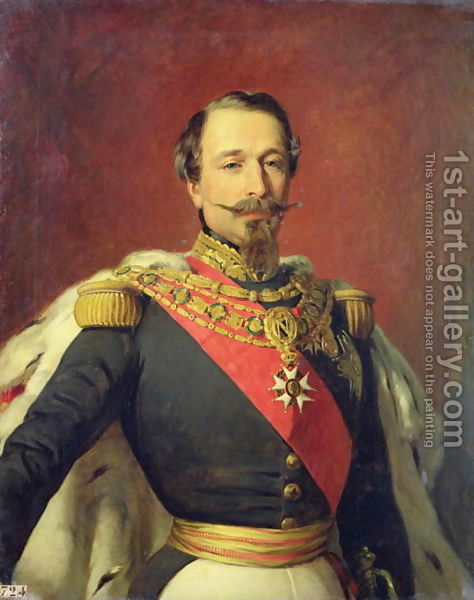
In 1848 Charles Louis Napoleon rode a wave of popular enthusiasm and was elected President of France. He rode this same wave in 1851, declaring himself Emperor Napoleon III of France, backed by a national plebisite. Ok — so he wasn’t his more famous, more competent uncle. He did, however, seem to understand a lesson few other European leaders grasped, that leadership in France and in Europe in the post-Revolutionary era required a deep connection to “the people” to be truly effective. He began his reign with confidence.
Time passed, however, and Napoleon III proved frustrating and inadequate in his statesmanship. He flailed about, following one policy, then another, seeking the home run that would make France truly relevant in world affairs once again. First he started with an authoritarian empire, then switched to be more liberal. But as he liberalized France at the same time he undermined the power of legislature over France’s finances. He announced that “the Empire means peace,” but strengthened France’s involvement in Southeast Asia. He helped forge a new alliance system as a result of the Crimean War, but also undermined that system by his support of national independence movements. Superior statesman learned to take advantage of him in particular, and France in general. Dangle something of value, and he runs after it, heedless of the long-term consequences.
Prussia’s Otto von Bismarck would prove to be Napoleon’s undoing. In Bismarck, Napoleon dealt with a man of focus, purpose, and creativity. When Bismarck wanted war against Austria in 1866, he knew that he needed the French not to intervene. France and Austria had been enemies off and on, and he counted on Napoleon III to underestimate Prussia’s rising power. True to form, Napoleon III jumped at the chance to be needed. “Yes,” perhaps he told himself, “France and I are relevant once again!”
Prussia’s swift and crushing victory over Austria surprised many, and it gave them either direct or indirect control over most of the German provinces. In the blink of an eye, Prussia undid 200 years of French foreign policy, which aimed at keeping Germany divided. People in France turned on Napoleon III, who felt humiliated. He then came up with a solution, another attempt at a home run. He sent his Foreign Minister to Bismarck with a demand. “We insist that Prussia cede a portion of German territory as compensation for our neutrality.” Bismarck easily laughed off this suggestion, and then went one better. To further Napoleon III’s embarrassment, he published France’s demands in major French papers. The sun had set on the French Empire, and Napoleon III knew it.
I have been a Redskin fan my whole life. I had the great fortune of growing up with the glory days during the first Gibbs era. But Dan Snyder’s reign has inflicted a great deal of suffering on many fans like me. I don’t question his heart. He wants to win. Like everyone else, I question his strategy. The continual bid for the grand slam has given us Deion Sanders, Bruce Smith, Steve Spurrier, Joe Gibbs II, Donovan McNabb, Mike Shanahan, and so on. Though possessing few actual wins, Snyder managed the marginally impressive feat of staying relevant for the past 12 years by his media-worthy signings.
I can only imagine the desperation Snyder and Shanahan felt when Peyton Manning chose not to give them the time of day. He wanted nothing to do with us, and I don’t blame him. Snyder still had one more chance at executing his favorite move, the “splashy signing.” Shannahan had one more chance to salvage his legacy. Beware of an old man in a hurry. For a king’s ransom, we could still snatch Robert Griffin III.
I can’t help but see parallels. Napoleon III thought he had scored a great coup with their neutrality in the Austro-Prussian War. In reality, it was Napoleon who did the dancing. Bismarck knew just how to play him. . .
How St. Louis must have salivated at the thought of Dan Snyder desperate for relevance, desperate to sell tickets, desperate to create the media buzz he craves and needs to sell those tickets.
I am utterly flabbergasted by columnist Tom Boswell who wrote,
There’s a karmic shadow over this deal, of course. It’s the apotheosis of the whole Daniel Snyder era. Just a few hours after Peyton Manning didn’t even give the Redskins a waltz on his city-hopping dance card, the team completed this blockbuster. Maybe Griffin was always Plan A. But the appearance, around the NFL, was that the Redskins hadn’t even made the first Manning cut. “We’ll-show-’em-we’re-not-dysfunctional” decisions have long been a dysfunctional Redskins trademark. But, sooner or later, one of ’em has to work, right?
The Redskins needed a huge splash for every conceivable reason: to give their fanatic fans a glimpse of glory, not more grief; to give Mike Shanahan a realistic chance to be successful again; to stay dominant in a sports market where other rivals are emerging; and to keep printing money for one of the most valuable sports franchises on earth.
None of the reasons he gives for the trade are actual football reasons, and to hope that at some point even a dysfunctional decision will work is an abdication of responsibility, a resignation to fate. Boswell later talks about the Redskins suffering from a “curse” as he closes his column:
The Redskins just doubled down on the very same high-profile, high-cost, high-risk (or all-of-the-above) method that has introduced Washington to Deion Sanders, Jeff George, Marty Schottenheimer, Dan Wilkinson, Bruce Smith, Steve Spurrier, Mark Brunell, Adam Archuleta, Sean Gilbert, Jim Zorn, Gregg Williams, Albert Haynesworth, Donovan McNabb and Shanahan. That the list is so long and familiar doesn’t make it any less staggering. RGIII will either demolish an amazing losing streak or confirm a curse.
Again, the idea that we suffer from a curse is absurd. It reminds me of Napoleon III’s uncle Napoleon I, who said after reflecting on his defeats in exile on St. Helena
The vulgar have never ceased blaming all my wars on my ambition. But were they of my choosing? Were they not always determined by the unalterable nature of things?
and
I am the greatest slave among men. My master is the nature of things.
The most I can say for the venerable Mr. Boswell is that he too is a weary Redskins fan, and subject to that great symptom of weariness, blaming fate. If one actually looks at Napoleon I, we see that perhaps his invasion of Russia, not fate, had a lot to do with his defeat. If we look at the Redskins, we see that perhaps their addiction to big names and quick fixes, and not a curse, has put them in their current position.
Whether it be Babylonian dream interpretation during their “Time of Troubles,” or the rise of Stoicism in the Roman Empire, trusting to fate and chance is a tell-tale sign of decline. Toynbee wrote,
Chance and Necessity are the alternate shapes in which this [passivity] is saluted by its votaries, and while at first sight the two notions may appear to contradict one another to the point of being mutually exclusive, they prove to be merely different facets of one identical illusion.
Whenever you think you must trade your future to draft a player, that is a sure sign that you better not, and start dealing with reality instead.
I hate to be a curmudgeon (well — not always, sometimes it’s fun!), and I usually don’t like to agree with Steve Czaban, but he had it right when he wrote:
The other big argument in favor of this move, is purely emotional. It goes something like this… “After 20 years without a franchise quarterback, you have to pay whatever price it takes.”
Oh, really?
Why? Because Robert Griffin III is the LAST “franchise” quarterback the college game is ever going to produce? Because if the Redskins don’t make the playoffs this year, the NFL has announced the franchise will be folded forever?
Why?
The answer is simple. The owner is desperate. The coach is desperate. And when the fan base is also desperate, you have fertile conditions for “stupid.”
At least Napoleon III saw his doom approaching. When it came after the battle of Sedan, he abdicated. Snyder will not do this. We are therefore left with, “But, sooner or later, one of [the dysfunctional decisions] has to work, right?”
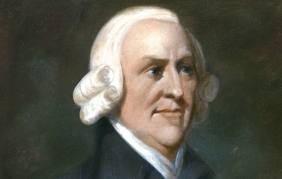
This week we continued our tour through prominent economic thinkers throughout history, and we began with Adam Smith.
Smith wrote in the heyday of mercantilist economic policy in the late 1700’s. Mercantilism functioned along the following lines:
Each nation sought to promote complete economic self-sufficiency.
To accomplish this, local economic industries needed protection against foreign competitors, which often meant high tariffs on imports.
The great fear in this era was having an imbalance of exports and imports — a trade defecit
A country’s money supply needed protected
Smith thought that such a system would in fact impoverish a country, and his response to mercantilism laid the foundations for free-market capitalism ever since. He revolutionized economic thinking in a variety of ways:
Money and Trade Deficits
Building off of William Petty, Smith argued that money has no value unless its used. Money is just worthless paper under our mattress. So we should have no qualms about spending money on things we need or want. For example, when we go the grocery story we do not walk out thinking, “Hey I gave them my money and all I have to show for it is this bread, milk, eggs, and cereal.” No one likes to spend money if they don’t have to, but in general we are happy to give the grocery story money rather than make our own milk, cereal, and so on. We make the exchange because it benefits us.
In the same way, we should be happy to import the goods we need to help make us productive. Just as we don’t think in terms of the massive “trade deficit” we personally have with Costco, so too we need not worry about how our nation has exchanged money for goods overseas.
Specialization
However nice ad idea self-sufficiency may be, Smith points out that it’s inefficient. We need only to think of our own talents, and how much better we do in areas of strength. Wealth should not be measured by how much money we have but the purchasing power of that money. If your economy operates more efficiently, goods become cheaper. You may still have just $1, but that $1 can buy more than it used to. You are wealthier under those circumstances. This is one way in which a more free market can increase the wealth of a nation.
The “Invisible Hand” vs. Regulation
A free market self-regulates, and the regulating is done by consumers themselves. If a company charges prices that are too high, people won’t pay it. No company can profit if it fails to sell its products or services. Ultimately, people decide the prices of the goods they buy, according to Smith. This is the market’s “invisible hand.”
The alternatives to a free market is a regulated one. And who shall make the regulations? What person has the knowledge and omniscience to set fair prices? No one does, and woe to those who imagine that they do. All regulations of the market will hinder the economy and rob people of the freedom to decide what they think is a fair price. Smith would continue and argue that economic freedom helps foster political freedom.
Smith does have his detractors, or at least, those that want to modify his ideas. Do we really want the free market to decide everything? Certainly very few of us would want the market to decide who got liver transplants, for example. If it did, the wealthy would always get preferential treatment. Would we accept a completely unregulated meat or medicine market?
Free market ideas along with technological advancements swept across Europe and helped create the Industrial Revolution, and this world gave rise to the next thinker we studied,
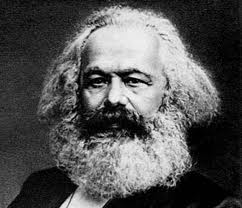
Karl Marx
Marx wrote during the heyday of the Industrial Revolution. Production had increased dramatically, and more products were available to more people more cheaply than ever before in human history. At the same time, the Industrial Revolution seemed to create a huge gap between the rich and poor, and this helped form the basis of Marx’s thought.
We need to approach Marx with an open mind. We know that Marxism, as practiced by socialists, did not work. But Marx himself said that would not call himself a “Marxist” as he saw it practiced in his day, and in any case, no one is wrong about everything. Marx argued the following
The End of Economic Freedom
The I.R. had its origins in economic freedom, but Marx saw it eroding freedom in the end. What would even Adam Smith think about a nation of small-farmers and independent shop keepers being put out of business. They end up as “wage-slaves” working for “the man.” Thomas Jefferson too felt that political freedom had its roots in independent landowning. Those who have freedom in their private lives will naturally want to have freedom politically. But could democracy continue if we all answer to the big boss man? Marx saw no point in pining away for bygone days or halting technological progress. Rather, as technology changes we need to find new ways to put the means of production back into the hands of ordinary people, the way it was before the I.R.
Herein lies one of Marx’s major concepts: each economic system (including free market capitalism) has an internal logic to it that eventually exhausts itself. As Marx saw it, capitalism would soon do the same.
Why?
Well, you can make good refrigerators and sell them to lots of people. But what happens when everyone has a refrigerator? What happens when the railroad company has no more land to build track on? At this point, capitalism (according to Marx) either collapses, or buys itself time.
Capitalism can buy itself time only by encouraging wasteful consumption. You can either a) invent pointless new products and try to fool people into buying them, or b) make your products worse so people will have to buy them more often. But either option will rob people of freedom, making them stooges of corporations.
All this is the gospel according to Marx. He had many things wrong. He put too much stock in the “labor theory of value.” Capitalism has also found new ways to reinvent itself. Instead of railroads we came up with cars and planes. Companies can also find profit in ways besides simple expansion. Marx also did not see how the market could improve standard of living for those at the bottom of the economic ladder. For example, think of the vastly improved quality of even entry-level cars today compared to 20-30 years ago. Or we can recall how quickly and steeply the price of dvd players fell in the span of a few short years.
But does Madison Avenue ever attempt to create needs that are not there? Does our society encourage pointless consumption — and can capitalism survive if this kind of consumption forms its foundation?
In our discussion we pondered some of the historical reasons why capitalism did not collapse when Marx assumed it would. Some suggested that beginning in Teddy Roosevelt’s presidency, we abandoned a more pure liberty/untethered market approach and began to sprinkle in a dash of equality and fairness. We began to regulate businesses in certain ways. Organized labor became more prominent. Did this switch either ..
Inoculate capitalism from the full blown socialist disease? In this view, we prevented the rise of socialism entirely by giving ourselves a small dose of it, to allow the capitalist “body” to produce the necessary resistant to socialism.
OR
Put on us on the road to socialism at some point in the future. Will this be a virus that keeps growing and slowly learn to take over the system.
Part of the nature of the debate has to do with the ever-present tension between liberty and equality in any democratic system, which can take us back to De-Tocqueville.
I posted this a few months ago, but a student of mine recently looked at it and had a brilliant observation of his own that I include below.
Here is the original. . .
I like to watch ‘Kung-Fu’ movies on occasion. Most of these used to come straight from Hong Kong, but recently movies are starting to come from China proper. I have seen two such movies and their similar characteristics raised some questions.
The first was “Bodyguards and Assassins,” set in the early 20th century. The plot revolves around an attempt to assassinate the leadership of the nascent democratic movement by supporters of the traditional monarchy.
The second was “Ip Man,” a movie where you can safely fast-forward through all talking scenes and not miss much. Thankfully, most of the movie consists of remarkable fighting scenes.
Both of these movies share in strongly nationalistic sub-plots, along with generally sub-par acting. These are perhaps to be expected. What did surprise me was the fact that each of these movies go for over-the-top drawn out emotional endings that are entirely predictable. In the case of “Ip Man,” they even rejected the real story of Ip Man’s actual resistance to Japanese invaders during World War II and replaced it with something far more maudlin.
It is these over-dramatic endings that have me curious.
Are these over-dramatic endings common to any new creative endeavors embarked upon by people for the first time? That is, are they likely to overdo it? Are there similarities between Chinese movies today and the stories (written or film) during America’s rise ca. 1890-1920? Perhaps there are some similarities with these movies and the stories of Horatio Alger.
Is this the kind of movie likely to be made by a nation on the rise? In other words, do these dramatic expressions express something of the latent emotions of a people held back for a while?
India is in a similar position to China as far as its national arc is concerned. Do Bollywood films display this same excessively manipulative emotion?
Or perhaps I am missing something and what I call ‘overdone’ is just right for Asian cultures as whole. Is anyone familiar with media from Taiwan, Vietnam, Thailand, etc?
A friend suggested that the endings I described reflected how authoritarian cultures tell stories. Think of Stalinist era propaganda stories. If so, how authoritarian is China with its artists?
Again, a comparison with India would be helpful here.
This is the extent of my knowledge of foreign film. I have many questions, and if anyone might have some answers or suggestions, do please respond.
Thus ends the original post.
The student’s theory was that Ip Man is a lot like Rocky in the construction of its story. The Rocky template is the standard underdog story, of one man rising up against the system, or an unbeatable champion. Ip Man turns that template on its head, however. It is not about an underdog. Anyone with knowledge sees he’s obviously the best at his craft. He just needs a platform large enough so that others can give him his due.
Both Ip Man and Bodyguards and Assassins are basically national epics, so Ip Man can be easily seen as a stand-in for China. In contrast, Rocky clearly is about an individual.
Great stuff! Please keep comments like that coming.
Recently I saw the Jet-Li movie Fearless. Jet-Li has starred in many American films, and has no doubt imbibed something of a western ethos. But I think this movie had many distinctive Chinese themes. The movie was just so-so for me, but I did find the tension between the two competing kinds of stories within the movie. On the one hand, it is “western” in that Li’s character goes through a transformation and has to prove himself, which is not at all like Ip Man. On the other hand, Li’s character fights “foreign-devils” just as in Ip Man 2, with strong nationalist overtones. We will see if Chinese cinema changes if their political culture ends up more western than it is today.
I always enjoy when History presents us with unexpected curveballs. Blindsided, our perceptions get challenged and the present, as well as the past, can be illumined even by so-called unimportant aspects of civilization.
One of those unusual bits of flotsam for me are toilets.
Anyone who studies History will ruminate on the question, “What part of the past would you like to live in?” It usually draws interesting responses from students. But mention the lack of indoor plumbing and most anyone gets drawn right back into the present.
Flush toilets have a longer history than we might assume. Their mass production took until the late 19th or early 20th century. When we consider the infrastructure needed, like piping, drainage systems, and so on, this should not surprise us. But the flush toilet existed long before in limited use, possibly even in ancient Minoan civilization. In the modern era, we know that Tudor England developed the flush toilet, and Eilzabeth I had the chance of using a private one herself.
But she didn’t want to.
According to curator and author Lucy Worsley, Elizabeth’s preference for the chamber pot had to do with her concept of royalty. She would not flee like some subject to the almighty toilet, the toilet would answer to her — in the form of a servant or two carrying the appropriate accoutrements. To go “to” the bathroom offended her sense of royal dignity.
Who today would choose a chamber pot while others hovered nearby over a private flush toilet? Had I heard half of the story without the ending, I would assume that Elizabeth would have claimed the new invention as an “executive privilege,” much like some Executive Washrooms today.
Elizabeth’s actions have echoes in Lyndon Johnson, who according to Robert Caro, used to make his aides follow him to the bathroom when he became a congressman. This likely had little to do with his desire to continue to conduct their business (no matter the nature of his business in the john), and served more as a way to demonstrate his power and provide a loyalty test.
But most of the time, I’m sure Johnson chose to be by himself.
Not all societies insisted even on relative privacy when it came to bodily functions. The Romans, for example, had no qualms about sharing space in what we would consider to be an intimate moment, as this public restroom makes clear:
I believe strongly in the uniformity of human nature. History makes no sense without this bedrock truth applied to it. However, I do think that a study of bathrooms reveals in a small way how the “geography” of a time and place and its context relative to other priorities, impacts other values we may have. Human nature has an unalterable core but our values may be fungible at the periphery.
We need not think that Queen Elizabeth or the Romans placed no value on privacy. Rather, in their hierarchy of values, privacy did not occupy the pride of place it does for many Americans today. Queen Elizabeth valued her sense of royal imperium more than privacy. The Romans valued community more than privacy. They could easily have erected barriers in their mini-stalls of they wanted to.
For the record — I have no problem serving as an apologist for the “Privacy” camp and advocating for indoor plumbing.
This week we began our look at economic theorists throughout history and some basic principles surrounding economics in general. This will culminate when the students form rival companies and compete with each other, with the rest of the school as customers.
We spent most of our time trying to understand exactly what money really is, and how it functions. The title of this post is taken from a book by the famous economist Hernando de Soto, but it also describes my own personal feelings. Money has a fungible, mysterious identity, but hopefully we reached common ground on a few key ideas.
We often make the mistake of thinking that money is a “real” thing, that it has a natural and inherent value to it. Rather, money symbolizes or signifies some agreed upon purchasing power. A strict barter economy makes much more sense after all. If two people exchange a bushel of wheat for a barrel of apples, we immediately see how both sides get value from the transaction. Although even the wheat and apples do not have absolute fixed values. If you hate apples, they would not be worth much to you. If the wheat harvest failed it would have greater value than in previous years. Still, the transaction seems rooted in understandable reality.
But, I wonder, who was the first person who decided to trade away something tangible and useful, such as bread or animal skins, for shiny rocks?
Of course money has many advantages to barter economies. They function much more efficiently, for one. Shopping is much easier with a pocketful of coins, as opposed to a wagon load of things to trade. However, a money economy depends on shared societal belief to a much greater degree than barter. Society must take a collective leap of sorts, for what would happen to our economy if one day the managers of grocery stores said, “Why should I give you this bread and milk? All you’re giving me in return are these small pieces of paper!”
So, the value of money depends at least in part on a shared, created belief. But this does not mean that money can simply be invented out of thin air. Money may not be fully real, but it must be based on something real, be it labor, a product — something.
After laying that groundwork we began our quick look at economic theorists throughout history. We started with a brief comparison between the Dutch and Spain around the turn of the 17th century. Spain had an overseas empire that allowed them to bring piles of silver into the country. The Dutch too, had some overseas trade, but they helped pioneer the idea of the corporation and the stock market. At first glance, we might expect a mountain of silver to defeat a nascent stock market, but in fact the reverse happened. How could this be?
When the Bush and Obama administrations gave bailout packages to various financial industries, many commented something along the lines of, “If the government is going to give out all that money, they could just give it to families, and each would receive $35,000.” Would this have worked? I asserted that if this had been done, everyone would have more money, but no one would be any richer. If everyone is special, no one is. Prices would likely rise, and inflation would kick in.
This happened in Spain. The supply of silver increased significantly, but prices even more so. Part of this had to do with how the Spanish used their silver, but the basic principle still holds. Their silver created no wealth. In contrast, the Dutch stock market created a system whereby the flow of capital could be constant, and that money would be used to further develop companies. Thus, the stock market would have a better chance of reflecting “real” value than a pile of silver. Of course, this serves as only a cursory explanation.
John Law had a checkered career as a financial advisor, but he came up with a couple financial innovations that have done much to influence modern finance.
Credit is Money
Money’s value comes from the fact that people trust it. Without trust, money could not function. Thus, trust forms the basis of all purchasing power. Suppose you had no actual money to your name, but did possess a notarized I.O.U. from Bill Gates for $1 million, payable by the end of next week. We surmised that you could use that credit as money, or at least to secure a loan.
When we use credit cards, for example, no money changes hands at that moment. The store trusts the credit companies to pay them, the credit companies trust us to pay our bill. Credit would not work without trust, but we can take it one step further. Trust can function like money.
Credit and Governments
Law argued that since governments have the power to tax, they can issue money against themselves in a crisis. Borrowing against yourself would force governments, he argued, to pay it back. To not recollect the money would de-legitimize their whole standing with the people and destroy their currency. If the people don’t trust the government to pay it back, then you have bigger problems than mere financial difficulties. The government itself would collapse. Given that this option comes with more pain than repaying the loan, Law thought, governments would choose to recollect in the form of taxes later.
Governments certainly have used this idea numerous times, sometimes with great success, other times it has led to disaster. But that is part of Law’s point. Governments risk a lot through this mechanism, and if they’re not “good for it” than they don’t deserve to govern.
In his book, The Cash Nexus, historian Niall Ferguson speculated that one reason why democratic countries have more financial success than other forms of government is the flexibility given through governing by consent. Since governance through consent has more stability, these governments have more trust in the international community. This trust leads to more purchasing power.
Next week we’ll look at Adam Smith, Karl Marx, Keynes, and Hayek. Have a great weekend.
Soon Romney will have enough delegates secured and the 2012 presidential campaign will begin in earnest. All who lack excitement are forgiven.
One theme of the coming campaign is sure to be the economy. Candidates will talk about creating jobs, and innovation as the key to a strong economy, and a strong economy as the key to a strong country.
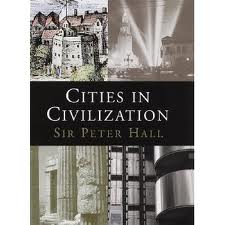
Sir Peter Hall’s Cities and Civilization is quite a long read and I have just started it. But already I am intrigued at the prospect of trying to achieve historical perspective on just what makes cities thrive, and how “golden ages” come about. Though I have just begun, a few things have already struck me:
Vienna glittered in the late 19th and early 20th century, but not for its creature comforts. Hall noted that the Viennese remained almost indifferent to the new technologies that had arisen in their time. In contrast to other cities, suburbs had no piped water, with hardly any phones, and almost no bathrooms.
Vienna’s cultural golden age owed much to immigrants, or at least, non-Tuetonic Viennese like the Jewish middle and upper-middle classes (cheers from the left and libertarians).
In Periclean Athens, perhaps the most glittering of all western epochs, citizens faced no direct taxation (cheers from the right), but all were more or less expected to voluntarily donate money to the state, especially the rich (cheers from the left). Indirect taxes had erratic application. Of course we should realize that Athens financed much of their democracy through tribute from their overseas empire (cheers from hopefully no one!).
As in Vienna, Athenian creature comforts practically did not exist. We are used to the glory of the Acropolis, but archaeologists reveal that Athenian homes were bare and primitive. Athenian diets did not venture beyond the staples, and foreign visitors remarked how badly planned Athens seemed (cheers from the “back in my day” crowd).
Both Athens and Vienna created golden ages, by seemingly
Not caring about technology
Combining a curious mix of strong individualism and strong public attachments.
Not caring much about personal wealth.
As Kenneth Clarke noted, civilization needs a moderate amount of wealth to get by, but too much money will make any nation lethargic.
In short, vibrant economies and technological innovation will not create greatness. Greatness comes by seeking something else, something higher. St. Augustine said as much when he wrote in his The City of God,
Accordingly, it is recorded of Cain that he built a city, but Abel, being a sojourner, built none.
And C.S. Lewis discussed something similar when he elucidated the principle of “First and Second Things,” in his classic essay of the same name, excerpted here below:
The woman who makes a dog the centre of her life loses, in the end, not only her human usefulness and dignity but even the proper pleasure of dog-keeping.
The man who makes alcohol his chief good loses not only his job but his palate and all power of enjoying the earlier (and only pleasurable) levels of intoxication.
It is a glorious thing to feel for a moment or two that the whole meaning of the universe is summed up in one woman—glorious so long as other duties and pleasures keep tearing you away from her. But clear the decks and so arrange your life (it is sometimes feasible) that you will have nothing to do but contemplate her, and what happens?
Of course this law has been discovered before, but it will stand re-discovery. It may be stated as follows: every preference of a small good to a great, or partial good to a total good, involves the loss of the small or partial good for which the sacrifice is made.
. . . You can’t get second things by putting them first. You get second things only by putting first things first.
I don’t know if I would have voted for Santorum had he received the nomination, but good Catholic that he is, he rightly stated that, “[W]e hear this all the time: cut spending, limit the government, everything will be fine. No, everything’s not going to be fine. There are bigger problems at stake in America.”
For years in the upper echelon of college football and basketball, the notion of the players as “student-athletes” has been stretched to the limit. Now, along comes John Calipari’s Kentucky Wildcats to end the charade once and for all.
In the past, we could always count on a team assembled of “one-and-done” players to self-destruct in some way. The players would be selfish, or wouldn’t gel together when it really mattered. But not this Kentucky team. Even curmudgeonly commentators noted how unselfish the players were on offense, and how well they played team defense.
But never fear, the NCAA rode into the Final Fourt to fix the situation, in the best way they know how: a silly, ridiculous rule. As Pierce notes in aforementioned article, reporters had instructions at press conferences not to call Kentucky’s players “players,” but “student-athletes.” So, for example, a reporter would have to phrase the question along the lines of, “Coach, how do you expect your, ah. . . student-athletes to handle the Louisville defense?” The press conferences came with NCAA bureaucrat attached, ready to enforce the rule.
“There’s nothing to see here!”
The NCAA has long had the problem of inherent contradictions embedded within, and has long sought to fix it in the worst way possible, through rules. As Tocqueville commented,
The best laws cannot make a constitution work in spite of morals; morals can turn the worst laws to advantage. That is a commonplace truth, but one to which my studies are always bringing me back. It is the central point in my conception. I see it at the end of all my reflections.
When you resort to law to fix culture, you reveal a weakness that predators can smell a mile away. Law cannot fix culture by itself.
But an attorney friend of mine challenged that assumption in regard to the Civil Rights movement. Surely, he argued, the Civil Rights Acts of 1965 and 1968 accomplished more change than some amorphous “culture” did . I countered with the claim that civil rights efforts from Brown v. BOE to the March on Washington laid the foundation upon which law could build, but unfortunately my knowledge of that period lacks the necessary depth for me to be sure.
Or what about the whole question of gay marriage? Some argue that law has led the fight in this issue, against the general culture, with stunning success. But again, I’m not so sure. Maybe the movies, tv shows, and such laid the groundwork for the charge? The broader question is, if the movement relies on law/judges to lead the way, will they have ultimate success? As always, I would be curious for anyone’s thoughts on the question, and here is one opinion from the UK.
 The recent issue of The City, a publication of Houston Baptist University, features an interview with Hoover Institute policy fellow Mary Eberstadt. In the interview she makes a striking observation. We all know, she remarks, that our society has become increasingly amoral regarding sexual activity over the last 50 or so years. But an interesting thing has happened: as we became more lax on sex, we became much more censorious and aware about food.
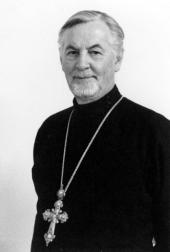 wrote in the opening pages of his classic, For the Life of the World,









 A Stick in the Mud