This week we looked at the building tension between Parliament and Charles I. The civil war that eventually came would, in the long term, change the way the western world thought of political power.
As I mentioned last week, Charles inherited the ideas of absolute monarchy from his father James. As some commentators, have suggested, however, there was a difference. For James absolutism was an intellectual question, and thus a conviction he could dispense with, or at least minimize, when the time called for it. For Charles, absolutism was a emotional issue, and one associated with his religious convictions. It ran deeper for him, he believed in it with his heart instead of his head.
It would be wrong to say that Charles coveted power for the sake of power. His conception of England was a realm that needed a shepherd. He viewed England in personal terms. His “High Church” Anglicanism serves as an example of this. Yes, Charles liked ceremony, but also believed ceremony and pageantry appealed to masses, many of whom could not read. He saw himself as their protector from the more “intellectual” Puritans. His parliamentarian opponents saw England I think, in terms of institutions, and these institutions for them were the guarantee of the people’s liberties. Both sides saw the same picture from different perspectives, and different aspects of the picture had different meanings for them.
Among the issues at stake:
Should something be considered legal if it is within the letter but not necessarily the spirit of the law? Is the letter or the spirit of the law a better guarantee of liberty?
To understand this question, the issue at hand was Charles’s refusal to rule with Parliament, and his collection of the ‘Ship’s Tax.’ Being an introvert and socially awkward, I think Charles hated Parliament. He did not hate every MP, but he did hate the crowd, the glad-handing, the politicking of it all. Charles lacked people skills. It was just so much easier, on a number of levels, for him to rule alone without Parliament’s help. As king, he was not required to call Parliament at all, except when he wanted new taxes.
Charles tried to keep expenses down but every government needs money at some point. The ‘Ship’s Tax’ was a law still on the books from a few generations prior, but it had fallen into disuse. It was used as a war-time measure to raise money when under the threat of invasion. The last time it had been collected was back in the days when Elizabeth used it as a special measure to help prepare defense against the Spanish Armada. Charles resurrected the tax. Technically it was not a ‘new’ tax, for it had been collected before. But Charles was using the tax as a means of general, not special revenue, and he did so to avoid calling for Parliament’s approval for any new taxes. Charles was within the letter, but not the spirit of the law. The tax was not “new” in the sense that it had once been collected, albeit with a different purpose in mind. But Charles revived the tax not under threat of invasion, but as a loophole to avoid Parliament altogether.
By definition, can the king be a traitor? If so, what would he have to do to merit that approbation? If one conceives of the king personally embodying England itself then the answer is no. But if one sees the king as a steward over something outside of himself, then it becomes a possibility. Charles obviously viewed himself in the former sense, and Parliament the latter. But at the time, no consensus existed on this question.
Should a bad, or ineffective king, be given complete loyalty? Does the power of the king depend on how he rules, or on his office?
In the end, Parliament put Charles on trial for treason. He had, they claimed, made war on his own people and trampled on the Constitution. Furthermore, he had lied to them and negotiated with the Scots to invade on his behalf, while negotiating in supposed good faith with Parliament. But the Parliament that tried Charles was not the full Parliament. The army booted out those whom they suspected that Charles bought off, including the whole House of Lords. Parliament may have the power to try the king, but was this Parliament? Charles, at the trial, refused to enter a plea for this reason. He argued that while “a power” faced him, law did not, which the following clip illustrates. . .
Charles never actually had a trial. When he refused to enter a plea Parliament found him guilty “in abstentia” (though of course it did not take 2:30 as in the movie clip!). Though I personally think that Parliament had a good case against Charles, they forced the issue and gave Charles back some dignity and legitimacy when they did not use the full Parliament to put him on trial.
At the end of this week we assigned lawyers to prosecute and defend Charles, as well as witnesses for the defense and prosecution. I hope the students will have fun with our own mini ‘mock-trial’ and come away with a greater understanding of England during the mid-1600’s. But as we will discuss next week, the past is not wholly “past.” Our own ‘War on Terror’ has raised many of the same questions that faced the English. Should torture ever be used, as Charles did, in time of war? How far does the power of the president extend in war time? Bush, for example, defended his extensive wire-tapping as a necessary war-time measure even if it was in a distinctly grey constitutional area, as this article notes.
These are many of the same dilemmas, in an obviously different context, that the English dealt with in 1650. I hope students will make the connections.
Dave Mathwin
*Observe, for example, how in Shakespeare’s “Henry V” the kings of France and England call each other “Brother France,” and “Brother England.”
If one said that our modern political scene resembled the spectacle of pro-wrestling, few might object to the statement. Indeed, I have never cared much for following the daily grind of politics, but I can see how it matters–even though I think many vastly overrate it. But I have never understood why anyone would like pro-wrestling. If we all know that it is essentially staged, and “fake,” why bother? The theater of it all is so obvious, yet people react to it so strongly. So too, our political discourse often seems so often cast in such stark terms, and who can say that this benefits us in any way?
Time for a confession . . . though I teach at a classical school, I have a hard time entering into most Greek drama. Aristophanes is fun, and I feel that I “get” Sophocles to a certain extent. But Euripides, and especially Aeschylus, have always seemed odd and distant. The action, the acting (those masks–how strange they seem to me), and the chorus take on such outsized proportions that the plays seems to offer no avenue to enter into the story. The characters almost become Ideas in awkward human form. Here stands “Rage,” there goes “Justice,” and so on.
But the Greek’s founded western civilization. They produced spectacular achievements in philosophy, science, architecture, and the like. So, Greek drama must be “high culture,” on par with these other elements of their civilization . . . ? If the Greeks are not being “lazy” with their dramatic works, we should consider whether or not “high culture” must always be subtle and refined like the Parthenon.*
In an intriguing essay Roland Barthes writes that,
What is thus displayed for the public [in pro-wrestling] is the great spectacle of Suffering, Defeat, and Justice. Wrestling presents man’s suffering with all the amplification of tragic masks. The wrestler who suffers in a hold which is reputedly cruel offers an excessive portrayal of Suffering. . . . This is why all the actions which produce suffering are particularly spectacular . . . Suffering which appeared without intelligible cause would not be understood. . . . suffering appears as inflicted with emphasis and conviction, for everyone must see not only that he suffers, but also and above all understand why he suffers.
. . . There is here the paroxysm of meaning in the style of antiquity, which can only recall the heavily underlined intentions in Roman triumphs.
From Mythologies, pp. 19-21
Leave it to a French intellectual to use the phrase “paroxysm of meaning” when discussing pro-wrestling. But still–here I discovered why so many could know that pro-wrestling is “fake” and still enjoy it. Lots of people enjoy Greek drama too. Barthes writes earlier in the same essay that,
The function of grandiloquence is indeed the same as that of ancient theater, where principle, language, and props (masks and buskins) concurred in the exaggeratedly visible explanation of a Necessity. . . . Each sign in wrestling is therefore endowed with an absolute clarity, since one must always understand everything on the spot. As soon as the opponents enter the ring, the public is overwhelmed with the obviousness of the roles.
Mythologies, pp. 16-17
At least in the Greek plays I have read, the audience clearly did not go to see a “plot twist,” or subtle character analysis. The action unfolds as the audience expects. Even the dilemmas for the characters have a structural rather than internal or personal character. Everything remains on the surface.
Our last four presidents (Clinton, Bush, Obama, Trump), two Democrats and two Republicans, have rarely been subject to shades of grey analysis–especially Obama and most especially Trump.
For many in the print news media at least, Trump has the obvious role of villain. His hair, demeanor, speech, etc. are characterized in outsized terms. His every action must have sinister undertones. Some others see him in outsized heroic terms, even the acclaimed Eric Metaxas (whose biography on Bonhoeffer garnered much acclaim) wrote a children’s book entitled Donald Drains the Swamp, which casts President Trump in a mythically heroic role.
Given these observations, a few options present themselves.
The first could encourage us . . . many have lamented the decline of our discourse evident in increased polarization and lack of critical thinking in the media. But the Greeks did much the same thing with their public “media” in theaters, and they were not barbarians. Maybe we overstate the danger posed by our current discourse, just as cultural critics who lament the existence of pro-wrestling (and probably love Greek drama) should take another look at the various spectacles of our national life.
A problem with this interpretation, however, is that our culture is divided as to who is the villain, and who is the hero. But perhaps the Greeks were more divided than we might think. Just because they had plays doesn’t mean everyone loved them or agreed with their interpretations. Thucydides, for example, gives us plenty of evidence of a divided Athenian body politic.
A more negative interpretation would not focus on the lack of subtlety or nuance in our language, or divisions in our country–serious though they are. What I fear instead is that we don’t express our mythic loves and hates in mythic terms, and this leads to confusion and a lack of stasis in our culture. Our ships pass in the night nearly all the time. That is, we cannot and should not avoid our metaphysical reactions to certain policies or events, but in Greek drama and pro-wrestling, the language and structure is metaphysical, and thus, perfectly clear.
Perhaps our most obvious example of this involves our discussion of immigration. All of our discussions about the economic costs and benefits of increased or decreased immigration do nothing to convince anyone, because they fail to address the deep subtext. Those that favor more immigration really mean to advocate for
A world where individual is seen as the key building block of society, and the empowerment of individual choice should triumph group solidarity.
Immigrants are often seen as the underdogs, and so more open immigration supports the underdog
Having a free market should mean free labor, and the more movement of labor allowed, the healthier and more productive the market will be (which is why libertarians favor more open immigration).
Those who seek more restrictions on immigration really seek to
Prioritize the concept of a ‘national’ or local family’ and culture over that of the individual.**
Put more of a focus on what happens inside our borders than outside (which is why non-interventionists in foreign policy tend towards wanting less immigration).
Create a world where law and boundaries have real meaning and are not just arbitrary, i.e. good fences create good neighbors.
So poor has our discourse become on this issue, that both sides have devolved into nearly equally untenable positions: “Build a wall,” or “open borders.” The first option, at least in how it is understood in symbolic terms, proclaims that only a societal core should exist, that virtues such as hospitality cannot exist within that core. The second proclaims that no boundaries have any moral purpose, that borders–be they physical, cultural, or behavioral, have no place in society, despite the fact that every culture since the beginning of time has had them.
As usual, one gains perspective by not by discussing the ‘thing’ in question, but by something related to it. Maybe the next time you disagree with someone on a political issue, maybe try discussing instead whether or not you prefer Hulk Hogan or Ric Flair, and see where that takes you.
Dave
*Another possibility exists, one that I will not explore in depth here, and that is that our division of “high” and “low” culture has no real merit. Or, perhaps the Greeks would have admitted that their drama was “lowbrow,” and we just think it highbrow because it is old.
Going to a Shakespeare play today is quite a “high culture” event most of the time, but Shakespeare has many “low brow” moments in his plays. Of course, one could double back and say that “high” culture needs sprinklings of “low” moments to make it real and tangible, and avoid the danger of pure abstraction.
If we follow the bouncing ball, we might wonder if “low-brow” culture often is more conservative in nature. Or at least, it does not attempt to deconstruct anything.
However we think of these question, I acknowledge that the issue is not as simple as the post above might seem to make it.
A friend of mine related that he had begun to contemplate retirement. He wanted to teach about another 10 years or so and then thought about opening a small barbershop. He reasoned that, having spent almost the entirety of his teaching career in one small town, he would hypothetically know a large percentage of the population. The barber shop need not be a scheme to make his fortune, so much as a pleasant way to stay connected to the townspeople.
He did some research and to his horror discovered that between the mandated schooling, permitting, and licensing requirements forced upon one by Pennsylvania, he would be in the red $20,000 before he plunked down his first rent check on the property.
All this just to have “permission” from the state to cut hair.
He abandoned his retirement plans.
Often we think of regulations as the little guy limiting the power of the big guy. But sometimes wealthy companies are the ones who favor regulations because they are the only ones who can afford it. Regulations can serve as a way to limit competition. This kind of “crony-capitalism” is possibly an extreme example, yet many have noted the vast increases recently in the number of jobs that need state permits, licenses, and so on. In these polarized political times, this is an issue Republicans and Democrats could unite on. Republicans could talk about fostering individual initiative. Democrats could talk about limiting the reach of big corporations. It’s a win-win for both sides. One problem is that these regulations come largely at the state level and not the federal level. Few people pay much attention to state politics anymore (including myself), and so creating pressure for change would require more patience and diligence.
I thought about this issue while reading the “Aristocrats and Semi-Aristocrats” chapter in R.G. Starr’s Economic and Social Growth in Early Greece. He mentions that the city-state system got its beginnings when aristocrats came together to try and combine their power. Of course, this same city-state system would eventually significantly limit the power of the aristocracy in Greece. This seems counter-intuitive. Why did this happen?
Some see an “aristocracy” in the age that Homer describes. Starr rightly disagrees. Certainly one can see a social hierarchy in The Iliad, but not I think, an aristocracy in the sense the word usually carries. True, Odysseus was king of Ithaca and had some men bound to serve him militarily like medieval lords. Odysseus tried to escape the Trojan War by pretending to be insane. It was not, however, that fact that he plowed land that gave him away, but that he would not plow over his son. Odysseus was a farmer in ways that a typical aristocrat never would have dreamed.
By “aristocracy” we mean an established code of behavior and dress that sets one apart from the rest of the population. Without some kind of population concentration, one cannot have an aristocracy in the truest sense of the word. This concentration allows for more accentuation of difference. In Odysseus’ world you have him as king and then everyone else. But, bring aristocrats together and you can have stratified layers–“Aristocrats and Semi-Aristocrats.”
The initial coming together of aristocrats naturally did increase their power, as Athens’ literally “Draconian” law code evidences (the name comes from an aristocrat named Draco). But shortly after this apparent victory their power began to erode, eventually ending up with a fairly radical democracy a century and a half after Draco.
Many reasons exist for this shift, I’m sure. I feel that one of them has to do with the nature of aristocratic stratification. Distinguishing oneself by birth has never been quite satisfactory in almost any aristocratic society. Certainly birth alone never quite worked for the Greeks. Their ideals called for achieving glory for oneself via striving and competition. Naturally, these aristocrats would seek for allies in this competitive world, even including the “average Joe.”
But be careful, aristocrats. The average Joe’s outnumber you, and they eventually took over the competition and established the possibility of “arete” for all. Something similar happened in Rome. From about 500-200 B.C. an aristocracy largely ran Rome quite effectively by most measures. Again, the story has complexity, but the aristocracy began to decline when their competitiveness no longer had a foreign outlet. Their competition against each other naturally led to their enlistment of the commoners for allies. A vast network of clients & patrons formed. By the time Octavian triumphed about 100 years after this process began in earnest, the aristocracy had essentially killed themselves off in fratricidal warfare–a war made possible in part by their enlistment of the common man.
We assume that Rome’s emperors continued aristocratic dominance. But the Emperors, much like the early Roman kings, tended to side with the “people” and rule in their name. Rome’s aristocracy led the revolution that exiled the Tarquin kings in their early history. The worst of Rome’s emperors, like Caligula and Nero, did many of their worst deeds to the senatorial class. Of course many others abused their power in various ways. Ending the power of the aristocracy meant the creation of, in the end, an even great power.
Such are the dilemmas of politics.
The decline of the Greek aristocracy did not lead to the kind of absolute rule Rome experienced. But . . . without the healthy tension between democratic and aristocratic ideas that existed in the time of Pericles, Athenian democracy acquired a kind of absolute power of its own in the form of its laws. The death of Socrates serves as ‘Exhibit A’ of this transition.
For the sake of my friend and many others like him, I hope for an end to crony-capitalism. As to what power we will need to dislodge it, I cannot say. As to whether or not the trade-off will be worth it . . . that too we cannot say for sure.
We started off the year by reading some excerpts from St. Augustine’s City of God to examine how we are defined by our loves. This “definition” holds true for civilizations, states, and individuals.
Our first major work that we will spend significant time will be Plato’s Republic, one of his earlier and perhaps most significant works.
Plato grew up in Athens and experienced the decline and fall of Athens as a result of the Peloponnesian War. Not only did they lose the war, the character of their democratic practice changed, and not long after their defeat they execute Socrates (Plato’s mentor) for impiety. All of this must have shaken Plato to his core, and he uses this psychological disruption to examine what went wrong. Clearly Athens’ foundation must have been faulty for it to crumble so quickly under stress. What purpose should government’s serve? How should they best accomplish this? These questions drove Plato’s thoughts throughout the Republic.
We will look at the early books of The Republic next week.
Socrates begins the dialog by assuming that people and governments naturally desire justice. But his companions immediately challenge this and make the following arguments:
People give lip service to justice, but really what everybody wants is to practice injustice to their own advantage and get away with it, and they want their country to do the same.
Even if people seek justice, it will only be for show. People will pursue it for a good reputation, or as a bargaining chip on future actions.
Thus, people don’t want justice, so it cannot form the foundation of any state. It won’t work, because it won’t be built for those who live in it. The most we can hope for is to limit the desire and practice of injustice.
Before we think these arguments harsh, let us examine them.
As to point 1, who among us has not gone to the grey areas of not being courteous in traffic, or dropped something and not picked it up, because “we were in a hurry.” We expect to get away with these actions — we justify them by our own self-interest. According to us, it is in fact “just” that do these things.
As to point 2, some research has shown that when people perform a moral act, they then feel entitled to do an immoral one in exchange. The moral act “paid” for the transgression. The fact that many of these “exchanges” involve “small” sins is beside the point. I recall a recent example in my own life where, when driving I let a couple into my lane, but then the light went yellow before I could cross the intersection. I remember distinctly thinking to myself (as I went through the intersection on yellow-red) that, given my kindness, I “deserved” to go through the light. Perhaps I am not alone.
Socrates counters that even our bad actions are often an attempt to seek justice, however skewed that version of justice might be. So I “deserved” to cross the intersection, or we believe that “being in a hurry” makes it just that I run the light, or what have you. So justice remains a central concern. We can’t escape it, as our sins bear witness to it. But at this point the dialog shifts. Socrates supposes that, as a state is larger than an individual, we will see justice writ larger if we look at the state instead of individuals. So the key to understanding justice lies in understanding the state. If we want to understand the state, we must imagine a world where no state exists that we might see how it should be built from the ground up. When we see the state in this way, we will see the true nature of justice.
Plato has an expansive definition of justice. We tend to think of punishing right and wrong. But we can go further–justice “happens” when all is rightly ordered, when we can say that peace has been established. A just man will have rightly ordered loves and affections. A just state will not really even need laws, for just people govern themselves.
Understanding Plato involves entering into a pre-modern understanding of the world. We in the modern world usually tend to think that governments and societies are for us to mold and shape according to our needs and desires. The world comes to us as series of malleable situations. What matters most is that we agree on how to mold the clay of our society.
Ancient/medieval societies differed in their perception of the universe. They believed that human society should be ordered around a pre-existing and hierarchical reality. Life meant living into an already existing reality. Perhaps some of you may have said to your children, “The men of our family don’t act like this.” In other words, you expect your children to live into a reality, a habit or pattern, that predates them that they are not free to alter. This is a modified form of the pre-modern view–modified because the Johnson family still created this reality. For the Egyptians, Aztecs, Medievals, many Greeks and Romans, and so on, the structure of their society came from God/the gods.
Next week we will continue to explore these themes, and our journey will lead us into all sorts of interesting places, such as art, music, and education.
I have always thought, along with C.V. Wedgwood and others, that Charles I got a raw deal in the aftermath of the English Civil War (1642-49). Leaving aside the matter of his personal guilt, I can see no good legal argument for Parliament having the authority to put him to death after their victory. But as many have remarked, as sympathetic a figure as Charles cuts at his trial and the end of his life, one finds it hard to embrace him as king.
In discussing this, many pay attention to the combination of poor decisions, occasional overreaching, ideological and religious foment, and bad luck during his reign. Some perhaps mention that in addition to the above factors, Charles simply lacked the ability to “look the part” of King of England, and this I think gets more to the root of the issue.
But why would this be? Charles had a personal piety and beliefs in tune with the vast majority of his countrymen. His real leadership flaws should not have risen to level of revolution and the loss of his head. After all, he had certain strengths as a leader as well. Something else must have been going on within England, perhaps even on a subconscious level.
A hint lies in the coronation celebrations, or lack thereof, in the reigns of Elizabeth I and the unfortunate Charles. Several accounts exist of Elizabeth’s coronation procession into London, the first from an Italian ambassador:
The houses on the way were all decorated; there being on both sides of the street wooden barricades, on which the merchants and artisans of every trade campe in long black gowns lined with hodds of red and black cloth . . . with all the emblems and banners–it made a very fine show. Owing to the rain there was much mud, but the people had made preparations, by placing sand and gravel in front of their houses.
[He estimates perhaps 1000 horses in the procession], behind which came the queen, in an open litter, trimmed to the ground in gold brocade. She herself dressed in royal robe rich in golden color, and over her head a coif of gold. Her crown was plain, with no gold lace, but studded with precious gems.
Another commented,
Onlookers noted, “For in all her passage she did not only shew her most gracious love toward the people in general, but also privately if the baser personages had either offered her any flowers or the like as a sign of their goodwill, she most gently staid her chariot and her their requests.
Thomas Mulcaster [Ass’t to the Lord Mayor of London?] added, “London was showed a most wonderful spectacle of a noble-hearted princess toward her most loving people, and the people’s exceeding comfort in so worthy a sovereign.
Holinshed’s Chronicles notes [I have updated the spelling]
For in all her passage she did not only shew her most gracious love toward all the people in general, but also privately if the baser personages had either offered her grace any flowers or any other sign of their good will, she most gently, to the common rejoicing of all onlookers, staid her chariot and heard their requests.
David Bergeron comments that,
The whole report creates the unmistakable impression that this queen in the golden litter forms very much a part of the action, one of the actors in the pageant, part of the theatrical experience.
English Civic Pageantry, 1558-1642, p. 20
Accounts exist of Elizabeth’s own words:
I thank my Lord Mayor, his brethren, and you all. And whereas your request is that I should continue your good lady and queen, be ye ensured that I will be as good unto you as ever any queen unto her people. No will in me can lack, neither do I trust that I lack any power. And persuade yourselves, that for the safety and quietness of you all, I will not spare, if need be, to spend my blood, God thank you all.
As for Charles’ coronation, we have the following from the Earl of Pembroke, 25 of May, 1626:
My Lord, Whereas your lordship and the rest of that Court now formerly directed by letters from the right honourable Earl Marshall, to prepare and erect in several places within the city various and sundry pageants for the fuller and more significant expression of your joys upon his Majesty, and his royal consorts intended entrance through your fair city: His Majesty having now allowed his said purpose, and given me Command to signify such to you, it may please your Lordship to take notice therof by these, as also remove the said Pageants, which besides the particular charge they accrue, do choke and hinder the passage of such as in coaches or carriages that have occasion to go up and down.
Charles’ desire to save money actually was mostly moot, as many of the preparations had already been made for his procession. Workers would still need paid. Perhaps Charles had no knowledge of this, but I think not. Rather, Charles, unlike Elizabeth, could not force himself to go through with the public spectacle of coronation. Perhaps this was his introverted and private personality. Or perhaps his sense of royal dignity was so acute as to be intensely personal, and thus misguided.
Either way . . . Elizabeth clearly understood how to embody what it meant to be queen, and she communicated that understanding in a publicly meaningful way. By meaningful, I mean liturgical. One sees this throughout her reign. She mastered the art of the “royal progress.” Theatrical and symbolic encounters, such as when a child might present her a book and a flower, or a peasant giving her a trowel, or whatever, she made look completely natural and appropriate. This I am convinced is the key difference between Charles and Elizabeth. Charles modeled himself on Elizabeth in certain respects and even in certain laws (i.e., the Ship’s Tax). But it all fell flat. Charles could not embody and transmit the meaning of his kingship effectively to enough of his people.
We see this difference in portraits of the two monarchs. Elizabeth revels in overtly outward display.
To many today she no doubt appears ridiculous. Indeed, it seems that Elizabeth Tudor hardly appears at all. But “Elizabeth I” is in full view, and the English responded to her.
Scouring Google, I think Charles seems to be holding something back in every image I saw.
And . . .
Perhaps those like me feel sympathy for Charles even if we might not like him very much because his portraits reveal something of the man that was Charles Stuart. But where is Charles I?
As for his son Charles II, say what you will, but he certainly knew how to project, both as a young man, and later in life.
The first image might let Charles Stuart Jr. bleed through a little bit, but it is at least a more likeable person than Charles I that we see. As he got older, he learned to be more fully Charles II. Alas for Charles I–during his reign much less religious persecution existed than under Elizabeth, and he certainly had far superior morals than his son, all to no avail. His morally reprobate son was far more popular and effective as king.
I think many miss a central lesson we can draw from Elizabeth and the Stuart kings: if one can’t communicate outwardly the meaning of leadership through symbol and liturgy, then people will be driven inward in the fraught and dangerous realm of ideas and ideology.
In his Myth and Reality Marcel Eliade made an observation about modern art that struck me with great force. He notes the decline of a common symbolic language and forms in the wake of the Reformation, and perhaps especially after the Enlightenment. The lack of a common outward symbolic language–the Enlightenment called such things “superstitions”–leads then to a destruction of a common visual language in the arts. Eliade writes,
Beginning with painting, this destruction of language has spread to the novel, and just recently [writing in 1963] to the theater. In some cases there is a real annihilation of the established artistic universe. Looking at some recent canvases, we get the impression that the artist wished to make a ‘tabula rasa’ of the entire history of painting. There is more than destruction, there is a reversion to chaos . . . *
I found Eliade’s book in turns deeply illuminating and frustrating. But one only needs to think of cubism, dadaism, Jackson Pollack’s work, and some of Picasso as well, to see the force of his statement. Perhaps his greatest insight came with his assertion that the rise of psychotherapy directly accompanied the destruction of forms in the art world. With outward and visible avenues of meaning eliminated, we retreated inward for answers. But Eliade points out rightly that we are still following the mythological tropes. We still seek the lost paradise, (the Romantic movement) we still seek to deal with original sin (for the SJW’s this is ‘prejudicial conduct’), and we still seek the end of history (communists and other utopians). Without the common language, however, our fights will grow only deeper. Without something transcendent outside the system for us to reference, we will have to put all of our eggs into our earthly baskets.
Both Presidents Trump and Obama understand/stood very well, consciously or no, how to embody certain symbolic types. No one much cared how much money Elizabeth spent if she fit the part so well. So too, Mitt Romney could never equal Obama’s symbolic value. If Democrats want to beat Trump, they will need someone who can equal Trump’s archetypal value to the culture, even if it is a different archetype. Presidents Clinton and Reagan also excelled at politically embodying the “meaning of America” for their eras. Whitewater/Lewinsky and Iran-Contra might have sunk other leaders with less symbolic/liturgical footing with the culture at large.
Recently a government sponsored arts festival in Germany ran for a week, with its basic message being that, “European democracy is, and always has been, racist construct based on power and prestige,” later declaring that, “wretchedness is the basis of all art.” Such sentiments have a lot in common with the conspiracy theories of those like Alex Jones. Conservatives like myself who lament such things have to take Eliade’s insight seriously. The German ‘festival’ (which sounds like something from “Sprockets”), Jones, and others testify to the loss of a common narrative, a common language made manifest in the culture we can all adhere to. I am wondering if an Elizabeth I or even a Charles II** might emerge, if not in America, then hopefully somewhere else.
Dave
**Eliade could have mentioned movies as well. Think of all of the grand epic films of the 1950’s, with their oversized sets and out-sized acting. Charlton Heston has something in common with Elizabeth I. In The Magnificent Seven, the inner life of the heroes is not important and not explored. Charles Bronson’s character–rugged individualist that he is–knows he is not the hero. Fast forward a few years to the Guns of Navarone, where David Niven’s character is played with a sense of restraint and knowing detachment (though Peck’s character rebukes him for this). The common forms still hold, but we see possible cracks in the foundation. Just about 10 years after Bronson’s turn in The Magnificent Seven, his (and Donald Sutherland’s) knowing smirks in The Dirty Dozen testify to the imminent collapse of the common forms. Of course in Europe this shift probably happened decades earlier.
Here I do not seek to romanticize the 1950’s or any other previous era. Every time and place has its problems. I just seek to point out the differences.
**For the record, I have no great love for either monarch. Elizabeth persecuted many Catholics, and Charles II would have been hard for me to respect, though I acknowledge he was popular for a reason. What we need is someone like them whom we can rally around not in terms of his policies but as a symbol. Many of the best monarchs understood this intuitively, as thinking “symbolically” was part and parcel of their culture.
Before I write anything I should say that anyone familiar with the ideas of Dr. Jordan Peterson or Jonathan Pagaeu will note their presence all over what follows. My debt to them is deep in this post. My thanks to them both.
Some time ago I had fun debating with a colleague about Russia’s move to restrict the freedom’s of Jehovah’s Witnesses. No western commentator approved the move. Everyone thought that this added to the examples of how Russia is lurching away from the West, is authoritarian, is evil, and so on. Even Trump lodged a protest. Now, while I happen to agree with Russia’s move (or mostly agree), I acknowledge that my position is far from a slam-dunk.
It seems impossible for us to imagine society working without more or less complete freedom of religion. But, every society up until quite recently, from ancient Egypt down through the Scientific Revolution, limited freedom of religion. Somehow their societies functioned just fine. Even here and now we restrict the liberties of Jehovah’s Witnesses in some ways, along with other religions. Would we give “freedom of religion” to satanists who sacrificed chickens next door?
Anyway, Jehovah’s Witnesses, for example, do not allow for blood transfusions. When one of their children comes to the hospital needing a transfusion, the state assumes temporary guardianship if the parents refuse to allow for proper treatment. The child receives a transfusion and lives. We have no problem with restricting the religious liberties of Jehovah’s Witnesses in this respect. Russia just takes our approach a bit further. The difference between us is one of degree and not kind. In fact Russia stated that the blood-transfusion issue particularly bothered them. Russia may not even have the guardianship laws we do in the U.S., making the possibility of children dying in their hospitals potentially a genuine reality.
The point being, every society has to draw a line somewhere. Every society must distinguish between order, chaos and the acceptable margin. Civilization could not exist otherwise. Maybe Russia has erred in judgment. But all must acknowledge that freedom has limits, and maybe those limits should have different boundaries in different places depending on the culture and context. As Peter Augustine Lawler noted, many of those who champion a homogenous amorality concerning religion get quite judgmental regarding “obesity, smoking, alcohol, and seatbelts.”
Every society has a doctrine of creation that flows from their creation story, and this story informs every society in how they will deal with the boundary between order and chaos. Genesis deals with this quite directly and more clearly than any other I have read. In one chapter we see the following:
The existence of a formless void far too vast for us to begin to understand. We are finite, and cannot comprehend the infinite (some brilliant mathematicians have gone insane trying to do this). If the vast scope of the created order defies imagination and numbs the mind, how can we begin to understand God Himself?
God creating differentiation, separating light from dark, the sea from dry land, plants from animals, and so on.
God creating mankind in His own image–differentiating them as male and female–inviting them to participate in this process of dominion and creating differentiation themselves In chapter 2, for example, we see Adam naming the animals.
It is this very order, then, that allows for us to understand our place in the world and begin to know God.
The Mosaic law extends this in a variety of ways. God called the Israelites to differentiate in the foods they ate, the clothes they wore, and of course, in the God they worshipped. And yet, sprinkled throughout the Old Testament God gives reminders that the laws He gave and the differentiation he required were not absolute. One thinks of the visions of Isaiah or Ezekiel, for example. Often we see God and/or the psalmists tell us that He does not desire sacrifice, but then of course tells us to sacrifice all the same. David understands this tension perfectly in Psalm 51, one of the most important psalms for the Church.
The Incarnation destroyed some of the old paradigms and created new ones. Jesus breaks down the differentiation between Jew and Gentile, slave and free. He destroys the dominion of sin and death. He creates, or perhaps re-creates, a new kind of humanity. The “chaos” outside of our categories invaded and transformed the world. But . . . He still left us with “categories.” We still have the Apostles as the foundation of the Church (Eph. 2:20), the canon, the liturgy, the bishops, and so on.
In his recent writing and in his numerous interviews, Jonathan Pageau discusses the relationship between the core of society, its margins, and the chaos beyond (the linked article is a fascinating discussion of the role of zombies in our culture, and a look at how the Church has dealt with the core and margin in its iconography). Every society has a core of values and behaviors that shape culture, social interaction, politics, and so on. So too each society has people and behavior on the margins, and the realm of nonsense and chaos beyond. Total devotion to complete order would suffocate us. If we let anything go at any time you have (to use Pageau’s phrase) “the flood”–a complete absence of differentiation that would destroy us in short order.
Each element has its place. Generally speaking, the chaos exists as a warning.* We can’t go there and live. No one can see the face of God. The margins serve the dual purpose of challenging the core and thereby strengthen it at the same time. Sometimes the margins penetrate the core and find ways to enlarge it and reshape in a healthy way. The margin reminds us as well that the order we created is not absolute. Societies need their margins and need to respond to them.
Not to stereotype too dramatically, but usually the artistic, creative groups in society occupy the margins. To say this is “where they belong” is no insult. That is where they are most effective. We need only think of how certain musicians, comedians, and actors helped with the Civil Rights movement, for example. But, would we want Picasso or Miles Davis as our congressmen? What would happen to our arts and music? Unfortunately at the moment, the margins of society, especially those in favor of radically different understandings of sexuality and gender, seek to become the core via judicial or executive fiat (and not the legislative process), and to enforce the ethics of the margin upon the mainstream.
This flipping of roles will work out badly for everyone. The margins have no idea how to maintain a stable core–their whole business involves continually exploring new possibilities. The core, ousted from their traditional role, will serve us very poorly as the prodding margin. Just imagine a Sousa march as radical, avant-garde culture. The end result will either result in another flood or a swing toward stifling authoritarianism, just as in France ca. 1791, or Germany in 1933, or perhaps even in Athens in 404 B.C.**
We have lived with democracy too long to see the nose on our face. We cannot comprehend why others, including Russia, might feel apprehensive about adopting our system and our values wholesale. Democracy has a time-tested ability to plow through core traditions with extreme rapidity. One need only look at how quickly our sexual ethics have gone from thinking about homosexual rights in the late 1990’s to state mandated speech regarding gender in about 20 years. Perhaps we might think of democracy akin to an Italian sports car. A sight to behold, powerful, able to move quickly in any direction. At the same time, such cars are temperamental, break easily, and shouldn’t be driven by just anyone.
This remarkable adaptivity, however, may save us in the end. Maybe the margin and the core can trade places rather quickly. We have gone through transitions in the past and at least mostly righted the ship. Hopefully soon we’ll have Aristophanes making us laugh again, and we’ll get Brad Lauhaus off the perimeter and back to grabbing rebounds on the low block. All would be right with the world.
Dave
*I believe it is in Mere Christianity where C.S. Lewis mentions that many atheists or agnostics have no clue what it means to say, “If God would only show Himself plainly to all, then I would believe,” or something to that effect. Lewis rightly points out that when the playwright steps on stage, the play is over. God’s full revelation of Himself would overwhelm everything. There would be no time for “belief.”
**Examples of this abound everywhere, especially on campuses around the country. Just recently Brandeis University pulled the plug on a play by one of their own students about Lenny Bruce . . . for being too controversial. Or read what happened to Prof. Bret Weinstein (an acknowledged supporter of Bernie Sanders, and far from a conservative) at Evergreen State University.
Finally, some might say that I contradict myself. I favor (sort of) Russia putting limits on Jehovah’s Witnesses, while I am critical of those on the left imposing their own limits. To clarify, I see a difference.
The actions of Russia are taken to reinforce their core. Russia has a tremendously long history, and a religious history very different from our own. We have a hard time understanding this in America, as we build off an abstract concept of rights divorced from culture, whereas Russia builds first from culture.
The actions of the progressive left seek to radically alter the core with ethics and practices from the margin.
Russia’s action may go too far, but fundamentally it changes very little about who they are as a people. Our recent changes are an attempt to radically shift what our core is, and introduces uncertainty about what we should be, which is dangerous to a society.
Abstract logic is the weapon of choice of most teenagers. Certainly this tool can intoxicate, but . . . it can often be fool’s gold.
For example, a parent tells their teenage driver to be home from a night out with friends at no later than 10:30. The teen arrives home at 10:50 and shrugs, “It’s not that big of a deal.” The teen will often attempt to atomize the parental rebuke with logic: “It’s just 20 minutes. if I was 20 minutes late coming home from work you wouldn’t care, or 20 minutes late coming home from school, you wouldn’t care. So to get angry about this particular 20 minutes only shows utter arbitrariness in your distinctions. It is your power, and your power alone to define what constitutes a meaningful 20 minutes is why I am in trouble, and no other reason.”
Ah yes, nothing burns so fiercely in the teenage soul as the apparent arbitrary nature of various parental decisions and distinctions. The teenager may suffer consequences, but they will suffer them rejoicing in their moral superiority. They see, they know the Injustice, and dream that perhaps one day, one day, parents will be struck by a terrible self-knowledge . . .
Reading Murray Edelman’s Constructing the Political Spectacle left me feeling that I was listening to a 16 year-old who thinks he has discovered the secret truth of the universe that somehow everyone over 30 for the last several millennia has missed.
Edelman’s bases his book on the idea that our politics do not reflect an objective reality that we recognize, but a constructed reality made by those in power. Often, politicians will do things to perpetuate their power artificially by creating enemies or crises. We create such things via the terms we use, or the definitions we create. Very skillful politicians construct reality with tone or posture. It seems to me that Edelman believes we are puppets on the strings of language, a fairly standard postmodern perspective.
As an example of his perspective, Edelman discusses the idea of a political crisis through the Cuban Missile Crisis. We called the Russians placing missiles in Cuba a “crisis,” one that nearly triggered war. But we had missiles just as close to Russia as they did to us–many more of them, in fact. Another narrative of seeing the Russians striving for greater global security through strategic parity emerges. Which narrative we pick will depend on which definition we use, and the definitions those in power chose elevated the government’s status. The “Cuban Missile Crisis” was a crisis only because we defined it so–we could have easily chosen other language to create a different reality.
Certainly we have to get below the surface narrative that favors our side, but the equivalency Edelman attempts make sense only in a pure abstraction. In the real world we know that placing missiles under a cloak of deceit (which the Russians did in Cuba) means that we have to see beyond merely where missiles are located and how many each side has. In the same way, we know that when a teenager comes home 20 minutes late from school, and another time comes home 20 minutes late from being out with his friends at night, the difference between these two 20 minutes is hardly arbitrary.
Other problems exist with the book . . .
He discusses how political leaders have power in part because of their visibility. They can control the symbols by which they are viewed, which in turn makes them seem more than just figments. But every leader since the dawn of time has been invested with some kind of symbolic/semi-sacred (in some cases fully sacred) authority. Has every civilization simply not had the advantage of getting to Derrida’s philosophy? It seems much more reasonable to assume that these symbolic forms mean something real, and are not just pure manipulations.
He discusses how political leaders might create enemies to boost their power, i.e. Wag the Dog. Sure, it can happen sometimes, but some enemies are real. ISIS is not a semantic construction. How would Edelman propose we tell the difference between real and fake enemies?
He criticizes the use of semantic and symbolic constructions to achieve collective action. Yes, this can be bad sometimes, but he never reminds us that it can also be done for good ends. I had the suspicion that collective action itself was presumed guilty, but surely we cannot exist apart from some occasional collective action.
As I read my frustration with Edelman grew, and not so much even because I am conservative and every example he used in the book made conservatives (or those with power, such as generals) the bad people for how they used symbols and defined the terms. After all, people can write books that critique conservatives, and I can learn from them. No–my frustration stemmed from the assumptions his arguments made about those on the left, and even himself. Edelman’s thesis leaves us with the following choices:
Only bad conservatives know how to wield symbols and construct the political spectacle in their favor, which makes those on the left either blind sheep or slaphappy stupid.
Those on the left can construct political realities but not get others to follow very often, which seems to cede much of the high ground to conservatives–maybe their policies really do represent the majority of citizens?– or assume that the great mass of people are dumb and easily manipulated, but only by conservatives (the left must lack the talent?)
Every unified political action is nothing more than symbol and word manipulation, which means that those on the right and left are “bad” when they try and do this.
Not to mention, Edelman himself becomes “bad” for trying to impose his narrative of definitions and language on me, the innocent reader. “Don’t impose your ‘there is no Narrative’ narrative on me, man. I just want to live and let live.
I have been quite critical of Edelman, but he, like other postmoderns, latches onto an important truth. The teenager has to arrive at a point where they realize that their parents are not gods and that the world they live in–constructed largely by their parents–has many arbitrary elements in them. Applying these insights into society and politics has its place. The Enlightenment modern project needed taken down a notch or two. But the teen can’t stay in a constant critique. He needs to build something, but Edelman gives us no tools for the task.
Andrew Kern of the Circe Institute has a helpful breakdown of different kinds of education. First, there is the Pragmatic education, then the Traditional, then the Wisdom education. Each type, Kern reminds us, is based on faith in something.
A Pragmatic education bases itself on the belief that all that is worthy is what can be seen, measured, and useful for his brute survival–food, water, shelter.
A Traditional education respects the past and knows that things exist beyond what he can see or measure–his society, or heritage, for one. He believes in the value of this inheritance, and receives the proper training to honor that tradition and to sacrifice for it.
A Wisdom education tries to do more, to stand outside the Tradition and ask questions of it. It tries to get at the roots of a society. It can lead one to see faults within the Tradition and hopefully correct it when needed. If the Traditionalist has faith in an unseen inheritance, it is still an earthly oriented inheritance. A Wisdom education believes in something transcendent above all traditions.
One might think that Edelman gives us wisdom, because of his ability to see through traditions. I disagree. First, true education has to lead us somewhere, and Edelman merely deconstructs. Second, a wisdom education has to involve love, has to involve a giving of oneself to something higher. No societal critique works without roots in love of the Tradition.* I sense nothing of this in Edelman. He gives us logic-chopping straight from the freezer.
But even a “Wisdom” education rooted in love of the Tradition would not fully complete our education. Kern reminds us that there remains a fourth and final stage of education, one that even many Christians miss, just as the Corinthian church in St. Paul’s day missed it. The proof of their failure was their disunity. They used all of their wisdom to fight with each another. Indeed, being able to evaluate a tradition doesn’t mean that we will agree on what is right or wrong about the tradition. Perhaps one might arguably see some of this division of mind present even in Solomon, the wisest of the wise, and the presumed author of the somewhat confusing book of Ecclesiastes.
The final stage of education, then involves something beyond critique, and into the realm of Play, into the great dance of the Triune God, where unity and diversity cohere in the foundation of Being itself, where we are fully united one with another but are never more our own unique selves simultaneously.
Herein lies the Secret of the Gospel, and the answer to Edelman.
Dave
*If we could summarize the basic problems with the political Left and Right, it would be
The Right wants to uphold the Tradition with little to no critique of it.
The Left simply critiques the Tradition without any love for it (or, if they praise America, they praise it almost exclusively for being able to correct its mistakes–a perpetual motion machine of self doubt, and sometimes, self loathing).
Both sides have something to offer, and both sides often see with one eye closed. As I mentioned elsewhere, the first half of the 20th century shows us the horror that unquestioning love of a Tradition can bring. Since then we see the spiritual and moral vacuum of deconstruction with no place to stand with no map available.
Perhaps Mary Douglas’ Catholic faith gave her great perception in her examination of the so-called “Bog Irish,” who emigrated from Ireland to London to find work in the mid-20th century.
This group of Irish Catholics found themselves in a country that had long persecuted them on some level, and who had slim tolerance for their faith. What bound them together was their observance from abstinence from meat on Fridays. Perhaps they did not always pray or love their neighbor as they should, but they faithfully avoided eating meat on Fridays. Whatever one feels about such practice, it had the effect of binding themselves together as a “peculiar people” in the midst of exile.
Of course, the injunction against eating meat went beyond mere cultural significance, as each Friday fast could link us in some small physical way to Christ’s death. In the late 1960’s modernist Catholic bishops made the decision to eliminate the obligatory Friday abstinence. Some of them seemed to worry about their parishioners seeming “weird” to the surrounding culture. In general, they expected that the faithful could take their zeal for Friday abstinence from meat and apply it instead to other more “meaningful” good works, such as prayer and serving their fellow man.
But the opposite happened. For Douglas, anyone versed in the actual history of human experience should have known this. The removal of the binding ritual did not create more good works, but less belief, and most likely, fewer good works. The “good works” asked for by the bishops, of course, should be done by any Christian, but “we live by symbols,” as Douglas states, and the removal of the ritual removed the ground that their faith rested on. No identity=no faith. Douglas writes,
The Catholic hierarchy today [1968] are under pressure to underestimate the expressive function of ritual. [They exhort] Catholics to invent individual acts of almsgiving as a more meaningful celebration of Friday. But why Friday? Why not be good and generous all the time? As soon as the symbolic action is denied value in its own right, the floodgates to confusion are opened.
[As] there is no person whose life does not need to unfold in a coherent symbolic system.. . . there is a dreary conclusion for those who turn to good works to solve problems about their own identity. They are liable to be frustrated on every count. First, it would seem that they must give their good causes over to bureaucratic energies of industrial organization, or they will have no effect. Second, . . . they will never be able to arrange their personal relations so that a structure of non-verbal symbols can emerge. For only a ritual structure makes possible a wordless channel of communication that is not entirely incoherent.
Douglas, p. 38, pp. 50-51
She then points out that the Maccabean martyrs (cf. 1 & 2 Maccabees) equated not eating pork with the entirety of obedience to God’s law. Their abstinence from pork formed an integral part of a whole way of existing.
Mary Douglas’ title, Natural Symbols, Explorations in Cosmology may be daunting to many, as it was to me. But she writes in a manner to match her clear, concise perception I thought her work superior to Ruth Benedict’s. Benedict could describe entwined patters of culture well, but she seemed to not quite grasp the meaning of these patterns. Perhaps Douglas built on her work, for she not only sees the patters, she perceives their meaning–perhaps her Irish Catholic background helped her with this.
As an entry point into this shift, Douglas first looks at how families function. She offers two basic modes, what she calls “Positional” and “Personal.”
Positional families
Value truth, piety, and duty
The cardinal sins relate to failures to live into the expectations of the group, or to maintain the appropriate ritual behaviors. Discipline takes the form of, “You should know that members of our group do not act that way.”
Have a wide network/structure over the individual, to which the individual has reference to
Personal families
Value sincerity, authenticity, individuality
The main sins relate to failures to “be all that you can be,” and discipline takes the form of “How could you do this to me?” or, “How could you do this to yourself?”
Celebrate the individual triumphing over the structure
For most of human history, we have had some kind of positional family structure, but now most everyone in the western world has grown up in at least a mostly “Personal” family. The consequences of this shift have profound implications for us, and involve, among other things, a movement from the concrete to the abstract.
Douglas points to the Reformation as the origin of this shift with some merit, but I will take a flyer and point to the Renaissance as when this began. We can see this in the art of the Renaissance and the medieval era which preceded it.
Many might assume that medieval religious art was ‘obscurantist.’ Certainly they used symbols in their art, but it communicated a concrete message. St. Anthony the Great, for example, had great stature but the depictions of him tell us that, “you can be like him, he is one of us.” So too the statues astride their cathedrals. Whatever “legends” may have been told about such saints, they lived real lives as you and I did.
But, to take perhaps the most famous example, who can be Michelangelo’s “David?”
Of course, no one can be such a man, and thus David becomes not a saint or even a man, but an ideal in the ether. The Renaissance also revived an interest in mythology. I agree that myths are not simply lies, and that they can have value in leading one to truth. But one must careful with such stories. The pagan could believe that Marsyas was literally flayed by Apollo, but not the man of the Renaissance. So any depiction of such an event ca. 1500 would inevitably be transmuted into an ideal. And indeed, the beloved Sister Wendy, in fact, explained Titian’s masterpiece as showing something akin to the intense “challenge of the artist,” whatever that might mean.
Alas, one of my great heroes, A.J. Toynbee wrote that such “etherialization” of concrete principles was a prime factor in the growth of civilizations, but Douglas argues that what this usually leads to is cultural confusion.* This movement toward abstraction continued in the west as the Reformation over time removed the liturgies, images, and sacramentalism from their worship. This put everything inside one’s head or heart, and again, put things in abstract categories–such as the unknowable “elect” for the Calvinists.
The different ways of conceiving reality always take on particular manifestations in our bodies, the main way we express meaning and our cosmological belief. A moment’s thought about this shows its truth. When Douglas wrote this book (1970), of course, it was even more obvious. The 1960’s started tight and neat but ended with long hair, open collars, psychedelic prints, and so on. We know the “Law and Order” look–what policeman has long hair and a scruffy beard (unless going undercover to mix with the more dangerous types)?** So too, no non-denominational pastor could ever think of wearing anything but jeans, and perhaps a polo shirt.
Thus, what happened in the 1960’s was a real revolution, and not just kids blowing off steam. Douglas cringes at contemporary commentators who called the destruction wrought by various riots and protests in the 60’s as “mindless.” College campuses exist as liturgical institutions, a manifestation of a particular order and authority structure. Today we see many of the same things as in the 60’s, such as more casual dress and campus protests. It would not surprise Douglas to see such behaviors coupled with a loosening of other body oriented morality, especially the highly charged area of sexual morality. Perhaps some of the intended meaning of such acts may not be conscious, but they are far from “mindless,” as they point towards a very definite goal.
Most educators have noted a rise in the anxiety of their students. Different theories exist for this phenomena. Some explain it with the rise of social media and their attendant lack of real personal connections. Others point out that the 9/11 generation has come of age in the age of terrorism, where threats can come from anywhere anytime.
No one I know of has pointed out that the rise of anxiety may come from the continual loosening of our societal structures, both in worship, family, dress, and so on. But Douglas hints at this quite strongly. True, the “Personal Family” structure brings many benefits. She mentions that this path often develops strong verbal skills and meshes nicely with the need to do well in social environments like school, which dominates the lives of children. Besides, even if we wanted to orient ourselves in a more “Positional” way many of us have no tradition, social class, or family history to build upon.
Teens today not only have jobs and careers to choose, but whole selves to construct, a heavy burden to carry.^^ Add to this that the reasons for doing or not doing a thing could be endless. Douglas writes,
Above all, the [“Personal Family”] child’s behavior is controlled by being made sensitive to the feelings of others, and by inspecting his own feelings. Why can’t I do it? Because father’s feeling worried; because I have a headache. How would you like it if you were a fly? Or a dog?^ In this way the child is freed from a system of rigid positions but made a prisoner of a system of feelings and abstract principles. (emphasis mine).
Douglas, pp. 26-27
We have had many good anthropologists, but I am not aware of any who wrote with such clarity as Mary Douglas.
Dave
*I acknowledge that energy can be released in the early stages of breaking with concrete societal forms, and perhaps this is what Toynbee saw and admired. I liken it, however, to taking a fussy toddler bundled in bulky clothes. You take them out of the crib, remove the onesie, and they are so happy, arms and legs unfettered! They whirl around like spinning tops for five minutes. But then, the look of, “What do I do now?” strikes them, and of course, the pajamas will have to come back on sooner or later.
I should say that Douglas may disagree with me, as she thinks that loose “etherialization” (to use Toynbee’s phrase) can continue indefinitely if it is paired with loose social structures.
**Douglas asserts the universality of the patterns she describes, but how to explain the long beards of Orthodox monks, priests, etc? The Orthodox are likely the most liturgically formal of all Christian denominations, yet have the most unkempt facial hair. Perhaps we could see the connection in a kind of manly disdain such priests/monks have for the world. But again, there may be limits to this, as for Old Testament Jews–another structured and highly liturgical society–long beards for men were normal and could not be seen as a form of distancing oneself from society.
But . . . this pattern certainly played out in Greece and Rome, two similar civilizations. The Greeks loved the sea, and thus valued beards and more fluid and flowing hair. Their society was more fluid as well. The Romans valued farming, and with it, law and order. With that comes shorter hair and clean shaves. Not until the empire was past its prime did we see the Romans going native, sporting beards and longer hair.
The pattern hold also for the Egyptians (clean-shaven, less ornamentation in dress, more order focused) and the Babylonians (more fluid as a society, more fluid in their dress).
^We might add today, “Do you feel like a boy? Or a girl?” The Personal Family’s predilection for rebelling against all forms of imposed identity have stretched out to rebelling against Nature itself.
^^It is no coincidence that we invented technologies to help us in this very endeavor, and that these technologies would further advance abstraction. In addition–we usually view the creation of public schools as a response to industrialization. Douglas might want us to view the creation of the public school system as a response to the dominance of the Personal Family model. If we have a self to construct apart from the family/neighborhood, we will need a tangible place to do so.
This is not a book unto itself, but merely one-third of Volume 9 of his multi-volume A Study of History series, subtitled, “Contacts Between Civilizations in Time.” However, it can stand apart from the other sections, and it is so dense and at times so insightful it deserves its own treatment.
Naturally when one mentions “The Renaissance,” in the West, we think of the Italian Renaissance of the 15th century, but this, Toynbee states, serves us poorly for three main reasons:
1. There have been many “renaissances” throughout history and to call the one we know “The Renaissance” narrows our vision and prevents us from seeing patterns throughout time and place.
2. When we think of The Renaissance we think mostly about its art, but the classical style came from a broader classical culture. One thing inevitably spills over into another.
3. Finally, what a “renaissance” really involves is not so much a resurrection of an idea in the sense of new life, but an act of necromancy designed to bring back to life a dead past. Think Frankenstein instead of a “new heavens and new earth.” After all, we cannot bring back the dead, but we can contact a dead past’s “ghost.” It is this concept of a Renaissance as an act of necromancy that gives this part of the book its unifying theme and key spiritual insight. With that in mind. . .
Toynbee begins with the Italian Renaissance, with which most of us are familiar. Imagine yourself in Florence, ca. 1400 A.D. Let’s suppose that you discover the artistic classical style and you begin to replace the prevailing gothic way of seeing the world. Soon you find yourself, however, noticing the classical political ideology can lend credence to your fight for more independence for parochial communities (i.e. Venice, Florence, etc.) in one fell swoop. The city-state system experiences a revival in Italy, which leads to a different role for the Church. In time, the nation-state is born. So, “one thing leads to another.” We cannot expect that we can revive just the artistic style without the accompanying framework.
But if you want the blessings, you get the curses. The parochial nation-state idea nearly destroyed Europe from 1914-1945, just as it destroyed Greece from 431-338 B.C. As Toynbee indicates, there is a reason for the death of a previous civilization, and “if you latch onto a decayed society’s social ethos, you will likely suffer their fate.”
This leads naturally into his “necromancy” template. He makes a few points,
1. Necromancy is by definition an act of desperation (i.e., Saul and the witch at Endor, the rise of spiritualism and seances in England during World War I). The desperate act may be warranted/worth the cost, or it may be a reaction in the wrong direction.
2. Necromancy reveals not only desperation but a lack of confidence. Necromancy signals an abdication in our ability to create something new and the passive acceptance to what others already did for you. Regine Pernoud made similar points in Those Terrible Middle Ages. But there may be more to it; a renaissance may reflect something deeply lacking in the era in which it happens.
3. When civilizations connect with each other in living “space,” the interaction between the two has potential for equality and mutual exchange, but not with ghosts. While in Hades, the ghost has no power. You live; it does not. But call up the ghost and you discover, like Hamlet, that the ghost has all the power. You have no influence over the dead, who cannot hear you. All you can do is listen to them. Again — you have abdicated something of yourself by reviving the ghost. “Renaissances are bound to be insulated experiences,” Toynbee commented. You are now in his power. The US helped support the revival of the ghost of 19th century Sudanese Wahabi’ism in Afghanistan in the 1980’s, and that did not work out so well for us.
But maybe drastic times call for drastic measures. Take Charlemagne, for example, who along with Pope Leo III revived the ghost of the Roman Empire. Was it worth it? Many historians credit Charlemagne with reviving civilization itself in Europe for the first time in three centuries. Perhaps inventing a new model would have been preferred, but how much do we blame them given the chaotic times?
Still, even if we agree with Pope Leo and Charlemagne, we must count the cost. Empires mean conquest; conquest means death, centralization, and other attendant evils. You can’t have Charlemagne be the “Holy Roman Emperor” without bringing back the filth attendant to the glory.
4. The effect of the ghostly presence will depend in part on geography. Reviving a direct family member works differently than a distant cousin. So in Italy the effect of the reviving the classical ghost would be like bringing back the stern father, while in the north the response would have more latitude, and probably, more creativity.
Of course the closer the relation, the greater power the ghost has.
We will also have a difficult time getting the ghost to leave. In Europe the classical artistic style faded within a century, but in architecture it remained centuries longer, and politically longer still, into the 20th century.
However necessary they may be, renaissances remain unpredictable and dangerous. Approach at your peril.
Just as renaissances are messy and unpredictable, so too evaluating them remains difficult. Toynbee cuts through the grey in his typically incisive way, saying,
“Renaissances must be judged by their hindrance or help to the soul with the sin of idolatry.”
Here Toynbee shows his great insight that all human affairs have a theological dimension. A renaissance may help pry us from a lifeless and destructive present, or it may make us greater slaves to an even more lifeless past and put us, “Out of the frying pan and into the fire.”
Dave
I enjoyed this analysis on the dangers of calling up ghosts in the music industry.
When discussing the Renaissance, one must discuss its art, and one cannot escape a key feature of Renaissance art: nudity. Next week we will be looking at Renaissance art in more depth, and we (as individuals) have to answer this question before we can evaluate its relation to a Christian worldview.
We started by discussing the idea of the purpose of art. How do we know when art is good, and when it is not? I am no art critic, and am not the person to offer a complete answer to that question. But I suggested that good art, among other things, reveals truth to us, be it truth about God, mankind, ourselves, or the world He made. We agreed also that there nothing is true for any reason other than that, ultimately, God exists. This led to other questions.
If non-Christians can arrive at some truths because these truths reside in the world God made, (1+1=2, we should practice generosity, etc.) can non-Christians reveal truth in the art they create?
If they can reveal truth, can we say that non-Christians can paint “Christian” art? Would this mean that any art that reveals truth can be considered Christian?
Most students reached no definite conclusions on these questions, but I hope they enjoyed considering them.
We understand that creation reveals something of the Creator, but we may not often consider that the body itself is also a form of revelation. In fact, the body may reveal more about God than other aspects of creation because we are made in His image (though of course this should be taken in an exclusively, or even primarily physical sense).
We began the discussion with looking at the three things that make movies objectionable: violence, language, and sexuality. Of these three, what bothers us most? The students and I all agreed that sexuality was most problematic, but why? Answers do not come easily to this question, we “feel” it more than we can explain it. But we gave it shot and concluded that . . .
Violence bothers us less because we understand it is not real. No one really gets shot, blown up, or what have you. The unreality of at least much of movie violence creates a comfortable distance for the audience.
Language may be offensive, but we understand that some people do talk in those ways, and in some places anyway, that language has a public context. When see it the context of a movie (a public forum), we don’t notice a disconnect.
Sexuality/nudity often involves situations where it is inappropriate, but even when shown in a proper husband/wife context, we instinctively understand that the movie makes something public that should be private. Movie violence “keeps its distance” but with sexuality the movie moves right in close — too close. We understand that movies are not real, but there remains an undeniable reality to the displays of nudity we see in movies. Unlike violence, the people really are nude, or really are kissing, etc. someone. Besides, even if within the movie the situation involves a husband/wife, they are not husband/wife in reality. Even if they were–why should we see it?
Having said this, none of the students objected to the concept of nudity in art per se, and again we should ask why most object to it in movies but not in art. What is the difference?
Students agreed that since God made the body and seeks to redeem and glorify the body, the physical world itself becomes worthy of awe and reverence. The Incarnation testifies to the same truth. But while they agreed that nudity per se could be appropriate, we would not want to see the painting of our next door neighbor in the nude. With this observation, we came back to the idea of the need to have a separation from direct reality. Nudity can allow us to contemplate the reality of the body in the abstract, but we do not want to contemplate the nudity of our neighbors.
We took the conversation to a different level when we asked, “Could Jesus be portrayed nude?” After all, Jesus was and is fully Man as well as fully God. Some portrayals of the crucifixion have him nearly nude. Could one show Him nude in a more glorified context? How do we react to this painting, called “The Resurrection,” done by Ed Knippers?
His artist statement is here, for those interested.
The first time many see his art, they react uncomfortably. Is this because we are uncomfortable with physicality, with bodies in general, our own humanity? Or, does the art cross a line, for here we deal not with an abstract body, but a particular one?
I enjoyed hearing the students discuss these difficult, but important questions.
This week we looked at how the Roman Republic declined after their victory in the 2nd Punic War, starting around 200 B.C. and ending around 80 B.C. How did this happen? Rome by this time had conquered most of the Mediterranean and had undisputed dominance. This would seem to be the time to celebrate and enjoy the fruits of your labor, not internal dissension. Why did it happen? We can advance a variety of theories. . .
1. Rome Wins the Lottery
Who would refuse a winning lottery ticket? In conquering so much territory and vastly increasing their wealth, Rome in a sense, won the lottery when they won the 2nd Punic War. And yet, most who win the lottery report being less happy overall. Perhaps because. . .
Lottery winners have increased responsibilities which they are not used to having
More possibility of tension exists between family and friends. Suppose I threw a dime in the middle of class and said that whoever got it could keep it. How hard would the students work to get it, and how disappointed would they be if they lost? Now imagine I throw $1 million into the room. How many friendships would fray and break over who got that much money?
2. The Fighting Ethic
Rome defined themselves largely through their victories in war, their fighting prowess. Now that no external enemy threatens them, they might turn that ethic on each other.
3. Wealth and Laziness
Wealth can curse us in other ways. With great wealth one can avoid responsibility and buy yourself out of difficulties rather than face them head on. Great wealth could hypothetically exempt you from accountability.
We see this “escape from accountability in Rome’s new tax laws. No one likes to pay taxes. With all of their conquests, Rome transferred the tax burden to the provinces and exempted themselves.
But in theory at least, paying taxes helps keep our government officials accountable to us. Ultimately we answer to who pays us. By eliminating taxes they greatly reduced government’s need to answer to the people, and so naturally Rome’s republic declined.
4. Roman Tradition
As we discussed earlier, Rome guided itself heavily with tradition. But acquiring vast amounts of territory (indicated by the map below) over such a short time brought big changes to how Rome functioned. Being a Mediterranean empire meant
A sharp, quick rise of a new merchant class in financial and political power
The need for a professional paid army that deployed for long periods
The need to decide what to do with the thousands of landless refugees in part created through Roman conquests.
Unfortunately, the structure of the Republic made it very difficult to change things, and almost ensured that the status quo remained in effect (a byproduct of Rome’s love for tradition). As the political process stagnated, Rome fell back on what they did best — violence.
The conflict between the Patrician Class (Rome’s oldest aristocratic families) and the Plebians (those who at least in theory supported “the people”) flared up during this time. As we touched on, outside enemies could unite these two groups, but without that, the chances that the old divisions between them would flare up increased. They did, and certain plebian leaders began to attempt to break down Rome’s venerable political system to make it more equitable, at least in their eyes. The patrician class reacted by murdering plebian leaders like the Graachi brothers.
Violence by itself rarely solves any problem. Usually it only raises the stakes by provoking an equal counter-reaction (this is not to say that force can never be part of the solution, but it can’t be the only solution). The plebians pushed harder against Tradition, and the Senate responded in kind. Soon both sides violated tradition willy-nilly and power seemed to be the only cause. This will not bode well for Rome’s future, and we look look at the disintegration of Rome’s Republic next week.
I have not followed the protests in Hong Kong in any way closely, but the role of the city in China strikes me as similar to the role played by St. Petersburg in Russia. Both cities (especially Hong Kong) have a somewhat artificial history imposed upon it by the west — though Peter the Great himself imposed the west on St. Petersburg. Both cities lead their respective civilizations in producing western style culture. Neither city has of yet been able to turn their respective civilizations in a more western leaning direction, but perhaps time will tell.
I read a bit of Josephus recently and saw that the Romans got a foothold in Palestine initially because those the rebelled against Antiochus Epiphanes IV and the Seluecid Empire asked for Rome’s aid. Asking for Rome’s aid proved akin to casting out one devil so that seven might take its place. Had the Jews had the chance to read Machiavelli, they might have reconsidered their request. Machiavelli writes concerning such unequal alliances,
And here it is to be noted that a prince ought to take care never to make an alliance with one more powerful than himself for the purpose of attacking others, unless necessity compels him, as is said above; because if he conquers you are at his discretion, and princes ought to avoid as much as possible being at the discretion of any one (The Prince, Ch. XXI).
We need not imagine Rome accepting this alliance ca. 165 B.C. knowing that 200 years later they would raze Jerusalem under Emperor Vespasian. Rather, it seems to be the way of things that stronger powers almost always subsume the weaker when it suddenly becomes “necessary,” or “convenient.”
The question remain then, which is the stronger, the possible tide of westernization creeping into China largely through Hong Kong, or the rising Chinese nationalism along more traditional and authoritarian lines?
The Guardian weighed in with an essay that argues the future lies with China, not Hong Kong:
Much has changed since 1997. The Chinese economy has grown many times, the standard of living of the Chinese likewise. If you want to access the Chinese market nowadays, why move to Hong Kong when you can go straight to Beijing, Shanghai, Guangzhou, Chengdu and a host of other major cities? Hong Kong has lost its role as the gateway to China. Where previously Hong Kong was China’s unrivalled financial centre, now it is increasingly dwarfed by Shanghai. Until recently, Hong Kong was by far China’s largest port: now it has been surpassed by Shanghai and Shenzhen, and Guangzhou will shortly overtake it.
Two decades ago westerners comprised the bulk of Hong Kong’s tourists, today mainlanders account for the overwhelming majority, many of them rather more wealthy than most Hong Kong Chinese. Likewise, an increasing number of mainlanders have moved to the territory – which is a growing source of resentment. If China needed Hong Kong in an earlier period, this is no longer nearly as true as it was. On the contrary, without China, Hong Kong would be in deep trouble.
Understandably, many Hong Kong Chinese are struggling to come to terms with these new realities. They are experiencing a crisis of identity and a sense of displacement. They know their future is inextricably bound up with China but that is very different from embracing the fact. Yet there is no alternative: China is the future of Hong Kong.
All these issues, in a most complex way, are being played out in the present arguments over universal suffrage. Hong Kong is divided. About half the population support China’s proposals on universal suffrage, either because they think they are a step forward or because they take the pragmatic view that they will happen anyway. The other half is opposed. A relatively small minority of these have never really accepted Chinese sovereignty. Anson Chan, the former head of the civil service under Chris Patten, and Jimmy Lai, a prominent businessman, fall into this category, and so do some of the Democrats. Then there is a much larger group, among them many students, who oppose Beijing’s plans for more idealistic reasons.
One scenario can be immediately discounted. China will not accept the election of a chief executive hostile to Chinese rule. If the present unrest continues, then a conceivable backstop might be to continue indefinitely with the status quo, which, from the point of view of democratic change, both in Hong Kong and China, would be a retrograde step. More likely is that the Chinese government will persist with its proposals, perhaps with minor concessions, and anticipate that the opposition will slowly abate. This remains the most likely scenario.*
At another point the article explains a basic difference of approach between China and the West:
This proposal should be seen in the context of what was a highly innovative – and, to westerners, completely unfamiliar – constitutional approach by the Chinese. The idea of “one country, two systems” under which Hong Kong would maintain its distinctive legal and political system for 50 years. Hong Kong would, in these respects, remain singularly different from the rest of China, while at the same time being subject to Chinese sovereignty. In contrast, the western view has always embraced the principle of “one country, one system” – as, for example, in German unification. But China is more a civilisation-state than a nation-state: historically it would have been impossible to hold together such a vast country without allowing much greater flexibility. Its thinking – “one civilisation, many systems” – was shaped by its very different history.
The United States for the most part adopts this “one country, one system” approach. In our history it has its roots at least as far back as Lincoln’s “House Divided” speech. So we end slavery, end segregation, and impose homosexual marriage from our more centralized court system, rather than the more diverse state legislatures, based on this principle. It has its pro’s and con’s. But the increasing polarization of the political landscape makes me wonder how long this can continue. We see cracks in our “one system” approach in the drug laws of Colorado which directly contradict Washington. If China takes in Hong Kong successfully (and I agree with the article cited above, I think it will. “Democracy” as an idea doesn’t seem to have the power these days that “China” does), will they model this “one country, two systems” for the world at large successfully? Could this system provide relief for American democratic practice?
Dave
*If you read the whole article, one detects an unnecessary amount of British imperial guilt throughout. Maybe England should not have had Hong Kong in the first place, but who would argue that under Mao people in Hong Kong were much better off than those under his control?
Reading Machiavelli’s The Prince is akin to eating Twizzlers — it may not be good* for you, but it is a lot of fun. That work in particular gave Machiavelli the reputation as one who believed, “the end’s justified the means,” one who could sanction anything if it accomplished his purposes. As to whether or not Machiavelli truly meant what he wrote, or whether he merely sought to describe reality dispassionately, or if he sought to work evil in the hearts of men, or whether the above assessment is even fair at all . . . I leave this to the scholars. What is obvious is that Machiavelli should not be judged only by his most famous/infamous of works.
In his Discourses on Livy none can doubt Machiavelli’s earnest belief about the superiority of the Republican form of government. For example, one can’t help but think of our “Green Zone” failure in reading his thoughts on the futility of fortresses, which I include below for those interested (General Petraeus would not disagree with a thing, I think).
He starts off The Art of War mainly talking about how to maintain peace, and he makes illuminating remarks about the nature of professional armies in republics. He writes the book as a dialogue, and has one of the speakers say,
for there is not to be found a more dangerous infantry than that which is composed of those who make the waging of war their profession; for you are forced to make war always, or pay them always, or to risk the danger that they take away the Kingdom from you. To make war always is not possible: (and) one cannot pay always; and, hence, that danger is run of losing the State. My Romans ((as I have said)), as long as they were wise and good, never permitted that their citizens should take up this practice as their profession . . .
For those who do not know how to live another practice . . . are forced by necessity to roam the streets, and justice is forced to extinguish them.
Ottavianus first, and then Tiberius, thinking more of their own power than the public usefulness, in order to rule over the Roman people more easily, begun to disarm them and to keep the same armies continually at the frontiers of the Empire. And because they did not think it sufficient to hold the Roman People and the Senate in check, they instituted an army called the Praetorian (Guard), which was kept near the walls of Rome in a fort adjacent to that City. And as they now begun freely to permit men assigned to the army to practice military matters as their profession, there soon resulted that these men became insolent, and they became formidable to the Senate and damaging to the Emperor. Whence there resulted that many men were killed because of their insolence, for they gave the Empire and took it away from anyone they wished, and it often occurred that at one time there were many Emperors created by the several armies. From which state of affairs proceeded first the division of the Empire and finally its ruin.
De Tocqueville too thought that professional armies ran counter to the interests of democracy. He writes,
The equality of conditions and the manners as well as the institutions resulting from it do not exempt a democratic people from the necessity of standing armies, and their armies always exercise a powerful influence over their fate. It is therefore of singular importance to inquire what are the natural propensities of the men of whom these armies are composed.
All the ambitious spirits of a democratic army are consequently ardently desirous of war, because war makes vacancies and warrants the violation of that law of seniority which is the sole privilege natural to democracy.
We thus arrive at this singular consequence, that, of all armies, those most ardently desirous of war are democratic armies, and of all nations, those most fond of peace are democratic nations; and what makes these facts still more extraordinary is that these contrary effects are produced at the same time by the principle of equality.
Do Machiavelli’s and De Tocqueville’s analysis hold true for America today?
One thing is for certain: we do not want a return the Vietnam era, when many Americans turned against the military as they turned against the war. This separation of the people from the troops is unfair to them, and poses dangers to a democracy.
Today, by a vast majority Americans support our military. No politician can survive without doing so themselves. I found it a bit comical to see both Vice-Presidential candidates in their 2012 debate fall over themselves talking about “supporting the troops” by increasing defense spending. But we must realize that no classical or early modern theorist of government believed that standing armies aided democracy. We should recognize also that having a large professional army arrived just recently in American history and can be traced to the difficult strategic decisions after the Korean War. Thus, we live in unusual times and must take account of them. We cannot assume that we can do whatever we wish with our military without any consequences to our democracy, just as bad economic policy will impact our freedoms.
In Machiavelli’s time fighting a war stood by leaps and bounds the most expensive thing a ruler could do. Taxation happened in a much more irregular fashion as well, making monetary supply more volatile. So we do not necessarily have difficulty paying our military, and so-called entitlement spending actually accounts for the most money in our budget.
Unlike Augustus and Tiberius (referenced by Machiavelli above) we have no reason to fear our military. We want them home as soon as remotely possible from wherever they might be stationed. Also many military men seem to me to easily transition into civilian life by working for technology companies, defense contractors, etc. Our military academies continue to attract the cream of our youth, so Machiavelli’s worry about the worst sort of men attracted to the legal use of violence appears to have little cause now. All in all, Machiavelli’s warnings about a professional military do not strike very close to home in America at this time.
But this should not mean that we do not heed his warnings. The continual valiant service of the military may create a climate where the military can’t be criticized. The power and technology of the military has now gone far and above the power of the citizens to resist the military, should the need arise. Thus, the military could take over the government whenever they chose, though thankfully this appears highly unlikely. The reasonable tension in the “Security v. Liberty” debate may need to include the decades long practice of the most powerful democracy having a large and continually active professional force.
Dave
*I like reading The Prince and think it has a lot of wisdom in it. What bothers me, what leaves me cold at times, is where I think Machiavelli comes from — that his only desire is to build the City of Man.
Machiavelli, “On the Futility of Fortresses”
It may perhaps appear to these sages of our times as something not well considered, that the Romans in wanting to assure themselves of the people of Latium and of the City of Privernum, did not think of building some fortresses there, which would be a restraint to hold them faithful; especially as there was a saying in Florence alleged by our wise men, that Pisa and other similar Cities ought to be held by fortresses. And truly, if the Romans had been like them, they would have thought to build them: but as they were of another virtu, of another judgment, of another power, they did not build them. And so long as Rome lived free and followed her institutions and virtuous constitutions, they never built one to hold either a City or a province, but they did save some that had already been built. Whence seeing the mode of proceeding of the Romans in this regard, and that of the Princes in our times, it appears to me proper to put into consideration whether it is good to build fortresses, or whether they are harmful Or useful to him who builds them. It ought to be considered, therefore, whether fortresses are built for defending oneself from the enemy or to defend oneself form one’s subjects.
In the first case they are not necessary, in the second harmful. And I will begin by giving the reason why in the second case they are harmful, I say that that Prince or that Republic which is afraid of its subjects and of their rebelling, it results first from the fact that that fear arises from the hate which the subjects have for them, and the hate they have of the treatment given them. The ill treatment results either from the belief of being able to hold them by force, or from the little prudence of those who govern them; and one of the things that makes them believe they are able to force them, is to have their fortresses near them: for the ill treatment that is the cause of hatred, arises in good part because of that Prince or that Republic have the fortresses, which ((if this is true)) are much more harmful by far than useful: For firstly ((as has been said)) they cause you to be more audacious and more violent toward your subjects: afterwards there is not that internal security of which you persuade yourself, as all the strength and violence that is employed in holding a people are nothing, except these two: either you have always to place a good army in the field, as the Romans had, or you must disperse them, extinguish them, disorganize them, and so destroy them that they are not able to come together to attack you; for if you impoverish them, the despoiled ones will win their arms: if you disarm them, fury will serve as arms: if you kill the Captains and continue to injure the others, the Heads will spring up as those of the Hydra: if you build fortresses, they are useful in times of peace because they give you more courage to do evil to them, but in times of war most useless because they will be assaulted by the enemy and by your subjects, nor is it possible that they can resist the one and the other. And if ever they were useless, they are now in our times on account of artillery, because of which the small places, where moreover you cannot retire behind earthworks, are impossible to defend, as we discussed above.
I want to discuss this manner more tritely. Either you, a Prince, want to keep the people of the City in restraint with these fortresses, or you, a Prince or a Republic, want to keep a City in restraint that has been occupied in war. I want to turn to the Prince, and I say to him that such fortresses cannot be more useless to him in holding his Citizens in restraint for the reasons given above, for it makes you more prompt and less regardful in oppressing them, and that oppression will expose you to your ruin and will excite them so, that that fortress which is the reason for it cannot afterwards defend you; so that a wise and good Prince, in order to keep himself good and not give cause to his sons to dare to become bad, will never build fortresses, so that they will rely, not upon the fortresses, but on the good will of men. And if Count Francesco Sforza who had become Duke of Milan was reputed wise and none the less built fortresses in Milan, I say that in this case he was not wise, and the result has shown that that fortress was harmful and not a security to his heirs: for judging that through the medium of it to live securely, and to be able to oppress their Citizens and subjects, they indulged in all kinds of violence, so that they became so hated as described above, that they lost the State as soon as the enemy assaulted them: nor did that fortress defend them, nor did they have any usefulness for them in war, and in peace had done them much harm: for if they had not had them, and if because of little prudence they had not treated their Citizens harshly, they would have discovered the peril more quickly, and would have retreated, and would then have been able to resist the impetus of the French more courageously with friendly subjects and without a fortress, than with hostile subjects, and with the fortress, which do you no good in any way, for either they (fortresses) are lost through the treachery of those who guard them, or because of the violence of those who assault it, or by famine.
And if you want them to do you any good and to help you in recovering a lost State, where only the fortress remains to you, it behooves you to have an army with which you can assault those who have driven you out; and if you have the army you would recover the State in any case, (and) even more (easily) if the fortress did not exist, and so much more easily as men would be more friendly than they were to you, for you had maltreated them because of the pride of having the fortress. And from experience it has been seen that this fortress of Milan was of no usefulness either to the Sforza or to the French in times of adversity for the one or the other; rather it brought much harm and ruin to both, not having given thought because of it to more honest means of holding that State. Guidobaldo Duke of Urbino, son of Frederick, who is his time was an esteemed Captain, was driven out of his State by Cesare Borgia, son of Pope Alexander VI; when afterwards because of an incident that had arisen he returned there, he caused all the fortresses that existed in that province to be destroyed, judging them to be injurious. For he being beloved by men, did not need them on their account, and with regard to his enemies, he had seen that he could not defend them; as they needed an army in the field to defend them, he resolved to destroy them. Pope Julius, after having driven out the Bentivogli from Bologna, built a fortress in that City, and afterwards had those people assassinated by one his Governors: so that that people rebelled, and the Pope quickly lost the fortress; and thus the fortress did him no good, but injury, and the more so, that by conducting himself otherwise it could have done him good. Niccolo Da Costello, father of the Vitelli, returning to his country when he had been exiled, quickly razed two fortresses that Pope Sixtus IV had built, judging that the good will people, not the fortresses, would keep him in that State. But of all the other examples, the most recent and the most notable in every way, and apt to show the uselessness of building them and the usefulness of destroying them, is that of Genoa which ensued in the most recent time. Everyone knows that in MDVII (1507) Genoa rebelled against Louis XII, King of France, who had come in person with all his forces to recover it, and having recovered it, he had a fortress built stronger than all others known up to the present time; it was impregnable because of its location and other circumstances, being placed on the apex of a hill that extended into the sea, called Codefa by the Genoese, and by means of this he commanded all the port and great part of the town of Genoa. Afterwards in the year MDVII (1512) it happened that the French forces were driven out of Italy, Genoa rebelled notwithstanding the fortress, and Ottaviano Fregoso seized the State, who, after sixteen months and with every industry, captured it by starvation. And everyone believed, and many counselled him, that he should preserve it as a refuge in any event: but being a most prudent man, (and) knowing that the good will of men and not fortresses maintained Princes in their States, destroyed it. And thus without founding his State on the fortress, but on his virtu and prudence, he has held it and still holds it. And where before only a thousand infantry usually were enough to overturn the State of Genoa, his adversaries have assaulted him with ten thousand and have not been able to harm him. It will be seen from this, therefore, that the destruction of the fortress did no more harm Ottaviano, than the building of it protected the King of France. For when he was able to come into Italy with his army, he was able to recover Genoa without the fortress being there; but without the army he could not come into Genoa even though he had a fortress there. For him, therefore, it was an expense to do (build) it and a disgrace to lose it: To Ottaviano the recovery of it was glorious and the destruction of it useful.
But let us come to the Republics which build fortresses, not within their own country, but inside the towns they acquire. And if the example given of France and Genoa are not enough to demonstrate the fallacy of this, those of Florence and Pisa will be enough for me; for the Florentines build fortresses in order to hold that City, and did not understand that to hold a City which was always hostile to Florentine rule, had lived in freedom, and had resorted to rebellion as a refuge for liberty, it was necessary in wanting to observe the old Roman method, either to make her an associate or to destroy her: for the virtu of fortresses is seen in the coming of King Charles, to whom they all surrendered, either through the treachery of those who guarded it, or from fear of a greater evil: for if there had not been one, the Florentines never would have based their holding Pisa on it, and the King (of France) could never in that manner have deprived the Florentines of that City: and the means by which they had maintained it up to that time would perhaps have been sufficient to preserve it, and without doubt would have stood the test better than the fortress.
I conclude, therefore, that to hold one’s own country a fortress is injurious and to hold towns that are acquired fortresses are useless: And I want the authority of the Romans to be enough (for me), who razed the walls of those towns which they wanted to hold, having taken them by violent means, and never rebuilt them. And if anyone should cite in opposition to this opinion that (example) of Tarantum in ancient times and of Brescia in modern times, both of which places were recovered from their rebellious subjects by means of fortresses, I reply, that for the recovery of Tarantum Fabius Maximus was sent at the beginning of the year with the entire army, who would have been more apt to have recovered it if there had not been a fortress: for although Fabius had used that means, if there had not been this means (fortress), he would have used other means which would have had the same result. And I do not know of what usefulness a fortress may be, if in the recovery of a town, a consular army with Fabius Maximus for its Captain is needed to recover it: And that the Romans would have recovered it in any event, is seen by the example of Capua where there was no fortress, and which they reacquired through the virtu of the army. But let us come to Brescia. I say that there rarely occurs that which occurred in that rebellion, that while the fortress remains in your power ((the town having revolted)) you should have a large army (and) nearby as was that of the French: for Monsignor De Foix, Captain of the King, being with his army at Bologna and learning of the loss of Brescia recovered the town by means of the fortress. The fortress of Brescia, therefore, ((in order to be of benefit)) also needed a Monsignor De Foix, and a French army which had to succor it in three days: Hence this example in contrast to opposite examples is not enough, for many fortresses have been taken and retaken in wars of our times, by the same fortune as field campaigns (have taken and retaken), not only in Lombardy, but also in the Romagna, in the Kingdom of Naples, and throughout all parts of Italy.
But as to building fortresses in order to defend oneself from external enemies, I say that they are not necessary to those people, or to those Kingdoms that have good armies, and are useless to those who do not have good armies: for good armies without fortresses are sufficient to defend themselves, and fortresses without good armies cannot defend you. And this is seen from the experience of those who are held to be excellent as governors and in other things, as was the case with the Romans and the Spartans; for if the Romans did not build fortresses, the Spartans not only abstained from building them, but even did not permit the City to have walls, because they wanted (to rely on) the personal virtu of their men to defend them, (and) not some other means of defense. When, therefore, a Spartan was asked by an Athenian whether the walls of Athens appeared beautiful to him, he replied “yes, if the (City) was inhabited by women”.
The Prince, therefore, who has good armies, may have on the frontiers of his State, or on the sea, some fortresses that could resist the enemy for some days until he could be checked; this may sometimes be a useful thing, but is not a necessary one. But when the Prince does not have a good army, then having fortresses throughout his State or at the frontiers, are either injurious or useless to him: injurious, because he loses them easily, and when they have been lost they are turned (make war) against him; or even if they should be so strong that that enemy cannot occupy them, they are left behind by the enemy army, and are of no benefit; for good armies, unless they are confronted by equally brave ones, enter into enemy country regardless of the City or fortress which they leave behind, as is seen in ancient histories; and as Francesco Maria did, who in recent times, in order to assault Urbino, left ten enemy Cities behind him, without taking any account of them. That Prince, therefore, who can raise a good army, can do without building fortresses: He who does not have a good army, ought not to build. He ought indeed to fortify the City where he lives, and keep it fortified, and keep the Citizens of that City well disposed, in order to be able to sustain an enemy attack so that he can (keep it) free by an accord or by external aid. All other plans are an expense in times of peace, and useless in times of war. And thus whoever considers all that I have said, will recognize the Romans as wise in all their other institutions, as they were prudent in their judgments concerning the Latins and the Privernati, where, not thinking of fortresses, they assured themselves of these people by wiser and more virtuous means.
This we week we wrapped up some aspects of Renaissance exploration by thinking about why exactly Europe experienced such a huge burst of exploration activity in the mid-late 15th century.
Most of us might tend to think that the key to the increased activity was the advent of new technology. That is, Europeans discovered new tools that would help them sail the seas, and so now they could make the attempts to find new lands that lack of technology made previously impossible.
In his book Pathfinders, historian Felipe-Fernandez Armesto discounts this notion. Very few technological advances took place in the decades leading up to the great expansion of exploration. One thing did change significantly, however, and that was their desire to explore. Quite simply, they wanted to go, whereas before they did not. Exploration resulted from a belief that mankind should take great risks to find out more about the world. While they made some technological advances as a result of their sailing, things continued more or less as they had been from 1450 until the discovery of how to measure longitude in late 18th century. Belief, not technology, spurred on exploration.
What happened? The Renaissance shifted the emphasis from orienting one’s life from “top to bottom,” as the Medievals viewed life and thought, to a more “side to side” perspective that focused on the knowable, observable, and measurable. Whether this shift indicated that the Renaissance tried to “improve upon God’s handiwork of creation,” as the great Umberto Eco stated, or that, “the people of the Renaissance had a renewed sense of humanity’s responsibility and stewardship of creation,” as the great art appreciator Sister Wendy postulated, is a question I want the students to consider.
So, what building cathedrals was to medievals, exploration was to the Renaissance. Both capture the spirit of the times, and show the values of each time and place. A good question for us to consider is, “What values does our society pursue?” Do cultures need to dream, to risk, to reach beyond themselves to function well?
We then went on to discuss the controversial political philosopher Nicolo Machiavelli. To help set the groundwork for understanding him, I asked the students a few questions:
1. Martin Luther supposedly said, “I would rather be ruled by a wise Turk than a foolish Christian” (though many now believe that Luther never said this exactly, though he said other things like it). If we agree with Luther, this assumes that what we want from political governance differs from what we want from our spiritual leaders. If we followed Machiavelli, for example, we would not put moral character or spiritual guidance at the top of our list for qualities we look for in political leadership. Consider these two alternatives for president
A solid Christian in belief and morals, but possessing little political experience, imagination, or intelligence,
or
A shrewd, intelligent, and experienced leader with respect from the international community, but who does not consider himself a Christian.
“See,” Machiavelli might argue, “Contrary to your instincts, religion is not most important in politics.” Machiavelli encourages rulers not to be hostile to religion, but believes that politics operates independently from it.
2. Can politics have a redemptive effect on humanity? St. Augustine argued that politics, as it dealt with the ordering of earthly relationships, could not by definition help lead one to God. Other theologians disagree with Augustine, but if you agree with him, then one opens the door for politics to have different rules than “normal” life. For example, we have no problem admitting that trying to bluff in poker is not a sin, however much one tries to deceive others in the game. Poker is not “normal” life. When we play poker, we enter into an agreed upon alternate reality.
Politics functioned in a similar kind of alternate reality, according to Machiavelli. There are times when we expect our leaders to lie or disseminate false information, especially about military operations. Most of us would not only expect it, we might even admire the tactic should it prove successful and give our country a greater measure of safety. Whether we agree or not, if we understand these questions we can understand where Machiavelli came from with some of his ideas.
In a famous phrase intended as jibe against Plato, Machiavelli urges us not to seek out “imagined republics.” Like the Renaissance in general he sought guidance from what he saw in front of him, a consummate political realist. For example. . .
1. It would be best if you (the ruler) were perfect. But you’re not, so you will have faults and vices. First, seek to turn your faults to your advantage if you can. If you lack consistency of character, perhaps this could mean that your enemies will fear your unpredictability. Failing that, make sure you avoid vices that will directly effect your ability to rule. Much better for you to run around with women, for example, than to steal from the public till. God can forgive all sin, people will probably forgive the former, but not the latter. Above all, power is your guiding star. Do what you needed to do to maintain and keep power, for without that, nothing else matters (from a political perspective).
2. Should a ruler prefer to be loved or feared? Again, ideally the answer is, “both.” But very few can achieve this. Since nearly all of us must choose one or the other, Machiavelli writes,
Because this is to be asserted in general of men, that they are ungrateful, fickle, false, cowardly, covetous, and as long as you succeed they are yours entirely; they will offer you their blood, property, life and children, as is said above, when the need is far distant; but when it approaches they turn against you. And that prince who, relying entirely on their promises, has neglected other precautions, is ruined; because friendships that are obtained by payments, and not by greatness or nobility of mind, may indeed be earned, but they are not secured, and in time of need cannot be relied upon; and men have less scruple in offending one who is beloved than one who is feared, for love is preserved by the link of obligation which, owing to the baseness of men, is broken at every opportunity for their advantage; but fear preserves you by a dread of punishment which never fails.
Some of you may remember the controversy Surgeon General C. Everett Koop created when he allowed for contraceptive education in public schools. He stood against abortion and as a Christian privately supported abstinence, but as a public servant he believed in that if teens did have sex, they should use contraceptives, as it would protect them from disease and reduce teen pregnancy and abortions. Some Christians applauded this stance. Others believed that Koop did not just take sin into account with his policy, he gave it the victory. One can level the same charge against Machiavelli. Koop and Machiavelli both, though in different ways and to different degrees, touch on the dilemma between public service and personal belief and practice.
Few Christians would want to go as far as Machiavelli did, yet many would probably find themselves agreeing with some of his assumptions. Drawing the line appropriately will require great wisdom, and the students did a great job discussing some of these tough questions this past week.
This week we continued with W.W. II, and put a special focus on the impact a culture has on its army, and how that impacts the fighting itself.
When we think of qualities that an army needs to succeed, we would probably list
Unity
Order
Obedience
Hierarchical control
All of these qualities dovetail nicely with totalitarian societies. Examples abound of the extreme sacrifices of individual Japanese soldiers in W.W. II. They rarely surrendered. They threw themselves on top of barbed wire and let fellow soldiers climb on top of them. Surely any commander would prize these qualities. And yet, democracies have a very favorable historical record in war against totalitarian regimes. In fact, democracies get in much more trouble when they fight each other, i.e. The Peloponnesian War, The Roman Social War, World War I, etc.
What values, then, do democracies give their armies, and how does this help them win? We looked at the Battle of Midway in June 1942 to help us understand this. Both Japanese and American armies had brave soldiers, but their actions were byproducts of their cultures, and the values of Japanese society put them at a relative disadvantage.
For example:
Intelligence
Historians of all stripes universally agree that American military intelligence far outstripped Japans. Is this coincidence? Code breaking requires an extreme level of mathematical and analytic ability, and many people who possess that ability would not easily fit into a military lifestyle. The U.S. army let these code breakers work independently. Sometimes they showed up in uniform, sometimes they showed up in a bathrobe and slippers. Sometimes they worked 9-5, sometimes they worked 24 hrs. straight and then took the next day off. The U.S. tolerated all of their individual eccentricities, and it paid off with sterling results.
By June of ’42 we had broken the Japanese naval code and knew that they had planned a major assault on Midway.
In contrast, Japanese code breakers worked within a much more rigid structure. They could not work independently, but had to take specific direction from superiors at all times. They never achieved any measurable result.
Battle Plan and Strategy
All armies have a hierarchy, with orders that require obedience. But different armies allow for more independence from their soldiers than others. As we might expect, Japanese leadership insisted on strict, uniform control of all aspects of the battle. To help achieve this level of control they grouped their air craft carriers all together, ostensibly to prevent free-lancing. But it went both ways, for Japanese soldiers, not having been trained to act independently, could not do so. The Americans, by contrast, spread out their ships.
The turning point of the battle came when an American dive-bomber squadron located the carriers (grouped together) they just happened to all be refueling, leaving tons of fuel exposed to attack. The Americans needed only a few direct hits to essentially sink three carriers in six minutes.
Again, whatever role you assign to “chance,” it was no coincidence, especially when we consider that dive-bombers found the carriers when the squadron leader made a “best guess” of his own, and did not act on any specific order. The military culture of the American army had some distinct differences from that of the Japanese, and this difference emanated from the society at large.
The Fate of the Commanders
When the Japanese carriers were hit, all of the Japanese admirals and captains gathered below deck to commit ritual suicide. This action emanated directly from their code of “Bushido,” which penalizes failure and dishonor with death.
We can contrast this with General MacArthur of the U.S., who, when he suffered defeat and humiliation in the Philippines in 1942, fled the scene. In 1944 he came back to liberate it.
Most historians I have come across argue that Japanese Generals and Admirals were at least the equal, if not superior, to their Allied counterparts. Japanese privates had just as much, if not more, fighting spirit as the Americans. All agree that the real difference between the armies could be found in their respective sergeants, lieutenants, and captains. Allied soldiers of this rank could lead and adapt to changing conditions on their own, and their Japanese counterparts could not.
Interestingly, Hitler also had an obsession with “honorable” suicide, though few of his generals took him up on the idea. Rommel eventually ignored Hitler’s “Victory or Death” order at El Alamein, though he later regretted he did not disobey even earlier than he did, for Montgomery’s artillery inflicted so much damage the Nazi’s never recovered in Africa.
A common theme running through all these factors is the honor given to individual life, something that totalitarian societies do not value. In the end, such values not only don’t help your society, they don’t help your military either.


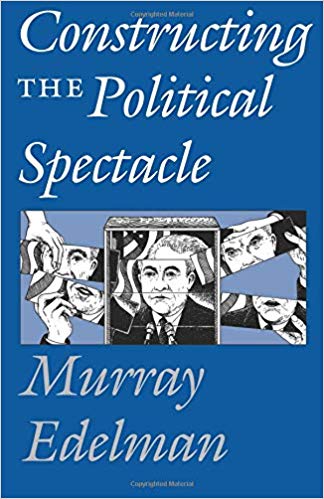
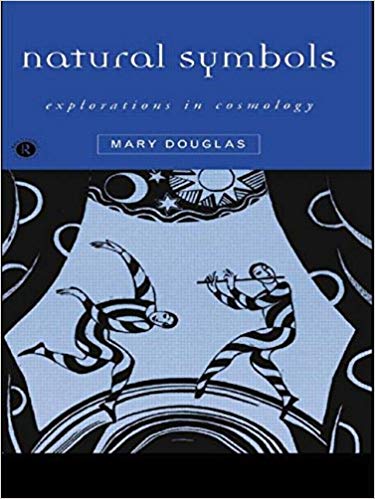


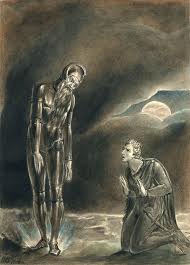
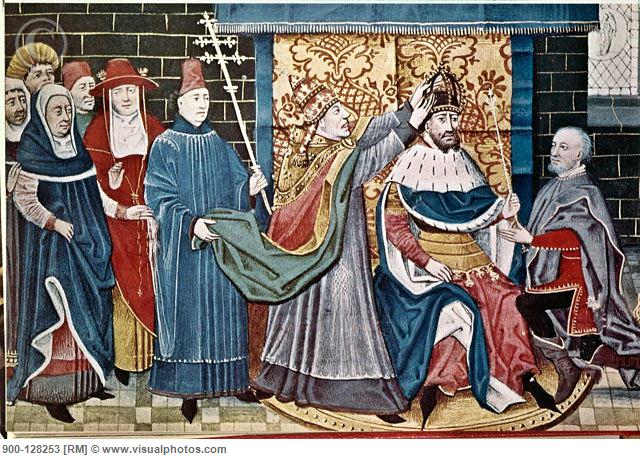

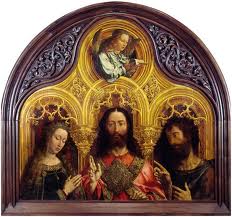

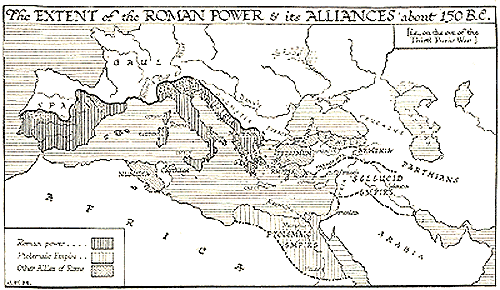


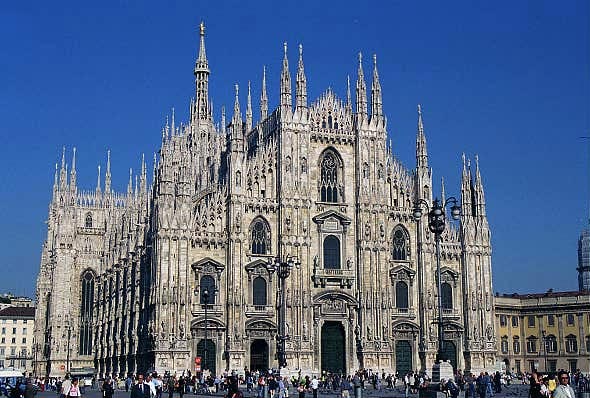



 A Stick in the Mud
