12th Grade: Hayek’s Retort

Greetings,

We wrapped up our unit on economic theory over the past two weeks and began our economic activity game.  With the field trip last week, field day this week, and senior thesis preparations under way, we did not make much progress, but I wanted to let you know about our examination of theories of F.A. Hayek.  At various times throughout the 20th century, either Keynes or Hayek has been in fashion.  In the Great Depression it was Keynes, then in the mid-late 70’s Hayek began his run, and recently Keynes has made a comeback.

Keynes and Hayek differ philosophically in a few key ways.  Keynes sees economics working like Legos.  While certain laws govern economic activity, these laws depend more on human activity in particular contexts, especially spending.  We can manipulate economies, like legos, in ways to fit our particular needs at the time.  When Keynes said, “In the long run we’re all dead,” he did not mean to lay out a pessimistic philosophy of life.  Rather, he argued that economics does not exist in the realm of absolutes.  It is a human creation that exists for human needs.  We do what we can in the moment.  Bailouts are not wrong, anymore than having a cup of coffee in the afternoon to get you through the day is not wrong.  Ideally we do neither, but neither are either of them wrong in the strict moral sense.

Hayek did not disagree with everything Keynes taught, but he did part ways with him in at least two key areas.  First, he argued that economies function well when they reflect real value.  He did not think that if you gazed into the heavens long enough you would discover that a candy bar should cost $1.  Candy bars do not have an inherent value in themselves, but the market gives it a “real” value in its particular time and place.  If merchants can freely sell, and customers freely buy, then the price of the item will reflect its “real” value in that time and place.  The item’s price has been arrived at through a silent, though nonetheless democratic process.  If the price is too high, not enough will buy it.  Too low, and he won’t profit and stay in business.

We understand in general the concept that proper functionality depends on the extent to which you allow things to work as intended.  Market manipulation, by government, by collusion, or other such means will create an artificial barrier between merchants and customers.  An imposition has come between the people and the price.  What we pay no longer reflects its real market value, but an artificial one.

This process of messing with prices distances economies from reality, and hurting the economy will hurt other areas of society.  When we no longer deal in reality, we deal in fantasy, and every fantasy must end sooner or later.  What will reality be like after our flight from it?

Hayek would not panic with society using a cup of coffee every so often to get through the day, but he would worry about where that cup of coffee might lead.  Soon would we need it?  Would we then need more than one cup?  What other stimulants might we try?  Would we then need depressants to sleep?  In time we might be living only through constant manipulation of our moods and energy, but this would not truly be living at all.  Likewise, a manipulated economy is not a real economy, and cannot reflect real value.

In his famous The Road to Serfdom Hayek felt that a process of manipulating the economy would lead to dependance on someone to deliver us from reality, a process by which we abandon our freedom and liberty.  That is of course the worst-case scenario.  But Hayek would add that every market manipulation messes with the people’s ability to freely negotiate prices with producers.  It sets up a collusive, oligarchical barrier to democracy.  And how will this price be set?  Will bureaucrats know more than the aggregate wisdom of the people?  Likely not, and so again, the market, and the people, will suffer.

I really enjoyed our discussions in class on these issues, and gladly saw students take both sides.  Some pointed out that Hayek’s “dependance” analogy can go too far.  When we are sick, we take medicine to restore normalcy, not flee from it.  Of course, we could get addicted to medicines, but that doesn’t stop us from using them when we need it.

Below I include two You Tubes, both of which are admittedly a bit cheesy.   All cards on the table — they are also pro-Hayek in their interpretation.  But agree or not, this was a creative way to communicate the ideas!
12th Grade: Does Capitalism need a Socialist Inoculation?

Greetings,

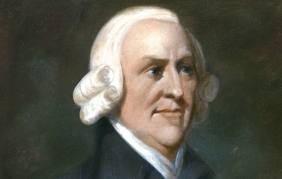
This week we continued our tour through prominent economic thinkers throughout history, and we began with Adam Smith.

Smith wrote in the heyday of mercantilist economic policy in the late 1700’s.  Mercantilism functioned along the following lines:

  • Each nation sought to promote complete economic self-sufficiency.
  • To accomplish this, local economic industries needed protection against foreign competitors, which often meant high tariffs on imports.
  • The great fear in this era was having an imbalance of exports and imports — a trade defecit
  • A country’s money supply needed protected

Smith thought that such a system would in fact impoverish a country, and his response to mercantilism laid the foundations for free-market capitalism ever since.  He revolutionized economic thinking in a variety of ways:

Money and Trade Deficits

Building off of William Petty, Smith argued that money has no value unless its used.  Money is just worthless paper under our mattress.  So we should have no qualms about spending money on things we need or want.  For example, when we go the grocery story we do not walk out thinking, “Hey I gave them my money and all I have to show for it is this bread, milk, eggs, and cereal.”  No one likes to spend money if they don’t have to, but in general we are happy to give the grocery story money rather than make our own milk, cereal, and so on.  We make the exchange because it benefits us.

In the same way, we should be happy to import the goods we need to help make us productive.  Just as we don’t think in terms of the massive “trade deficit” we personally have with Costco, so too we need not worry about how our nation has exchanged money for goods overseas.

Specialization

However nice ad idea self-sufficiency may be, Smith points out that it’s inefficient.  We need only to think of our own talents, and how much better we do in areas of strength.  Wealth should not be measured by how much money we have but the purchasing power of that money.  If your economy operates more efficiently, goods become cheaper.  You may still have just $1, but that $1 can buy more than it used to.  You are wealthier under those circumstances.  This is one way in which a more free market can increase the wealth of a nation.

The “Invisible Hand” vs. Regulation

A free market self-regulates, and the regulating is done by consumers themselves.   If a company charges prices that are too high, people won’t pay it.  No company can profit if it fails to sell its products or services.  Ultimately, people decide the prices of the goods they buy, according to Smith.  This is the market’s “invisible hand.”

The alternatives to a free market is a regulated one.  And who shall make the regulations?  What person has the knowledge and omniscience to set fair prices?  No one does, and woe to those who imagine that they do.  All regulations of the market will hinder the economy and rob people of the freedom to decide what they think is a fair price.  Smith would continue and argue that economic freedom helps foster political freedom.

Smith does have his detractors, or at least, those that want to modify his ideas.  Do we really want the free market to decide everything?  Certainly very few of us would want the market to decide who got liver transplants, for example.  If it did, the wealthy would always get preferential treatment.  Would we accept a completely unregulated meat or medicine market?

Free market ideas along with technological advancements swept across Europe and helped create the Industrial Revolution, and this world gave rise to the next thinker we studied,

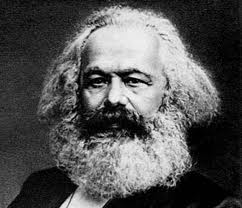
Karl Marx

Marx wrote during the heyday of the Industrial Revolution.  Production had increased dramatically, and more products were available to more people more cheaply than ever before in human history.  At the same time, the Industrial Revolution seemed to create a huge gap between the rich and poor, and this helped form the basis of Marx’s thought.

We need to approach Marx with an open mind.  We know that Marxism, as practiced by socialists, did not work. But Marx himself said that would not call himself a “Marxist” as he saw it practiced in his day, and in any case, no one is wrong about everything.  Marx argued the following

The End of Economic Freedom

The I.R. had its origins in economic freedom, but Marx saw it eroding freedom in the end.  What would even Adam Smith think about a nation of small-farmers and independent shop keepers being put out of business.  They end up as “wage-slaves” working for “the man.”  Thomas Jefferson too felt that political freedom had its roots in independent landowning.  Those who have freedom in their private lives will naturally want to have freedom politically.  But could democracy continue if we all answer to the big boss man?  Marx saw no point in pining away for bygone days or halting technological progress.  Rather, as technology changes we need to find new ways to put the means of production back into the hands of ordinary people, the way it was before the I.R.

Herein lies one of Marx’s major concepts: each economic system (including free market capitalism) has an internal logic to it that eventually exhausts itself.  As Marx saw it, capitalism would soon do the same.

Why?

Well, you can make good refrigerators and sell them to lots of people.  But what happens when everyone has a refrigerator?  What happens when the railroad company has no more land to build track on?  At this point, capitalism (according to Marx) either collapses, or buys itself time.

Capitalism can buy itself time only by encouraging wasteful consumption.  You can either a) invent pointless new products and try to fool people into buying them, or b) make your products worse so people will have to buy them more often.  But either option will rob people of freedom, making them stooges of corporations.

All this is the gospel according to Marx.  He had many things wrong.  He put too much stock in the “labor theory of value.”  Capitalism has also found new ways to reinvent itself.  Instead of railroads we came up with cars and planes.  Companies can also find profit in ways besides simple expansion.  Marx also did not see how the market could improve standard of living for those at the bottom of the economic ladder.  For example, think of the vastly improved quality of even entry-level cars today compared to 20-30 years ago.  Or we can recall how quickly and steeply the price of dvd players fell in the span of a few short years.

But does Madison Avenue ever attempt to create needs that are not there?  Does our society encourage pointless consumption — and can capitalism survive if this kind of consumption forms its foundation?

In our discussion we pondered some of the historical reasons why capitalism did not collapse when Marx assumed it would.  Some suggested that beginning in Teddy Roosevelt’s presidency, we abandoned a more pure liberty/untethered market approach and began to sprinkle in a dash of equality and fairness.  We began to regulate businesses in certain ways.  Organized labor became more prominent.  Did this switch either ..

  • Inoculate capitalism from the full blown socialist disease?  In this view, we prevented the rise of socialism entirely by giving ourselves a small dose of it, to allow the capitalist “body” to produce the necessary resistant to socialism.

OR

  • Put on us on the road to socialism at some point in the future.  Will this be a virus that keeps growing  and slowly learn to take over the system.

Part of the nature of the debate has to do with the ever-present tension between liberty and equality in any democratic system, which can take us back to De-Tocqueville.

Many thanks,

Dave M

12th Grade: The Mystery of Capital

Greetings,

This week we began our look at economic theorists throughout history and some basic principles surrounding economics in general.  This will culminate when the students form rival companies and compete with each other, with the rest of the school as customers.

We spent most of our time trying to understand exactly what money really is, and how it functions.  The title of this post is taken from a book by the famous economist Hernando de Soto, but it also describes my own personal feelings.  Money has a fungible, mysterious identity, but hopefully we reached common ground on a few key ideas.

We often make the mistake of thinking that money is a “real” thing, that it has a natural and inherent value to it.  Rather, money symbolizes or signifies some agreed upon purchasing power.  A strict barter economy makes much more sense after all. If two people exchange a bushel of wheat for a barrel of apples, we immediately see how both sides get value from the transaction.  Although even the wheat and apples do not have absolute fixed values.  If you hate apples, they would not be worth much to you.  If the wheat harvest failed it would have greater value than in previous years.  Still, the transaction seems rooted in understandable reality.

But, I wonder, who was the first person who decided to trade away something tangible and useful, such as bread or animal skins, for shiny rocks?

Of course money  has many advantages to barter economies.  They function much more efficiently, for one.  Shopping is much easier with a pocketful of coins, as opposed to a wagon load of things to trade.  However, a money economy depends on shared societal belief to a much greater degree than barter.  Society must take a collective leap of sorts, for what would happen to our economy if one day the managers of grocery stores said, “Why should I give you this bread and milk?  All you’re giving me in return are these small pieces of paper!”

So, the value of money depends at least in part on a shared, created belief.  But this does not mean that money can simply be invented out of thin air.  Money may not be fully real, but it must be based on something real, be it labor, a product — something.

After laying that groundwork we began our quick look at economic theorists throughout history.  We started with a brief comparison between the Dutch and Spain around the turn of the 17th century.  Spain had an overseas empire that allowed them to bring piles of silver into the country.  The Dutch too, had some overseas trade, but they helped pioneer the idea of the corporation and the stock market.  At first glance, we might expect a mountain of silver to defeat a nascent stock market, but in fact the reverse happened.  How could this be?

When the Bush and Obama administrations gave bailout packages to various financial industries, many commented something along the lines of, “If the government is going to give out all that money, they could just give it to families, and each would receive $35,000.”  Would this have worked?  I asserted that if this had been done, everyone would have more money, but no one would be any richer.  If everyone is special, no one is.  Prices would likely rise, and inflation would kick in.

This happened in Spain.  The supply of silver increased significantly, but prices even more so.  Part of this had to do with how the Spanish used their silver, but the basic principle still holds.  Their silver created no wealth.  In contrast, the Dutch stock market created a system whereby the flow of capital could be constant, and that money would be used to further develop companies.  Thus, the stock market would have a better chance of reflecting “real” value than a pile of silver.  Of course, this serves as only a cursory explanation.

John Law had a checkered career as a financial advisor, but he came up with a couple financial innovations that have done much to influence modern finance.

  • Credit is Money

Money’s value comes from the fact that people trust it.  Without trust, money could not function.  Thus, trust forms the basis of all purchasing power.  Suppose you had no actual money to your name, but did possess a notarized I.O.U. from Bill Gates for $1 million, payable by the end of next week.  We surmised that you could use that credit as money, or at least to secure a loan.

When we use credit cards, for example, no money changes hands at that moment.  The store trusts the credit companies to pay them, the credit companies trust us to pay our bill.  Credit would not work without trust, but we can take it one step further.  Trust can function like money.

  • Credit and Governments

Law argued that since governments have the power to tax, they can issue money against themselves in a crisis.  Borrowing against yourself would force governments, he argued, to pay it back.  To not recollect the money would de-legitimize their whole standing with the people and destroy their currency. If the people don’t trust the government to pay it back, then you have bigger problems than mere financial difficulties.  The government itself would collapse.  Given that this option comes with more pain than repaying the loan, Law thought, governments would choose to recollect in the form of taxes later.

Governments certainly have used this idea numerous times, sometimes with great success, other times it has led to disaster.  But that is part of Law’s point.  Governments risk a lot through this mechanism, and if they’re not “good for it” than they don’t deserve to govern.

In his book, The Cash Nexushistorian Niall Ferguson speculated that one reason why democratic countries have more financial success than other forms of government is the flexibility given through governing by consent.   Since governance through consent has more stability, these governments have more trust in the international community.  This trust leads to more purchasing power.

Next week we’ll look at Adam Smith, Karl Marx, Keynes, and Hayek.  Have a great weekend.

Dave Mathwin

12th Grade: Wag the Dog

This week we looked at Athens’s disaster in Sicily and the subsequent extensive fallout.
Why did Athens lose in Sicily?
Part of Thucydides’s brilliance as a historian is that does not look merely at battles and personalities, but finds ways to link events to a grand narrative.  Athens had so many strengths, and one could argue that their democracy itself was a product of their search for excellence and truth.  But it appears to me, at least, that something began to go wrong just prior to the Peloponnesian War with the completion of the Parthenon.  The Parthenon is of course one of the great architectural achievements in history.  Ostensibly, it is a temple to Athena, the patron goddess of the city.  But a closer look at the carvings on the Parthenon reveal not scenes of gods or goddesses but of events in their own history.  Did Athens really create a temple to their own glory?  Did they think they had arrived?  Did they begin to, in essence, worship themselves?  What would this mean for them?
This question is related to the idea of democracy itself?  Is democracy about voting?  Is it only about having a voice?  If so, then democracy becomes naval gazing, only about perpetuating itself through a process, serving no higher end.  If democracy (or any form of government) serves a higher ideal, it has a built in check upon itself.  But if we don’t have this, then whatever result we come up with must indeed be democracy, it must serve us well by definition, because it serves ourselves.  This kind of attitude, of which ancient Athens has no monopoly, will lead to disaster.  Imagine traveling with your head down continually.  You would drive off a cliff at some point.  G.K. Chesterton has a great quote about self-worship (what he calls ‘The Inner Light’) in his book ‘Orthodoxy”:

 That Jones shall worship the god within him turns out ultimately to mean that Jones shall worship Jones. Let Jones worship the sun or moon, anything rather than the Inner Light; let Jones worship cats or crocodiles, if he can find any in his street, but not the god within. Christianity came into the world firstly in order to assert with violence that a man had not only to look inwards, but to look outwards, to behold with astonishment and enthusiasm a divine company and a divine captain. The only fun of being a Christian was that a man was not left alone with the Inner Light, but definitely recognized an outer light, fair as the sun, clear as the moon, terrible as an army with banners.

The problems with the Sicily expedition can be traced to the problems with their democracy.  Alcibiades wanted the expedition, Nicias opposed it.  Both were wealthy, experienced in politics and military matters, and each had their own constituency.  Alcibiades was the fire to Nicias’s ice.  Their personal and political rivalry spilled over into the formation of Athenian policy.  The tail had begun to wag the dog.  Among other things, Nicias’s political maneuverings against Alcibiades led to drastic changes in the composition of the fighting force and, perhaps even the goal of the mission.  One wonders if they realized this.  With their heads down, I think not.  In my opinion they thought. . .
– We voted, just as always
– We picked experienced people
– We have followed the procedures and processes defined by law
Therefore,
– Everything is fine, or possibly even better than fine
I don’t think they had the wherewithal to realize that they had just voted for a massive expedition that had no real relation to their war with Sparta far from home against a powerful enemy.  The man who ultimately led the expedition, Nicias, argued against any expedition at all.   In my opinion, the disaster in Sicily was the terrible price exacted for their self-worship.  AJ Toynbee wrote in “An Historian’s Approach to Religion,”
‘The strength of the devotion that parochial-community worship evokes holds its devotees in bondage even when it is carrying them to self-destruction; and so the warfare between contending parochial states [i.e. war between Athens and Sparta] tends to grow more intense and devastating in a crescendo movement.  . . . All parochial community-worship ends in a worship of Moloch, and he exacts more cruel sacrifices than the Golden Calf.  War to the death between parochial states has been the immediate external cause of the breakdown of almost all, if not all, the civilizations that have committed suicide up to date.”
Their failure in Sicily brought about the collapse of their democratic regime.  Their god had failed to provide for their basic needs, and he needed replaced.
In this election season, we do well to remember that we cannot call ourselves a democracy if we merely count votes.  Democracies work when they serve higher purposes than themselves, and fail when the process becomes the end in itself — a means of power over our fellow men.
The oligarchs that replaced the democracy in Athens did no better, ruling wantonly based on their own pent up sense that it was “their turn.”  We sometimes see this happen when one party, shut out of Congress for a time, suddenly gains control.  With this attitude in place things go poorly, and the Gingrich led government shutdown in the 1990’s comes to mind.
Democracy came back, but the instability engendered by these power struggles did the Athenians no favors in their war effort.  In our discussion as to why Athens lost the war, I threw out a few theories bandied about by historians, such as the superiority of infantry over the navy in general, and the Sicily invasion in particular.  But most agreed that Athens made themselves their own worst enemy through their arrogance.  Their self-worship turned their gaze inward.  They never had a filter for their decisions beyond their own immediate wants, and they never opened themselves to an external variable like “justice” to use as a guide.
Next week we will look at the Plato’s critique of democracy, and Aristotle’s response to Plato.  While studying these two titans the students will read Euripides’s The Bacchae to help us get some important issues in a different way.
Blessings,
Dave Mathwin

12th Grade: Fringe Ideas and the Democratic Process

Greetings,

After 8 sessions, this week we wrapped up our own in class Peloponnesian War Game, which the seniors do every year with this unit.  We divided the class into five different teams:

– Athens           – Chios (Athenian Ally)

– Sparta             – Corinth (Spartan Ally)

– Persia, the Wild Card

Each of the years this game has been played I have seen slightly different outcomes each time.  A usual pattern, however, has Athens try and keep a tight leash on Chios to prevent them from rebelling (which Chios, if it wants to win big, must do).  Persia usually wants to sponsor Chian independence and use their military for themselves.  Thus, Athens becomes Persia’s clear enemy.

This time the Athenian team used a never before seen strategy, one that would nearly guarantee them a partial victory, but deny them complete victory.  They agreed to let Persia have one of their provinces in exchange for cash to fight Sparta and Corinth.  Once Athens lost part of its empire to Persia, keeping Chios took on much less importance.  When Chios bucked for independence Athens let them go and focused their attention on Corinth and Sparta.  Fueled by Persian cash, Athens eventually destroyed both of them, though 1-2 of the battles were very close.

Thus, Chios and Persia took home the biggest prizes in our war, while Athens settled for 2nd place.  In our imaginary Greek world, the only Corinthians or Spartans you might meet would be wandering beggars on the street.  Congratulations to the winners, and to Athens for their innovative strategy.

Also this week we had a discussion on the idea of fringe opinions and whether or not they benefit democracy. This question came from their homework on Thucydides’s famous passage on the Revolution in Corcyra during the Peloponnesian War.  Most every student offered an opinion and they had an excellent discussion.  Among some of their ideas:

1. Fringe opinions are generally bad, but inevitable if you want to have a democracy.

2. Fringe opinions are not bad or good because they have no impact.  The vast meat-grinder that is American society softens whatever fringe opinion comes along before it goes mainstream.

3. Fringe opinions are bad, because those who hold then generally are not open to debate, dialogue, and compromise, all of which are essential to a democracy.

4. Radical fringes usually harm no one but a select few and pose no real threat normally.  But in times of great national stress or emergency, they become much more dangerous, as their appeal grows exponentially.

We also discussed what we meant by “fringe opinion.”  Is what makes an opinion “radical” the idea itself, or the number of people who espouse it?  Can the majority hold a “fringe” opinion?

Should any safeguards be taken against fringe opinions?  Many European nations ban the Nazi party, for example, but not the United States.

Obviously we do not face a civil war to the death in our midst, and are nowhere close to the polarization Greece experienced.  But do have any reason for concern?  These graphs might give us pause.  The first shows the increase of straight party voting over the years:

The second shows the ideological distance between the parties. . .

And finally, the rise of presidential Executive Orders.  If Congress stops working the rise of executive power seems inevitable. . .

Many thanks!  Enjoy the weekend,

Dave Mathwin

Here is the text the students worked through:

The following is from Thucydides, who comments on the revolution in Corcyra in Book 3, chapter 8

For not long afterwards nearly the whole Hellenic world was in commotion; in every city the chiefs of the democracy and of the oligarchy were struggling, the one to bring in the Athenians, the other the Spartans. Now in time of peace, men would have had no excuse for introducing either, and no desire to do so; but, when they were at war, the introduction of a foreign alliance on one side or the other to the hurt of their enemies and the advantage of themselves was easily effected by the dissatisfied party.

71 And revolution brought upon the cities of Greece many terrible calamities, such as have been and always will be while human nature remains the same, but which are more or less aggravated and differ in character with every new combination of circumstances. In peace and prosperity both states and individuals are actuated by higher motives, because they do not fall under the dominion of imperious necessities; but war, which takes away the comfortable provision of daily life, is a hard master and tends to assimilate men’s characters to their conditions.

When troubles had once begun in the cities, those who followed carried the revolutionary spirit further and further, and determined to outdo the report of all who had preceded them by the ingenuity of their enterprises and the atrocity of their revenges. The meaning of words had no longer the same relation to things, but was changed by them as they thought proper. Reckless daring was held to be loyal courage; prudent delay was the excuse of a coward; moderation was the disguise of unmanly weakness; to know everything was to do nothing. Frantic energy was the true quality of a man. A conspirator who wanted to be safe was a recreant in disguise. The lover of violence was always trusted, and his opponent suspected. He who succeeded in a plot was deemed knowing, but a still greater master in craft was he who detected one. On the other hand, he who plotted from the first to have nothing to do with plots was a breaker up of parties and a poltroon who was afraid of the enemy. In a word, he who could outstrip another in a bad action was applauded, and so was he who encouraged to evil one who had no idea of it. The tie of party was stronger than the tie of blood, because a partisan was more ready to dare without asking why. (For party associations are not based upon any established law, nor do they seek the public good; they are formed in defiance of the laws and from self-interest.) The seal of good faith was not divine law, but fellowship in crime. If an enemy when he was in the ascendant offered fair words, the opposite party received them not in a generous spirit, but by a jealous watchfulness of his actions.72 Revenge was dearer than self-preservation. Any agreements sworn to by either party, when they could do nothing else, were binding as long as both were powerless. But he who on a favourable opportunity first took courage, and struck at his enemy when he saw him off his guard, had greater pleasure in a perfidious than he would have had in an open act of revenge; he congratulated himself that he had taken the safer course, and also that he had overreached his enemy and gained the prize of superior ability. In general the dishonest more easily gain credit for cleverness than the simple for goodness; men take a pride in the one, but are ashamed of the other.

The cause of all these evils was the love of power, originating in avarice and ambition, and the party-spirit which is engendered by them when men are fairly embarked in a contest. For the leaders on either side used specious names, the one party professing to uphold the constitutional equality of the many, the other the wisdom of an aristocracy, while they made the public interests, to which in name they were devoted, in reality their prize. Striving in every way to overcome each other, they committed the most monstrous crimes; yet even these were surpassed by the magnitude of their revenges which they pursued to the very utmost,73 neither party observing any definite limits either of justice or public expediency, but both alike making the caprice of the moment their law. Either by the help of an unrighteous sentence, or grasping power with the strong hand, they were eager to satiate the impatience of party-spirit. Neither faction cared for religion; but any fair pretence which succeeded in effecting some odious purpose was greatly lauded. And the citizens who were of neither party fell a prey to both; either they were disliked because they held aloof, or men were jealous of their surviving.

Thus revolution gave birth to every form of wickedness in Greece. The simplicity which is so large an element in a noble nature was laughed to scorn and disappeared. An attitude of perfidious antagonism everywhere prevailed; for there was no word binding enough, nor oath terrible enough to reconcile enemies. Each man was strong only in the conviction that nothing was secure; he must look to his own safety, and could not afford to trust others. Inferior intellects generally succeeded best. For, aware of their own deficiencies, and fearing the capacity of their opponents, for whom they were no match in powers of speech, and whose subtle wits were likely to anticipate them in contriving evil, they struck boldly and at once. But the cleverer sort, presuming in their arrogance that they would be aware in time, and disdaining to act when they could think, were taken off their guard and easily destroyed.

Now in Corcyra most of these deeds were perpetrated, and for the first time. There was every crime which men could commit in revenge who had been governed not wisely, but tyrannically, and now had the oppressor at their mercy. There were the dishonest designs of others who were longing to be relieved from their habitual poverty, and were naturally animated by a passionate desire for their neighbour’s goods; and there were crimes of another class which men commit, not from covetousness, but from the enmity which equals foster towards one another until they are carried away by their blind rage into the extremes of pitiless cruelty. At such a time the life of the city was all in disorder, and human nature, which is always ready to transgress the laws, having now trampled them underfoot, delighted to show that her passions were ungovernable, that she was stronger than justice, and the enemy of everything above her. If malignity had not exercised a fatal power, how could any one have preferred revenge to piety, and gain to innocence? But, when men are retaliating upon others, they are reckless of the future, and do not hesitate to annul those common laws of humanity to which every individual trusts for his own hope of deliverance should he ever be overtaken by calamity; they forget that in their own hour of need they will look for them in vain.

12th Grade: Platea, Taiwan, and SOPA

This week we continued our look at the Peloponnesian War and looked at a few important topics:

1. Athens and Platea,

Platea had been a long time ally of Athens, and a strategically important one because of its geographical location near Spartan allies.  Platea’s position was much like that of West Berlin in the Cold War, and perhaps, Taiwan today.  When they came under attack, Athens faced a brutal decision of either abandoning them or attempting a very risky attempt at reinforcing them.  Of course this is shortly after their city suffered an attack of the plague that killed perhaps 1/3 of its citizens.  What should they do?  The class was divided on this question, and it resulted in some interesting debate.  Would/should we, for example, be willing to defend Taiwan at any costs if China attacked?

2. The Athenian Assembly

Thucydides gives us a great behind the scenes look at Athenian democracy in action.  Here we see something much different than we are used to from Congress.  They discussed real issues in plain language with arguments that people could follow.  No 800 page laws passed here.  Average, everyday people could have a direct impact who were not even elected officials, like Cleon, the son of a tanner.  Anyone who has watched congressional sessions on C-Span and found themselves less than inspired would, I think, find accounts of the Athenian assembly bracing.

But there was a down side, as sometimes this rough and tumble process found itself outside established law.  The first time this happened, they approved of a military action that resulted in their biggest success of the early part of the war.  Years later, when they did something similar after the Battle of Arginusae, it would be a disaster.

Is it possible to have our cake and eat it with democracy?  Must we choose between an emphasis on law, with its attendant stuffiness, and dynamic social interaction, with it’s propensity to get carried away?  If so, which should we choose?  Is it possible for our country and our system of government to have the latter even if we wanted to?

3. The War Expands

When the Peloponnesian War began in 431 BC, I think it safe to say that both major proponents felt the war would be over in a year.  After all, no major strategic question divided them (or so, perhaps, it merely appeared to be so). Why was the early phase of the war indecisive?  How did this lead to a change of tactics for both sides, and how did this end up changing the war itself?

On Wednesday we took a detour and discussed the SOPA law being debated before Congress.  I thought this was worthwhile not just because it was a hot topic of conversation, but because it has a lot to do with how one thinks of democracy and society properly functioning.

The law raises a couple of key questions:

– Most see the internet as a good thing for democracy.  Witness, for example, the role of cell phones, web broadcasts, and other such things during the Arab Spring.  The internet puts enormous amount of choices before consumers, which can translate into an enormous amount of power.  The relative ease with which the public can pirate media forces media conglomerates to not take the consumer for granted.  Many have written, for example, of the entrenched arrogance and aloofness of the record companies ca. 1995.  CD”s made them huge profits, and they reduced customer choice.  After all, what other choice did we have but to go to them and buy whole albums? Such is the usual attitude of dictatorships before the fall.

– On the other hand, the digitizing of information has allowed those with power (be they governments or corporations) to amass enormous amounts of data about us.  The data is easy to acquire, store, and retrieve. Privacy has been redefined by the very existence of such technology.  As we have said in class before, the only thing preventing our military from taking over the government is whether they want to or not.  Even citizens with all the automatic weapons the NRA would want available would be no match for an air force, laser guided bombs, etc. In the same way, the only thing preventing government’s from accessing and using this information is whether they want to or not.

On another note,

I noticed during our conversation that the democratization of information may have led to a democratization of Constitutional interpretation.  One student objected to the law because, “It makes the companies instead of the individual the arbiter of what is or is not copyright infringement.”  This student said this almost without realizing the revolutionary implications of such a thought.  For myself, the idea that individuals decide what infringes copyright is a radically new idea.  For the student, it seemed perfectly obvious.

Of course the proposed law does ultimately involve the courts.  Media companies can’t put anyone in jail.  But it struck me that ‘Government’ as the deciding entity rarely came up in the discussion.  This may reflect something Philip Bobbitt discussed regarding the ‘Market State’ back in our mid-term project unit.  He predicted that in the ‘Internet’ era government’s would grow weaker in their connection to the people.  We just don’t need the centralization governments give society anymore.

All in all, it was a wonderful rabbit trail, and one we will likely revisit in a week or so when we see if the law passes.

Blessings,

Dave Mathwin

A Word on Methodology and the Purpose of History

On the first day of school in 8th grade Ancient History (which is the first time I will have taught any of the students in that class), I begin class with the premise that I am wasting their time.

History, after all, (I argue) has no real bearing on your life.  We study some names and dates from the past, a few battles here and there.  Sometimes it might have entertainment value but will never really impact you in any way.  Whatever Cyrus the Great did, be it good or bad, won’t impact on you today.  The past has no present.

Depending on their personality and previous experience students either get very excited or troubled by the prospect that we can blow off the year.  Yes, eventually we get around to reasons why hopefully I will not waste their time, but we should not sweep the arguments against History under the rug too quickly.  Before we bother with History in the first place, we should know what we are doing and why.

Some students respond by stating that history offers us lessons.  When people do bad things, we can learn to avoid them, when they do good we can emulate them.

This is a very common answer, with some truth in it, but I refuse the premise on which it’s based.  Reducing history to didactic lessons runs akin to telling people that Christianity is about adhering to a superior morality.  Whatever truth lies in that statement, Christianity really is not about “morality” at all, or at least, the moral component makes no sense without a much larger context.

In the same way, History does not begin and end with proverbs and moral lessons.  It should be about encounter.  It should be about transformation.

History is often and easily abused.  One common form of abuse is using History as a vehicle for proving a pet theory, something all of us can be guilty of at times. Such an approach is both dangerous and uncharitable.  Uncharitable, because History has no room to speak for itself when we insist it conform to us.  We stop listening and lose the possibility of empathy and understanding.  Dangerous, because manipulating the past puts us in a position of great power.  We erect a wall between ourselves (the “good,” or those with knowledge and understanding) and others, those who “should know better.”  If we do this, we cannot learn, cannot be challenged, and cannot grow.

Finitude will always limit our experience, but we need confronted with “the other” to get shaken out of our narrow field of vision.  Historians can often make the mistake of viewing the past in terms of the present, but this robs the power of the past to really do its work.  Seeing through different eyes pushes us beyond ourselves.  In writing about great books, C.S. Lewis said,

. . . in reading great literature I become a thousand men and yet remain myself. Like the night sky in the Greek poem, I see with a myriad eyes, but it is still I who see. Here, as in worship, in love, in moral action, and in knowing, I transcend myself; and am never more myself than when I do.

This is how History (like all our endeavors) should prepare us for the Beatific Vision.  The “otherness” of different cultures and people can by grace train our hearts for the “otherness” of God’s Kingdom.  Other times and places should also make us humble and charitable.  Hindsight is a great luxury, but we must avoid “finger-wagging.”  We must honor the past by viewing it as they saw it, not as we see it now.  We too act in a fallen context without omniscience.  Those in the past lived under the same constraints.  What kind of decisions would we make in their place?

Bringing it to the present, how do we act morally and justly with the information we have?  How do we make decisions in a fallen world?   We must take responsibility for these decisions, and the difficulties we face should make us rely on God’s grace and wisdom.  Our own sin should make us slow to judge those in the past that struggled with many of the same things as ourselves.  Are we so sure that we would do better?  When we, with proper conviction, call out the past for its mistakes we likely will need the humility to call ourselves and our own society to account.

I am not interested so much in changing the opinion of any student about, say, Napoleon or the Industrial Revolution.  But I am very much interested in 1) Each student coming to a greater understanding of their view of the world, and the extent to which that view can be supported by Christian belief, ethics, etc., and 2) Each student more fully understanding the implications of their decisions in the short and long term for themselves and others.

Mark Twain once said that history does not repeat itself, but it does rhyme.  As we see connections and patterns, we learn more about humanity.  But humanity does not exist in a vacuum.  As in all disciplines, the study of History involves an attempt to understand Reality, imbued with God’s presence.  As Francis Schaeffer said, “He is there and He is not Silent.”

12th Grade: The Dynamic of the ‘State Nation’

Greetings,

This week we continued looking at the development of states, attempting to make the connection between the various elements in society that propel change.  We looked this week at the ‘State-Nation,’ and the ‘Nation-State.’

Th ‘Territorial-State’ (1648-1776) was a conscious move away from the monarchical ambition and religious motivated violence of the previous era.  They sought order, symmetry, balance, and proportion.  This required careful international diplomacy, and sought to prevent any inward social upheavals, for good or ill.

A variety of factors lead to the breakup of this constitutional order.  For one, the Enlightenment grew stale and begged for a more ‘Romantic’ counter-reaction.  But perhaps more than that, the expansion of Territorial States stretched the logic of their identity based on contiguous property (and not ideology, which travels in the minds of me).  The French-Indian War is perhaps the most striking example of a Territorial-State conflict that gives birth to the ‘State-Nation’ here in America.

The French-Indian War created a sense of identity, a sense of a ‘people.’   This ‘people’ would naturally now not want to be treated as pawns in an international game.  They would inevitably demand rights, and this is at least part of the roots of the conflict between the colonies and England.

A look at the Declaration of Independence and Constitution gives us insight into the emerging world of ‘State-Nations.’
1. We have the basis of the particular relationship between government and the people rooted in universal ideas (all men are created equal)
2. We have recognition that the ‘people,’ not territory or states, are the basis for political power, i.e. “We the people. .  .”
3. At the same time we still have a somewhat aristocratic, paternalistic attitude towards ‘the people.’  Government was responsible ‘for’ the people, but neither George Washington, John Adams, Robespierre, or Napoleon would have thought in terms of government ‘by’ the people, or ‘of’ the people.

Napoleon is a great example of someone who understood how the socio-political landscape had changed, and understood how to take advantage of it.  The French Revolution destroyed not only the aristocracy, but the professional army led by aristocrats.  Napoleon had mass, energy, and ideology at his disposal, but lacked the well drilled and trained armies of the rest of Europe.

With a ‘people’ now organized in France, Napoleon could mobilize more support for his campaigns.  He had the supplies, backing, and motive to take his army far (we are liberators of the oppressed).  His took this energy and channeled, achieving superiority of mass at points of his choosing.  This rag-tag ball of energy created by the French Revolution and harnessed by Napoleon made quick work of the rational, balanced, symmetrical, and aristocratic armies of Europe.

But then a curious thing happened.  The countries Napoleon occupied inevitably brought with them the ideology and ‘constitution’ they espoused.  If France was so great, why couldn’t Prussia or Austria be great too?  If they wanted to resist, they would need to raise a new army rooted in this new sense of solidarity, this new sense of a ‘people.’  The old aristocratic officers had been discredited by their initial defeat at Napoleon’s hands.  The armies that defeated Napoleon from 1809-1815 from Spain to Russia, from Prussia to England, were in sense, Napoleon’s accidental creations.  is it any wonder that

Napoleon’s success and ultimate failure have many lessons.  For our purposes I want the students to see how elements of society fit together and in a sense, carry the same message.  Different ideas and actions create new social and political contexts.  Without awareness of the ripple effects of these changes, nations will end up behind the 8 ball, much like Spain of the early 17th century, France and England in the late 18th century, the Austro-Hungarians in the early 20th century, and so on.

Next week I will update you on the ‘Nation-State’ (what you and I grew up with) passed away, and speculate on the best way to move forward in the new economic, technological, social, cultural, political, and moral world we live in. Having seen a few examples of how this process tends to work, I am hoping for some good observations and discussion from the students.

Blessings,

Dave Mathwin

12th Grade: The French-Algerian War

Greetings to all,

This week we examined one of the more studied insurgency campaigns, Algeria’s ultimately successful bid to get independence from France from 1954-1962.  I wanted to focus on a few main issues, aided by our watching of ‘The Battle of Algiers.’

1. Why did France feel the absolute need to win in Algeria?

From the time of Charlemagne (or perhaps even dating back to the pre-Romanized Gauls) France was regarded as having the world’s pre-eminent military, from the Crusades, to Joan of Arc, to Napoleon.  In W.W. I they fought heroically and with great determination.  In 1940, however, they suffered a humiliating and shockingly quick defeat to the Nazi’s.  Desperately seeking to regain their pre-war glory, they did not give up their colonies (unlike their friendly rival England).  They lost again in humiliating fashion in 1954 in Southeast Asia — but they would not lose in Algeria.  This was where they would prove to the world that France was still France after all.

How might this psychological and cultural attitude have impacted their strategy and tactics against the insurgency, and was this beneficial?

2. What is the battleground in an insurgent campaign?

It seems clear that the French thought that the battle was against the insurgents primarily, and so put their military foot forward almost exclusively.  Why did this fail?  What is the primary battleground in an insurgent campaign?  Is it the people, or is it an idea?  If so, what role can the military play?  What role does the government and people play?  In our discussion, one student suggested that the only way France could have saved its position in Algeria was through lots of apologies for their poor treatment of them, and lots of financial and social programs to rectify the situation.   In other words, was the problem a military one at all?

Well, it certainly might have been.  But there is a difference between ‘strategy’ and ‘tactics.’  In large measure,* France’s problem was that their use of the military was their strategy.  It was not used as a ‘tactic’ in a broader campaign.

3. What happens when an army fights in disconnected way from its country’s values?

There is a great deal of evidence that French troops tortured and killed some prisoners as a matter of policy.  This was done with the tacit approval of French politicians, but not the French people.  As revelations of the torture emerged, the French public began to turn against the war, feeling betrayed by the army.  The army in turn felt betrayed by the people.  This tension between identity and actions needed resolution in some way — and the result was one successful military coup that put De Gaulle in as president, and another coup attempt that failed to get De Gaulle out of power a few years later.

Why are cultural and political values an important ‘weapon’ in a war?  Under what circumstances can we depart from those values?  How is a country’s identity a part of its strategy in conflict?

4. Related to #3, what should the role of the press be in a free society?

We discussed a few different options related to this question.

– The press should be an entirely objective entity, focused on presenting ‘just the facts.’  But, however much of an ideal this is, it is rarely, if ever attained.

– The press should be an implicit supporter of the government, or the majority.  This does not mean ignoring obvious truths, but it would mean using the press as a means to ‘rally the people.’

or

– The press should be oriented ‘against’ the government.  That is, the press’ main function is to provide an alternate viewpoint apart from the government’s message.  The government gets its chance, the press provides the people with ‘the other side of the story.’

Students took a variety of positions and tried to combine some of them as well.  We agreed that the current situation is both better and worse than it was 20 years ago.  Better in that we have many different options readily available to us, worse in that it can be challenging to sift through the competing perspectives and narratives.

Next week we will look at our current campaigns in Iraq and Afghanistan, and also begin to prepare for our own ‘insurgency.’

Sincerely,

Dave Mathwin

*France did attempt some small scale political reforms, but almost everyone viewed it as ‘too little, too late.’