I posted this originally back in 2012. While I could have added some new thoughts to the post I wrote directly on Eric Voegelin’s Science Politics, and Gnosticism (found here), I thought it better to include in this post as a sub-set on the idea of territorial expansion.
It may very well be that to read Eric Voegelin is to be confused. I have had my struggles with his book Order and History: The Ecumenic Age. But, remembering that he made a special study of gnostic ideas and philosophy, I found his thoughts on the origins of Gnosticism and its relation to territorial expansion very intriguing.
Gnosticism has many permutations, but at its core it propounds an opposition of matter and spirit, the soul and the body, and so on. Some biblical scholars believe that the Apostle John may be attempting to counter Gnosticism in his epistles. Those who have read St. Augustine’s Confessions know that he involved himself in the gnostic ideas of Manicheism before converting to Christianity. But gnosticism as a general philosophy pre-dates the coming of Christ by many centuries. Voegelin writes on its origins,
The genetic context to which I refer is the interaction between expansion of empire and differentiation of consciousness. In pragmatic history, Gnosticism arises from six centuries of imperial expansion and civilizational destruction (p. 21).
Thus, we may assume that gnostic ideas had their roots in the first great ecumenic empire of the Persians, and this fits with the Zoroastrianism and its adoption by Darius I as the semi-official religion of his court.
As to the “why” behind the link between expansion and Gnosticism, I am less able to penetrate Voegelin’s thoughts. But I believe that we can surmise the following:
Significant expansion destroys our sense of proportion. If the empire is everywhere, it is nowhere.
Lacking perspective, we lack attachment to place. Without attachment to place, we lose our attachment to creation itself. As an old Irish proverb states (I’m not quoting exactly), “Those who travel much lose their faith.”
The power that comes with empire inflates one’s sense of self and distances us from others. As Chesterton stated, one should pray in valleys, not mountaintops.
Related to the original post below, the disconnect from creation might form the spiritual basis of the problems faced by expansion.
Having recently glanced over The Goebbels Diaries I wondered — did Hitler’s refusal to allow Rommel to withdraw at El Alamein, and his “fight to the last bullet” order to Von Paulus at Stalingrad arise not from hope of victory but desire for the extinguishing of matter? As Germany’s territory increased, Hitler seemed more focused on a “refining” cataclysm for creation than in actual victory. Once separated from creation, we come to hate it, with death as the (perceived) only escape.
And now, the original post . . .
Reading Explorers of the Nile spurred on a thought experiment.
While I have not been overly compelled by the story, there have been several interesting tidbits. Regardless of one’s feelings toward the Victorian age in general, or the Brits in particular, one can’t help but admire the sheer will and energy of the second great wave of western exploration (the first being in the 15th-early 16th centuries via the Atlantic). Many hundreds of men risked everything for the sheer thrill of discovery, and yes, for the glory of it as well. In the early phases from ca. 1840-1860’s, most of this exploration seemed to me to have a generally innocent tinge to it. The more acquisitive imperialism came later.
This energy and striving for glory reminded me of late Republic Rome, and the quote from Sallust in The Jurgurthine War, which reads,
I have often heard that Quintus Maximus Publius Scipio, and other distinguished men of our country were accustomed to declare that, whenever they looked on the masks of their ancestors, their hearts were set aflame in the pursuit of virtue [i.e. worthy deeds]. Of course they did not mean that the wax or the effigy had any power over them, but it is the memory of great achievements that kindles a flame in the breasts of eminent men that cannot be extinguished until their own excellence has come to rival the reputation and glory of their forefathers.
It struck me that it was during the later phase of the Republic that Rome grew the most in size. If we look at a map of the Mediterranean at the beginning of the first Punic War in 264 B.C. . . .
we see that Rome, though decent in size, does not dominate. They have their sphere, along with Carthage, Egypt, Macedon, etc.
If we fast-forward 100 years we get a different picture, and as the map below indicates, Rome continues to grow almost geometrically down to the death of Caesar in 44 B.C.
While Rome had a Republic at this time, I agree with Toynbee that while the government had democratic elements, it was for all intents and purposes an oligarchy. The aristocratic senate dominated policy, however much voting by the masses took place.
Is there a connection then, between oligarchic democracies and expansion? As time marched on from Charles I, England did by fits and starts become more democratic. But 19th century England surely was not democracy in our sense of the word, and instead like the Republic showed strong oligarchic tinges. As a monarchy, England’s overseas holdings were modest compared with the rest of the world, ca. 1800. . .
But a century later, after more democracy (while still having an oligarchy) and we see a different scene:
As in late Republic in Rome, we have a near doubling in size. Of course, something similar could be said of the other major European powers during the same time, many of them become more democratic after 1848, though again, like England, not fully so until after W.W. I.
Two examples do not really suffice to prove the connection. But three will!
America gets accused of being an imperial power, but I think the charge false in our current, strongly democratic time. It might have had more merit in the more oligarchic 19th century, however.
America, 1800:
America, 1900:
When America became more democratic in the 20th century, our expansion rapidly slowed. Now, to be fair, we acquired Louisiana “fairly” from France by buying it, and Alaska fair and square from Russia. But the same cannot be said for the Philippines, or the vast territory taken from Indians, including territory in Louisiana. Both Abraham Lincoln and Ulysses S. Grant thought that our war with Mexico in 1846 to be manifestly unjust.
If we believe Thucydides, and call Athenian democracy in its golden age really a Pericles-led oligarchy of the best (a claim, to be fair, disputed by the great classicist Donald Kagan), we again see this principle of growth. In 490 B.C. Athens stood as one city-state among many. Not so 50 years later. . .
As to why oligarchic democracies have such expansionistic tendencies, I cannot say. Perhaps it can be the subject of another post filled with wild theories. But it does seem clear that this period of expansion leads to a “Time of Troubles,” for all parties involved.
For England and the rest of Europe, expansion gave way to the two World Wars. America had its Civil War, caused largely by the exacerbation of the slavery issue. The inflaming of the slavery question in its turn had its roots in the Mexican-American war in 1846. Athens and the Greek world faced the Peloponnesian War (431-404 B.C.). Though the proximate causes and results of these conflicts differ, they each have an age of expansion to precede it.
Any thoughts from anyone else, with more examples, or a connection between oligarchic democracies and expansion, are heartily welcome.
If anyone every feels a tinge of excitement opening Plato’s Republic for the first time, many find the text quickly snuffs it out. This foundational philosophical work starts off with a rather mundane conversation. Then, when Plato starts to talk about how the state should be built, one of the first points he makes is that no one should more than one job, one task. Stay in your lane, and do not deviate. Otherwise, “great evil” would result.
Such pronouncements strike moderns as absurd and non-sensical. I like Plato and think The Republic deserves its place in the canon, but I too never really liked the explanation given by various commentators about this section of the work.
Ah . . . but Jane Jacobs may have discovered the answer–one I had never heard or considered before.
All readers know the pleasure of discovering a new author, with the prospect not only of the current book in front of you, but of all of their other works. Well, historians get the same thrill as seekers of fiction, and I have to say . . . Jane Jacobs has been too long absent from my life. I am not sure if I agree with her, but that is not the point. The best teachers you have had may not have agreed with you, but pushed you to think, explore, and wonder.
But I have another qualification for a good historian–one cannot be simply a “one thing after another” type of historian. I would say that such people are in fact not historians–however good their research skills–for historians must create meaning. This means that historians must consciously synthesize even if they do not wish to overtly systematize. Jacobs showed in her most famous work (which I have not read) The Life and Death of American Cities that she can pick order out of the seemingly scattered flotsam of different neighborhoods.
One wants to agree with such people, and I find it annoying for the moment that I cannot decide quite what I think about one of her perhaps lesser-known works, Systems of Survival, a book that attempts to unify the entirety of history into two moral systems, or two ways in which civilizations, organizations, or movements, can order themselves. I admire the audacity of the attempt, and I love too that she organizes her thoughts in the form of hypothetical conversations–more books should take this accessible approach.*
Jacobs broadly identifies two “casts of mind” throughout history that derive from these two moral modes of being. The first, the “Guardian,” and the second, the “Commercial.” I think that “Cosmopolitan” fits better (my first minor disagreement with Jacobs), but I will stick with her terms. She has two of her characters demonstrate this with the following conversation:
Guardian: The love of money is the root of all evil.
Commercial: The love of power is the root of all evil.
G: History tells of the dynasties and the fates of nations and empires.
C: History tells us of how social, material, and economic conditions have changed.
G: The most valuable archeological findings are of art, religious artifacts, tombs, of kings, etc.
C: The most valuable artifacts are clues to how people lived everyday life, how they made their living, their tools and materials.
G: War and preparations for war are normal and peace a hiatus from war.
C: No–peace is normal, war is the aberration.
G: Man is a territorial animal.
C: People are city-building animals.
G: Knowledge is a weapon or possibly an adornment
C: Knowledge is a tool.
G: Intelligence gives us insight into others’ way of thinking–we should focus on what divides us.
C: Intelligence means primarily the ability to pick up new skills and good reasoning. We should focus on what unites us.
G: China is prosperous at our expense.
C: China’s prosperity raises everyone’s standard of living. Economic gain is not zero-sum.
G: ‘Ask not what your country can do for you, but what you can do for your country.’
C: The state exists for the sake of the people–that’s Locke, Rousseau, Madison–the social contract.
These casts of mind come from what Jacobs describes as two “moral syndromes.” By “syndrome” she simply means that the various parts of the moral system necessarily run together. She calls these the “Commercial” and “Guardian” moralities, and part of the vim and dash of the book is that she commits to the idea that these two “syndromes” are all that have ever existed. The values of each system are . . .
The “Commercial” Syndrome
Shun Force–Come to voluntary agreements
Be honest–collaborate easily with strangers
Compete–but respect contracts and other voluntary agreements
Use initiative and creativity
Be open to new things–change should be embraced
Be thrifty and efficient
Promote comfort and convenience
Dissent is valuable for the sake of the task
Invest for productive and practical results
Be optimistic
The Guardian Moral Syndrome
Shun trading, and exert prowess
Be disciplined and obedient
Value tradition and the ‘old ways’
Respect hierarchy–strive for loyalty
Make rich use of leisure–be ostentatious
Dispense largesse
Group exclusivity strengthens internal identity
Treasure honor
Jacobs has much to say about both, and of course both go right and wrong in different ways. In general, most of the world used to subscribe to a Guardian morality and now certainly the first world at least has shifted to the Commercial syndrome. But the shift has not been absolute, as ancient Babylon and classical Athens strike me as mainly “Commercial” in nature, and even “Guardian” civilizations had Commercial aspects. Cities, and any civilization with a port, generally need to adopt a commercial mentality.
I found myself much taken with her analysis, as it explains a lot of the success and frustrations we have with our predicament. The benefits of the Commercial syndrome seem almost second-nature. Our religious and political freedoms arise from it. The material comforts we enjoy come from the speed of innovation (and its accompanying trampling of tradition) over the last 250 years.** Many of our “freedoms” have also resulted from a variety of moral innovations, especially in the area of sexuality. To point out the obvious, if we like democracy we have to value collaborating with strangers.^
But a second look reveals its weaknesses. A “Commercial” society will never build pyramids or cathedrals–hence the constant critique of the vanilla-tapioca nature of democratic culture. The promotion of comfort will make it hard for us to sacrifice without an extreme need. The combination of valuing comfort and dissent make it hard to act as one with common purpose.
The Guardian Syndrome obviously has its associations with aristocracy and its attendant abuses–be they spiritual (such as pride), moral, (indolence) or otherwise–we see right away. But the Guardian syndrome can also give more civic-mindedness & “noblesse oblige.” Those in a Guardian society know their place and need not fight for it. Most every kind of environmental advocate, for example, uses aspects of the Guardian syndrome, i.e., hedging in and protecting defined spaces, and knows the futility of their approach to a Commercial syndrome society (something that Paul Kingsnorth discovered).
But back to Plato . . .
Jacobs surmises that what Plato might have meant by his condemnation of having more than one job or “calling” strongly correlates to these moral syndromes. When we “mix” these syndromes together we have the possibility of dangerous moral hybrids. A few examples . . .
In the 1980’s NYC sought to help fix crime on their subways by injecting the Transit Police (police have a natural Guardian morality) with certain Commercial incentives. The cops got rewards for things like efficiency, i.e., numbers of arrests, and competition (promotions for higher numbers). The result–Transit Police began falsely arresting people least able to fight the charges–the poor–who were mostly minorities.
The Nazi’s took certain aspects of the Guardian morality (such as defense of the homeland) and combined them with Commercial science, whose ‘innovation’ had spawned new racial theories, military ideas, and industrial capacity.
Marx hated bourgeois Commercial morality. But all of his theories lay rooted in western political categories of thought. One result–A generally Guardian mentality in terms of communal unity, but applied on a scale of universal Commercial ideology. Guardians tend towards being apolitical, but the Soviet Union also united the Guardian aspect of loyalty with Commercial ideological innovation. So–to be on the wrong side of the prevailing ideology=disloyalty to the state.
Yes, Jacobs also discusses positive moral hybrids, but seems to lean towards Plato’s conclusion that mixing them brings problems more often than solutions.
So far, so good. I found Jacobs’ thoughts stimulating and illuminating. Where I part ways with her comes with her theory of how these two moral syndromes developed. She postulates a material cause for each, with the guardian mentality arising from war, and the commercial from trade. But it is mind that generates matter, so to speak. It is mind that shapes matter. I won’t defend this proposition here, suffice to say, as a Christian I reject a strictly materialist argument for the origins of civilization. But, Jacobs has a point. These moral syndromes have ancient roots–more ancient than she supposes.
For civilizations to work, they must take into account both unity and diversity. Something must bring them together for a society to form at all, yet if this “something” binds them too tightly it will neglect their individuality. This has its roots in Being Itself. God is both Unity (1 God) and Diversity (3 Persons).
Christ, being both God and Man incarnated this duality/tension. He revealed to us both what I will “Open” and “Closed” ways of being. The Open way shows how God shows Himself in Nature (Ps. 19:1) or our fellow man (Mt. 25). Marriage is an icon of Christ and His Church. (Eph. 5). In other words, the Open way encourages us seek Truth in our experience of the world.
But just as often, we are encouraged to take the Closed way. We must gouge out our eye if it causes us to sin (Mt. 5). St. Paul often posits enmity between the world, the flesh, and the Spirit. Christ tells us that we must “hate” even our mother and father for the sake of the Kingdom. The Closed approach urges us to seek the Truth by narrowing, not broadening, our focus and shunning the trappings of this mortal coil that we might see God and God alone.
So is the Open or Closed way superior? The answer, of course, is ‘Yes.”
I love that the world Jacob’s presents has coherence–two halves, coming together to make a whole. The problem is that, like a donut, it lacks a center. Without this center, Jacobs’ outstanding observations lack any real meaning. But with the center, we have the possibility of real coherence.
And who would complain about having an extra bite of a donut?
Update . . . if only Jane Jacobs were here to comment on the Blue Angels flyover that happened Saturday (May 2, 2020), she might argue that one’s reaction to the event would pefectly pigenhole a person into one of the two aforementioned moral syndromes–if we keep in mind that heavily symbolic and “ostentatious” nature of the event:
Commercial:
This display wasted money that could have been used to so much better practical good
This display wasted time and effort.
This display foolishly misdirected our attention–encouraging the American public to look at the shiny object, rather than a) the problem itself, or b) the politicians and agency heads responsible for gross mismanagement of the whole pandemic.
Guardian:
We live by symbols, and having our most famous and powerful planes flyover gave the nation a powerful symbol of American pride and resolve.
These “unnecessary” displays are in fact, absolutely necessary. We are not materialists–we need such acts to lift us out of the mundane of our lives. We need ‘elevated’ out of our current circumstances. We need inspiration as a people if we are to win the “war” against the virus.
Leaders act responsibly when they provide these symbols for the people–something to inspire awe and help unify them.
*Another notable fact about Jacobs–she had no college degree and can be therefore classified as an amateur. Toynbee would have rejoiced.
**Though–different writers from different perspectives, such as Tyler Cowen, Ross Douthat, Peter Thiel, and even Jane Jacobs herself (in her last book Dark Age Ahead) have declared that innovation has essentially ceased in western economies.
^This kind of collaboration also seems on the decline, in Congress, in marriages (Republicans don’t marry Democrats, and vice-versa), etc.–and this may herald a decline in democratic practice.
Nature is not always “natural.” We “naturally” recognize a standard above nature. For example, nuclear weapons are made from the very stuff of nature (atoms, etc.) but strike as distinctly unnatural in their effect. We understand that technology in warfare has progressed over time. We can process at least some of these changes as a kind of natural progression of what has always been. So, a rifle is akin to a bow and arrow, artillery has its origins in the catapult, and so on. But nuclear weapons turns nature itself against us. Watching nuclear weapons detonate can transfix us with a kind of horrifying beauty. We know that we have encountered something on a different plane . . .
Historians and others have many explanations for our current cultural moment, and I will try my hand in what follows.
I recently heard a priest online state that, “We are still fighting World War I.” Obviously he wasn’t referring to the physical fighting, or the geopolitical situation. Germany, England and France are friends now, more or less. I suspect that he meant that we still fight the war in cultural or religious sense, that we have not understood or solved the central question of the war, which I think runs like so:
How is it that a culture brimming with confidence and optimism (in general), possessing an overwhelming share of global GDP, and controlling in a direct or indirect way perhaps as much as 50% of the globe, throw it all away in a mind-numbingly horrific 30 stretch (1914-45)? Again, while western civilization ca. 1900 had real flaws, we can envy their confident, secure identity and purpose. We have never as a culture come to terms with why western civilization tumbled down the hill, and we still have not learned the basic lessons that period can teach us.
In the biblical narrative, mankind begins by living in Eden, a garden on a mountain. After their exile from Eden, they come down from the mountain, closer, in a sense, to Earth, farther from communion with God. Immediately, Cain’s descendents go further into the earth, using what dig up to build cities and other implements of iron (Gen. 4:22). With this knowledge they tame animals. They gain the power to manipulate nature. But this power makes them uneasy and thin-skinned. It brings them no security–in fact, one could argue that Lamech’s speech (Gen. 4:23-24) comes either from fear, hubris, or both. The Scriptural pattern then is*
Increase of Power=Increase of Vulnerability=Violence, Destabilization, and Dislocation
This sense of “dislocation” struck Cain with full force just after demonstrating his possession of power over the life of his brother (Gen. 4:14).
Of course western civilization has significantly increased its power by using raw materials of the earth in the Industrial Revolution. Our physical power increased exponentially, but not via new machines only. We should also see the preceding political movements towards more democracy as a movement “down the mountain.” Monarchy is a “top of the mountain” form of governance. It concentrates identity into a single point. This concentration, however, limits possibility and potential, which in turn limits power. Moving “down the mountain” gives more possibilities, more “weight,” to political actions (the bottom of the mountain is obviously heavier than the top). Thus, we can see our Constitution as a kind of technological development, one that increased our power vis a vis the rest of the world. If the pattern holds, it should have also made us more “touchy” and prone to violence.
Most shake their heads in disbelief when they see what triggered W.W. I. The various chains of causation–the German navy, Russian interest in the Balkans, Austria-Hungary’s weakness, etc. have a logic to them. But I wouldn’t buy any argument that said that all this was worth war. It seems to me that we see every major power an with advanced case of touchiness and paranoia, a grave sense of insecurity. World War I has a parallel in the Peloponnesian War between Athens and Sparta. By 431 B.C. Athens had grown wealthy and extended its territorial reach throughout the Aegean Sea. But rather than have all of this make them more secure, it seemed to open them up to great fear about it being taken away. As with Lamech and Germany, Athens went to war in the end over the Sparta’s reaction to the Megaran decree–an insult only in the barest sense of the word. To those that say, “If it wasn’t the Megaran decree it would have been something else,” I agree. But this proves my point. Touchy people will get mad at just about anything.
If the Industrial Revolution represented a movement down the mountain to what lies underneath it, so nuclear weapons means traveling even further down into the physical structure of matter itself. What could be more “natural?” This of course granted us enormous destructive power. But surely, it is not natural that handful of people scattered throughout the world should have the ability wipe out billions of people in under 30 minutes. Wielding a knife gives one power, but it is very difficult to accidentally hurt or kill someone else with a knife. A gun gives more power, and hence, it is easier to accidentally–or intentionally–kill someone with a gun.
With nuclear weapons, a small accident, malfunction, or misunderstanding–let alone an actual act of malice–could kill millions.
We need not restrict our purview to weapons only. Cars, for example, give us great power to move quickly. But to enable this, we had to construct roads, a massive traffic apparatus, etc. that leaves us vulnerable to serious injury and death. We could drive well, and our car could work perfectly. But many things are outside of our control. If someone else makes a mistake, or if someone’s else truck blows a tire, it could endanger us easily.
Other digital technology, such as the internet, continues our journey down the mountain. We can manipulate atoms now to vastly increase our communicative ability. We can gain information from anywhere, know anything from any time, and so on. We all know the satisfaction that comes from shopping online, watching a funny youtube, and so on. But virtually every commentator on our current cultural situation acknowledges that internet often hurts more than it helps. With Twitter perhaps especially, we experience the destabilization that comes with chaos. Twitter gives us a sea of information with no editing, structure, or system to guide us. We talk of the “Internet of Things” as it relates to connecting our appliances and other tools to the worldwide web. The moniker is ironic–what the internet gives us is a plethora of “things” with no coherence.
If we mistrust each other it is not because of our weakness but because of the outsized power we possess. At the top of the mountain we can orient ourselves, we can locate ourselves vis a vis our surroundings. At the bottom, however, we have only multiplicity and no unity. This in turn has led to an acute sense of dislocation, which in turn feeds a tendency towards all the wrong kinds of identity, as we have seen recently.**
Fixing western civilization–we all want to see the day, in theory at least. But coming to a solution will mean lightening our load to climb back up the mountain.
Dave
*We see this not just in Genesis 4. The Tower of Babel could be another example of Increase of Power=Dislocation–quite literally in that case. In 1 Samuel 24, King David takes a census, something for which he is punished. It seems incomprehensible to us that taking a census should be a sin. Yet, in the narrative even the amoral Abner warns David against taking this action. If we see the pattern, a census increases ones knowledge of “particulars” dramatically. It is a journey “down the mountain” that makes David quite vulnerable. Abner’s reaction should clue us into the innate understanding they had of this pattern, the danger of David “trying to throw his arms around the world.”
It should not surprise us, then, to see a repeat of this pattern as the New Testament begins. It is not a coincidence that the birth of Christ, the King who would in time destroy the Roman Empire, is preceded by a census (Luke 2).
**In terms of sexual identity, we no longer seek even to mine the minutiae of nature. Instead we wish to transcend it entirely. We have accumulated such power over nature that we feel we can discard it at our leisure. Obviously there is a link here between our current sexual identities and our environmental issues. Here exists a possible link-up between social conservatives and environmentalists.
How we label things, or how we construct their meaning and place in history, obviously will say a lot about us.
The Constitution serves as a good example.
The Constitution has its flaws, its oversights, and some ungainliness about it. We understand that it’s obviously not perfect. But it surely has worked on some level, having lasted this long. Because it has worked (or at least we assume it has — more thoughts on this later), we think of it as a very “modern” and forward-looking document. This matches how we think of ourselves. We are a “progressive” people, the documents that define us must also have the same character.
But in his two books Empire of Liberty, and The Idea of America acclaimed historian Gordon Wood makes the point that the Constitution tried in fact to stem the rising tide of “liberty” and change unleashed by the “spirit of ’76.” The Constitution may not have been a completely “reactionary” document but it was a response to a quick erosion in society of what many elite revolutionaries like Adams and Madison held dear.
Through various quotes and citations, Wood lists the changes seen and feared by such men in the 1780’s . . .
A loosening of traditional relationships between men and women — parents had much less control over who their children married.
Riots and protests against professors at the few (and elite) colleges by many students demanding curriculum changes, attitude changes, and the like
A decided turn against the virtues of the ancient Romans and a great movement toward the ideas of tolerance and conviviality as the means to hold society together
Democratization of religion, which became much less authority driven and much more ‘touchy-feely.’
Extreme partisan politics on local levels, with stories of violent behavior in state legislatures rampant. The rise of the “party-spirit” in politics bewildered many.
Both “free love” and drugs going mainstream into the culture
Ok — the last is not true, but if one looks at the list, it looks quite familiar to us, making us think of the 1920’s or the 1960’s, or today. Maybe we must face the fact that this is what America was, is, and ever shall be. As Alfred North Whitehead once said, “The major advances in civilization are processes which all but wreck the societies in which they occur.”
Wood asserts that while the Constitution succeeded in establishing a structure that put up some barriers to change, overall the idea of liberty and “the people” triumphed over the Constitution’s conservative aspirations. In the end, the idea liberty and the reality of the voice of the people ended up remaking the Constitution in its own image. The Anti-Federalists, those who opposed the Constitution’s ratification, lost the battle but won the war. The best the ideals of Washington and Adams can do now is fight rear-guard actions against the overwhelming power of the “people.”
Though initially shocking to our sensibilities, the idea of a reactionary Constitution helps make sense of much of American history down to the present day. It also partially explains why appeals to the vision of the founders, or the intent of the founders falls on deaf ears. For one, Madison and others probably believed that the factional “evils” they saw in state governments would not transfer to the national legislature. Perhaps Madison wanted a stronger national government because he thought that only the “better sort” would get elected to the national legislature and thereby elevate discourse. This “better sort” would not fall prey to party politics. He sought then, more power not so much to the national government but to the “better men.” However strong Madison’s hopes on this score, they quickly proved illusory. Madison and others like him either misinterpreted or remained ignorant of exactly what their revolution had wrought.**
At a deeper level, two other questions arise. Can the structures of organizations curtail underlying driving principles that form such organizations? I tend to side on this one with the Jurassic Park dictum, “Life finds a way.” The early “conservatives” could not call upon the spirit of self-determination in 1776 and then expect to put the toothpaste back in the tube once the Revolution had accomplished what they wanted it to. The population at large could rightly retort, “What about us?” Bowing to the “will of the people” became a necessity, and eventually, a foreordained, positive good. Even a Constitutional “literalist” or “minimalist” like Jefferson gladly dispensed with his principles with the Louisiana Purchase, among other instances. Like a nuclear blast, the concept of “liberty” leveled everything in its path. What mattered to most was not the past, but the future. The founders had done their part, but our vehement abhorrence to anything smacking of aristocracy made us quickly resistant to anything resembling the determining “tyranny of the past.” John Adams, among others, quickly tried to assert that, “Wait! That’s not what we meant!” Most responded with some form of “I don’t care!” Within a generation of the Constitution’s ratification, “egghead” professions like that of lawyer already were viewed as “elitist” by many, especially towards the frontier. The seeming radical nature of the “Jacksonian Revolution” actually had its roots laid years prior.
Wood deals with the slavery question related to these political questions, but I found his analysis of the relationship between Americans and Native Americans more intriguing. He writes,
Conceiving itself as a composite of different peoples, the British Empire could somehow accommodate the existence of Indians within its territory. But the new American Republic was different: it contained only citizens who were presumably equal with one another. Since the United States could scarcely imagine the Indians as citizens equal to all other American citizens, it had to regard Native Americans as members of foreign nations with which treaties had to be negotiated. Of course, most of the Indians themselves had no desire to become citizens of the American Republic.
While the 17th century colonists did fight with Indians, little doubt exists that American Independence proved a disaster for Native Americans. Problems began years before the war itself — one of the driving issues behind the Sugar Act and Stamp Act involved keeping colonists off Native American land. Wood’s reasoning fits with de Tocqueville’s thoughts on equality, and the problem persists today. We have yet to work out the tension between liberty and equality. When the “people” speak (however we measure this) we cannot tolerate deviation from the norm. The example of Bruce/Caitlin Jenner speaks to this. How many ESPN commentator’s could keep their jobs and declare that Jenner is tragically mistaken in his actions? To be fair, had ESPN existed 50 years ago, could anyone have then applauded his actions and kept his job?
One unsaid implication of Wood’s book is pride of place between the American and French Revolutions. Most see the American Revolution as giving birth to the French Revolution, with the French Revolution as the bastardization of all that went well in America, then withering on the vine as Napoleon took over. But we might instead see the French Revolution as the real victor, with its sense of the power and authority of the “people” in more or less full swing by the early 19th century in America. He who laughs last laughs loudest. Or perhaps both of these positions wrongly presume an essential difference between the two events. Maybe the American Revolution started to resemble the French Revolution because they had the same origins — fraternal if not identical twins. If we consider this option, then we may need to reevaluate America history as a whole — an exciting if not daunting task.
“A man’s worst difficulties begin when he is able to do as he likes.” — T.H. Huxley
Dave
*We should note that those at the the Constitutional Convention had different ideas, and others whom we might consider “founders” like Patrick Henry, John Adams, and Thomas Jefferson were not at the Convention at all.
**Wood cites a variety of sources to demonstrate that the traditional understanding of the need for the Constitutional Convention being the weaknesses of the Articles of Confederation are false. Many had perfect awareness of these weaknesses and their fix remained relatively simple. The real concerns of men like Madison and Washington lie rather in their observations of the petty bickering of state legislatures, and the fact any man Jack seemingly could get elected to state legislatures.
“Whatever we may think of Alexander–whether Great or only lucky, a civilizer or a sociopath–most people do not regard him as a religious leader. And yet religion permeated all aspects of his career.”
This opening line of the book blurb for F.S. Naiden’s Soldier, Priest, and God: A Life of Alexander the Great, sucked me right in. I too had viewed Alexander nearly solely through a narrow political and moral lens, and had never really considered his religious views and acts as central to his successes and failures. The book was too long for me. I would have preferred if he assumed reader knowledge of the standard elements of the Alexander narrative. But what Naiden draws out from his expertise in ancient religious rituals helps us see Alexander afresh in certain ways.
Historians tend to think about Alexander along three standard deviations:
Great visionary and magnificent strategist, one of the truly “Great Men” that, naturally, and tragically, few could truly follow
Fantastic military leader with flawed political skills. After Gaugemela in 331 B.C., his political skills become more necessary than his military skills, and so his fortune waned and his decisions got worse
A thug and barbarian who lived for the chase and the kill. He never really changed, or “declined,”–he always was a killer and remained so until his death.
Soldier, Priest, and God tries to bypass all of these paradigms, though touches on each in turn. Naiden’s Alexander is a man who mastered much of the trappings and theater of Greek religion, which included
The hunt
Prowess in battle
A religious bond with his “Companions,”–most of whom were in the elite cavalry units.
Responding properly to suppliants
As he entered into the western part of the Persian empire, i.e., Asia Minor, he encountered many similar kinds of religious rituals and expectations. The common bonds and expectations between he and his men could hold in Asia Minor. But the religious terrain changed as Alexander left Babylon (his experience in Egypt had already put some strain between he and his men, but it could be viewed as a “one-off” on the margins), and he had to adopt entirely new religious forms and rituals to extend his conquest.
Here, Naiden tacitly argues, we have the central reason for Alexander’s failures after the death of Darius. Some examples of Naiden’s new insights . . .
Alexander’s men did not want to follow him into India-they wanted to go home. Some view this in “great man” terms–his men could not share Alexander’s vision. Some view this in political/managerial terms–his army signed on to punish Persia for invading Greece. Having accomplished this, their desire to return was entirely natural and “contractual.” Naiden splits the horns of this dilemma, focusing on the religious aspects of their travels east.
Following Alexander into the Hindu Kush meant far fewer spoils for the men. Some see the army as purely selfish here–hadn’t Alexander already made them rich? But sharing in the spoils formed a crucial part of the bonds of the “Companions.” The Companions were not just friends, as Philip had created a religious cult of sorts of the companions. It wasn’t just that going further east would mean more glory for Alexander and no stuff for his men. It meant a breaking of fellowship and religious ritual. This, perhaps more so than the army being homesick, or tired, led to Alexander having to turn back to Babylon.
Alexander killed Philotas for allegedly taking part in a conspiracy against him. Others see this as either Alexander’s crass political calculus, or a sign of megalomania, or paranoia. Naiden sees this action in religious terms.
Philotas was a Companion. To execute him on the flimsy grounds Alexander possessed could amount to oath-breaking by Alexander, a dangerous religious precedent. “Companionship” bound the two together religiously, not just fraternally.
Philotas did not admit his guilt but presented himself as a suppliant to Alexander and asked for mercy. True–not every suppliant had their request granted, but Philotas fit the bill of one who should normally have his request met.
Killing Philotas, and subsequently Philotas’ father Parmenio (likely one of the original Companions under Philip), should be seen through a religious lens and not primarily psychologically (Alexander is going crazy) or politically (politics is a dirty business, no getting around it, etc.).
We also get additional perspective on the death of Cleitus the Black. We know that he was killed largely because of the heavy drinking engaged by all during a party. We know too that Cleitus had in some ways just received a promotion. Alexander wanted him to leave the army, stay behind and serve as a governor/satrap of some territory. Why then was Cleitus so upset? Naiden points out that Alexander had not so much promoted Cleitus, but made him a subject of himself, as well as exiling him from the other Companions. The Companions shared in the spoils equally, and addressed each other as equals. As satrap, Cleitus would have to address Alexander as king and treat him as other satraps treated the King of Persia. Hence, the taunt of Cleitus (who had saved Alexander’s life at the battle of Granicus), “this is the hand that saved you on that day!” came not just from wounded pride, but as an accusation against Alexander’s religious conversion of sorts. Alexander had abandoned the “Equality” tenet of faith central to the Companions.
We can imagine this tension if we put in modern religious terms (though the parallels do fall short):
Imagine Alexander and his men are Baptists of a particular stripe. They grew up in Sunday school, reciting the “Baptist Faith and Message.” They join Alexander to punish Moslems who had tried to hurt other Baptists.
As they conquer, they link up with other Baptists. There are Southern Baptists, Regular Baptists, Primitive Baptists, and so on. They go to worship with these people, and while it might be a bit different, it is still familiar. All is good.
Flush with success, the go further. Now they meet more varieties of Protestants–some non-denominational churches, Lutherans, Presbyterians, some Assemblies of God, etc. Ok, from a traditional Baptist perspective, it’s getting a little weird, but we are still more or less on familiar ground.
Now we go to Egypt and–what!–Alexander seems to be joining in on a Catholic service. Ok, this is bad, but at least very few in the army saw this, and we don’t have to spread the news.
Now as we get into Bactria and India Alexander seems to be converting to something unrecognizable. He seems to be breaking with the Baptist Faith and Message and repudiating his past. Or is he? He might be converting to Islam, or what else, I have no idea. We can no longer worship with him. In hindsight, his killing of Philotas was a decisive move in this “conversion.”
Naiden points out that Alexander never officially becomes king of Persia, and attributes this largely to the religious ideology behind the Persian monarchy that Alexander could not quite share or, perhaps understand. As he went into Bactria and beyond, not only had he grown religiously distant from his men, but he could no longer understand or adapt to the religions he encountered. He found himself constantly torn between acting as a king to those he conquered, and as a Companion to his army. In the end he could not reconcile the two competing claims, and perhaps no one could.
Alexander stands as perhaps the most universal figure from the ancient world. Obviously the Greeks wrote about him, as did the Romans, but stories cropped up about him in India, Egypt, Israel, Byzantium, and within Islam as well. Naiden mentions this but fails to explore its meaning. Naiden has a remarkable ability to find facts and present a different perspective. But he never explores how and why most every ancient and pre-modern culture found in Alexander something universal. Though it will strike many as strange the most common image of Alexander has him not riding into battle on his famous horse, but ascending into the heavens, holding out meat so that large birds will carry him up into the sky.
This image comes from a medieval Russian cathedral:
The story comes from the famous Alexander Romance, and runs like so:
Then I [Alexander] began to ask myself if this place was really the end of the world, where the sky touched the earth. I wanted to discover the truth, and so I gave orders to capture the two birds that we saw nearby. They were very large, white birds, very strong but tame. They did not fly away when they saw us. Some soldiers climbed on their backs, hung on, and flew off with them. The birds fed on carrion, so that they were attracted to our camp by our many dead horses.
I ordered that the birds be captured, and given no food for three days. I had for myself a yoke constructed from wood and tied this to their throats. Then I had an ox-skin made into a large bag, fixed it to the yoke, and climbed in. I held two spears, each about 10 feet long, with horse meat on their tips. At once the birds soared up to seize the meat, and I rose up with them into the air, until I thought I must be close to the sky. I shivered all over due to the extreme cold.
Soon a creature in the form of a man approached me and said, “O Alexander, you have not yet secured the whole earth, and are you now exploring the heavens? Return to earth quickly, or you will become food for these birds. Look down on earth, Alexander!” I looked down, somewhat afraid, and I saw a great snake, curled up, and in the middle of the snake a tiny circle like a threshing-floor.
Then my companion said to me, “Point your spear at the threshing-floor, for that is the world. The snake is the sea that surrounds the world.”
Admonished by Providence above, I returned to earth, landing about seven days journey from my army. I was now frozen and half-dead. Where I landed I found one of my satraps under my command; borrowing 300 horses, I returned to my camp. Now I have decided to make no more attempts at the impossible. Farewell.
Here we have the key to understanding the meaning of Alexander as the ancient world saw him.*
The person of a king becomes the focal point of “bodies.” For example, a single, jobless, man living alone in his parent’s basement has only himself as a “body.” His identity includes only himself–his identity includes nothing outside of himself. Thus, he grows stale. Now imagine said man gets a job. He adds the identity of others to his own. If he gets married, now he has bound his identity to another person. This is why marriage has always been viewed as a religious rite within almost every society past and present, Christian or otherwise. Only God/the gods can effect this kind of change in a person. Then the couple has children, and the man has added more “body” to himself. Then one day he has grandchildren and ascends to the level of “paterfamilias.” His “body” includes multiple families.
A king of Macedon has more “body” than the average Macedonian. As we have seen, Macedonian kingship didn’t function like kingship elsewhere, either politically or religiously. Still, kingship has roots in every culture. But everyone knew that this kind of adding of body involved something of a risky and religious transformation–something akin to marriage. If one goes too far you risk losing everything. We can think of Alexander as holding folded laundry in his hand. He bends down to pick up a book, and can do that, then a plate, and it works, then a cup, etc.–but eventually one reaches a limit as to what you can add to oneself, and everything falls to the floor.
I have written before about the biblical image of the mountain in Genesis. Adam and Eve seek to add something to themselves that they should not. As a result they must descend down the paradisal mountain, where more multiplicity exists, and less unity. This leads to a fracturing of their being, and ultimately violence. This is King Solomon’s story as well. He receives great wisdom–the ability to take in knowledge from multiple sources and achieve penetrating insights (many scholars have noted that the biblical books traditionally ascribed to him contain tropes and fragments from cultures outside of Israel). But he goes too far–he strives for too much multiplicity, too much “adding of body,” as is evidenced by his hundreds of marriages to “foreign women.” This brings about the dissolution of his kingdom, the same result Alexander experienced after his own death. But before Alexander lost his kingdom, many would say he lost himself, with executions, massacres, and other erratic behavior. Like Solomon, he lost his own personal center in his attempt to add body to himself ad infinitum.
The story of the Ascension of Alexander hits on these same themes. He tries to ascend to a unity of the multiplicity through the multiplicity itself (note the use of body in the form of the meat to accomplish this). But it can never work this way. When you attempt to ascend via a Tower of Babel, you get sent back down.
The universality of this problem manifests itself today in these two kinds of people:
Purists who believe that even the slightest deviation from an original aim or interpretation destroys everything. Things here get so dry and lifeless that it brings the “death” of the desert.
Compromisers who want to stretch anything and everything to fit anything and everything. No exception ever endangers the rule–everything can always be included. Here you have the flood–undifferentiated chaos with nothing holding anything together. Eventually you reach points of absurd contradiction, and then, conflict.
Alexander’s life fits this tension between purity/unity and multiplicity:
He could take in Greece
He could take in Asia Minor
Perhaps he could just barely take in Egypt
But beyond that–though he could “eat” other kingdoms further east, they certainly didn’t agree with him.
Indeed, why invoke a blessing from God on food before we eat? We ask, in fact, for a kind of miracle–that things dead might be made life-giving. We too ask for help on the potentially treacherous path of making that which is “not us” a beneficial part of our being. We cannot have real unity without multiplicity, and vice-versa. But no blessing will save us from every deliberate choice to drink from the firehose and ingest foreign gods.
Dave
*Understanding this episode in The Alexander Romance will clue us in on how to read ancient texts. We should not assume that the ancients believed that this story was true in a scientific or “literal” sense. It was true in a more profound, metaphorical, and spiritual sense.
It is sometimes possible to enjoy a book that one cannot understand very much of, provided that
The author has a great deal of fun with the subject, and
The author clearly and deeply understands the subject, which allows him to express his ideas clearly.
I confess to knowing nothing about almost all of the authors CS Lewis discusses in his wonderful English Literature of the Sixteenth Century. Anecdotes exist that indicate Lewis felt real heaviness and irritation in cranking this one out, but this does not come across in the writing. It reads light as a feather. Lewis generously shares his opinions about literature, but mixes these opinions with a marbling of philosophy, history, and cultural analysis. All this makes Lewis’ work come alive and relevant for today. This is some of Lewis’ best writing, and his wit and humor shine on most every page.
Lewis finds this era worthy of extended examination because it stands at a nexus of a variety of momentous shifts:
The early 16th century saw the last vestiges of the medieval worldview have their final say
The early-mid 16th century saw the high water mark of Renaissance humanism and classicism
The entire 16th century saw tumultuous religious upheaval caused by the Reformation, followed on by the Counter-Reformation.
Lewis keeps his focus on the literature, as is proper, but his opening chapters also set the stage historically and culturally. For the historian, Lewis goes to great lengths to reset the balance between the Middle Ages and the Renaissance, but I have covered that topic elsewhere. His basic point for in these opening chapters involves prepping us for the fact that literature at a nexus of cultural death and rebirth tends not to be very good. Things eventually sorted themselves out with Sidney, Spenser, and Shakespeare, but the early to middle part of the century left much to be desired. The main fault of the writers of this time involved a hyper-exaggeration of a certain strengths of cultural movements, which robbed much of their writing of life and merit.
To be sure, the political, cultural and religious tumult eventually settled into a new equilibrium, and after that, writers could borrow from different literary genres much more freely and productively, but until that happened, very little of anything transcendent value got written.
This dynamic makes sense to us if we scale down this larger point to something more tangible to our own experience of, for example, adolescence. Our early teen years involve an ending of childhood and the beginning of something else, akin to a larger scale cultural breakdown and rebirth in our immediate personal experience.
I grew up playing drums and listening to a lot of my dad’s music. This was a pre-headphone era, so we all heard what he played on the living room stereo. I got a healthy dose of the Beatles, Otis Redding, Willie Nelson, and Beethoven, among others. I enjoyed almost all of it. But as a 16 year old drummer, I wanted something else (unfortunately it took a few more years before I appreciated Ringo and Al Jackson), and a way to distinguish myself. One day, my cousin’s friend played for me the opening 30 seconds of Rush’s “The Spirit of Radio,” and it was all over for me. I was enchanted. I had never heard progressive rock, so I dove in headfirst. I immediately went to Tower Records and bought Permanent Waves, Moving Pictures, and Hemispheres.* For the next year, I then decided that everything about my drumming, and many other things about my life besides, must conform to Neil Peart’s particular style.
This improved my drumming in certain small ways but ruined it in others. Things got misshapen. If one believes (as I did), that even when drumming for my high school jazz band I should act like Neil Peart, you sound like an idiot. It took hearing a recording of my playing at the county jazz festival, and the judges comments, to make me realize I needed to snap out of it. I spent the following summer listening Glenn Miller and Count Basie, and at least partially fixed things for my senior year.
This was a classic, “It’s not you, it’s me,” problem. Neil Peart has much to teach any drummer, but not if you become enslaved to his aura. In that state, one plays drums essentially to convince an audience, and you lose all sense of proportion.
Times of personal and cultural death and rebirth offer many opportunities. In separating certain aspects of life from a larger context, we can see them with more clarity, and this is exciting. I’d like to think that in college, I could throw in occasional progressive wrinkles without being bound by them. Unfortunately our internal instability in those moments of initial discovery make it very difficult for us to take fruitful advantage of whatever insights we gain. The same applies to a culture at large. In the midst of breakdown, when things come apart, we notice what we had never seen before. This is great as far it goes, but it has to kept in balance.
Lewis shows us how this dynamic plays out in the literature of the period.
Oftentimes, what seems like an era in the fullness of its strength actually ends up being something akin to “terminal lucidity,” a burst of energy many dying patients experience before passing. For example, the 1980’s seemed like the crest of a wave of American confidence. We had Reagan-era optimism. We won the Cold War. We grew economically. We wore bright colors and made our hair big. But look again, and we see that some of what we were about shows an uncomfortable exaggeration of a theme. We should never have attempted, for example, “Hands Across America.” Big hair is one thing, and glam-metal fashion ca. 1988 quite another.
This “hyper-extension” of cultural posturing naturally collapsed, leading to completely opposite atmosphere. Now we had grunge music with lyrics about how bad things were, loose clothes (anyone who tucked in their shirt at my high school in 1990 would have been hopelessly labeled as a nerd), and “heroin chic.”
In neither era do men or women look particularly normal, with both exaggerating certain ideas to a point of being ridiculous.**
I much prefer medieval literature to that of the Renaissance, but by the end of the Middle Ages, we saw the same kind of unfortunate exaggerations. Lewis suggests that Scotland’s king James IV perfectly encapsulates the problem with the period. “Peak” medieval chivalry ca. 1350 had much to commend it. It ennobled men, and greatly elevated the status of women.^ The courtly love tradition had its good parts, though the best literature of the period grappled with some of the contradictions and tensions involved in knightly service of ladies. The literary figure of Lancelot encapsulates this well.
James IV (b. 1473, d. 1513) had many good qualities. He was open hearted, high spirited, and generous in the best spirit of chivalry. He had courage, but a variety of contemporaries remarked that he had too much courage to be king. He needed more prudence and policy. Many of his contemporaries felt that James never should have fought the Battle of Flodden, where he met his death (in Henry IV, Pt. 1 Shakespeare may have had James IV as a model in mind for Hotspur). As to the service of ladies, James IV almost parodies the medieval complexity and tension by abandoning himself to countless prostitutes and fathering a variety of illegitimate children. His exaggerated chivalric ideals made chivalry itself look ridiculous.
So too, late medieval literature had little balance and often none of the sense of play of the best medieval prose from previous decades. Lewis cites the work of John Fisher, who drank heavily from the medieval moral sense, but alas, could not let an idea go once he fixed himself upon it. In his The Perfect Religion, he instructs a nun to be
Grateful for being created to live in a Christian society. As Lewis states, this is well and proper. But Fisher continues, telling the nun to be
Grateful for being created at all. This is still a good sentiment, but perhaps was already covered in the first injunction? Fisher doesn’t stop there, however, urging that she remain
Grateful that she was created as a human being, and not a toad, and tops this off with the counsel that
She be grateful that she was created instead of all the other people that might have been created instead of her.
Lewis rightly points out that by the third injunction, Fisher has descended into absurdity (“she” could never be a toad—not an option for a human being,) and by the fourth, a work intended to promote Catholic orthodoxy seems to promote a gnostic heresy of the pre-existence of souls and the separation of the body from personhood. Lewis writes, “Fisher’s sincerity is undoubted, but his intellect is not as hard at work as he supposes. We can’t hold Fisher accountable for not answering his questions, but he doesn’t seem to know that he is raising them.”
This lack of balance spilled over into the religiously polemical works of Fisher and Thomas More. Both wrote defenses of purgatory, and both in their zeal latched onto certain rogue strands of late-medieval asceticism. In Dante, the souls in Purgatory sing psalms joyfully, and their bodies suffer in service of redemption, and is in fact an integral part of their redemption. For Fisher and More, we have denigration of the body, so that the purgation is for the sake of purgation itself, and their vision of purgatory means a practically pointless circle of suffering.
We should expect this tendency to exaggeration during times of cultural fragmentation. What was once solid now moves apart. The bell curve of ABC, CBS, and NBC turns into a thousand scattered points, first with cable news, then with the internet. When this scattering happens, we naturally lose our bearings and find what we can to latch onto. What we latch onto, however, will be isolated from a larger context, and thus will lose its relationship to the broader whole.
I have mentioned two late-medieval/early modern Catholics, now for some early Reformation humanists (though it was certainly possible to be a Catholic humanist, i.e. Erasmus). John Colet wished to return to a more pure age, and thus urged a strict “anti-body,” morality upon his readers. He saw no real difference between marital union and fornication, and in fact wished that no one would get married. Marriage and the body proved to messy for his taste. He acknowledged that no marriage would mean the end of the human race on earth, but oh well, these things happen.
The humanists loved classical culture, either for its perceived purity, hardy innocence, or merely because the classical age was not feudal and medieval, the worst of all sins. This meant that he abandoned allegorical or symbolic interpretations of the Bible in search of a platonic “pure” meaning of the text. Others shared these views, but his thoughts on the subject of Latin take him into absurdity in a similar way to Fisher. On the one hand, as mentioned, he was a strict moralist with gnostic tendencies. This led to a distrust of much of pagan literature. On the other, he hated all things medieval, and that meant hating medieval church Latin, which had been “corrupted” from the past that was pure, not in morality, perhaps, but in its use of language. Lewis writes,
{For Colet] the spirit of the classical writers was to be avoided like the plague, and their form to be imposed as an indispensable law. When he founded St. Paul’s school, the boys were to be guarded from every word that did not occur in Vergil or Cicero, and equally, from every idea that did. No more deadly or irrational scheme could have been propounded. Deadly, because it cut the boys off from all the best literature in the Latin world, and irrational, because it put absurd value on certain arbitrary elements dissociated from the spirit which begot them, and for whose sake they existed. For Colet, this seemed a small price to pay for excluding all barbarism, all corruption, all “adulterated” Latin.
We noted above that when something reaches its end, it can mimic strength through one final, exaggerated effort. It might seem on the one hand that Latin had no greater champion than Colet, who sought to emphasize only the “best” Latin. But Lewis points out that all of the efforts of the Renaissance humanists to preserve the purity of latin in fact killed it. A variety of medieval people actually spoke latin (churchmen and merchants), or at least some version of latin. Only a very few scholars knew classical Latin, and fewer still spoke it, and then only in the academy. The attempt to save Latin destroyed it.
It is usually more fun to read a review where the critic pans rather than praises. I have focused on the first half of the book, where the literature, with a few exceptions, stunk. But we should remember that the century ended with some of England’s greatest writers, and with Shakespeare we have an “all-timer.” When we recall Shakespeare’s best work, we see how much more comfortable he was with tension and play than the previous generation. He incorporated medieval and modern elements without going out of his way to defend either. Stylistically, he stuck to certain meters and forms, but not all the time. He could happily dance between them. His characters are rich, both particular to his time and universal.
This can give us hope for our own future. We live in an era where many of the old categories of meaning and belonging have vanished. As a result we see the same kinds of intensification and exaggeration that beset the 16th century. But they learned, and so might we. The path forward comes from Thomas More’s most famous and least understood work, his Utopia. As mentioned previously, Lewis felt that much of More’s polemical work fell prey to the vices of the age. Those vices, he argues, cloud our perception of Utopia. Many moderns attempt to find a point to the work, obscured or otherwise, that will clue us in to More’s meaning in the text. Much of More’s other work had a definite argument. So too must Utopia, right? Was More secretly supporting communism, or was he a closet Protestant? Or perhaps he sought to make some other political point buried in code?
Lewis points out, however, that any attempt to pin the book down specifically one way or another will fail, because More writes in this text like a medieval. Given that medievalism was practically dead at this point, it is no wonder that even his contemporaries remained confused. But Lewis argues the book has no particular point. It’s meant as a romp of this and that, no more, no less. The medievals loved to bandy ideas about and put them in tension and opposition to one another. For them, this was fun–and that signifies of a more healthy age than either our own or the early 16th century. They were more interested in play, we in logical, deductive writing that makes a point and gets somewhere definite.
For us, as for the 16th century, the way out of our predicament involves not stronger arguments, but a greater sense of fun. More shows us that even politics, whatever our position may be, can bear the weight of humor in any age.
*I also bought what was at that time their most recent album, Hold Your Fire. Rush fans may relate to my utter shock, bewilderment, and even anger at going from “Red Barchetta” to “Time Stand Still” in the space of 30 seconds. To this day I still feel that Hold Your Fire is a ridiculous album. Not until Counterparts would I start to forgive them.
**At first glance no two things could seem further apart than the late 80’s and early 90’s aesthetic. But both participate in the same cultural breakdown, and are likely, therefore to share some crucial commonalities. A second glance shows that, surprise, surprise, they have androgyny in common. In glam metal, a lot of guys dressed similarly to women (tight pants, makeup, etc.) and in grunge, a lot women looked like men (short hair, lack of showering, no care for appearance, etc.) No doubt grunge devotees would have been horrified to learn that they shared a crucial similarity with hair metal, but there you go.
In one section of the book, Lewis shows that Thomas More (Catholic) and William Tyndale (Protestant), who wrote page after page attacking one another, actually had a lot in common. Both had similar economic ideas. And on Henry VIII annulment and remarriage to Anne Boleyn, the hot-button issue of the day, they were in lock-step agreement. Both seem to have missed this fact at the time.
^For an example of this, note the famous story from Froissart about how Edward III heeded his wife’s call for clemency for the population of Calais.
I have always had great sympathy for Louis XVI. As far as moral character goes, he far outstripped his two predecessors. He had a genuine Christian faith and a genuine love for his family. The first several years of his reign show a movement towards humanitarian and scientific improvements throughout the country, and he sought to limit spending and the Versailles fluffery that characterized Louis XIV-XV. It seems ironic and almost non-sensical that the French Revolution should have come for him. It makes sense, however, when one realizes that for all his virtues, Louis could not play the role of King when it counted most. He had the very common foibles of indecisiveness, and wanting to be liked a bit too much. One can easily pass over such flaws in a common person, but at the wrong place and time, those in power with such flaws receive no mercy from history.
One can see this crucial difference between the three monarchs in their portraits. First, Louis XIV, then Louis XV:
Louis XV would have washed out as anybody but a king. His flaws would have overborne him as a blacksmith, lawyer, or baker. But . . . he could fill the royal robes. Whatever one can say about him, he cared little what others thought.*
Louis XVI in the same pose
comes up short. He shows the required leg, with none of the confidence. While Louis XIV and XV seem to leap out of the frame, Louis XVI wants us to go away so he can go back to fixing his clocks. Alas that 1789 came for such a decent, normal person. Pressed in trying times to puff out his chest and stand firm, he could not. Let us not say that he lacked the courage for this, for he proved at his trial and death to have plenty of it. Rather, we might say that leopards cannot change their spots. Faced with situations entirely unsuited to his temperament, he blundered into bad move after bad move, vacillating here and there in the process.
Some years ago I came across Edward Luttwak’s Grand Strategy of the Byzantine Empire, a title that, at the time, struck me as bizarre yet intriguing on its face. I thought, like many, that the Byzantines blundered around willy-nilly for some centuries, with their hesitations and diplomatic ploys betraying a complete lack of strategy. But Luttwak masterfully pointed out that
Most wars of any people are unnecessary, and should be avoided if possible. Investing in diplomacy as the Byzantines did costs far less in cash and in human lives.
The Byzantines faced enormous problems of different kinds on. multiple fronts for centuries that called for flexible and careful thought.
Like anyone, they made mistakes, but their survival for 1000 years as essentially 1/2 of the Roman Empire shows that they had great success overall in managing their resources with accuracy and effectiveness.
Luttwak performs a similar turn with his The Grand Strategy of the Roman Empire. Emperors of varied quality came and went over the centuries. But, the Romans had a method to how they comprised and used their army. Again, having a strategy won’t always mean that one stays faithful to it, or even that they have a good strategy. But a method, unconscious or no, existed for the Roman Empire, independent of good generals and emperors.
His introduction lays out his basic approach regarding the use of force:
The superiority of the empire, and it was vast, . . . derived from the whole complex of ideas and traditions that informed the organization of Roman military force and it harnessed the power of the empire to a political purpose. The firm subordination of tactical priorities, martial ideals, and warlike instincts to political priorities was the essential condition of success. . . . In the imperial period at least, force was recognized for what it is, an essentially limited instrument of power, costly and brittle. Much better to conserve force, and use military power indirectly.
As an example . . . Romans considered the loss of a military standard something akin to a national tragedy. The Parthians captured a few such standards at Crassus’ disaster at Carrhae. Luttwak writes,
Augustus did not try and avenge the great defeat inflicted by the Parthians . . . in 53 B.C. Instead, in 20 B.C. he reached a compromise settlement under which Armenia was to be ruled by a king of the Arascid family, who would receive his investiture from Rome. Behind the neatly balanced formula there was strategy, for Parthian troops would thereby be kept out of a neutralized Armenia and far from undefended Anatolia and valuable Syria. There was also politics. The standards lost at Carrhae would be returned to Rome and received with great ceremony. Augustus issued coins falsely proclaiming the “capture” of Armenia.
Not very dramatic or inspiring, but Sun Tzu proclaimed that the best generals win without fighting.**
Luttwak organizes the book into a few different eras, i.e., the Julio-Claudians, the Flavians to the Severi, and so on. He examines the military composition at the time, what that should mean for how they used those forces, and to what degree the tactical situation on the ground matched policy in Rome. Certain eras interested me more than others, so what follows reflects that.
During the heyday of the Republic era, Rome’s legions had some variety and flexibility built within them, with light infantry (effective) and cavalry (not as much) attached to the standard Roman heavy infantry. As Rome underwent political changes, so too its army changed. During the early years of the principate they coalesced their forces to make them “heavier”–gone more or less were the javelin throwers and the horses. Exactly why this happened is hard to say, but interestingly, the centralization of political power mirrored itself in the centralization of the army.
However true this may be, it cannot explain everything–a diplomatic method existed behind it. Rome used client states to aid in their security, and used the militaries of the client states to supplement their own. So–Rome provided the main course, so to speak, and their clients the rest. Luttwak writes,
It is the absence of a perimeter defense that is the key to the entire system of Roman security during this period. There were neither border defenses nor local forces to guard against the “low intensity” threats of petty infiltration, transborder incursions, or localized attack. . . . such protection was provided, by indirect and non-military means. By virtually eliminating the burden of maintaining continuous frontier defenses, the net “disposable” military power generated by the imperial forces was maximized. . . . Thus, the empire’s potential military power could be converted into actual political control at a high rate of exchange.
Luttwak adds the following visual, which helps explain the idea of what he calls the “Hegemonic Empire.”
The weakness of such a system lies in that it requires someone with deft political skills to manage it, but Augustus possessed these in abundance. Some of his successors entirely lacked anything like it, but they ruled for a short time–i.e., Caligula. Others, like Tiberius, had sufficient ability, even if they lacked brilliance. Rome all in all prospered under this system because they had “good enough” emperors rule long enough to cover over the disasters. Rome tended to trust its clients and spent few resources watching over them. In turn, this meant that Rome made itself vulnerable to collapse if multiple clients rebelled at once. But again, the strength of the system and the overall competence of leadership made such a result quite unlikely.
In turn, the structure of the army and the attending political realities mean that,
the Roman army was clearly best equipped to serve an an instrument of warfare against enemies with fixed assets to protect–primarily cities, but also such things as arable lands or even irrigation systems. Conversely, Roman capabilities [declined] when enemies assets were not fixed, or at any rate, not concentrated.
This makes Roman disasters like Teutoburg Forest more understandable. You had Varus in command, one who lacked sufficient political ability in Germany. Perhaps more importantly, you had the Roman army far from any help from client states to supplement their ranks, and thus, able to fight well only against fixed assets. When the Germans under Arminius made his own army less “fixed” by “retreating” into the forest, the Romans got mauled. Rome won battles in subsequent years against certain German tribes, but the lack of fixed assets explains why they never could really conquer Germany, nor Parthia and the Sassanids. Grand strategic nuggets like this make Luttwak’s book a real gem.
Luttwak adds that at times the army could prevail in battle even against those lacking a majority of fixed assets. But such situations called forth the dark side of Roman power, writing that
the Romans could [not] apply their strength effectively against the widely dispersed rural base of warrior nations whose strength did not depend on the survival of city-based economic and social structure. Consequently, if the Romans persisted in their efforts, their only real alternative meant attacking the population base itself, in a war of extermination. . . . Thus at the conclusion of Domitian’s campaign against the Nasamones of North Africa, he reported to the Senate that the war had been won, and that the Nasamones has ceased to exist.
Though Luttwak’s analyzes almost everything dispassionately, one can see an example of the truth of St. Maximos’ dictum that man is a macrocosm of the universe, and that we should therefore interpret history through the lens of the human person. For example, I remember years ago when I tried my hand at fixing a plumbing problem in our house. I have no plumbing skills, but the problem seemed simple enough for me to try. Three trips to Home Depot and various tirades worthy of the dad in A Christmas Story later, I called a plumber, who humored me when he arrived by saying that he had seen worse.
My point here is that it would have been much better for me had the plumbing issue been bad enough that I never would have tried to fix it at all. Instead, it hovered in a tempting in-between space. Having waded in, I lost perspective and my cool. The same thing happened more or less to Roman armies in Parthia. And I can remember feeling akin to the Romans against the Nassamones–that if I bashed the pipes to oblivion, I could tell my wife that we had no more problem with the sink. Louis XVI had courage, and humility as well. In the case of serious invasion of France by a foreign enemy, I can imagine him deferring entirely generals while standing firm in an appropriately kingly way. In that case, the situation would have had clarity for him. When he tried to wade into managing internal social and political dynamics, he stumbled badly and tens of thousands died.
In time, Rome switched from a “Hegemonic Empire” to a “Territorial Empire,” to use Luttwak’s term. They switched from a “defense in depth” to having all the eggs in the “border security” basket. This mean that Rome either annexed, absorbed, or abandoned client states. Luttwak masterfully helps us not attach moral categories to this choice, or even to judge immediately the effectiveness of the switch. Rather, this choice involved different risks and problems.
The most common fallacy of analyses is the tendency to evaluate defensive systems in absolute terms. . . . Defensive systems should instead be evaluated in relative terms: their cost in resources should be compared to their military “output.”
Luttwak, p. 61
One can surmise that the “Territorial Empire” had the advantage of simplifying certain problems. More unity meant more control over various factors of defense. Rome need not have emperors equipped with cunning and subtlety to manage the empire effectively. A bulldog would do just fine. But–any penetration of the line brought a significant crises, and if the armies got either lazy or turned on each other–as (the latter) happened frequently in the 3rd century A.D., disaster would follow.
In my view, we should see the “Hegemonic” model of empire as a holdover from the Republic era. It’s flexible fringe with its solid core mirrors that of the structure of the Republic itself. We can see with hindsight that he principate system inaugurated by Augustus fell in between the stools of Republic and Empire, for which the Territorial model makes more sense.
For our own time . . . the NATO alliance in theory projects maximum deterrence and maximum fragility, akin to the Territorial model above. If someone does anything to any member of NATO, all in theory will respond. Possibly, the penetration of one of its members (by Russia) would rally everyone in the ranks for a defense. Possibly as well, an attack at any point might actually reveal the fragility of the system. NATO might abandon one of its own to prevent a general war, which would effectively end NATO as a viable entity.
A third possibility exists . . . one that shows that NATO in facts functions hegemonically. Perhaps the U.S, acting as NATO’s hegemon, might instead delegate defense based on complex diplomatic relationships. Such a move offers us a way out of the either/or of our current situation, and prevent a general war. But it also requires better political leadership than either or current or previous president could provide. If no one more deft arrives on the scene in 2024, we are stuck with the pro’s . . . and con’s of having all of our eggs in the “Territorial” basket.
Dave
*Incidentally, Charles II of England, a distracted (though certainly intelligent) debauchee much like Louis XV, also could transform himself. He knew how to be a king when it really counted, as this brief clip perfectly captures. If Louis XVI could have acted similarly in 1789 with the Estates General, perhaps things would have been different.
**I have nothing to add to the Russia-Ukraine situation except to say that hopefully, Ukraine can find something akin to a military standard to offer to Russia. It would have be something of little value to them, enormous value to Russia. I don’t know if anything like that exists between them.
In our senior Government class, we spend a good amount of time discussing the question, “What is America?” throughout the year. The question is deceptively simple, and we have a difficult time answering it. We discussed Book 1, Ch. 4 from The Prince recently in class, and it spurred some interesting discussion.
The text reads as follows . . .
Why The Kingdom Of Darius, Conquered By Alexander, Did Not Rebel Against The Successors Of Alexander At His Death
CONSIDERING the difficulties which men have had to hold a newly acquired state, some might wonder how, seeing that Alexander the Great became the master of Asia in a few years, and died whilst it was yet scarcely settled (whence it might appear reasonable that the whole empire would have rebelled), nevertheless his successors maintained themselves, and had to meet no other difficulty than that which arose among themselves from their own ambitions.
I answer that the principalities of which one has record are found to be governed in two different ways: either by a prince, with a body of servants, who assist him to govern the kingdom as ministers by his favour and permission; or by a prince and barons, who hold that dignity by antiquity of blood and not by the grace of the prince. Such barons have states and their own subjects, who recognize them as lords and hold them in natural affection. Those states that are governed by a prince and his servants hold their prince in more consideration, because in all the country there is no one who is recognized as superior to him, and if they yield obedience to another they do it as to a minister and official, and they do not bear him any particular affection.
The examples of these two governments in our time are the Turk and the King of France. The entire monarchy of the Turk is governed by one lord, the others are his servants; and, dividing his kingdom into sanjaks, he sends there different administrators, and shifts and changes them as he chooses. But the King of France is placed in the midst of an ancient body of lords, acknowledged by their own subjects, and beloved by them; they have their own prerogatives, nor can the king take these away except at his peril. Therefore, he who considers both of these states will recognize great difficulties in seizing the state of the Turk, but, once it is conquered, great ease in holding it. The causes of the difficulties in seizing the kingdom of the Turk are that the usurper cannot be called in by the princes of the kingdom, nor can he hope to be assisted in his designs by the revolt of those whom the lord has around him. This arises from the reasons given above; for his ministers, being all slaves and bondmen, can only be corrupted with great difficulty, and one can expect little advantage from them when they have been corrupted, as they cannot carry the people with them, for the reasons assigned. Hence, he who attacks the Turk must bear in mind that he will find him united, and he will have to rely more on his own strength than on the revolt of others; but, if once the Turk has been conquered, and routed in the field in such a way that he cannot replace his armies, there is nothing to fear but the family of the prince, and, this being exterminated, there remains no one to fear, the others having no credit with the people; and as the conqueror did not rely on them before his victory, so he ought not to fear them after it.
The contrary happens in kingdoms governed like that of France, because one can easily enter there by gaining over some baron of the kingdom, for one always finds malcontents and such as desire a change. Such men, for the reasons given, can open the way into the state and render the victory easy; but if you wish to hold it afterwards, you meet with infinite difficulties, both from those who have assisted you and from those you have crushed. Nor is it enough for you to have exterminated the family of the prince, because the lords that remain make themselves the heads of fresh movements against you, and as you are unable either to satisfy or exterminate them, that state is lost whenever time brings the opportunity.
Now if you will consider what was the nature of the government of Darius, you will find it similar to the kingdom of the Turk, and therefore it was only necessary for Alexander, first to overthrow him in the field, and then to take the country from him. After which victory, Darius being killed, the state remained secure to Alexander, for the above reasons. And if his successors had been united they would have enjoyed it securely and at their ease, for there were no tumults raised in the kingdom except those they provoked themselves.
But it is impossible to hold with such tranquillity states constituted like that of France. Hence arose those frequent rebellions against the Romans in Spain, France, and Greece, owing to the many principalities there were in these states, of which, as long as the memory of them endured, the Romans always held an insecure possession; but with the power and long continuance of the empire the memory of them passed away, and the Romans then became secure possessors. And when fighting afterwards amongst themselves, each one was able to attach to himself his own parts of the country, according to the authority he had assumed there; and the family of the former lord being exterminated, none other than the Romans were acknowledged.
When these things are remembered no one will marvel at the ease with which Alexander held the Empire of Asia, or at the difficulties which others have had to keep an acquisition, such as Pyrrhus and many more; this is not occasioned by the little or abundance of ability in the conqueror, but by the want of uniformity in the subject state.
Machiavelli’s distinction helps make sense of other historical events. We can look, for example, at Napoleon and Hitler’s invasion of Russia/Soviet Union. At first glance, Russia must have seemed akin to Persia in Napoleon’s eyes. After all, Czar Alexander I certainly looked like most other autocrats in history. But . . . for most of Russia’s existence it resembled France. Tales in the old Russian folk-epics reveal a shaky relationship of the people to their ruler, but more importantly, old Russia had several distinct provinces/cities that competed for precedence and had their own history and identity. Napoleon found Russia easy to enter but hard to hold. The Nazi’s found the same true even 130 years later. When force no longer sufficed to hold the Soviet Union together ca. 1989-91, the old identities resurfaced almost immediately.
“Never get involved in a land war in Asia,” also has some of the same logic behind it. A country like China has the appearance of resembling Persia, just as Russia did. But most of China’s history reveals competing provinces, dialects, and an uncertain relationship to the emperor until later in its existence.
So we asked the question, “Which kind of kingdom is America?” Does it resemble France, or Persia? In contrast to Russia, China, or France, Persia did not have a long, zig-zag run-up to the height of its power. Their civilization had a jump-start, meteoric rise under Cyrus the Great, who immediately set a pattern of charismatic dominance over the whole of his empire. In future generations the Persians took their cue it seemed almost entirely from future dynamic leaders like Darius. Their reliance on this pattern shows even in the failed rebellion of Cyrus the Younger, who fit this mold of dynamic leader better than his brother Artaxerxes II. The fact that he almost succeeded with no other claim to rule besides his personality says a lot about Persia.
Some students thought that America had a beginning akin to that of France or Russia. We had different colonies in different parts of the Atlantic coast that developed entirely apart from each other. These colonies came together only to fight against a common enemy, but essentially remained separate kingdoms until sometime after the Civil War — perhaps not even until into the Great Depression.
The majority thought otherwise. True, the first colonies hardly interacted with one another, but they came to America with similar purposes from similar cultures. At the core, they were about the same thing, which is why the French-Indian War could so easily unite them and start us thinking about the “people.” When examining the history of China, Russia, or France one sees a host of regularly occurring rivalries, small conflicts, and so on. But America we only see one big blowup — the Civil War. The Civil War showed that obviously, we differed on much. But it was the kind of big blowup that occurs in families, when often unity exists. It was the exception that proved the rule.
I acknowledge much merit in the “France” argument, but in this case I sided with the majority. Tocqueville noticed back in the 1830’s the tendency towards centralization in our democratic experiment, and the already growing power of the majority. He wrote,
The very essence of democratic government consists in the absolute sovereignty of the majority; for there is nothing in democratic states that is capable of resisting it.
We have different political opinions, but in no political election is any fundamental question of identity at stake. Many rejoice/lament the election of a particular president. But whoever may win the election, the next day our lives remain unchanged.
In Book Five of his Poliitcs Aristotle speculates that democratic constitutions* remain most safest when threats to said constitution remain either far away or very close. The first seems obvious. When nothing threatens us we live at ease, and it’s easy to have peace with others. A very near threat like an invasion would bind us together quickly. This kind of threat might also be merely an obvious one, like the Japanese attack on Pearl Harbor, which immediately united a divided country in the war effort.
The in-between threats, however, pose a real challenge. Since the danger is neither obvious or near, we can easily divide not just on how to respond but whether or not to respond. We might think of the Vietnam War as an example of this, and sure enough, it brought on significant internal changes to our constitution. The “War on Terror” fits into a similar mold. Should we intervene here or there? Should we increase surveillance or not, what about privacy rights, and so on. And, true to Aristotle’s form, we see increased political polarization with this “intermediate” threat.
But our class speculated on exactly what an “invader” — whatever form that might take — would find. Once Cyrus the Younger died in the Battle of Cunaxa his cause died with him. Once Darius III died, Alexander had essentially conquered Persia. But at what would America’s enemies take aim? Not the president, surely, for at any given time half the country will not like him. Not the capital, either. As the British discovered in 1813, burning D.C. did little to aid their war effort. One could hypothetically detonate a strong EMP in the atmosphere to knock out our electrical system. But that would take out any first or second world country and so that answer lacks enough specificity to the United States. This “absolute sovereignty of the majority,” would be hard to pin down. Where is it? And how would one attack it? Get too close, and the unity of the people to defend their “constitution” would quickly emerge.
The “prestige” in magic is the trick’s big reveal, and of course sometimes what is revealed is nothing at all. This would happen perhaps to an invader, who might never find the rabbit inside the hat. Rather, as Aristotle suggests, and the experience of Rome certainly plays out, democracies will be far more likely to erode themselves from within as opposed to without.
Dave
*By “constitution” he does not mean merely a written document, but our way of relating to one another in general.
I posted originally some years ago–you will see the dated references–and repost it now in conjunction with our Government class discussions this week.
The original post is follows . . .
******************
Barring any unusual excitement at the Democratic and Republican conventions, it appears that many Americans will feel caught between a rock and a hard place regarding their two main choices for president. Many blanch at the thought of “President Trump,” and I wondered if history might suggest hope for such a possibility.
Our founders may have had Republican Rome as their model, but as the U.S. continues to approach a more immediate democracy perhaps we should look to ancient Athens for a historical parallel. Athenian democracy experienced several points of crisis, with perhaps the most notorious coming after their defeat in the Peloponnesian War when they put Socrates on trial.
Many reasons have been given as to Socrates died at the hands of the Athenians. I am intrigued by the theory Mark Munn expounds in his book The School of History. Munn argues that by 399 B.C. Athens searched desperately for stability. Their democracy had transformed significantly under Pericles ca. 450-435 B.C., then switched to a partial oligarchy after the Sicilian disaster in 411 B.C., then back to a democracy by 410, then back to oligarchy in 404-03, then to a restored democracy once more. But the democracy that ruled Athens ca. 400 B.C. was not the same that Athens experienced a generation earlier.
It seems a reasonable conclusion its heyday, Athenian democracy was driven by great personalities and not by procedures. Pericles stands as the foremost example of this, but others come to mind. Herodotus and Thucydides’ histories give us a picture of dynamic men acting on inspiration. Callimachus votes to attack at Marathon. Themistocles devises his own plan apart from the generals to win the Battle of Salamis. Even lesser men like Nicias, Alcibiades, and Cleon sparkle on the page.* Exact fidelity to the law itself did not concern the demos. At their worst, the Athenians may have just wanted a diversion from their politics out of boredom, but another interpretation might point to the fact that the Athenians in this period of their history trusted in inspirational leadership of the moment, as opposed to fidelity to the expression of the “general will” embodied in law. One might even call it a humble characteristic of Athenian democracy. “The People” passed laws but willingly stepped aside at points in the face of “personality.”
But in time the plague, the disaster in Sicily, and their ultimate defeat by Sparta exacted a heavy psychological toll.
With the final restoration of democracy in Athens in 401, Athens moved away from dynamic leadership and towards the exacting nature of the enthronement of law. Law offered a clear path and if nothing else, stability. Munn argues that this passion for law and this movement away from “personality” put Socrates afoul of the will of the people. The orator Aeschines, born in 389 B.C., wrote,
In fact, as I have often heard my own father say, for he lived to be 95 years old and had shared in all the toils of the city, which he often described to me in his leisure hours–well, he said that in the early days of the reestablished democracy , in any indictment for an illegal motion came into court, the matter was no sooner said than done . . .. It frequently happened that they made the clerk str and told him to read to the the laws and the the motion a second time; and they convicted a man of making an illegal proposal not because he had overleaped the laws entirely, but that one syllable only was contravened.
Socrates probably did run afoul of the exacting nature of Athenian religious law after 401 B.C., and he certainly ran directly counter to the spirit behind such laws with his claims to personal, divine inspiration that transcended any earthly authority/law. He was a throwback to time associated with chaos, and to be frank, military disaster.
Of course democracies traditionally have the “rule of law” as a bedrock principle, and we should prefer exacting rule of law to the whims of a despot. But few civilizations can match the cultural achievements of Athens in 5th century. Also, the personality driven democracy of the 5th century certainly outperformed the law driven democracy of the 4th century.** Perhaps one lesson we might draw from this is that a mixing forms and styles of government might outperform monochromatic governments, much like mutts are generally healthier and less crazy than pure-brads.^
Observers of Trump often comment that, aside from his ideas on immigration, he seems to have no particular policies (others would disagree). Yet, unquestionably, he is a “personality,” one that much of the media, for all their antipathy towards him, cannot resist. Is it possible that such an injection of “personality” might be what could help us from stale rigidity in our political life? Certainly we have plenty of bureaucracy, plenty of incomprehensible law, as it stands now.
That would be the best case scenario for this next election cycle. Unfortunately, there are many other directions in which it might go.
Dave
*Cleon’s expedition and victory in Pylos during the Peloponnesian War is evidence of this preference for personality over procedure. It was technically illegal for Cleon to even lead the expedition in the first place, but the Assembly could not resist enjoying the personal rivalry between Nicias and Cleon, and allowed/shamed Cleon into having his chance, which he then took advantage of.
**The great achievements of the 5th century came to a halt during the Peloponnesian War, a self-inflicted wound if there ever was one. But the 4th century did no better, succumbing to Macedon after decades of vanilla tapioca laziness (as the traditional interpretation has it, anyway) in 338 B.C.
^Some might argue on behalf of the 4th century by citing that it produced Plato and Aristotle, luminaries 1 and 1a in western philosophy. This argument should not be pushed too far. A glance at the history of philosophy shows that most advances in this field occur in times of societal breakdown or even decay. This is in contrast, I think to other areas of cultural achievement, whose health usually parallels that of the rest of society. The 4th century had no Parthenon, no Euripides, etc.
Many events leading up to the Peloponnesian War helped increase tensions between Athens and Sparta. I never ascribe to theories that make certain events “inevitable,” but given the history between two of Greece’s pre-eminent powers, war was probably a better than 50-50 bet as tensions between them increased in the mid-5th century B.C. Athens’ decision to build walls around the interior of the city and its harbor clearly added to these tensions.
I had always interpreted Athens’ decision in almost entirely military terms. The Persians sacked their city in 480 B.C., and the Athenians recovered it only after a last stand naval battle in Salamis. The psychological and physical scars of that event would naturally lead to a desire for more defense.
Naturally such an action strained things between Athens and Sparta. Athens had a great navy, Sparta had its infantry. Each could hurt the other in its own way, a kind of ancient application of “M.A.D.” Now, Athens could hypothetically hurt Sparta or its allies without worrying too much about the consequences. As great as Sparta fought in open battle, they had limited abilities in siege warfare. Athens could remain safely behind the walls of Athens. You could see the walls of Athens as a first strike weapon, one that allowed them to sally forth with Sparta not able to retaliate in kind. So too, when President Reagan proposed his SDI “Star Wars” defense, many believed the invention would create a more dangerous world, not a safer one.
Peter J. Fleiss’ book Thucydides and the Politics of Bipolarity showed me a side of this issue I had not realized before. Athens’ walls would never have been built without a decisive shift towards democracy in mid-5th century Athens.
Like almost any other place in the ancient world, Athens’ identity came from its landowning farmers. However, around 600 B.C. the wealthier oligarchs gained an unstable amount of power via the Code of Draco. At this point, Athens chose a tyrant named Solon to take control of Athens for 20 years, beginning in 590 B.C. The choice revealed a lot about the Athenians. Solon had wealth, which earned him the trust of the aristocracy, but . . . he was not an aristocrat, which earned him the respect of the people at large.
Solon embarked on a program to bring social stability back to Athens. He had to walk a tightrope between competing factions and earned high praise from the ancient world for his reforms. For our purposes here, we note that
He refused to redivide land and let the wealthier aristocrats keep what they had acquired from the newly poor.
At the same time, he taxed the wealthy at a much higher rate
He helped grow a middle class by encouraging the growth of a merchant fleet
The growth of merchants provided a valve to let off social steam. In addition, many of the city’s poor got jobs rowing the ships. Solon attempted balance in his reforms, but hindsight shows us that the power of traditional elites was on the clock.
The economic story of Athens ca. 590-450 B.C. mirrors what happened to Rome when she started to shift to a more merchant oriented economy from 200-60 B.C. Rome’s shift helped to destroy the very elites who profited most from this shift. The power of elites rests on tradition. Tradition comes from continuity, and continuity comes from land. This has been the way of things from the days of yore. Once cash money, and not land, formed the primary currency, the land-owning elites lost much of their power.
As Athens naval might grew the population shifted to more urban areas. Of course poorer farmers resided outside the city walls, but we can be sure that the older, established families had most of their land outside the city limits. This land would be the first target of any invading army. Building the wall would allow for more protection, but any defensive structure sends a double message. The Germans, for example, could invade Poland with confidence in 1939 because the Maginot line signaled a purely defensive posture for France along the frontier. Building the walls around the city signaled that in the event of war Athens would willingly let the majority of its exterior farms fall into Spartan hands–until the war was won, of course.
Popular democracy would be the only plausible political vehicle to accomplish this. Land of the elites outside the walls would suffer before the merchant class within the city. In the event of a Spartan invasion, the navy, and the poor who rowed the ships, would rise even more in importance. Only the navy could then procure food for the city under siege. When the time came, Pericles proposed this exact strategy.* At the start of the Peloponnesian War Athens retreated inside its walls and let Sparta have the run of the countryside, while their navy shouldered the military load.
Athens’ walls signaled a cultural shift as well. Some of the established elites outside the walls were obviously more conservative, and might have had more in common with the average Spartan than the average Athenian inside the city. The walls repudiated the statesmanship of leaders like Cimon who sought rapprochement with Sparta.**
To me Pericles’ strategy could have the hallmarks of the “tyranny of the majority” problem discussed by so many political philosophers. Older, elite families lost land, but more importantly, they lost the possibility of gaining status in the war. In the Greek world, status gave power, not vice-versa. Pericles’ proposed strategy greatly limited the chances of the landed gentry gaining honor and status via battle, while greatly increasing the chances of the “demos” to gain in both departments.^
The failure of Pericles’ strategy, partly caused by the unforeseen plague that hit Athens, does not prove that democracies need elites. But their failure in the overall war effort might suggest it. Solon gained fame, honor, and success by pursuing a political agenda that both rewarded and burdened both the people and the elites. In the 100 years after Solon left power, Athens went from an also-ran to a major power in the Greek world. As democracy grew, so too did the people’s opportunities to strike back at their own elite. They should have resisted the temptation. As Tocqueville wrote, democracies usually win their wars, but that’s only when they unite against a common enemy. In Athens’ day the political infighting that began the war lasted only until their situation got desperate. We can’t measure the effect, but it surely hampered their efforts. We might wonder if things would have been different if Pericles pursued a military strategy that allowed for participation and honor for both the people and the gentry.
Our recent election saw much ink spilled on the question of “elites.” Some argued that Clinton is “elite” because of her connections and long political career. Others argue that Trump is elite because of his wealth. Whatever your definition, “elite” has become a dirty word. That’s a shame, because history tells us that healthy democracies need, and perhaps even embrace, their “elites.”
Dave
*Thucydides argues that such a strategy would have worked had the Athenians had the discipline to stick with it. This comment has always perplexed me for three main reasons: 1) At some point the Athenians would have had to deal with the Spartan infantry, and a policy of withdrawing behind walls would only embolden the Spartans, 2) The Athenians did have patience. They tried this strategy for about 4 years, with no real success. Initially the Spartans came, burned what they could, and left. But eventually they realized they could come and stay for much of the year with impunity, because the Athenians never challenged them, and 3) Thucydides shows some disdain for the popular democracy throughout his narrative, and this policy only strengthened the hold of the demos on affairs of state.
**The mood shifted decisively with Cimon’s ostracism. He father fought and won the Battle of Marathon. Cimon himself had many noteworthy victories against the Persians. Everything about “traditional values” pointed to a long and respected career for Cimon.
^This is one reason why I disagree with Thucydides’ assertion that Pericles’ time in power created an aristocratically leaning government with some democratic underpinnings. Here I agree with Donald Kagan that Periclean democracy was really fully democratic.
For years now I have wondered how many books actually get published. In the Christian book world every year, for example, books on prayer, grace, parenting, and so on tumble off the shelves each year. Those I glance at sound almost exactly the same. Of course it’s no business of mine that books are published, but nonetheless, I am surprised.
The same phenomena exists in the world of history as well, perhaps especially in ancient history. Here we deal with limited sources and unsure timelines, and so it seems that one can say only so much. When dealing with the Peloponnesian War I thought that we had reached our limit. The advent of archaeology and the concomitant renewed interest in the ancient world in the late 19th century begot groundbreaking history on ancient Greece. This all culminated, I thought, with Donald Kagan’s masterful four-volume work published in the 1960’s-70’s. Having read portions of those books, I thought that the final word had been uttered. Victor Davis Hanson’s uneven A War Like No Other, and Nigel Bagnall’s disappointing book on the conflict proved to me that indeed Kagan had the last word. Now saying anything else would put one in an awkward position . . .
Or so I thought.
After all, in any field we should encourage new books because we have to encourage new ways of thinking. Maybe 90% of what gets published never need see the light of day but that 90% might be needed to get the 10% that shines new light just where it’s needed.
Enter J.E. Lendon, Virginia’s own spirited iconoclast, and his new book Song of Wrath.
Every student of the Peloponessian War rightly begins with Thucydides, and he impresses immediately with his penetrating analysis and fluid arguments. He talks little about what would be for us, the curiosities of ancient life (commonplaces to them of course), and instead focuses on what moderns would tend to appreciate. For Thucydides, practical power politics and universal psychological principles explained the war. But Lendon points out that the very fact that Thucydides has to argue for his point of view shows that he departed from traditional ways the Greeks understood conflict. He did not reflect, then, a typical Greek understanding of the war. This does not mean he was wrong, but it means that we must wonder if this great authority spoke rightly. In the end, Lendon admirably challenges some of Thucydides’ key beliefs and conclusions.
Lendon begins his work by discussing Achilles. The Iliad begins with a seemingly petty dispute between Agamemnon and Achilles over who has the right to a captured slave-girl. Agamemnon pulls rank on Achilles and takes Achilles’ woman which leads Achilles to withdraw from the fighting altogether. Most every modern reader inevitably views Achilles as a total heel, a petulant jerk who would rather see his companions die than accept Agamemnon’s decision, however unfair it may be. And yet Achilles, not Agamemnon or Odysseus, remained for centuries a revered hero of the Greeks, nearly worshipped by such luminaries as Alexander the Great.
How can this be?
Lendon uses this as a window into what the Greeks valued and how they structured their world. Once we see the great value they placed on rank and honor, we understand the reasons for the war, and the reasons for certain strategies pursued by both sides much more clearly. Achilles earned his reputation by sacrificing all to the Greek concept of honor. We know that he sacrificed long life for glory in battle for starters, but he also willingly defies his king and his friends to preserve his honor. He reenters the conflict not when his honor receives satisfaction, but when his friend Patroclus dies. When Achilles fights he does so not for Agamemnon, but to revenge Patroclus, another key Greek concept. After slaying Hector, Achilles goes too far and succumbs to hybris. He drags around Hector’s body and initially refuses burial. For this, he suffers ignominious retribution in the form of an arrow from spineless Paris. But — he had a magnificent run before he ran aground, and that’s what mattered most.
If we understand honor, revenge, and hybris, Lendon argues, we will understand the Peloponnesian War.
Some might suppose this to be a mere gimmick, but I found this lens suddenly made sense of things that had always puzzled me. Take the strategy of Athens’ star politician Pericles in the wars earliest days. Thucydides records Pericles arguing that,
[Sparta’s] greatest difficulty will be want of money, which they can only provide slowly; delay will thus occur, and war waits for no man. Further, no fortified place which they can raise against usis to be feared any more than their navy. As to the first, even in time of peace it would be hard for them to build a city able to compete with Athens; and how much more so when they are in an enemy’s country, and our walls will be a menace to them quite as much as theirs to us! Or, again, if they simply raise a fort in our territory, they may do mischief to some part of our lands by sallies, and the slaves may desert to them; but that will not prevent us from sailing to the Peloponnese and there raising forts against them, and defending ourselves there by the help of our navy, which is our strong arm. For we have gained more experience of fighting on land from warfare at sea than they of naval affairs from warfare on land. And they will not easily acquire the art of seamanship; even you yourselves, who have been practising ever since the Persian War, are not yet perfect. How can they, who are not sailors, but tillers of the soil, do much? They will not even be permitted to practise, because a large fleet will constantly be lying in wait for them. If they were watched by a few ships only, they might run the risk, trusting to their numbers and forgetting their inexperience; but if they are kept off the sea by our superior strength, their want of practice will make them unskilful, and their want of skill timid. Maritime skill is like skill of other kinds, not a thing to be cultivated by the way or at chance times; it is jealous of any other pursuit which distracts the mind for an instant from itself.
The Athenians, Thucydides, and the ancients who commented on the war all approved of Pericles’ strategy, which the above quote outlines in bare detail. Essentially Pericles wanted to make Athens an island by bringing the population within its walls and refusing to fight the Spartans on land. Then, with their superior navy they could ravage the Peloponnesian coasts. Most moderns, on the other hand (myself included) have thought little of his approach. At best it appears a recipe to avoid losing rather than actually winning. At worst, it’s a passive strategy guaranteed to give all the advantages to the other side.
Lendon argues that we misunderstand the strategy because we misunderstand the Athens’ war aims. Athens did not care about imposing their will on Sparta, or finding their “center of gravity” (a la Clauswitz) so much as they desired equal rank with Sparta. Sparta had the rank of “hegemon” in the Peloponnese, Athens sought hegemon status in Attica and thus, equal status with Sparta in the Greek world. Sparta will ravage our lands, but we can ravage theirs as well. We don’t need a “shock and awe” response because we strive not to prove our absolute superiority, but our equality. Besides, the Athenians would wish to avoid the hybris of seeking something beyond their station. They contented themselves with equality, follow the unspoken rules of war, and avoid the wrath of the gods.*
Armed with this perspective, suddenly other aspects of the war made sense to me. Before I criticized Athenian coastal raids for wasting time and resources to achieve purely symbolic results. This led me to make broader conclusions about the vacillating nature of democracies at war.
Lendon argues of course, that honor and rank have everything to do with symbolism. The Athenian coastal raids had nothing to do with “imposing their will” or tactical advantage, and everything to do with displaying status. So Lendon’s work not only entertained me, it has forced me to reconsider most of my lesson plans for teaching the war. Grudgingly . . . I give Lendon my thanks.
Does any of this new analysis have a modern application in war? Some have suggested that 3rd-world warfare resembles many of these “traditional” concepts of honor and symbolism, and that we must abandon all the Cold-War principles that guided our statecraft. Some argue that acts of terrorism have a lot more to do with symbols of honor than tactical advantage. I cannot comment on this as I lack the knowledge to do so. But I do think we see a lot of the same principles in our modern political scene. Democrats and Republicans both press for legislation that will give them “honor” in their districts or with their national following, and often this legislation has mere symbolic value. Both sides too can obstruct purely for reasons of status, or to refuse honor to the other side. Some might argue that this is part and parcel of any democracy. If so, we will need to redefine our definition of democracy, and accept that at least in its modern context, it has little to do with Christianity. It may bear much more direct similarity to our pagan democratic ancestors, and to the song of wrath sung in ancient times . . .
Sing, goddess, the anger of Peleus’ son Achilleus
and its devastation, which put pains thousandfold upon the Achaians,
hurled in their multitudes to the house of Hades strong souls
of heroes, but gave their bodies to be the delicate feasting
of dogs, of all birds, and the will of Zeus was accomplished
since that time when first there stood in division of conflict
Atreus’ son the lord of men and brilliant Achilleus. . . .
*In Kagan’s great work he comes close to understanding this. He addresses the modern puzzlement over Pericles’ strategy by pointing out that the Athenians essentially voted for it on multiple occasions and kept it going even after a plague struck their city In other words, he points out that the strategy surely made sense to them and they must have thought it effective for their purposes. Lendon argues that after a few years, Athens could have made a legitimate argument that they had won and proved themselves. The problem with such conflicts lie in that they need interpreted, and Sparta did not interpret events as the Athenians did. So the war continued, and in time ended with defeat for Athens in a way no one could misconstrue.
Several years ago I read an article where the man interviewed had positive things to say about some developments in Italian democracy. “The people are now ready to criticize and poke fun of their leaders,” he commented. “We’ll know we have arrived as a democracy when the people can criticize themselves.” At the time I read this, I thought, “Good for you, Italy. One day you may join us. We’ve got something better here.” But upon reflection, I’m not so sure this is true. How many politicians, for example, could get away with criticizing the American people? How many political documentaries create a divide between us and them, whether they come from Rush Limbaugh or Michael Moore? It always appears to be “their” fault, never “our” fault.
Judgments about one’s own society, however, are tricky. To see the nose on one’s face you need a mirror. Without significant experience of democracies on a historical scale, the example of Athens from 508-338 B.C. will always prove important for us to get our bearings.
Writing critical assessments of things or events can be more fun than offering praise. Critical people can sometimes come from a distant and cynical spiritual place, and we shouldn’t give much weight to their comments. Sometimes, however, criticism arises out of love, and this should grab our attention. Loren J. Samons’ What’s Wrong with Democracy does this. He seeks to get past our modern adulation of democracy, and thus, our adulation with classical Athens. When we examine them afresh, he argues, we won’t always like what we see. In his criticism Simons sometimes overreaches and sometimes seems to contradict himself. But his book is, as historian J.E. Lendon stated, “cleansing.”
Amidst the various topics Samons discusses, I think the essence boils down to the following question:
What is democracy really about after all?
Christopher Ferrara tackled this question head-on in his book Liberty: The God the Failed. Samons takes a more indirect approach, but still feels that democracy, standing by itself, may lead to little more than a means to perpetuate whatever we happen to desire. The only reason we will have for democracy is . . . democracy.
He looks at Athens’ financial history and its relationship to democracy. He traces a few distinct stages:
An early phase where the ‘tyrants’ got overthrown and the franchise expanded.
The heralded Periclean phase, often seen as the high-point of democracy. But Samons points out that this phase of democracy was made possible only by 1) Their silver mines, and 2) The imperial tribute they received from their client states. The practices we tend to admire about them, such as paying people to attend the Assembly, and large cash payments for their very large juries (101-501) people, could happen only because of their predatory practices abroad.
The era after the Peloponnesian War, where they lacked the cash reserves of earlier times, but refused to modify their practices. This led to serious financial problems and hard choices for the Athenians. Yet, when faced with the task of defending themselves against Macedon or continuing to vote themselves cash payments, they consistently chose the latter.
Perhaps the Athenians didn’t just simply make bad choices, perhaps the kind of democracy they practiced would naturally encourage them to make bad choices. If democracy is all about “serving the people” or “giving the people what they want,” then democracies will inevitably choose to short-term gains and quick fixes. Salmons wrote his book before our own failure to arrive at a budget, or to either 1) Decrease spending, or 2) Raise taxes made itself manifest. Is our own system of government equipped to make hard choices? Given how we consume energy, we may also have to conclude that our democratic lifestyles have a predatory aspect.
Samons’ next points out that in Athens, their more aristocratic past provided a healthy check on democracy. Having a different past gave them a compass from which to orient their democratic practice. It could also serve as a reminder that democracy need not serve as the be all and end all of political life. In America we have no such check, which leads us to nearly worship democracy as a vital part of our existence. This in turn, has led to a confused and misguided foreign policy. On a couple of occasions Athens even voted to switch to a more aristocratic oriented governance, which Samons views as healthy. In time, Athens banned any alternative to their democracy, and this choice contributed to their eventual conquest by Macedon. They refused to allow any other method of making decisions, even when they methods they employed to make choices had no real hope of facilitating good outcomes.
On this issue Samons has weaker arguments. True, I very much wish that we would appreciate democracy because it is ours, instead of investing it with angelic qualities. But the political instability in Athens from 411-400 B.C. was not always as smooth as Samons lets on. Political exiles and political murders came with such transitions. Having the alternative to democracy came at a price.
However, if a democracy has no reference point outside itself, we should consider whether it may be worth the risk to have such an alternative. Currently we have no particular ‘North Star’ of religion or virtue to guide our own political practice, and this will lead to everyone scrambling for whatever they can get. We may be in a position now where we could really benefit from a distinct alternative to borrow from, to get some separation from democracy that we might understand its strengths and weaknesses more clearly. If we have no firm moral guidelines derived from a common faith, the check on democracy may have to come from other viable political ideologies and practices. Of course such an alternative is entirely unthinkable in our modern context. This may bode ill for us.
This lack of an outside reference point for many modern historians impacts how they view ancient critics of Athens. Invariably, whether the ancient chronicler be Thucydides, Xenophon, Socrates, or the “Old Oligarch,” they get discounted due to their “aristocratic bias.” Now, naturally all historians have bias — even democratic ones. But we cannot dismiss them for this bias alone, however uncomfortable their conclusions may be. Perhaps the the extreme form of democratic bias comes in the form of the book by I.F. Stone on the trial of Socrates. I applaud Stone for his enjoyable and Herculean efforts to partially exonerate Athenian democracy while writing about one of its great crimes. His book rises to the level of a great counter-factual history. But in the text Stone spills a lot more ink discussing Socrates’ “aristocratic bias” then in blaming the governmental system that executed him unjustly.
Critics of Salmons conclusions have two good points.
Salmons offers some good criticisms of Athens in particular and democracy in general. But he proposes no alternatives. What does he want? Would he prefer a monarchy or a dictatorship? I grant this makes the book somewhat unsatisfying, but I can’t fault him for it. To develop a viable alternative with historical and philosophical backing would require another book.
More problematic is Salmons’ seemingly simplistic take on the problems Athens faced. Surely he realizes that other forms of government have their problems too? Yes, Athens had issues, but exactly how much blame can we put for their problems on democracy? Would their problems have been less with a monarchy? He can say that Athenian democracy made bad decisions, but kings make bad decisions, oligarchies make bad decisions, and so on. For his book to really work he would have to show that democracies will make more bade decisions, or more catastrophic decisions, then other forms of government. He fails to do so.
Even still, these flaws don’t bother me that much. Salmons modestly set out to 1) Give a more balanced picture of Athenian democracy, and 2) Pour some cold water over our ardent devotion to democracy. He succeeds, and this makes his book worthwhile.
Machiavelli is at various turns a cold man, a dangerous man, and a wise one. Below I include a section from his Discourses on Livy where he discusses the merits of Rome’s Republic building into its foundation an alternative to the Republic when necessary. This, I think, was Machiavelli in one of his wiser moments.
Dave
Book XXIV
Those citizens who first devised a dictatorship for Rome have been
blamed by certain writers, as though this had been the cause of the
tyranny afterwards established there. For these authors allege that the
first tyrant of Rome governed it with the title of Dictator, and that,
but for the existence of the office, Cæsar could never have cloaked
his usurpation under a constitutional name. He who first took up this
opinion had not well considered the matter, and his conclusion has been
accepted without good ground. For it was not the name nor office of
Dictator which brought Rome to servitude, but the influence which
certain of her citizens were able to assume from the prolongation of
their term of power; so that even had the name of Dictator been wanting
in Rome, some other had been found to serve their ends, since power may
readily give titles, but not titles power. We find, accordingly,
that while the dictatorship was conferred in conformity with public
ordinances, and not through personal influence, it was constantly
beneficial to the city. For it is the magistracies created and the
powers usurped in unconstitutional ways that hurt a republic, not those
which conform to ordinary rule; so that in Rome, through the whole
period of her history, we never find a dictator who acted otherwise than
well for the republic. For which there were the plainest reasons. In
the first place, to enable a citizen to work harm and to acquire undue
authority, many circumstances must be present which never can be
present in a State which is not corrupted. For such a citizen must be
exceedingly rich, and must have many retainers and partisans, whom he
cannot have where the laws are strictly observed, and who, if he had
them, would occasion so much alarm, that the free suffrage of the people
would seldom be in his favour. In the second place, the dictator was not
created for life, but for a fixed term, and only to meet the emergency
for which he was appointed. Power was indeed given him to determine by
himself what measures the exigency demanded; to do what he had to do
without consultation; and to punish without appeal. But he had no
authority to do anything to the prejudice of the State, as it would have
been to deprive the senate or the people of their privileges, to subvert
the ancient institutions of the city, or introduce new. So that taking
into account the brief time for which his office lasted, its limited
authority, and the circumstance that the Roman people were still
uncorrupted, it was impossible for him to overstep the just limits of
his power so as to injure the city; and in fact we find that he was
always useful to it.
And, in truth, among the institutions of Rome, this of the dictatorship
deserves our special admiration, and to be linked with the chief causes
of her greatness; for without some such safeguard a city can hardly
pass unharmed through extraordinary dangers. Because as the ordinary
institutions of a commonwealth work but slowly, no council and no
magistrate having authority to act in everything alone, but in most
matters one standing in need of the other, and time being required to
reconcile their differences, the remedies which they provide are most
dangerous when they have to be applied in cases which do not brook
delay. For which reason, every republic ought to have some resource of
this nature provided by its constitution; as we find that the Republic
of Venice, one of the best of those now existing, has in cases of urgent
danger reserved authority to a few of her citizens, if agreed among
themselves, to determine without further consultation what course is to
be followed. When a republic is not provided with some safeguard such
as this, either it must be ruined by observing constitutional forms,
or else, to save it, these must be broken through. But in a republic
nothing should be left to be effected by irregular methods, because,
although for the time the irregularity may be useful, the example will
nevertheless be pernicious, as giving rise to a practice of violating
the laws for good ends, under colour of which they may afterwards be
violated for ends which are not good. For which reason, that can never
become a perfect republic wherein every contingency has not been
foreseen and provided for by the laws, and the method of dealing with it
defined. To sum up, therefore, I say that those republics which cannot
in sudden emergencies resort either to a dictator or to some similar
authority, will, when the danger is serious, always be undone.
We may note, moreover, how prudently the Romans, in introducing this new
office, contrived the conditions under which it was to be exercised.
For perceiving that the appointment of a dictator involved something of
humiliation for the consuls, who, from being the heads of the State,
were reduced to render obedience like every one else, and anticipating
that this might give offence, they determined that the power to appoint
should rest with the consuls, thinking that when the occasion came when
Rome should have need of this regal authority, they would have the
consuls acting willingly and feeling the less aggrieved from the
appointment being in their own hands. For those wounds or other injuries
which a man inflicts upon himself by choice, and of his own free will,
pain him far less than those inflicted by another. Nevertheless, in the
later days of the republic the Romans were wont to entrust this power to
a consul instead of to a dictator, using the formula, _Videat_ CONSUL
_ne quid respublica detrimenti capiat_.
But to return to the matter in hand, I say briefly, that when the
neighbours of Rome sought to crush her, they led her to take measures
not merely for her readier defence, but such as enabled her to attack
them with a stronger force, with better skill, and with an undivided
command.
Machiavelli inspires polarizing reactions. I find that often that initially I immediate reject his idea, largely because there is something I don’t quite trust about him. But, just as often, I end up rethinking my initial reaction and revising my thoughts.
One such instance happened for me reading Machiavelli’s assertion that republics must have their foundation with one man, writing in the Discourses (I.9),
But we must assume, as a general rule, that it never or rarely happens that a republic or monarchy is well constituted, or its old institutions entirely reformed, unless it is done by only one individual; it is even necessary that he whose mind has conceived such a constitution should be alone in carrying it into effect. A sagacious legislator of a republic, therefore, whose object is to promote the public good, and not his private interests, and who prefers his country to his own successors, should concentrate all authority in himself; and a wise mind will never censure any one for having employed any extraordinary means for the purpose of establishing a kingdom or constituting a republic. It is well that, when the act accuses him, the result should excuse him; and when the result is good, as in the case of Romulus, it will always absolve him from blame. For he is to apprehended who commits violence for the purpose of destroying, and not he who employs it for beneficial purposes.
Machiavelli often engages in this kind of paradoxical thinking, i.e., “if you want peace the ruler must sometimes be cruel,” and so forth. As his logic applies to republics, he argues that concentration of power in the hands of one initially will allow for the spreading out of power later.
America’s history seems to contradict this–don’t we have founding fathers, and anyone who knows anything about them sees a multitude of disagreements about various important ideas about what they wanted. And yet, America has managed reasonable success as a republic for 250 years. But before rendering a judgment here, I realized that two of history’s most famous republics, Athens, and Rome, had foundations in one man–Theseus and Romulus.
The stories of two men, as told by Plutarch and other sources, agree in certain general particulars, especially in regards to their uncertain parentage. Both functioned as kings in their respective realms, but neither ruled as king’s in the sense that we might assume in our modern context. It seems that both functioned primarily as religious leaders and as military commanders primarily. Later, both Athens and Rome underwent significant political changes contemporaneously in the years 509/508 BC. But Rome and Athens had many differences, reflected in the lives of Theseus and Romulus.
We can chart the differences between Athens and Rome
Athens
Attached to water–their key lie in their navy
As they had roots with water, they were active in trade
We see this physical movement linked with significant intellectual exploration–they basically invent modern concepts of science, philosophy, literature, etc.
Rome
Attached to land–their key lie in their infantry
Ringed round with their famous seven hills, Rome remained devoted to land and agriculture. They disdained trade.
This rootedness to place has its echoes in Rome’s intellectual conservatism, espoused most fully in writing by Cato the Elder. Rome’s main contribution to future civilizations would be in law, i.e., how people in the same community relate to one another.
When one looks at the lives of their so-called mythical founders, we see striking parallels. Theseus hardly could keep his feet still, roaming from one place to another, never truly even settling in Athens. He had a variety of women that he “married”/grew familiar with. We moderns would diagnose him with wanderlust. Athens’ narrative seems to me to always involve something beyond Athens, the next colony, the next discovery, the next idea or theory.
Romulus founded the city of Rome and stayed there. Plutarch has much good to say of him, but with no sugarcoating–many found him a “hard” man. He gained glory through military exploits on land against Rome’s neighbors. Rome always made the narrative about Rome itself.
Though an Athenian by birth, Plato thought little of Athens’ legacy. In The Republic Socrates continually affirms conclusions that limit movement–we shouldn’t move jobs, we shouldn’t trade, we should limit too the “movement” of our souls by restricting the kind of music we listen to. In The Laws Plato writes,
Athenian Stranger. And now, what will this city be? I do not mean to ask what is or will hereafter be the name of the place; that may be determined by the accident of locality or of the original settlement-a river or fountain, or some local deity may give the sanction of a name to the newly-founded city; but I do want to know what the situation is, whether maritime or inland.
Cleinias. I should imagine, Stranger, that the city of which we are speaking is about eighty stadia distant from the sea.
Ath: If the city were to be built at the seaside and were going to be well supplied with harbors but ill-supplied with the necessities of life from the soil, then it would have needed mighty saviors and divinely inspired legislators to escape the moral confusion and moral corruption that are the inevitable penalty of such environments.
For the sea is an insidious neighbor which makes itself agreeable to the daily interaction [between good soil and good harbors], but is salt and bitter inasmuch as it fills the country with tradesmen’s business, and the souls of the country with deceit, and the body politic with distrust–each seeking advantage over his fellow man and neighboring states.
These social evils are to some extent counteracted if the soil produces something of everything; and, if it is a rough and highland country . . . it will not be able to do so. If it could not, it would produce a large export surplus and would attract to itself the equivalent import of gold and silver currency–and that is the greatest moral disaster that can overtake a country.
[As for sea power], it would have profited the Athenians to lose seventy times seven children a year to the tyrant Minos [referring here to the ancient legend of the Minotaur] before turning themselves in defense to a sea power instead of heavy infantry, and so lose the power of standing fast, acquiring instead the habit of perpetually jumping ashore and then running back to their ships at a run hardly after landing.
This method of warfare erases any sense of shame at being too cowardly to risk one’s life by standing one’s ground and receiving the enemy’s attack. It suggests facile and “plausible” excuses for taking to one’s heels–never of course in disorder but always “according to plan.”
There is nothing so demoralizing for infantry as their allied fleet riding at anchor in their rear. Why, even lions, if they took to tactics of that sort, would run away from deer.
Cle: Yet all the same, sir–well, what about the Battle of Salamis? That, after all, was a naval battle, in which the Athenians beat the barbarians, and it is our belief that this victory was the salvation of Greece.
Ath: I know that is the general view . . . But in [my] belief, it was the land battles of Marathon and Platea that were the day-spring of the salvation of Greece and its crowning mercy. . . . My good friend, I am afraid that the course of my speculations is leading me to say something depreciatory of legislators; but if the word be to the purpose, there can be no harm. And yet, why am I disquieted, for I believe that the same principle applies equally to all human things?
Cle. To what are you referring?
Ath. I was going to say that man never legislates, but accidents of all sorts, which legislate for us in all sorts of ways. The violence of war and the hard necessity of poverty are constantly overturning governments and changing laws. And the power of disease has often caused innovations in the state, when there have been pestilences, or when there has been a succession of bad seasons continuing during many years. Any one who sees all this, naturally rushes to the conclusion of which I was speaking, that no mortal legislates in anything, but that in human affairs chance is almost everything. And this may be said of the arts of the sailor, and the pilot, and the physician, and the general, and may seem to be well said; and yet there is another thing which may be said with equal truth of all of them.
Cle. What is it?
Ath. That God governs all things, and that chance and opportunity co-operate with him in the government of human affairs. There is, however, a third and less extreme view, that art should be there also; for I should say that in a storm there must surely be a great advantage in having the aid of the pilot’s art. You would agree?
Plato willingly gives a nod to the need for the “pilot’s art.” but concedes to it almost as a result of the Fall, so to speak.
Aristotle saw things differently. One of the quietly “subversive” sections in his Politics comes when he compares the constitutions of Sparta and Carthage and finds Carthage superior. I think some exaggerate the attraction some Greek theorists, including Plato, had for Sparta. But certainly with its minimal trade, almost no navy, and fearsome infantry, Sparta resembled the kind of society Plato wanted in certain respects. Carthage had more in common with Athens, an almost exclusively maritime power that relied on mercenaries for infantry. He writes
The constitution of Carthage is general accounted a good constitution, one that is peculiar in many respects, but the chief thing about it is the likeness . . . to the Spartan. . . . Many of the institutions at Carthage are certainly good. It is a proof of a well-ordered constitution that Carthage, with her large populace, should steadily keep to the same political system: she has had no civil dissensions worth mentioning, nor any attempt at tyranny.
[He then goes on at length to discuss the oligarchic and democratic elements in the constitution, and how it sometimes deviates in both directions. The oligarchic leaning comes based on the election of those by wealth–acquired from trade more often than not].
Carthage has a constitution which is in practice oligarchical; but they avoid the dangers of oligarchy by encouraging the diffusion of wealth [made possible by the constant shifting of goods and money through trade].
I think Aristotle saw that being open like Carthage or closed like Sparta was not the problem. The problems for both soceities would come when they could not maintain that equilibrium. If Sparta started to “move,” as they chose after the Peloponnesian War, it exposed contradictions and tensions within their own culture. They never recovered from their defeat at Leuctra, at the hands of Thebes, of all places. Aristotle wrote around 350 B.C., knowing the fate of Sparta. But Carthage’s problems started about 150 years later. Once Carthage lost the ability to trade and roam at leisure after the 1st Punic War, their days were similarly numbered. They had their first insurrection when, partly due to the changing terms of the Roman treaty, and partly due to the destruction of much of their fleet, they could no longer trade. Without the free flow of money, they could not pay their mercenaries, and one thing leads to another.
It seems that Machiavelli might have been onto something after all. The influence of the founders made a definite imprint on both civilizations. And this draws us back to America. We have a few options:
George Washington is our actual founder. He was the point of unity during and after the Revolution, without which–we never would have made it as a country.
On the one hand, we can say that
His two terms in office set a clear precedent
He embodied a spirit of political compromise, such as using Jefferson and Hamilton in prominent ways in his administration, and
We have to admit, his owning of slaves, but then also his freeing of his slaves, may have influenced us in both directions.
But I have doubts. Washington’s life and demeanor seem to have no real influence on the culture of the United States.
We can argue, then, that we have no founder. America is a bumpy ride, carried along by change, and so on. We should stop looking for a center and embrace change for its own sake. But this view to me holds no water. America did succeed in various ways, we grew, we built things, and so on. One can’t do all of this on quicksand.
Or we can assert that we are founded on an idea, or a set of principles, and not on a particular person. This explains or messy founding. And–it explains why the ideas, not limited by time and space, could travel so far so fast, just as we ourselves did across the country. It explains why we disagree so much seemingly about the same thing–the incarnation of the ideas might take different form in different places.
Theseus and Romulus overlap, as do Aristotle and Plato. But in the end we must choose a point of emphasis.
Aristotle, for his part, would have approved of our attempt at a mean between ideas, of commerce and agriculture, of conservative and liberal, and so on. But he surely he too would disapprove of how far the idea of democracy has traveled, for what we call democracy he would have termed mob rule. Plato might approve of our founding in the “purity” of an ideal, but I am convinced he as not as gnostic as some make him out. I think that he would see that ideas rooted only in the mind would cause too much “movement” in our culture. In The Republic, Plato only looked at the state as a means of understanding the souls of real men.
The exact nature of the historical reality of Theseus and Romulus even Plutarch wondered at, and so we in America, built more on history than myth, can extrapolate a bit to find our founder. Perhaps we should name Janus, he who looked in opposite directions. This would explain our ability to move, our ability to always find something accommodating and infuriating all at once in America. Yet in the end, Janus still was one person, and perhaps the good ol’ U.S. of A can remain one as well.
Dave
*Hannibal without question was a brilliant battlefield commander and leader of men. But . . . military men write all of his biographies and hence see things from his point of view. What is needed (if it exists I haven’t seen it) is a biography of Hannibal written by a career politician. Most criticize Carthage’s Senate for not backing Hannibal and going for Rome’s jugular after Cannae. They lament the Senate’s focus on keeping trade open and the money flowing from Spain. But, armed with Aristotle’s thoughts, perhaps the Senators were onto something, consciously or no. Without access to trade, Carthage could not be Carthage, and so would surely collapse, as happened in the 3rd Punic War.
Any observer of our political and media cycles knows that we have a problem. Unfortunately, for as much as we talk about various problems, we seem no closer to solving them. We do not understand the roots of the problem, or what the problem even is. We have no common platform on which to stand to start to discuss it meaningfully. Here I do not wish to discuss red-state/blue-state divides, inequality, immigration, or any such thing. They all have importance. But we must go deeper into basic symbolic language to see what these issues mean in our context. Without this, we will continue to spin our wheels
Many who care not for President Trump seem mystified that he can violate a variety of established presidential norms and have more or less the same approval rating. Those with other political perspectives felt similarly about President Obama. To their great frustration, neither a terrible Iran deal, or the labryinth of the financially unsustainable health care bill–his two main initiatives–had any effect on his supporters. Neither president inspires(d) middle-ground opinions, and I believe that we can explain this only by understanding that neither one of them functions(ed) as traditional politicians, but rather as heavily symbolic figures. People identify with them primarily not through their policies or even their personal actions, but by what they represent.
If true, this may forebode difficult times ahead, for it shows that we disagree on fundamental things, and that whatever we say about the marginal tax-rate may only serve as a smokescreen for what we really mean beneath our words. We will fight hard for our narratives. This should impel us not just to understand the symbolic nature of our politicians, but also the “location” of democracy within traditional symbolic archetypes.* I will primarily reference biblical models and explanations, but I readily acknowledge that other civilizations use many of the same understandings.
Much confusion exists as to the meaning of masculinity today. We can start correcting this by understanding that all of us, men and women, are “feminine” in relation to God. That is, the masculine is the originator, the beginning and the end, the initiator. The “masculine” is steady, solid, not in flux. We might expect the feminine to have a merely passive role, and true, we see the feminine as “becoming,” rather than “being.” It is God who seeks us out, hunts us down (think of Francis Thompson’s great “The Hound of Heaven”). But, the feminine plays a strong supporting role.
We can see this even in the modern penchant for guys to call cars and boats “she.” The feminine gives the masculine a context for action, a space to develop. Cars and boats both create a womb of sorts, and (most) every mythological male hero needs a ship. Indeed, we are all born from water, just as God drew creation itself out of water in Genesis 1. And because water involves flux, so too the feminine can give flexibility to the straight and “narrow” nature of the masculine.
I confess that I find it rather silly that some feminists find the modern west toxically patriarchal. If we understand male and female archetypes, one immediately sees that modern democracy may be the most Feminine form of government in human history. We embrace change, possibility, and the new. We allow for individual expression and variation–all archetypal feminine strengths. While the west’s history with immigration has been somewhat erratic, overall we have welcomed far more foreign people’s than other cultures. We should expect this in democracies, for women are usually the best and most gracious hosts. They are generally better at managing social dynamics than men.
In human history, myth, and folklore the masculine tyrannizes much more often than the feminine. St. Francis’ marvelous Canticle of the Sun praises “Brother Fire” for being bright and strong, but fire so easily gets out of hand, flaring up at any time and place. Heat burns, but we quickly can remove ourselves from it (hopefully). So too, St. Francis honors “Sister Water” as being humble, clear, and pure. But Scripture, myth, and folklore all attest that, when feminine tyrants do happen to arise–though they are rare–they are the most dangerous.
One might see this in Medusa, Medea, and Jezebel. In Babylonian myth, the goddess of the sea, Tiamat, oversteps her bounds and inspires the other gods to rebel against her, with Marduk gaining the victory. Not surprisingly, the feminine aspects of Babylonian thought lingered on in their culture ever after, with the goddesss Ishtar reigning over most aspects of everyday life.** True to their feminine nature, Babylon was probably the most cosmopolitan and open city in the ancient world, but so open, however, that Scripture refers to the city in the book of Revelation as the archetypal harlot to the world.
In his magisterial Democracy in America, Tocqueville says much in praise of what he observed. But he devotes some time to discussing “What Sort of Tyranny Democracies Have to Fear.” Though he does not use Male/Female categories of thought explicitly, one can see them when he contrasts two types of abuse of power. “Masculine” forms of government such as monarchy or aristocracy go wrong in obvious ways. They rage, they lash out. But such tyrants usually care nothing for what you think. They are too direct for such subtlety. Tocqueville points out that the more masculine forms of tyranny may imprison the body, but they leave the mind free.
In contrast, democratic/feminine tyranny may be more rare, but will have greater power over individuals indirectly. They care not so much for the body but the soul. They don’t want you to empty the dishwasher, so much as they want you to want to empty the dishwasher. They want love, not obedience.^ They come for your soul and care little for the body, weakening one from the inside out.
Still, those that lament the feminization or infantilization of our culture have to acknowledge that, as already stated, democracy itself borrows much more heavily from feminine archetypes. It has no hierarchy for us to consult.^^ But, even if one wanted to establish a more “masculine” form of government like monarchy to counteract this, such an endeavor would be foolish and impossible. It seems, then, that we have an impasse between masculine and feminine visions.
I suggest, however, that the Church gives us a path forward, showing us how the feminine plays a crucial role in establishing, or reestablishing, a new sense of order. I will take just a few examples, but many more exist.
Postmodern thinkers like Jacques Derrida talk of the need for “radical hospitality,” a radical openness to the “other,” a dramatic extension of the feminine archetype. Such openness obviously invites chaos and self-obliteration. But, look again . . . perhaps we should not be surprised, then, that when Joshua sends spies to the Promised Land it is a woman (Rahab), and a prostitute who practices “radical hospitality,” that shelters them (my thanks, once again, to Jonathan Pageau for this example). So too Mary Magdalene, another loose woman, devotes herself completely to Christ before His disciples. Rahab’s openness to the new allows her to see that her civilization must be destroyed–by men of war. She becomes a hero of the faith (Heb. 11:31). But we must not also forget that she joins with Israel, and has her head shaved as a sign of her submission to the new order, and her devotion to God the Father.
The Virgin Mary gives us an even more constructive example. Tradition tells us that she was raised as a servant in the Temple, the very center of life for the people of God. Germanos of Constantinople marveled in the 8th century that
Do [we] not see a girl born as a result of a promise, and she at the age of three, being taken within the inner veil as an umblemished gift to live there without interruption, also being carried in procession by the wealthy among the people? . . . What then will this child become (Lk. 1:66). But as for us, the peculiar people of God . . . let us approach the [Virgin Mary] and approach the divine mysteries! . . . Let us see how the prophet admits her by his own hand and brings her into inaccessible places, having been in no way displeased, and without having said to her parents, “I am not undertaking this most novel practice and leading a girl into the holy of holies to dwell there without interruption, where I have been instructed to enter only once a year.” The prophet uttered no such thing; instead he knew in advance what would come to pass, since he was a prophet.
Mary Cunningham, translator for the above text, notes that
The high priest was only allowed to enter the holy of holies, the most sacred part of the building, shielded by a veil, representing the boundary of the created order and the realm of divinity. The preacher emphasizes here the extraordinary exception that was made in admitting the Virgin Mary to this sacred space and allowing her to live there throughout her childhood.
We might say that Rahab serves as a precursor to Mary–both women expressed an openness to God that made salvation–entering the Promised Land–possible. We might say that it is convenient that God could only become Man through a woman, but it makes “sense” mythically and archetypally just as it does biologically. And in her Magnificat, Mary alludes that this “openness” will not destroy order but in fact reaffirm it. Her “radical hospitality” becomes not a tyranny of chaos, but instead, wondrous devotion to the new kingdom ruled by her Son.
When “I AM” is both Alpha and Omega (Rev. 21:6) the hierarchy can be inverted and reaffirmed at the same time. This forms the solution to our current political and social difficulty. On the one hand, the “Masculine” must acknowledge that the possibilities inherent in the “Feminine” might bring about our “salvation” (using that term in an earthly and limited sense). But even in a democracy, the “Feminine” must acknowledge that the openness they bring best serves the reaffirmation of order, and not its destruction.
Dave
*All of what comes after this point assumes the following:
That gender/sex differences are real, rooted in creation, and not mere social constructs (though some degree of variation may occur over time and space as to how these differences manifest themselves).
That certain mythological constructs/ideas are also not mere human constructs–however universal they may be–but go deeper, and express “real reality.”
**True to the potential of excessive openness in the feminine, Ishtar reigned over love, marriage, war, and . . . prostitution.
^We see this in some of the worst democratic tyrannies, such as the French Revolution. In a near parody of the “impossible female,” one could get imprisoned in Paris ca. 1793-94 for either being too excessive in one’s love of liberty, or conversely, not excited enough about liberty. So too in Stalinist Russia (for communism is a western form of government), you could be shot for not keeping up with the intricacies of party dogma.
Today the idea of safe spaces, of the regulation of language so no one gets feelings hurt, etc., conjures up the image of a smothering mother–in contrast to the typical bad dad who is absent or physically abusive.
^^Perhaps not surprisingly, the first great western democracy had Athena, goddess of wisdom, for their patron deity. Scripture also calls Wisdom “she,” for wisdom is often subtle and contextual, not always straightforward and direct.
Most of the comments either say that this is the greatest or worst thing ever. I asked a science teacher friend of mine for his reaction. He said, “Really cool and impressive, but . . . also terrifying.” I had a similar, but flipped, reaction. I find the video viscerally horrible, and I had the strong urge to reach through the screen and smash the robots with baseball bats. But I have to admit–it is pretty cool.
“Both-And” trumps “Either-Or” in this instance, and so far my friend and I agree. But we can’t both be right in our emphasis.
In the pseudepigraphal Book of Enoch*, an apocalyptic text associated with Second Temple Judaism, we read of a “metal mountain” in chapter 52.
And after those days, in that place where I had seen all the visions of that which is secret, for I had been carried off by a whirlwind, and they had brought me to the west. There my eyes saw the secrets of Heaven; everything that will occur on Earth: a mountain of iron, and a mountain of copper, and a mountain of silver, and a mountain of gold, and a mountain of soft metal, and a mountain of lead.
And I asked the Angel who went with me, saying: “What are these things which I have seen in secret?”
And he said to me: “All these things which you have seen serve the authority of His Messiah, so that he may be strong and powerful on the Earth.” And that Angel of Peace answered me, saying: “Wait a little and you will see, and everything which is secret, which the Lord of Spirits has established, will be revealed to you.
And these mountains, that you have seen; the mountain of iron, and the mountain of copper, and the mountain of silver, and the mountain of gold, and the mountain of soft metal, and the mountain of lead. All these in front of the Chosen One will be like wax before fire, and like the water that comes down from above onto these mountains they will be weak under his feet. And it will come to pass in those days, that neither by gold, nor by silver, will men save themselves; they will be unable to save themselves, or to flee.
And there will be neither iron for war nor material for a breastplate; bronze will be no use, and tin will be of no use and will count for nothing, and lead will not be wanted. All these will be wiped out and destroyed from the face of the earth when the Chosen One appears in front of the Lord of Spirits.”
I am no scholar of such literature, but I believe a connection exists with the meaning of robots for us now and our current political situation–why both are full of wonder and terror all at once.
I begin my case in what seem will think a strange place . . .
We all remember the excitement of dating our spouse, or even dating in general. At the root of this excitement lies the mystery of possibility. A dating relationship has a great deal of “potential energy,” to use a scientific term. But we must convert this potential into actual energy, or the “potential” is dead and meaningless. We see the same relationship with money. If I receive an Amazon gift card, it is always fun browsing and imagining what I might purchase. Sometimes the actual purchase fails to live up to the fun of ‘window shopping.’ But if I never actually converted potential reality (the gift card) into lived reality (the book I would read), then the gift card is “dead,” lacking any purpose or telos.**
It is no coincidence that money–which represents a multiplicity of possible reality, traditionally comes from the earth in the form of precious metals. We can see the “mountain of metal” in Enoch symbolically as a mass of possibility attempting to reach up to heaven, akin to the Tower of Babel.
Whatever status we accord the Book of Enoch, this interpretation should not surprise anyone reading the early chapters of Genesis. Here we see that it is Cain and his descendants that cultivate the earth for its potential. They develop the earth for tools, cities, and weapons. This technological development leads to violence and disaster, the unleashed chaos of the Flood. When we understand that the paradise was located on a mountain (cf. Ez. 28), we understand the Fall as a coming down from “heaven” to “earth,” a physical as well as spiritual descent.^ After murdering his brother, Cain descends further into the earth in the development of various technologies. He becomes enamored with potentiality, and his descendants develop it for violent ends. We usually see new technologies creating disruption. While it might be a chicken-egg situation, I think the pattern in Genesis points to
First, chaos, then
Technological development
Might the 1960’s show forth this pattern? We had large scale social upheaval starting around 1959, then the space-race/moon landing.
The metal mountain–a mountain full of “dead” metal, can also be contrasted with the paradisal mountain bursting with life in Gen. 1-2. No one expects to see a mountain lush with life, but this is the kind of paradox that suffuses the Christian faith. Perhaps the metal mountain can be seen as a kind of anti-paradise. Most every culture has some kind of sacred mountain, as mountains represent a union of heaven and earth.^ The metal mountain, then, would represent a bastardization of this reality, an “earth only” mountain.
This is not to say that all cities, shovels, trumpets, and swords are evil in themselves, any more than the Tree of the Knowledge of Good and Evil was evil. But Adam and Eve were not ready for such a gift, not ready for the power such knowledge would convey. Acquiring this knowledge before its appointed time severed them from God, each other, and themselves. The theme of dangerous and thus forbidden knowledge has a reflection in other mythologies, most familiarly for us in the story of Prometheus who brought the tools of civilization to humanity.
So, yes, I fear the robots, not because they are evil but because I don’t think we can possibly handle such things rightly in our current moment. But I must acknowledge the romance of the “potential” the robots convey, just as I love to receive Amazon gift cards.
We can understand our current political situation with the same symbolic framework.
There are those on both the right and the left that want nothing to do with the mundane realities of “married” political life. Some on the left looted Portland for weeks, and others occupied Seattle. Some on the right did something similar with the Capitol. Both sides have elements within them that want to transcend politics, that want a divorce from the constitutional order. They are enamored with the possibilities of a brand-new trophy wife. Those on the left envision a utopia of equality from below. Those on the right envision a strong Caesar from above to lead them to glory and defend them from all evil. Both imagine a perfect marriage to Brad Pitt or Emma Stone is theirs for the taking. Again–we cannot deny the intoxicating nature of “potential.” Gold has always exercised this spell.
Many have remarked how social media, which exponentially increases the potential power of language, has exacerbated this problem. This makes perfect sense when we see language as the manifestation of potential from the earth, much like gold or silver coins.
In his The Language of Creation Matthieu Pageau develops this idea convincingly, and what follows here merely seeks to condense his description. If we think of letters as random marks condensed into form, we can see that this process of incarnating ideas in language essentially boils down to turning potential into reality, the same as turning a hunk of iron into a sword. First, the basic union of Heaven and Earth pattern illustrated by Pageau as developed in Scripture:
We should note well that “symbol” here means not an ephemeral representation of something real, but instead an embodiment of meaning, something more real than a mere fact.
Forgive the crude nature of the drawing below which attempts to illustrate the principle as it applies to language (also stolen from Pageau):
The internet adds even more potential to the reach of the human mind, and it is both terrifying and glorious.
The current political climate mostly reflects this terrifying aspect of the internet. Imagine our body politic as the guy in a marriage who constantly gets different women paraded before him, an endless array of options and perspectives. He might eventually grow tired of his wife, with so much intriguing “potential” before his eyes. Many elites and institutions have lost trust, and this accelerates the problem. But these untested political realities are the elusive fantasy girlfriend that you never have to live real life with.
Exposing ourselves to robots during such a chaotic time (in fact such things are more likely to appear during chaotic times–just like Cain’s tool-making was directly preceded by his wandering) may greatly exacerbate the “meaning crisis.” We should not storm the Capitol, ransack Portland, or mess around with dancing robots.
But . . . as much as we should hedge and protect our current political symbols and institutions, our political life is akin to, but not the same as, our sacramental married life. The unformed potential is not evil, but how we use it might be. No good can come to a husband witnessing a parade of super-models, but our political life needs more “give” than a marriage to stay fresh and alert. A political system needs to occasionally integrate new ideas. But the only thing one can do during a flood is batten down the hatches. Twitter, Facebook, Youtube–who can doubt they bring a “flood” of “biblical proportions?”
As usual, Genesis gives us the pattern from which to operate. We have the paradisal mountain with four rivers flowing through it. The mountain encases the dynamism of the rivers–“change” safely residing within solidity. Without this solidity, even small challenges to existing order will pose an existential threat. Maybe conservatives will have to tone down market dynamism. Maybe liberals will have de-escalate the speed of social change. Maybe that works, but we’ll need to turn our keys at the same time.
Dave
*The Book of Enoch is not regarded as canonical Scripture for any Christian group except the Ethiopian Orthodox. But, it was a book held in great respect by the early Church. The Apostle Jude quotes it in his epistle. We may say that it was part of the vernacular, perhaps, of the early Christians.
**It is in translating the “potential” into reality that determines a good or bad marriage. The husband/wife run the risk of things growing “dead” through the lack of potential. This can lead to affairs, or more benignly to the buying of sports cars. This is one reason (among others) why couples should have children–to have new “potential” come into reality. After a couple completes the child-rearing stage, which for many can last into their 50’s, they enter a new transformative phase of “death to glory.” The couple can no longer generate new “potential life,” and their hair grows gray. But even their gray hair manifests glory–“white light” streaming from their heads.
^The importance of mountains becomes obvious in Scripture once we get clued into this pattern, i.e., Mt. Sinai, Mt. Zion, Mt. Carmel, Mt. Tabor, the Sermon on the Mount, Christ crucified on the ‘Hill of the Skull,’ and so on.
 nd great wave of western exploration (the first being in the 15th-early 16th centuries via the Atlantic). Many hundreds of men risked everything for the sheer thrill of discovery, and yes, for the glory of it as well. In the early phases from ca. 1840-1860’s, most of this exploration seemed to me to have a generally innocent tinge to it. The more acquisitive imperialism came later.


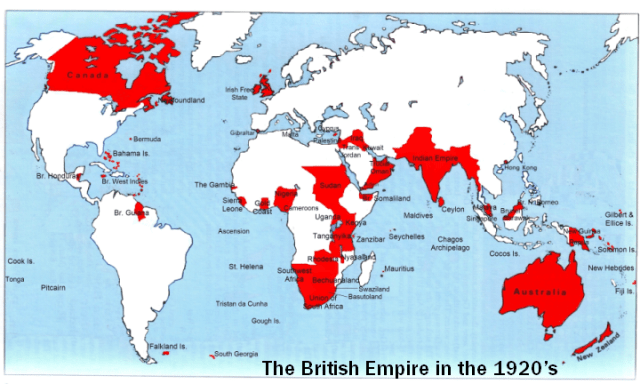


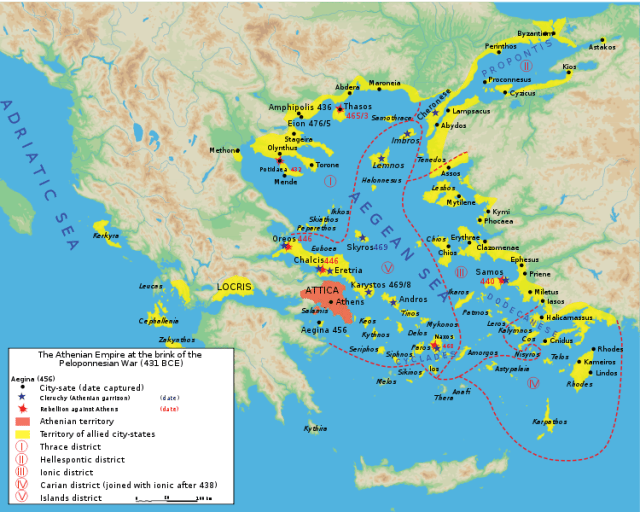

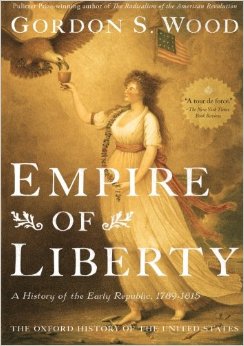


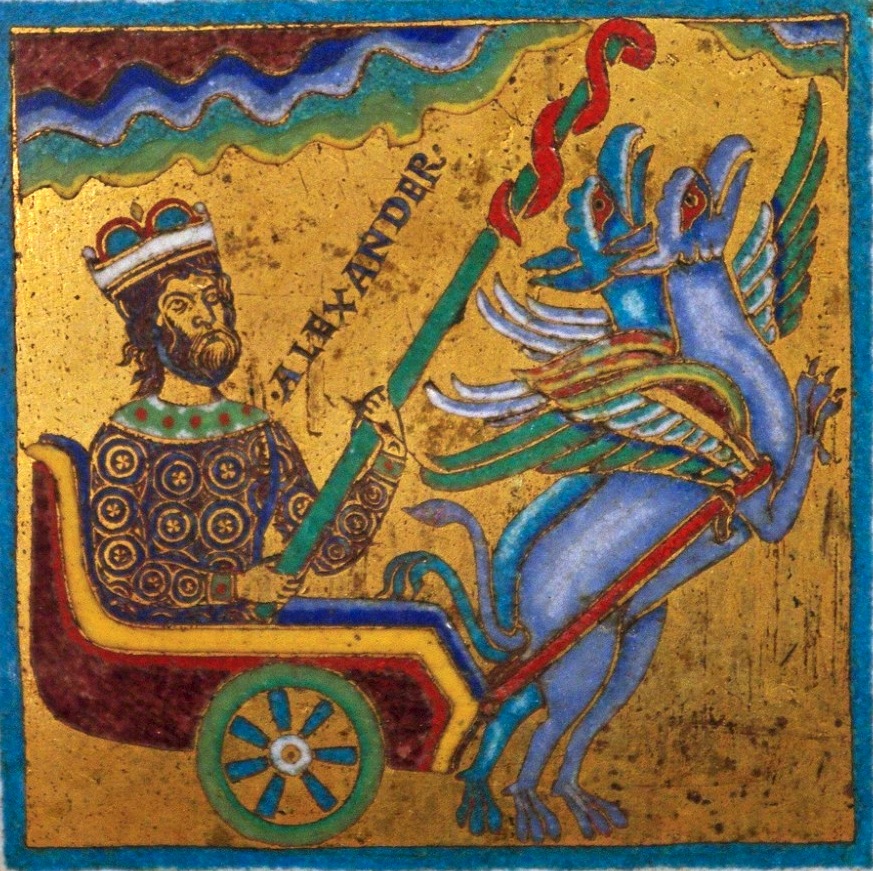






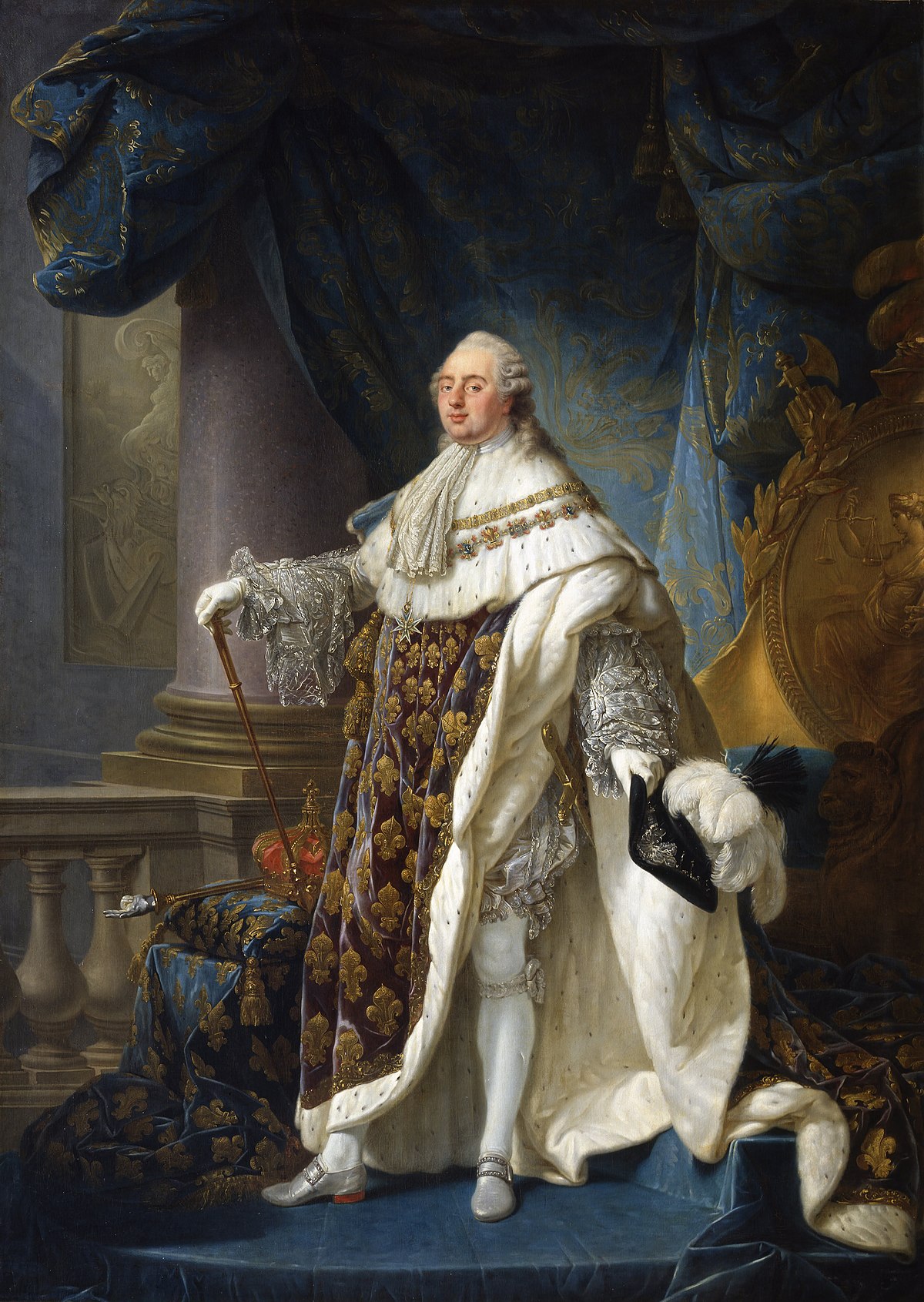


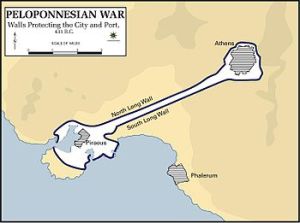

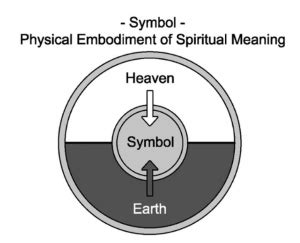

 A Stick in the Mud