The Pre-Raphaelites and the Botswanan Metal Scene

The National Gallery of Art is currently running an exhibit of Pre-Raphaelite art.   The pre-Raphaelites came into existence in 1848, just at the beginning of the Victorian period.  They opposed what they believed to be excessive classicism in art and design, and hoped to revive an appreciation for the Gothic style supplanted by the Renaissance in general, and, according to them, Raphael in particular.

I can admire the pre-Raphaelites  to an extent.  I too believe that the modern west has greatly undervalued the medieval period, including Gothic art.  One can better appreciate the era when we realize that the Gothic style was the first time the west departed from the “Classical” style since ca. 500 B.C.  The Church developed something distinct and original with Gothic art, which had a playful extravagance and boyish charm.  We don’t often think about “playfulness” when we think of a medieval cathedral, but I submit that, for example, the location of Mt. St. Michael’s Cathedral out on the farthest reach of the Norman Coast has a glorious “why not?” quality.

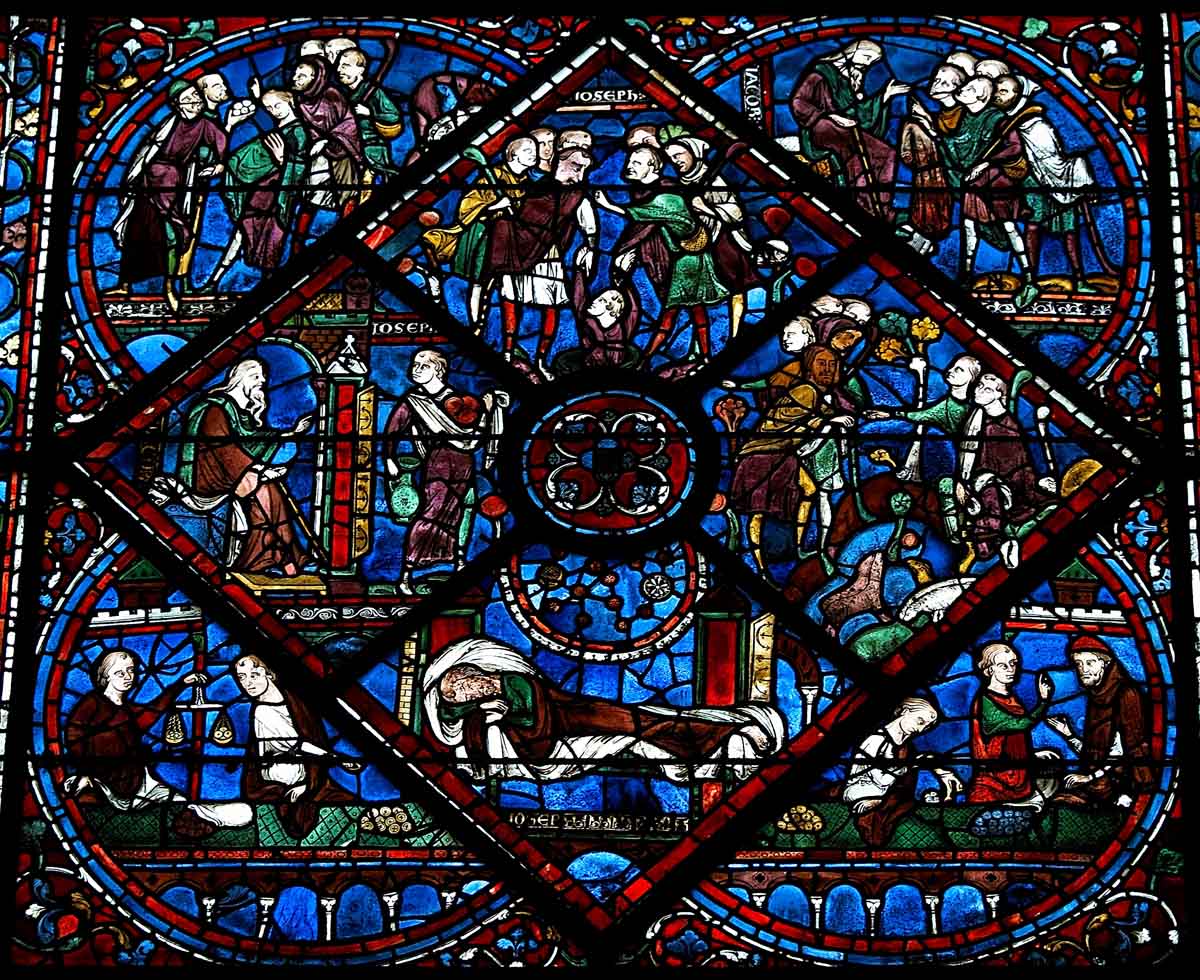
The stained glass celebrated not just an unusual variety of people, shapes, and Biblical themes, but also an extravagant variety of color.

Chartres Stained Glass

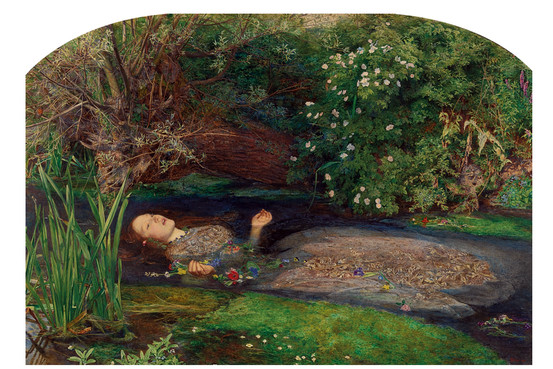
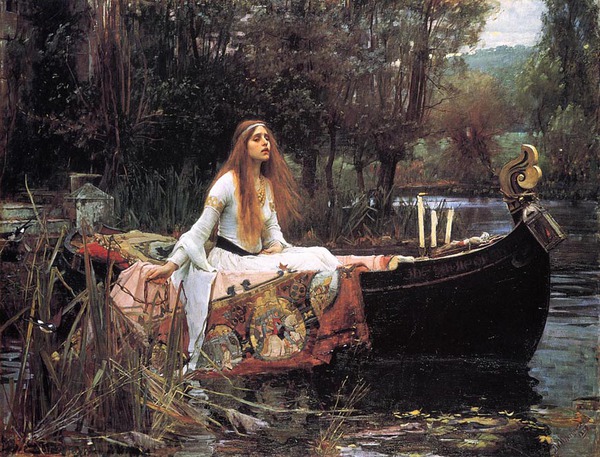
It seems that it was primarily this use of bold color that attracted the Pre-Raphaelites.  So much then, for the background information. What about the art itself?  Does it succeed?

600_198067602

276px-Dante_Gabriel_Rossetti_-_Proserpine

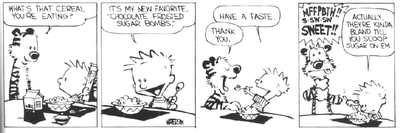
Aye caramba!  This is just awful stuff, an overdose of schmaltz and sentiment on an unusual scale.

chocolate frosted sugar bombs calvin and hobbes

What went wrong?

Some might argue that their art failed because they were not good artists, but this simply begs the question as to why they lacked talent.  They obviously had certain technical skills necessary to create good art.  Some might point to the problems within the Victorian era itself, but this would exclude the possibility of any great art in the Victorian era, and Dickens, Van Gogh, and Stravinsky (among others) put that theory to rest.

I think the problem is not their mission, but their method.  Some months ago I discussed Toynbee’s theory of “Renaissances” and how they operate in history (my review of his book is here, and some thoughts on its application to music are here).  In summary, Toynbee believes that

  • Borrowing from a “living” (i.e. currently existing) civilization, artist, or art form will usually lead to beneficial new creation, but
  • Borrowing from a “dead” form (i.e. civilization, artist, etc.) will mean the calling up of a ghost, which will lead to a sterile act of creation, a stillborn attempt at achieving meaning.

The pre-Raphaelites show all of the characteristics of reviving a dead ghost of a long forgotten form.  The “ghost” constricts them, and so they try too hard, and end up producing sterile art that cannot move us in any way.

Strange as it may sound, I thought about Toynbee’s theory again when a friend sent me an article about the burgeoning heavy metal scene in, of all places, Botswana.  Here we have an example of one people group attempting a birth of something new in their nation not from a dead past, but from a living present.  While I have yet to hear any music, these pictures may give us a clue as to whether or not they will succeed.

Ok, perhaps we see a bit of rote copying in terms of the motorcycle and the leather, but still, who wouldn’t want to be that guy?

Again, the leather is “pretty standard,” but the cowboy hat is very cool, and he pulls it off.

No way western metal heroes like James Hetfield or Bruce Dickinson could ever pull off such a graceful yet arresting pose.

I look at this guy and think “Super-Hero,” and again, I love the hat.

Without hearing any music, I am encouraged and intrigued by the possibilities in Botswana.  Sure, they borrow some metal conventions from the west, but they also seem to be putting a distinctly African stamp at least upon their image.  One senses vibrancy here, whereas all the color in the world cannot take away the dead feeling I get while looking at the pre-Raphaelites.

All this proves once again, beware of the influence of a dead past.

Blessings,

Dave

Helvetica

On Netflix “View Instantly” one can watch one of their patented atypical documentaries about the font Helvetica.

One might think that a documentary about a font wouldn’t have much legs, but it held my attention throughout.  Whenever you have some people only half-jokingly blaming Helvetica for both the Vietnam and Iraqi wars, and others praising the font as one of the best forums for spreading equality and democracy everywhere, and you have a good subject for a documentary.  You will likely not see the world quite in the same way after viewing this film.

I don’t like Helvetica, but can appreciate its effectiveness.  In extended text, Helvetica leaves me cold, or perhaps more accurately, leaves me standing still.  I don’t feel any sense of life or motion in Helvetica.  Reading a paragraph in Helvetica can be exhausting.  But one can understand why it has such wide usage for signs and advertisements.  I find that it does have the effect of rooting someone to the ground, making them stand still, and read.

I gained a further appreciation for Helvetica by realizing that even fonts have a historical context, as this clip from film makes clear:

To learn about Helvetica is also to understand the debate surrounding Apple as well.  Helvetica, with its minimalism, modernism, and “accessibility” conveys the exact “brand” Apple seeks.  Apple products are simple, easy to use, and designed with a minimalist aesthetic, just like Helvetica.  So it makes perfect sense that Helvetica would be the default for their “Pages” program.  But Helvetica has no motion in it.  And like Apple, one could describe the font as a “closed,” or “immobile” system.  What would Lewis Mumford think of Helvetica?

In another example of how art imitates life, Microsoft developed the font “Arial” to compete with Helvetica, with almost every graphic designer agreeing that Arial cannot hold a candle to Helvetica. This diagram may not show that very effectively, but look at the difference, for example, on the capital “Q’s” (the stem is too long in Arial) and the capital “R’s” (Arial’s “R” looks awkward and stiff).

Arial v. Helvetica

All in all, there is certainly more to fonts than we might suppose.  They work their white/black magic upon us without us really being aware of exactly how its done.

We’ll See. . .

They are not getting much press, but events in Egypt recently have me strangely fixated.  At the time of the overthrow of  Mubarik in the spring of 2010, many hailed the event as a great leap forward for democracy in the Middle East.  Then people held their breath as the observed some of the conflicts within the provisional constitution, as articles 1-6 attest.

Article 1:

The Arab Republic of Egypt is a democratic state based on citizenship. The Egyptian people are part of the Arab nation and work for the realization of its comprehensive unity.

Article 2:

Islam is the religion of the state and the Arabic language is its official language. Principles of Islamic law (Shari’a) are the principal source of legislation.

Article 3:

Sovereignty is for the people alone and they are the source of authority. The people shall exercise and protect this sovereignty, and safeguard the national unity.

Article 4:

Citizens have the right to establish associations, syndicates, federations, and parties according to the law. It is forbidden to form associations whose activities are opposed to the order of society or secret or of militaristic nature. No political activity shall be exercised nor political parties established on a religious referential authority, on a religious basis or on discrimination on grounds of gender or origin.

Article 5:

Public property is protected, and its defense and support is a duty incumbent on every citizen, according to the law. Private property is safeguard, and it is not permitted to impose guardianship over it except through means stated in law and by court ruling. Property cannot be seized except for the public benefit and in exchange for compensation according to the law, and the right of inheritance is guaranteed.

Article 6:

Law applies equally to all citizens, and they are equal in rights and general duties. They may not be discriminated against due to race, origin, language, religion, or creed.

It looked as if those more skeptical of democracy’s future in Egypt had prophetic foresight when the Moslem Brotherhood made itself more prominent and Mohammed Morsi assumed the presidency.  Then the tables turned again, with angry demonstrations against some of the more Islamist-leaning elements of the government, leading to Morsi’s recent statement that the disagreements were a “healthy phenomena” of their new democracy.

I am reminded of a famous scene from Charlie Wilson’s War. . .

I do not mean to conflate the two issues, but I am thinking about Egypt after the Redskins loss yesterday.  Last spring I strongly criticized the trade to bring R.G. III to Washington.  Basically, I argued that we paid far too high a price for such an uncertain future.

Then RG III set the NFL world on fire and lead the Redskins to their first divisional title since 1999.  Fellow Skins fans have urged me to recant and say I was wrong.  The price was worth it, R.G. III is one of a kind, etc. etc.  So far I have resisted recanting even as I have enjoyed the team’s remarkable run.   Certainly a large part of the reason involves my reluctance to admit I was wrong.  But another part of my refusal is that it’s too early to tell.

We can now say that the issue does not center around his abilities.  When healthy, he can be one of the most dynamic players in the league.  But, how often will he be “healthy” and what happens when he is not in top form?  He has shown a propensity for leg injuries dating back to college, and his style of play will not minimize that risk in the future.

As I watched RG III play horribly after the first quarter yesterday and continue to remain in the game despite being obviously limited, another shiver went down my spine.  What if no one checks his competitive spirit?  What if he has no internal brakes?  It appears that Shannahan has obfuscated the whole issue surrounding RG III’s knee and allowed him to play against doctor’s advice.  Should we beware of an old man in a hurry?

If the Skins had simply drafted him with the #2 pick, then no one could dispute the choice.  But given that we mortgaged so much of our future for him, we can’t make a blanket statement that the trade has already proved its worth.  If he blows out his knee next fall, we’ll be left holding the bag.  Esteemed muscle expert Dr. Ali Mohamdi (also a Redskins fan) commented recently that,

Recovery from combined ACL and LCL tears is a grueling and time-consuming process, and when you’re dealing with a patient like Griffin with a prior history of an ACL reconstruction on the same knee, even more so. The progression to physical activity is very slow to ensure that the grafts are sufficiently strong to endure motion and weightbearing. Typically, patients remain in a brace for at least 6 weeks, during which time they are advised not to fully bear weight on the affected leg and aren’t allowed to fully bend the leg. Strength training and range of motion exercises progress slowly to a point where the patient has built up enough mobility and regained muscle to begin running, usually at 6 months after surgery. For most athletes, notwithstanding Adrian Peterson’s amazing full recovery from ACL and MCL tears in about 9 months, many experts will tell you that it can take a full year for an athlete to feel like he or she is back to 100 percent function.

The added factor for Griffin is that he has a prior history of ACL reconstruction. For an athlete with no prior history of an ACL tear, the recovery is a daunting process to begin with and usually takes longer than for other knee ligaments. Studies show that while the risk of re-injury is about 5% among patients who have had ACL reconstruction, the risk for failure doubles after a second ACL repair, and this study didn’t just look at athletes who endure the wear and tear that football players do. It doesn’t mean Griffin shouldn’t be able to play — and play well — after a second ACL reconstruction, but it does add a level of concern over the possibility that it could happen yet again.

It’s worth noting that Seahawks quarterback Russell Wilson did a marvelous RG III impersonation yesterday, and he was taken in the 3rd round of last year’s draft.  We know that Griffin ran track at Baylor, and before his injury his speed took our breath away.  It may be however, that he has a track star’s body.  I still think it reasonable to say, “We’ll see,” as we evaluate the merits of the RG III trade.

De Tocqueville Weighs In. . .

In a previous post I speculated on the connection between oligarchic-democracies and territorial expansion.  While I acknowledge that the connection between the two is not absolute, I do think it exists to some degree.  As to why, I’m not sure.

But leave it to De Toqueville to provide some assistance.  He is quoted and praised so often, that one almost wants to find a weakness, a point where we can call him out for the mere fun of it.

Not in this case.

In his chapter “Why Americans are More Addicted to Practical Rather than Theoretical Science,” De Tocqueville points out a contrast between democracies and aristocratic science.  He writes,

Nothing is more necessary to the culture of the higher sciences, or the more elevated departments of science, than meditation; and nothing is less suited to meditation than the structure of democratic society. We do not find there, as amongst an aristocratic people, once class which keeps in repose because it is well off; and another, which does not venture to stir because it despairs of improving its condition. . . .  Men who live in democratic societies not only seldom indulge in meditation, but they naturally entertain very little esteem for it.

He goes on to comment that great and grand ideas will not take root in democratic societies, and consequently, democratic societies will be less revolutionary than aristocratic ones.

The link between aristocratic-democracies and imperialism would break down if we think of imperialism on this side of the more democratic divide.  It is natural for us to assume that European nations engaged in imperialism for “practical” reasons, i.e. money or resources.  Granted, imperial expansion had many motives, but I don’t think money was the main one.

One quick snapshot of British Nigeria shows that profit came quite irregularly to the British,

Year          Revenue          Expense

1922-23    5,505,465       5,410,983

1923-24    6,260,561       5,501,242

1924-25    6,944,220       5,768,715

1925-26    8,268,928      6,583,167

1926-27    7,734,429       7,584,692

1927-28   6,304,636       6,733,715

1928-29   5,894,658      6,861,099

1929-30   6,045,359      6,289,901

1930-31   5,622,200      6,329, 688

1931-32   4,857,612        6,188,301

1932-33   4,984,505       4,983,739

1933-34   4,889,152       5,035,562

1934-35   4,960,765       4,836.666

1935-36   5,995,921        5,757,180

1936-37   6,259,547       6,061,348

1937-38  7,342,450       7,375,570

1938-39  5,811,088      6,867,408

1939-40  6,113,126       6,498, 566

1940-41   7,273,157      7,254,325

1941-42   7,975,054      7,026,894

1942-43   9,034,000    8,999,000

1943-44  10,913,000   9,977,000

1944-45  11,445,000   10,133,000

If we believe that as Kipling stated, imperialism was “white man’s burden,” than the the thought of the grand idea of bringing civilization to Africa, too impractical for democratic minds, would have fired more aristocratic ones.  And before we dismiss the idea entirely, we should realize that evidence existed to fire this idea.  Even “pro-African” Englishman like Livingstone admitted to cannibalism in certain African tribes.  Both Burton and Speke, who searched for the source of the Nile, record dreadful acts where despotic tribal kings execute men and women (usually women) on mere whims.  None of this excuses the Europeans for their own abuses, but I mention it to point out the issue is not as black and white as either the 19th century or our own make it out to be.

The Need for Words, not Deeds

When something needs to be said, one can usually rely on Hillaire Belloc to say it.  Part of understanding the value of his famous Europe and the Faith is to know the context from which it arose.

The turn of the 20th century spawned a host of historiography centered around the notion of “deeds, not words,” a near worship of activity itself.  One sees this in Rafael Sabatini’s famous Life of Cesare Borgia (1912), the man whom Machiavelli supposedly modeled many of his thoughts in his The Prince.  Concerning Rodrigo, Ceseare’s notorious father, he writes,

Say of him that he was ambitious, greedy, and prey to carnal lusts.  . . . But do not let it be said that he was wanting either in energy or in will, for he was energy and will incarnate.

One gets the sense that Sabatini almost wants to excuse Borgia for the sake of his “energy” and “will.”

Later when contrasting the papal reigns of Sixtus IV and Innocent VIII, Sabatini seems to partially excuse the wars and murders of Sixtus for the sake of his “energy,” while condemning Innocent for merely doddering on his throne, attempting only to give church offices to his sons.  I mean no defense of Innocent VIII, but the principle of deeds, deeds, and still more deeds needs questioning.  We want bad people to be lazy.  Deeds have no meaning merely for being “deeds.”  Teddy Roosevelt, of this same era, said that,

In any moment of decision, the best thing you can do is the right thing, the next best thing is the wrong thing, and the worst thing you can do is nothing.

but I’m not sure I agree with him.  If one stood near a precipice in a blinding fog, the best thing would be to walk away from the precipice, the next best would be do nothing and wait for the fog to clear.  The worst thing would be to make the wrong decision and plunge to your death.  Chesterton mimicked  the “success” ideology well when he parodied the early-20th century style, writing in 1908,

In playing cards it is very necessary to avoid the mistake (commonly made by maudlin humanitarians) of permitting your opponent to win the game.  You must have grit and snap and go in to win.  The days of idealism are over.  . . . It has now been definitely proved that in any game when two are playing, IF ONE DOES NOT WIN THE OTHER WILL.

He too was wary of “deeds for deeds sake.  In his essay, “The Fallacy of Success,” he points out that success comes really only in two ways.  One, you become really good at something.  Two, you cheat.  Mere activity itself gets one nowhere.

Belloc seeks to counter the “success” narrative that arose in the Victorian era concerning the fall of Rome.  According to this narrative, Rome fell by getting lazy, by losing its “grit and snap.”  At their point of low ebb, down came the hardy, “energetic” German barbarians from the north to sweep it all away.  It was these “energetic” types that brought back civilization after Rome’s fall.

Bilge, from stem to stern, Belloc argues.  For his day (1920) Belloc makes the radical claim that in the later empire, many barbarians were Romans, and many Romans barbarians.  Thus, what brought Rome down was civil war, not an invasion.  In this respect, Belloc has been echoed recently by the eminent late antiquity scholar Peter Brown, among others.  It had nothing to do at all with northern “energy” and southern “ennui.”

But ideas have consequences, and Belloc, one of the earliest and most strident critics of Fascism, could see buried beneath this “energy” thesis a grim racial specter.  The idea of a pure and energetic northern stock that periodically descended upon Europe to revive civilization (this theory has them doing it again during the Reformation) had already taken root in 1920 in Germany and would spread.  Bad ideas have bad consequences, especially in the lives of bad people.

I cannot improve on Chesterton, who writes in his essay, “The Unpractical Man,”

There is a popular philosophical joke intended to typify the endless and useless arguments of philosophers; I mean the joke about which came first, the chicken or the egg? I am not sure that properly understood, it is so futile an inquiry after all. I am not concerned here to enter on those deep metaphysical and theological differences of which the chicken and egg debate is a frivolous, but a very felicitous, type. The evolutionary materialists are appropriately enough represented in the vision of all things coming from an egg, a dim and monstrous oval germ that had laid itself by accident. That other supernatural school of thought (to which I personally adhere) would be not unworthily typified in the fancy that this round world of ours is but an egg brooded upon by a sacred unbegotten bird; the mystic dove of the prophets. But it is to much humbler functions that I here call the awful power of such a distinction.

Whether or no the living bird is at the beginning of our mental chain, it is absolutely necessary that it should be at the end of our mental chain. The bird is the thing to be aimed at–not with a gun, but a life-bestowing wand. What is essential to our right thinking is this: that the egg and the bird must not be thought of as equal cosmic occurrences recurring alternatively forever. They must not become a mere egg and bird pattern, like the egg and dart pattern. One is a means and the other an end; they are in different mental worlds. Leaving the complications of the human breakfast-table out of account, in an elemental sense, the egg only exists to produce the chicken. But the chicken does not exist only in order to produce another egg. He may also exist to amuse himself, to praise God, and even to suggest ideas to a French dramatist. Being a conscious life, he is, or may be, valuable in himself. Now our modern politics are full of a noisy forgetfulness; forgetfulness that the production of this happy and conscious life is after all the aim of all complexities and compromises. We talk of nothing but useful men and working institutions; that is, we only think of the chickens as things that will lay more eggs. Instead of seeking to breed our ideal bird, the eagle of Zeus or the Swan of Avon, or whatever we happen to want, we talk entirely in terms of the process and the embryo. The process itself, divorced from its divine object, becomes doubtful and even morbid; poison enters the embryo of everything; and our politics are rotten eggs.

Idealism is only considering everything in its practical essence. Idealism only means that we should consider a poker in reference to poking before we discuss its suitability for wife-beating; that we should ask if an egg is good enough for practical poultry-rearing before we decide that the egg is bad enough for practical politics. But I know that this primary pursuit of the theory (which is but pursuit of the aim) exposes one to the cheap charge of fiddling while Rome is burning. A school, of which Lord Rosebery is representative, has endeavored to substitute for the moral or social ideals which have hitherto been the motive of politics a general coherency or completeness in the social system which has gained the nick-name of “efficiency.” I am not very certain of the secret doctrine of this sect in the matter. But, as far as I can make out, “efficiency” means that we ought to discover everything about a machine except what it is for. There has arisen in our time a most singular fancy: the fancy that when things go very wrong we need a practical man. It would be far truer to say, that when things go very wrong we need an unpractical man. Certainly, at least, we need a theorist. A practical man means a man accustomed to mere daily practice, to the way things commonly work. When things will not work, you must have the thinker, the man who has some doctrine about why they work at all. It is wrong to fiddle while Rome is burning; but it is quite right to study the theory of hydraulics while Rome is burning.

It is then necessary to drop one’s daily agnosticism and attempt rerum cognoscere causas. If your aeroplane has a slight indisposition, a handy man may mend it. But, if it is seriously ill, it is all the more likely that some absent-minded old professor with wild white hair will have to be dragged out of a college or laboratory to analyze the evil. The more complicated the smash, the whiter-haired and more absent-minded will be the theorist who is needed to deal with it; and in some extreme cases, no one but the man (probably insane) who invented your flying-ship could possibly say what was the matter with it.


Limited Government in the Information Age

I believe that government has a legitimate role in any society, and a believe that most people in government want to use their position for good.  I do think, however, that in general, less government is better than more government.  I tend to shy away from the “more government” approach because

  • More government usually means more standardization, and I agree with Toynbee that standardization presages decline, for it robs a society of flexibility and nimbleness of mind.
  • More government can lead to a creeping “Can’t Someone Else Do It?” approach to life whereby we abdicate responsibility for our lives to others, hardly congenial to a democracy.

I realize this very brief defense of a big idea hardly suffices, but I mention it only to say that someone who wants to be consistent on this position will find significant problems with both presidential candidates.  Since its hardly sporting to lob grenades at an obvious opponent, I will instead focus on Romney and Ryan’s hearty support for “E-Verify,” a program that would  create another massive government database, and give significant power to the government for determining who can and cannot work.

Dan Griswold does a great job of showing the program’s flaws in this article, with this excerpt getting to the rub,

The system also exposes too many legal workers to the risk of being falsely denied permission to work. As my Cato Institute colleague Jim Harper concluded in a study of the program, “It would deny a sizable percentage of law-abiding American citizens the ability to work legally. Deemed ineligible by a database, millions each year would go pleading to the Department of Homeland Security and the Social Security Administration for the right to work.

Cato’s full study on the negative impact of Arizona’s immigration laws is here.

Conservatives often accuse liberals of promoting the “soft tyranny” of the “nanny state,” but at the same time, some of these same conservatives lay a potential foundation for the “hard tyranny” of the “security state.”

Case in point — this week my wife and I received a mailing from an organization called “Americans for Limited Government,” an organization that, based on its name, I may have inclination to support.  The mailing encouraged us to go vote November 6, and to add extra spice to their encouragement, they listed the fact that we had voted in the previous three presidential elections.  This seemed odd, but they also told us whether or not four of our neighbors had voted in these same elections and compared our voting attendance record to theirs. To top it off, they promised that,

As a further service we will be updating our records after the expected high turnout for the [election].  We will then send an updated vote history audit to you and your neighbors with the results.

Gee, thanks.

This, from “Americans for Limited Government,” who somehow believe its their business and mine to know if my neighbors vote or not, and somehow believe that this has something to do with “limited government.”

Articles on this monstrosity abound, one of them being here.

The information age presents many temptations for those in the know, whether they be liberals or conservatives.

The Genius of the Prophets, the Evil of Drones

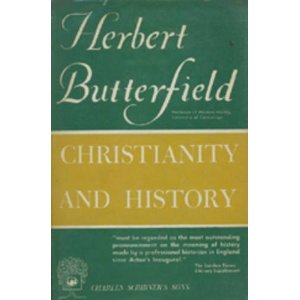
Finding new authors is akin to finding new friends, and I recently read with great delight Herbert Butterfiled’s Christianity and History.  I will need to read more of him.

One his great observations dealt with Old Testament prophetic literature.  He writes,

What was unique about the ancient Hebrews was their historiography rather than their history. . .  Their historiography was unique also in that it ascribed the success of Israel not to their virtues but the favor of God; and instead of narrating the glories or demonstrating the righteousness of the nation, like our modern patriotic histories, [they] denounced the infidelity of the people, denounced it not as an occasional thing, but as the constant feature of the nation’s conduct throughout the centuries; even proclaiming at times that the sins of Israel were worse, and their hearts more hardened by the light, than those of the other nations around them.

He goes on to say that, in contrast to pagan societies around them, the prophets blamed Israel’s troubles not on the “Gentiles” or the “unrighteous,” and not on “God’s deaf ears,” but on themselves.  “The beds you lie in, O Israel, are the beds you made.”

This might explain the prophets’ lack of popularity.

I always get wearied during elections not because the issues lack importance, but because of how much posturing and blame both sides throw around.  It’s always “the liberal media,” or “the right-wing conspiracy,” or, “We are the 99%,” or, “The Makers vs. The Takers.”  No one wants to risk losing 51% of the vote to say, “It’s our fault,” preferring rather to carve up the carcass of the American body politic and divide us into “us” and “them.”  Until someone speaks as a prophet might speak, and until we hear them, I don’t see much changing.

I wrote recently about The Story of Rome, and, while not a big fan of the book, I did find a few insightful tidbits.  Among them, the book discussed how modern historians view the problems of Rome’s empire, and how different the views of the Romans themselves were from modern thinkers.  We often say  the problems revolved around economics, or incongruous geographical frontiers, or barbarian migrations, or political centralization, or some other such measurable factors.

The Romans never saw things this way.  For them, it came to virtue, plain and simple.  When they practiced virtue, they succeeded, and when they lacked it, troubles came their way.

Not quite equal to prophetic genius, perhaps (especially considering what the Romans meant by virtue), but as foreign as the words sound to our ears, perhaps we should hear them.  Take their “Social War,” of 91-88 B.C., for example.  Before the 2nd Punic War Rome treated its allies well, but the rebellion of some of their so-called friends during Hannibal’s invasion left a deep scar on their psyche (much as 9-11 has on us — Toynbee masterfully outlines the consequences in his book on the late Republic).  They treated their Italian allies afterwards as second class citizens and after 100 years of such treatment, it came back to bite them terribly (the aforementioned “Social War’)  in a conflict with an estimated 300,000 casualties on both sides.  Rome survived only by making concessions at the very end.

The prophets, the presidential campaign, and Rome ran around my head when I think of the great current stain on American morality, our drone campaign in the mid-east.   A recent NYU/Stanford University study, if true, indicts us of great evil.  This article in the U.K.’s Guardian highlights many of our atrocities.  We have attacked and killed (unintentionally let us pray, but still) civilians many times over.  Our administration hides the facts and our watchdog media has played right along, always calling the dead “enemy combatants.”  An excerpt reads of the study reads,

But Republicans, get off your high horse.  Romney has said nothing to indicate that he would do things any differently.  Other prominent conservatives, like Newt Gingrich, have praised Obama’s assassination program.  In fact the only candidate who has said publicly that he would end the drone strikes is the Libertarian Party’s Gary Johnson.

But “We the People” cannot blame the politicians.  We’re all guilty of preferring our immediate safety to the welfare of others (myself included). For the drones, Pakistani civilians are guilty until proven innocent, which would be bad enough, but drones offer no court of appeal.

Most of us understand the posturing and policies that come with a nation at war.  But if we want to claim any kind of identification with the “righteous” side in the “War on Terror,” we have to consider whether we have the willingness to consider other lives more worthy than our own, to think of others as better than ourselves.


Mastering Stories

Paul Thomas Anderson’s The Master has garnered much acclaim for the acting jobs of its lead characters.  Most also appear to appreciate the fact that the narrative leaves many holes and unresolved questions.  My thanks to a former student who passed me this more critical review from Stephen Farber.  He writes,

. . .enthusiastic critics have described the film as “elusive,” “enigmatic” and “confounding.” One glowing review rhapsodizes that the movie “defies understanding.”

If these seem like strange words of praise, you may need a crash course in new critical and directorial fashions. “The Master” epitomizes the rise of a new school of enigmatic movies, which parallels similar post-modern developments in literature and music. “The Master” aims to join this company, but its release only proves to me that the cult of incoherence is beginning to pall. Too many movies, novels and even TV series dispense with all sense of logic; they revel in unintelligibility and dare audiences to enter their tangled web.

I haven’t seen the movie, but if the above comments ring true, I would likely agree with his assessment.   Good stories should involve us in multiple perspectives, but these perspectives need a narrative center, and perspectives need resolution.  Creators who ask others to enter the world they create owe this to their audiences.  Perhaps there can be exceptions to this, as Farber continues. . .

It is probably easier to accept these films if they announce from the outset that they are working in a more impressionistic vein. Although I was not a fan of “The Tree of Life,” I understood that Malick never intended to spin a Hollywood-style narrative. He was aiming for something closer to a lyric poem or an atonal symphony than a traditional drama. The problem with “The Master” is that it does not really present itself as this kind of experimental effort. It starts out telling a straightforward story but then veers into murkier terrain without ever establishing a clear set of ground rules.

Unless one wants to write a reference book, non-fiction authors should deal with the same narrative constraints.  Alas, often historical writers get bogged down in details and forget that what makes History come alive is the story.  The story doesn’t even have to involve people.  One could weave a narrative about geological time, I’m sure.  Using multiple perspectives aid stories, but they are not the story.

So it was with great hope that I picked off the shelves Greg Woolf’s Rome, An Empire’s Story.  Like books on any other historical subject, works on Rome often drag their feet talking about the details, and lose sight of the where they’re going.  But the word “Story” in the title got me excited.  “Here, I thought, “is a valiant champion to right all past wrongs!”

The early chapters did little to encourage this hope, and then I got to page 52, where he writes,

Each invention was based on a combination of crops–cultigens–that could together supply the carbohydrate needs of humans, and some of their protein.

My heart sank.  I knew that when he called crops “cultigens,” and he referred to “humans,” that I was certainly not involved in a “story.”

The eminent Adrian Goldsworthy praises Woolf on the book jacket, stating,

…[Woolf] offers no simplistic answers, but instead well considered discussion of the evidence and how we try and understand it.

Far too often I see this imagined dichotomy.  Since no one wants simplistic answers, we offer no answer at all and instead play ping-pong with the facts.  The best historical writing offers answers without stooping to oversimplification, without fear of what the facts might actually mean.  No one should make blind dogmatic assertions that have no room for evidence. But we want our experts in the field to make their best guesses, if for no other reason than it’s fun to make such guesses, and it’s good to see people enjoying themselves.

To Woolf’s credit, at the close of each chapter he has a marvelous and brief discussion on the best sources for the issues at hand.  Here he reveals his true calling – a collector of valuable factoids that he shares gleefully and humbly with whoever is interested.  Looking at his picture, I knew he had to be a nice guy after all.

“Markets can remain Irrational Longer than you can Remain Solvent.”

David Halberstam’s The Breaks of the Game surely must hold the title of “Greatest Sports Book Ever.”  I can’t imagine anything else comes close.  I really enjoyed John Fienstein’s A Season on the Brink, and his Next Man Up is also excellent.  But Halberstam somehow made me care deeply about the NBA and the Portland Trail Blazers 1979-80 season, though I usually care very little for either.

Throughout the book Halberstam deals with several different characters, from the owner down to the team’s medical staff.  Each time he manages to reveal a new perspective.  At first one has sympathy for person ‘x,’ but then 50 pages later you get the other side of the story.  Everyone gets a sympathetic treatment, everyone has their turn.  Halberstam shows remarkable restraint and the characters get to tell the story.

The narrative’s broad field of vision is another reason for the book’s success.  Halberstam wrote just as the merger of sports and tv started to look like something that we might recognize today.  So tv executives get their say as well, and the marketing of the game shows up as a supporting actor in the drama that unfolds.

It’s easy to see how tv helped the NBA.  Exposure went up, so money went up for owners and players.  Fans get to see more games.  But Halberstam masterfully shows the other side of the coin.  The size of the tv contract came to determine much of the revenue for the league, so the league  positioned itself around tv, leading to odd travel schedules and quirky playing times for games.  Owners no longer had to sell tickets to make money, so certain teams made no real effort to compete.  The best players, after all, were now much more expensive, and tv money usually guaranteed owners a profit.  With the league more profitable wealthy businessmen wanted to buy into the league, so we had expansion.  But expansion increased travel time as well as watered down the competition, and so on, and so on.  “One thing leads to another.”

A quiet desperation seeps through the pages of the text, the feeling that, “this cannot go on.”  Reading this, you get the sense that the NBA, and sports in general, is due for a “market correction.”  The tensions between money, the “purity” of the game, athletes well-being, and so on, surely cannot last forever.  And yet they have.  Halberstam may have been a subtle prophet of doom, but apparently not imminent doom.  If anything, all of the factors that created the tension in the game have increased exponentially — more money, more tv, more exposure, more games (i.e. the expansion of the playoffs in all major sports), more everything!  How can this continue?

As best as I understand, I do not think I am a Keynesian in my economic philosophy.  But his quote,

Markets can remain irrational longer than you can remain solvent

seems to bear out in experience.  Betting against the future of sports in America seems like a sure winner, if only it will pay off before you go bust.

Roger Goodell, meet Judge Kensaw Mountain Landis

From almost the beginning of his administration, I have not been a fan of NFL Commissioner Roger Goddell.   I certainly hope that he is a good and decent man, and I believe that he works hard and sincerely believes in the work he does.

The NFL reigns atop the sports world in particular and the tv ratings in general.  One might hope that they would enjoy the fruits of their spoils.  After all, no one lives forever. But this is not happening, and that should not surprise us.

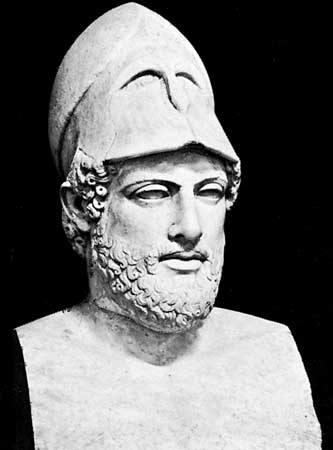
Dominant empires often become more touchy, not less, more antsy to defend its territory, less able to enjoy what they have.  Athens dominated the Mediterranean, but could not bend even a smidge after they put Sparta in a tough spot prior to the Peloponnesian War.  In a memorable passage from Thucydides, Pericles states,

I would have none of you imagine that he will be fighting for a small matter if we refuse to annul the Megarian decree, of which they make so much, telling us that its revocation would prevent the war. You should have no lingering uneasiness about this; you are not really going to war for a trifle. For in the seeming trifle is involved the trial and confirmation of your whole purpose. If you yield to them in a small matter, they will think that you are afraid, and will immediately dictate some more oppressive condition; but if you are firm, you will prove to them that they must treat you as their equals.

Sometimes, this “firmness” leads to “disaster,” as it did for Athens, as it did to Rome with Hannibal over Saguntum, as it did with Napoleon and Russia, and so on.  The great power and wealth empires accumulate seems, by evil magic, to force them to believe that any concession on anything will make them lose all.  Pericles demonstrated this very attitude.  He told Athens,

Nor is it any longer possible for you to give up this empire … Your empire is now like a tyranny: it may have been wrong to take it; it is certainly dangerous to let it go.

Thus, their power traps them into rigidity, which in time, brings them down.  They think in one direction. The cry is always “onward,” which bloats them unnecessarily.  The NFL parodies such empires with their recent move to Thursday night games all season long.  Imperial overstretch might be just around the corner.

Alas for NFL fans, Roger Goddell shows some of the same symptoms that afflicted Pericles and other leaders of dominant empires. The NFL Players Association did not help matters by signing away tremendous power to him in the recent collective bargaining agreement, and with this power he has become quite touchy.  The exhibits, please. . .

  • The Replacement Refs — Despite all the talk of player safety, Goddell has decided to use inexperienced referees rather than pony up a few million.  It’s not as if the regular referees are holding the league hostage to unreasonable demands.  The substance of their complaint seems entirely reasonable, as they just want to keep their previously existing pensions recently eliminated by the NFL.
  • The retroactive punishment of Jerry Jones and Dan Snyder
  • The arbitrary punishments of players with no due process.  Thankfully, some of the punishments of Saints players has recently been overturned.

Goddell is not the first sports commissioner to face the perils of unchallenged power.  Years ago baseball stood atop the American sports landscape in a more dominant position than football is today, though admittedly it was not as lucrative.   When baseball faced the “Black Sox Scandal” after the 1919 World Series, they hired the iron-willed federal judge Kensaw Mountain Landis.  Almost all agree that Landis helped drastically curtail gambling in baseball, restoring its image.  Almost all also agree that Landis went too far in his ban of Shoeless Joe Jackson, a classic and expected overreaching of power to make a “point.”

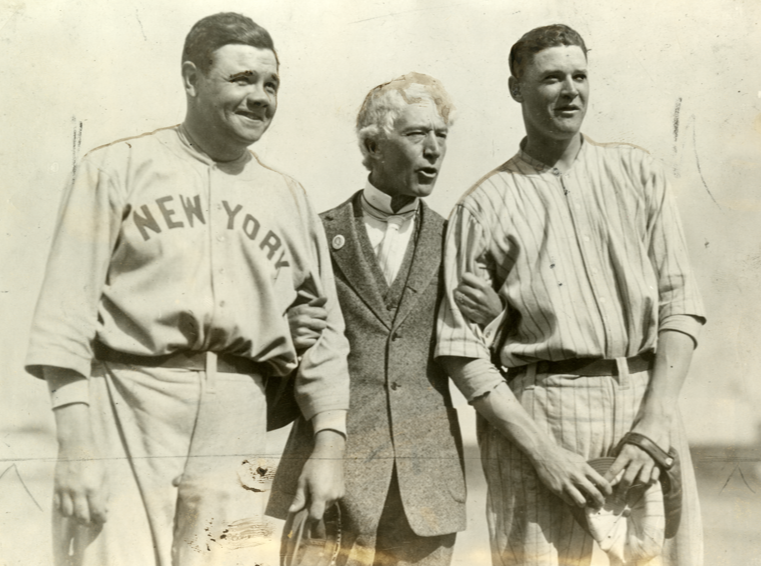
After the Sox scandal settled, Landis continued to overreach and attempted to ban players  from barnstorming in the off-season.  But he had the good sense to know when he was beaten.  Babe Ruth challenged the ban and played in off-season games (famously quipping that, “the old man can go jump in a lake”).  But Landis backed down in the end of his own accord.  He recognized that there were certain crusades he could not fight.

We shall see if Goodell has it in him to do the same thing.  He has put a great deal of focus on the league’s image regarding player safety.  The problems with the replacement refs, however, are multiplying quickly, and soon the games themselves will become meaningless.  If a handful of league stars would strike in the interest of player safety, the lockout would be settled in short order.

I am pulling for Goodell and the owners to transform themselves, to put substance before image.  The well being of the NFL Empire may depend on it.

System Containment

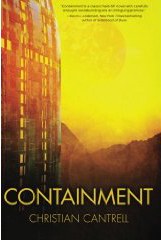
I am no authority on science-fiction, but I do partake occasionally.  Recently I devoured Christian Cantrell’s Containment, and while most of the characters are a bit flat, Cantrell fascinated me with the political and scientific problems his characters face.

The book’s cover has a blurb that hints at one of its main themes, saying,  “The colony on Venus was not built because the destruction of Earth was possible, but because it was inevitable…”

Throughout Containment the older generation advocates for realpolitik.   Arik, born and raised on Venus and trained to think “outside the box” to solve the problems inherent in the thin margins of existence in an inhospitable world, wants alternative solutions.  One of their arguments turns on Venus’ relationship with Earth.  Arik urges that  they put more resources into strengthening ties between Earth and Venus.  The leaders disagree.  “Every colony inevitably separates from the mother country,” they argue, so why put resources into a sinking relationship?

That got me to thinking, and I could not remember a colony that had not at some point separated and sometimes turned against their homeland.  In the post-colonial 20th century, the list is enormous.  But the ancient world has its own list.  Carthage came to overshadow Phoenicia.  Syracuse overshadowed Corinth.  Egyptian colonies in Canaan often had to be reclaimed.  Thera founded Cyrene in North Africa, which quickly established its own identity.  And so on, and so on. . . .

We can go beyond the idea of colonies separating from motherlands.  Containment does in part raise the question as to whether or not “Laws of Nature” govern human affairs.  Many would argue yes, that  “there is no armor against fate.”  History is rife with systematic patterns that, while not perfect, still show very strong tendencies.  For example, the idea of a “balance of power” between several states in a region appeals innately to our sense of fairness and proportion.  No one has too much, and each state has to rely on each other to maintain peace.  But, however noble the idea, can it last?

If we take Europe as an example, it seems not.  Before W.W. I England, France, Germany, Russia, Austria-Hungary, and even Italy to some extent all played a part in keeping the peace.  But with so many participants, too many possible variable were in play.  Combine these variables with human sinfulness, and you have W.W. I, which eliminated Austria-Hungary.  Twenty years later W.W. II eliminated all of them except Russia, who stood toe-to-toe with the United States, until we have the current situation where we have only one global superpower.

Earlier European history show this same tendency.  Around 1500 you have France, the Holy Roman Empire, the Hapsburgs, and to some extent, England. The wars of Charles V finish the Holy Roman Empire.  Then you had England and France both take successful shots at the Hapsburgs, which left France and England remaining.  They seesawed back and forth until Waterloo, after which England stood more or less alone until 1871.

In the ancient world similar patterns show up.  Greece for a time stood balanced precariously on the backs of Sparta, Athens, Thebes, Corinth, and Argos.  After the Persian wars only Athens and Sparta stood.  After the Peloponnesian War, a weakened Sparta held sway for a time before falling to Thebes, which then itself fell to Macedon.  Macedon alone held the torch in Greece until Rome ended all pan-Mediterranean balance by defeating both Carthage and Macedon from ca. 230-146 B.C.

Systems have the advantage of abstract elegance, but who wants fate to rule?  Many notable scholars use this fact to abandon Christian concepts of humanity.  After all, without some semblance of control, humanity gets absolved of responsibility.  If we have absolution from responsibility we have no ability to choose.  Our DNA does that for us.  The “I” disappears.  Why anyone would seek to destroy even their own identity with their theories is beyond me.  But the evidence does strongly suggests that patterns assert themselves in human affairs.  Do we have any hope of avoiding them?

We don’t need to deny the evidence, but instead see that it points in another direction.  Maybe systems assert themselves not because of fate, but because of the uniformity of human nature, a Christian truth.  Maybe we’re not enslaved to patterns, but instead enslave ourselves.  If that were true than we might expect that the spread of Christianity, which frees us from slavery to ourselves, would shatter the patterns.  If we believe that “service to God is perfect freedom,” Christians and Christian epochs should give evidence of the ability to escape destructive patterns.  Do the Middle Ages, for example exhibit a freedom from such “inevitable cycles” of behavior?

It may hold up.  After Charlemagne and the evangelization of the European continent, Europe has no significant, balance altering conflict until the 100 Years War in the 14th century.  Maybe Christianity did make a difference.  Critics, however, would probably say that

  • (1) The Crusades should count as a major conflict, and the only reason the Europeans didn’t fight each other is because the Church exported all its violent members overseas.
  • (2) The major conflict never took place because they lacked the resources and the political structure to fight major wars.  Once they had those (ca. 1500), then they did begin to fall into similar patterns as others nations in other eras.

Alas, I must confess, these are good counters to my proposal.  But on the other hand, regarding the Crusades, one could also argue that the Church also shipped society’s leaders overseas, which could opened up significant power vacuums in Europe, which usually lead to general wars.  Europe did not experience significant this during the Crusades.

Regarding point #2, they may have avoided centralized political systems (systems which could concentrate enough resources to wage a long, destructive war) during the Christian era precisely because they saw them as a threat.  Only when the moral power of the Church eroded in the 14-15th centuries do we see the state start to take over, a role it has not yet had to relinquish some 500 years later.

The evidence may be inconclusive, but  I agree with Toynbee when he wrote,

. . . the prospects of man in Process of Civilization depend above all on his ability to recover a lost control of the pitch, it is evident that this issue [is to be] decided by the course of Man’s relations, not just with his fellow men and with himself, but above all, with God his Saviour.

The Descent of Fire

In his overlooked Letters to Malcolm, C.S. Lewis quotes his friend Charles Williams in a memorable passage that has always fascinated me.  He writes,

It is no good angling for the rich moments. God sometimes seems to speak to us most intimately when he catches us, as it were, off our guard. Doesn’t Charles Williams say somewhere that ‘The altar must often be built in one place in order that the fire from heaven may descend somewhere else?'” [Find this in chapter XXI]

Spiritually, this idea seems incredibly rich with possibilities, but I confess to recalling this quote when my daughter decided to buy this song for our trip to the beach:

I had heard that the Black Key’s Dan Auerbach produced the album this song comes from, apparently from a desire to help more bands reflect the raw, “real” sound the Black Keys love.  Indeed, some songs on this album do reflect Auerbach’s influence.  But “Hypnotic Winter”  is (at least on itunes) the most popular of the tracks, and in my opinion the best.  And yet, it has a pop flavored slickness and happy bounciness that is nowhere near the ethos of the blues-drenched Black Keys.

This doesn’t mean that Auerbach had no influence on “Hypnotic Winter.”  Rather, his best influence on the band may have been an indirect one, when he stopped trying too hard to make converts.

One of my sons has developed a recent interest in Phil Collins and Genesis.  I’ve always thought that pre-1986, Phil Collins demonstrated great prowess as a progressively influence rock drummer.  But I’ve always thought that his best drum work, came in this song with Philip Bailey, a song he produced, helped sing, and horrifyingly, attempts to dance to (2:36 ff.)

The video always bugged me, because Collins’ open-tom sound and off-beat fills give the song just enough edge, a perfect amount of spice, and yet nowhere are drums even seen in the video.  Collins makes his bid for pop-stardom instead.  This certainly boded ill for Collins’ long-term future as a drummer with a distinctive voice.  But perhaps in the immediate short-term his focus on singing and dancing sub-consciously freed him to deliver a fabulous drumming performance.

I would love suggestions on how this principle can apply to teaching and life in general.  Bill Carey’s post on law and gospel in teaching may have something to contribute.

An American named Sherwood Wirt spoke with C.S. Lewis in 1963 in what ended up as Lewis’ last interview before his death.  I include a few excerpts here, as they touch on the subject at hand.

Wirt: A light touch has been characteristic of your writings, even when you are dealing with heavy theological themes. Would you say there is a key to the cultivation of such an attitude?

Lewis: “I believe this is a matter of temperament. However, I was helped in achieving this attitude by my studies of the literary men of the Middle Ages, and by the writings of G.K. Chesterton. Chesterton, for example, was not afraid to combine serious Christian themes with buffoonery. In the same way the miracle plays of the Middle Ages would deal with a sacred subject such as the nativity of Christ, yet would combine it with a farce.”

Wirt: Should Christian writers, then, in your opinion, attempt to be funny?

Lewis: “No. I think that forced jocularities on spiritual subjects are an abomination, and the attempts of some religious writers to be humorous are simply appalling. Some people write heavily, some write lightly. I prefer the light approach because I believe there is a great deal of false reverence about. There is too much solemnity and intensity in dealing with sacred matters; too much speaking in holy tones.”

Wirt: But is not solemnity proper and conducive to a sacred atmosphere?

C. S. LewisLewis: “Yes and no. There is a difference between a private devotional life and a corporate one. Solemnity is proper in church, but things that are proper in church are not necessarily proper outside, and vice versa. For example, I can say a prayer while washing my teeth, but that does not mean I should wash my teeth in church.”

The interview concludes with these words. . .

 “There is a character in one of my children’s stories named Aslan, who says, ‘I never tell anyone any story except his own.’ I cannot speak for the way God deals with others; I only know how he deals with me personally. Of course, we are to pray for spiritual awakening, and in various ways we can do something toward it. But we must remember that neither Paul nor Apollos gives the increase. As Charles Williams once said, ‘The altar must often be built in one place so that the fire may come down in another place.’”

Beware the Power of the Dead Past

Some time ago I wrote about the problems of “Renaissances” and the use of the past.  In Toynbee’s book, (reviewed in that post) he stated that if we are not careful when we recall the ‘ghosts’ of the past, we may get more than we bargained for.  This ghost, once recalled, can come to exercise a fascination that leads to domination.  With the correct spiritual attitude the past can buoy and strenghten us, like Antaeus rebounding with strength after contact with the Earth.  If our relation to the past is particularly close — a relationship of family or personal affinity — chances are it will burden us when we recall its ghost, and we will find ourselves like Atlas, trapped by its weight.  No one stands immune to this predicament.

This seeming law of human experience confronted me again as I read the blog of Ethan Iverson, pianist for the jazz trio “The Bad Plus.”  Iverson and his band mates have done much to revitalize jazz for the modern era, freeing it from stale allegiance to previous forms.  All three have done much to advocate for more recognition of newer and more innovative jazz artists.  They made their name by creatively reinterpreting classics of the 20th century cannon, from Abba to Nirvana to Stravinsky.  I used The Bad Plus to illustrate how the past can work for us, rather than against, when we apply Toynbee’s theory to music.  Insight into their powers can be seen in their cover of “Iron Man,” perhaps even heavier than the original. . .

But even Iverson, when it comes to Thelonius Monk (one of his favorite artists, and thus, a  powerful and potentially dangerous ‘ghost’ for him) can’t help but assume the position of Atlas.  A reinterpretation of Monk’s music from one of his students elicited this response on his blog (my apologies to those, who like me, don’t understand some of the musical terminology),

The excellent pianist David Rysphan came by last week, and wrote about it on his blog. I had met David but it had been a few years and in another country. He was a familiar face, though, so after he played a solid version of “I Mean You” I asked him, “Haven’t you been here before? Don’t you know better than to play Monk in my class?”

I am a hardline conservative when it comes to Monk’s music. My standard yowl of pain is, “Would you change the notes to a Mozart sonata? So why do you change the harmony to a Monk song?”

David, bless his heart, was playing G minor in bar five under the melody. I hasten to add, this is also how Kenny Barron and McCoy Tyner and a host of worthy others play it as well! But it’s 2012: in my opinion it is time to start treating Monk’s texts with fidelity (emphasis mine).

Alas, another creative mind bites the dust when confronted with a particularly important and personal ghost.  He obviously (and thankfully) does not have that same attitude to the other artists The Bad Plus has covered.

I think that many classical educators face some of the same challenges and temptations.  We look to the past for guidance, and rightly so.  Our disenchantment with the present state of education makes the past all the more attractive to us.  But this past upon which we place so much hope will be nothing but dead weight  if we fail to treat the past as prologue–living and active in our midst.  For the past to give us life for today we must interject our own life into it.  Without this, our attempts at educational change will have a short, truncated life of its own as we collapse under a burden we cannot bear.

Law and Gospel

“Da quod iubes, et iube quod vis.” – Augustine

Martin Luther distinguishes two genera in scripture: Law and Gospel. When God speaks command, threat, accusation, and judgement, there we hear Law. When God speaks gracious promise, there we hear Gospel. Luther understood the primary purpose of the Law not to be condemnation, but evangelization: the Law drives us to the Gospel, where we find God’s gracious promises. The law kills us spiritually–we cannot obey God’s commands and so suffer under his judgement–so that we hear and believe God’s gracious promise of new life in Christ.

Law is about what we do (or don’t do). Gospel is about what is done for us and to us. Rather than thinking about our students working on assignments we could think about assignments working on our students.

The language of grading is assuredly that of Law. Grading begins with commands, which we call “assignments”. Work out problems 25-45, odds only. Write a short essay discussing Christian iconography in Melville’s Billy Budd. Be ready for a quiz on the Krebs cycle tomorrow. Threats accompany the commands: 10% will be deducted for each day the paper is late. No one may graduate without completing the Senior Thesis. No makeup examinations will be given. Blood red accusations spatter the work: -0.5; not in the simplest form. You need to better support your argument here. France is not located in the center of Africa! Judgement concludes the business of the assignment: A-; good arguments, but your introduction was rushed. F; so sloppy as to be unreadable. 82%; somewhat improved.

The parallels between the language of Law and the way we communicate to our students when we grade are striking. What effect does this sort of language and communication have on students? Here too, Luther’s ideas about Law are instructive.

Luther describes the civil use of the Law: Law restrains sinners from (some of) their wicked behavior. The Law tells us that if we murder, we are God’s enemies and he will condemn us. Fear of that retribution might motivate one not to murder, which is assuredly a good thing. Fear, though, is powerless to form souls to desire and love truth. Indeed, because we cannot uphold the law, it spiritually kills us. The righteousness that fear of the Law compels is not the righteousness of Christ. Refraining from murder out of fear (even though we still want to murder!) does not create in us a heart that loves God. By analogy, some students have no desire for truth, for learning. Grading-as-Law serves to restrain their wickedness through fear in a way similar to God’s Law.

Grading-as-Law, though, kills the desire to learn. On the one hand, a student who repeatedly fails and is subject to the judgement of bad grades may be so dispirited that he abandons the hope and pursuit of knowledge as unattainable. The lament that “school is stupid” is a symptom of this sort of intellectual death. Even more spiritually dangerous, the student who says, “tell me what I have to do to get an A” has also suffered a kind of intellectual death. Like the Pharisees (or the elder son in Luke 15), he has abandoned the pursuit of living knowledge for a sterile and ultimately fruitless obedience.

What would it look like if we preached not only Law, but also Gospel to our students? To do that some of our assignments would have to be designed and communicated in such a way that they do work on the students, not the other way around.

First, we must believe that what we teach, while not perhaps the summum bonum, is nevertheless a bonum, valuable in its own right. What that means is that if students neglect an assignment, they deprive themselves of the good that assignment would do to them. If they undertake an assignment, it should do work on them such that they’re a subtly changed person for having completed the assignment.

We need to be able to articulate (to ourselves and to students) what work we expect an assignment to do. Our assignments are doing work on our students, but I often think we don’t have a sense of what work they’re doing. If we have our students do needless busy work, that’s forming their minds and souls. But in a way we want? No.

I suspect this can lead us to talk about assignments differently (exercise might be a good metaphor; physical exercise does work on our bodies the way academic exercises should do work on our minds) and to offer different exercises than we do now. And to communicate about them differently too.

Maybe the best way to talk about Gospel in the sense that I mean it here is to offer up an example. I suspect I have one from my physics class, but I’m hesitant to share it. The exercise requires enormous secrecy to work correctly. It’s risky, but I think it can be formative.

When my physics students, a mix of eleventh and twelfth graders, walked into class on the first day, they found index cards spread out on the tables with names. The students sat and I took back up the cards. These were the assigned seats. The class went about its business. The next day, the students found that the cards as before, but each student had a new seat. They sat, I collected, class proceeded. This went on for a week. Different seats every day. Some students asked about it. I just shrugged and kept teaching. They furrowed their brows.

After a week, the cards stopped appearing. Instead, the students would sit and I’d move some of them to other seats. This repeated itself daily. They started to get frustrated. They asked what was up. I got questions from parents. I got questions from colleagues. I kept shrugging.

After a month, one fine young gentleman came to class and said, “I think there’s structure. There’s a pattern!” I shrugged, ignored him, and taught class. And every day students had to move.

That young man and a few young ladies got a notebook. Every day they wrote down who sat where. When they were going to miss class, they made sure someone else took notes. I ignored them and looked puzzled when people asked about it.

A few more weeks passed. One day I walked into class and didn’t have to move any students. I raised an eyebrow, said nothing, and went to the grocery store after class to buy cake and donuts. I wasn’t sure, but I was hopeful.

The next day, everyone sat in the right seats again. I stopped class, and asked what was going on. They’d been testing different patterns for a couple of weeks at that point, and finally hit on the one I was using. They were coordinating with everyone, who sat where before class to see who I’d move. Finally they had it. We had a party in class. From then on they could sit where they liked. (For us math nerds: the algorithm to figure out who sat where was a modular addition scheme by numbered seat such that the pattern repeated about every 17 days. This was really hard to suss out. They originally thought it was a day of the week thing, and seeing that it wasn’t took a decent sized chunk of data.)

So, what was I doing, besides convincing the students, their parents, and my colleagues that I’d gone off my rocker a bit? I wanted them to experience what it meant to be a scientist: having faith that what seems chaotic is ordered, believing that we can fathom that order, collecting data, wrestling with doubts, formulating theories, testing them, and finally enjoying the fruits of their labor.

When they finally understood the seemingly arbitrary pattern, we had a long talk about what it meant to be a scientist. If they got nothing else out of the class, they got to be scientists and see actually science at work. It was visceral.

It could have gone wrong in a hundred ways. It was an exercise whose effect depended on the students not knowing it even existed. I could have lost my poker face and hinted that there was structure. I could have told a colleague who blabbed. They could have given up in disgust and suffered the bizarre seating for the year. A few could have figured out what was happening and not shared it with their friends. They could have randomly sat in the right seats without understanding why. I could have messed up their data by mis-seating someone (this scared me; it’s hard to follow a pattern precisely while seeming to behave arbitrarily). The exercise could have failed in a million ways, none of which would reflect any fault in the students.

Wrestling with their seating chart did formative work on the students. Just a little bit, it changed the way they saw science and the world around them. It was the best teaching I ever did. And there’s absolutely no way to grade it.

War as an Act of Love(?)

A variety of recent authors have re-examined the “Good War” approach to World War II.  I don’t think this trend is mere cynical debunking.  I applaud it.  World War II killed a much higher percentage of the world population than any other conflict by far.  That fact must forever remain a stain on the war, and we need not  stoop to moral equivication to think carefully about why it happened.

Ronald Schaffer’s Wings of Judgment: American Bombing in W.W. II is a book in this vein.  He does not try cheap arguments that paint American bombings as ‘genocide,’ but certain facts stare one in the face.  America dropped far more bombs on civilians than the German army did, and Shaffer dispassionately wants to know why, albeit a bit too dispassionately.

He writes carefully, suggesting but never advancing a few theories here and there.  He is at his best when describing the tug-of-war between different camps within the Air Force and government as it related to bombing civilians.  We learn a lot about the views of many generals and politicians.  We get an insightful look into the history of attitudes to bombing before World War II.  But we do not get a good answer as to why we dropped so many bombs on so many people.   The question of civilian bombing comes into sharp focus especially in Nazi occupied areas (at least 12,000 dead from our bombs in places like France), not just Germany and Japan proper.  His only real answer is the oft-heard ideas of the “pressures of the moment,” “group think,” and “the protection of American lives.”  These explanations have their place, but I think a better answer exists–closer to the root cause–one that Shaffer himself mentions but does not explore: the idea that war is of necessity evil.

Of course the idea that war is by its nature evil seems to make perfect sense.  The idea that “war is hell” resonates with anyone, and given that war means the deaths of so many, it seems hard to argue the point.  But, appealing as this position seems at first glance, it puts the Christian in a difficult spot.  At times God  orders wars to take place.  Can we say that God ordered an evil thing, and that He can therefore do evil?  Secondly, the idea of war= evil has not been the view of the Church historically.

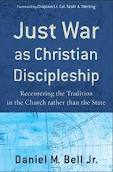
I did not read his book, but very much enjoyed Ken Myers’ interview with Daniel Bell, author of Just War as Christian Discipleship: Re-centering the Tradition in the Church Rather than the State.  The book has received favorable reviews from pacifists and military chaplains alike, which must mean something good.  Bell believes in “Just War Theory” but argues that over time it has lost its true value, because it has been used outside its true purpose.  Politicians use the ideas as a mere checklist, that once fulfilled, grants one a blank check to fight.  Bell argues instead that “just war” didn’t stop when conditions for fighting resolved, but continued into the fighting itself.  To fight to relieve the oppression of others could be a positive, but fighting the oppressors was also, in St. Augustine’s view, good for the oppressors as well.  Stopping their ability to oppress spared them piling up judgment upon themselves, or might help them see the evil of their ways.  For Augustine, if one could not fight an enemy out of love for that enemy, and even potentially kill that enemy out of love for that person, one could not claim to be fighting a “just war.”  War could be a means of sanctification just as any other legitimate activity in life.  Neither the Old or New Testaments speak against being a soldier.

If abused, this idea could to disaster.  Aim high, and you have far to fall if you miss the mark.  One could imagine a deluded commander  perverting this high calling into something monstrous, like the massacre of innocents in Jerusalem during the First Crusade.

But Wings of Judgment shows in some ways that far worse things can happen on a regular basis if governments and armies reject this view.  If war is evil, then once fighting begins nothing can be redeemed.  If one is already a lawbreaker, the checks on behavior disappear.  Though certain aspects of bombing got hotly debated, almost all agreed that since war was evil, we needed to end it as soon as possible.  Debates centered more on the tactics and efficacy of bombing than its strategic or moral value.  We dropped thousands of tons of bombs, with hundreds of thousands killed, in the name of war as a necessary evil.

Bell argues that if we are serious about just war, we need to accept the following:

  • When we fight, we cannot place the highest priority on sparing our own lives or the lives of our soldiers.  Love gives, love thinks of others, but to think of ourselves first denies the Golden Rule.
  • We cannot place the highest priority on speed.  Just war means taking time and great care to avoid any unnecessary loss of life, and we must regard the taking of innocent civilian life not as “collateral damage” but at best manslaughter, especially when done out of moral laziness or impatience.
  • Strange as it may seem, victory cannot be our supreme hope in “just wars.”  Our main goal should the increase of holiness, greater progress in sanctification.  Victory may come with such an approach, but we should fight because it’s the “right thing to do” in the “right way,” to increase in our capacity for love and holiness.

For many Christians these ideas will seem absurd, and for this, Bell indicts the Church.  We have forgotten our past and abdicated much of how we live and think to the state over the past few centuries.  Our current “War on Terror” will test us severely.  Predator drones, for example spare many American lives and allow us to go places people cannot.  But several such attacks have resulted in many civilian deaths.  The destruction is not wholesale, but still part of the same thinking that led to the destruction of Caen, Dresden, and Tokyo. If mistakes like this are in some ways inevitable, should we use them at all?   Torture may get us valuable information, but such terrible acts degrade nations who practice them.  Will we forego the information to save our souls?  Will we forego the information if not getting it puts our friends, neighbors, and children, at greater risk?

I agree with Bell, and if he’s right we must ask ourselves if we really want to fight a just war.


Thus ends the original post.  I had a conversation with a Marine friend of mine and he agreed with Bell in part.  He commented that one might love a society and be at war with a society  at the same time.  One could theoretically, “punish” a disobedient society, and just like a parent who never disciplined children, failure to “punish” would be a form of moral laziness.

But he disagreed that one could kill a particular person and still love them.  It may be permissible, but one cannot love another and kill him at the same time.  The soldier at that point is irrevocably intertwined with the “City of Man.”  I suggested that if he was right, Bell’s thesis breaks down entirely, but he thought it could partially survive.

Food for thought. . .