Some no doubt find themselves enormously annoyed at the rise of flat earth ideas. I find flat earth theories fascinating, though in no way do I profess belief in a scientifically measurable flat earth. The Earth is round. But, I confess, I would find it hilariously fun if indeed the Earth was physically flat, probably because I am not a scientist.
I find the recent appearance of these ideas intriguing not because I find them convincing, but because of what it says about our cultural moment. In other words, the “physical” part of what flat-earthers say might amount to nothing. The fact that they say it, and that many seem to agree, surely evidences a general weakening of the center in our culture–a signal amidst the noise. We no longer trust even the most basic of assumed narratives.
Traditional authorities and traditional ways of creating meaning in our culture no longer work. Many loaded criticism onto the CDC for how they handled COVID. I have no great love for the CDC, but one could view them not as the main character in a tragedy, but almost as a minor player in a much larger narrative. This breakdown of trust in the central narrative has happened in other areas as well, in elections, in the media in general, and so on.
But, while I have a large amount of trust that we live on a round earth, we all know that experientially we live on a flat earth most of the time. We do not experience the rotation of the earth–we see the sun move. Our senses are not lying to us. Here the bare facts of the Earth’s rotation matters much less than our experienced reality. Our experience shapes reality more so than the other way round.
On his Marginal Revolution blog Tyler Cowen posted an amusing link to every problem laid at the feet of jazz in the 1920’s and 30’s. If one takes the time to peruse, we see jazz blamed for
Warts
Small family sizes
Indigestion
Difficulties in college athletics
and so on. The natural reaction for us moderns typically involves a bemused smile at the obtuseness of panicky fools in the past. Perhaps we imagine that we ourselves would never react in such a way. The key here for historians at least, involves seeing if any signals exist amidst this mishmash of chatter.*
Most every western culture experienced profound shifts after W.W. I. One can argue that such changes had their roots in developments decades earlier, in the Industrial Revolution, or centuries earlier with the Scientific Revolution and the Enlightenment. One can go back further if you want. Making connections like this has its place, but we also need to separate, to delineate, as well as join together. Acknowledging the myriad of forces that drive change, we should ask if Jazz in the 20’s and 30’s stands out in any particular way.
Many have remarked how W.W. I destroyed the last vestiges of aristocracy in Europe, both physically and culturally/spiritually. This brought about more democracy politically, but perhaps more importantly, also culturally. Now the “bottom,” or “low” culture would have more prominence. I do not use these terms in a derogatory way. High and Low culture both have their place–the question involves what place, exactly. Perhaps one could argue that
Beethoven (maybe Mozart?) helped start this downward movement by using emotional themes and motifs heavily starting in the middle of his career. This has significance because of the place of emotions in the structure of the body, which reflects in certain respects the structure of the cosmos. Appealing to the emotions meant appealing to our bellies, what lays “lower” in our being.
With Franz Liszt, we see a mixture of high and low culture (‘high’ skill with ‘low’ folk motifs) with a ‘low’ reaction to him (ladies swoon and scream–he’s a rock star).
At the turn of the century Mahler (whose music I neither like nor understand, so take this with salt) completes the destruction of the classical forms, paving the way for something else. Maybe Stravinsky’s Rite of Spring worked in a similar way upon the world.
The visual arts mirror this trend in music, starting with Turner as early impressionism, down to Monet, Van Gogh, and then finally Duchamp’s Nude Descending a Staircase
Joseph Mallord William Turner (British, London 1775–1851 London) The Lake of Zug, 1843 British, Watercolor over graphite; 11 3/4 x 18
Nude Descending a Staircase
This progression towards less fixed form and more loose, popular expression up until W.W I certainly took place, but the dam had not burst, so to speak, however many cracks any perceptive observer might have noted at the time.
But with the breakout of jazz and swing. suddenly popular, “low” culture became the dominant culture, flipping things from a top-down/old-to-young to the reverse. Now the young grabbed the throne, and culture obligingly followed. The manic way people took to this new form should indicate that something was not quite right. Clearly, something happened in how we viewed the world, something throttled us, in a sense, and made us into something new.
Marshal McLuhan has the fascinating idea that the switch to electricity primarily drove this change, which began in earnest just before W.W. I. His complex argument can get boiled down to his belief that
The culture of ‘printing press’ man would lend itself to a filtered experience of the world. We gained the ability to separate our experiences in a detached way. For example, any selection from Bach’s Well Tempered Clavier has emotional content, but that comes later in the listening experience and not right away.
The electric age would thrust western man back in time, to a more tribal mode of culture, where sensory experience integrates and brings everything “all at once.”
Whichever culture we prefer, this sort of culture will not facilitate the “cool” detachment needed in a linear print culture. We would now run “hot,” experiencing culture When listening to, for example, James Brown, the impact is immediate, and does not lend itself to analysis as does Bach.
Again, whether one regards this shift as good, bad, or indifferent, it represents a massive psychic shift in perception, which would lead to a new way of life.
I do not suggest that we should adopt McCluhan’s thoughts whole hog. Exploring religious factors would also yield interesting results. But culture stands right next to religion, and I find his lens a good one. The music of jazz, appearing right at the advent of radio and electricity, fits into this shift. The experience of early swing music at least has an immediacy, and totality of effect.
The linked post from Marginal Revolution about the impacts of jazz show lack of thought, some stabs in the dark, and some panic. But those early worry-warts had an intuitive insight–they knew that something big was afoot that would alter everything.
In its modern incarnation, democracy arose from the pinnacle of the print age in the late 18th century. Our political practice, and our rights, such as freedom of speech, require a certain amount of practiced detachment. This posture now runs in short supply in certain aspects of our culture, and we may soon experience a seismic shift akin to what took place in the 20’s and 30’s. So, when we poke fun at the past and assume our own superiority, we should pause. Our modern world might resemble chickens without their heads soon enough. If the bare facts don’t tell that story, our experience might. Historians should look in both places.
Dave
*None of what follows should be seen as disparaging to jazz. It is one of my favorite musical genres. I regard Count Basie (more than Louie Armstrong or Miles Davis, though obviously they are all magnificent), as one of the great emblems of American culture of the 20th century. No one managed such a distinctive, punchy, groove for longer. Miles Davis had more intellectual inventiveness, and John Coltrane played with more rich emotion. Neither of them have nearly as much fun as Count Basie. Likewise, Basie could never be considered the best piano player, and maybe not even a “great” piano player (though I would say so, but admittedly in a certain sense of the term). But he was always the most fun, as this little moment at the 4:05 mark attests.
Barbara Tuchmann’s The Guns of August discusses the controversies, dilemmas, and human drama in the days leading up to World War I. She puts a special focus on the war plans developed by France and Germany in the years leading up to the war. The two plans reflect much about the two nations. Germany’s Schliefflin Plan
Relied heavily on rail transport with precision timetables
Relied heavily on heavy artillery and all of the other goodies of industrialization
Involved violating Belgian neutrality, but no matter–the winner would determine the post-war narrative, and they had to go through Belgium to make their plan work.
France’s Plan 17 relied
Heavily on initiative in the field for individual commanders, with the emphasis on attack
Much more than Germany on the human element, “men win wars, not machines,” and so on–what the French called “elan.”
They eschewed heavy artillery, feeling that it would slow their men down and give them a dependent mindset.
Both sides had perfect awareness of the other’s plans, and both thought the strategic situation favored their own side. The French, with their army in red pants, hearkened back to an older time. Some called for the uniforms to be replaced with a more drab color less visible on the spectrum. The French general staff refused absolutely. The red pants embodied the spirit and will of the army, a refusal to bend to the industrial spirit of the age.
Alas, German organization, artillery, and precision destroyed the French army in first weeks of the war, inflicting at least 250,000 casualties. France had to adjust, and while they managed to stave off disaster at the Battle of the Marne, the dash and the human initiative would fade away just like the red pants. They too brought out heavy guns and “succumbed” to the Germany way.
As events unfolded, both sides ended up digging into the ground for what became known as Trench Warfare, which characterized the fighting in the western front right through 1918. Historians usually offer a variety of explanations for this unusual development–neither previous or future wars would ever use trenches so completely.
Some focus on the significant imbalance between defense and offense that existed between the western powers. Heavy weaponry for the most part had little mobility at this time, which limited offensive capability and gave an enormous advantage to the defensive.
Some focus on the narrow geography between the German and French borders, which meant an extreme concentration of men and machines. More space on the Eastern Front, for example, meant some more mobility and much less trench digging.
These explanations have merit but I think miss the larger picture.
The triumph of the metric system presaged military developments in World War I. The old systems of measurements had its roots in human experience and proportion, i.e., the “foot.” or the “stone” (about 14 pounds), which would be local and based on the weight of an actual stone in a particular town or region. The new system greatly maximized standardization, minimizing locality, and made it easier to count, measure, multiply, and so on. In other words, the new system granted one more power.* The Industrial Revolution continued this standardization, which naturally granted increased power to produce goods on a mass scale
But all of this power came from literally digging into the earth to obtain the necessary raw materials for the engines of industry and war. As industrialization reached its peak manifestation, the soldiers too dug into the earth. Perhaps the eastern theater of war saw less trench warfare because it had less industrialization. It seems a curious symmetry exists between the birth of the modern war machine and trench warfare, and we should endeavor to explain it. In other words, the creation of industrialization (digging into the earth), and its apotheosis (trench warfare) mirror each other (in the picture of the soldiers above, change the uniforms and the men could look exactly like miners). For Europe, World War I ended the belief in the inevitable progress of mankind, represented by science/industrialization and democracy. One can easily argue that science and democracy (in the form of mass media, mass mobilization, and mass production) made the war much more deadly than any previous conflict.
We can begin by noting the symmetry between birth and death. Interestingly, many ancient cultures buried people in the fetal position, linking birth and death in a circle, which I discussed here.
Perhaps this should not surprise us, as birth and death have something of a symbiosis.
We see a similar symmetry in rock music. I grew up partially in the Grunge Era. I took great delight in the transition from 80’s pop to Nirvana and Soundgarden. But anyone who reflects for a moment should see something odd going on with music in the 1990’s. In his excellent book on that decade, Chuck Klosterman made two keen observations:
The grunge attitude and aesthetic brought about the end of rock and roll. The whole foundation of rock music involved stardom, mass appeal, etc. Grunge artists had massive success while deriding, mocking, and hating that success, a kind of matter-anti-matter collision. In this sense, Kurt Cobain’s tragic suicide** can be seen as a harbinger, a death-knell for the genre as a whole. In many ways, the power that comes with stardom brings not life, but a kind of death, just as the power granted by industrialization ushered in an era of millions of deaths in war.
What was with the litany of songs with large portions of lyrics devoted either to nonsense, mere sounds, or garbled unintelligibility?
We’ll get to that list momentarily. We saw something similar at the birth of rock and roll in the late 50’s-early 60’s, in the form of a variety of songs with nonsense/unintelligible lyrics that made their way into the American psyche.
All of these songs share the exuberance that characterizes the birth of an era. The nonsense, the invented sounds, reminds one of little kids discovering their mouths for the first time.
In the 90’s you have Klosterman’s list of songs with nonsensical and unintelligible lyrics. But this time, the tenor, and atmosphere of the songs embrace not the excitement of new life but chaos, meaninglessness, and death.
Of course, Nirvana’s “Smells Like Teen Spirit,” with Weird Al parodying the song’s unintelligibility.
Blur’s “Beetlebum,” and “Song 2.” “Song 2” has a something of exuberance in it, but the video clearly shows it is the excitement of destruction, not creation. No coincidence then, that Paul Veerhoven used this song to promote his movie Starship Troopers, which parodied the meaninglessness of fascistic violence.
Basement Jaxx’s “Bingo Bango.” Yes, the song has an upbeat mood to it, but the video hints at disorienting chaos.
“Mmmmm Mmmmmm Mmmmmm” by the Crash Test Dummies. The song has beauty, but it is the beauty of an elegy. The group’s other hit, “Coffee Spoons and Afternoons” talks about receding hairlines, hospitals, drinking coffee in the afternoon wearing pajamas–not exactly the stuff of birth.
At first glance, Hanson’s “Mmmmbop” may seem to have the stuff of “life” embedded within, but after listening for about 90 seconds, thoughts of anger, hatred, and despair flood one’s being. The song is hypnotically annoying/infuriating.
The end of rock music mirrored its beginning, but the mirror has cracks.
Historians date the birth of the modern state at different points. One can trace the beginnings in the later Renaissance, and things look more clear at the Peace of Westphalia in 1648. But to see the state as we know it, with its bureaucracy, centralization, uniformity of law, and military organization, we have to look at Napoleon. We have a fascination with Napoleon for good reason–undoubtedly he embodied something romantic, something of promise, in his early years.
But 100 years later, that civilization, while having much more power at its disposal, actually approaches its death–a variety of historians (Niall Ferguson, Oswald Spengler) see World War I as the end of the west. Certainly at least, Europe–the core of western civilization– has never recovered from that conflict. Western civilization’s power and identity had its start with going into the earth in hope that its raw materials would give us power to establish Kant’s dream of perpetual peace. It ended differently.
Dave
*A variety of people have pointed out this connection between counting, numbering, and power. This may be why King David suffered such a strong rebuke when he took a census in Israel. He tried to count “excessively,” i.e., he tried to consolidate power inappropriately at the end of his reign.
**In an interview with Vulture magazine, Klosterman commented,
What is so profound about Nirvana is that the relationship ended up becoming real. The song “I Hate Myself and Want to Die.” The idea that a person who writes that song also does commit suicide — that is so on the nose. People would say things like, “If that guy hates fame so much, why doesn’t he just stop?” We did not fully believe that Kurt Cobain was actually unhappy. And then when he killed himself, it made that music suddenly weirdly true.
He was presenting ideas in a culture where irony was the central understanding of all messages, and he seems to have had no ironic distance at all. It actually was incredibly sad and depressing to him that people he didn’t like loved his music. It legitimately bothered him that, say, homophobes liked his music. It bothered him in a way that for other artists, it would’ve been seen almost as branding.
I posted this originally back in 2012. While I could have added some new thoughts to the post I wrote directly on Eric Voegelin’s Science Politics, and Gnosticism (found here), I thought it better to include in this post as a sub-set on the idea of territorial expansion.
It may very well be that to read Eric Voegelin is to be confused. I have had my struggles with his book Order and History: The Ecumenic Age. But, remembering that he made a special study of gnostic ideas and philosophy, I found his thoughts on the origins of Gnosticism and its relation to territorial expansion very intriguing.
Gnosticism has many permutations, but at its core it propounds an opposition of matter and spirit, the soul and the body, and so on. Some biblical scholars believe that the Apostle John may be attempting to counter Gnosticism in his epistles. Those who have read St. Augustine’s Confessions know that he involved himself in the gnostic ideas of Manicheism before converting to Christianity. But gnosticism as a general philosophy pre-dates the coming of Christ by many centuries. Voegelin writes on its origins,
The genetic context to which I refer is the interaction between expansion of empire and differentiation of consciousness. In pragmatic history, Gnosticism arises from six centuries of imperial expansion and civilizational destruction (p. 21).
Thus, we may assume that gnostic ideas had their roots in the first great ecumenic empire of the Persians, and this fits with the Zoroastrianism and its adoption by Darius I as the semi-official religion of his court.
As to the “why” behind the link between expansion and Gnosticism, I am less able to penetrate Voegelin’s thoughts. But I believe that we can surmise the following:
Significant expansion destroys our sense of proportion. If the empire is everywhere, it is nowhere.
Lacking perspective, we lack attachment to place. Without attachment to place, we lose our attachment to creation itself. As an old Irish proverb states (I’m not quoting exactly), “Those who travel much lose their faith.”
The power that comes with empire inflates one’s sense of self and distances us from others. As Chesterton stated, one should pray in valleys, not mountaintops.
Related to the original post below, the disconnect from creation might form the spiritual basis of the problems faced by expansion.
Having recently glanced over The Goebbels Diaries I wondered — did Hitler’s refusal to allow Rommel to withdraw at El Alamein, and his “fight to the last bullet” order to Von Paulus at Stalingrad arise not from hope of victory but desire for the extinguishing of matter? As Germany’s territory increased, Hitler seemed more focused on a “refining” cataclysm for creation than in actual victory. Once separated from creation, we come to hate it, with death as the (perceived) only escape.
And now, the original post . . .
Reading Explorers of the Nile spurred on a thought experiment.
While I have not been overly compelled by the story, there have been several interesting tidbits. Regardless of one’s feelings toward the Victorian age in general, or the Brits in particular, one can’t help but admire the sheer will and energy of the second great wave of western exploration (the first being in the 15th-early 16th centuries via the Atlantic). Many hundreds of men risked everything for the sheer thrill of discovery, and yes, for the glory of it as well. In the early phases from ca. 1840-1860’s, most of this exploration seemed to me to have a generally innocent tinge to it. The more acquisitive imperialism came later.
This energy and striving for glory reminded me of late Republic Rome, and the quote from Sallust in The Jurgurthine War, which reads,
I have often heard that Quintus Maximus Publius Scipio, and other distinguished men of our country were accustomed to declare that, whenever they looked on the masks of their ancestors, their hearts were set aflame in the pursuit of virtue [i.e. worthy deeds]. Of course they did not mean that the wax or the effigy had any power over them, but it is the memory of great achievements that kindles a flame in the breasts of eminent men that cannot be extinguished until their own excellence has come to rival the reputation and glory of their forefathers.
It struck me that it was during the later phase of the Republic that Rome grew the most in size. If we look at a map of the Mediterranean at the beginning of the first Punic War in 264 B.C. . . .
we see that Rome, though decent in size, does not dominate. They have their sphere, along with Carthage, Egypt, Macedon, etc.
If we fast-forward 100 years we get a different picture, and as the map below indicates, Rome continues to grow almost geometrically down to the death of Caesar in 44 B.C.
While Rome had a Republic at this time, I agree with Toynbee that while the government had democratic elements, it was for all intents and purposes an oligarchy. The aristocratic senate dominated policy, however much voting by the masses took place.
Is there a connection then, between oligarchic democracies and expansion? As time marched on from Charles I, England did by fits and starts become more democratic. But 19th century England surely was not democracy in our sense of the word, and instead like the Republic showed strong oligarchic tinges. As a monarchy, England’s overseas holdings were modest compared with the rest of the world, ca. 1800. . .
But a century later, after more democracy (while still having an oligarchy) and we see a different scene:
As in late Republic in Rome, we have a near doubling in size. Of course, something similar could be said of the other major European powers during the same time, many of them become more democratic after 1848, though again, like England, not fully so until after W.W. I.
Two examples do not really suffice to prove the connection. But three will!
America gets accused of being an imperial power, but I think the charge false in our current, strongly democratic time. It might have had more merit in the more oligarchic 19th century, however.
America, 1800:
America, 1900:
When America became more democratic in the 20th century, our expansion rapidly slowed. Now, to be fair, we acquired Louisiana “fairly” from France by buying it, and Alaska fair and square from Russia. But the same cannot be said for the Philippines, or the vast territory taken from Indians, including territory in Louisiana. Both Abraham Lincoln and Ulysses S. Grant thought that our war with Mexico in 1846 to be manifestly unjust.
If we believe Thucydides, and call Athenian democracy in its golden age really a Pericles-led oligarchy of the best (a claim, to be fair, disputed by the great classicist Donald Kagan), we again see this principle of growth. In 490 B.C. Athens stood as one city-state among many. Not so 50 years later. . .
As to why oligarchic democracies have such expansionistic tendencies, I cannot say. Perhaps it can be the subject of another post filled with wild theories. But it does seem clear that this period of expansion leads to a “Time of Troubles,” for all parties involved.
For England and the rest of Europe, expansion gave way to the two World Wars. America had its Civil War, caused largely by the exacerbation of the slavery issue. The inflaming of the slavery question in its turn had its roots in the Mexican-American war in 1846. Athens and the Greek world faced the Peloponnesian War (431-404 B.C.). Though the proximate causes and results of these conflicts differ, they each have an age of expansion to precede it.
Any thoughts from anyone else, with more examples, or a connection between oligarchic democracies and expansion, are heartily welcome.
(The Grumpy Old Man podcast that touches on some of these themes can be found here.).
**************************
A few years ago at the Circe Instituteconference Andrew Kern made a startling statement. In the midst of his opening speech he mentioned the Luddites. I have always assumed (like most of us I suppose) that the Luddites attacked the mechanical looms for economic reasons. But Kern suggested that perhaps the Luddites acted unknowingly for more fundamental reasons.
All throughout ancient literature (which people in the early 19th century would be familiar with) weaving relates strongly to wisdom. So Penelope’s weaving, for example, is not merely a clever device to stall the suitors. She represents wisdom and faithfulness in contrast to the suitors who grasp for power and wealth. They will not confirm Odysseus’ death, rather they will take what they want in defiance of the pattern of creation and marriage. The idea of the “fabric of society” closely relates to weaving, and so on.
So, Kern surmised, the Luddites didn’t just act to try and preserve their jobs. They may have acted to preserve the idea of wisdom itself, though almost certainly not overtly but in a sub-conscious, Jungian sense.
I thought the idea intriguing at the time, but perhaps a bit of a stretch. But I started to look for weaving in ancient literature. To my surprise Plato uses weaving in his dialogue “The Statesmen” as an analogy for good government. With Jason and his Argonauts we see Medea the sorceress contrasted with Queen Arete, who is weaving when we first meet her. In Homer’s The Odyssey we see a couple of references to the span of life compared to a thread (7.197-198, 24.38-29). Melville uses similar imagery in chapter 47 of Moby Dick, and we also see it in the Upanishads. Isaiah 38:12 reads, “My life was with me as cloth on a loom, when she that weaves draws near to cut off the thread.”
The philosopher Porphyry uses very similar imagery in his On the Cave of the Nymphs, another reference to the Odyssey (13.102-112). Here Homer refers to a murky cave which contains, among other things, “looms, likewise of stone, on which the nymphs wear weave sea-purple garments.” Porphyry writes (and we should remember that he–unfortunately–believed in the pre-existence of the soul),
What symbol could be more appropriate than “looms” for souls descending to birth and the creation of the body? , . . For flesh is formed in and around the bones, which in living beings resemble stones.
We should not miss the connections to the fundamental facts of weaving, birth, death, blood, and the like.
So perhaps Kern, and the Luddites themselves, were on to something.
I finally went in search of a book on the Luddites and came across Rebels Against the Future by Kirkpatrick Sale. Sale gives a good overview of the Luddites but does little else. He gives us some important perspective, showing us that the Luddites had nothing against technology per se, but only against, to quote from a Luddite letter, “Machinery hurtful to commonality.” He clearly favors the Luddite cause and shows many examples of their courage. Sale’s explanation for the Luddites ultimate failure, however, leaves out to my mind the most basic reason. In resorting to violence, they at times fired upon common men like themselves, and thus abandoned their moral high ground. Furthermore, their use of violence played directly into the hands of their adversaries. Once they broke the law, the state naturally would defend the men behind the machines. And the state had much more force to use than the Luddites.* Had the Luddites exercised more patience and used a non-violent, grass-roots approach, history might have been different. As to how different, Sale offers no thoughts. Did industrial looms pose more of a threat than factories that performed other tasks? Would it be possible to industrialize in some areas and not others? If other countries industrialized their economy, and thus, their armies, what would the consequences be for a non-industrial country? The age of imperialism might offer some hints on this, and questions about community balanced with security (among other questions) should be asked.
Sale just scratches the surface. Maybe not much else exists to see. Maybe the Luddites had no higher purpose than saving their jobs. But I think the Luddites continual references to “commonality” hints that Kern had more insight than I first supposed. I will hope to find other books that can take the issue deeper.
My favorite part of Toynbee’s sixth volume of his A Study of History deals with his examination of what he calls archaism. “Archaics” in his context seek to recover their civilization in a time of crisis by using a time-machine to travel back to some imagined golden age. We should much prefer archaism to “futurism.” The past has the advantage of having an actual reality and thus restrains action somewhat. The futurist has no such limitations, and the evil they work in their earnest desperation will likely be much more terrible. Toynbee points out that archaists would usually rather be archaeologists than politicians. Alas, political realities set in and something must give. The impossibility of drawing back the masses to the past with you means that archaists often choose violence in the end. And this ends up dooming their movement.**
I think the Luddites use of violence contributed heavily to their defeat, but I would not call them “archaists.” They sat on the knife-edge of change and saw a darkness on the horizon. The “past” they tried to preserve was in fact the present. Given that they did not reject all technology they had no wish to futilely put the brakes on all aspects of societal change. They saw clearly what the Industrial Revolution would do to their communities and their sense of self. If they did not submit to “archaism” they had more psychological flexibility at their disposal, which makes their use of violence more troubling to me. Perhaps in the end they simply lacked the very rare traits necessary to translate those ideas politically.
Or perhaps their concerns went far away from politics. Perhaps they saw themselves as doomed crusaders, but bound, like crusaders, to something deeper and older than politics.
Maybe.
According to the Tradition of the Church, at the Annunciation the Virgin Mary was found by Gabriel in the Temple . . . weaving a veil for the Temple where she resided, and some icons of the Annunciation (such as the one below from the 14th century in Serbia) show this as well.
In Hebrews 10:20 we see the identification with Christ’s body with the veil of the sanctuary (10:20), and we know that both the Temple curtain and the Body of Christ were broken for the life of the world. Father Maximos Constas writes, “With the strictest visual economy, then, Mary’s thread gives consummate expression the . . . continuum of conception and crucifixion.”^
From St. Epiphianos:
About Eve and Mary it was said, “Who gave women the wisdom of weaving, and the knowledge of embroidering? (Job 38:36). For the first wise woman, Eve, wove material garments for Adam, whom she had stripped naked. This labor was given to her, for it was through her that the knowledge of nakedness was acquired, and thus to her was given the task of clothing the perceptible body.
To Mary, on the other hand, it was granted by God to give birth to the Lamb and the Shepherd [cf. John 1:29, 10:11], so that from his glory we might be clothed in a garment of incorruptibility (1 Cor. 15:53-54).
And from St. Nelios the Ascetic:
The Theotokos [that is, Mary, the “Mother of God”] displayed such “wisdom and manifold knowledge” (Job 38:36) that, from the wool of the Lamb who was born from her, she was able to clothe all the faithful with garments of incorruptibility. For all true Christians stand at the right hand of the King, in golden-fringed garments, embroidered in myriad forms of the virtues.
So it may be that the liturgy of the loom points us toward the wisdom of knowing salvation itself. I’d like to believe that the Luddites thought likewise, and would love for someone to prove or at least suggest this in another book about them.
Dave
*Gene Sharp makes brilliant points about the benefits of non-violent struggle against states or state-sponsored entities in “From Dictatorship to Democracy,” available online.
**I.e, Tiberius Graachi, who committed himself almost entirely to non-violence. But he did violate the Roman constitution and so became a law-breaker. This may have cost his movement the fence-sitters they needed, and it also opened the door for the Senate to respond with force.
^The entirety of this paragraph owes everything to The Art of Seeing by Father Maximos Constans, pp. 108-109, as do the quotes below, found on p. 129
When you teach the same classes year after year as I have, one starts to realize that what seems like great material one year seems to fall flat in another. Many reasons exist for this, some of them obvious, such as whether or not you taught the lesson on a Tuesday or a Friday, or at the beginning or the end of the day. Sometimes more mysterious factors present themselves, such as whether or not you have a critical mass of students interested in the topic.
Thankfully, some things work even if you teach it last period on the day before Christmas vacation, such as Assyrian tortures with 8th grade boys, and the Kennedy-Nixon debates. I am always impressed how students, with very little context or introduction, immediately pick up that “somethin’ ain’t right” with Nixon–setting aside the infamous sweat on his lower lip.
What Nixon gets wrong has nothing to do with what he says. Students note, too, that the debate, while it suffers somewhat from the medium of television, has some actual substance to it from both candidates. The problem lies deeper, in the “atmosphere” around Nixon.
At times I think that Marshal McCluhan, for all his brilliance, sees everything as a nail, armed as he is with his significant insight into how the “medium is the message.” But his comments about this seminal debate in 1960 led me to following him down a rabbit hole of sorts, and wondering if our current cultural angst has its roots in transformation of our media landscape.
In a famous interview McCluhan describes the differences between what he calls “hot” and “cool” mediums, saying,
Basically, a hot medium excludes and a cool medium includes. Hot media are high in completion, and low in audience participation. Cool media are high in participation. A Hot medium extends a single sense with high definition . . . A photography for example, is “hot” whereas a rough sketch cartoon is “cool.” Radio is a hot medium because it sharply and intensely provides a great amount of high definition auditory information that leaves little or nothing to be filled in by the audience. A lecture is hot, a seminar is cool.
He continues by suggesting that television is not even a strictly visual medium. Its low definition (here we must remember that McCluhan is speaking around 1968. He might think differently about today’s “high definition” tv’s) means that we the audience have to be “drawn in.” Those who come across “hot” rather than “cool” will put off their audience. He continues
Kennedy was the first tv president . . . . TV is an inherently cool medium, and Kennedy had a compatible coolness and indifference to power, bred of personal wealth, which allowed him to adapt fully to tv. [Without this] any candidate will electrocute himself on television–as Richard Nixon did in his disastrous debates with Kennedy. Nixon was essentially hot, he presents a high-definition, sharply defined image . . . that contributed to his reputation as a phony. . . . He didn’t project the cool aura of disinterest and objectivity that Kennedy emanated so effortlessly and engagingly.
McCluhan’s analysis explains why those who listened to the debate on the radio gave the edge to Nixon. It has nothing per se to do with the content of their messages, but the medium itself.* Nixon’s earnest and direct manner worked much better on radio. McCluhan makes clear in the interview that the process of our interaction with this new media would transform western society–a society built upon the printing press.
I think McCluhan overstates his case a bit, but his analysis of media and culture have a great deal of explanatory power. I will try to present him as best as I can, starting with a long excerpt from the interview (slightly edited for clarity by myself–the ‘M’ is McCluhan):
M: Oral cultures act and react simultaneously, whereas the capacity to act without reacting, without involvement, is the special gift of literate man. Another basic characteristic of [pre-modern] man is that he lived in a world of acoustic space, which gave him a radically different concept of space-time relationships.
Q: Was phonetic literacy alone responsible for this shift in values from tribal ‘involvement’ to civilized detachment?
M: Yes. Any culture is an order of sensory preferences, and in the tribal world, the senses of touch, taste, smell, and hearing were more developed. Into this world, the phonetic alphabet fell like a bombshell . . . literacy put the eye above all else. Linear, visual values replaced an integral communal interplay. The writing of the Egyptians, Chinese, and Mayan were an extension of multiple senses–they gave pictorial expression to reality and used many signs to cover a wide range of data. The achievement of phonics demands the separation of both sight and sound from their semantic and dramatic meanings in order to render speech visually.
As knowledge is extended in alphabetic form, it is localized and fragmented into specialities, creating divisions of function, classes, nations. The rich interplay of the senses is sacrificed.
Q: But aren’t their corresponding gains in insight to compensate for the loss of tribal values?
M: Literacy . . . creates people who are less complex and diverse. . . . But he is also given a tremendous advantage over non-literate man, who is hamstrung by cultural pluralism–values that make the African as easy a prey for the European colonialist as the barbarian was for the Greeks and Romans. Only alphabetic cultures ever succeeded in mastering connected linear sequences as a means of social organization.
Q: Isn’t the thrust of your argument then, that the introduction of the phonetic alphabet was not progress, but a psychic and social disaster?
M: It was both. . . . the old Greek myth has Cadmus, who brought the alphabet to man, sowing dragons teeth that sprang up from the earth as armed men. The age of print, which held sway from 1500-1900, had its obituary tapped out by the telegraph, the first of the new electric media, and further obsequies were registered by the perception of curved space and non-Euclidean mathematics in the early years of the century, which revived [pre-modern] man’s discontinuous space-time concepts–and which even Spengler dimly perceived as the death-knell of Western literate values. The development of tv, film, and the computer have driven further nails into the coffin. It is tv that is primarily responsible for ending the visual supremacy that characterized all mechanical technology.
Q: But isn’t TV primarily a visual medium?
M: No, quite the opposite. . . . The TV image is a mosaic mesh not only of horizontal lines but of millions of tiny dots, of which the viewer is only able to pick out 50 or 60 from which he shapes the image; thus he is constantly bringing himself into involvement with the screen and acting out a creative dialog with the iconoscope, which tattoos its message directly onto our skins. Each viewer is thus an unconscious pointilist painter, like Seurat.
Q: How is tv reshaping our political institutions?
M: For one thing, it is creating an entirely new type of national leader, a man who is much more a tribal chieftain than a politician.
In his The Medium is the Message McCluhan quotes a poem of Yeats,
Locke sank into a swoon;
The garden died;
God took the spinning jenny
Out of his side
McCluhan sees the man’s interaction with media thusly:
Pre-literate man was essentially oral. He lived in an sensory integrated world, and an “immediate” world. He lived in a world he could cohere into a totality of experience. His sense of space-time, how he got his information, etc. came within an embodied context.
True–a few unusual people might have been merchants who traveled a lot, whose sense of time and space might have been somewhat different, but these people were rare, on the fringe of society.
The printing press both mechanized information and intensified how we received it, “assuring the eye a position of total dominance in man’s sensorium. . . . The schism between thought and action was institutionalized, and fragmented man, first sundered by the alphabet, was at last diced into bite-sized tidbits.”
Commenting on the poem above, McCluhan writes, “Yeats presents Locke, the philosopher of linear and mechanical association, as hypnotized by his own image, but the “garden” of unified consciousness had ended.”
“Literate Man,” as McCluhan names western man from 1500-1900, valued highly the detachment cultivated by textual interaction. Indeed–we have to detach ourselves to a degree to read at all. We see the values of literate man producing “detached” scientific exploration and experimentation, promoting distance, toleration, and a political transformation away from the directly personal monarchies to impersonal democratic republics. Perhaps we can say that such values peaked in the late 18th century. We begin to see with 19th century Romanticism a yearning for a more holistic way of life. McCluhan’s focus stays on media, with
The invention of the telegraph for McCluhan was the beginning of the end of “Literate Man,” a point he admits to borrowing from the enigmatic Oswald Spengler. The telegraph both began the process of altering our perception of time and space, and made information more direct and immediate, a feature of pre-literate experience.
The radio followed suit quickly, then tv, etc. We saw cultural conflict and disintegration in the 1960’s because television accelerated the process of a cultural transference away from literate man. Our educational system offered all of the values of literate man, a complete mismatch with the desire for holistic integration our interaction with modern media produces.**
Had McCluhan lived to see the internet (some say he clearly predicted it), he would likely say that such instantly available means of breaking down time and space might very well put the nails in the coffin of Literate Man and cause a deep cultural division. Indeed, McCluhan’s analysis can shed light on the division between Gen X–the last generation not raised with the internet–and Millennials, etc. Many under 30 today care little for the Literate Man values that helped found our country, i.e., rational debate, give and take, etc. They want a more integrated communal experience.^
Our current political struggle, then, pits not Republicans against Democrats–who knows what it means to be a Republican or Democrat anyway now?–but against literate/printing press man values of privacy, debate, and individualism vs. the tribal/internet man values of community and integrated life. We see this conflict running through different aspects of our society, such as in journalism. The old journalistic ethic taught that the reporter should cultivate distance and a degree of objectivity. The new school of reporting seeks engagement, communal change, etc.
McCluhan admitted that early in his career he saw the decline of “Literate Man” as a moral catastrophe, but by the late 1960’s he committed himself to trying to observe (ironically, perhaps, a quintessential Literate Man pose) and not attach value judgments to his preferences. But with an additional 50 years of perspective on the influence of new media, I think we should venture some conclusions about its impact.
I agree that no absolute moral difference exists between Printing Press Man and Integrated/Tribal Man. McCluhan’s focus on the telegraph makes one realize that the technological/cultural changes many of us think are 15-20 years in the making are really 150 years old. McCluhan points out rightly that the advent of the printing press, industrialization, etc. into traditional societies was at least in part “a psychic and social disaster.” But he put less attention on the switch back the other way–it too will be experienced as a “disaster” by Literate Man for society to go back to Integrated Man.
I agree too that something mysterious exists with our relationship to media, which includes not just radio and the internet, but all of the ways in which we seek to extend our being, including our clothes. A meshing of man and media leads to a switch in perception and how we act. For example, our reaction to COVID had just as much to do with the media we use as it did with the disease itself. I am not saying that COVID is just the flu, but it is not the Black Plague either. Without online shopping, Zoom, etc. we would never have taken the measures we did with COVID. Some will say, “Thank goodness we had Zoom so we did not have to go into work, and more lives were saved.” Others, like myself, see something not so much sinister as deeply skewed. The media we use focuses our attention, and our view of the world is “made” from where we direct our attention. COVID and the internet worked symbiotically to form our decisions.
McCluhan rightly points out the many advantages of pre-modern societies. He saw us recapturing some of those values as our media landscape transformed. I wouldn’t mind a return of some pre-modern values. But contrary to McCluhan (if I understand him rightly), we don’t see these values returning. Or rather, we see them returning, but in a distorted way. No question, visiting a waterfall would be an “integrative” experience–sight, smell, touch, etc.–in ways that seeing the waterfall online would not. The continual availability of a fragmented online experience has not given us a holistic society but one where, according to some accounts, one in four young adults take some form of anti-depressant. McCluhan might say that this is exactly what we should expect when we ask kids to spend 7 hours a day in a detached, “Literate” environment when the media they use calls them to an entirely different way of life. I would perhaps argue that what we see now is a combination of
Literate Man reaching the end of its days
No good Integrated Man alternative available.
One can argue that there was an “Anti-Nature” strand in the history of Literate Man, with its extreme focus on linear thought and the eye. But so far, the new Integrated Man all in all shows no signs of actually wanting to create a holistic society. For example,
Many of the same environmentalists who want us to be closer to nature also tell us not to have children. But few other things are more “natural” than men and women getting married and having children. How can one speak of integration of our experience while excluding humanity from that experience?
Many advocates of an extreme individual fluidty/”rights” with their bodies (abortion, sexual differences, etc.) also are quite rigid about certain other areas around race, speech, etc.
Most all of us use the internet not as a tool of integration but escape. Television, in some ways at least, brought people together, i.e., we all watched “I Love Lucy,” “The Cosby Show,” and the Super Bowl.
Richard Rohlin noted that one can define conservatism simply as love of one’s parents. By that he meant our biological parents, but also our spiritual fathers, our culture, our past. We need not believe that our parents are perfect, or even particularly “good.” We love ourselves and hopefully know that we have deep flaws that need work, but we cannot build or change anything by starting with a void, a negative. America’s problem, as it relates to McCluhan, can be boiled down to
Conservatives should embrace tradition, but American “Conservatives” hearken back to a tradition of individually oriented, linear, and “cool” world. This is perhaps one reason why appeals to the past in American politics never quite seem to work, and only seem to further individualism.
Modern progressives seem to seek a more communal and holistic vision of society, which has the earmarks of “Tradition.” However, progressives tend to reject the past outright as evil. They seek the impossibility of a traditional society constructed out of revolutionary ideology.
If neither vision can succeed, then our solution has to lie beyond adaptation or understanding of our new media. McCluhan shows us where we are better than most, but he can’t say where we need to go.
Dave
*McCluhan commented about Lyndon Johnson in a spot-on analysis . . . “[Johnson] botched [tv] in the same way that Nixon did in 1960. He was too intense, too obsessed with making his audience love and revere him as father and teacher. Johnson became a stereotype–even a parody–of himself, and earned the same reputation as a phony that plagued Nixon for so long. The people wouldn’t have cared about Kennedy lying to them on tv, but they couldn’t stomach Johnson even when he told them the truth.”
He also noted how Nixon rehabilitated his image by changing his tv demeanor, starting with his appearance on the Jack Parr show in 1963. “In the recent [1968] election,” he comments, “it was Nixon who was cool and Humphrey who was hot.” Correctly, he noticed in 1968 that this was a mask for Nixon. His presidency would prove this the case. If there is anything one can say about Nixon–he was not someone who “invited people in.”
**We see the maddening apotheosis of literate man in the form of the ultra-scholar who only seeks to point out facts, and never wants to commit to a conclusion, never wants to integrate his knowledge into anything cohesive or final. As for McCluhan’s point about “immediacy” and “participation,” think of the impact of television on the Civil Rights movement in the 1960’s. Everyone could see the images, the marches, and participate to a degree in the “cultural moment.”
^Note the stereotype of the detached, unengaged Gen X’er, with slacker anti-heroes, i.e., The Breakfast Club and Bill and Ted’s Excellent Adventure, etc. — very different movies, but with the same overall theme. Today’s heroes tend to be about “family”–think Amazon’s series The Expanse and the Fast and Furious franchise.
Nature is not always “natural.” We “naturally” recognize a standard above nature. For example, nuclear weapons are made from the very stuff of nature (atoms, etc.) but strike as distinctly unnatural in their effect. We understand that technology in warfare has progressed over time. We can process at least some of these changes as a kind of natural progression of what has always been. So, a rifle is akin to a bow and arrow, artillery has its origins in the catapult, and so on. But nuclear weapons turns nature itself against us. Watching nuclear weapons detonate can transfix us with a kind of horrifying beauty. We know that we have encountered something on a different plane . . .
Historians and others have many explanations for our current cultural moment, and I will try my hand in what follows.
I recently heard a priest online state that, “We are still fighting World War I.” Obviously he wasn’t referring to the physical fighting, or the geopolitical situation. Germany, England and France are friends now, more or less. I suspect that he meant that we still fight the war in cultural or religious sense, that we have not understood or solved the central question of the war, which I think runs like so:
How is it that a culture brimming with confidence and optimism (in general), possessing an overwhelming share of global GDP, and controlling in a direct or indirect way perhaps as much as 50% of the globe, throw it all away in a mind-numbingly horrific 30 stretch (1914-45)? Again, while western civilization ca. 1900 had real flaws, we can envy their confident, secure identity and purpose. We have never as a culture come to terms with why western civilization tumbled down the hill, and we still have not learned the basic lessons that period can teach us.
In the biblical narrative, mankind begins by living in Eden, a garden on a mountain. After their exile from Eden, they come down from the mountain, closer, in a sense, to Earth, farther from communion with God. Immediately, Cain’s descendents go further into the earth, using what dig up to build cities and other implements of iron (Gen. 4:22). With this knowledge they tame animals. They gain the power to manipulate nature. But this power makes them uneasy and thin-skinned. It brings them no security–in fact, one could argue that Lamech’s speech (Gen. 4:23-24) comes either from fear, hubris, or both. The Scriptural pattern then is*
Increase of Power=Increase of Vulnerability=Violence, Destabilization, and Dislocation
This sense of “dislocation” struck Cain with full force just after demonstrating his possession of power over the life of his brother (Gen. 4:14).
Of course western civilization has significantly increased its power by using raw materials of the earth in the Industrial Revolution. Our physical power increased exponentially, but not via new machines only. We should also see the preceding political movements towards more democracy as a movement “down the mountain.” Monarchy is a “top of the mountain” form of governance. It concentrates identity into a single point. This concentration, however, limits possibility and potential, which in turn limits power. Moving “down the mountain” gives more possibilities, more “weight,” to political actions (the bottom of the mountain is obviously heavier than the top). Thus, we can see our Constitution as a kind of technological development, one that increased our power vis a vis the rest of the world. If the pattern holds, it should have also made us more “touchy” and prone to violence.
Most shake their heads in disbelief when they see what triggered W.W. I. The various chains of causation–the German navy, Russian interest in the Balkans, Austria-Hungary’s weakness, etc. have a logic to them. But I wouldn’t buy any argument that said that all this was worth war. It seems to me that we see every major power an with advanced case of touchiness and paranoia, a grave sense of insecurity. World War I has a parallel in the Peloponnesian War between Athens and Sparta. By 431 B.C. Athens had grown wealthy and extended its territorial reach throughout the Aegean Sea. But rather than have all of this make them more secure, it seemed to open them up to great fear about it being taken away. As with Lamech and Germany, Athens went to war in the end over the Sparta’s reaction to the Megaran decree–an insult only in the barest sense of the word. To those that say, “If it wasn’t the Megaran decree it would have been something else,” I agree. But this proves my point. Touchy people will get mad at just about anything.
If the Industrial Revolution represented a movement down the mountain to what lies underneath it, so nuclear weapons means traveling even further down into the physical structure of matter itself. What could be more “natural?” This of course granted us enormous destructive power. But surely, it is not natural that handful of people scattered throughout the world should have the ability wipe out billions of people in under 30 minutes. Wielding a knife gives one power, but it is very difficult to accidentally hurt or kill someone else with a knife. A gun gives more power, and hence, it is easier to accidentally–or intentionally–kill someone with a gun.
With nuclear weapons, a small accident, malfunction, or misunderstanding–let alone an actual act of malice–could kill millions.
We need not restrict our purview to weapons only. Cars, for example, give us great power to move quickly. But to enable this, we had to construct roads, a massive traffic apparatus, etc. that leaves us vulnerable to serious injury and death. We could drive well, and our car could work perfectly. But many things are outside of our control. If someone else makes a mistake, or if someone’s else truck blows a tire, it could endanger us easily.
Other digital technology, such as the internet, continues our journey down the mountain. We can manipulate atoms now to vastly increase our communicative ability. We can gain information from anywhere, know anything from any time, and so on. We all know the satisfaction that comes from shopping online, watching a funny youtube, and so on. But virtually every commentator on our current cultural situation acknowledges that internet often hurts more than it helps. With Twitter perhaps especially, we experience the destabilization that comes with chaos. Twitter gives us a sea of information with no editing, structure, or system to guide us. We talk of the “Internet of Things” as it relates to connecting our appliances and other tools to the worldwide web. The moniker is ironic–what the internet gives us is a plethora of “things” with no coherence.
If we mistrust each other it is not because of our weakness but because of the outsized power we possess. At the top of the mountain we can orient ourselves, we can locate ourselves vis a vis our surroundings. At the bottom, however, we have only multiplicity and no unity. This in turn has led to an acute sense of dislocation, which in turn feeds a tendency towards all the wrong kinds of identity, as we have seen recently.**
Fixing western civilization–we all want to see the day, in theory at least. But coming to a solution will mean lightening our load to climb back up the mountain.
Dave
*We see this not just in Genesis 4. The Tower of Babel could be another example of Increase of Power=Dislocation–quite literally in that case. In 1 Samuel 24, King David takes a census, something for which he is punished. It seems incomprehensible to us that taking a census should be a sin. Yet, in the narrative even the amoral Abner warns David against taking this action. If we see the pattern, a census increases ones knowledge of “particulars” dramatically. It is a journey “down the mountain” that makes David quite vulnerable. Abner’s reaction should clue us into the innate understanding they had of this pattern, the danger of David “trying to throw his arms around the world.”
It should not surprise us, then, to see a repeat of this pattern as the New Testament begins. It is not a coincidence that the birth of Christ, the King who would in time destroy the Roman Empire, is preceded by a census (Luke 2).
**In terms of sexual identity, we no longer seek even to mine the minutiae of nature. Instead we wish to transcend it entirely. We have accumulated such power over nature that we feel we can discard it at our leisure. Obviously there is a link here between our current sexual identities and our environmental issues. Here exists a possible link-up between social conservatives and environmentalists.
I have republished this because of the partial similarities in theme with Hillaire Belloc’s Waterloo, reviewed here.
And now, the original review. . .
This is a great work, probably a labor of love to write and certainly at times to read. It bogs down in parts, at times too technical and obscure. But if you let it wash over you and absorb the full effects, one sees the book’s great value. It’s theme of how war pressures a society, and how victory can be turned into a defeat of sorts, is entirely relevant for us today.
First, the weaknesses:
Toynbee’s subject fits an epic scope, but the book becomes very technical at times. He loads the writing with untranslated Latin phrases. I realize he may have had the specialist in mind with because he does not do this in his other writings. But it’s still aggravating and pointless.
The book is too long. I admire his desire to touch on everything related to the subject (such as animal husbandry habits), I often lost focus and momentum reading it.
But don’t let this stop you. Look at me for example. I skipped big chunks of it and here I am, confidently reviewing it!
Toynbee believed that studying the classical world had importance not so much because of its influence on western civilization, however true that may be, but because we have with the Hellenic world a complete story fairly well documented. Given the uniformity of human nature, their story can be instructive for all us.
His argument runs like this:
1. One key to understanding the Hellenic world is the city-state model. Time and again, this model proved its superiority over other political organizations in the Mediterranean and beyond. The Greeks beat Persia for example. Organized along these lines, the Romans were poised to better their less well organized neighbors.
2. Conflict is part of life, and Rome eventually and continually got into conflicts with provinces around them. Their inward structure and at least moderately progressive alliance structure gave them a final advantage in these various conflicts.
Toynbee does not exalt Rome as the paragons of ancient virtue. But neither does he dismiss the good parts of what made them great. It’s ok to discover good things about western civilization!
Their victories solved some problems but created others. By the mid 4th century B.C. Rome’s expansion had done two things
It brought them up to the Mediterranean which likely would have inevitably involved them in conflict with Mediterranean naval powers. Should this conflict come the impact on Rome would be far reaching, win or lose. But this particular law of unintended consequence is faced by every civilization.
More importantly, Rome’s territorial expansion put great stress on the concept of the city-state. City-state’s work well when their is enough familiarity with one another to share rights, privileges, and responsibilities equally. When done, the resulting social cohesion can be personally fulfilling and politically dynamic.
Now such cohesion would be impossible. They were too big. Rome had a choice to make. They could either a) Transition into a more bureaucratic state with more central authority, b) Expand the base of their rights and go to a broad-based representative democracy, or c) Forget social cohesion and extend the power of their ruling class to these other areas as well.
Given their aversion to monarchy, ‘a’ was not likely, but ‘b’ was possible. Alas, they chose ‘c.’
Toynbee elsewhere makes the somewhat dubious assertion that the Hellenic world (which included Rome in his view) began to collapse in 431 BC with the Peloponnesian War. As it applies to Greece, it works, but not Rome. His argument here though, that Rome began to lose itself somewhere around 350 BC makes more sense. This is when Rome makes the transition from some kind of admirable democracy to a less admirable oligarchy.
3. It is the nature of oligarchies (like most regimes) to maintain control. Rome was still progressive in some ways, but in moral/political matters going half-way is worse than nothing. For example, most would rather not be invited to a party at all, instead of being invited and then told, “You can’t eat that. These rooms are off limits, etc.” They could be benevolent at times, but insisted on control. This dynamic often led to a unity of prominent families over and against the masses. They condescended to give allies some rights, but never equality. This made them vulnerable. Pride often does.
4. This was the climate that Hannibal hoped to exploit when he invaded. The traditional narrative is that Rome, pressed to the brink by a military genius, rallied itself and gained the victory. They add lots of territory in Africa and Spain. It’s a triumph for western civilization. Rome’s victory over Hannibal saved them from coming under the thumb of an an elitist merchant class oligarchy that would never have let them exercise their political wings. That was the best case scenario, with the worst case being utter destruction. Hurray — western civilization is saved!
Not so fast, says Toynbee. He dedicates the vast majority of vol. 2 to showing the unintended negative ripple effects of Rome’s victory. Some of them were inevitable, but most Rome had a direct or indirect hand in. They could have avoided their fate.
The Effects:
Rome had treated allies generally well before the 2nd Punic War, and often imposed extra burdens on themselves, sparing allied troops certain duties. After the war (during which some key allied states left for Hannibal) this was no longer the case. Rome now often gave the extra/harder duties to their allies. This is just part of the psychological scars the war left on Rome.
Much of the SE Italian population and land had been devastated by the war. Many peasants fled to the cities, which caused a manpower shortage in terms of raising troops from the provincial areas. But Rome, being less trusting, would not let their allies short them in any way on troop requirements any longer. But the extra burden came at a time when they were much less able to meet it.
New territory had to be manned, but this meant that troops would be away from farms for long extended periods, making their farms unprofitable. The people who get stationed in Spain can’t come back to vote. If they can’t vote they have no power. Legions in Spain would end up serving for 5-10 years at a time. Out of sight out of mind — until you can’t possibly ignore it any longer. They do not return as happy campers.
In general, the war destroyed the average independent peasant farmer. Wealthy oligarchs could easily buy up lots of cheap property and turn them into plantation farms. But who could work these farms? A free peasantry might get called off to war. Slaves made more sense, and of course, were readily available from the conquests. Thus, slavery expands in Rome during and after the 2nd Punic War, which would rot away the core of Rome’s traditional republican values.
As the army grew more disconnected from the social and political life of Rome, their habits became more self-serving. Hence, their abuse and looting of the provinces, of seeking conflict for the sake of loot, and of their increased loyalty to the commander instead of Rome itself.
Religion changed in Rome as they became exposed to the more emotive Mediterranean faiths. Traditional Roman religion could not provide for the new needs of the people to deal with the trauma of the war. Of course for the most part, the ruling oligarchy responded as they usually did, with force to suppress. But as you might imagine, this did not work very well.
The Romans lost perspective in many foreign crisis. ‘Hannibal’ was everywhere, and so what should have been perceived as a minor threat became a major one, which led to the more frequent drafting of larger armies. This put even more stress on an already stressed peasantry.
The main theme of the post-war years is the oligarchy attempting to maintain their hold on power, but shooting themselves in the foot with most every attempt. For example,
Vast new flocks and herds required shepherds to watch them. Shepherds need to be armed against theft and animal predators. But shepherds were often also slaves. So. . . we see a sharp increase in slave rebellions against the oligarchy. The Romans armed their potential destroyers.
The oligarchy maintained their power through accumulation of land, which led to wealth. Their wealth, along with Rome’s Mediterranean expansion, allowed them to acquire more exotic goods from all over. But this created a new class of wealthy merchants who inevitably challenged the oligarchy for control, and the resulting political tension spilled over into violence.
In the end Rome’s response to their victory led to the destruction of the oligarchy, first in their alienation of the peasantry, then in their fratricidal civil wars, and finally, in their death at the hands of the Principate with Augustus.
What lessons can be learned?
Rome made many mistakes, but many of these were not unusual mistakes. When people win the lottery they take the money and don’t consider the consequences. Most civilizations would take the territory gained in war in the same way.
The fact that Rome ‘lashed out’ and became more controlling and paranoid is also not unusual given the horrific shock and destruction Hannibal inflicted. In their minds it must have been ‘prudence.’ ‘Fool me once,’ and all that.
But Rome was not doomed to follow this path. Though Toynbee does not mention this specifically, I believe that his thesis fits with his overall belief that civilization routinely destroy themselves through acts of pride, fear, and envy. Only sacrificial love can allow a civilization to maintain itself long-term. This is not mere sentimentality. In fact, he takes 800 pages with gobs of footnotes from obscure German historians who wrote books with very long titles to prove his point. If we cast our bread upon the waters, we’ll get it back eventually.
For us today, in light of 9/11, the lessons are similar.
We cannot compare the shock of 9/11 to what Rome endured in the 2nd Punic War. The two events are not even close in magnitude, so the fact that our reaction has not been as extreme as Rome’s is nothing to write home about. We should be thankful.
However, in some areas, such as the extension of our military, the possible ‘tightening’ of our society, the easy way which our civilization can give way to fear, should be a warning to us. Through acts we could and perhaps could not help, we find ourselves stretched economically and more divided culturally than before. We would be silly to suppose that are automatically immune from Rome’s fate.
To close the review (too long!) in the true style of Toynbee’s book (also too long!), I need to include a large appendix. So, below is ‘Exhibit A’ for the change of Rome’s character: the expansion of slavery beginning with the first Punic War (264 B.C.) and ending with the destruction of Carthage in 146 B.C.
Expansion of Roman Slavery During Punic Wars (not a complete list): 264-146 B.C.
262 B.C. 25,000 Agrigentines sold into slavery
258 B.C. Myttisstraton massacred by Romans, survivors sold into slavery
258 B.C. Camarinans population into slavery
254 B.C. 13,000 Panormitans, into slavery
241 B.C. 10,000 Carthaginian POW’s into slavery
230 B.C. Romans buy large batch of slaves from Boii
214 B.C. 25,000 killed or enslaved by Fabius Maximus
210 B.C. 2,000 artisans from New Carthage enslaved
210 B.C. Akragas population into slavery by Valerius, leaders executed
210 B.C. Anticyrans sold into slavery, though they had previously made a good faith pledge with Rome
209 B.C. African POW’s in Hasdrubal’s camp enslaved by Scipio
207 B.C. Dymaeans enslaved by Galba
204 B.C. 8,000 African civilians sold into slavery
202 B.C. Wholesale African populations enslaved by Scipio
189 B.C. Samean population enslaved by Fulvius
177 B.C. 5700 from Istrian towns enslaved
177 B.C. 80,000 killed or captured by Sempronius Graachus
171 B.C. Haliatus population massacred, 2500 survivors enslaved
171 B.C. Anti-Roman party at Thisbe enslaved with families
167 B.C. 150,000 from 70 Molossian towns enslaved by direct Senatorial order
155 B.C. Delminium population enslaved by Scipio Nascia
146 B.C. Remaining women-children survivors from the seige of Carthage (perhaps 50,000?) enslaved.
146 B.C. Captured Corinthians massacred, women and children enslaved, liberated Greek slaves re-enslaved by Romans
Any student of classical history must admire the incredible flourishing of 5th century Periclean Athens. From the years 480-430 B.C. we see the birth/enormous growth of drama, architecture, sculpture, politics, etc., etc. Kenneth Clark called this period one of the four or five great eras in human history, and few would dispute this.
Historians also always point out how the unexpected victory of the Greeks in the Persian Wars between 490-479 B.C. propelled them into this golden age. The victory gave them an unexpected burst of confidence and a validation of their identity. I have not read anyone who has not made this connection, for it seems obvious. More than this, we can see that golden ages in other civilizations have origins in similar bouts of resistance against an apparently stronger foe. So, the Florentines resist the French in the early 15th century, and the English defeat Spain’s Armada in 1588 (not long after we get Shakespeare, Ben Jonson, etc.), and the Dutch defeat the Spanish in the early 17th century, after which we get Rembrandt.
The epilogue to this glory comes with the Peloponnesian War, where Athens flushes away this incredible storehouse of achievement in a messy and long conflict with its rival Sparta. Athens loses and the golden age ends, but . . . all good things must end, the wheel of fortune spins, and no one doubts the salutary effect of their victory in the Persian Wars.
Recently I have read a slight amount of Japanese history and I wondered about certain possible parallels. The Russo-Japanese War had all the makings of an equivalent to Greece’s triumph against Persia. With Japan, we see a ‘rising star’ defeat a much larger power in Russia that everyone expected to win. Like Greece, the Dutch, the English, etc. the Japanese also were a rising naval power. Like the Greeks, the Japanese experienced a surge of confidence which led them into a disastrous conflict between 1937-45. Yet I have yet to read anyone who makes this connection.
Add to this, certain historical conditions for the emergence of a golden age in Japan existed in addition to their underdog victory over Russia.
Their naval power gave them a chance to come in contact with other civilization to experience a cultural fusion, (like the Dutch and the English), and
A cultural fusion of sorts already existed in their country, with a revival of traditional Japanese culture combined with the western industrial influence.
In response to this at least partial connection, a few thoughts arise:
Though the classic conditions for a golden age in Japan existed, they did not experience a golden age for various possible reasons (most seem to think that Japan’s golden age existed in the Edo Era (1605-1868).
Maybe they did experience a golden age, or at least a silver age, of cultural achievement but we in the west don’t recognize it as easily.
Perhaps neither the Japanese or the Greeks experienced a golden age after their unexpected victories! Perhaps the appearance of a golden age in Greece in the 5th century B.C. is simply a sham propagated by generations of uncritical historians!
Perhaps unexpected military victories are in fact not the necessary spark that ignites a golden age. Perhaps instead they serve as impediments.
Numbers 1-2 both could be possible, but both lie beyond my abilities to discern. Alas, though I love the exhilarating death or glory dash of number 3, we must conclude that yes, at least Athens experienced a golden age in 5th century B.C. We shall have no slaying of dragons today.
Sigh.
But I am intrigued by #4.
Let us revisit the “Golden Ages” I listed above with a fresh eye.
After Dutch independence from Spain we did get Rembrandt and certain pleasant, if unremarkable architectural style. But the other byproducts of this victory appear more prosaic, such as the first corporation and the first stock exchange. Of course Shakespeare has few if any equals, but might we see a more sustained English cultural flowering from the late 18th-mid 19th century with Turner, Dickens, etc.?*
Furthermore, we see that some of the greatest and most profound cultural landmarks have come in the midst of defeat or decline. St. Augustine writes The City of God after the fall of Rome. Plato and Aristotle pen their penetrating insights after the Peloponnesian War. Homer’s tales come to us in the midst of the Greek Dark Ages. The Byzantines may have done their best art just decades before their fall to the Turks. The golden age of Russian literature came in the final years of the Romanov’s.**
We should also surmise, did civilizations experience a golden age without the assumed prerequisite of unexpected military victory?
Florence’s true golden age may have had nothing to do with the French in the 15th century and more to do with double-entry bookkeeping developed far earlier for medieval fairs. This skill put them in demand throughout Europe. The increased revenue and attention led to a burst of innovative construction way back in the 11th century. This lacks the pizazz of defeating the Persians, but may have been more effective.
Northern Europe experienced one of the great golden ages in history during the late 12th and early 13th centuries. Here we had a revival of individual scholarship but also the invention of Gothic architecture. One could argue that this had something to do with the Crusades, but not necessarily a direct military victory that impacted local communities. I agree with Kenneth Clark, who argues that this particular cultural boom had more to do with movement in general (even for double-entry bookkeeping) than the Crusades which took place so far away, and from which no news would be had for years at a time.
Maybe a military victory such as Athens and Japan experienced might serve as a dangerous stimulant. Both victories did not contribute to golden ages, but both contributed certainly to overconfidence and expansion. In the case of Athens they turned the Delian League and the Aegean Sea into an Empire, which certainly contributed to their demise as a result of the Peloponnesian War. As for Japan, their triumph over Russia may have spurred on efforts to turn much of Asia into their backyard.^ Historian Niall Ferguson I believe argues that Japanese expansion had more to do with the origins of W.W. II than Germany’s expansion.
The Russo-Japanese War may have been akin for Japan to the Persian Wars for Greece. But if so, perhaps World War II served as their own version of Greece’s disastrous Peloponnesian War.
Dave
*One could argue that this happened after England’s triumph in the Napoleonic Wars, however.
**A possible answer to this might be the civilizations do their best work amidst heady and confident days–things like great architectural works, whereas individuals have their most penetrating insights only in the midst of suffering.
^We think of W.W. II as a global war, but we can see Japan mainly trying to establish dominance over other Asians. The Greek city-states had a relatively common religious, ethnic, and cultural heritage (with certain distinct differences), just as perhaps did Japan, Korea, China, Manchuria, etc.
I posted originally some years ago–you will see the dated references–and repost it now in conjunction with our Government class discussions this week.
The original post is follows . . .
******************
Barring any unusual excitement at the Democratic and Republican conventions, it appears that many Americans will feel caught between a rock and a hard place regarding their two main choices for president. Many blanch at the thought of “President Trump,” and I wondered if history might suggest hope for such a possibility.
Our founders may have had Republican Rome as their model, but as the U.S. continues to approach a more immediate democracy perhaps we should look to ancient Athens for a historical parallel. Athenian democracy experienced several points of crisis, with perhaps the most notorious coming after their defeat in the Peloponnesian War when they put Socrates on trial.
Many reasons have been given as to Socrates died at the hands of the Athenians. I am intrigued by the theory Mark Munn expounds in his book The School of History. Munn argues that by 399 B.C. Athens searched desperately for stability. Their democracy had transformed significantly under Pericles ca. 450-435 B.C., then switched to a partial oligarchy after the Sicilian disaster in 411 B.C., then back to a democracy by 410, then back to oligarchy in 404-03, then to a restored democracy once more. But the democracy that ruled Athens ca. 400 B.C. was not the same that Athens experienced a generation earlier.
It seems a reasonable conclusion its heyday, Athenian democracy was driven by great personalities and not by procedures. Pericles stands as the foremost example of this, but others come to mind. Herodotus and Thucydides’ histories give us a picture of dynamic men acting on inspiration. Callimachus votes to attack at Marathon. Themistocles devises his own plan apart from the generals to win the Battle of Salamis. Even lesser men like Nicias, Alcibiades, and Cleon sparkle on the page.* Exact fidelity to the law itself did not concern the demos. At their worst, the Athenians may have just wanted a diversion from their politics out of boredom, but another interpretation might point to the fact that the Athenians in this period of their history trusted in inspirational leadership of the moment, as opposed to fidelity to the expression of the “general will” embodied in law. One might even call it a humble characteristic of Athenian democracy. “The People” passed laws but willingly stepped aside at points in the face of “personality.”
But in time the plague, the disaster in Sicily, and their ultimate defeat by Sparta exacted a heavy psychological toll.
With the final restoration of democracy in Athens in 401, Athens moved away from dynamic leadership and towards the exacting nature of the enthronement of law. Law offered a clear path and if nothing else, stability. Munn argues that this passion for law and this movement away from “personality” put Socrates afoul of the will of the people. The orator Aeschines, born in 389 B.C., wrote,
In fact, as I have often heard my own father say, for he lived to be 95 years old and had shared in all the toils of the city, which he often described to me in his leisure hours–well, he said that in the early days of the reestablished democracy , in any indictment for an illegal motion came into court, the matter was no sooner said than done . . .. It frequently happened that they made the clerk str and told him to read to the the laws and the the motion a second time; and they convicted a man of making an illegal proposal not because he had overleaped the laws entirely, but that one syllable only was contravened.
Socrates probably did run afoul of the exacting nature of Athenian religious law after 401 B.C., and he certainly ran directly counter to the spirit behind such laws with his claims to personal, divine inspiration that transcended any earthly authority/law. He was a throwback to time associated with chaos, and to be frank, military disaster.
Of course democracies traditionally have the “rule of law” as a bedrock principle, and we should prefer exacting rule of law to the whims of a despot. But few civilizations can match the cultural achievements of Athens in 5th century. Also, the personality driven democracy of the 5th century certainly outperformed the law driven democracy of the 4th century.** Perhaps one lesson we might draw from this is that a mixing forms and styles of government might outperform monochromatic governments, much like mutts are generally healthier and less crazy than pure-brads.^
Observers of Trump often comment that, aside from his ideas on immigration, he seems to have no particular policies (others would disagree). Yet, unquestionably, he is a “personality,” one that much of the media, for all their antipathy towards him, cannot resist. Is it possible that such an injection of “personality” might be what could help us from stale rigidity in our political life? Certainly we have plenty of bureaucracy, plenty of incomprehensible law, as it stands now.
That would be the best case scenario for this next election cycle. Unfortunately, there are many other directions in which it might go.
Dave
*Cleon’s expedition and victory in Pylos during the Peloponnesian War is evidence of this preference for personality over procedure. It was technically illegal for Cleon to even lead the expedition in the first place, but the Assembly could not resist enjoying the personal rivalry between Nicias and Cleon, and allowed/shamed Cleon into having his chance, which he then took advantage of.
**The great achievements of the 5th century came to a halt during the Peloponnesian War, a self-inflicted wound if there ever was one. But the 4th century did no better, succumbing to Macedon after decades of vanilla tapioca laziness (as the traditional interpretation has it, anyway) in 338 B.C.
^Some might argue on behalf of the 4th century by citing that it produced Plato and Aristotle, luminaries 1 and 1a in western philosophy. This argument should not be pushed too far. A glance at the history of philosophy shows that most advances in this field occur in times of societal breakdown or even decay. This is in contrast, I think to other areas of cultural achievement, whose health usually parallels that of the rest of society. The 4th century had no Parthenon, no Euripides, etc.
Several years ago I attended a conference in which Dr. Peter Kreeft was one of the featured speakers. I have read a few of Dr. Kreeft’s works and liked them all, and especially enjoyed his essay on surfing, one of his great loves.
During one of the lunch breaks I had the immense good fortune to find myself sitting next to Dr. Kreeft at one the random round tables in the dining area. I asked him for some surfing tips and he proved gracious and helpful. Based on his love for the sea I also wanted to run a pet theory of mine by him.
The theory runs something like this. . .
Mankind’s greatest feats of creativity have always come near water.
Egypt had the Nile and the Mediterranean
Babylon had the Tigris and Euphrates
Greece had the Mediterranean
Northern Europe gave birth to the Gothic Age, by the English Channel and the North Sea
London then led the way with the Channel, North Sea, etc.
The Dutch had a brief but brilliant golden age, again right on the water
In America the great cultural centers have always been Boston, New York, L.A., etc.
Even when sometimes you think of an exception, the theory still holds. Chicago is in the middle of the U.S., but has the Great Lakes. Twain invented American Literature in the Mid-West. . . but his formative years were spent on the Mississippi.
And so on, and so on.
Assyria was in the Ancient Near East, but not creative in many ways that contributed to humanity. They did not live near any great body of water. The Greek city-state of Sparta was one of the few far away from the Mediterranean, and their culture stagnated. Rome obviously had lots of power, but came to the Mediterranean late in their game and thus borrowed a great deal from everyone. Their creative cultural contributions pale in comparison to Greece, but also Egypt and probably Babylon as well.
Some might suggest that the key is majestic expanse, not just water. But I disagree. The Great Plains have majestic expanse in spades and have not led the way in creative impulse. The Himalayas have the tallest mountains on Earth but have not produced great thinkers, architects, etc. Sparta was surrounded by mountains on all sides and may have been one of the more culturally stagnant of all civilizations. Of course mountains and plains have a beauty all their own and can inspire, but they do not appear to have the universal impact of water. I still think there must be something to water itself.
A purely rational or mechanical view of this would probably put the emphasis on the fact that living near water would inevitably result in overseas trade, which would blend cultures and ideas to a degree that would naturally lead to creativity.
But I think that this puts the cart before the horse. For a civilization to think of something beyond survival and necessity, it has to think outside of itself, and for that it needs inspired. It is this sense of inspiration that opens them up to travel, other cultures, and other things. In other words, substantial bodies of water subconsciously unlocks our creativity and then civilizations take advantage of the opportunities before them.
“What do you think?” I asked Dr. Kreeft.
“I agree.”
There followed a pregnant pause but all I could think was, “He agreed! Yee-ha!”
He continued (I paraphrase his words), “There is something about water that ties us to creation itself. It is where we came from.” And with that, he politely excused himself.
Part of me wanted him to say more, but upon reflection he had in fact said it all. I doubt very much that by the “where we came from” comment he meant anything in a purely Darwinian sense. Genesis 1 talks of creation being drawn up through water. Our new creation involves the waters of baptism. 1 John 5 talks mysteriously of the three-fold agreement of the Spirit, water and blood. I know of a physics teacher who begins the year by looking at ancient views of creation and the cosmos, and mentions Thales’ idea that all matter comes from water. The students tend to scoff until they re-read Genesis 1. There is the Tradition of the Church which portrays Mary hearing the Annunciation, with the attendant re-creation of all things through the Incarnation, sitting by a well. The creation of the “new Adam” would obviously take us back to Genesis 1, just as St. John does in the opening of his gospel.
In the Odyssey (13.102-112) Homer refers to a cave sacred to nymphs which contains “ever flowing springs of water.” Also in the cave are “jars made of stone,” along with “looms, likewise of stone, in which the nymphs weave sea-purple garments.” The Neo-Platonic philosopher Porphyry writes,
The “garments of sea-purple” are obviously the flesh, which is woven together from blood; the sea-purple dye is derived from blood, and the wool that it colors is also the vital fluids of animals. All flesh is thus fashioned from blood through blood . . .
To this day Jimi Hendrix stands firmly entrenched as the greatest electric guitarist of all time. He did things with the guitar that still no one else can equal. I don’t think it coincidental that some of his most intriguing songs (“Rainy Day, Dream Away,” “Castles Made of Sand,” “May This be Love,” “1983 . . .A Merman I Should Be”) involve water. Perhaps in some way he understood the power and meaning of water as Peter Kreeft did that day at lunch, a serendipitous moment for me if there ever was one.
Many events leading up to the Peloponnesian War helped increase tensions between Athens and Sparta. I never ascribe to theories that make certain events “inevitable,” but given the history between two of Greece’s pre-eminent powers, war was probably a better than 50-50 bet as tensions between them increased in the mid-5th century B.C. Athens’ decision to build walls around the interior of the city and its harbor clearly added to these tensions.
I had always interpreted Athens’ decision in almost entirely military terms. The Persians sacked their city in 480 B.C., and the Athenians recovered it only after a last stand naval battle in Salamis. The psychological and physical scars of that event would naturally lead to a desire for more defense.
Naturally such an action strained things between Athens and Sparta. Athens had a great navy, Sparta had its infantry. Each could hurt the other in its own way, a kind of ancient application of “M.A.D.” Now, Athens could hypothetically hurt Sparta or its allies without worrying too much about the consequences. As great as Sparta fought in open battle, they had limited abilities in siege warfare. Athens could remain safely behind the walls of Athens. You could see the walls of Athens as a first strike weapon, one that allowed them to sally forth with Sparta not able to retaliate in kind. So too, when President Reagan proposed his SDI “Star Wars” defense, many believed the invention would create a more dangerous world, not a safer one.
Peter J. Fleiss’ book Thucydides and the Politics of Bipolarity showed me a side of this issue I had not realized before. Athens’ walls would never have been built without a decisive shift towards democracy in mid-5th century Athens.
Like almost any other place in the ancient world, Athens’ identity came from its landowning farmers. However, around 600 B.C. the wealthier oligarchs gained an unstable amount of power via the Code of Draco. At this point, Athens chose a tyrant named Solon to take control of Athens for 20 years, beginning in 590 B.C. The choice revealed a lot about the Athenians. Solon had wealth, which earned him the trust of the aristocracy, but . . . he was not an aristocrat, which earned him the respect of the people at large.
Solon embarked on a program to bring social stability back to Athens. He had to walk a tightrope between competing factions and earned high praise from the ancient world for his reforms. For our purposes here, we note that
He refused to redivide land and let the wealthier aristocrats keep what they had acquired from the newly poor.
At the same time, he taxed the wealthy at a much higher rate
He helped grow a middle class by encouraging the growth of a merchant fleet
The growth of merchants provided a valve to let off social steam. In addition, many of the city’s poor got jobs rowing the ships. Solon attempted balance in his reforms, but hindsight shows us that the power of traditional elites was on the clock.
The economic story of Athens ca. 590-450 B.C. mirrors what happened to Rome when she started to shift to a more merchant oriented economy from 200-60 B.C. Rome’s shift helped to destroy the very elites who profited most from this shift. The power of elites rests on tradition. Tradition comes from continuity, and continuity comes from land. This has been the way of things from the days of yore. Once cash money, and not land, formed the primary currency, the land-owning elites lost much of their power.
As Athens naval might grew the population shifted to more urban areas. Of course poorer farmers resided outside the city walls, but we can be sure that the older, established families had most of their land outside the city limits. This land would be the first target of any invading army. Building the wall would allow for more protection, but any defensive structure sends a double message. The Germans, for example, could invade Poland with confidence in 1939 because the Maginot line signaled a purely defensive posture for France along the frontier. Building the walls around the city signaled that in the event of war Athens would willingly let the majority of its exterior farms fall into Spartan hands–until the war was won, of course.
Popular democracy would be the only plausible political vehicle to accomplish this. Land of the elites outside the walls would suffer before the merchant class within the city. In the event of a Spartan invasion, the navy, and the poor who rowed the ships, would rise even more in importance. Only the navy could then procure food for the city under siege. When the time came, Pericles proposed this exact strategy.* At the start of the Peloponnesian War Athens retreated inside its walls and let Sparta have the run of the countryside, while their navy shouldered the military load.
Athens’ walls signaled a cultural shift as well. Some of the established elites outside the walls were obviously more conservative, and might have had more in common with the average Spartan than the average Athenian inside the city. The walls repudiated the statesmanship of leaders like Cimon who sought rapprochement with Sparta.**
To me Pericles’ strategy could have the hallmarks of the “tyranny of the majority” problem discussed by so many political philosophers. Older, elite families lost land, but more importantly, they lost the possibility of gaining status in the war. In the Greek world, status gave power, not vice-versa. Pericles’ proposed strategy greatly limited the chances of the landed gentry gaining honor and status via battle, while greatly increasing the chances of the “demos” to gain in both departments.^
The failure of Pericles’ strategy, partly caused by the unforeseen plague that hit Athens, does not prove that democracies need elites. But their failure in the overall war effort might suggest it. Solon gained fame, honor, and success by pursuing a political agenda that both rewarded and burdened both the people and the elites. In the 100 years after Solon left power, Athens went from an also-ran to a major power in the Greek world. As democracy grew, so too did the people’s opportunities to strike back at their own elite. They should have resisted the temptation. As Tocqueville wrote, democracies usually win their wars, but that’s only when they unite against a common enemy. In Athens’ day the political infighting that began the war lasted only until their situation got desperate. We can’t measure the effect, but it surely hampered their efforts. We might wonder if things would have been different if Pericles pursued a military strategy that allowed for participation and honor for both the people and the gentry.
Our recent election saw much ink spilled on the question of “elites.” Some argued that Clinton is “elite” because of her connections and long political career. Others argue that Trump is elite because of his wealth. Whatever your definition, “elite” has become a dirty word. That’s a shame, because history tells us that healthy democracies need, and perhaps even embrace, their “elites.”
Dave
*Thucydides argues that such a strategy would have worked had the Athenians had the discipline to stick with it. This comment has always perplexed me for three main reasons: 1) At some point the Athenians would have had to deal with the Spartan infantry, and a policy of withdrawing behind walls would only embolden the Spartans, 2) The Athenians did have patience. They tried this strategy for about 4 years, with no real success. Initially the Spartans came, burned what they could, and left. But eventually they realized they could come and stay for much of the year with impunity, because the Athenians never challenged them, and 3) Thucydides shows some disdain for the popular democracy throughout his narrative, and this policy only strengthened the hold of the demos on affairs of state.
**The mood shifted decisively with Cimon’s ostracism. He father fought and won the Battle of Marathon. Cimon himself had many noteworthy victories against the Persians. Everything about “traditional values” pointed to a long and respected career for Cimon.
^This is one reason why I disagree with Thucydides’ assertion that Pericles’ time in power created an aristocratically leaning government with some democratic underpinnings. Here I agree with Donald Kagan that Periclean democracy was really fully democratic.
The ancient Persian Empire usually doesn’t get the credit it deserves. I reflected on this as my son read the graphic novel 300. I give the book credit for its entertainment value and reasonable historical accuracy. But at one point the story declares that in fighting Persia, the Spartans fought to preserve freedom and the light of truth and reason. This strikes me as an almost dangerous absurdity, considering that the Spartans enslaved a native population and practiced infanticide, among other horrors. The Persians built their extensive empire largely on the back of tolerance (note the praise for Cyrus the Great from the prophet Isaiah), pioneered some legal improvements, and often paid even their lowliest workers. One can root for the Greeks against the Persians, as I do, but not quite for the reasons given in 300.
The Persians also are interesting case study in the building of cities. As a people they originated in the mountainous Iranian plateau, but as their empire spread, Persian natives found themselves far afield from their native climate. How could they hold their rapidly expanding empire together? I already mentioned the legal and philosophical approach, but they matched this by having three distinct capital cities scattered in different parts of their empire.
Only Ecbatana, their summer capital, had any proximity to their place of origin. It made sense to make it their summer capital as it lay further north. But they gave Susa prominence in the South by making it the final/first stop on their royal road, and they willingly went further south still to Persepolis for symbolic purposes. Having three different capitals demonstrated the broad-minded, inclusive approach of the Persians.
The very flexibility that allowed them to grow so quickly, however, proved a double-edged sword. Being Persian came to mean nothing more than having a better economy — in other words — very little about Persia touched the soul. When Alexander invaded between 333-323 B.C., many willingly and easily switched allegiances to him.
I admire Persia’s feat of flexibility. No capital city today could “move” to a new location every few months. We have far too much bureaucracy to achieve that. Also, they “walked the walk” as well as talked. They said they were inclusive, and they demonstrated this “on the ground.” But Persia’s story begs the question of whether or not one can invent history on the fly, whether one can “create out of nothing” a culture and a way of life. I touched on my skepticism about invented cities in this post, and the reasons for the failures of St. Petersburg to lead Russia are quite similar to Persia’s ultimate demise.
Cairo is about to attempt an experiment not unlike Persia. With their population growth outpacing their geography, they plan to build a massive “New Cairo” directly adjacent to the old city to serve as Egypt’s capital.
Ordinarily I might think this a fool’s errand, but Egypt has gone through several distinct historical phases and may not quite have a distinct identity in the modern era. Maybe, just maybe, this could work (read more here).
America has some similarities to Persia, especially lately with our emphasis on tolerance. Again, there are many worse things to be known for, and besides, I think being “American” involves more of an inner identity than Persia ever had. But, we, like Persia, invented our capital city, and we might inquire how that has worked out.
Like Persia, we picked the location of our capital for purely political reasons. Tradition and geographical position probably pointed to Philadelphia as the best choice. But, despite a lack of clarity on exactly how we ended up making the decision, it appears that we decided on Virginia both to help them ratify the Constitution and perhaps to honor Washington, Madison, Jefferson, etc. To build the buildings we had to clear a swamp and import people into it the city from outside. The transience of the D.C. area has to do with military and government turnover, but has its roots in the fact that most everyone in the region originally got imported. Their homes lay elsewhere.
Thus, D.C. never had a history of its own. It had to be invented, and history has to “happen”–it can’t be invented. So while New Orleans has Bourbon Street, Memphis has Beale Street, New York has Harlem, D.C. has K Street, where lobbyists and bureaucrats cut a rug. Not exactly the stuff of legend.
As Toynbee pointed out in Cities on the Move, no city worthy of the name can sustain itself. It has to import the necessities of life, but evens out the balance sheet in other ways. All capital cities, for example, export law and national directives. But one also hopes that they might export some sense of cultural identity, some sense of “soul” for the nation (with the caveat that it need not dominate, but only add flavor). D.C. will never be able to do this, and we should not expect it. The town got created out of nothing purely for the function of exporting administration, and a leopard can’t change its spots.
It is a shame that all D.C. can export is bureaucracy, but our invention of the capital does testify to our inherent flexibility as a nation. Our lack of attachment to History itself has given us the ability to adapt quickly to challenges and allowed individuals in every generation to make of themselves what they will. The question for the future remains whether or not the lack of cohesive cultural and historical identity will ultimately hurt us as it hurt the Persian Empire 2500 years ago.
Machiavelli inspires polarizing reactions. I find that often that initially I immediate reject his idea, largely because there is something I don’t quite trust about him. But, just as often, I end up rethinking my initial reaction and revising my thoughts.
One such instance happened for me reading Machiavelli’s assertion that republics must have their foundation with one man, writing in the Discourses (I.9),
But we must assume, as a general rule, that it never or rarely happens that a republic or monarchy is well constituted, or its old institutions entirely reformed, unless it is done by only one individual; it is even necessary that he whose mind has conceived such a constitution should be alone in carrying it into effect. A sagacious legislator of a republic, therefore, whose object is to promote the public good, and not his private interests, and who prefers his country to his own successors, should concentrate all authority in himself; and a wise mind will never censure any one for having employed any extraordinary means for the purpose of establishing a kingdom or constituting a republic. It is well that, when the act accuses him, the result should excuse him; and when the result is good, as in the case of Romulus, it will always absolve him from blame. For he is to apprehended who commits violence for the purpose of destroying, and not he who employs it for beneficial purposes.
Machiavelli often engages in this kind of paradoxical thinking, i.e., “if you want peace the ruler must sometimes be cruel,” and so forth. As his logic applies to republics, he argues that concentration of power in the hands of one initially will allow for the spreading out of power later.
America’s history seems to contradict this–don’t we have founding fathers, and anyone who knows anything about them sees a multitude of disagreements about various important ideas about what they wanted. And yet, America has managed reasonable success as a republic for 250 years. But before rendering a judgment here, I realized that two of history’s most famous republics, Athens, and Rome, had foundations in one man–Theseus and Romulus.
The stories of two men, as told by Plutarch and other sources, agree in certain general particulars, especially in regards to their uncertain parentage. Both functioned as kings in their respective realms, but neither ruled as king’s in the sense that we might assume in our modern context. It seems that both functioned primarily as religious leaders and as military commanders primarily. Later, both Athens and Rome underwent significant political changes contemporaneously in the years 509/508 BC. But Rome and Athens had many differences, reflected in the lives of Theseus and Romulus.
We can chart the differences between Athens and Rome
Athens
Attached to water–their key lie in their navy
As they had roots with water, they were active in trade
We see this physical movement linked with significant intellectual exploration–they basically invent modern concepts of science, philosophy, literature, etc.
Rome
Attached to land–their key lie in their infantry
Ringed round with their famous seven hills, Rome remained devoted to land and agriculture. They disdained trade.
This rootedness to place has its echoes in Rome’s intellectual conservatism, espoused most fully in writing by Cato the Elder. Rome’s main contribution to future civilizations would be in law, i.e., how people in the same community relate to one another.
When one looks at the lives of their so-called mythical founders, we see striking parallels. Theseus hardly could keep his feet still, roaming from one place to another, never truly even settling in Athens. He had a variety of women that he “married”/grew familiar with. We moderns would diagnose him with wanderlust. Athens’ narrative seems to me to always involve something beyond Athens, the next colony, the next discovery, the next idea or theory.
Romulus founded the city of Rome and stayed there. Plutarch has much good to say of him, but with no sugarcoating–many found him a “hard” man. He gained glory through military exploits on land against Rome’s neighbors. Rome always made the narrative about Rome itself.
Though an Athenian by birth, Plato thought little of Athens’ legacy. In The Republic Socrates continually affirms conclusions that limit movement–we shouldn’t move jobs, we shouldn’t trade, we should limit too the “movement” of our souls by restricting the kind of music we listen to. In The Laws Plato writes,
Athenian Stranger. And now, what will this city be? I do not mean to ask what is or will hereafter be the name of the place; that may be determined by the accident of locality or of the original settlement-a river or fountain, or some local deity may give the sanction of a name to the newly-founded city; but I do want to know what the situation is, whether maritime or inland.
Cleinias. I should imagine, Stranger, that the city of which we are speaking is about eighty stadia distant from the sea.
Ath: If the city were to be built at the seaside and were going to be well supplied with harbors but ill-supplied with the necessities of life from the soil, then it would have needed mighty saviors and divinely inspired legislators to escape the moral confusion and moral corruption that are the inevitable penalty of such environments.
For the sea is an insidious neighbor which makes itself agreeable to the daily interaction [between good soil and good harbors], but is salt and bitter inasmuch as it fills the country with tradesmen’s business, and the souls of the country with deceit, and the body politic with distrust–each seeking advantage over his fellow man and neighboring states.
These social evils are to some extent counteracted if the soil produces something of everything; and, if it is a rough and highland country . . . it will not be able to do so. If it could not, it would produce a large export surplus and would attract to itself the equivalent import of gold and silver currency–and that is the greatest moral disaster that can overtake a country.
[As for sea power], it would have profited the Athenians to lose seventy times seven children a year to the tyrant Minos [referring here to the ancient legend of the Minotaur] before turning themselves in defense to a sea power instead of heavy infantry, and so lose the power of standing fast, acquiring instead the habit of perpetually jumping ashore and then running back to their ships at a run hardly after landing.
This method of warfare erases any sense of shame at being too cowardly to risk one’s life by standing one’s ground and receiving the enemy’s attack. It suggests facile and “plausible” excuses for taking to one’s heels–never of course in disorder but always “according to plan.”
There is nothing so demoralizing for infantry as their allied fleet riding at anchor in their rear. Why, even lions, if they took to tactics of that sort, would run away from deer.
Cle: Yet all the same, sir–well, what about the Battle of Salamis? That, after all, was a naval battle, in which the Athenians beat the barbarians, and it is our belief that this victory was the salvation of Greece.
Ath: I know that is the general view . . . But in [my] belief, it was the land battles of Marathon and Platea that were the day-spring of the salvation of Greece and its crowning mercy. . . . My good friend, I am afraid that the course of my speculations is leading me to say something depreciatory of legislators; but if the word be to the purpose, there can be no harm. And yet, why am I disquieted, for I believe that the same principle applies equally to all human things?
Cle. To what are you referring?
Ath. I was going to say that man never legislates, but accidents of all sorts, which legislate for us in all sorts of ways. The violence of war and the hard necessity of poverty are constantly overturning governments and changing laws. And the power of disease has often caused innovations in the state, when there have been pestilences, or when there has been a succession of bad seasons continuing during many years. Any one who sees all this, naturally rushes to the conclusion of which I was speaking, that no mortal legislates in anything, but that in human affairs chance is almost everything. And this may be said of the arts of the sailor, and the pilot, and the physician, and the general, and may seem to be well said; and yet there is another thing which may be said with equal truth of all of them.
Cle. What is it?
Ath. That God governs all things, and that chance and opportunity co-operate with him in the government of human affairs. There is, however, a third and less extreme view, that art should be there also; for I should say that in a storm there must surely be a great advantage in having the aid of the pilot’s art. You would agree?
Plato willingly gives a nod to the need for the “pilot’s art.” but concedes to it almost as a result of the Fall, so to speak.
Aristotle saw things differently. One of the quietly “subversive” sections in his Politics comes when he compares the constitutions of Sparta and Carthage and finds Carthage superior. I think some exaggerate the attraction some Greek theorists, including Plato, had for Sparta. But certainly with its minimal trade, almost no navy, and fearsome infantry, Sparta resembled the kind of society Plato wanted in certain respects. Carthage had more in common with Athens, an almost exclusively maritime power that relied on mercenaries for infantry. He writes
The constitution of Carthage is general accounted a good constitution, one that is peculiar in many respects, but the chief thing about it is the likeness . . . to the Spartan. . . . Many of the institutions at Carthage are certainly good. It is a proof of a well-ordered constitution that Carthage, with her large populace, should steadily keep to the same political system: she has had no civil dissensions worth mentioning, nor any attempt at tyranny.
[He then goes on at length to discuss the oligarchic and democratic elements in the constitution, and how it sometimes deviates in both directions. The oligarchic leaning comes based on the election of those by wealth–acquired from trade more often than not].
Carthage has a constitution which is in practice oligarchical; but they avoid the dangers of oligarchy by encouraging the diffusion of wealth [made possible by the constant shifting of goods and money through trade].
I think Aristotle saw that being open like Carthage or closed like Sparta was not the problem. The problems for both soceities would come when they could not maintain that equilibrium. If Sparta started to “move,” as they chose after the Peloponnesian War, it exposed contradictions and tensions within their own culture. They never recovered from their defeat at Leuctra, at the hands of Thebes, of all places. Aristotle wrote around 350 B.C., knowing the fate of Sparta. But Carthage’s problems started about 150 years later. Once Carthage lost the ability to trade and roam at leisure after the 1st Punic War, their days were similarly numbered. They had their first insurrection when, partly due to the changing terms of the Roman treaty, and partly due to the destruction of much of their fleet, they could no longer trade. Without the free flow of money, they could not pay their mercenaries, and one thing leads to another.
It seems that Machiavelli might have been onto something after all. The influence of the founders made a definite imprint on both civilizations. And this draws us back to America. We have a few options:
George Washington is our actual founder. He was the point of unity during and after the Revolution, without which–we never would have made it as a country.
On the one hand, we can say that
His two terms in office set a clear precedent
He embodied a spirit of political compromise, such as using Jefferson and Hamilton in prominent ways in his administration, and
We have to admit, his owning of slaves, but then also his freeing of his slaves, may have influenced us in both directions.
But I have doubts. Washington’s life and demeanor seem to have no real influence on the culture of the United States.
We can argue, then, that we have no founder. America is a bumpy ride, carried along by change, and so on. We should stop looking for a center and embrace change for its own sake. But this view to me holds no water. America did succeed in various ways, we grew, we built things, and so on. One can’t do all of this on quicksand.
Or we can assert that we are founded on an idea, or a set of principles, and not on a particular person. This explains or messy founding. And–it explains why the ideas, not limited by time and space, could travel so far so fast, just as we ourselves did across the country. It explains why we disagree so much seemingly about the same thing–the incarnation of the ideas might take different form in different places.
Theseus and Romulus overlap, as do Aristotle and Plato. But in the end we must choose a point of emphasis.
Aristotle, for his part, would have approved of our attempt at a mean between ideas, of commerce and agriculture, of conservative and liberal, and so on. But he surely he too would disapprove of how far the idea of democracy has traveled, for what we call democracy he would have termed mob rule. Plato might approve of our founding in the “purity” of an ideal, but I am convinced he as not as gnostic as some make him out. I think that he would see that ideas rooted only in the mind would cause too much “movement” in our culture. In The Republic, Plato only looked at the state as a means of understanding the souls of real men.
The exact nature of the historical reality of Theseus and Romulus even Plutarch wondered at, and so we in America, built more on history than myth, can extrapolate a bit to find our founder. Perhaps we should name Janus, he who looked in opposite directions. This would explain our ability to move, our ability to always find something accommodating and infuriating all at once in America. Yet in the end, Janus still was one person, and perhaps the good ol’ U.S. of A can remain one as well.
Dave
*Hannibal without question was a brilliant battlefield commander and leader of men. But . . . military men write all of his biographies and hence see things from his point of view. What is needed (if it exists I haven’t seen it) is a biography of Hannibal written by a career politician. Most criticize Carthage’s Senate for not backing Hannibal and going for Rome’s jugular after Cannae. They lament the Senate’s focus on keeping trade open and the money flowing from Spain. But, armed with Aristotle’s thoughts, perhaps the Senators were onto something, consciously or no. Without access to trade, Carthage could not be Carthage, and so would surely collapse, as happened in the 3rd Punic War.
Any observer of our political and media cycles knows that we have a problem. Unfortunately, for as much as we talk about various problems, we seem no closer to solving them. We do not understand the roots of the problem, or what the problem even is. We have no common platform on which to stand to start to discuss it meaningfully. Here I do not wish to discuss red-state/blue-state divides, inequality, immigration, or any such thing. They all have importance. But we must go deeper into basic symbolic language to see what these issues mean in our context. Without this, we will continue to spin our wheels
Many who care not for President Trump seem mystified that he can violate a variety of established presidential norms and have more or less the same approval rating. Those with other political perspectives felt similarly about President Obama. To their great frustration, neither a terrible Iran deal, or the labryinth of the financially unsustainable health care bill–his two main initiatives–had any effect on his supporters. Neither president inspires(d) middle-ground opinions, and I believe that we can explain this only by understanding that neither one of them functions(ed) as traditional politicians, but rather as heavily symbolic figures. People identify with them primarily not through their policies or even their personal actions, but by what they represent.
If true, this may forebode difficult times ahead, for it shows that we disagree on fundamental things, and that whatever we say about the marginal tax-rate may only serve as a smokescreen for what we really mean beneath our words. We will fight hard for our narratives. This should impel us not just to understand the symbolic nature of our politicians, but also the “location” of democracy within traditional symbolic archetypes.* I will primarily reference biblical models and explanations, but I readily acknowledge that other civilizations use many of the same understandings.
Much confusion exists as to the meaning of masculinity today. We can start correcting this by understanding that all of us, men and women, are “feminine” in relation to God. That is, the masculine is the originator, the beginning and the end, the initiator. The “masculine” is steady, solid, not in flux. We might expect the feminine to have a merely passive role, and true, we see the feminine as “becoming,” rather than “being.” It is God who seeks us out, hunts us down (think of Francis Thompson’s great “The Hound of Heaven”). But, the feminine plays a strong supporting role.
We can see this even in the modern penchant for guys to call cars and boats “she.” The feminine gives the masculine a context for action, a space to develop. Cars and boats both create a womb of sorts, and (most) every mythological male hero needs a ship. Indeed, we are all born from water, just as God drew creation itself out of water in Genesis 1. And because water involves flux, so too the feminine can give flexibility to the straight and “narrow” nature of the masculine.
I confess that I find it rather silly that some feminists find the modern west toxically patriarchal. If we understand male and female archetypes, one immediately sees that modern democracy may be the most Feminine form of government in human history. We embrace change, possibility, and the new. We allow for individual expression and variation–all archetypal feminine strengths. While the west’s history with immigration has been somewhat erratic, overall we have welcomed far more foreign people’s than other cultures. We should expect this in democracies, for women are usually the best and most gracious hosts. They are generally better at managing social dynamics than men.
In human history, myth, and folklore the masculine tyrannizes much more often than the feminine. St. Francis’ marvelous Canticle of the Sun praises “Brother Fire” for being bright and strong, but fire so easily gets out of hand, flaring up at any time and place. Heat burns, but we quickly can remove ourselves from it (hopefully). So too, St. Francis honors “Sister Water” as being humble, clear, and pure. But Scripture, myth, and folklore all attest that, when feminine tyrants do happen to arise–though they are rare–they are the most dangerous.
One might see this in Medusa, Medea, and Jezebel. In Babylonian myth, the goddess of the sea, Tiamat, oversteps her bounds and inspires the other gods to rebel against her, with Marduk gaining the victory. Not surprisingly, the feminine aspects of Babylonian thought lingered on in their culture ever after, with the goddesss Ishtar reigning over most aspects of everyday life.** True to their feminine nature, Babylon was probably the most cosmopolitan and open city in the ancient world, but so open, however, that Scripture refers to the city in the book of Revelation as the archetypal harlot to the world.
In his magisterial Democracy in America, Tocqueville says much in praise of what he observed. But he devotes some time to discussing “What Sort of Tyranny Democracies Have to Fear.” Though he does not use Male/Female categories of thought explicitly, one can see them when he contrasts two types of abuse of power. “Masculine” forms of government such as monarchy or aristocracy go wrong in obvious ways. They rage, they lash out. But such tyrants usually care nothing for what you think. They are too direct for such subtlety. Tocqueville points out that the more masculine forms of tyranny may imprison the body, but they leave the mind free.
In contrast, democratic/feminine tyranny may be more rare, but will have greater power over individuals indirectly. They care not so much for the body but the soul. They don’t want you to empty the dishwasher, so much as they want you to want to empty the dishwasher. They want love, not obedience.^ They come for your soul and care little for the body, weakening one from the inside out.
Still, those that lament the feminization or infantilization of our culture have to acknowledge that, as already stated, democracy itself borrows much more heavily from feminine archetypes. It has no hierarchy for us to consult.^^ But, even if one wanted to establish a more “masculine” form of government like monarchy to counteract this, such an endeavor would be foolish and impossible. It seems, then, that we have an impasse between masculine and feminine visions.
I suggest, however, that the Church gives us a path forward, showing us how the feminine plays a crucial role in establishing, or reestablishing, a new sense of order. I will take just a few examples, but many more exist.
Postmodern thinkers like Jacques Derrida talk of the need for “radical hospitality,” a radical openness to the “other,” a dramatic extension of the feminine archetype. Such openness obviously invites chaos and self-obliteration. But, look again . . . perhaps we should not be surprised, then, that when Joshua sends spies to the Promised Land it is a woman (Rahab), and a prostitute who practices “radical hospitality,” that shelters them (my thanks, once again, to Jonathan Pageau for this example). So too Mary Magdalene, another loose woman, devotes herself completely to Christ before His disciples. Rahab’s openness to the new allows her to see that her civilization must be destroyed–by men of war. She becomes a hero of the faith (Heb. 11:31). But we must not also forget that she joins with Israel, and has her head shaved as a sign of her submission to the new order, and her devotion to God the Father.
The Virgin Mary gives us an even more constructive example. Tradition tells us that she was raised as a servant in the Temple, the very center of life for the people of God. Germanos of Constantinople marveled in the 8th century that
Do [we] not see a girl born as a result of a promise, and she at the age of three, being taken within the inner veil as an umblemished gift to live there without interruption, also being carried in procession by the wealthy among the people? . . . What then will this child become (Lk. 1:66). But as for us, the peculiar people of God . . . let us approach the [Virgin Mary] and approach the divine mysteries! . . . Let us see how the prophet admits her by his own hand and brings her into inaccessible places, having been in no way displeased, and without having said to her parents, “I am not undertaking this most novel practice and leading a girl into the holy of holies to dwell there without interruption, where I have been instructed to enter only once a year.” The prophet uttered no such thing; instead he knew in advance what would come to pass, since he was a prophet.
Mary Cunningham, translator for the above text, notes that
The high priest was only allowed to enter the holy of holies, the most sacred part of the building, shielded by a veil, representing the boundary of the created order and the realm of divinity. The preacher emphasizes here the extraordinary exception that was made in admitting the Virgin Mary to this sacred space and allowing her to live there throughout her childhood.
We might say that Rahab serves as a precursor to Mary–both women expressed an openness to God that made salvation–entering the Promised Land–possible. We might say that it is convenient that God could only become Man through a woman, but it makes “sense” mythically and archetypally just as it does biologically. And in her Magnificat, Mary alludes that this “openness” will not destroy order but in fact reaffirm it. Her “radical hospitality” becomes not a tyranny of chaos, but instead, wondrous devotion to the new kingdom ruled by her Son.
When “I AM” is both Alpha and Omega (Rev. 21:6) the hierarchy can be inverted and reaffirmed at the same time. This forms the solution to our current political and social difficulty. On the one hand, the “Masculine” must acknowledge that the possibilities inherent in the “Feminine” might bring about our “salvation” (using that term in an earthly and limited sense). But even in a democracy, the “Feminine” must acknowledge that the openness they bring best serves the reaffirmation of order, and not its destruction.
Dave
*All of what comes after this point assumes the following:
That gender/sex differences are real, rooted in creation, and not mere social constructs (though some degree of variation may occur over time and space as to how these differences manifest themselves).
That certain mythological constructs/ideas are also not mere human constructs–however universal they may be–but go deeper, and express “real reality.”
**True to the potential of excessive openness in the feminine, Ishtar reigned over love, marriage, war, and . . . prostitution.
^We see this in some of the worst democratic tyrannies, such as the French Revolution. In a near parody of the “impossible female,” one could get imprisoned in Paris ca. 1793-94 for either being too excessive in one’s love of liberty, or conversely, not excited enough about liberty. So too in Stalinist Russia (for communism is a western form of government), you could be shot for not keeping up with the intricacies of party dogma.
Today the idea of safe spaces, of the regulation of language so no one gets feelings hurt, etc., conjures up the image of a smothering mother–in contrast to the typical bad dad who is absent or physically abusive.
^^Perhaps not surprisingly, the first great western democracy had Athena, goddess of wisdom, for their patron deity. Scripture also calls Wisdom “she,” for wisdom is often subtle and contextual, not always straightforward and direct.
Most of the comments either say that this is the greatest or worst thing ever. I asked a science teacher friend of mine for his reaction. He said, “Really cool and impressive, but . . . also terrifying.” I had a similar, but flipped, reaction. I find the video viscerally horrible, and I had the strong urge to reach through the screen and smash the robots with baseball bats. But I have to admit–it is pretty cool.
“Both-And” trumps “Either-Or” in this instance, and so far my friend and I agree. But we can’t both be right in our emphasis.
In the pseudepigraphal Book of Enoch*, an apocalyptic text associated with Second Temple Judaism, we read of a “metal mountain” in chapter 52.
And after those days, in that place where I had seen all the visions of that which is secret, for I had been carried off by a whirlwind, and they had brought me to the west. There my eyes saw the secrets of Heaven; everything that will occur on Earth: a mountain of iron, and a mountain of copper, and a mountain of silver, and a mountain of gold, and a mountain of soft metal, and a mountain of lead.
And I asked the Angel who went with me, saying: “What are these things which I have seen in secret?”
And he said to me: “All these things which you have seen serve the authority of His Messiah, so that he may be strong and powerful on the Earth.” And that Angel of Peace answered me, saying: “Wait a little and you will see, and everything which is secret, which the Lord of Spirits has established, will be revealed to you.
And these mountains, that you have seen; the mountain of iron, and the mountain of copper, and the mountain of silver, and the mountain of gold, and the mountain of soft metal, and the mountain of lead. All these in front of the Chosen One will be like wax before fire, and like the water that comes down from above onto these mountains they will be weak under his feet. And it will come to pass in those days, that neither by gold, nor by silver, will men save themselves; they will be unable to save themselves, or to flee.
And there will be neither iron for war nor material for a breastplate; bronze will be no use, and tin will be of no use and will count for nothing, and lead will not be wanted. All these will be wiped out and destroyed from the face of the earth when the Chosen One appears in front of the Lord of Spirits.”
I am no scholar of such literature, but I believe a connection exists with the meaning of robots for us now and our current political situation–why both are full of wonder and terror all at once.
I begin my case in what seem will think a strange place . . .
We all remember the excitement of dating our spouse, or even dating in general. At the root of this excitement lies the mystery of possibility. A dating relationship has a great deal of “potential energy,” to use a scientific term. But we must convert this potential into actual energy, or the “potential” is dead and meaningless. We see the same relationship with money. If I receive an Amazon gift card, it is always fun browsing and imagining what I might purchase. Sometimes the actual purchase fails to live up to the fun of ‘window shopping.’ But if I never actually converted potential reality (the gift card) into lived reality (the book I would read), then the gift card is “dead,” lacking any purpose or telos.**
It is no coincidence that money–which represents a multiplicity of possible reality, traditionally comes from the earth in the form of precious metals. We can see the “mountain of metal” in Enoch symbolically as a mass of possibility attempting to reach up to heaven, akin to the Tower of Babel.
Whatever status we accord the Book of Enoch, this interpretation should not surprise anyone reading the early chapters of Genesis. Here we see that it is Cain and his descendants that cultivate the earth for its potential. They develop the earth for tools, cities, and weapons. This technological development leads to violence and disaster, the unleashed chaos of the Flood. When we understand that the paradise was located on a mountain (cf. Ez. 28), we understand the Fall as a coming down from “heaven” to “earth,” a physical as well as spiritual descent.^ After murdering his brother, Cain descends further into the earth in the development of various technologies. He becomes enamored with potentiality, and his descendants develop it for violent ends. We usually see new technologies creating disruption. While it might be a chicken-egg situation, I think the pattern in Genesis points to
First, chaos, then
Technological development
Might the 1960’s show forth this pattern? We had large scale social upheaval starting around 1959, then the space-race/moon landing.
The metal mountain–a mountain full of “dead” metal, can also be contrasted with the paradisal mountain bursting with life in Gen. 1-2. No one expects to see a mountain lush with life, but this is the kind of paradox that suffuses the Christian faith. Perhaps the metal mountain can be seen as a kind of anti-paradise. Most every culture has some kind of sacred mountain, as mountains represent a union of heaven and earth.^ The metal mountain, then, would represent a bastardization of this reality, an “earth only” mountain.
This is not to say that all cities, shovels, trumpets, and swords are evil in themselves, any more than the Tree of the Knowledge of Good and Evil was evil. But Adam and Eve were not ready for such a gift, not ready for the power such knowledge would convey. Acquiring this knowledge before its appointed time severed them from God, each other, and themselves. The theme of dangerous and thus forbidden knowledge has a reflection in other mythologies, most familiarly for us in the story of Prometheus who brought the tools of civilization to humanity.
So, yes, I fear the robots, not because they are evil but because I don’t think we can possibly handle such things rightly in our current moment. But I must acknowledge the romance of the “potential” the robots convey, just as I love to receive Amazon gift cards.
We can understand our current political situation with the same symbolic framework.
There are those on both the right and the left that want nothing to do with the mundane realities of “married” political life. Some on the left looted Portland for weeks, and others occupied Seattle. Some on the right did something similar with the Capitol. Both sides have elements within them that want to transcend politics, that want a divorce from the constitutional order. They are enamored with the possibilities of a brand-new trophy wife. Those on the left envision a utopia of equality from below. Those on the right envision a strong Caesar from above to lead them to glory and defend them from all evil. Both imagine a perfect marriage to Brad Pitt or Emma Stone is theirs for the taking. Again–we cannot deny the intoxicating nature of “potential.” Gold has always exercised this spell.
Many have remarked how social media, which exponentially increases the potential power of language, has exacerbated this problem. This makes perfect sense when we see language as the manifestation of potential from the earth, much like gold or silver coins.
In his The Language of Creation Matthieu Pageau develops this idea convincingly, and what follows here merely seeks to condense his description. If we think of letters as random marks condensed into form, we can see that this process of incarnating ideas in language essentially boils down to turning potential into reality, the same as turning a hunk of iron into a sword. First, the basic union of Heaven and Earth pattern illustrated by Pageau as developed in Scripture:
We should note well that “symbol” here means not an ephemeral representation of something real, but instead an embodiment of meaning, something more real than a mere fact.
Forgive the crude nature of the drawing below which attempts to illustrate the principle as it applies to language (also stolen from Pageau):
The internet adds even more potential to the reach of the human mind, and it is both terrifying and glorious.
The current political climate mostly reflects this terrifying aspect of the internet. Imagine our body politic as the guy in a marriage who constantly gets different women paraded before him, an endless array of options and perspectives. He might eventually grow tired of his wife, with so much intriguing “potential” before his eyes. Many elites and institutions have lost trust, and this accelerates the problem. But these untested political realities are the elusive fantasy girlfriend that you never have to live real life with.
Exposing ourselves to robots during such a chaotic time (in fact such things are more likely to appear during chaotic times–just like Cain’s tool-making was directly preceded by his wandering) may greatly exacerbate the “meaning crisis.” We should not storm the Capitol, ransack Portland, or mess around with dancing robots.
But . . . as much as we should hedge and protect our current political symbols and institutions, our political life is akin to, but not the same as, our sacramental married life. The unformed potential is not evil, but how we use it might be. No good can come to a husband witnessing a parade of super-models, but our political life needs more “give” than a marriage to stay fresh and alert. A political system needs to occasionally integrate new ideas. But the only thing one can do during a flood is batten down the hatches. Twitter, Facebook, Youtube–who can doubt they bring a “flood” of “biblical proportions?”
As usual, Genesis gives us the pattern from which to operate. We have the paradisal mountain with four rivers flowing through it. The mountain encases the dynamism of the rivers–“change” safely residing within solidity. Without this solidity, even small challenges to existing order will pose an existential threat. Maybe conservatives will have to tone down market dynamism. Maybe liberals will have de-escalate the speed of social change. Maybe that works, but we’ll need to turn our keys at the same time.
Dave
*The Book of Enoch is not regarded as canonical Scripture for any Christian group except the Ethiopian Orthodox. But, it was a book held in great respect by the early Church. The Apostle Jude quotes it in his epistle. We may say that it was part of the vernacular, perhaps, of the early Christians.
**It is in translating the “potential” into reality that determines a good or bad marriage. The husband/wife run the risk of things growing “dead” through the lack of potential. This can lead to affairs, or more benignly to the buying of sports cars. This is one reason (among others) why couples should have children–to have new “potential” come into reality. After a couple completes the child-rearing stage, which for many can last into their 50’s, they enter a new transformative phase of “death to glory.” The couple can no longer generate new “potential life,” and their hair grows gray. But even their gray hair manifests glory–“white light” streaming from their heads.
^The importance of mountains becomes obvious in Scripture once we get clued into this pattern, i.e., Mt. Sinai, Mt. Zion, Mt. Carmel, Mt. Tabor, the Sermon on the Mount, Christ crucified on the ‘Hill of the Skull,’ and so on.


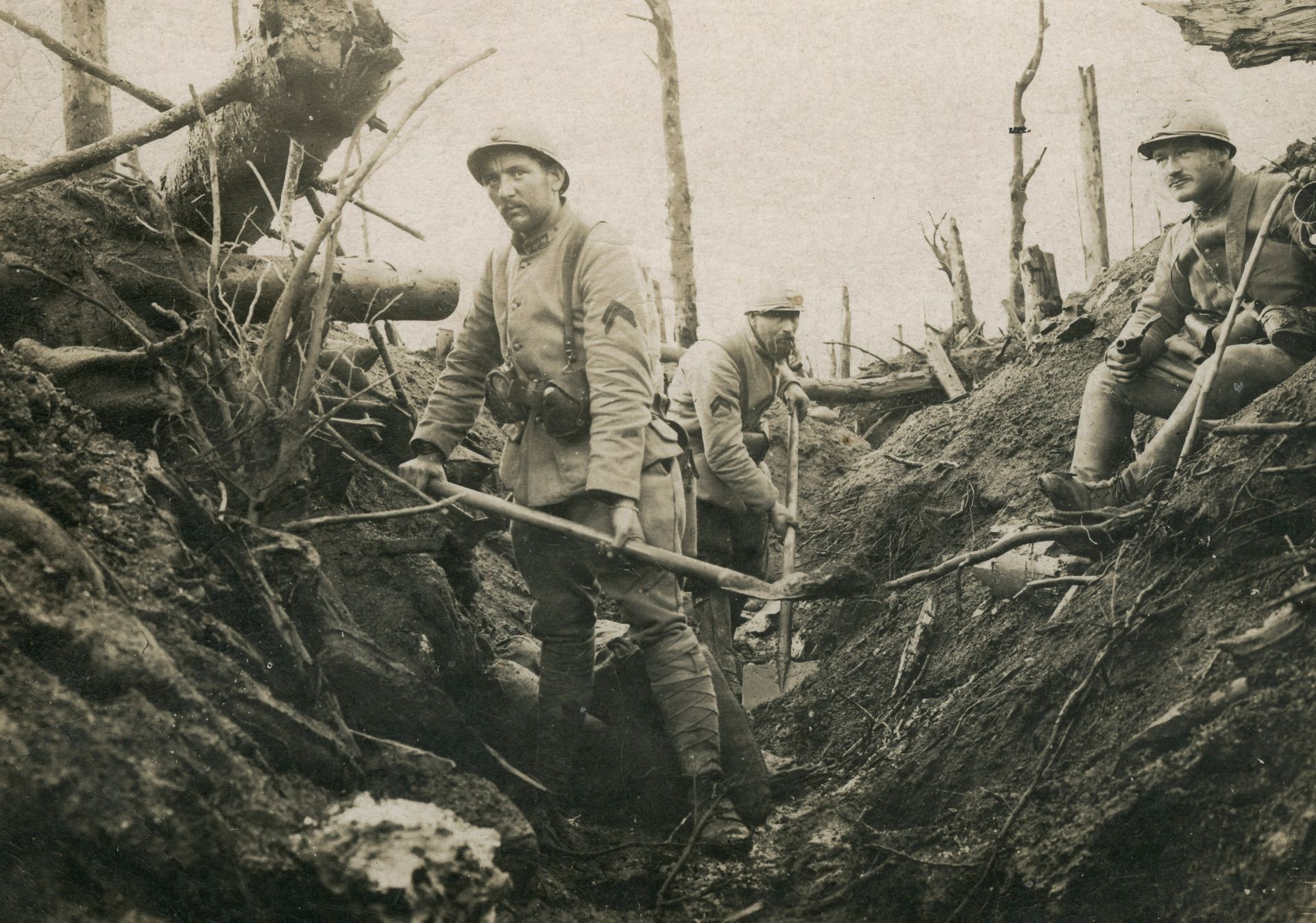

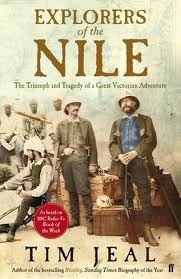 nd great wave of western exploration (the first being in the 15th-early 16th centuries via the Atlantic). Many hundreds of men risked everything for the sheer thrill of discovery, and yes, for the glory of it as well. In the early phases from ca. 1840-1860’s, most of this exploration seemed to me to have a generally innocent tinge to it. The more acquisitive imperialism came later.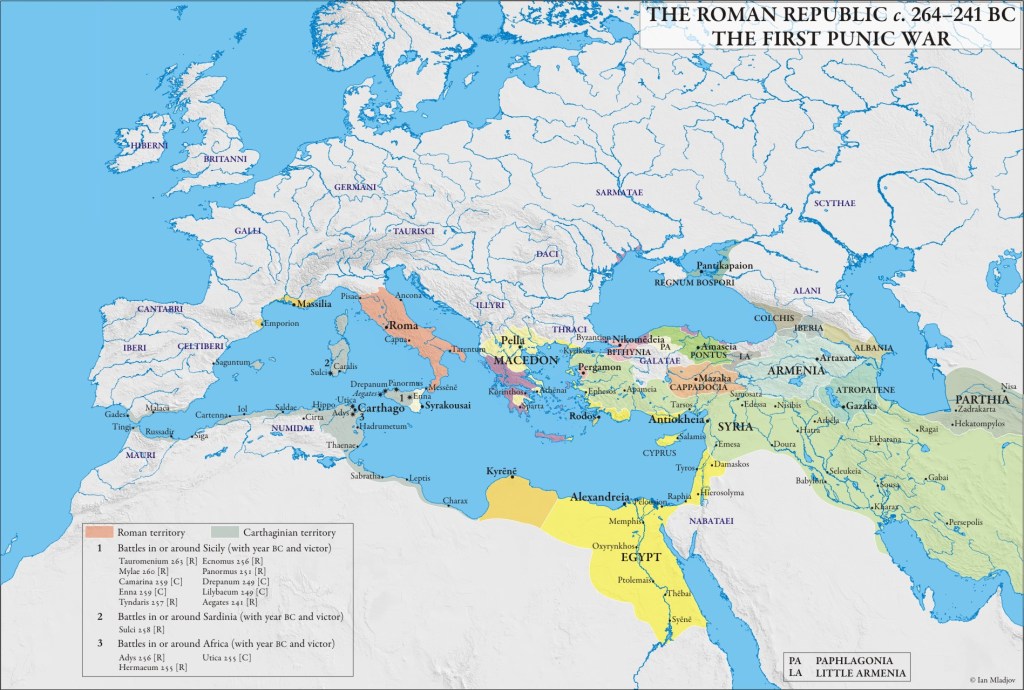

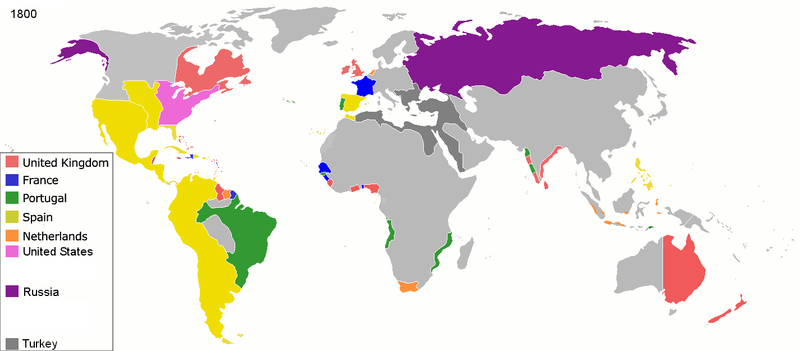
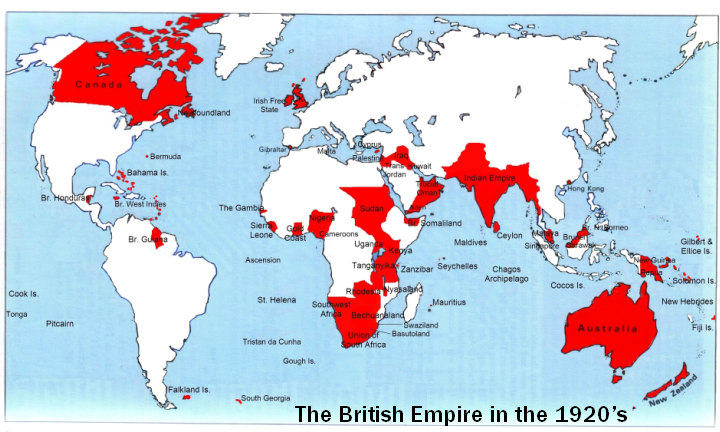
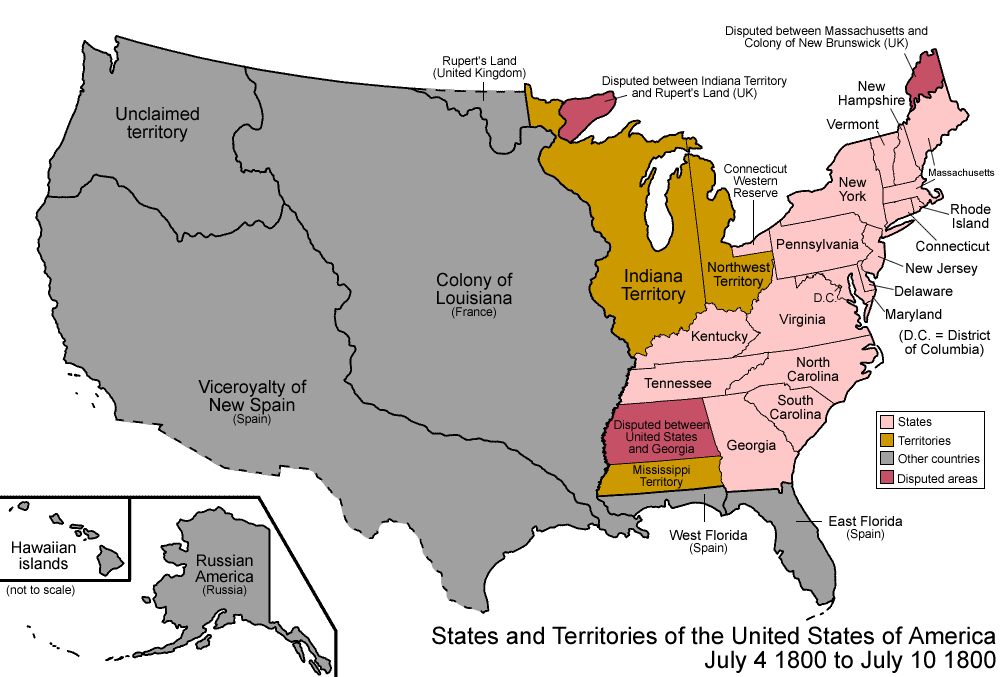
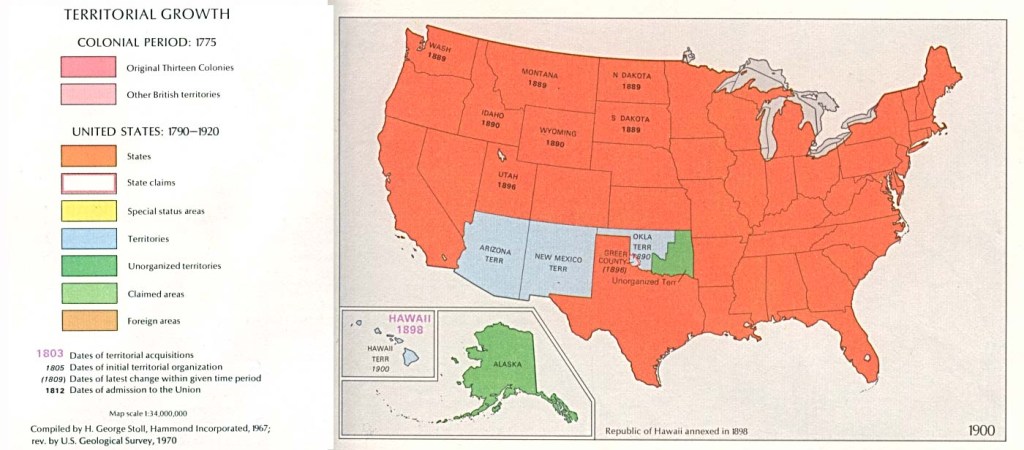
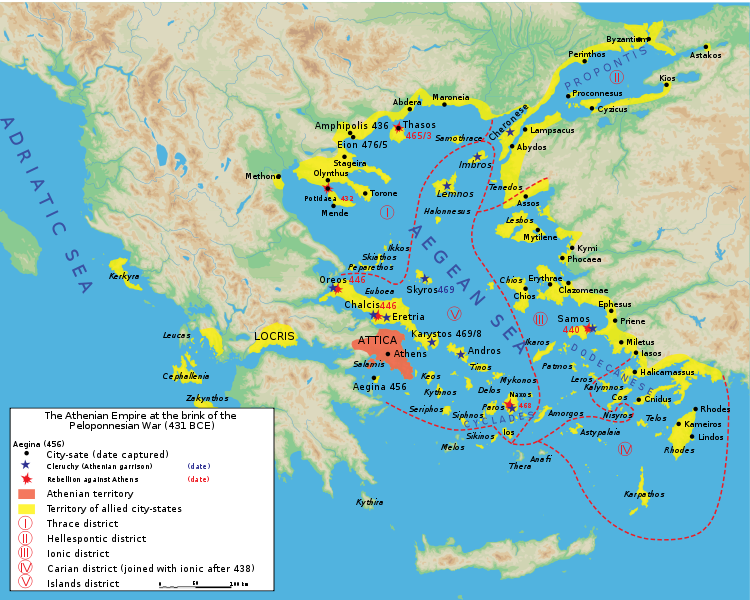



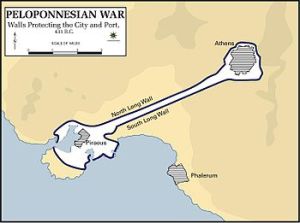


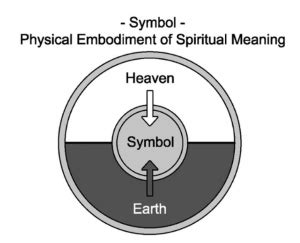

 A Stick in the Mud