A Donut Shaped Universe

If anyone every feels a tinge of excitement opening Plato’s Republic for the first time, many find the text quickly snuffs it out. This foundational philosophical work starts off with a rather mundane conversation. Then, when Plato starts to talk about how the state should be built, one of the first points he makes is that no one should more than one job, one task. Stay in your lane, and do not deviate. Otherwise, “great evil” would result.

Such pronouncements strike moderns as absurd and non-sensical. I like Plato and think The Republic deserves its place in the canon, but I too never really liked the explanation given by various commentators about this section of the work.

Ah . . . but Jane Jacobs may have discovered the answer–one I had never heard or considered before.

All readers know the pleasure of discovering a new author, with the prospect not only of the current book in front of you, but of all of their other works. Well, historians get the same thrill as seekers of fiction, and I have to say . . . Jane Jacobs has been too long absent from my life. I am not sure if I agree with her, but that is not the point. The best teachers you have had may not have agreed with you, but pushed you to think, explore, and wonder.

But I have another qualification for a good historian–one cannot be simply a “one thing after another” type of historian. I would say that such people are in fact not historians–however good their research skills–for historians must create meaning. This means that historians must consciously synthesize even if they do not wish to overtly systematize. Jacobs showed in her most famous work (which I have not read) The Life and Death of American Cities that she can pick order out of the seemingly scattered flotsam of different neighborhoods.

One wants to agree with such people, and I find it annoying for the moment that I cannot decide quite what I think about one of her perhaps lesser-known works, Systems of Survival, a book that attempts to unify the entirety of history into two moral systems, or two ways in which civilizations, organizations, or movements, can order themselves. I admire the audacity of the attempt, and I love too that she organizes her thoughts in the form of hypothetical conversations–more books should take this accessible approach.*

Jacobs broadly identifies two “casts of mind” throughout history that derive from these two moral modes of being. The first, the “Guardian,” and the second, the “Commercial.” I think that “Cosmopolitan” fits better (my first minor disagreement with Jacobs), but I will stick with her terms. She has two of her characters demonstrate this with the following conversation:

Guardian: The love of money is the root of all evil.

Commercial: The love of power is the root of all evil.

G: History tells of the dynasties and the fates of nations and empires.

C: History tells us of how social, material, and economic conditions have changed.

G: The most valuable archeological findings are of art, religious artifacts, tombs, of kings, etc.

C: The most valuable artifacts are clues to how people lived everyday life, how they made their living, their tools and materials.

G: War and preparations for war are normal and peace a hiatus from war.

C: No–peace is normal, war is the aberration.

G: Man is a territorial animal.

C: People are city-building animals.

G: Knowledge is a weapon or possibly an adornment

C: Knowledge is a tool.

G: Intelligence gives us insight into others’ way of thinking–we should focus on what divides us.

C: Intelligence means primarily the ability to pick up new skills and good reasoning.  We should focus on what unites us.

G: China is prosperous at our expense.

C: China’s prosperity raises everyone’s standard of living.  Economic gain is not zero-sum.

G: ‘Ask not what your country can do for you, but what you can do for your country.’

C: The state exists for the sake of the people–that’s Locke, Rousseau, Madison–the social contract.

These casts of mind come from what Jacobs describes as two “moral syndromes.” By “syndrome” she simply means that the various parts of the moral system necessarily run together. She calls these the “Commercial” and “Guardian” moralities, and part of the vim and dash of the book is that she commits to the idea that these two “syndromes” are all that have ever existed. The values of each system are . . .

The “Commercial” Syndrome

Shun Force–Come to voluntary agreements

Be honest–collaborate easily with strangers

Compete–but respect contracts and other voluntary agreements

Use initiative and creativity

Be open to new things–change should be embraced

Be thrifty and efficient

Promote comfort and convenience

Dissent is valuable for the sake of the task

Invest for productive and practical results

Be optimistic

The Guardian Moral Syndrome

Shun trading, and exert prowess

Be disciplined and obedient

Value tradition and the ‘old ways’

Respect hierarchy–strive for loyalty

Make rich use of leisure–be ostentatious

Dispense largesse

Group exclusivity strengthens internal identity

Treasure honor

Jacobs has much to say about both, and of course both go right and wrong in different ways. In general, most of the world used to subscribe to a Guardian morality and now certainly the first world at least has shifted to the Commercial syndrome. But the shift has not been absolute, as ancient Babylon and classical Athens strike me as mainly “Commercial” in nature, and even “Guardian” civilizations had Commercial aspects. Cities, and any civilization with a port, generally need to adopt a commercial mentality.

I found myself much taken with her analysis, as it explains a lot of the success and frustrations we have with our predicament. The benefits of the Commercial syndrome seem almost second-nature. Our religious and political freedoms arise from it. The material comforts we enjoy come from the speed of innovation (and its accompanying trampling of tradition) over the last 250 years.** Many of our “freedoms” have also resulted from a variety of moral innovations, especially in the area of sexuality. To point out the obvious, if we like democracy we have to value collaborating with strangers.^

But a second look reveals its weaknesses. A “Commercial” society will never build pyramids or cathedrals–hence the constant critique of the vanilla-tapioca nature of democratic culture. The promotion of comfort will make it hard for us to sacrifice without an extreme need. The combination of valuing comfort and dissent make it hard to act as one with common purpose.

The Guardian Syndrome obviously has its associations with aristocracy and its attendant abuses–be they spiritual (such as pride), moral, (indolence) or otherwise–we see right away. But the Guardian syndrome can also give more civic-mindedness & “noblesse oblige.” Those in a Guardian society know their place and need not fight for it. Most every kind of environmental advocate, for example, uses aspects of the Guardian syndrome, i.e., hedging in and protecting defined spaces, and knows the futility of their approach to a Commercial syndrome society (something that Paul Kingsnorth discovered).

But back to Plato . . .

Jacobs surmises that what Plato might have meant by his condemnation of having more than one job or “calling” strongly correlates to these moral syndromes. When we “mix” these syndromes together we have the possibility of dangerous moral hybrids. A few examples . . .

  • In the 1980’s NYC sought to help fix crime on their subways by injecting the Transit Police (police have a natural Guardian morality) with certain Commercial incentives. The cops got rewards for things like efficiency, i.e., numbers of arrests, and competition (promotions for higher numbers). The result–Transit Police began falsely arresting people least able to fight the charges–the poor–who were mostly minorities.
  • The Nazi’s took certain aspects of the Guardian morality (such as defense of the homeland) and combined them with Commercial science, whose ‘innovation’ had spawned new racial theories, military ideas, and industrial capacity.
  • Marx hated bourgeois Commercial morality. But all of his theories lay rooted in western political categories of thought. One result–A generally Guardian mentality in terms of communal unity, but applied on a scale of universal Commercial ideology. Guardians tend towards being apolitical, but the Soviet Union also united the Guardian aspect of loyalty with Commercial ideological innovation. So–to be on the wrong side of the prevailing ideology=disloyalty to the state.

Yes, Jacobs also discusses positive moral hybrids, but seems to lean towards Plato’s conclusion that mixing them brings problems more often than solutions.

So far, so good. I found Jacobs’ thoughts stimulating and illuminating. Where I part ways with her comes with her theory of how these two moral syndromes developed. She postulates a material cause for each, with the guardian mentality arising from war, and the commercial from trade. But it is mind that generates matter, so to speak. It is mind that shapes matter. I won’t defend this proposition here, suffice to say, as a Christian I reject a strictly materialist argument for the origins of civilization. But, Jacobs has a point. These moral syndromes have ancient roots–more ancient than she supposes.

For civilizations to work, they must take into account both unity and diversity. Something must bring them together for a society to form at all, yet if this “something” binds them too tightly it will neglect their individuality. This has its roots in Being Itself. God is both Unity (1 God) and Diversity (3 Persons).

Christ, being both God and Man incarnated this duality/tension. He revealed to us both what I will “Open” and “Closed” ways of being. The Open way shows how God shows Himself in Nature (Ps. 19:1) or our fellow man (Mt. 25). Marriage is an icon of Christ and His Church. (Eph. 5). In other words, the Open way encourages us seek Truth in our experience of the world.

But just as often, we are encouraged to take the Closed way. We must gouge out our eye if it causes us to sin (Mt. 5). St. Paul often posits enmity between the world, the flesh, and the Spirit. Christ tells us that we must “hate” even our mother and father for the sake of the Kingdom. The Closed approach urges us to seek the Truth by narrowing, not broadening, our focus and shunning the trappings of this mortal coil that we might see God and God alone.

So is the Open or Closed way superior? The answer, of course, is ‘Yes.”

I love that the world Jacob’s presents has coherence–two halves, coming together to make a whole. The problem is that, like a donut, it lacks a center. Without this center, Jacobs’ outstanding observations lack any real meaning. But with the center, we have the possibility of real coherence.

And who would complain about having an extra bite of a donut?

Update . . . if only Jane Jacobs were here to comment on the Blue Angels flyover that happened Saturday (May 2, 2020), she might argue that one’s reaction to the event would pefectly pigenhole a person into one of the two aforementioned moral syndromes–if we keep in mind that heavily symbolic and “ostentatious” nature of the event:

Commercial:

  • This display wasted money that could have been used to so much better practical good
  • This display wasted time and effort.
  • This display foolishly misdirected our attention–encouraging the American public to look at the shiny object, rather than a) the problem itself, or b) the politicians and agency heads responsible for gross mismanagement of the whole pandemic.

Guardian:

  • We live by symbols, and having our most famous and powerful planes flyover gave the nation a powerful symbol of American pride and resolve.
  • These “unnecessary” displays are in fact, absolutely necessary. We are not materialists–we need such acts to lift us out of the mundane of our lives. We need ‘elevated’ out of our current circumstances. We need inspiration as a people if we are to win the “war” against the virus.
  • Leaders act responsibly when they provide these symbols for the people–something to inspire awe and help unify them.

*Another notable fact about Jacobs–she had no college degree and can be therefore classified as an amateur. Toynbee would have rejoiced.

**Though–different writers from different perspectives, such as Tyler Cowen, Ross Douthat, Peter Thiel, and even Jane Jacobs herself (in her last book Dark Age Ahead) have declared that innovation has essentially ceased in western economies.

^This kind of collaboration also seems on the decline, in Congress, in marriages (Republicans don’t marry Democrats, and vice-versa), etc.–and this may herald a decline in democratic practice.

Rebels Against the Future

(The Grumpy Old Man podcast that touches on some of these themes can be found here.).

**************************

A few years ago at the Circe Institute conference Andrew Kern made a startling statement.  In the midst of his opening speech he mentioned the Luddites.  I have always assumed (like most of us I suppose) that the Luddites attacked the mechanical looms for economic reasons.  But Kern suggested that perhaps the Luddites acted unknowingly for more fundamental reasons.

All throughout ancient literature (which people in the early 19th century would be familiar with) weaving relates strongly to wisdom.  So Penelope’s weaving, for example, is not merely a clever device to stall the suitors.  She represents wisdom and faithfulness in contrast to the suitors who grasp for power and wealth.  They will not confirm Odysseus’ death, rather they will take what they want in defiance of the pattern of creation and marriage.  The idea of the “fabric of society” closely relates to weaving, and so on.

So, Kern surmised, the Luddites didn’t just act to try and preserve their jobs.  They may have acted to preserve the idea of wisdom itself, though almost certainly not overtly but in a sub-conscious, Jungian sense.

I thought the idea intriguing at the time, but perhaps a bit of a stretch.  But I started to look for weaving in ancient literature.  To my surprise Plato uses weaving in his dialogue “The Statesmen” as an analogy for good government. With Jason and his Argonauts we see Medea the sorceress contrasted with Queen Arete, who is weaving when we first meet her.  In Homer’s The Odyssey we see a couple of references to the span of life compared to a thread (7.197-198, 24.38-29).  Melville uses similar imagery in chapter 47 of Moby Dickand we also see it in the Upanishads.  Isaiah 38:12 reads, “My life was with me as cloth on a loom, when she that weaves draws near to cut off the thread.”

The philosopher Porphyry uses very similar imagery in his On the Cave of the Nymphs, another reference to the Odyssey (13.102-112).  Here Homer refers to a murky cave which contains, among other things, “looms, likewise of stone, on which the nymphs wear weave sea-purple garments.”  Porphyry writes (and we should remember that he–unfortunately–believed in the pre-existence of the soul),

What symbol could be more appropriate than “looms” for souls descending to birth and the creation of the body?  , . . For flesh is formed in and around the bones, which in living beings resemble stones.

We should not miss the connections to the fundamental facts of weaving, birth, death, blood, and the like.

So perhaps Kern, and the Luddites themselves, were on to something.

I finally went in search of a book on the Luddites and came across Rebels Against the Future by Kirkpatrick Sale.  Sale gives a good overview of the Luddites but does little else.  He gives us some important perspective, showing us that the Luddites had nothing against technology per se, but only against, to quote from a Luddite letter, “Machinery hurtful to commonality.”   He clearly favors the Luddite cause and shows many examples of their courage.  Sale’s explanation for the Luddites ultimate failure, however, leaves out to my mind the most basic reason.  In resorting to violence, they at times fired upon common men like themselves, and thus abandoned their moral high ground.  Furthermore, their use of violence played directly into the hands of their adversaries.  Once they broke the law, the state naturally would defend the men behind the machines.  And the state had much more force to use than the Luddites.*  Had the Luddites exercised more patience and used a non-violent, grass-roots approach, history might have been different.  As to how different, Sale offers no thoughts.  Did industrial looms pose more of a threat than factories that performed other tasks?  Would it be possible to industrialize in some areas and not others?  If other countries industrialized their economy, and thus, their armies, what would the consequences be for a non-industrial country?  The age of imperialism might offer some hints on this, and questions about community balanced with security (among other questions) should be asked.

Sale just scratches the surface.  Maybe not much else exists to see.  Maybe the Luddites had no higher purpose than saving their jobs.  But I think the Luddites continual references to “commonality” hints that Kern had more insight than I first supposed.  I will hope to find other books that can take the issue deeper.

My favorite part of Toynbee’s sixth volume of his A Study of History deals with his examination of what he calls archaism.  “Archaics” in his context seek to recover their civilization in a time of crisis by using a time-machine to travel back to some imagined golden age.  We should much prefer archaism to “futurism.”  The past has the advantage of having an actual reality and thus restrains action somewhat.  The futurist has no such limitations, and the evil they work in their earnest desperation will likely be much more terrible.  Toynbee points out that archaists would usually rather be archaeologists than politicians.  Alas, political realities set in and something must give.  The impossibility of drawing back the masses to the past with you means that archaists often choose violence in the end.  And this ends up dooming their movement.**

I think the Luddites use of violence contributed heavily to their defeat, but I would not call them “archaists.”  They sat on the knife-edge of change and saw a darkness on the horizon.  The “past” they tried to preserve was in fact the present.  Given that they did not reject all technology they had no wish to futilely put the brakes on all aspects of societal change.  They saw clearly what the Industrial Revolution would do to their communities and their sense of self.  If they did not submit to “archaism” they had more psychological flexibility at their disposal, which makes their use of violence more troubling to me.  Perhaps in the end they simply lacked the very rare traits necessary to translate those ideas politically.

Or perhaps their concerns went far away from politics.  Perhaps they saw themselves as doomed crusaders, but bound, like crusaders, to something deeper and older than politics.

Maybe.

According to the Tradition of the Church, at the Annunciation the Virgin Mary was found by Gabriel in the Temple . . . weaving a veil for the Temple where she resided, and some icons of the Annunciation (such as the one below from the 14th century in Serbia) show this as well.

In Hebrews 10:20 we see the identification with Christ’s body with the veil of the sanctuary (10:20), and we know that both the Temple curtain and the Body of Christ were broken for the life of the world.  Father Maximos Constas writes, “With the strictest visual economy, then, Mary’s thread gives consummate expression the . . . continuum of conception and crucifixion.”^

From St. Epiphianos:

About Eve and Mary it was said, “Who gave women the wisdom of weaving, and the knowledge of embroidering? (Job 38:36).  For the first wise woman, Eve, wove material garments for Adam, whom she had stripped naked.  This labor was given to her, for it was through her that the knowledge of nakedness was acquired, and thus to her was given the task of clothing the perceptible body.

To Mary, on the other hand, it was granted by God to give birth to the Lamb and the Shepherd [cf. John 1:29, 10:11], so that from his glory we might be clothed in a garment of incorruptibility (1 Cor. 15:53-54).

And from St. Nelios the Ascetic:

The Theotokos [that is, Mary, the “Mother of God”] displayed such “wisdom and manifold knowledge” (Job 38:36) that, from the wool of the Lamb who was born from her, she was able to clothe all the faithful with garments of incorruptibility.  For all true Christians stand at the right hand of the King, in golden-fringed garments, embroidered in myriad forms of the virtues.

So it may be that the liturgy of the loom points us toward the wisdom of knowing salvation itself.  I’d like to believe that the Luddites thought likewise, and would love for someone to prove or at least suggest this in another book about them.

Dave

*Gene Sharp makes brilliant points about the benefits of non-violent struggle against states or state-sponsored entities in “From Dictatorship to Democracy,” available online.

**I.e, Tiberius Graachi, who committed himself almost entirely to non-violence.  But he did violate the Roman constitution and so became a law-breaker.  This may have cost his movement the fence-sitters they needed, and it also opened the door for the Senate to respond with force.

^The entirety of this paragraph owes everything to The Art of Seeing by Father Maximos Constans, pp. 108-109, as do the quotes below, found on p. 129

8th Grade Literature: The Dog Days

One of the advantages of reading ancient texts is that they expose us to an unfamiliar world with an unfamiliar way of thinking. But for us to appreciate this we sometimes need to look behind some of the archaic or strange phrases we encounter to help the story make sense. After we get a sense of the story’s meaning, we can then consider its application for us today.

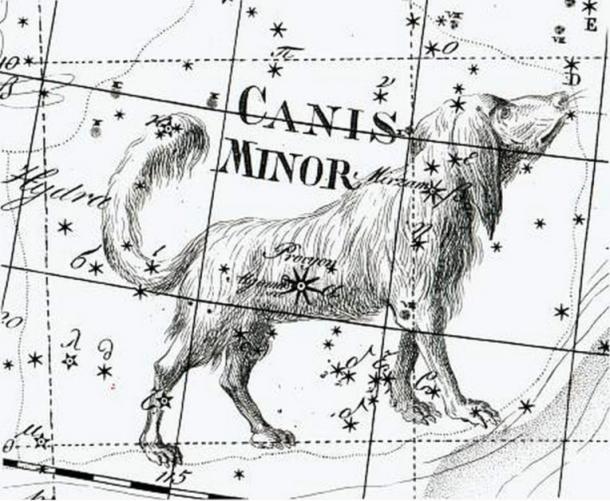
At a few different points in the story the narrator compares Jason’s attractiveness to the star Sirius. This star appeared close to the sun betweeen July 3-August 11, the so called “dog days” of summer. The Sirius star is the brightest sun in the constellation Canis Major (hence the term “dog days”). Some surmise that the ancients believed that the closeness of this bright star added to the heat of the sun, intensifying all things about what summer brings.

We can perhaps easily understand why human beauty would be linked with that of a star. The brightness of Sirius stands out above all other stars in the sky, just as when we notice that special someone across the room, all others fade from view. But in comparing Jason to Sirius in particular, Apollonius gave a foreshadowing hint that his audience in AD 300 would have understood immediately in a way we do not.

The ancient Greeks valued temperance and finding a mean between extremes. Cold and heat both bring good things, but the extremes of both are destructive. Excessive heat brings destruction to crops and to the soul. We know that on hot days, for example, crime increases. Our tendency towards anger and lethargy increases with extreme heat.

Romantic feelings are also associated with heat, but it is Spring, not Summer, that we associate with romance. Summer brings excess, and this foreshadows the destructive relationship Jason will end up having with Medea. The brightness of Sirius is a foreboding brightness. Too much light can harm just as much, or perhaps even more, as too much darkness.

But there is a flip side to the dog associations Apollonius foists upon Jason, and this subtlety helps makes The Argonautica literature worthy of our attention

Dogs had a dual place in ancient and traditional socieities (something we have touched on regarding Roland in this post). To recap briefly, dogs are, on the one hand,

  • Linked with false prophets and unrestrained appetite

but on the other,

  • Associated with obedience, humility and protection.

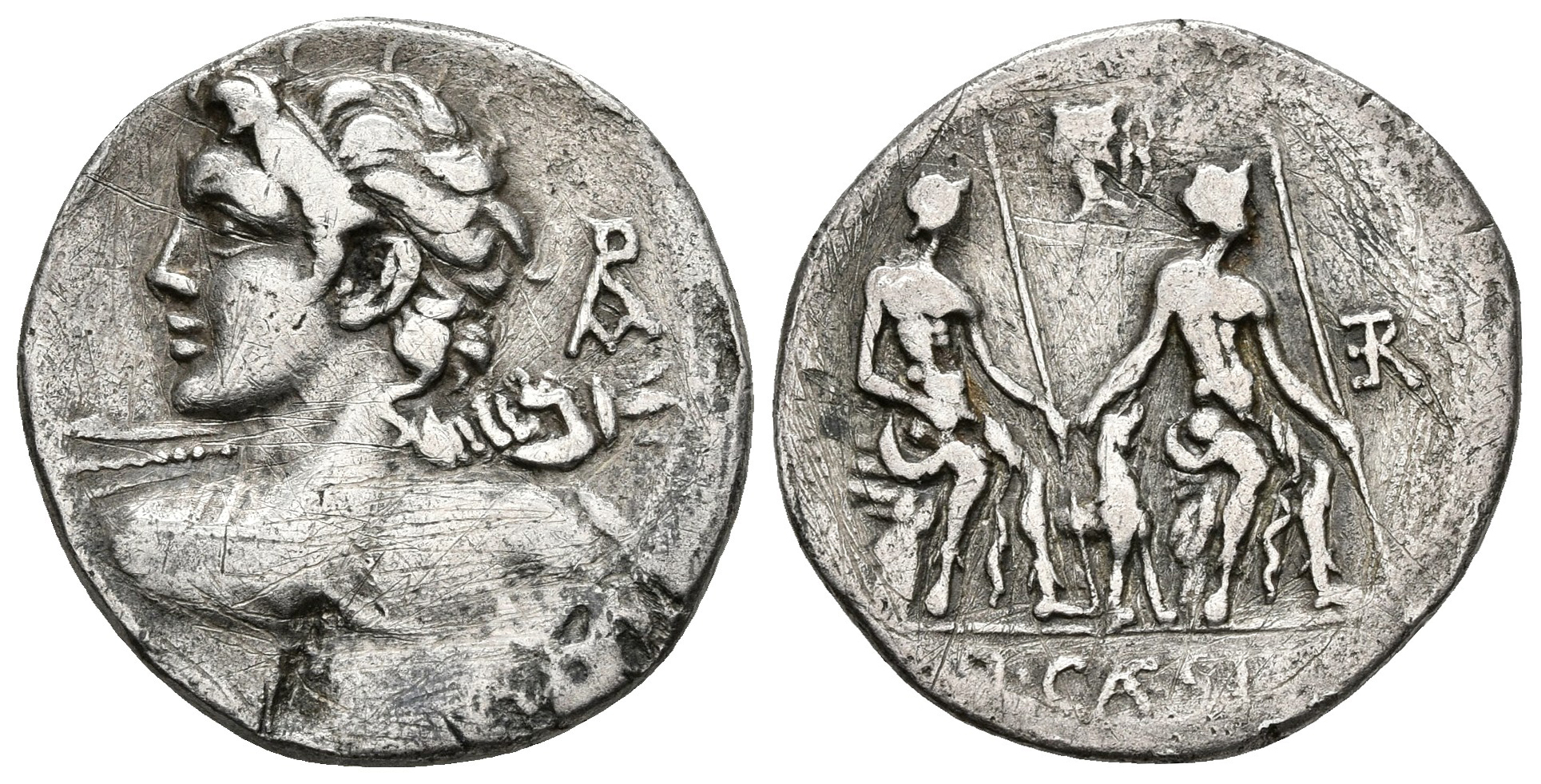
As noted previously, Jason does not exercise typical heroic leadership. He is not an unstoppable warrior like Achilles. He does not lead from the front like Roland, or possess the single-minded brilliance of Captain Nemo. Jason does show great concern for his men. He is a guardian, of sorts, for his crew, and this fits with how dogs were viewed in the Roman empire. We see here two Lares on a coin, and you can see the dog form:

Here is a later image, where they take a more distinctly human form:

So this connects positively to Jason’s leadership, and Apollonius includes this imagery to let you know of Jason’s strengths.

But dogs in the ancient world were never quite fully domestic creatures as we are used to today. They guarded borders, but would not have been brought inside the home. But Jason is the son of a king, and he should be king himself, were it not for his usurping uncle. Throughout the story, however, Jason rarely seems comfortable as a leader. He hangs back, he worries, he has insecurities. Initially his crew thought Hercules should lead. In one instance, he decides to leave an island at night because of a fair wind, but everyone knows that we have bad associations with night because of the confusion it can bring. Sure enough, Jason ends up leaving Hercules behind by mistake, and turning a ship around in the ancient world to row against the wind is basically impossible. In another instance, friendly hosts mistake Jason and his crew for invaders (again, this happens at night), and Jason accidentally kills the host king. When it comes time to box the brutish Amycus to allow them to leave his island peacefully, it is not Jason that steps forward, but another crew member.

Those who know the full story of Jason (which we will discuss at the conclusion of the Argonautica) understand that Jason will continually feel trapped and pressed by circumstances, and not able to transcend them. He never attains the greatness associated with other Greek heroes.

All this is wrapped up in Apollonius’ references to him as Sirius, the dog star, which many in the ancient world feared to see.

8th Grade Civics: Value Propositions

This week we looked at a debate about immigration to highlight a crucial skill Aristotle wishes to teach us, a skill democracies are prone to lack. As we saw last week, advocates of different political ideologies or platforms tend to absolutize the values their position highlights, while forgetting that their position inevitably fails to cover every conceivable value. We are finite creatures, and our values are finite, in the sense that every gain/advance will come at a cost. We have to leave something behind.

This is experientially true. If you want to get married and have a family, you have to sacrifice the fun of dating and meeting other people. If you have children, you have to leave behind the life of doing what you like and disposable income. You can certainly argue that married life with a family is a better choice than a life of perpetual dating. But worst of all would be the person who tried to have both at once. The married person who also wanted to date other people would wreak a great deal of havoc. The perpetual dater might simply provoke raised eyebrows.

Theologically this rings true as well, i.e., “Except a seed fall to the ground and die, it remains only a single seed; but if it dies, it produces much fruit” (John 12:24). If we are to have life, either spiritually or physically, we must have death, whether that be physical death (the food we eat) or the death of a way of life (giving up a life of dating for marriage).

When faced with a controversial and thorny political issue such as immigration, I wanted the students to use Aristotle’s template to do the following:

  • See the strengths of each side of the argument
  • Understand the costs/what you have to sacrifice to achieve your aim
  • Discern that the debate was not about good values vs. bad values, but involved deciding which kinds of values to prioritize over other values.

The debate we viewed can be seen here:

Both speakers made good arguments, but I wanted the students to see the key underlying assumptions each side brought to the debate. How we view those key assumptions will likely determine what side we favor.

Not everyone loves argument by analogies, but I think analogies have a lot of power to distill key principles of an argument.

The “Pro” side of the debate (Prof. Kaplan) argues that people should be able to travel freely to seek out the best life for themselves they possibly can. He uses the analogy of a house and guest in the following manner:

  • Kaplan declares that he is not arguing that whomever wishes should be able to come to his house if he does not want them in his house.
  • If he wants someone to come in his house, and that someone wants to come, he should be allowed to come to Kaplan’s house. True, his neighbor might disapprove, but what business is it of theirs anyway?
  • He asserts that the “Con” side of the debate essentially argues that people should not have the freedom to extend invitations to people to come over to their house, and that those invited should not have the freedom to accept. This is absurd.

The “Con” side of the debate (Prof. Wellman) also uses the illustration of a house, but with a different emphasis from Kaplan:

  • He asks us to imagine that he leaves his house and goes to a conference for a week. When he returns, he asks his wife what she did while he was gone. She replied that she played cards with friends, got her hair done, and volunteered. Wellman implies that it would be absurd for him to object to such activities.
  • But, his wife then adds, I also decided to adopt a child from a foreign country. Here he is–meet your new son! Wellman declares that he would have every right to object to this action. His wife’s “freedom of association” has dramatically impacted his own freedom of association without his consent.

There are some deeper foundations to the arguments from both sides.

Kaplan, a libertarian, seems to believe in two key principles. The first is that the individual is the primary unit of society, and so our laws should be oriented around maximizing individual freedom. Secondly, libertarians tend to believe that maximizing economic freedom (which includes the free movement of labor) is a primary way to boost freedom overall. Economic growth is a moral issue, for greater economic growth means a better life for more people, especially those on the border between the lower and middle classes. So, in his analogy of the house, the homeowner is an employer and the guest is a potential worker.

I am not sure of the philosophical background of Wellman, but he argues that the group (though perhaps not necessarily the family, a la Aristotle) is the primary political decision making unit. Decisions that involve altering the makeup of a household/political community should be made by the community as a whole (or their representatives). In his “house” analogy he envisions a family rather than an employer.

Both analogies are persuasive, and both have their limits. Kaplan’s analogy doesn’t work as well when the guest wants to blast heavy metal music out of his window, which would obviously adversely affect the community. Wellman’s analogy makes perfect sense when comparing adoption to citizenship. But what if his wife just invited a friend over for coffee (maybe similar to a temporary work visa)? Hypothetically Wellman might still object to associating with his wife’s friend, but in that case our sympathies go to his wife. We would expect Wellman to bear up with the “incovenience” of the temporary association.

Deciding between these two positions boils down to the key divide between seeing the group/family or the individual as the primary political unit of society. Kaplan is suspicious of governments exercising authority over the individual, and Wellman much less so.

Hopefully, the students will see how their beliefs about these key “fork in the road” questions influence their position on immigration, whatever that might be.

Have a great weekend,

Dave

10th/11th Grade: Bismarck and “Unnatural States”

Greetings,

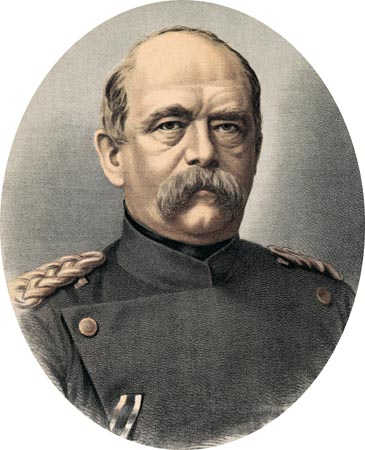
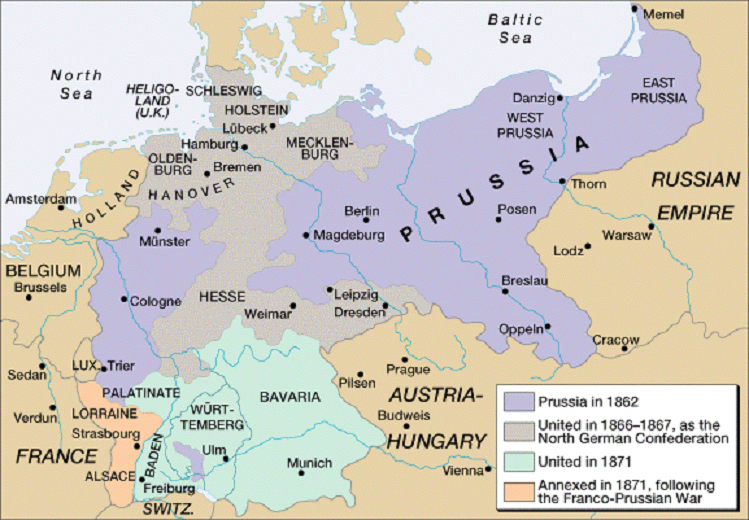
This week we began to look at German unification, orchestrated under the brilliant and controversial Prime Minister of Prussia Otto von Bismarck.

Bismarck raises some important and perhaps uncomfortable questions about leadership.  What is the line between serving the interests of your country and serving God?  Should nations be treated akin to how one would treat individuals, and therefore punished and rewarded like individuals?  Or, should nations be thought of as artificial entities that do not have to play by the same rules as people?  Cardinal Richelieu of France ((17th century) said that, ‘People are immortal and thus subject to the law of God.  Nations are mortal ] and are subject to the law of what works.’ That is, artificial and unnatural creations — one can’t imagine the universe as it is without gravity, but it would be the same universe without the United States.  This hearkens again to Richelieu who would have argued that while Frenchman are Catholic, France is not.  France can’t be Catholic any more than a cardboard box could be Catholic.  Frenchmen may be redeemed, but France will have no heavenly judgment or reward.  For better or worse, Bismarck would have agreed with him.  He also said,

If one wants to retain respect for laws and sausages, don’t watch them being made.

Politics for Bismarck was a dirty business, and there was no point pretending that success would not mean getting his own hands dirty.  But for Bismarck, the world of international politics remained essentially unredeemable, a conclusion Christians may not wish to share.

While there are many debatable aspects of Bismarck, a few things are beyond dispute.  He gained an advantage over some of his foreign political adversaries in part because he recognized what the Industrial Revolution would mean for politics before others.  He realized that

  • Mass production would lead to a ‘mass society,’ where mobilization of opinion could make a huge difference.
  • Old aristocratic Europe was finished, at least in the sense that kings and nobles could no longer act without direct reference to their populations.  The press and public opinion would be nuisances to others.  Bismarck saw them as opportunities for making Prussia’s actions much more potent.

Bismarck is  controversial because

  • He used democracy, but he did not believe in democracy. Bismarck “believed” in a strong state and saw democracy as a possible end to create that state. But he would also use other means to suit his purpose. In the end for Bismarck, ‘blood and iron,’ not speeches, win the day.  Force and strength were the best projections of power, though to be fair to Bismarck, he believed in a limited/surgical use of force.
  • Bismarck was the ultimate realist.  He believed that concerning oneself with justice, for example, could lead one to get carried away, to lose focus.  The primary motivation for policy should be whether or not it serves the interest’s of the state.  Don’t first concern yourself with rewards or punishments.  Do what serves the ends of the state.  A foreign policy built primarily on  morality (an example might be punishing or rewarding a country based on their human rights record) was not proper for a nation, however much individuals should be concerned with it.

As an example of his policy we can look at his actions during the Polish bid for independence from Russia.  When the Poles attempted to break from Russia almost every major power gave speeches expressing their support for the Polish cause.  They did so, no doubt, for a variety of reasons:

  • The Poles vs. Russia was a great underdog story and everyone loves an underdog
  • Independence movements were rife throughout Europe and everyone loves to bandwagon.
  • Polish success would weaken Russia’s power, and most wanted Russia weakened whenever possible.

Bismarck shocked everyone by not supporting the Poles, but even offering public support — and troops — to aid the Russians in crushing the rebellion.  Why did he take such a position?

  • Speeches make you feel good and important, but speeches themselves will not help the Poles one whit.
  • These speeches, however, will serve to alienate Russia, and you would have gained nothing and angered a major power. The words of encouragement you offered Poland (without actually helping them) might even alienate Poland as well (think of a situation where you are carrying something very heavy, and someone nearby offers words of encouragement but doesn’t lift a finger to help. You probably would not have warm feelings for that person).
  • No foreign power would actually send troops to aid the Polish, so again, the expressions of support meant nothing in reality.
  • The Poles, without foreign aid, would certainly lose.

Thus, it seemed far better to Bismarck to go against the grain and actually aid his country by standing up for Russia in their time of need.  Yes, other countries would get momentarily upset at Prussia’s actions, but again, it would mean nothing.  Bismarck planned to cash in  the favor he performed for Russia later, and he did in the Austro-Prussian War of 1866.

To put Bismarck’s actions in perspective, think of the “Free Tibet” movement that we occasionally hear about.  Lot’s of people make speeches to end Chinese occupation of Tibet.  But . . . no one will actually do anything about it.  No one would risk war with China over this issue.  The words of sympathy given to Tibet 1) Do nothing for the Tibetans, 2) angers China, which makes them 3) not just worthless, but counterproductive.

To put Bismarck’s actions here in perspective, imagine if a U.S. president not only did not support Tibet, but publicly supported China.

It would be a bold move.

This does not mean that Bismarck was personally amoral.  Rather, if nations are essentially ‘pieces on a chessboard’ they cannot be sinned against.  You can sin against people.  But you cannot sin against shapes on a map.  This hearkens back to Richilieu’s foreign policy for France some 250 years prior, and to Machiavelli before that. In the same way, no one would call you a ‘sinner’ if you bluffed in poker.  The poker game is in a sense, an alternate reality where different rules apply.  For Bismarck, the same is true of politics.  We see this philosophy come through in his famous musings after Prussia’s victory in the Austro-Prussian War:

We had to avoid wounding Austria too severely; we had to avoid leaving behind in her any unnecessary bitterness of feeling or desire for revenge; we ought rather to reserve the possibility of becoming friends again with our adversary of the moment, and in any case to regard the Austrian state as a piece on the European chessboard. If Austria were severely injured, she would become the ally of France and of every other opponent of ours; she would even sacrifice her anti-Russian interests for the sake of revenge on Prussia. . . .The acquisition of provinces like Austria Silesia and portions of Bohemia could not strengthen the Prussian state; it would not lead to an amalgamation of German Austria with Prussia, and Vienna could not be governed from Berlin as a mere dependency. . . .Austria’s conflict and rivalry with us was no more culpable than ours with her; our task was the establishment or foundation of German national unity under the leadership of the King of Prussia.

….To all this the king raised no objection, but declared the actual terms as inadequate, without however definitely formulating his own demands. Only so much was clear, that his claims had grown considerably since July 4. He said that the Austria could not be allowed to escape unpunished, and that, justice once satisfied, we could let the misled backsliders off more easily; and he insisted on the cessions of territory from Austria which I have already mentioned.

I replied that we were not there to sit in judgment, but to pursue the German policy. Austria’s conflict and rivalry with us was no more culpable than ours with her; our task was the establishment or foundation of German national unity under the leadership of the king of Prussia.

Passing on to the German states, the king spoke of various acquisitions by cutting down the territories of all our opponents. I repeated that we were not there to administer retributive justice, but to pursue a policy; that I wished to avoid in the German federation of the future the sight of mutilated territories, whose princes and peoples might very easily (such is human weakness) retain a lively wish to recover their former possessions by means of foreign aid.

If we wish to dismiss his ideas, we should pause first.  After all, it is wrong to kill, but a nation can commission soldiers to kill, and we do not say they sin necessarily by doing so.  People shouldn’t lie, but a nation can spies to disseminate false information.  Is this sin?  If we say no, we have a dilemma on our hands of how we think of states as they relate to ‘individual’ morality.

In the end, Bismarck’s creation of a unified Germany would radically change European politics.  Germany became the greatest land power on the continent immediately.  But the change went deeper than that — the rationale for how a state comprised itself changed.  The idea of a “Germany for Germans” would spread and eventually undo European empires, and sow the seeds of the militant democracies of the early 20th century.

The unification of Germany also was a harbinger of the new kind of state created by the Industrial Revolution. England had already experienced the Industrial Revolution and benefitted from it. But the warp speed creation of Germany, and how it utilized various cultural and military aspects of industrialization, would serve as a blueprint for other nations. Next week we will look at how the Industrial Revolution reshaped society.

Many thanks again,

Dave Mathwin

8th Grade Civics: Aristotle and the Problem of the Good

This week we continued to look at Aristotle thoughts on how societies actually function and the downstream effects of how we make decisions.

Democracies foster freedom, which we appreciate. This freedom inevitably produces disagreements, but we expect this and factor it into our society and politics. But Aristotle wants to see what it is we disagree about, why we disagree, and whether or not we are aware of what this means.

In Book III of his Politics Aristotle writes,

Who shall govern when different groups within a state seek power? Suppose, for example, that we want only the “good” to govern—that is, those who live best and possess the best abilities– no matter their number [that is–if they are the majority or a small minority]. It is always best for the good to govern, but if within a state, there exists no common method of determining who is “good” [i.e., no common moral or religious criteria to decide] then such a method is not open to the populace. 

Criteria are necessary. If oligarchies wish to make the “good” those with a sufficient amount of wealth, or proper birth, then such a claim can be understood by all. But not all will agree with the criteria. 

How can even expediency agree with such a view? If we say that birth or wealth confer the right to rule, what about those with better birth, or more wealth? In only a short time, then, will such a system descend into the rule of one man.

But those who favor the rule of the many [democracy] have similar problems. Should the many rule simply because they are more numerous? We have seen, however, that the “good” are in short supply. If we give rule to the many because they are stronger than the few, or simply more numerous, we are logically driven to conclude that where one man or one group is stronger than another, they should have more power than others. But neither would we want what is best to be determined by mere counting.

All of this shows that neither birth, nor wealth, nor mere numbers, are the proper principle from which to govern a state.

Aristotle begins by making the obvious assertion that every society should want those that are “good” in power making decisions for us. We would naturally want those who are wise, just, intelligent, and so forth to govern. The problem arises when we have no concrete, agreed upon method for determining what wisdom and justice mean. For example, does one gain wisdom through growing up poor in an isolated rural area, or by growing up wealthier in an urban area and traveling the world, attending great schools, and so forth? We could say that both paths could or could not produce wisdom. But this wouldn’t help us unless we know how to choose between the two kinds of wisdom when presented to us. Likely, most would disagree about that question.

In absence of any concrete criteria about the more important metaphysical questions, societies turn to something more measurable, such as birth, wealth, or in the case of democracies, numbers. This has the advantage of being obvious and measurable, i.e., “Everyone from one of these 10 families can govern, or everyone with ‘x’ amount of money can govern. In the case of democracies, those with the majority of votes can govern. This can eliminate disagreement about who gets to rule, but as Aristotle points, out this gets us nowhere towards discovering “the good.” Ultimately, societies that disagree about the nature of ultimate “goods” will eventually, most likely, either devolve into factional principalities, or require force to hold everything together via force and centralization of power.

As mentioned, democracies give a great deal of freedom to its people to form their own conclusions and give them rights that they may express their opinions freely. In fact, one can argue that democratic societies almost encourage disagreement. This solves and creates problems all at once.

We discussed in class that we have problems as a society not so much because one side is good and the other is bad, but because we fail to agree how to properly order different virtues. We used the following example:

Imagine that you have a group of 100 people living in the wilderness. Other groups of people live around you, some are hostile, some are friendly, some could go either way. You built walls around your enclosure to protect your group and to give them a defined place to call home.

One night Tom and Bill are charged with guarding the walls and the gate of entrance. At the gate a man knocks. You don’t know him, but he appears hurt and sick. Do you let him in?

Tom thinks not. You are not sure about this man. He could be a spy, he could be faking, he could be dangerous, he could even be an assassin. Your primary duty is to protect the people behind the walls. Tom’s heart strings are tugged, but he steels himself to his primary duty of protecting those behind him.

Bill wants to let him in. The man seems to be strong and skilled. If we help him, he could help us and strengthen our community. Besides, we have a duty to care for those in need that goes above our duty to defend the walls.

The question should not be, “Who is the bad one, Tom or Bill?” Both Tom and Bill have good values and want to do good things. The question instead should be, “Who wants what is best in this circumstance?”

If Tom and Bill (symbolic stand ins for the community at large) actually instead agreed either to let him in or not, you have a cohesive society with a clear hierarchy of values. If they disagree, well, let the games begin.

We can drill down further. This decision might be context dependent. Suppose that instead of one man at the gate, there were thirty. Here the risk/reward of letting them in increases dramatically, and one can reasonably think that the risk outweighs the reward. But if we change the scenario from thirty men to one small child asking for asylum, the risks disappear, and it seems obvious that Tom and Bill should let them in (though one student objected, stating that, “No way! She could be one of those specially trained child assassins! :).

But even as the decision becomes context dependent, one still needs an agreed upon hierarchy of values to ensure a stable society. Without this, Aristotle suggests, you will need to be guided by concrete criteria that will solve the surface level problem. But, while an individual or a society can bury the metaphysical issue for a time, it will return. When it does, such questions will demand an answer.

8th Grade Literature: Back to the Front

This week we started our next book, The Argonautica, sometimes called Jason and the Argonauts. The story involves a sea journey with a motley assorted band of travelers in search of the famous golden fleece. The story contains a variety of tropes common in all epic literature, but the author, Appolonius oF Rhodes, adds a unique twist to the story that sets this text apart from other Greek epics, one that dovetails nicely with some of the questions we explore in civics class.

All stories of epic heroes inevtiably look to interpret the past. The hero has already done his work and lived on in the minds of men. The author then celebrates the hero and his accomplishments. The hero may be a complicated figure, but his mission and his impact is not. Epics usually are about the founding of a city/civilization, (The Aeneid) or the re-founding, or transition between two epochs (like The Lord of the Rings, or perhaps The Iliad and The Odyssey).*

But The Argonautica, written around AD 300, is not like this. The author has a different agenda, which perhaps comes from his different political and historical context.

Right in the beginning of the story, we notice some odd things for a heroic epic:

  • The crowd that gathers to see the crew off on their adventure are not cheering, but crying and wailing for those they fear never to see again.
  • The men of the ship do not pick Jason to lead them, but Hercules. Hercules defers to Jason, but the choice of Jason as the leader was made by him, not the crew.
  • Right after the ship leaves the harbor, we see Jason full of doubt, not confidence. His doubt is immediately contrasted with the swagger of a another crewmember.

Apolloinius wants us to wonder about the nature of Jason’s heroism, or perhaps even question it entirely, again, an odd way to begin an epic poem about a famous hero.

The first known written Greek epic poem was very likely the Iliad, which dates to somewhere around 800 BC. But the story of Jason chronologically predates Homer and the events of the Trojan War (in one scene we see the crew waving to the infant Achilles, for example). Homer wrote in the context of the end of the Bronze Age/Greek Dark Ages and the beginning of the city-state era. Thus, he could look back wistfully in part because he could look forward with hope.

But Apollonius writes in the midst of a free-fall decline of the civilization he inhabited. The third century AD saw Rome continuously involved in civil wars. The Roman Emperor at the time Apollonius wrote was Diocletian (reigned 284-305 AD). Diocletian at least understood the crisis, and did attempt to hold back the tide of Rome’s cultural collapse. Unfortunately, his most significant attempt to restore Rome involved an all-out persecution of Christians, which had the unintended effect of hastening Rome’s demise.

We have no idea what the story of Jason entailed originally. We can guess how Apollonius reinterprets the tale, as he has Jason faced with a serious of impossible choices. Unlike other epic heroes, Jason seems to have limited agency over events. His actions seem scripted for him. At his best, Jason finds a way to negotiate his way out of difficulty. This is certainly an important political skill, but it may not be “heroic.” Jason’s world mirrors that of Apollonius’ world in certain respects. The best one can hope for is to kick the can, and hope that maybe things will turn out ok in the end.

In this structure we see the tragic dimension of much of Greek literature. GK Chesterton may have said it best, when he wrote that,

It is said that Paganism is a religion of joy and Christianity of sorrow; it would be just as easy to prove that Paganism is pure sorrow and Christianity pure joy.

Such conflicts mean nothing and lead nowhere. Everything human must have in it both joy and sorrow; the only matter of interest is the manner in which the two things are balanced or divided.

And the really interesting thing is this, that the pagan was (in the main) happier and happier as he approached the earth, but sadder and sadder as he approached the heavens. The gaiety of the best Paganism, as in the playfulness of Catullus or Theocritus, is, indeed, an eternal gaiety never to be forgotten by a grateful humanity.

But it is all a gaiety about the facts of life, not about its origin. To the pagan the small things are as sweet as the small brooks breaking out of the mountain; but the broad things are as bitter as the sea. When the pagan looks at the very core of the cosmos he is struck cold. Behind the gods, who are merely despotic, sit the fates, who are deadly. Nay, the fates are worse than deadly; they are dead.

*Tolkien wrote his great work in the years right after World War II.