A.J. Toynbee: “Hannibal’s Legacy” in 2 vols.

I have republished this because of the partial similarities in theme with Hillaire Belloc’s Waterloo, reviewed here.

And now, the original review. . .

This is a great work, probably a labor of love to write and certainly at times to read. It bogs down in parts, at times too technical and obscure. But if you let it wash over you and absorb the full effects, one sees the book’s great value. It’s theme of how war pressures a society, and how victory can be turned into a defeat of sorts, is entirely relevant for us today.

First, the weaknesses:

  • Toynbee’s subject fits an epic scope, but the book becomes very technical at times. He loads the writing with untranslated Latin phrases. I realize he may have had the specialist in mind with because he does not do this in his other writings. But it’s still aggravating and pointless.
  • The book is too long. I admire his desire to touch on everything related to the subject (such as animal husbandry habits), I often lost focus and momentum reading it.

But don’t let this stop you. Look at me for example. I skipped big chunks of it and here I am, confidently reviewing it!

Toynbee believed that studying the classical world had importance not so much because of its influence on western civilization, however true that may be, but because we have with the Hellenic world a complete story fairly well documented. Given the uniformity of human nature, their story can be instructive for all us.

His argument runs like this:

1. One key to understanding the Hellenic world is the city-state model. Time and again, this model proved its superiority over other political organizations in the Mediterranean and beyond. The Greeks beat Persia for example. Organized along these lines, the Romans were poised to better their less well organized neighbors.

2. Conflict is part of life, and Rome eventually and continually got into conflicts with provinces around them. Their inward structure and at least moderately progressive alliance structure gave them a final advantage in these various conflicts.

Toynbee does not exalt Rome as the paragons of ancient virtue. But neither does he dismiss the good parts of what made them great. It’s ok to discover good things about western civilization!

Their victories solved some problems but created others. By the mid 4th century B.C. Rome’s expansion had done two things

  • It brought them up to the Mediterranean which likely would have inevitably involved them in conflict with Mediterranean naval powers. Should this conflict come the impact on Rome would be far reaching, win or lose. But this particular law of unintended consequence is faced by every civilization.
  • More importantly, Rome’s territorial expansion put great stress on the concept of the city-state. City-state’s work well when their is enough familiarity with one another to share rights, privileges, and responsibilities equally. When done, the resulting social cohesion can be personally fulfilling and politically dynamic.

Now such cohesion would be impossible. They were too big. Rome had a choice to make. They could either a) Transition into a more bureaucratic state with more central authority, b) Expand the base of their rights and go to a broad-based representative democracy, or c) Forget social cohesion and extend the power of their ruling class to these other areas as well.

Given their aversion to monarchy, ‘a’ was not likely, but ‘b’ was possible. Alas, they chose ‘c.’

Toynbee elsewhere makes the somewhat dubious assertion that the Hellenic world (which included Rome in his view) began to collapse in 431 BC with the Peloponnesian War. As it applies to Greece, it works, but not Rome. His argument here though, that Rome began to lose itself somewhere around 350 BC makes more sense. This is when Rome makes the transition from some kind of admirable democracy to a less admirable oligarchy.

3. It is the nature of oligarchies (like most regimes) to maintain control. Rome was still progressive in some ways, but in moral/political matters going half-way is worse than nothing. For example, most would rather not be invited to a party at all, instead of being invited and then told, “You can’t eat that. These rooms are off limits, etc.” They could be benevolent at times, but insisted on control. This dynamic often led to a unity of prominent families over and against the masses. They condescended to give allies some rights, but never equality.  This made them vulnerable.  Pride often does.

4. This was the climate that Hannibal hoped to exploit when he invaded. The traditional narrative is that Rome, pressed to the brink by a military genius, rallied itself and  gained the victory. They add lots of territory in Africa and Spain. It’s a triumph for western civilization.  Rome’s victory over Hannibal saved them from coming under the thumb of an an elitist merchant class oligarchy that would never have let them exercise their political wings.  That was the best case scenario, with the worst case being utter destruction.  Hurray — western civilization is saved!

Not so fast, says Toynbee.  He dedicates the vast majority of vol. 2 to showing the unintended negative ripple effects of Rome’s victory. Some of them were inevitable, but most Rome had a direct or indirect hand in.  They could have avoided their fate.

The Effects:

  • Rome had treated allies generally well before the 2nd Punic War, and often imposed extra burdens on themselves, sparing allied troops certain duties. After the war (during which some key allied states left for Hannibal) this was no longer the case. Rome now often gave the extra/harder duties to their allies. This is just part of the psychological scars the war left on Rome.
  • Much of the SE Italian population and land had been devastated by the war. Many peasants fled to the cities, which caused a manpower shortage in terms of raising troops from the provincial areas. But Rome, being less trusting, would not let their allies short them in any way on troop requirements any longer. But the extra burden came at a time when they were much less able to meet it.

  • New territory had to be manned, but this meant that troops would be away from farms for long extended periods, making their farms unprofitable. The people who get stationed in Spain can’t come back to vote. If they can’t vote they have no power. Legions in Spain would end up serving for 5-10 years at a time. Out of sight out of mind — until you can’t possibly ignore it any longer.  They do not return as happy campers.
  • In general, the war destroyed the average independent peasant farmer. Wealthy oligarchs could easily buy up lots of cheap property and turn them into plantation farms. But who could work these farms? A free peasantry might get called off to war. Slaves made more sense, and of course, were readily available from the conquests. Thus, slavery expands in Rome during and after the 2nd Punic War, which would rot away the core of Rome’s traditional republican values.
  • As the army grew more disconnected from the social and political life of Rome, their habits became more self-serving. Hence, their abuse and looting of the provinces, of seeking conflict for the sake of loot, and of their increased loyalty to the commander instead of Rome itself.
  • Religion changed in Rome as they became exposed to the more emotive Mediterranean faiths. Traditional Roman religion could not provide for the new needs of the people to deal with the trauma of the war. Of course for the most part, the ruling oligarchy responded as they usually did, with force to suppress. But as you might imagine, this did not work very well.
  • The Romans lost perspective in many foreign crisis. ‘Hannibal’ was everywhere, and so what should have been perceived as a minor threat became a major one, which led to the more frequent drafting of larger armies. This put even more stress on an already stressed peasantry.

The main theme of the post-war years is the oligarchy attempting to maintain their hold on power, but shooting themselves in the foot with most every attempt. For example,

  • Vast new flocks and herds required shepherds to watch them. Shepherds need to be armed against theft and animal predators. But shepherds were often also slaves.  So. . . we see a sharp increase in slave rebellions against the oligarchy.  The Romans armed their potential destroyers.
  • The oligarchy maintained their power through accumulation of land, which led to wealth. Their wealth, along with Rome’s Mediterranean expansion, allowed them to acquire more exotic goods from all over. But this created a new class of wealthy merchants who inevitably challenged the oligarchy for control, and the resulting political tension spilled over into violence.

In the end Rome’s response to their victory led to the destruction of the oligarchy, first in their alienation of the peasantry, then in their fratricidal civil wars, and finally, in their death at the hands of the Principate with Augustus.

What lessons can be learned?

Rome made many mistakes, but many of these were not unusual mistakes. When people win the lottery they take the money and don’t consider the consequences. Most civilizations would take the territory gained in war in the same way.

The fact that Rome ‘lashed out’ and became more controlling and paranoid is also not unusual given the horrific shock and destruction Hannibal inflicted. In their minds it must have been ‘prudence.’ ‘Fool me once,’ and all that.

But Rome was not doomed to follow this path. Though Toynbee does not mention this specifically, I believe that his thesis fits with his overall belief that civilization routinely destroy themselves through acts of pride, fear, and envy. Only sacrificial love can allow a civilization to maintain itself long-term. This is not mere sentimentality. In fact, he takes 800 pages with gobs of footnotes from obscure German historians who wrote books with very long titles to prove his point. If we cast our bread upon the waters, we’ll get it back eventually.

For us today, in light of 9/11, the lessons are similar.

We cannot compare the shock of 9/11 to what Rome endured in the 2nd Punic War. The two events are not even close in magnitude, so the fact that our reaction has not been as extreme as Rome’s is nothing to write home about. We should be thankful.

However, in some areas, such as the extension of our military, the possible ‘tightening’ of our society, the easy way which our civilization can give way to fear, should be a warning to us. Through acts we could and perhaps could not help, we find ourselves stretched economically and more divided culturally than before. We would be silly to suppose that are automatically immune from Rome’s fate.

To close the review (too long!) in the true style of Toynbee’s book (also too long!), I need to include a large appendix. So, below is ‘Exhibit A’ for the change of Rome’s character: the expansion of slavery beginning with the first Punic War (264 B.C.) and ending with the destruction of Carthage in 146 B.C.

Expansion of Roman Slavery During Punic Wars (not a complete list): 264-146 B.C.

  • 262 B.C. 25,000 Agrigentines sold into slavery
  • 258 B.C. Myttisstraton massacred by Romans, survivors sold into slavery
  • 258 B.C. Camarinans population into slavery
  • 254 B.C. 13,000 Panormitans, into slavery
  • 241 B.C. 10,000 Carthaginian POW’s into slavery
  • 230 B.C. Romans buy large batch of slaves from Boii
  • 214 B.C. 25,000 killed or enslaved by Fabius Maximus
  • 210 B.C. 2,000 artisans from New Carthage enslaved
  • 210 B.C. Akragas population into slavery by Valerius, leaders executed
  • 210 B.C. Anticyrans sold into slavery, though they had previously made a good faith pledge with Rome
  • 209 B.C. African POW’s in Hasdrubal’s camp enslaved by Scipio
  • 207 B.C. Dymaeans enslaved by Galba
  • 204 B.C. 8,000 African civilians sold into slavery
  • 202 B.C. Wholesale African populations enslaved by Scipio
  • 189 B.C. Samean population enslaved by Fulvius
  • 177 B.C. 5700 from Istrian towns enslaved
  • 177 B.C. 80,000 killed or captured by Sempronius Graachus
  • 171 B.C. Haliatus population massacred, 2500 survivors enslaved
  • 171 B.C. Anti-Roman party at Thisbe enslaved with families
  • 167 B.C. 150,000 from 70 Molossian towns enslaved by direct Senatorial order
  • 155 B.C. Delminium population enslaved by Scipio Nascia
  • 146 B.C. Remaining women-children survivors from the seige of Carthage (perhaps 50,000?) enslaved.
  • 146 B.C. Captured Corinthians massacred, women and children enslaved, liberated Greek slaves re-enslaved by Romans
  • 133 B.C. Numantines enslaved by Scipio Aemilianus

8th Grade: Go Down Gamblin’

Greetings,

This week we looked at one of Rome’s most controversial figures, Julius Caesar.

Caesar stands as one larger than life, and inspires many different reactions.  Many view him quite differently, and he begs the question, “Who was he?”

1. Some see him as a rare combination of political and military genius, not seen again until perhaps Napoleon.  But some counter that he got carried away, went too far, and ended up assassinated.  How much of genius could he have been?  One could say the same about Napoleon, by the way.

2. Others see a man of the people, dedicated to helping Rome’s less fortunate and ending the reign of an elite’s aristocracy’s hold on Rome.  But why then, did he himself amass a massive personal fortune?

3. Still others see a man bent purely on personal gain, dedicated to destroying whatever stood in his way.  His killers did not commit murder, but performed a judicial execution on behalf of the state on a criminal.  Those that disagree point out that no real Republic existed for Caesar to betray anymore.  The patricians sought power just as Caesar did and cloaked that under the auspices of “preserving the Republic.”

4. Finally, some see Caesar as a man dedicated to preserving order in Rome after nearly a century of political strife.  The Republic failed to prevent multiple small level civil wars, and so a “strong-man” needed to arise to bring stability to Rome.  And yet others counter that Caesar went out of his way to antagonize the patricians, who (like them or not) surely were needed to ensure Rome’s stability.

Truth may reside in all these theories, but one struggles to make sense of them all, to find a coherent center.  I believe that one way we can do this is to see Caesar as a gambler at heart.  He had the ability to quickly seize the initiative and take great risks with great rewards that accompany them.  He read people superbly, and at times could conceal his intentions.  He had high levels of self-confidence.  He would have identified with the Bob Seger song I referenced for this posts title. But like many gamblers, he did not know when to stop.  The compulsive gambler must eventually lose.

We see different examples of this principle at work throughout his life.  He married the niece of Marius, who lost a civil war with the dictator Sulla.  Sulla had Caesar on a list for execution, but decided to spare him on account of Caesar’s mother — on one condition.  Caesar had to divorce his wife, a relative of Sulla’s greatest enemy.

Caesar refused.  No doubt his refusal stemmed in part from his love for his wife.  But clearly another part had to do with the fact that Caesar would not back down to anyone.  No one would tell him what to do.  Or did he just want to see how far he could push the mighty Sulla?

Later on at his mother’s funeral he unveiled statues of his uncle (by marriage) Marius, whose likeness had been forbidden since Sulla’s time.  It’s hard to know if he genuinely sympathized with the cause or just loved tweaking authority.  His rejection of his patrician ancestry puzzles some.  The patricians could have guaranteed Caesar wealth and status.  But of course, it would have been wealth and status on their terms, not his.  Siding with “the people” gave a him a blank slate upon which he would stand or fall by himself.

Other such “all or nothing” instances exist in his life.  He went into massive debt to run for Pontiff, and had he failed he would have gone to jail disgraced.  Naturally, he succeeds, and uses the power of that office to amass a new fortune.  We get the phrase, “Crossing the Rubicon” from his life as well.  He had no qualms about going “all in” even without the strongest of hands.

I’m a believer in the power of images/faces to reveal a lot about the past.  What does Caesar’s face tell us?

Of course this is not the only bust of Caesar in existence.  The one below, in fact, may be the only surviving bust from his actual lifetime, and perhaps it tells a different story:

One of the few that Caesar could not overwhelm with either his charm, force of personality, or force of arms was Cato the Younger.  Cato opposed all that Caesar did, and not always because Caesar went outside the system.  For a long time Caesar worked carefully within the Republic, but Cato still opposed every idea he had.  Cato feared that Caesar had an insatiable attitude for recognition and control, so he must oppose even lawful and possibly good ideas lest they work and enhance Caesar’s reputation.

Even historians who do not like Caesar debate the merits of Cato’s stance.  Did it antagonize and push Caesar further than he would otherwise have gone?  Did it make him despair of the Republic as a whole?  Could the Republic still function, as Cato thought, or had it died long ago, as Caesar believed?  I hope the students enjoyed thinking through these questions.

After Caesar assumed power in Rome, he acted in a number of highly provocative ways:

  • He wore red boots.  A bold fashion statement, yes, but also a political statement, since red boots were associated with the exiled and despised Tarquin kings from centuries earlier.
  • He allowed himself to be named “Dictator for Life.”
  • Some sources say that while presiding over the Senate, he sat on a throne of sorts overlaid with gold.
  • He packed the Senate with his friends and supporters, making that institution politically useless.
  • He had a fling with Cleopatra.  This might cause eyebrow raising and gossip left to itself.  But then Caesar put a statue of Cleopatra up amongst other heroes of Rome.

The question of whether or not Caesar plotted to assume kingship had deep implications.  Rome’s Republic built itself primarily on the rejection of monarchy.  Rome made a law stating that anyone who sought kingship could be killed.  The conspirators believed, or at least said that they believed, that Caesar planned to do just that.

Others counter that Caesar already had all the power kingship could bring.  Before his assassination he planned on a large-scale military expedition against Parthia that would have taken him out of Rome for perhaps a couple of years.  Some argue that it made no sense for him to seek monarchy.

Perhaps the way to see through this dilemma is to see Caesar, for the sheer thrill of it, seeing just how far he could push things.  Like most gamblers, he eventually went too far.

Many thanks for a great year,

Dave

World War II, Japan’s Peloponnesian War

Any student of classical history must admire the incredible flourishing of 5th century Periclean Athens.   From the years 480-430 B.C. we see the birth/enormous growth of drama, architecture, sculpture, politics, etc., etc. Kenneth Clark called this period one of the four or five great eras in human history, and few would dispute this.

Historians also always point out how the unexpected victory of the Greeks in the Persian Wars between 490-479 B.C. propelled them into this golden age.  The victory gave them an unexpected burst of confidence and a validation of their identity.  I have not read anyone who has not made this connection, for it seems obvious.  More than this, we can see that golden ages in other civilizations have origins in similar bouts of resistance against an apparently stronger foe.  So, the Florentines resist the French in the early 15th century, and the English defeat Spain’s Armada in 1588 (not long after we get Shakespeare, Ben Jonson, etc.), and the Dutch defeat the Spanish in the early 17th century, after which we get Rembrandt.

The epilogue to this glory comes with the Peloponnesian War, where Athens flushes away this incredible storehouse of achievement in a messy and long conflict with its rival Sparta.  Athens loses and the golden age ends, but . . . all good things must end, the wheel of fortune spins, and no one doubts the salutary effect of their victory in the Persian Wars.

Recently I have read a slight amount of Japanese history and I wondered about certain possible parallels.  The Russo-Japanese War had all the makings of an equivalent to Greece’s triumph against Persia.  With Japan, we see a ‘rising star’ defeat a much larger power in Russia that everyone expected to win.  Like Greece, the Dutch, the English, etc. the Japanese also were a rising naval power.  Like the Greeks, the Japanese experienced a surge of confidence which led them into a disastrous conflict between 1937-45.  Yet I have yet to read anyone who makes this connection.

Add to this, certain historical conditions for the emergence of a golden age in Japan existed in addition to their underdog victory over Russia.

  • Their naval power gave them a chance to come in contact with other civilization to experience a cultural fusion, (like the Dutch and the English), and
  • A cultural fusion of sorts already existed in their country, with a revival of traditional Japanese culture combined with the western industrial influence.

In response to this at least partial connection, a few thoughts arise:

  1. Though the classic conditions for a golden age in Japan existed, they did not experience a golden age for various possible reasons (most seem to think that Japan’s golden age existed in the Edo Era (1605-1868).
  2. Maybe they did experience a golden age, or at least a silver age, of cultural achievement but we in the west don’t recognize it as easily.
  3. Perhaps neither the Japanese or the Greeks experienced a golden age after their unexpected victories! Perhaps the appearance of a golden age in Greece in the 5th century B.C. is simply a sham propagated by generations of uncritical historians!
  4. Perhaps unexpected military victories are in fact not the necessary spark that ignites a golden age.  Perhaps instead they serve as impediments.

Numbers 1-2 both could be possible, but both lie beyond my abilities to discern.  Alas, though I love the exhilarating death or glory dash of number 3, we must conclude that yes, at least Athens experienced a golden age in 5th century B.C.   We shall have no slaying of dragons today.

Sigh.

But I am intrigued by #4.

Let us revisit the “Golden Ages” I listed above with a fresh eye.

After Dutch independence from Spain we did get Rembrandt and certain pleasant, if unremarkable architectural style.  But the other byproducts of this victory appear more prosaic, such as the first corporation and the first stock exchange.  Of course Shakespeare has few if any equals, but might we see a more sustained English cultural flowering from the late 18th-mid 19th century with Turner, Dickens, etc.?*

Furthermore, we see that some of the greatest and most profound cultural landmarks have come in the midst of defeat or decline.  St. Augustine writes The City of God after the fall of Rome.  Plato and Aristotle pen their penetrating insights after the Peloponnesian War.  Homer’s tales come to us in the midst of the Greek Dark Ages.  The Byzantines may have done their best art just decades before their fall to the Turks.  The golden age of Russian literature came in the final years of the Romanov’s.**

We should also surmise, did civilizations experience a golden age without the assumed prerequisite of unexpected military victory?

Florence’s true golden age may have had nothing to do with the French in the 15th century and more to do with double-entry bookkeeping developed far earlier for medieval fairs.  This skill put them in demand throughout Europe.  The increased revenue and attention led to a burst of innovative construction way back in the 11th century.  This lacks the pizazz of defeating the Persians, but may have been more effective.

Northern Europe experienced one of the great golden ages in history during the late 12th and early 13th centuries.  Here we had a revival of individual scholarship but also the invention of Gothic architecture.  One could argue that this had something to do with the Crusades, but not necessarily a direct military victory that impacted local communities.  I agree with Kenneth Clark, who argues that this particular cultural boom had more to do with movement in general (even for double-entry bookkeeping) than the Crusades which took place so far away, and from which no news would be had for years at a time.

Maybe a military victory such as Athens and Japan experienced might serve as a dangerous stimulant.  Both victories did not contribute to golden ages, but both contributed certainly to overconfidence and expansion.  In the case of Athens they turned the Delian League and the Aegean Sea into an Empire, which certainly contributed to their demise as a result of the Peloponnesian War.  As for Japan, their triumph over Russia may have spurred on efforts to turn much of Asia into their backyard.^  Historian Niall Ferguson I believe argues that Japanese expansion had more to do with the origins of W.W. II than Germany’s expansion.

The Russo-Japanese War may have been akin for Japan to the Persian Wars for Greece.  But if so, perhaps World War II served as their own version of Greece’s disastrous Peloponnesian War.

Dave

*One could argue that this happened after England’s triumph in the Napoleonic Wars, however.

**A possible answer to this might be the civilizations do their best work amidst heady and confident days–things like great architectural works, whereas individuals have their most penetrating insights only in the midst of suffering.

^We think of W.W. II as a global war, but we can see Japan mainly trying to establish dominance over other Asians.  The Greek city-states had a relatively common religious, ethnic, and cultural heritage (with certain distinct differences), just as perhaps did Japan, Korea, China, Manchuria, etc.


The Blind Swordsman

Some years ago I watched the movie The Blind Swordsman: Zatoichi and enjoyed it, though it did not match my expectations.  I watch martial arts movies from time to time, but usually not for the plot or character development.  As a kid, I watched any movie I could with big explosions.  Now I am a sucker for the balletic action common in many great kung-fu movies from the east.

Certainly the movie has its share of sword fights, but the style of fighting surprised me, ignorant as I was (and am) of Japanese fighting styles.  I expected long, drawn out battles.  In fact, the fights lasted mere seconds as the combatants focused on short, intense stabs.  Towards the end of the movie the best swordsman of the bad guys and Zatoichi face off alone.  “Ah, here we go,” I thought.  No . . . this was the shortest fight of all, consisting of each man doing only one move.

I thought of this movie reading Japanese Destroyer Captain* by Captain Temeichi Hara of the Japanese Imperial navy.  During W.W. II his record made him Japan’s best captain of destroyers, if not one of their top captains in the whole navy.  Much of his memoir reads like I suppose an American or British naval man would recount the war.  I hoped also to glean something of the culture of Japan that would help illumine the war beyond the narrow confines Hara discusses.

Captain Hara avoids using too much military jargon.  At times I had to strain to understand the battles he describes, but usually not.  He writes openly without any obvious agenda.  He has criticism and praise alike for certain American actions, and even sharply criticizes certain member of Japanese high command (I believe he was the first to do so after the war).

I mentioned The Blind Swordsman because the whole atmosphere of Hara’s account has its roots in samurai lore.  Hara often references maxim’s from different literature and famous swordsmen, but he seems to do more than just quote them.  He gives evidence of living inside of them.  His grandfather actually was a samurai and he speaks at the beginning of the book of his deep connection with his grandfather.  He obviously sought to live out this connection in battle.  Often his thoughts on tactics and strategy come couched in aphorisms of the samurai, especially Mushashi Miyamoto.

But this applies to the whole Japanese naval effort.  Certainly Japan faced certain strategic limitations given their relatively small industrial capacity, but their tactics reminded me of the final sword battle of Zatoichi.  The best samurai win with one stroke.  The Japanese developed torpedoes that had longer range and ran without leaving a distinct trail in the water.  This gave them an advantage that they attempted to exploit in samurai like fashion.  They sought to fire first from long range, well before U.S. ships could fire.  If successful, the naval battle would over immediately.  But if not–and the long ranges from which they fired made this less than likely–the advantage would immediately swing to the Americans.  On the one hand, their concepts make sense apart from samurai lore.  If you have a smaller chance of winning a close-fought battle (Americans never had to worry about supplies of ammo) try and win it from long-range.  Even so, we still see the samurai connection.

We this seeking after a decisive final-blow in other aspects of Hara’s account.  He frequently criticized any effort of Japan that failed to use its forces en masse in decisive faction, citing the adage, “A lion uses all its strength when catching a rabbit.”  Even in April of 1945, with no chance of victory, Hara seems strangely at peace with their final naval assault.  Many eagerly sought death in samurai fashion in an entirely hopeless battle.  Hara, if I may venture  a guess, seems pleased in a more detached sense that the navy had marshaled all its remaining ships and at least would now use them all at once.  In this last moment for the Japanese navy we see the Zatoichi sword fight connection.  Rather than keep their ships back to defend Japan, they sought a grand offensive thrust at our beachhead in Okinawa (which also mirrors how they used their torpedos).**

When discussing Guadalcanal Hara shows a keen understanding of strategic and tactical success.  The Japanese at one point won a key battle by sinking several U.S. ships.  The Japanese celebrated.  Hara did not.  He noted that nothing about the situation in Guadalcanal had fundamentally changed.  The U.S. could still supply its men, and the Japanese still could not supply their own.  Soon after the Japanese evacuated their troops.

I thought of this earlier section of the book when reading the last paragraph.  Hara writes,

The powerful navy which had launched the Pacific war 40 months before with the attack on Pearl Harbor had at last been struck down.  On April 7, 1945, the Japanese Navy died.

That’s it?  After giving many opinions and demonstrating time and again the ability and courage to criticize and analyze situations, I found myself mystified that he offered no general conclusions.   Why?  Again, I am guessing . . . but in the midst of battle, Hara dedicated himself to victory at (almost) any cost.^  Part of this ‘cost’ came in the form of even criticizing high command.  But once the war ended, perhaps Hara thought of himself as a ronin, masterless and without purpose.  Reflection about some grand meaning after the fact might for him resemble one hand clapping in a void of space–what would be the point?  Perhaps . . . perhaps, Hara resembled Zatoichi in more than just a sense of samurai vocation.  Perhaps his field of psychological vision was likewise obscured.

Dave

*I assume this is a poor translation and the title in Japanese is not so wooden.

**Perhaps another connection . . . Hara laments that the Japanese could not build small torpedo boats akin to our PT class ships.  They had the requisite physical capability, of course, but not, it seems, the ability to match the mental will and physical capacity.  Hara offers no explanation for this so my guess will be exceedingly tentative . . . the PT boat offered nothing that would produce a decisive and grand blow.  No samurai wanted to inflict a death of 1000 cuts.

I mentioned one effect of the democratization of the samurai ethos in this post.  In a more mild vein, Hara mentions a samurai drinking ceremony related to battle.  Now, with all supposed to embody the samurai spirit, all would drink as the samurai did.  But, there are many more men in the navy than there were samurai.  Hara recounts several amusing instances when he “had” to drink many many toasts with his men, with almost any occasion an excuse to drink.

^Hara felt that too many in Japan’s military applied the bushido ethic too far and too liberally, merely seeking death as preferable to life.  Hara did not fundamentally object to suicide missions, but he did believe that they must serve some purpose beyond the merely symbolic.  He objected to the final sortie to Okinawa not because it would involve the destruction of the fleet, but because it would needlessly destroy the fleet.  Hara wanted instead to sell his life attacking supply and transport ships, to do at least some damage to the U.S.

11th/12th Grade: Blitzkrieg and The Worship of Death

Greetings,

This week we began the fighting in World War II, which in many ways simply continued World War I.  It had many of the same combatants on nearly identical sides, but the stakes had increased as weapons got more powerful, and the ability of governments to mobilize their populations got stronger.  We looked at the fall of France, and the idea of blitzkrieg in general.

I believe that many false assumptions exist as to why France collapsed catastrophically in May-June of 1940.  Among them:

  • That France was ‘defeatist’ throughout the 1930’s, so when war came, they laid down and died for Germany.

On the contrary, they spent the 1930’s building up their armed forces, believing a conflict with Germany inevitable.  They had more modern weapons than Germany did, in general.

  • That France wrested strategic control from England, who had more “backbone” than the French.

On the contrary, France throughout the 1930’s pandered to England at their own cost, and adjusted their tactics to protect Belgium, and hence, England itself.  As I mentioned in an earlier post, England had much more to do with the “appeasement” of Hitler than the French.

  • That France was purely defensive minded, and never fought.

Again, not so fast.  They did go on the offensive (mistakenly) in Belgium, and they did suffer some 200,000+ casualties in their six week conflict with Germany.

The Germans shocked them through their swift movement through the Ardennes Forest, a terrible miscalculation by France.  But when the Germans broke out of the Ardennes the English decided to ‘abandon ship.’  In English lore the Dunkirk evacuation was a heroic moment of pluck and glory.  For the French, the English cowardly abandoned them in their hour of greatest need.

Well if these are not the reasons, why then did they collapse so dramatically?  No one in Germany, not even Hitler, believed that they could accomplish what they did so quickly?  We have to dig deeper.

France had the  military tradition in the whole of Europe.  From Charlemagne, to Wiliam the Conqueror, to Joan of Arc and Napoleon, no one could match the French fighting reputation.  In W.W. I they lived up to this reputation.  About 10% of their country suffered untold physical devastation.  French soldiers suffered in greater percentages than any other main combatant, yet still they emerged victorious.

Victorious, yes, but also exhausted.  The idea of France suffering what it did before could not be comprehended.  It must never happen again.  This mindset led to the elevation of the army in the national consciousness.  It became their crown jewel, set apart from the rest of society. “The army will save us.”  One sees this in tangible ways, such as French military HQ’s not even having direct phone lines to government leaders.  “You want to talk, you come to us.”  It manifested itself more directly when the Nazi’s invaded.  After the British left at Dunkirk, Marshal Petain wanted to surrender, at least partly to make sure  he could “preserve the French army,” France’s “my precious” (to channel Tolkien’s Gollum).

Understandably, the French did not want to fight the Germans in France.  So they built the Maginot Line, a vast network of forts along the French-German border.  And, they planned an offensive into Belgium to meet what they assumed would be the focal point of the German assault, just like it was in W.W. I.

But the Germans did not plan their main assault there.  Instead they went through the Ardennes Forest, where France had their weakest troops.

This was not merely bad luck.  The French suffered from what many victors suffer from, a belief that the next war will be like the last.  Their key miscalculation was in the area of tanks. In W.W. I tanks served as support, and not as spearheads.  But thanks to Heinz Guderian, the Germans thought of how to use tanks differently, in mass formation, not spread out like field kitchen units.  The Germans thought differently in part because they had to.  Nothing prevented the French from coming to Guderian’s conclusions, except their own short-sightedness.

We must also consider the nature of blitzkrieg itself, which sought to hit quickly and without mercy or pause. The idea arose from the concept that the Germans knew that they would be outmanned and outgunned in the coming war.  Victory needed to be quick if it was to come at all.  They stunned the French and never let them get their bearings.

Blitzkrieg also seems to fit with the mindset of the Germans, and also the Japanese.  Both sides felt humiliated by other western powers.  Both sides dealt with pent up anger for at least several years before they actually attacked.  ‘Lightning War’ allows you to vent all that anger in one go, so to speak.

But one wonders if the dramatic and complete nature of Germany and Japan’s early conquests did not work against them eventually.  The amount of territory they gobbled up gave them the dilemma of occupation.  How should they pacify their holdings?  They could have made friends and tried to integrate with them (as the Romans or Persians might have done), but Nazi and Japanese racial theories made that a non-starter, with the embarrassing exception of Vichy France.  The only way then to secure peace is to ‘beat-down’ the opponent to such a degree that they could not resist.  But blitzkrieg meant quick pincer thrusts to stun the opponent.  It was not a tactic geared towards controlling territory, but to destroying armies.  But if you want to ‘beat-down’ the opposition, that requires more force, which requires more resources, which might also inspire more resistance in the end.

But I think another issue at stake is the relationship between totalitarian ideologies (present in both Germany and Japan) and its relationship to the individual, something I touch on in this post, if you have interest.  Totalitarian society’s absorb individual identities into something larger, more abstract.  Maybe it’s the “German Race,” or “Japanese Honor,” or “The World Wide Class Revolution,” in the case of communism.  Whatever the cause, the individual subsumes themselves to the group.  Totalitarian movements have real appeal in part because they offer us something outside of ourselves.  After all, what could be a greater form of pride than having oneself be the only reality?

The danger comes when you reach beyond yourself and attach to something that denies and robs you of your individual identity. You graft yourself onto a leech that seeks to erase your uniqueness, your spiritual identity.

Destruction of the spiritual identity of the person is a mere precursor to the destruction of the physical person itself.  In the case of the Nazi’s they certainly did this to Jews, Gypsies, the handicapped, etc.  But some Nazi’s did it to themselves in the end. One sees in Hitler, the S.S., and the Japanese Kamikaze’s (to name a few) a worship of death itself, a will towards destruction.  I don’t want to hang too much on my non-existent ability to play arm-chair psychologist, but I wonder if subconsciously they courted their eventual destruction with their military strategy.  For blitzkrieg was a strategy rooted in anger and desperation.  It could not have long-term success, but gave one the exaltation of a “last stand,” a glorious death.

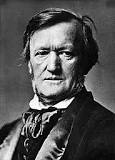
And this brings us to what may be the real roots of Japanese and German strategy.  Both countries espoused ideologies that looked to a distant past for inspiration, and sought some form of purity.  In other words, both had a strongly romantic strain.  The romantic loves the grand gesture, and as an idealist, does not think about results.  The Japanese looked towards the bygone era of samurai’s, who lived for glory.  The best way to achieve glory was death in battle.  The Nazi, as we discussed a few years ago, had direct inspiration from Wagner, where someone is always dying or something is always burning in the end.  But from this death could come rebirth.

Many 19th century romantic poets had a fascination with death, as did their progeny (think Jim Morrison, for example).  Did the Germans and the Japanese plan a strategy that subconsciously they thought would fail?  Did they seek glorious death instead of victory?

I do not mean to imply that “Romanticism” is bad, any more than idealism is bad.  In literature one only needs to think of C.S. Lewis’ Reepicheep the mouse to see romanticism oriented in positive ways.  But we should consider the possibility that there may be a reason why military strategists shake their heads at German and Japanese strategy in the war.   It did not make much sense, and maybe they did not want it to.

These dilemmas would prove the undoing of both Germany and Japan.

Finally, thanks to The Toynbee Convector, I stumbled upon this death oriented totalitarian movement, if you are interested.

Many thanks,

Dave

Drinking Tea in Wartime

My grandfather fought in W.W. II for the 101st Airborne.  He took part in the invasion of Arnhem in September 1944, a campaign immortalized by the book/movie A Bridge too Far. One story he related dealt with the British love of tea.  If the British/American plan had a chance of success allied forces needed to move as fast as possible to seize several key bridgeheads across the Rhine River.  But at around 4:00, British units pulled over on the side of the road and had their tea for 15 minutes, driving their American counterparts nuts.  How anyone could justify teatime at such a time baffled them.

I suppose the British might have responded along the lines of, “If we don’t stop for tea at 4:00, then the Nazi’s have already won!”

Tensions between tradition and the exigencies of the moment have always been with us. In every instance where it arises good arguments exist on both sides that invariably go something like

  • We must change in order to survive, vs.
  • If we change the wrong things, or change too much, it won’t be “we” that survive but another sort of society entirely.

I very much enjoyed the many strengths of Basil Liddell Hart’s Scipio Africanus: Greater than Napoleon.  My one quibble with the book is his failure to tackle this dilemma as it relates to Rome in the 2nd Punic War.

But first, the book’s strengths . . .

The title indicates that Hart might indulge in a bit of hero-worship, but I have no problem with this in itself.  First of all, he lets the reader know from the outset where he stands. And, while her0-worship books have inevitable weaknesses, I very much prefer this approach to writing that equivocates to such a degree so that the author says nothing at all.

Hart’s book also reverses the common tendency to glorify the romantic loser.  We love Robert E. Lee, but Grant, well, he’s boring.  We love Napoleon and see Wellington as . . . boring.  Historians of the 2nd Punic War have devoted an overwhelming amount of attention to Hannibal.  His march through the Alps and his enormously impressive successes at Trebia, Trasimene, and Cannae have inspired military minds for centuries. Sure, Rome won in the end, but for “boring” reasons like better political structure and more human resources–just as many assume Grant won not because of what he did, but because of the North’s “boring” industrialization and economy.

But surely Hannibal’s defeat had something to do with Scipio himself, especially seeing as how a variety of other Roman commanders failed spectacularly at fighting the wily Carthaginian.  To add to this, if you knock out the champ, doesn’t that mean that we have a new champion?

Liddell Hart gives us some great insights in this book.

Those familiar with Hart’s philosophy know that he constantly praised the value of what he called the “indirect approach” to war, both tactically and strategically.  Rome at first tried the direct approach with Hannibal and lost badly.  Then with Fabius they practiced what some might call “no approach” with a debatable amount of success.  Scipio struck a balance.  After assuming command he fought the Carthaginians, but not in Italy.  He took the fight to Carthage’s important base in Spain.  He fought against Carthaginian troops with Carthaginian commanders, but avoided Hannibal.

I have no great military knowledge and no experience, but Hart’s concise explanation of Scipio’s maneuvering in Spain impressed me greatly.  His “double envelopment” move at the Battle of Ilipa against a numerically superior foe was an inspired stroke:

battle-of-ilipa

But I found Scipio’s diplomatic and grand-strategical vision more impressive.  Hart admits that Hannibal had the edge over Scipio in tactics, but I feel that most overlook or excuse Hannibal’s deficiencies at accomplishing his strategy of prying allies away from Rome.  In a very short time Scipio turned the tables completely in Spain, giving Rome a foundation on which to build a Mediterranean empire.  Unlike other great commanders such as Napoleon and Alexander, and even Hannibal, Scipio never had full control of his forces or his agenda.  He accomplished more than most any other commander while navigating more difficult political terrain.  He established the basis militarily and diplomatically for Rome’s preeminence in the Mediterranean.  He deserves the praise Hart heaps on him.

However, the ‘hero-worship’ part of the book needs addressing.  Hart writes with much more balance than Theodore Dodge, who wrote about Scipio’s counterpart Hannibal.  But he makes the same kind of mistakes as Dodge by dismissing some of the political realities Rome faced because of Scipio’s success.  In sum, Hart has no appreciation for the tension between Roman tradition and Roman military success at the heart of this conflict.

Rome’s Republic had no written constitution.  It ran according to tradition.  The bedrock principles were:

  • Sharing power amongst the aristocratic class
  • Yearly rotation of offices
  • Direct appeals to the people smelled of dictatorship
  • No one stands out too much more than anyone else.  They sought more or less to divvy up honor equally.
  • You wait your turn like everyone else.  No one jumps in line ahead of anyone.

From the start of his career Scipio challenged nearly all of these principles in a dramatic way.  Hart himself admits that:

  • He ‘level-jumped’ to high office far earlier than anyone else, breaking the unofficial rules that held things together.
  • He frequently received his support directly from the people against the wishes of the aristocracy
  • He at times used religious claims to boost his appeal for office, which the people responded to over and against the scowls of the aristocracy.
  • In defeating Hannibal he raised his status far higher than any other Roman of his day.  This can’t be held against him obviously, but everyone noticed.

Of course we naturally have a distaste for aristocracy and so does Hart, who loses no opportunities to cast aspersions on Cato, Fabius, and other grumpy, jealous old men.

But . . . by any measure the Roman Republic ranks as one of the more successful governments of all-time.  While they were not close to fully democratic, they had many democratic elements, and still managed annual, peaceful transitions of power across all levels of government for (at the time of the 2nd Punic War) for 300 years.  Judged by the standards of their day, some might even label them as “progressives.”  They had a great thing going and we should not rashly blame them for wanting to protect it.

During the war itself one can easily agree with Hart and his roasting of Fabius and especially Cato the Elder. But events in the generations after the 2nd Punic War show that Scipio’s enemies may have been at least partially on to something.  Within 30 years of their victory, the Republic had major cracks.  After 75 years, the Republic began its collapse.  In time the Republic could not even pretend to contain Marius, Sulla, Crassus, Pompey, and Caesar.  One could argue that Scipio in an indirect way set the stage for this.

Hart wrote a very good book, but not a great one.  I wonder what he would have thought of the British soldiers at Arnhem.  The disruption Rome suffered as a result of the 2nd Punic War had a lot more to do with Hannibal than Scipio.  And yet, Scipio played some part, albeit a small one. Was it worth it?   Could it have reasonably happened differently?  Hart doesn’t say, and leaves us to wonder.


Ordinary Men

If you have driven much at all in any urban or suburban area, I’m guessing that you have experienced something like the following:

You are at a stoplight in a busy intersection, waiting to turn left.  You are towards the back of the line but have a hope of making the light, which usually lets several cars through.  By the intersection a person in need stands with a sign asking for money.

You have a few dollars and would gladly give it, but you are towards the back of the line before the man in need reaches your car.  The cars start to inch forward, anxious to make the light.  You have two choices:

  • Stop your car and give the man some money.  This would reasonably take 10 seconds of time, especially if you wanted to look him in the eye and address him as a person.  But this means that you might not make the light.  For sure, it means that cars behind you would not make the light and the intersection would pile up, with a rubberneck ensuing that would take perhaps three light cycles to clear out.
  • Go through the light and not stop, keeping up with the flow of traffic.

If you are like me in the situation I described, you have taken option 2 more often than you might care to admit.

Why does this happen?  Why does this feel like a no-win situation?  Why do we feel such tremendous pressure to get through the intersection as quickly as possible?

Aside from general answers to the question involving the human condition, we need to consider the specific situation.  When driving you enter into an unspoken covenant with other drivers that share your immediate space. When on the road other drivers–and not the rest of mankind–become your primary obligation  One part of this covenant involves being alert at intersections.  We all want to get to our destination.  Don’t be on your phone and miss the light change.  Be ready to go.  This isn’t about selfishness but courtesy to others.  Your primary and immediate obligation to other drivers overrides secondary obligations, even those of greater moral weight.  When you are behind the wheel in the moment, your fellow drivers, for example, get preference over the poor of the third world.

Sure, we don’t want honked at.  But we also don’t want to break the covenant with our momentary “brothers” behind the wheel in other cars.

Reading Christopher Browning’s Ordinary Men brought this everyday situation into starker light.  Browning focuses not on Nazi ideology, nor the ideologically committed SS thugs.  Rather, he focuses on one particular reserve police battalion and the evolution of most of them into mass murderers.  We would like to believe that Nazi’s committed mass murder because they had a previous commitment to racial genocide. The war simply gave them the opportunity to enact their beliefs.  This would be safer for us because we do not have a belief that we should mass murder in a racially motivated way.  Thus, we would not slaughter Jews. But Browning points out that, while beliefs played a role, what seemed more decisive was the particular situation the men faced.  Their actions transformed them over time into mass murderers, not their beliefs.  Indeed for many, their actions transformed their beliefs, and not vice-versa.

This means that no one is immune.  Our beliefs–what we hold true in our heads–won’t save us under the onslaught of our actions.

Those that comprised Reserve Police Battalions shared the following general characteristics:

  • They were middle-aged men with other careers apart from the war.  All of them came of age before the Nazi’s took power.
  • Most all of them had membership in the Nazi party, but most all of those had joined late, and one expects, rather as a matter of course.
  • Reserve police battalions were held in general contempt by the SS rank and file as lacking true commitment to the Nazi cause.
  • Perhaps most surprisingly, very few expressed overt agreement with Nazi beliefs about Jews.  Some of them even expressed specific disagreements with anti-semitic beliefs.
  • Nearly all of them had blood on their hands in one form or another.

As the Nazi’s occupied much of Eastern Europe by 1942 they sought to clear the area of Jews and other communist partisans–but most particularly Jews were the target.  Himmler and Heydrich would much rather have had the SS do the work of mass killing, but the army at that time fought desperately in Russia and could not spare the men.  Hence, the calling up of reserve police battalions for this job.

The Nazi’s were smart in how they managed these men.  The first job for the battalion involved murdering thousands of Jews point blank in a Polish town called Jozefow, but the officers kept this order secret right up until zero hour. They let bits of information trickle out slowly, none of it objectionable by itself, i.e., “report to place x,” “prepare to help keep order,” and so on.  In relaying the mass-murder order to his men, the major of Battalion 101 showed visible distress.  He broke down almost in tears, he expressed disagreement with the order, and even gave anyone the option of abstaining themselves from this action.

But he did give the order.

At this point what options do these men have?

  • If you have strong moral scruples, you have no time to organize any resistance.  But even if you wanted to resist, will you fire on your comrades, men with whom you have trained and share a bond, to prevent such a crime?
  • If the battalion refuses to carry out the order, what will the SS do to you?
  • You could take your commander’s offer and refuse to fire on the Jews and be given guard duty.  Does being on guard duty absolve you?
  • Perhaps most significantly, soldiering tells you that if you don’t do the job, someone else will have extra work.  The army runs on the principle of all for one, one for all.  Your “weakness” means that others have harder jobs and more work.  No one wants to put their fellows in such a position.  The institutional pressure not to shirk your duty and obey orders must have been enormous.

Browning wants us to face the truth that most of us would obey the order. Most of us would shoot Jews, and most of us would find the means to rationalize it.  Testimonies given years later reveal that nearly all of them found a way to make peace with this atrocity in different ways, such as:

  • War is terrible and cannot be redeemed. Besides the enemy bombs our own women and children.
  • Surely this is an isolated, one-time action.  It is horrible that we have this assignment.  But given the horrible nature of this job, these Jews must therefore be particularly dangerous.  Best to just “rip off the band-aid.”
  • Some stood in line and fired, but deliberately missed.  Perhaps they trusted that their fellow soldiers would not deliberately miss, and this will preserve them from the horror in some way.  Indeed, mop-up crews with sub-machine guns came through to finish the job.  So . . . some tried to technically not kill anyone.
  • One soldier even went so far as to say that (paraphrasing), “I paired up with someone who had no problem shooting the women, and then I would shoot the children.  I could not shoot mothers, but I figured, once their mother was dead, I could shoot the children as an act of mercy to them.  Their lives without their parents would be misery.  I could free them from suffering.”

Those that did not join in bore the stigma of cowards and shirkers.  Those that attempted to obey, but found that “their nerves” could not handle it, were viewed as those who “tried their best.”  Even Himmler himself said in 1943, that while firm obedience stood as the pinnacle of virtue, exceptions came to those whose “nerves are shot, to one who is finished, who has become weak.  Then one can say: Good, go take your pension.”  Even a small amount participation guaranteed your personal safety, no doubt a strong impetus to at least do something in a token way.

After Jozefow many men got violently ill and many showed acute emotional distress.  We might think that this rebellion of the body as a witness to moral truth would turn the tide and what happened would never happen again.  In fact, many men who openly wept and got terribly ill after the Josefow massacre later became hardened and even enthusiastic killers of more Jews.  Initially, the body rebelled against the mind, but eventually, with enough practice, the two worked in tandem.  Eventually, the SS could trust the battalion to commit larger and larger massacres:

The Numbers of Those Murdered by Battalion 101 in

1942: 7-8,000 (minimum)

1943: 30,000 (minimum)

In between their assignments to mass-murder, Battalion 101 received orders to clear the forests of Jews who had fled Nazi roundups.  These “Jew-hunts” (as they were known) could also be rationalized:

  • The main enemy of fascism is communism.  Many Jews are communists (so went the party line), thus, they are a threat.
  • Some of these Jews who fled now have weapons.  They will likely engage in guerrilla operations against our forces.  Thus, they are not civilians but enemy soldiers, enemies too cowardly to come out and fight.  They deserve their fate.

Perhaps because one might possibly find even the thinnest “legitimate” military motive for such action explains why the battalion never had a shortage of volunteers for these missions.  It far more resembled “real soldiering” and may have helped them justify their actions in military terms.  Such missions made them soldiers in their minds, not murderers.

Ordinary Men demonstrates that one need not be an SS ideologue to commit such atrocities.  The commitment to your immediate circle of fellow men, your desire to “do something” for the war, your general patriotism, and perhaps even a lingering sense of guilt that in serving in the reserve police battalions made one a whole lot safer than a front-line solider–thus you might seek to make up for it with brutal deeds– all combine to wreak moral havoc on your soul.  Within a year normal middle-age men without overt Nazi sympathies, without being educated in Nazi ideology in their formative years, without defined anti-semitic beliefs, became butchers on an unreal scale.*

We can understand this if we remember the intersection with the man asking for money.

I think the main reason why we fail at the intersection is the competition between our two commitments, one to our fellow drivers, the other to the needy man.  Throw in the side-car of our selfishness and desire to get home and not be inconvenienced, etc., and game/set/match for our values.  The only way to really navigate this successfully is to park the car and approach him on foot.  In one sense this is harder, because it costs us more in time.  But in many ways this is the easier path, for now we need not worry about the drivers behind us at all.  We have removed ourselves from obligations to them and can act much more freely without worrying about annoying any driver.

Of course the men in Battalion 101 faced a drastically more difficult situation.  You cannot escape blame by opting out of shooting and taking guard duty instead.  Reasonably, you would not turn your gun against your comrades and go out in a hail of bullets.  The only thing you can do is remove your uniform, perhaps facing court martial and even death.  Perhaps you could do this if you were a bachelor, but if you have a wife and kids . . . ?  What happens to them?  Can you sacrifice them in addition to yourself? How many of us would shoot?  How many of us would take guard duty?

In the epilogue, Browning quotes from Primo Levi’s book, The Drowned and the Saved, and it seems a fitting way to close. In his book Levi argues passionately that,

It is naive, absurd, and historically false to believe that an infernal system such as National Socialism sanctifies its victims; on the contrary, it degrades them, it makes them resemble itself.

Such was the fate of Reserve Police Battalion 101.

Dave

*Browning also traces the evolution of their anti-semitism.  In time many came to hold the same kinds of beliefs about the Jews as Hitler and Himmler.  They didn’t start that way, but their actions formed their beliefs.

The Invention of Strategy . . . Sort of

I have written at times about my dislike for the “great man” theory of historical interpretation (here extensively).  My objections to this theory, in brief, are that

  • The writer invariably sees events only through one lens, which limits their vision
  • The writer’s hero worship distorts their vision

I could not resist the Kindle deal of Theodore Dodge’s Hannibal: A History of the Art of War Among the Carthaginians and Romans Down to the Battle of Pydna, 168 B.C., with a Detailed Account of the Second Punic War.  I suspected from some reviews that Dodge would fall prey to the aforementioned hero-worship, the besetting sin of many a 19th century historian.  I happily discovered that while I took issue with some of Dodge’s emphasis and conclusions, he writes an informative and engaging account of the Punic War era.  His is a much better book than Druesel’s Bismarck biography linked above, for example.  Likely Dodge was simply a more sane and intellectually honest person than Druesel.  Or it may be that Dodge’s more practical American sensibility and his own experience in our Civil War gave him better perspective.  Whatever the reason, his book pleasantly surprised me.  He delves into some hero worship, but keeps it to acceptable levels.

Dodge first argues briefly that Hannibal, with some help from Alexander the Great, invented the art of military strategy.  This at first struck me as “hero worship” but upon reflection I mostly agree with him.  For the ancients, battle was battle in the way for us that a handshake is a handshake.  We don’t think of strategizing a handshake.  Handshakes represent our pledge, ourselves.  To strategize a handshake seems impersonal, disconnecting us from ourselves and putting up a false pretense.

For the ancients, in battle you lined up in a field and fought.  Battle tested not the intellect but the will, the discipline, and the courage of the armies.  To have it become something more than that struck many as absurd, or perhaps cheating.  Certainly some Romans viewed Hannibal this way.  Some of our generals in Vietnam felt similarly.  I recall one of them saying, “To *&^% with them!  They wouldn’t come out and fight!”  So the attitude may have a universality beyond the ancient world.

Hannibal often fought with deception, move, and counter-move.  At times he sacrificed a small portion of his men in hopes that Rome would bite on a bait-and-switch.  He always seemed to have several tools in his bag to try and get what he wanted.  I wondered with a colleague of mine how this came to be.  What context helped create Hannibal?  Major shifts like this do not happen in a vacuum.

Carthage had a great naval tradition, but little overt military tradition to speak of.  A society centered around merchants, they contracted out nearly the entirety of their infantry.  An army with dozens of different traditions is an army with no traditions.  Dodge does a solid job of explaining the jigsaw puzzle that was the Carthaginian army, which would need a charismatic and forceful leader to hold together, let alone use effectively.  Hannibal deserves much of the credit he receives.

Hannibal also spent the majority of his life away from Carthage in Spain with the army, including his formative years.  Thus, Hannibal had little connection to Carthaginian civilization (something that would hurt him later in his war with Rome).  He roamed as a “free agent” in many respects, and could be dedicated to victory while others dedicated themselves to honor or tradition.

Many of Hannibal’s admirers rightly point out that unlike Alexander, Caesar, or Napoleon Hannibal faced  rather than actually had the best army in the known world.  True, Rome’s infantry distinguished itself for an almost 200 year unbroken string of victories by the time Hannibal invaded.  But for someone like Hannibal Rome offered unique opportunities.  Unlike Carthage, their army was embedded directly within their civilization of farmers.  And, like farmers, Rome’s army stuck to routine.  They could be counted on to charge at any red flag in any environment, and a patient commander with excellent command over his men might find a way to exploit this.  Certainly Hannibal did, with Cannae as the exemplar par excellence of his theatrical genius.

In the end, however, Dodge reverts to the hero-worship mentality.  The “objective” view (ok — my view) of Hannibal makes him a bit too clever by half.  The 2nd Punic War ostensibly began as a dispute over territory in Spain.  Had Hannibal stayed in Spain and waited for Rome to come to him, he would have been well supplied and could pick his spots more or less at will.  One can easily foresee a significant victory for Carthage in that scenario.  But Hannibal chose to play for much bigger and riskier stakes by invading Italy itself.  Any full treatment of the 2nd Punic War then, must be largely a biography of Hannibal.  Understanding what made him tick would make a great template for a great writer, but Dodge is not it.  Granted, Dodge never claimed to write a Hannibal biography, but I don’t see how one can ignore this side of Hannibal in writing about the war.  For example, in faithful hero-worship fashion, Dodge brushes off the many cruel acts of Hannibal and never uses them to try and gain insight into the man.  When Hannibal makes two prisoners fight each other to the death for their freedom merely as an object lesson for his men, all Dodge can say is, “This had a remarkable effect on his army.”

Essentially, Hannibal’s strategy boiled down to:

  • Crossing the Alps to invade Italy — this would surprise Rome and put him in a position to quickly ally himself with the Gauls in the north of Italy, long time enemies of Rome, then
  • March south and hope to gather more allies as he went — to do this he would need a few big battles to impress/scare the locals
  • Eventually he would have enough troops to march on Rome itself

I think Hannibal a great military commander, but we have to remember that he lost.  It’s easy to love Lee, but Grant beat him.  Napoleon is more interesting than Wellington, but Wellington had the last laugh.  So if we avoid getting carried away with the brilliant nature of some of Hannibal’s victories, we may wonder how great a grand strategist Hannibal really was.  His plan had significant flaws.

Many point out that Hannibal got very little support from Carthage itself, and then argue that had he had this support, he would have been victorious.  Dodge writes,

That Hannibal eventually failed was not from lack of intelligent policy, but because he had no aid from home. . .

and again,

The opposition of Hanno [a Carthaginian politician] wrecked all of Hannibal’s wonderful work.

and later again,

When we look at the [internal condition of Carthaginian politics], it ceases to be a matter of curiosity why so little was done to aid Hannibal.

It is a mark of faith in the “great men” school of thought that nothing can ever be really the fault of the great man.

True, Hannibal received little support from Carthage, but Hannibal should have been quite familiar with the topsy-turvy nature of his home civilization’s politics.  Besides, in crossing the Alps Hannibal adopted a strategy that would isolate him from any kind of supply line.  Finally, and most tellingly for me, even Dodge admits that Carthaginian armies had a tradition of operating independently and self-sufficiently apart from Carthage’s government.  All this Hannibal should have taken into account, and it was a serious mistake for him not to connect his strategy to his political situation.  Again, even Dodge himself writes about the Carthaginian government,

. . . it was natural that [the Carthaginian government] should prefer to hold Spain to winning in Italy.  They believed they could do the first, they doubted the other.

So Hannibal adopted a strategy (rather than hold Spain, go for the jugular in Italy) that he either knew or should have known went in direct opposition to Carthage’s political leadership.  Carthage refused to take extra risks for a general that had defied them, and this should not surprise us, nor should it have surprised Hannibal.  It seems to have surprised Dodge.

For Hannibal’s strategy to work, he would need to pry allies away from Rome.  But in cutting his army off from a supply line, he forced them to rely on foraging the countryside, alienating the very people he tried to win over.  Oil and water just don’t mix.

Besides this, I think Hannibal also showed a basic ignorance of Rome’s alliance system.  Rome wasn’t perfect.  No one is.  But in general Rome offered a good deal to those they conquered and incorporated into their Republic.  They required taxes and military service, and little else.  How could Hannibal top this?  What better offer could he make?  He could, of course, exempt them from military service, but then their “help” would not be much help at all.

I think Hannibal failed to understand the political system his enemy really operated, and by my tally that means he failed to understand politics at all.  A general who operated on Hannibal’s scale needed to, and this failure cost him everything.  Dodge writes,

Like Napoleon, Hannibal saw that a peace, to be a peace, must be conquered at the doors of the enemy’s capital.  This was his policy.  It was the proper one; but it failed because he could not control the resources of Carthage.

That Dodge writes this without attaching any blame to Hannibal speaks volumes.  Why should we praise a man who undertook a strategy that required he control Carthage’s resources when Hannibal lacked the power to control them?  And why be so sure that Napoleon was correct when he too lost, and lost badly?

Those in the romantic “Great Men” school ultimately have to explain why their heroes lost (losers are always more romantic than winners).  For those looking at R.E. Lee, it was his generals.  “If only Jackson had lived, or Ewell had taken the hill, or if Stuart were there, etc. (Lee of course only blamed himself).  Napoleon, serving as his own “Great Man” autobiographer, and perhaps the founder of the “Great Man” school, blamed fate.  For him, I think, to blame others would have meant admitting that others had real power, which perhaps he hesitated to do.  Alas, Dodge (though thankfully not Hannibal) takes refuge behind Fate as well, writing,

Hannibal . . . was hoping against hope; he recognized that the stars in their courses were fighting against him.

and,

[Alexander the Great] was a prime favorite of Fortune.  She smiled on Hannibal until after Cannae.  Thereafter no man ever faced luck so contrary.

Fate is a refuge for those who refuse to face the message Reality wishes to convey.

In the end, the traditional story of the 2nd Punic War as a war of personal revenge of Hannibal on Rome may make the most sense.   The strategy employed, the blitzkrieg nature of his execution, and his “anger” flaming out after Cannae may speak to the truth of this version.

So, I disagree with Dodge, but I enjoyed his book, and others will too.  At least he had an opinion to go with his fine writing and interesting way of presenting Rome and Hannibal’s epic confrontation.  Though Rome had the last laugh, Hannibal remains a fascinating figure.

Though see here for the possibility that Hannibal had the last, last laugh after all.

The Hitler Salute

I picked up Tillman Allert’s The Hitler Salute: On the Meaning of a Gesture primarily because I wondered why the infamous gesture could catch on so fast.

Two years after the Nazis took over a book of manners got published which listed and illustrated different forms of proper greetings.  Granted, the Nazi salute of outstretched arm with the accompanying “Heil Hitler!” got pride of place.  But the book also gave fourteen other accepted and traditional greetings, including handshakes, formal bows, hugs, curtsies, and kisses.  But a few years later, as one young German named Helga Hartmann recalled, things had changed:

I was five years old and my grandmother sent me and my cousin . . . to the post office to buy stamps.  . . . We went in and said, “Good morning.”  The post-office lady scowled at us and sent us back outside with the words, “Don’t come back until you’ve learned your manners.”  We exchanged glances and didn’t know what we had done wrong.  My cousin thought maybe we should have knocked, so we knocked and said, “Good morning” again.  At that point, the post-office lady took us back outside and showed us that the proper German greeting when entering a public building was a salute to the Fuhrer.  That’s my memory of “Heil Hitler!” and it has stayed with me to this day.

I firmly believe in the power of tradition over time, and the peril societies court when they chuck it wholesale.  It should never work.  And yet, it some sense the Nazi’s utter abandonment of many very basic social customs “worked” for a time.  With obvious exceptions (see the photo below), an entire society changed its form of greeting in an historical blink of an eye.

Allert’s book helped answer my question, but he spends most of his time discussing the sociological aspects of personal greetings, and this proved a welcome surprise for me–though I should have guessed it from the title.

Understanding both the greeting and its rapid ascent we need to see Germany in context.  German culture has a long history, but not the German nation.  As a distinct political entity “Germany” did not exist until 1871.  For centuries the patchwork collection of provinces and principalities had been the happy hunting grounds of older states such as France, Austria, and even Russia.  In the mid-18th century Prussia emerged in its own right largely thanks to its military and somewhat autocratic kings.  But it took both the Industrial Revolution and Bismarck a full century after this to unite Germany under Prussian political guidance.

Bismarck had certain key goals in German unification.  Above all he wanted to avoid uniting Germany along democratic lines. Each major leap forward in the process of unification happened because of wars–the application of force.  After Prussia won the Danish War, the Austro-Prussian War, the Franco-Prussian War, Germany lost W.W. I. The Versailles Treaty only added to Germany’s humiliation and frustration at the terms of the peace, their geo-political “encirclement,” and so on.  The lackluster Weimar Republic and the accompanying degradation (real or perceived) of German culture fueled the desire to reaffirm German unity.  The push for a universal German greeting began in earnest.

Allert directs our attention to the nature of greetings themselves.  Even a simple “hello” invites someone into a personal space, and creates the possibility of more/deeper personal relationships.  Almost all social greetings have this character.  We request that others allow us into their world as we invite them into our own.

“Heil Hitler!” functions much differently.  It demands rather than invites, and here we see a link back to the means of German unification itself under Bismarck.  Germany became Germany due to force and political manipulation.  Now the “German” greeting will bring social unity in the same way–by force.   Allert astutely points out that “Heil Hitler” cannot even be called a personal greeting, as it involves no personal contact (as a handshake) and no sign of individual respect (as a bow or curtsy).  It immediately makes a division between the abstract mass of those who support the regime and the undefinable minority of those who do not.*

Perhaps this helps explain why the new “greeting” caught on so quickly.  It is not a greeting at all.  We can imagine the awkwardness of switching from saying, “Hello,” to “A merry-jolly day to you,” or something along those lines.  It probably wouldn’t stick.  But if we had to stand on one leg and look at the ground instead instead of saying “hello,” maybe that might have a better chance?

“Heil Hitler” shares much in common with other aspects of Nazi life.  Just as this “greeting” is not really a greeting, so too the goose-step march is not really a march.  Both de-personalize and therefore dehumanize life.  This clues us in that the Nazi’s cared not so much for “Germany,” or their warped idea of purity, but ultimately about their perverted idea of the so-called beauty in death.  Their desire to raise the stakes of a personal greeting speaks of the nihilism at the bottom of their philosophy (which Father Seraphim Rose alludes to in his brief article below).

Dave

*In their recollections many recalled that they could always tell where their teachers stood in relation to the regime by how they “greeted” the students with the obligatory “Heil Hitler!” at the start of class.  None (I presume) could have taught without saying it.  But some teachers always looked for ways around the full measure of obligation.  One remembered that a particular teacher always walked in the door carrying large stacks of papers under his arms, making it “impossible” for him to raise his arm as he likely said “Heil Hitler.” Another entered invariably with a piece of chalk in his hand already.  He would raise his arm to begin writing on the board, then turn to the class and say “Heil Hitler” with his right arm still lingering on the chalkboard.  I have much sympathy with these teachers, whatever their circumstances might have been.

This, however, is a better epitaph . . .


From Seraphim Rose . . .

The chief intellectual impetus for Vitalism has been a rejection of the realist/scientific view of the world, which simplifies things and “dries them out” of any emotional life.  Unfortunately, however much the Vitalist might yearn for the ‘spiritual’ or the ‘mystical,’ he will never look to Christian truth to fulfill this need, for Christianity for them is as ‘outdated’ for him as the most dedicated rationalist.  

The Christian truth which the Enlightenment undermined and rationalism attacked is no mere philosophy, but the Source, the Truth of life and salvation, and once there begins among the multitude a conviction that Christianity no longer remains credible, the result will be not an urbane skepticism imagined by the Enlightenment, but a spiritual catastrophe of enormous dimensions, one whose effect will make itself felt in every area of life and thought.

Towards the end of the 19th century, a restlessness and desperation had begun to steal into the hearts of a select few of Europe’s intellectual elite.  This restlessness has been the chief psychological impetus for Vitalism; it forms the raw material that demagogues and craftsmen of human hearts may play upon.

Fascist and National Socialist regimes show us what happens when such craftsmen utilize this restlessness for their own purposes.   It may seem strange to some that such restlessness would manifest itself in places that had reached the seeming pinnacle of human cultural and political achievement, but such manifestations should not surprise us . . . .

Perhaps the most striking examples of this unrest manifest themselves in juvenile crime.  Gangs roam about and have senseless wars with each other, and to what purpose?  Such criminals come from the “best” elements of society just as from the “worst.”  When questioned, such people talk of boredom, confusion, an unidentified “urge” to commit these acts.   No rational motive appears for their actions.

There are other less violent forms this unrest takes.  In our own time we see a passion for movement and speed, expressed especially in the cult of the automobile (we have already noted this passion in Hitler), and in our adulation of athletes.  Add to this the universal appeal of television, movies, videos, which mainly serve to distract us and allow us to escape from reality both by their eclectic and “exciting” subject matter and the hypnotic effect of the media themselves; the prevalence of sexual promiscuity, being another form of the “experimental” attitude so encouraged by the arts and sciences.

In such phenomena “activity” serves as an escape–an escape from boredom, meaninglessness, and most profoundly from the emptiness that takes possession of the heart that has abandoned God and refuses to know their own selves.

In politics, the most successful forms of this impulse have Mussolini’s cult of action and violence, and Hitler’s darker cult of “blood and soil.”   Vitalism, in its quest for life, smells of Death [and indeed leads to death].  The last 100 years have shown a world-weariness and its prophets have declared the end of the Christian west.  Beyond Vitalism there can only be the Nihilism of destruction.  Nazism itself had this function.  Joseph Goebbels wrote,

The bomb-terror spares neither the rich nor poor; before the labor offices of total war the last class barriers have had to come down . . . . Together with the monuments of culture there crumble also the last obstacles to the fulfillment of our revolutionary task.  Now that everything is in ruins, we are forced to rebuild Europe.  In trying to destroy us, the enemy has only succeeded in smashing its own past, and with that, everything outworn and old has gone.

8th Grade: Rome Waves the Red Flag

Greetings,

Over the past week we have looked at the conflict between Rome and Carthage, beginning in the 1st Punic War starting in 264 B.C., and continuing down to the start of the 2nd Punic War in 218 B.C.

This series of conflicts would end up determining the balance of power in the Mediterranean and the destiny of each respective civilization.  Win or lose, neither power would emerge the same.

One overarching concern I have the for the year is to show students that the various elements of civilization, be it economics, geography, or religion, are all part of a whole and have a symbiotic relationship to one another. The same holds true for the military.  We ca easily make the mistake of viewing the military as functioning independently, but it will reflect the strengths and weaknesses from its home society.

First we looked at Rome’s values.  These rural people tended to act a lot like modern farmers some of us may know — practical, persevering, plodding, disciplined in the routines of the year.  The Romans made up their army not from professionals, but through a citizen militia.  Their army fought in tribal/community groups in ways that did not allow individuals to stand out (which we looked at in our last update).  Those who held high government offices often led in the field, which could serve to bind the average soldier not just to his fellow man, but also the government itself.

Carthage was older than Rome and different in character.  They devoted their empire largely to trade, not agriculture.  Nearly all their prominent citizens were merchants.  Of course no moral difference exists between farmers and merchants, but  they live different lives.  We can imagine the majority of Carthaginians often going on the modern equivalent of business trips.  If one is not around to mind the store, you have to hire someone to do it for you.  Carthage’s military leaders came from a highly trained and well educated section of their population, but Carthage found it convenient and necessary to have the bulk of their forces be paid mercenary troops.  This did not mean that Carthage had no military power.  On the contrary they had a strong navy and a respected infantry.  But their military had little to no direct connection to the society for which they fought.  The diversity of their army could give them a great deal of flexibility, but it took a dynamic and forceful commander to hold such an army together.

These two titans did not clash for much of their history.  Rome expanded first to the northwest, away from Carthage’s sphere of influence.  But later, when Rome’s Italian empire drifted toward the south, it came close to Sicily, which Carthage relied upon for its grain.  A spark in that environment could ignite a blaze, and the First Punic War resulted (264-241 B.C.).  Rome showed incredible tenacity and adaptability by building a fleet and standing up to Carthage on Carthage’s turf — the sea.  Setbacks did not seem to bother Rome.  For example, in one 5 year stretch, Rome lost 700 ships at sea.  No matter — they made more, and kept on coming.

Rome won that conflict, though narrowly, but it was how they handled that victory that helped set the stage for an even more devastating conflict, the Second Punic War (218-202 B.C.).  They made several key mistakes, some of them tactical, and others moral:

  • After the First Punic War they offered lenient terms initially, which Carthage readily accepted.  However, they then altered the terms of the peace and made it much tougher on the Carthaginians.  Naturally the Carthaginians felt betrayed.
  • Rome’s more stringent terms may have meant that Carthage could not pay its mercenaries, who promptly revolted and spurred on a brutal civil war within Carthage.
  • While Carthage had its hands full internally, Rome took the opportunity to snatch a few of Carthage’s outlying provinces.  In class I likened this to the foolishness of slapping a heavyweight champ while he is bound and gagged.  You can get away with it, but only for so long.
  • In response, Carthage sought additional territory in Spain, far from Rome.  Once again, Rome inserted itself and insisted on limited Carthage’s sphere of influence.  Once again, Carthage agreed.  But then, just as before, Rome altered the agreement and insisted on that Carthage refrain from attacking Saguntum, a key port city on the Spain’s east coast.

At this point, Carthage felt it had all it could take.  Their army now had a daring commander at its head, Hannibal Barca, son of the great Hamilcar Barca, Carthage’s top general in the First Punic War.  Rome could technically claim that Carthage attacked them in 218 B.C., but Rome had done much in the interval to provoke that attack.  Eventually actions do have consequences.  The bull usually charges when one waves the red flag.

The Second Punic War has more drama and defining moments than the first conflict.  Again, however, I want the students to see the big picture, and connect smaller events to larger realities, and this will be the subject of our discussions this week.

Many thanks,

Dave

11th/12th Grade: The Nazi State and the Art of Purity

Greetings,

This week we looked at rise of the Nazi’s in Germany during the 1920’s and early 1930’s.

How can we make sense of the rise of the Nazi state?  While countries like Spain, Italy, the Soviet Union, Turkey, and Japan all experienced totalitarian regimes in varying degrees, none had quite the intensity and impact of Nazi Germany (though it would be fair to say that Stalin came close).  What distinguished the Nazi’s from other regimes?  How did a country with one of the richest cultural heritages in the world give themselves over to abject barbarism?

Naturally we think of the Nazi regime as one built on hatred and violence, and there is much truth to this.  But unless we see that the strongest appeal of the Nazi’s for people was their fervent hope, hope for better Germany and a better world, we will miss the fundamental basis of their appeal.

Germany, of course, had only recently been a nation (since 1871), but before that greater ‘Germany’ had often been the stomping grounds of Europe.  When the European powers wanted to fight they often came to the divided German principalities to do so, dating back to the 30 Years War in the early 1600’s.  As a political and national unit, “Germany” lacked the strength to prevent it. The Versailles Treaty made the incredibly foolish blunder of humiliating Germany with its war guilt clauses.  The Nazi’s vowed that they would erase the stain of humiliation the world had inflicted on Germany.   If we can remember what it feels like to be humiliated, we remember too the anger and desperation we felt, and the desire to do nearly anything to rid ourselves of that wretched feeling.  The Nazi’s claimed to be able to do just that.

Richard WagnerHitler was obviously a cruel man, but he also believed that he had ‘high’ taste in art.  Many in the Nazi party leadership, like Hitler himself, were either failed artists, minor poets, or small time authors of some sort or another.  We saw Friday how Hitler was a big fan of opera, especially Wagner.  Hitler himself said that one could not understand Nazism without understanding Wagner’s music.  He filled his operas with romantic visions, grandiose themes and sets, and an idealization of antiquity.  All this moved Hitler, but perhaps Wagner’s deepest appeal lie in his theme of purity and sacrifice, and escaping the bonds of this ‘sordid’ world to achieve perfection, a kind of worship of death.

In Wagner we see a link between fulfillment and extinction.  In his Tristan and Isolde the two take a love potion, which also causes their death.  Wagner’s mistress, Cosima von Bulow, styled their relationship as a “death-in-love.”  Wagner became enamored with King Ludwig of Bavaria, and Ludwig of him.  Ludwig promised Wagner, “Rest assured that I will do everything in my power to make up for what you have suffered.  . . .I will procure for you the peace you desire in order that you may be free to spread the mighty wings of your genius in the pure aether of rapturous art.”  Once again, we see in Wagner not only life imitating art, but the concept of art and purity.  Hitler’s own death recapitulates in some ways the finale of Wagner’s Reinzi, where the hero, betrayed by those he trusted, dies as the city is engulfed in flames.  So too did Hitler die, feeling ‘betrayed’ by his generals, in flames, as Berlin burned around him.

When we think of Nazi rallies, one can see links with Wagner.  Many have commented on the theatrical nature of the rallies, as well as their over-the-top production.  They are spectacles that seek to overwhelm and get people to ‘lose’ themselves in the experience.

For the Nazi’s a great culture needed great art to embody and inspire it.  They had this in the past, in the form of Bach, Mozart, Beethoven, Goethe, Schiller, and so on.  They believed so strongly in this idea of a “healthy” culture that when the Nazi’s seized power, state doctors and ministers of culture often wore military uniforms.  Both doctors and artists had the charge of bringing ‘health’ back to Germany, be that health racial, moral, or cultural.  Doctors did not serve the individual, they served the “people,” the nation, the “race” as a whole, and this of course had horrible consequences later on.

In their eyes a ‘high’ culture would create a ‘healthy’ people, and a ‘healthy’ people would create an unbeatable army.  This is why they banned ‘mongrelized’ and ‘decadent’ culture like jazz (whose biggest stars tended to be either African-American or Jewish).  The Nazi’s didn’t just dislike the music, they viewed it as a threat to their national well-being.   But the same horrible logic applies to the euthanization of the mentally unfit.  Eventually we know that the ‘protection’ of the German nation meant the ‘protection’ of German blood.  Eradicating that threat meant eradicating the Jews, who had done more than anyone else to ‘pollute’ German blood over the years.  They had ‘infiltrated’ German society to a greater degree, and intermarried more than any other non-German ethnic or religious group.

Hitler, therefore, did not just promise an economic recovery, or to put people back to work.  He promised a kind of spiritual redemption on a national scale, one that primarily would touch the soul of the people.  Not surprisingly, he rose to power at a time when attendance in both Catholic and Protestant churches had been in decline.  Spiritual power has always been more potent (for good or ill) than mere political power, and this helps us understand Hitler’s hold on Germany.  We know how great art and music can move us.  But when we ascend to such heights of feeling the possibility of good and evil both increase.  Perhaps this is why a nation with such a rich cultural heritage could fall so far so quickly.

This has been a ‘heavy’ post so if you wish, join me and Looney Tunes in poking fun at Wagner, who certainly deserved it: