Despite a mountain of documentary evidence that survived the war in Germany, the prosecutors at Nuremberg had a difficult time establishing the guilt of some defendants. Many of the top Nazi leaders had already died, and many of the accused found it quite convenient to blame things on those who could no longer answer. What they knew and when they knew it, and where their responsibility lay was not always easy to ascertain.
Acclaimed military writer Basil Liddell Hart scored a great coup by getting several top German commanders in W.W. II to talk to him about their war experience. It proved all too easy for the generals to ascribe whatever success they had to themselves, and their failure to Hitler. As Hart notes in his prologue, this means it’s hard to know how reliable Hart’s generals can be. They may have invented self-justifications after the fact, and perhaps even believed such justifications.
Still, Hart’s The German Generals Talk succeeds on many levels. While exact particulars remain cloudy in some cases, a definite overall picture emerges. Among other things, the paradigm the generals created (and we also tend to create) in regard to Hitler and the military needs tweaking, at least in some instances.
For example, we think of Hitler as a megalomaniac bent on conquest at all costs. But how to explain, then, Hitler’s attitude towards Britain? Hart shows that at least in the minds of the generals, Hitler wanted to back off of Britain. At Dunkirk the generals thought that Hitler wanted the British to get away. With Operation Sea Lion, generals complained that Hitler barely involved himself in the planning and seemed to care little for the details. He seemed almost relieved to break it off in its infant stages.
In truth, Hitler had always admired the British. He praised them in Mein Kampf, which fit his racial view of the world. The British, after all, had largely German and Nordic stock and thus were not Germany’s “natural” enemies. Apparently Hitler believed that in allowing the British to save their honor at Dunkirk, they would more prone to accept a peace settlement. Like Kaiser Wilhelm II, he implicitly thought that Germany and England were friends deep down. Hitler’s egocentrism led to him to believe that everyone thought as he did. All of us share this characteristic to some extent, but in Hitler it grew far out of proportion. In this rare instance, his race theories actually made him less aggressive, and in this case, this instinct proved disastrous for Germany, a double irony.
Hart’s generals speak of how the army never really trusted or liked Hitler. Every general interviewed sought to distance himself from Hitler in some way. But then this begs the question as to why very few military leaders stood up to Hitler, let alone actively tried to change the situation. They explained their situation this way:
While many of the upper level officers might have gone against Hitler, their troops would not have. Those from Major on down had been raised with the Nazi system and had much more loyalty to it. Many officers doubted whether or not their troops would have followed them in rebellion.
The army had an ensconced officer corp with traditions that survived W.W. I. But the Air Force and navies did not. Many army officers believed these branches were comprised almost entirely of pro-Hitler sympathizers, as both owed their very existence to the Nazi regime. Even if the army as a unit rebelled, the Air Force and Navy would not.
Hart offers little comment on this line of defense. It has merit, and it touches on a larger question. For democracy to thrive the army must be apolitical. Is the Nazi army any different? When do we want the army suddenly to get a conscience? Commenting on on our military’s experience in Vietnam, one general stated that, “To argue that officers should be guided primarily by their conscience is to argue for military dictatorship.” But of course we don’t want soldiers, or any human being, to reduce themselves to be a mere robotic arm of the state.
Interestingly the generals’ objections to Hitler had everything to do with Hitler’s military policies and nothing about the morality of the Nazi regime. Nowhere in this 300 page book is the Holocaust even mentioned, let alone the “killing groups” on the eastern front. Maybe this has something to do with exactly who Hart interviewed, but I think it has more to do with the strict stratification of Nazi society, and the technocratic nature of their military education. In the end, neither of these things can explain away their ultimate failure to act in any significant way. None of them went nearly as far as Adolph Eichmann’s ridiculous assertion that, “I only transported people to the concentration camps. I never actually killed anyone!” but they show the same tendency, albeit to a much lesser degree.
This point touches on how the generals conducted the war. While Hart (a military man himself) often sympathizes with the military’s side of the story, he points out that the generals lacked strategic imagination. At least at certain points and times, Hart shows how Hitler had greater grand strategic insight. Hitler and his generals often clashed. They had profound class differences. The Prussian aristocracy surely resented the social mixing engendered by the Nazi regime. But Hart shows that the differences between them also had roots in their personalities and training. Hitler’s poetic mind gave him a potentially greater field of vision than his technocratic generals.
But this “greater field of vision” needs moral and “physical” roots. Art has no merit for its own sake. Hitler often preferred the great, memorable, and perhaps imaginary deed to mundane reality. If he were to win the war, it would have to be on his aesthetic terms. So he ordered what in his mind were “gallant last stands” that really condemned his troops to slaughter. The “Battle of the Bulge” had no real possibility of success due to lack of air support and supplies, but it would be so much more heroic than waiting behind fortified positions behind the Rhine. Hitler seemed to live more fully in the world of Wagner’s operas than reality.
Hitler may have had at times greater strategic insight than his generals. But this distance from reality made it so that he could never bother with mundane details. As far as children are concerned, meat comes from the grocery store, and water comes from the faucet. Hitler never either could or would take logistics like supplies into account. That is why Germany could fall prey so quickly to “imperial overstretch.” General Halder warned Hitler that, “Our danger is that we win all the battles except the last one,” and this proved prophetic in Africa, Russia, and even Europe. Like Hannibal and Napoleon before him, Hitler forgot the need for political as well as military conquests.
It would be more satisfying for us if Hitler had a moment of self-revelation at his end. But like many other Nazi leaders who took their own life, no such moment came. Hitler never wavered from playing his part. As various Nazi functionaries urged Hitler to flee Berlin, apparently it was Albert Speer who countered their advice by telling Hitler, “You must be on stage when the curtain falls.” Speer knew that the best way to motivate Hitler was to play to his sense of theater. Perhaps he wanted Hitler’s demise as much as some of the generals..
Some might argue that history constrains us. Certainly many teenagers keenly feel the question, “Why does it have to be this way? Why must the world work as it does?” The dynamism of youth and their imaginations certainly can do wonders for any society.
We may suppose that a world without historical awareness will create a glorious whole new world of possibilities. But . . . history rather pedantically suggests that the opposite of the case. Recall the French Revolution, for example. They remade everything, even their sense of time. But this confusion and disruption led to terrible tyranny and mass incarceration. The communist regimes of the 20th century show this same tendency. Only the most bold would call Soviet-era culture stimulating and full of possibilities. Their narrowness of vision–a narrowness made possible and even likely by their disrespect to history–created a terrible tyranny.
Many comedians have commented that they no longer wish to perform at many college campuses. Students in today’s climate seemingly cannot operate with dual levels of reality. They cannot make distinctions between jokes and real life, assuming a 1-1 correlation of all aspects of reality, a flat world. Caitlin Flanagan of The Atlantic wrote that,
Two of the most respected American comedians, Chris Rock and Jerry Seinfeld, have discussed the unique problems that comics face on college campuses. In November, Rock told Frank Rich in an interview for New York magazine that he no longer plays colleges, because they’re “too conservative.” He didn’t necessarily mean that the students were Republican; he meant that they were far too eager “not to offend anybody.” In college gigs, he said, “you can’t even be offensive on your way to being inoffensive.” Then, in June, Seinfeld reopened the debate—and set off a frenzied round of op-eds—when he said in a radio interview that comics warn him not to “go near colleges—they’re so PC.”
When I attended the convention [The National Association for Campus Activities] in Minneapolis in February, I saw ample evidence of the repressive atmosphere that Rock and Seinfeld described, as well as another, not unrelated factor: the infantilization of the American undergraduate, and this character’s evolving status in the world of higher learning—less a student than a consumer, someone whose whims and affectations (political, sexual, pseudo-intellectual) must be constantly supported and championed. To understand this change, it helps to think of college not as an institution of scholarly pursuit but as the all-inclusive resort that it has in recent years become—and then to think of the undergraduate who drops out or transfers as an early checkout. Keeping hold of that kid for all four years has become a central obsession of the higher-ed-industrial complex. How do you do it? In part, by importing enough jesters and bards to keep him from wandering away to someplace more entertaining, taking his Pell grant and his 529 plan and his student loans with him.
But which jesters, which bards? Ones who can handle the challenge. Because when you put all of these forces together—political correctness, coddling, and the need to keep kids at once amused and unoffended (not to mention the absence of a two-drink minimum and its crowd-lubricating effect)—the black-box theater of an obscure liberal-arts college deep in flyover territory may just be the toughest comedy room in the country.
In the same vein, Alex Tabborok recently commented that,
It has been said that we live in an increasingly divided media universe but on many issues I think we live in an increasingly uniform media universe. Social media is so ubiquitous and the same things sell so widely that I suspect the collective consciousness is less fragmentary than in the past.
I thought of this issue reading transcipt trials of two Soviet authors in the late 1960’s, Yuli Daniel and Andrei Sinyavsky. The authors were not in trouble for any direct attacks against the state or against communist doctrine per se. Obviously no writer who valued his safety would write in this way. The problems with their work lay elsewhere. Among the issues raised:
There are no clear good and bad characters in your stories. How then can the people understand the story (i.e., the story alienates the masses, which is de-facto anti-communist)?
Which characters in the story definitively represent the author’s point of view? In other words, which character speaks for the author, and which characters serve as foils?
This particular attack assumes that 1) The relationship between characters in the story and the author is always strictly linear and 1-1, and 2) This relationship is necessary for clarity in the story, and 3) Without this clarity, how can we judge if you are a threat to the state or not?
Both authors seemed terribly confused by attacks made against them, pleading “not guilty,” an unusual move in trials of this sort. They tried to explain basic literary theory of story and character, but to no avail. Their judges simply couldn’t accept this mental construct. By definition character’s must express a direct relationship to the author. Character’s who criticize the state must reflect the author’s mind. The author’s tried to point out that some of these characters fare badly in the story, but the prosecutors shot back that not all who criticized the state “got their just desserts.” Here is a brief excerpt from Yuli Daniel’s trial, which begins with the prosecutor reading an excerpt from one of Daniel’s stories:
Prosecutor (reading): “I hate them [referring to those in power] so much I have spasms, I scream, I tremble.” Well, Daniel, what are we to make of this?
Daniel: That is an epigraph to the character’s thoughts (laughter in the courtroom, Daniel looks around nervously).
Prosecutor: Who is that you hate so? Who do you want to destroy?
Daniel: To whom are you talking? To me, or to my character, or to someone else?
Prosecutor: Who is your positive hero? Who expresses your point of view in the story?
Daniel: I have told you, the story has no entirely positive hero and there doesn’t have to be one.
Prosecutor: Who expresses the author’s credo?
Daniel: The characters do express the author’s thoughts, but only in part. No single character represents the author. Maybe [my story is] bad literature, but it is literature, and it doesn’t divide everything into black and white. . . . The indictment states that I express my ideas “through the mouths of my characters.” That is a naive accusation, to put it mildly.
Neither author had success discussing the nuance of how stories work. Both received labor camp sentences of 5-7 years.
In his Conversations with Stalin Milovan Djilas tells of his initial fascination with Stalin and the Soviet Union and his subsequent disenchantment in a few short years. Many other works give many more details about the horror and oppression in Stalinist Russia. What made Djilas’ account interesting was that he framed his account not so much in terms of how it all went wrong, but how it managed to work at all. That is, we know Stalin was bad, but if he was so bad, why did Soviet Russia prosper and gain power, at least in certain ways?
He explores this in different ways. For example, no one questions that the purges in the military during the 1930’s sacrificed thousands to Stalin’s paranoia, but Djilas had met many of the commanders put in place after the purges, and admitted that they were almost all quite adept, fearless, and devoted. Naturally, Stalin had his entourage that rarely, if ever, challenged him. As you would expect, one always had to constantly avoid saying the wrong thing by following keenly the bouncing ball of “official” opinion. But unlike most other autocrats throughout history, Stalin did actual work and remained very well informed. He could incisively size up personalities in the room and control it with ease.
What struck me most of all, however, was this comment of Djilas:
“The world in which the Soviet leaders lived–and that was my world too–was slowly taking on a new appearance: horrible, unceasing struggle on all sides. Everything was stripped bare and reduced to strife which only changed in form and in which only the stronger and more adroit survived. Full of admiration for Soviet leaders before this, I now succumbed to a heady enthusiasm for the inexhaustible will and awareness that never left them for a moment. That was a world in which there was no other choice other than victory or death.”
Perhaps unconsciously, Djilas reveals that Maxism has its roots not in economics, politics, or a new conception of proletarian culture, but in a new religious understanding of the world–a naked struggle for will and power. It is this elemental understanding of things that can give regimes who build on this faith a concentrated vitality, akin to the power of art in certain barbarian civilizations.* Perhaps Stalin understood this as well, to great and terrible effect.
Today most of us immediately understand the danger’s of the far-right, perhaps because the far-right has a crystal-clear idea of what they want and express it forcefully. Many on the far-left, on the other hand–quite prevalent on many campuses today–seem to think that their ideas will lead to a bright, sunlit land where everyone loves everyone else (the far-right has no such plan and no such delusion). But if you can’t take a joke, you will dramatically narrow your world, after which, you will have nothing to fall-back on other than the paganism of power and will.
Dave
*Though I would love to claim this insight about “barbarian art,” it belongs entirely to the inimitable Kenneth Clark. He argued that the concentrated narrowness of barbarian civilizations can give their art a certain vitality.
If it did nothing else, Mark Bergen’s Like, Comment, Subscribe: Inside YouTube’s Chaotic Rise to World Domination gave me a great deal of sympathy for those that tried to run this unusual company. Everyone in the early years of the web believed that the power the internet granted for anyone to say anything would work overwhelmingly for good. Much of YouTube’s history can get boiled down to dealing with the continual disproval of this hope. For every click on a silly, weird, enlightening or endearing video, another of icky sexual, violent, racist content, would crop up somewhere else. Keeping up with problematic videos quickly proved impossible. Deciding what should stay and what should go sometimes came down to blunt metrics, other times to personal judgments by a few harried staff. Neither approach could solve the problem–the problem has no solution. The internet disrupts everything. To quote Yeats, with the internet the center no longer holds. When that happens, movement away from the center takes one up, down, and every which way possible–certainly not always up! And yet, despite its missteps and issues, no one can conceive of YouTube somehow failing. Very quickly it became part of the American experience.
Many have attempted to define the essence of America. My personal stab involves the concept of “movement.” I suppose that means that I basically agree with Frederick Jackson Turner’s thesis. From the moment Europeans arrived on the continent, they began expanding their reach at a rapid pace. After the French-Indian War, England made a treaty with France that guaranteed English settlers everything east of the Appalachians. Not good enough. The Americans wanted more, and almost immediately violated the treaty terms, which resulted in Pontiac’s War of 1764. The English surely felt angry and confused. We had perhaps 10x as much land as England, and somehow this was not enough? Can’t we settle down for five minutes?
Of course we rapidly set ourselves on.a course of acquiring more land, by fair means or foul. We can understand this phenomena in part through our associations of land with liberty, which comes partly through John Locke, and partly through various other streams. But more deeply, our national predilection for movement comes naturally vis a vis our geographical symbolism. Sure, the world is round, but for Europeans at least America represented the end of the world, the edge of the world. Naturally we lived into this mental model. On the edge, things get blurry and more fluid in a literal sense (rivers or bodies of water often form boundaries of different places), and culturally and spiritually as well. America has always existed on that fluid margin.
It should not surprise us, therefore, that America has created technologies that compress time and eroded space, such as the telegraph (which admittedly had various people in different places working simultaneously with Samuel Morse), the car, the airplane, the internet, and so on. All of these technologies have had the overall impact of adding fluidity and movement to our world.
Prohibition has always perplexed me. Ken Burns’ documentary series succeeded admirably in looking at the small details of how the movement came about and collapsed. But whatever explanations we offer, from a distance Prohibition must strike us as historically bizarre. Alcohol has played a significant role* in every civilization ever that I am aware of, and we somehow believed that we could and should turn off that spigot.
Initially at least, it should also strike us as strange that an era that that moved so fluidly and loosely in a progressive direction, with
The beginning of cars going mainstream
Women getting the right to vote
Women starting to look and act more like men (hair and clothing styles changed)
General economic growth and prosperity
The advent of radio
should on a dime attempt a very ambitious “tighten” in an area more or less destined to fail. What follows is my attempt to understand this seeming paradox.
We tend to believe that
Liberals like to ‘liberalize’ and keep things moving in a fluid direction, and
Conservatives like to tighten things and prevent change.
But in reality, both sides have aspects of their opposite. Progressives tend towards fluidity and the consequent “mixing” of gender identities, sexual identities, and the like. They disdain borders in culture and politics, preferring a global outlook. But they want much more stability on questions of speech, they seek to protect and create “safe spaces” for those they believe disadvantaged. They also prefer equality, which wants everyone together in one place, and want the market contained to prevent inequalities.
For their part, conservatives want to contain traditional ideas of family, sexuality, and the like. They value the defined space of country and flag. But they also want the market flowing freely. And–they value liberty over equality, which separates people and allows for distinctions in accolades, money, and the like.
One could see this as a kind of schizophrenia for both sides, a manner of confusion that could exist on the geo-spatial margin. I think that explains American politics partially. No question–America is weird, and likely always will be. Our political disagreements then, involve not “Tight v. Loose” but where to tighten, and where to loosen.
Though American politics is weird, I also think that fundamentally each person–and each civilization–must create some kind of balance between stability and change, because it forms the pattern of existence. Life requires it. Too much fluidity and mixing brings the flood and chaos–we perish from drowning. Too much rigidity puts us in the petrified forest, where we perish from dehydration. So we need to craft if not an actual balance between these two aspects, at least some kind of working relationship. One of our problems in the modern era is that traditional societies had this relationship worked out in theory, but mostly in practice. You see this in times in liturgical calendars for fasting, feasting, carnivals, and so on. Today, we subconsciously understand the need for stability and fluidity but have no clear idea of how to have both properly, and no guides in our culture to inform us. So, we flail about blindly instead.
I think something similar happened with Prohibition. For the above mentioned reasons, American society in 1920 felt itself on the edge of a precipice of sorts, ready to engage in a great deal of fluid movement socially, culturally, and economically. I fit most aspects of a conservative and so favor stability, but I do not subscribe to Fluidity=Bad, Stability=Good. Obviously both are good or bad depending on context. So, I do not mean to say here that the changes in the 1920’s were bad per se, but that their scale contributed to our need to tighten somewhere else. The dramatic and foolish nature of the tightening that occurred over Prohibition, I propose, was a subconscious reaction to a dramatic acceleration of fluidity. So perhaps either
Because we lacked a coherent means of knowing how and where to tighten a particular area of society, we landed on alcohol more or less randomly, or
The unprecedented loosening would require an unprecedented tightening, with alcohol then as the somewhat natural choice.
I find the latter more persuasive, though either one helps us answer the mystery of Prohibition.
Dave
*I understand the argument that a) Americans drank more than other civilizations had at any time previously, and b) Drank maybe too much harder stuff than wine, mead, beer, etc. Perhaps Prohibition might have had a better chance of success if they had focused on liquors instead of everything, but I doubt it.
A recent local article mentioned that one Fairfax County School (Herndon HS) will cease allowing students to use their phones in class. Anyone familiar with reality knows that listening to one’s phone in class, or texting, or scrolling through Instagram, will hinder the learning process. Of course, the rule has loopholes that some will exploit. Perhaps more embarrassing for our civilization than the actual presence of phones in class–teachers may give students a 5 minute “phone break” during instruction if necessary. Most interesting to me from a cultural perspective, however, was the stated rationale for the policy: the phones need removed, for they may distract from other students learning. I applaud the school’s principal move to ban phones. The rationale for the decision, however, will not allow any real progress in education.
When we cannot state the obvious–i.e., students with phones out distract themselves far more than others–we have discovered a sacred cow of our times. But this fits in with other aspects of our culture. So strong runs our belief even in the power of a 15 year-old to define their lives ad nauseam, that parents, teachers, our society, will not attempt to define reality for them. We will not tell them that phones hurt themselves, for we likely would have no response for, “It might hurt others, but not me,” and no idea what kind of general embodiment we should ask for from our children.
If this reads so far like a cranky reactionary, well, that can be me at times. But I have far to go to reach the crankiness of Rene Guenon. He appreciated essentially nothing of modern life. But we should not dismiss him. The Crisis of the Modern World shows real prescience (he wrote this in 1927). His symbolic framing of the topics he examines make his work intuitive to understand and important for our times.
First, what failed to impress me about the book:
Guenon has some brilliant insights in his critique of the modern west, but he ascribes nothing good at all to the West and finds salvation only in the East. I understand taking a big swing for effect, but in this case, the book made me want to think of ways to defend the west. His overreach has the opposite effect on me.
I cannot tell quite where Guenon stands religiously, which I think important in a work like this. On the one hand, he has much to praise about Hinduism. On the other, we know he converted to Islam a bit after writing this work. He also argued that the West’s only hope lay in the faint possibility of revival of true Catholicism. Perhaps he dabbled in the idea of Perennialism, which seems to run counter to his main point of commitment to a tradition. Or–perhaps Guenon at the time of this writing lacked internal clarity himself, and if so it shows a bit in this book.
Now, on to the good stuff. . .
Guenon begins by critiquing the modern west’s view of linear progress. We see time functioning as a line, and our technological and political progress demonstrating that this line moves upwards. We no longer have the same attachment to the idea of inevitable progress as 100 years ago, but we still measure progress in material terms, i.e., how the economy functions, what new technology we invent, etc. But the core of our problem lies here. How we measure time and progress put us in continuously impossible situations that we cannot comprehend, due to the angle of our vision, akin to someone who scratches their irritation and wonders why it still itches.
Ancient and traditional societies put their focus on retaining meaning within their culture, not in increasing power or wealth. Our focus on power over our environment has led us “down the mountain” towards disunity of mind and society in general. The ancient world also tended to see time as cyclical, which Guenon thinks key to his thesis about time. I disagree, but it influences his view of how our culture has moved from “higher” to “lower” things. He writes,
It will doubtless be asked why cyclic development must proceed in this manner, in a downward direction, from higher to lower, a course that will at once be perceived as a complete antithesis to progress as the moderns understand it. The reason is . . . it implies a gradual increasing of distance fro the principle from which it proceeds; starting from the highest point, it tends downward, and as with heavy bodies, the speed of its motion increases continuously until finally it reaches a point at which it is stopped. This fall could be described as “progressive materialization.”
The project of the western world for the last 500 years or so has generally involved deconstruction of the world through a focus on gaining power over our environment. Rather than a circle, I prefer the image of a mountain to explain this process, something that I will not rehash in full here (I have written about this in other posts linked above). Of course mountains have a prominent role in almost every traditional culture, including ancient Israel (Mt. Sinai, Mt. Zion, etc.). The top of the mountain allows one a unity of vision, though it entails a necessary blending of various particularities. Descending down the mountain comes naturally. It’s easier than going up. This downward movement also gives you increased ability to see particular things with greater distinction and contrast to other things around it. But to accomplish this, one must sacrifice a unity of perspective. The methods western society employs lead us to chaos and disunity, which will manifest itself in our souls and our societies.
For example, we can take the idea prevalent in modern parlance that trade will unify countries and draw them together. The more trade, the more unity. Guenon argues that, in fact, increased trade between peoples will likely lead to more conflict, not less. Perhaps we see the pattern. Trade in goods means focusing on materiality, and focusing on matter means dividing reality–and we divide to conquer. Guenon wrote just shortly after the horror of W.W. I. But in the years leading up to that conflict, Germany and England were primary trading partners.
Thirty years ago many argued that the U.S. should increase trade with China to cement good relations between us, which would help China improve its record on human rights. In fact, what has happened is just as Guenon would predict–China and the U.S. like each other less, and trade in material goods has only served to increase China’s power. A more immediate example–Europe’s use of Russian oil and gas has done nothing to make them like each other more. Perhaps trade may make disparate cultures a bit more alike, but history shows that we tend to fight more with those who look a bit skewed to us, rather than those who are completely different. For example, lots of historians pour vitriol on the Middle Ages, which has similarities and differences to the modern world, but no one “hates” ancient Egypt, which maintains a proper, non-threatening distance from us. In any case, when we act against the pattern of reality, we suffer for it.
The political schisms the western world experiences now have their origin in our souls. Many marvel at why, despite unprecedented material opportunities and prosperity, we see such a spike in suicide, escapist drugs, depression, and other mental illnesses. Guenon sees an obvious connection. A focus on “materiality” inevitably means a focus on particularity, which means division. Two years ago many believed that the presence of COVID might at least have the silver lining effect of bringing us together and helping heal our political divisions. Of course, our intense focus on the particularity of tiny molecules and the various means of treating said molecules have driven us even farther apart, which again Guenon could have predicted.*
But because Guenon has a primarily cyclical view of reality, a degree of hope exists, for this is not the first time civilization has experienced this descent into “progressive materialization.” In the history of the world, he sees in the 6th century B.C. a period when unity descended into division. He writes,
In the sixth century [B.C.] changes took place for one reason or another amongst almost all peoples . . . for example, in China, where doctrine previously established as a unified whole divided clearly into two distinct parts: Taoism, reserved for the elite and comprising pure metaphysics . . ., and Confuscianism, . . . whose domain was that of practical and social applications. In India . . . this period saw the rise of Buddhism, that is to say, a revolt against the traditional spirit . . . Moving westward we see that for the Jews this was the time of the Babylonian captivity and perhaps one of the most astonishing of all these happenings is that a short period of 70 years should have sufficed for the Jews to forget even their alphabet . . .
. . . for Rome it was the beginning of the ‘historical’ period, which followed on the ‘legendary’ period of the kings. [In Greece also], the 6th century was the start of so-called ‘classical’ civilization, which alone is entitled–according to the moderns–to be considered ‘historical.’**
This moment in Greece inaugurated the discipline of philosophy, so dear to the western intellectual tradition. What began more or less in innocence devolved into an exaltation of the rational, and hence, the analytical side of man over and above all things.
The tendencies that found expression among the Greeks had to be pushed to the extreme . . . before we could arrive at “rationalism,” a specifically modern attitude that consists in not merely ignoring, but expressly denying, everything of a supra-rational order.
Christianity arose via the collapse of western civilization in the 5th century A.D., and reasserted more traditional ways of knowing. We can see this in how history got written, with the examples of Ammianus Marcellinus, writing at the time of Rome’s decline. His precise factual accuracy has high value in today’s world. But even Gibbon found him unreadably dull and shortsighted, commenting that, “The coarse and undistinguishing pencil of Ammianus has delineated his bloody figures with tedious and disgusting accuracy.” We can compare him with the author/s? of the roughly contemporaneous Alexander Romance, which had universal appeal, with eventual versions written in Greek, Latin, Syriac, Armenian, and Ethiopian, to name a few. Many dismiss the work as “fantastical” (it has Alexander encountering mythical beasts such as centaurs) but it had broad appeal for a reason. The work seeks to interpret the life of Alexander, and thus communicate meaning, not facts. Traditional cultures understand this difference in ways that elude us, making much of the “legendary” histories written in the past unintelligible to us.
With medieval culture Guenon believes that we see the turn of history’s wheel back towards the apex of the cycle. They focused on wisdom through inhabiting meaning over analysis. But the wheel keeps turning, which brings us to the Renaissance. For Guenon, moderns get it backwards. The “Middle Ages” was not merely a bridge between “civilization” (which the term “Middle Ages” implies), but a time of actual civilization in between decayed epochs. As for the Renaissance,
As we have said . . . . the Renaissance was in reality not a rebirth but the death of many things; on the pretext of being a return to Greco-Latin civilization, it merely took over the outward part of it, since this was the only part that could be expressed clearly in written texts; and in any case, this incomplete restoration was bound to have very artificial character, as it meant a re-establishment of forms whose real life had gone out of them centuries before. . . . Henceforth there was only ‘profane’ philosophy and ‘profane’ science, in other words, the negation of true intellectuality, the limitation of knowledge to its lowest order, namely the empirical and analytical study of facts divorced from principles, a dispersion of an indefinite multitude of insignificant details . . .^
All of this ends with the ‘Individual’ as the only form of reality left that we recognize, hence the problem one encounters in a public school when you want to ban cellphones. Our individuality has generated the chaos of defining one’s own reality through social media, or through simple assertions of will, as Neo lamely articulated in the third Matrix installment. Some try and plug the holes in the ship by earnestly urging us to focus on the “facts.” Alas, like those that focus on trade, or “the science,” to bring us together fail to see that the “facts” can never accomplish that task. Focusing on meaning by examining things outside of their context separates things from other things, and so it will divide selves from other selves.^^.
The distortions of the modern have created a reality that Guenon calls “monstrous.” A “monster,” by definition, is something that exists internally and externally out of proper proportion. We may think that we have traded unity for diversity, and since both have their place, we will at least have one even if we lack the other. Guenon disagrees, “since unity is the principle out of which all multiplicity arises.” So–we will be left only with a naked assertion of will whereby we seek to subsume all things into ourselves. This brings the flood, and a restarting of the cycle.
As powerfully as Guenon writes, I push back in one particular. Guenon, influenced by his possible religious Perennialism, hovers perhaps a bit too far above the mountaintop. He seemingly fails to see that the reality he wants to inhabit has irregularities. The orbiting of the planets, like our own bodies, lack perfect symmetry. Parts of reality are “weird,” and we occasionally see creatures and situations that defy categories. Exceptions to rules exist. Where Guenon is right, however, is that those exceptions don’t destroy the form, but merely give it room to breathe.
Dave
*Many social conservatives like myself who want to rein in society’s affirmation of school-children wanting gender reassignment surgery put the focus on biology–“there are only two genders,” and so on. I have seen Ben Shapiro, for example, consistently go to this well. But focusing on “the science” perpetuates confusion, for the same reasons discussed above. A focus on deconstructing physical matter will never answer this question, because one can always find exceptions when looking to deconstruct. Those that push back against him are wrong in their conclusion but at least partially right in their method. “Why should I submit to matter?” they seem to be saying. “Shouldn’t the lower serve the higher?”
**Curiously, Guenon fails to note that at around exactly the same time in Greece and in Rome, we see a movement towards more democracy. I would not call the Roman Republic ‘democratic,’ but certainly it was more democratic than their previous era. I find it curious that he passes on a chance to point out another move away from unity towards diversity/particularity.
^Guenon later writes that philosophy, following this form, has grown obsessed with abstractions and “problems,” and multiplying difficulties rather than expounding “wisdom.”
^^COVID did indeed present us with an opportunity, but one that we missed. Rather than exclusively focusing on how to combat the disease, and whether or not this or that measure helped prevent it and by how much, we should have focused on how to preserve meaning and coherence amidst the disease. Instead, we were basically told to stay at home and watch Netflix.
This week we wrapped up our look at the Progressive/Victorian Era. I wanted to look at things in a little different way, by asking if there are there any possible links between Darwinism and Victorian morality. Victorians devoted themselves to duty, both to country and family. But as many have noted, Victorian morality was ‘defensive’ in nature. That is, it focused on protecting themselves from outside forces. This is reflected by the segregation of Europeans from other natives in the imperialized countries, among other things. This is not a Christian concept because love is ‘positive’ in nature and should push us out of ourselves. We see this ‘defensive’ attitude in their fashion:
Womens’ dress reflected this idea of protection and isolation. Darwinism says that we are little different from the animals, thus, we need protected from the ‘animal’ instincts just below the surface. As some students commented, the women are not allowed to look like women at all. Does modesty require a denial of femininity in general? Men’s fashion does not change nearly as much as women’s, but even the men seemed quite buttoned up in their multi-piece suits:
Queen Victoria herself set the tone by projecting soberness and duty:
As we discussed in class, ‘modesty’ does not mean denying one’s femininity. I would even argue that Victorian fashion projected the idea that they needed to protect themselves from themselves as well as the world.
Can patriotism become a religion in its own right? Arnold Toynbee remarked that the ‘victory’ of science over Christianity proved disastrous. It did not and could not eliminate religion. Rather, it turned people from a ‘higher’ religion to the ‘lower’ pagan religions. Toynbee writes further about the turn of the 20th century,
‘The most serious symptom was that, professedly Christian countries . . . .were by this time, practicing the primitive pagan worship of the bee-hive by the bee and ant-heap by the ant. This idolatry was not redeemed by being concealed under the fine name of patriotism’ (Study of History, vol. 7b).
Along these lines, we discussed briefly Stravinsky’s (very likely a Christian) premiere of his ‘Rite of Spring’ in 1913. which was meant to depict pagan ritual. Shocked and horrified people nearly rioted at performances. Did they do so because Stravinsky destroyed traditional artistic conventions of what music and dance should be, or because the he held up a mirror to a society that refused to see themselves for what they were (or perhaps both)? We watched this clip in class:
All religion involves sacrifice. If God was no longer present to sacrifice Himself, if man robbed the Crucifixion of its reality and power, would the sacrifice have to come from within the community? If so, would this help explain the advent of the cataclysmic conflicts in the west during the first half of the 20th century? It might also help explain the not often discussed dark underbelly of the Progressive/Victorian Era, the rise of eugenics. My personal take is that Stravinsky was trying to unmask the very carefully cultivated civilized veneer of European society. I think they thought of themselves this way, with Strauss’s famous, ‘Blue Danube’ waltz.
David Gordon White’s Myths of the Dog-Man examines how cultures interact with the concept of the “other” in three major civilizational traditions: Christendom, India, and China. White has a number of keen insights and makes impressive connections across cultures. But a key aspect of his work bothered me greatly, and so first, a rant.
Before warming up, I acknowledge that the job of the academic involves risk. They should not just affirm the immediate cultural norms in a rote manner. The scholar who functions as they ought will always walk a tight-rope, which can feel lonely. Like anyone, they search for community, but perhaps have a harder time of it because of their partial cultural distance from many of those around them.
Perhaps that is why many academics feel their job involves the opposite–that of praising the “other” while critiquing one’s own culture. That, at least, puts them on the other side of the suspended rope. We can see this as a personal attempt to connect with something. Having started by crafting a respectful, and perhaps even appropriate, distance with one’s surrounding culture, perhaps even unconsciously, the academic seeks something new to connect with.
But at least the narrow-minded idiot disdained by the academic has built a thing that people can live in, however narrowly they live. The academic always in love with the “other” can offer critique of their home base aplenty, for sure. But could they navigate a monster-truck rally?*
White seems to treat the “other” in his work as an inherent moral good, which is extremely flat thinking. The “other” we encounter could be bad or good. It would depend. I elaborated at length about this dynamic, found in Christ and patterned throughout the world, in this post here, so I will not elaborate at length now. White seemingly has no cognizance that navigating the other brings great peril to one’s soul and one’s civilization. Union with the “foreign other” brought down Solomon, the wisest of kings, and his failure brought down Israel. Abraham made his servant swear to find a wife for Isaac only among his own people, and God showed him Rebecca by the well. It took Wisdom Himself to navigate to “marry” the “other” at another well with success many centuries later (John 4).
Of course the Old Testament takes care to avoid the sclerosis that possibly infected ancient Egypt and China. The Israelites were to take care to “leave” a day at the end of the week, to leave their garments and their fields with a fringe (Lev. 23:22), so that the edges of society could come right to your door. And of course, we see Ruth, and especially Rahab, who prefigures Photine.**. What White fails to see is that the “foreign” does not just change the core. The foreign “other” also must change–the change goes both ways.
So yes, I–perhaps unjustly–detected some know-it-all smarminess from White, who looks a fool for telling us that a quarter has a picture of an eagle on one side.
But I still absolutely liked this book. White teaches us a great deal about the symbolic role of the “other.”
First, regarding the title of this post, apologies and thanks to the wondrous Dav Pilkey, whose books about a half-man, half-dog crime fighter had great truck in the Mathwin household some years ago Pilkey’s books usually have at their core boring, stuffy, adult authority figures. His heroes come from the fringe to bring justice and order. Pilkey may not be pleased to hear it, but this pattern fits many biblical heroes, such as Ehud (left-handed), Samson, and the like. His use specifically of a “dog-man” certainly qualifies as a “symbolism happens” moment.^
For as White shows, different cultures across time and space have viewed the dog as an outsider, and “unclean.” At the same time, dogs guard boundaries, and they help protect the center. This paradox, this interplay between good and bad, outside and inside, shows in our experience in a number of ways:
Dogs form the boundary between the human and the animal world. No other pet does this in quite the same way. Think of how having a dog will lead you to interact more with nature when you take them for walks, and how the dog will protect you from nature. Think too of how dogs, much more than cats, for example, function as a social lubricant between humans who might otherwise stand awkwardly beside each other.
The Romans conceived of the “Lares,” the ancestral divinities who wandered borders protecting home and hearth, as dogs or men clad in the skins of dogs.
Two Lares flank a dog
Lares as Dog-Men
While we do not see the dog motif here directly with the Lares above, note how they guard against the snakes below
Note how many many military veterans suffering from trauma work with dogs to help integrate them back into “normal” human society.
Think of Cerebus, who guarded the passage of death, or Anubis in Egyptian civilization. Here again, dogs stand in the gap. For the Egyptians, Anubis had close association to the “Dog-Star,” Sirius. The rise of Sirius heralded the “dog-days” of summer, the terrible heat linked with death. But–the rise of Sirius also meant the Nile would soon flood, bringing life back to Egypt. Once again, we see the dog associated with boundary and transition, the bringer of death and life.
In the Alexander Romance, of which versions exist across multiple different cultures, Alexander meets the “Cynocephalae,” men with heads of dogs, at the edge of his travels in the east.
In Hindu tradition, there is the example of the great sage Visimitra. He shows up in story about “how to rule when time has arrived at a low-point, when all things have become slave-like.” In the story, a terrible drought has beset the land at the end of the Treta age for 12 years. Visimitra, known for his strict purity and asceticism, goes into the forest and eats the hind leg of a dog, over and against strong objections from those around him, for the dog was most unclean, “the vilest of all game.” After he eats, Indra sends rain and the earth revives. “Thus one who is expert and high-souled, and a knower of solutions,” the story concludes, ” . . . ought to maintain a firm conviction of dharma and adharma in this world.”
Chinese culture generally closed itself off from the outside, yet they too have stories involving dog-men. But in an indirect way (no dog-men directly in the story) the following Taoist acecdote I find most illustrative:
The Emperor of the South was called Shu. The Emperor of the North was called Hu. And the Emperor of the center was called Hun-tun. Shu and Hu at times came together and in Hun-tun’s territory. Hun-Tun treated them very generously. Shu and Hu discussed how they could emulate Hun-tun’s virtue, saying: “Men all have seven openings in order to see, hear, eat, and breathe. He alone has none. Let’s try boring him some.” Each day, they bored one hole, and on the seventh day, Hun-Tun died.
White notes that the Taoists saw the greatest good in optimal potential, i.e., uncut stone, uncut cloth, etc., with the Tao preceding the regimentation of creation itself. This parable then, spoke against the Confucian school, the “meddling busybodies” who wanted all things ordered, classified, managed, and understood. One has to leave some room for the fringe.
For sure, White spends plenty of time looking at the The Apocalypse of Pseudo-Methodius, a medieval text that emphasizes the role of the Church in keeping out the “other” from infecting the world. “Methodius” may have borrowed from stories about Alexander the Great building a wall to keep out the barbarians. Again, if we turn to the paradigm outlined above, we can say that the emphasis on the dangerous aspects of the other absolutely has its place. Another example of this emphasis comes from the Estonian Kynocephalae Daemon, similar in theme to the Apocalypse noted above:
The Dog Snouts live at the edge of the world, where the earth ends and heaven begins. They must stand guard at this edge, so that no one may enter heaven there. . . . They dwell behind a great mountain. The mountain forms a border between the land of men and that of the Dog Snouts. By general consensus, a company of Russian soldiers stands guard here, lest the Dog Snouts come over the mountain. Were they to come, they would tear every man limb from limb. They have great strength so that none can resist.
The Dog Snouts threaten the world with destruction. One need not fear, however, so long as the troops stand guard. Those soldiers refuse to be trifled with, and victory always stands with them.
In some regions it is believed that each town contributes a portion of the guard of this mountain, because all share in the burden of not wanting the end of the world. Even so, one time the Dog Snouts did break through into the world of men. They came to lay waste our land, but a violent hailstorm drove them back across the mountain, which we guard now more strongly than ever.
Though this idea of the other bringing destruction certainly has its role in the Christian tradition, a variety of Christian saints have strong associations with dogs. The birth of St. Dominic, founder of the Dominican order, took place after his mother dreamt she carried a dog with a torch in its mouth in her womb. His feast day in the west also took place in summer’s “dog days,” observed in the first week of August. Compostello in Spain still is one of the most traveled of Christian pilgrimages, and has very early roots. This has significance, for the Compostello site resides right at the western edge of medieval Christendom, the place where the sun sets, towards the land of the dead. One tradition states that on July 25, the rise of the Sirius star, St. James of Compostello opened the gates of heaven to the souls of the dead.
But the story of St. Christopher the Cynocephalae has pride of place. Different versions of the story exist, with some overlap. The first, from an Ethiopian text called “The Acts of the Apostles Andrew and Bartholomew . . .
Then did our Lord Jesus Christ appear unto Andrew and Bartholomew and say, “Now depart into the desert, and I will be with you; and be not afraid, for I will send unto you a man whose face is like unto a dog, and you shall take him into the city.”
And the apostles went forth with sorrow, for the people of the city had not believed. They walked for a time and came to rest and fell asleep. When they slept, the Angel of God lifted them up and brought them to the City of Cannibals. Now there came from that city a man looking for another man to eat. And the Angel of God said unto him, “O thou man whose face is that of a dog, behold–you shall find two men sitting under a rock, and when you arrive there, let no evil thing happen to them through you, for they are servants of God.
And the dog-man trembled and asked the Angel, “Who art Thou? I know neither thee nor thy God, but tell me of whom you speak.”
[Here follows a long discourse of the angel to the man about God, the gospel, etc.]
Then the man said, “I wish to see some sign so that I may believe in all His miraculous powers.” Then at the same hour fire came down from heaven and surrounded that man with the face of a dog, and he was unable to withdraw himself. He cried out, “O God whom I know not, have compassion upon me and I will believe.” The angel answered and said, “You must go with the Apostles every place they go, and follow all of their commands.”
“O my Lord, I am not like other men, and I have no knowledge of their speech. And if I be hungry, where will I find men to eat? I should certainly then fall upon them and devour them.” The angel replied, “God will give unto thee the nature of the children of men, and will restrain thy nature.” The angel stretched out his hands and brought the dog man out of the fire and cried out to him in the name of the Father, and the Son, and the Holy Ghost. Then the dog-faced man became as gentle as a lamb.
The dog-faced man rose up and went to find the Apostles. Now–his appearance was terrible. He stood 4 cubits in height, with teeth like that of a wild boar, and the nails of his hands were like great hooks, and his hair came down over his arms to resemble the mane of a lion. When he came upon the Apostles, they became as dead men through fear of this man. Then he laid hold upon them and said, “Be not afraid, O my spiritual fathers,” and God took the fear from Andrew and Bartholomew.
Then Andew said, “May God bless thee, my son. But tell me thy name.” “My name is Hasum [meaning ‘Abominable’ in Parthian]. And Andrew said, “You speak rightly, for a name is oneself. But here is a hidden mystery, for from now on, your name shall be ‘Christian.’” Then they journeyed back to the city.
Now Satan had gone ahead of them into the city. Andrew prayed as they approached, “Let all the city gates open quickly.” And as Andrew spoke, the gates of the city fell down, and the Apostles and ‘Christian’ (he who had the face of a dog) entered.
Then the Governor commanded the town to bring hungry and savage beasts to attack the men. Then the man with the dog-face prayed, “O Lord Christ, who did take my former nature away from me, restore it now and strengthen me with thy power, so they may know there is no other God but thee.”
And then he became as he had been, and grew quickly in wrath and might. He looked at all in great fury, and slew all of the beasts set against them, and tore out their bowels and ate their flesh. When the men of the city saw this, they feared exceedingly, and set upon the men and each. More than 700 of them died. And God sent a fire to surround the city, and none of them could escape. Then the people cried, “We believe that there is no other God but your God, and no other savior other than Christ the Lord. Have compassion upon us!” And so the Apostles prayed to God for them . . .
And the Apostles came unto the dog-man, and prayed that his bestial nature would flee from him, and that the nature of the children of men would be restored, and Christian became as gentle as a lamb once more. When the people and the governor saw this, they took olive branches in their hand and bowed before the Apostles, who told them of the grace of God.
The western version of the story . . .
Christopher was of the lineage of the Canaanites, and he was of a right great stature, and had a terrible and fearful cheer and countenance, and he was twelve cubits of length.
And as it is read in some histories that, when he served and dwelled with the king of Canaan, it came in his mind that he would seek the greatest prince that was in the world, and him would he serve and obey. And so far he went that he came to a right great king, of whom the renown generally was that he was the greatest of the world. And when the king saw him, he received him into his service, and made him to dwell in his court.
Upon a time a minstrel sang tofore him a song in which he named the devil, and the king, who was a Christian man, when he heard him name the devil, made anon the sign of the cross in his visage. And when Christopher saw that, he had great marvel at what sign it was, and wherefore the king made it, and he demanded of him. And because the king would not say, he said: If thou tell me not, I shall no longer dwell with thee.
And then the king told to him, saying: Alway when I hear the devil named, I fear that he should have power over me, and I garnish me with this sign that I have protection from him.
Then Christopher said to him: Can the devil hurt you? Then is the devil more mighty and greater than you. I am then deceived of my hope and purpose, for I had supposed I had found the most mighty and the most greatest Lord of the world, but I commend thee to the Devil, for I will go seek him to be my Lord, and I his servant.
And then [Christopher] departed from this king, and hastened him to seek the devil. And as he went by a great desert, he saw a great company of knights, of which a knight cruel and horrible came to him and demanded where he was going. Christopher answered him and said: I go seek the devil for to be my master. And he said: I am he that thou seekest. And then Christopher was glad, and took him for his master and Lord.
And as they went together by a common way, they found there a cross, erect and standing.
When the devil saw the cross he fled, and brought Christopher about by a sharp turn. And after, when they were past the cross, he brought him to the highway that they had left. And when Christopher saw that, he marvelled, and demanded why he feared that sign. And the devil would not tell him. So Christopher started to take his leave.
So the devil told him: There was a man called Christ which was hanged on the cross, and when I see his sign I flee from it.
Christopher said: Then he is greater, and more mightier than thou, when thou art afraid of his sign, and I see that I have chosen you in vain, when I have not found the greatest Lord of the world. And I will serve thee no longer, go thy way then, for I will go seek Christ.
And when he had long sought and demanded where he should find Christ, at last he came into a great desert, to an hermit that dwelt there, and this hermit preached to him of Jesu Christ and informed him in the faith diligently, and said to him: This king whom thou desirest to serve, requireth the service that you fast often.
And Christopher said to him: Require of me some other thing, and I shall do it, for how can I fast? I know nothing of this. And the hermit said: Thou must then wake and make many prayers. And Christopher said to him: What are prayers? I can do no such thing. And then the hermit said to him: Knowest thou such a river, in which many be perished and lost? Christopher said he knew it well.
Then said the hermit, “Because you are strong and tall, reside by that river, and take them on your shoulders to the other side. Do this and I pray our Lord will show Himself to you.” Christopher agreed and went to the river.
Christopher took a staff to help him traverse the river, and he stayed there many days. One night he heard a voice in his sleep. He awoke and went out, but he found no man. And when he was again in his house, he heard the same voice and he ran out and found nobody. The third time he was called and came thither, and found a child beside the river, who asked Christopher to bear him across the river.
And then Christopher put the child on his shoulders, and took his staff, and entered into the river. And the water of the river arose and swelled more and more: and the child was heavy as lead, and as he went farther the water increased and grew more, and the child got heavier, so that Christopher struggled mightily and thought himself and the child lost. Finally he made it to the other side and dropped to the ground. “Child, what is this, seeing that I almost died in carrying someone so little.”
And the child answered: Christopher, you have not only borne all the world upon thee, but also borne Him that created and made all the world, upon your shoulders. I am Jesus Christ the King, whom you serve at this river. And because you know that I say the truth, set your staff in the earth by thy house, and tomorrow it shall bear flowers and fruit, and then he vanished from his eyes. And then Christopher set his staff in the earth, and when he arose on the morn, he found his staff bearing flowers, leaves and dates.
And then Christopher went into the city of Lycia, and understood not their language. Then he prayed our Lord that he might understand them, and so he did. And as he was in this prayer, the judges supposed that he had been a fool, and left him there. And then when Christopher understood the language, he covered his face and went to the place where they martyred Christian men, and comforted them in our Lord.
And then the judges smote him in the face, and Christopher said to them: If I were not Christian I should avenge mine injury. Christopher pitched his rod in the earth, and prayed to our Lord that to convert the people it might bear flowers and fruit, and it did so. And then he converted eight thousand men.
And then the king sent two knights to fetch him to the king. They found him praying. The king sent many more, and they set them down to pray with him. And when Christopher arose, he said to them: What do you seek?
And when they saw him in the visage they said to him: The king hath sent us, that we should lead thee bound unto him. And Christopher said to them: If I would, you should not lead me to him bound. And they said to him: If you put it that way, we’ll say that we could not find you.
It shall not be so, but I shall go with you.
And then he converted them in the faith, and commanded them that they should bind his hands behind his back, and lead him so bound to the king. And when the king saw him he fell down off the seat, and his servants lifted him up and revived him. And then the king inquired his name and his country; and Christopher said to him: Before I was baptized I was named Reprobus, and after, I am Christopher; before baptism, a Canaanite, now, a Christian man.
The king said: You have the foolish name of Christ crucified. He could not help himself–he cannot help you. So, cursed Canaanite, why not sacrifice to our gods? Christopher said: Thou art rightfully called Dagnus, for thou art the death of the world, and fellow of the devil, and thy gods be made with the hands of men.
And the king said to him: You nourished among wild beasts, your words are wild language, unknown to men. If you now sacrifice to the gods I shall give to you great gifts and great honors. If not, I shall destroy you by great torments. Christopher refused. The king killed the knights with him, and threw Christopher in prison.
And after this he sent into the prison to St. Christopher two fair women, of whom one was named Nicæa and that other Aquilina. The king promised them many great gifts if they could draw Christopher to sin with them.
And when Christopher saw that, he set him down in prayer, and when he was constrained by them that embraced him to move, he arose and said: What do you seek?And they were afraid of his cheer and clearness of his face, said: Holy saint of God, have pity on us so that we may believe in God.
And when the king heard that, he commanded that they should be let out and brought to him. “You women are deceived, but I swear to you by my gods that, if you do no sacrifice to my gods, you shall perish by an evil death.” they said to him: “We will sacrifice. Command that people come to the temple to witness.”And when this was done they entered in to the temple, and took their girdles, and put them about the necks of their gods, and drew them to the earth, and brake them all in pieces, and said to them that were there: “Go and call the doctors to heal your gods!”
And then, by the commandment of the king, Aquilina was hanged, and a right great and heavy stone was hanged at her feet, so that her body broke severely. And when she was dead, and passed to our Lord, her sister Nicæa was cast into a great fire, but she issued out without harm all whole, and then he made to smite off her head, and so suffered death.
After this Christopher was brought to the king, and the king commanded that he should be beaten with rods of iron, and that there should be set upon his head a cross of iron red hot and burning, and then after, he sat Christopher on a stool of iron, and set fire under it, and cast therein pitch. But Christopher took no harm.
And when the king saw that, he commanded that he should be bound to a strong stake, and that forty archers pierce him with arrows. But try as they would, the arrows always missed. Then by the commandment of the king he was led to be beheaded, and then, there made he his death. His head was smitten off, and so suffered martyrdom.
Now the king had suffered a wound in his eye. And the king then took a little of Christopher’s blood and laid it on his eye, and said: “In the name of God and of Christopher!” and he was healed. Then the king believed in God, and gave commandment that if any person blamed God or St. Christopher, he should be slain with the sword.
Many icons of St. Christopher depict him with a dog’s head:
For many years, St. Christopher’s feast day occurred on July 25, which coincided with the rise of the Sirius star, so important to the ancient Egyptians.
My favorite St. Christopher icon comes from the East and shows him with St. Stephen the proto-martyr. The image reveals something crucial that White misses. Yes, Church acknowledges the importance of the other, that Christ reaches the outer-limits, and even that the beast in us can be used against evil if tamed and transformed. But it also shows St. Christopher on the left, and St. Stephen on the right, the place of honor, vis a vis the unseen Christ. Furthermore, it also shows that how what lies outside pays honor to the inside. Christopher shows deference to Stephen here. The fringe has legitimacy, but contra White, the center, not the fringe, gets pride of place. An addiction to the “other,” so common in so many today, will serve no one, and does no honor to the greatest hero of the Dog-Men. That’s not how St. Christopher would want it.
Your physique was overwhelming and your face horrifying. You willingly suffered trauma from your own people. Men and women tried to arouse consuming fires of passion in you, but instead they followed you to your martyrdom. You are our strong protector, o great martyr Christopher!
Prayer for the feast day of St. Christopher
Dave
*Perhaps this is unfair. I would have a hard time with this as well.
**St. Photine is the name of given by Catholics and Orthodox to the woman in John 4.
^I suppose I should say that it would be a mistake for the reader to get caught up in whether or not people with actual dog’s heads really ever had a physically observable existence. To ask the question in itself means that one fails to perceive in the manner of traditional cultures. Whether or not such creatures had a “physically observable existence” was not the point for them–it should not be for us. Rather, we can begin by thinking of the meaning of Dog-Men–they are bestial, they have lost something crucial of their humanity, they have become unclean and must be made whole once more.
I find it intriguing that American culture seems to value dogs more highly than almost any other culture. Why might this be–many theories no doubt exist. I am convinced, however, that a large part of the answer involves the fact that America itself lies at the “edge,” the farthest reaches of Western civilization. In a traditional concept of the world, America, the un-tapped “pure potential” functioned as the ultimate symbolic fringe. No surprise, then, that we would associate ourselves with the animal traditionally relegated to the fringe.
In October 1867 various Indians tribes gathered with U.S. army officers in an attempt to reach a formal peace in what became known as the Medicine Lodge Peace Commission. Most of the Cheyennes arrived fashionably late. One Cheyenne chief named Black Kettle assured General Harney that the Cheyennes had a traditional greeting that differed from other tribes, and he should not worry.
When they arrived, they put their horses into four columns on the other side of a creek. A bugle sounded, and the Cheyennes charged across the creek one column after another, roding hard straight towards General Harney, shooting in the air and hollering.
Harney received assurances. Stand still. Everything is fine.
Still, they galloped on towards him. Harney clearly had his doubts but remained unmoved. Other Comanche Indians already present clearly had misgivings and grabbed their own weapons.
Just a few feet in front of the general and the Comanche’s, the Cheyenne horses roared to a halt and bent low in one fluid motion as the Cheyenne warriors dismounted. They broke out laughing and started shaking hands with all present.
Among the hundreds of anecdotes from Peter Cozzen’s excellent The Earth is Weeping, this one stands out for me as most emblematic. When different cultures came together–and not just white and Indian cultures but differing Indian cultures–conflict can seem almost inevitable. The slightest error would mean violence and further mistrust, even if neither side necessarily wanted violence. Here, some patience and personal risk on the side of General Harney and the Comanche’s paid off, but we should not kid ourselves and say that such an outcome was easily obtained or even likely to occur.
Alas, after this auspicious beginning, the conference itself completely failed to produce anything like peace.
For much of our nation’s past we believed in our history. That is, our textbooks taught us that, while we were not perfect as a nation, we were on the right side of history. Older westerns may have shown “good” Indians, but consistently sided with the whites. But with the publication of Bury My Heart at Wounded Knee, and the movie Little Big Man, the narrative pivoted almost entirely. Now, just as in Dances with Wolves, the army was the bad guys and the Indians were the good guys. The story we once told about our past no longer convinced us.
Cozzens attempts to redress the imbalance and provide a much more complex view. When one’s work receives positive reviews from National Review and The New York Times, you have probably hit upon something we need for our understanding of this period, if not for our whole culture. One reviewer labeled his work “quietly subversive,” which I think apt. Cozzens will not let us rest with easy categories. I would not call him as attempting to reverse the narrative by saying, “All those bad things you’ve heard that whites did to Indians? Not true!” While he mentions a variety of Indian atrocities against whites and each other, for the most part he blames Americans for the failure to achieve peace.
He takes care to show a murky tapestry and blurred lines. He shows us generals and Indians who respected each other and sought friendship, and those on both sides who hated each other and wanted war. And–we have to find a place for the African-American “Buffalo Soldiers” in the narrative. Some tribes turned against other tribes and showed no mercy, and Cozzens admits that the Indians’ version of total war against each other had much more brutality than ours did against them. Some Indian agents had great ideas as well as good intent, others tried to implement grand visions that made no sense and would surely only lead to violence through unrealistic expectations–as some generals took pains to explain. Instead of race vs. race, The Earth is Weeping shows us a web of confusing and shifting alliances. In the end, the main problem seemed to rest not in our official policy, but in that we had no coherent peace policy or any means of enforcing one, which left events at the mercy of violence on both sides.
Thus, Cozzens’ account takes on elements of Shakespearean tragedy, where certain key individuals take action that creates terrible situations. But aspects of Greek tragedy present themselves as well, where it seems almost inevitable that gigantic, unseen forces would certainly frustrate those with goodwill on both sides.
Surely the Indian wars of the West shared in some ways with wars that others have fought across time, but we should seek for what made this conflict unique to our context. Many of the tribes Cozzens writes about had a warrior culture. To earn status in the tribe, a young man had to show bravery and fight. No other path to status existed. Younger braves would surely resent their elders who told them not to fight–easy for them to say, who already had status and power. Of course, various tribes never sought peace at all. Many Indians knew that they had little chance against the army, but . . . better to go down remaining true to your identity.
But, as Tocqueville pointed out, America lacks a warrior elite mentality. Democracies he believed, naturally seek to avoid war, though they become quite formidable if united to actually fight. In time a united democratic force, he believed, would destroy an aristocratic warrior-elite society. But America had no unity on this issue, with political divisions on Indian questions as deep as exist today on other matters, and this begs the question–how then was our victory over the Indians so decisive?
Our political divisions can be separated broadly into “conservatives,” and “liberals.”
Conservatives tend to believe in a limited government that allows its citizens the broadest possible latitude. Self-government means that culture should have pride of place, not law–which comes in only at the margins. Liberals can look at the Indian wars and say, “This is the fault of conservatives. With a bigger and more powerful government we could have had a more coherent policy that we could enforce. If only we had the power to curtail our liberty of movement and actually enforce various laws (with the attendant higher taxes to increase revenue) and treaties, we could have averted the tragedy of the Indian wars.” Gary Gerstle makes this very argument in his Liberty and Coercion.
Liberals tend to believe in bigger government, but what purpose does this bigger government serve? For those on the left, the government exists to protect the right of individuals to do what they want. So conservatives can level a charge akin to, “You liberals care nothing for Law. If you want abortion, you override all law and custom to get it. If you want gay marriage, you will have it. You care little for the boundaries of code or culture–you simply want the government big enough so that no one can stop you from doing what you want to do.” Liberals tend to have a special focus on aiding those perceived to occupy the margins of society. Well, those who moved west certainly were not wealthy, elite, industrialists, the “one percenters.”
What Americans “wanted” in the latter half of the 19th century was the unencumbered ability to move west. No prominent leader of either side questioned this basic premise.
Tentatively, I suggest that herein lies the root of U.S. unity in the Indian wars, and perhaps our unity as a culture at large. We believe that we should have what we want. With this unity, our democratic society would surely defeat the more “aristocratic” Indian tribes.* Perhaps unity was subconscious then, and perhaps it is subconscious now, but both liberals and conservatives seem to want the same thing–doing what we want–via different means. Thus, neither a large government or a small one, neither a conservative or liberal policy, would have made much difference. If Americans wanted to move west, and if they believed that they should have the freedom to move west, it was bound to happen.
Perhaps this is the Greek element of this part of our history.
For the Shakespearean, I offer a variety of quotes below from The Earth is Weeping.
Dave
*We tend to think of the Indian tribes monolithically, but Cozzens shows that no real unified sense of “Indianness” existed among the tribes until the very end of the conflict–when it was far too late. This lack of unity among the tribes (perhaps common among other warrior-elite societies, like ancient Greece?), must also be a factor in this war.
We have heard much talk of the treachery of the Indian. In treachery, broken pledges on the part of high officials, lies, thievery, slaughter of defenseless women and children . . . the Indian was a mere amatuer in comparison to the “noble white man.”
Lt. Britton Davis, US Army
******
I knew that the white man was coming to fight us and take away our land, and I thought it was not right. We are humans too and God created us all alike, and I was going to do the best I could to defend our nation. So I started on the warpath when I was 16 years old.
Fire Thunder, Cheyenne Warrior
******
If the lands of the white man are taken, civilization justifies him in resisting the invader. Civilization does more than this: it brands him a coward and a slave if he submits to the wrong. If the savage resists civilization, with the 10 Commandments in one hand and the sword in the other, demands his immediate extermination.
Report of the Indian Peace Commission, 1868
******
You have asked for my advice . . . I can say that I can see no way in which your race can become as numerous and prosperous as the white race except if you live by the cultivation of the soil [instead of roaming and hunting]. It is the object of this government to be at peace with all our red brethren, and if our children should sometimes behave badly and violate treaties, it is against our wish. You know, it is not always possible for a father to have his children behave precisely as he might wish.
Abraham Lincoln, 1863
*******
I do not wonder, and you will not either, that when the Indians see their game driven away and their people starve, their source of supplies cut off . . . that they go to war. They are surrounded on all sides, and they can only fight while they can. Our treatment of the Indian is an outrage.
General George Crook
*******
An army officer once asked a Cheyenne chief why his tribe made war on the neighboring Crow tribe. He responded, “We stole land from the Crow because they had the best hunting ground. We wanted more room for ourselves.”
******
The savage requires a greater extent of territory to sustain themselves than is compatible with progress and the just claims of civilized life, and must yield to those claims.
President James Monroe, 1817
******
I feel pity for the poor devil who naturally wriggles against his doom, and I have seen whites who would kill Indians just as they would bears, all for gold, and care nothing for it. Such men have no regard for treaties. But the savage is slothful, and is in need of discipline.
Gen. Wiiliam T. Sherman, 1866
******
The Great White Father sends us presents and wants us to sell him the road. But the White Chief goes with soldiers on the road before we say Yes or No.
Red Cloud, 1868
******
Disease, drink, intertribal warfare, the aggression of lawless whites, and the steady and restless emigration into Indian hunting lands–all of these factors endanger the very existence of the Plains Indians.
The Senate’s “Doolittle Commission,” 1867
******
The Indian is the best rough rider, the best soldier, and certainly the best natural horseman in the world [white scalps counted for little in Indian villages, as little honor was to be had from killing whites, viewed as inferior opponents].
Col. Richard Dodge, 1869
*******
When Congress offered to build homes for the Indians upon reasonably good land where they would stay, Cheyenne warrior Satanta replied,
“This building of homes for us is nonsense. We don’t want you to build homes for us. We would all die. My country is small enough already. If you build us houses, I know that our land would be smaller. Why do you insist on this?
Medicine Lodge Peace Commission (MLPC) talks
**********
I was born on the prairies, where the wind blew free and there was nothing to break the light of the sun. i live like my fathers before me, and like them, I live happy.
Comanche Chief Ten Bears, MLPC — this speech did not please those from other tribes, however, as they accused Ten Bears for his “womanly manner” of “talking of everything to death.”
***********
You think you are doing a great deal for us by giving us these presents, yet if you gave all the goods you could give, still we would prefer our own life. You give us presents, then take our lands. That produces war. I have said all there is to say.
Cheyenne Chief Buffalo Chip
********** At the conclusion of the MLPC meeting, there was this exchange between General Sheridan and a Congressional Indian Agent:
Agent:When the guns arrive [guns were promised to the Indians as part of the peace negotiations] may i distribute them to the Indians?
Sheridan: Yes, give them arms, and if they go to war with us, the soldiers will kill them honorably.
Buffalo Chip: Let your soldiers grow long hair, so that we may have some honor in killing them.
*********
The more I see of these Indians, the more I become convinced that they all have to be killed or maintained as a species of paupers. Their attempts at civilization are simply ridiculous.
General Sherman, said after continuing incursions by Arapaho and Cheyenne on the “Smoky Hill” region left 79 dead civilians, 13 women raped, and thousands of livestock destroyed or scattered
******
The white man never lived who truly loved the Indian, and no true Indian ever lived that did not hate the white man.
Lakota chief Sitting Bull
*******
When Cheyenne “Dog Soldiers” raided white settlements (including kidnapping and execution of white women), Sheridan used Pawnee warriors to help track them down. They caught them at a place called Seven Springs, and the Pawnee killed the Cheyenne indiscriminately without mercy. One Cheyenne survivor of the raid said, “I do not blame the Pawnee for killing our women and children. As far back as I remember the Cheyenne and Sioux slaughtered every male, female, and child we found of the Pawnee. Each hated the other with savage hearts that know only total war.
******
Modoc Indian raiders were captured. Some Modocs went on the “warpath” after some Oregonian settlers had killed defenseless Modoc villagers. When arrested, the leader of the band, “Captain Jack,” said, “If the white men that killed our villagers had been tried and punished, I would submit to you much more willingly. Do we Indians stand any show for justice with you white people, with your own laws? I say no. I know it. You people can shoot any Indian any time you want whether we are at war or peace. I charge the white people with wholesale murder.
This week we started on what is known as ‘The Progressive Era’ in America (dated ca. 1880-1920), or the Victorian Era in England (ca. 1860-1900).
We first looked at how Teddy Roosevelt embodied this period in American history. Born a bit sickly and weak, he transformed himself into a ‘healthy’ and physically vigorous man. He believed that nothing good in life came easily. Struggle was essential to growth and achievement, so he rarely backed down from either a personal or political challenge. His relentless energy and enthusiasm reflected America’s ‘can do’ spirit of the time. This is certainly revealed in some famous photos of him:
Teddy Roosevelt is known as the first ‘modern’ president for a variety of reasons. He made the presidency the focus instead of Congress. His energy and drive made him a national figure. A keen and perceptive man, he also understand the power of the modern press to craft and publicize an image. Of course with Roosevelt there was a strong connection between these images and reality, but he used them nevertheless. These famous photos of him with his family garnered national attention, for example:
I handed out a sheet of quotes from Roosevelt that I hope accurately reflect his beliefs and personality. While he was a Republican, you can see that he would probably not fit into the Republican party of today in some crucial ways. These quotes are at the bottom of this update. We also looked at the phenomena of expansion and imperialism. While Europeans had been colonizing on some level since the age of exploration, we see a significant expansion throughout Europe and the United States at this time. Clearly, something was in the air. What made this period so focused on imperialistic pursuits? We can postulate a few possible answers:
Industrialization allowed for bigger and more powerful things to be built, which made sea travel over longer distances possible
Rapid industrialization would create the need for raw materials to be imported
England had always had an empire. Industrialization meant that others could try and catch up. England, wanting to keep its lead, would expand to do so.
Missionary efforts, while probably not the motive for imperialism, was certainly a by-product of it.
These are good answers, but they do not quite touch on what expansion reveals about the heart of western civilization at this time.There are two main schools of thought:
The traditional view states that expansion is the sign of health. By 1900 western civilization controlled perhaps as much as half the globe. Expansion requires energy and drive, and this in turn, requires health. In this line of reasoning, western civilization peaks as its territorial and ideological expansion peaks. Niall Ferguson adheres to this, arguing that western culture peaked around the turn of the 20th century.
The minority view states the opposite. The first historian I am aware of to advance this theory was Oswald Spengler, a quirky German recluse who first published his ‘Decline of the West’ in 1926. Spengler interpreted the life of civilizations much in the way we might view the life of an individual. For Spengler, a civilization is healthy when it possesses a vibrant ‘inner-life’ and is at peace with their place in the world. When a civilization exhausts its inner life, the only thing left is to extend the possibilities of the self outwardly. So — expansion is sign of boredom, of weakness, of an actual lack of vitality. Just as we would think that a person who needed constant variety would be bored, so too civilizations.
Spengler’s analysis was not greeted with wild enthusiasm at the time, as you might imagine. His work generated a lot of controversy due to the variety of atypical opinions he espoused. He also wrote sentences like, “So we see that historical investigation can be reduced to interpretation of morphological symbolisms” — sentences that might make you wonder if you’ve been had. Still, his thesis would be picked up and reinterpreted later by AJ Toynbee, and to some degree by Kenneth Clark. It deserves consideration.
Teddy Roosevelt Quotes:
War
Preparation for war is the best guarantee of peace.
I killed a Spaniard with my own hand, like a Jackrabbit!
When I took my gun to Cuba, I made a vow to kill at least one Spaniard with it, and I did!
The most absolutely righteous foreign war of the century! – Opinion on the Spanish American War
I deserve the Congressional Medal of Honor, and I want it.
Business and Government
The greatest corporations should be responsible to popular wish and government command.
. . .in no other country was such power held by the men who had gained these fortunes. the government was impotent. Of all forms of tyranny, the least attractive and the most vulgar is the tyranny of mere wealth, the tyranny of plutocracy.
As a people we cannot let any citizen live or labor under conditions which are injurious to the common welfare. Industry, therefore, must submit to the public regulation as will make it a means of life and health.
We stand for a living wage. Wages are subnormal if they fail to provide for those in industrial occupations. A living wage must include . . . enough money to make morality possible, to provide for education and recreation, to for immature members of the family, to maintain the family during sickness, and to permit reasonable savings for old age.
Nationalism and Imperialism
Of course our whole national history has been one of expansion. . . . That the barbarians recede or are conquered. . . . is due solely to the power of the mighty civilized races which have not lost the fighting instinct, and which by their expansion are gradually bringing peace in the red wastes where the barbarians held sway.
We shall never be successful over the dangers that confront us; we shall never achieve true greatness, unless we are Americans in heart and soul, in spirit and purpose, keenly alive to the possibility implied in the very name American, and proud beyond measure of the glorious pleasure of hearing it.
It is, I’m sure, the desire of every American that the people of each island, as rapidly as they show themselves ready for self-government, shall be endowed with self-government. But it would be criminal folly to sacrifice the real welfare of the islands . . . under the plea of some doctrine which, if it had been lived up to, would have made the entire continent of North America the happy hunting ground of savages. — TR urging that America put down the rebellion in the Philippines after the Spanish-American War.
America’s duty to the people living in barbarism is to see that they are freed from their chains, and we can free them only by destroying barbarism itself.
TR the Conservationist
The lesson of deforestation in China is a lesson mankind should have learned already. Denudation leaves naked soil, they gullying down to the bare rock. When the soil is gone men must go, and the process does not take long. What happened in other parts of the world will surely happen in our own country if we do not exercise that wise foresight which should be one of the chief marks of any people calling itself civilized.
Forests do not exist for the present generation alone. They are for the people, [which] always must include the people unborn as the people now alive, or the democratic ideal is not realized.
As a people, we have the right and duty . . . to protect ourselves and our children against the wasteful development of our natural resources.
512 — The number of animals Roosevelt and Kermit killed while on safari in Africa, including 17 lions, 11 elephants, 2 rhinos, 9 giraffes, 47 gazelles, and other creatures including the kudo, aardwolf, and klipspringer.
Being President
My view was that the executive officer was a steward of the people bound actively and affirmatively to do all he could for the people, and not content himself with . . . keeping his talents undamaged in a napkin. I declined to adopt the view that what was imperatively necessary for the nation could not be done by the president unless he found some specific authorization to do it. My belief was that it was not only his right but his duty to do anything the needs of the nation demanded unless it was forbidden expressly by the Constitution.
I do not believe any president has had as much fun as I have.
Miscellaneous
‘Why, that’s bully!’ — One of his favorite expressions
Why couldn’t they call them ‘Theodore Bears?’ — He hated the name ‘Teddy.’
I will make this speech or die. — Said after an assassins bullet had passed through his lung while campaigning for president in 1912.
Father wants to be the bride at every wedding, and the corpse at every funeral — Remark attributed to one of Roosevelt’s sons.
David F. Noble’s The Religion of Technology starts with an intriguing premise. Many, he argues, assume that religion and technology have a long standing enmity with each other. This narrative, bolstered by the urban legend of the church’s opposition to Columbus, and a misunderstanding of what happened with Galileo, runs deep in our cultural mindset. The triumph of Enlightenment thinking for some seals the deal in religion’s ultimate defeat by the march of progress and reason. Noble’s book sets out to show the opposite, that the creation of technology has always stemmed from a religious impulse, and that many of the world’s great technological pioneers created with a distinctly religious aim in mind.
Noble makes a few interesting claims. On the one hand, he points out that the church sponsored, or helped create certain technologies, such as the heavy plow in the Frankish empire, and a variety of other things. He also attempts to show such sponsorship meant a departure from established Orthodoxy, assuming that such ‘orthodoxy’ stood against technical development, and then traces this religious impulse down to the modern day. I can appreciate any attempt to help understand and heal the divide between religion and science, and Noble’s work accomplishes this to a slight degree. His problems stem from his lack of understanding of the meaning of technology, and the Scriptural tradition related to the topic. He misses crucial nuance and context.*
For starters, how anti-technology can Christian orthodoxy be if
The Old Testament has a variety of sections in which craftsmen are praised, especially those who build the temple.
Adam was told to tend and develop the garden. One might suppose that he would do so with more than just his hands.
Jesus was the (earthly) son of a carpenter
But Noble rightly points out ambiguity in the text and tradition, for we also see
That Cain’s line was the first to develop technology
That the early chapters of Genesis show that those that develop technology use it first for bad ends
That cities get a bad rap in OT at least, with Cain, Babel, Sodom, Egypt, and the like.
Noble makes no attempt to resolve these seeming contradictions and place technology in its proper context.
First we need to understand the meaning of mankind in creation, and why Cain developed tools and cities.
One can read Genesis 1 in a variety of ways. I think it best read as, at its core, an explication of the meaning of creation. Mankind comes last, but throughout the process of creation we see continual duality, first cosmically between light and dark, and then later between sea and dry land, fishes and birds, plants and animals, and so on. This dualities get closer together until we get the creation of man and woman. Mankind has the role of mediating between heaven and earth, of being the center point of the ladder of meaning that travels between what lies above and below.
The picture deepens when we see the Garden in Genesis residing on a mountain. The idea of a mountain bursting with life–this kind of paradox permeates the Christian faith, a paradox that we need to understand to interpret technologies role correctly. When Adam and Eve leave the garden, they descend down the mountain, a descent away from heaven toward earth, from meaning to fact. This “fall” downwards also gives one more earthly power, which makes sense as a kind of parody of heavenly wisdom.
In the Old Testament, as well as in other mythic traditions, the problem with technology comes not with the thing itself, but mankind receiving or grasping it before the proper time. We see this in the myth of Prometheus, for example. In the Garden, the tree of the knowledge of good and evil was declared “good” along with the rest of creation. To help destroy man the snake tempts them to take it before the proper time.** Cain’s subsequent wandering takes him down under the mountain, in fact. He begins to look not up to heaven but under the earth. He and his descendants build cities, tools, and even musical instruments. All of this has its roots in death–even the earliest instruments came from the horns or skins of dead animals. Naturally, actual physical death comes right on the heels of these technologies (Gen. 4:23-24).
Alienated from God, mankind no longer can properly unite heaven and earth. Many have speculated on the proper interpretation of Genesis 6:1-4. The early church saw these verses as the Book of Enoch interprets them. Fallen angels have, likely through demonic possession of some sort, join with women and their offspring become the Nephilim, a race of giants. Others see it in simpler terms, with the godly line of Seth intermarrying with the ungodly line of Cain. I prefer the former option, but either way, we see again the same problem, that of improper mixing, and mankind failing to properly mediate between heaven and earth. Once again, this results in violence and the flood. The flood represents chaos and a return to a formless void, but it only mirror the chaos already introduced by mankind who fell to the temptations of technology.
Science participates in the same pattern of uniting heaven and earth as other areas of life. No contradiction should exist between science and religion. Scientists take an idea, a hypothesis, and try and coherently unite that idea (what is ‘above’) to observable phenomena (what is ‘below’). One might argue that the power Science grants has a kinship with the power of words properly structured in a great speech. But, science seems to operate on a different scale. We many not initially see that the increase of power granted by technology serves in turn to make us more vulnerable. This shows itself in any number of ways in our experience. For example, if in traveling from New York to California we
walked, it would take us a long time, but the worst that could happen more or less is that we would sprain our ankle, or
ran, we could go a bit faster, but in falling, with the extra momentum, we could do more damage to our legs and feet, or
drove, we would get there faster still, but if something went wrong with the car we could get badly hurt in an accident, or
flew in a plane, we would go fastest of all, but if even a small thing goes wrong with the craft, death would be the likely outcome.
This quick sketch no doubt leaves many unanswered questions, but hopefully this shows that reticence the Church expresses about technology has nothing to do with fear of change, or control, but in something far deeper and more important. However, the biblical narrative develops another parallel track regarding the use of technology that begins just as the detrimental effects of the Fall take root. With Adam and Eve now naked and ashamed, God makes them a “garment of skin,” a covering, that allows them to encounter the world and each other. Such garments come from the death of animals, and we can see them as the first “technology.” This technology allows mankind to interact with the world. The garments come from death and are a concession to death, but serve a good purpose.
This turning of death into life also forms part of the pattern of creation, for “Christ was slain from the foundation of the world.” For, while the OT shows us the problem of cities within the patterns, the NT shows us that even the idea of the city becomes part of the glorification of all things (Rev. 20-21). We see hints of this in the OT as well, with the construction of the Tabernacle, which can be seen as a “covering,” a means for us to encounter God, since seeing Him directly would destroy us. The Temple later serves something of the the same purpose, but interestingly, many of the materials and craftsmen for the Temple came from foreign nations. such as Tyre and Lebanon, which allows to see two things simultaneously:
A foreshadowing of the gathering in of all nations to under the coming Messiah, of God reconciling all things to Himself in Christ, and
That these coverings come from Outside, they are not quite part of the “core” of kingdom culture, that the Temple is “tainted” in some way.
Noble makes the great point that our technological impulse is essentially religious. Done rightly, it can manifest our calling to unite Heaven and Earth properly. But a wrong application leads toward a potentially demonic path, where our worst impulses to make ourselves into one of the old gods. Noble fails to see this pattern and so he cannot coherently organize his thoughts to make a point beyond mere observations of particulars. To say that technological development cuts against “religious orthodoxy” is too strong a claim. To say that Church tradition has usually expressed a wariness with new inventions puts us nearer the truth. We need such caution on today’s rapidly expanding digital technology to give us a chance to navigate it rightly, and give us the best chance avoiding violence and destabilization.
In War and Civilization, a short work compiling Arnold Toynbee’s thoughts on the relationship between war and society, Arnold Toynbee quotes from a prominent biologist that,
One seductive and ultimately fatal path [of Evolution] has been the development of protective armor. An organism can protect itself by concealment, by swiftness in flight, by counter-attack, by uniting for counter-attack by others of his species and also by encasing itself within bony plates and spines. The last course was adopted by ganoid fishes of the Devonian with their shining armor. Some of the great lizards of the later Mesozoic were elaborately encased. Always the experiment of armor failed. Creatures adopting it tended to become unwieldy. They had to move relatively slowly. Hence they were forced to live on vegetative matter compared to living on more “profitable” animal food. The repeated failure of armor shows that, even a somewhat low evolutionary level, mind triumphed over mere matter. It is this sort of triumph which has been supremely exemplified in Man.
Toynbee used this analogy of armor as a reference point to the David and Goliath story. David’s rejection of armor gave him more than a potential tactical advantage over Goliath. We can see David refusing armor as a putting off of the Garments of Skin, as a return to something like the Garden. Jesus cursing the fig tree accomplishes much the same thing, which we can see as Christ reversing the fall–fig leaves formed the first covering for man (Gen. 3:7). And, when Jesus tells us that “the Son of Man has no place to lay his head,” He refers directly to the humility of His poverty. But he also hearkens back to the fact that He has no covering, that He shed his garments, so to speak.
With his commitment to seeing history through a spiritual lens, Toynbee arrived, perhaps unwittingly, had some of these same hesitations regarding power–another “covering” akin to the Garments in Genesis. He writes about the Roman Empire:
In the downward course of a civilization there is truth in the saying of the philosopher Heraclitus: “War is the father of all things.” The sinister concentration of the resources of a civilization upon the business of fratricidal warfare may generate a military prowess that will place their neighbors at their mercy, may create a military technique that may grant them a far reaching technical mastery over the merely “Material World.”
Since it is common to reckon success primarily by power and wealth, the opening chapters in the decline of a civilization will be hailed as times of blessing and growth, and this misconception can persist even for centuries. Sooner or later, however, disillusionment is bound to follow, for a society that is hopelessly divided against itself is almost certain to try and double down on military might, for that is what seemed to work initially.
For example, we see the money-power and man-power won for Greek society by Alexander the Great, and these same vast resources used to intensify the civil wars between Alexander’s successors. This same power swept into Roman hands through the meteoric rise in Rome’s land and wealth ca. 241-146 B.C. was just as quickly spent in the various civil wars that wracked Rome before the rise of Augustus and the Pax Romana. For Spain, the treasure gained in the new world and the free labor of the essentially enslaved native populations was the food for their wars in Europe during the late 16th and early 17th centuries–the same wars that brought them into second-rate power status in Europe.
Thus the increasing command over the environment gained is apt to bestow upon a society a disintegration that puts a greater driving power into the suicidally demented society’s chosen work of self-destruction; and that story turns out to be a simple illustration of the theme that, “The wages of sin is death” (Rom. 6:23). And again, the empires of industrialized Europe in the late 19th century gained the material resources to nearly destroy European civilization in our great Western civil war of 1914-18.
War and Civilization centers around Toynbee’s examination of Assyrian civilization. Assyria stands as the poster child of how a quick, massive expansion of power actually can bring about a swift ruin and complete dissipation of that power. Such near instant bursts of physical growth bring with them commensurate problems, hence Toynbee’s chapter entitled, “The Burden of Nineveh.” With this in mind, we have a possible lens through which we can know whether or not we choose our garments well or poorly. We can begin by realizing that whatever coverings we put on will not actually solve our psychological, spiritual, or physical longings, though they can deceive us not thinking so. Sometimes these coverings hinder and obscure the best parts of us. But at times they are a necessary expedient to cope with challenges we face. Different people, and different civilizations might need to choose differently depending on circumstance. We should walk these paths with caution. The only way to avoid the deception of our garments of skin is to wear them with humility.
Dave
*Noble annoyed me early on by quoting with approval Max Weber’s idea that Christianity revived Roman polytheism. I can appreciate that Christianity is not strictly monistic as is Islam and perhaps Judaism, but Noble should know better. I suppose he left it in for supposed shock value, since it adds nothing to his thesis.
**We can see this same element in human sexuality. It is good, created by God. Only when we are properly prepared, in the right context (marriage between a man and a woman) can this “power” be wielded in a good and proper manner.
I very much appreciate Peter Thiel’s contributions to public discourse. I likely lean away from his overall optimism about technology–I wish we could think of a way to grow economically without needing to radically altering the labor market and our sense of things with the latest invention every few years. That said, those who can combine business acumen, incisive cultural commentary, and theological insight deserve a listen.
The subject of Constantine came up in his recent interview on the Meeting of Mindspodcast with Jerry Bowyer. Thiel alluded to the problems of governance in accordance with truth and goodness. Politics is inevitably icky, and linking Christianity with such ickiness has always proved problematic. Thiel made the intriguing comment that given the chaotic nature of the times, perhaps Constantine had it right in postponing his baptism and official conversion until near his death.
I had never thought this way before about Constantine, and while I wished Thiel had continued his thoughts on this point, the fact that he left it at that leaves me room to speculate with abandon.
To understand politics, and to try and have some sympathy with Constantine’s decision, we need to see the difference between Authority and Power. Hopefully both have a strong relation to each other. But in strange times, they tend to move further apart.
“Authority” contains the core, and the origin, of a particular action. The core must be solid, and stable. For Authority to work, it has to embody this reality. Authority gives legitimacy, or impetus, or perhaps even permission, to Power.
“Power” applies Authority, and so must have more fluidity and movement. It is this movement which gives Power, well, its power. This motion will have an effect, however, regardless of its association to Authority. That is why we hope that Power will always stay connected to legitimate Authority.
Some examples of this Authority-Power dynamic at work . . .
An army waits to go right or left. The general, back at HQ, gives the order. The corporals and privates eventually start to move and they begin the attack. The general has authority, but has no power by himself. What can one man do? But, the general actuates Power, and gives Power its purpose. The army starts to move. Authority (hopefully) tames and directs Power.
In chess the King/Authority moves little, and hence has little Power. Power belongs to the Queen, and so she has the most freedom of movement. But everything depends on the existence of the King/Authority.
People often stated about Queen Elizabeth that she had no real power. Very true. But she was beloved nearly the world over because we instinctively realized that she embodied Authority to near perfection. Her bearing, countenance, and behavior all spoke of Authority. It was crucial, in fact, that she rarely sought to have Power–this allowed her to maintain Authority.
We see these patterns on Earth because it is the foundation of all things in the life of the Trinity. God the Father does not “move.”** He is, in a way, the Origin. God the Son moves more, but His movement is somewhat “restricted” to going down and then up again in a specific place. It is the Holy Spirit, the “power of God,” which “blows where it wishes” (John 3:8) going to a fro throughout the Earth.
When Authority and Power have no clear connection, then things get a little weird, and actually have to get a little weird, to set the times right again. Think of King Saul pursuing David. God’s anointed king (Saul) betrayed his calling, making authority in the realm more or less of no effect. Note, for example, the story of Jonathan and the honey, or the fact that Saul cannot catch David. David must then resort to weirdness to come to a place where things get right again, even to the extent of
Feigning insanity to ingratiate himself with the Philistines, and
Leading a portion of the Philistine army
Centuries later, with the Romans occupying Palestine and the Jewish religious leaders failing the people, no true Authority existed among the people of God. It took a man dressed in camel skins who ate bugs to bring hope and point to the one who “taught with authority” (Lk. 4:32).
Many legends and folklore point to this same dynamic. When King Richard languished in prison and King John took the throne, the only honest men were the thieves in the forest with Robin Hood. When we remember that the forest for medievals meant a dark, dangerous, unpredictable place, this dynamic looks even stranger. Once King Richard returned, the merry band disbanded.
Understanding this relationship gives us a good lens to understand controversial political actions. For example, some criticize Lincoln for the Emancipation Proclamation, usually on two fronts:
Lincoln had no Constitutional authority to issue the edict, and
The edict actually accomplished nothing, serving as a mere empty symbol
Though I am no Lincoln expert, I suspect that he thought that Authority (i.e., the Constitution) had fled the scene by 1860. The Constitution already suffered mightily “de facto” by the very fact of the secession of several states. The Constitution was designed to bind the states together. More importantly, “Authority” failed to solve slavery, our most pressing moral, cultural, and political problem. Not only could operating under the Constitution not solve the slavery problem, slavery got much worse from 1788-1860.
This meant that Lincoln might have to lean into the weird, and use Power to knock Authority back into place. The Emancipation Proclamation was weird, no question. One can argue that it actually freed no slaves at all. But if one looks at a bit of a slant, we see that it set in motion events that led to Authority set back in place with the 13th Amendment banning slavery. Lincoln rightly intuited that the U.S. could not exist on any other basis, because otherwise the Constitution could not serve the role of Authority for the nation.
All of this brings us to Constantine.
Constantine remains an ambiguous and problematic figure for many westerners for a few different reasons.
Some see him as corrupting the church by linking it with the state
Some see him as using the church to further his own power
Some see him as a hypocrite, using Christianity as a cover to accomplish certain political ends.
Of course, Christians at the time saw him much differently.
He ended Diocletian’s persecution of Christians
He commissioned the building of numerous churches, including the Church of Holy Sepulcher in Jerusalem
He restored property taken by Diocletian to Christians/Churches
He used the Church as the main arm of charity for the state
He made Sunday, the “Lord’s Day,” a holy day with no work mandated, allowing space for everyone to attend church
He exempted clergy from civic duties, significantly contributing to the church’s freedom
Perhaps most importantly, by “neutering” pagan religion and removing the foundation of the state from pagan sacrifices, he made it possible to found civilizations on an entirely new basis.
But for sure, many of his other actions raise eyebrows, such as the possible execution of his son, his turning on Licinius, Crispus, and the like. And then, if he was such a Christian, why postpone baptism until the end of his life?
Certainly, Constantine presents us with many conundrums. But we might get more clarity if we think of him as exercising Power in an attempt to create a new Authority. His behavior will look odd and wrong looking straight on, but if we look from angle, we might see different things.
Rome experienced an almost absurd amount of political instability in the 3rd century AD, as the following list shows:
Septimius 193–211
Caracalla 211–217
Geta 211–212
Macrinus 217–218 A.D.
Diadumenianus 218 A.D.
Elagabalus 218–222 A.D.
Alexander Severus 222-235
The Soldier Emperors
Maximinus I 235–238
Gordian 238 A.D.
Balbinus and 238
Pupienus (in Italy)238
Gordian III 238–244 A.D.
Philip the Arab 244–249 A.D.
Trajan Decius 249–251 A.D.
Trebonianus Gallus
(with Volusian) 251–253 A.D.
Aemilianus 253 A.D.
Gallienus 253–268
with Valerian 253–260 A.D.
Gallic Empire (West)
following the death of Valerian
Postumus 260–269 A.D.
Laelian 268 A.D.
Marius 268 A.D.
Victorinus 268–270 A.D.
Domitianus 271 A.D.
Tetricus I and II 270–274 A.D.
Palmyrene Empire
Odenathus c. 250–267 A.D.
Vaballathus
(with Zenobia) 267–272 A.D.
The Soldier Emperors(continued)
Claudius II Gothicus 268–270 A.D.
Quintillus 270 A.D.
Aurelian 270–275 A.D.
Tacitus 275–276 A.D.
Florianus 276 A.D.
Probus 276–282 A.D.
Carus 282–283 A.D.
Carinus 283–284 A.D.
Numerianus 283–284 A.D.
Obviously, any reality of Authority had flown the coop in Rome, and only Power remained. After winning the battle at Milvan Bridge, Constantine entered Rome as someone not yet a Christian, but sympathetic to Christianity, where Christianity remained a distinct minority faith. The life of any Roman general at this time meant dancing on the edge of a knife. Those too ambitious too soon would likely get noticed in a bad way by those in power. But armies wanted their generals ambitious. The success of the general inevitably meant good things for them. Generals–and Emperors as well–not ambitious enough might have their army turn on them and kill them.
In interpreting Constantine, we must take into account that he tried simultaneously to a) End a century of civil wars, and b) Not just re-establish an old Authority but install a new one. His situation was more precarious, and more weird, than that of Lincoln. In this light, establishing New Rome (what would later be Constantinople) went far beyond politics or military policy. In New Rome he could lay the foundation of a new Authority, from whence could flow a moderated, tamed Power. Those who simultaneously blame him for hypocrisy and for postponing his baptism should look again. In delaying joining the Church officially, Constantine perhaps tried to avoid the very things he gets blamed for. Maybe what he did had to be done. To do them as a formal, official, Christian would have sullied the Church.
Neither Lincoln or Constantine stand without blemish.^ But neither of them had the chance to play entirely fair. Still, both used Power rightly. The proof lies with the Authority they established.
Dave
*These next few paragraphs have a deep debt to Jonathan Pageau’s thoughts found here.
**I lack the knowledge to know if Thomas Aquinas meant something like this Authority/Power distinction in his “Unmoved Mover” argument for the existence of God. If so, I find that argument more convincing.
This week we put a special focus on the Emancipation Proclamation, in its context and meaning for its time and beyond.
Critics of Lincoln then and now point out that when the war began slavery, or ending slavery, was not seen as a motivating factor in the conflict. In an immediate and particular context in 1860-61, this was undoubtedly true. Before Lincoln even took office several Southern states seceded, but many (VA, NC, AR, TN, KN, MD) had not. Lincoln believed he needed to stop the bleeding as quickly as possible. To make the war about slavery might have driven every slave state out of the Union and made reunification impossible.
But very soon after the war started events began to take over and push policy in a different direction. Slaves ran away and took shelter with Union forces. England might recognize the Confederacy if the war had nothing to do with slavery. If it did, Lincoln knew that England could never go against a country trying to end slavery when they themselves had already abolished the slave trade. By 1862, Lincoln thought the time had come to make slavery an official issue of the war.
Historians have their fashions just as any other discipline, and opinion has swayed back and forth on Lincoln’s actions and motivations surrounding his famous Proclamation.
Most of us grew up with the idea of Lincoln as the “Great Emancipator” who freed the slaves with the Emancipation. In this view, Lincoln gets the lions share of credit for ending a great stain upon our democracy, culture, and so on.
More recently, however, scholarship has shifted. Many critics, both from the “Long live the South” community and African-American scholars have pointed out that:
Technically, the Emancipation freed no slaves, since the only slaves that Lincoln freed were slaves in areas in rebellion — areas he did not control. Slavery in the border states loyal to the Union remained untouched.
Some African-American scholars have argued that slaves had begun to liberate themselves by leaving plantations, finding Union armies, etc. long before the Emancipation Proclamation. Thus, Lincoln only added window dressing to an already existing reality. He jumped on the band-wagon and got credit he did not deserve.
Some constitutional scholars argue that Lincoln had no authority to end slavery by executive fiat. The Constitution did not forbid slavery, therefore at the very least Congress would have to make a law regarding slavery, or more likely, a Constitutional amendment would be needed.
With these two extreme points on the pendulum, others have come down somewhere in the middle. The Emancipation Proclamation, they argue, had no technical legal authority, and in this sense made no difference. But the Emancipation did accomplish other things, i.e.
It freed no slaves but did transform the war into a war of liberation, giving extra moral impetus to Union armies.
It sent a clear message to England (who had at times seriously considered recognizing the Confederacy) that the war would now be about slavery, and England (having banned slavery and the slave trade themselves) could not now easily side against a country trying to end slavery in their own territory.
It did not start slaves freeing themselves, but it gave active encouragement to other slaves who may not have considered it otherwise. Not only that, the Emancipation guaranteed slaves legal protection from Union armies.
While slaves in the border states could keep their slavery, Lincoln’s message surely implied slavery’s eventual demise across the nation.
But this “middle ground” position still leaves open the question of Lincoln and the Constitution.
Lincoln believed that he had a right and a duty to defend Constitutional democracy. History told him that wars and democracies do not always mix well. Athenian democracy destroyed itself in the Peloponnesian War. Many believe that Rome’s many wars brought down its Republic. Machiavelli praised Rome for at least making the possibility of a temporary dictatorship a provision of its constitution, as it seemed better to do something drastic by law than otherwise. But even this did not save them from the Emperors. French Revolutionary democracy quickly turned into Napoleonic dictatorship. Lincoln himself knew that some of his generals, like George McClellan, contemplated the possibility of military dictatorship. Today we think of Lincoln as a strong war leader but many at the time saw him as weak, bumbling, inexperienced. We can’t sit back comfortably this side of history and tell Lincoln, “There, there, it will be alright.”
Lincoln’s perception of the danger of dictatorship led him to embrace occasionally aggressive measures, and a “generous” reading of the Constitution. The Constitution does allow for the suspension of habeus corpus, for example. Article I, Section 9 reads,
The Privilege of the Writ of Habeas Corpus shall not be suspended, unless when in Cases of Rebellion or Invasion the public Safety may require it.
This seems straightforward, but this clause is part of the section on the legislative branch of government, not the executive. Of course, the Constitution does not explicitly forbid presidents from suspending the right themselves, but it could be said to imply it. In fairness, Confederate president Jefferson Davis also suspended habeas corpus, but the fact that he receives less criticism than Lincoln is probably fair. We did not, after all, build a hagiographic memorial to Jefferson Davis.
Subsequent presidents have also suspended the writ, perhaps FDR most famously during W.W. II. Lincoln felt that this expansive use of power helped him seize firm control of the government, which in turn he felt would prevent the far worse evil of military dictatorship. Lincoln’s critics argue that in order to achieve this, he assumed semi-dictatorial powers. How one evaluates Lincoln depends on. . .
How grave you feel the threat was to the Constitution
How flexible your view of the Constitution is
To what extent you feel that strange times call for unusual measures, or if it is during those times that absolute discipline must be maintained even if it a worse evil results. As many have said, “The Constitution is not a suicide pact.” But of course, we established a Constitution specifically to protect liberty and put restraints on the powers of government.
The extent to which you feel that “America” means a certain process of separation of powers, or a more nebulous idea of freedom.
Other issues exist besides the problem of Habeus Corpus, such as his establishment of martial law in Missouri. In some ways, Lincoln felt that the Constitution established by the founders had not been sufficient to deal with the crisis. It proved insufficient to deal with slavery. Thus, he felt he had the right and the duty to act outside the system. On this view, Lincoln did well to preserve so much of the original founders vision for America while facing an unprecedented crisis that no other president has faced.
Lincoln also believed that the American people would quickly revert back to normal after the war. A sick man will take necessary medicine, but once cured he stops. The overall result proves Lincoln correct in his assessment, but events in Missouri (where governors and state officials refused to give up martial law in spite of Lincoln’s orders to do so), for example, showed that granting extreme powers and giving them up are two different things. Sometimes, people get addicted to prescription drugs.
I recently moved to a more rural area, but for most of my life lived in suburbia. Suburbia has many charms, but everyone knows that community almost never happens in such areas. Of my 40 years of suburban living, I surmise that I had only a semblance of a relationship with perhaps 6-7 families. I guess this is fairly typical.
I remember some years ago voicing an idea to my wife: What if on a corner house, someone was allowed to set up a small bar or cafe? Maybe even one for each street? My mind raced to the possibilities of front yards set up as family friendly areas with a few games and such. I thought that this could work, and communal bonds form. People generally want to get to know others, but nothing in the suburbs helps foster this in any way. In fact, everything more or less works against it.
Of course even if my idea would work in principle, it would fall afoul of zoning laws. As Jane Jacobs points out in her Dark Age Ahead, “purity” formed one of the key principles of zoning laws in the 20th century. Thou shalt not mix commercial and residential areas. One of Jacobs’ tasks in this, her final book, was to question this and other sacred cows.
In his A History of Needs (1978) Ivan Illich heavily criticized various aspects of the modern world on both the right and the left. Broadly speaking, we could group his attacks under the banner of his intolerance for what he termed “hygienic industrial ‘progess.'” Basically, whatever “made sense” in terms of measurement, neatness, and uniformity we counted as “good.” Illich thought most often the opposite would result.
Jacobs has a few main lines of attack, though she wished that readers would take Dark Age Ahead as a hopeful book in the end. I see her as essentially an heir of Illich, one who urges us to abandon our fixation with “purity” and stratification in order to achieve something more real.*
Zoning laws come under particular fire from Jacobs, though she is hardly a free-market libertarian. She writes,
Only in 1916 did zoning take appreciable hold in North American culture. The three ideas that shaped zoning were these:
High ground coverages are bad.
High densities are bad
The mingling of commercial or other work uses with residences is bad.
All three assumptions are rejections of cities and city life, devised by utopians and reformers who tried to overcome public health problems and “disorder” with these abstract, dysfunctional solutions.
Jacobs continues to argue that people object not to these particular things, but poor versions of their implementation. In theory at least, we should have the ability to legislate proper boundaries for all of the above. Jacobs hints at the real issue governments shy away from fruitful messiness–the lack of ability for them to effectively control outcomes. Organic “messiness” resists the neatness governments require, for governments these days govern mainly through data, which requires order to collect.
Jacobs sees that our “Dark Age” cometh because we rely on abstractions and theories, and refuse to properly observe. We might say that proper observation means noticing proper mixing. One of her touchstone examples involved the Chicago heat wave in the summer of 1995, where hundreds of elderly people died. One could easily observe the cascading effects, as overloaded power grids shut down, children opened hydrants, which meant no AC and no water for some poorer neighborhoods.
The CDC came in to study the problem, and Jacobs spares them not a whit. The study, conducted by nearly 100 intelligent people, found that people died because they remained in their rooms and faced heat stroke and dehydration. The study discovered what any 3rd rate medical examiner might–the medical cause of death. Congratulations.
Thankfully, another researcher named Eric Klinenberg came in and performed a far more useful task. He noticed that in some neighborhoods, the death rate was 10x that of other locales. The difference lay not in the temperature or even the direct access to AC and water, but in neighborhoods. In some boroughs, the at-risk elderly had people to check on them and give direct aid. This happened because different groups of people knew each other, and the elderly trusted those that came to check because they had seen them around. The CDC study pointed out that many who died did not follow the well publicized advice to leave apartments and go walk in the neighborhoods, go to a store with AC, etc. Klinenberg pointed out that neighborhoods with exorbitant fatalities had no place for people to walk to, no businesses to enjoy AC in, etc., because of zoning laws that do not mix the residential and commercial.
For Jacobs, such limited thinking by one of our top scientific institutions, combined with neighborhoods that do not allow for real life to take place, risks conjuring up a new Dark Age. The “high” of our institutions cannot properly assess the “low” of everyday life and appreciate what actually makes civilization possible.**
As Jane Jacobs wrote Dark Age Ahead (2005) we experienced the erosion of the situation in Iraq, and some might say, the end of American hegemony. In 2019 the Rand Corporation published a study entitled The Battle for Baghdad: Lessons Learned–and Still to be Learned. I feared that the book would have a know-it-all tone and paint everyone as idiots who should have known better. I found it fair and sympathetic to most everyone, while at the same time avoiding explaining everything away.
More than enough blame exists between civilians and the military to go around. The authors point out that some things went right–food and water distribution went according to plan. Few Iraqi’s died of starvation, malnutrition, or improper medical care. Huzzah for us, but aside from that . . . well. . .
The long list of what went wrong begins with:
The U.S. has a good record with humanitarian relief. It is one of our strengths. We spent tons of time and resources planning for such aid, but never had a chance to implement it effectively, because the war continued long past the conventional stage. We prepped for something that we never could implement.
Conversely, time and money spend prepping for humanitarian aid was not spent on preparing for the political, cultural, and asymmetrical military mess we had after we took Baghdad.
We expected that the Iraqi government would continue to function after top-level ministers and advisors (i.e. Saddam’s cronies) left office. Since Saddam’s regime depended on highly centralized decisions, we assumed that those ministries operated as effective state structures. If so, then the top leadership could be replaced without much fallout, and no large-scale reconstruction would be needed. Instead, we badly misread the nature of Saddam’s governance and Iraqi society.
The military won a brilliantly clean conventional campaign. As for what came next, as one commentator put it, “The military wanted to put a civilian face on it, while the civilians [State Department] wanted to put an Iraqi face on it, and meanwhile we had 150,000 troops on the ground, and a UN order saying that what we were doing wasn’t what we thought we were doing, which was an occupation.”
The question of looting confused many people on the ground at the time. One general talked of how he saw the looting as non-violent wealth redistribution. They expressed no hostility towards the army or each other. He saw the looting as a natural response to Saddam’s oppression, as a communally peaceful way to solve a problem, so why stop it? In hindsight of course, this “wealth redistribution” set the stage for lawlessness later.
We need to seek a path through such confusing events and attempt to find a central cause or problem.
I tentatively venture that the core problem involved just what Jacobs diagnosed stateside, a failure to embrace or even recognize beneficial messiness/appropriate mixing between agencies, peoples, and so forth. We can see this through a couple of different issues.
To start, a lack of cooperation between the Departments of Defense and State led to an elimination State’s meaningful role, for all intents and purposes. We always need unity of command, but not unity of perspective. This lack of cooperation hurt our available intellectual resources.
This lack of good internal mixing led to external problems. In a variety of instances, the authors cite the problems of our preference to tear down existing structures and build from scratch, rather than use what we found already in existence. This preference was surely easier on paper, but its application in a society with complex social dynamics proved most difficult.
Another example that fit this failure to mix pattern might be the “De-Ba’athification” of top level Ba’ath party officials close to Saddam. The authors acknowledge the deep complexity of the problem. Saddam governed Iraq as a mostly secular Sunni Moslem in a state where Shia’s and Kurds formed 80% of the population. Indeed, the removal of these generally corrupt party officials met with strong approval from this broad 80%. However, this move scarred and humiliated Sunni’s publicly. The authors strongly suggest that perhaps these officials needed removed, but not removed as a matter of public policy, which would bring public shame. Sunni insurgent groups very likely arose from this action. They felt threatened by the new order, and responded in kind.
The U.S. also usually sought to tear down existing structures of government and rebuild from scratch. Iraq had so much unexpected complexity, it made sense to seek more simplicity and clarity. However, this move also backfired. We failed to build an infrastructure for effective governance.
The theme I see often involves a strong avoidance of “mess.” Our democratic, Enlightenment inspired, science driven culture loves clarity, transparency, and simplicity. These values serve us well, up to a point. They fail us in situations akin to Iraq, where we need to ditch many of the qualities that form our society, and hence, our military as well. Among other things, our values lead us towards greater standardization and speed. These qualities will not promote the wisdom to recognize a good “mess” when we need to.
Jane Jacobs began her diagnosis of this problem with her groundbreaking The Death and Life of Great American Cities. The pristine clarity sought by developers, the separation of residential and commercial, would prevent real communities from developing like those that saved the lives of many of Chicago’s elderly in 1995. Jacobs thinks that “the people” often get betrayed, in.a sense, from on-high. Perhaps. I tend to think that democracies get the kind of culture they want, and thus, the kind they deserve. Our current cultural polarization, i.e., our failure to mix well, may not be the byproduct of the debacle in Iraq but its cause.
Dave
*For the sake of clarity, purity is not a morally bad or good thing–it is a descriptive term of something that can sometimes be good, sometimes be bad, depending.
**One can see significant similarities between the CDC’s handling of this limited incident, and their handling of COVID 25 years later.
As I mentioned at Orientation, the class this years is entitled, “American History” even though we will not spend the entirety of our time studying America particularly. Still, 19th and 20th century America will receive special focus. In light of this, I introduced a few key questions that will form the backdrop of our study this year:
What does it mean to be an American?
Is America unique? If so, in what way? Our founders indeed believed that America did represent something unique in its time, but our way of life has influenced others over time. If we are no longer unique, how has that impacted our sense of identity?
Many have commented that America gets birthed from an idea, rather than “within history.” What advantages and disadvantages does this bring, and how has this impacted us?
Hopefully students will enjoy grappling with these difficult questions.
We began the year looking quickly at the early American presidents during the years 1788-1800. The founders did much to lay down on paper a workable outline of government in the Constitution. But the Constitution could not answer every question or foresee every circumstance that would arise. How would the principles laid down in the Constitution work themselves out in real life? Nowhere does the Consitution explicitly guarantee the right to privacy, for example, but does that mean we don’t have that right? Does the Constitution forbid what it does not explicitly allow, or does it allow what it does not explicitly forbid? The founders themselves did not agree on this question, and the Constitution does not say one way or the other.
We looked at the transformation of American democracy under Andrew Jackson, and this ultimately led to discussions on the following topics:
1. Do we elect our representatives because of their wisdom, experience, etc. (the attitude of George Washington), or to simply be ‘the voice of the people (more of Andrew Jackson’s idea)? Do we want our representatives to follow their own ideas and convictions, or to follow the opinion polls?
2. In some ways, Jackson was our first “American” president. Washington, Jefferson, Monroe — all of them had an essentially European style upbringing and education. Jackson grew up on the frontier without the formal training. Previously, government was for the “best” men to rule on the people’s behalf. Jackson believed that if he could be president, certainly anyone could be Secretary of State. He began the so-called “Spoils System” by rewarding his political friends with government posts. However distasteful this might be, it had its roots in a passionate belief in equality, that no one should be thought of as “elite.” His inaugural celebration had a much more loose and informal feel than that of his predecessors.
3. Just at the end of class Friday I introduced political philosopher Isaiah Berlin’s formulation of ‘Negative’ and ‘Positive’ liberty. Does liberty mean freedom from outside constraint, or are we not truly free unless directed toward a greater good, as the Puritans might have argued? Do restaurants rob smokers of their liberty by banning them, or does that ban in fact enhance the freedom of non-smokers not to inhale second-hand smoke? Non-smokers are certainly in the majority, but every democracy must protect minority rights to be considered a democracy at all. How much, and what kind, of protection should minorities receive? This becomes all the more problematic when extending rights to the minority means the minority inconveniences the majority.
The interesting and problematic part of this debate is that both sides believe they are enhancing liberty. The restaurant that allows smoking everywhere believes that they are simply letting people do what they choose to do, even if the choice is a bad one. What business is it of theirs what people do with their lives? Who are they to make choices for others? On the other side, some would say that such ‘liberty’ is in fact liberty only for the minority to do as they please. The ‘liberty’ of some is ‘oppression’ for others forced to breathe in the smoke. With everyone smoking in restaurants, the freedom of non-smokers to eat where they please has significant limits.
Many of our political debates, I feel, may have something to do with these different definitions of liberty.
Of course this discussion of liberty cannot divorced in our context from a discussion of slavery, and may help us understand why many came to defend slavery in the name of liberty. To help us understand slavery in America we will look briefly at the history of slavery at some point next week. Why did it disappear in the Middle Ages? Why did it start to return in the Renaissance? Was indentured servitude slavery? Why did slavery linger in the South? Why did we not ‘solve’ the slavery question with the Declaration of Independence or the Constitution? Below I include the brief reading selections I gave the students on the issue of “Negative” and “Positive” liberty if you would like to read yourself.
Next week we will look at the expansion of America to the west and south in the 1840’s, and what impact this had on the political climate of the period. I look forward to a wonderful year.
Dave Mathwin
Negative and Positive Conceptions of Liberty
Negative Liberty
Philosophers such as Locke or Adam Smith or, in some moods, Mill, believed that social harmony and progress were compatible with reserving a large area for private life over which neither the State nor any other authority must be allowed to trespass. Hobbes, and those who agreed with him, especially conservative or reactionary thinkers, argued that if men were to be prevented from destroying one another and making social life a jungle or a wilderness, greater safeguards must be instituted to keep them in their places; he wished correspondingly to increase the area of centralised control and decrease that of the individual. But both sides agreed that some portion of human existence must remain independent of the sphere of social control. To invade that preserve, however small, would be despotism. The most eloquent of all defenders of freedom and privacy, Benjamin Constant, who had not forgotten the Jacobin dictatorship, declared that at the very least the liberty of religion, opinion, expression, property must be guaranteed against arbitrary invasion. Jefferson, Burke, Paine, Mill compiled different catalogues of individual liberties, but the argument for keeping authority at bay is always substantially the same. We must preserve a minimum area of personal freedom if we are not to ‘degrade or deny our nature’. We cannot remain absolutely free, and must give up some of our liberty to preserve the rest. But total self-surrender is self-defeating.
What then must the minimum be? That which a man cannot give up without offending against the essence of his human nature. What is this essence? What are the standards which it entails? This has been, and perhaps always will be, a matter of infinite debate. But whatever the principle in terms of which the area of non-interference is to be drawn, whether it is that of natural law or natural rights, or of utility, or the pronouncements of a categorical imperative, or the sanctity of the social contract, or any other concept with which men have sought to clarify and justify their ‘convictions, liberty in this sense means liberty from, absence of interference beyond the shifting, but always recognisable, frontier. ‘The only freedom which deserves the name, is that of pursuing our own good in our own way’, said the most celebrated of its champions.If this is so, is compulsion ever justified? Mill had no doubt that it was. Since justice demands that all individuals be entitled to a minimum of freedom, all other individuals were of necessity to be restrained, if need be by force, from depriving anyone of it. Indeed, the whole function of law was the prevention I of just such collisions: the State was reduced to what Lassalle contemptuously described as the functions of a night-watchman or traffic policeman. What made the protection of individual liberty so sacred to Mill? In his famous essay he declares that, unless the individual is left to live as he wishes in ‘the part [of his conduct] which merely concerns himself’, civilisation cannot advance; the truth will not, for lack of a free market in ideas, come to light; there will be no scope for spontaneity, originality, genius, for mental energy, for moral courage. Society will be crushed by the weight of ‘collective mediocrity’.
Whatever is rich and diversified will be crushed by the weight of custom, by men’s constant tendency to conformity, which breeds only ‘withered’ capacities, ‘pinched and hidebound’, ‘cramped and dwarfed’ human beings. ‘Pagan self-assertion’ is as worthy as ‘Christian self-denial’. ‘All errors which [a man] is likely to commit against advice and warning, are far outweighed by the evil of allowing others to constrain him to what they deem his good.’The defence of liberty consists in the ‘negative’ goal of warding off interference. To threaten a man with persecution unless he submits to a life in which he exercises no choices of his goals; to block before him every door but one, no matter how noble the prospect upon which it opens, or how benevolent the motives of those who arrange this, is to sin against the truth that he is a man, a being with a life of his own to live. This is liberty as it has been conceived by liberals in the modern world from the days of Erasmus (some would say of Occam) to our own. Every plea for civil liberties and individual rights, every protest against exploitation and humiliation, against the encroachment of public authority, or the mass hypnosis of custom or organised propaganda, springs from this individualistic, and much disputed, conception of man.
Positive Liberty
One way of making this clear is in terms of the independent momentum which the, initially perhaps quite harmless, metaphor of self-mastery acquired. ‘I am my own master’; ‘I am slave to no man’; but may I not (as Platonists or Hegelians tend to say) be a slave to nature? Or to my own ‘unbridled’ passions? Are these not so many species of the identical genus ‘slave’ – some political or legal, others moral or spiritual? Have not men had the experience of liberating themselves from spiritual slavery, or slavery to nature, and do they not in the course of it become aware, on the one hand, of a self which dominates, and, on the other, of something in them which is brought to heel? This dominant self is then variously identified with reason, with my ‘higher nature’, with the self which calculates and aims at what will satisfy it in the long run, with my ‘real’, or ‘ideal’, or with my self at its best.
Dominion and rationality necessarily presuppose freedom. Moreover,freedom is a necessary condition of morality and love, love cannot be coerced. Man’s freedom and will is at the very heart of man made in God’s image. But as we will see man’s freedom is complex. Freedom has two stages, the first stage of freedom is an imperfect freedom which if used properly leads to perfect freedom. The first stage of freedom is the condition man is in at his creation, it is freedom to choose, I will have the pear and not the banana, I will not eat from the tree of the knowledge of good and evil, I will obey God, I will ignore God.This kind of simple choice is not perfect and true freedom but only the means by which we achieve true freedom. Perfect freedom in the fullest sense is not about choice. This is the lie of the Devil, we believe that freedom means being free to do what one wants, free to choose for oneself. But true freedom is achieved when man simply becomes, when he comes to the place in his being thathe is free from the possibility of choosing the bad.St. Augustine distinguishes between “the first freedom of the will, the ability not to sin” and “the final freedom… the inability to sin.”St. Augustine writes in The City of God,
Nay rather, it will be more truly free, when set free from the delight of sinning to enjoy the steadfast delight of not sinning.. . . This new freedom will be the more powerful just because it will not have the power to sin; and this, not by its unaided natural ability, but by the gift of God has received from him the inability to sin . . . It surely cannot be said that God Himself has not freedom, because he is unable to sin?
Our era eschews compromise–it seems almost a dirty word to some. We prefer purity. Of course, neither compromise or purity describes a something morally good or bad. Too much purity and you have the desert. Life cannot exist without proper mixing. But . . . too much improper mixing and coherence breaks down and chaos follows soon after. Life cannot exist amidst the flood.
Purity seems simpler than compromise, but purity too has its twists and turns. With COVID, for example, you have the ‘anti-vax’ group, who refuse to ‘contaminate’ themselves (either medically, religiously, or politically) by taking the vaccine. This seems the very definition of purity. But then, this group mixes with much greater ease with the general population. Then you have the incongruous practice of requiring the “purity” of having the vaccine/boosters to “mix” (or compromise, in a sense) with others. Usually, purity involves the absence of something rather than the addition of something. But, this same group shows much more hesitancy actually mixing with others. So, which group should have the higher rank on the purity scale?
The ascendancy of purity signals that for reasons good or otherwise, for many mixing even of a moderate kind (socially, politically, etc.) means “the flood.” We can take the recent Supreme Court abortion decision as an example. In the Clinton era, “safe, legal, and rare,” were the watchwords. But as opposition to Roe v. Wade continued, the position hardened. Now, many encourage pro-choice proponents to Shout Your Abortion. They require affirmation–tolerance will not suffice any longer. Purity (which again, may be good or bad, depending) requires absolutes. The recent decision overturning Roe did not ban abortion, but rather, put the question to the states, requiring pro-choice and pro-life states to mix with each other, which many on the pro-choice side lament.
Something similar happened with the slavery issue in America. I realize the two issues have differences, but their trajectory in American political life looks quite alike up to a point. With the Declaration of Independence and the Constitution, the country had a chance to deal with the slavery issue with one blow. We failed, partly for good reasons, such as the need for unity, and partly for bad ones, such as the usual human problems of power, greed, and fear. But part of this failure lay in the near universal consensus that
Slavery was foisted on us by the British, and with them gone, slavery would fade away.
Slavery was an evil, though for a time a necessary evil. Straight out emancipation immediately could be dangerous.
Slavery would certainly fade away within a generation or so–no need to stir up a dying hornet’s nest.
When slavery in fact started to grow rather than fade, slave states changed their tune. Slavery grew from a necessary evil, to an entrenched political right inherent in our system, and finally to a positive blessing for one in all. Robert Forbes’ excellent The Missouri Compromise and its Aftermath picks up the national dialogue at the “entrenched political right” stage. Forbes sees 1820 as the year that the nation shifted the dialogue on slavery, where the fragile unspoken consensus which allowed for political cooperation between slave and free states started eroding. The new narrative that emerged would put the country on a potential collision course.
Forbes has a a difficult task. Writing about the political machinations surrounding slavery requires a degree of detachment, which can come across as cold. Secondly, slavery is one of the few moral questions where we have more clarity now than in the past, and this brings a temptation of judging people in the past only according to their vices and not their virtues. Despite the fact that Forbes writes nearly entirely about the politicians and not the actual slaves, he steadfastly avoids the first pitfall. The second task is harder, and he mostly succeeds there as well.
Before diving in, a few preliminaries . . .
Many who claimed anti-slavery beliefs compromised with others to keep slavery around. Some pro-slavery advocates talked of the issue more in terms of state’s rights vis a vis federal power, and not in terms of race, humans as property, and so forth. What should an historian make of this?
The first question involves sources–do we believe what people say? Barring something unusual, an historian has to trust what people say, and avoid playing armchair psychologist to those who lived 100 or 1000 years ago. This might change when confronted with a difference in personal v. public actions, or a comparison of public and private statements. In other words, we should need solid evidence not to take what people say at face value. Possibly, this means that when people say that they are against slavery in principle, but believe that we have to tolerate it for a time, that we in turn believe them.
The second relates to the first–should we have an optimistic outlook on our country’s history and give it the benefit of the doubt? Evidence exists for both the narrative that a) slavery was essentially an aberration on the American project, and b) that, while slavery may not have been the raison d’ etre of America (a la 1619 Project, a framework which I believe has no real support in evidence), nevertheless, it was inextricably woven into the American fabric and our concept of liberty from the start.
Starting by thinking of a country involves too much abstraction. We can start instead with a family. I think it important, for example, for parents to give their kids the benefit of the doubt with their actions and choices (kids should do the same for parents–a novel concept!). It should take a lot for you to have the a priori assumption that your child is lying and up to no good–though possibly you need to get there.
The state is not your family, but . . . it bears some resemblance. We owe the state less than we owe our family (or friends), perhaps much less, but we do owe it something. Do we owe it the benefit of the doubt? I will put my cards out there and say, “Very slightly,” and this colors my interpretation of the events as follows. Though certainly, this tenuous “benefit of the doubt” for American history should get strongly challenged by the persistence of slavery.
Forbes begins sketching national attitudes towards slavery at the turn of the 19th century. In the late 18th century, America had two chances to decisively deal with slavery, first with the Declaration, then with the Constitution. In both cases, one could argue that the need for unity trumped the consequence of the “United States” never coming into existence. Politically, this unity was made possible in large measure because of an alliance between slave states and some northern farmers, many of them in Pennsylvania. This may surprise us, for PA had a high concentration of Quakers, who had strong anti-slavery sentiments. Quakers, and others, however, made the following calculation:
Slavery (as everyone agreed at the time) will disappear within a generation. So, while it is odious, it is not a threat to Republican liberty
Northeastern merchants back the expansion of Federal power, through the ‘Federalist’ party. As everyone knows, power, once granted, only tends to grow. In other words, slavery will go away, but checking federal power requires constant vigilance.
Federalists strongly opposed America’s war with England in 1812. Had the war ended differently, their political fortunes might have waxed, but Andrew Jackson’s victory at the Battle of New Orleans (which took place after the war was technically over) gave the Americans a sense of overall triumph. This finished the Federalists, which in turn, ended the alliance between northern farmers and southern states. Suddenly, the growth of federal power seemed much less of a threat, and, oh by the way, slavery seemed not to be going away any time soon. Now without direct political allies, and the slavery issue under more exposure, southern states banded together. Now too, cross-sectional political alliances dissipated, opening the door for more direct north-south tension.
Much of the north already distrusted the south. The north saw no possibility of pleasing them. Seven of the first eight presidents came from the south, yet they remained cantankerous and loved to play the victim. For their part, much of the south had for some time distrusted the north. Most every great political thinker associated liberty with agriculture and warned of the dangers of excess commerce. The north’s love of trade would inevitably bring in a greater Federal presence. Manufacturing interests would demand tariffs and other protections for their goods, and this meant a growth of national power.
Many supporters of the south today claim that support for slavery involved not supporting slavery as such, but a certain idea of freedom and belief in limited government that inevitably had consequences others might not like. Still, one must safeguard this freedom. So, we can draw a comparison between, say, the presence of pornography and the presence of slavery. No one should question the evils of pornography and its negative effects on women and men both. But, we might tolerate that evil to get the greater good of government not deciding what “speech” to restrict . . . or so the argument goes. I think this argument might have merit for a period of time. It reminds me of a professor of mine in college who told all of us pro-life advocates that
She and many others like had no love for abortion as such, but
We needed to appreciate the attendant opportunities that came for women in the aftermath of Roe, a point hard to deny historically.*
In her mind and those of others, then, abortion served as a kind of symbolic stand-in for something much larger, i.e., equality and the rights of women.
Again, however, the abortion dialogue, like the slavery issue, morphed into abortion for its own sake. And now with the internet, pornography can have a ubiquitous presence in people’s lives.
President James Monroe took office amidst the collapsing consensus around slavery and its future, but had the “good feelings” of the aftermath of the war of 1812. Churchill famously commented of Monroe that, “He was a humble man, with much to be humble about,” but Forbes sees Monroe as a man of clear vision, even if attaining it involved a difficult tightrope walk. Monroe came from the Virginia school of thought, which stressed limited government. But Forbes sees him leaning anti-slavery in ways that blended with a soft nationalism. Monroe saw slavery as a divisive factional wedge that would split the country. Connecting states through commerce, he believed, would help smooth the rough edges and induce dependency and cooperation. He shied away from tackling the slave issue directly as this would inflame sectional tensions. One problem with this . . . does increased trade in one’s property mean increased trade in slaves? Monroe hoped not, but the logic of slavery eventually worked against him. Slavery proved something of black hole for our politics.
Many southerners stood against even Monroe’s plans, foreseeing that an expanding national economy meant expanding federal power. And if federal power expanded, the government could claim the right to eliminate slavery all together. If Monroe sought to thread the needle, many pro-slavery advocates sought to go through its eye. They wanted to expand commerce in slaves, but have no attendant increase of federal power. They wanted to block construction of the Erie Canal on the one handand allow more freedom of movement in the slave trade.
Around this time we see the first serious growth of the movement to send slaves back to Africa–the colonization movement. However distasteful such an idea seems to us, and however distasteful it became in later decades, Forbes shows great fairness to the idea’s early advocates, a mark of a good historian. He points out that the movement initially came from those most anti-slavery, those who made real sacrifices to try and aid the cause of slaves.
To understand this, we need familiarity with classical political theory on democracies, which ran thusly:
Democracies need to be small in size to allow for everyone to know each other. With our size, we had already blown this criteria.
One reason for the small size was the need for trust, and shared religious and cultural heritage.
In other words, since democracies are built on the premise of disagreement and conflict, they need a firm, wide base of agreement to make sure our disagreements center on the color of paint on the walls, and not on ultimate questions.
Colonization advocates saw such great cultural differences between Africans and Europeans that they surmised that neither group could exercise self-government amongst the other. Returning slaves to Africa allowed them as well as us to pursue our own political destinies.**
All of this brings us to 1820 and the Missouri Compromise. Forbes gives us a high volume of precise detail about the how the deal went down. To get a compromise, one must brand the outliers on both sides as extremists. From our vantage point, we can easily do this to the ‘anti-restrictionists,’ who wanted to take the twisted logic of slavery to its conclusion, i.e., the national government has no power to restrict slavery anywhere.^
Looking back, we can see the Missouri Compromise as fatally flawed, not only because of the evil of slavery itself, but also because it opened to the door to the expansion of slavery. At the time, however, many of those against slavery felt content. A look at the map showed a legislative future that looked to bend in the right direction.
My reason for slight optimism regarding our history referenced above . . . even with 9/10 of future territory destined to exclude slavery, many Americans (as opposed to the politicians) hated that the compromise meant any expansion for slavery at all. Many politicians in free states that voted for the compromise saw their political careers finished.
And yet, we know that slavery continued, and in fact grew over the next few decades. One could argue that this is what you deserve if you compromise with slavery. One could also reasonably assume that the slavery question would have peacefully resolved itself if it had not been for the Mexican-American war, which opened up vast swaths of land eligible for slavery under the 1820 agreement.
I have great sympathy for those that voted for the compromise. As an overall optimist for America, I can see myself believing that north and south could eventually get along, because eventually what kept us apart would no longer be around. But had I lived long enough after, that vote would have haunted me.
Thomas Jefferson lived to see the Compromise vote. He saw abolitionists, and even strong restrictionists, (those that wanted to restrict slavery to where it currently existed and have it go no further) on the wrong side. In a letter to a friend he wrote that
The Missouri controversy, is a question of having just enough of the semblance of morality to throw dust into the eyes of people, and to fanaticize them; while with the knowing ones it is simply a question of power. . .. Real morality is on the [anti-restrictionist] side. The spreading of slaves over a larger surface adds to their happiness and renders their future emancipation more practicable.
Jefferson had a brilliant and incisive mind, but here he is not just dead wrong morally, but his great learning has made him insane. To honestly think that spreading slavery further throughout the country would more speedily bring emancipation boggles my mind. It would, however, make it harder for slaves to revolt.
Perhaps Jefferson’s quote illumines the tragedy of slavery. His belief here seems genuine to me. The only conclusion to draw is that his sins regarding slavery, and the sins of the nation, have warped his sense of reality. When that happens, we cannot expect to have the wisdom to seek the right kind of compromises.
Dave
*The question then might be–was this worth the cost?
**I have very limited knowledge, but I think it fair to say that later advocates of colonization likely based their reasons more on the “inferiority” of blacks, and not merely their cultural differences, though some early advocates no doubt shared this conviction.
^Such a demand comes across as morally repugnant, of course. Forbes shows, however, that this claim also made hash of the Constitution and of our history. We established the Northwest Territories explicitly as free states at the time of the Constitution’s ratification. To deny the government this power was tantamount to denying almost any power to government.
The Bill of Rights occupies a cherished place within American life and jurisprudence, so it comes as a surprise to many (as it did to me back in high school) that the founders added the Bill of Rights only reluctantly to get the Constitution ratified by enough states. It seems that the framers found such cherished guarantees as essentially unnecessary, and so adding them could only create confusion.
But they did add them, likely thinking that, “We think such things are not needed. Obviously, the federal government has no power to regulate speech, assembly, etc. But if you would like it made crystal-clear to alleviate anxiety, fine–here you go.”
The idea of “freedom of religion” in America comes in part from our history and our ideology. In a legal sense, it arises from the 1st Amendment, which reads,
Congress shall make no law respecting an establishment of religion, or prohibiting the free exercise thereof.
What once seemed solid now melts into the ether, as many today question proper limits for freedom of speech and religion. The Religious Freedom Restoration Act (RFRA) passed through Congress in near unanimous fashion back in 1993 (97-3 in the Senate) but might not pass through Congress today. No one has yet made a direct attack against freedom of religion, but recent controversies about sexuality have led to many now sniping at the edges.
As a conservative of some kind, part of me feels the obligation to defend religious liberty and our past traditions. But Steven K. Smith’s book, Foreordained Failure: The Quest for a Principle of Religious Freedom made me rethink everything. His 2018 book Pagans and Christians in the Cityis bar-none the best book on the legal problem of religion and sexual ethics. This work details how legally and logically, the idea of everyone having complete “freedom of religion” was never attainable and should not be attempted. What I find most impressive is that Smith saw our modern problem coming back in 1993 when he wrote Foreordained Failure, a time when it seemed when America had re-enshrined religious liberty for all time with RFRA. Reading Smith is akin to cold water on your face in the morning–startling, but in the end, you draw a breath and see more clearly.
Onto Smith’s argument . . .
First, we should not see the Establishment Clause as an attempt to formulate a grand principle that could be used to adjudicate the future of the United States. Great differences existed among the states that ratified the Constitution, for example:
Relatively liberal Pennsylvania had blasphemy laws on the books well into the 19th century.
In New York, though they had no explicit laws, we find prosecutions for blasphemy into the 19th century as well.
Many states had Sabbath observance laws, the range of which differed widely. Virginia’s law (proposed by Madison the same day he proposed a religious freedom bill) prohibited disruption of services and unnecessary labor on Sundays. Many New England states went much further.
Many objected to these laws–John Adams thought blasphemy proscriptions inappropriate, for example. Still, while some questioned the laws’ morality or efficacy, none challenged the state’s legal right to have such laws.
The Establishment Clause could never have proclaimed a tight-knit principle about religion for the country because no national consensus existed. Rather, it proclaimed what everyone more or less agreed with–that the federal government could not make laws respecting religion, however much the states could do so.
Even the intellectual founders of the Liberal Order cannot accurately guide us. Smith looks at John Locke, whose A Letter Concerning Toleration outlines much of the modern ideology concerning religious freedom. Locke writes,
The care of souls cannot belong to a civil magistrate, because his power consists in outward force: but true and saving religion consists in inward persuasion of mind, without which nothing can be acceptable to God. And such is the nature of the understanding, that it cannot be compelled to the belief of anything by force.
In this sense, Locke’s influence shines clearly–the government cannot regulate religion because it has no power to do so, and whatever power it hopes to exercise will have no real effect anyway. Church and commonwealth are “perfectly distinct, infinitely different from one another.”
To some this could seem like the absolute principle we need for modern times, but Locke also seemingly contradicts himself. For one, he admits that morality comes under the purview of the state, and that morality and religion share beds. Thus, Locke will not tolerate atheists, because their denial of the existence of God undermines public faith and morality, and he denies toleration to Moslems, whose potential loyalty to foreign sultans make them suspect.
The second dilemma . . . Locke’s theory of toleration depends on a view of religion not shared by many religious people (Smith impresses me again and again in this book by catching what many often miss). Locke assumes that:
Saving faith is a purely voluntary act
The church’s only business is that of ‘saving souls.’
He has no concept of the importance of ritual or outward observance or “show.”
For Locke, truth is where we arrive through independent and careful consideration of evidence, not through our communities, our rituals, etc. These inner beliefs can resist any outside coercion.
Even many secular Americans today would question at least one of these premises–probably #2. Most would criticize a church that sought to have no broader impact on the community. In America’s history we have numerous examples of churches seeking political and social goals that many would approve of, such as the Social Gospel movement in the early 20th century, and the support given to the Civil Rights movement by many churches in the 1960’s. Smith writes,
The object of this discussion is not to determine whether either Locke’s premises or conclusion are sound or not. The point is that Locke’s account of toleration is dependent upon background beliefs about religion, government, society, and human psychology [that many will not agree with].
Whatever practices and precedents we set, we will have to favor a particular set of assumptions. We will have to discriminate, in a sense, as every law discriminates by declaring some things ok and some things not. The problem is that we
Believe that we are not discriminating, and that we can arrive a place of “neutrality” where all can agree, and we
Believe that we can find a universal principle to guide us in all circumstances
Smith thinks otherwise. At least in the 18th-19th centuries we left religion to the particular variances of the states, and so avoided our modern problem.
“Religious freedom,” then, will inevitably contain high levels of relativity.
Smith gives an example of a community with four hypothetically different perspectives:
Religious Voluntarists (traditional Baptists, non-denominationalists, etc.)
Religious Behaviorists (Catholics, Orthodox, some Lutherans and Presbyterians, perhaps Jews and Moslems as well)
Secular Optimists–those in favor of the idea of public good and collective action (progressives?)
Secular Pessimists–those opposed to collective action and the concept of public goods (libertarians).
Imagine a man named John wants to marry 3 wives, believing sincerely that this will aid in the salvation of his soul, and that of his family.
The religious voluntarist would grudgingly support his claim. Nothing should stand between a man and his conscience. The religious behaviorist would deny it–we cannot allow people to willfully harm their souls in such an overtly blatant fashion. The secular optimist might also deny it, based on a belief that polygamy hurts women, but the secular pessimist would likely allow it out of fear of too much state power.
Whatever the decision about John’s desire, some kind of religious belief must be preferred, and others discriminated against. We cannot avoid it, as it is the very essence of law itself to “discriminate.”
As an example, Smith takes the case of Epperson v. Arkansas, which overturned a law which forbade the teaching of evolution in public schools. The court understood that the law had at its root religious objections to evolution, but “the state may not adopt programs which aid or oppose any religion. This prohibition is absolute.” Smith finds the Court’s (basically unanimous) line of reasoning faulty.
First, it creates a syllogistic reasoning that could favor either side. If we cannot aid or oppose any religion, then the law in place aids some religious believers and opposes others. But the same happens if you strike down the law. Either way we must “aid” or “oppose” certain beliefs.
Second, those that favored banning evolution from schools did so not because six day creation was a religious idea, but because they thought six day creation true and evolution false. Many other religious ideas lend support to evolutionary theory. The plaintiffs had no interest in generically “religious” teaching, but in “true” teaching.
Smith pushes against this false idea of neutrality with a quick examination of Grove v. Mead School District, in which the plaintiff objected to the book The Learning Tree in her daughter’s public school curriculum along religious grounds. Judge Canby sided with Mead. He admitted that The Learning Tree challenges certain religious dogmas. But he took pains to point out that a variety of Christian thinkers, among them Paul Tillich, Hans Kung, and Karl Barth, all argue that “honest, and even agonizing doubt, is not incompatible with Christian theism.”
Whatever one thinks of the above quote, those who object to The Learning Tree on religious grounds would likely not respect Tillich and Kung as authorities on the question. Again, the issue is truth, not religion. Grove felt that the inclusion of the book was wrong, not anti-religious. Grove might not have minded a book her daughter had to read that criticized Buddhism or Greek paganism. Judge Canby favored one religion over another–and would have done so no matter how he ruled.
Smith also dismantles the idea of a “common denominator,” a frequent and comfortable refuge for the centrist American. The argument runs, “Some favor religion ‘X,’ some religion ‘Y,’ some favor no religion at all. But we can base jurisprudence on what all sides have “in common.” Smith writes,
In more familiar contexts we would immediately spot the common denominator strategy as fraudulent. Suppose Dad and his daughter have a disagreement about dinner. Daughter proposes: “Let’s just have desert.” Dad suggests it would be better to have a full meal . . . then desert. Daughter reponds: “Dad, we have some disagreements. But there is something we both agree on; we both want desert. Clearly . . . the “neutral” solution is to accept what we agree on. So serve up the desert.”
Dad is not likely to be taken in by this ploy.
Again, as in other examples cited here, for both daughter and Dad, the issue is not desert itself, but the meaning of desert. For the daughter, desert is dinner. For Dad, desert has no meaning without dinner. Smith quotes Michael McConnell, who writes,
If the public school day and all its teaching is strictly secular, the child is likely to learn the lesson that religion is irrelevant to the significant things of this world, or at least that the spiritual realm is radically distinct and separate from the temporal. However intended, that is a lesson about religion. [That curriculum] is not “neutral.”
Smith asks his readers to dismantle false ideas about freedom and neutrality. Much like Patrick Deneen’s Why Liberalism Failed, he has a magnificent diagnosis of the problem. Like Deneen as well, he has no particular path forward. Liberalism–love it or not–we can’t really leave it. We have to make the best of it.
In 1993 those that disagreed with Smith could look around and see the ground holding in a general sense. Now, our religious divisions seem much more obvious. “Secularism,” as Smith points out, will not fix the problem, but probably just deepen the religious divide because it too picks a side. It appears, however, that we have gone through different dominant religions, and need to accept that at certain times, different religions take center stage and receive preference.
We might see it this way:
1776-1846 — a frontier, democratized, individualistic Protestantism
1846-1918 — a more universalized/nationalized Protestantism
1918-68 — A civic faith in work, nation, and gain
1968-2008 — Democracy as faith in self-discovery and self-expression
2008-? — Something else that has yet to be decided. Who can say, but also –who can deny we are in the midst of another religious upheaval and redefinition?
This is a rather lame attempt to trace our religious history, but I might prefer open recognition of our particular religious faith over continual confusion. As always, religious dissenters will have protections and freedom of conscience and worship. This is a great thing about America. The “losers” need not lose everything. But they will lose something, and we should be prepared.
Dave
*Writing as someone who is Orthodox, reading Locke and other Enlightenment thinkers, it now makes perfect sense to me why early America had a great suspicion of Catholics as detrimental to democracy. They–and the Orthodox–both believe that we know truth not primarily though independent and abstract investigation, but through community, tradition, participation, and ritual–in addition to some notion of “faith,” of course. As Mark Noll wrote, American democratic practice seeks to reduce truth to simple abstract propositions. Our beliefs about liberty eschew tradition and hierarchy, both crucial to Catholic & Orthodox practice.
Catholics, Orthodox, and others like them can “shoehorn” their beliefs and practice into democratic society, but they may not find it naturally compatible with their worldview.
 commanders in W.W. II to talk to him about their war experience. It proved all too easy for the generals to ascribe whatever success they had to themselves, and their failure to Hitler. As Hart notes in his prologue, this means it’s hard to know how reliable Hart’s generals can be. They may have invented self-justifications after the fact, and perhaps even believed such justifications.
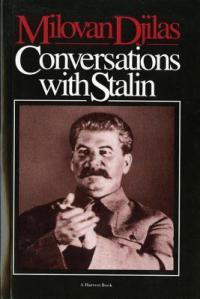





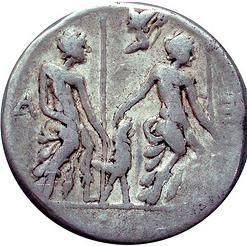
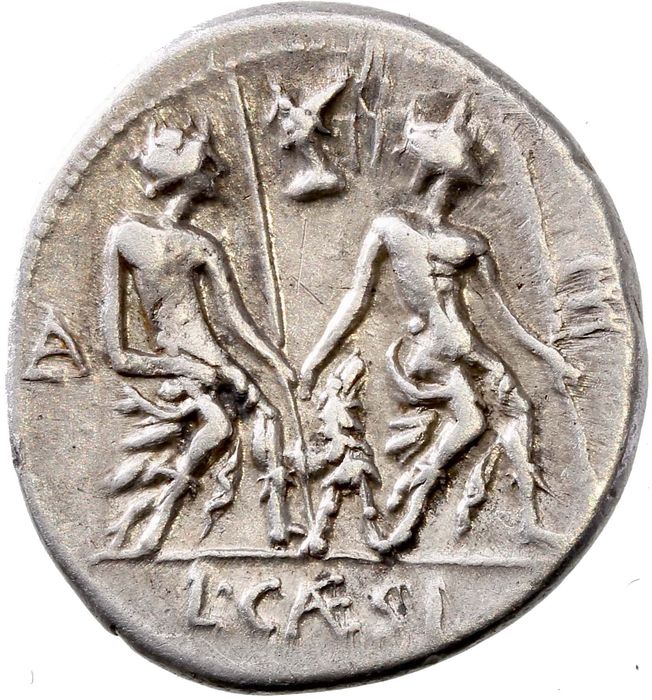

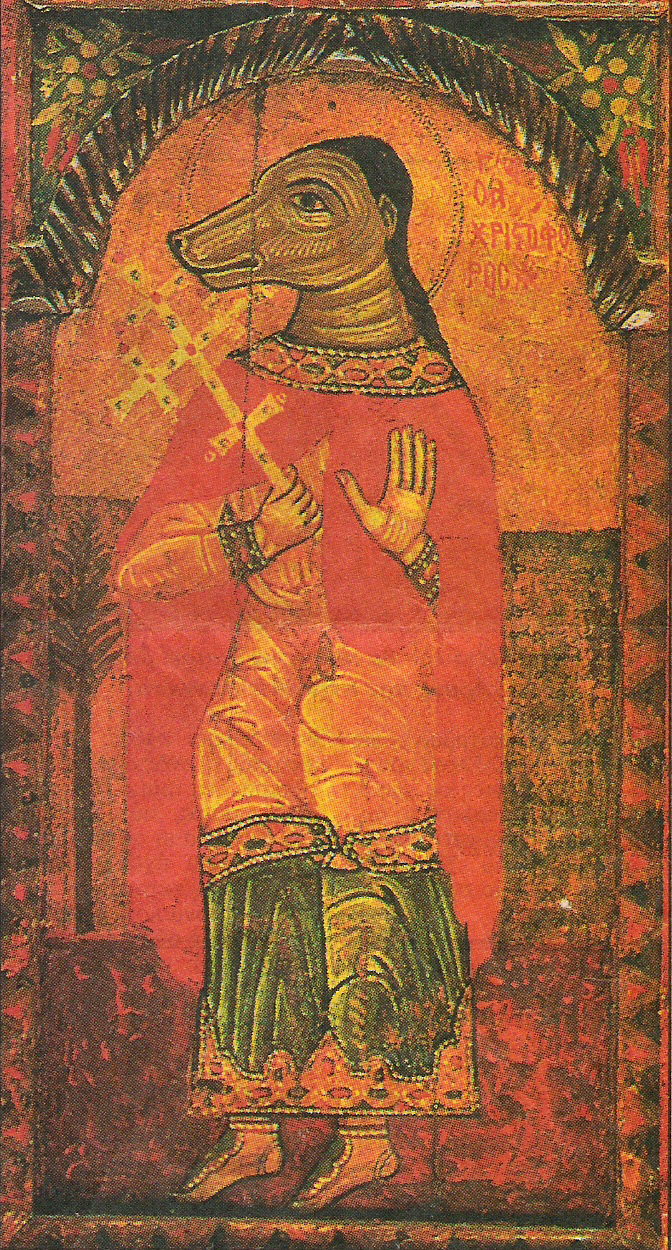




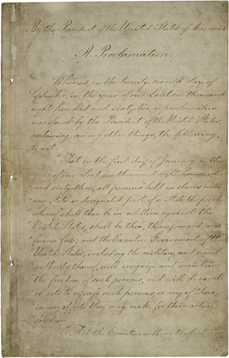




 A Stick in the Mud